Chemistry and Chemists № 1 2026
Journal of Chemists-Enthusiasts
| Content | Chemistry experiments - video | Physics experiments - video | Home Page - Chemistry and Chemists |
|
Chemistry and Chemists № 1 2026 Journal of Chemists-Enthusiasts |
Electrospinning - pt.14, 15 Chemist |
|
Having noticed a mistake in the text, allocate it and press Ctrl-Enter
Dissolving Expanded Polystyrene in Tetrahydrofuran - Part 14
Unlike dichloromethane, tetrahydrofuran has a distinct odor, which I would not call pleasant. Despite the impressive list of adverse health effects described in the medical literature, tetrahydrofuran is considered relatively low in toxicity. Many years ago, I worked with tetrahydrofuran in a different context. A mixture of tetrahydrofuran and acetic anhydride was passed through a thermostatted column containing an acid catalyst - sulfated zirconia (SZ). Oligomerization of tetrahydrofuran occurred on the catalyst. Sulfated zirconia is a solid superacid with extremely strong acid sites (stronger than those of pure sulfuric acid). Consequently, partial charring of tetrahydrofuran occurred simultaneously with oligomerization. In such cases, charring not only reduces the yield of the target product but also leads to rapid catalyst deactivation. As one can see, the prefix "super" does not always mean "better."
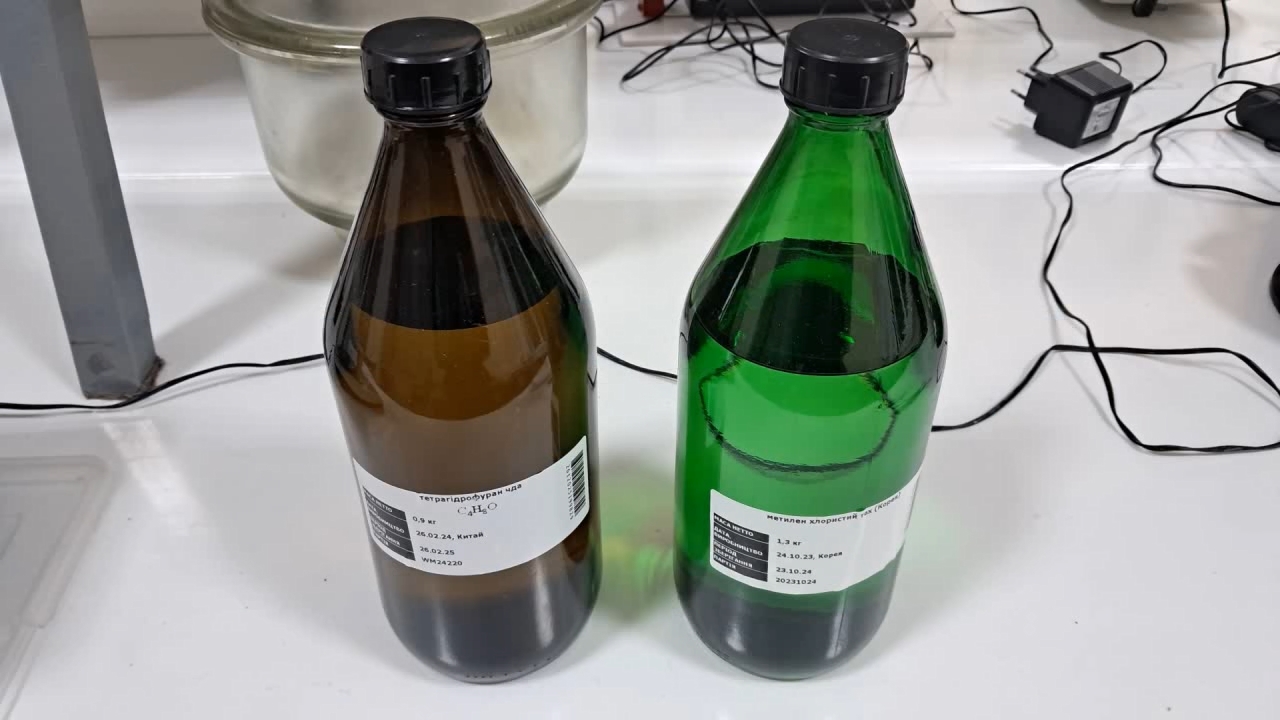
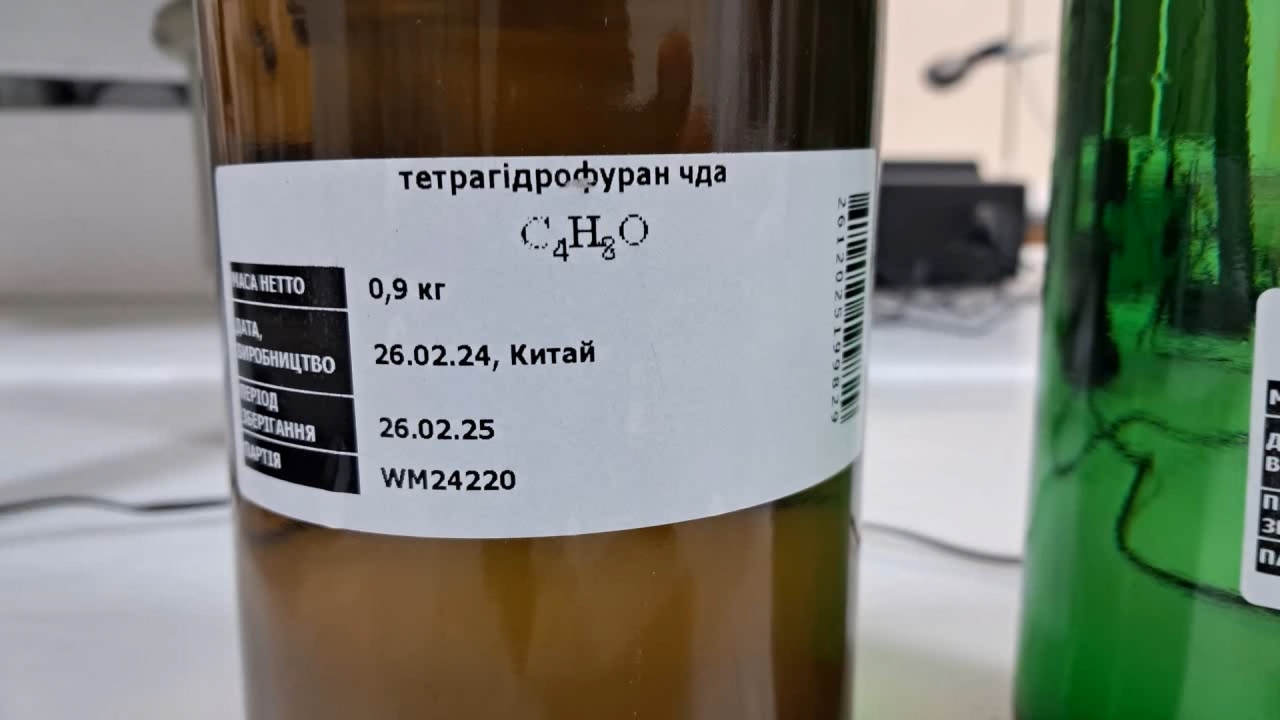
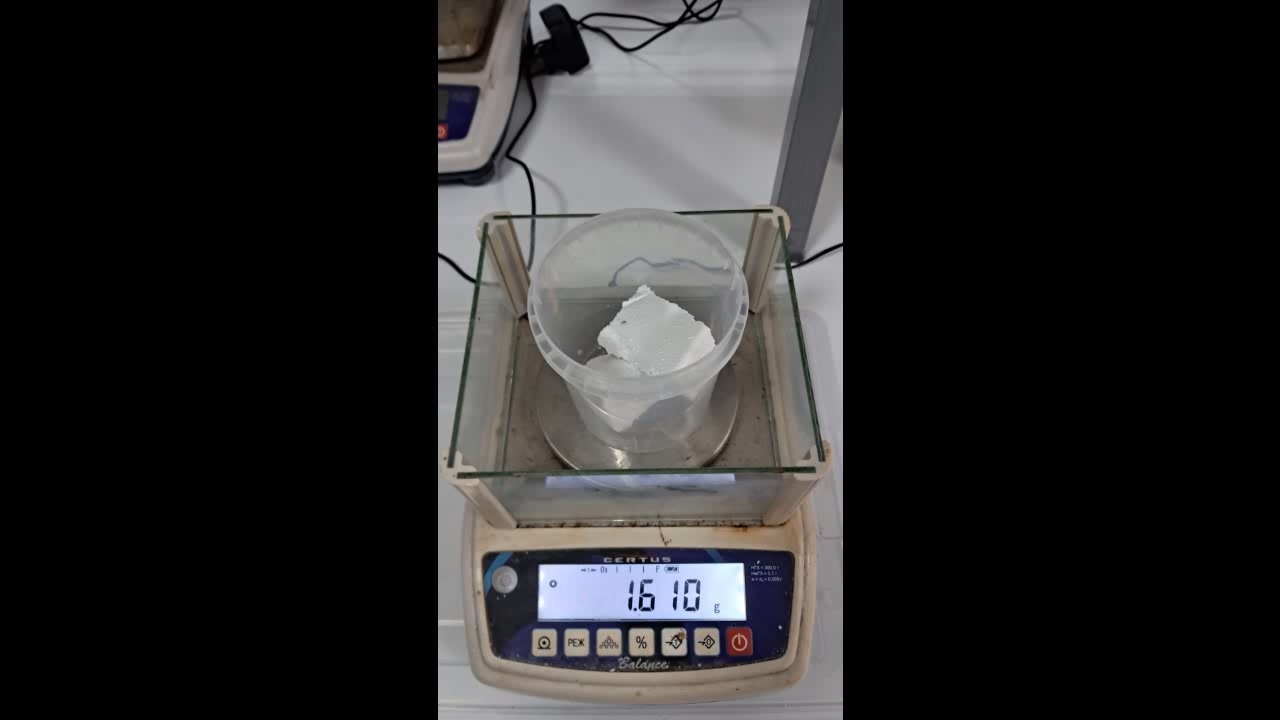
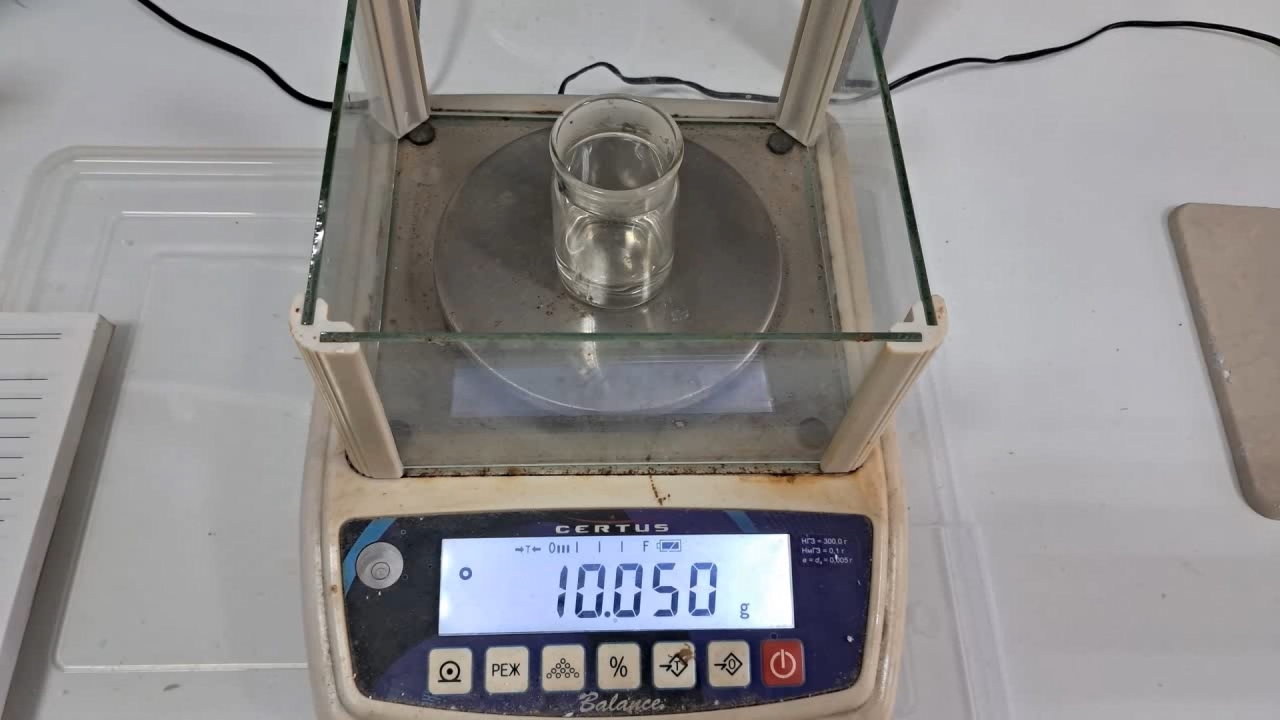
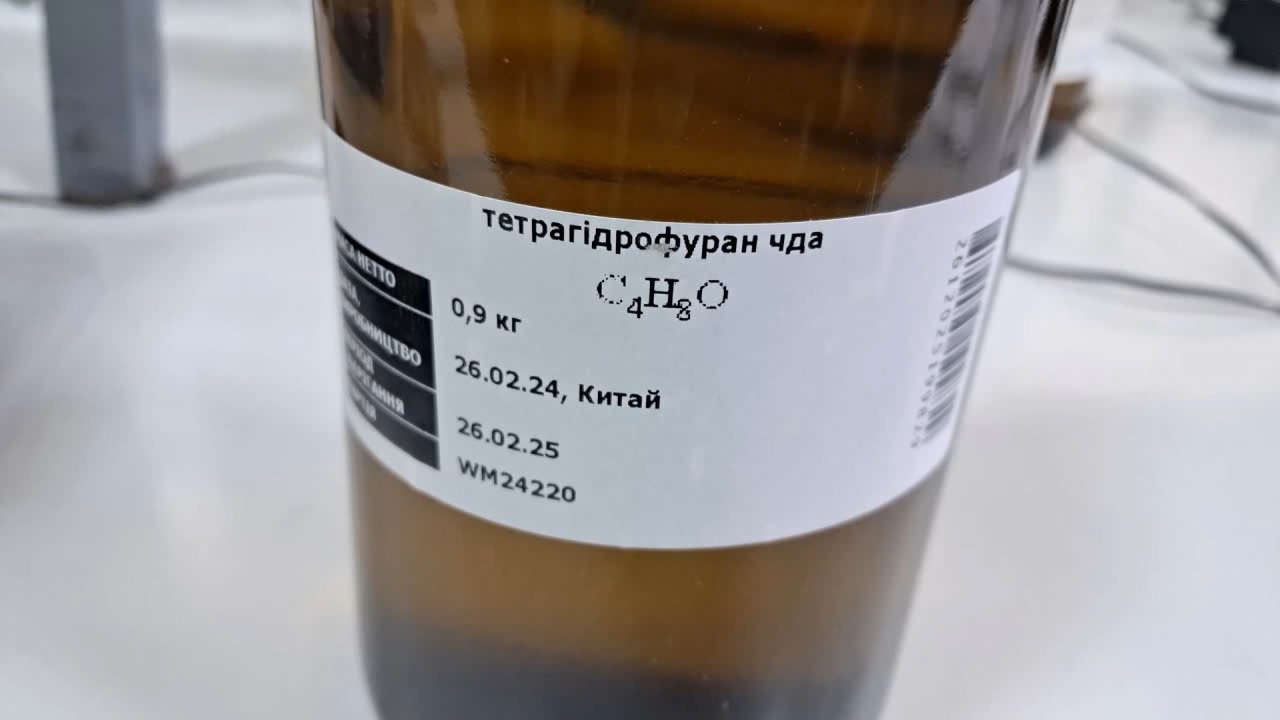
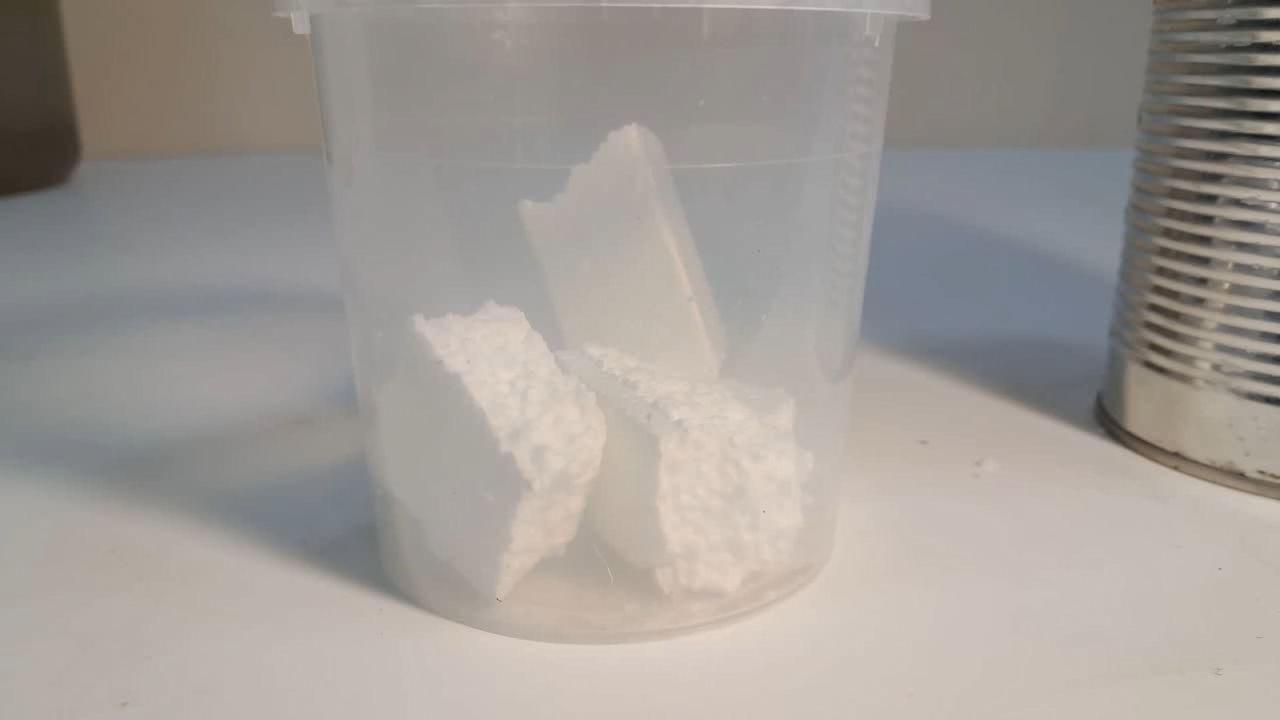
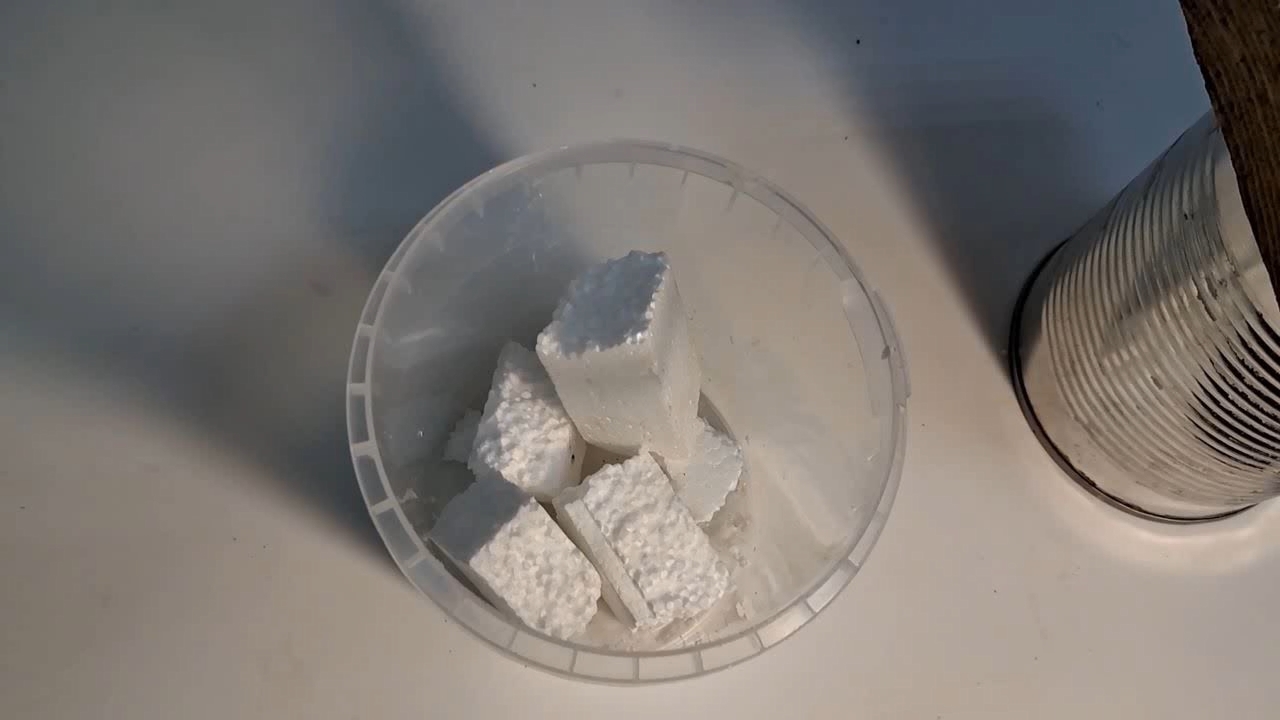
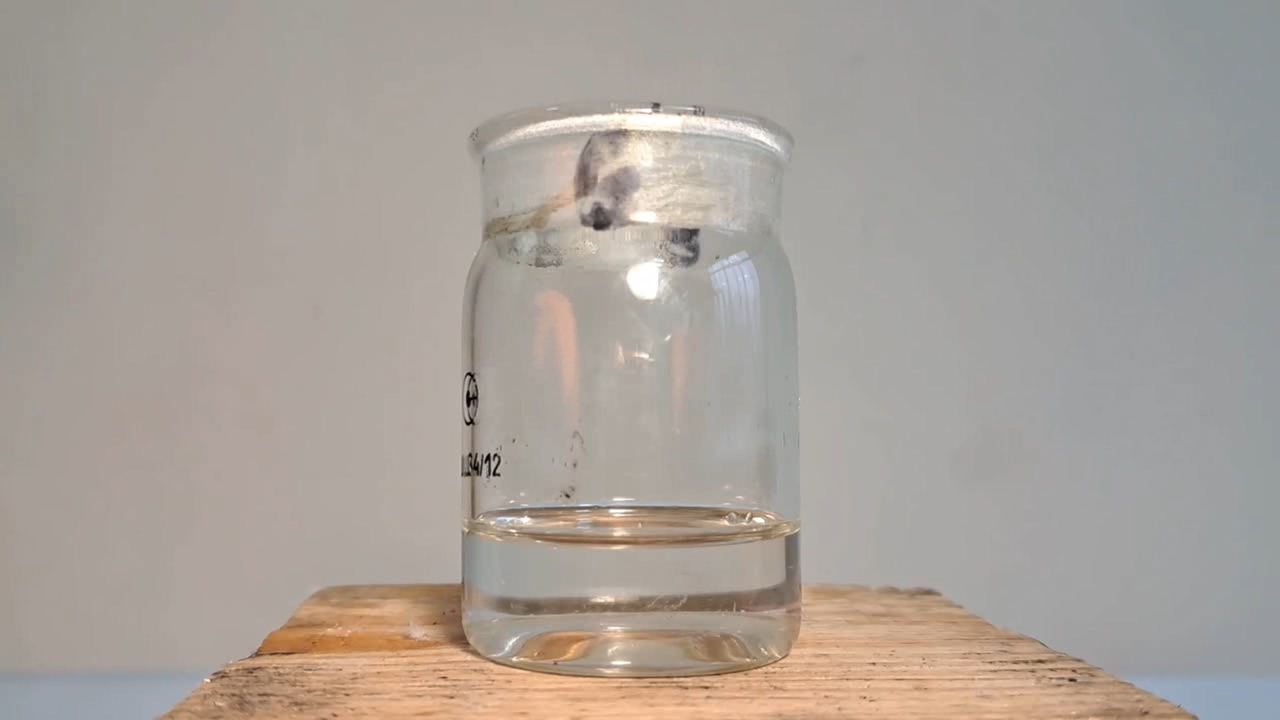
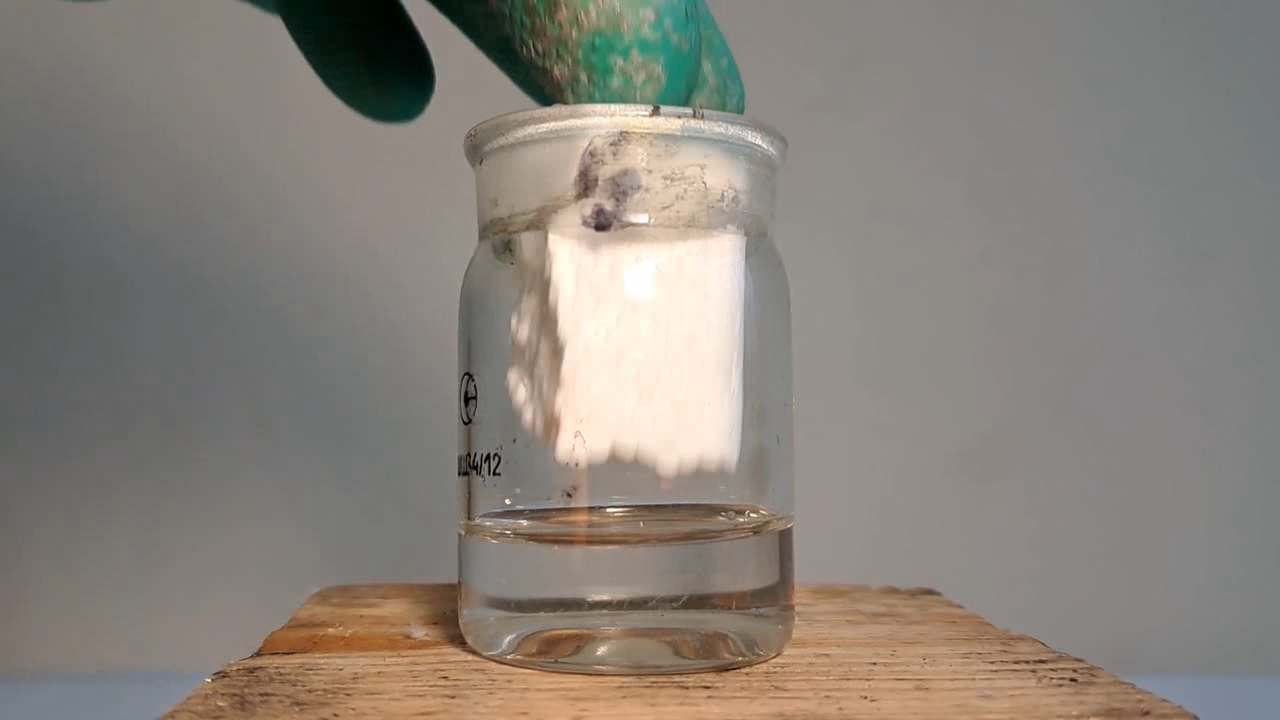
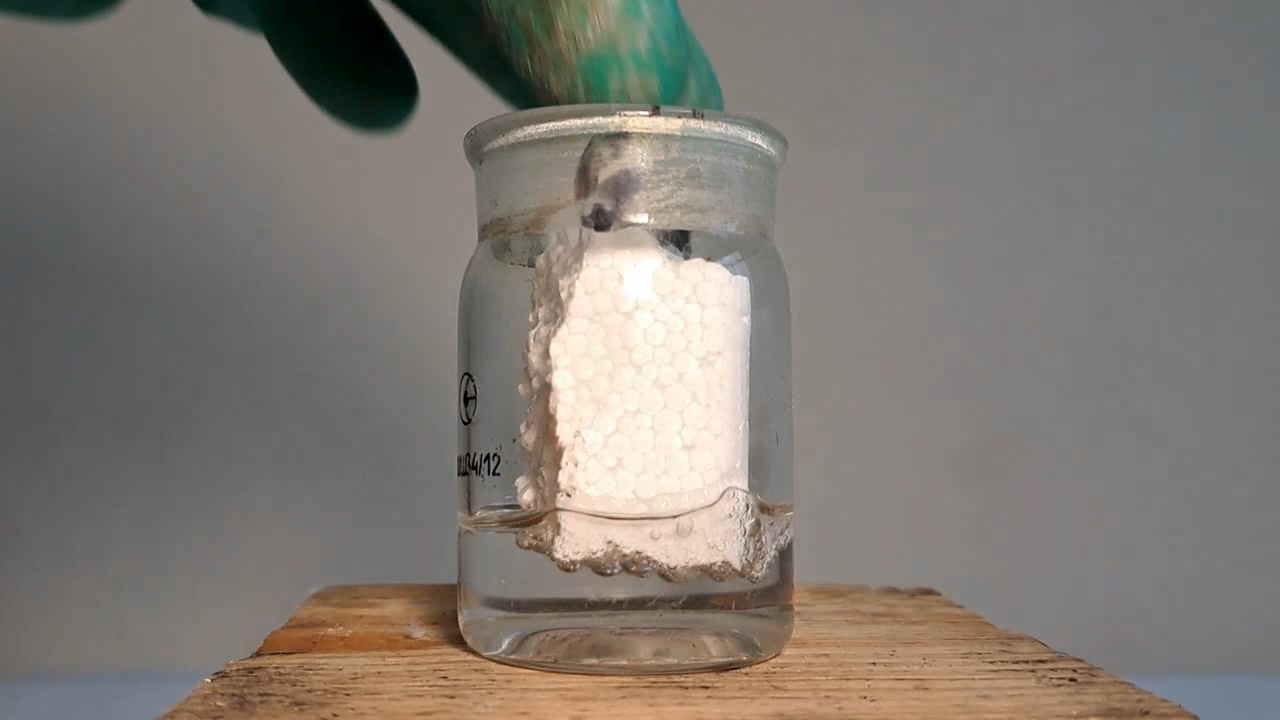
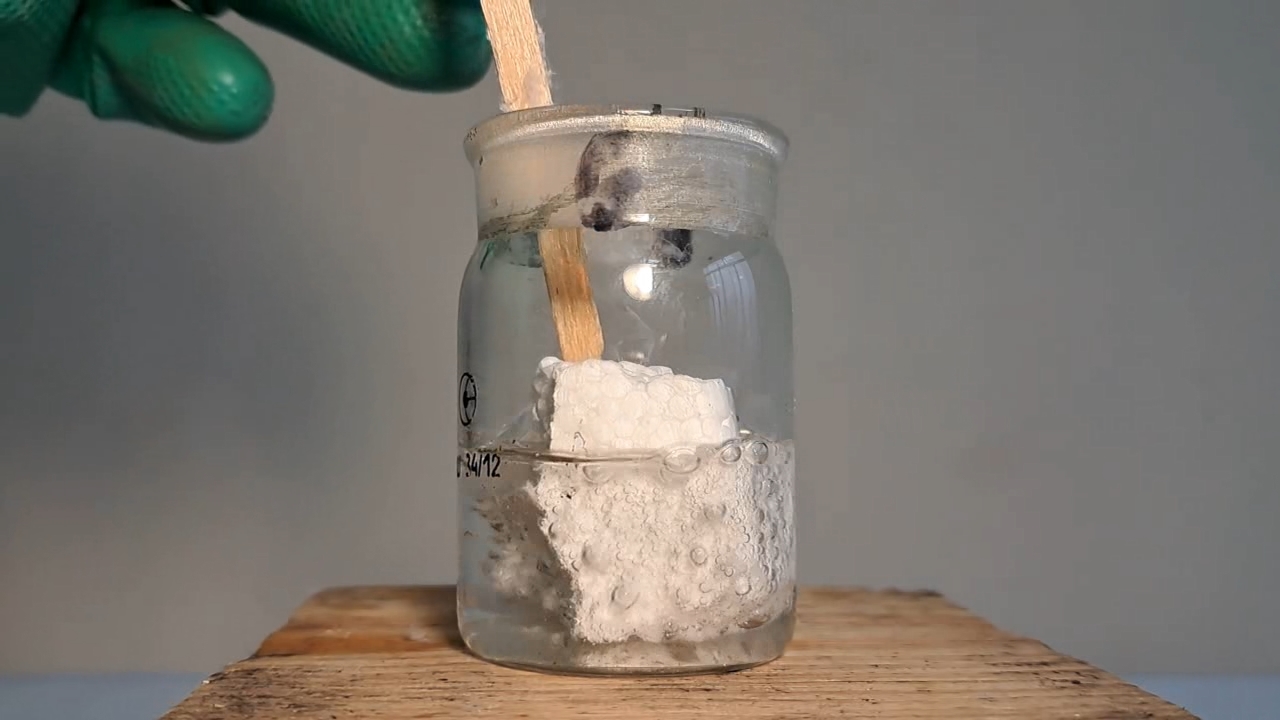
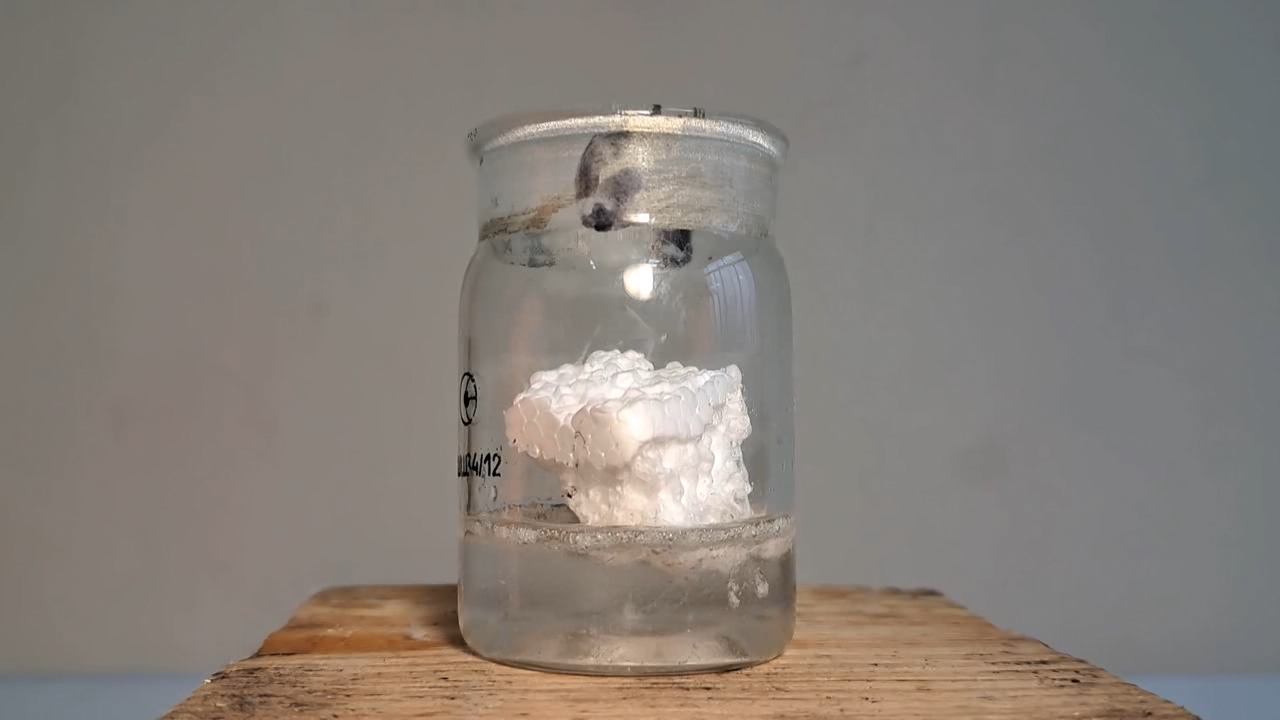
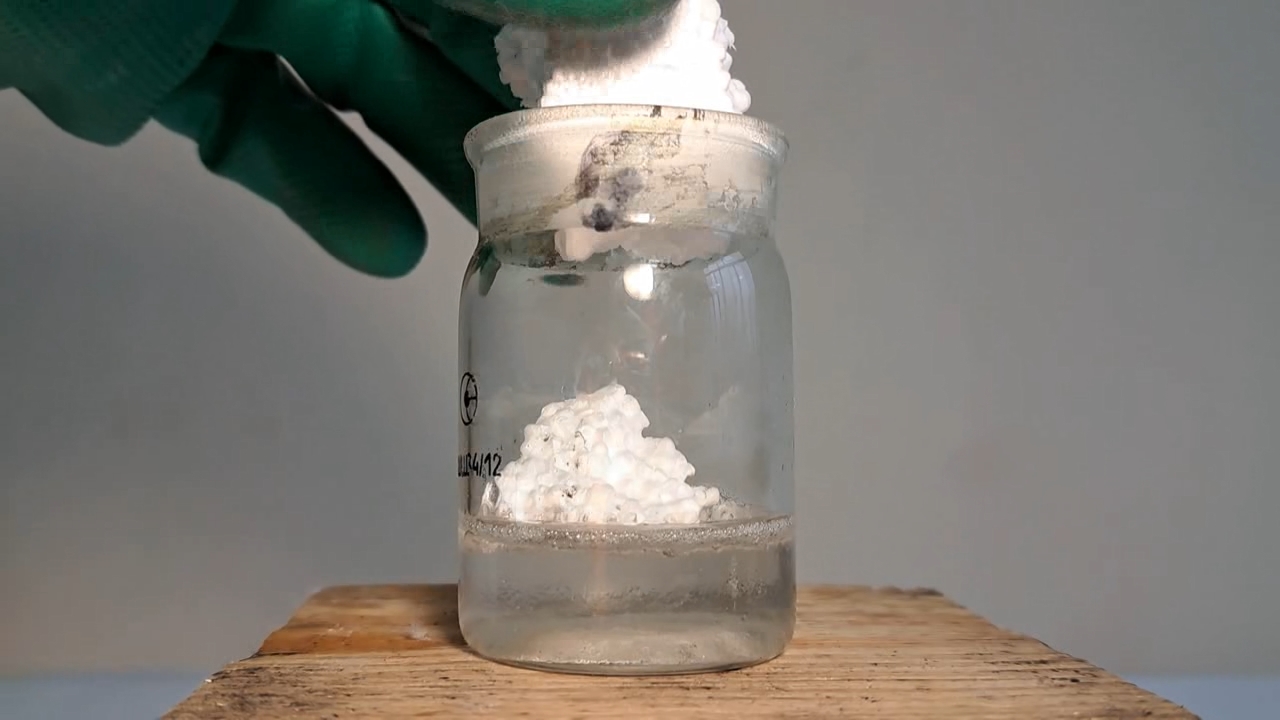
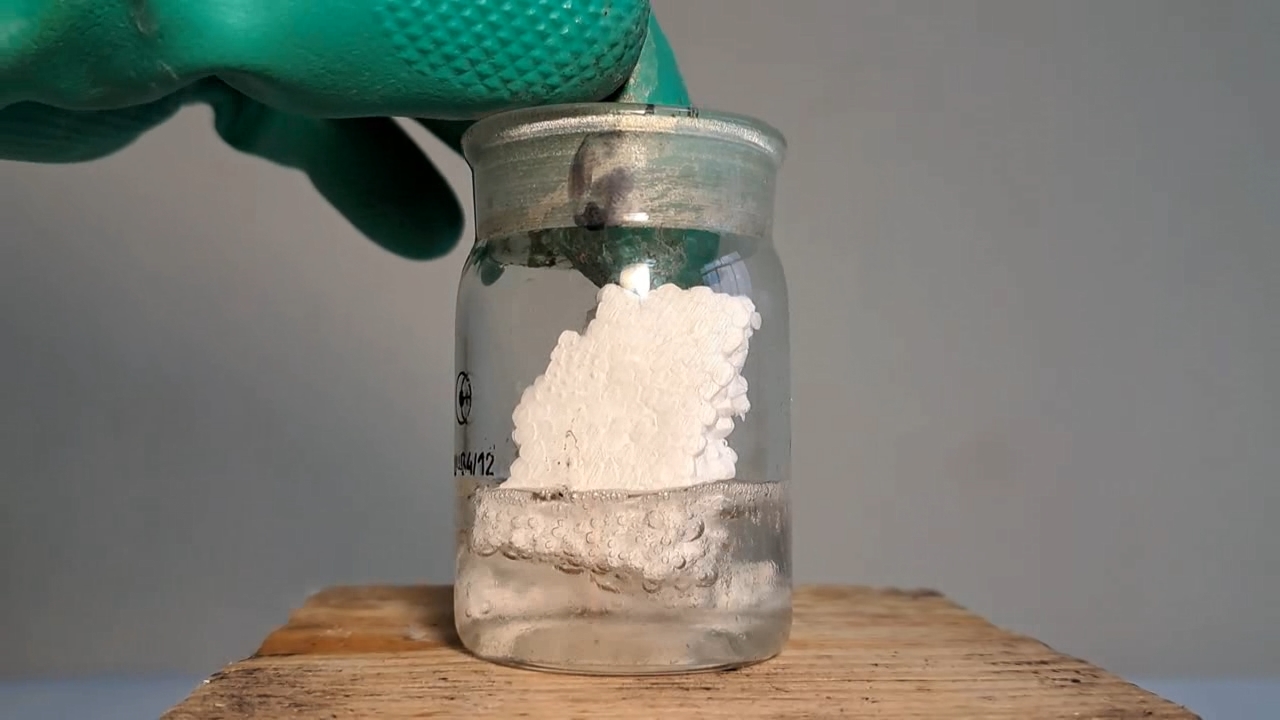
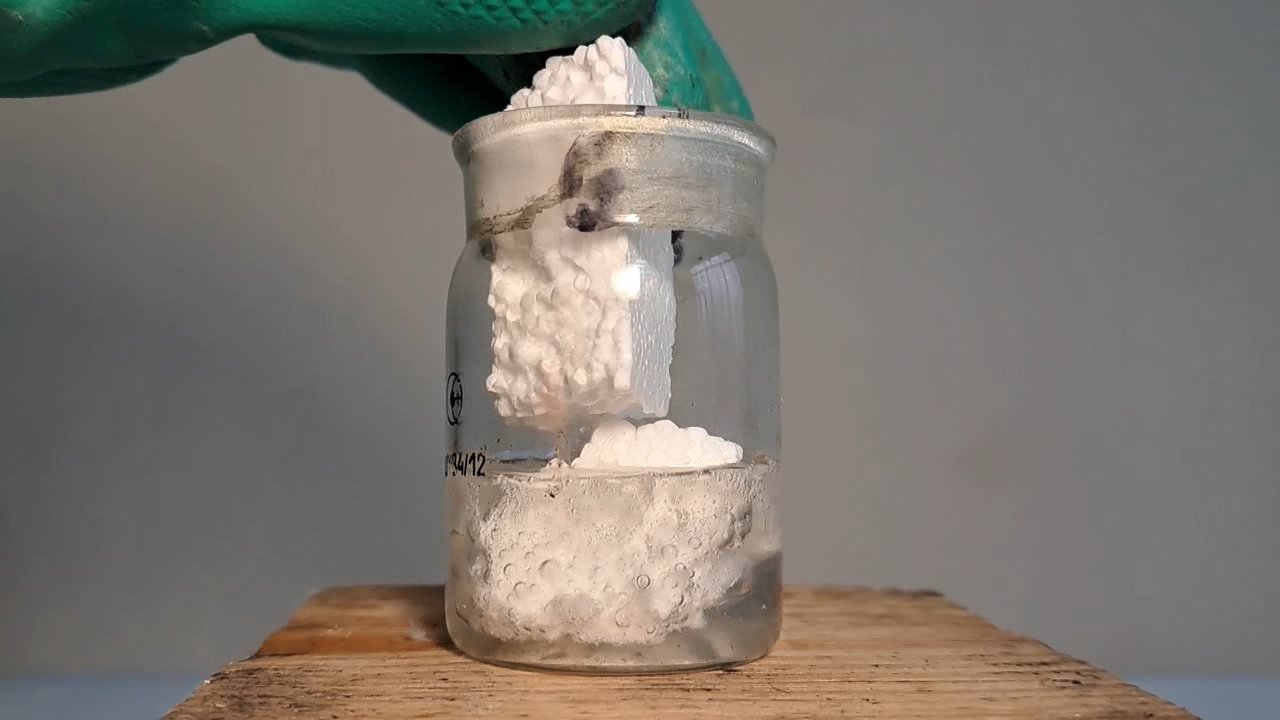
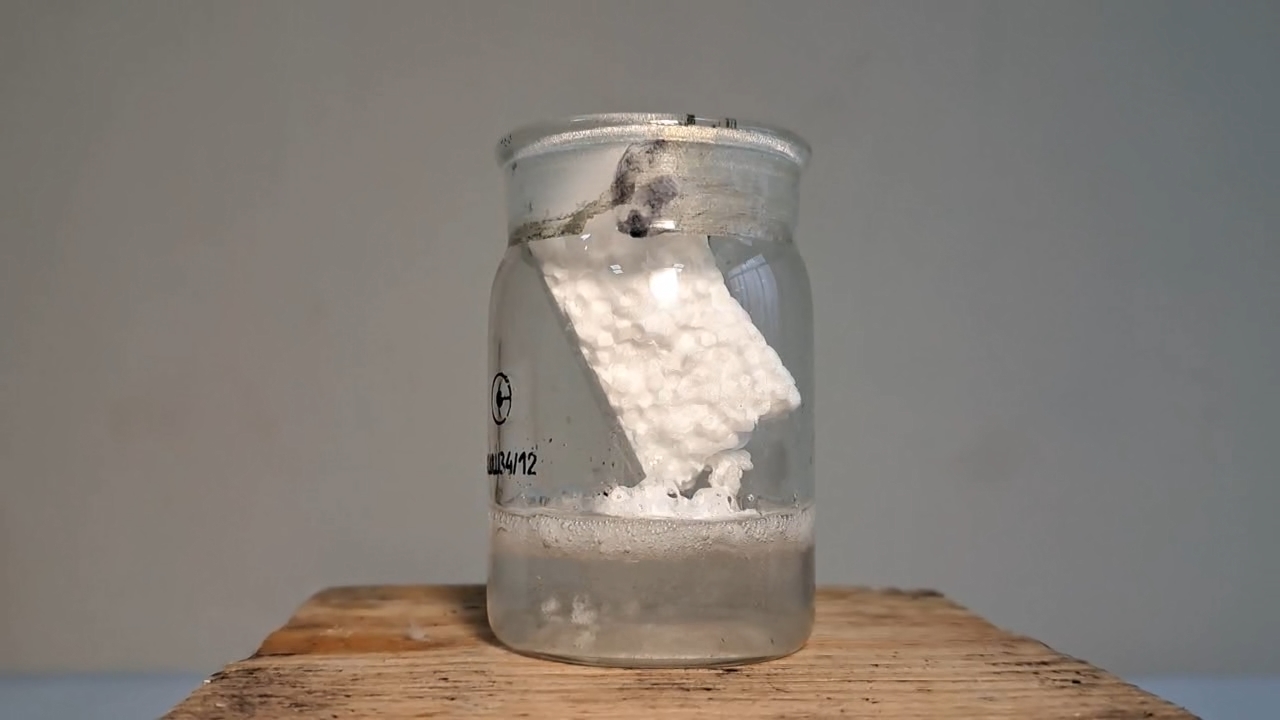
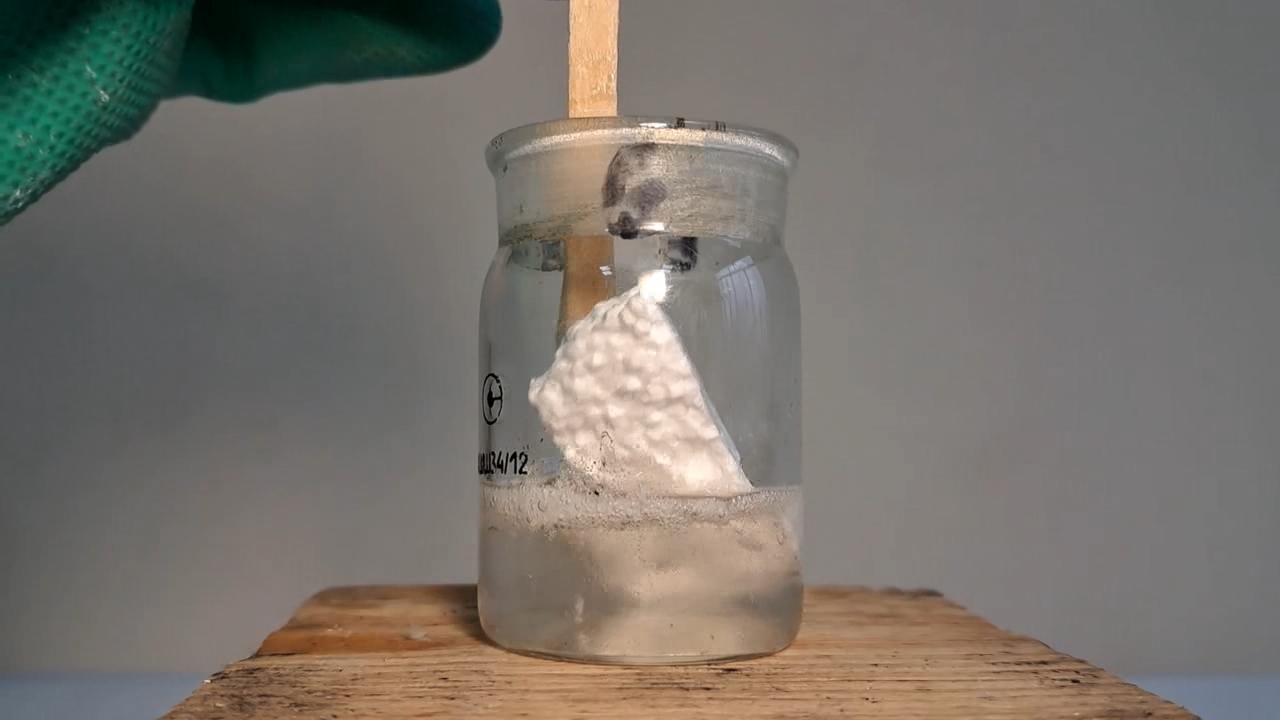
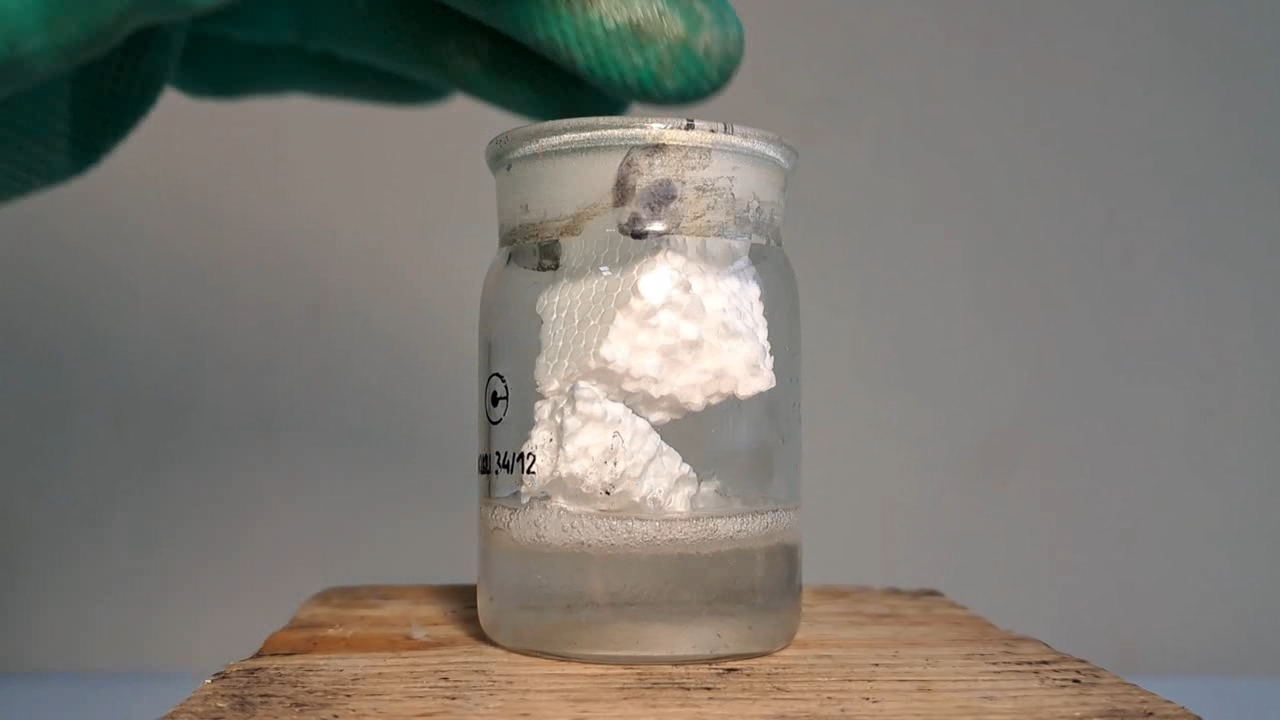
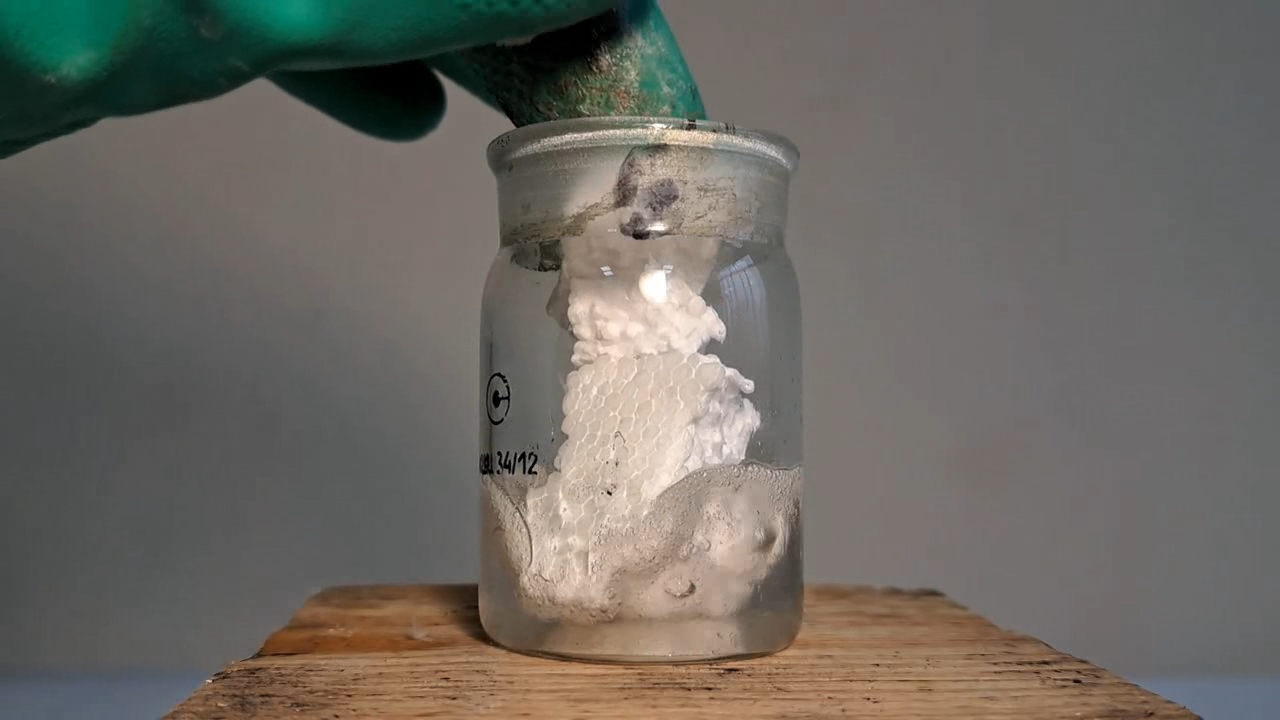
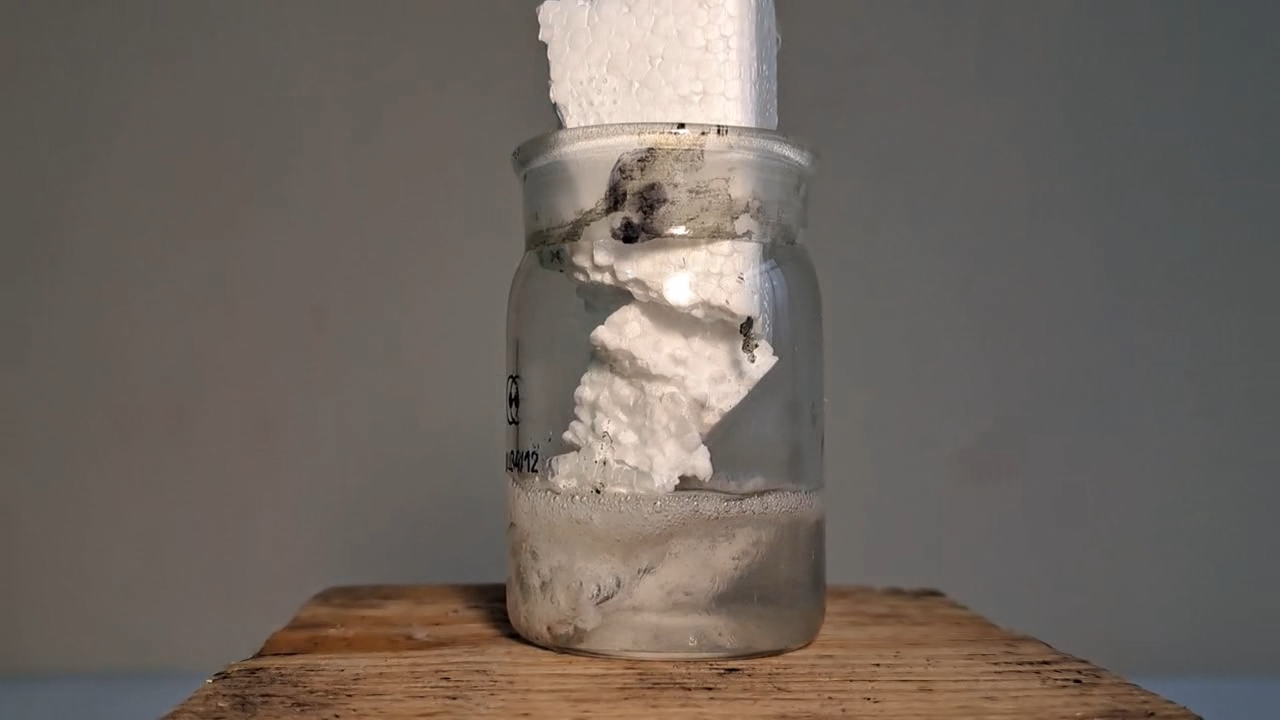
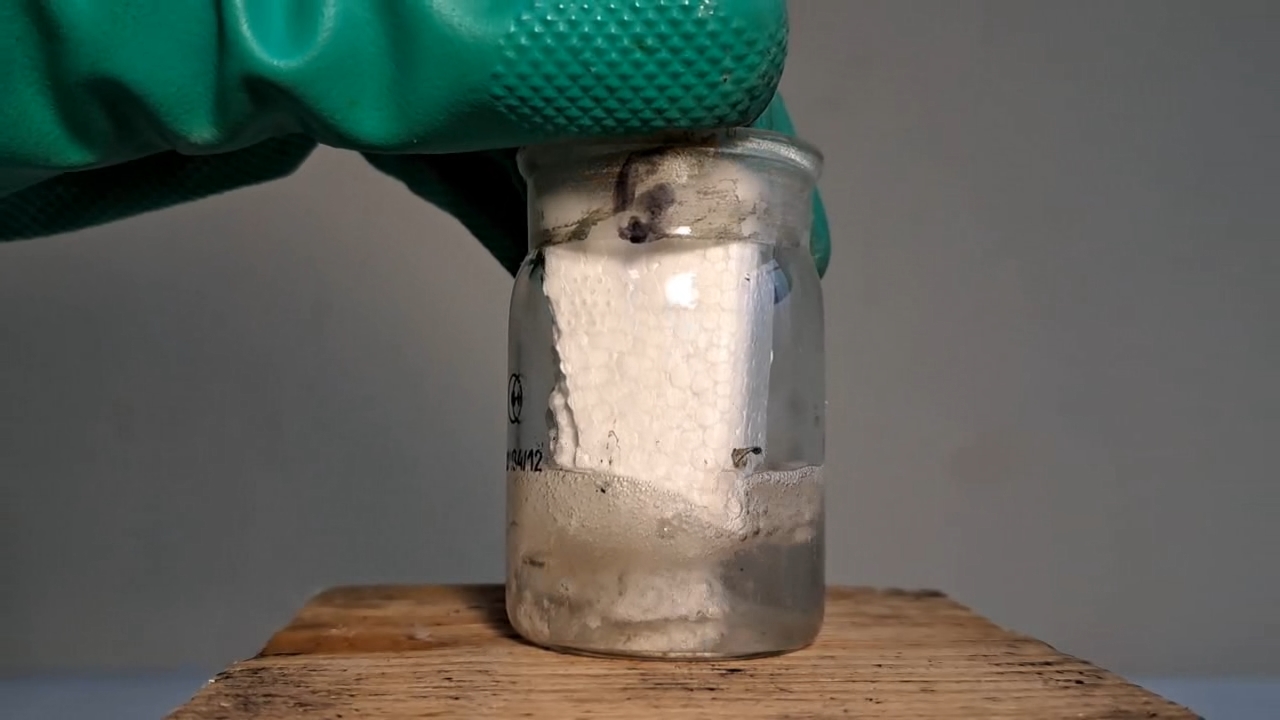
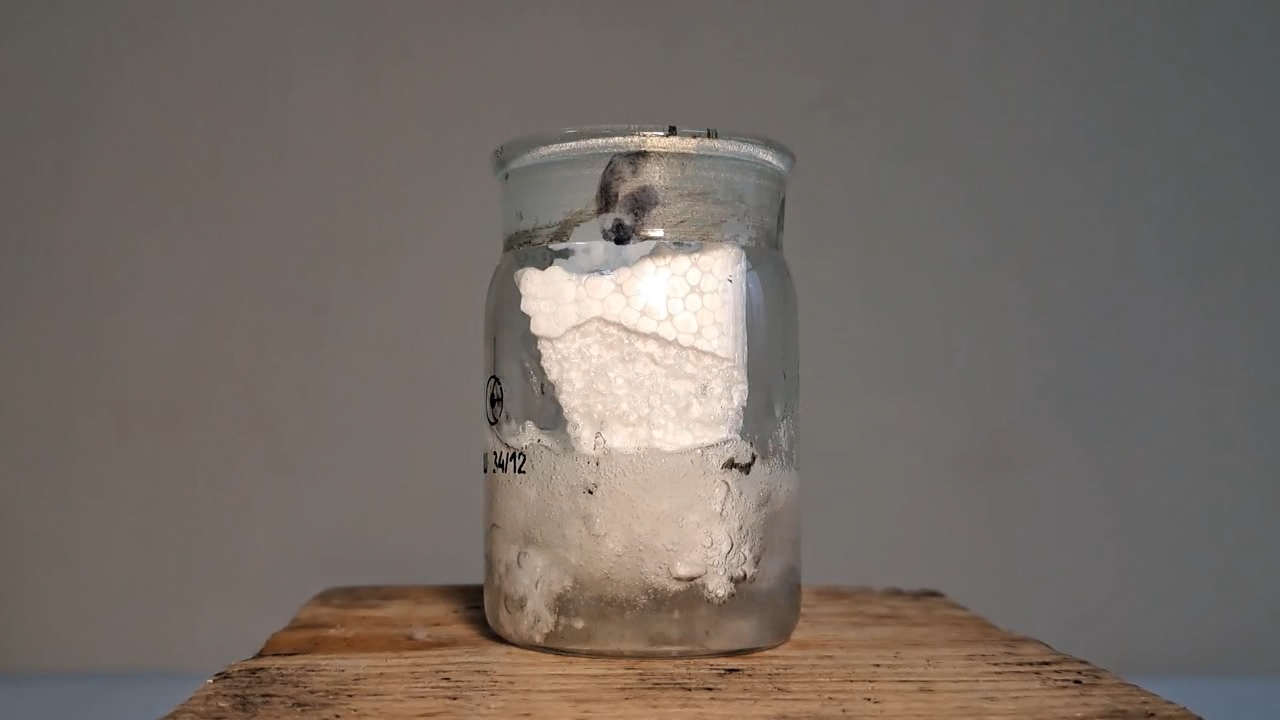
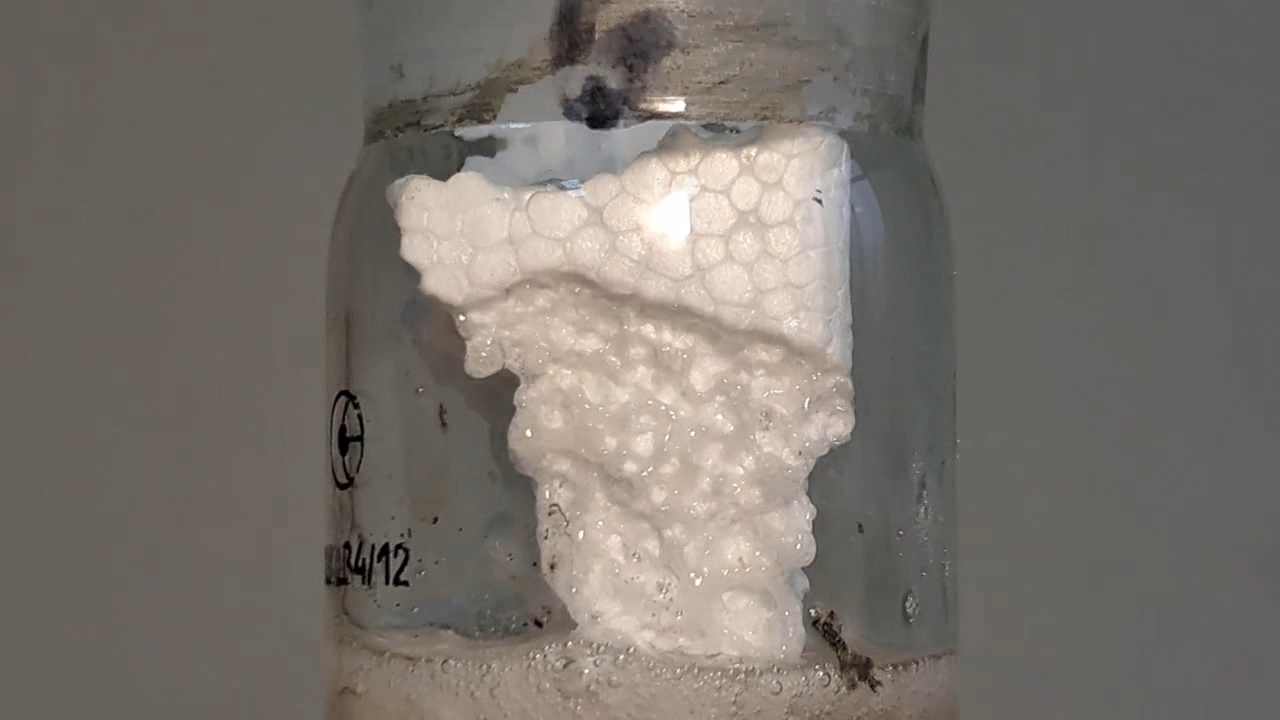
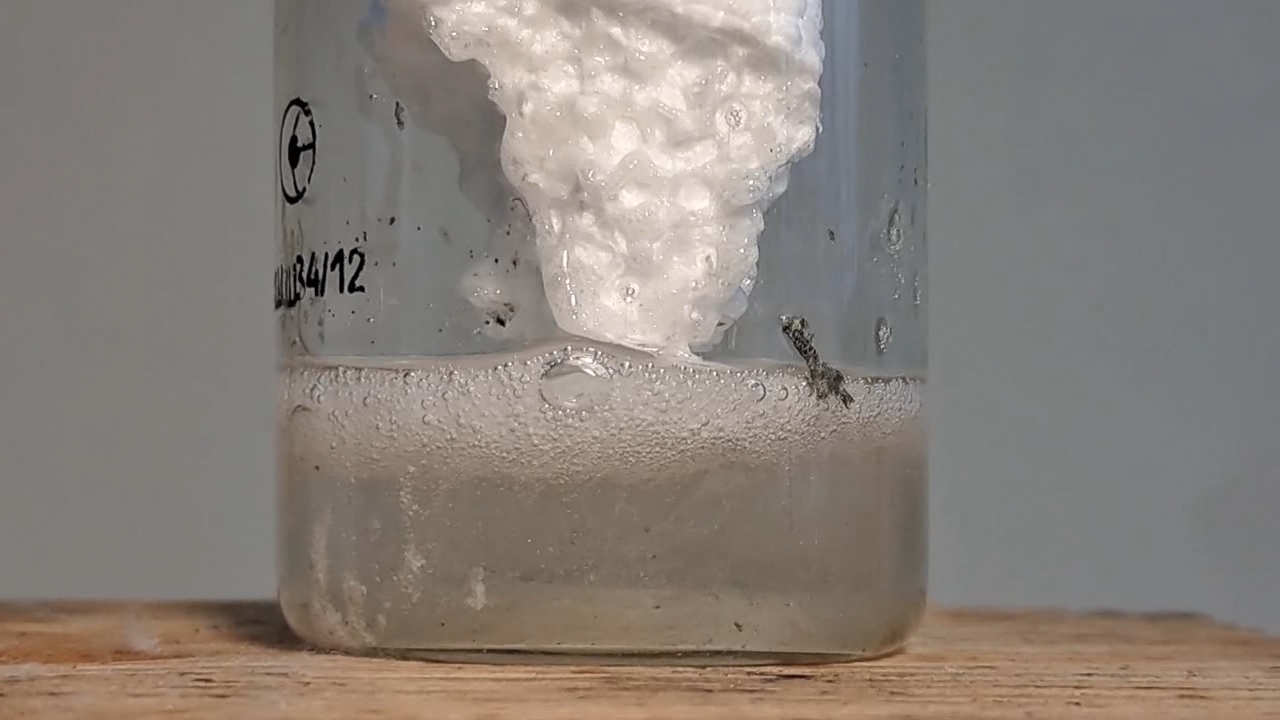
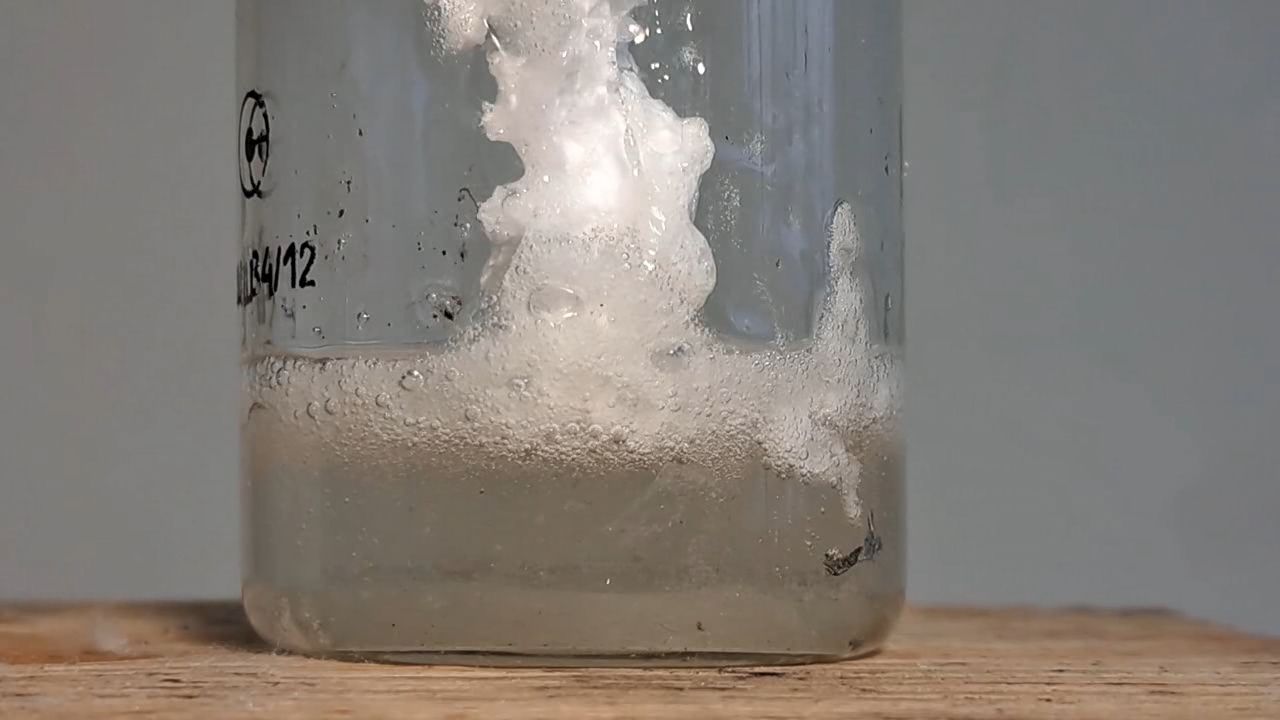
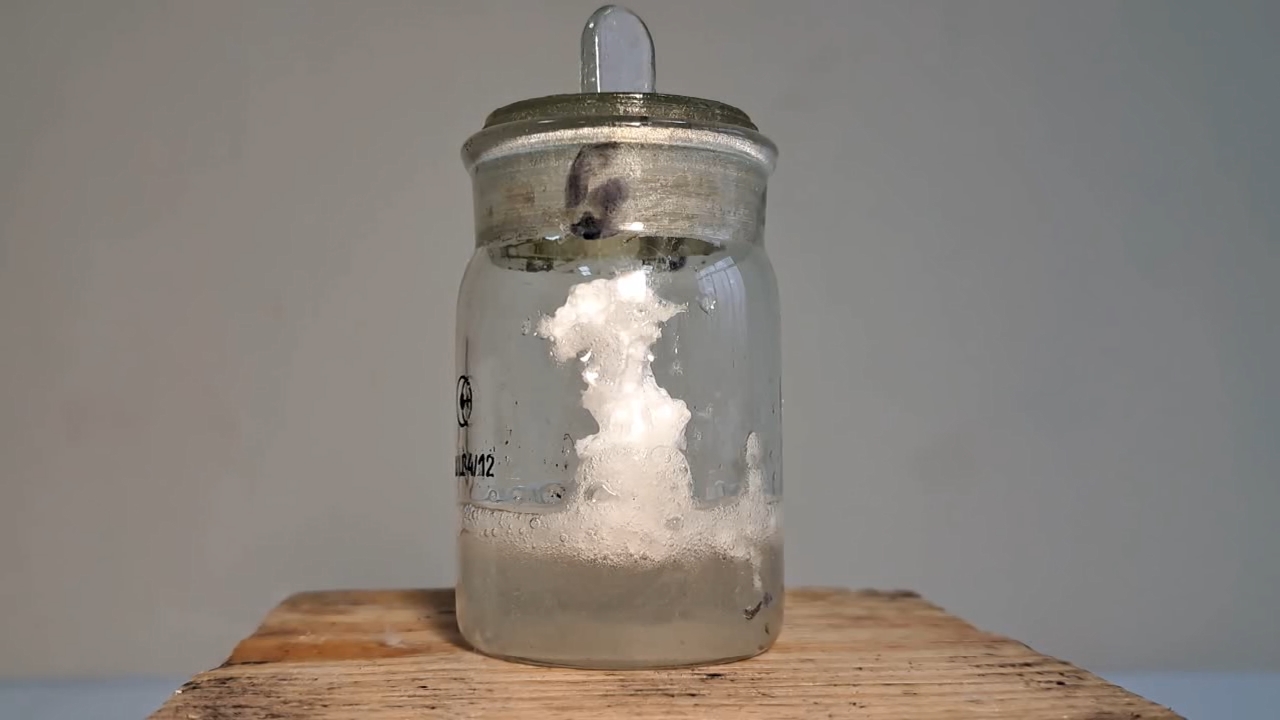
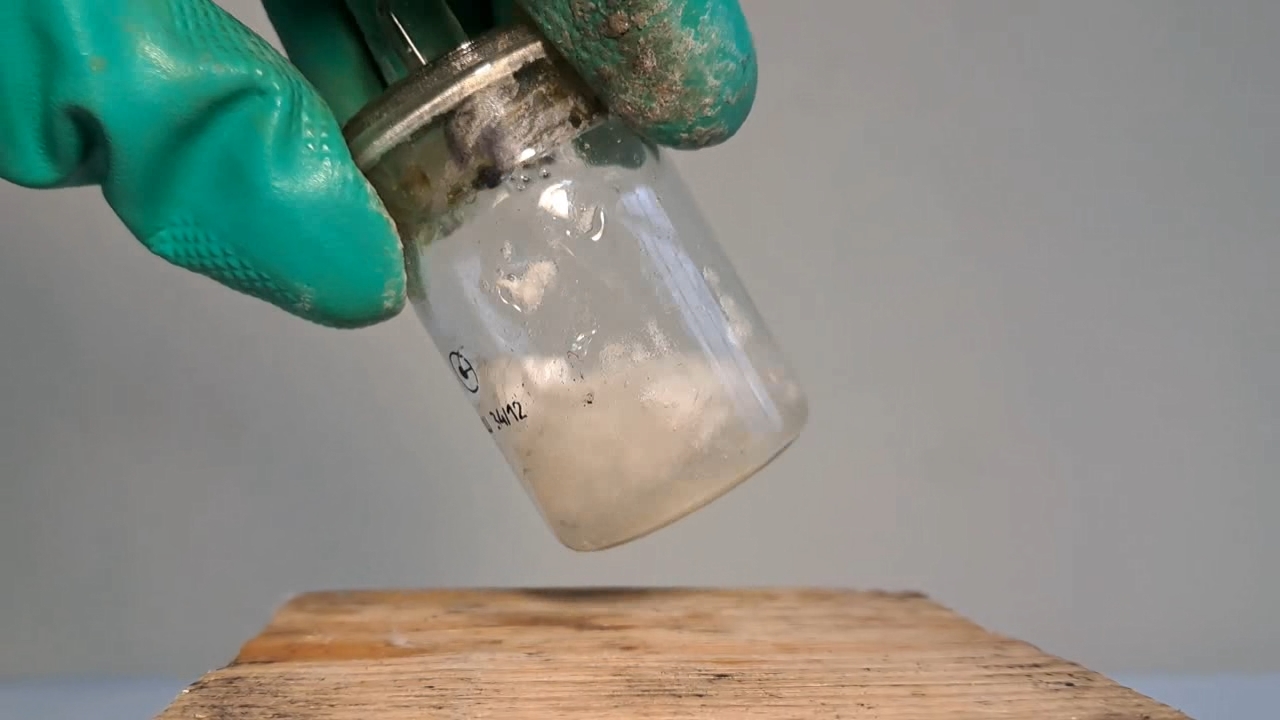
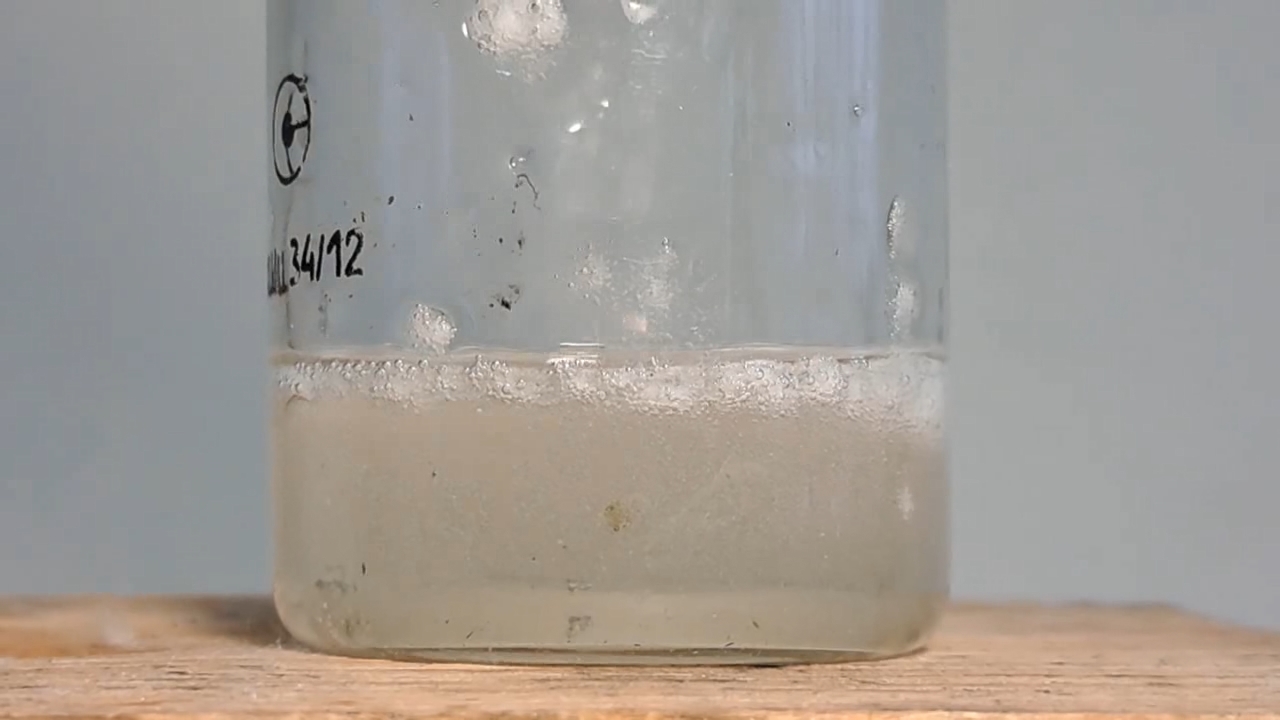
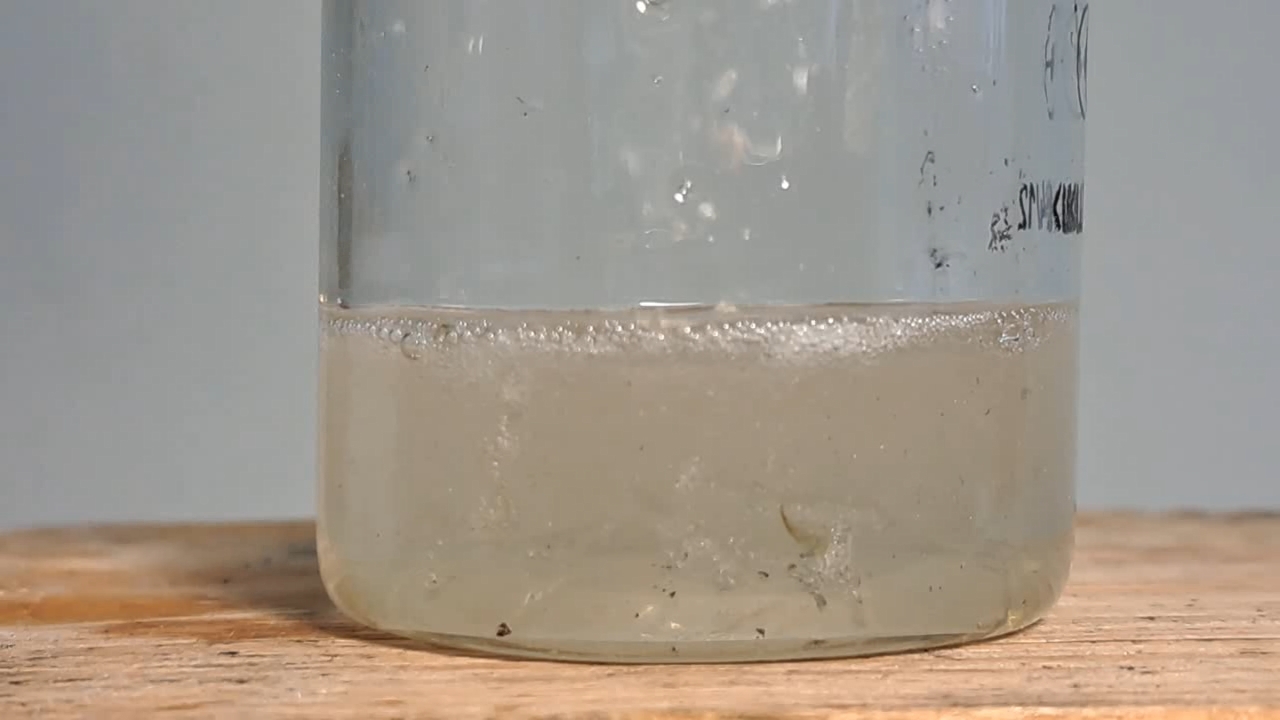
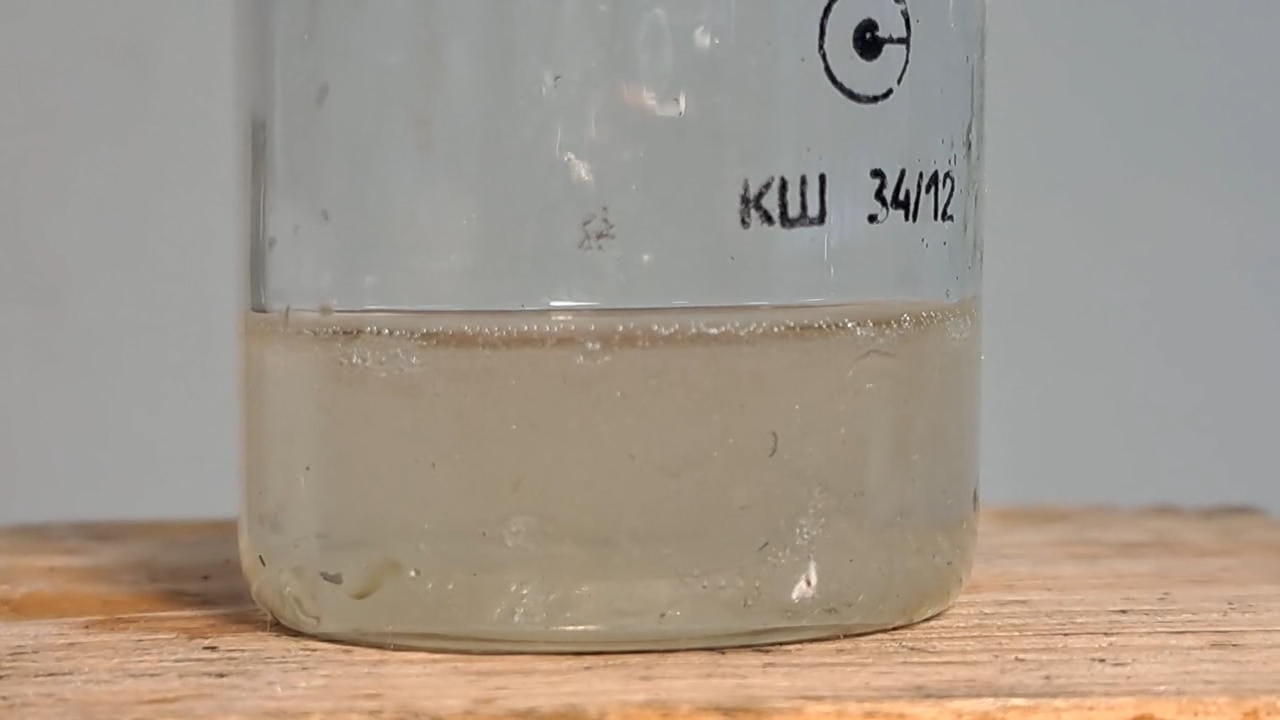
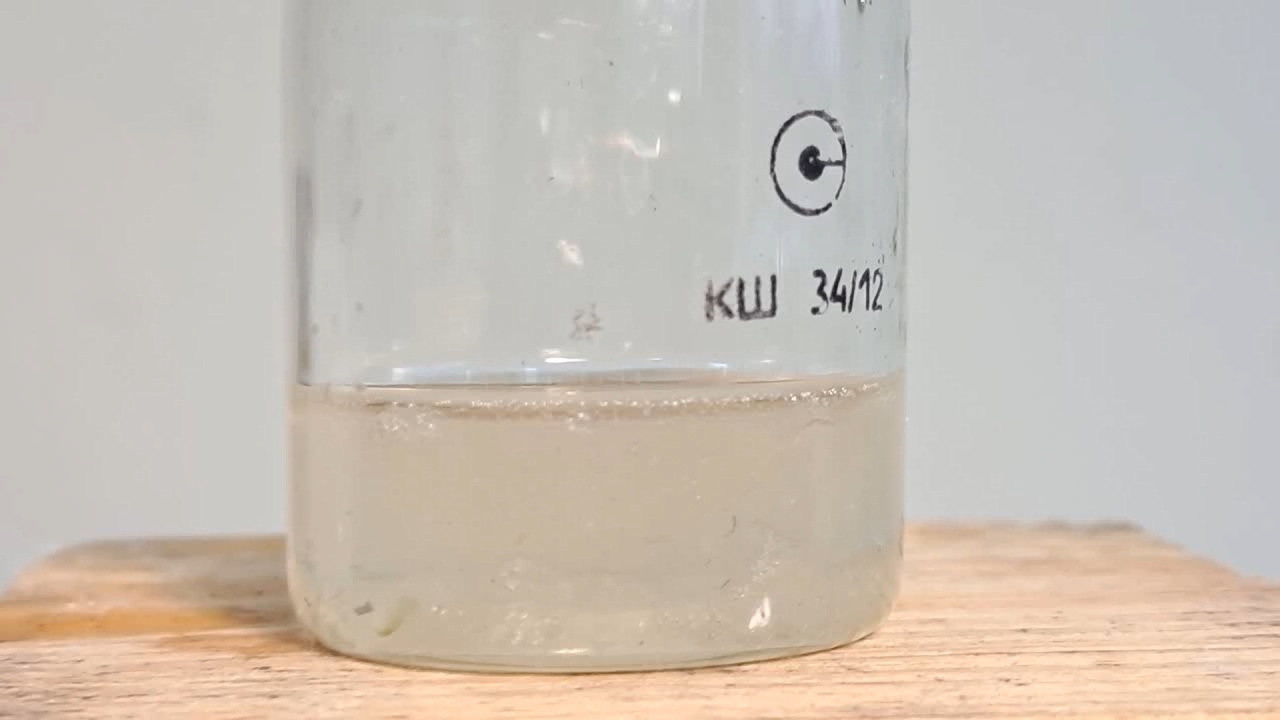
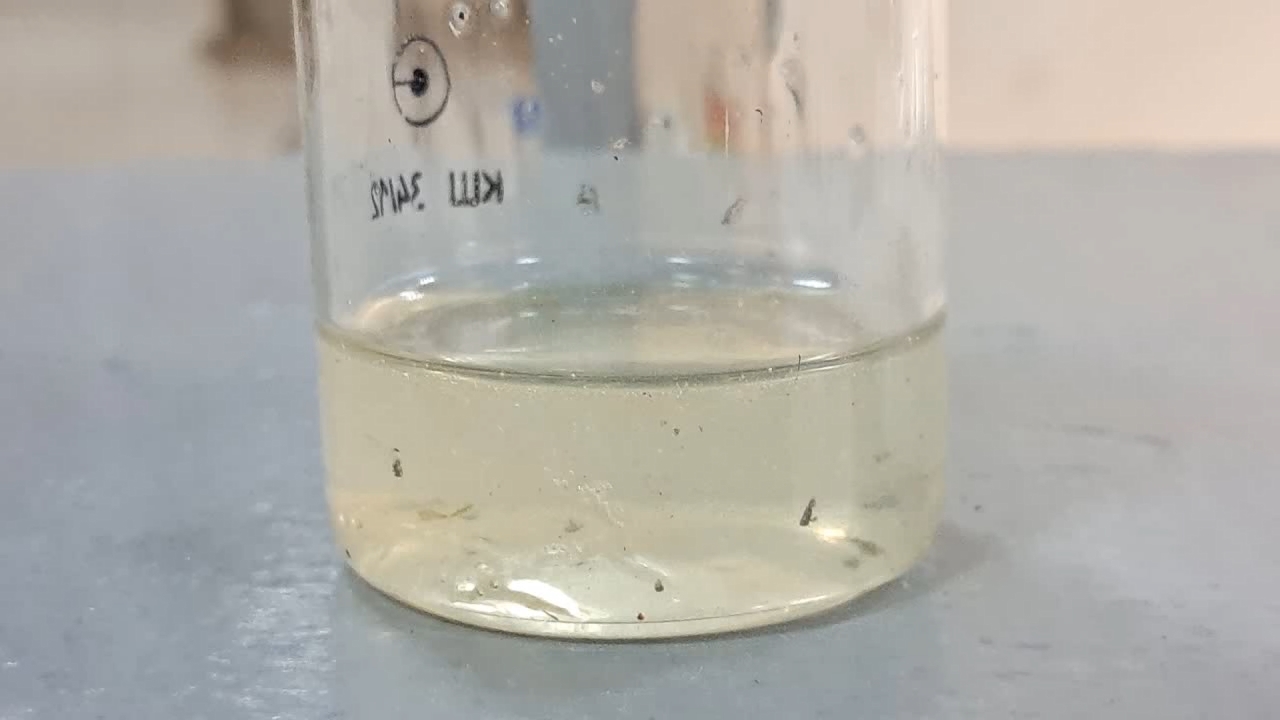
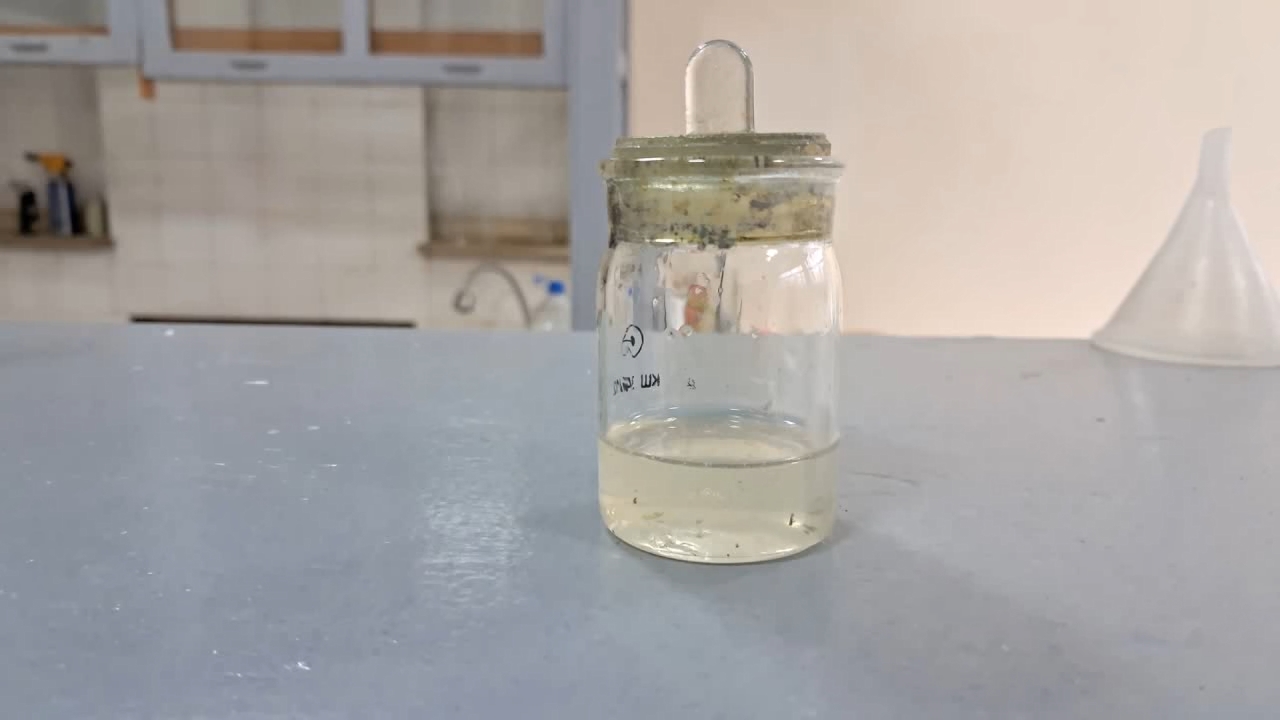
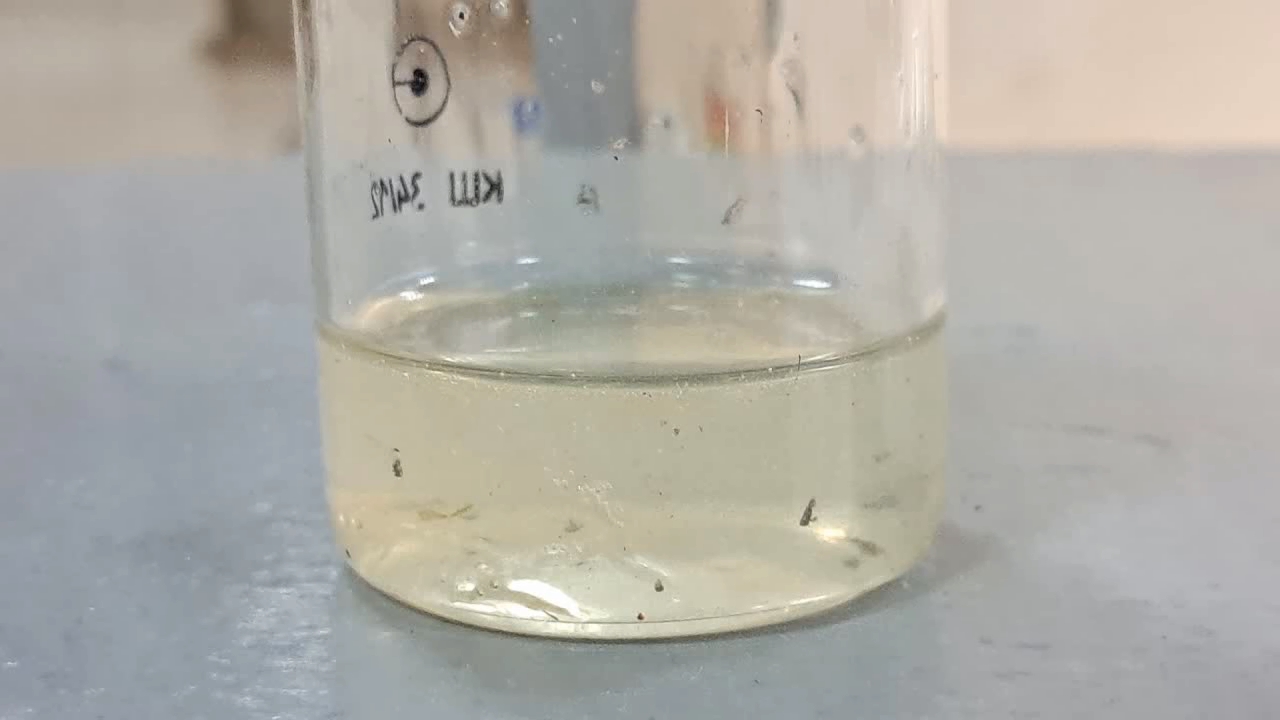
Растворение пенополистирола в тетрагидрофуране - Часть 14 In the present experiment, tetrahydrofuran served not as a reagent but as a solvent. In the previous experiment, I prepared a 20% polystyrene solution in methylene chloride, but this concentration proved too high for electrospinning and had to be reduced to 13.9%. The optimal working concentration of polystyrene in tetrahydrofuran was unknown. Therefore, I decided to prepare a solution with approximately the same concentration as in the previous experiment with methylene chloride (13.9%). I weighed 10.050 g of tetrahydrofuran and 1.610 g of expanded polystyrene, corresponding to a polystyrene concentration of 13.8%. Large pieces of expanded polystyrene were added to the tetrahydrofuran in a weighing bottle. Gas was released vigorously, and the polystyrene quite literally "melted" before my eyes as it dissolved in the liquid. A cloudy solution formed, in which small pieces of expanded polystyrene floated while continuing to release gas; these, too, soon dissolved. The process was reminiscent of dissolving expanded polystyrene in dichloromethane, ethyl acetate, and the "Acetone+" solvent. By contrast, this sample did not dissolve in methyl acetate or acetone - only swelling of the polymer was observed. In the case of hexane, no swelling occurred at all: the expanded polystyrene remained unchanged after brief exposure to the solvent. |
Dissolving Expanded Polystyrene in Tetrahydrofuran |
|
|
|
|
|
|
|
|
|
|
|
|
|
|
|
|
|
|
|
|
|
|
|
|
|
|
|
|
|
|
|
|
|
Having noticed a mistake in the text, allocate it and press Ctrl-Enter
Electrospinning: Solution of Polystyrene in Tetrahydrofuran - Part 15
I did not know how a 13.8% polystyrene solution in tetrahydrofuran would behave during electrospinning. I assumed that the process would be similar to electrospinning polystyrene solutions in dichloromethane and the "Acetone+" solvent. Both solvents proved to be quite acceptable options for electrospinning polystyrene, but each has significant drawbacks. Dichloromethane is toxic, and the exact composition of the "Acetone+" solvent is unknown. Therefore, it was advisable to replace these solvents or, at least, to explore alternatives.
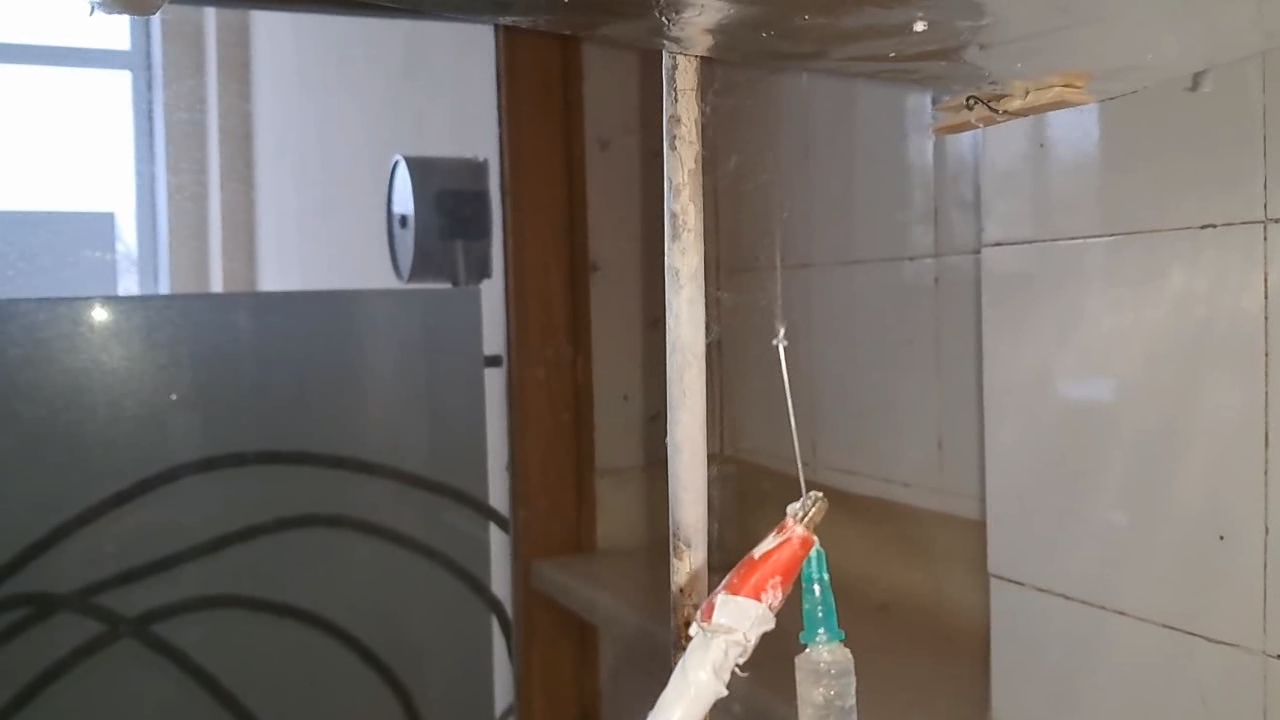
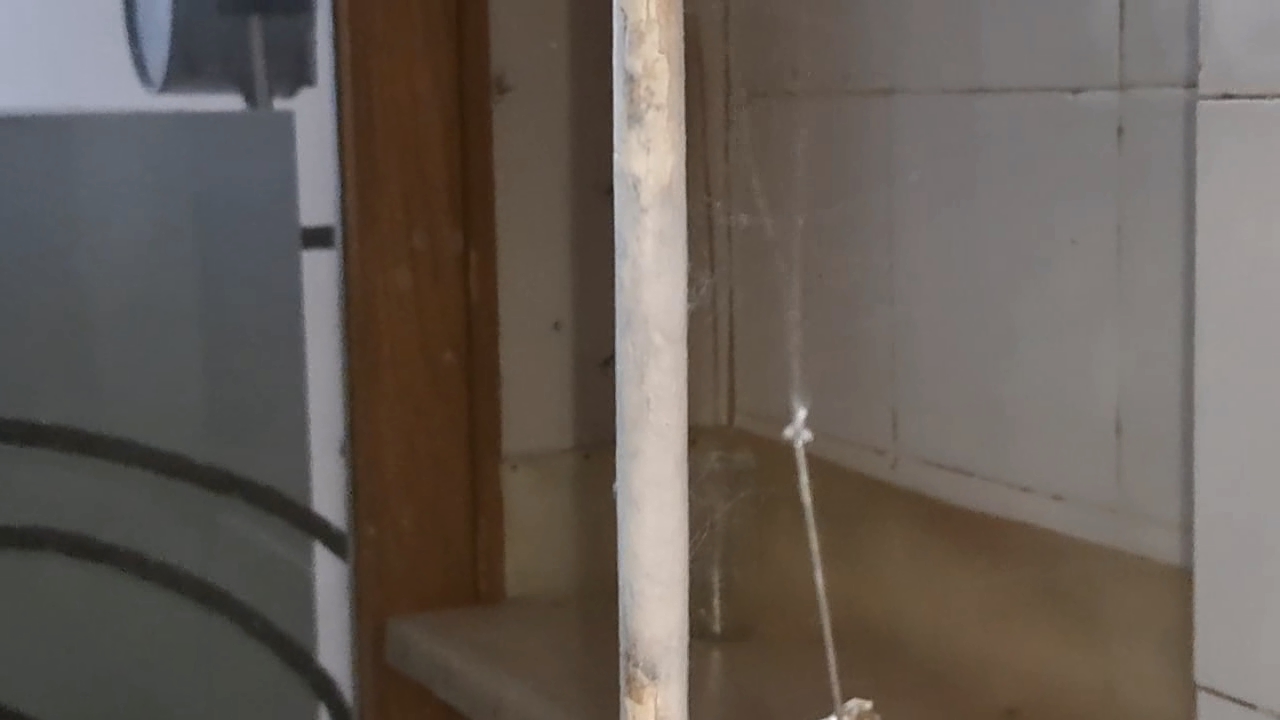
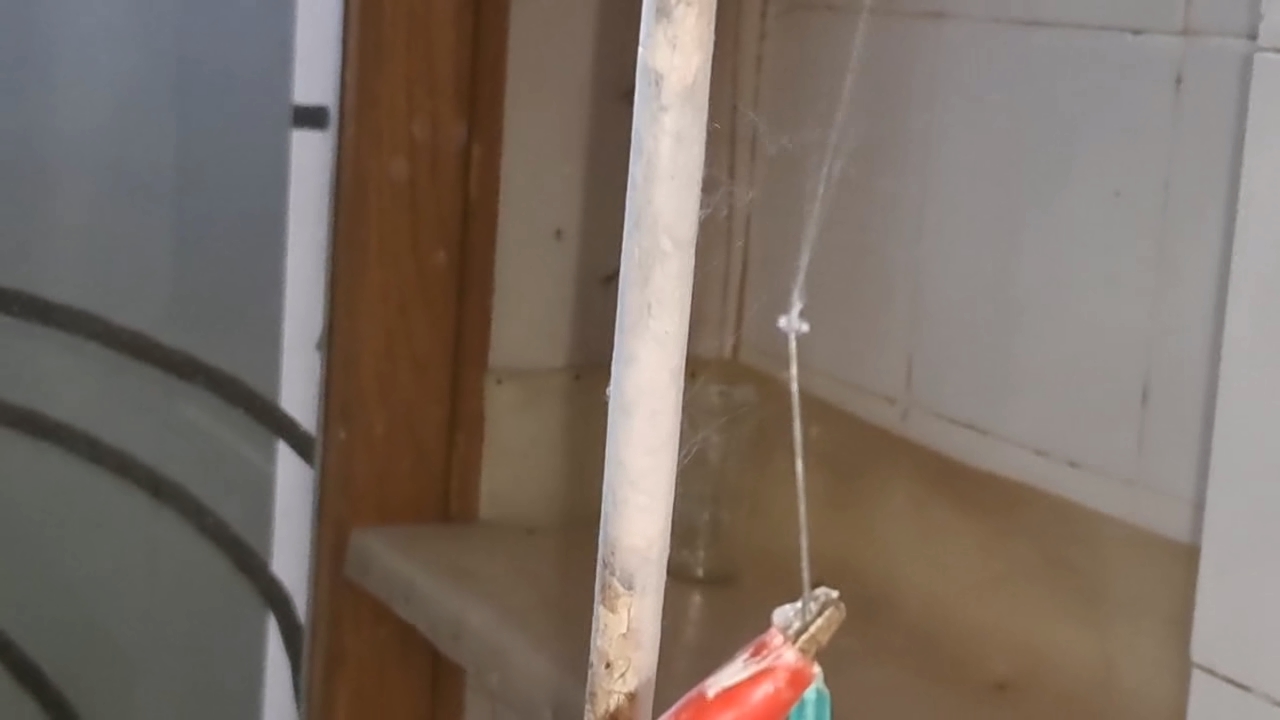
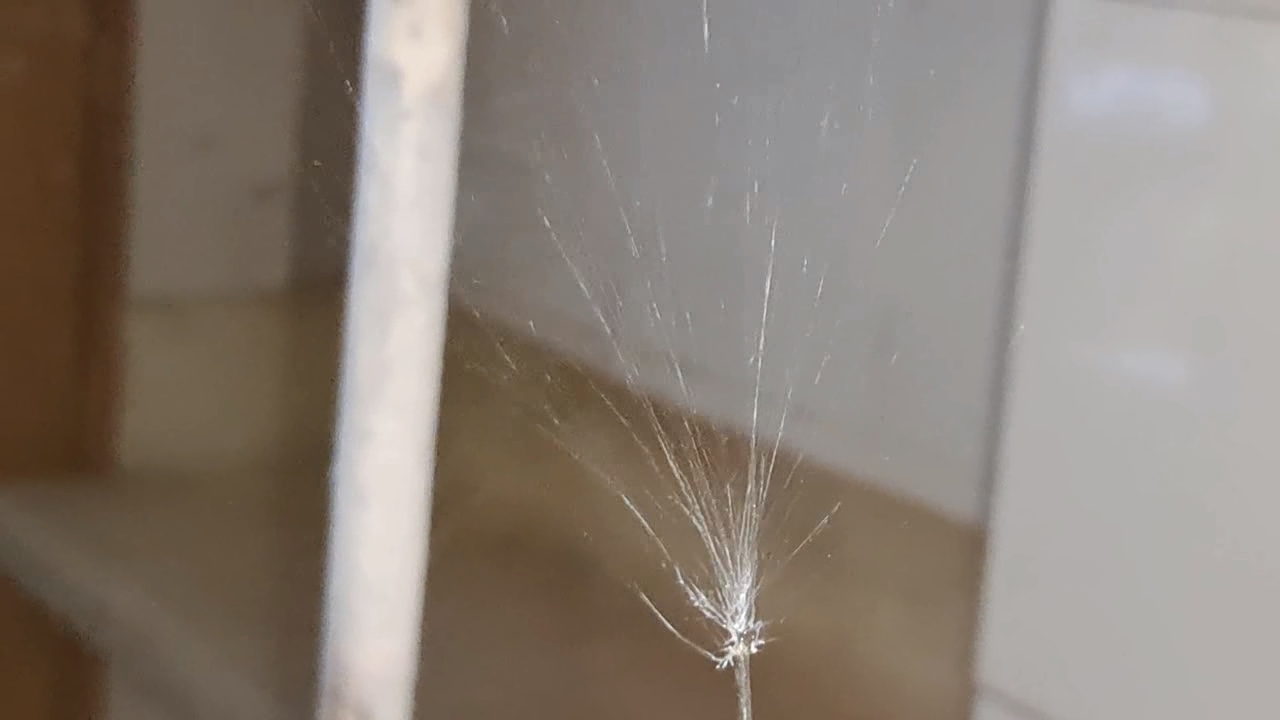
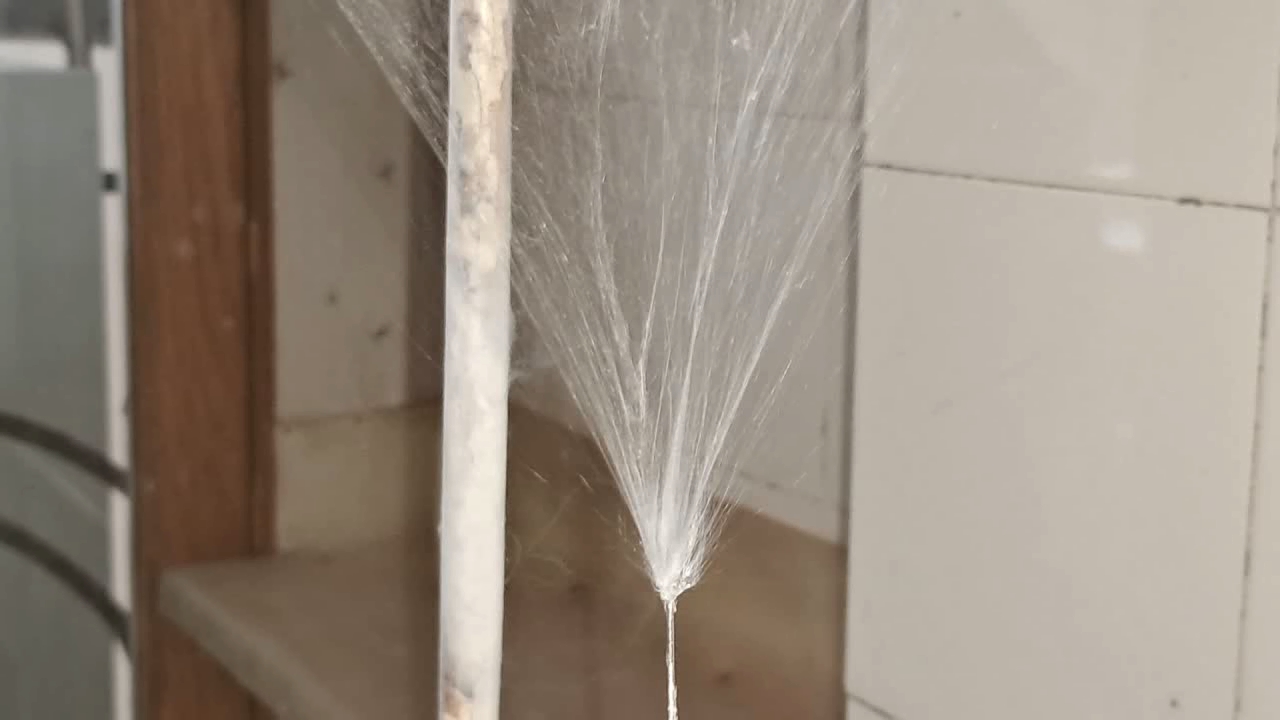
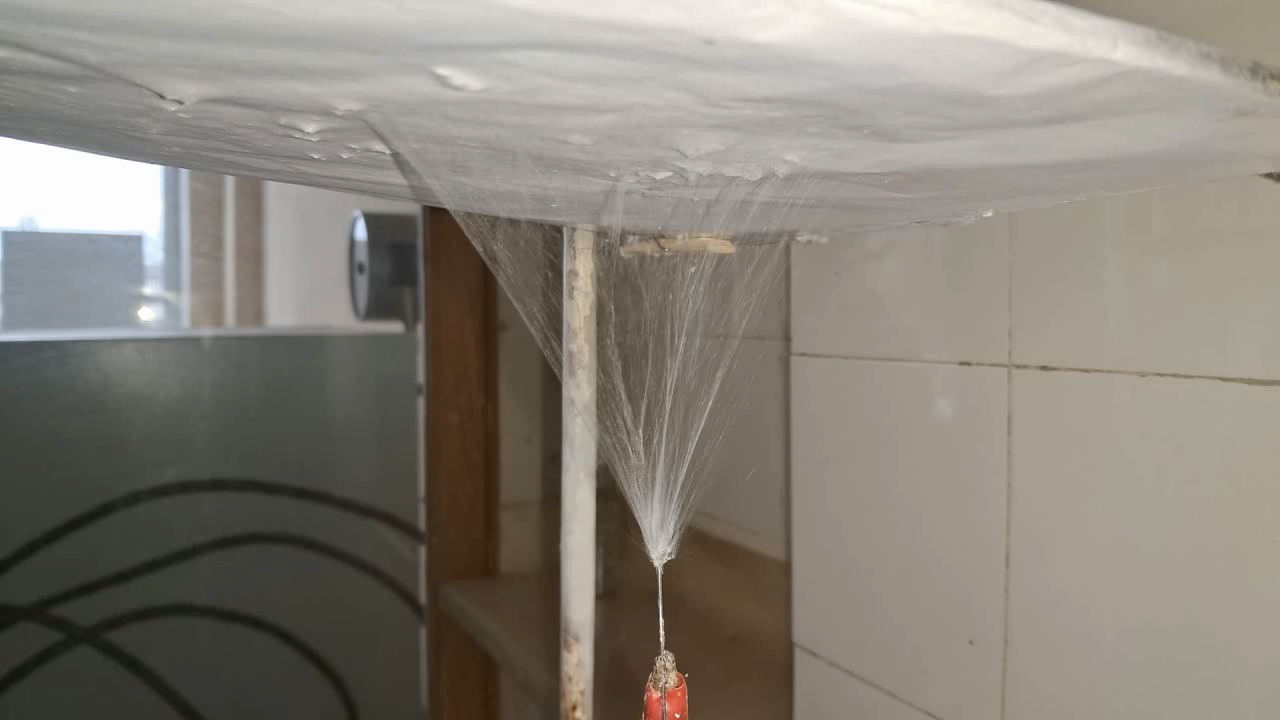
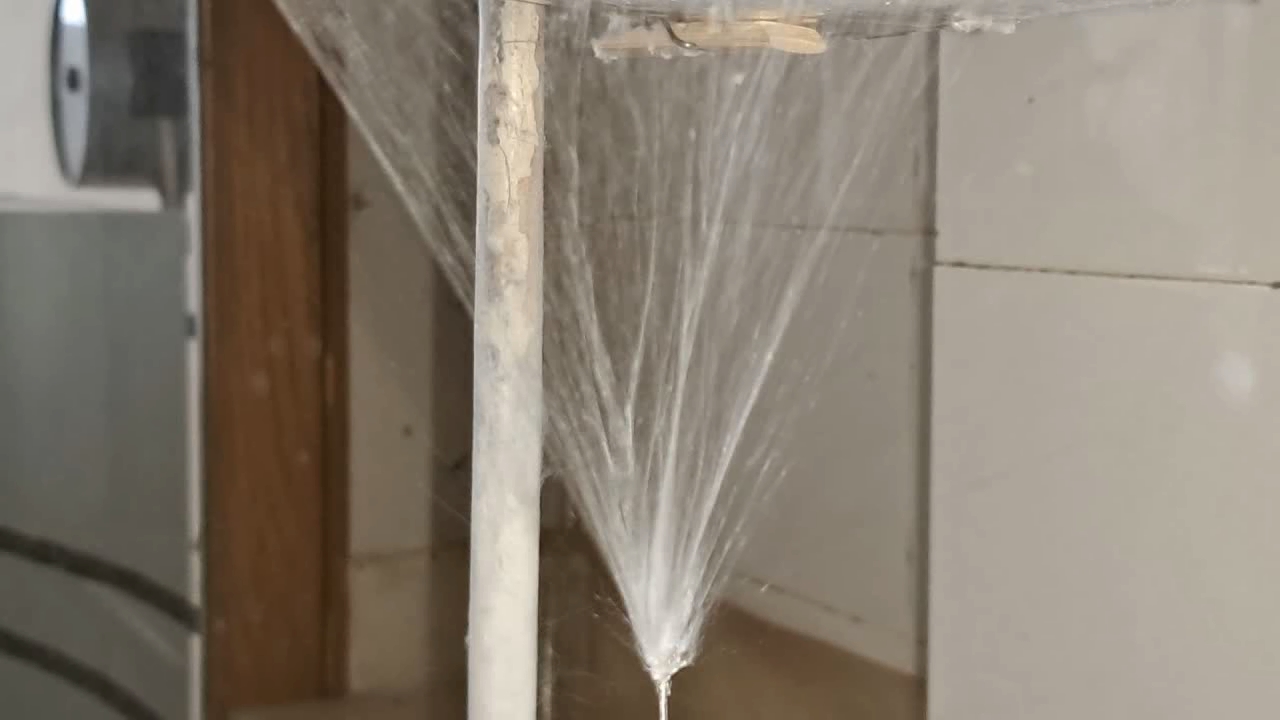
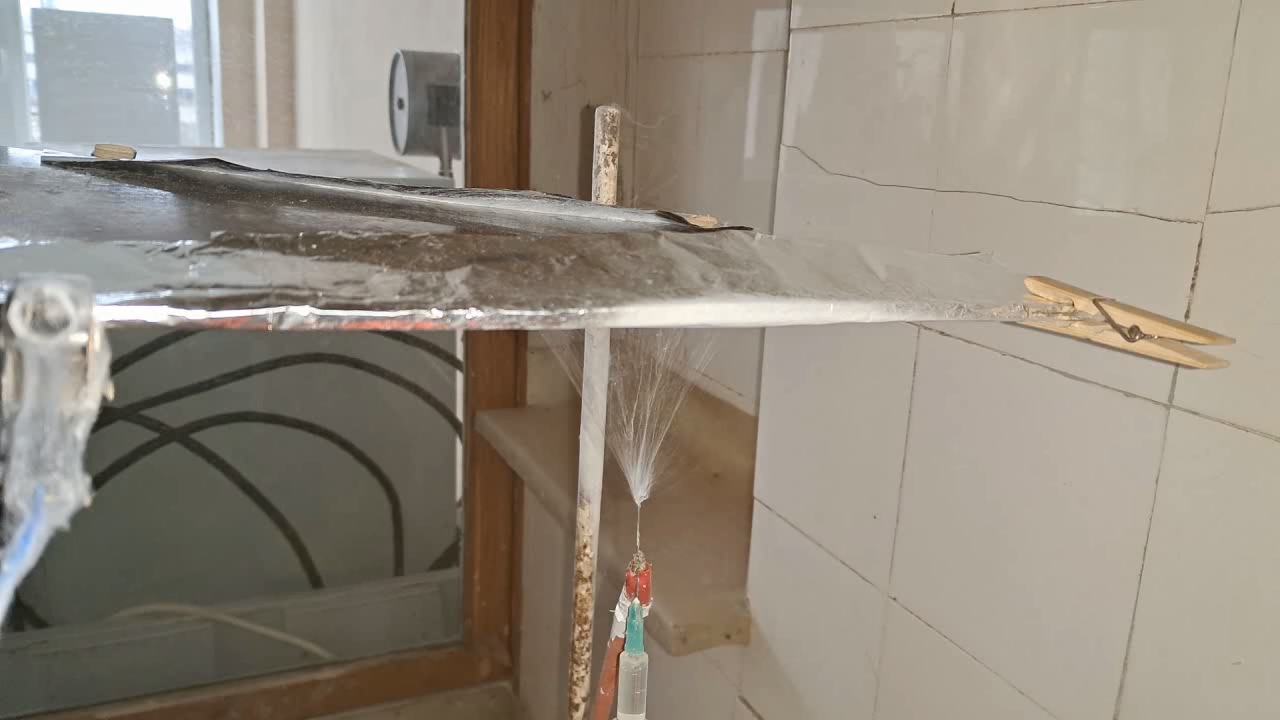
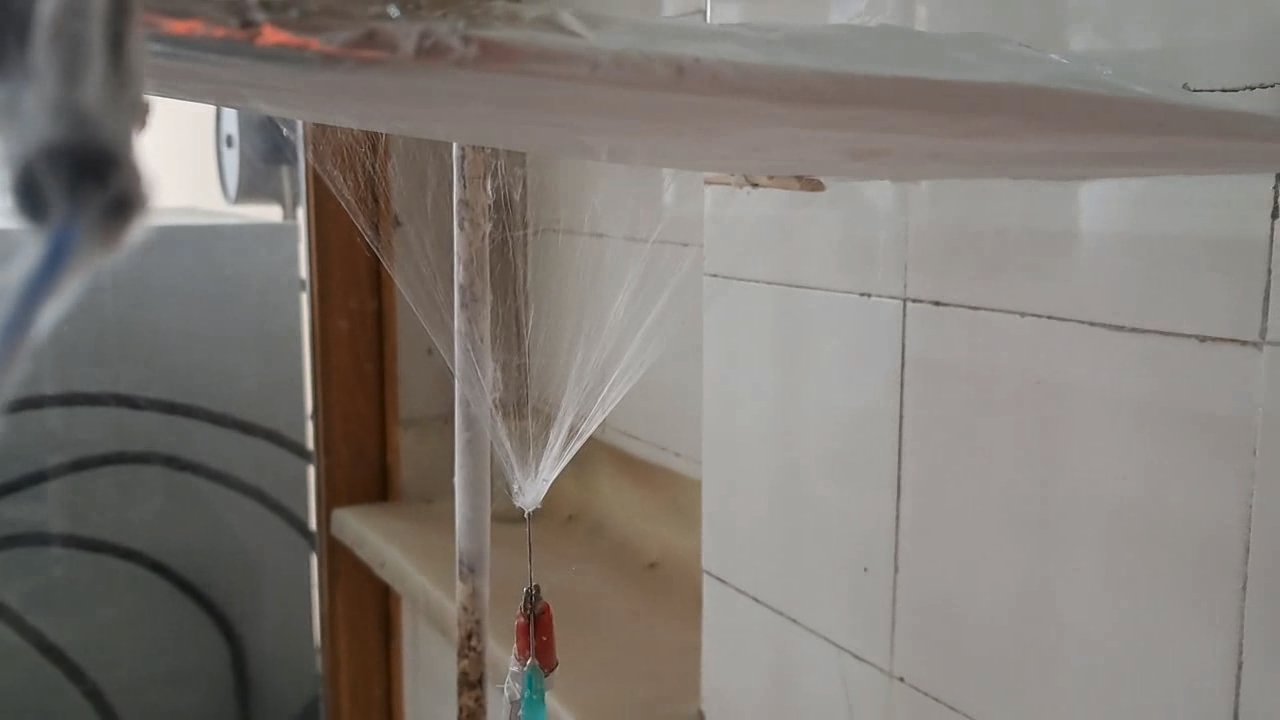
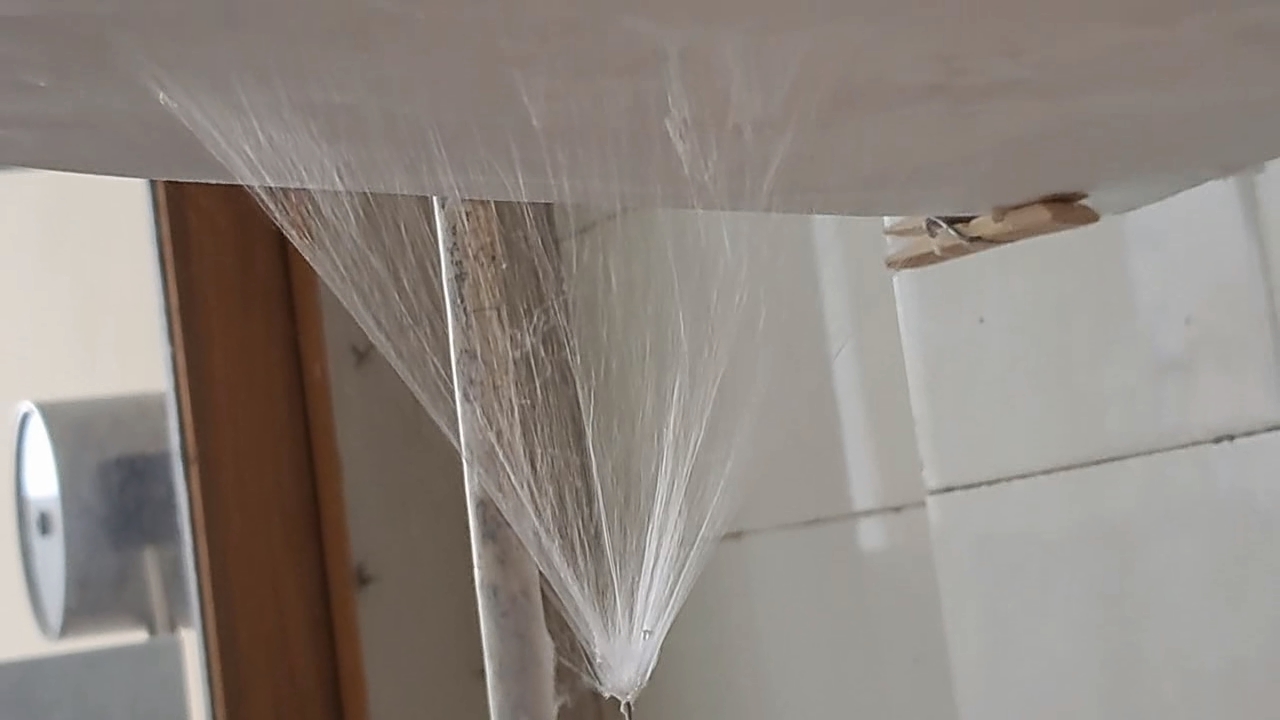
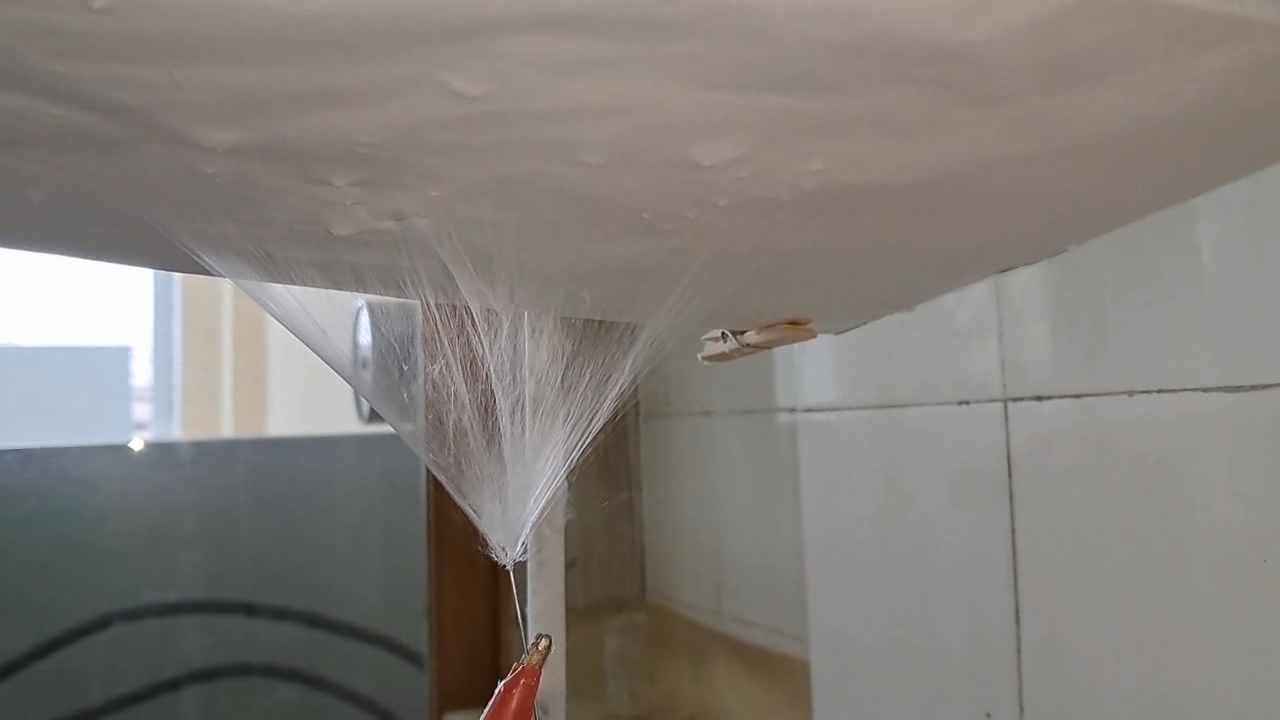
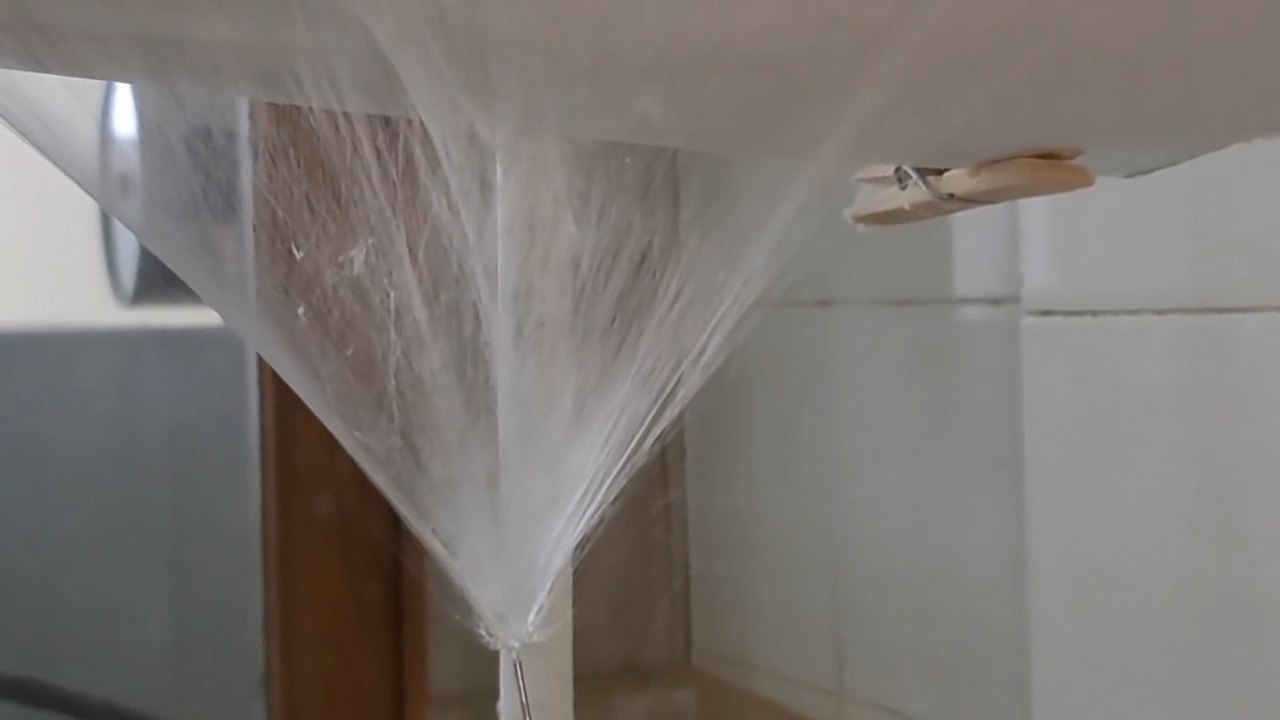
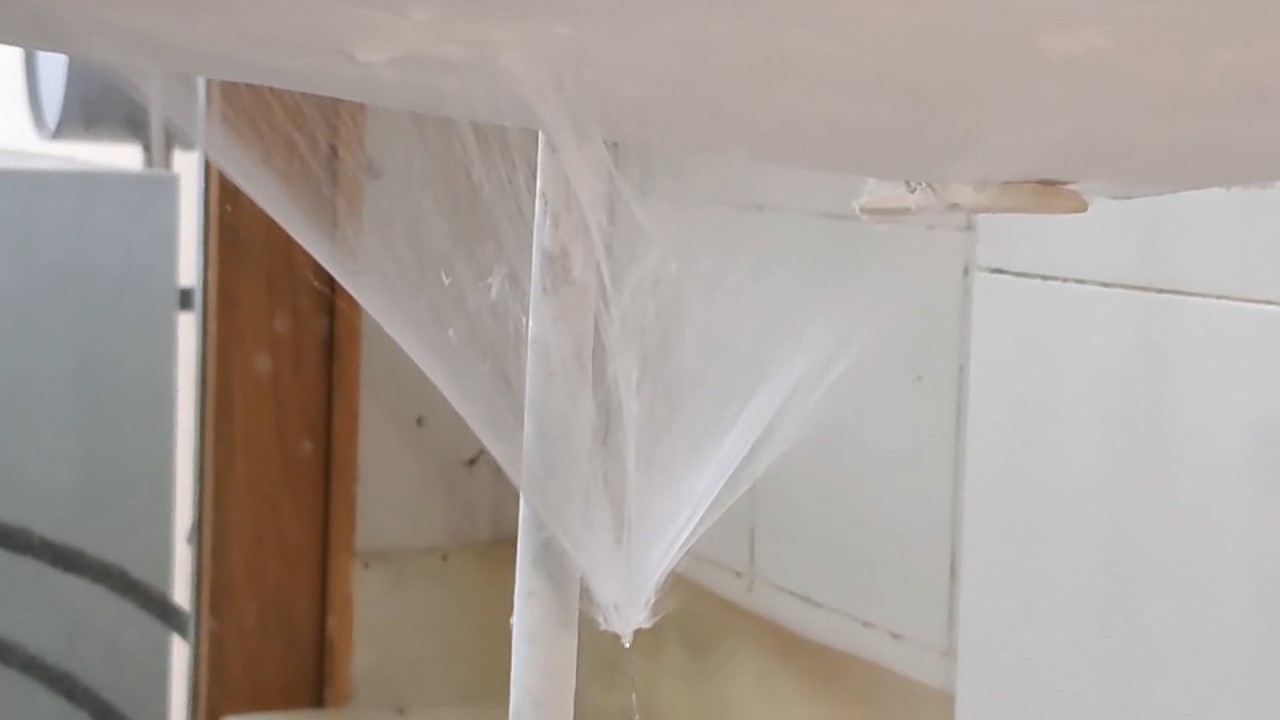
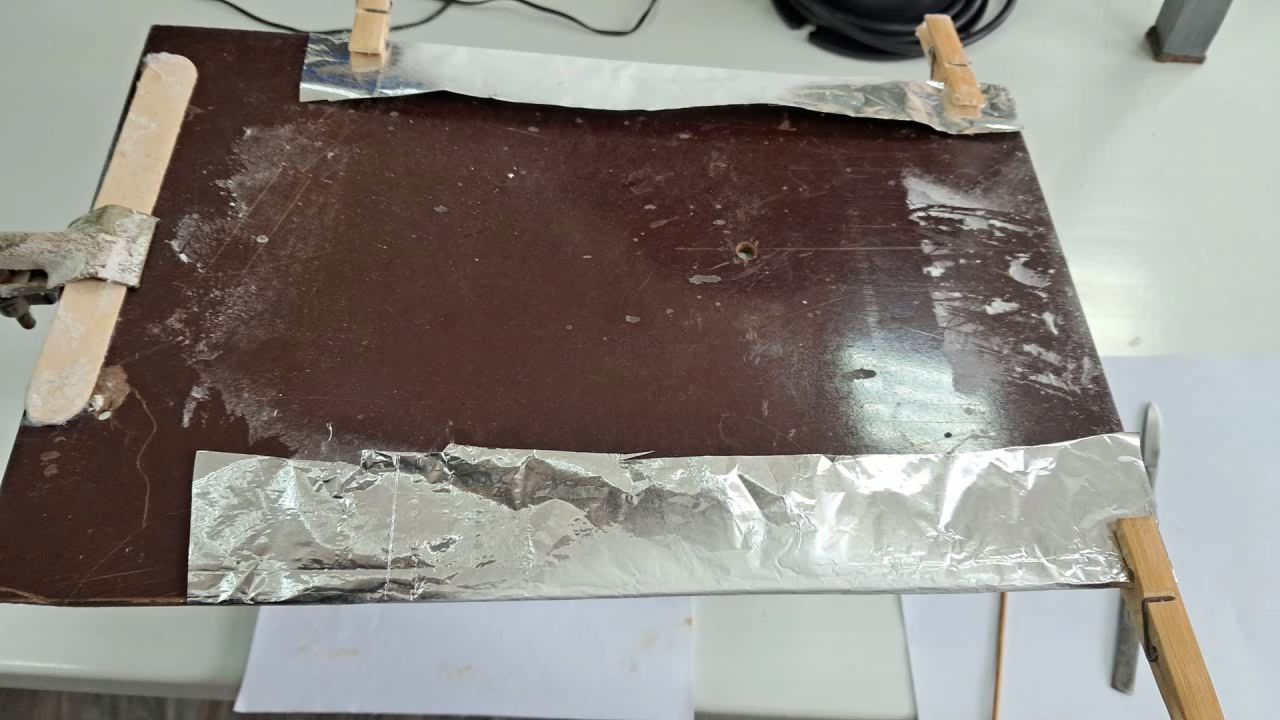
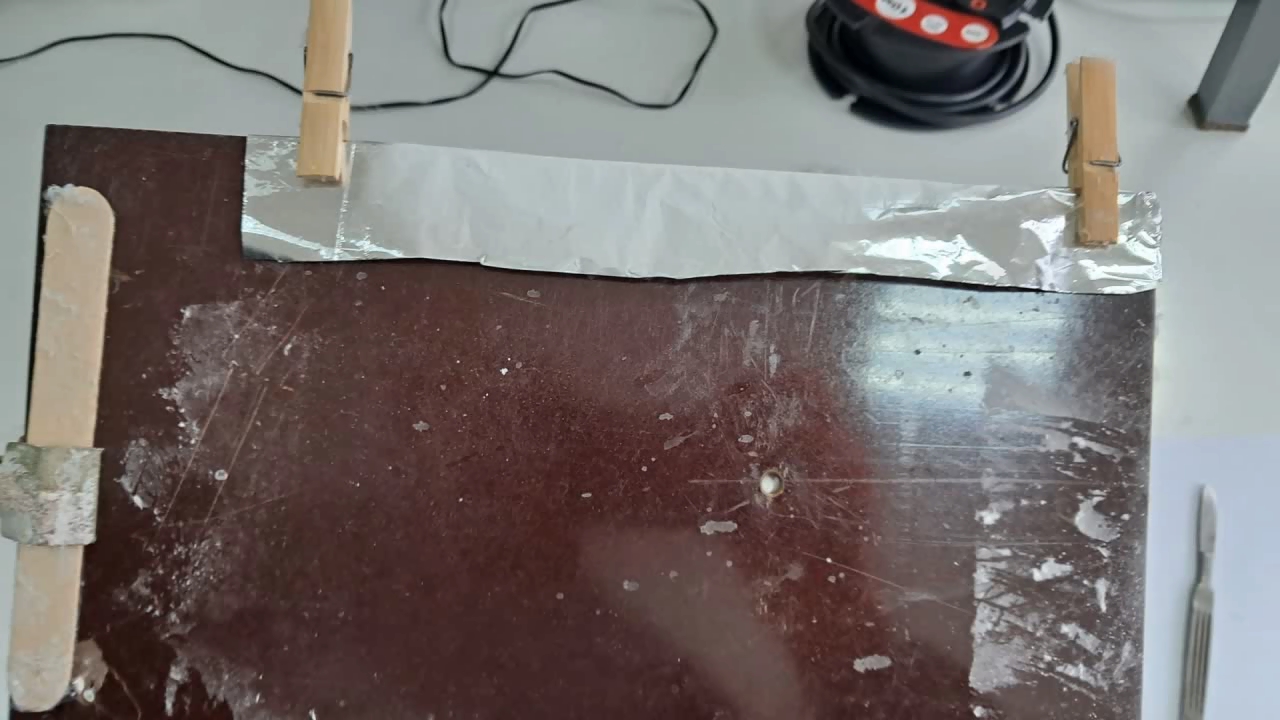
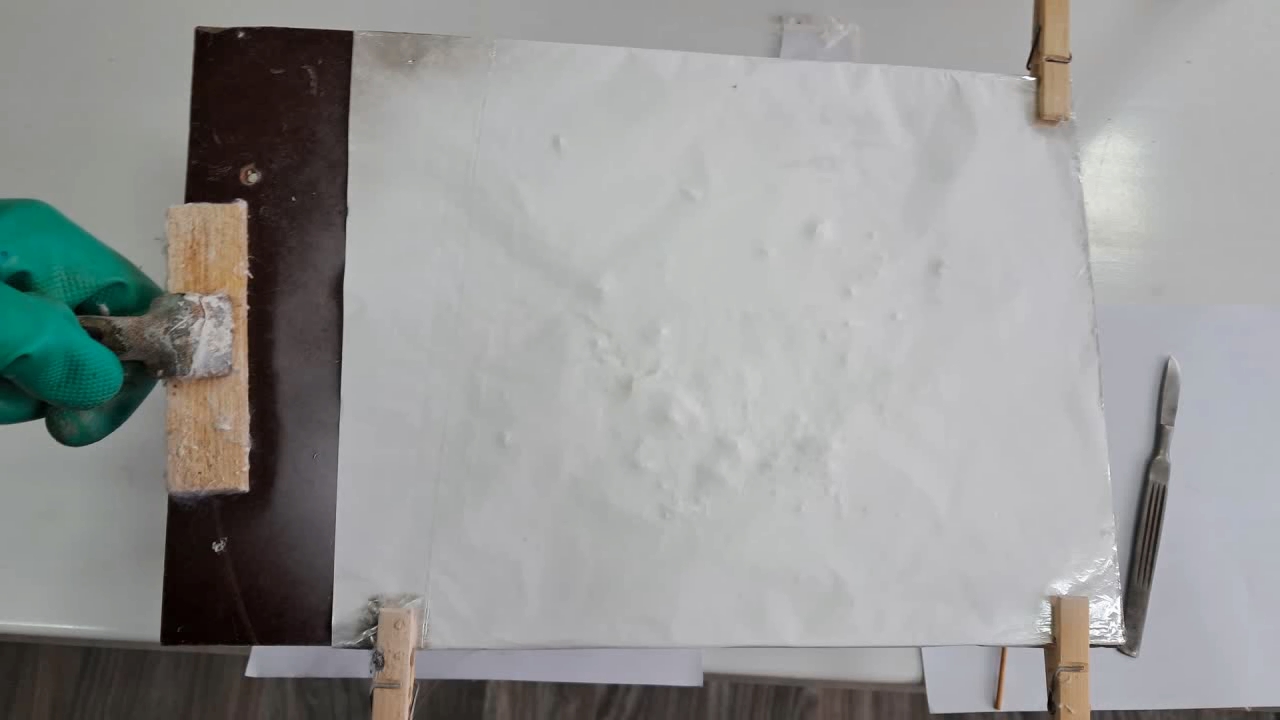
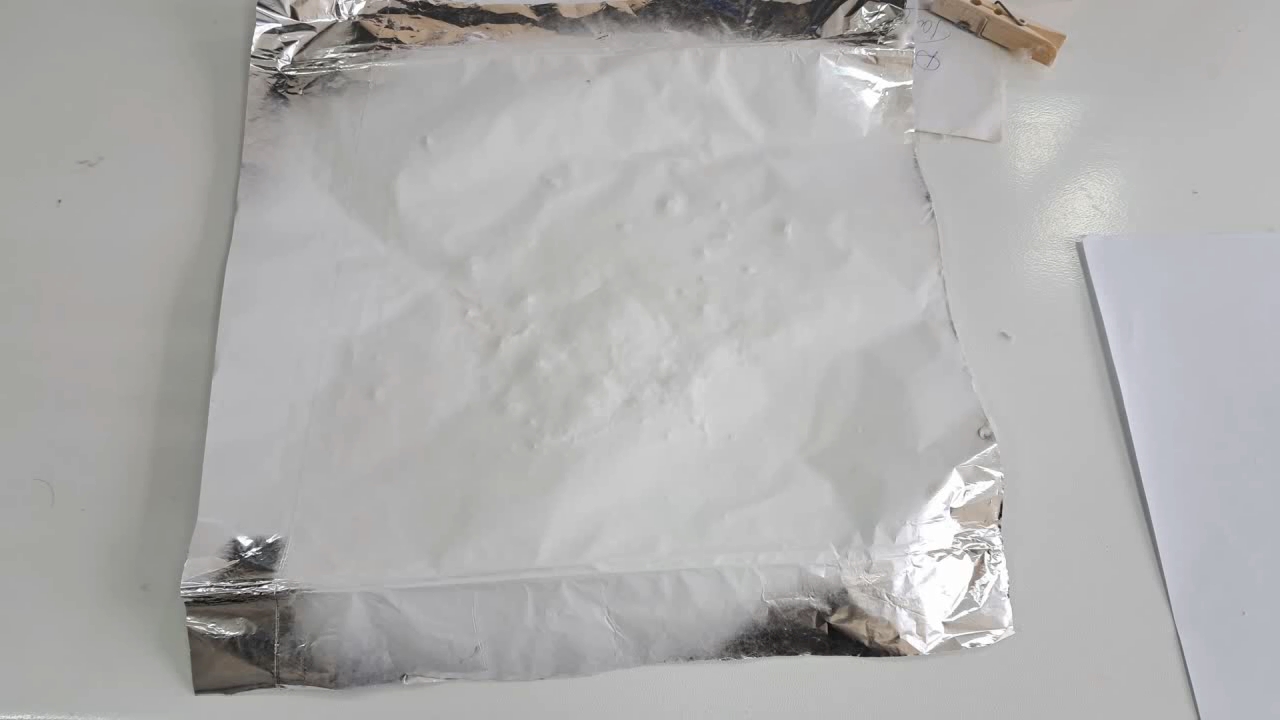
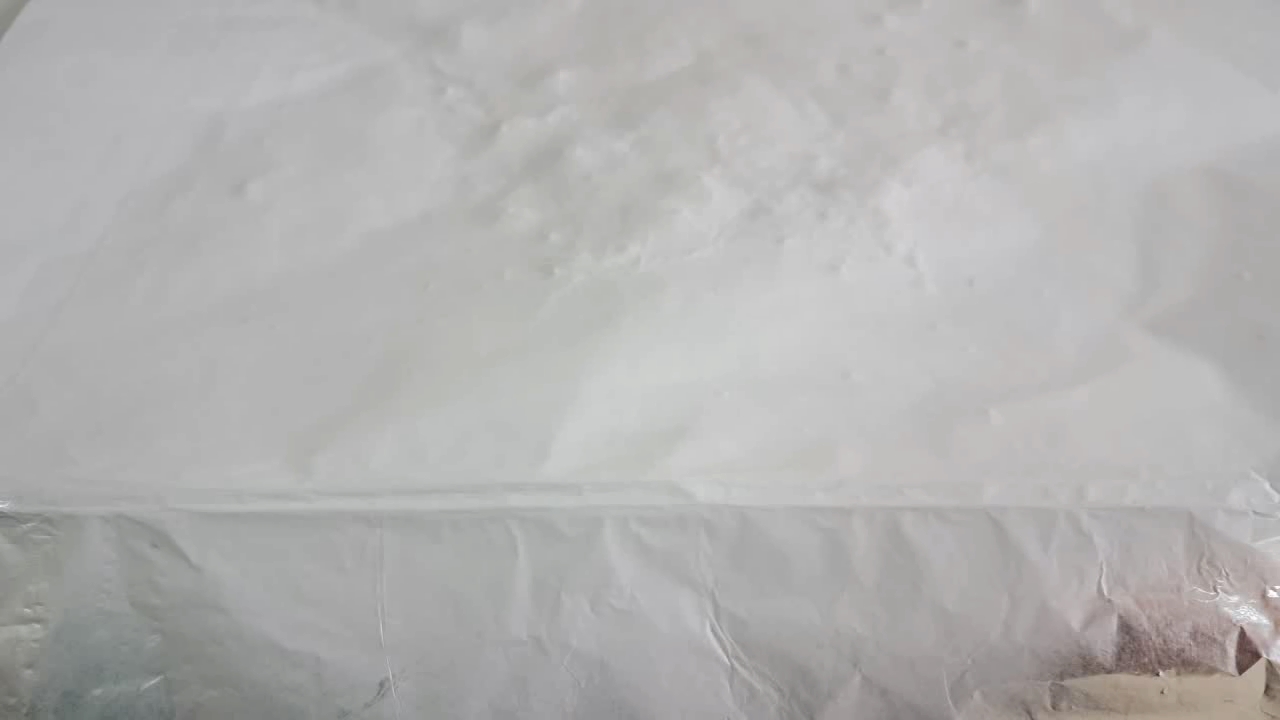
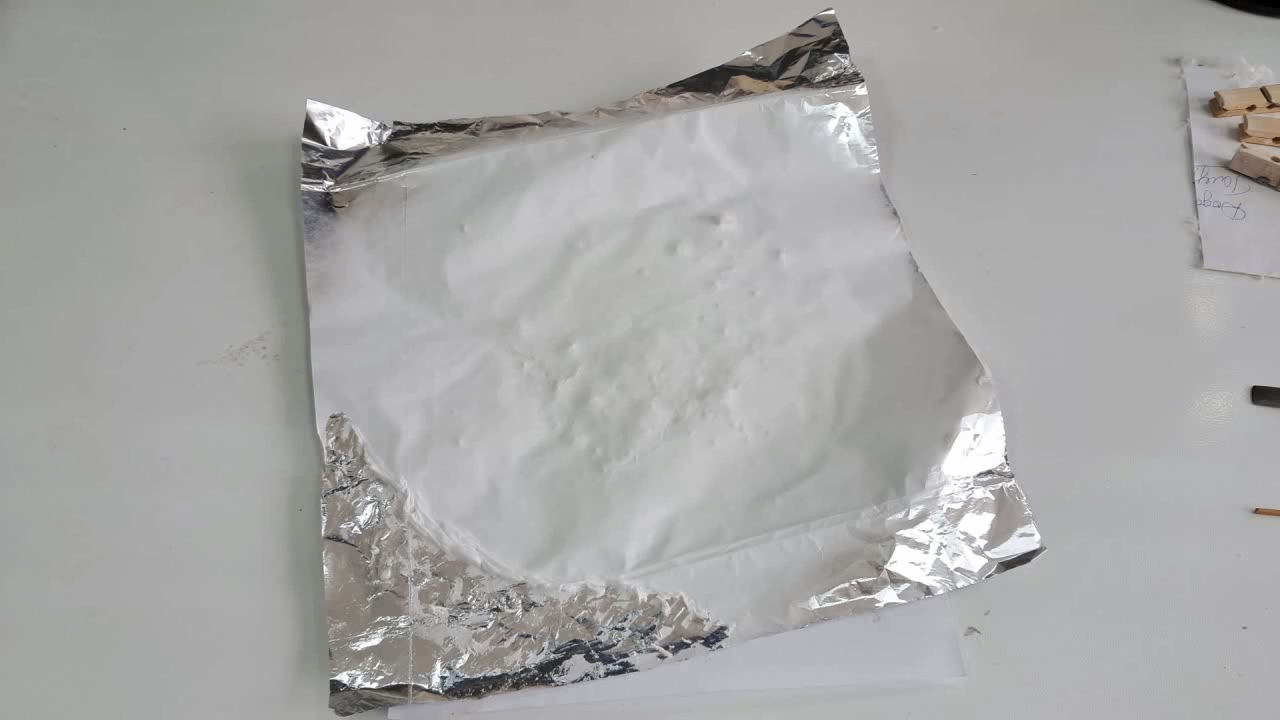
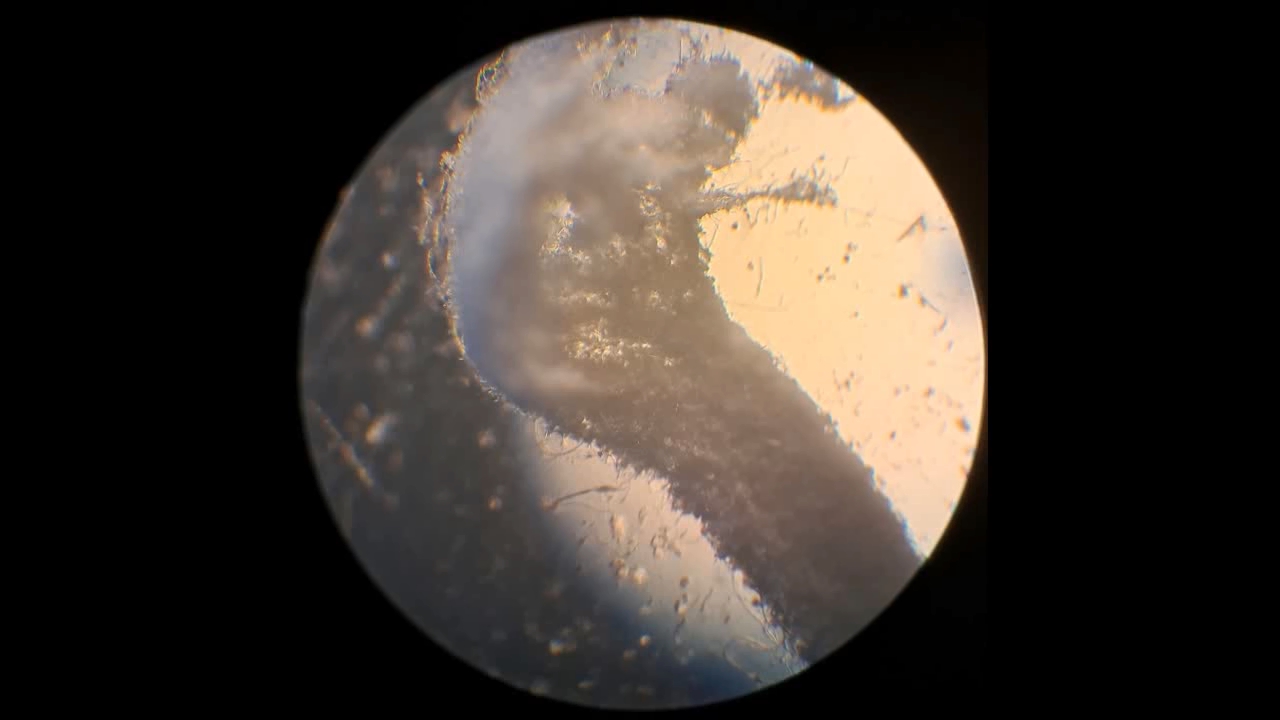
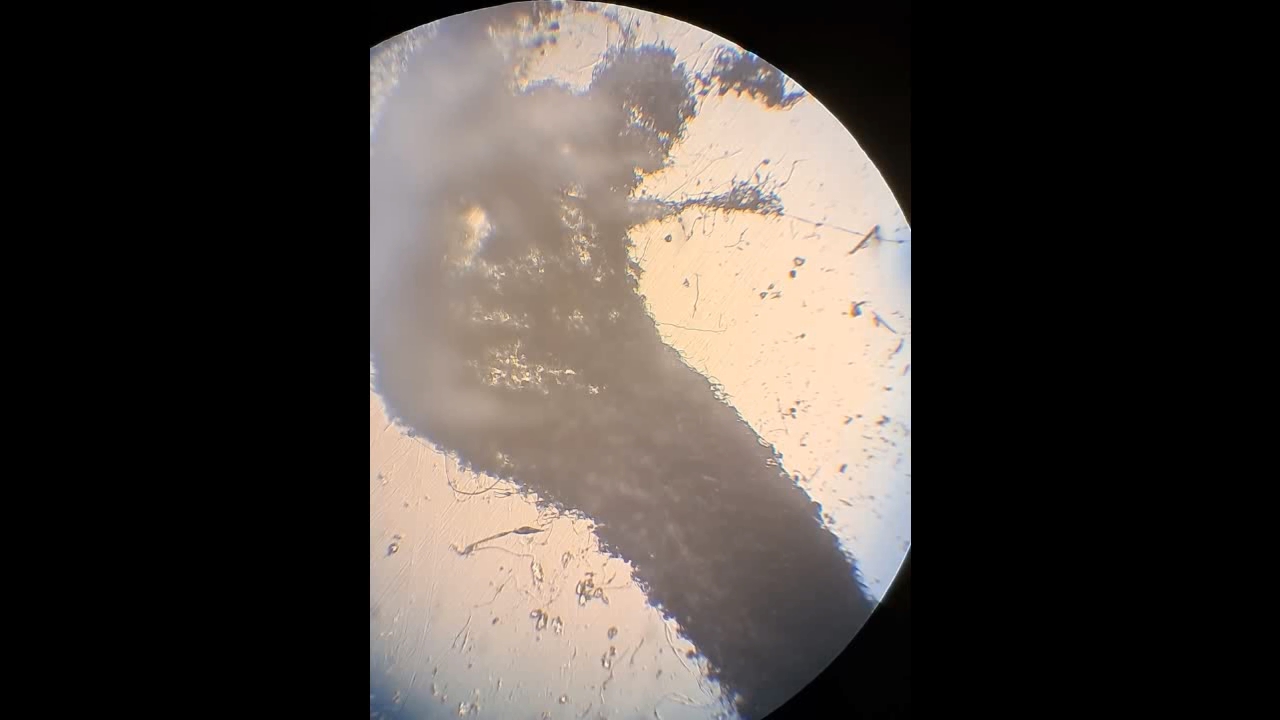
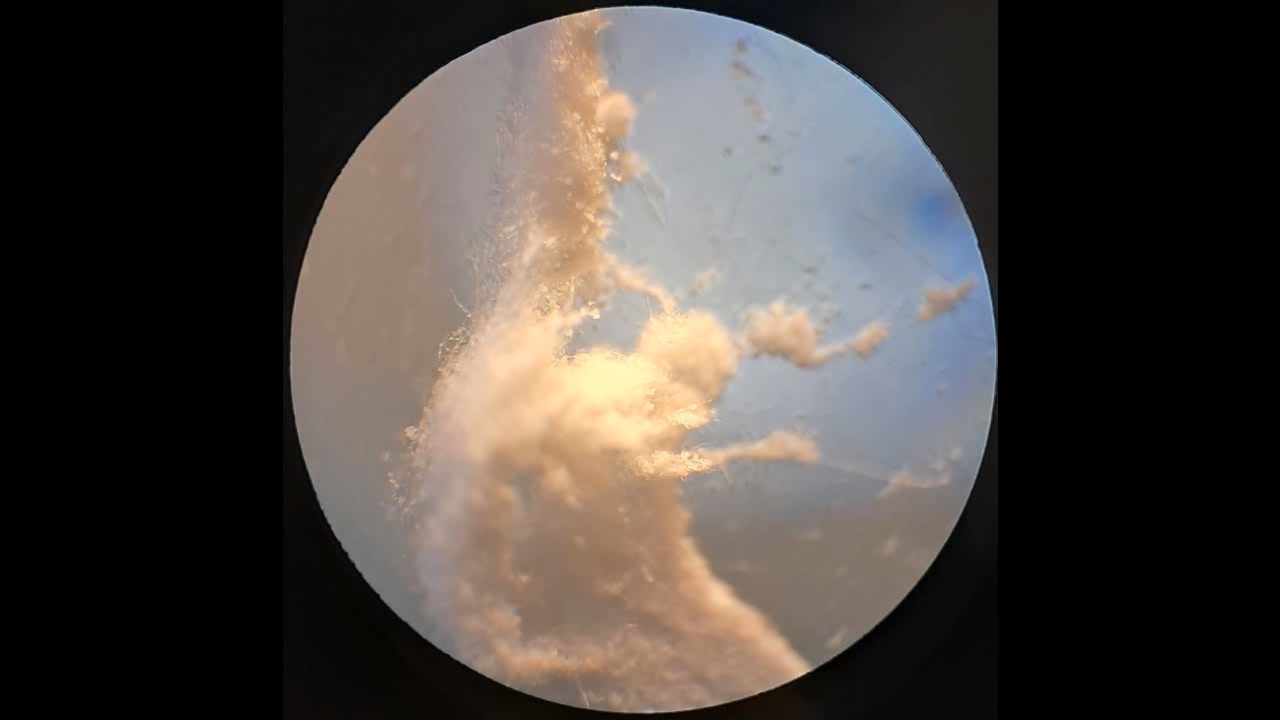
Электроспиннинг: раствор полистирола в тетрагидрофуране - Часть 15 I drew the solution into a syringe, secured it in the setup, turned on the high voltage, and started the solution flow. Streams of solution moved from the needle toward the collector and solidified along the way, forming fibers. Some fibers did not detach from the needle and instead formed a "beard" - at first modest, then quite impressive. From time to time, I removed this beard with a long plastic stick, but it kept forming again. A white coating, resembling cotton wool, formed on the collector. The reverse side of the electrode was also partially coated with fibrous polystyrene. Because the experiment was similar in appearance to previous ones, I limited the recording of photos and videos. However, examination of the resulting material under a microscope brought an unexpected result. The diameter of the polystyrene fibers obtained from the tetrahydrofuran solution turned out to be much smaller than that of the fibers produced by electrospinning polystyrene solutions in the "Acetone+" solvent. In contrast, fibers obtained from solutions in ethyl acetate and methylene chloride had significantly larger diameters than those formed from the "Acetone+" solvent. In other words, using tetrahydrofuran for polystyrene electrospinning resulted in fibers with a significantly smaller diameter compared to those obtained with the other solvents tested. The chemist colleague suggested that this might be due to the higher electrical conductivity of tetrahydrofuran compared with the other solvents I had used (or attempted to use) for electrospinning polystyrene. At first, I took his word for it, but then I decided to consult reference data. It turned out that tetrahydrofuran does indeed have higher electrical conductivity than hydrocarbon solvents such as hexane, but its conductivity is still low. Pure tetrahydrofuran is a good insulator and conducts electric current much less effectively than alcohols, acetic acid, or water. |
Electrospinning: Solution of Polystyrene in Tetrahydrofuran |
|
|
|
|
|
|
|
|
|
|
|
|
|
|
|
|
|
|
|
|
|
|
