Chemistry and Chemists № 1 2026
Journal of Chemists-Enthusiasts
| Content | Chemistry experiments - video | Physics experiments - video | Home Page - Chemistry and Chemists |
|
Chemistry and Chemists № 1 2026 Journal of Chemists-Enthusiasts |
Working with Radioactive Waste - pt.3, 4 Chemist |
|
Having noticed a mistake in the text, allocate it and press Ctrl-Enter
I recently wrote a story about my colleagues analyzing tritium in the air near a radioactive waste storage facility. They placed calcium chloride traps at specific locations.
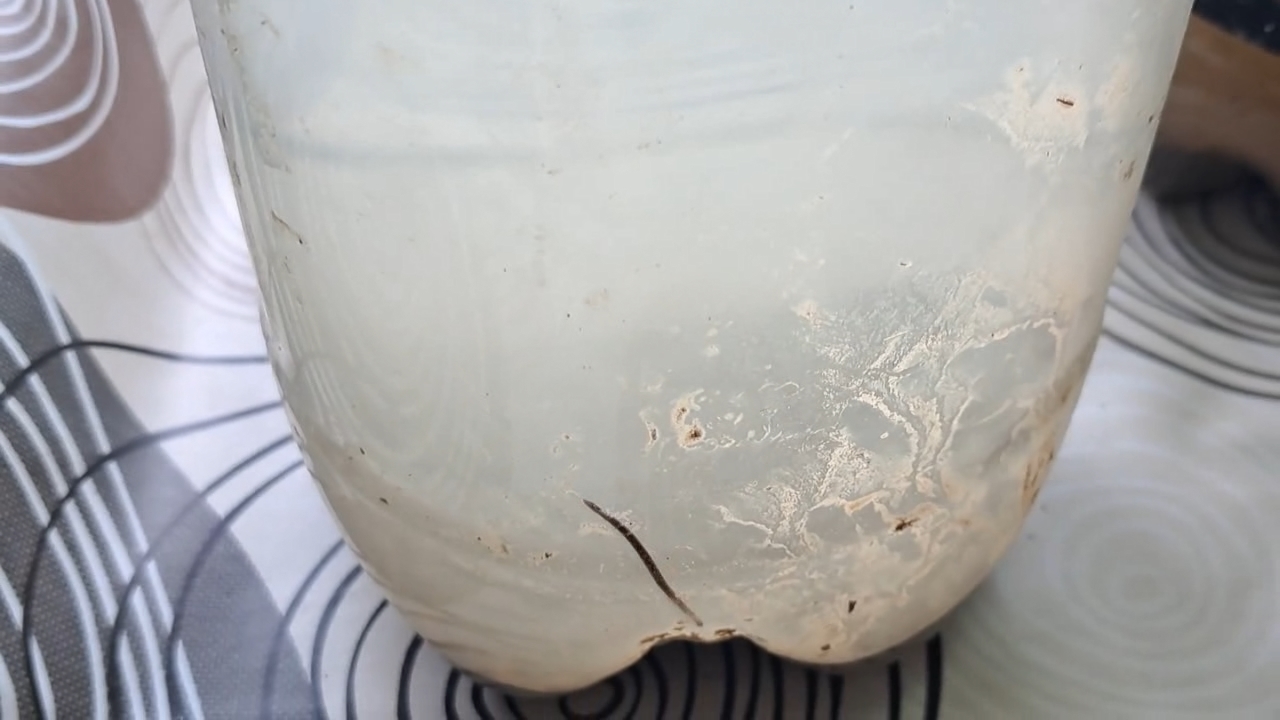
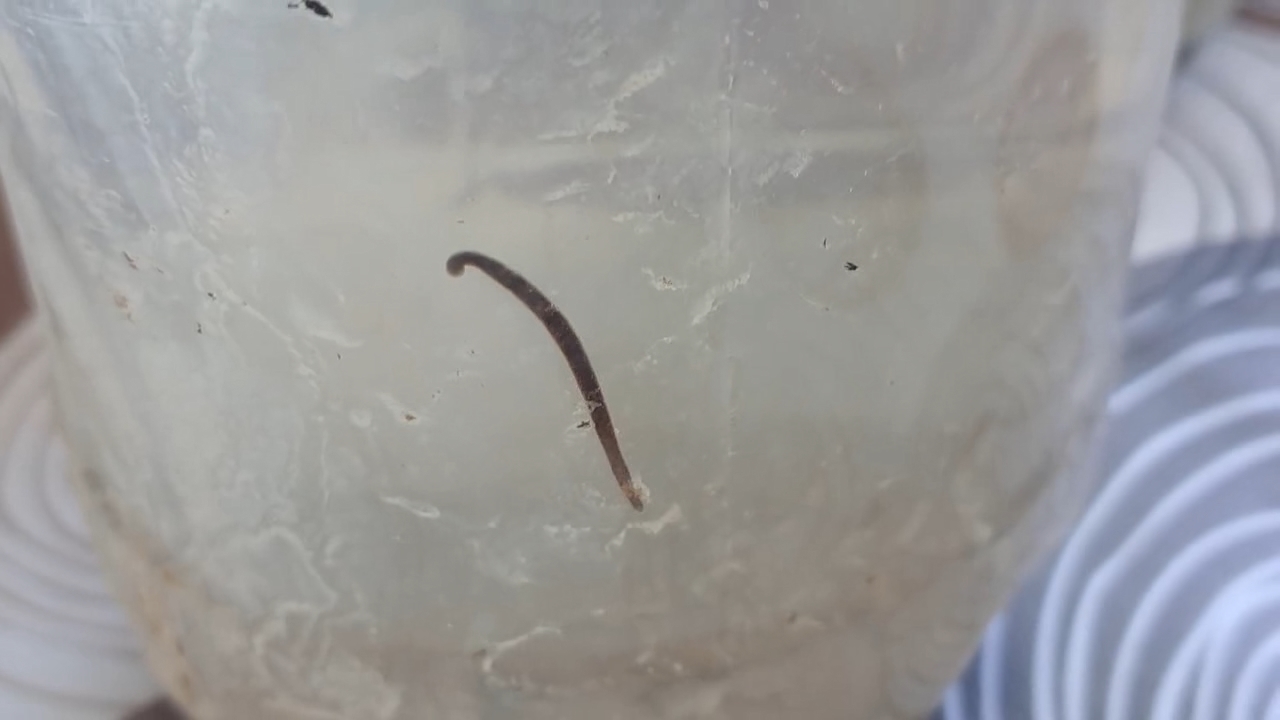
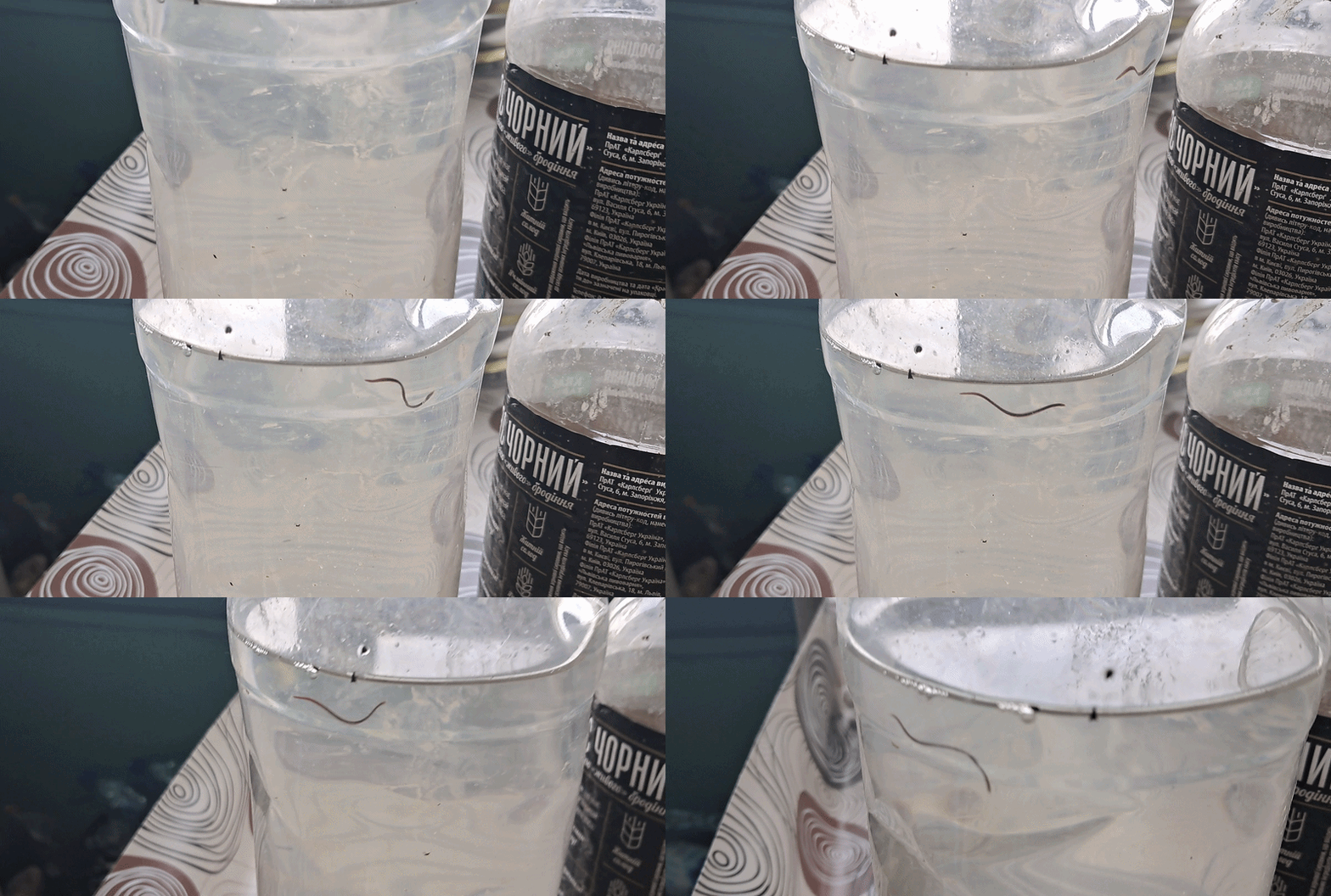
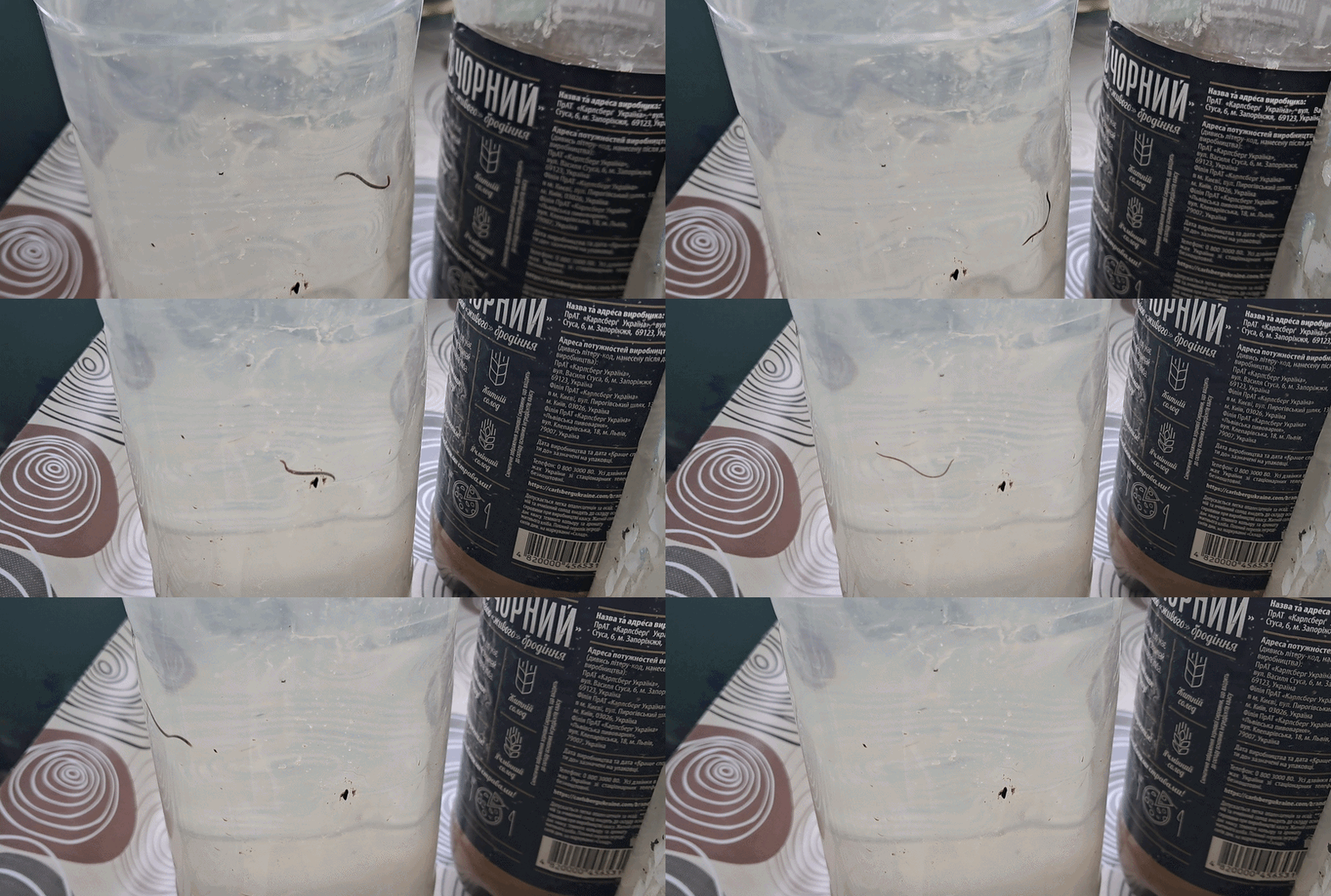
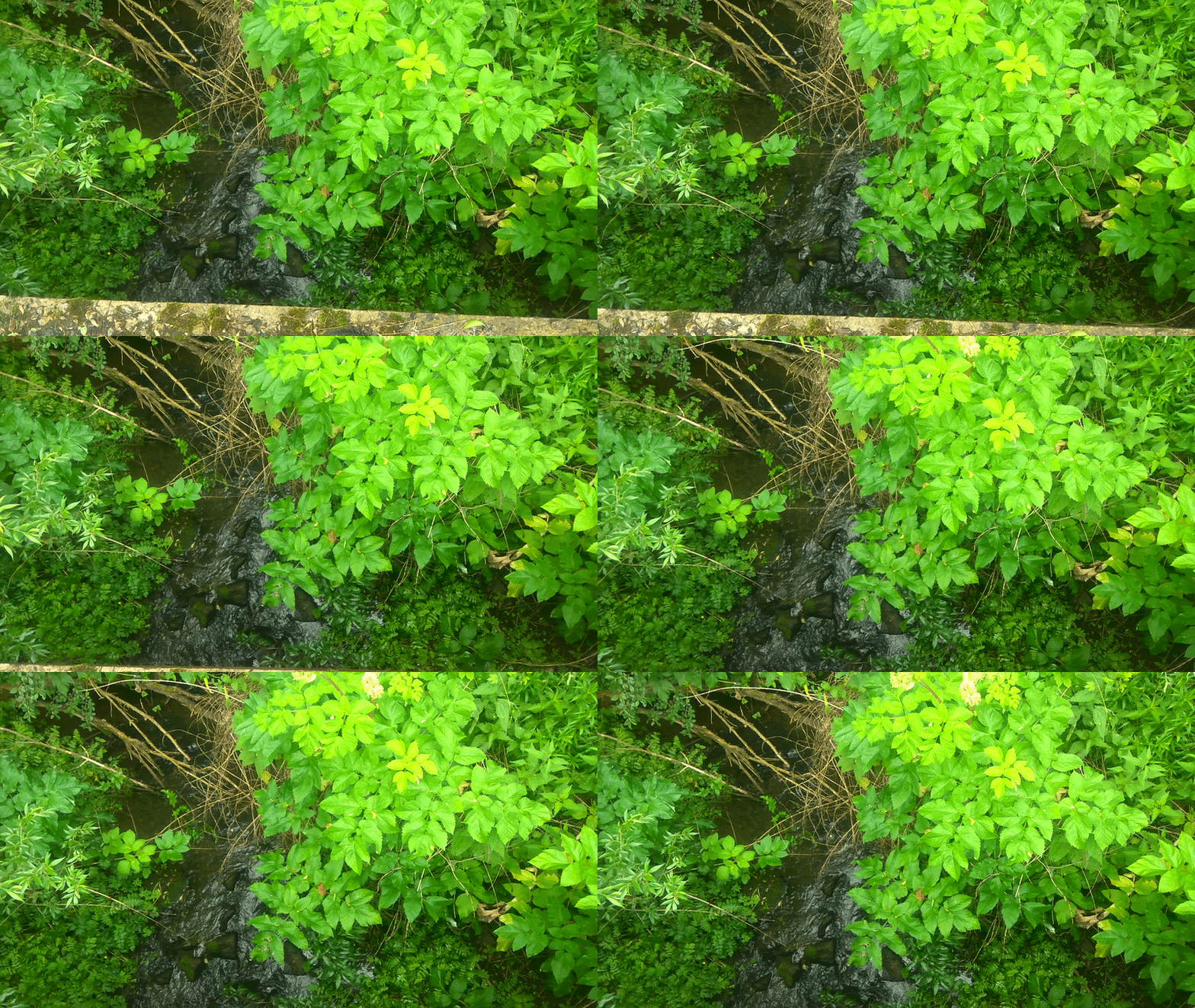
At the same time, these researchers collected several water samples. At first, I thought the samples had been taken from the stream. Outside the storage facility, there is a marshy area with a long, wide stream running through it. This stream is associated with a long and tragic incident. Many years ago, a "mini-Chornobyl" occurred within our city. The storage facility contains both solid and liquid radioactive waste. The liquid waste is stored in underground tanks, which could leak at any moment. No one knows how to detect such a leak in time or how to fix it - not because the task is inherently difficult, but because no qualified specialists remain; they were deliberately dismissed. Although the liquid waste contains dozens of radioactive isotopes, including tritiated water, it is not the primary hazard. If such a tank were to leak, the waste would be diluted by groundwater, the isotopes would be partially absorbed by the soil, and the concentration of contaminants would decrease significantly. In fact, one of the tanks has already partially leaked: some of the waste entered the groundwater, while the rest was pumped into adjacent tanks. After this incident, there are no reserve tanks left to pump the waste into if another reservoir were to leak. In addition to liquid waste, the facility contains a wide range of solid radioactive materials - from high-activity radium ampoules stored at the bottom of special wells to relatively low-activity sludge generated during natural gas production. Containers with this sludge are stored in a hangar, where they corrode and frequently leak. Beneath the floor of this hangar is another storage area containing tritium targets. These targets consist of titanium saturated with tritium and are used in nuclear physics. Essentially, they are a form of titanium hydride in which tritium replaces ordinary hydrogen. The tritium targets were stored there together with clothing from Chornobyl cleanup workers, large aluminum containers, and other contaminated materials. It is worth noting that radioactive materials from the nuclear power plant where the accident occurred were transported to our country's capital for disposal. This was the established procedure: to bring radioactive waste into the storage facility located within the limits of the large, densely populated city. Later, common sense prevailed over bureaucracy, and new storage facilities were built within the Chornobyl exclusion zone. The roof of the hangar covering the tritium storage area developed leaks, allowing water to seep inside. Through isotopic exchange, this water became enriched with tritium, then flowed downhill and entered the nearby stream. Downstream were single-story houses and vegetable gardens. This area had once been a separate village but has since been incorporated into the city. Residents were forcibly evacuated from their homes and given apartments in multi-story buildings on the opposite bank of the Dnipro. Eventually, the roof was repaired, and water infiltration into the tritium target storage area ceased. The radioactivity levels in the stream dropped to acceptable values. Many former residents later left their new apartments to their children and returned to their old homes. They preferred to live where they had spent most of their lives, despite the risks posed not only by the radioactive waste storage facility but also by a nearby municipal landfill site. I assumed that the three water samples brought to my laboratory had been taken from this stream. However, when I asked a staff member, I learned that this was not entirely the case. He had dug a hole at a specific location near the storage facility and filled three bottles with water. According to my colleagues, a small stream with a high tritium content had once flowed from this spot. Presumably, this water had come into contact with the tritium targets; I do not believe it was related to the previously mentioned leak from the liquid waste tank. Several years ago, I personally saw multiple holes in the roof of that same hangar. It appears that the roof has begun to leak again. The funds allocated for repairs were simply stolen, and no work was carried out. Rainwater may once again be entering the storage area containing the tritium targets. What was the tritium content of these water samples? I asked my colleagues. They replied: "The tritium content is about 5000 Bq/L - roughly the same as in the water absorbed by calcium chloride from the air." At that moment, I remembered that I had personally distilled nearly all of the calcium chloride samples. However, I had not distilled the water from these bottles - and no one else had either. This meant that the bottled samples had never been analyzed. They had simply been forgotten and were still sitting in my laboratory. In addition to water, the bottles contained a thin layer of clay at the bottom, introduced during sampling. It turned out that a small worm was living in one of the bottles. The tritiated water did not seem to affect it. The worm lived there for several months, and I often found myself watching it. From time to time, I even opened the bottle to let in fresh air - worms, after all, also require oxygen. I grew accustomed to this small creature and came to regard it almost as a friend. During the winter, the water in the bottles froze - the laboratory is not heated. I had never expected the temperature to drop below freezing, but it did. In the spring, the ice melted, and algae began to grow in the bottles. But I never saw the little worm again. I failed to protect my friend. |
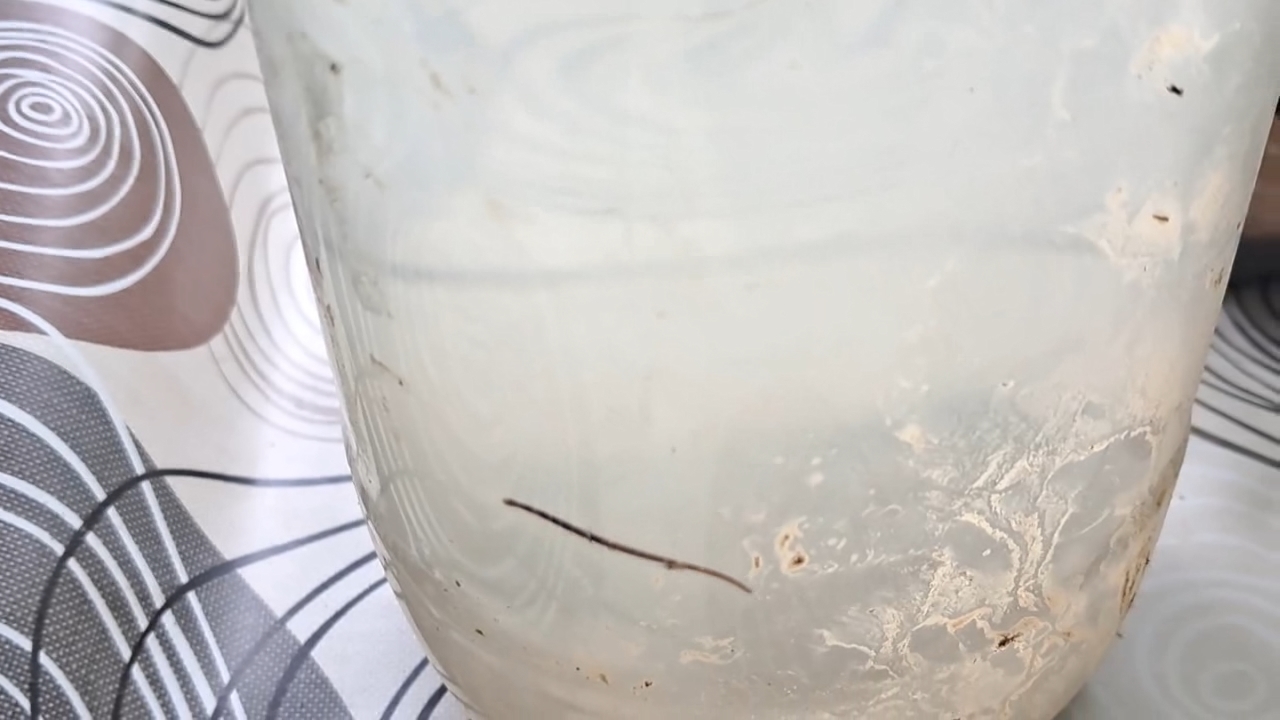
The Worm in Tritiated Water |
|
|
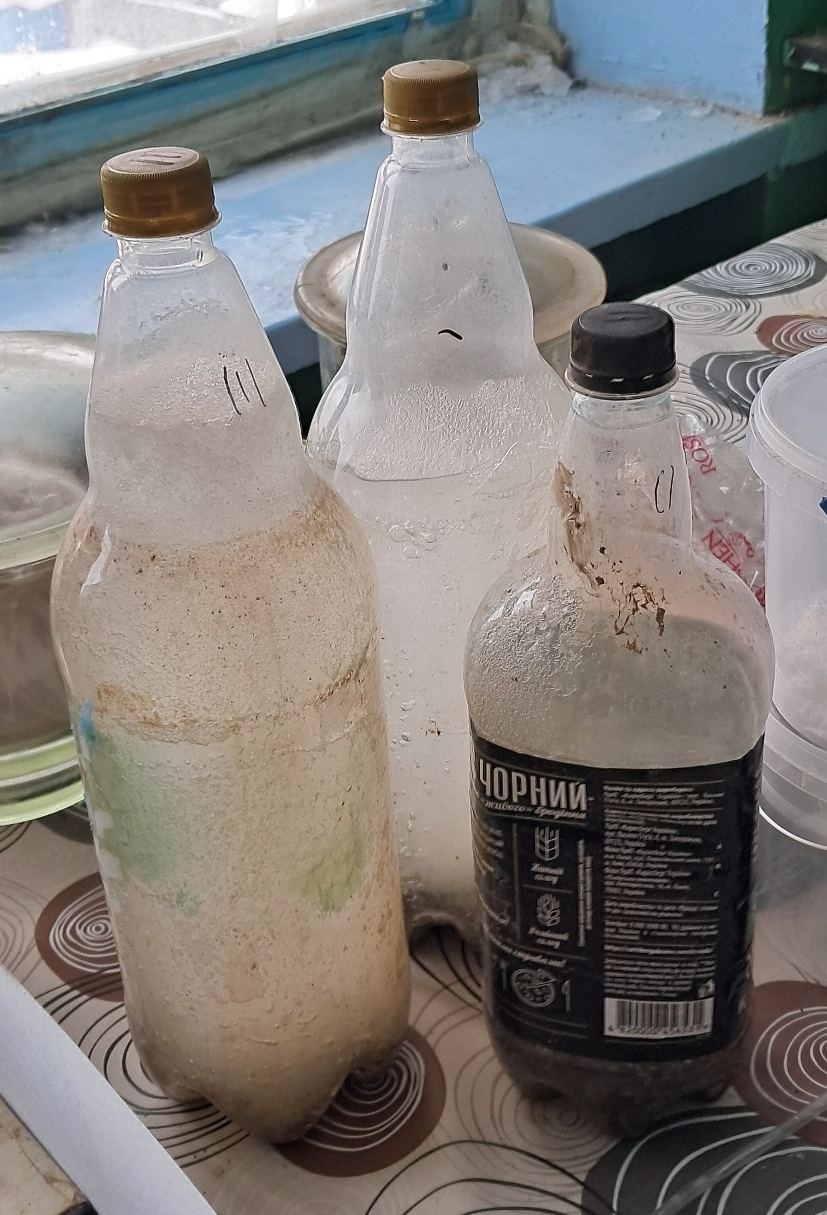
The samples have frozen |
|
|
The stream near the radioactive waste storage facility |
