Chemistry and Chemists № 1 2026
Journal of Chemists-Enthusiasts
| Content | Chemistry experiments - video | Physics experiments - video | Home Page - Chemistry and Chemists |
|
Chemistry and Chemists № 1 2026 Journal of Chemists-Enthusiasts |
Experiments with Universal Indicator - pt.4, 5 Chemist |
|
Having noticed a mistake in the text, allocate it and press Ctrl-Enter
Color Change of Universal pH Indicator - Part 4
The frozen acetic acid could have been melted in a water bath. Alternatively, citric acid could have been dissolved in water, and other weak acids were also available. I could have asked my colleagues for help. Moreover, after the experiment, I remembered that the laboratory had a 70% acetic acid solution, which only begins to freeze at -27°C.
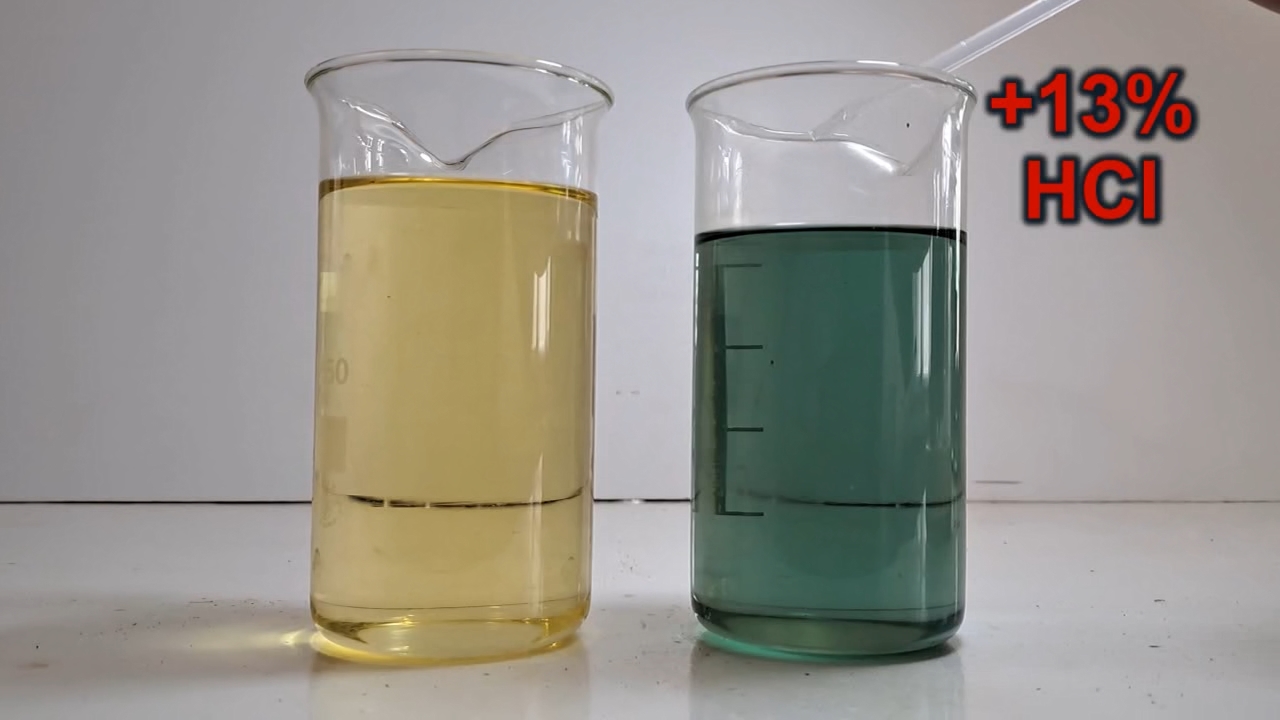
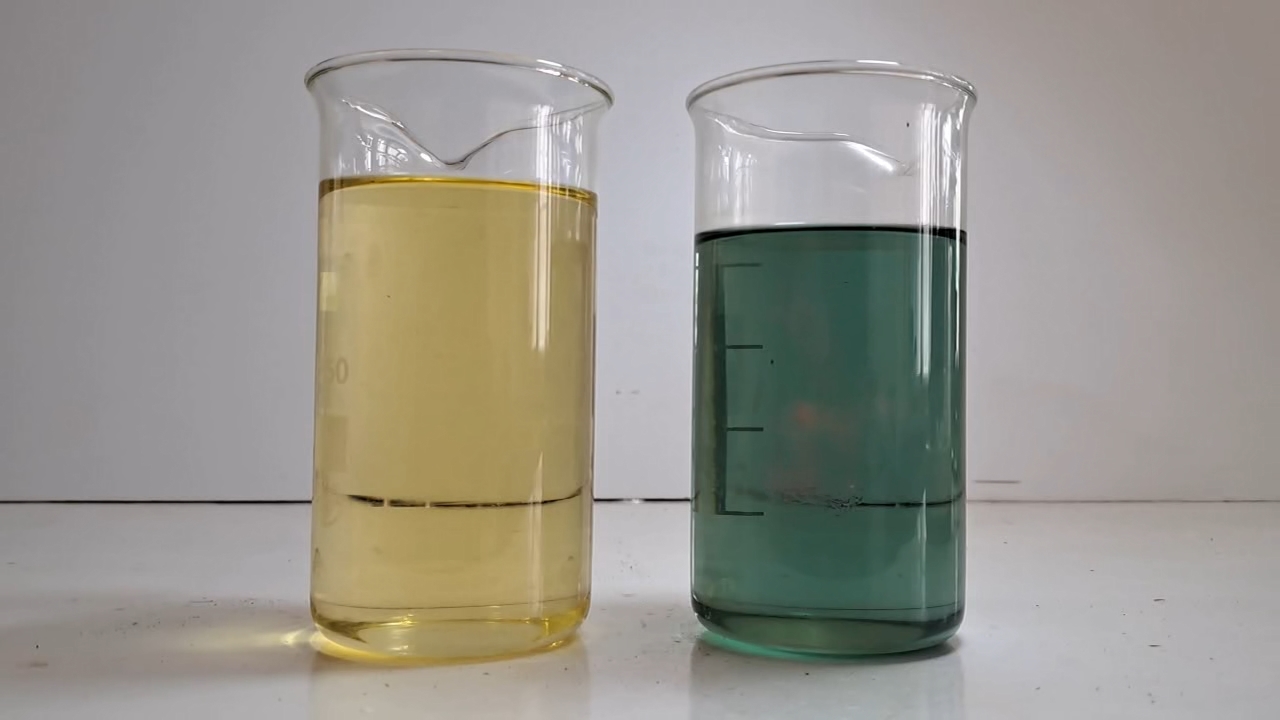
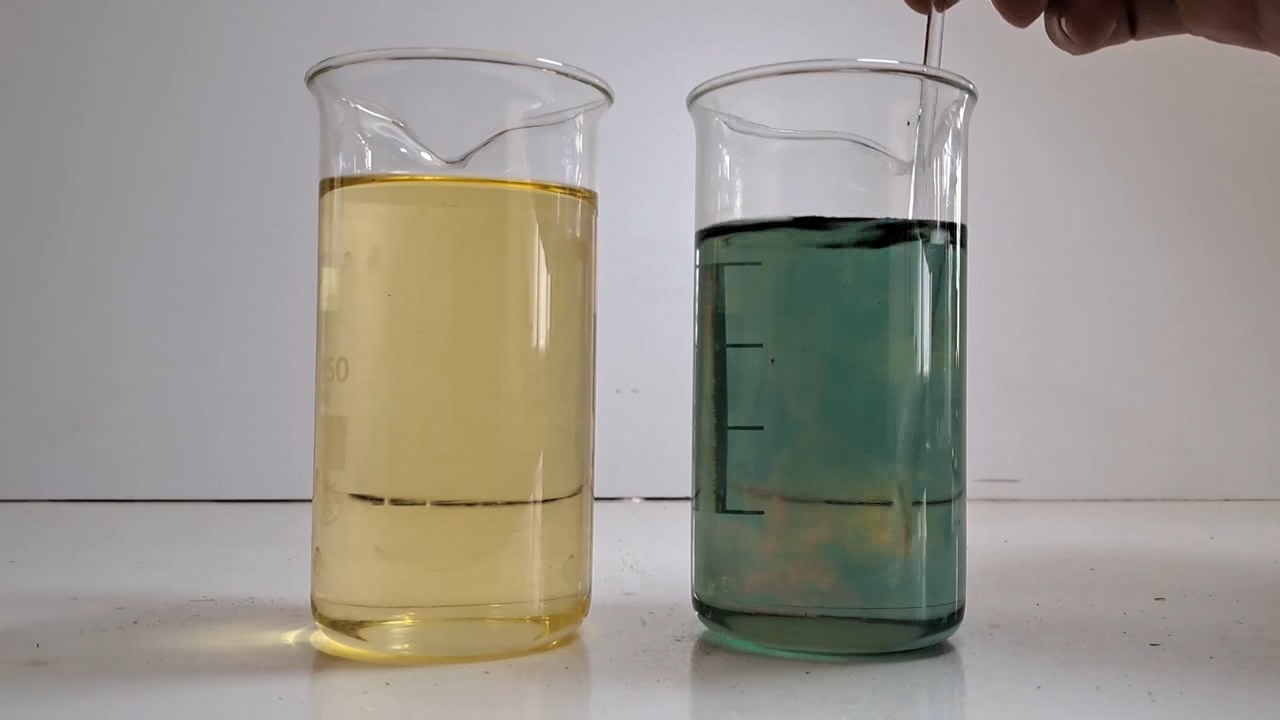
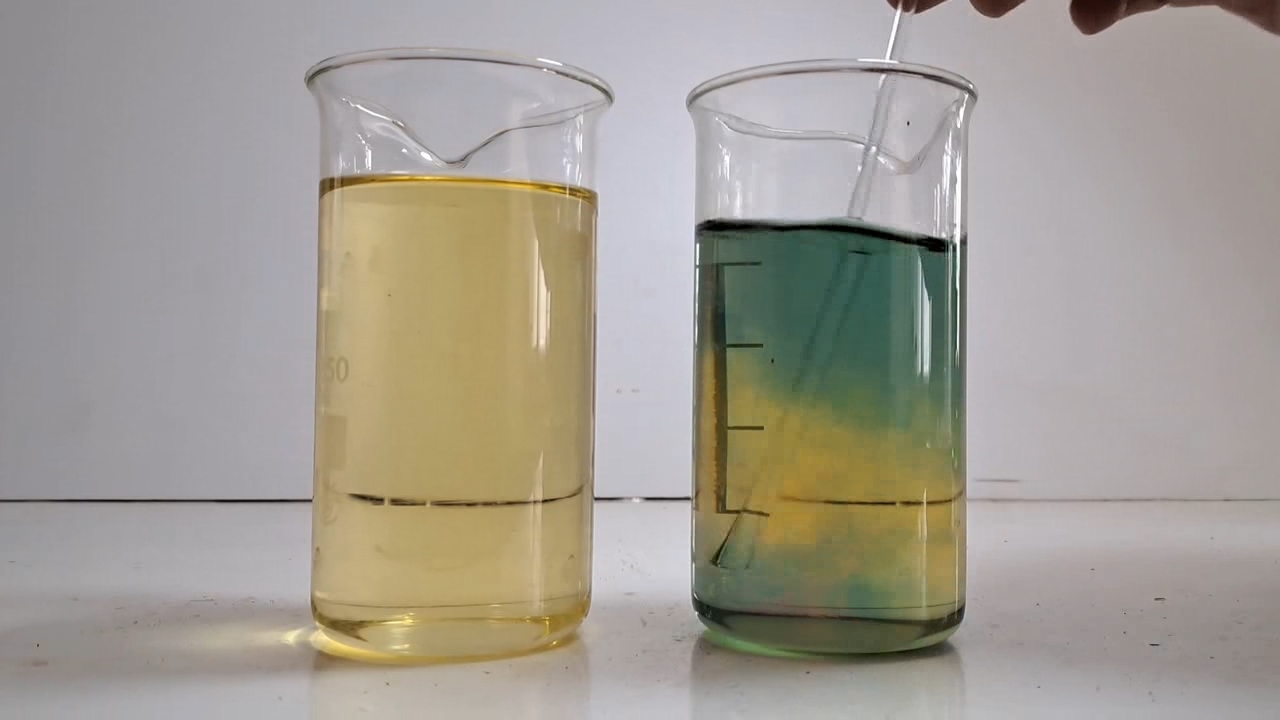
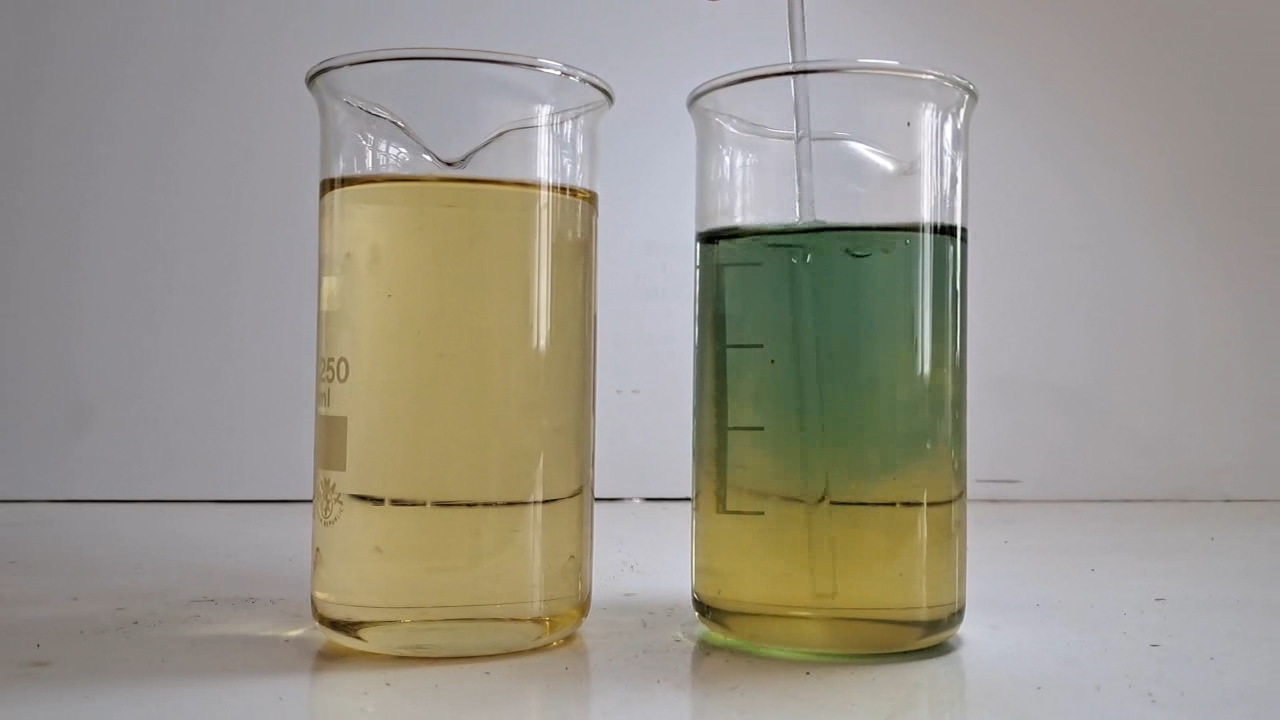
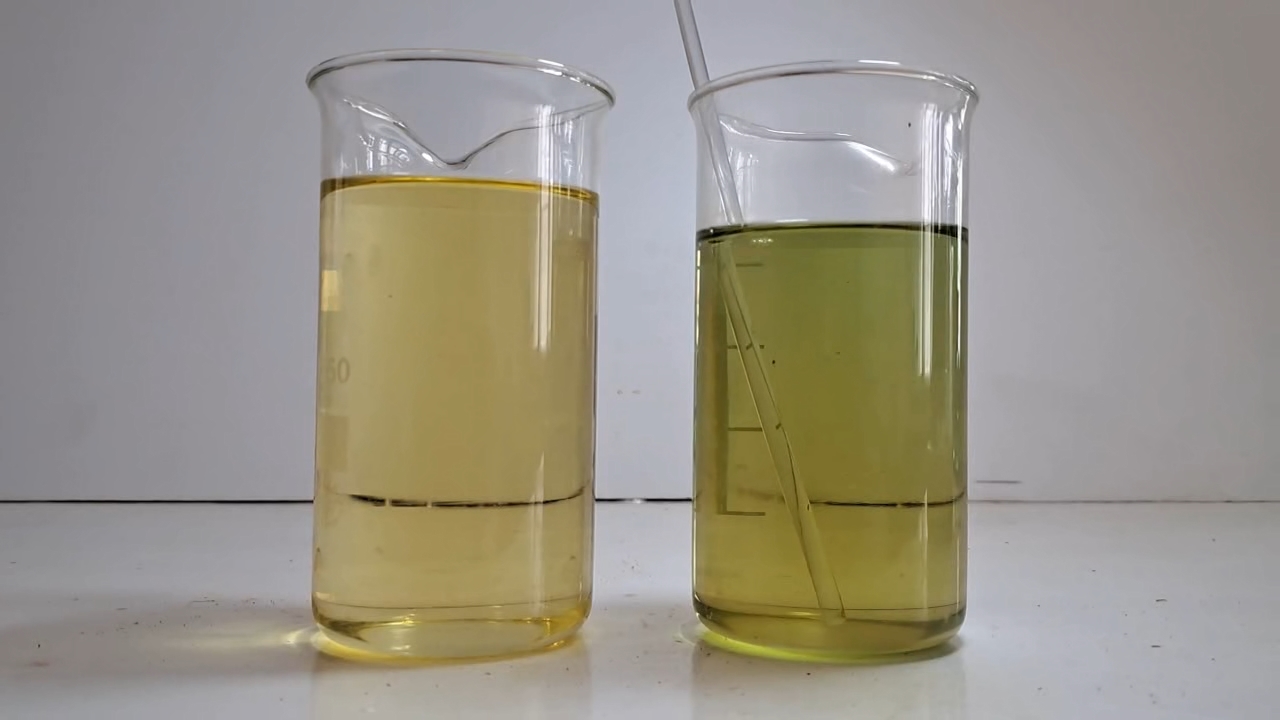
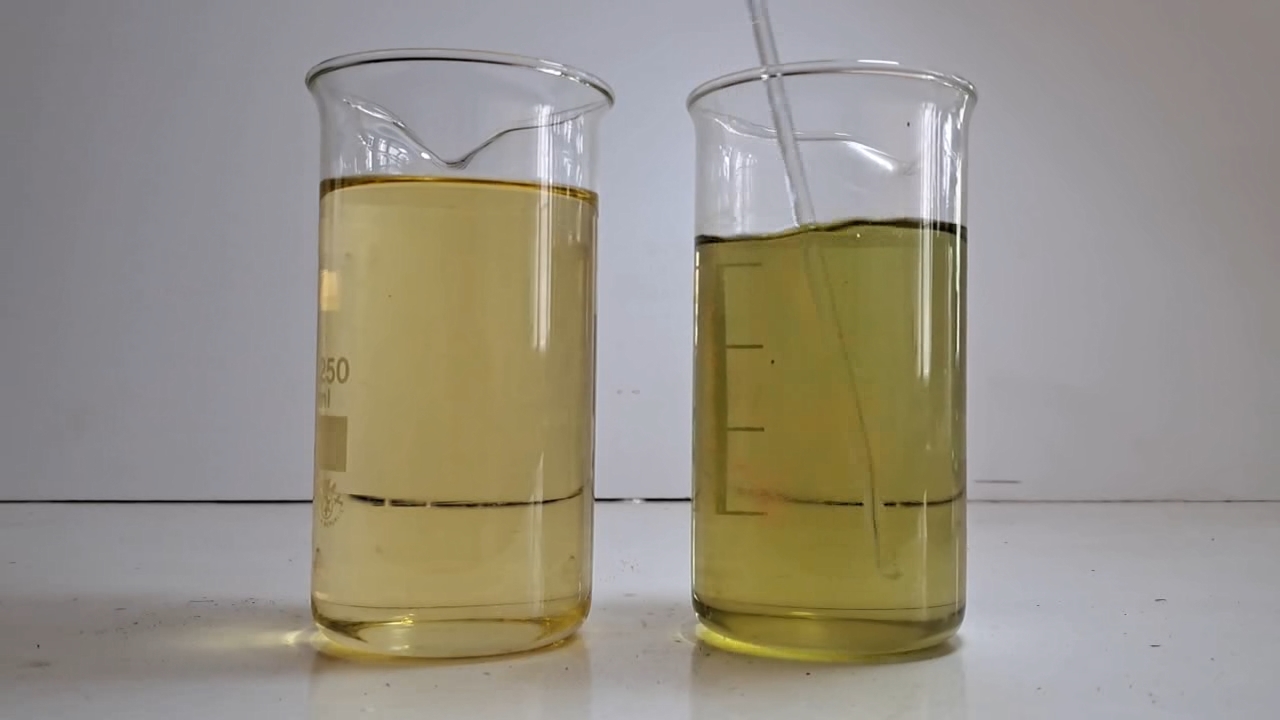
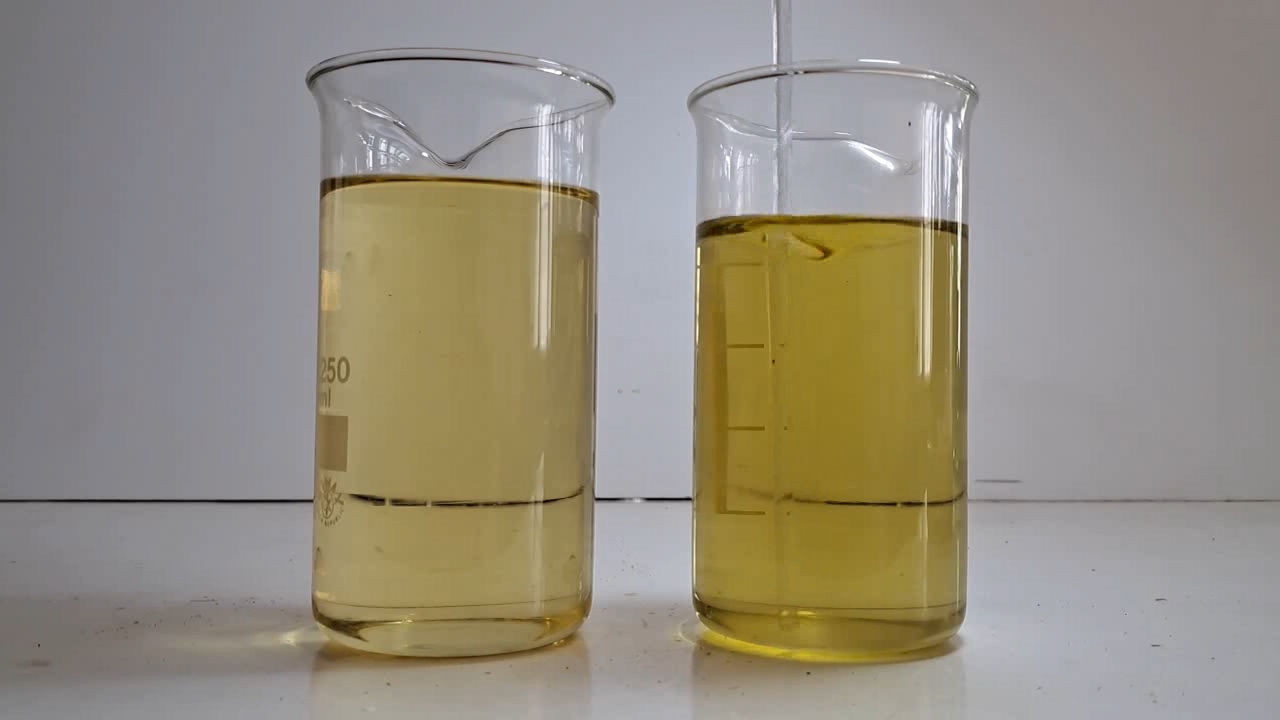
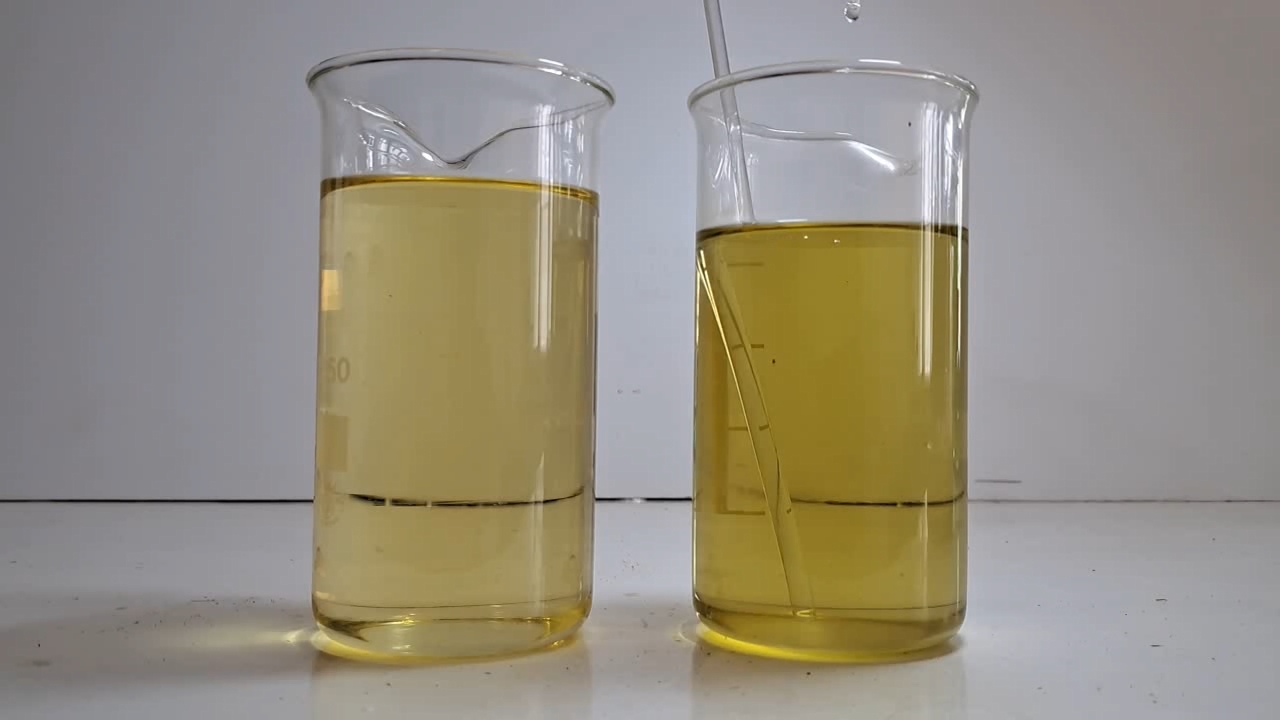
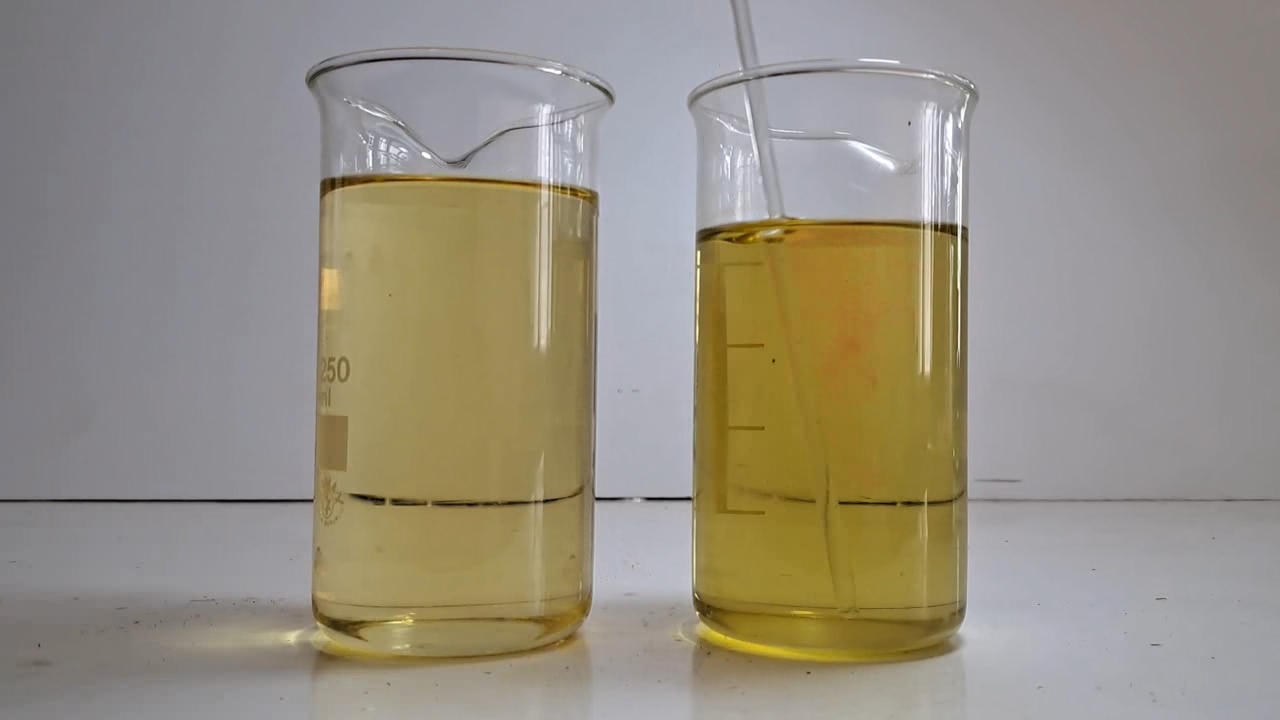
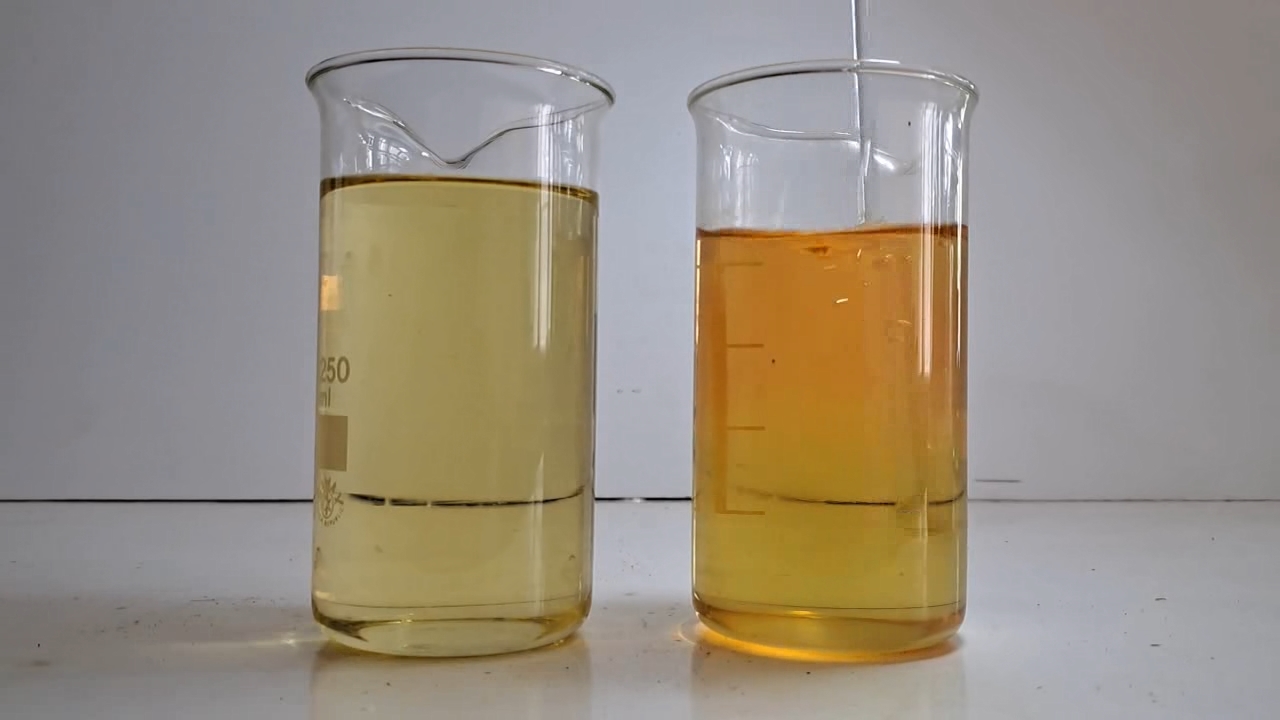
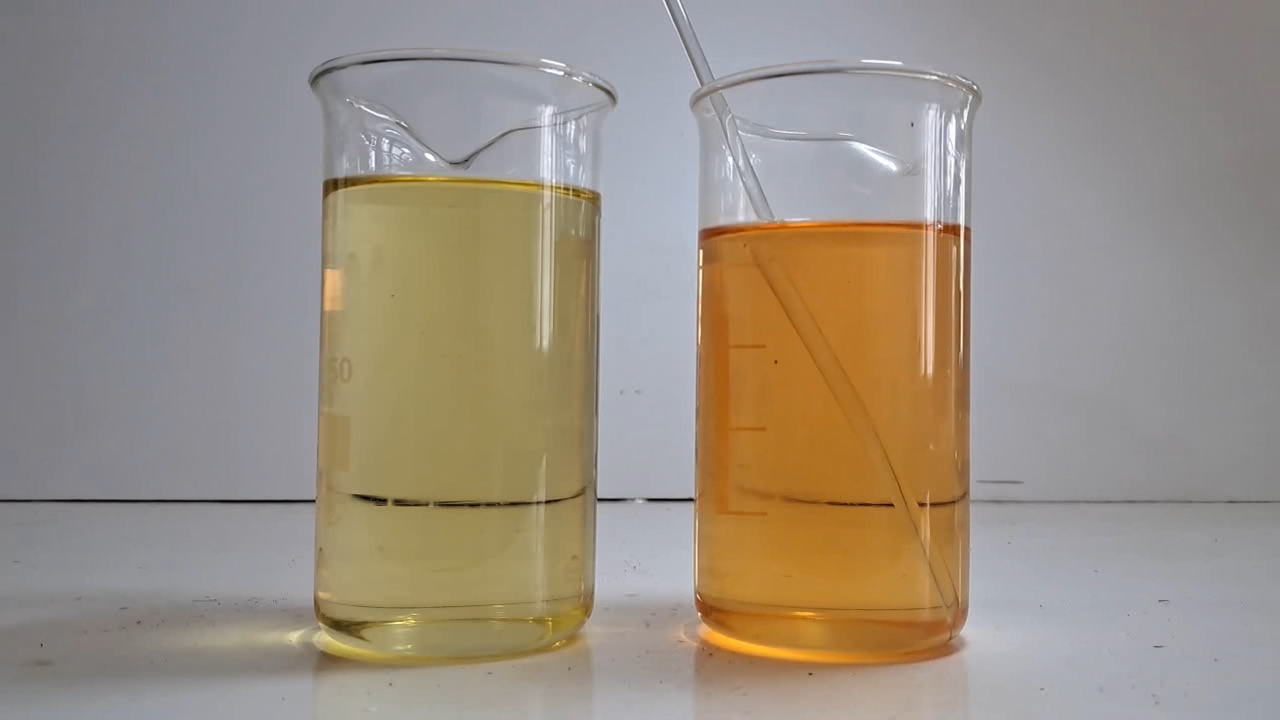
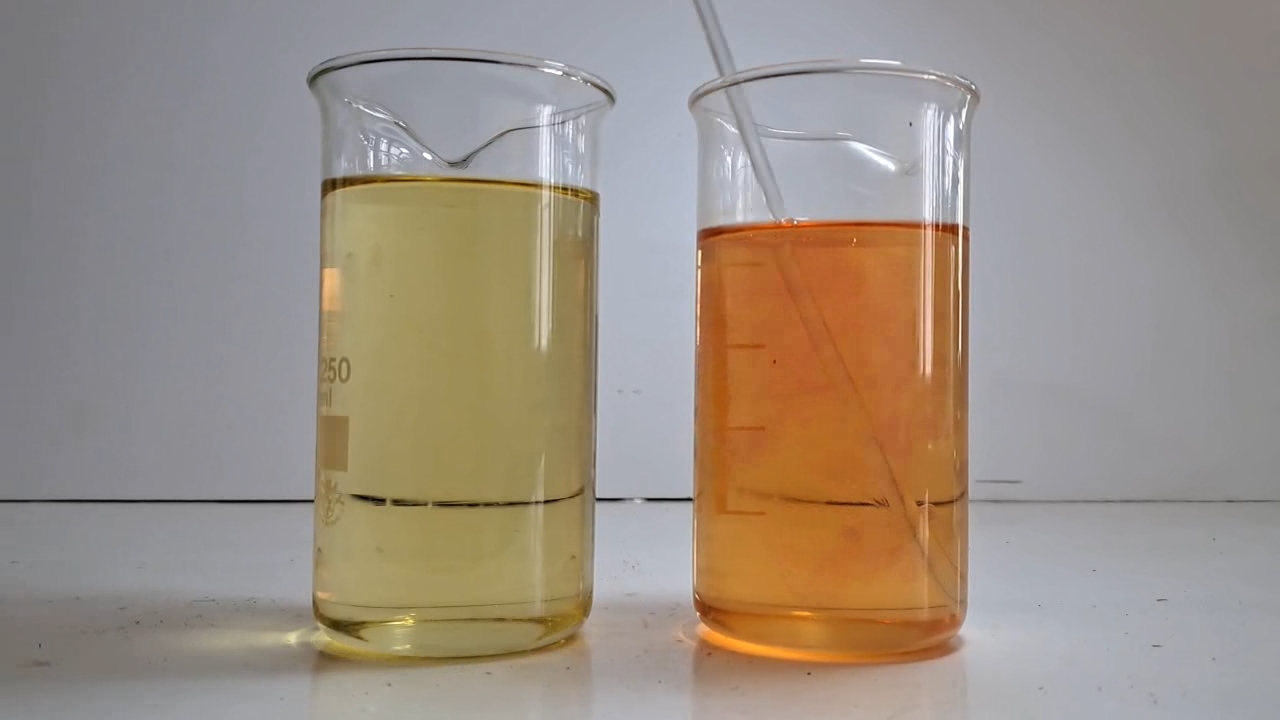
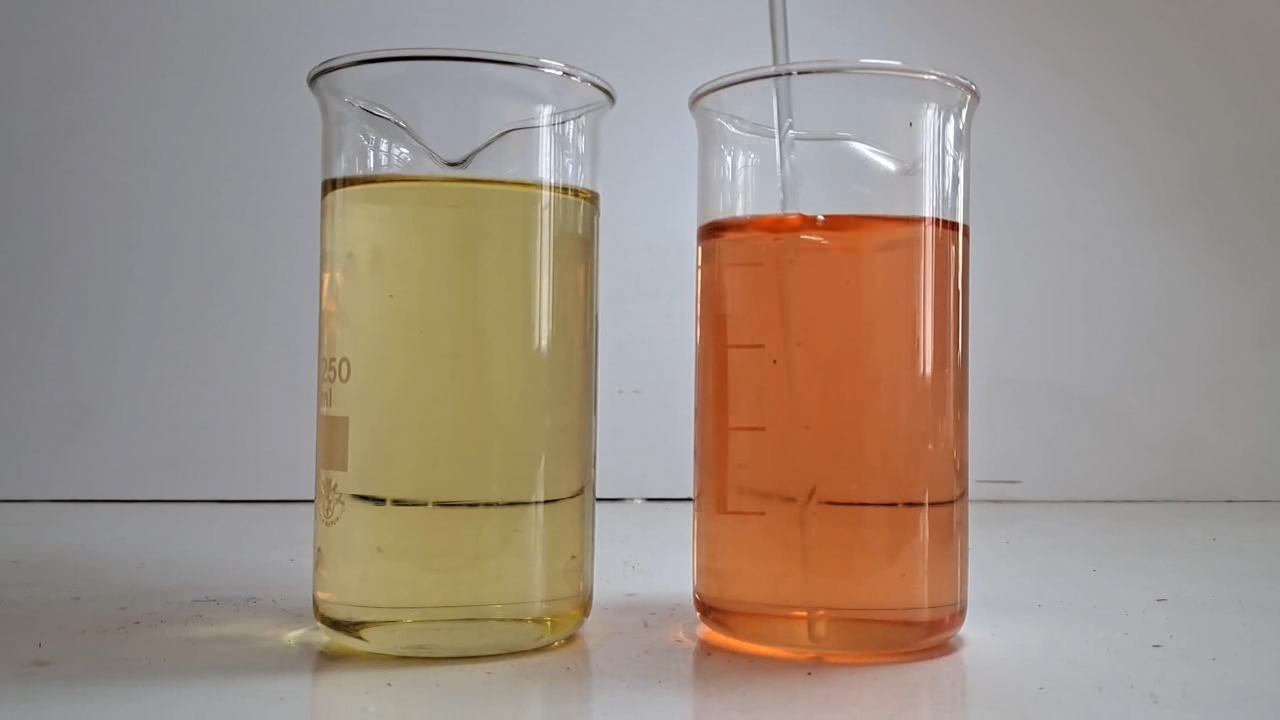
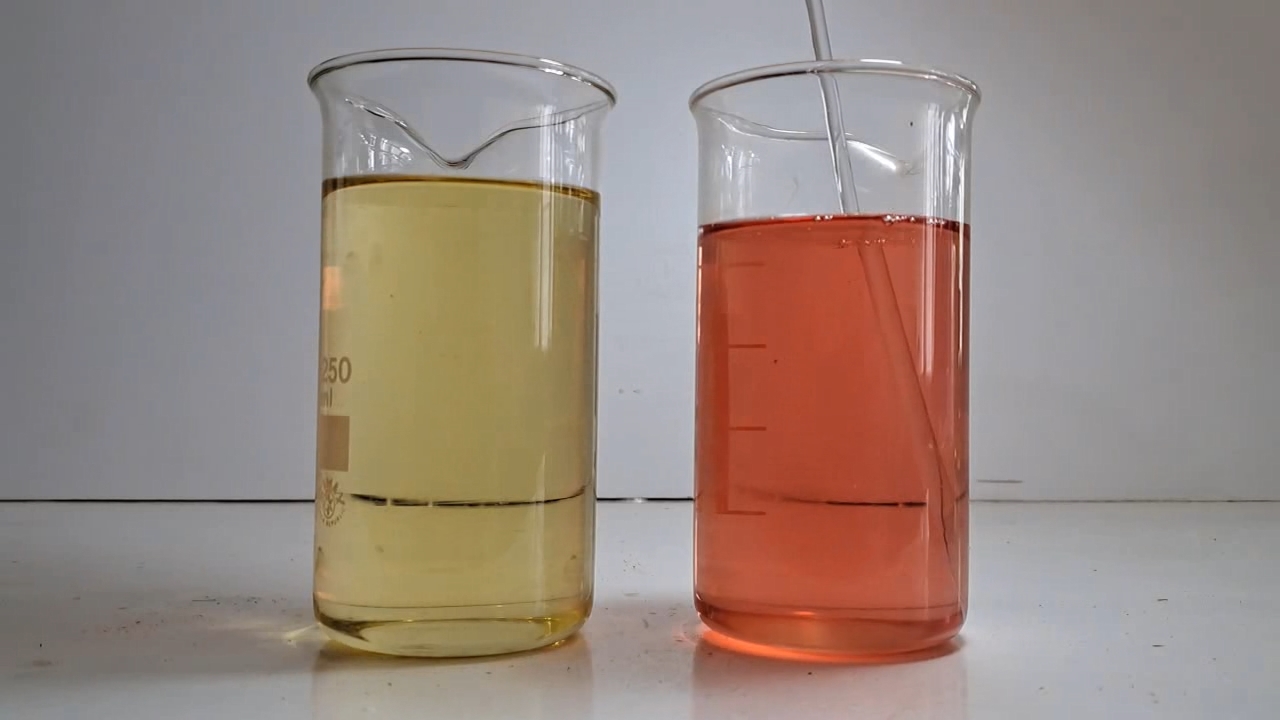
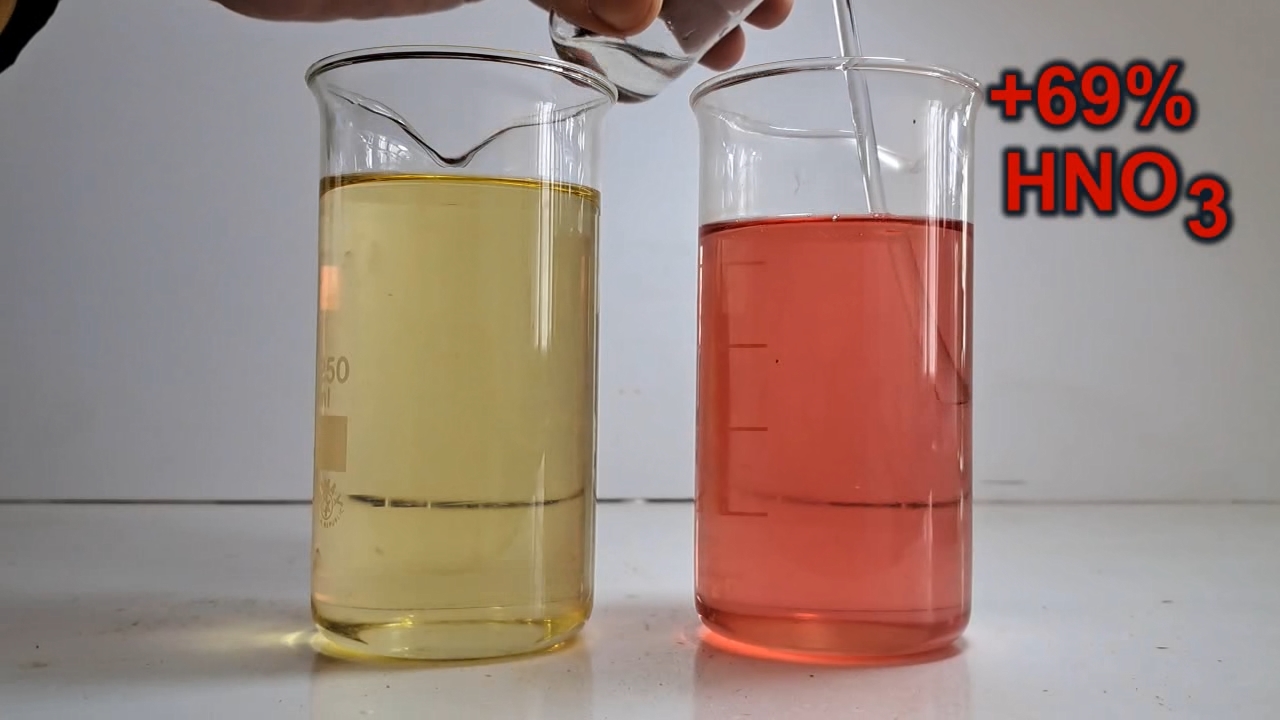
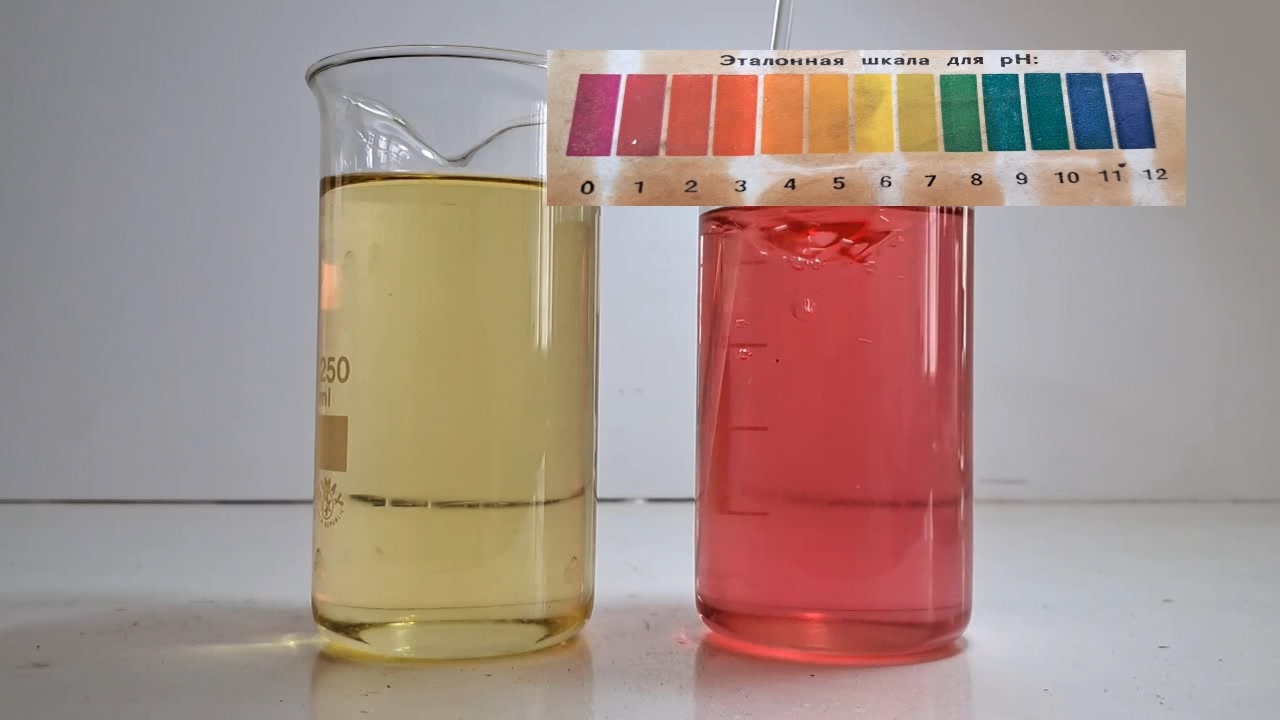
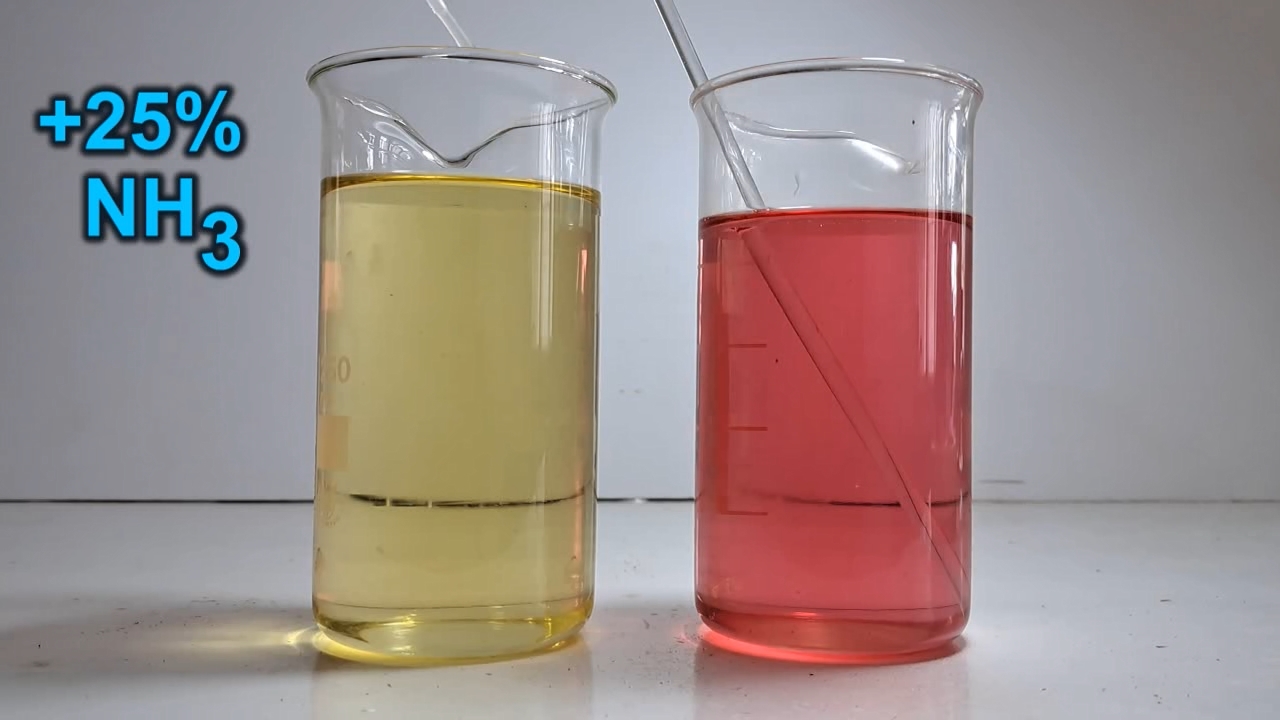
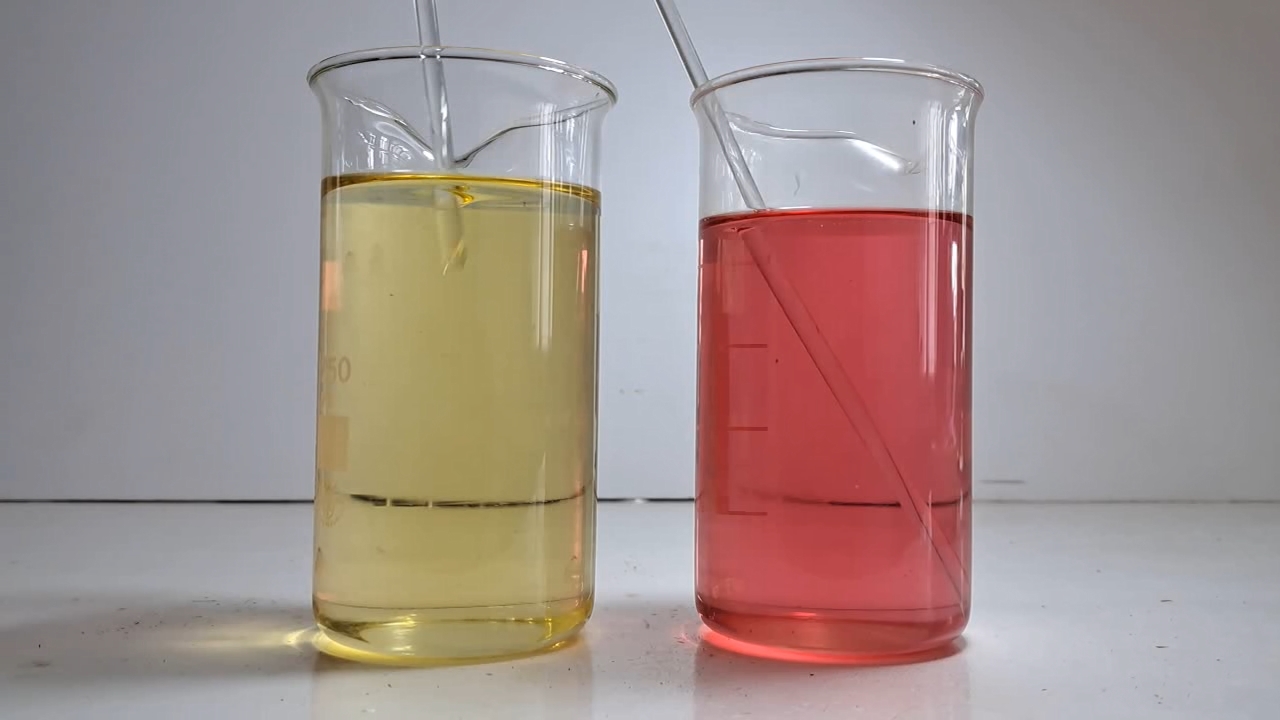
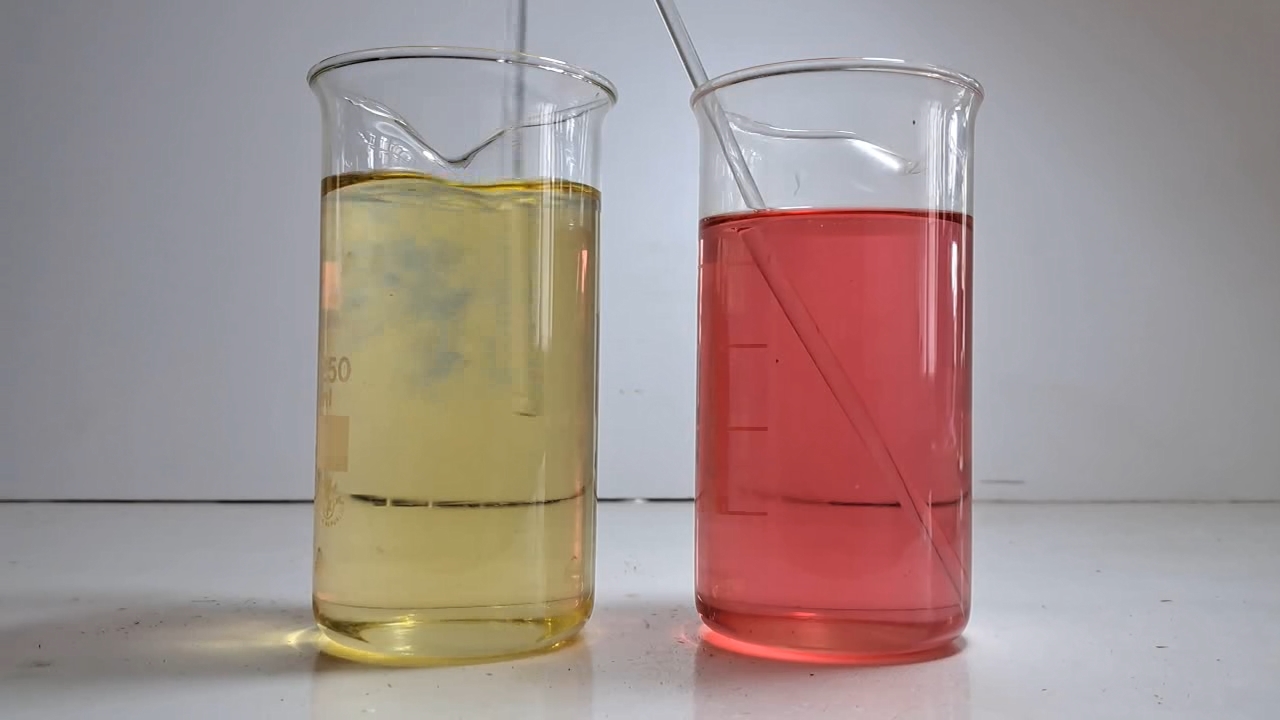
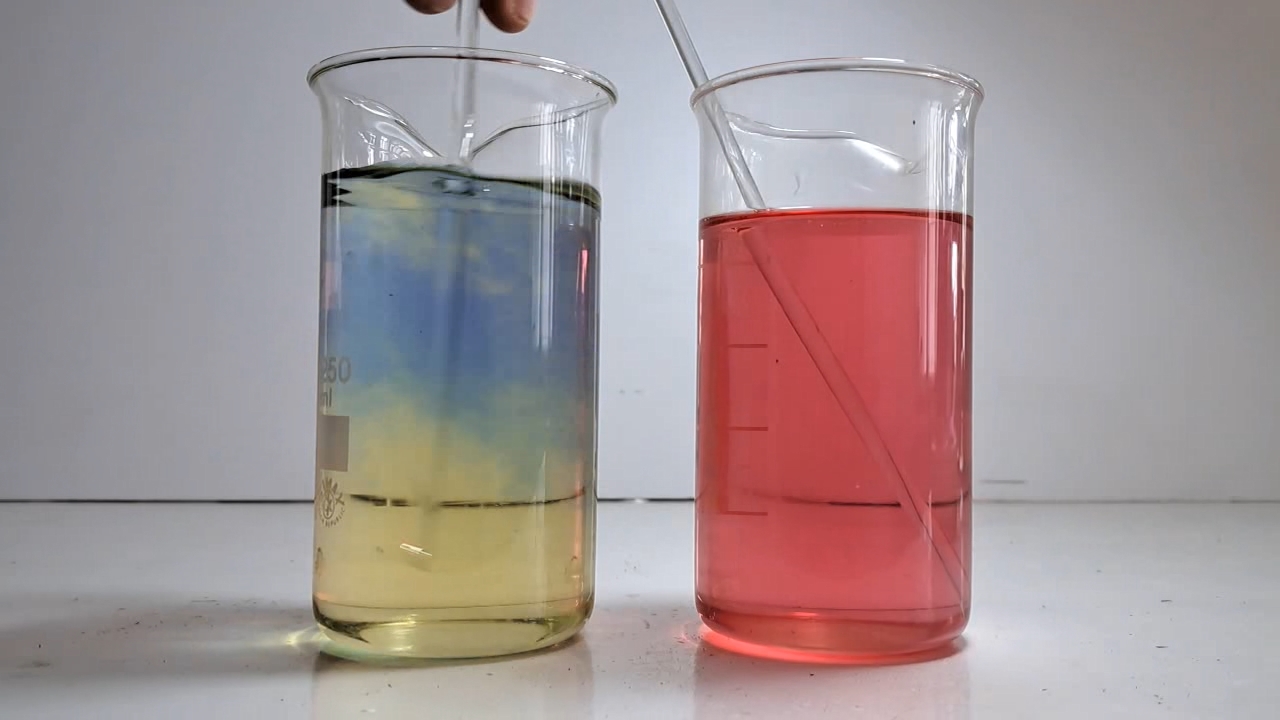
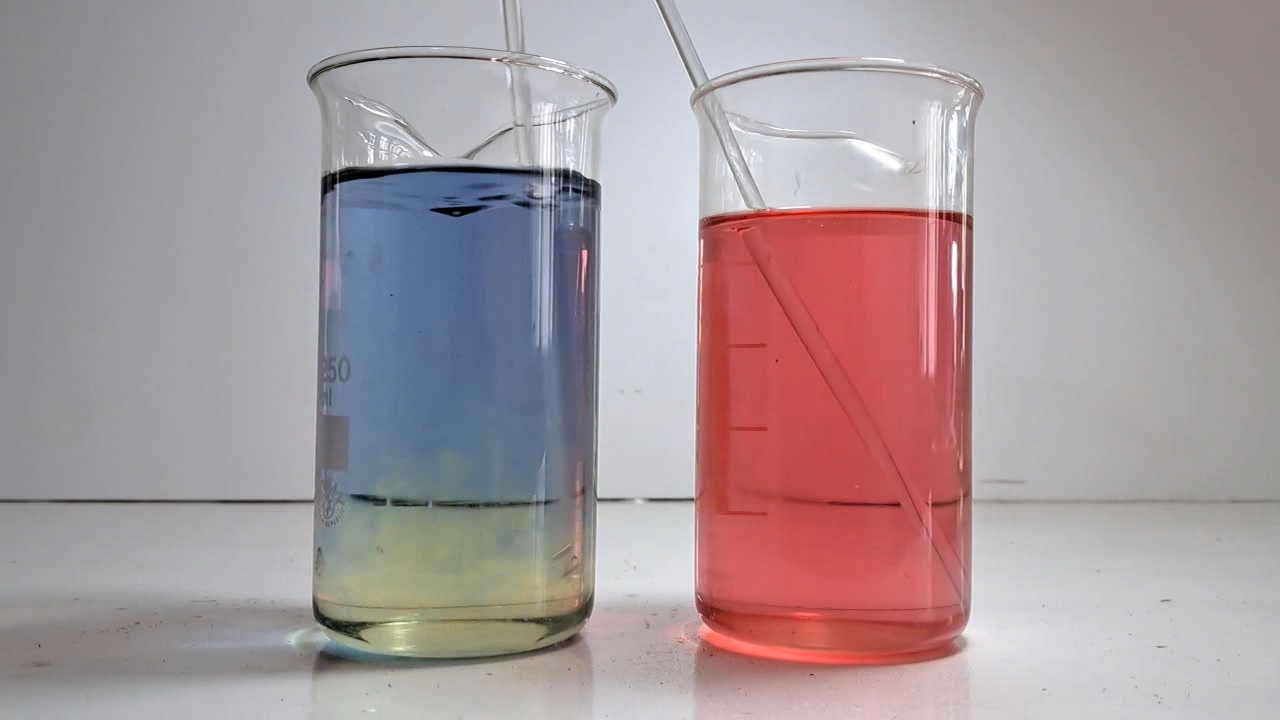
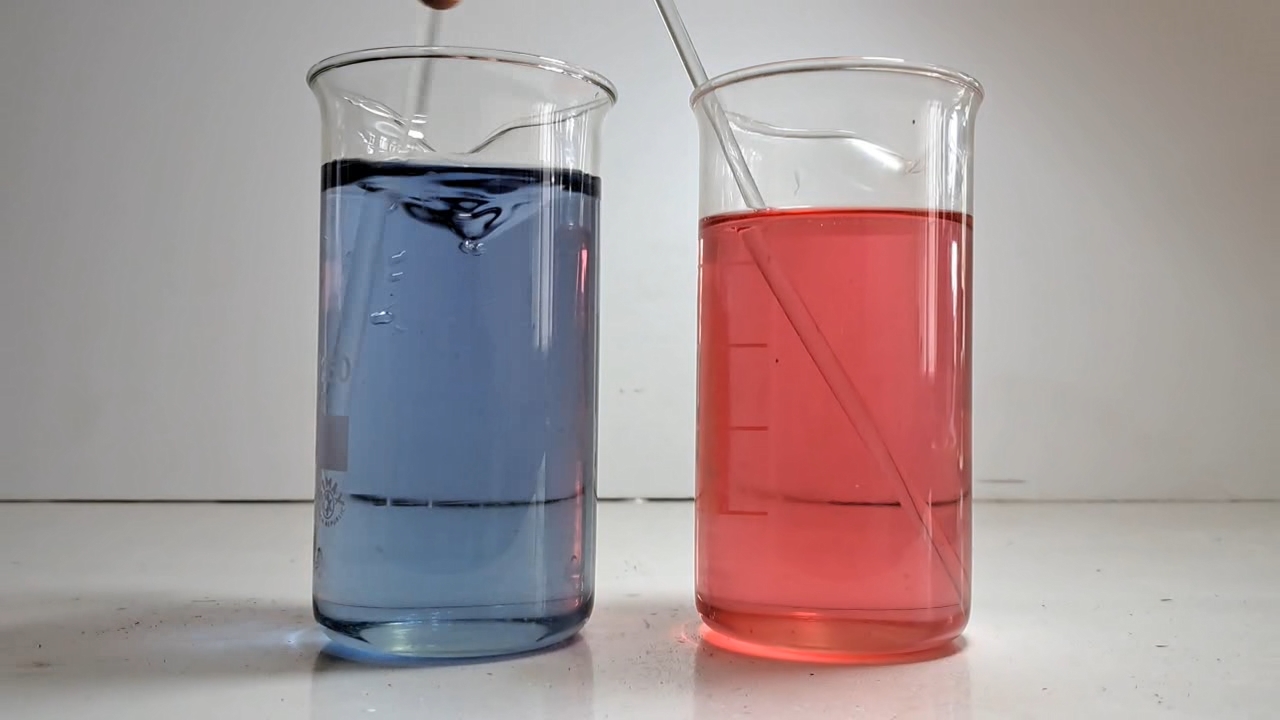
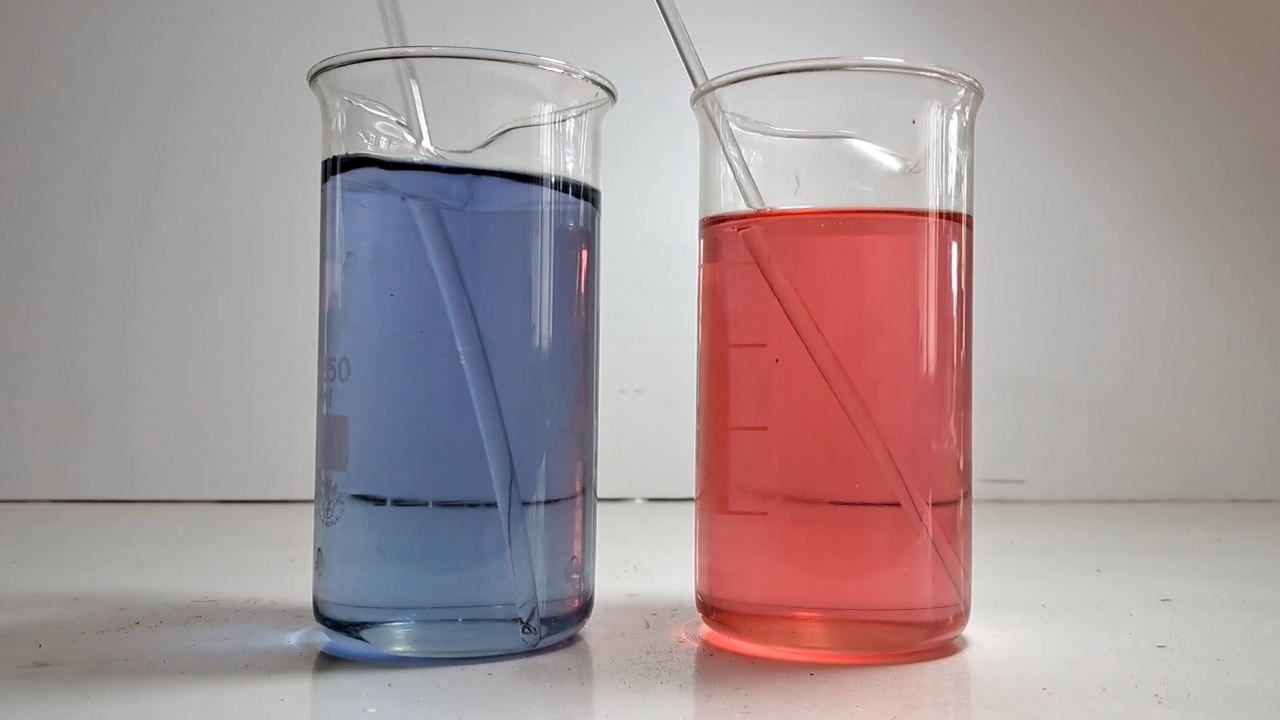
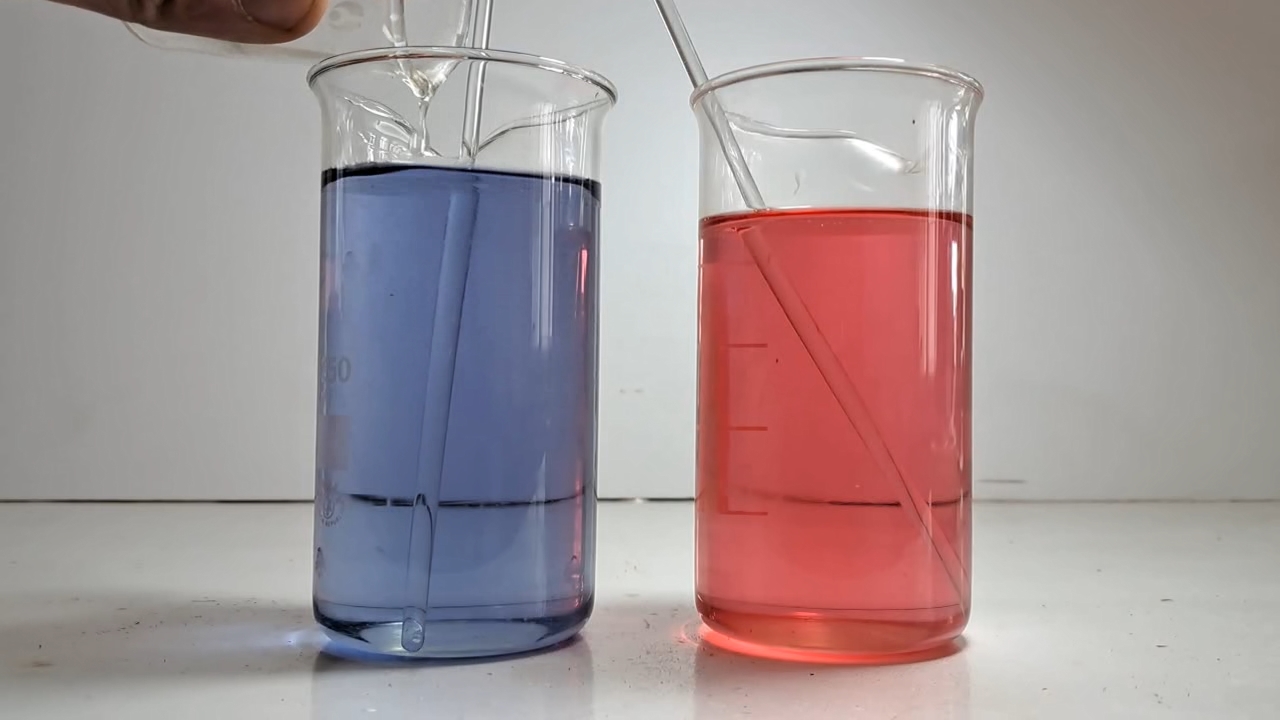
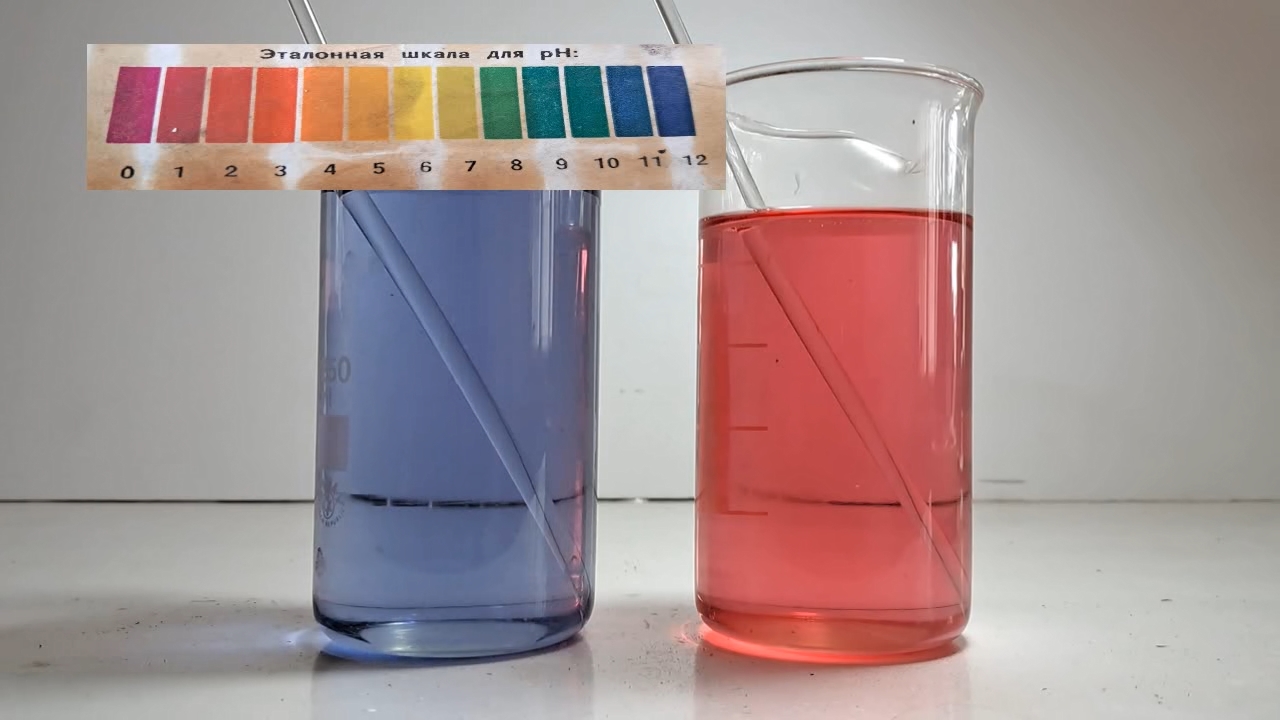
Изменение окраски универсального индикатора pH - Часть 4 However, after the "administrative trouble," I was thrown off track and became so frustrated that I could not recall what reagents were available in the laboratory or where they were located. In addition, I did not want to ask my colleagues for reagents. I decided to use a 13% hydrochloric acid solution to gradually lower the pH. If necessary, the hydrochloric acid could be further diluted to reduce the concentration of hydrogen ions in the added solution. Finally, I planned to add a 69% nitric acid solution to the beaker to achieve a minimum pH. I added the first drop of hydrochloric acid to the green solution. The acid formed an orange-red spot that slowly sank to the bottom. After stirring, the green solution turned greenish-yellow. Upon adding another drop of the acid and stirring, the greenish tint disappeared. With subsequent additions, the solution turned orange and then red. Further additions of hydrochloric acid no longer produced a visible color change. I then added 15 mL of 69% nitric acid solution. The solution in the beaker developed a crimson hue. Let us now turn to the second beaker. I chose 25% ammonia solution as the weak base and sodium hydroxide granules as the strong base. I added a drop of the ammonia solution, and no visible change occurred. Since ammonia solution is less dense than water, it remained on the surface. After stirring, the yellow solution immediately turned blue, with no intermediate green color observed. With further additions of ammonia, the blue solution acquired a violet tint and eventually became violet. The concentration of the base was too high, so the ammonia solution should have been diluted before the experiment. I then added sodium hydroxide granules and stirred until they dissolved. No noticeable change in the color of the solution was observed. |
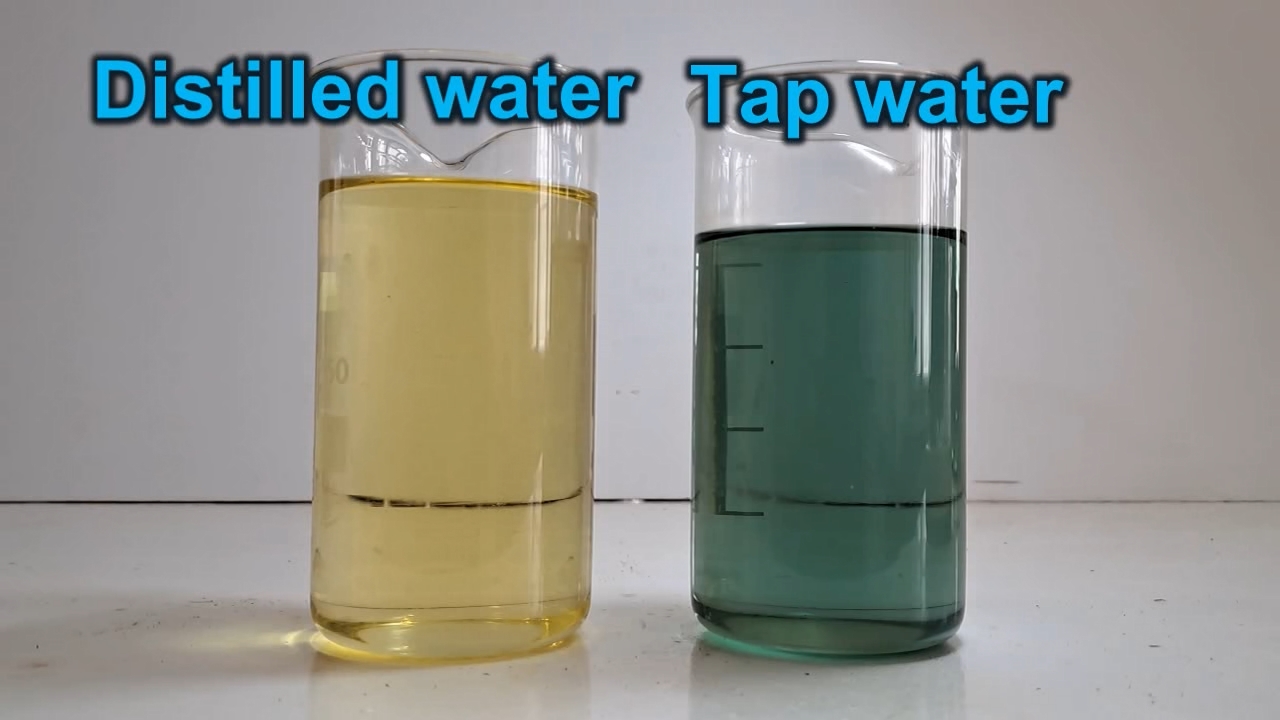
Color Change of Universal pH Indicator |
|
|
|
|
|
|
|
|
|
|
|
|
|
|
|
|
|
|
|
|
|
|
|
|
|
|
|
Having noticed a mistake in the text, allocate it and press Ctrl-Enter
Color Change of Universal pH Indicator - Part 5
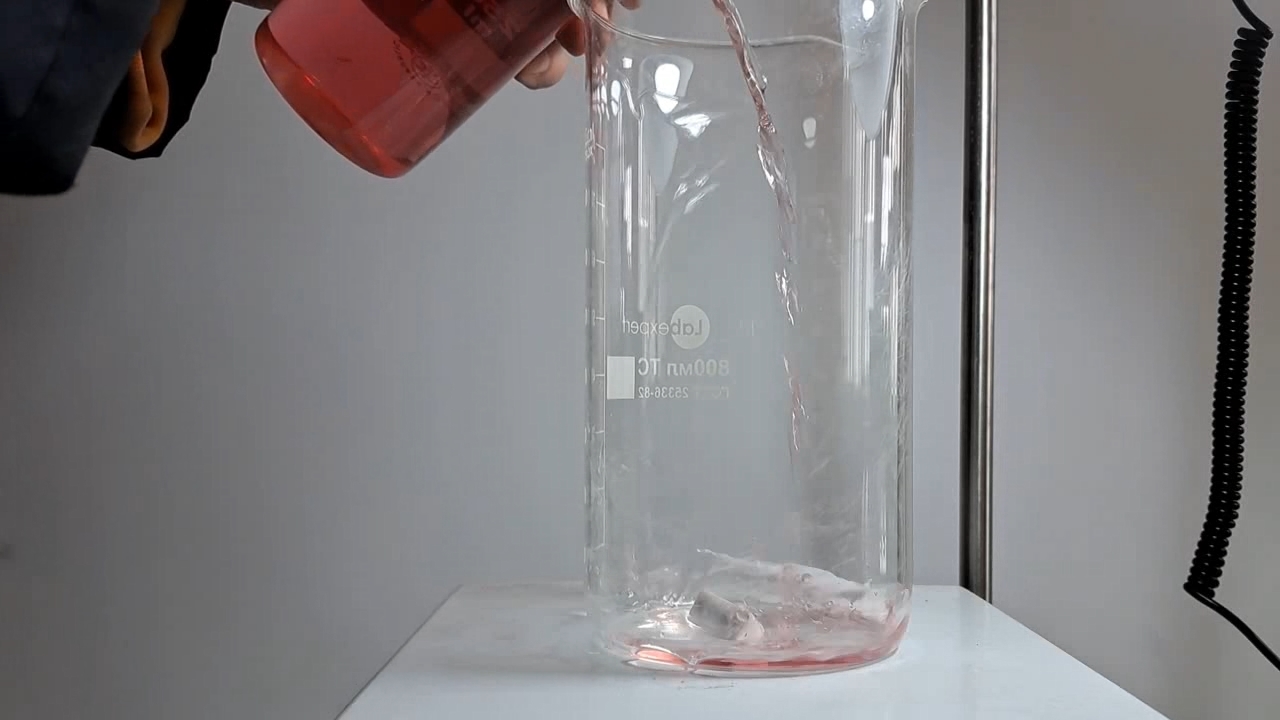
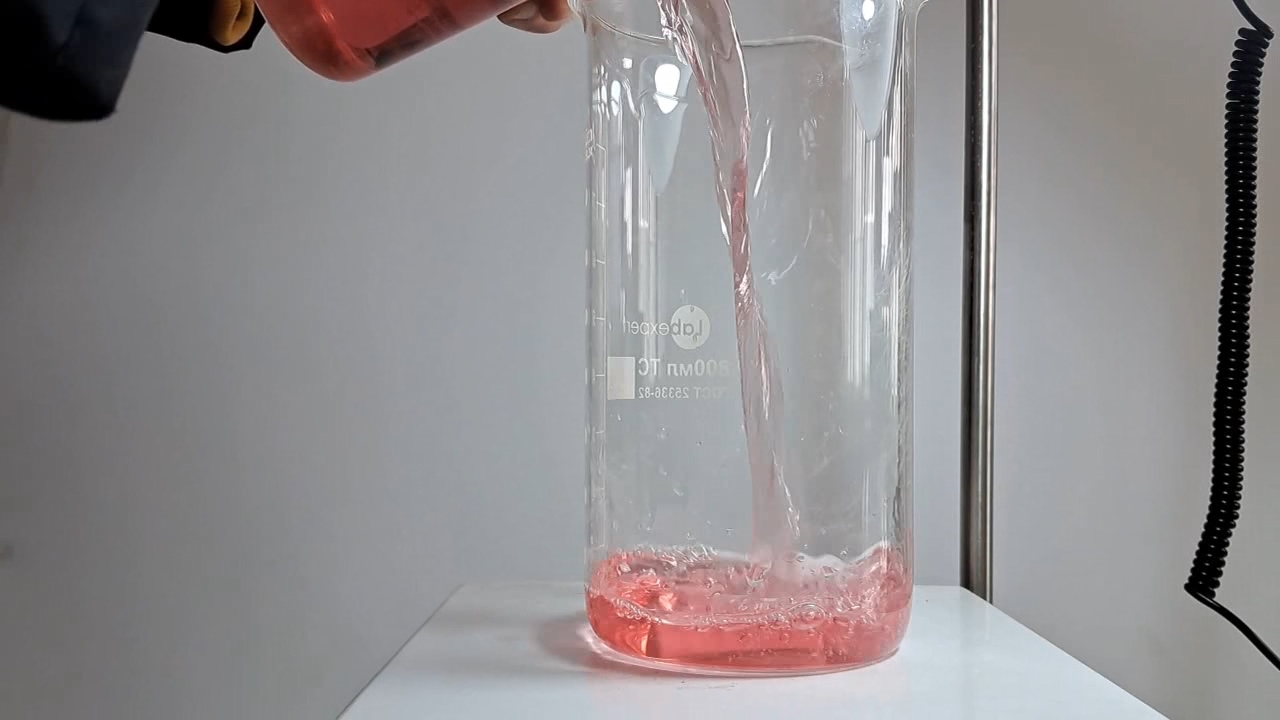
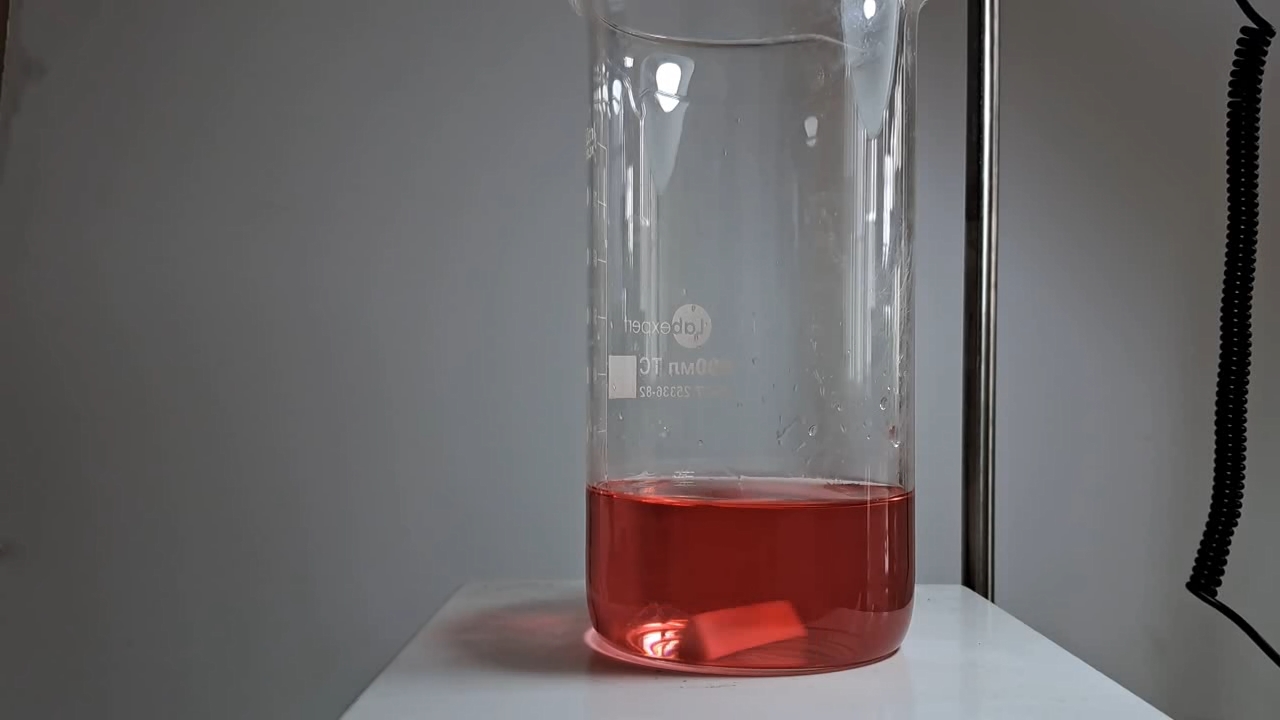
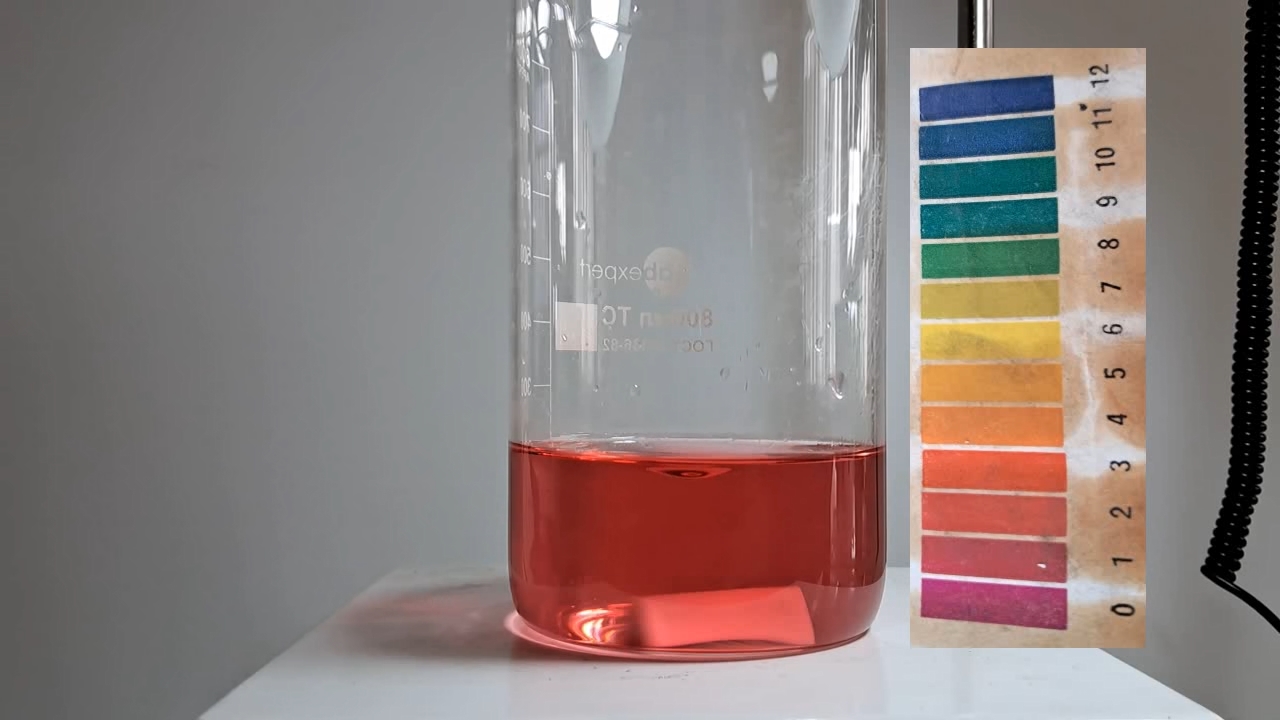
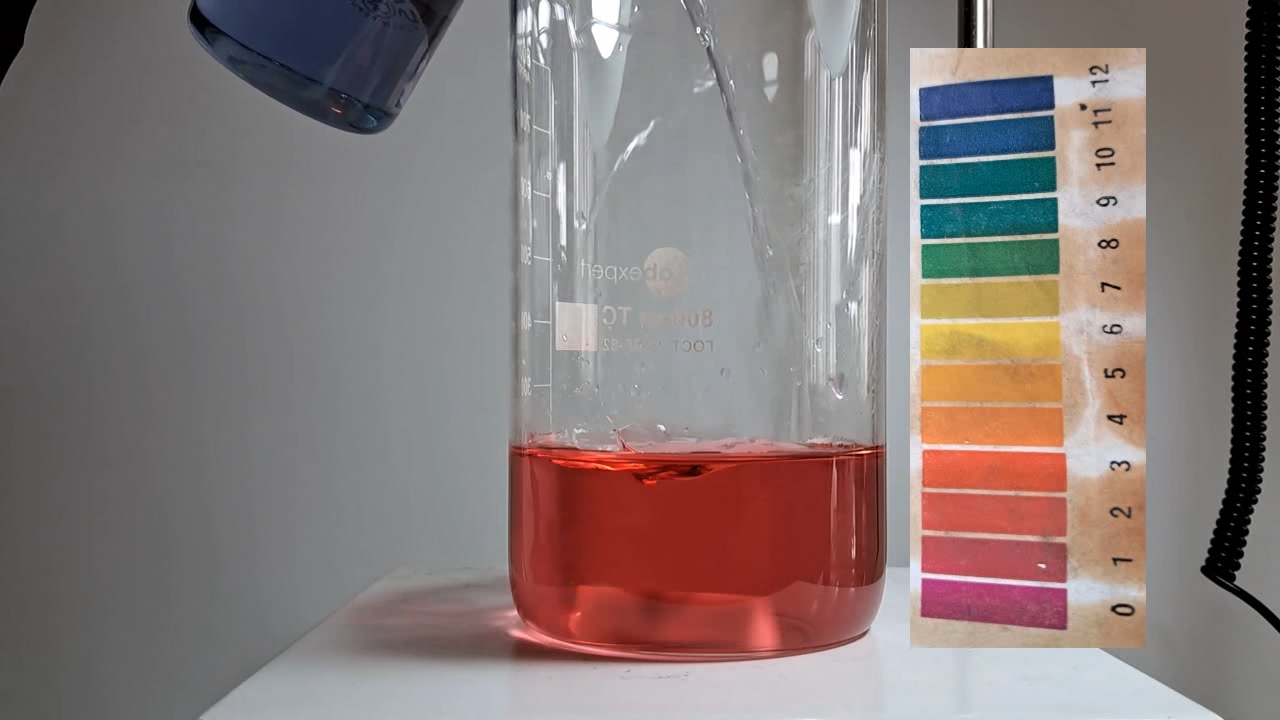
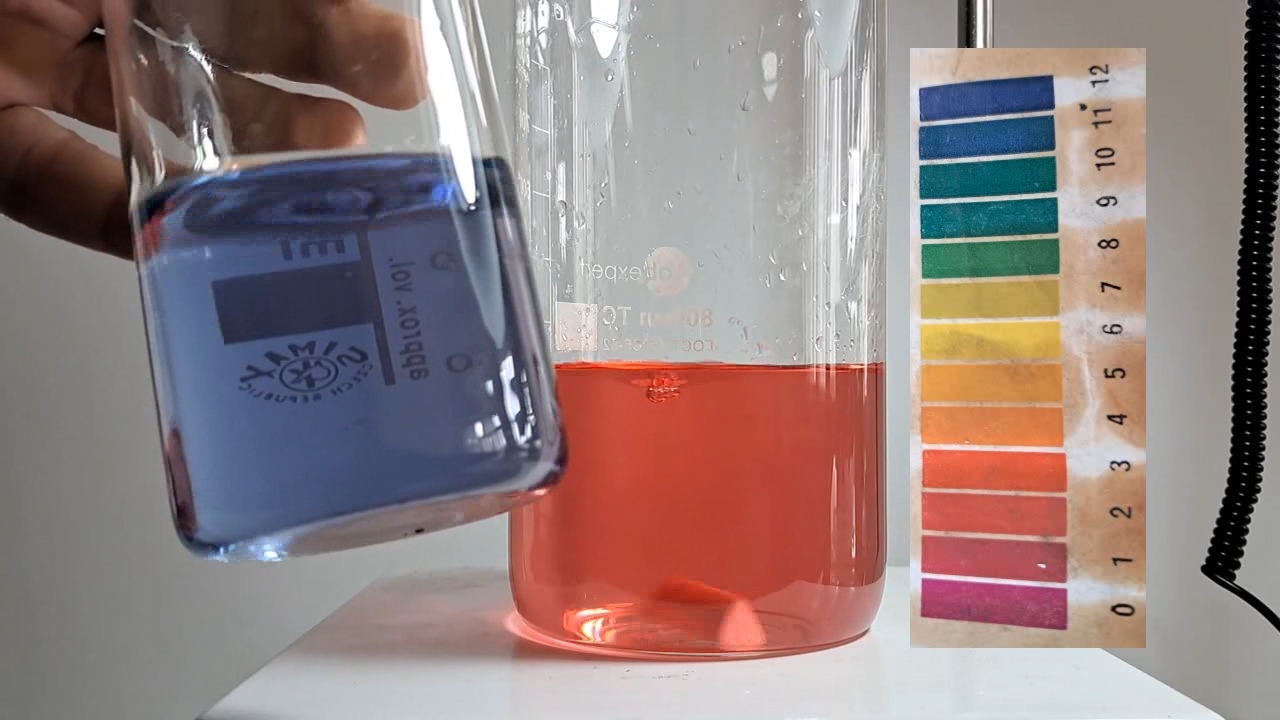
After the previous experiment, two beakers remained on the table: one containing an alkaline solution and the other an acidic solution. The next simple experiment involved the mutual neutralization of these solutions, both colored with a universal pH indicator. I poured the red acidic solution into a 1-liter beaker, placed it on a magnetic stirrer, and set it to moderate stirring. I then began adding the violet alkaline solution from the other beaker in small portions.
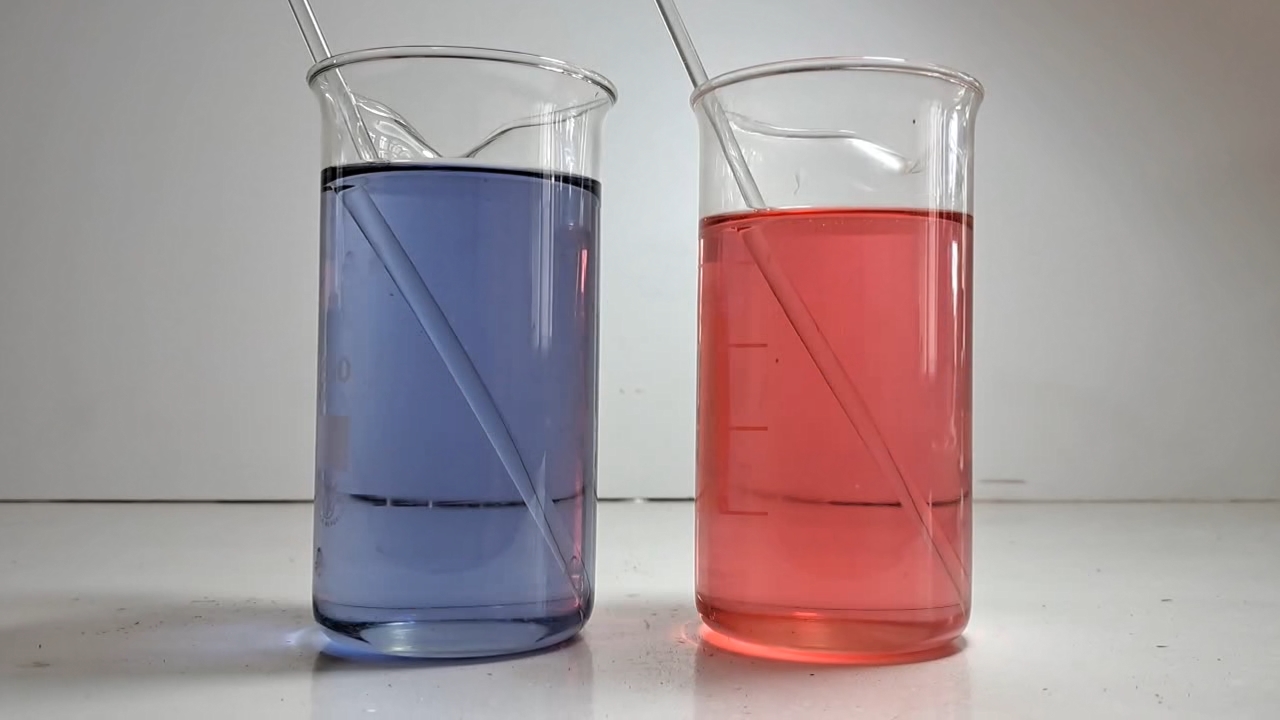
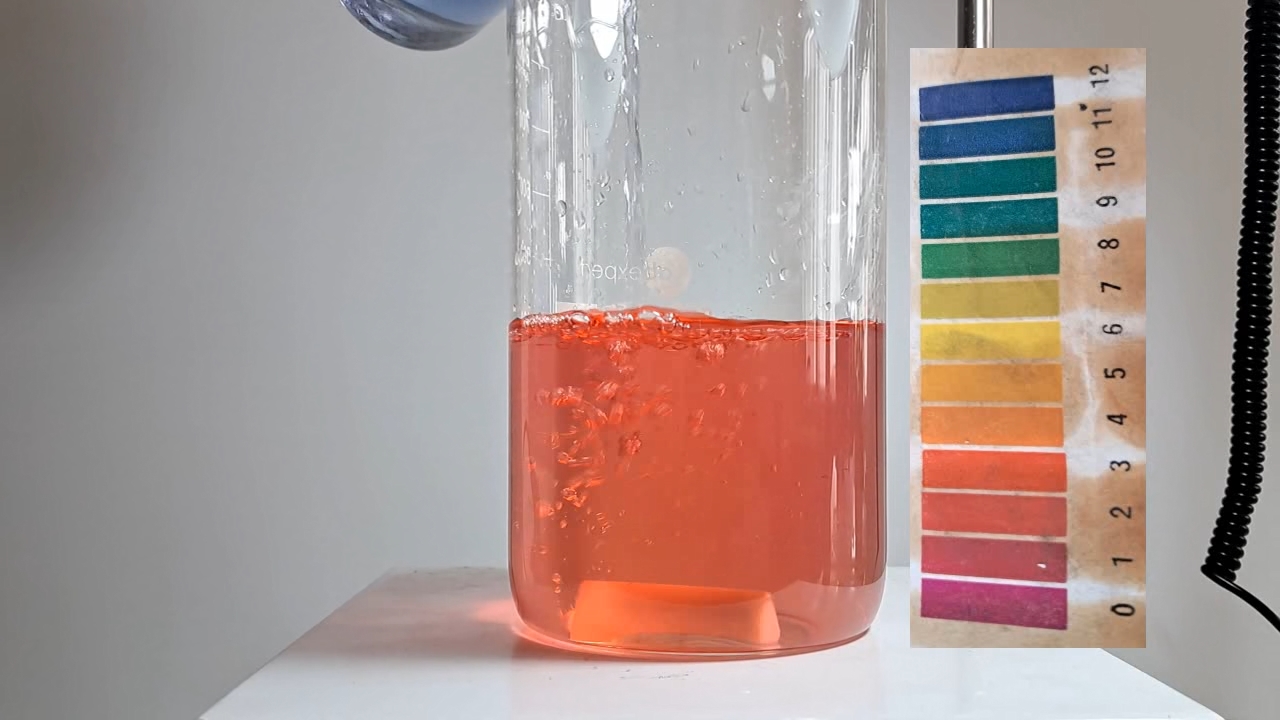
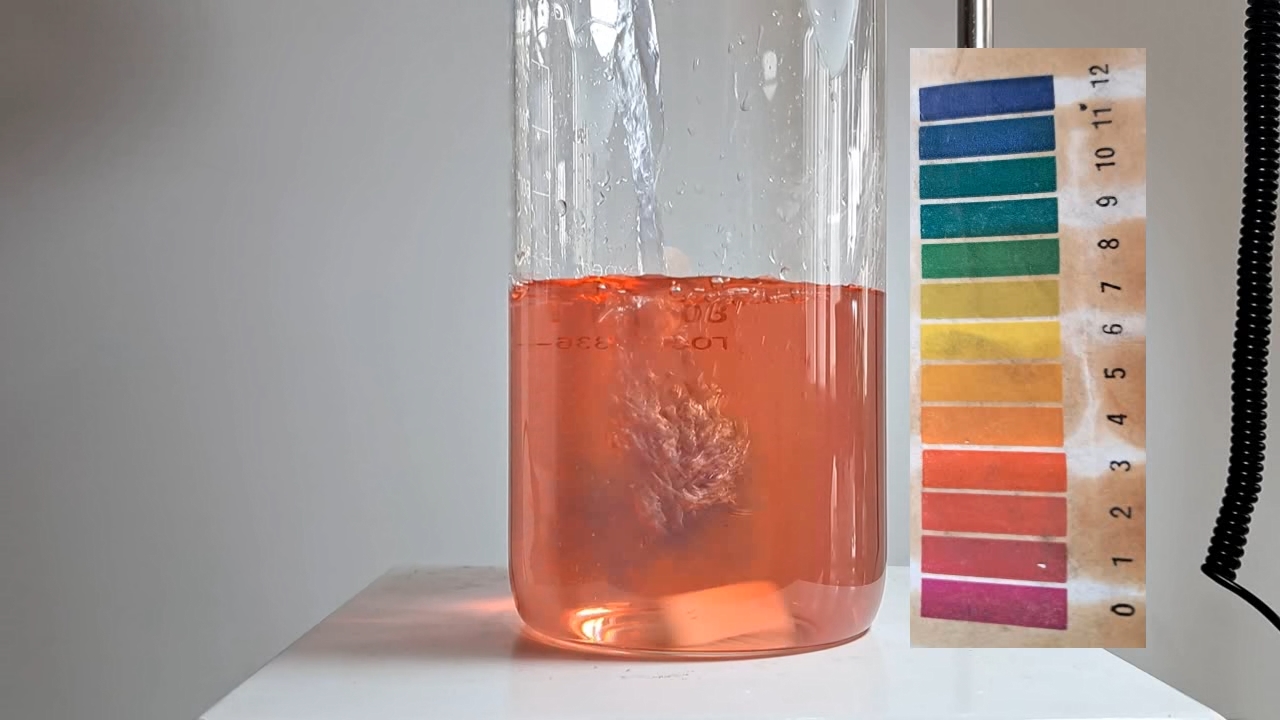
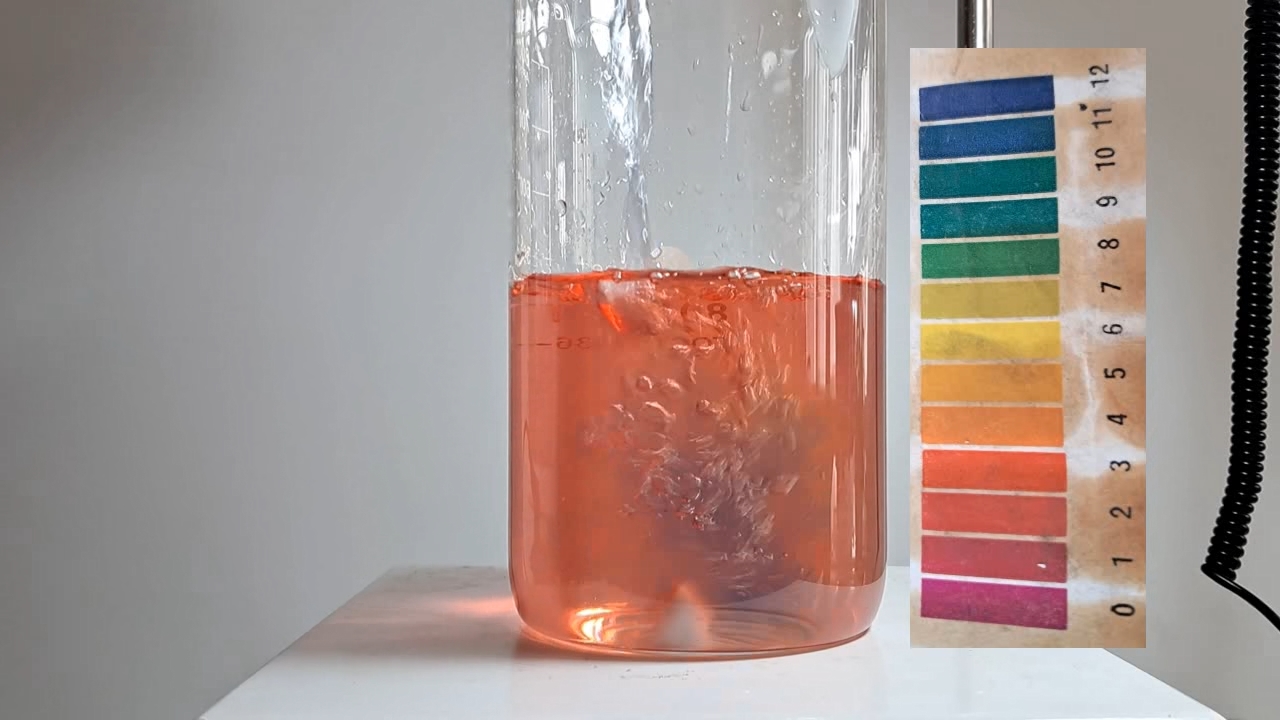
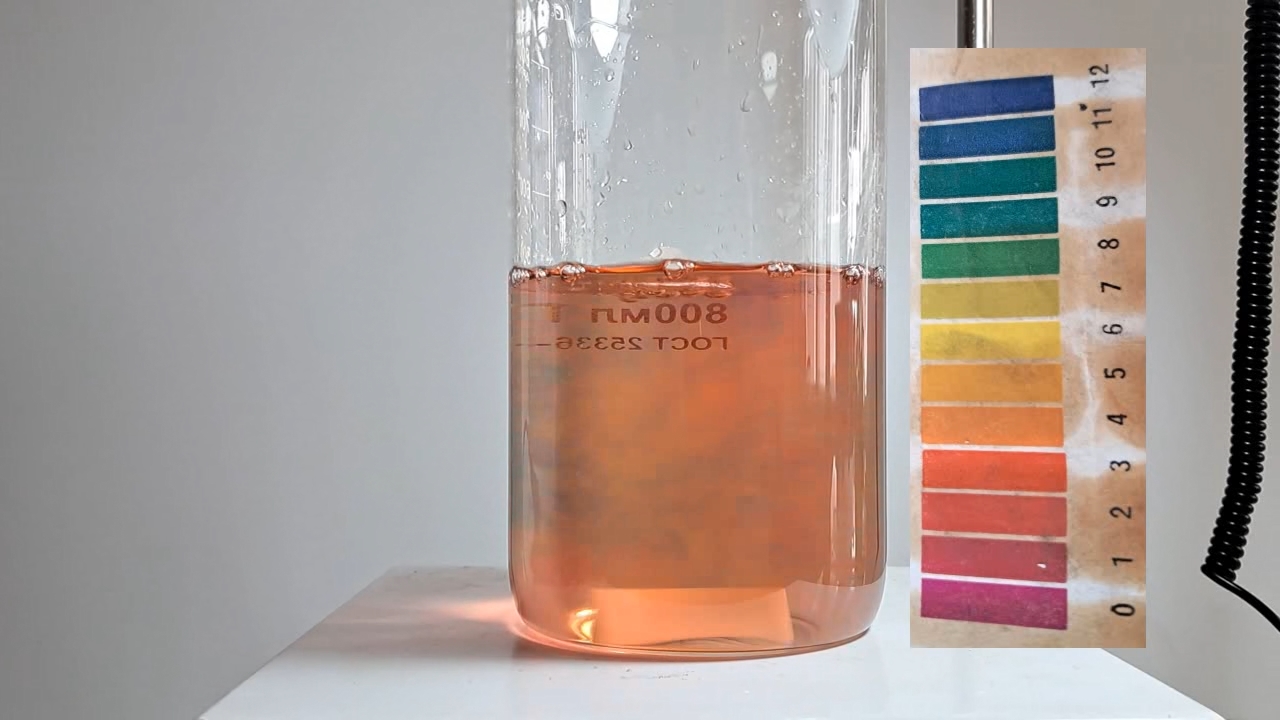
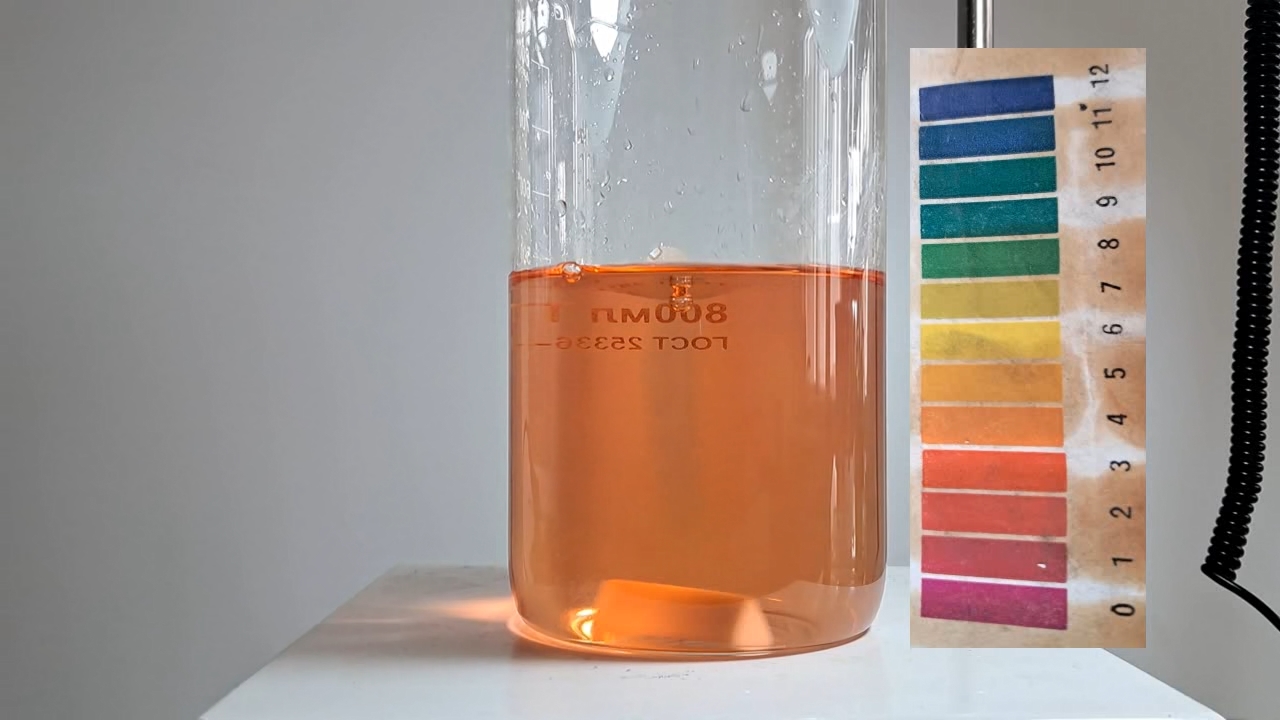
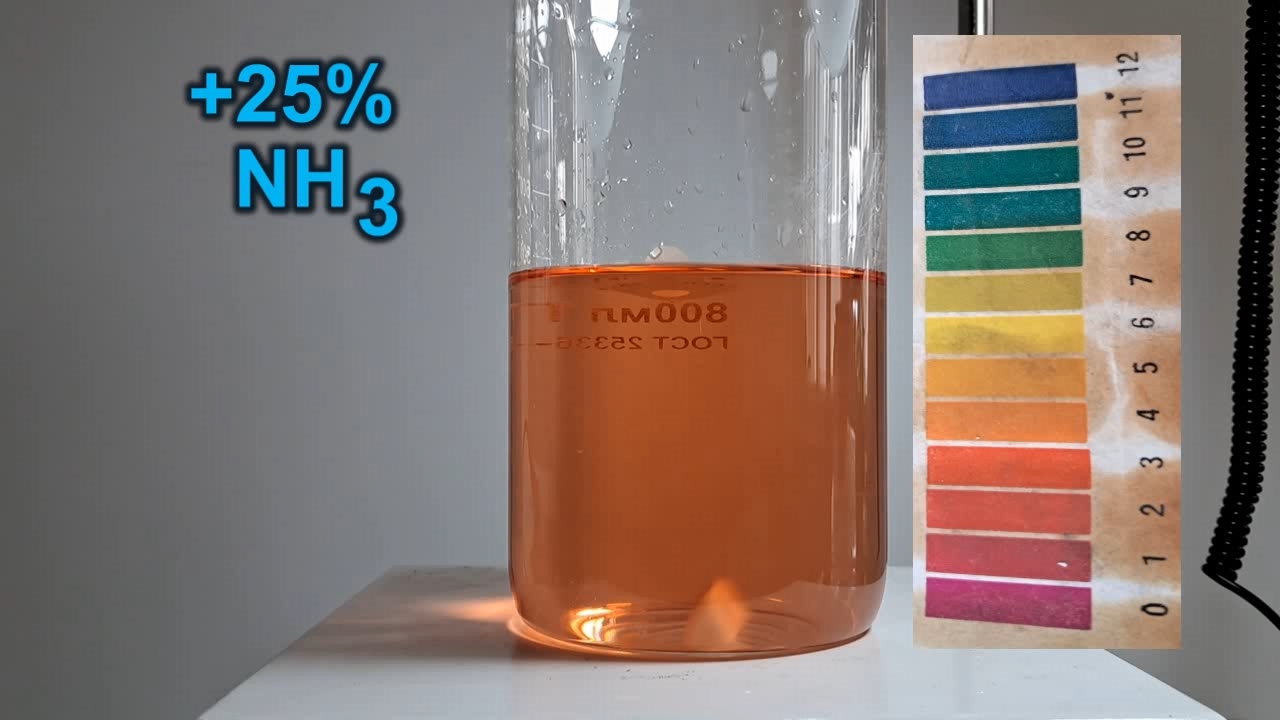
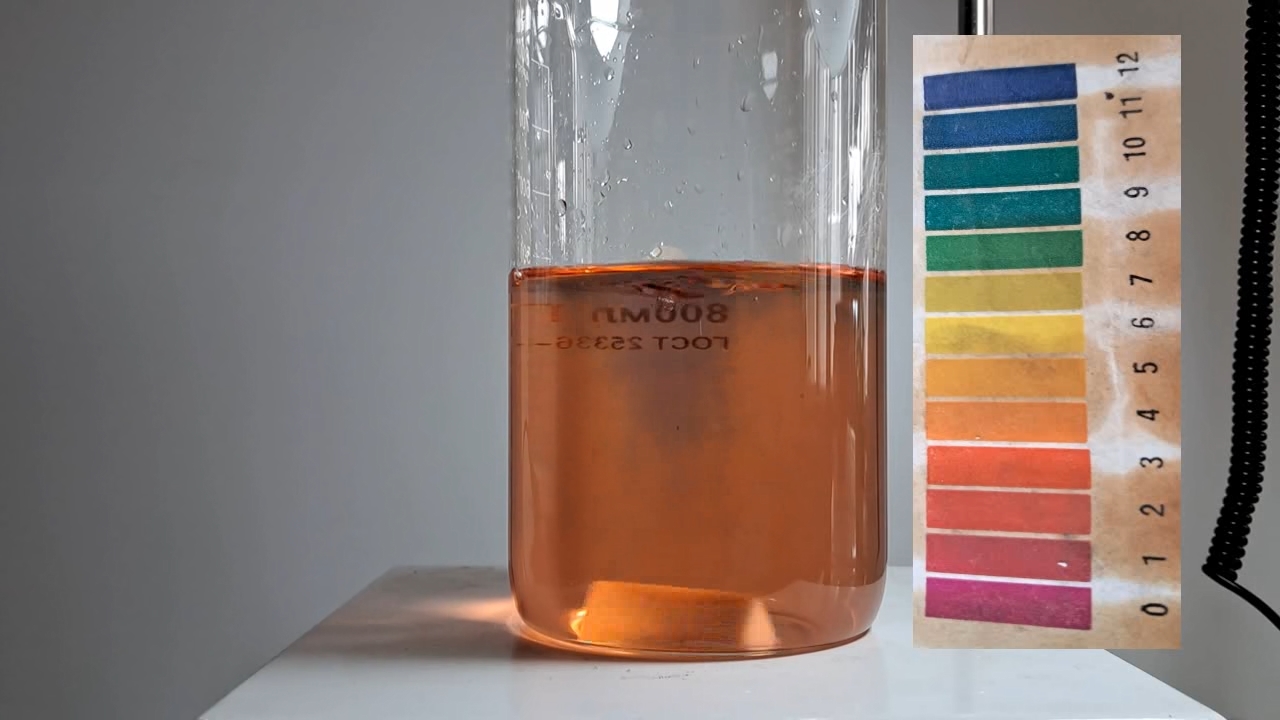
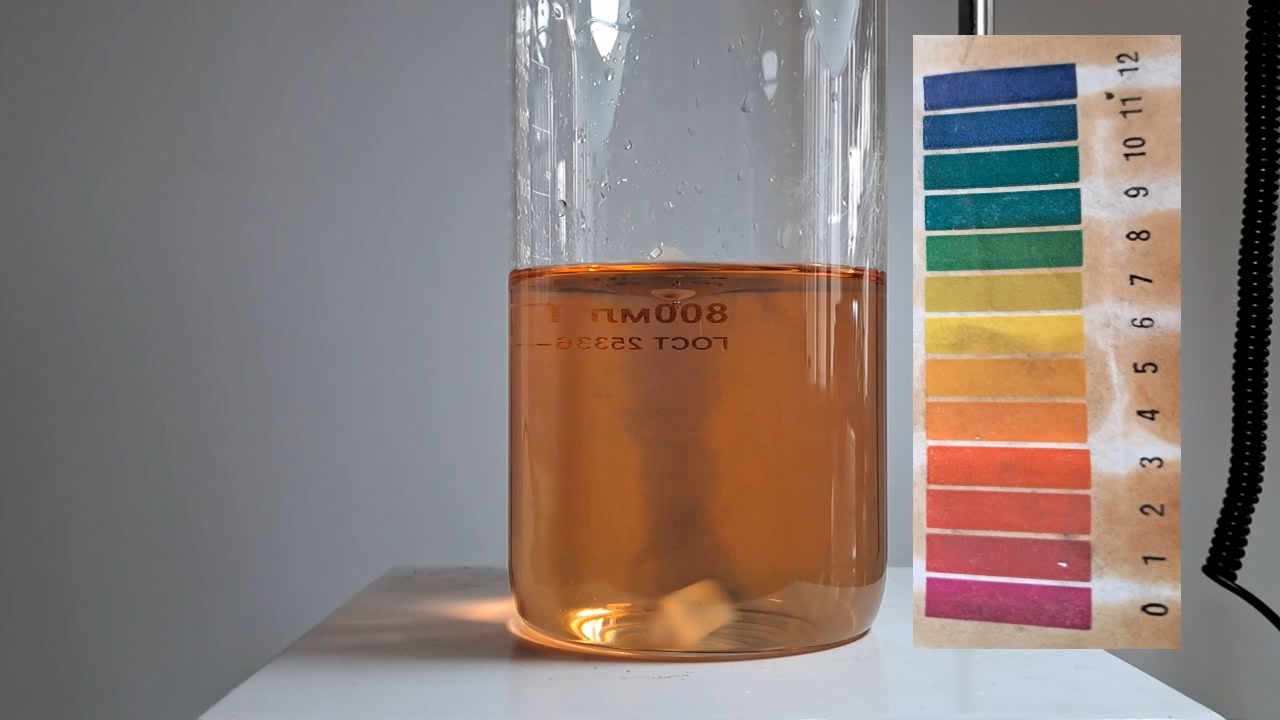
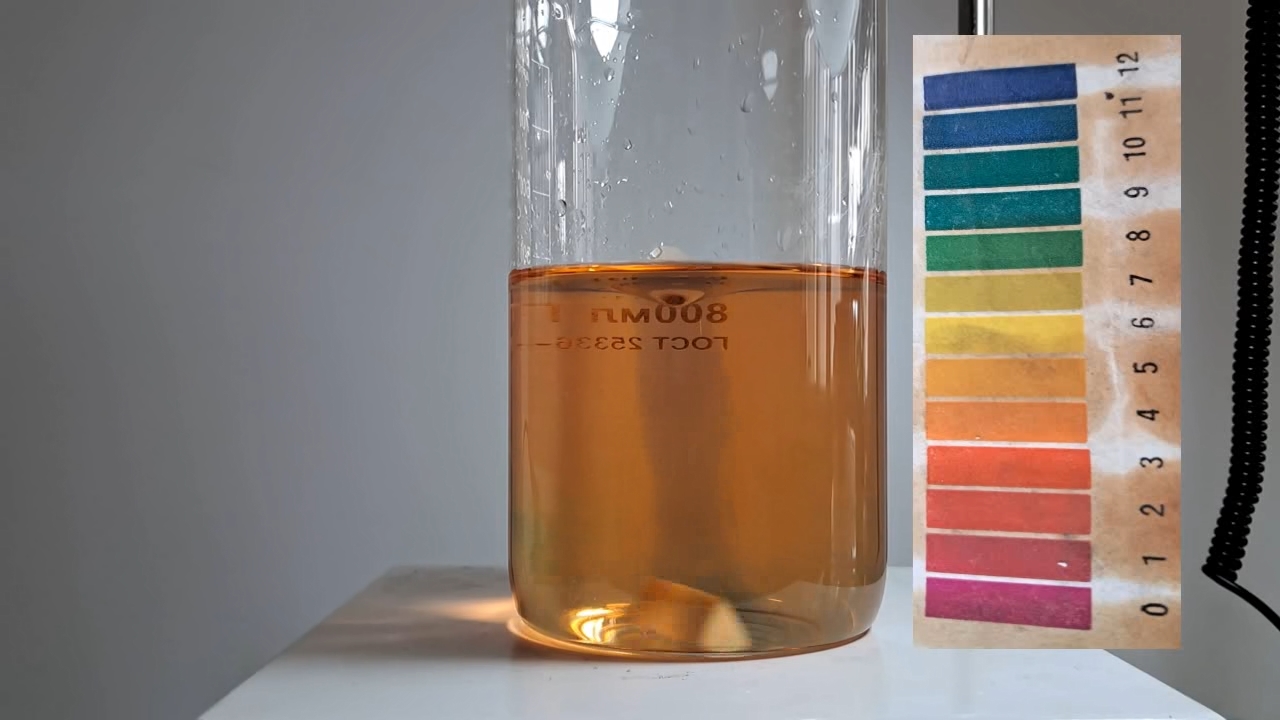
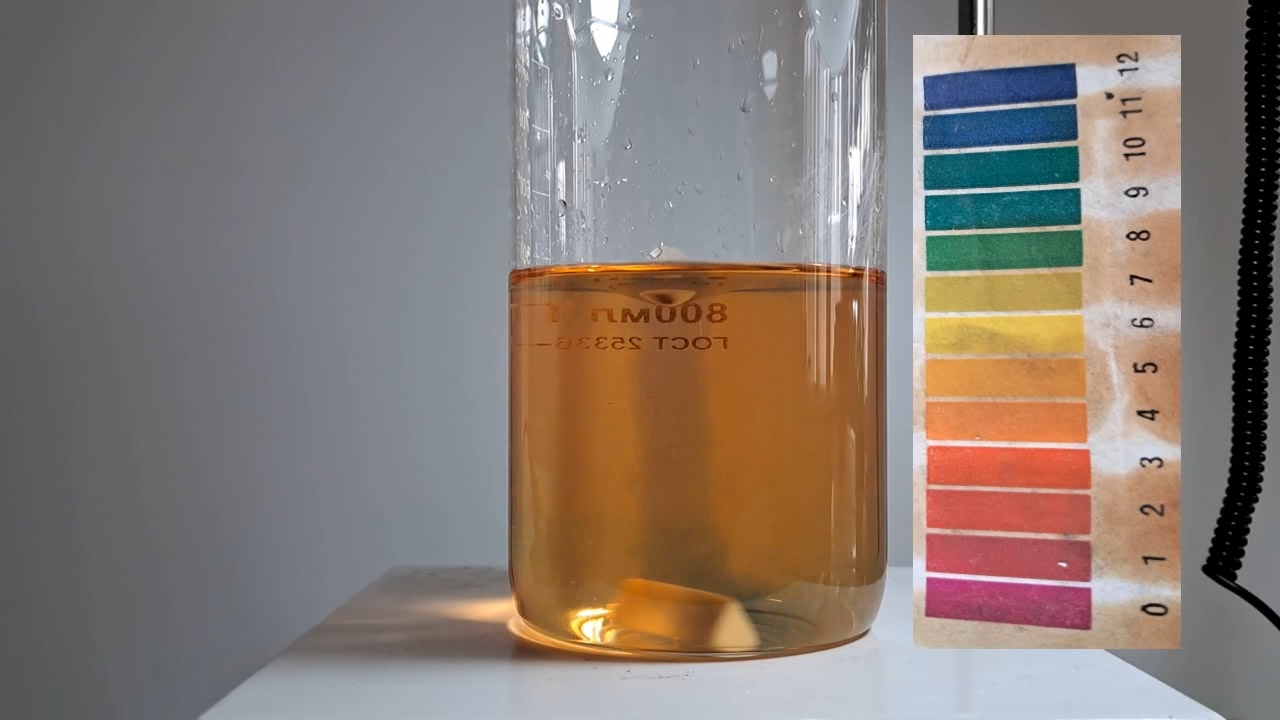
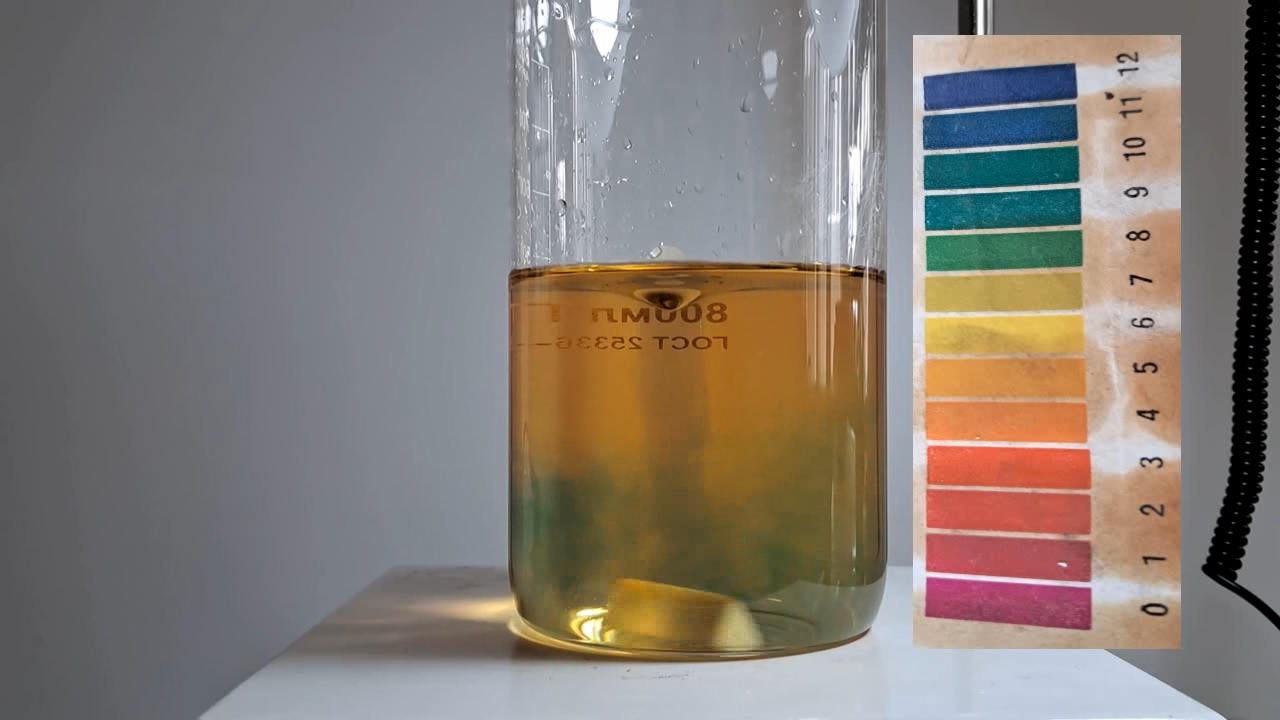
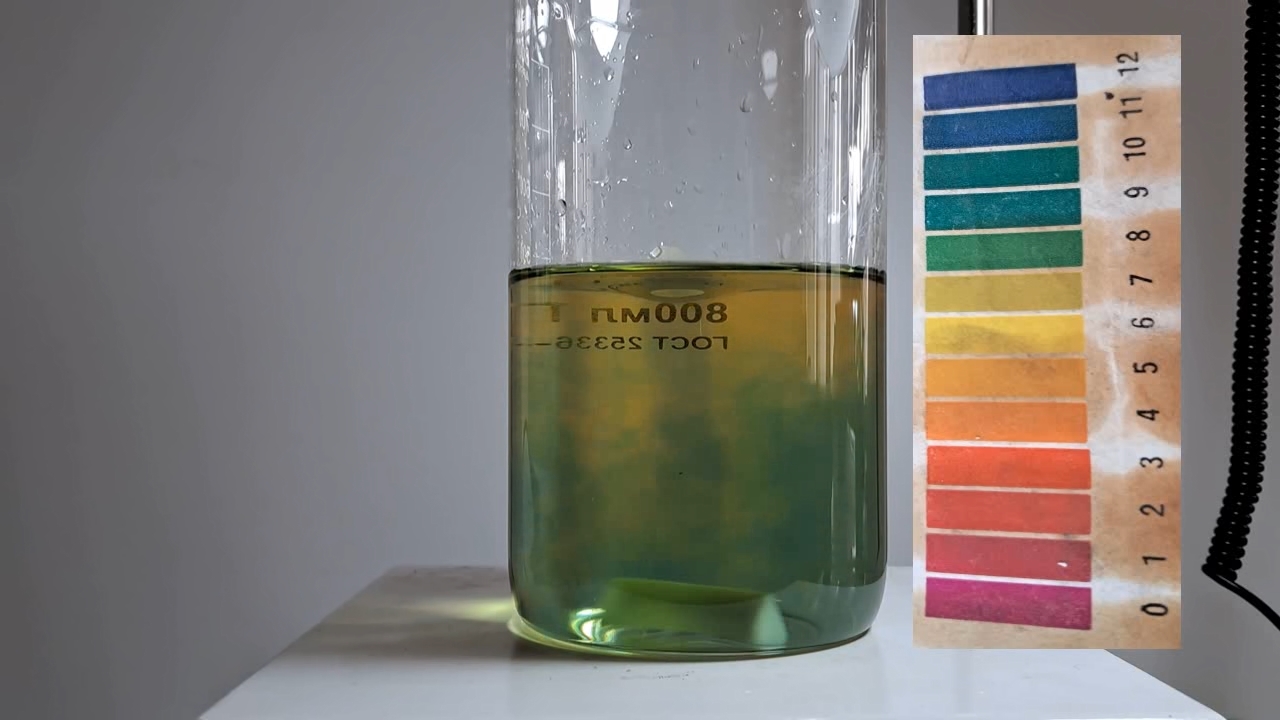
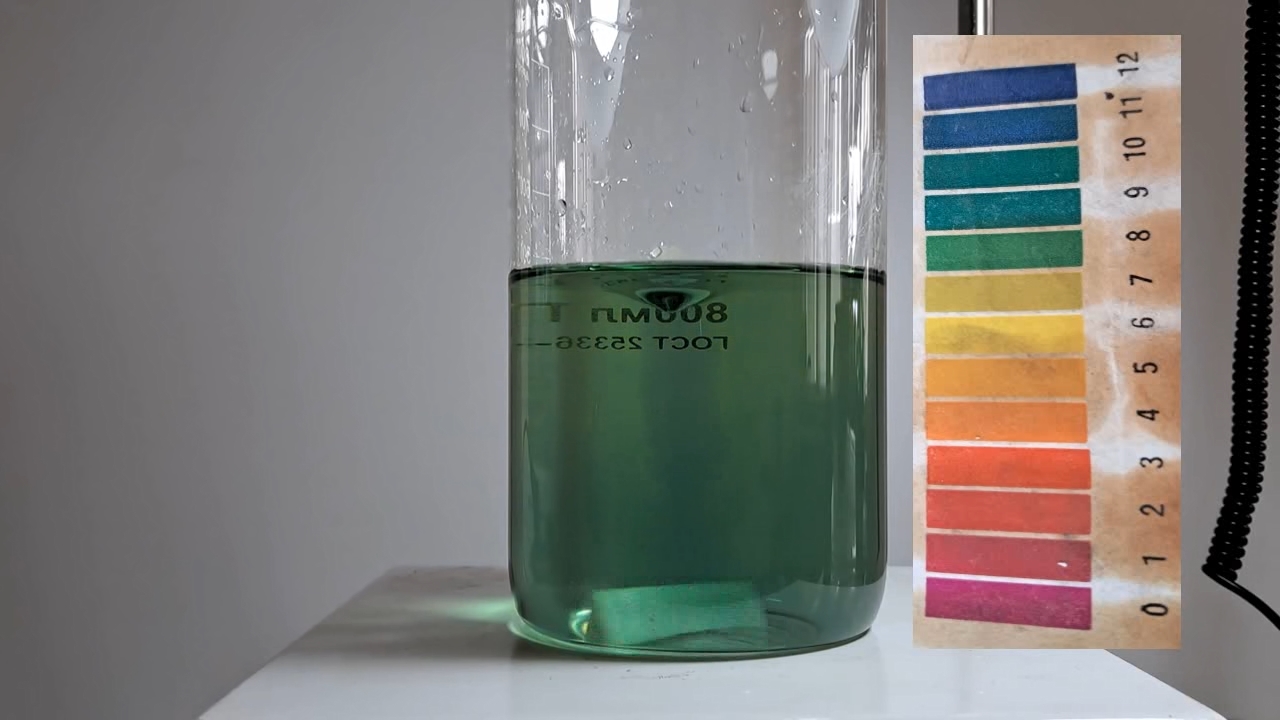
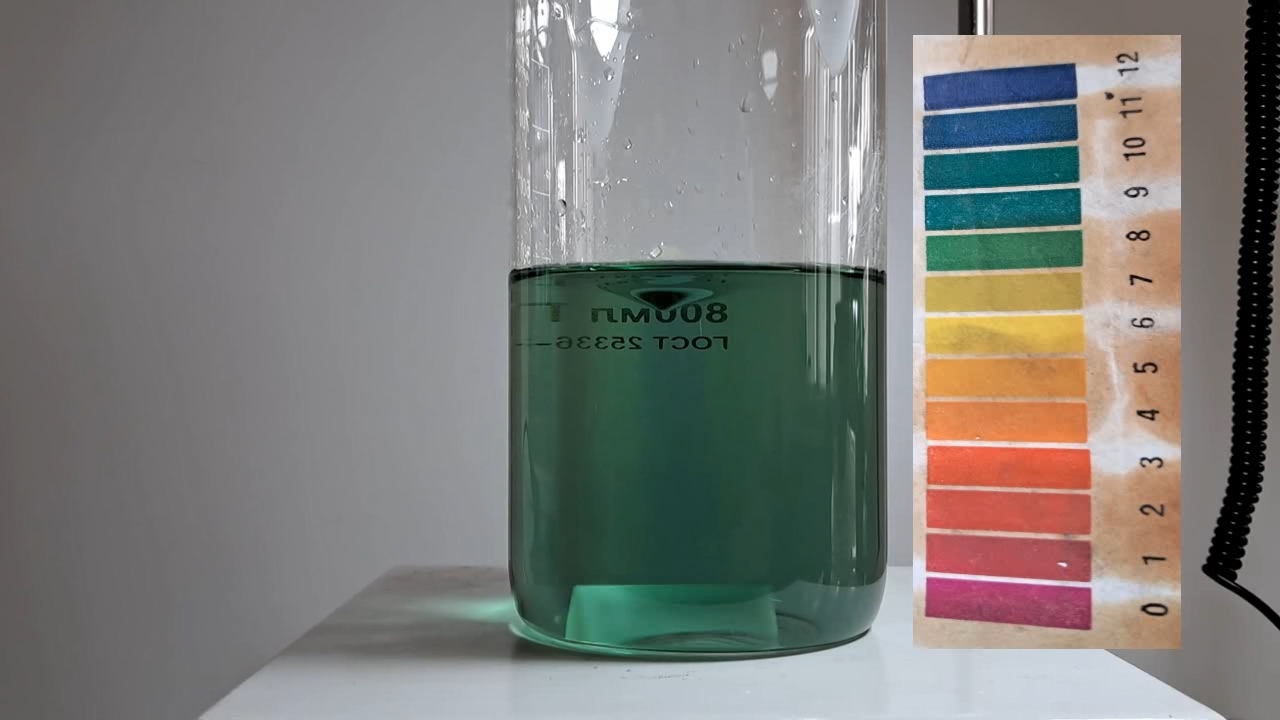
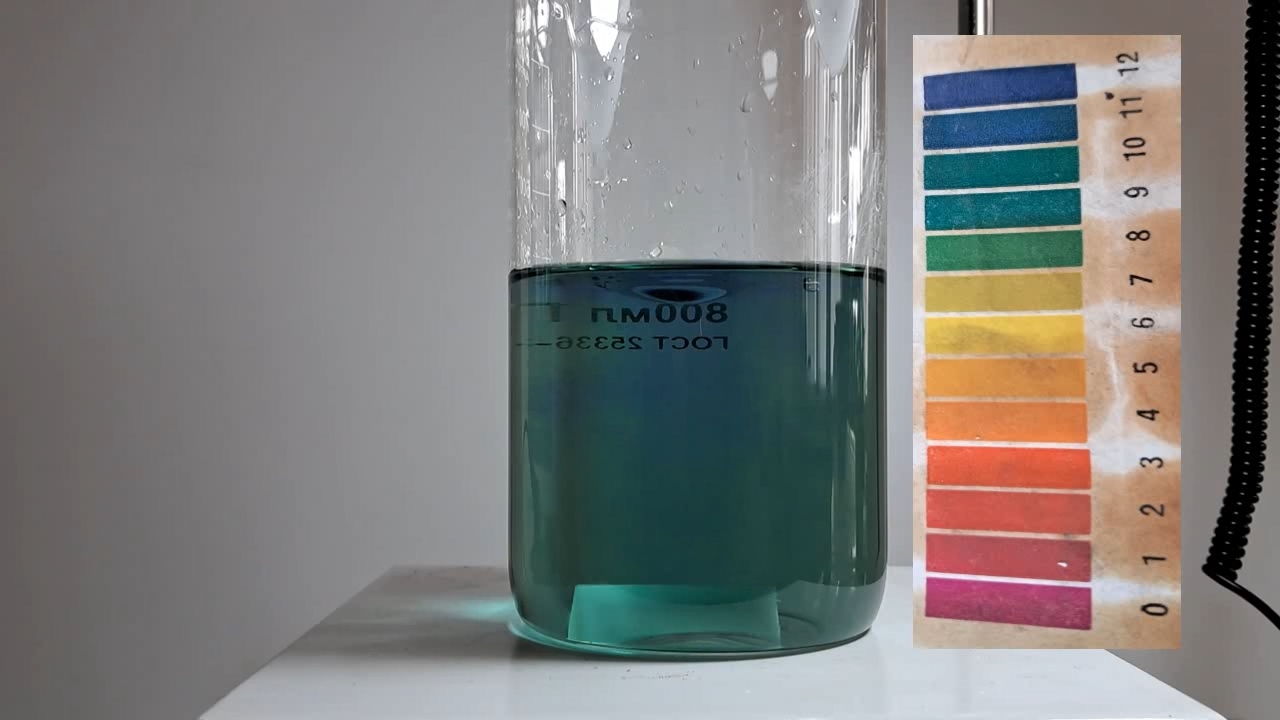
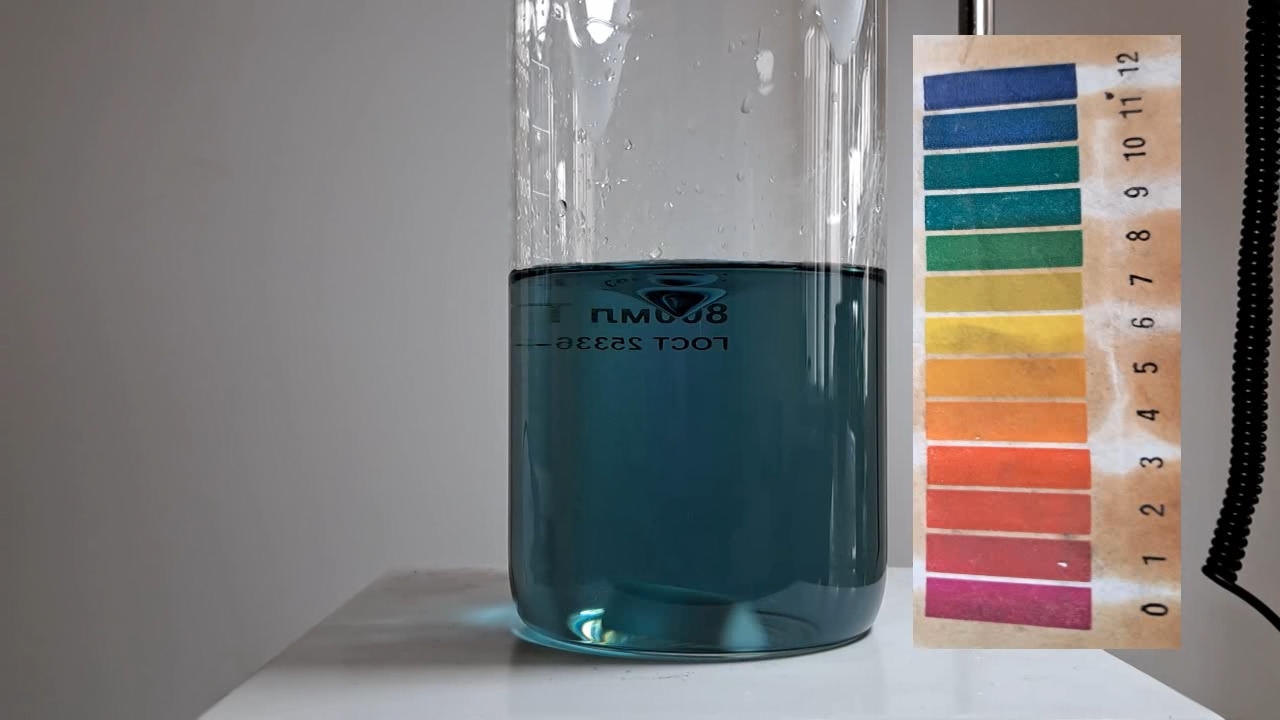
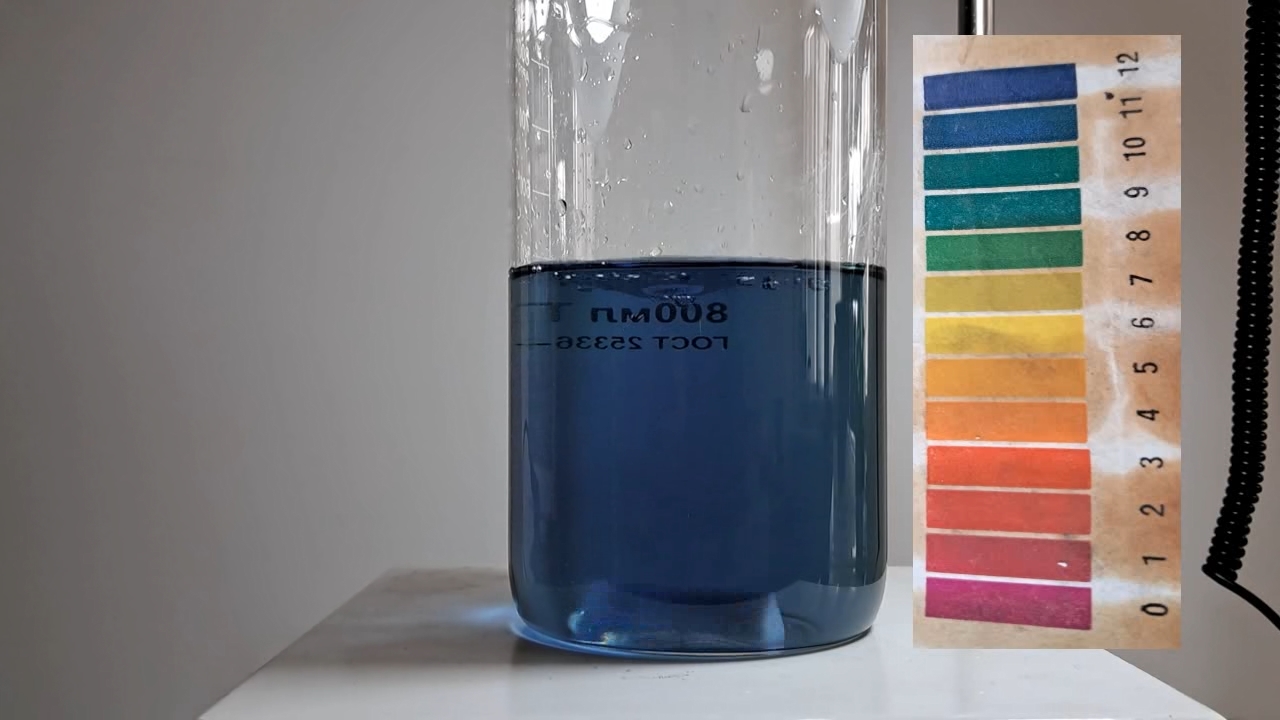
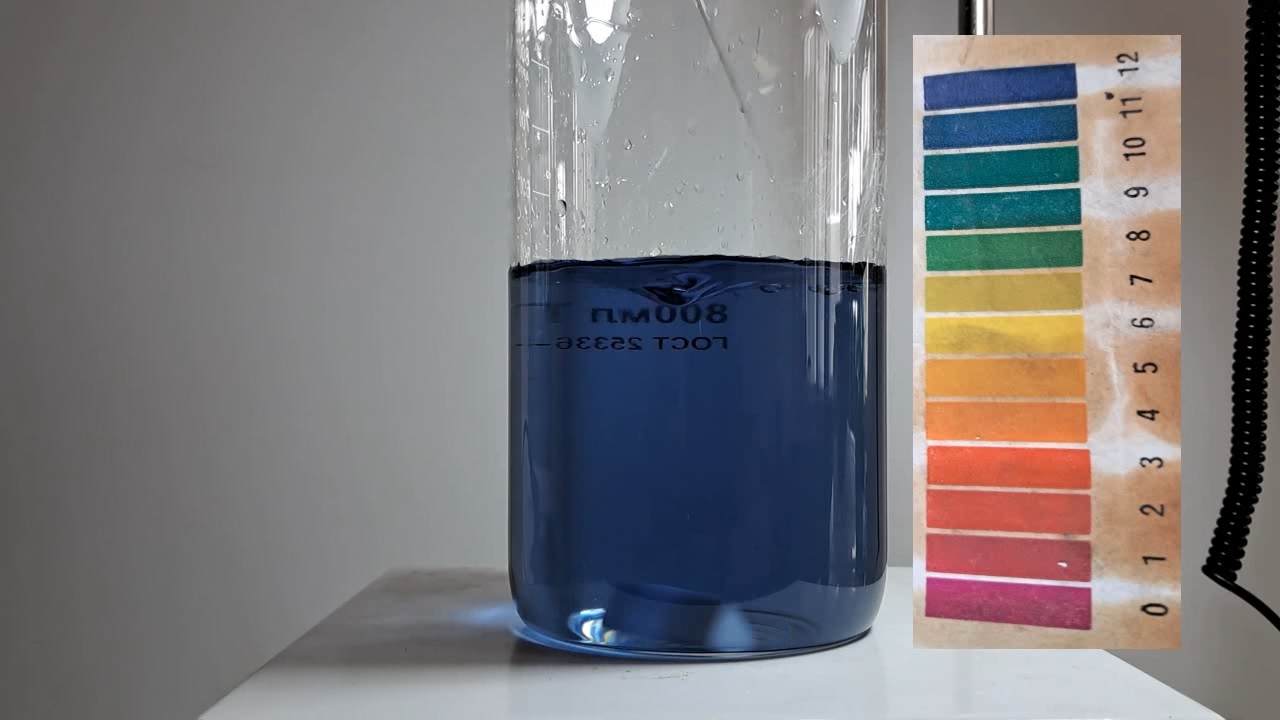
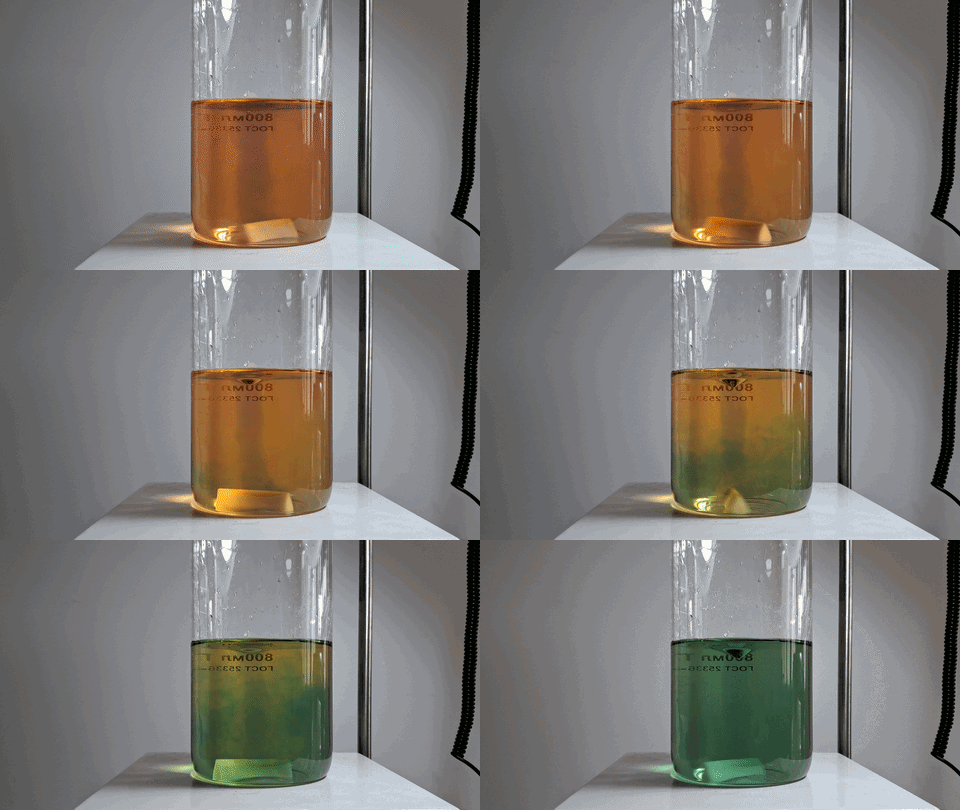
Изменение окраски универсального индикатора pH - Часть 5 At first, no noticeable color change occurred in the solution. Only after most of the alkaline solution had been added did the liquid begin to acquire an orange hue. As I added another portion of the alkaline solution, part of the liquid briefly turned blue. However, upon stirring, the solution returned to an orange color. The orange coloration indicated that the equivalence point was approaching. (When a strong base neutralizes a strong acid, the equivalence point occurs at pH 7; however, in this case, ammonia - a weak base - was used.) A reversible color change of an indicator is often observed near the equivalence point during acid-base or complexometric titrations, when the equivalence point is close but not yet reached. At this stage, the addition of even a small amount of titrant may cause a color change throughout the solution or in localized regions. However, after stirring, the indicator returns to its original color. This effect is caused by a localized excess of titrant (in this case, alkali), which is eliminated upon mixing. Incidentally, if the titrant is added in large portions without stirring, such transitions may occur even far from the equivalence point; the reason, I believe, is obvious. While stirring the blue and orange solutions, a colored "tornado" temporarily appeared in the beaker. The formation of funnel-like vortex structures during stirring is a common phenomenon. Due to the rapid rotation of the liquid, an air vortex may form and extend toward the bottom of the vessel. In this case, the magnetic stir bar was not rotating fast enough to produce an air vortex. Instead, a different type of vortex formed, consisting of alkaline solution within a surrounding acidic medium.The pH difference resulted in a corresponding color contrast. Eventually, the alkaline solution was exhausted, yet the liquid in the beaker remained orange. This color corresponds to a slightly acidic solution with a pH of approximately 4-5. I then began adding 25% ammonia solution dropwise, and a colored vortex formed again. Then the liquid at the bottom turned green, after which the green color gradually spread throughout the beaker. With further addition of ammonia, the color changed progressively from green to blue and finally to violet. |
Color Change of Universal pH Indicator |
|
|
|
|
|
|
|
|
|
|
|
|
|
|
|
|
|
|
|
|
|
|
|
|
|
