Content Chemistry experiments - video Physics experiments - video Home Page - Chemistry and Chemists

Chemistry and Chemists № 1 2026

Journal of Chemists-Enthusiasts
Donate to the journal Chemistry and ChemistsDonate to the journal Chemistry and Chemists


Experiments with Universal Indicator - pt.17, 18


Chemist


Having noticed a mistake in the text, allocate it and press Ctrl-Enter


At first glance, such an experiment might seem pointless. In previous experiments, universal indicator paper turned bright crimson when exposed to dilute hydrochloric acid or concentrated sulfuric acid. Therefore, if a solution of universal pH indicator were added to 69% nitric acid, the liquid should also turn crimson. In other words, nothing unusual would be expected - all of these acids should behave similarly.

Nevertheless, I decided to verify this experimentally. If the result matched the prediction, I simply would not describe the experiment. Only if something interesting occurred would it deserve a separate part of the article.

Not every experiment is successful, even when it is a simple chemical demonstration based on well-known properties of substances. And when investigating something new, most experiments fail. The more complex and significant the problem being studied, the greater the proportion of failures or ambiguous results. About 30 years ago, an organic chemist said that they "work 90% for the trash bin," meaning that most of the compounds they synthesize ultimately prove useless.

Although, sometimes a substance that seems useless today may become exceptionally important tomorrow. Sulfuric acid, for example, was already known in the age of the alchemists. At that time, it was an exotic substance that proved to be of no value in the search for the "philosopher's stone" that the alchemists so coveted. Today, however, sulfuric acid is one of the foundations of the chemical industry. Something similar happened with white phosphorus, which evolved from a curiosity and an "entertainment for the very rich" into a large-scale industrial product.

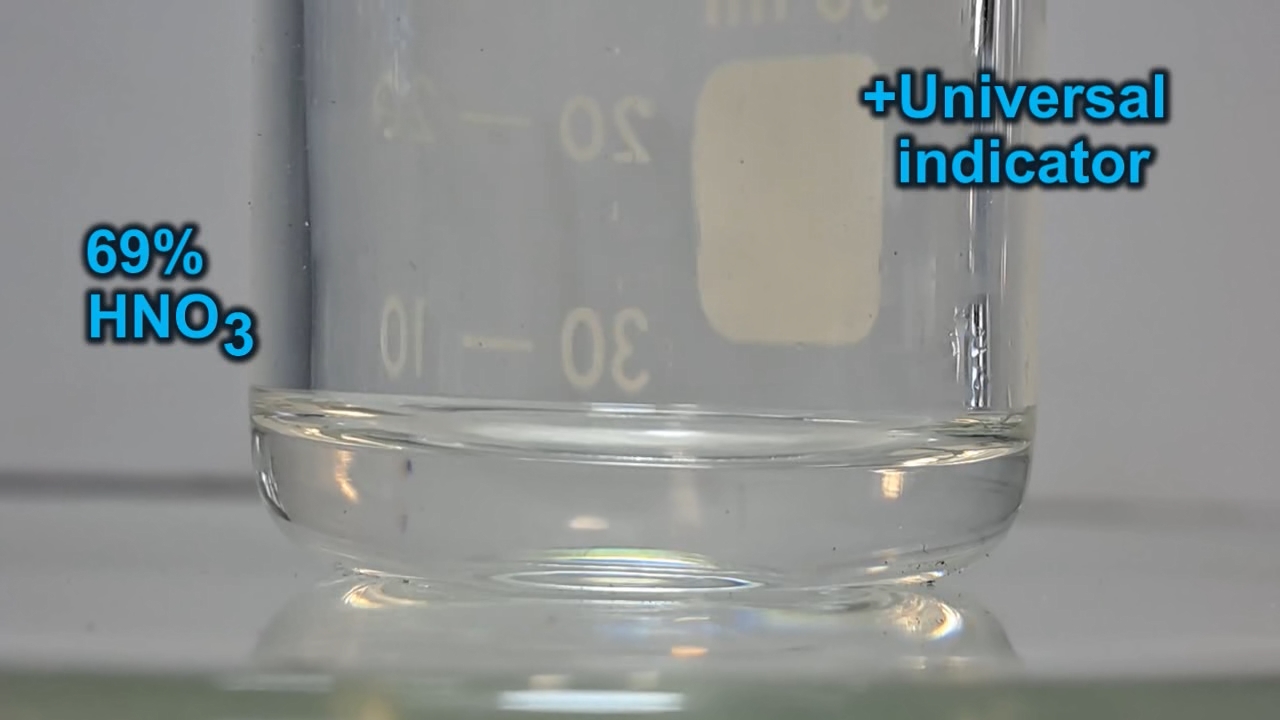
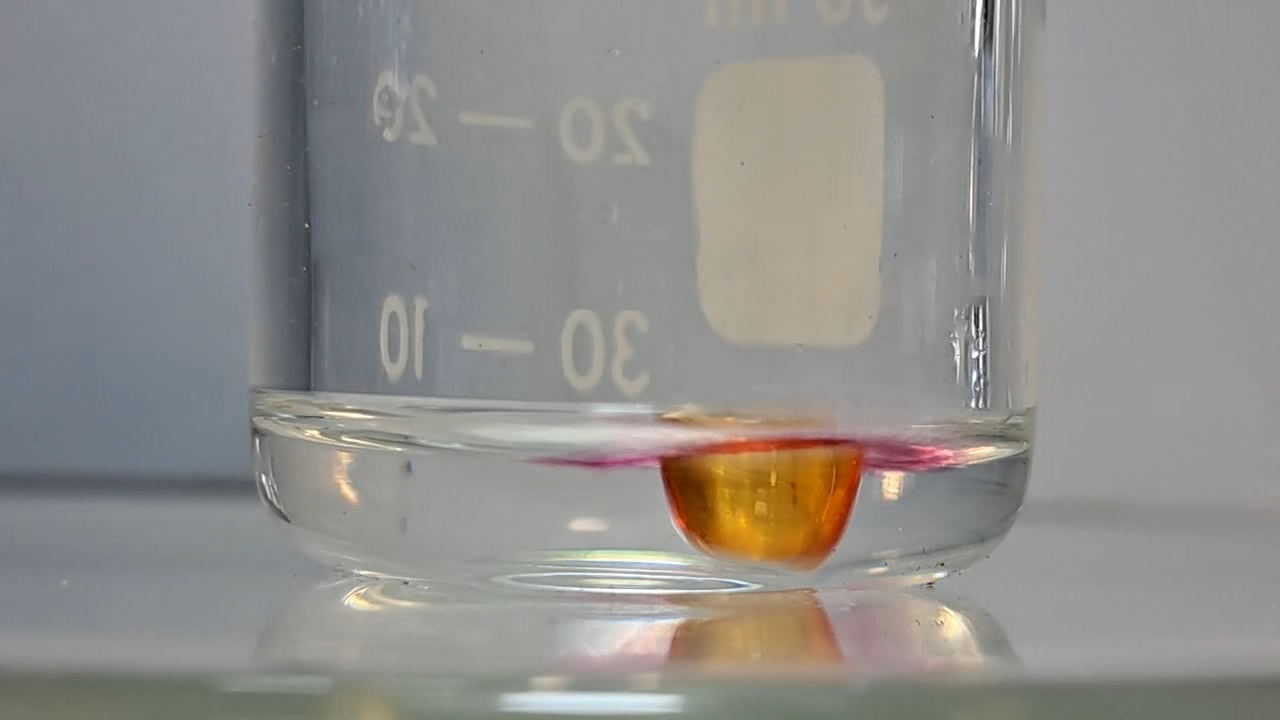
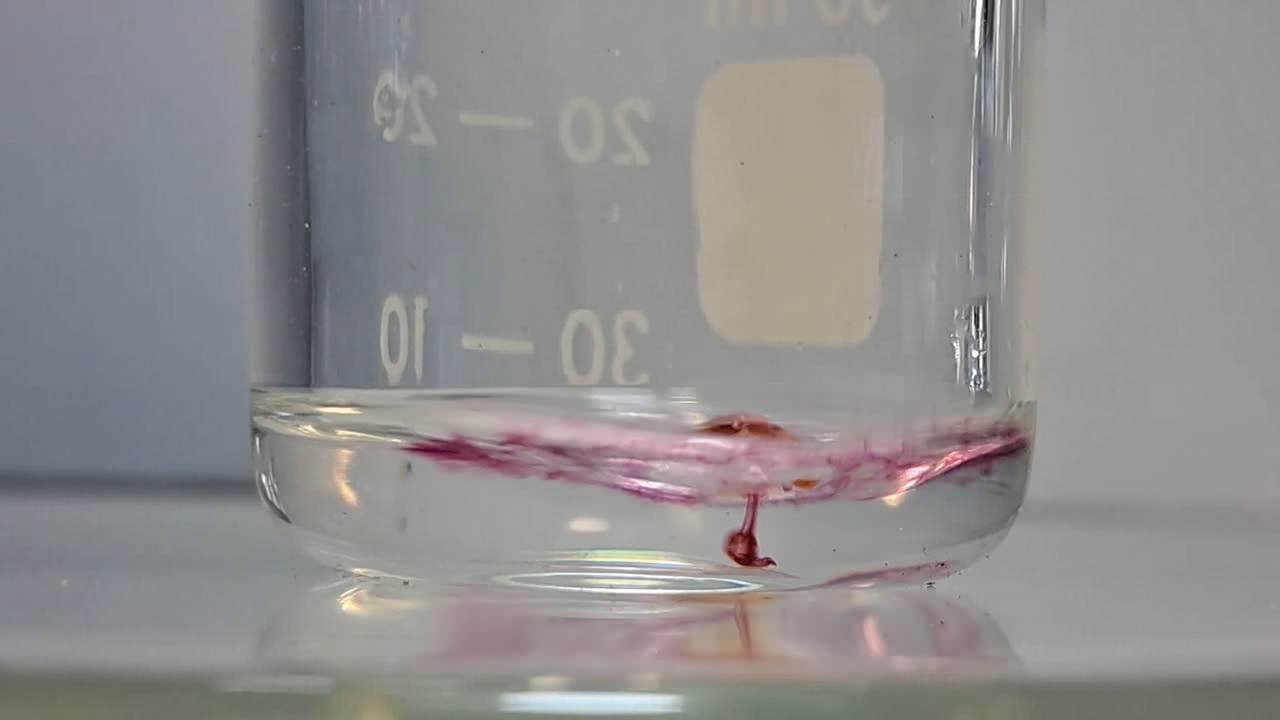
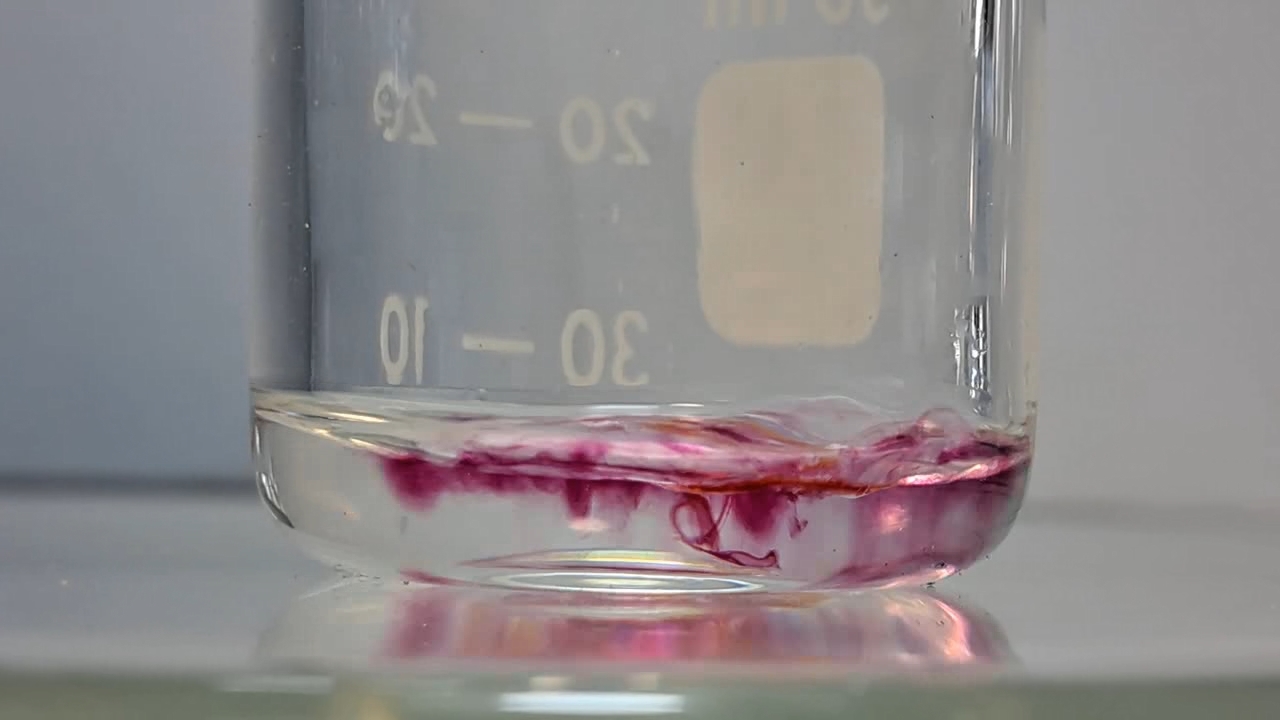
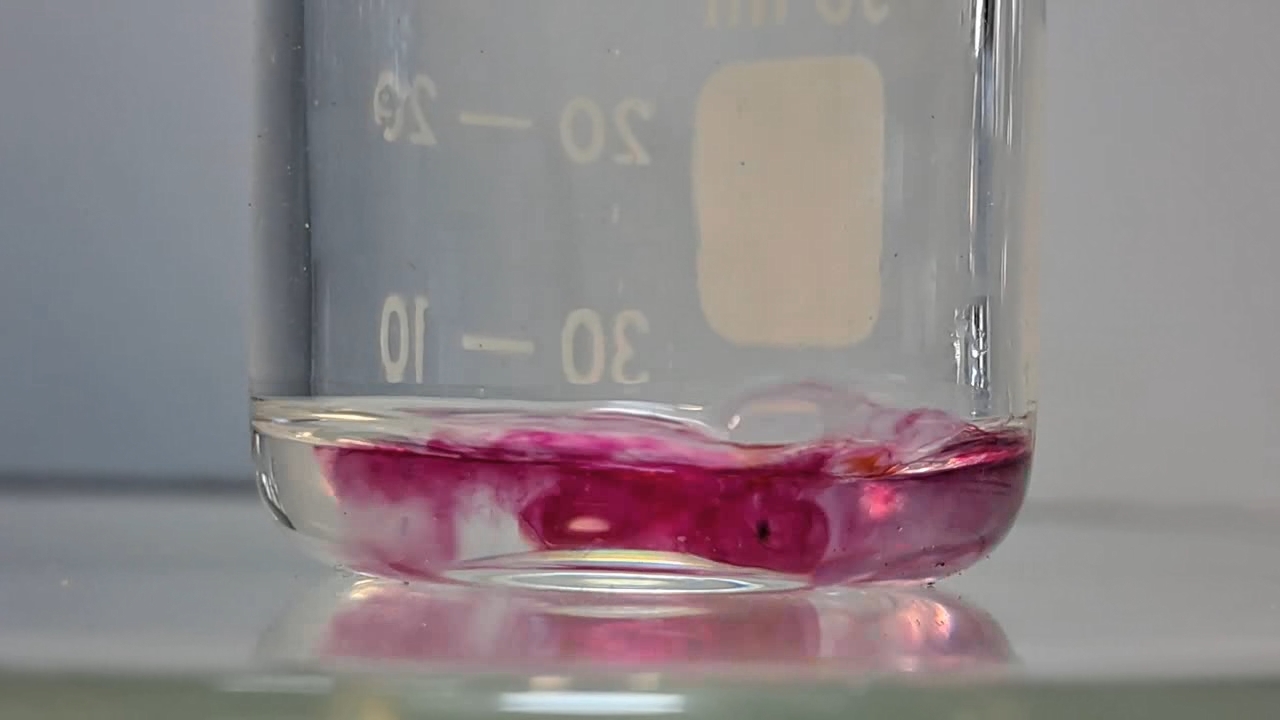
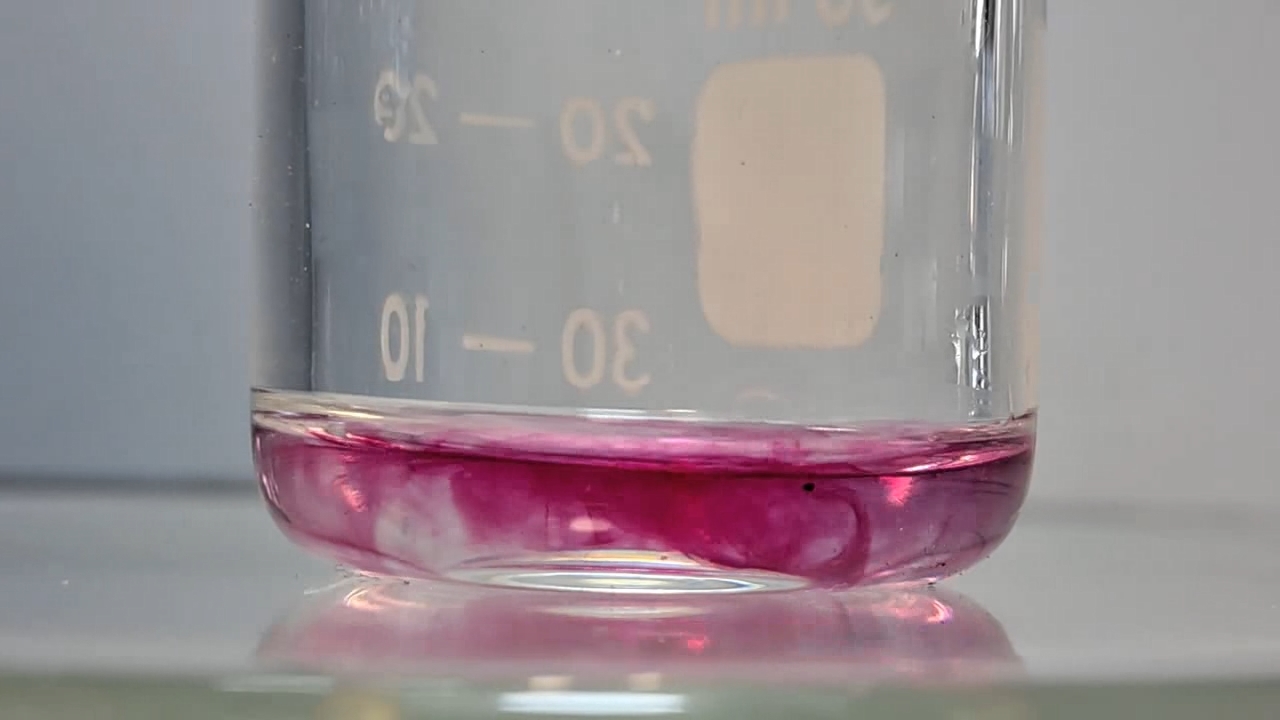
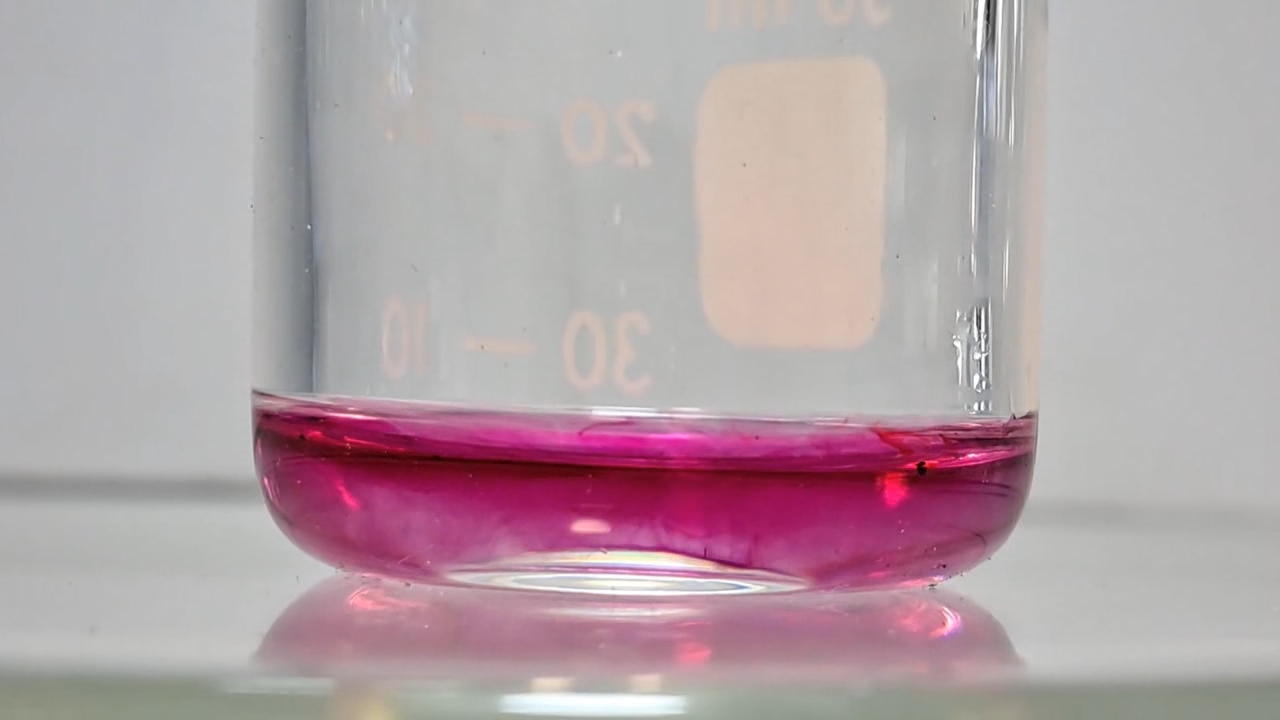
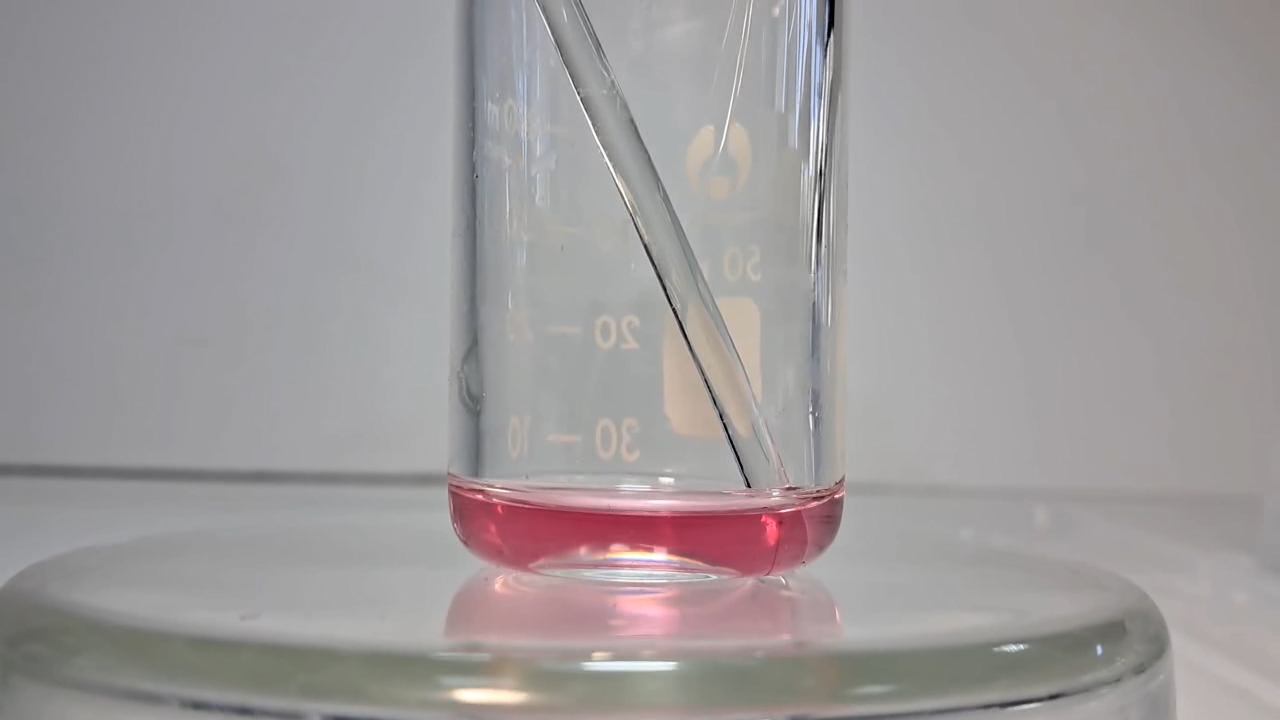
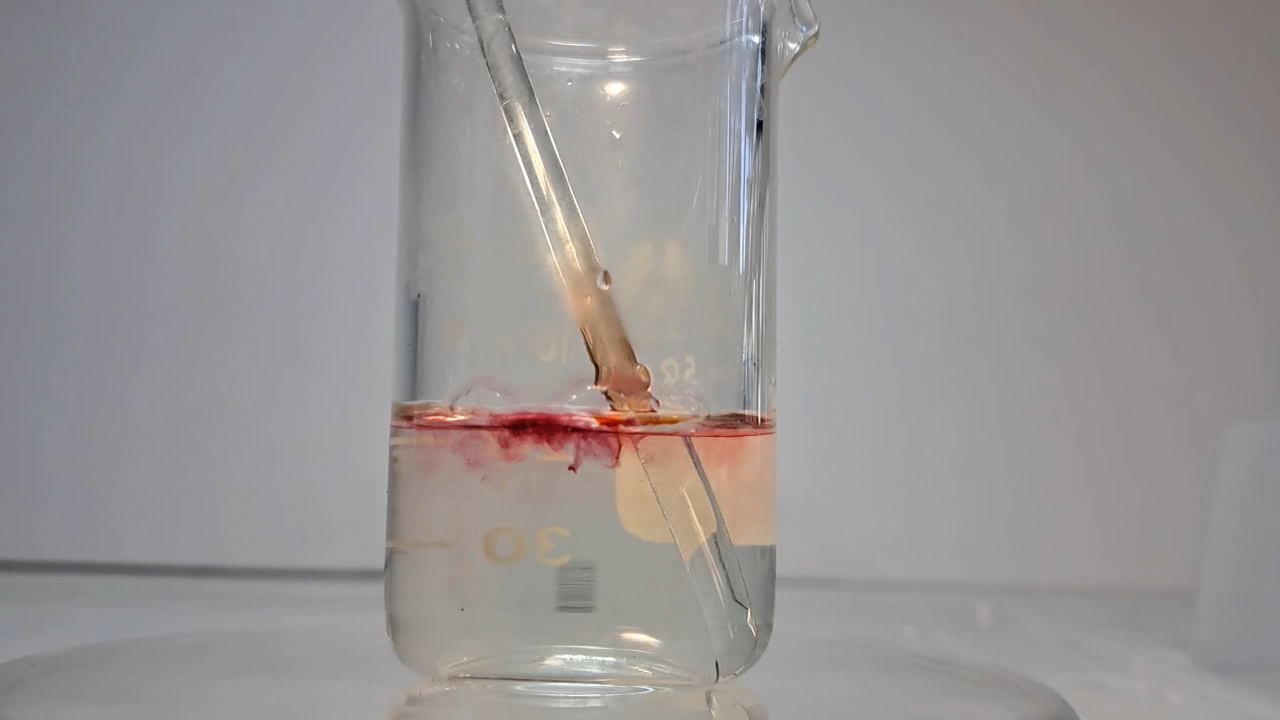
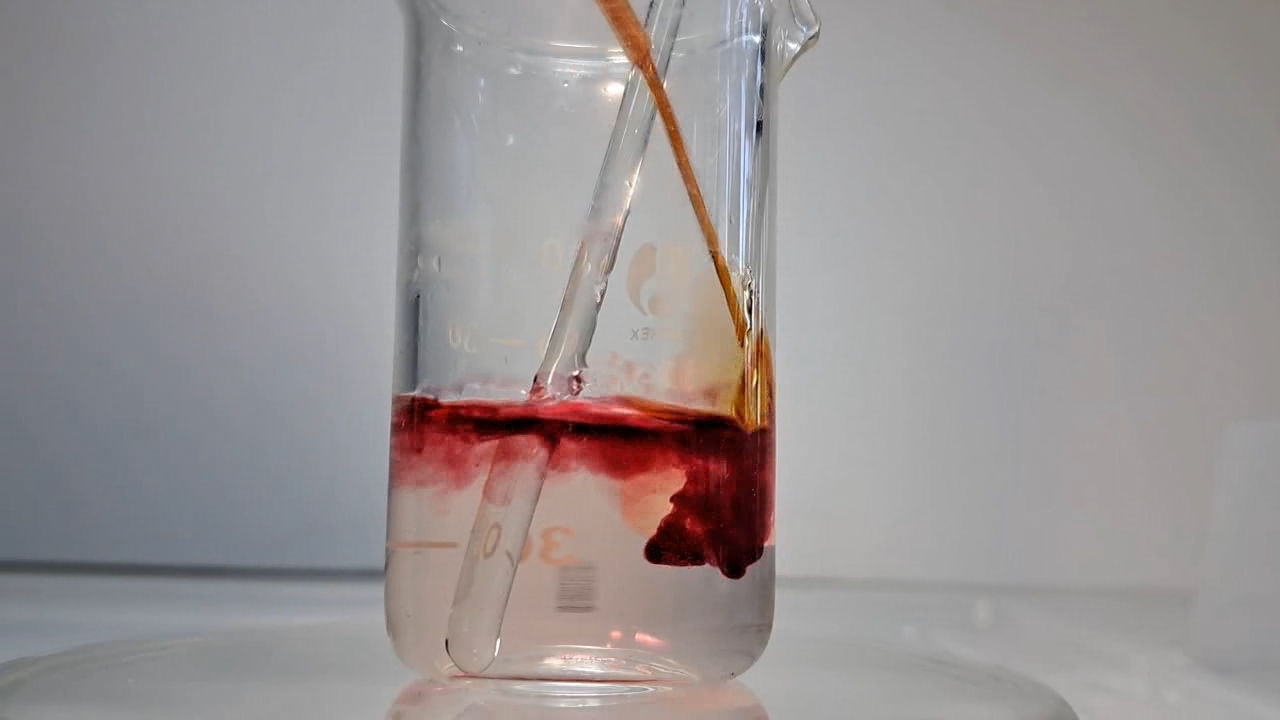
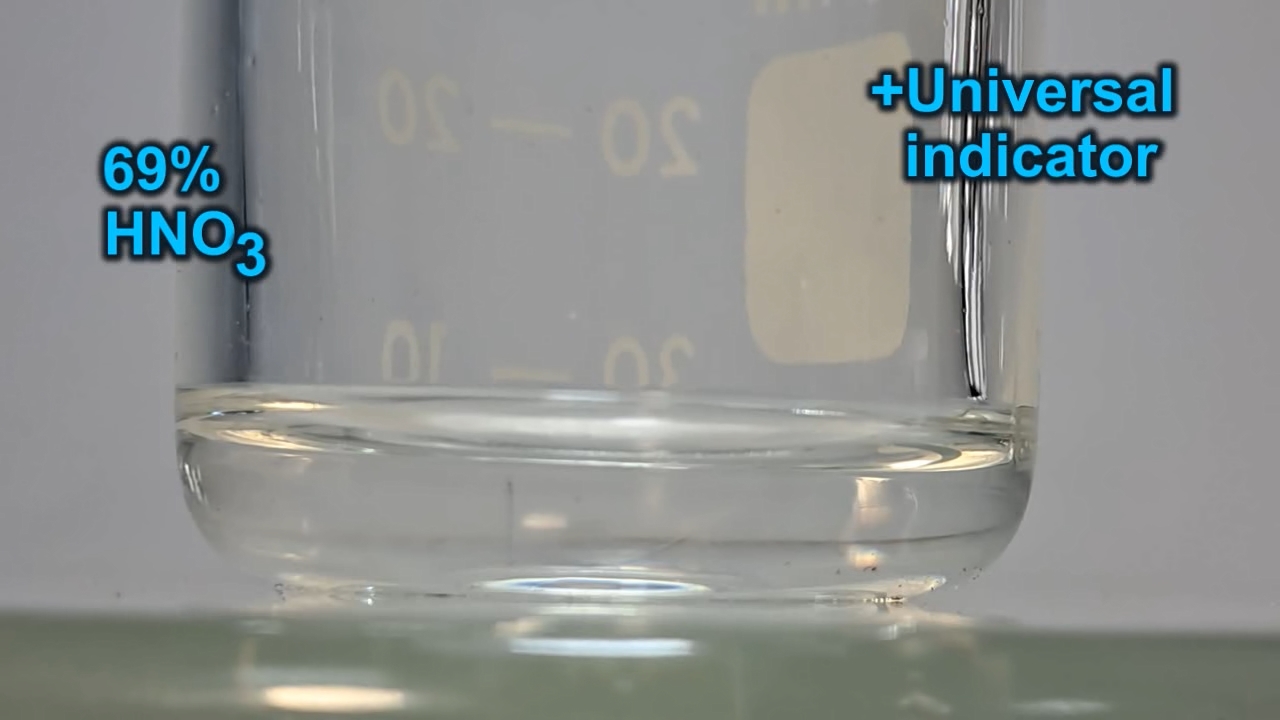
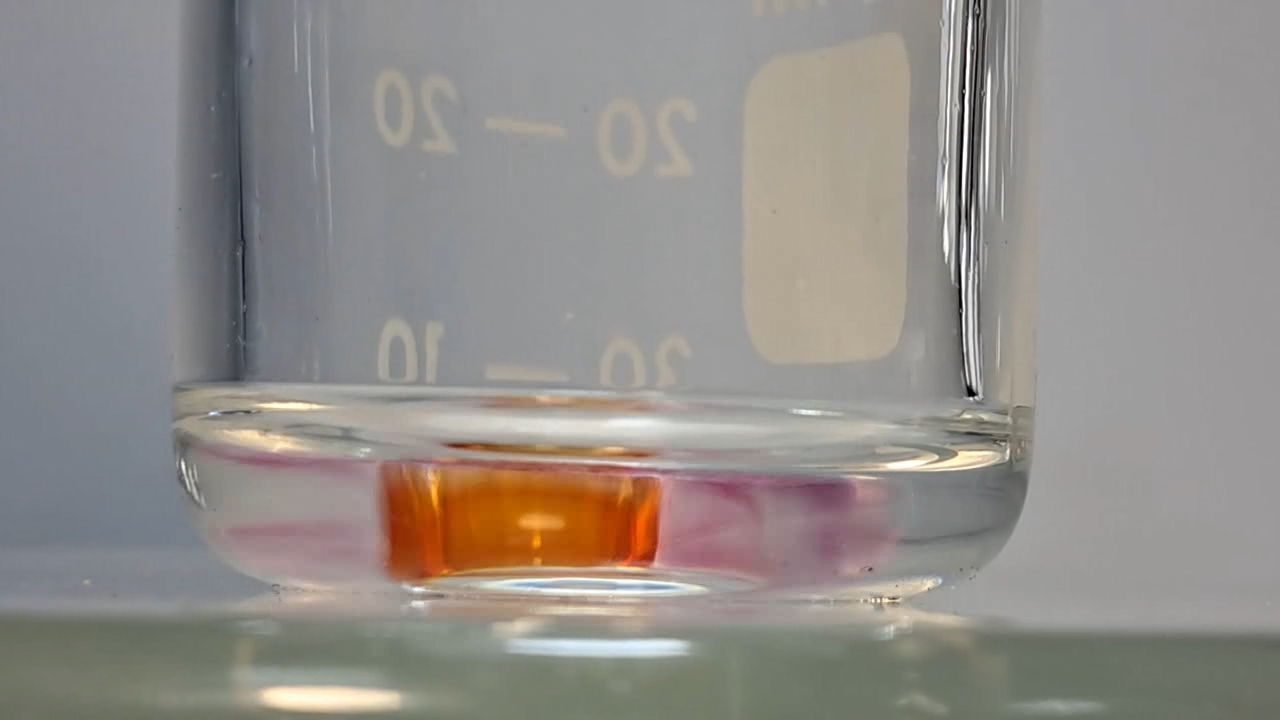
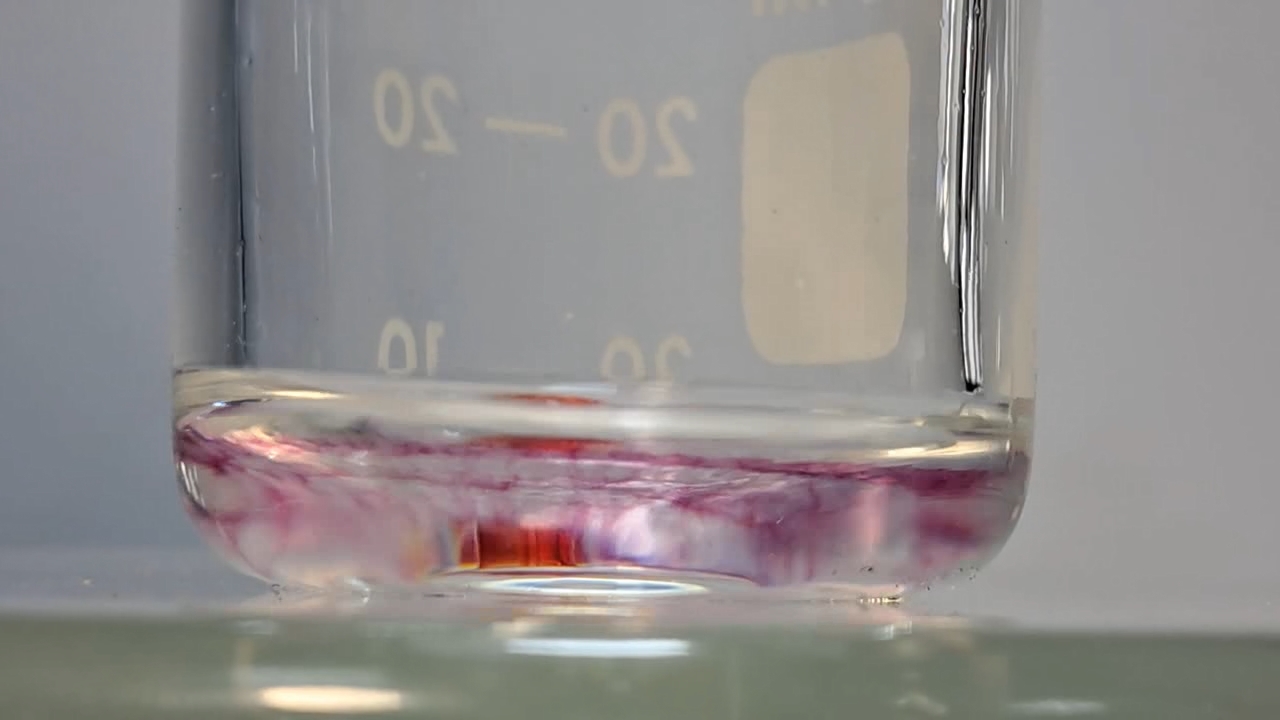
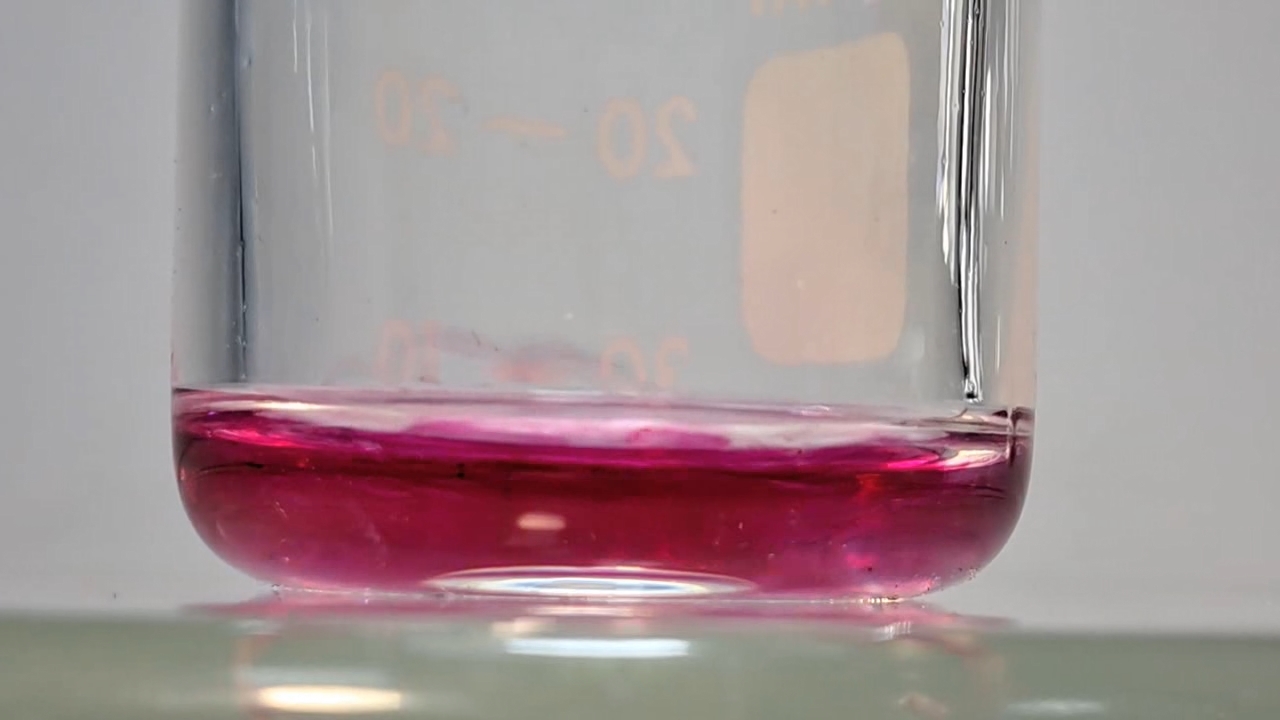
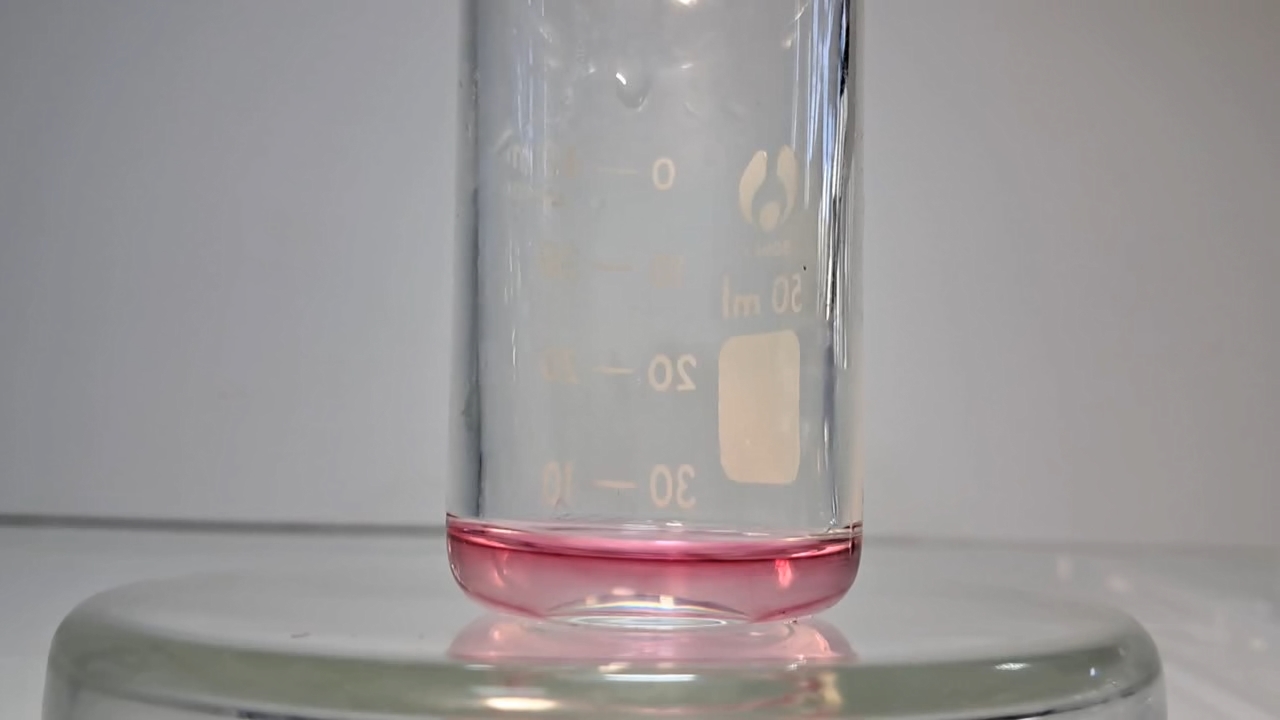
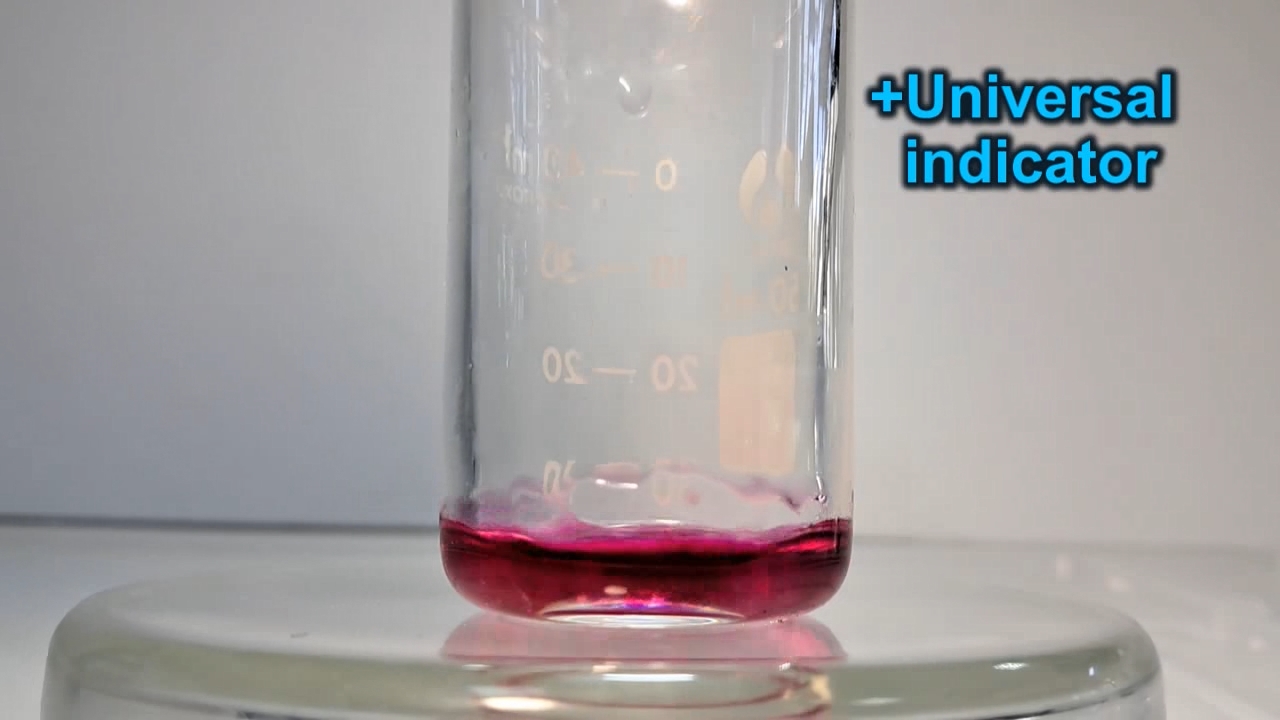
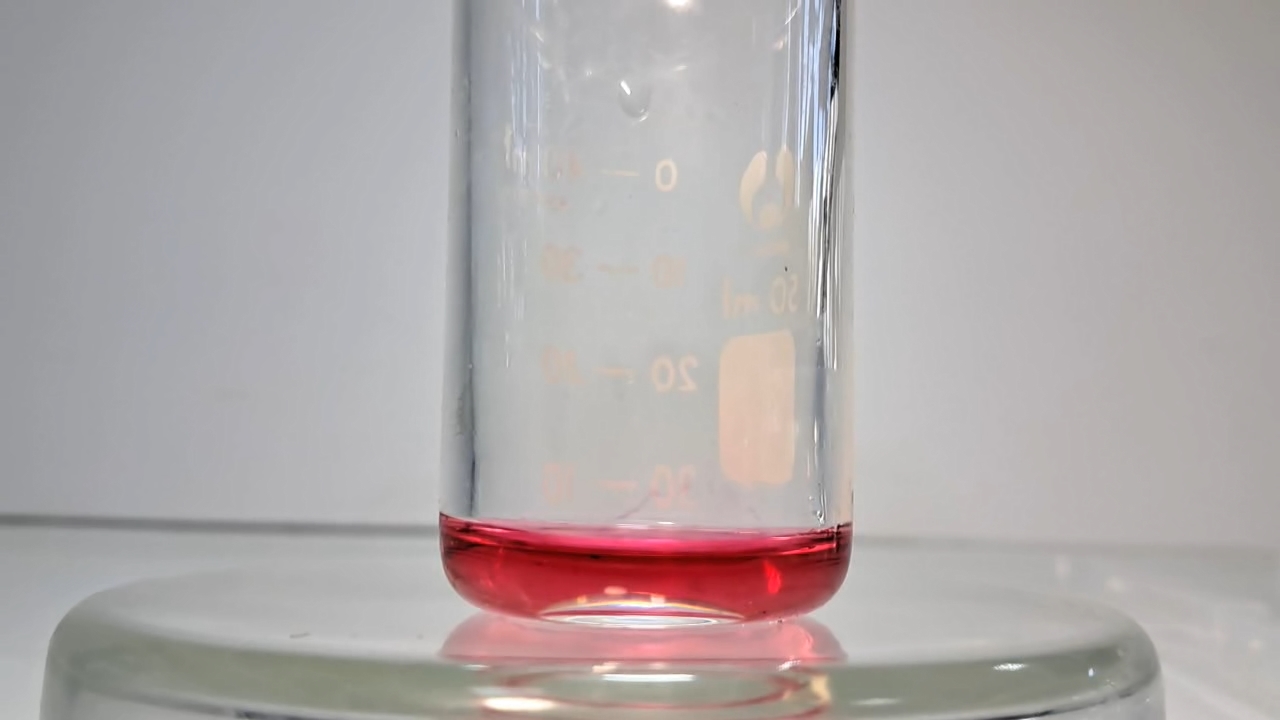
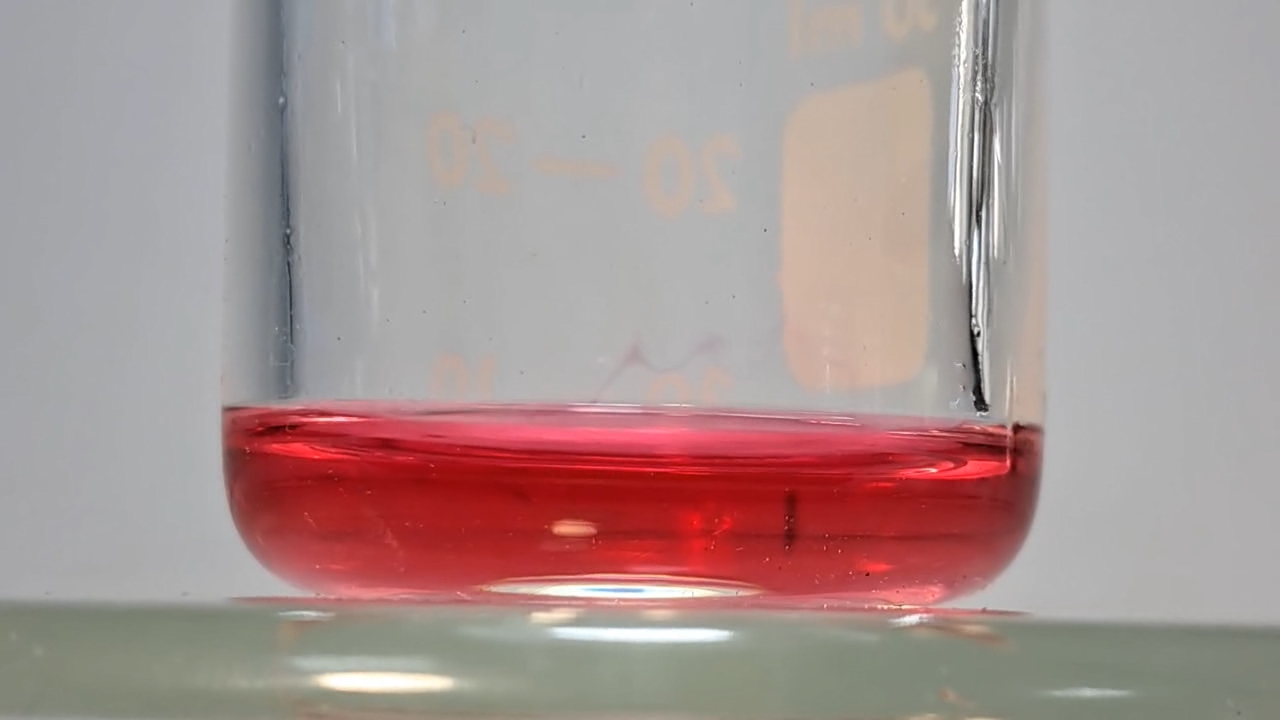
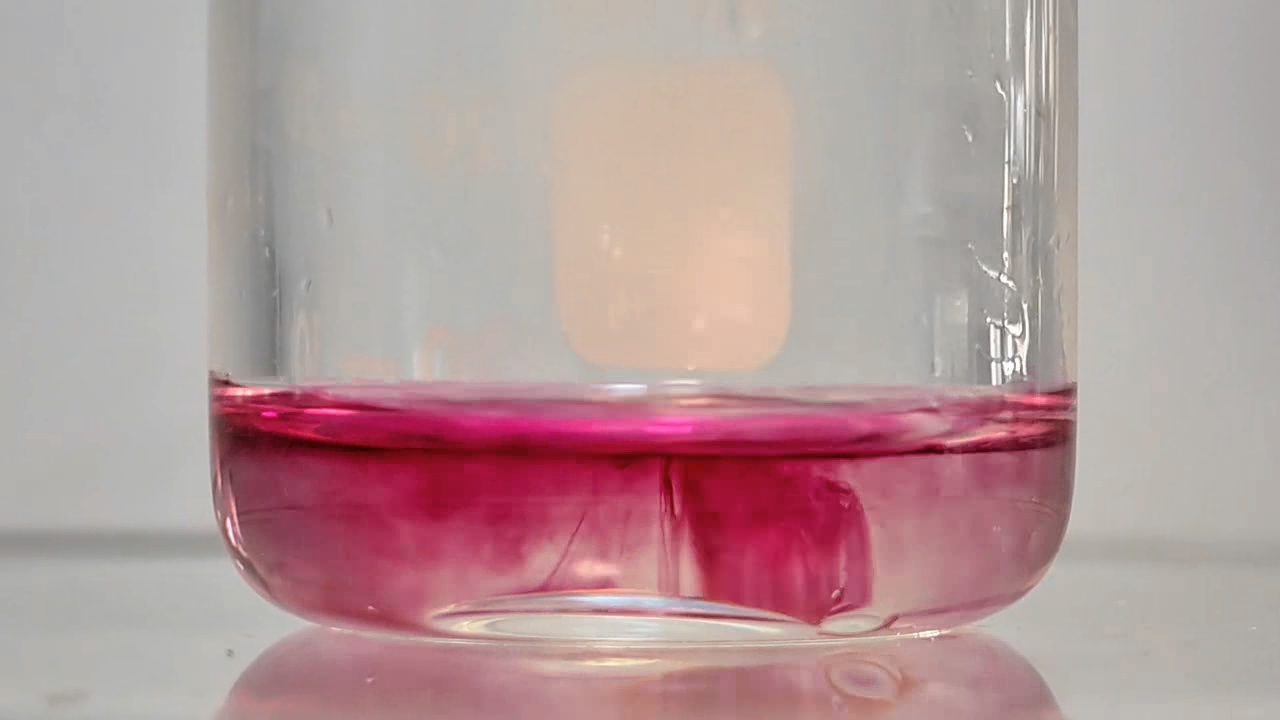
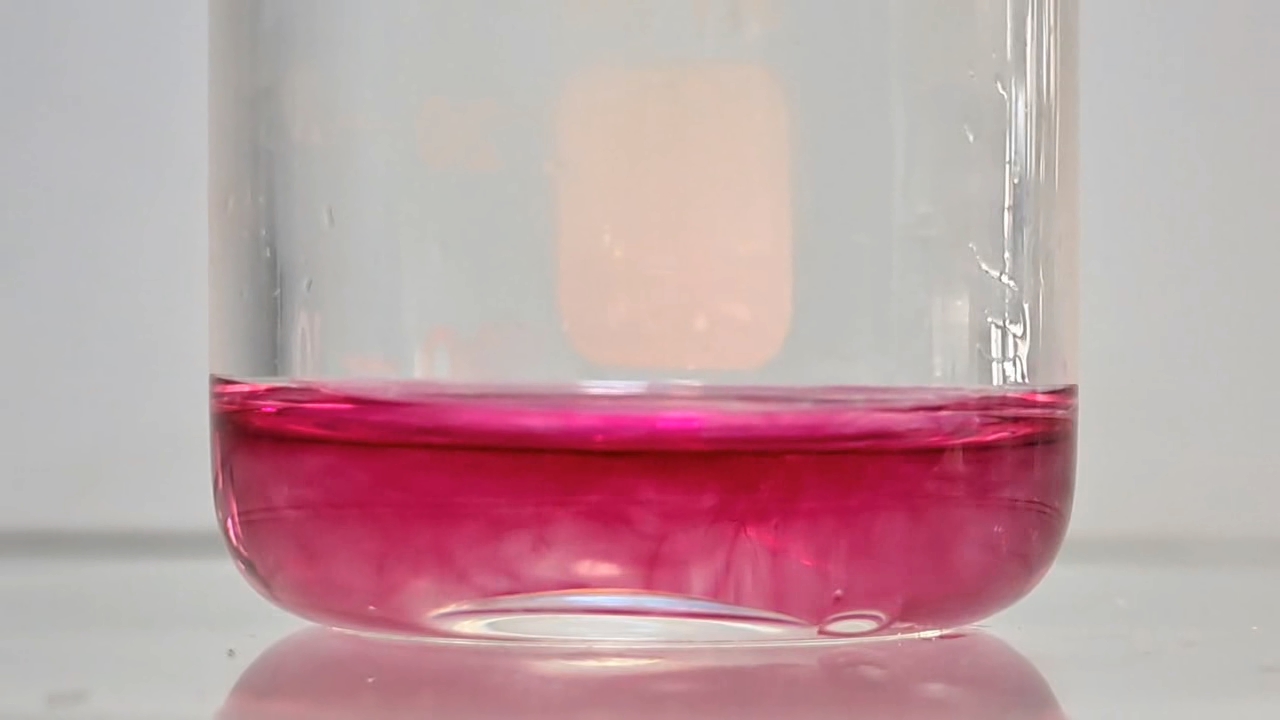
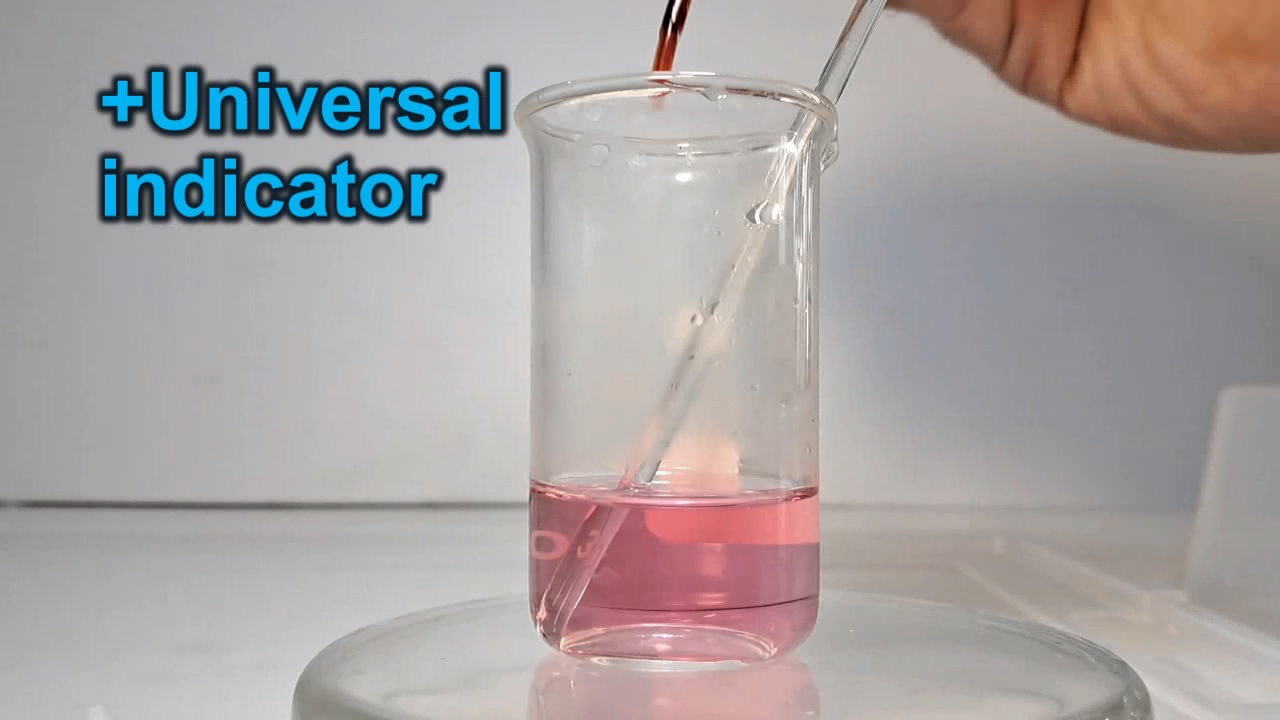
Let us begin the experiment. I poured about 5 mL of 69% nitric acid into a small beaker and added a few drops of an alcoholic solution of universal indicator. The liquid immediately turned bright crimson. Nothing unusual appeared to be happening, so I stopped filming and began preparing another experiment, which involved dissolving alkali in water.

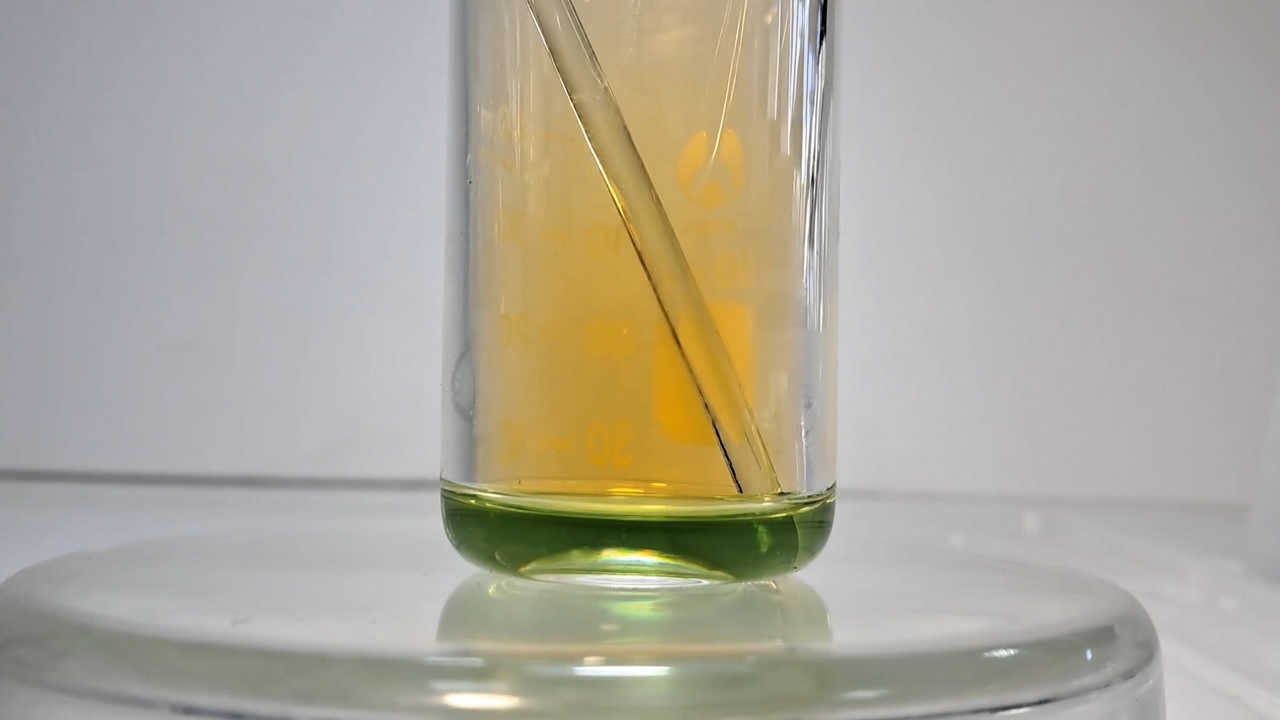
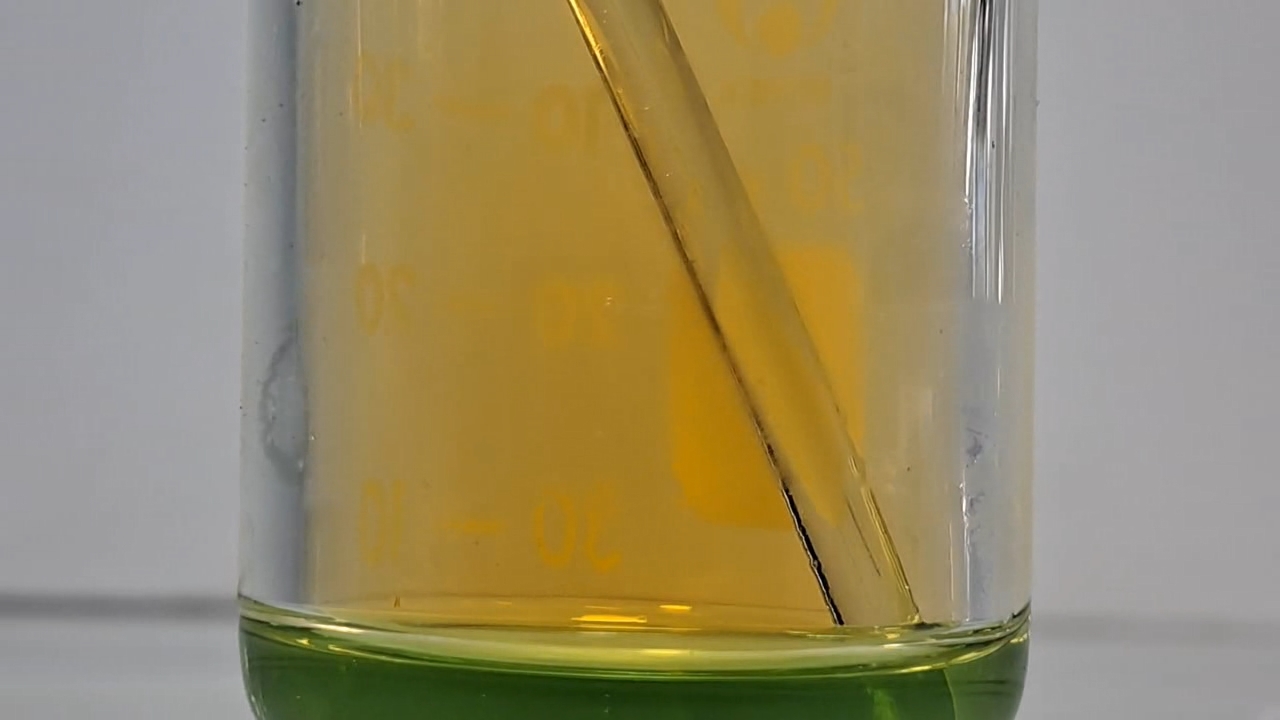
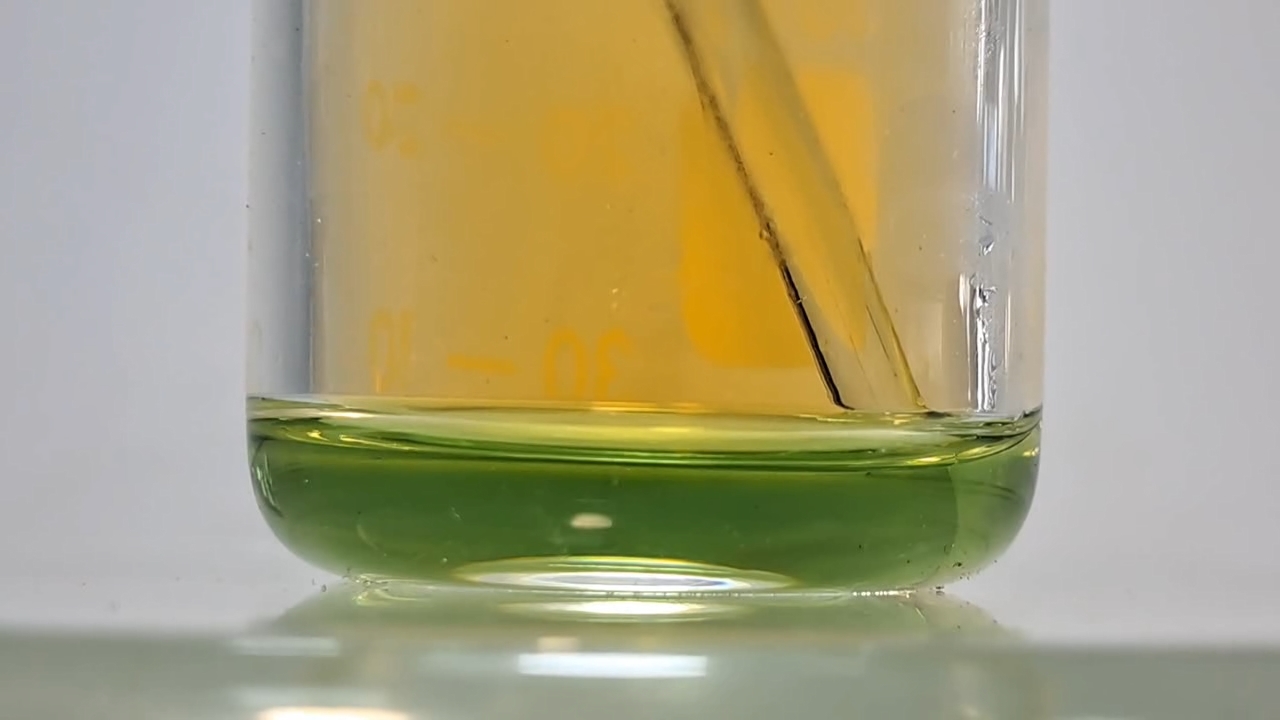
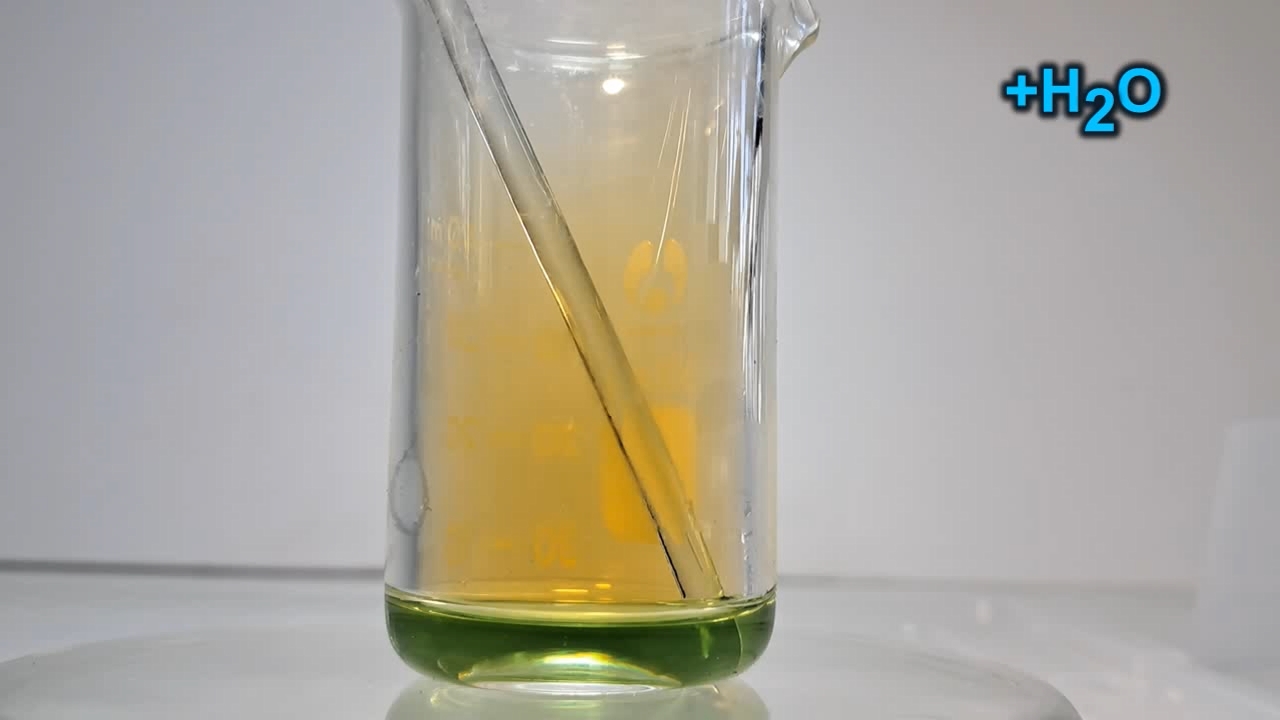
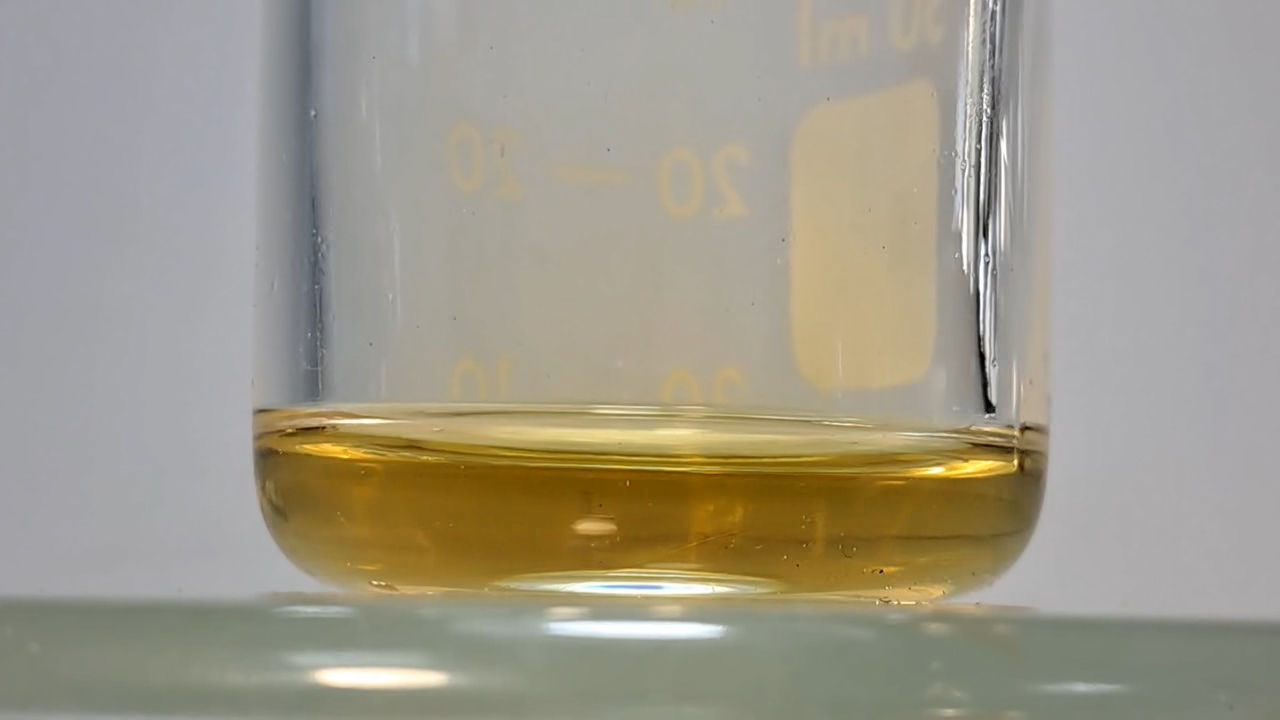
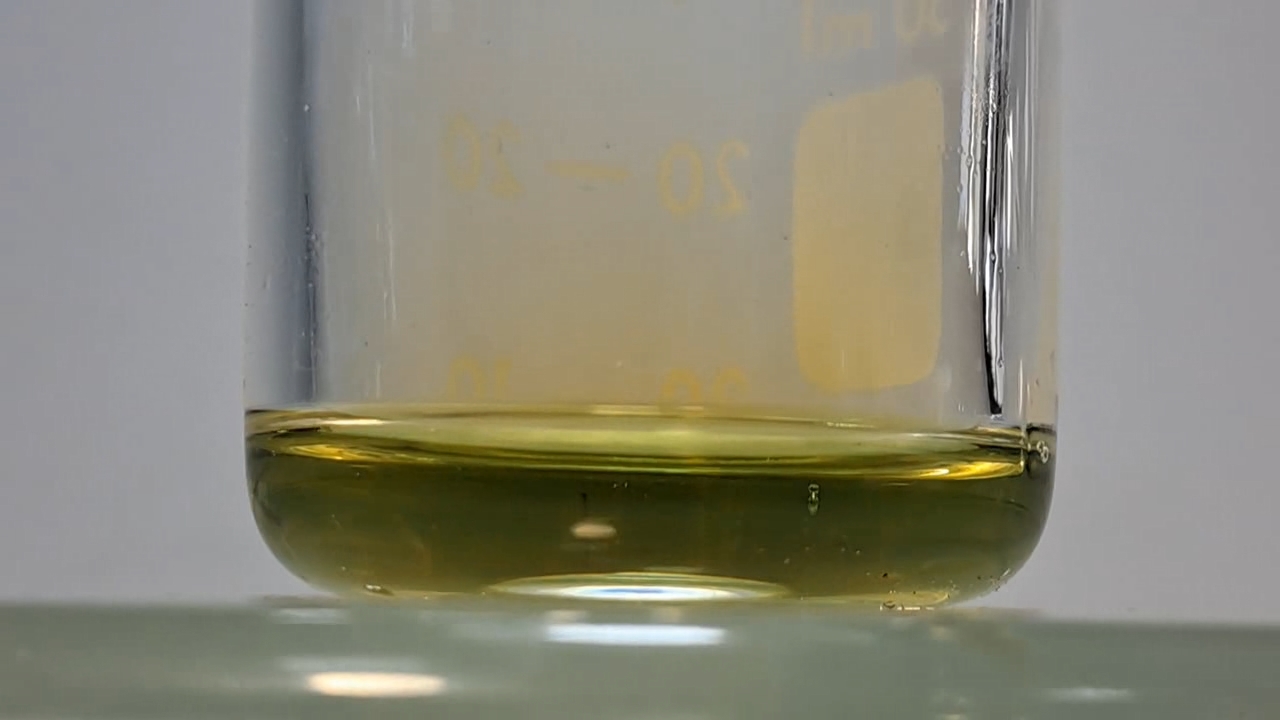
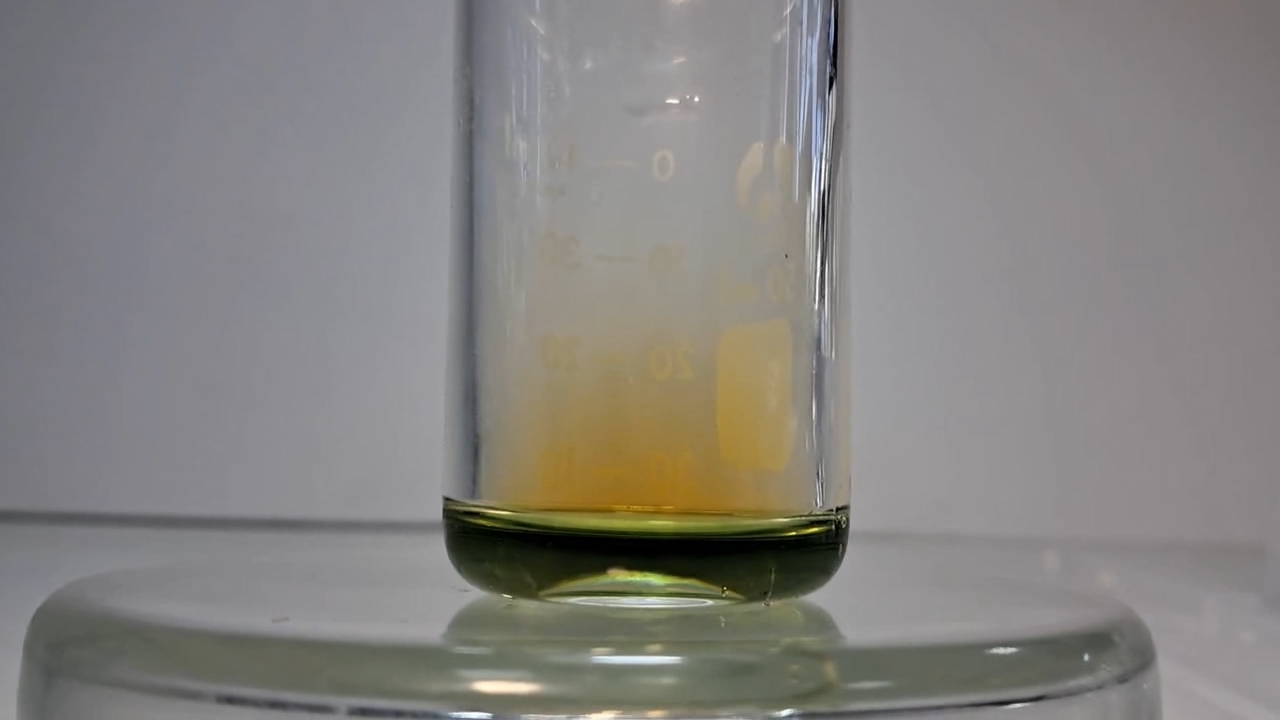
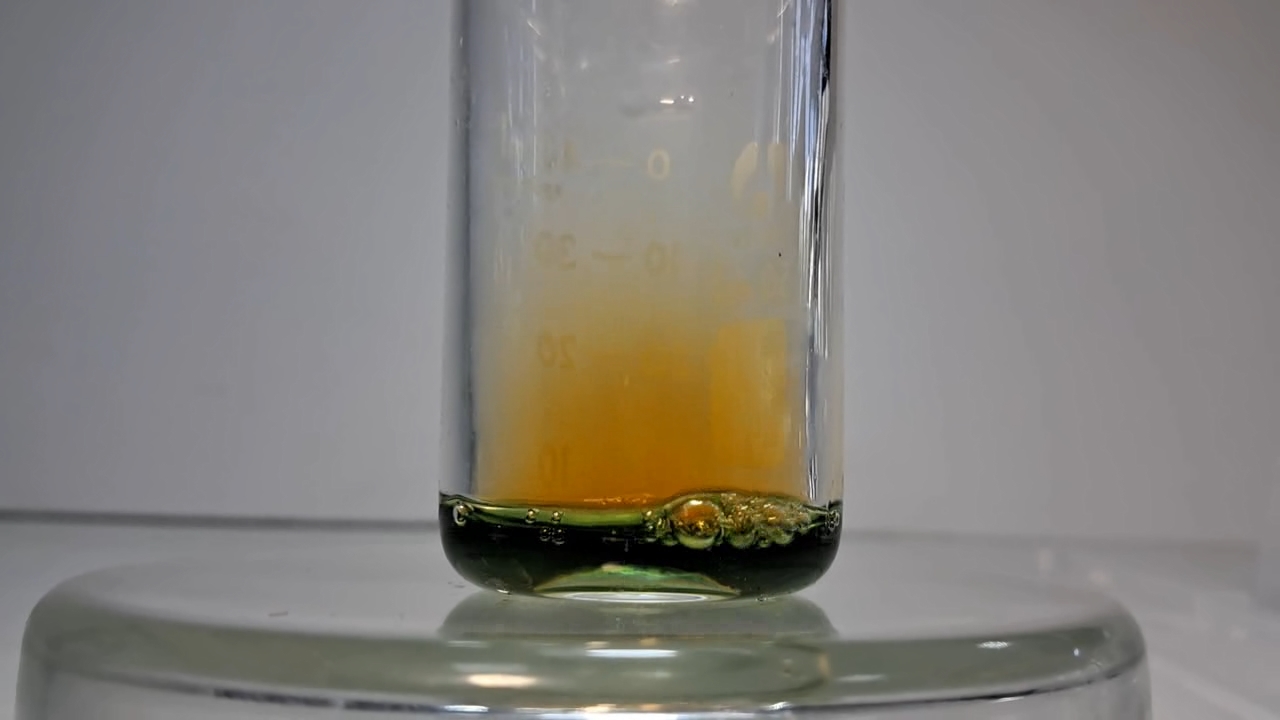
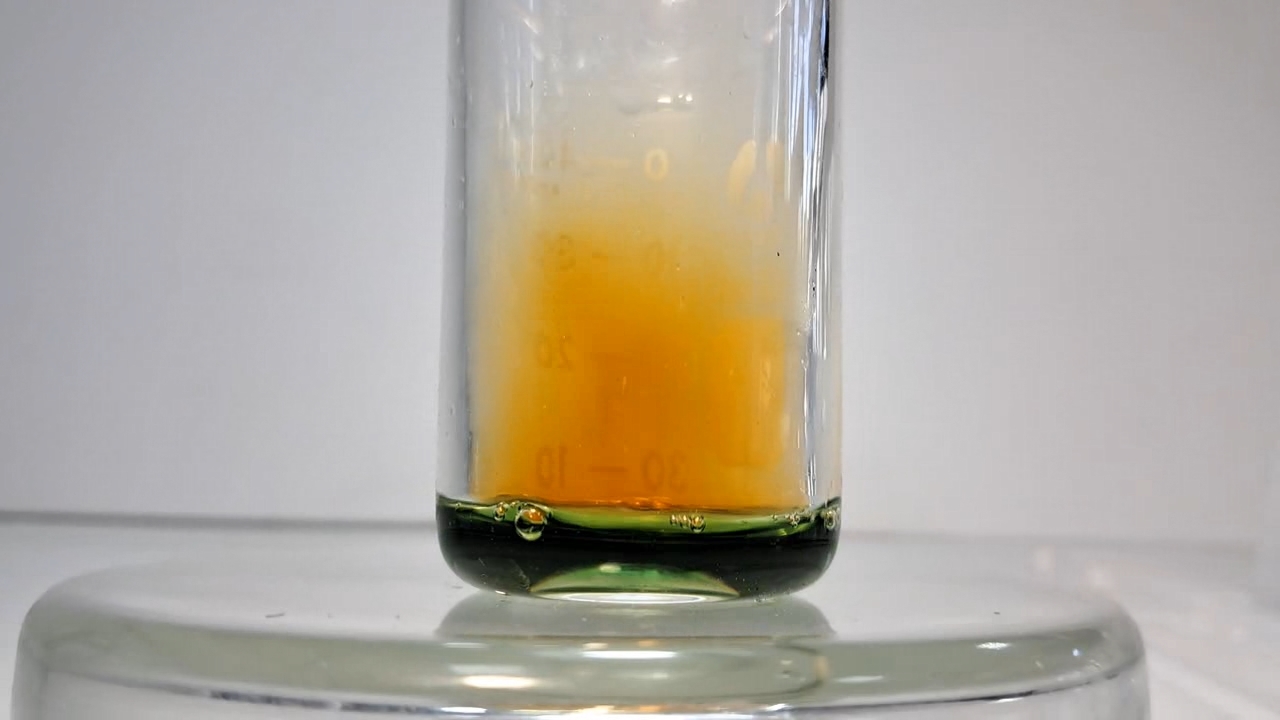
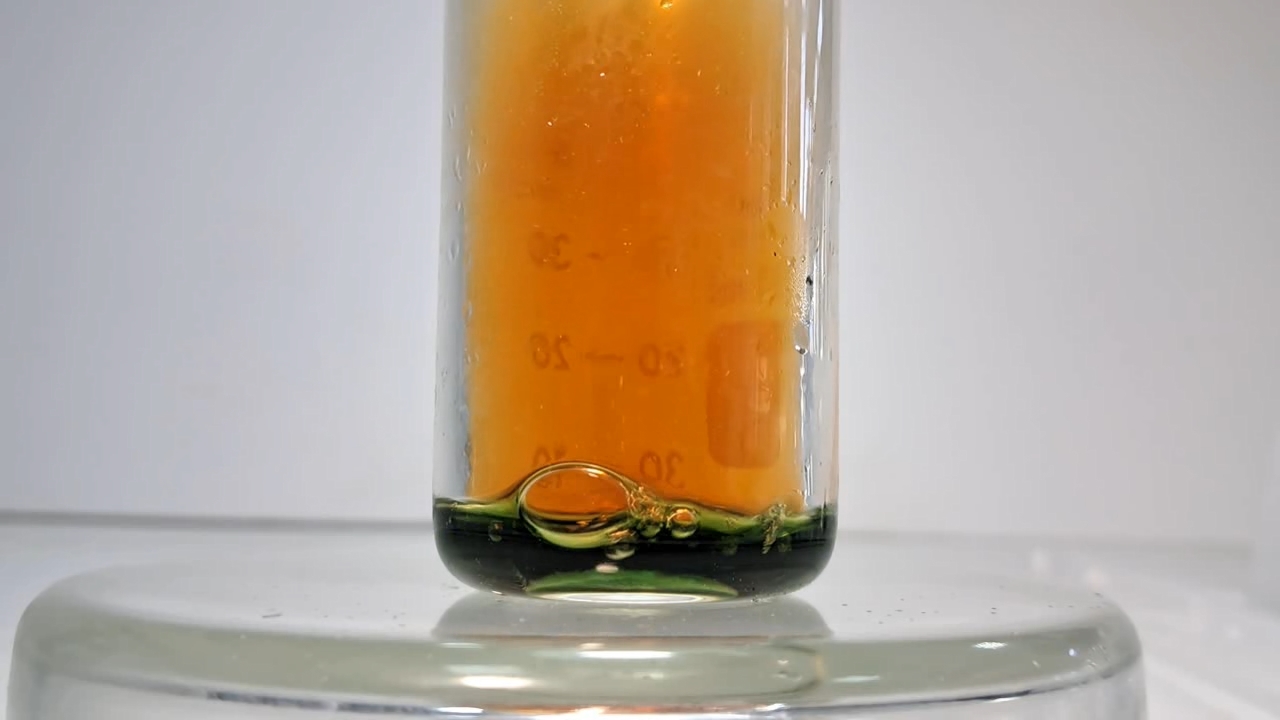
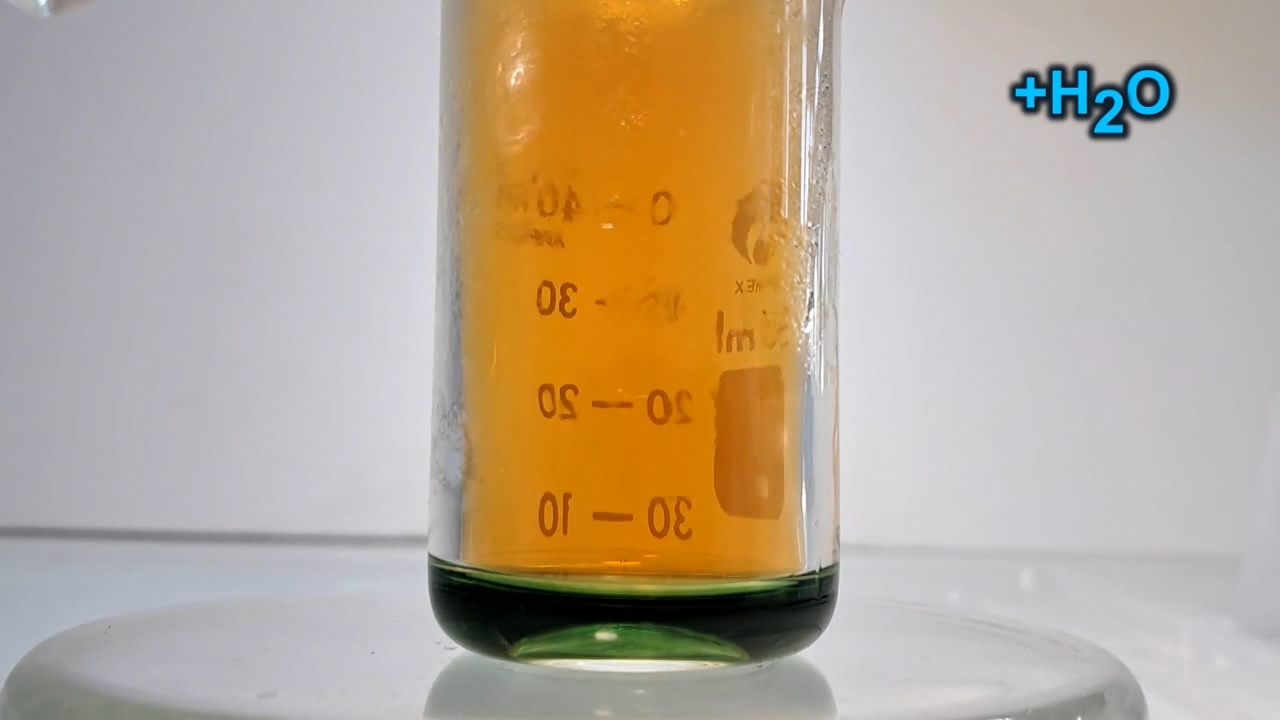
Four minutes later, I returned to wash the beaker. To my surprise, the solution had turned green, and a brown gas had appeared above the liquid.

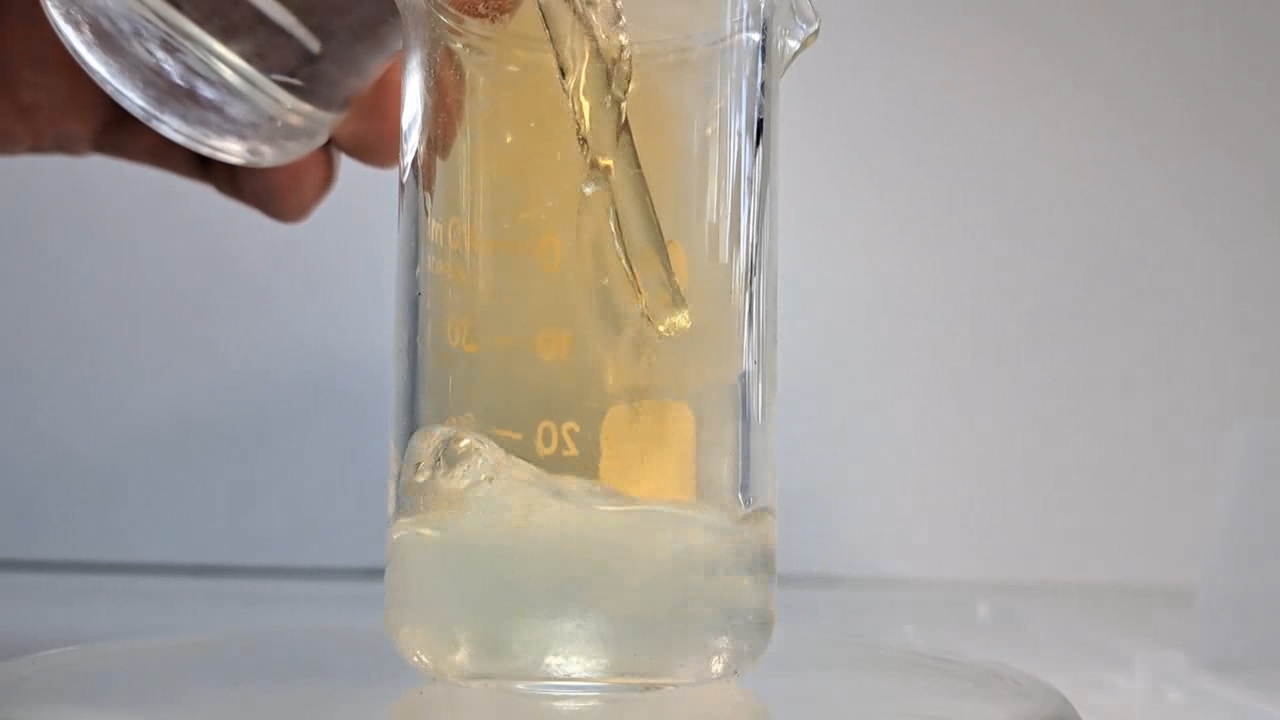
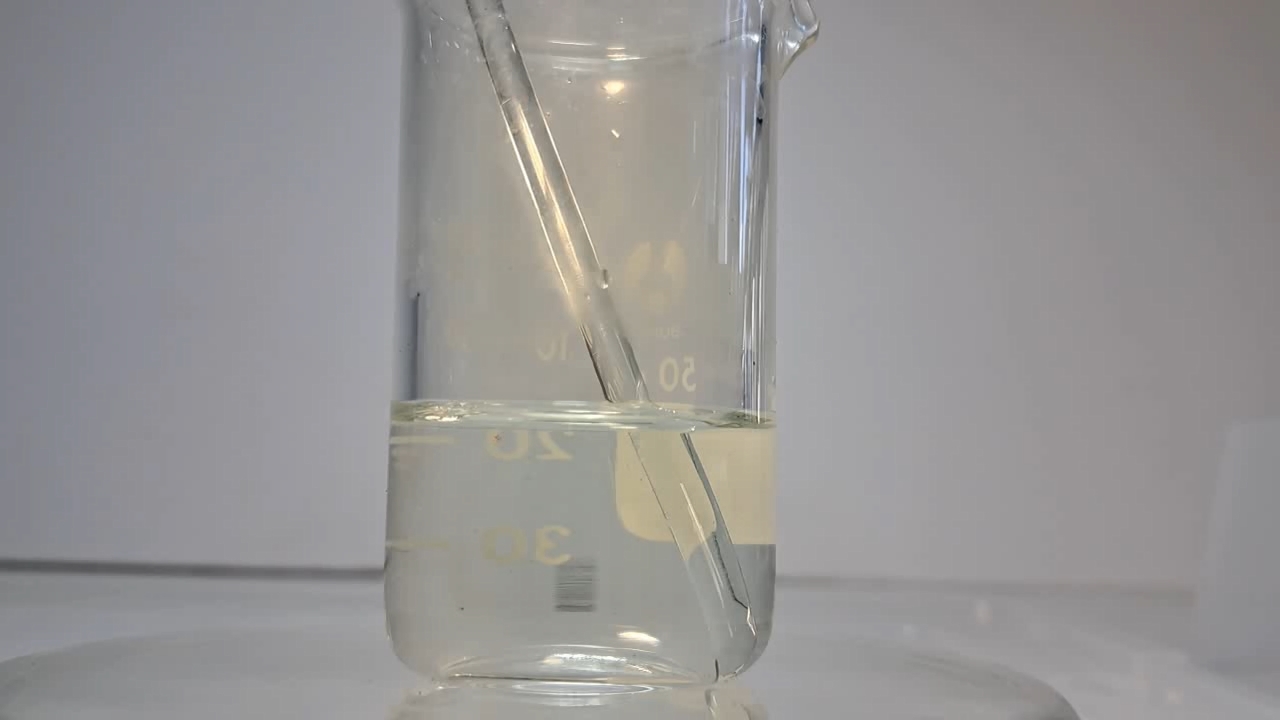
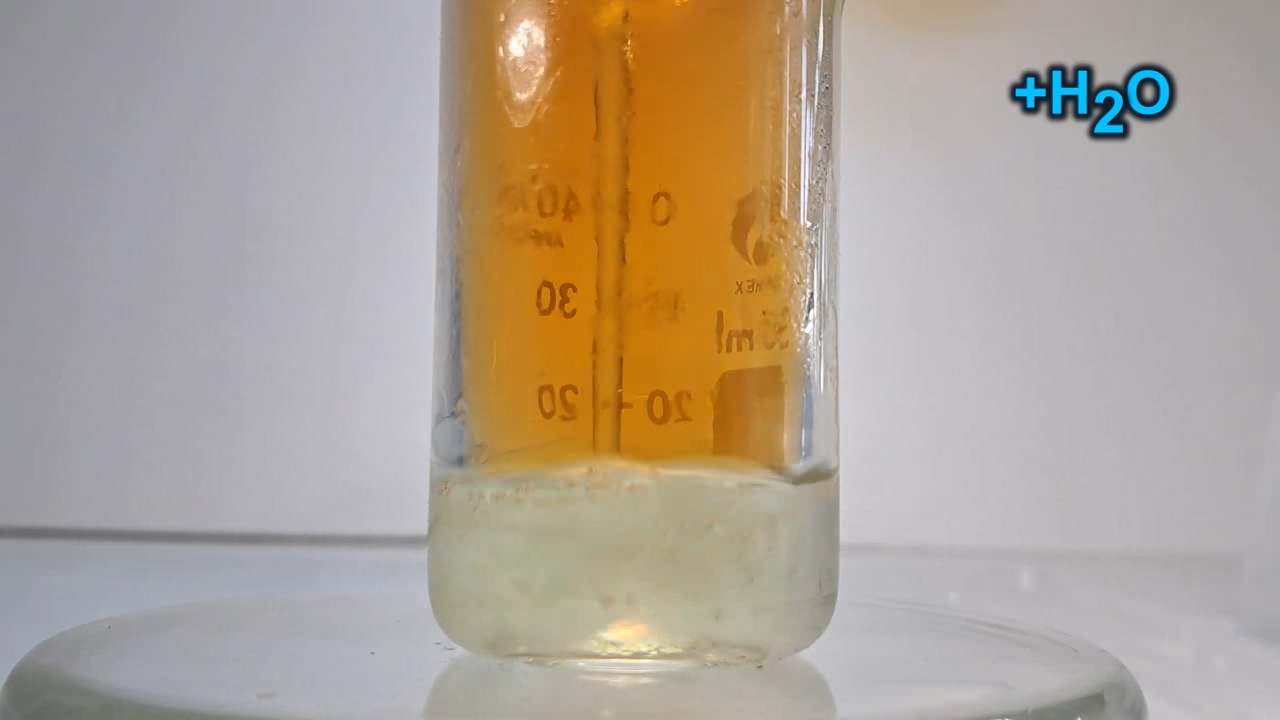
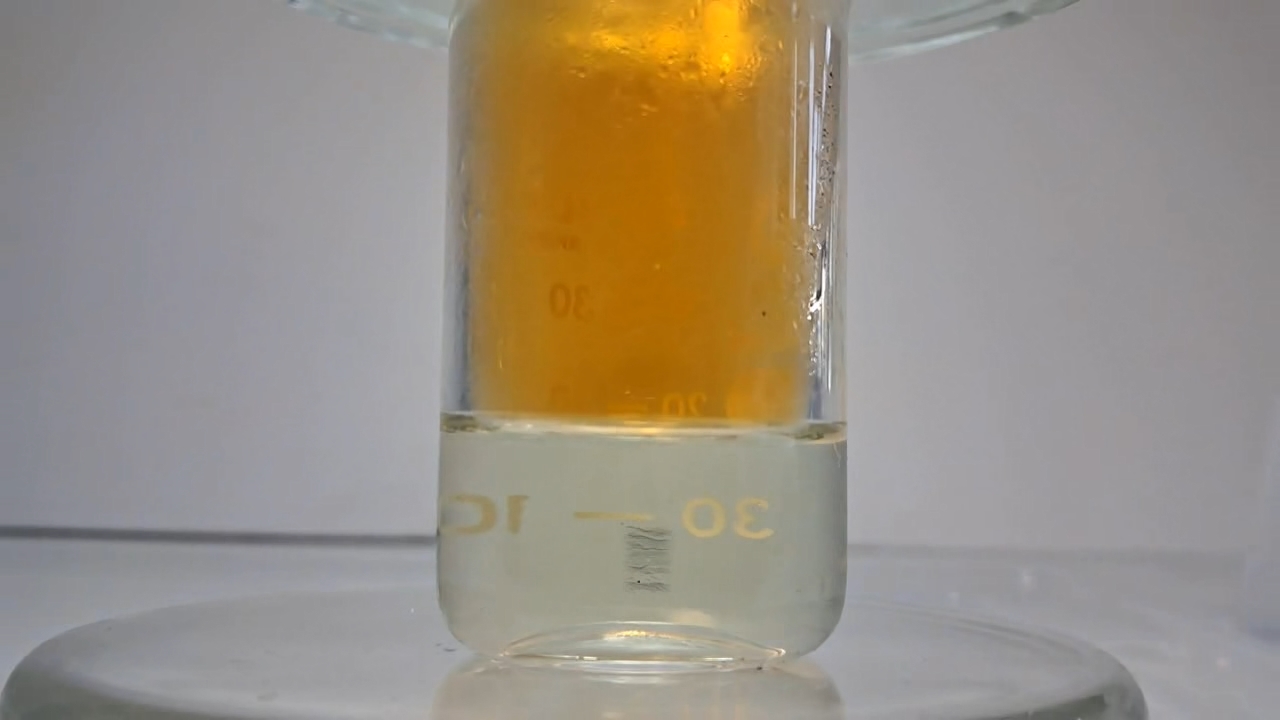
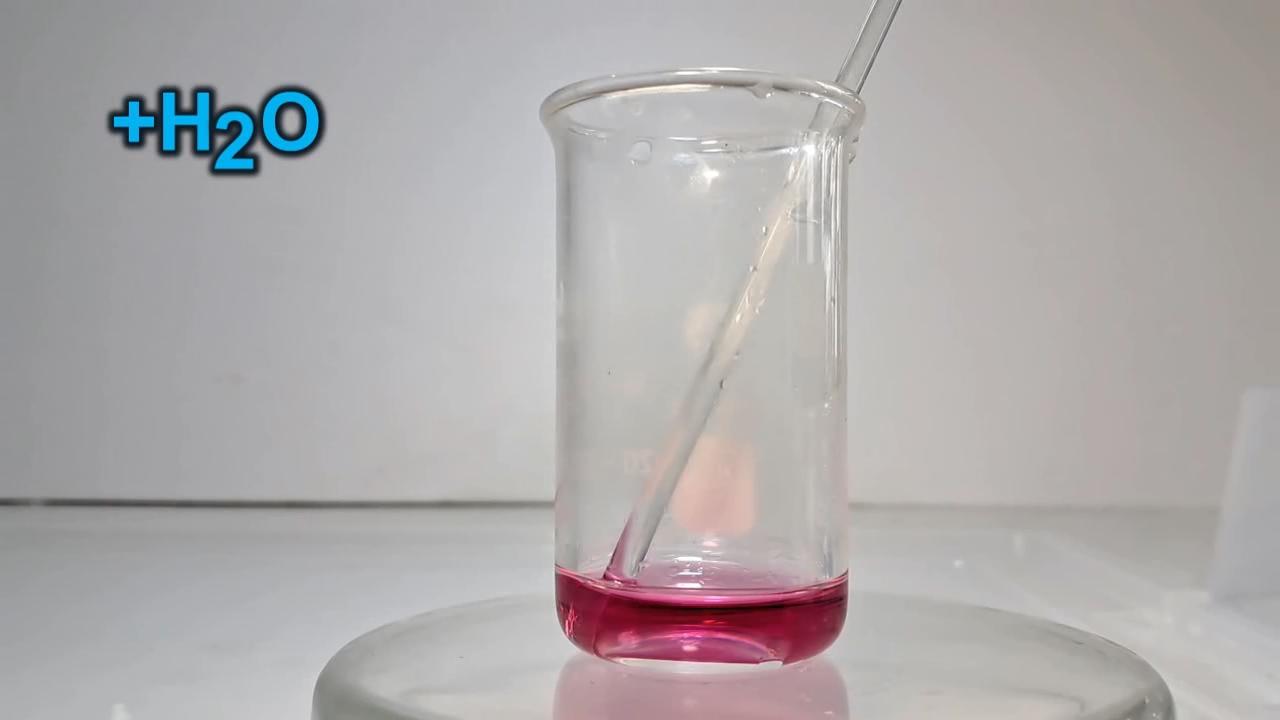
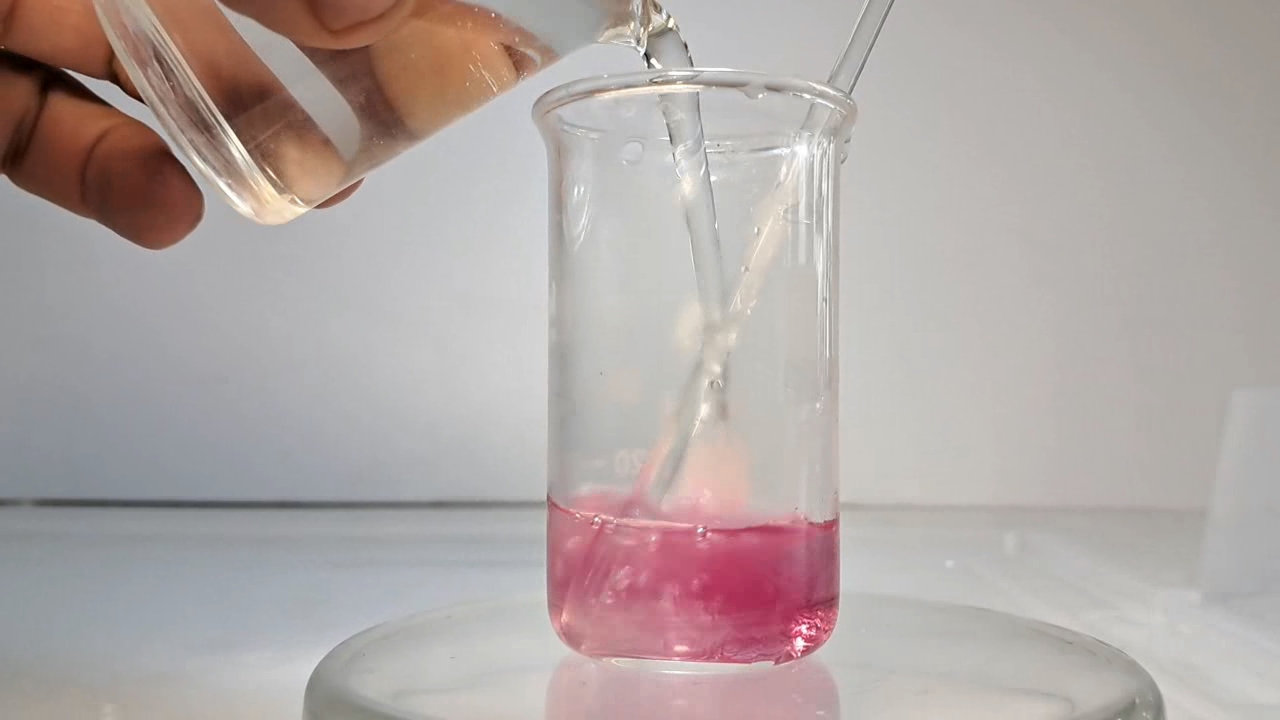
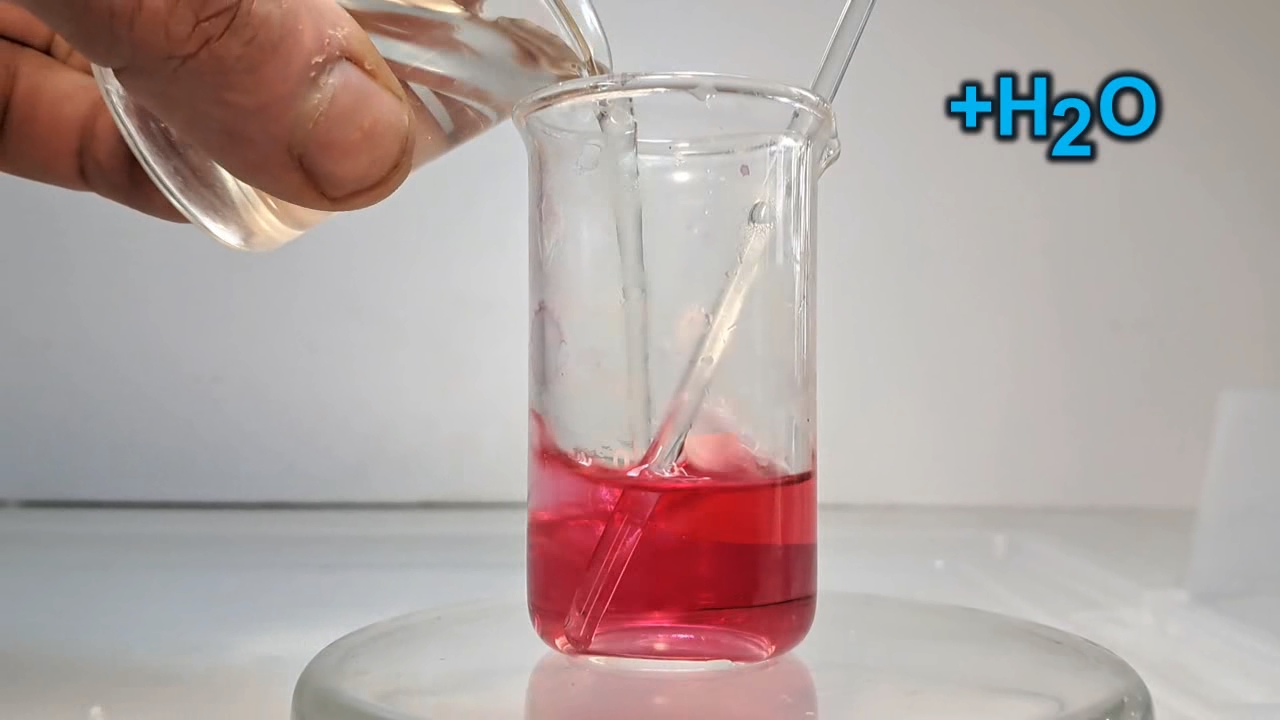
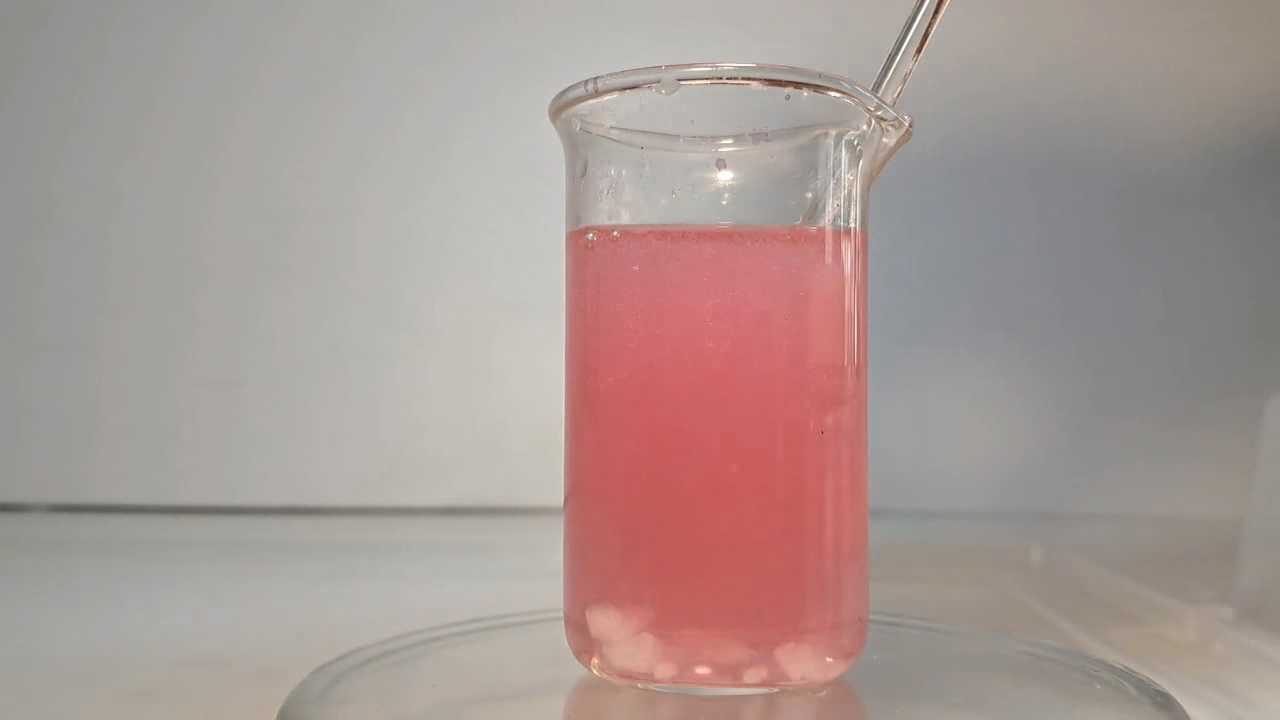
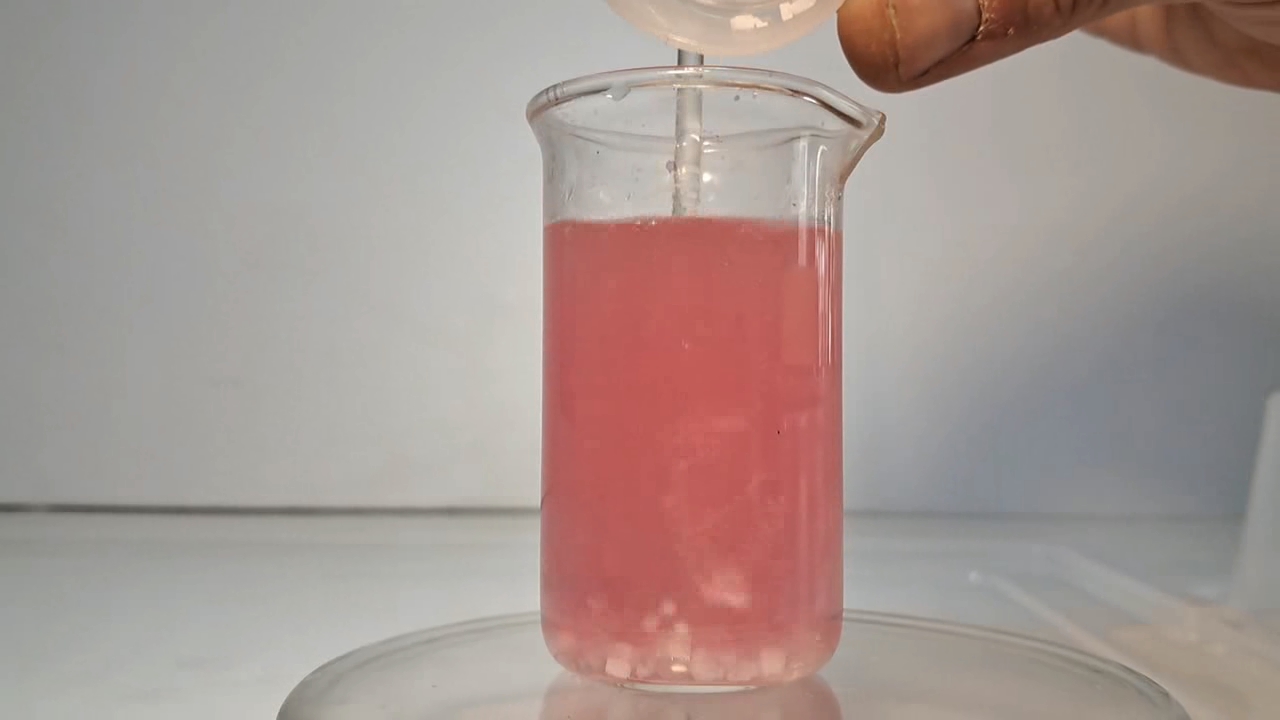
I added water to the beaker. The color disappeared, and a white suspension formed - apparently because phenolphthalein (one of the components of the universal indicator) had precipitated.

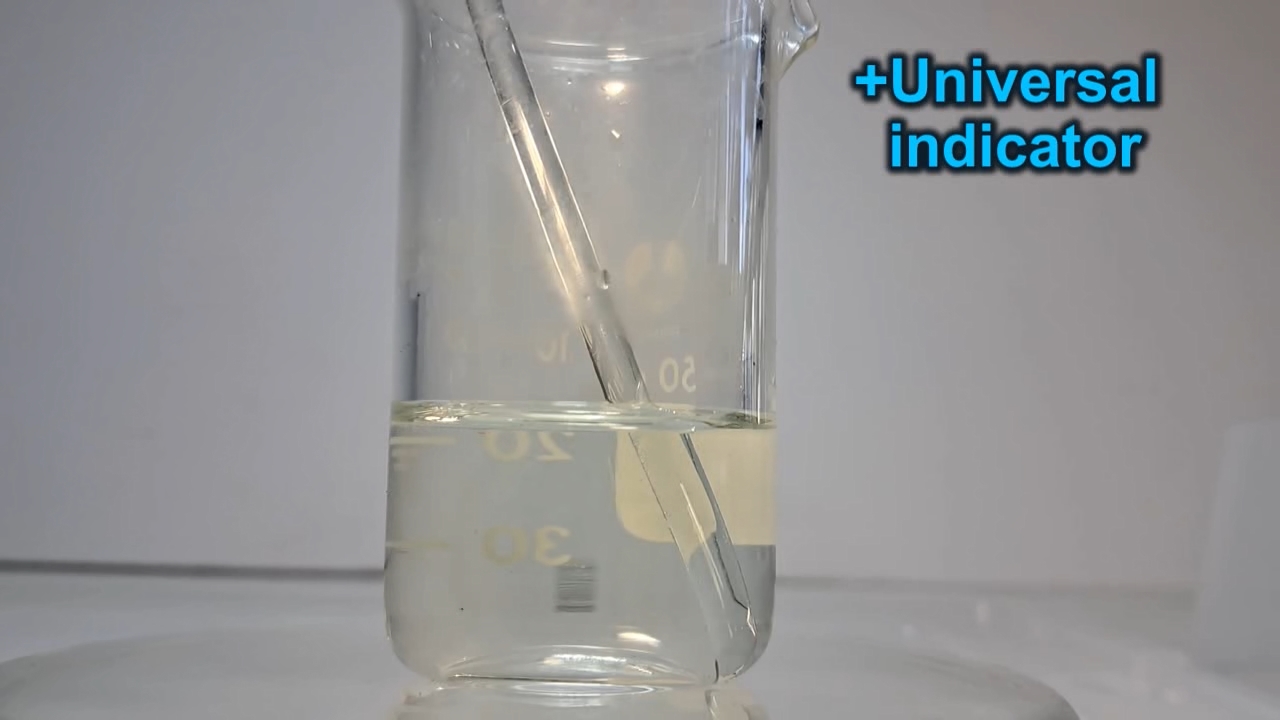
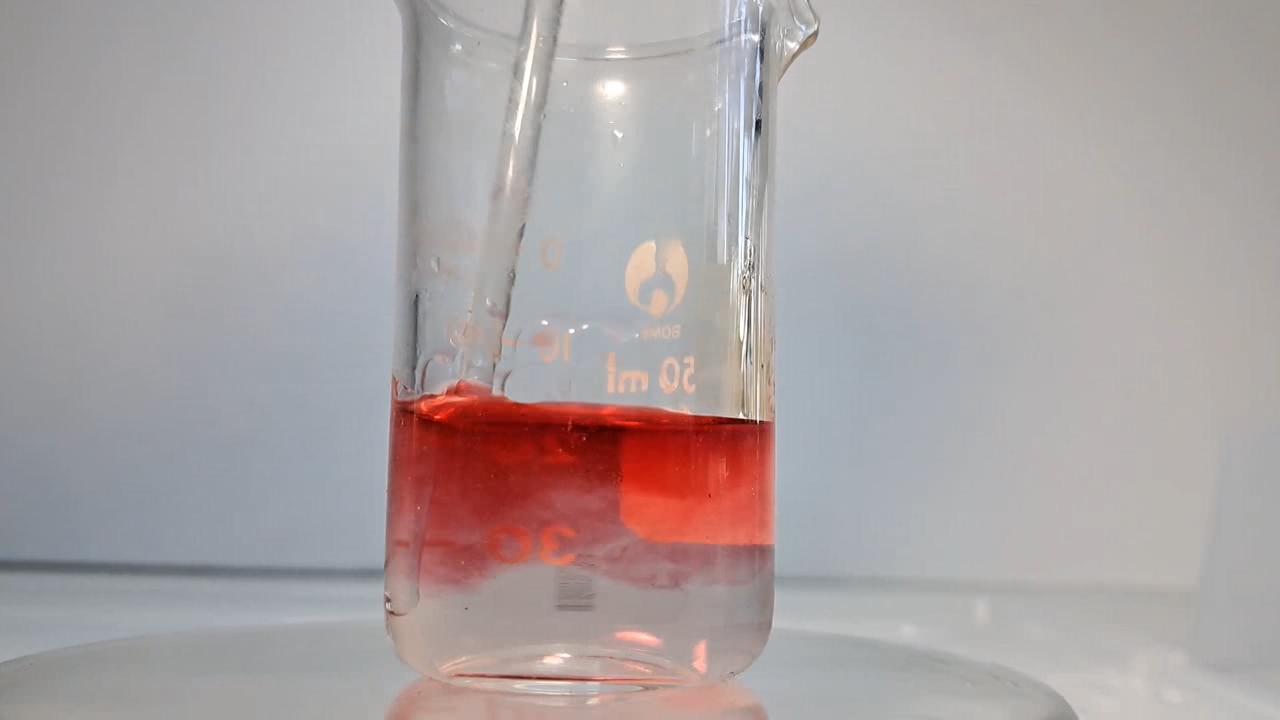
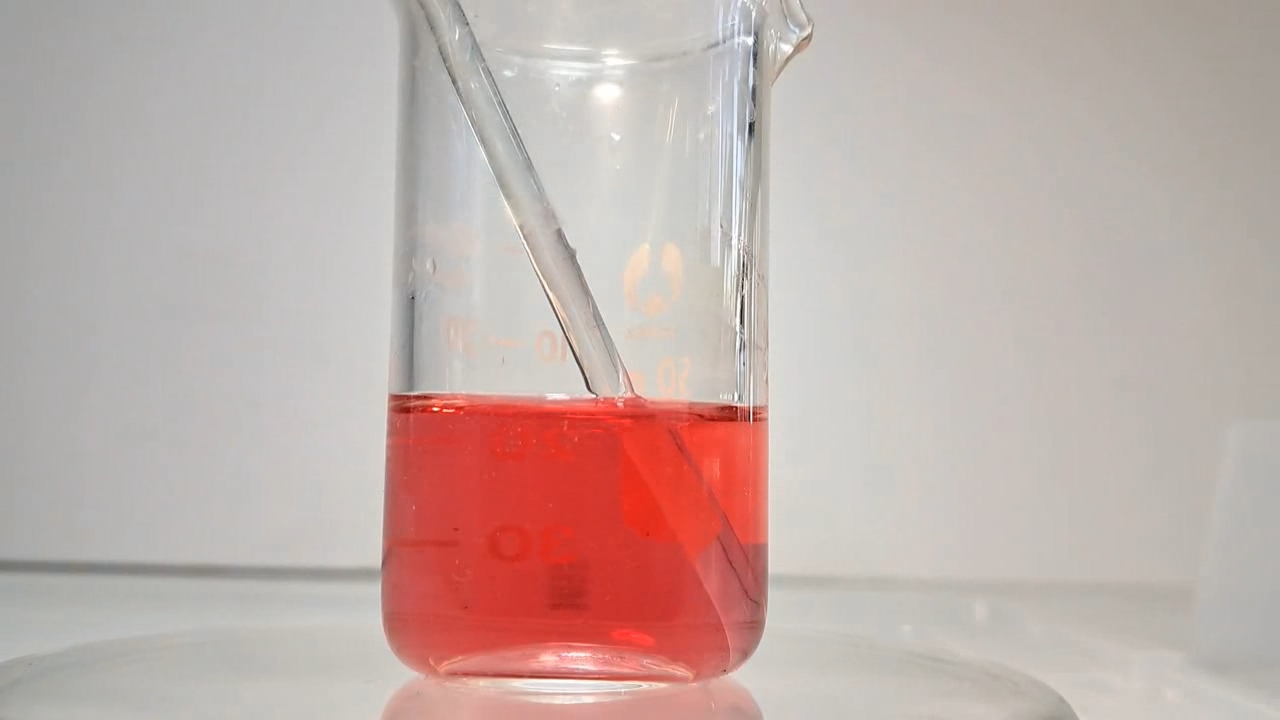
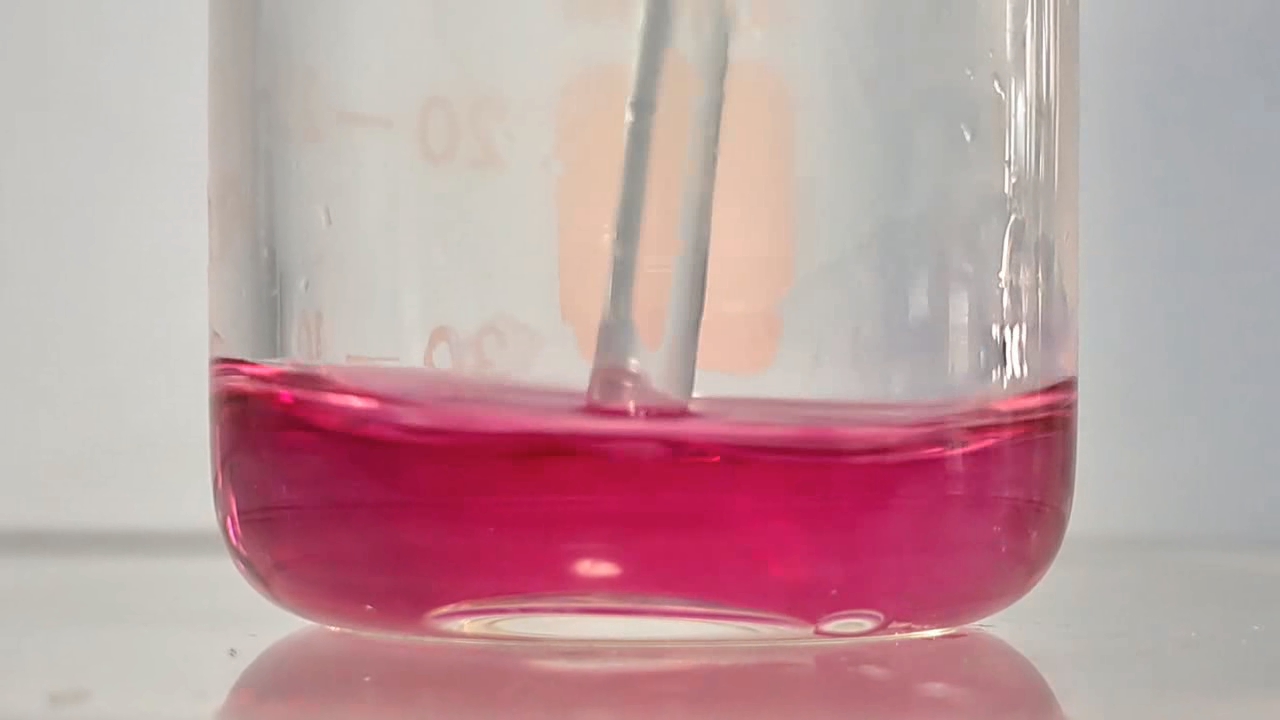
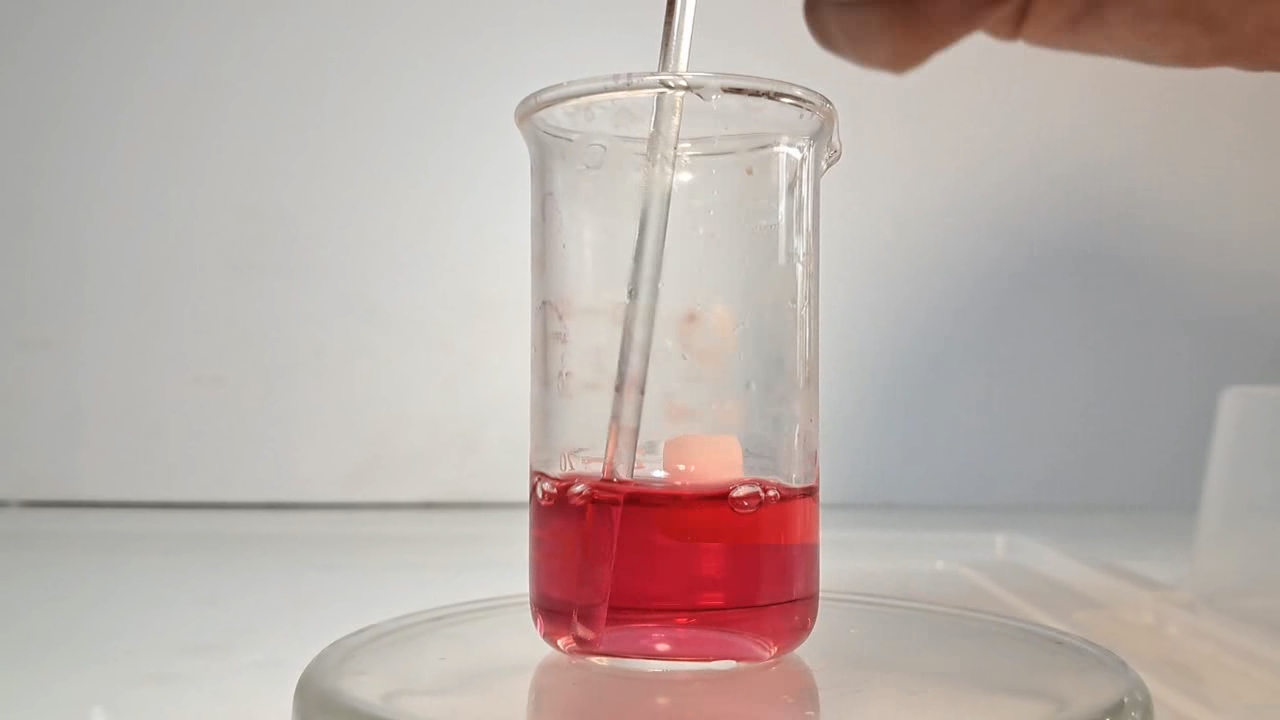
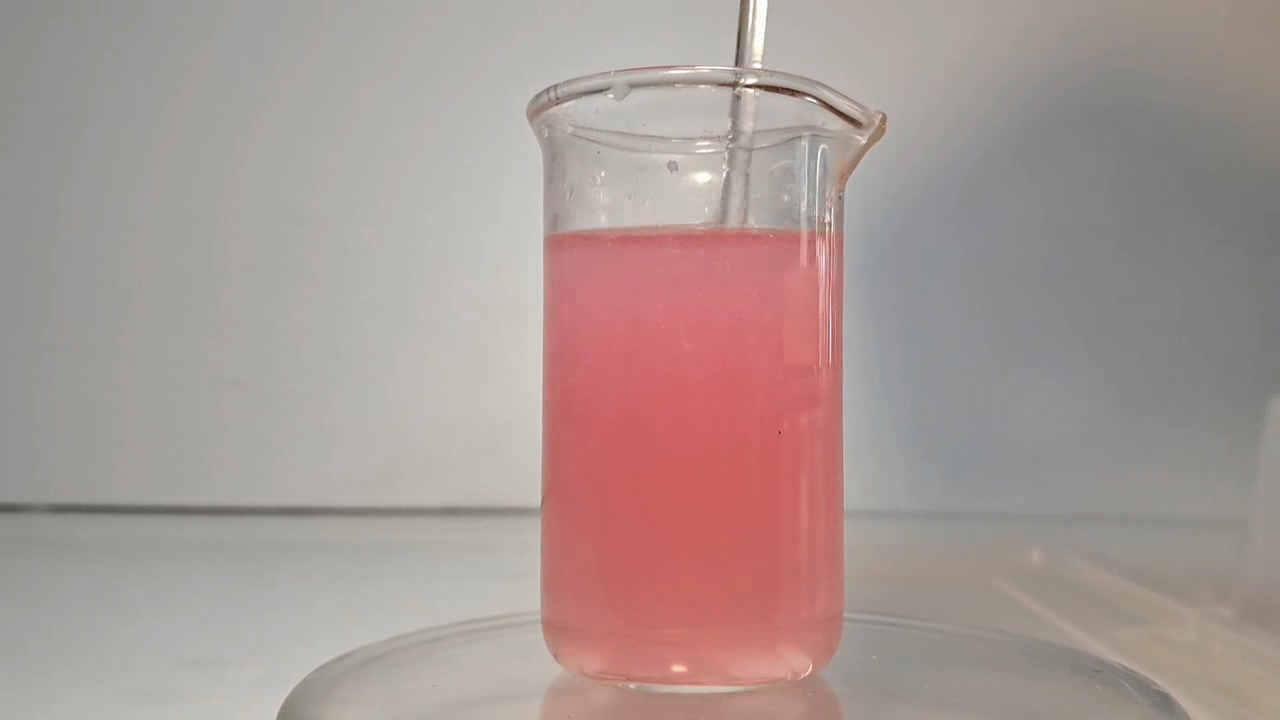
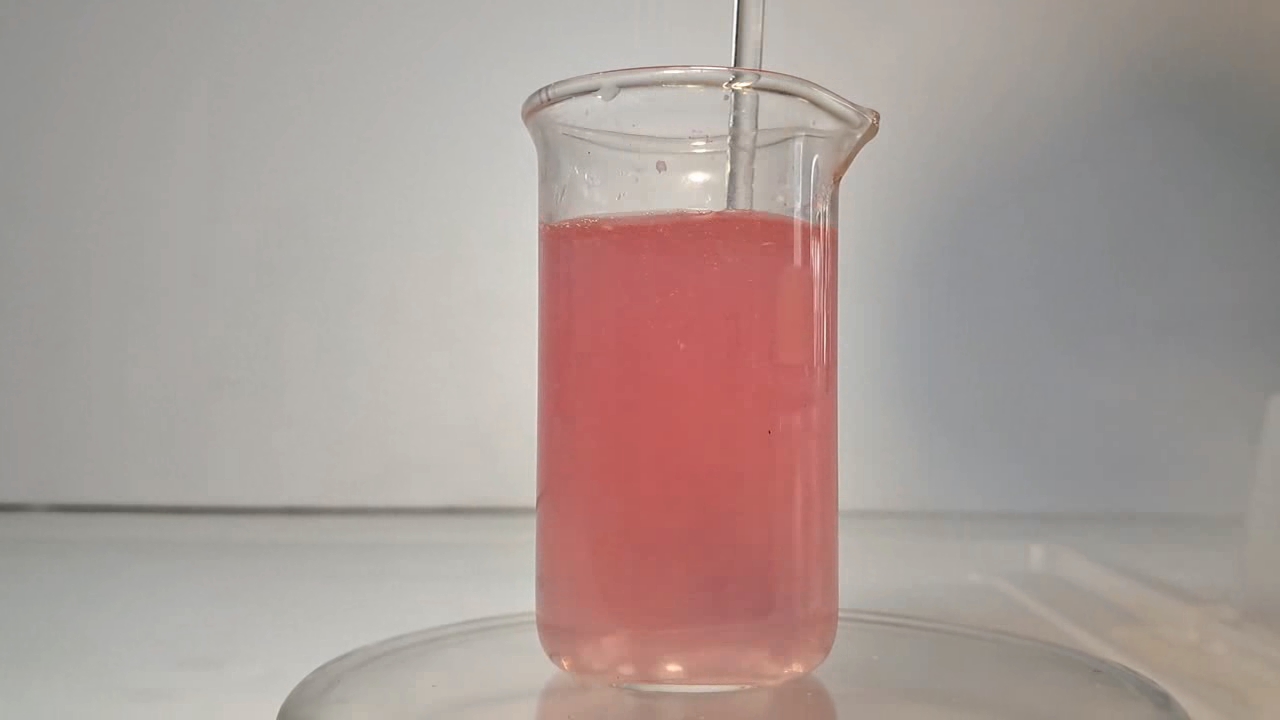
I then added more universal indicator solution and stirred. The solution again turned bright red.

This result came as a complete surprise to me; otherwise, I would not have stopped filming. On the other hand, I immediately understood what had happened, since I had observed similar reactions involving nitric acid many times before.

In this case, nitric acid acted not only as a strong acid but also as an oxidizing agent. The green color of the solution was caused by products of nitric acid reduction, such as nitrous acid and various nitrogen oxides. One of these products was brown nitrogen dioxide above the liquid. Similar coloration of both the liquid and gas phases is often observed during reactions of concentrated nitric acid (~70%) with copper, zinc, ethyl alcohol, and other reducing agents.

When the universal indicator solution was added, nitric acid could react not only with the indicator dyes but also with the solvent, ethyl alcohol. It is important to note that the crimson color disappeared irreversibly; it did not reappear after dilution with water. However, additional portions of the indicator solution again produced a bright red color, since the solution remained strongly acidic even after dilution.

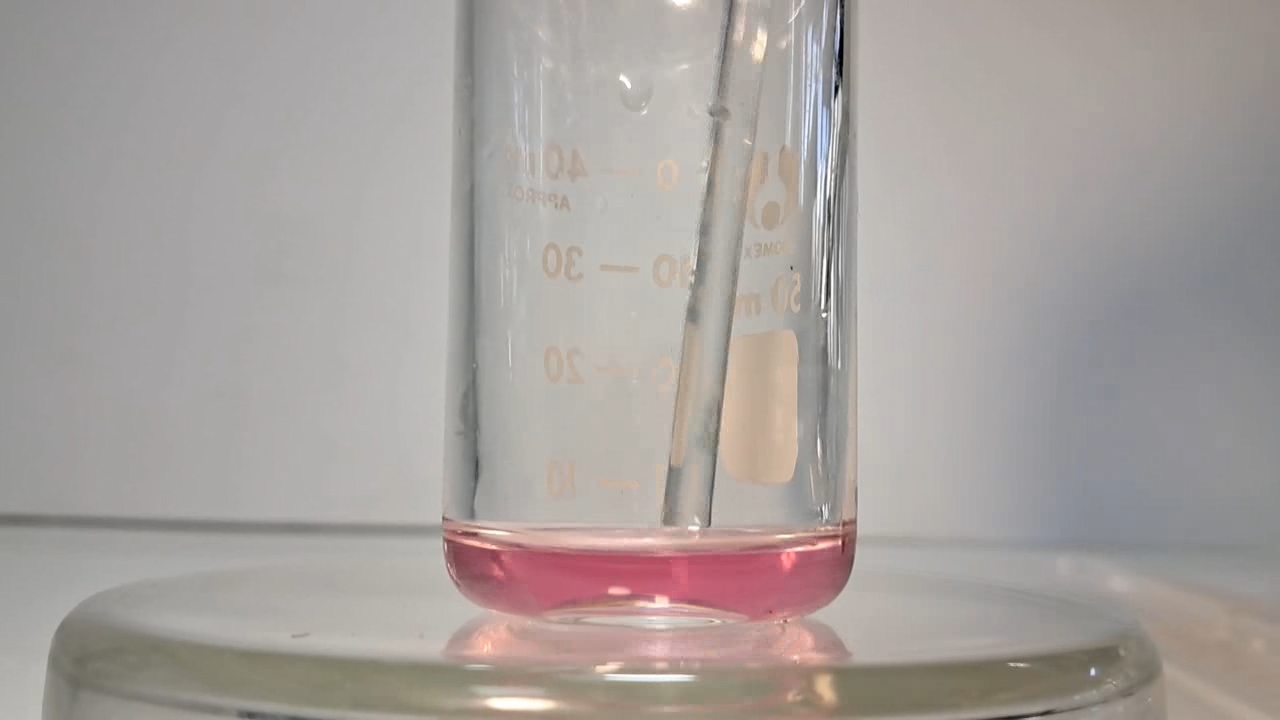
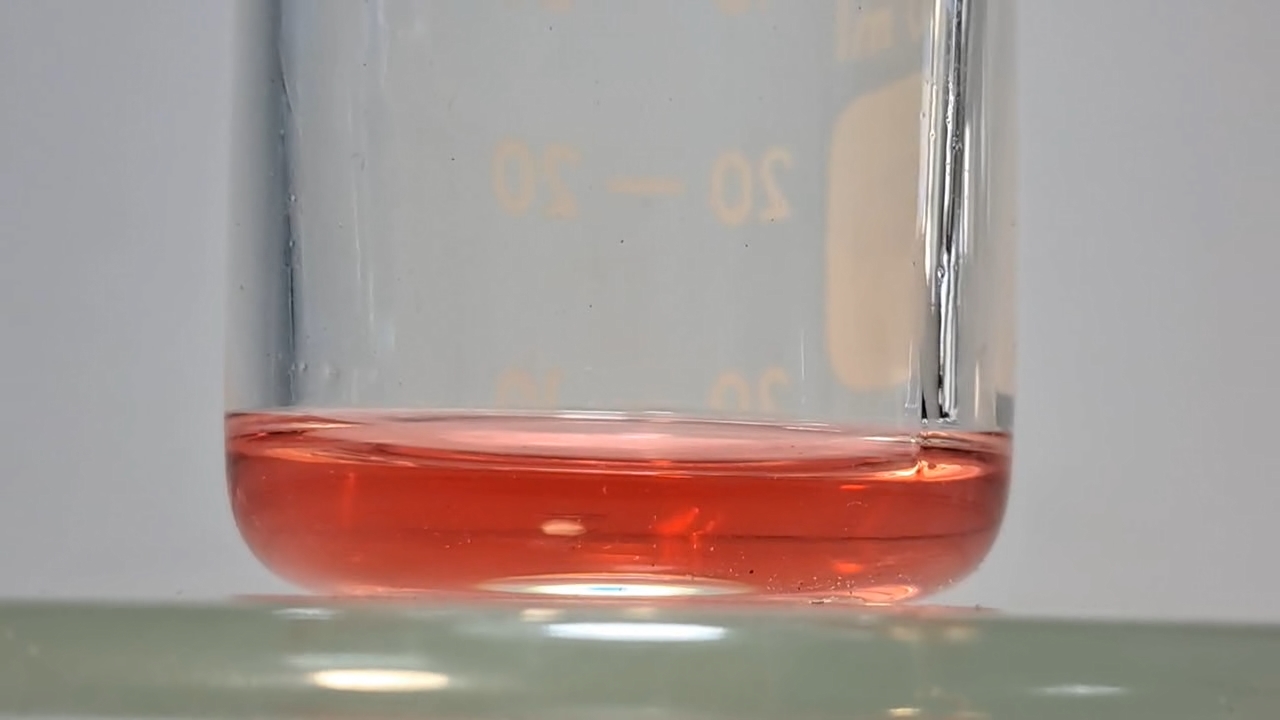
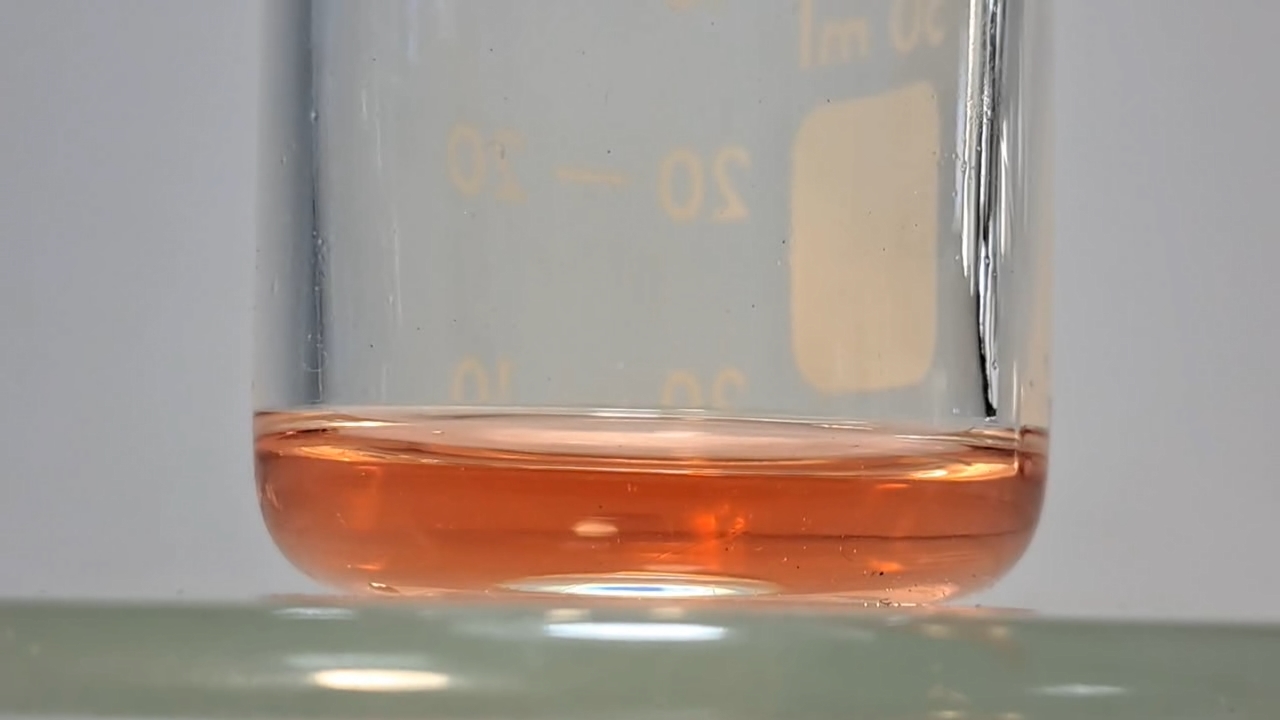
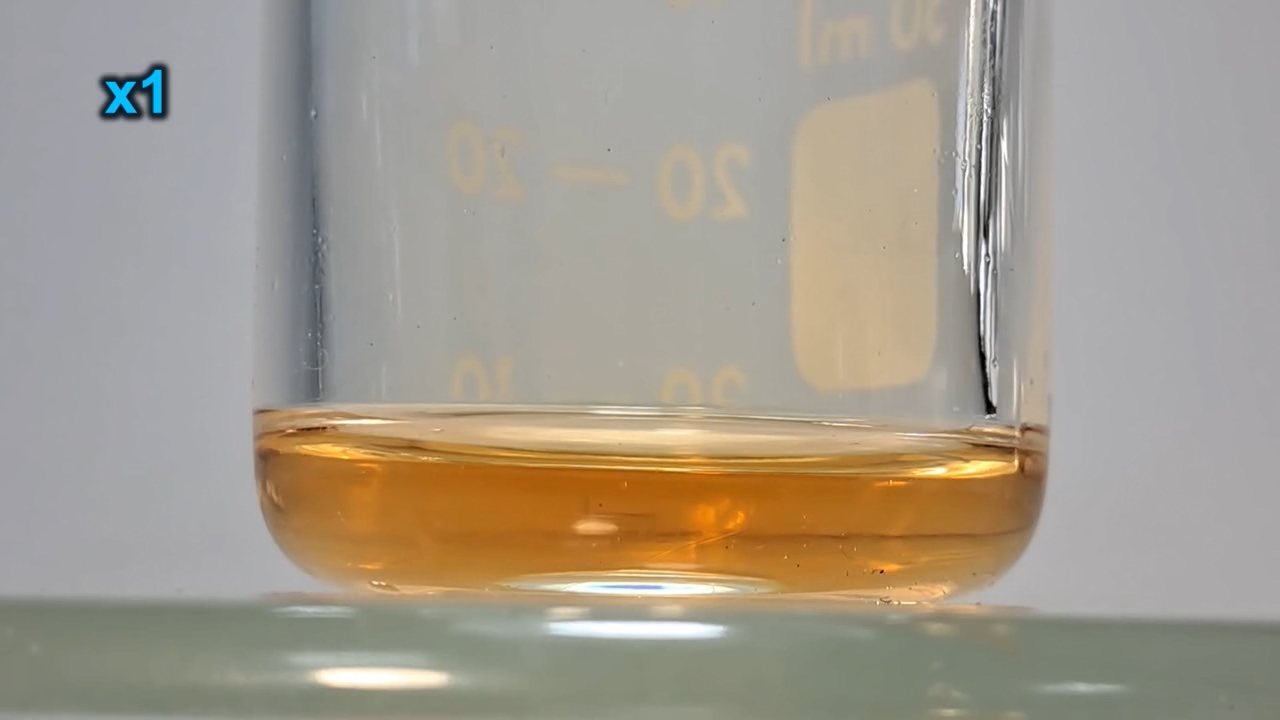
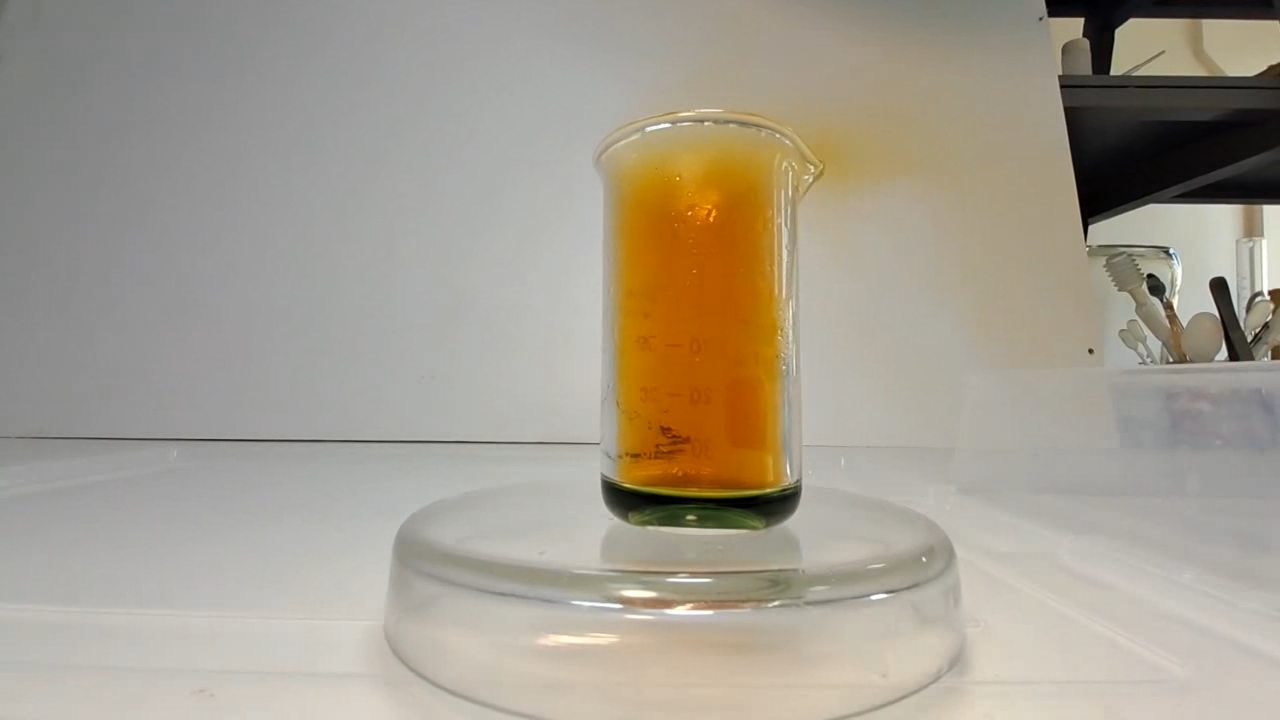
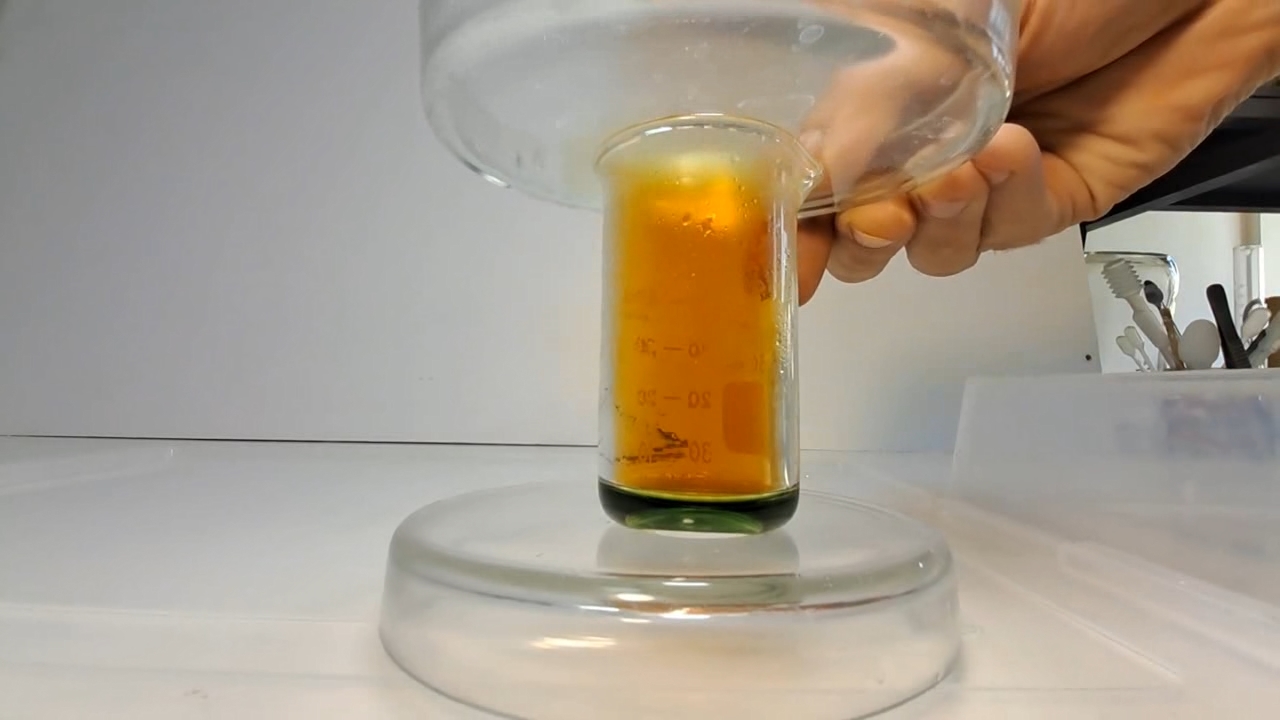
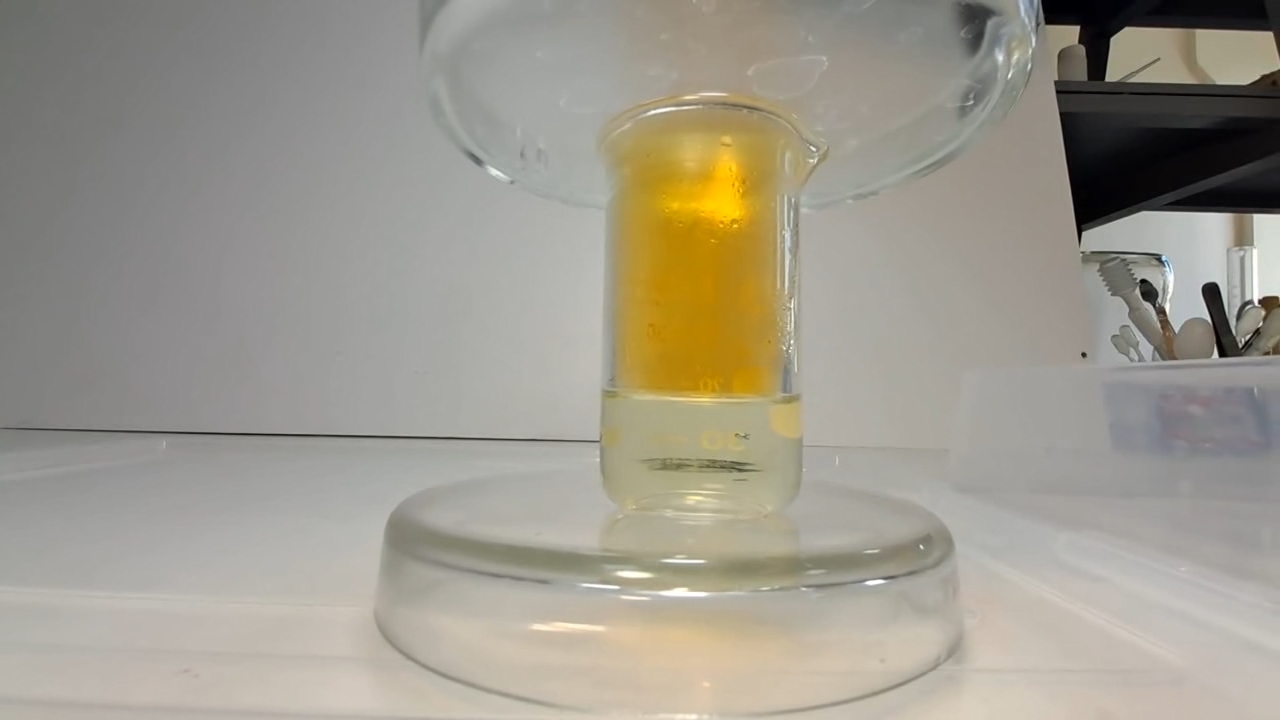
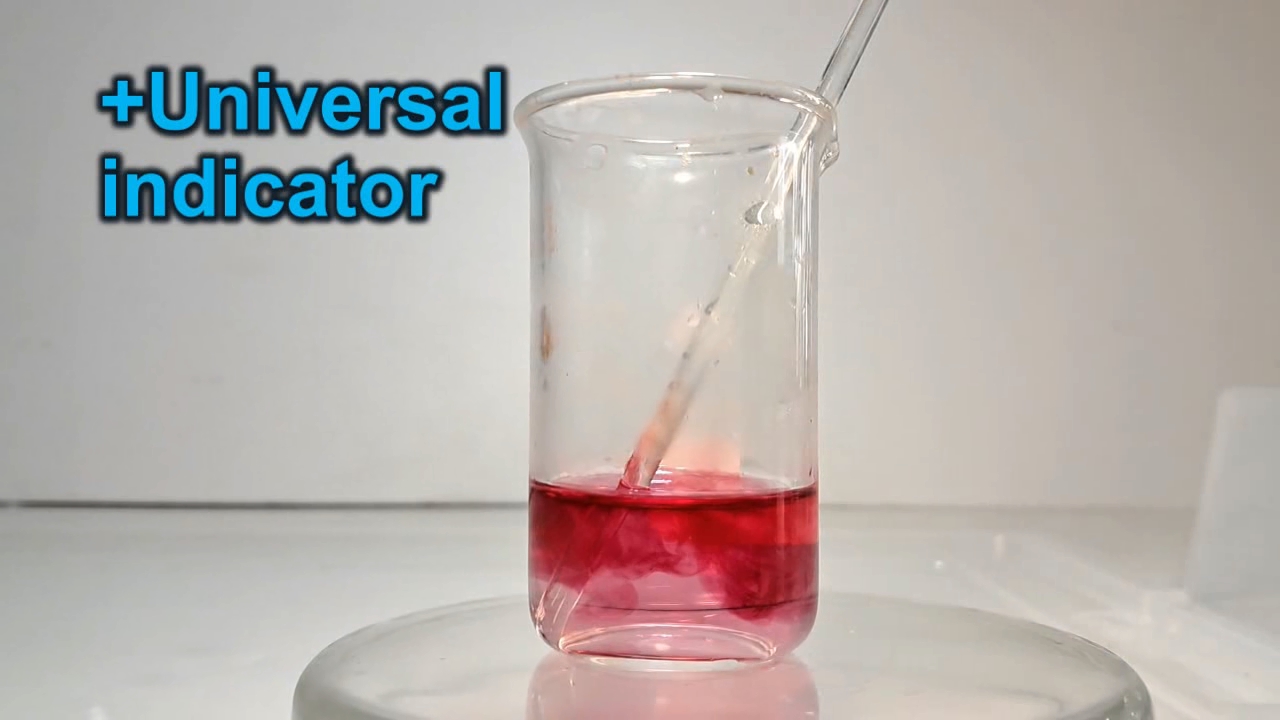
I repeated the experiment in order to record the entire process on video. After adding the universal indicator, the solution turned crimson. Over time, the color began to fade. I added more indicator solution, and the bright crimson color appeared. The crimson gradually changed to red, then orange. The orange solution became yellow. After this, the yellow color rapidly turned green, and suddenly a brown gas began to evolve. I had to cover the beaker with a Petri dish, since nitrogen dioxide not only has an unpleasant odor but is also highly toxic. After adding water, the solution became discolored - or rather, transformed into a white suspension.


Азотная кислота и универсальный индикатор - Часть 17
Казалось бы, такой эксперимент не имеет особого смысла. В прошлых экспериментах универсальная индикаторная бумага окрасилась в яркий малиновый цвет под действием разбавленной соляной и концентрированной серной кислоты. Следовательно, если в 69% азотную кислоту добавить раствор универсального индикатора pH, жидкость также окрасится в малиновый цвет. Другими словами, не произойдет ничего интересного. Все упомянутые кислоты будут вести себя аналогично.

Однако, я решил проверить, так ли это? Если результат будет соответствовать прогнозу, я просто не буду описывать данный эксперимент. И только, если получится что-то интересное, - напишу новую часть статьи.

Далеко не каждый эксперимент оканчивается успехом, даже, если это простая химическая демонстрация, основанная на хорошо известных свойствах веществ. А когда проводится исследование чего-то нового, то большая часть экспериментов заканчивается неудачно. Чем более сложной и важной является исследуемая проблема, тем больше процент неудач или неоднозначных результатов. Лет 30 назад один из химиков-органиков сказал, что они "на 90% работают на мусорное ведро" - т.е. большая часть синтезированных ними новых веществ оказывается никому не нужной.

Хотя... бывает и так, что вещество, которое никому не интересно сегодня, может оказаться исключительно важным завтра. Например, серная кислота была хорошо известна еще во времена алхимиков. Тогда это было экзотическое вещество, которое никак не помогла получить "философский камень", к которому так стремились алхимики. Зато сейчас серная кислота является одной из основ химической промышленности. Аналогично было с белым фосфором, который из "развлечения для очень богатых" превратился в крупнотоннажный химический продукт.

Приступим к эксперименту. В небольшой стаканчик налил примерно 5 мл 69% азотной кислоты и добавил несколько капель спиртового раствора универсального индикатора. Жидкость окрасилась в ярко-малиновый цвет. Ничего необычного, следовательно, я прекратил съемку видео и стал готовить новый эксперимент - для этого требовалось растворить в воде щелочь.

Через четыре минуты я вернулся, чтобы вымыть стаканчик. Оказалось, что раствор в стаканчике стал... зеленым, а над зеленой жидкостью появился бурый газ!

Добавил в стакан воду, окраска жидкости исчезла, образовалась белая суспензия - по-видимому, фенолфталеин выпал в осадок (данное вещество является одним из компонентов универсального индикатора).

Добавил в стакан еще немного универсального индикатора, перемешал - раствор окрасился в ярко-красный цвет.

Полученный результат стал для меня полной неожиданностью, в противном случае я бы не прекратил съемку эксперимента. С другой стороны, я сразу понял, что произошло, поскольку много раз наблюдал подобные химические реакции с участием азотной кислоты раньше.

В данном случае азотная кислота выступила не только как сильная кислота, но и как окислитель. Зеленый цвет раствора был обусловлен продуктами восстановления азотной кислоты (азотистая кислота и разные оксиды азота). Одним из этих продуктов был бурый диоксид азота над жидкостью. Подобная окраска жидкой и газовой фаз часто наблюдается во время реакции меди, цинка, этилового спирта и других восстановителей с концентрированной азотной кислотой (~70%).

При добавлении раствора универсального индикатора, азотная кислота могла реагировать не только с его компонентами - органическими красителями, но и с растворителем - этиловым спиртом. Обратите внимание, что малиновая окраска индикатора необратимо исчезла; она не появилась вновь после разбавления кислоты водой. Зато новые порции раствора индикатора вызывали появление ярко-красной окраски, поскольку, даже после разбавления азотной кислоты, раствор оставался сильнокислым.

Повторил эксперимент, чтобы снять полное видео. После добавления универсального индикатора раствор стал малиновым. Со временем окраска стала ослабевать. Добавил еще раствора индикатора. Появилась яркая малиновая окраска. Малиновый цвет медленно перешел в красный, а красный цвет превратился в оранжевый. Оранжевый раствор стал желтым. Далее желтый цвет раствора быстро сменился зеленым, неожиданно начал выделяться бурый газ. Стакан пришлось накрыть чашкой Петри, поскольку диоксид азота не только имеет неприятный запах, но и весьма токсичен. Добавил в стакан воду - раствор обесцветился (точнее, превратился в белую суспензию).


Download the Video (40 Mb, .avi )
Download the Video 2 (56 Mb, .avi )

Nitric Acid and Universal Indicator
Attempt #1

Nitric Acid and Universal Indicator

Nitric Acid and Universal Indicator

Nitric Acid and Universal Indicator

Nitric Acid and Universal Indicator

Nitric Acid and Universal Indicator

Nitric Acid and Universal Indicator

Nitric Acid and Universal Indicator

Nitric Acid and Universal Indicator

Nitric Acid and Universal Indicator

Nitric Acid and Universal Indicator

Nitric Acid and Universal Indicator

Nitric Acid and Universal Indicator

Nitric Acid and Universal Indicator

Nitric Acid and Universal Indicator

Nitric Acid and Universal Indicator

Nitric Acid and Universal Indicator

Nitric Acid and Universal Indicator

Nitric Acid and Universal Indicator

Nitric Acid and Universal Indicator

Nitric Acid and Universal Indicator

Nitric Acid and Universal Indicator
Attempt #2

Nitric Acid and Universal Indicator

Nitric Acid and Universal Indicator

Nitric Acid and Universal Indicator

Nitric Acid and Universal Indicator

Nitric Acid and Universal Indicator

Nitric Acid and Universal Indicator

Nitric Acid and Universal Indicator

Nitric Acid and Universal Indicator

Nitric Acid and Universal Indicator

Nitric Acid and Universal Indicator

Nitric Acid and Universal Indicator

Nitric Acid and Universal Indicator

Nitric Acid and Universal Indicator

Nitric Acid and Universal Indicator

Nitric Acid and Universal Indicator

Nitric Acid and Universal Indicator

Nitric Acid and Universal Indicator

Nitric Acid and Universal Indicator

Nitric Acid and Universal Indicator

Nitric Acid and Universal Indicator

Nitric Acid and Universal Indicator

Nitric Acid and Universal Indicator

Nitric Acid and Universal Indicator


Having noticed a mistake in the text, allocate it and press Ctrl-Enter


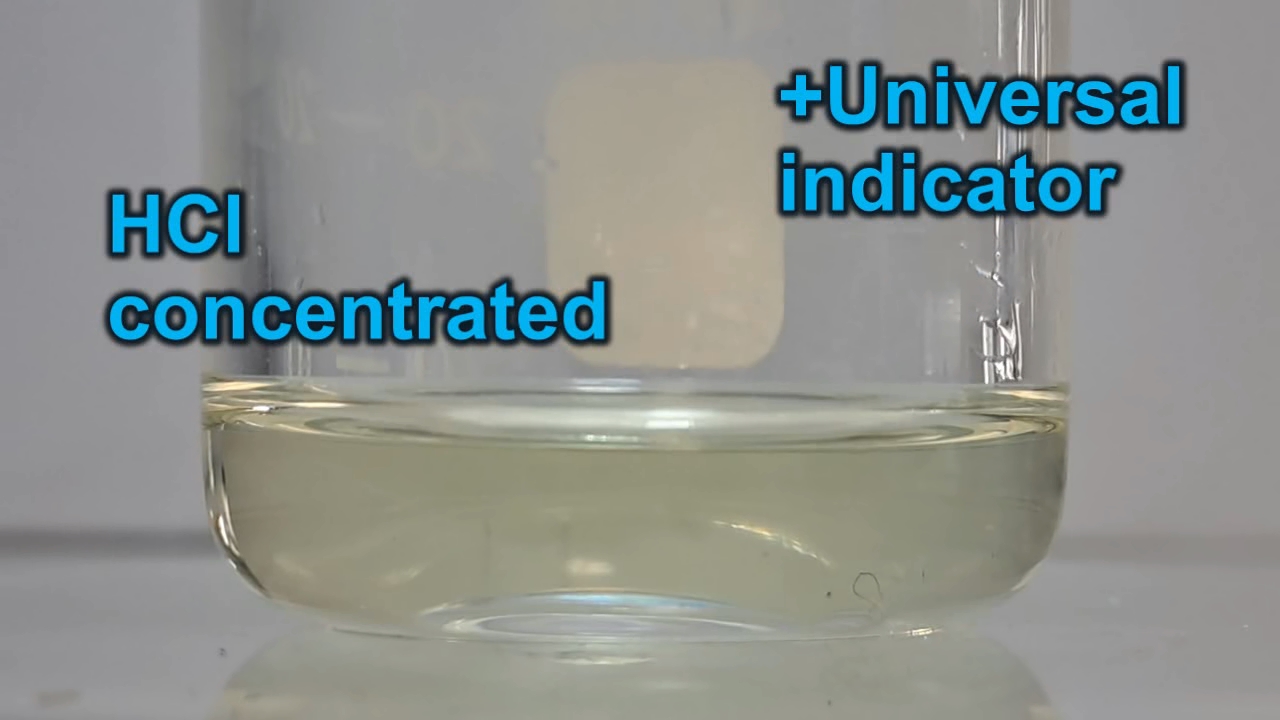
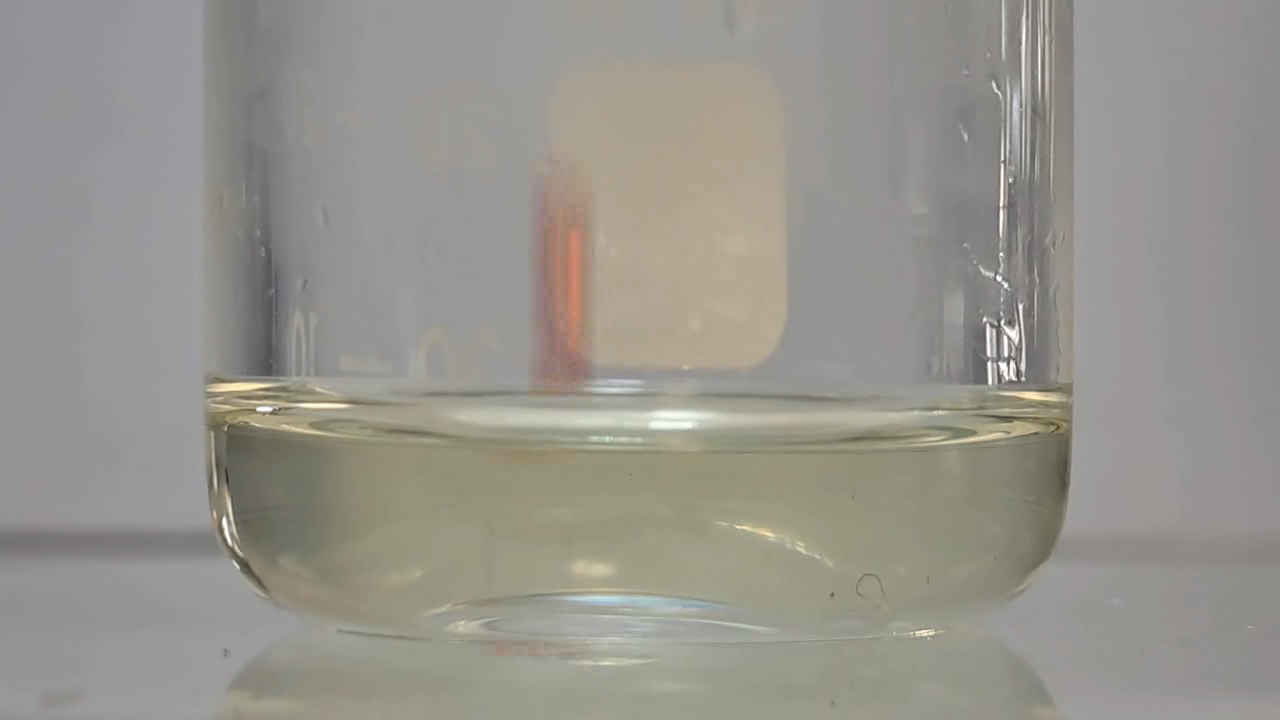
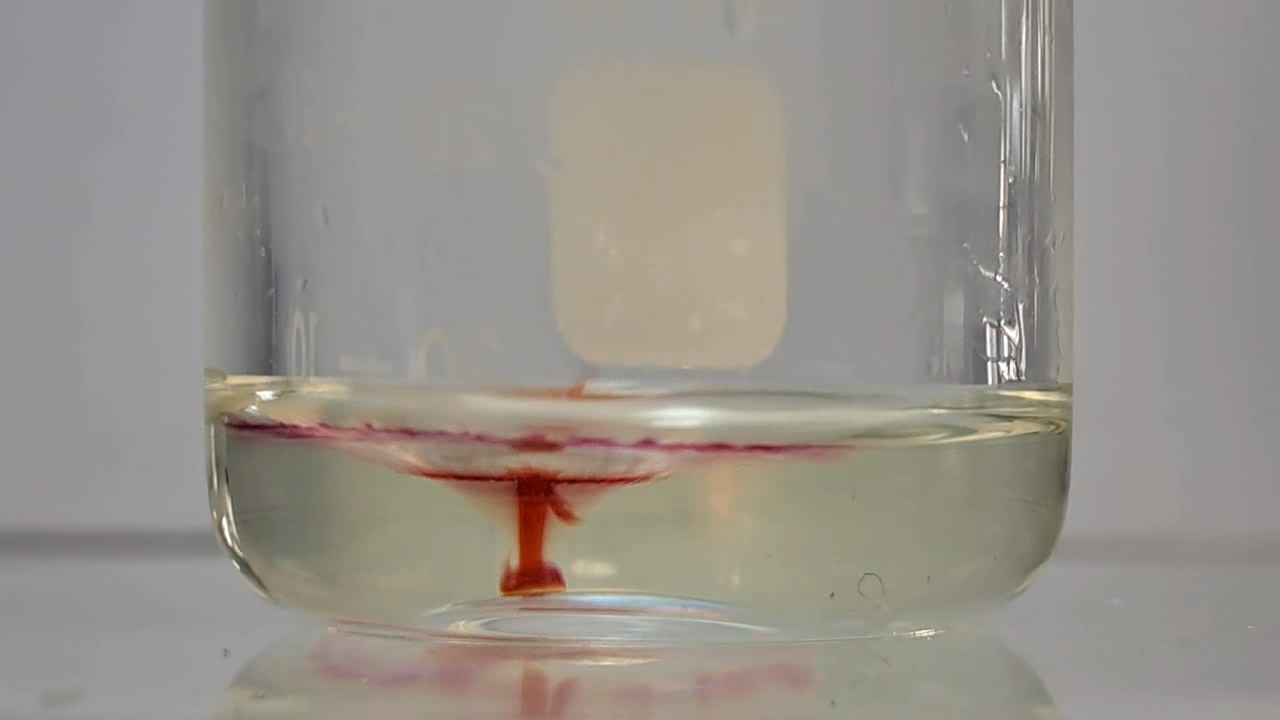
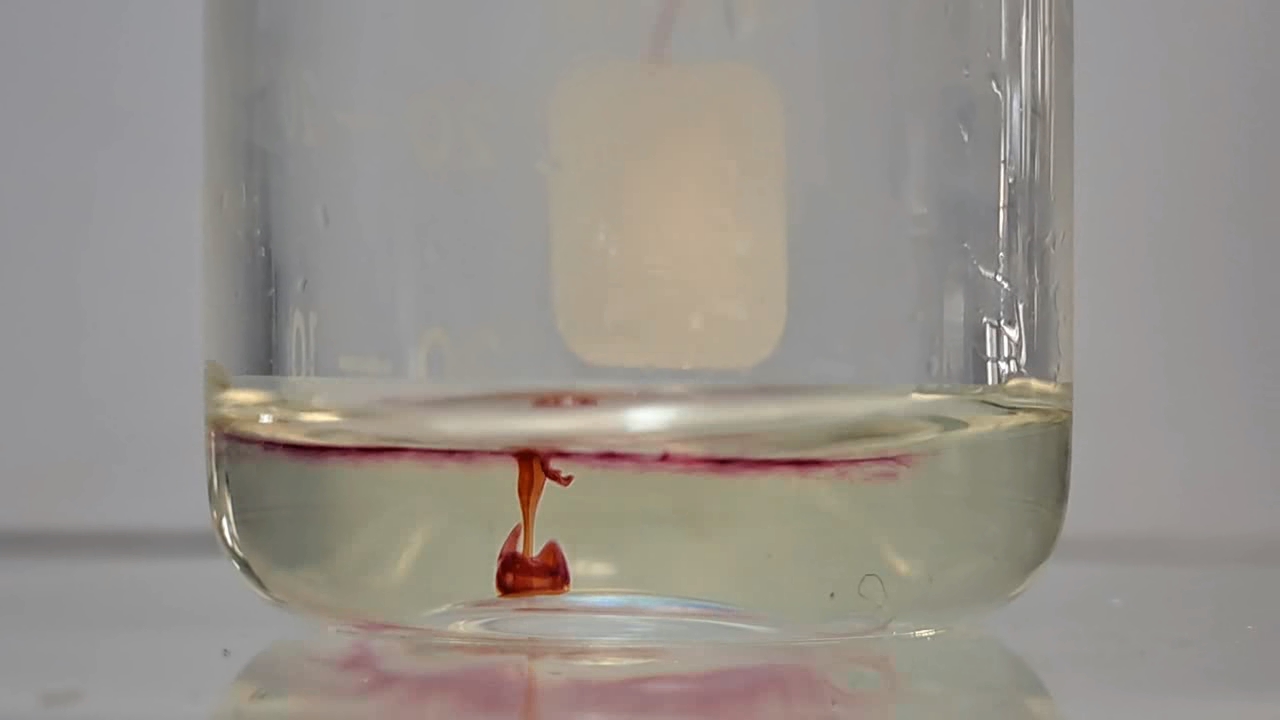
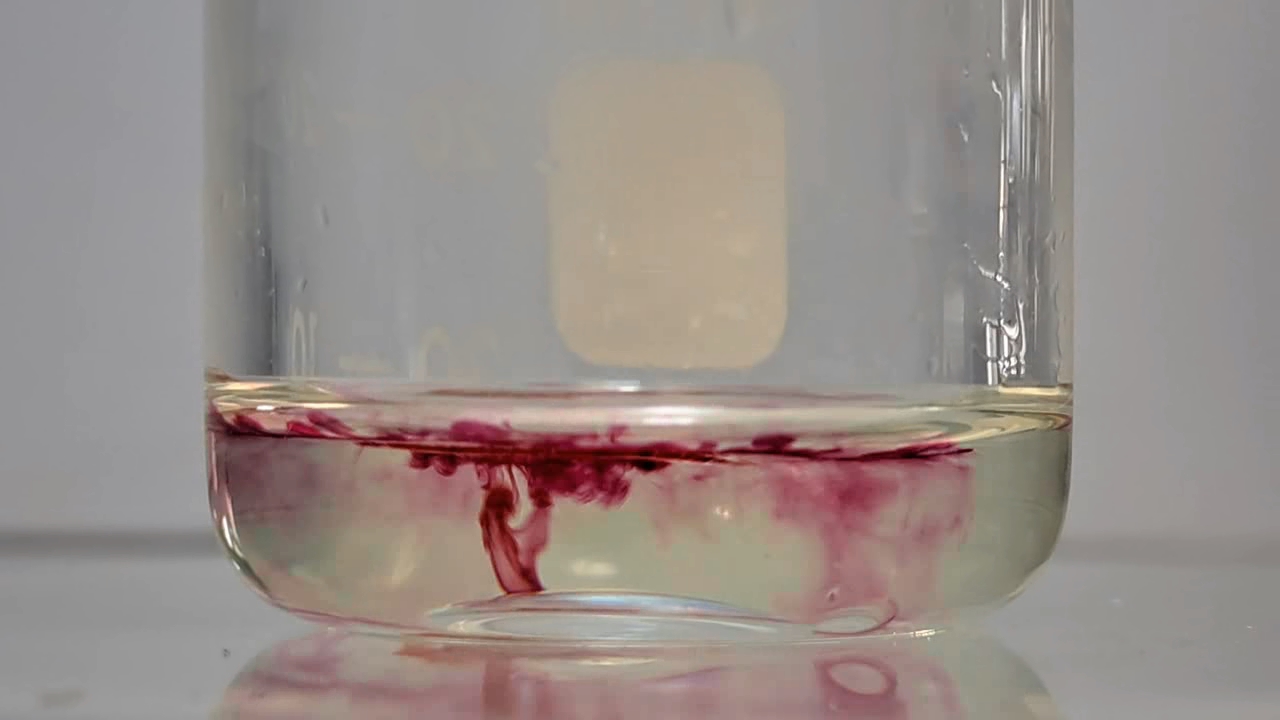
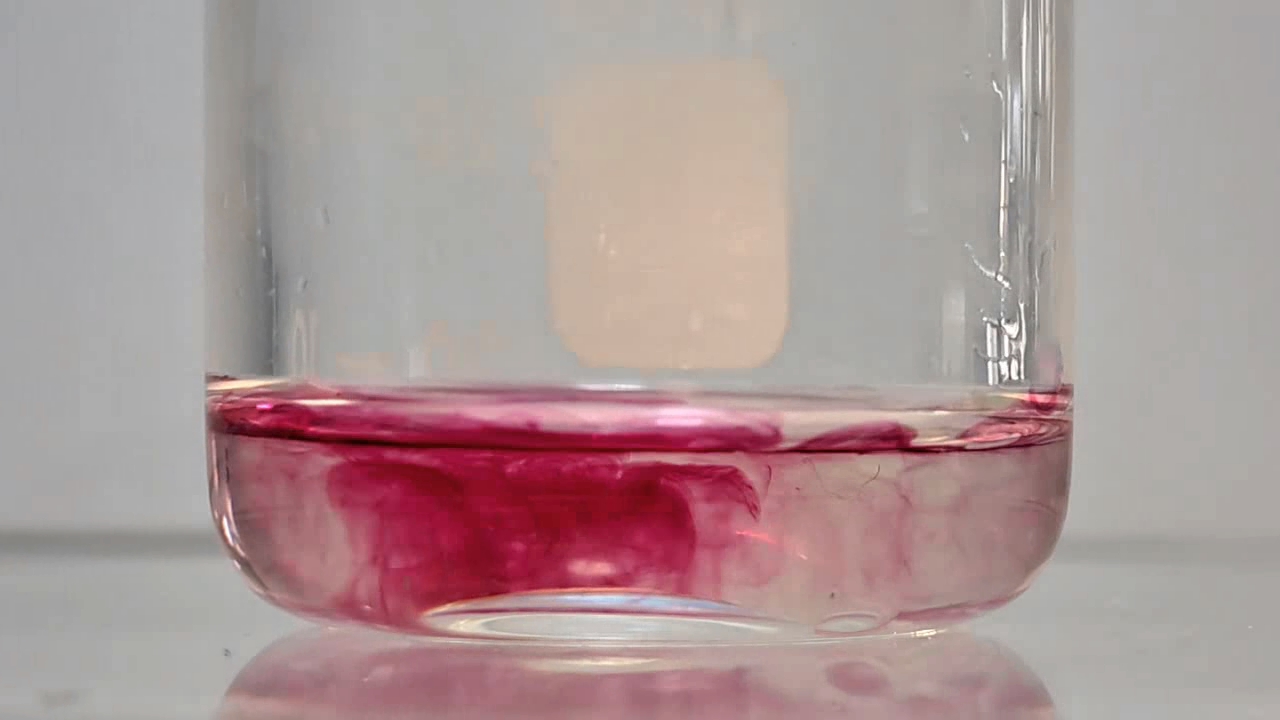
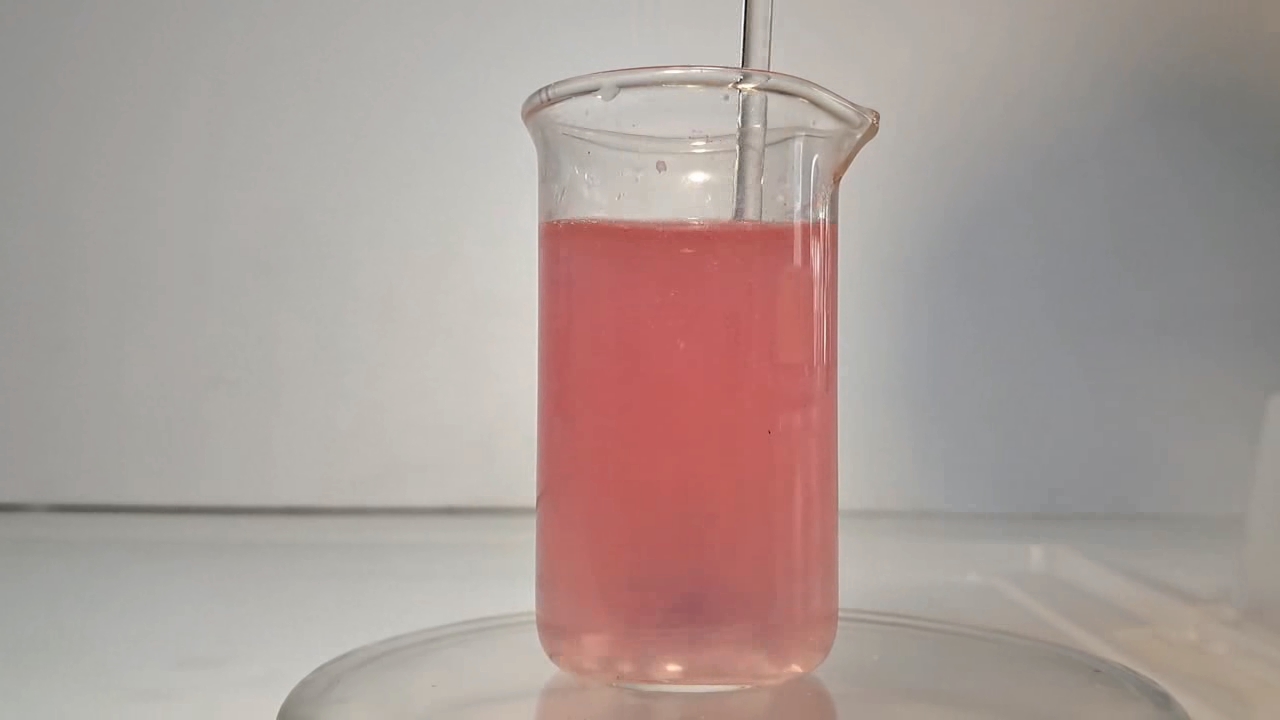
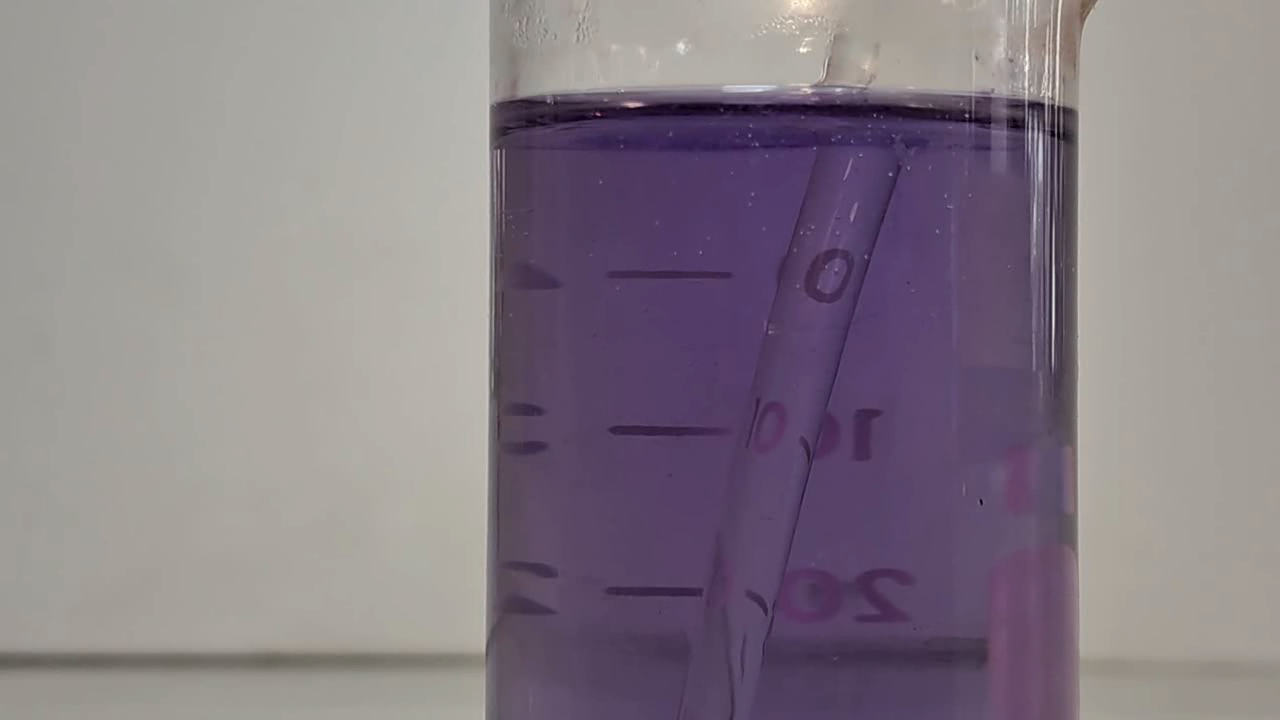
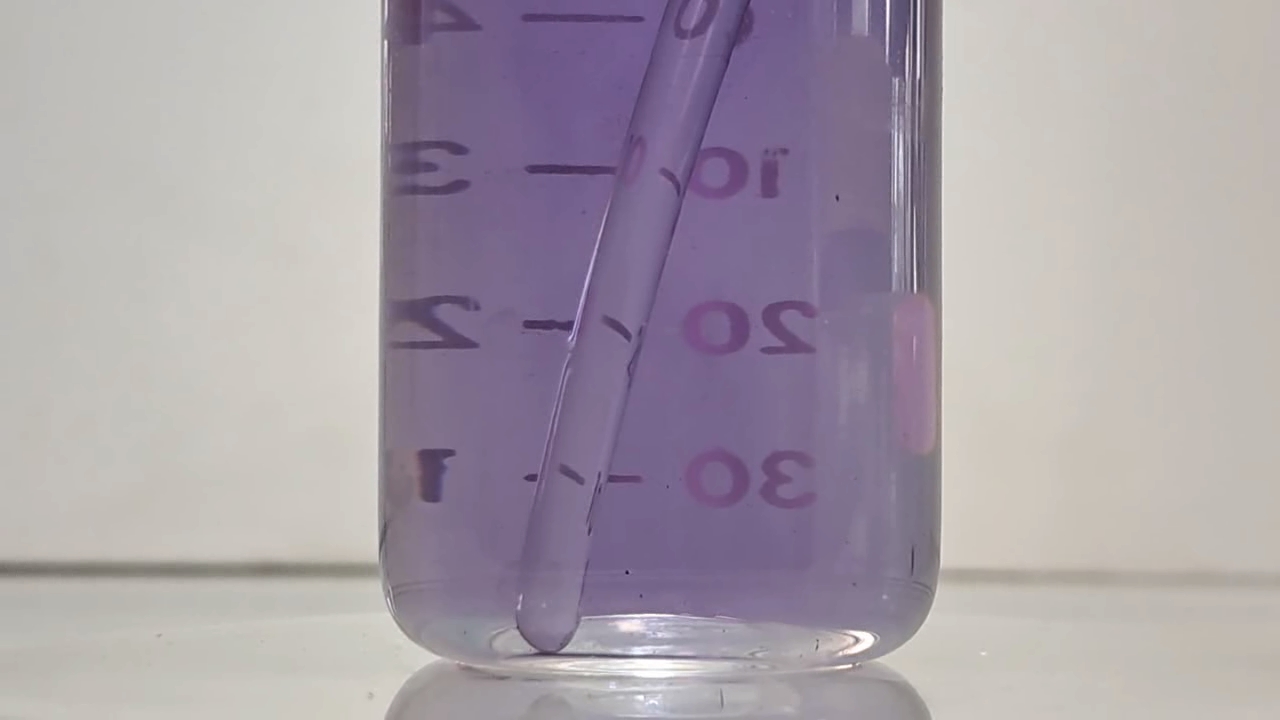
For comparison, I poured 5 ml of concentrated hydrochloric acid into a beaker and added a few drops of an alcoholic solution of universal indicator. I stirred the liquid. It turned a bright crimson color. No further color change occurred over time. Naturally, I did not expect the solution to release brown gas and turn green, as had happened in the previous experiment. Unlike the nitrate ion, the chloride ion does not exhibit oxidizing properties. However, other processes capable of destroying the organic dyes and changing the color of the solution could not be ruled out.

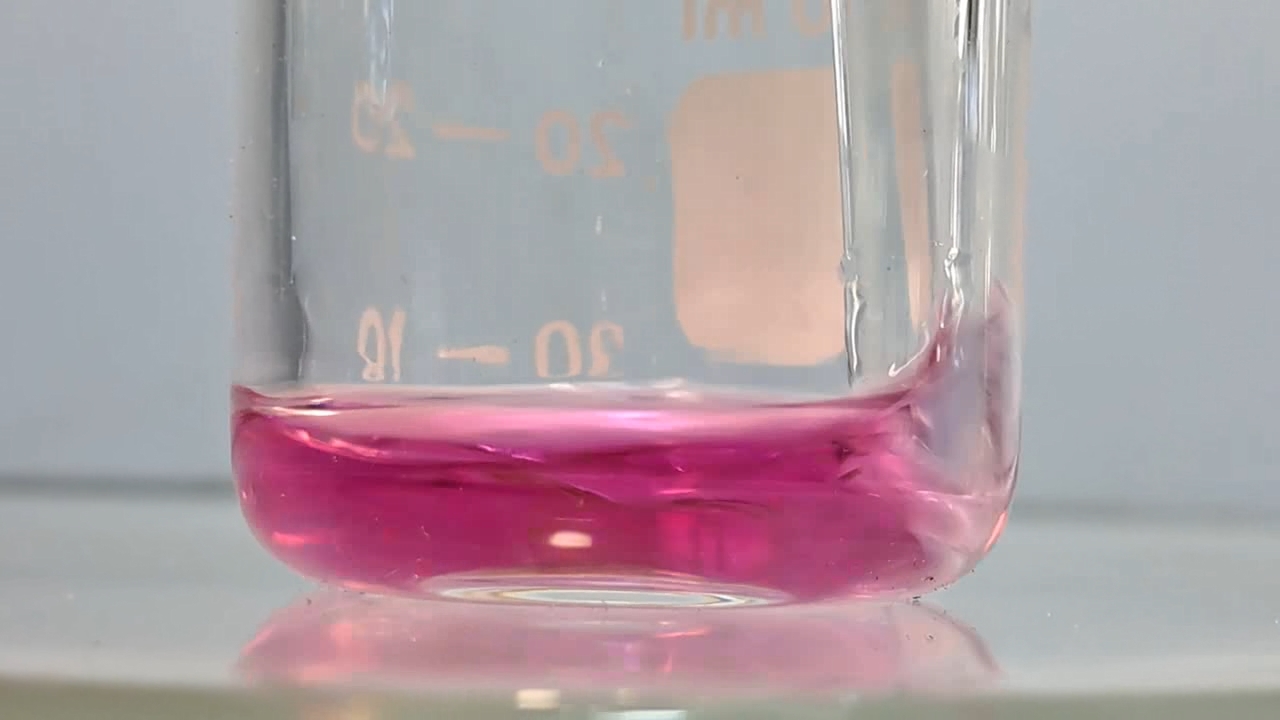
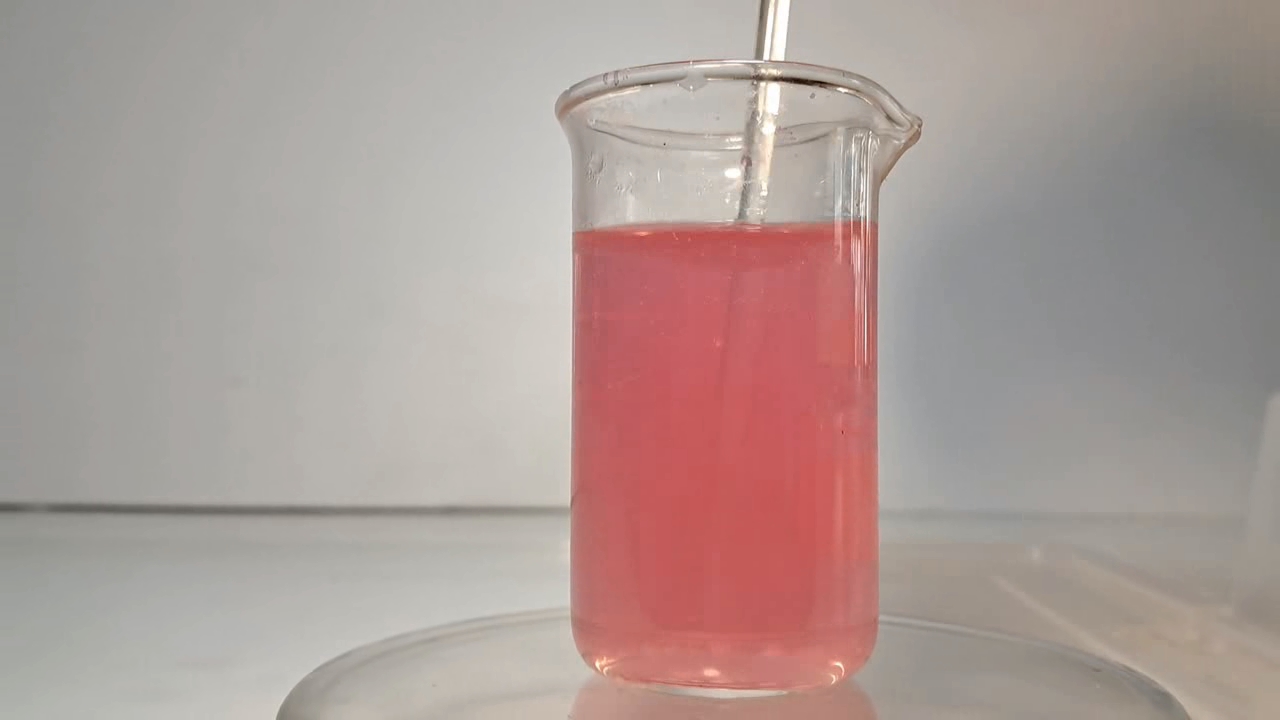
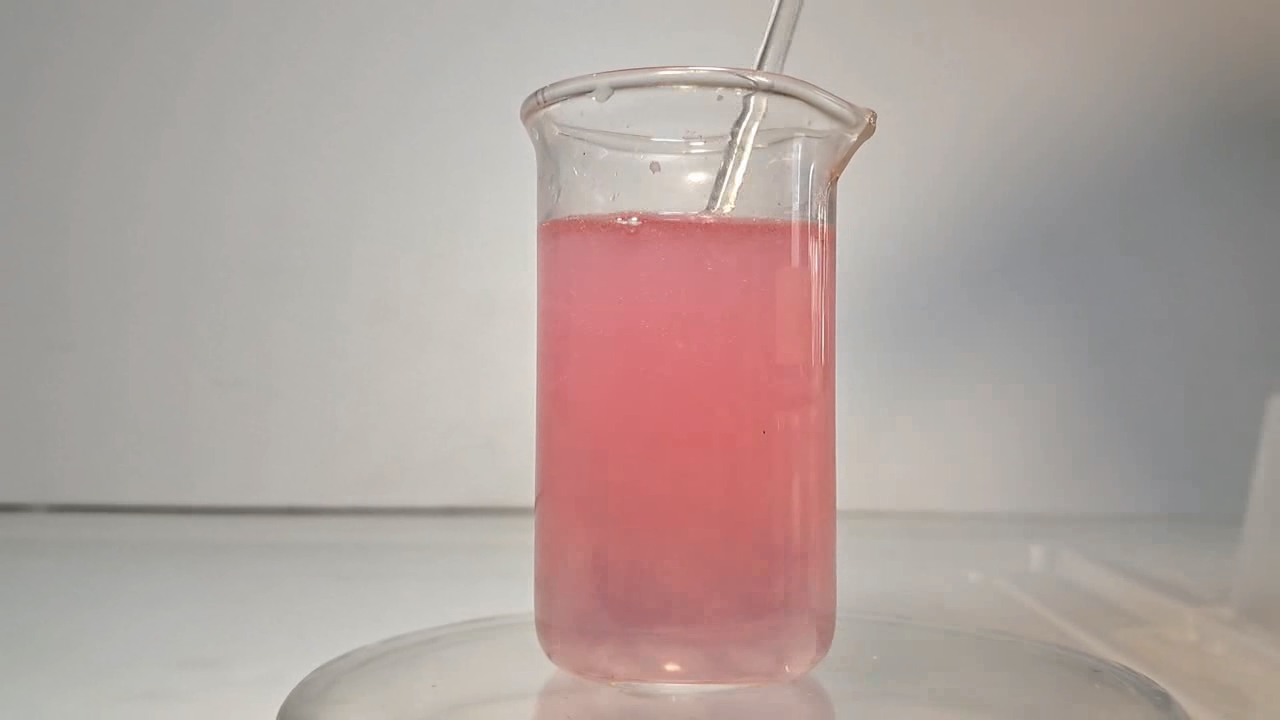
I added water to the beaker and stirred. The color intensity decreased, but the solution remained crimson. I added more universal indicator, and the solution turned a deep red. Then I added more water, bringing the total volume to about 40 ml.

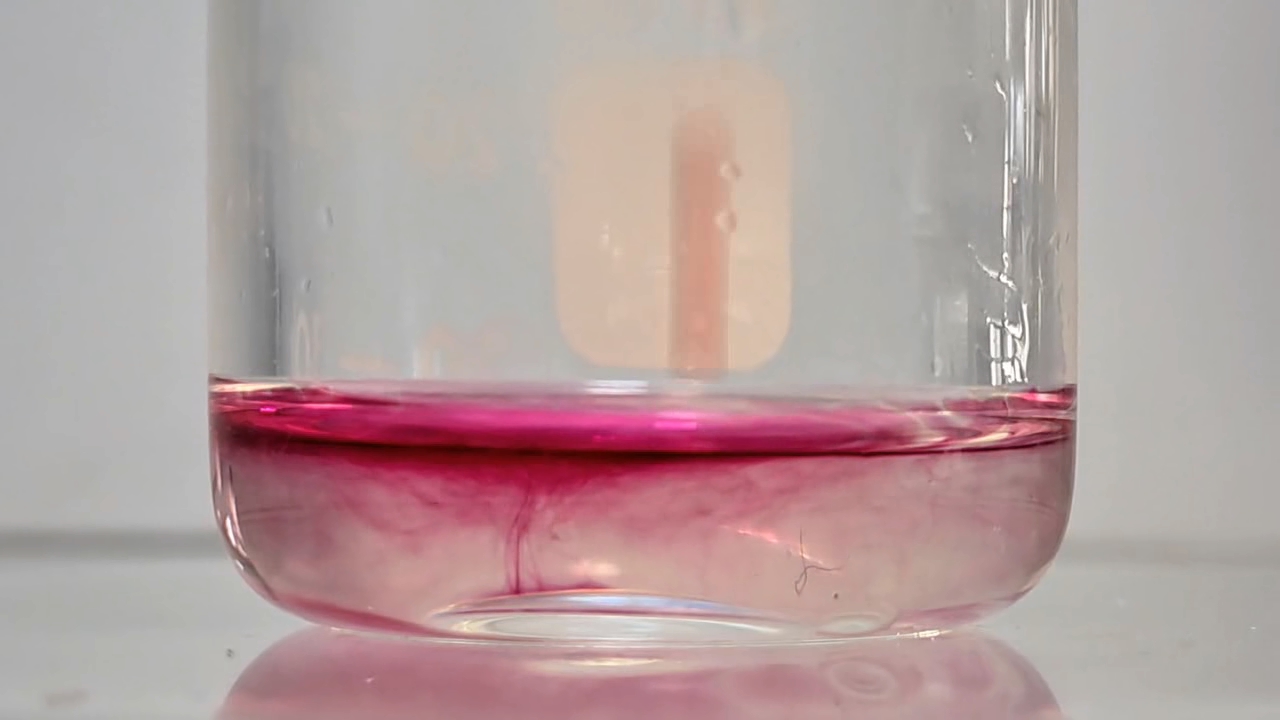
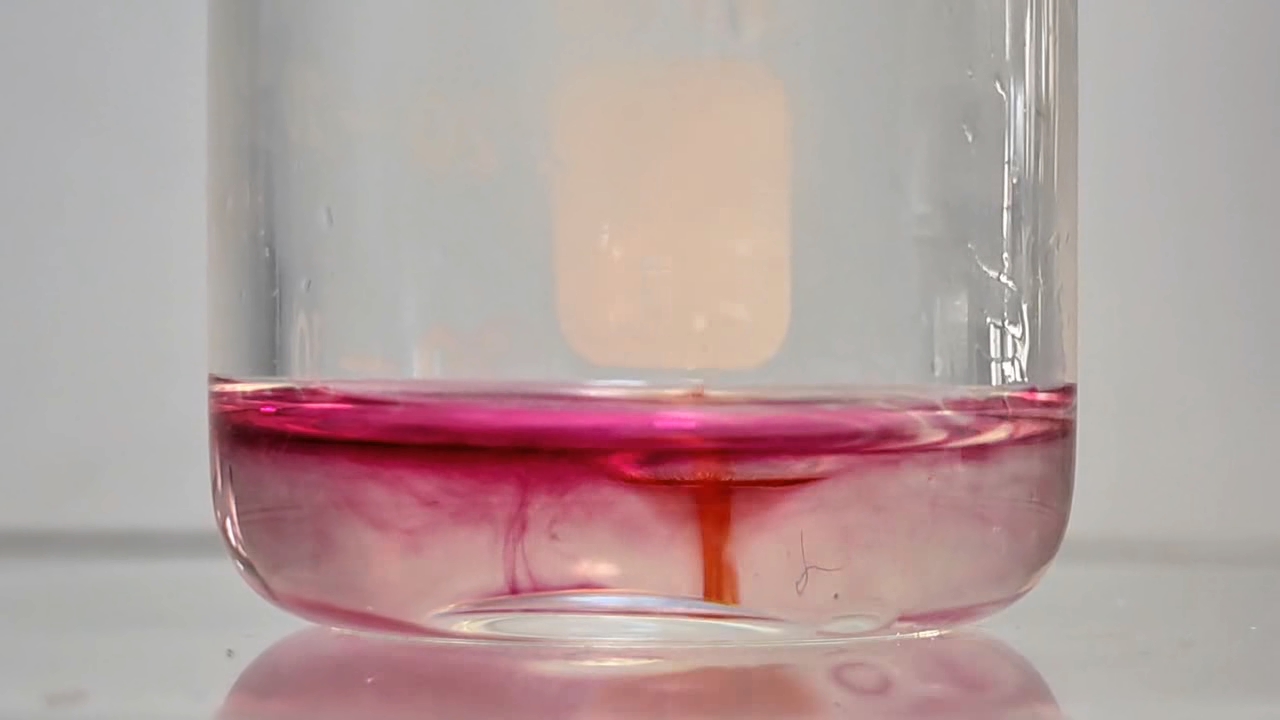
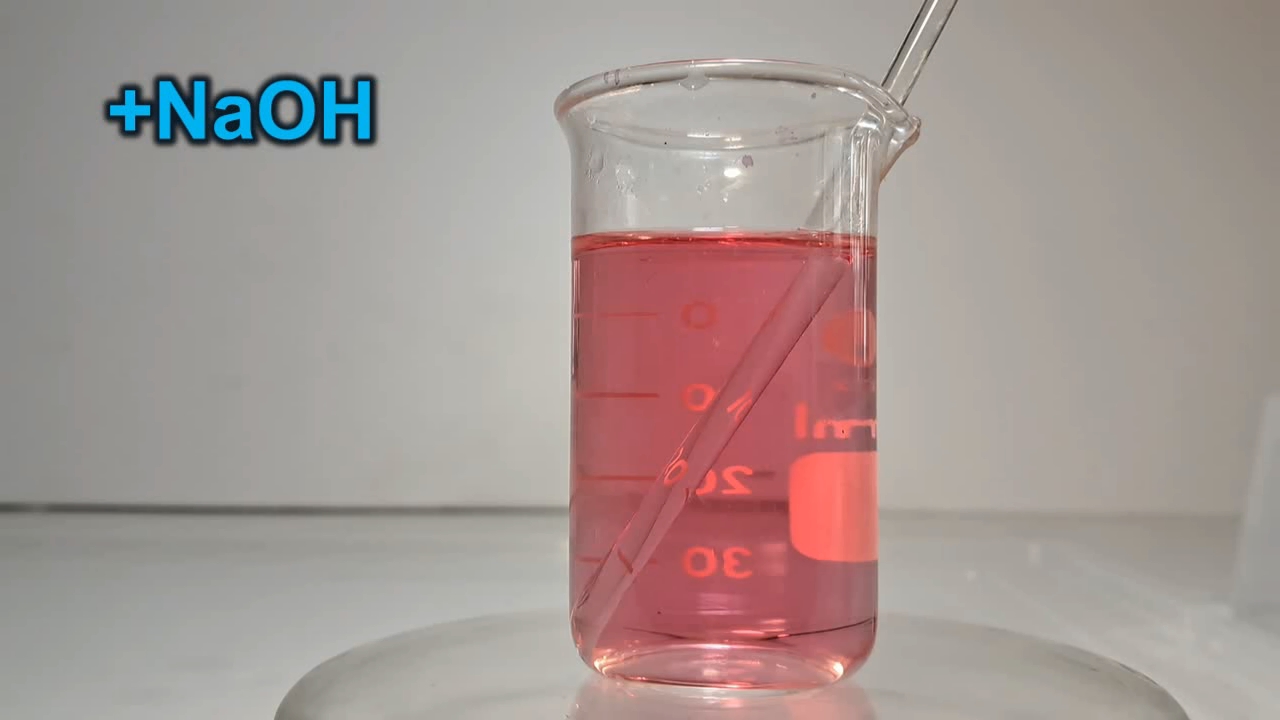
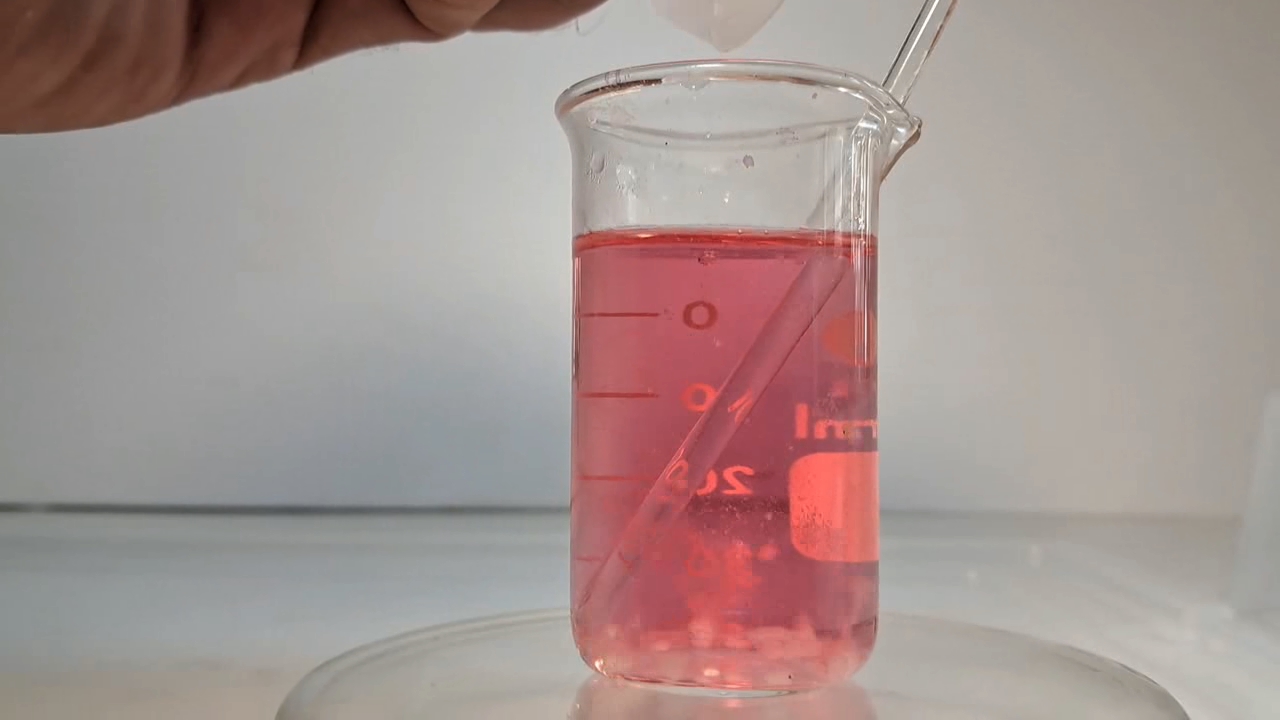
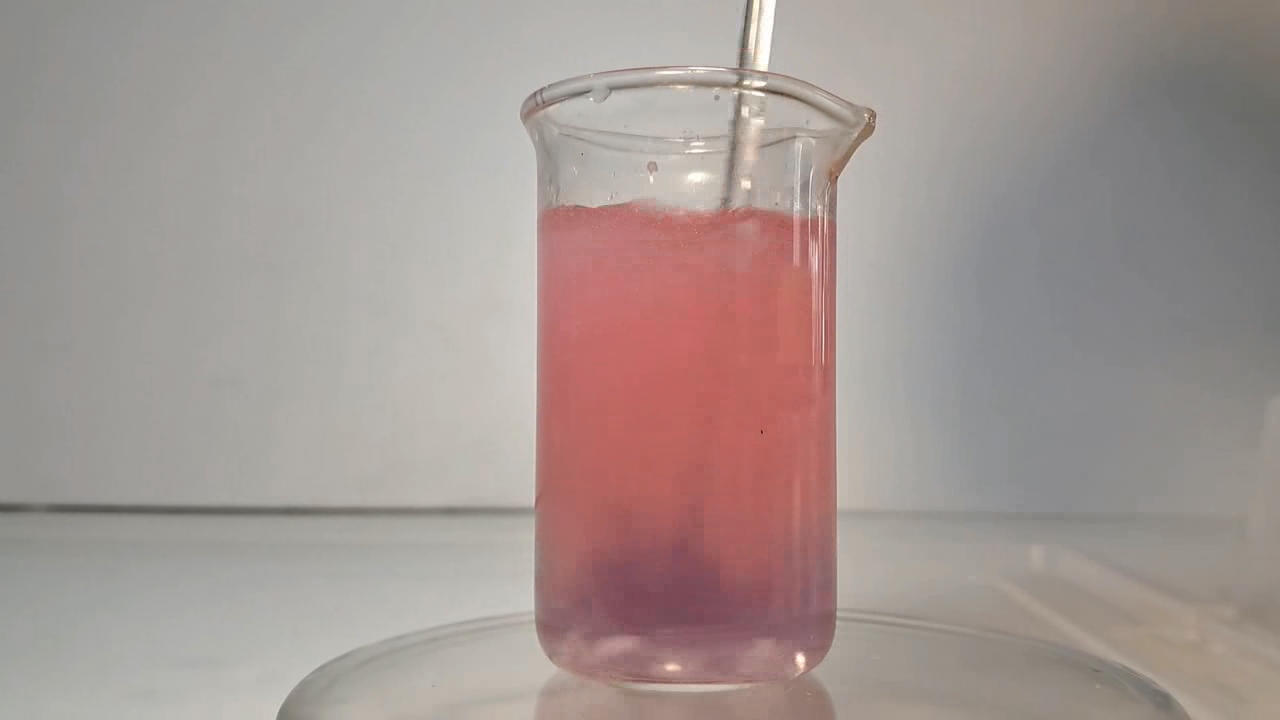
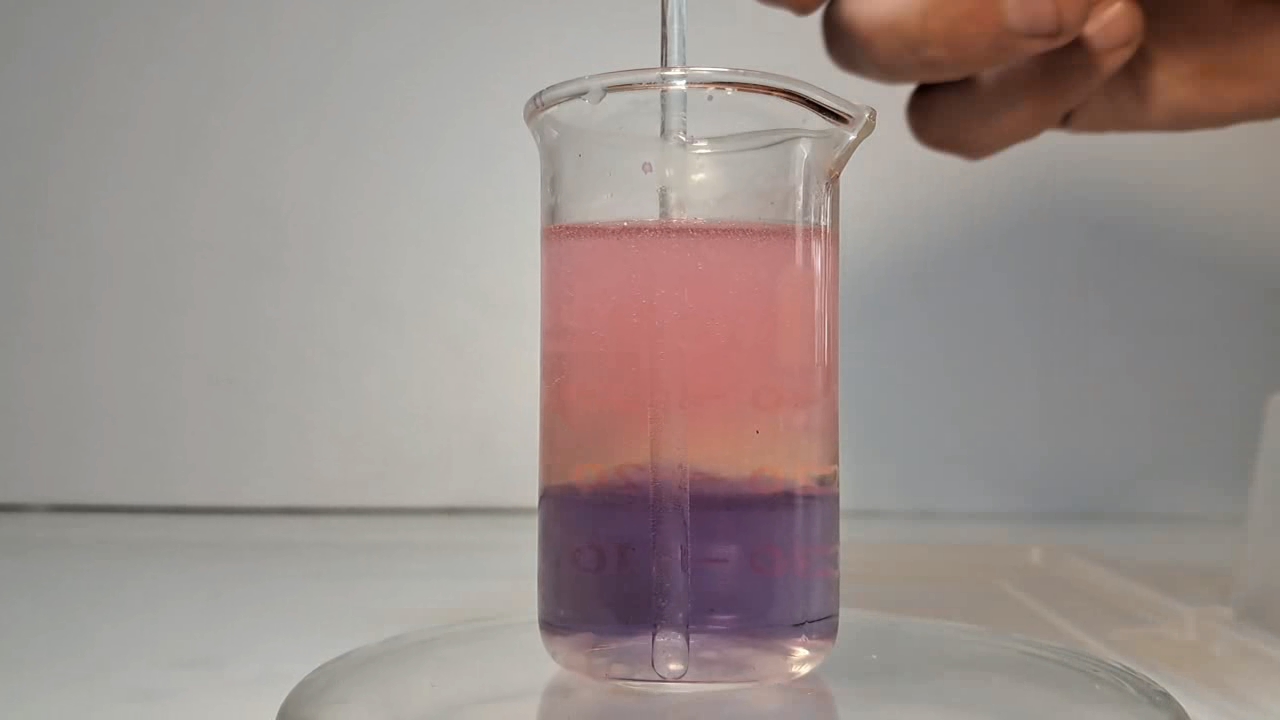
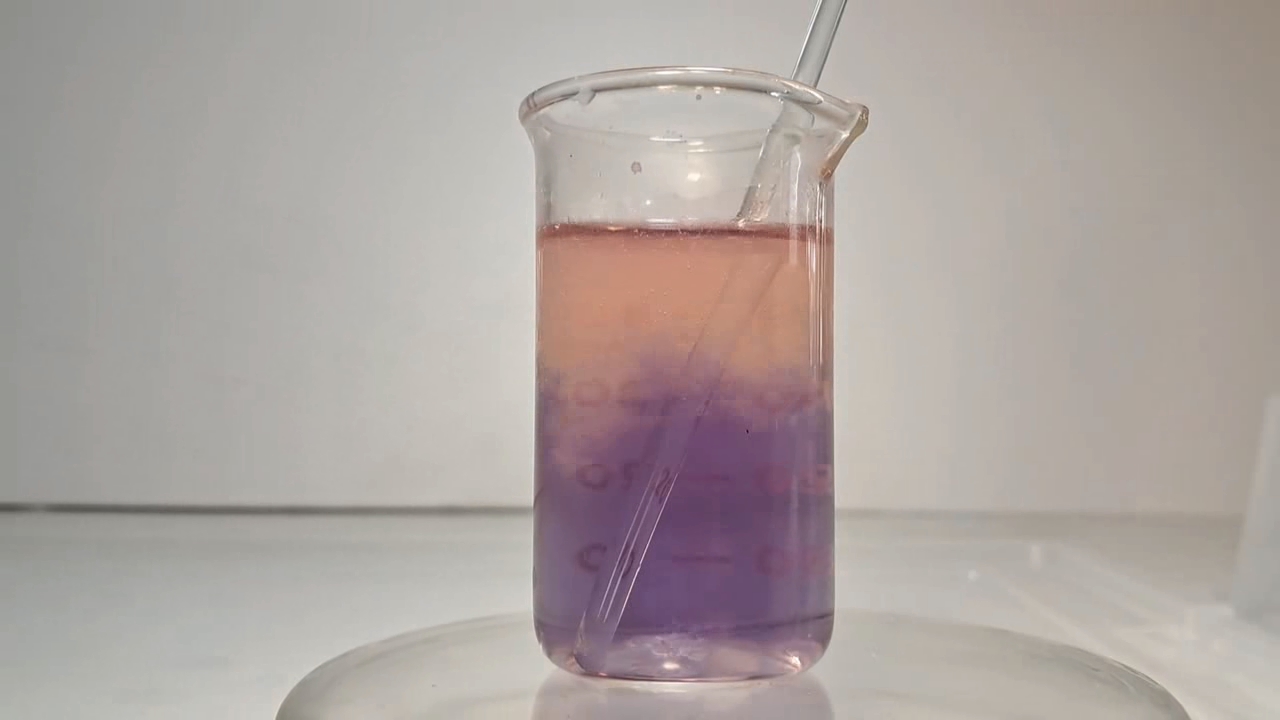
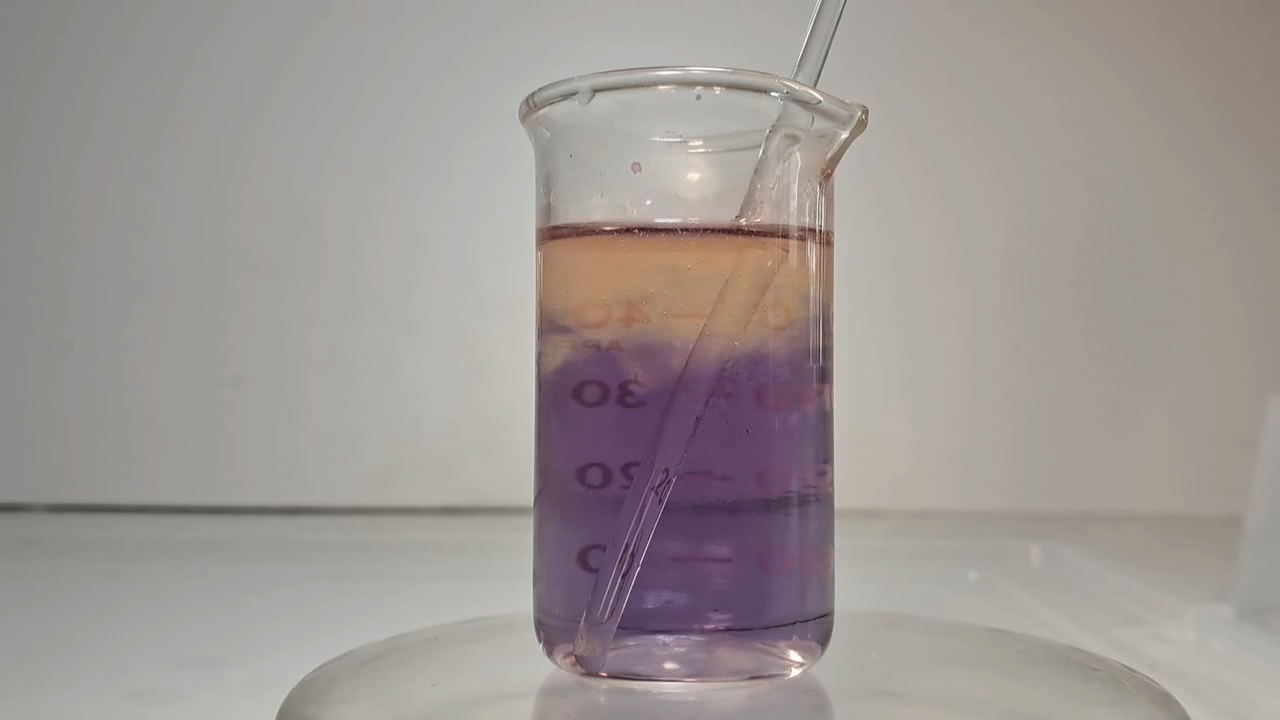
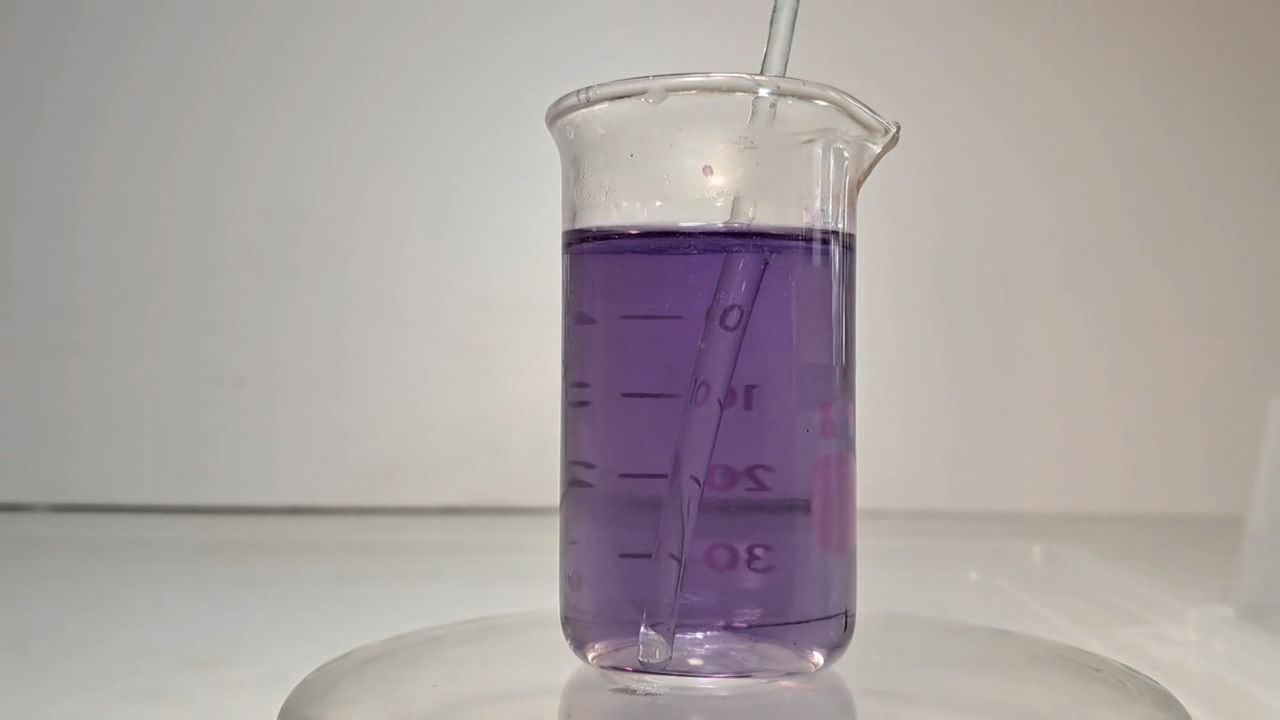
To neutralize the acid, I added a few granules of sodium hydroxide. The solid alkali sank to the bottom, and bubbles of carbon dioxide began to evolve from its surface. The sodium hydroxide contained carbonate impurities formed by the absorption of carbon dioxide from the air. However, the color of the solution remained unchanged. Even near the surface of the granules, the solution stayed crimson. I stirred the contents of the beaker with a glass rod. I expected that some regions of the liquid would turn blue or green during stirring, but this did not happen. I added more granules and stirred again - the solution remained crimson.

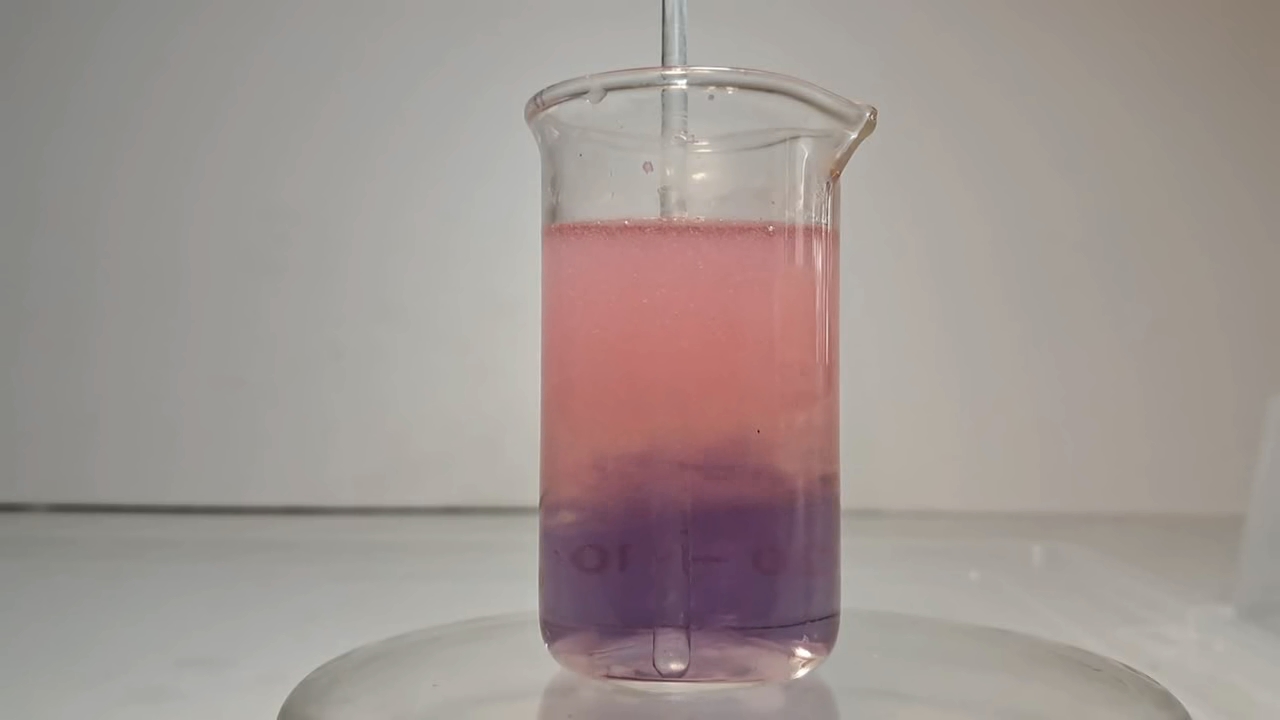
Only after the third addition of sodium hydroxide granules and subsequent stirring did violet patches begin to appear temporarily near the bottom of the beaker. With further stirring, a stable violet layer formed at the bottom, since the sodium hydroxide was dissolving relatively slowly. Then the upper layer of the liquid changed color from crimson to yellow, and finally the entire solution in the beaker turned violet.


Соляная кислота и универсальный индикатор - Часть 18
Для сравнения налил в стаканчик 5 мл концентрированной соляной кислоты и добавил несколько капель спиртового раствора универсального индикатора, перемешал. Жидкость окрасилась в ярко-малиновый цвет. Дальнейших изменений цвета во времени не произошло. Разумеется, я не ожидал, что начнет выделяться бурый газ и раствор станет зеленым, как это произошло в предыдущем эксперименте. Анион хлорида не проявляет окислительных свойств - в отличие от аниона нитрата. Однако, нельзя было исключить другие процессы, которые привели бы к разрушению органических красителей и изменению цвета раствора.

Добавил в стакан воду, перемешал. Интенсивность окраски уменьшилась, но цвет раствора остался малиновым. Добавил еще универсального индикатора, раствор стал интенсивно-красным. Снова добавил воду, доведя общий объем жидкости до 40 мл.

Для нейтрализации кислоты добавил несколько гранул гидроксида натрия. Твердая щелочь опустилась на дно, с ее поверхности начали выделяться пузырьки углекислого газа. Гидроксид натрия содержал примесь карбоната, которая образовалась за счет поглощения углекислого газа из воздуха. Однако окраска раствора не изменилась. Даже вблизи поверхности гранул раствор оставался малиновым. Перемешал содержимое стакана стеклянной палочкой. Я ожидал, что при перемешивании отдельные участки жидкости окрасятся в синий или зеленый цвет, но этого не произошло. Добавил еще гранул и перемешал - раствор остался малиновым.

Лишь третья порция гранул и последующее перемешивание вызвали временное появление фиолетовых участков раствора возле дна стакана. При дальнейшем перемешивании снизу образовался стабильный фиолетовый слой - гидроксид натрия растворялся сравнительно медленно. Потом верхний слой жидкости изменил цвет с малинового на желтый и, наконец, весь раствор в стакане стал фиолетовым.


Download the Video (59 Mb, .avi )

Hydrochloric Acid and Universal Indicator

Hydrochloric Acid and Universal Indicator

Hydrochloric Acid and Universal Indicator

Hydrochloric Acid and Universal Indicator

Hydrochloric Acid and Universal Indicator

Hydrochloric Acid and Universal Indicator

Hydrochloric Acid and Universal Indicator

Hydrochloric Acid and Universal Indicator

Hydrochloric Acid and Universal Indicator

Hydrochloric Acid and Universal Indicator

Hydrochloric Acid and Universal Indicator

Hydrochloric Acid and Universal Indicator

Hydrochloric Acid and Universal Indicator

Hydrochloric Acid and Universal Indicator

Hydrochloric Acid and Universal Indicator

Hydrochloric Acid and Universal Indicator

Hydrochloric Acid and Universal Indicator

Hydrochloric Acid and Universal Indicator

Hydrochloric Acid and Universal Indicator

Hydrochloric Acid and Universal Indicator

Hydrochloric Acid and Universal Indicator

Hydrochloric Acid and Universal Indicator

Hydrochloric Acid and Universal Indicator

Hydrochloric Acid and Universal Indicator

Hydrochloric Acid and Universal Indicator

Hydrochloric Acid and Universal Indicator

Hydrochloric Acid and Universal Indicator

Hydrochloric Acid and Universal Indicator

Hydrochloric Acid and Universal Indicator

Hydrochloric Acid and Universal Indicator

Hydrochloric Acid and Universal Indicator

Hydrochloric Acid and Universal Indicator

Hydrochloric Acid and Universal Indicator

Hydrochloric Acid and Universal Indicator


[ Fluorescein and other dyes ]

Indicators - Discussion on the forum
[Submit a Comment / Error Message - Отправить Комментарий / Сообщение об ошибке]