Chemistry and Chemists № 1 2026
Journal of Chemists-Enthusiasts
| Content | Chemistry experiments - video | Physics experiments - video | Home Page - Chemistry and Chemists |
|
Chemistry and Chemists № 1 2026 Journal of Chemists-Enthusiasts |
Hydrolysis of Methyl Acetate, Ethyl Acetate, and Butyl Acetate - pt.7, 8 Chemist |
|
Having noticed a mistake in the text, allocate it and press Ctrl-Enter
Butyl Acetate, Ammonia, and Universal Indicator - Part 7
Let's begin the experiment on the hydrolysis of butyl acetate. This time, I slightly modified the sequence of reagent addition. I also used ammonia instead of sodium hydroxide, expecting a similar result.
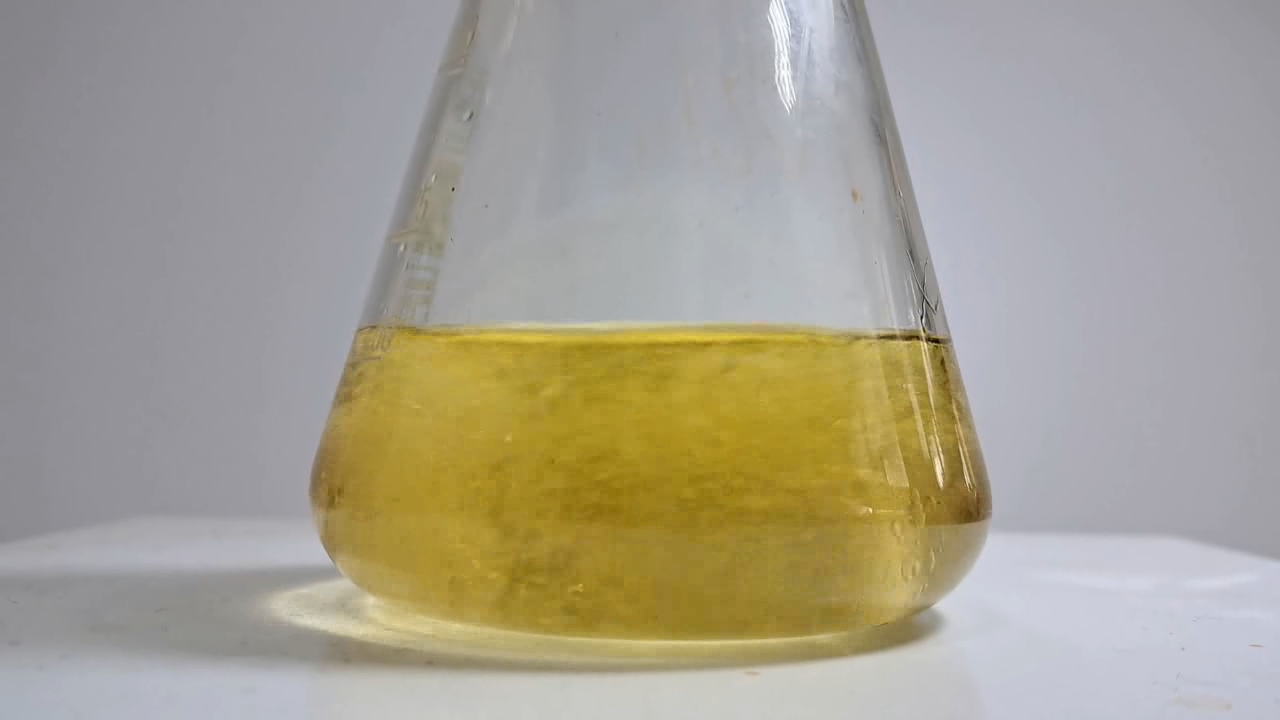
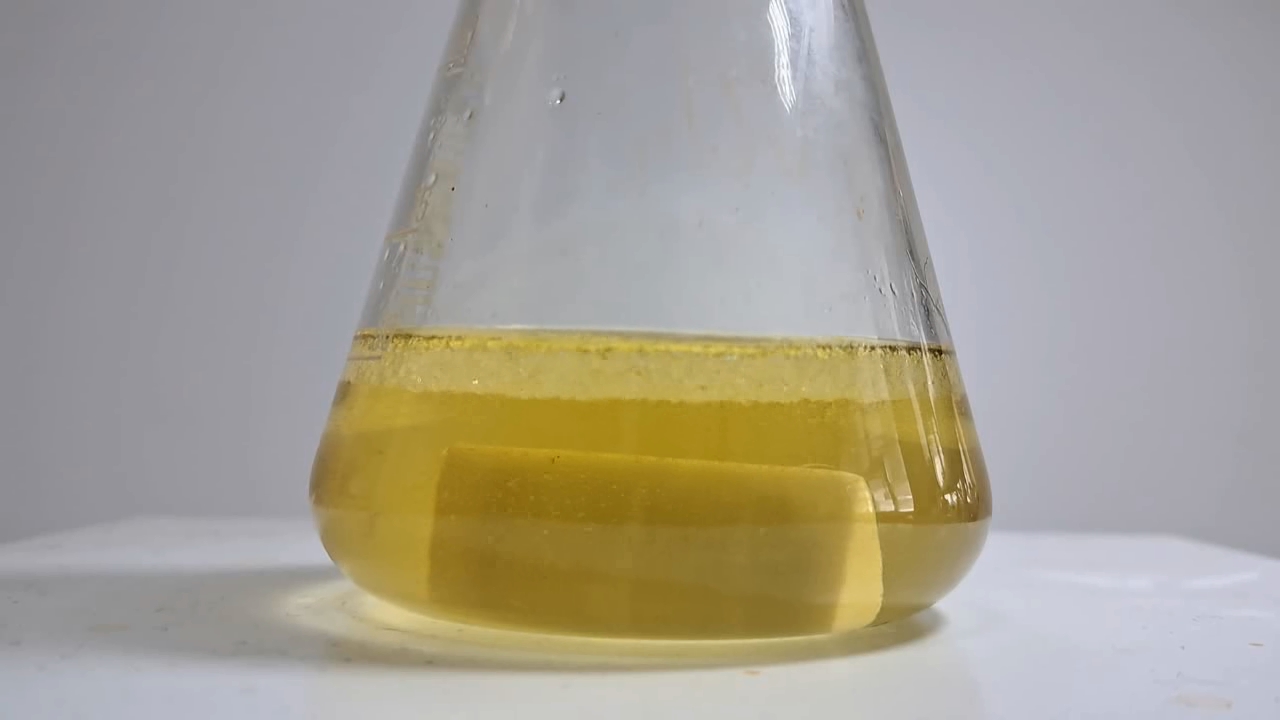
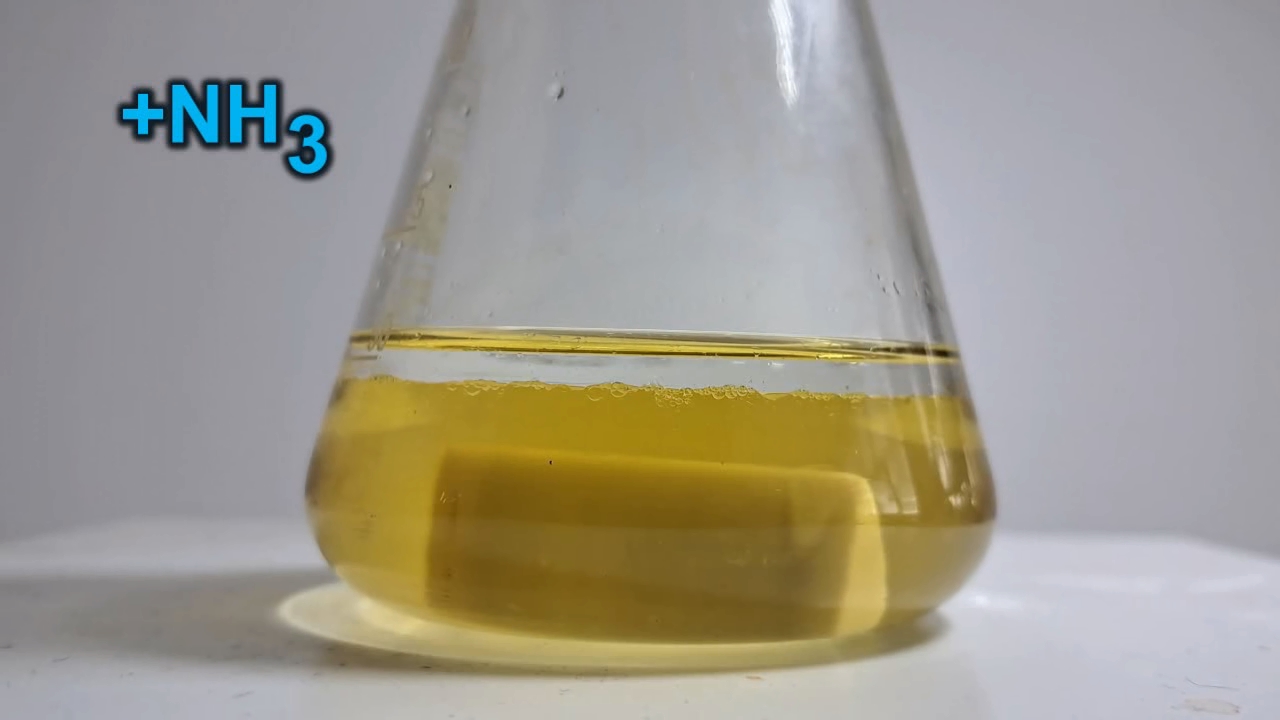
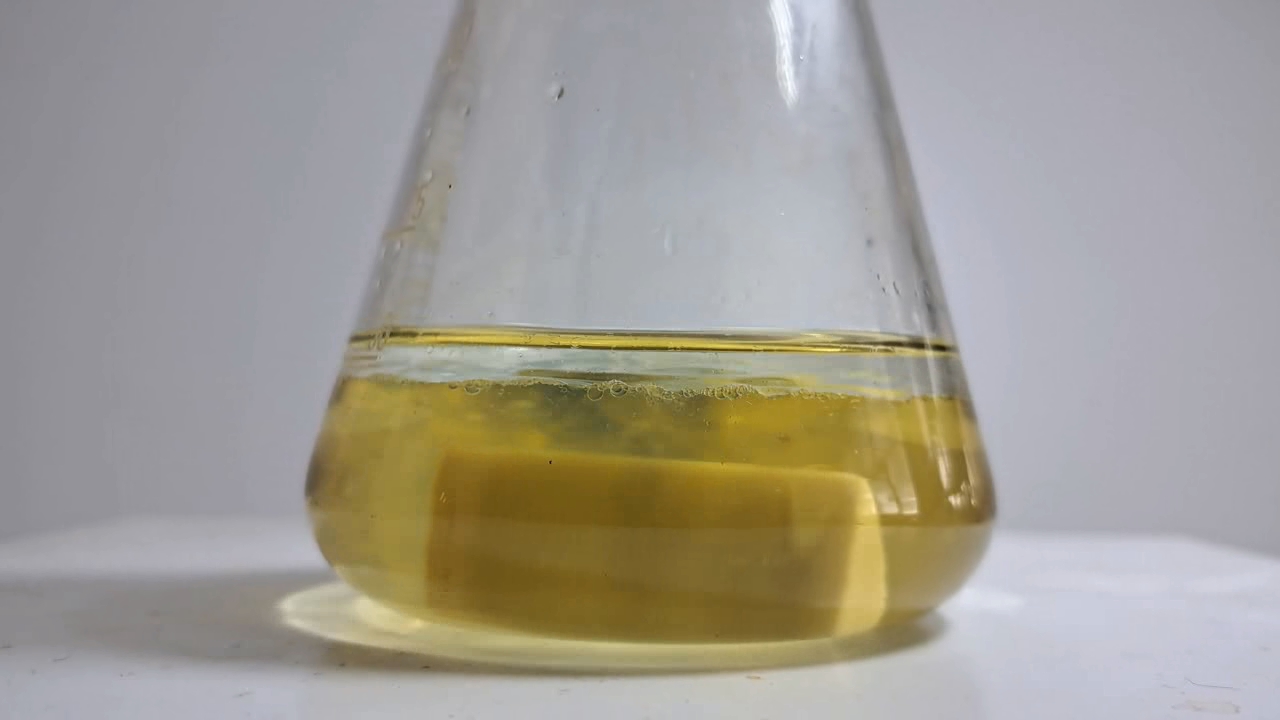
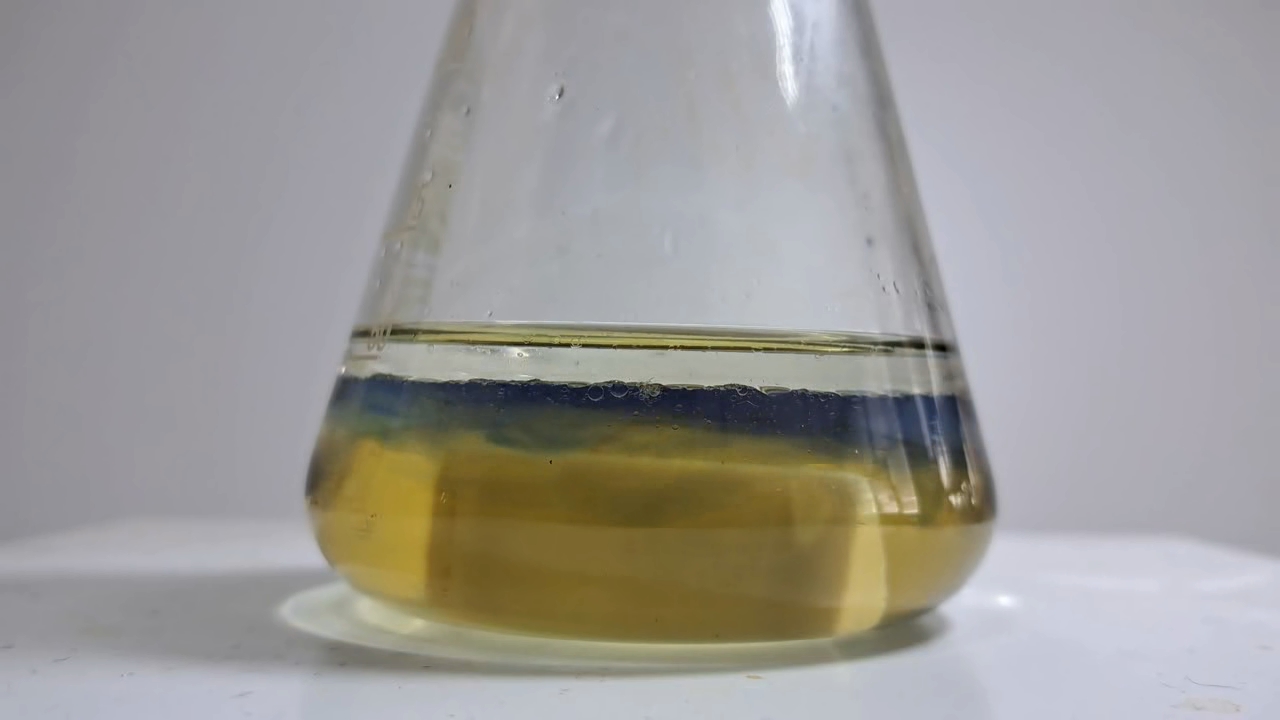
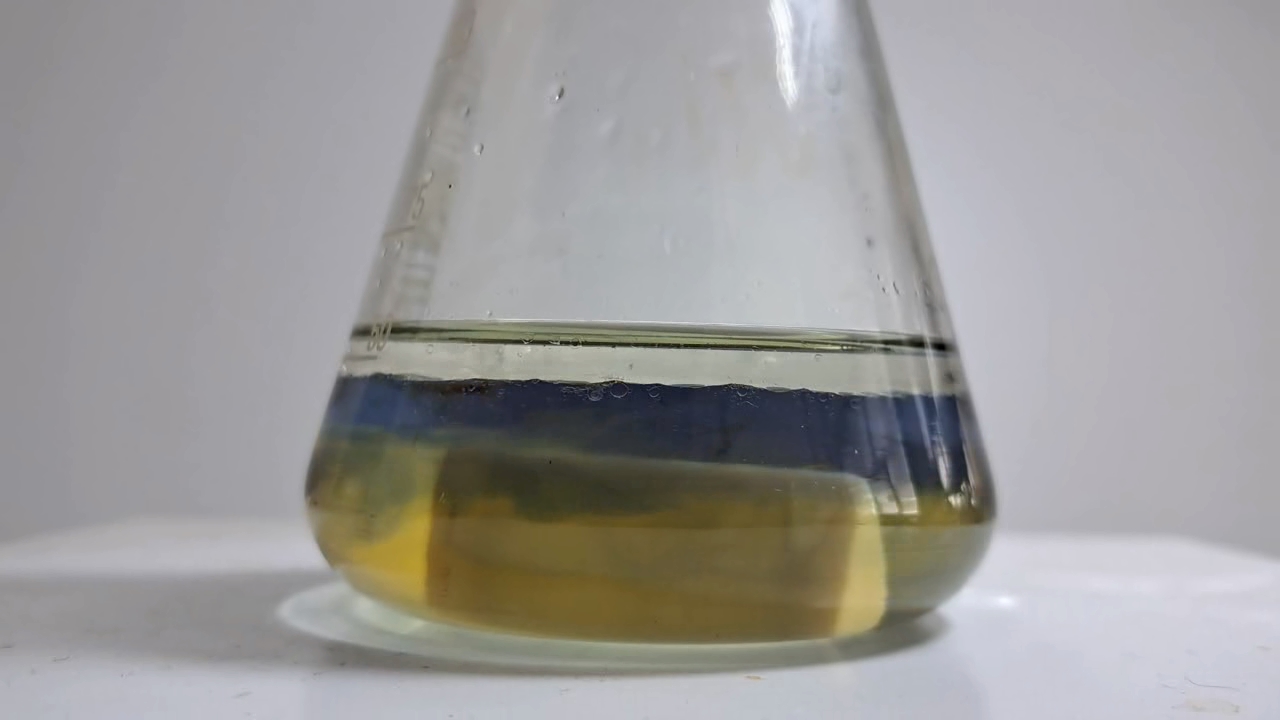
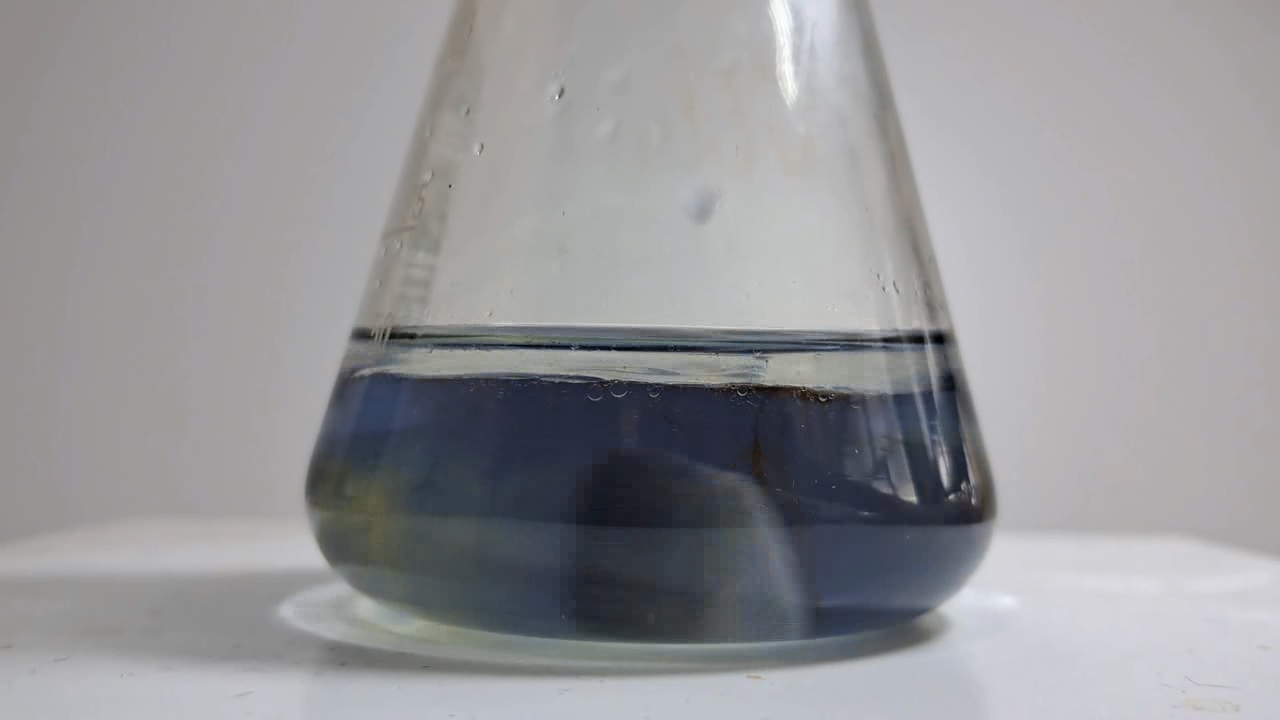
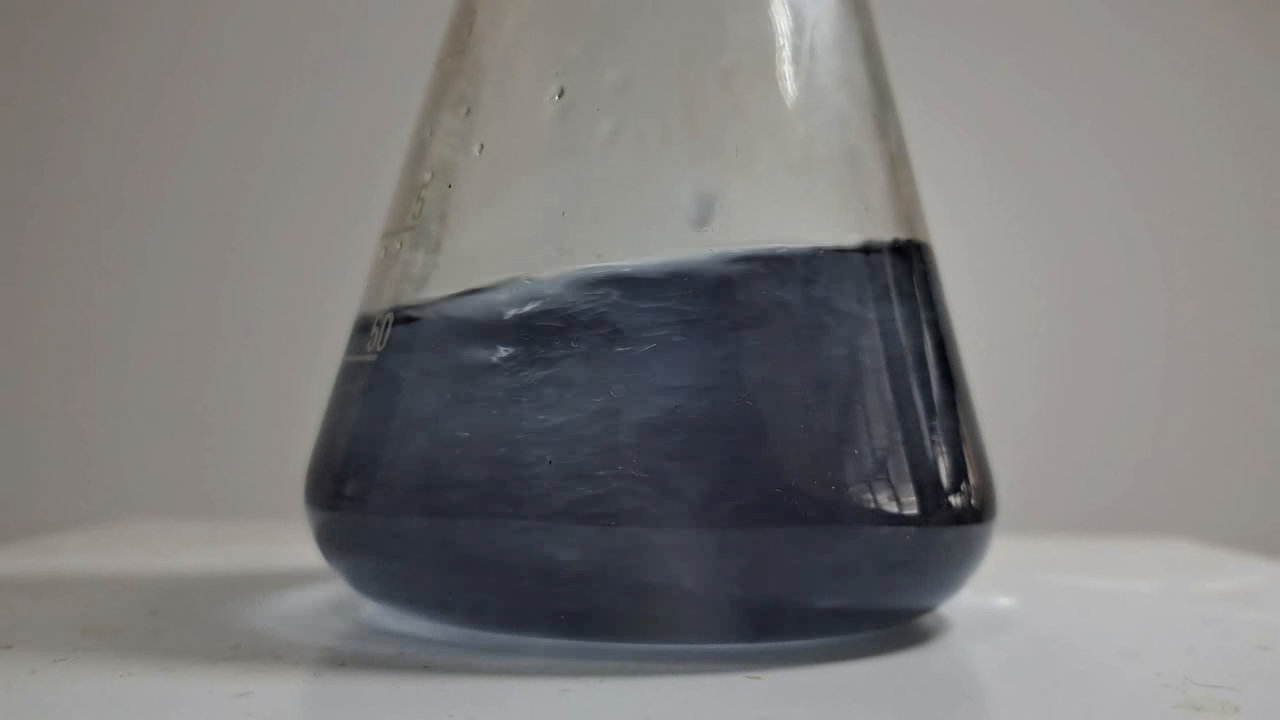
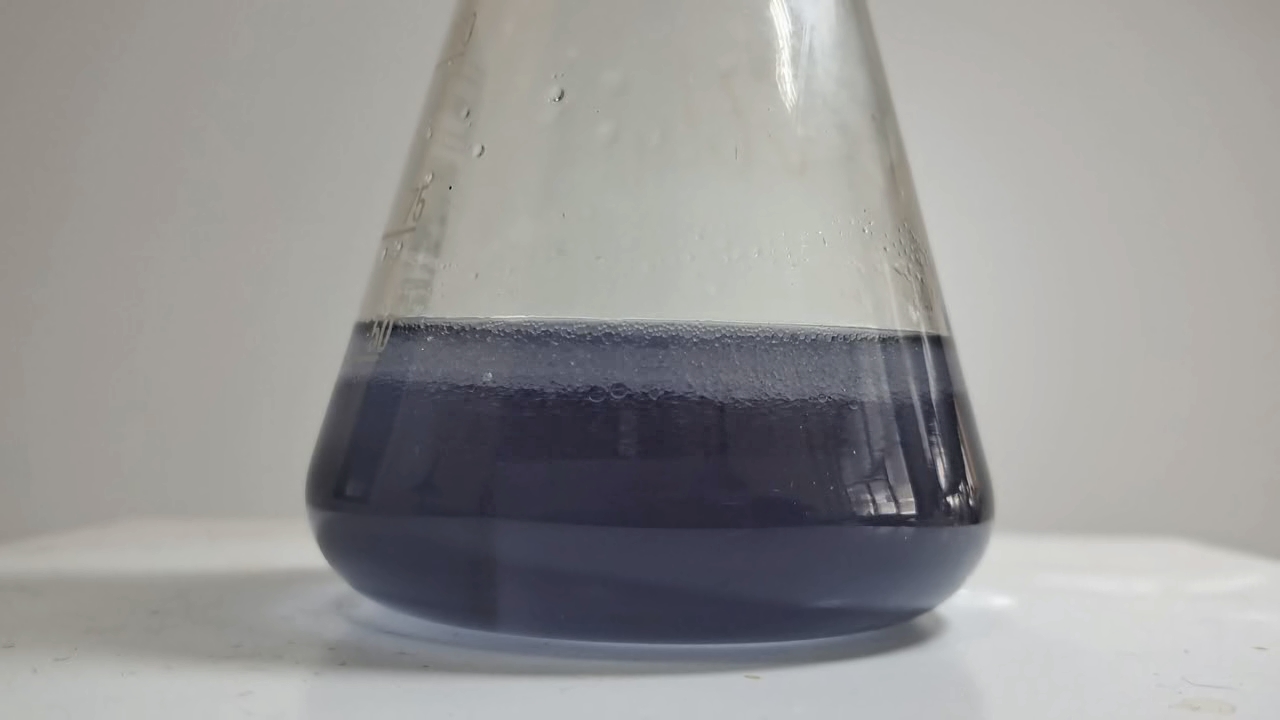
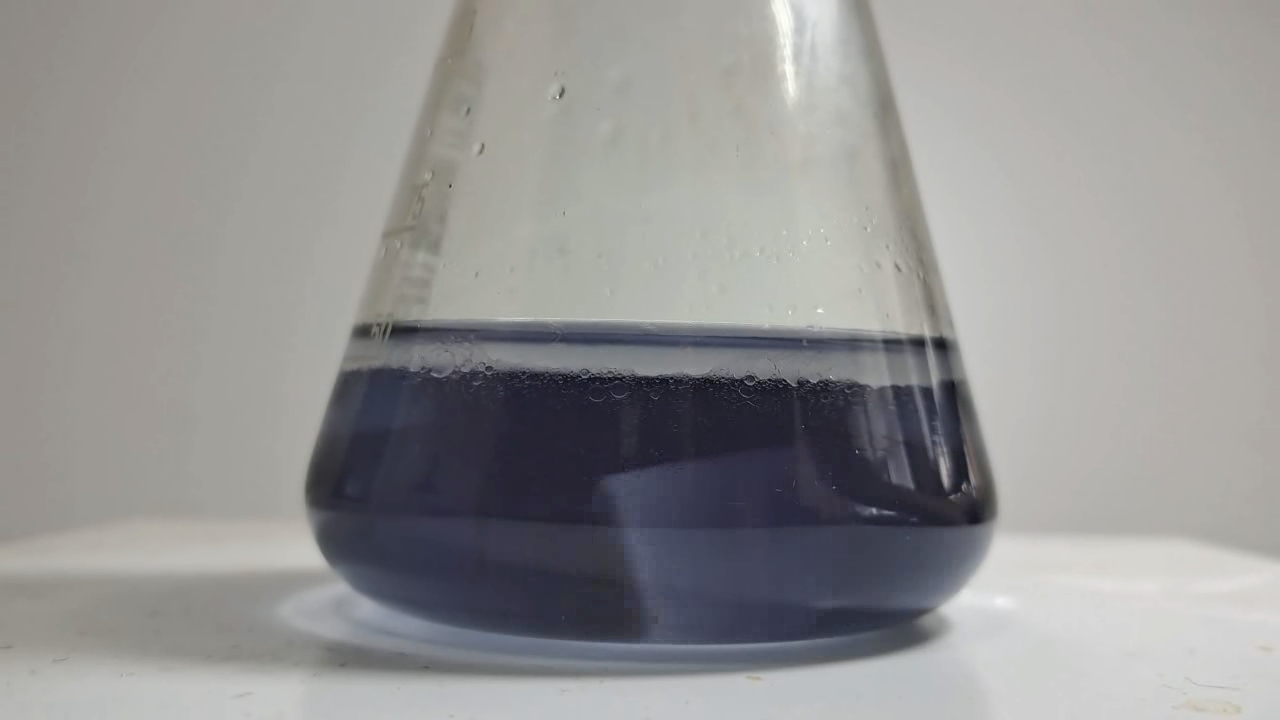
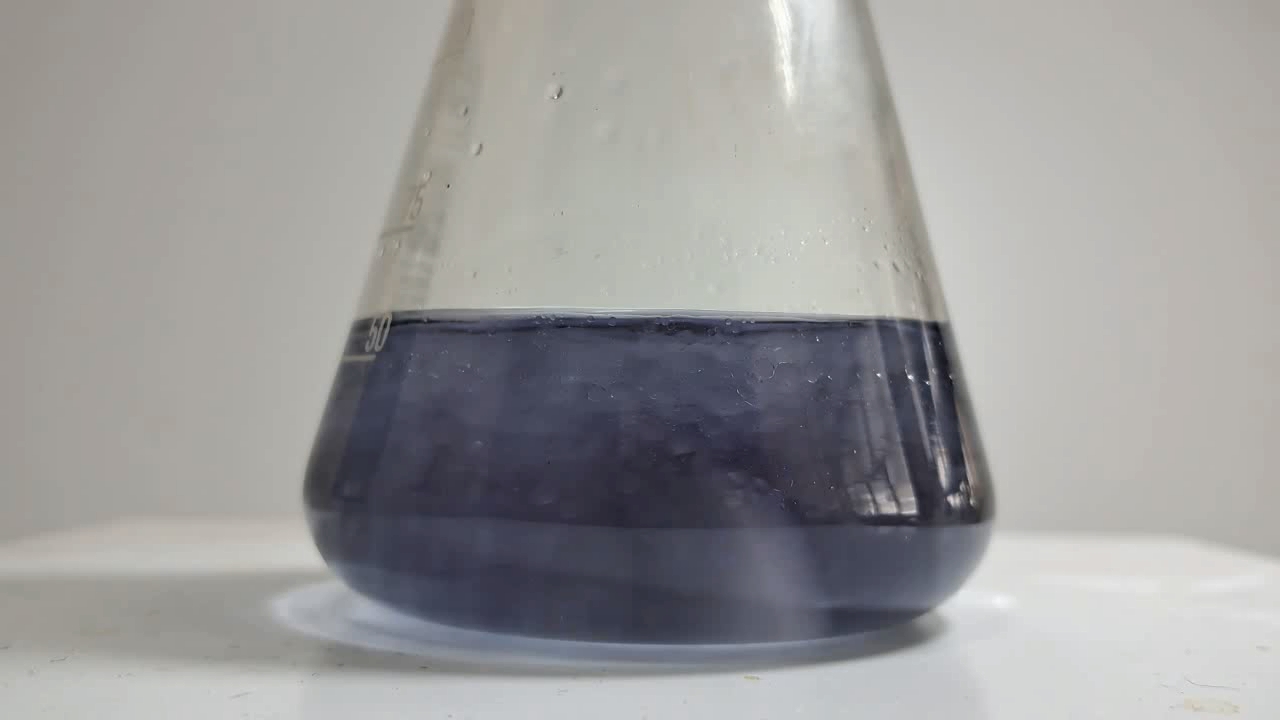
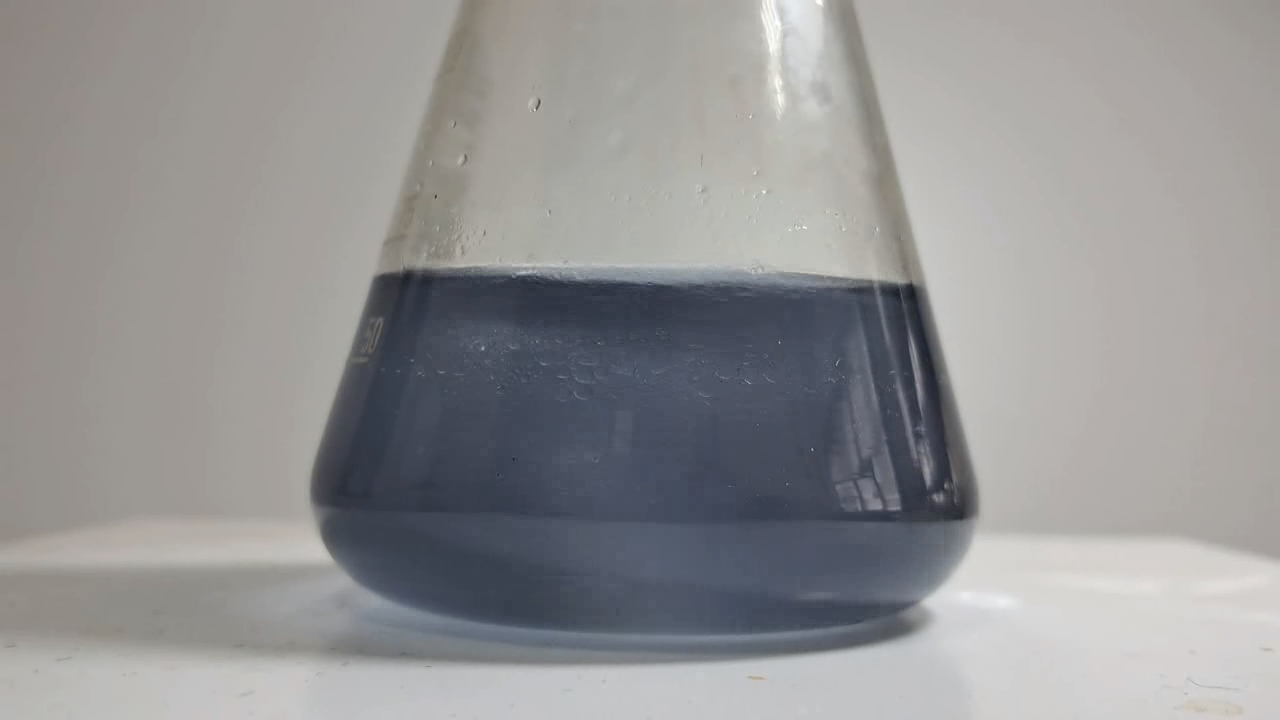
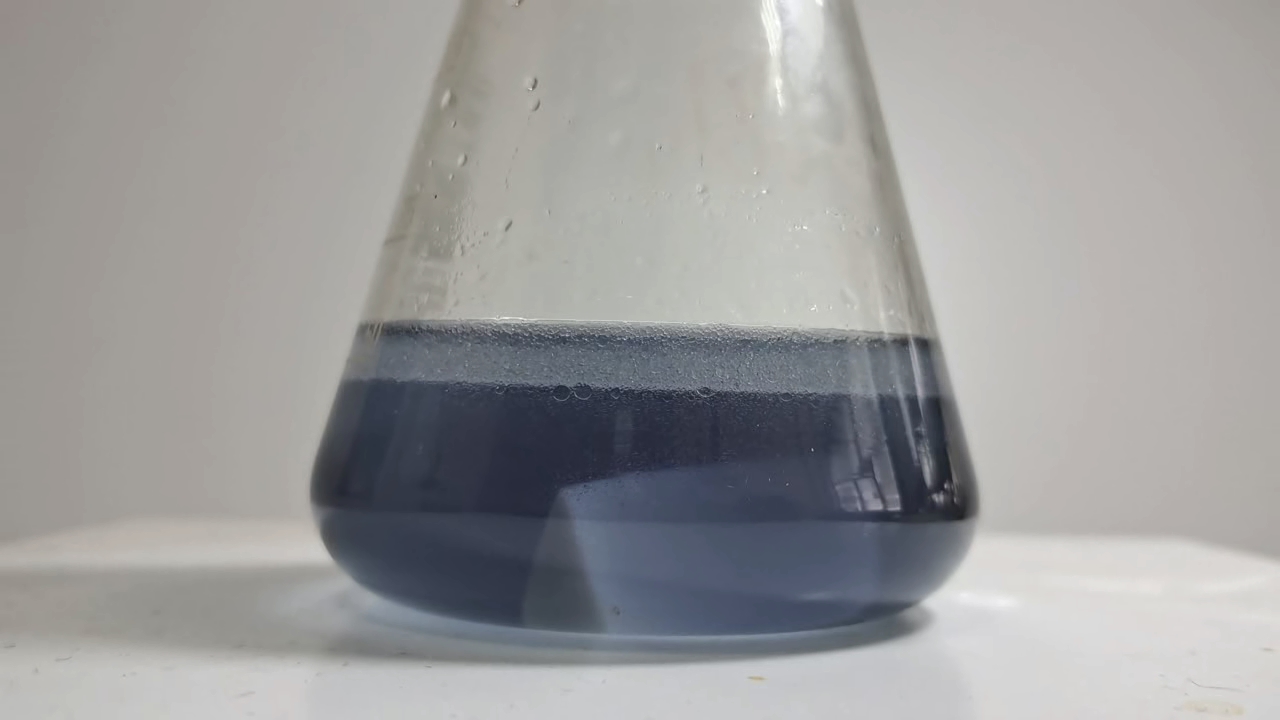
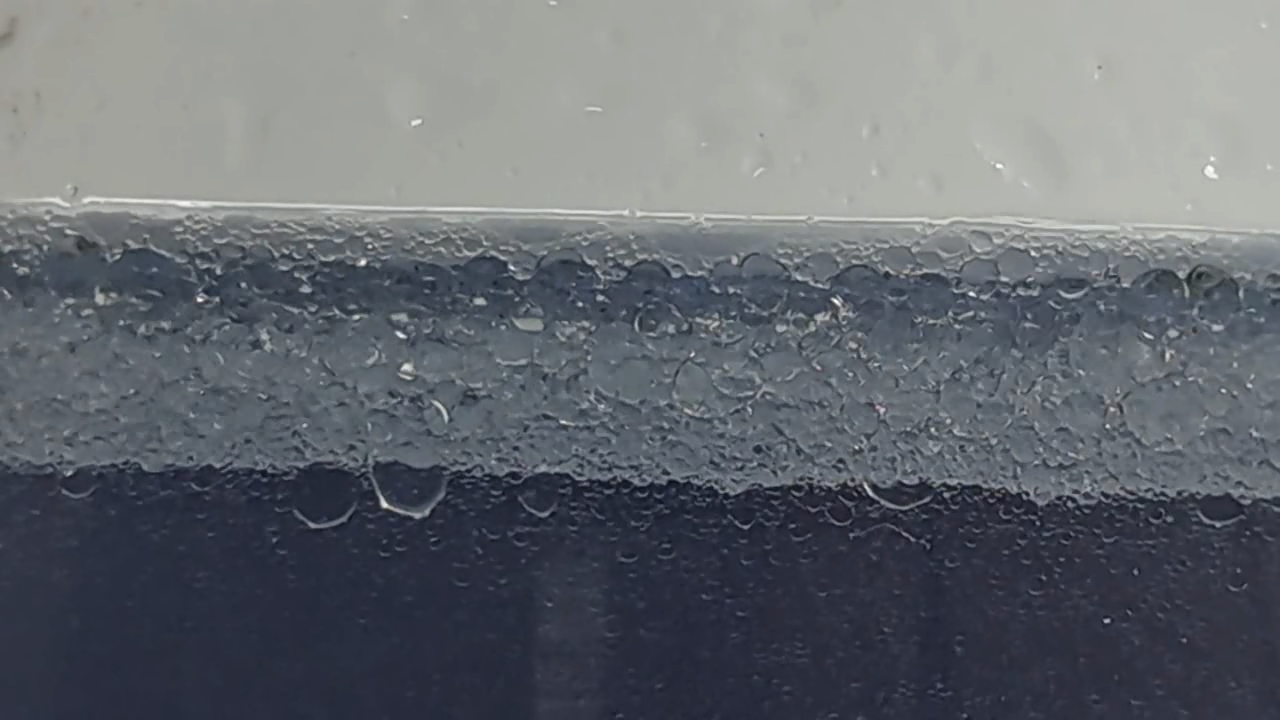
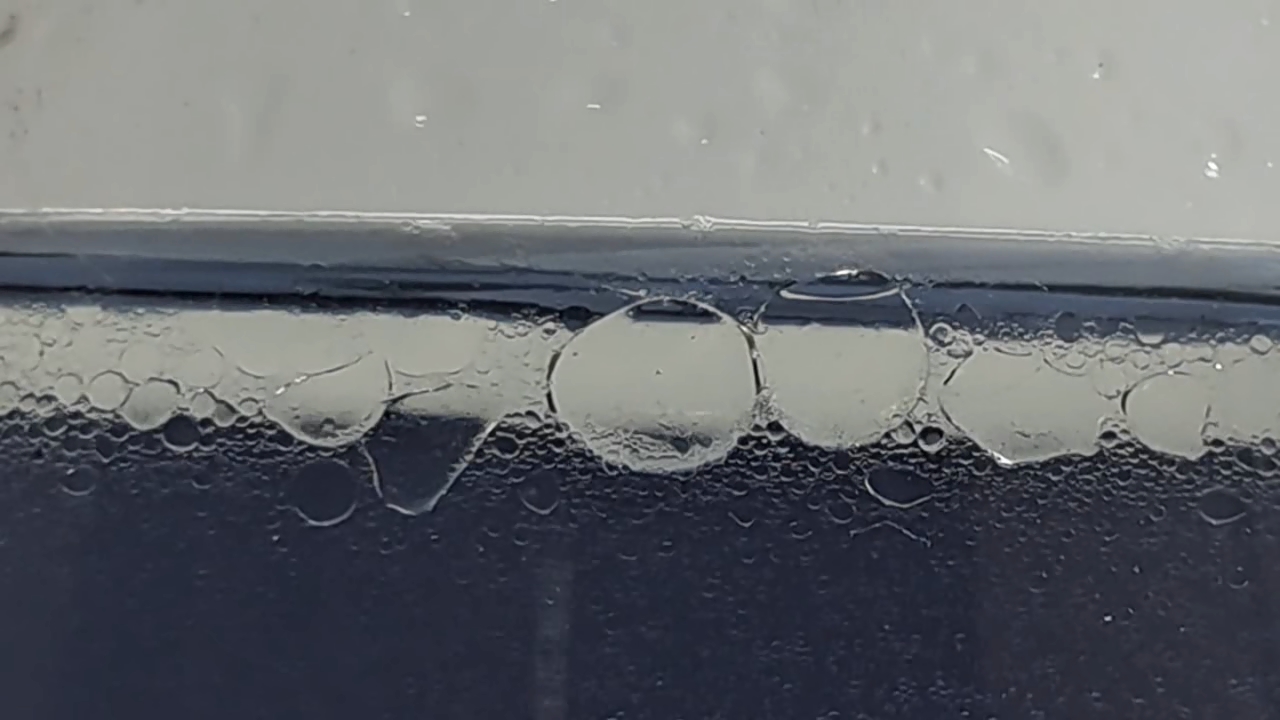
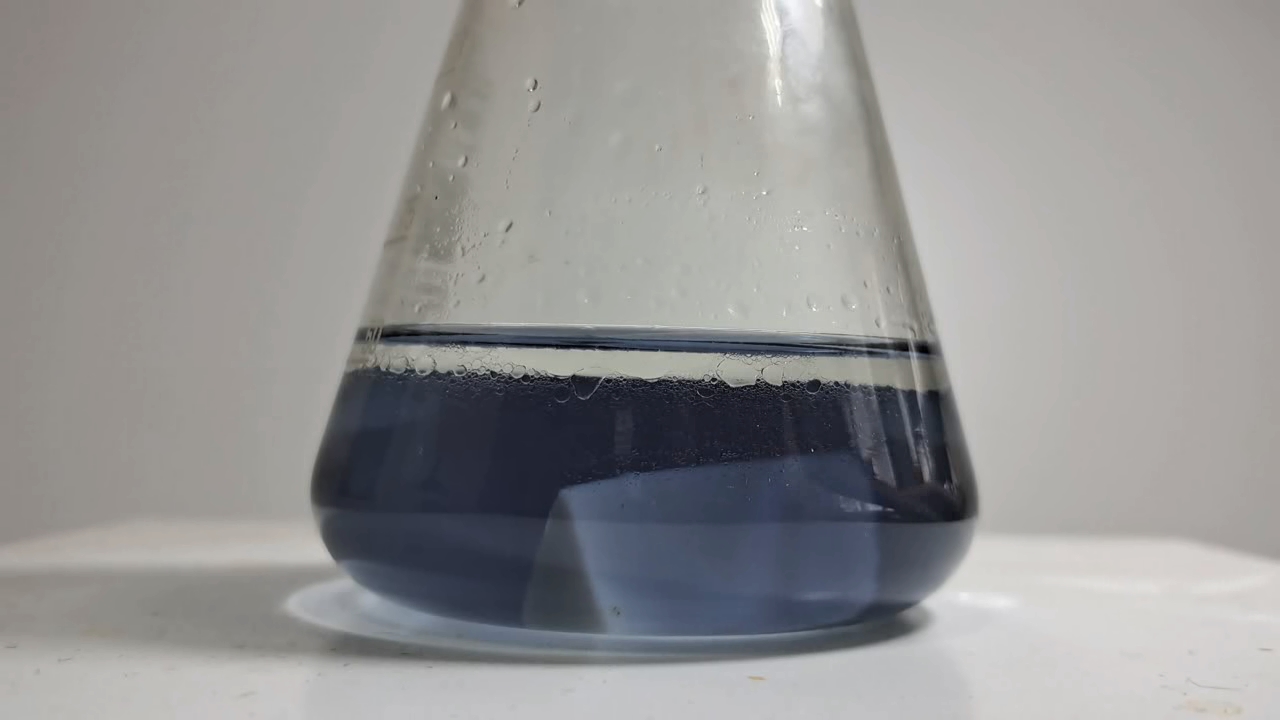
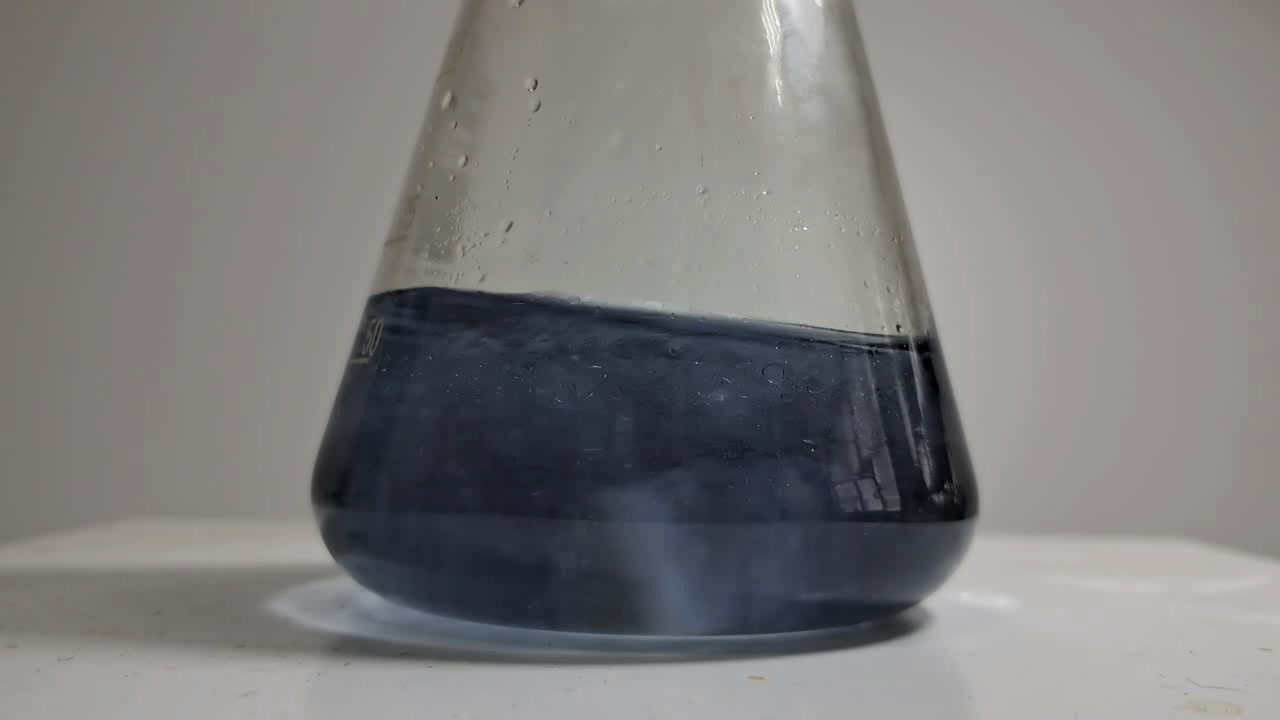
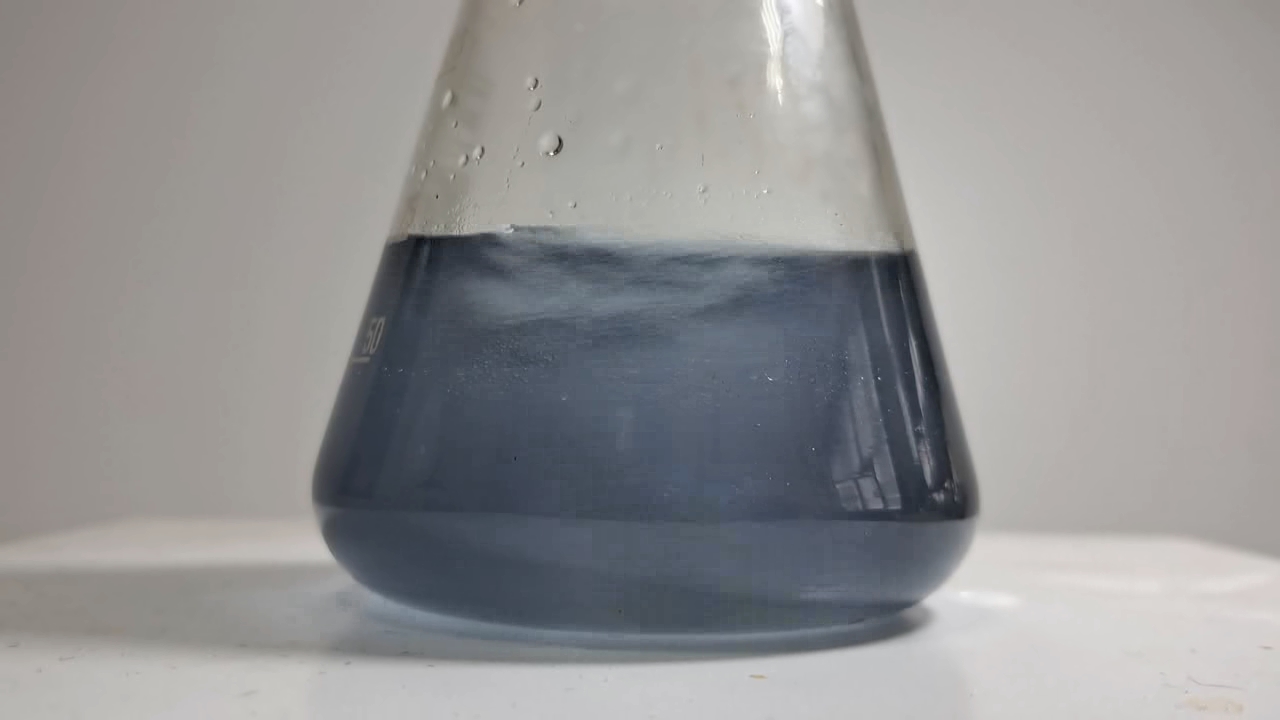
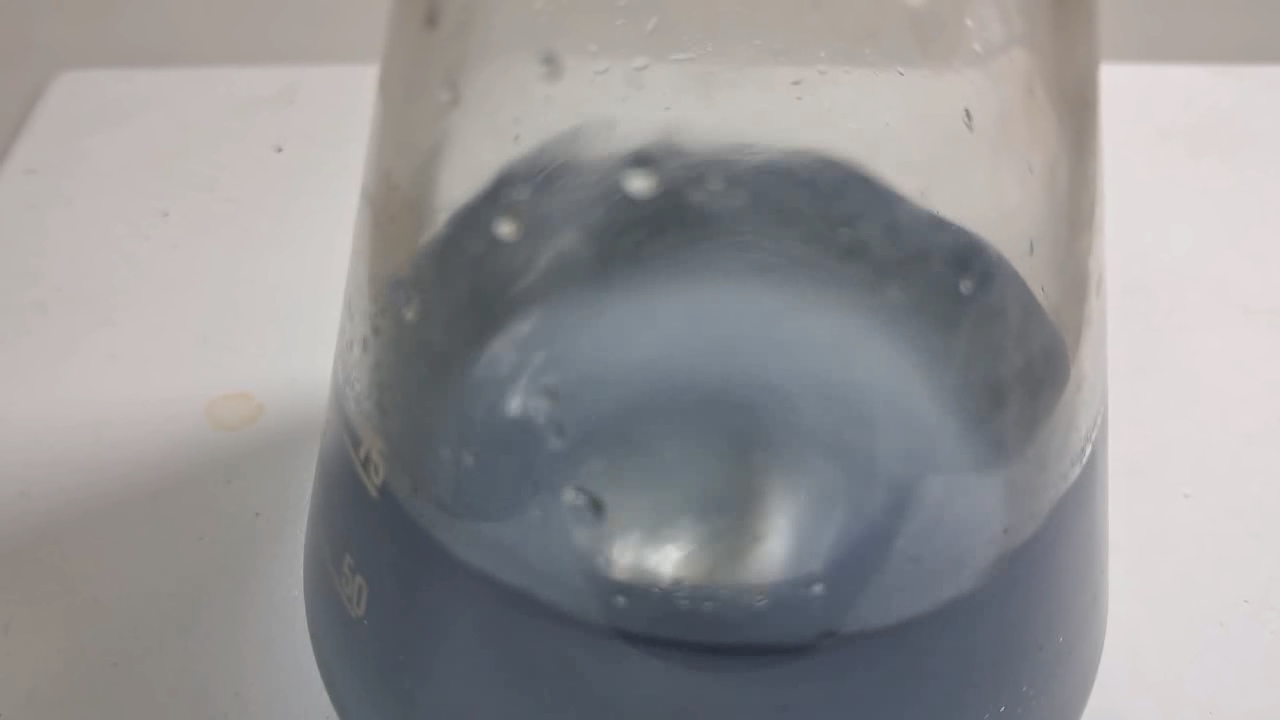
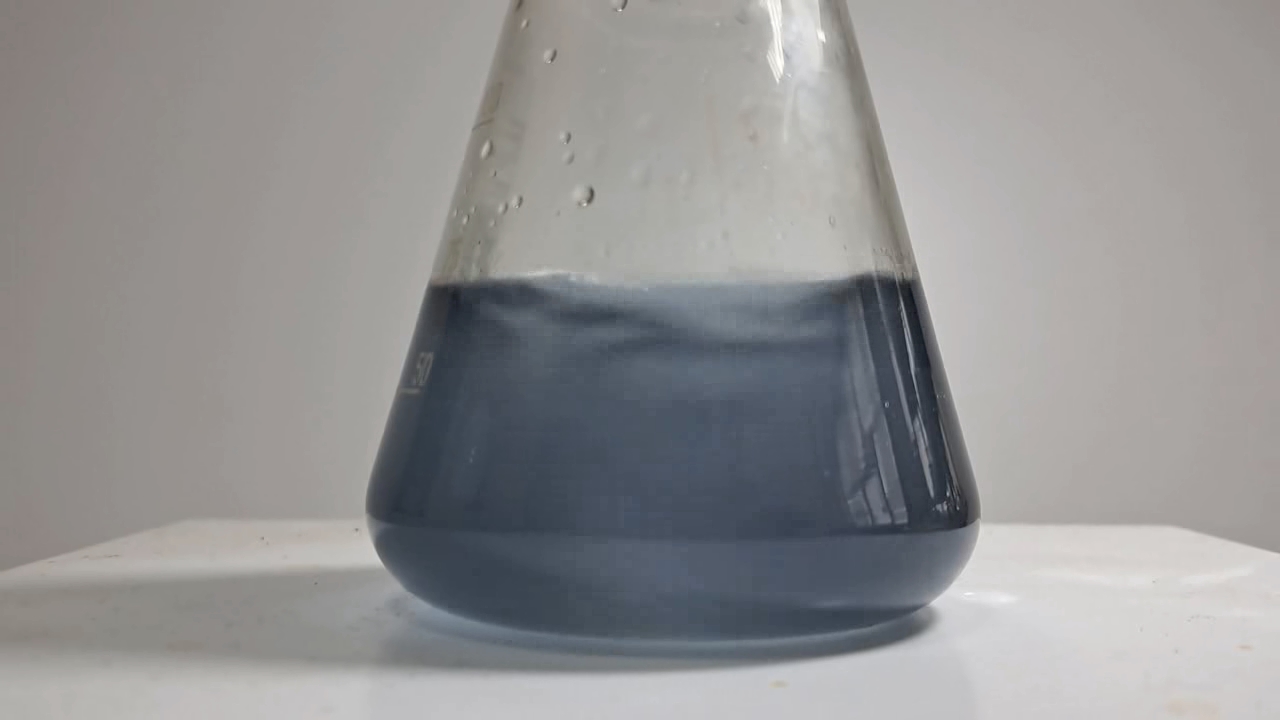
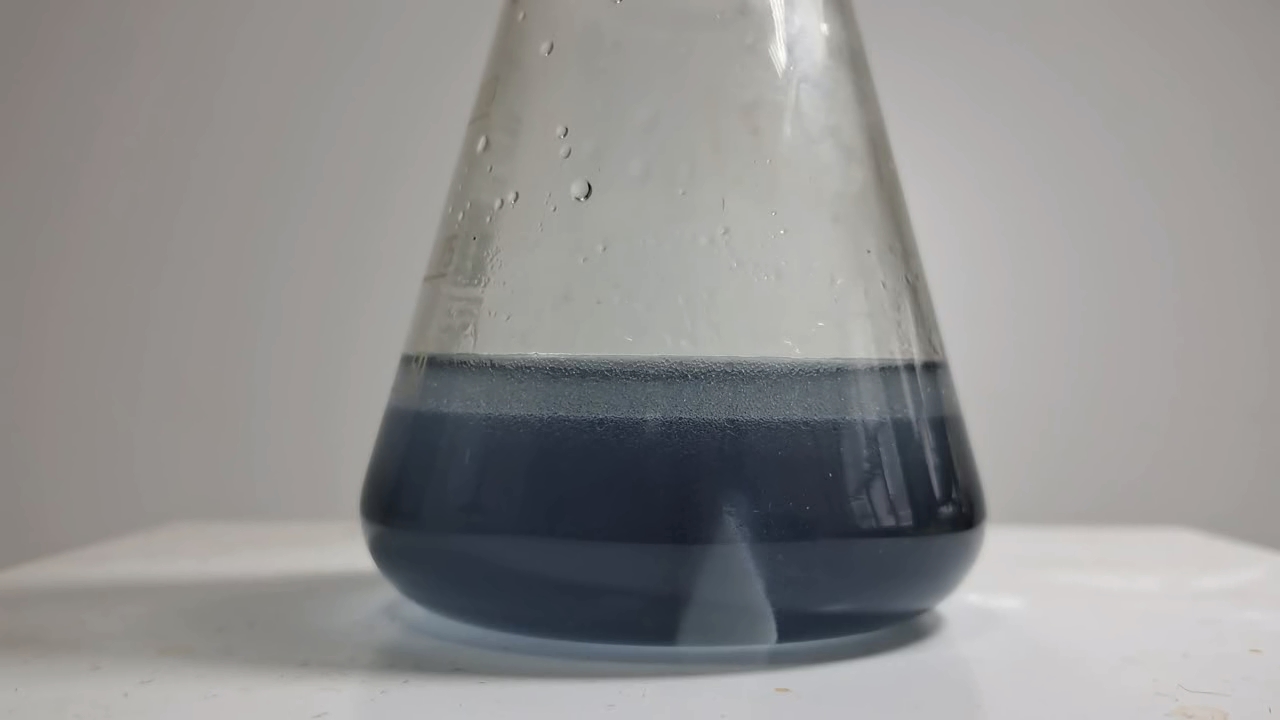
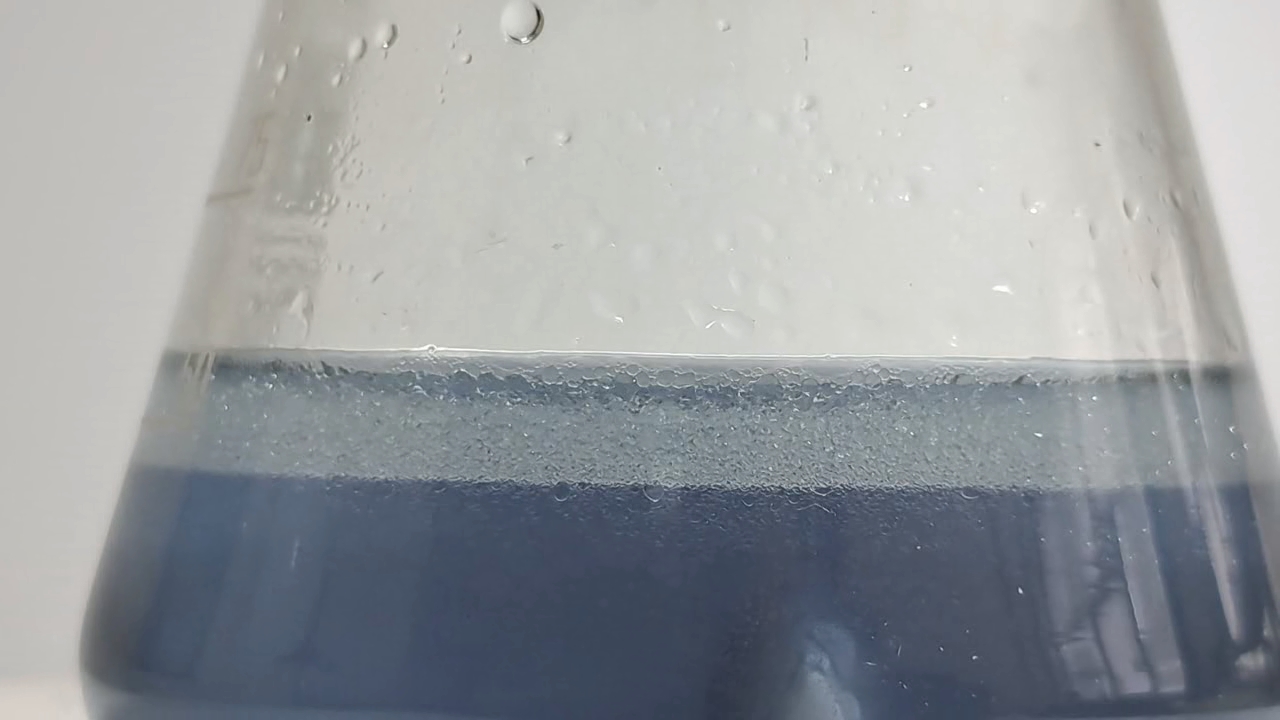
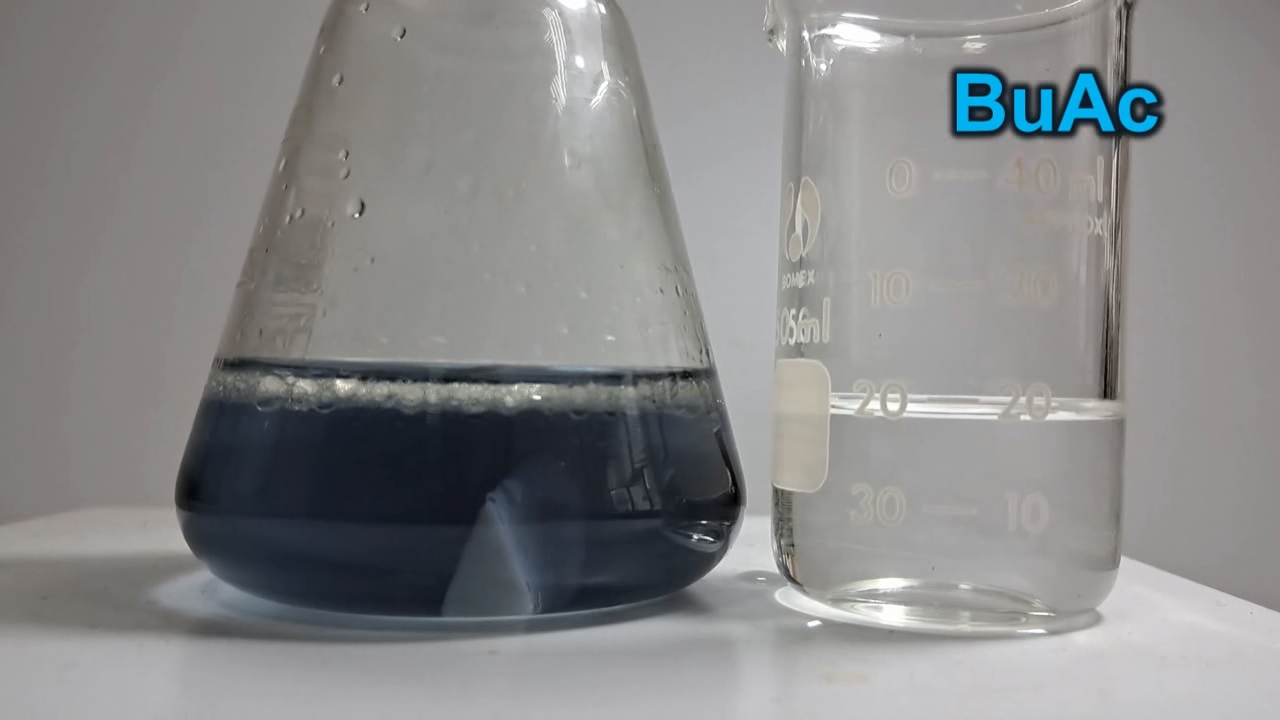
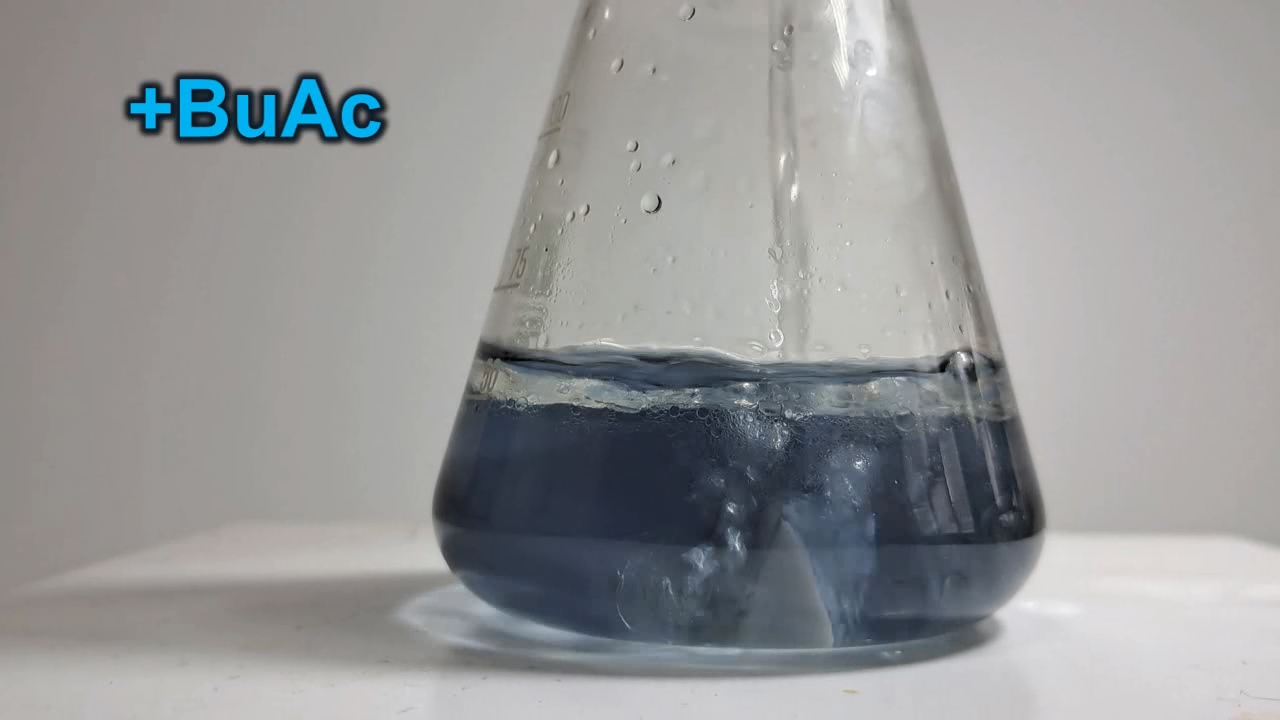
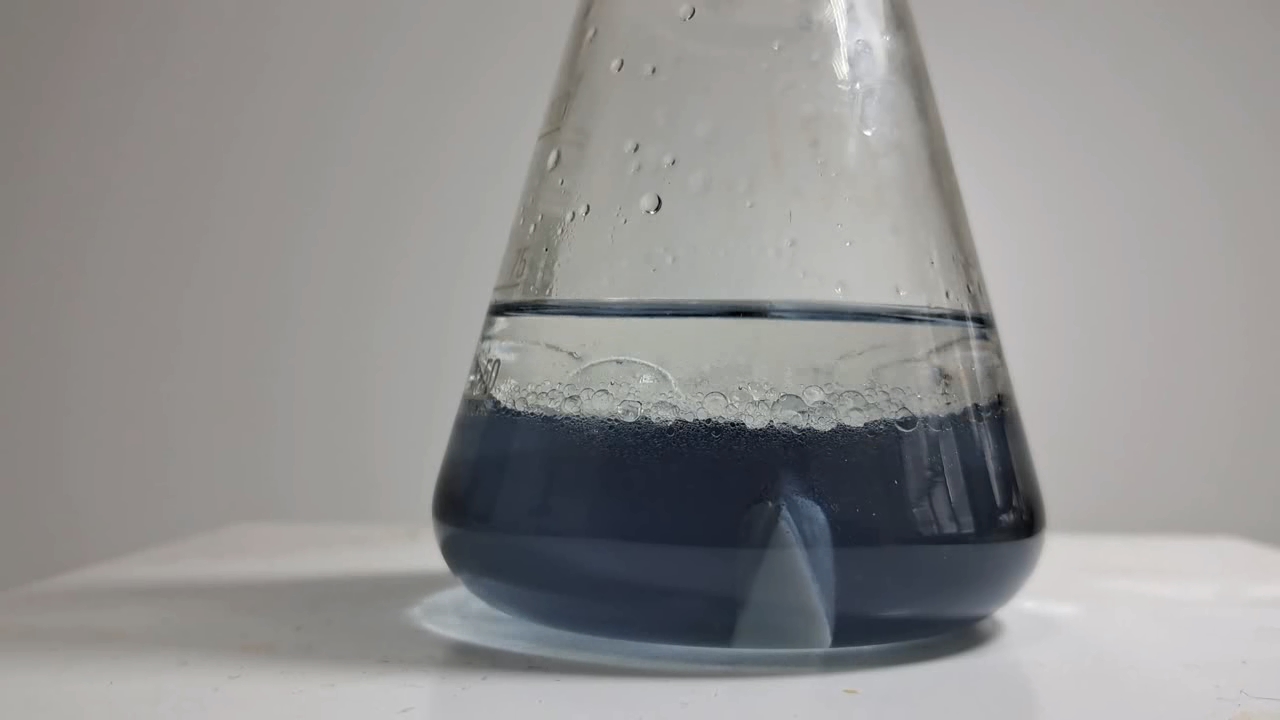
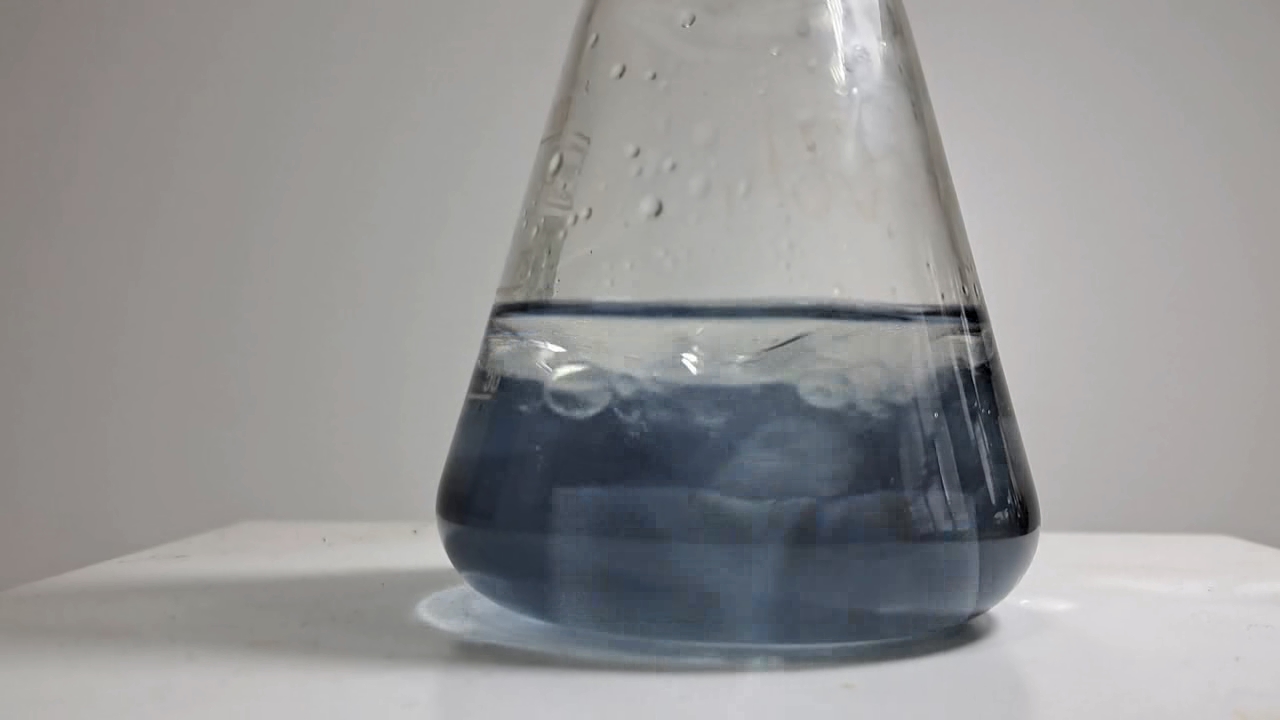
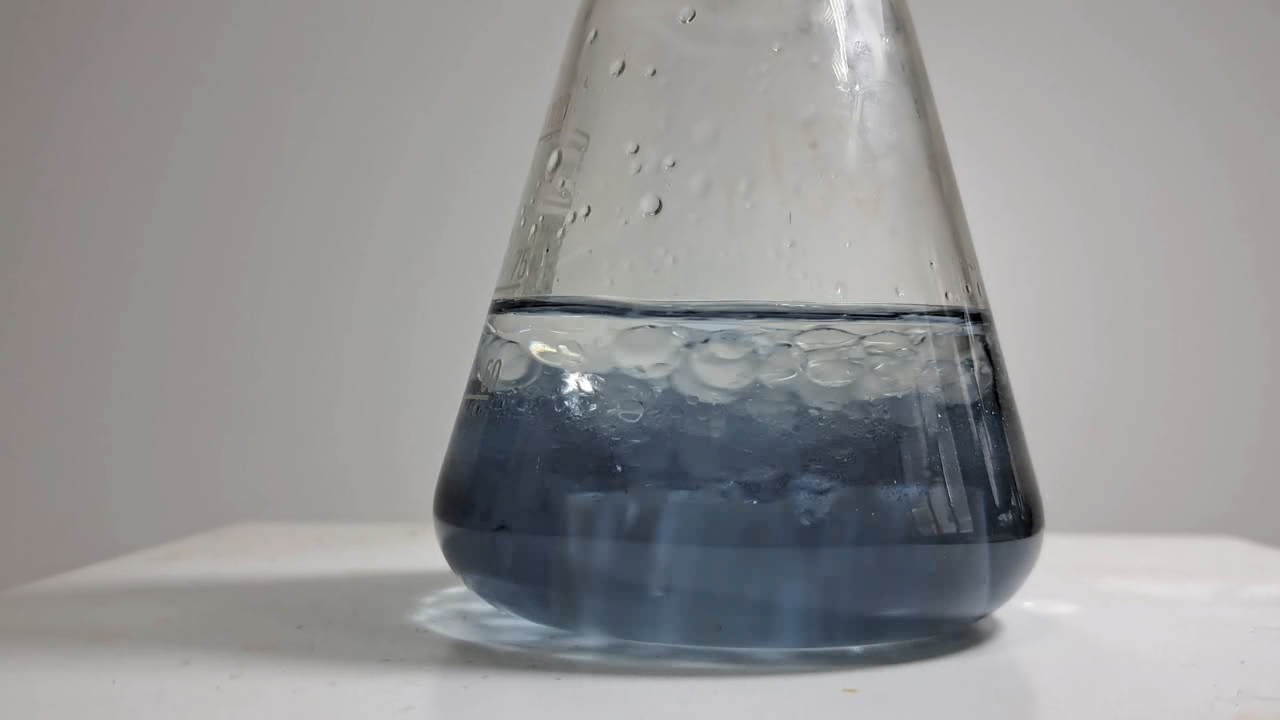
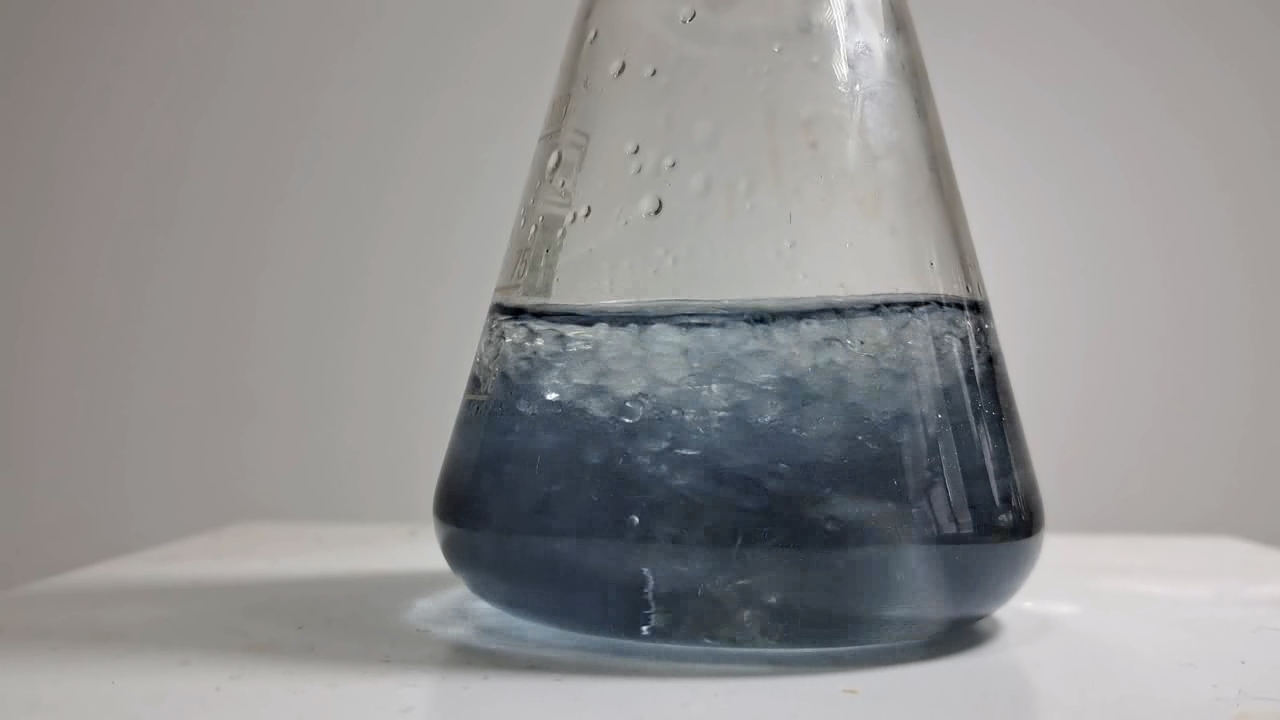
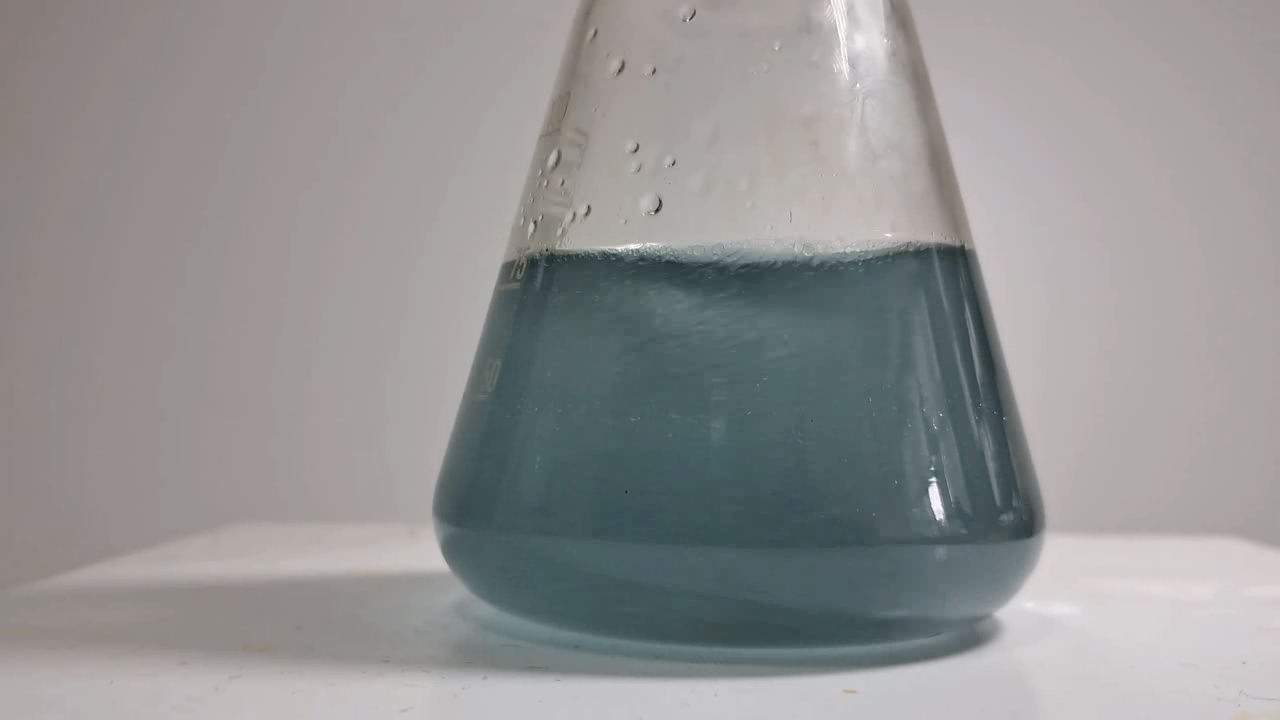
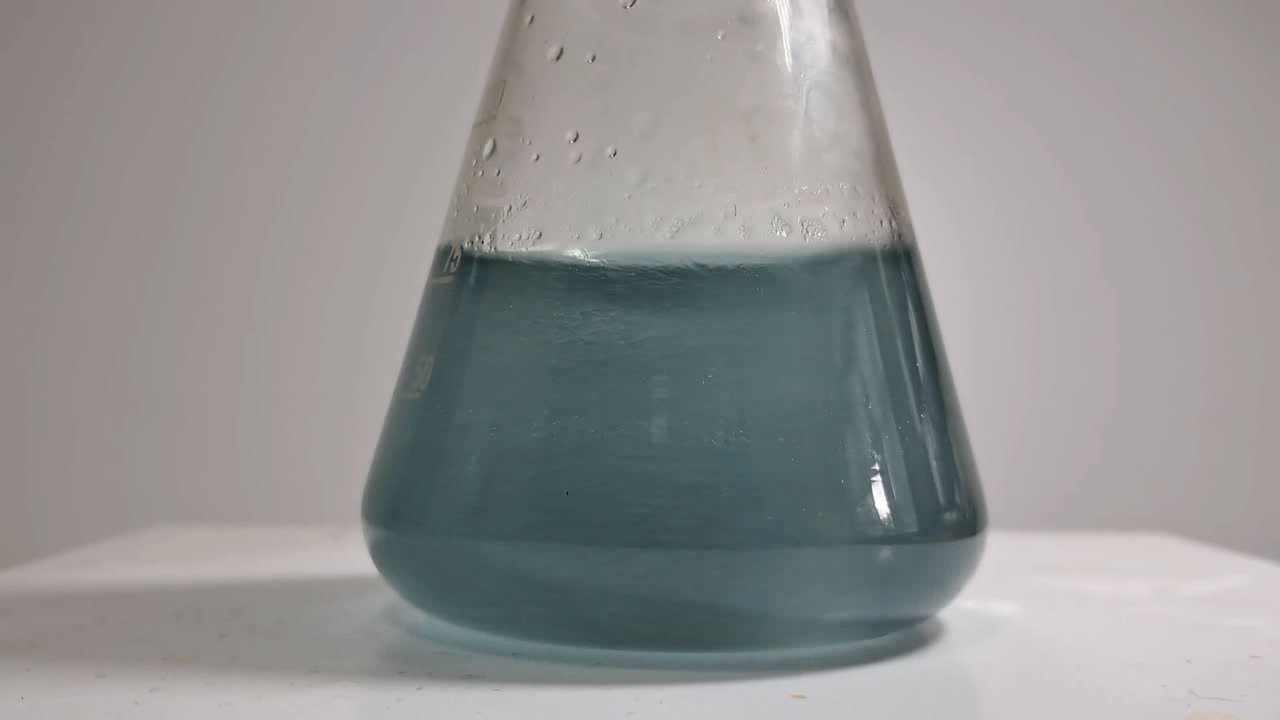
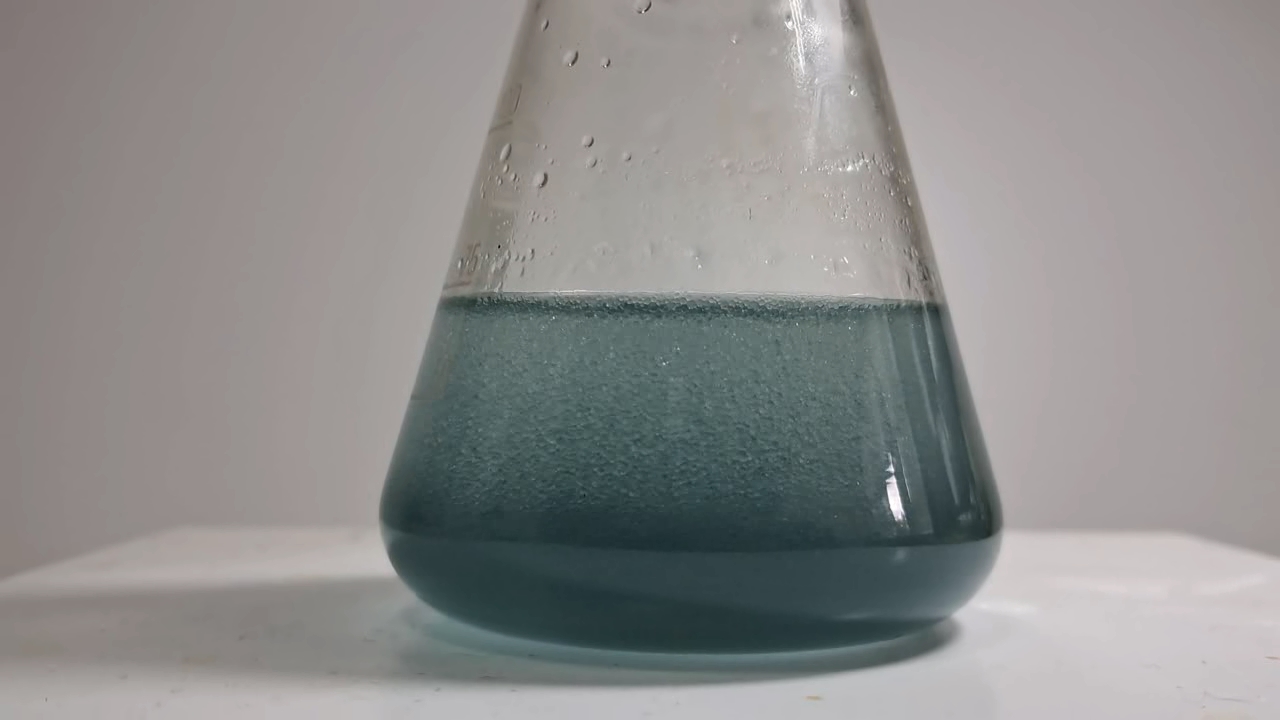
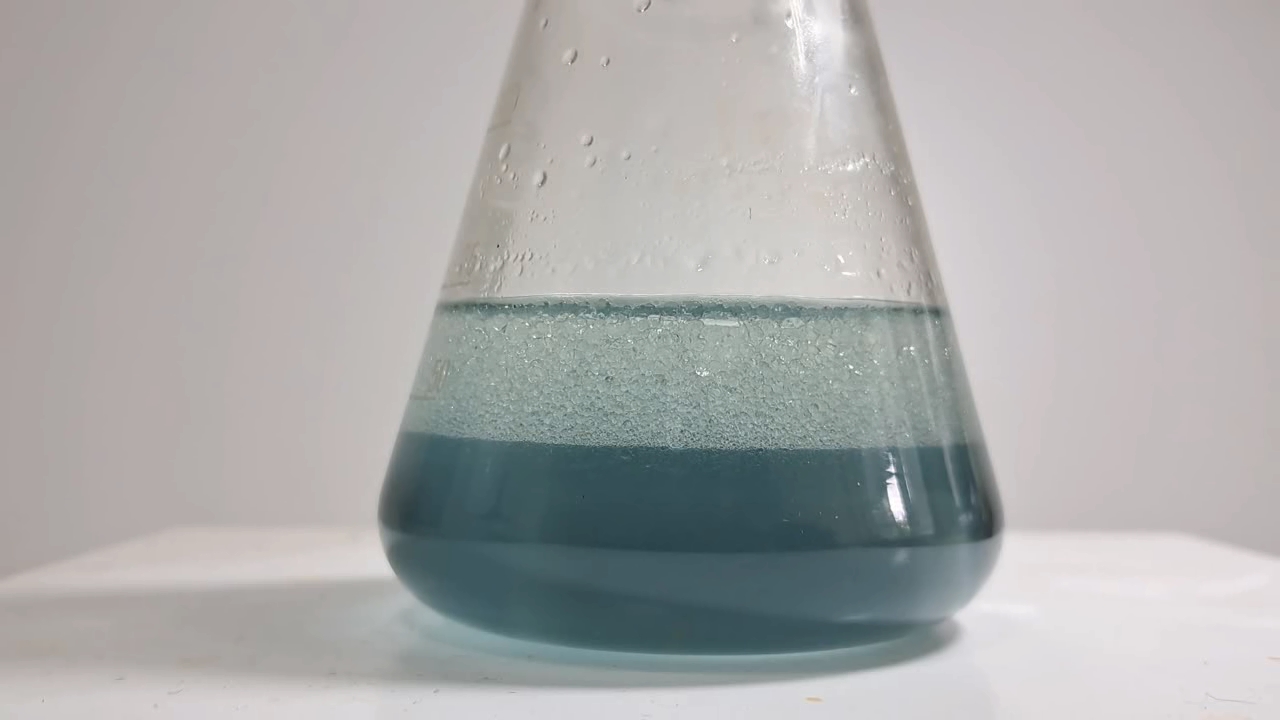
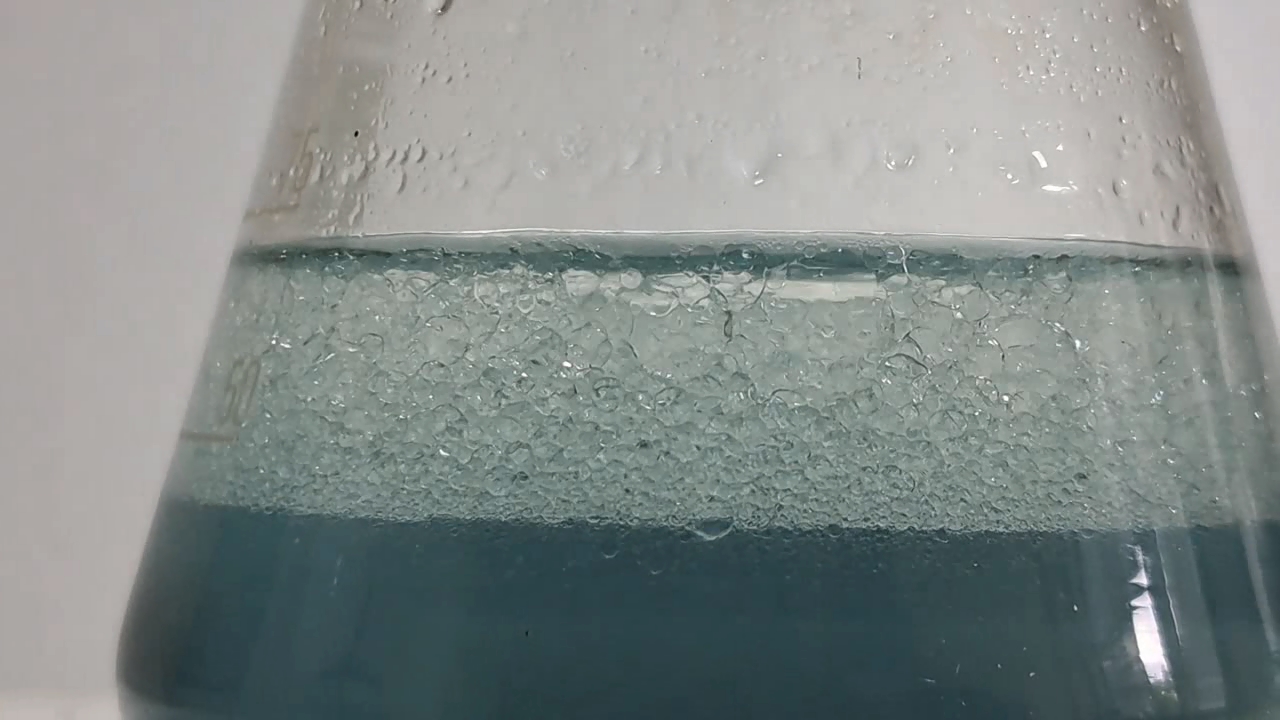
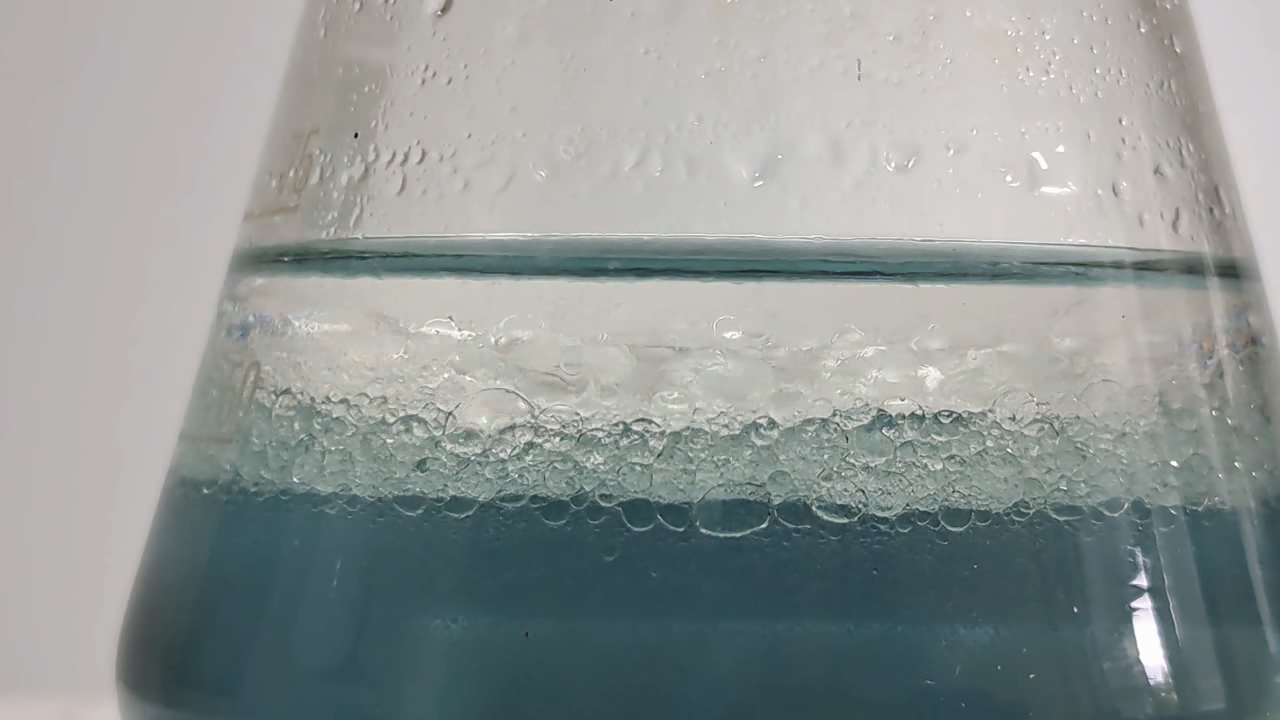
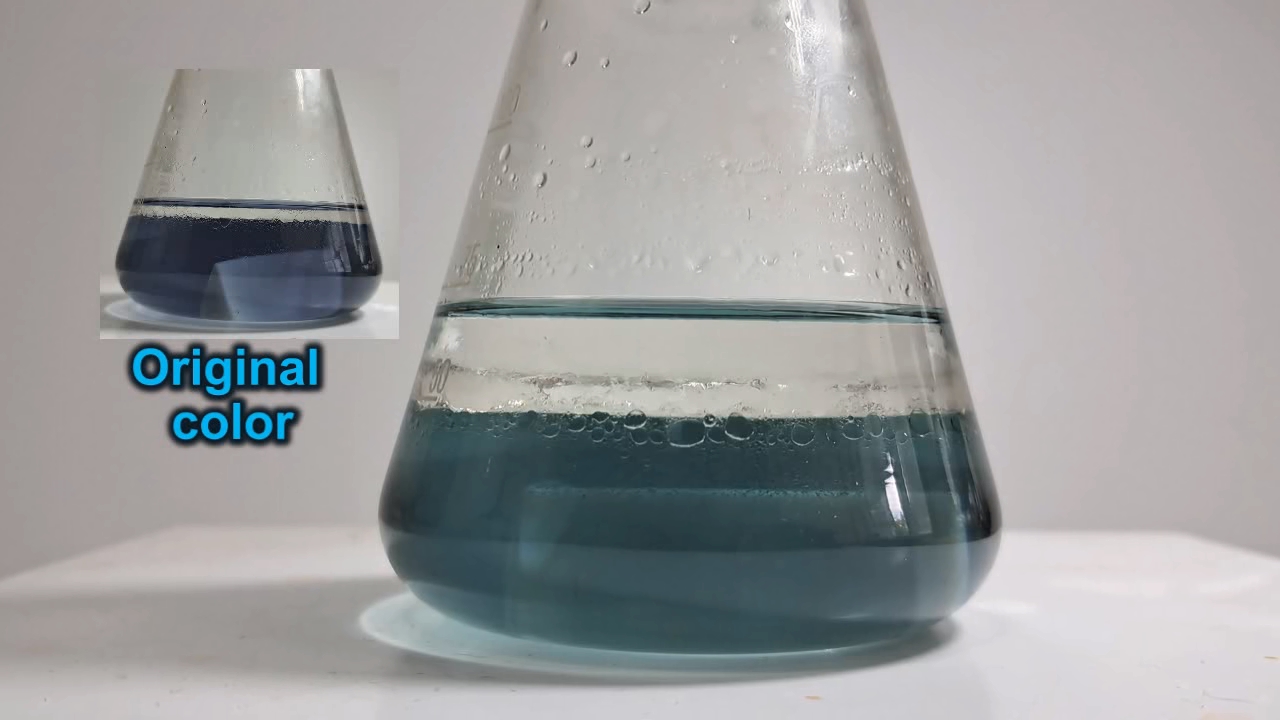
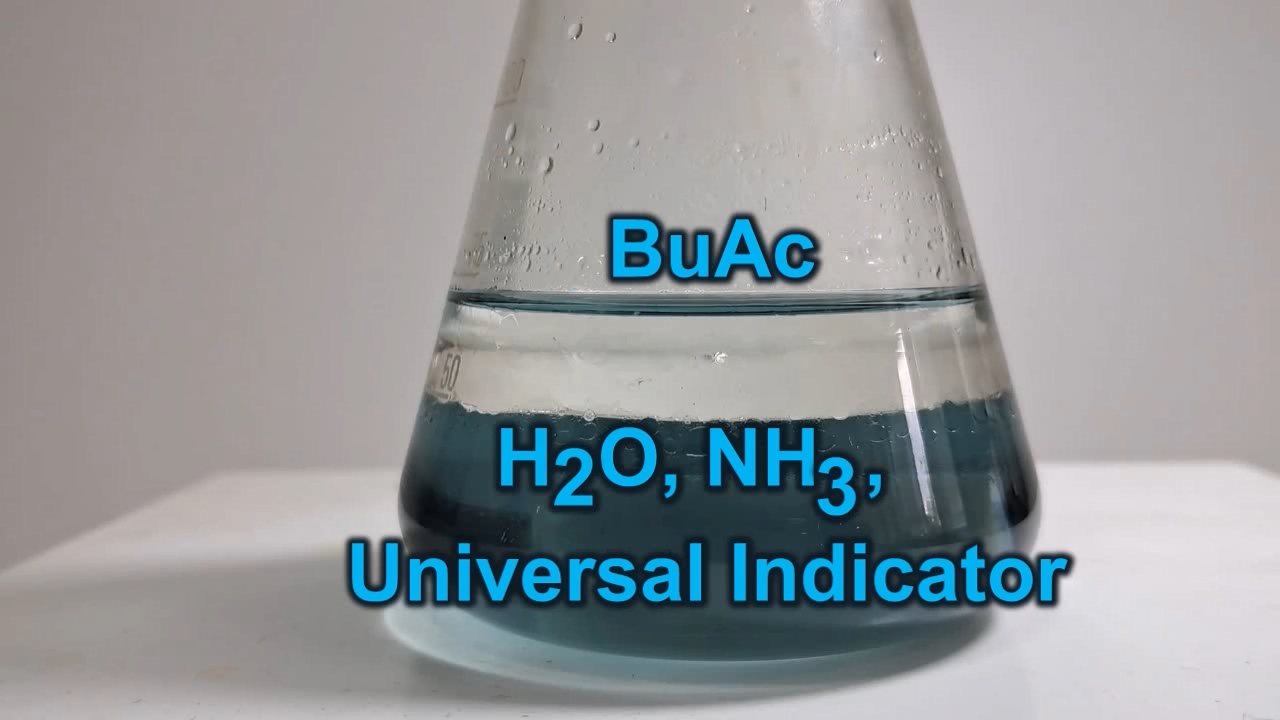
Бутилацетат, аммиак и универсальный индикатор - Часть 7 I poured 50 ml of distilled water into a flask and placed a magnetic stir bar inside. This time, I used a flask that was wide enough to prevent the ends of the stir bar from striking the sides. I added a few drops of a universal indicator solution in ethanol and then added 10 ml of butyl acetate. Two liquid layers formed: a yellow aqueous solution at the bottom and a colorless organic solvent layer on top. I started vigorous stirring. An emulsion formed, which immediately broke down after the stirrer was turned off. Two liquid layers formed again, visually identical to the previous ones. Note that the organic layer remained colorless. I added 2 ml of concentrated ammonia solution. The upper part of the aqueous layer turned violet. I turned on the stirrer, and the entire aqueous layer became violet. I increased the stirring speed, and a violet emulsion formed. I then turned off the stirrer, and the mixture separated into two liquid layers. To my surprise, the butyl acetate layer remained colorless. In a similar experiment with ethyl acetate and sodium hydroxide, the organic layer had turned a deep amber-yellow. I hypothesized that this difference was due to the different properties of ethyl acetate and butyl acetate. The latter apparently did not extract the components of the universal indicator from the aqueous solution and therefore remained colorless. Another possible explanation for the absence of color in the organic layer was the replacement of sodium hydroxide with ammonia, although I did not realize this until the next experiment. I resumed the stirring and separation cycles. Each cycle lasted several minutes. After several such cycles, the butyl acetate layer remained visually unchanged, while the aqueous solution changed only slightly in hue. I added another 20 ml of butyl acetate and turned on vigorous stirring. To accelerate heterogeneous processes, it is necessary to increase the surface area of contact between the phases. In our case, more vigorous stirring produced smaller droplets of butyl acetate, resulting in a greater total interfacial surface area. The stirrer controller allowed the magnetic stir bar to rotate at a much higher speed, but the stirring rate had to be limited because excessive rotation could cause the mixture to splash out of the flask. The emulsion remained violet for several minutes. Finally, after I turned off the stirrer, the liquids separated, and it became clear that the color of the aqueous layer had changed from violet to greenish-blue. The organic layer remained colorless. In the video, I cut out long sections during which no noticeable changes in the indicator color occurred. However, demonstrating the entire experiment in front of an audience would have been rather boring. Thus, the hydrolysis of butyl acetate in the presence of an ammonia solution proceeded significantly more slowly than the hydrolysis of methyl acetate and ethyl acetate in the presence of an aqueous alkali solution (sodium hydroxide or ammonia). Unlike methyl acetate and ethyl acetate, butyl acetate is only slightly soluble in water (0.7 g per 100 ml at 20°C), which significantly slows its hydrolysis. |
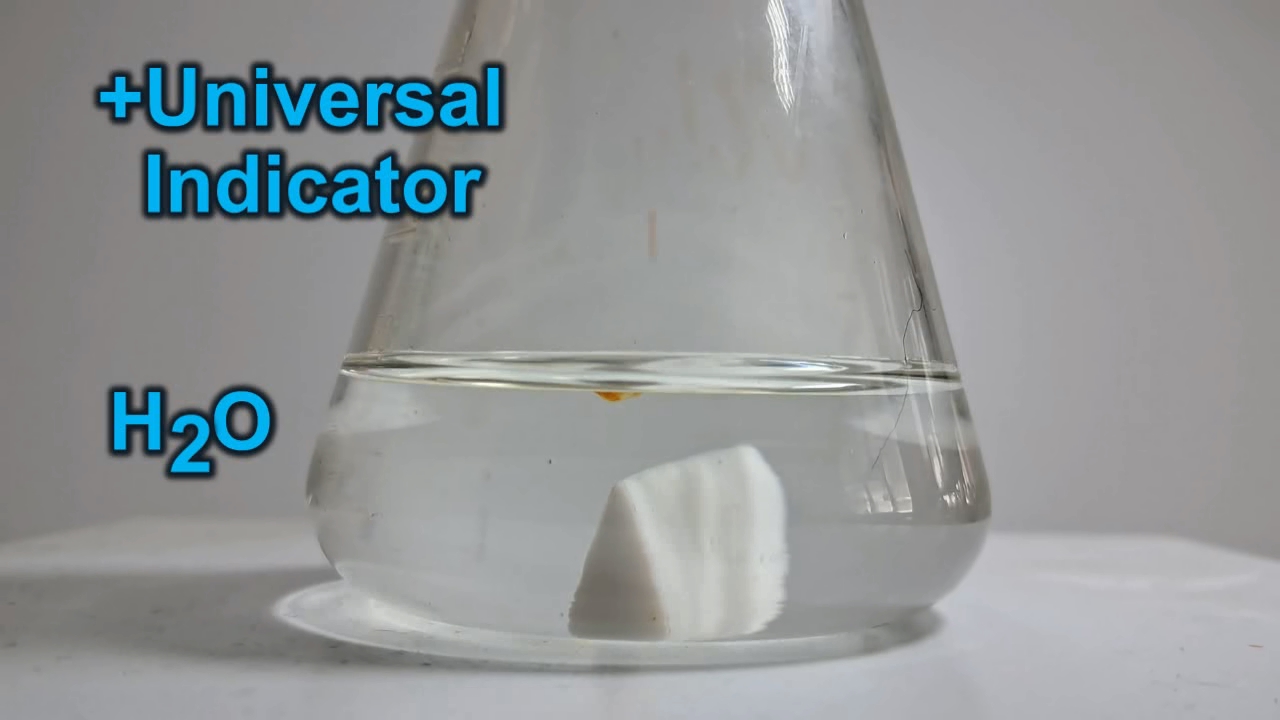
Butyl Acetate, Ammonia, and Universal Indicator |
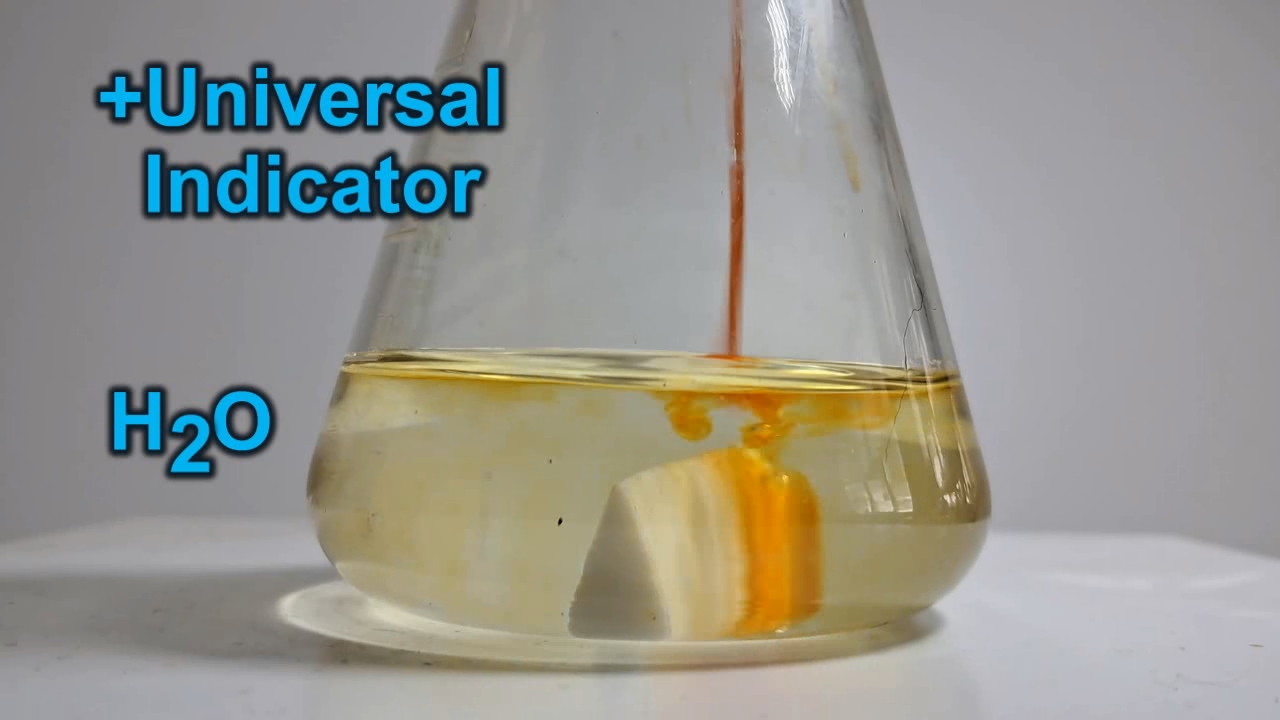
|
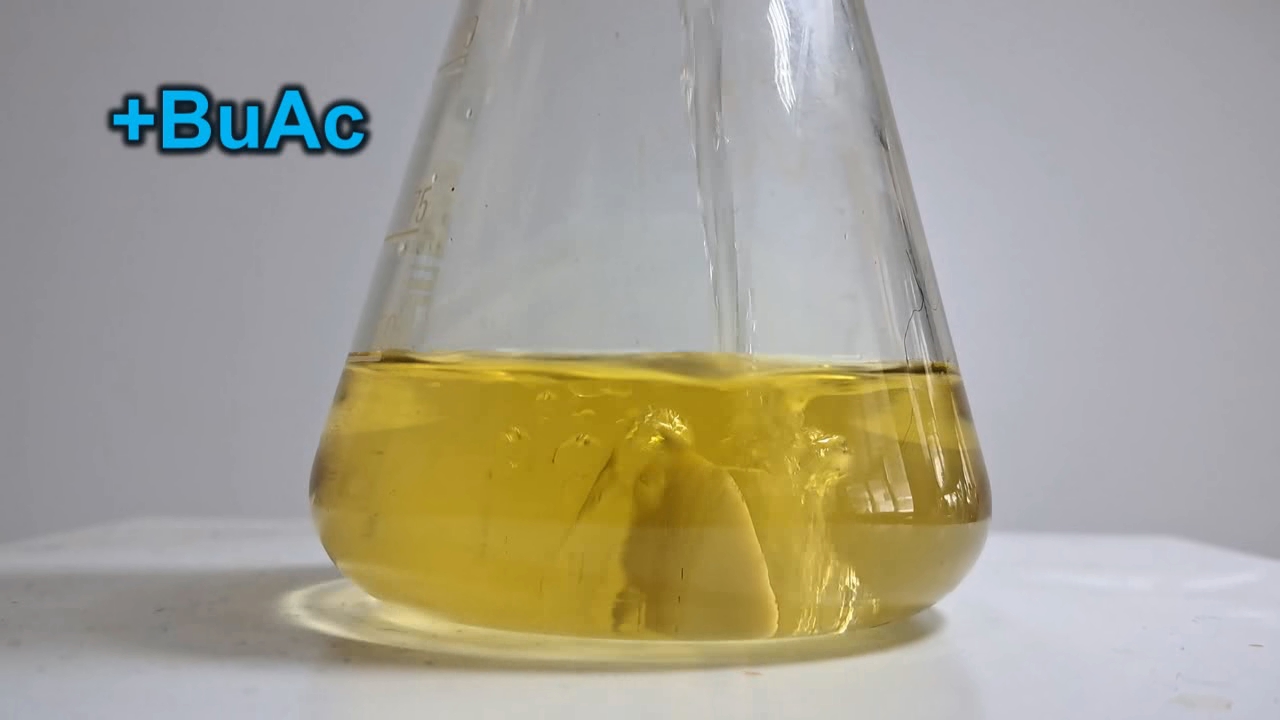
|
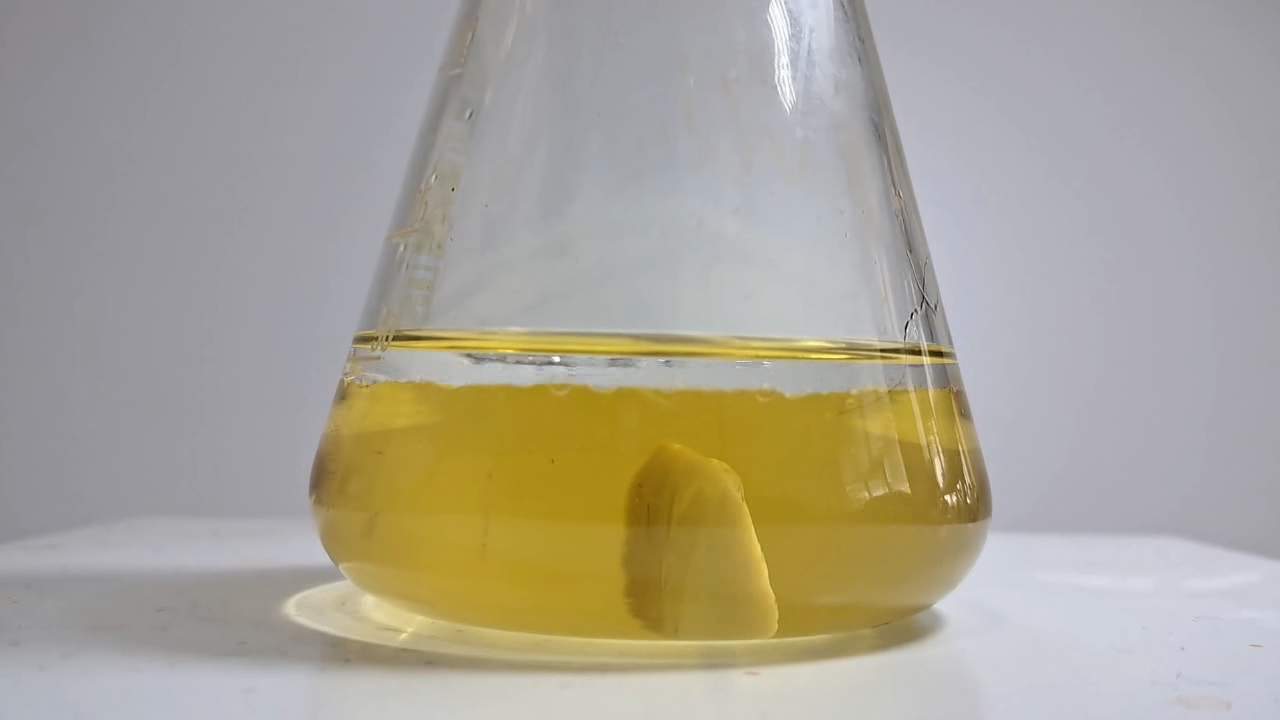
|
|
|
|
|
|
|
|
|
|
|
|
|
|
|
|
|
|
|
|
|
|
|
|
|
|
|
|
|
|
|
|
|
|
|
|
|
Having noticed a mistake in the text, allocate it and press Ctrl-Enter
Butyl Acetate, Sodium Hydroxide, and Universal Indicator - Part 8
After last night's ballistic missile attack on my city, I really don't feel like writing an article. I didn't get enough sleep. Incidentally, our institute seemed deserted - I didn't see anyone except the security guard and the caretaker. After a sleepless night, few people showed up for work. I don't feel like writing, but I have to, because I'm not sure I'll have the opportunity in the future. We have laboratory work planned, which will be difficult to combine with writing articles. But enough chatter.
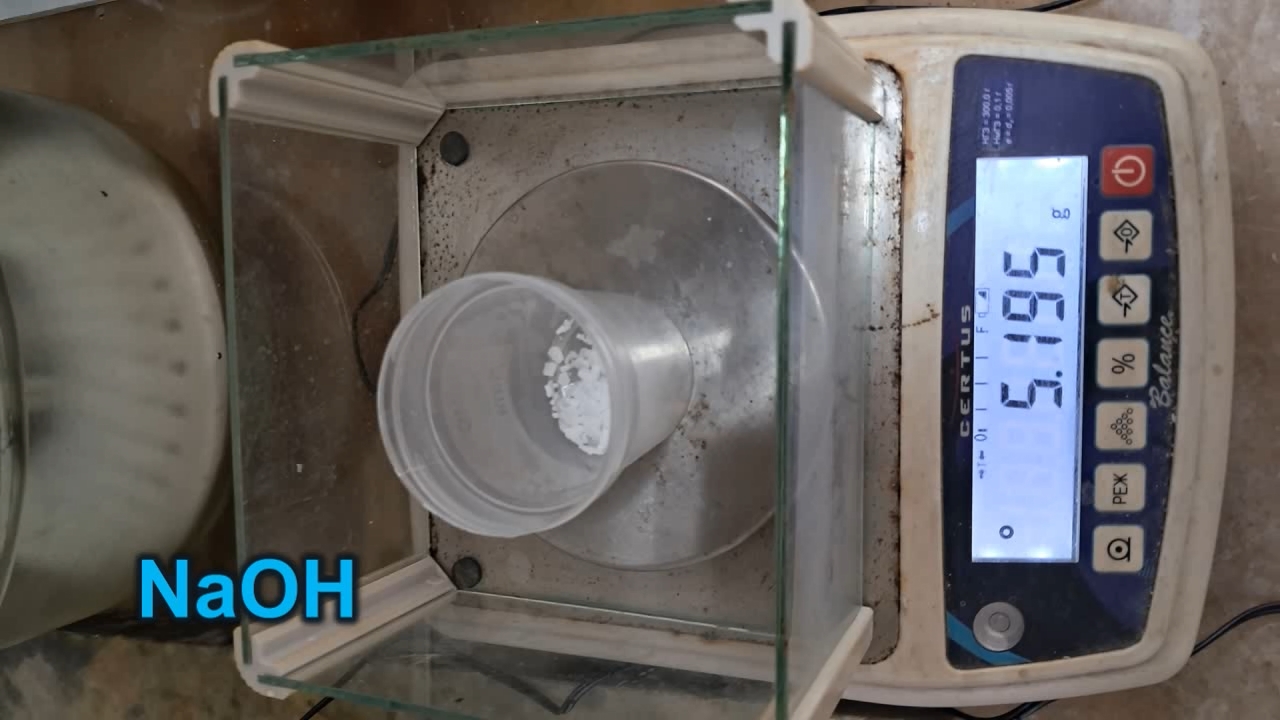
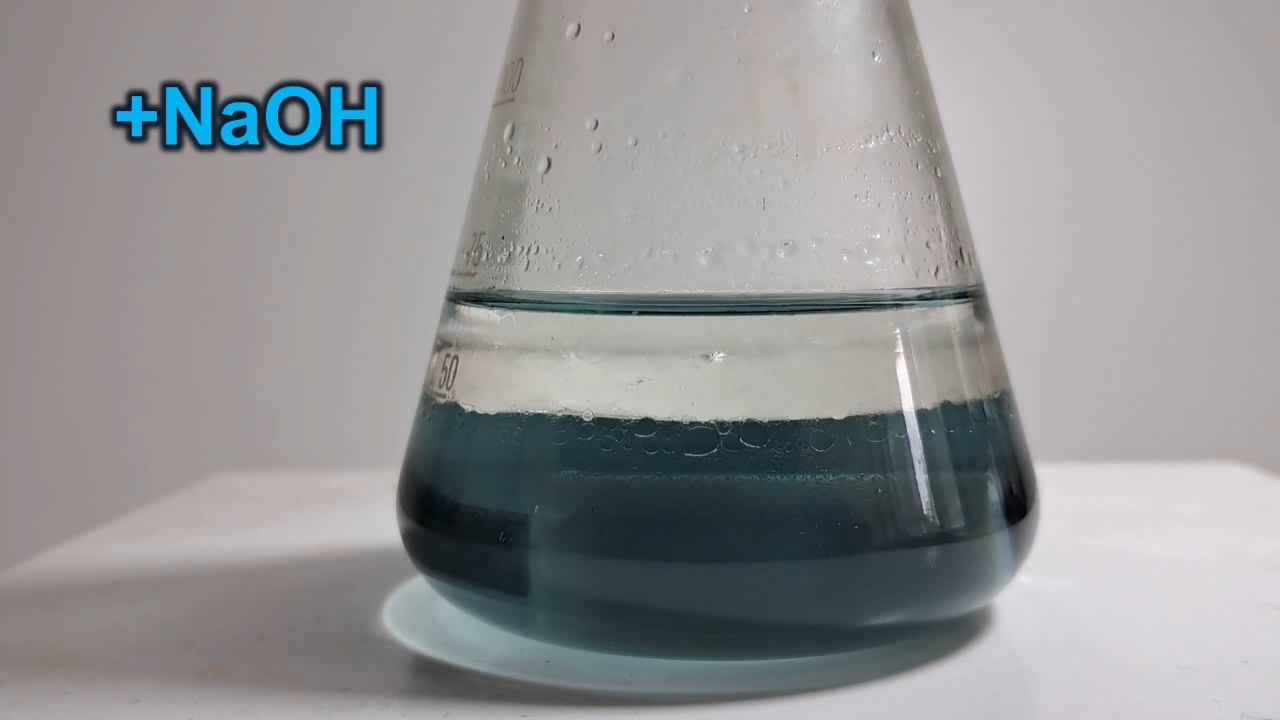
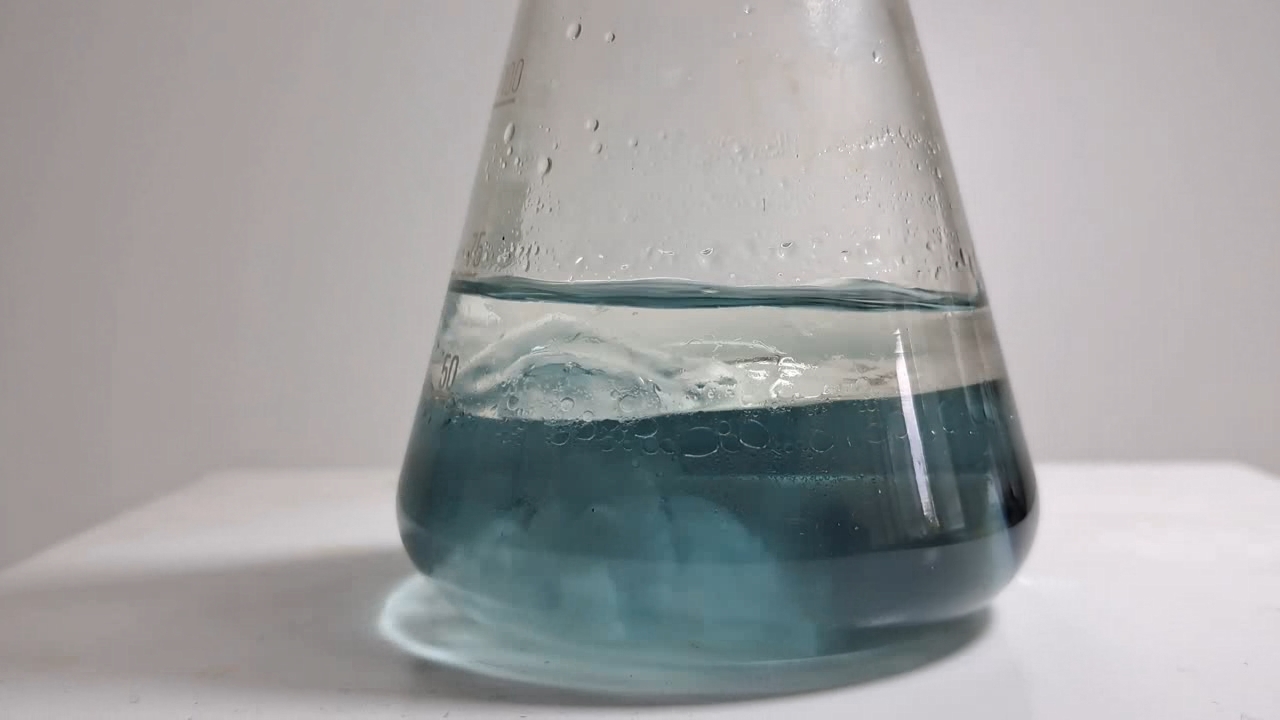
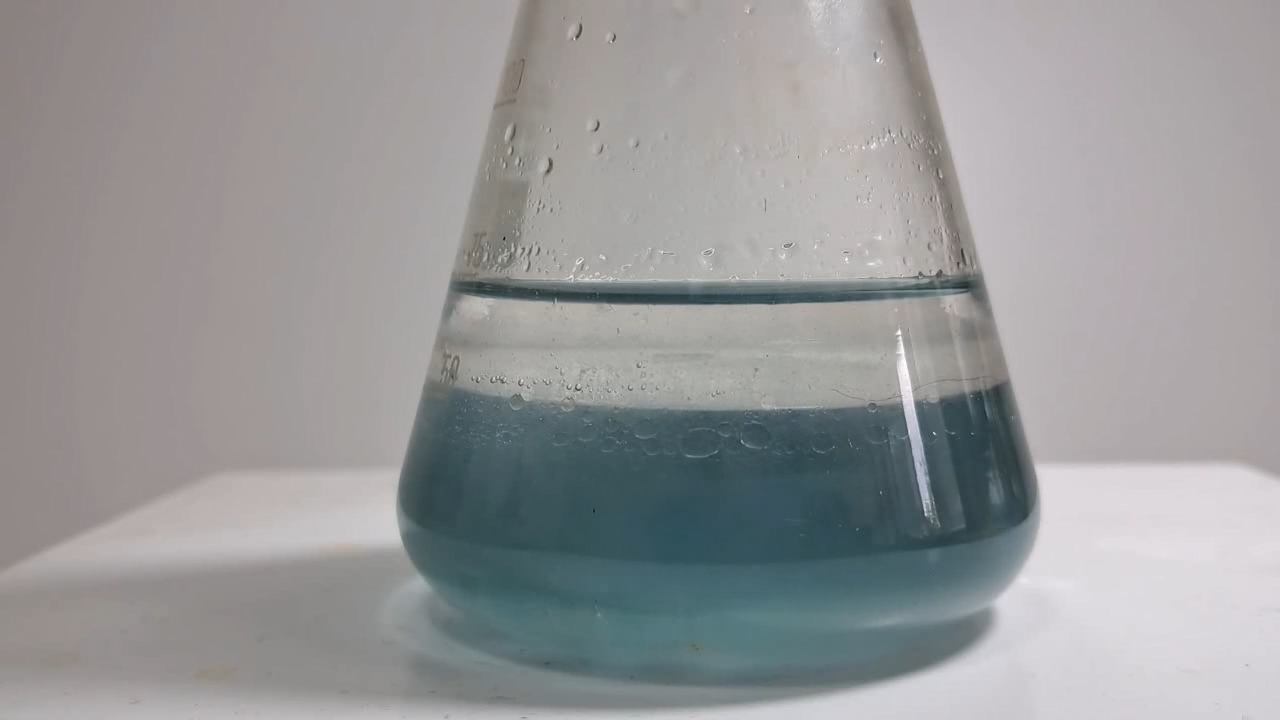
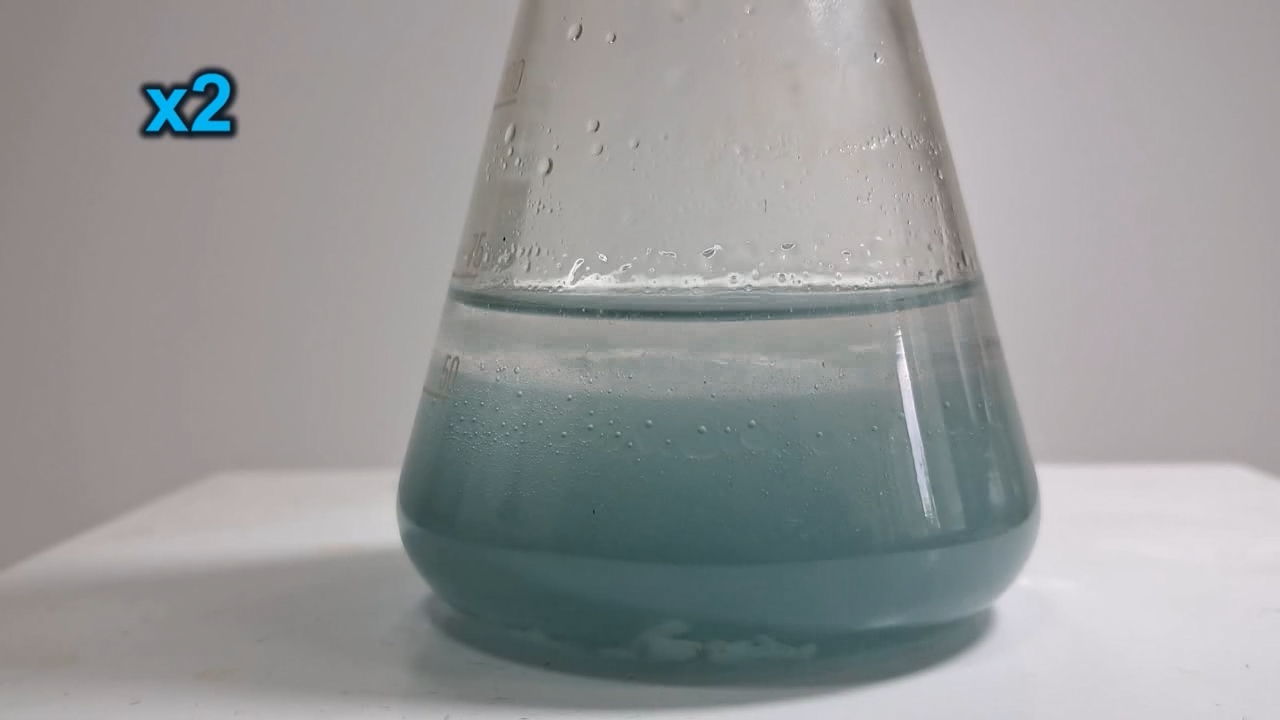
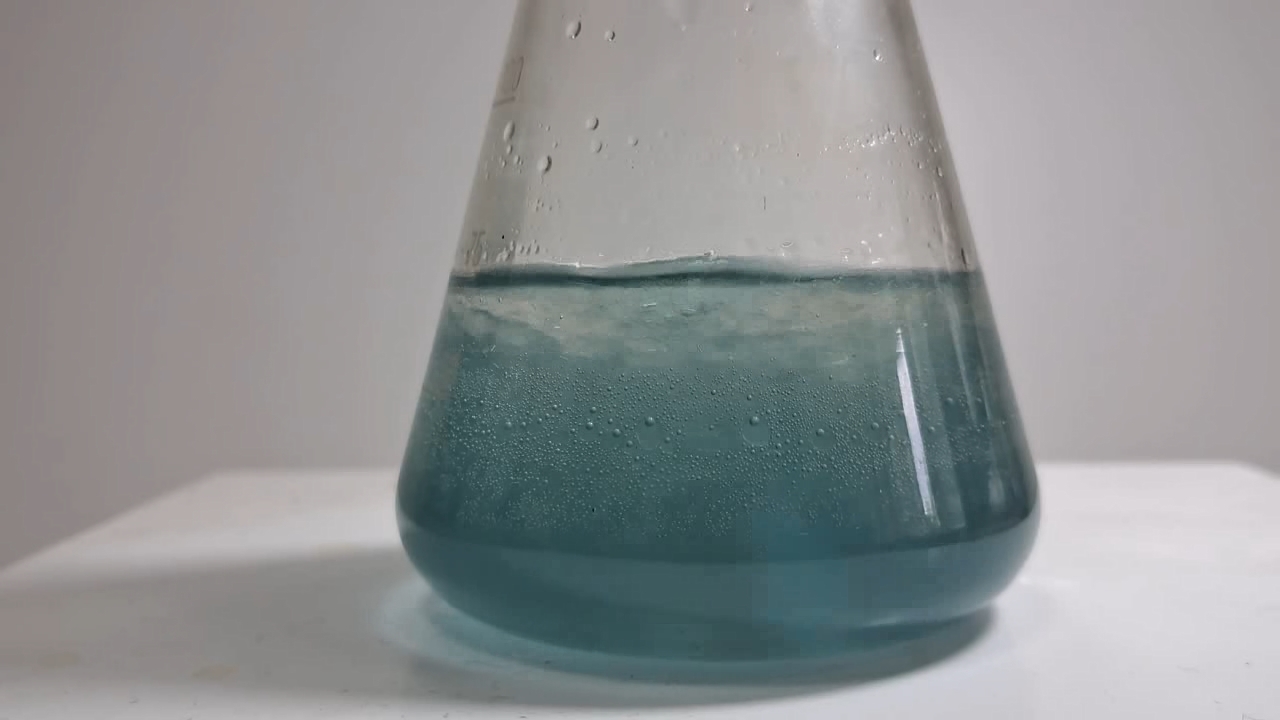
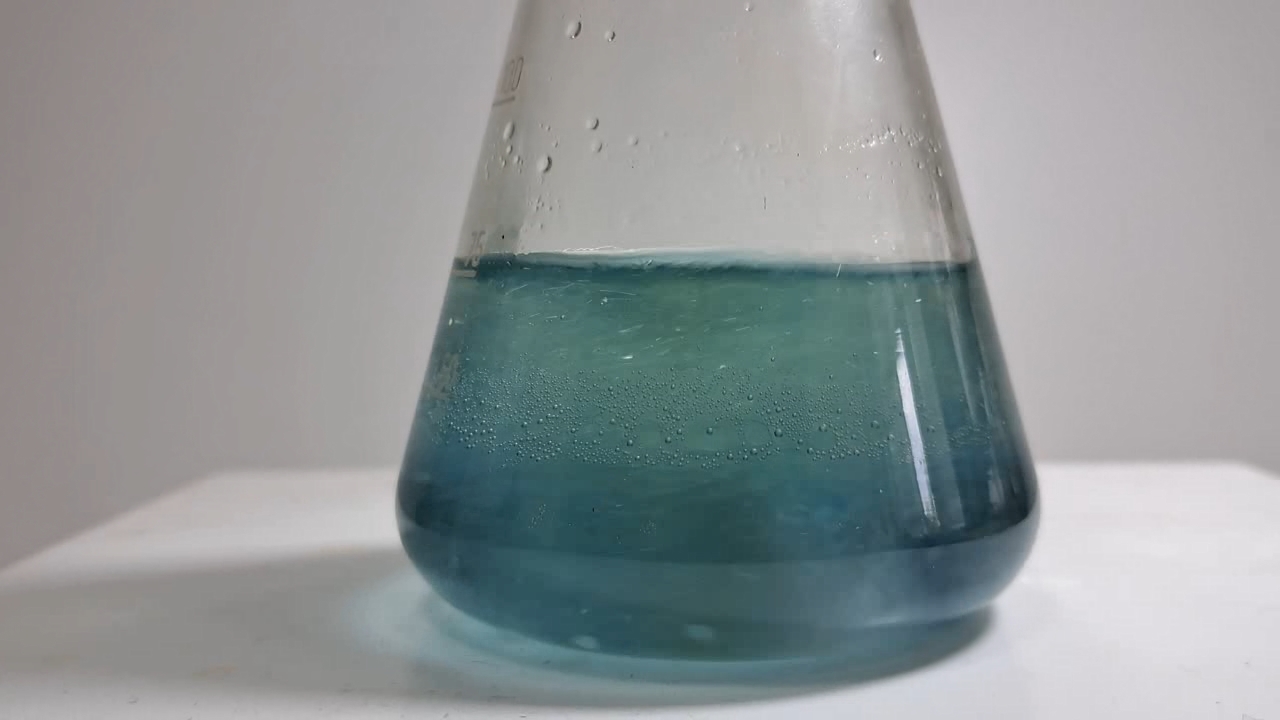
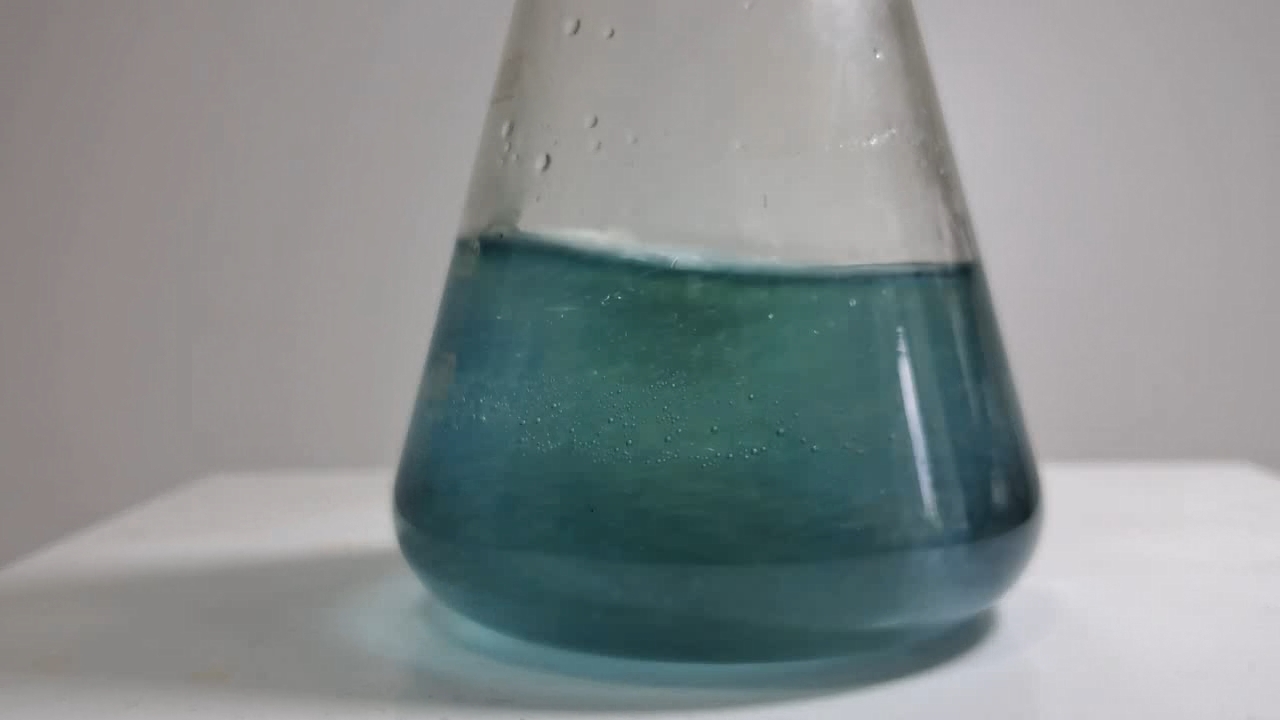
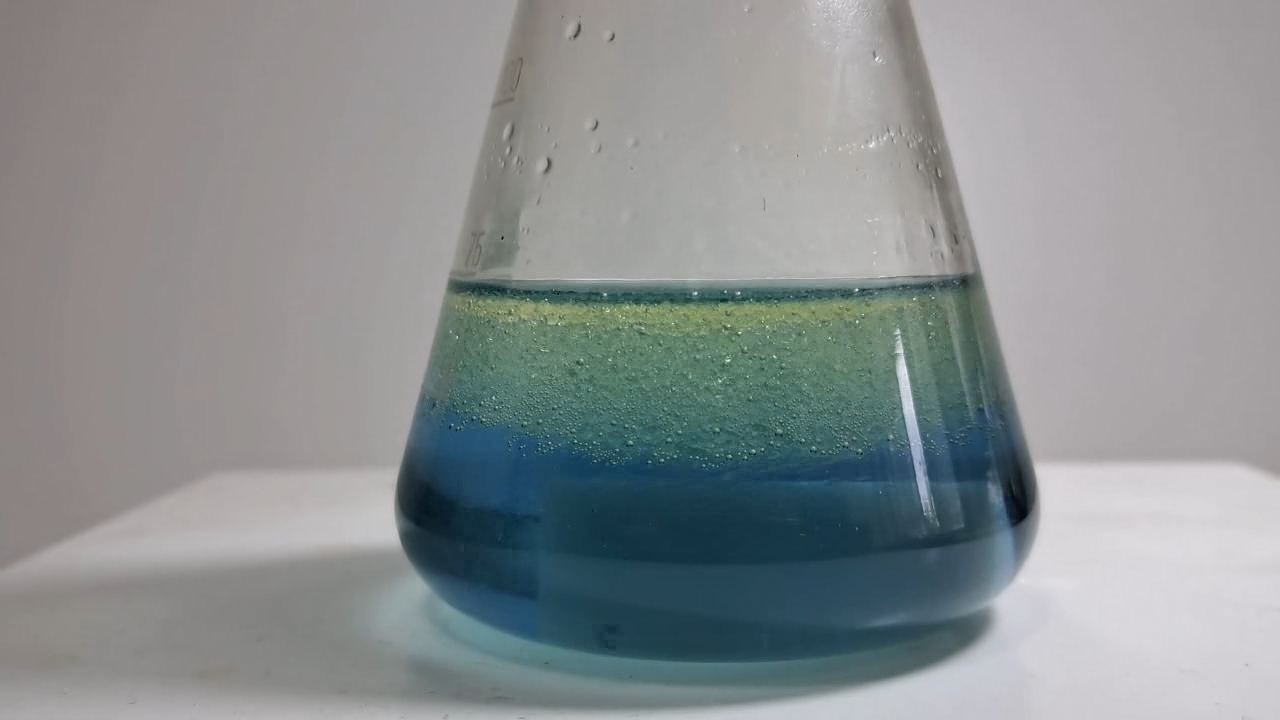
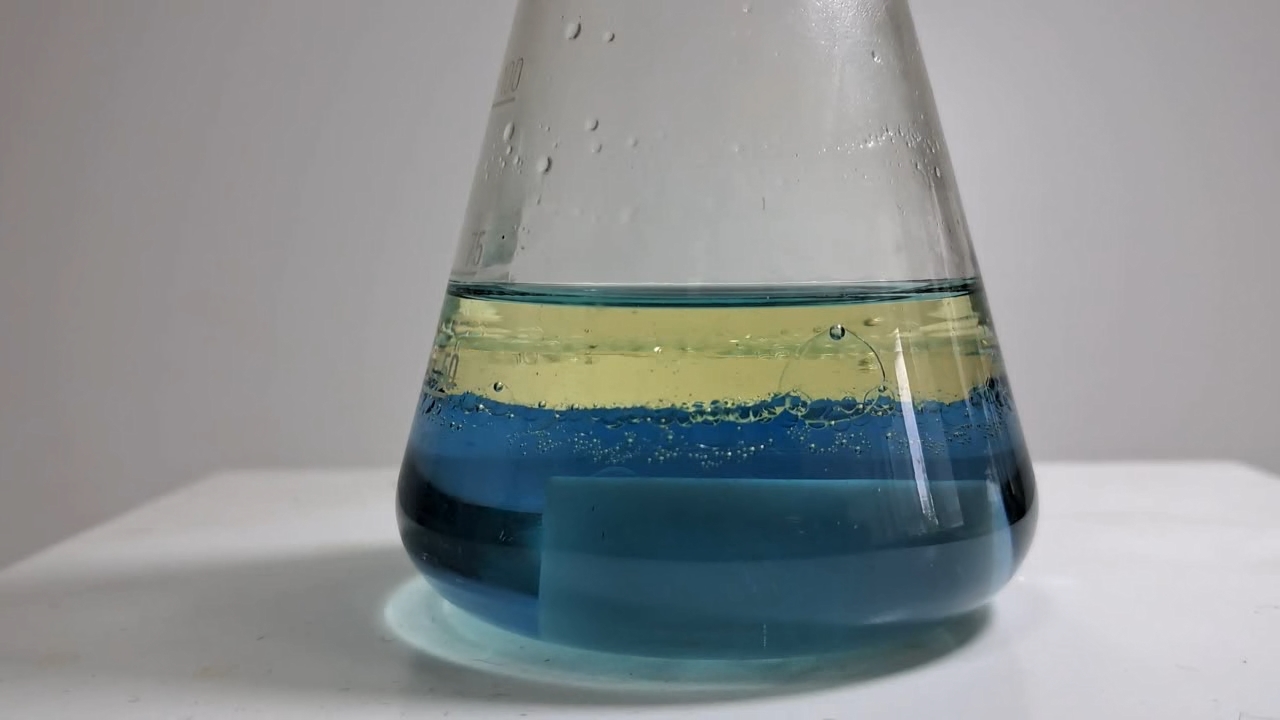
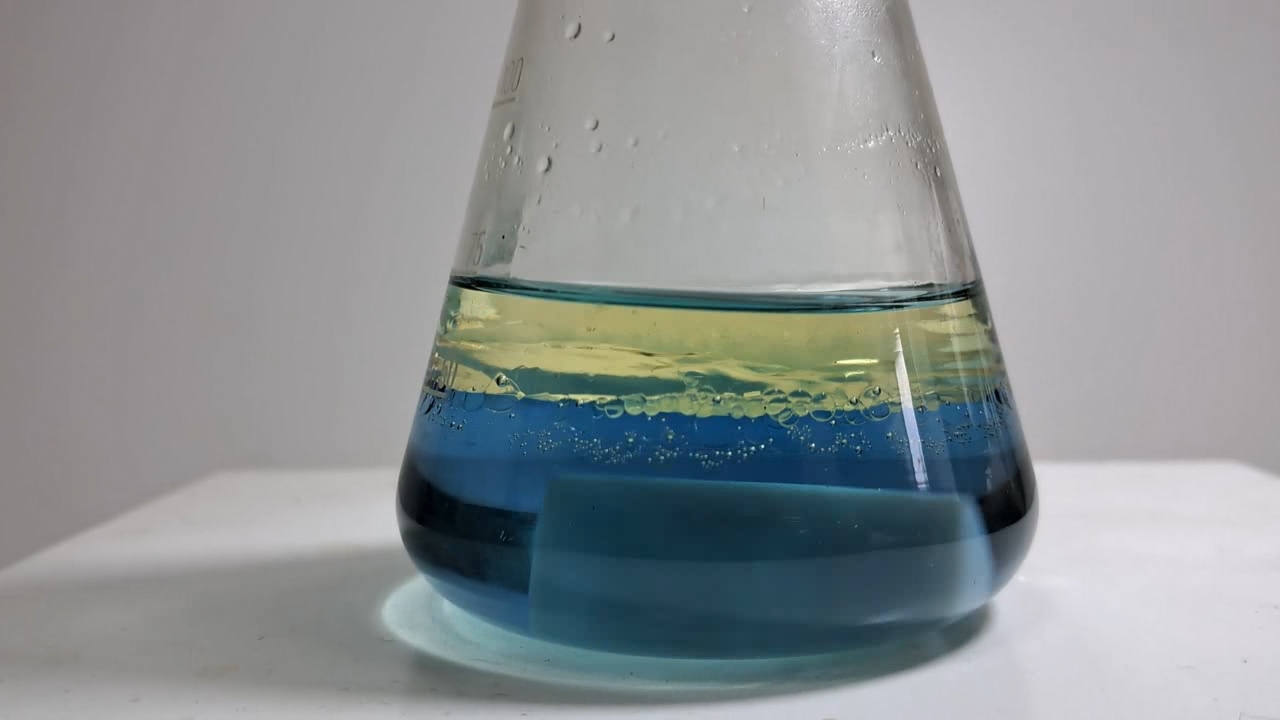
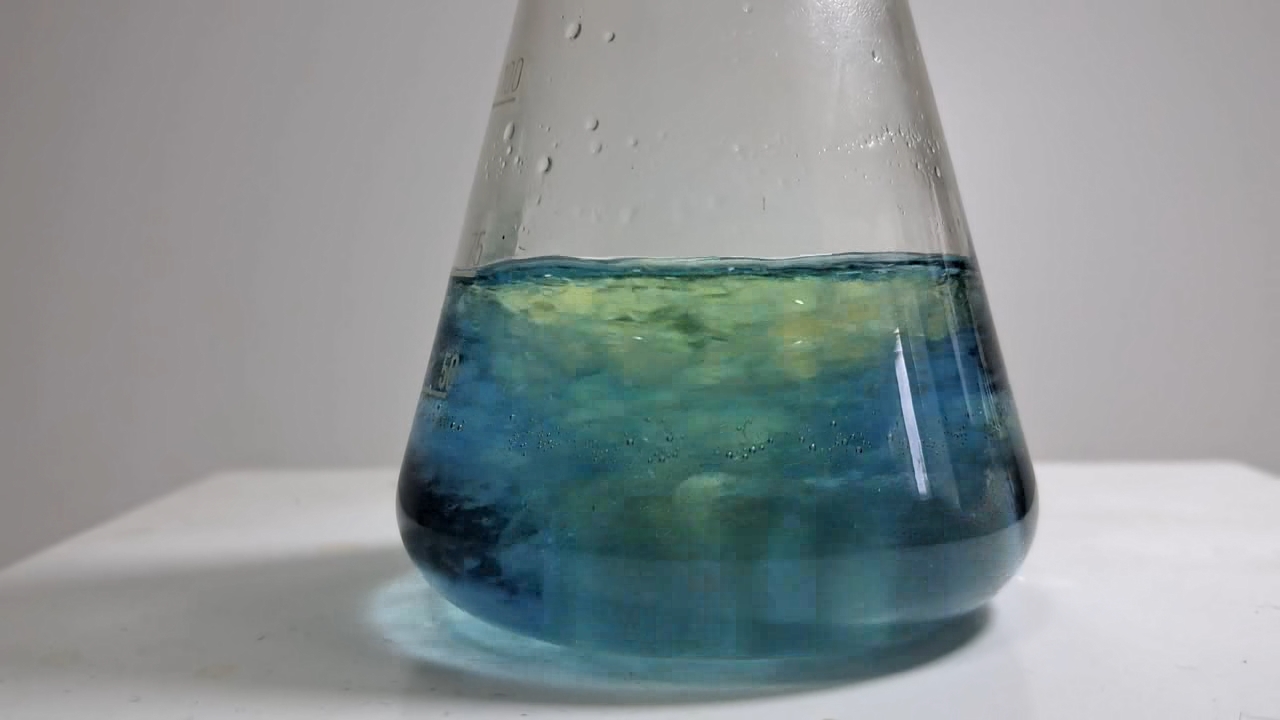
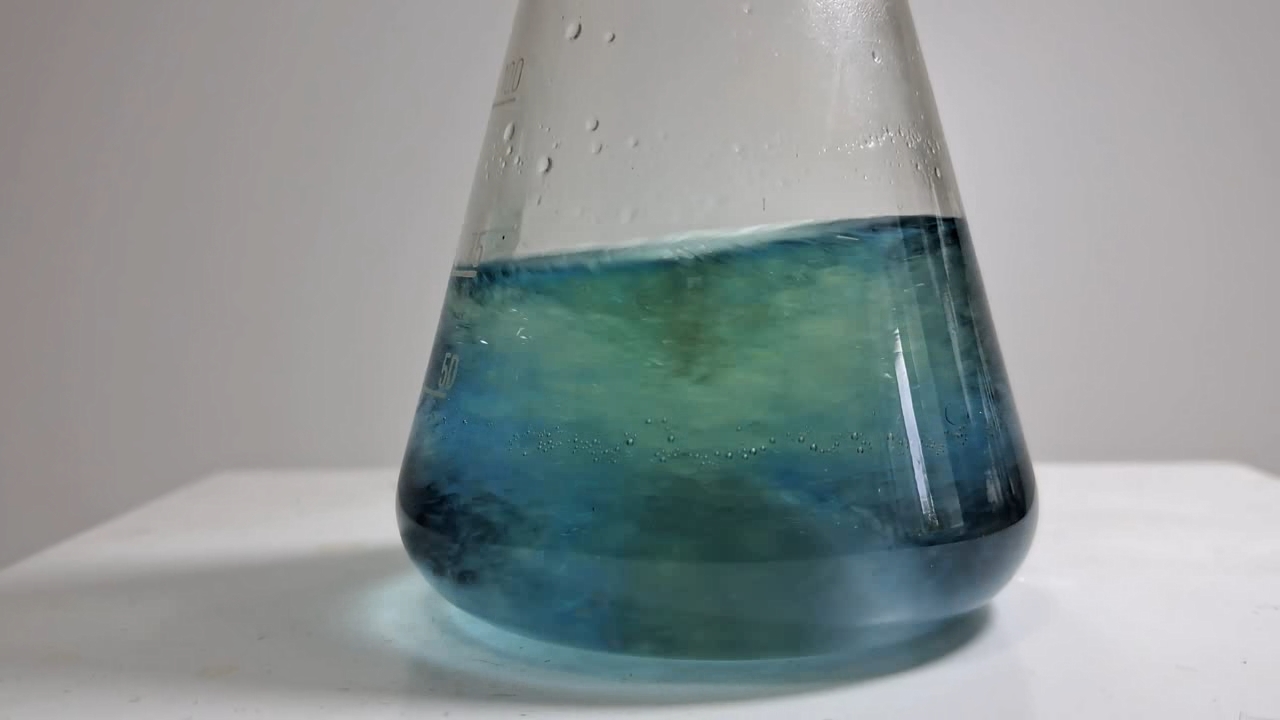
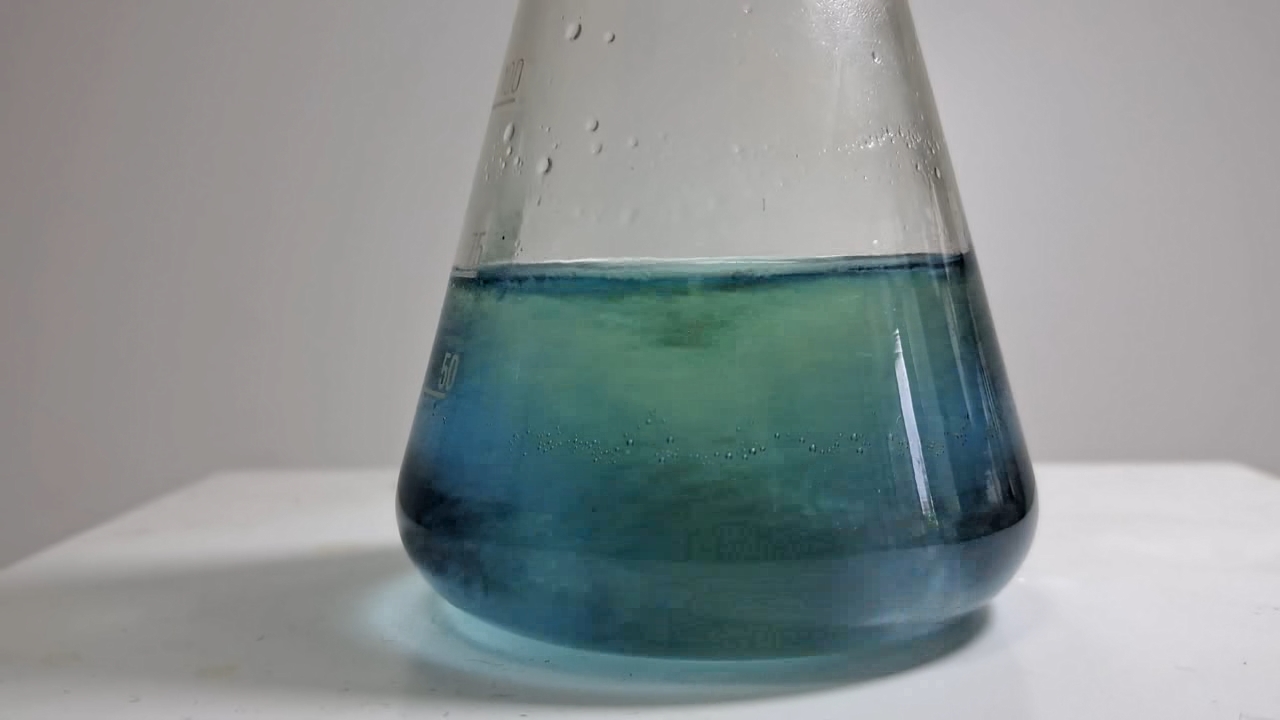
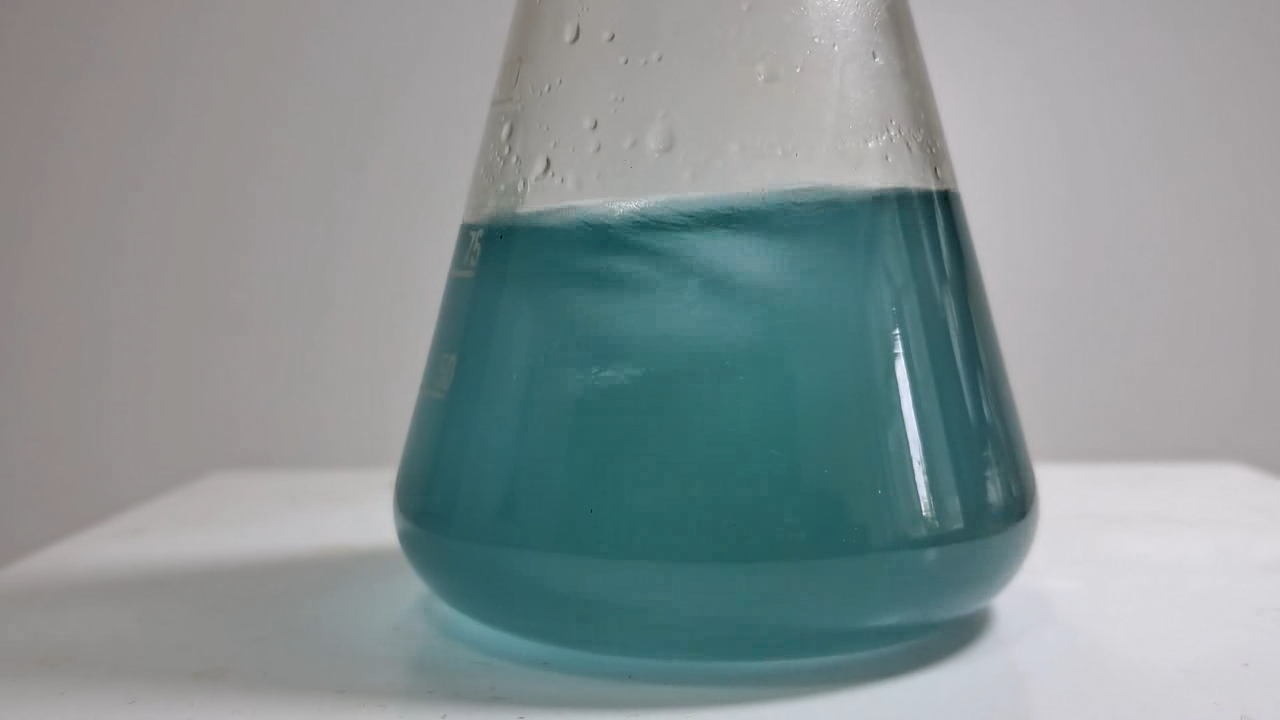
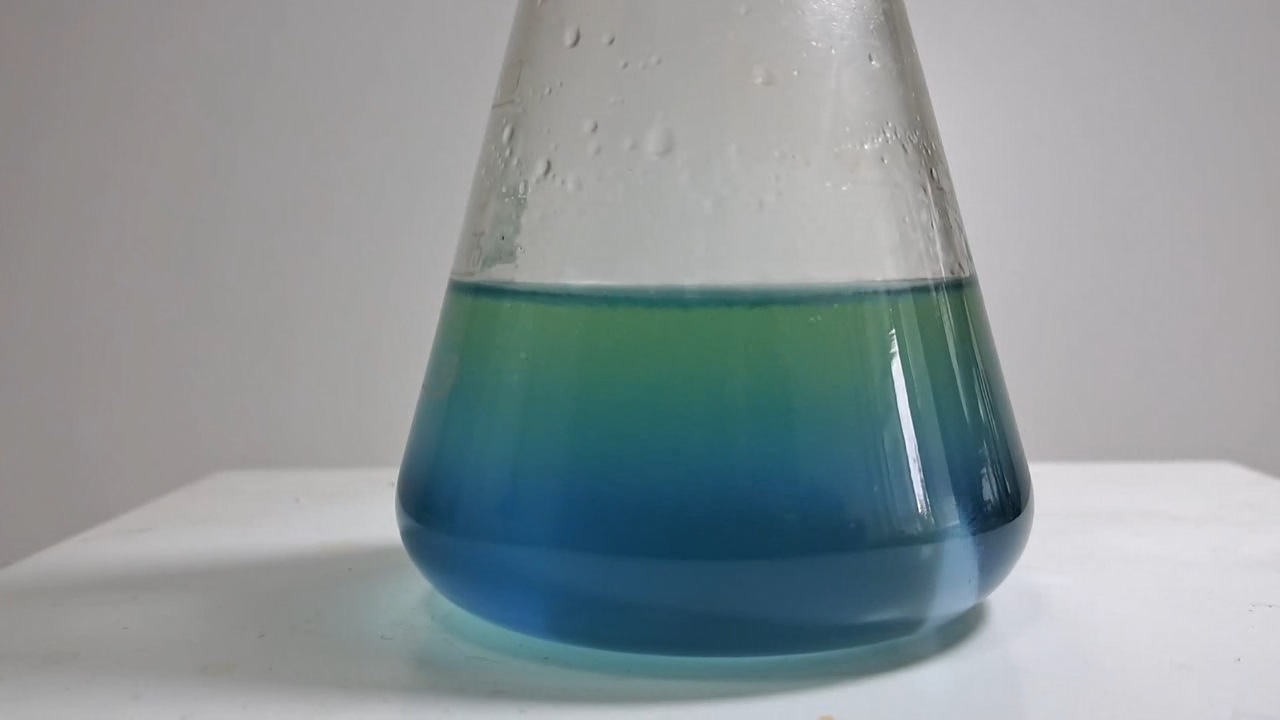
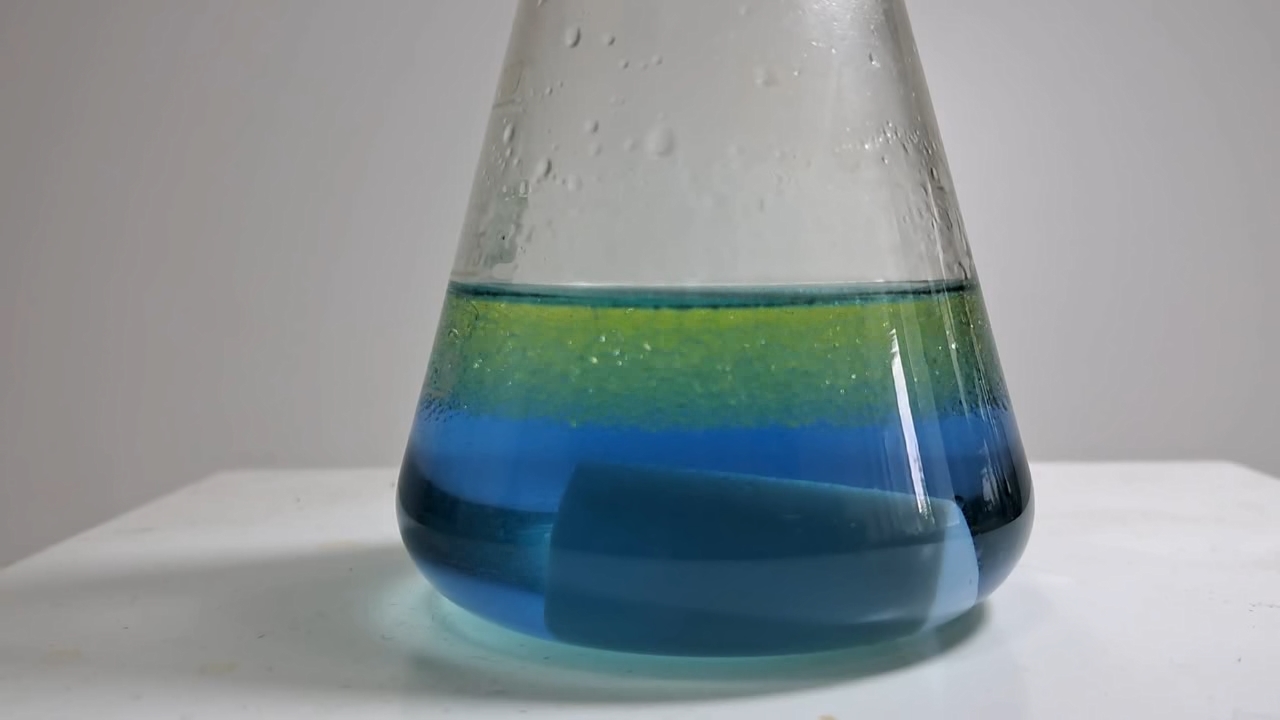
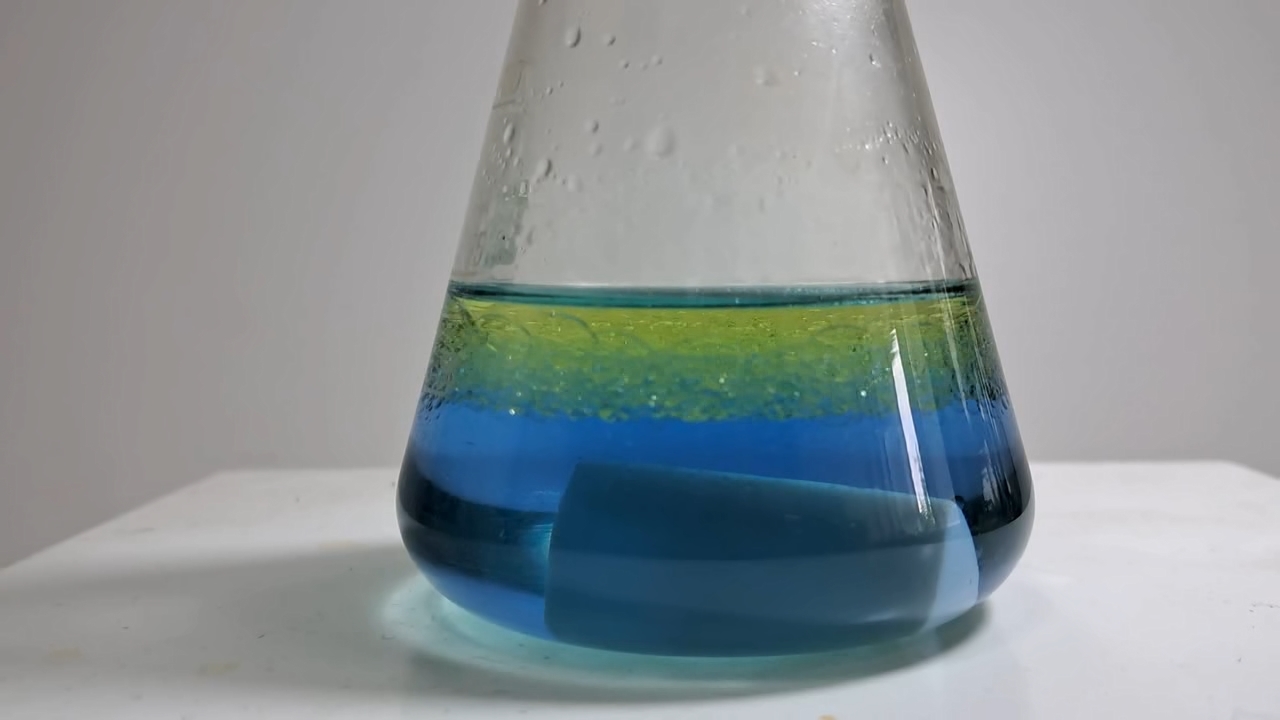
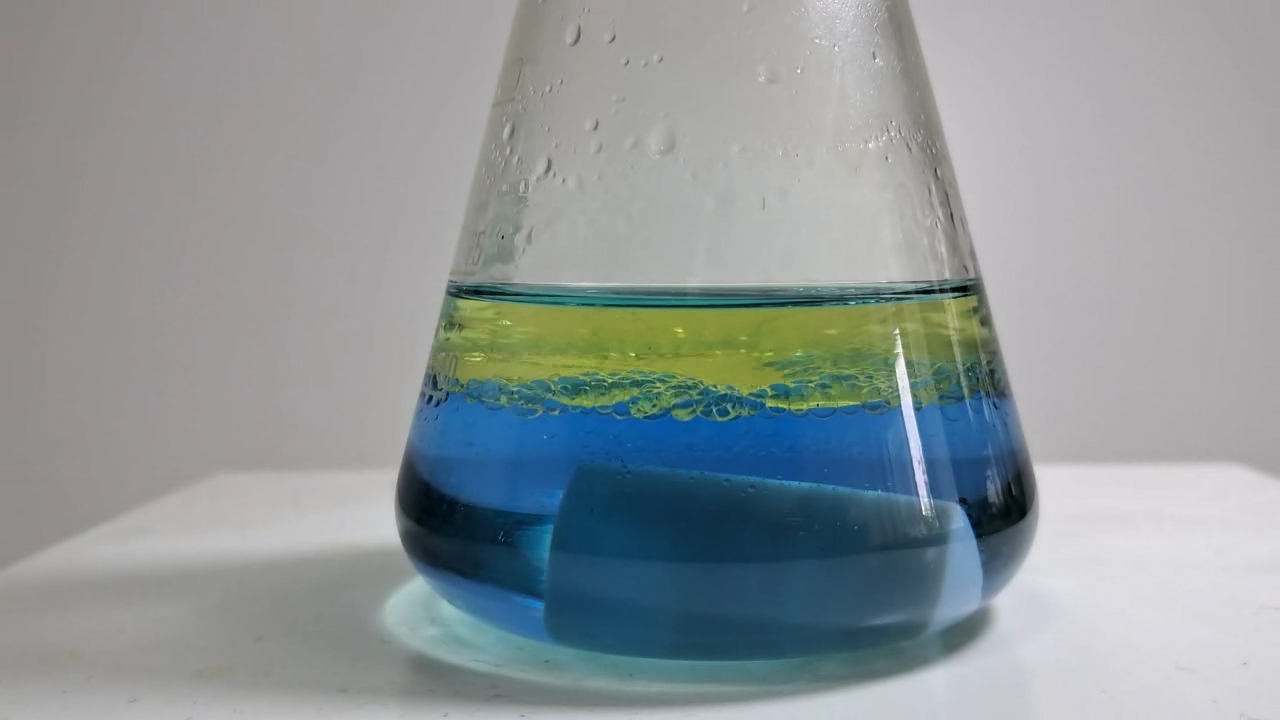
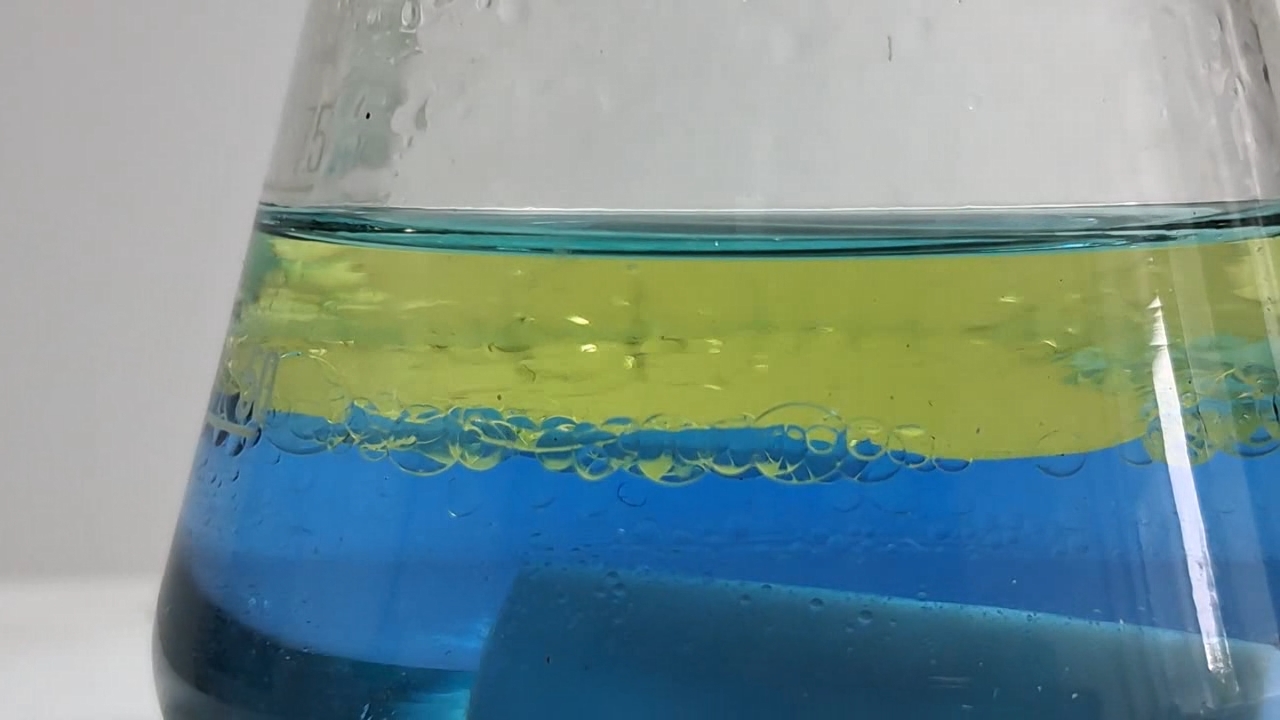
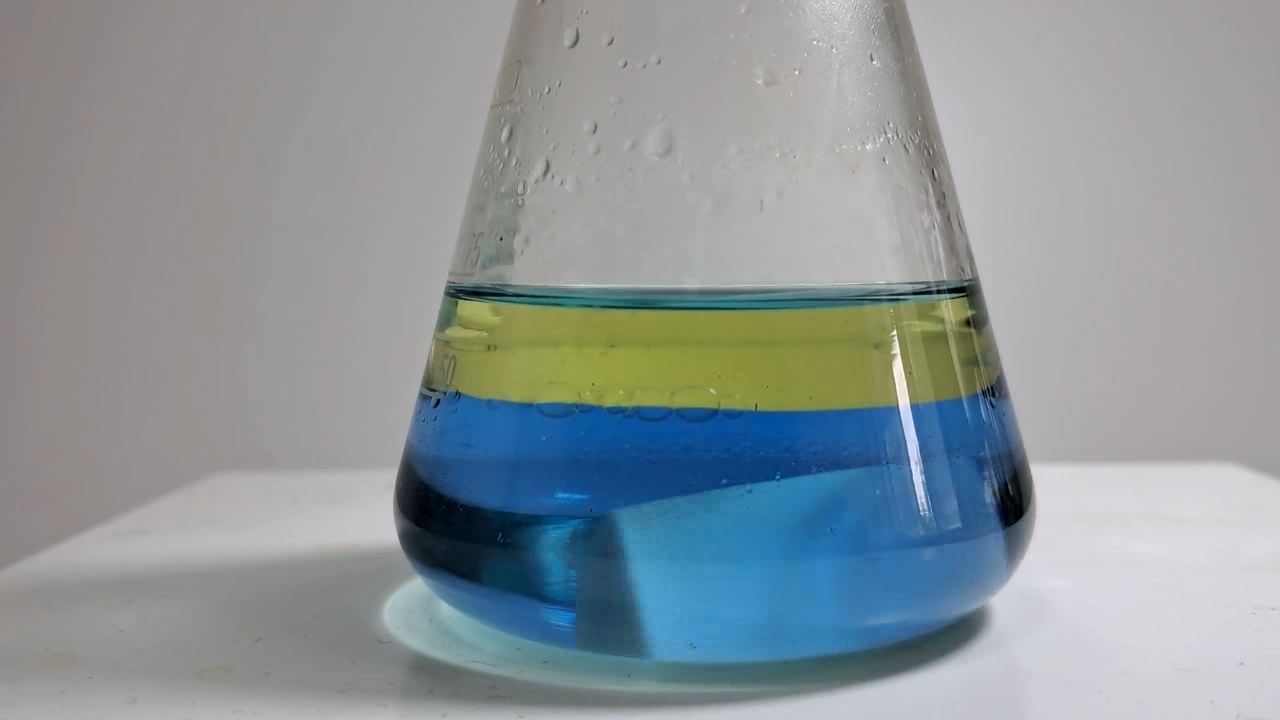
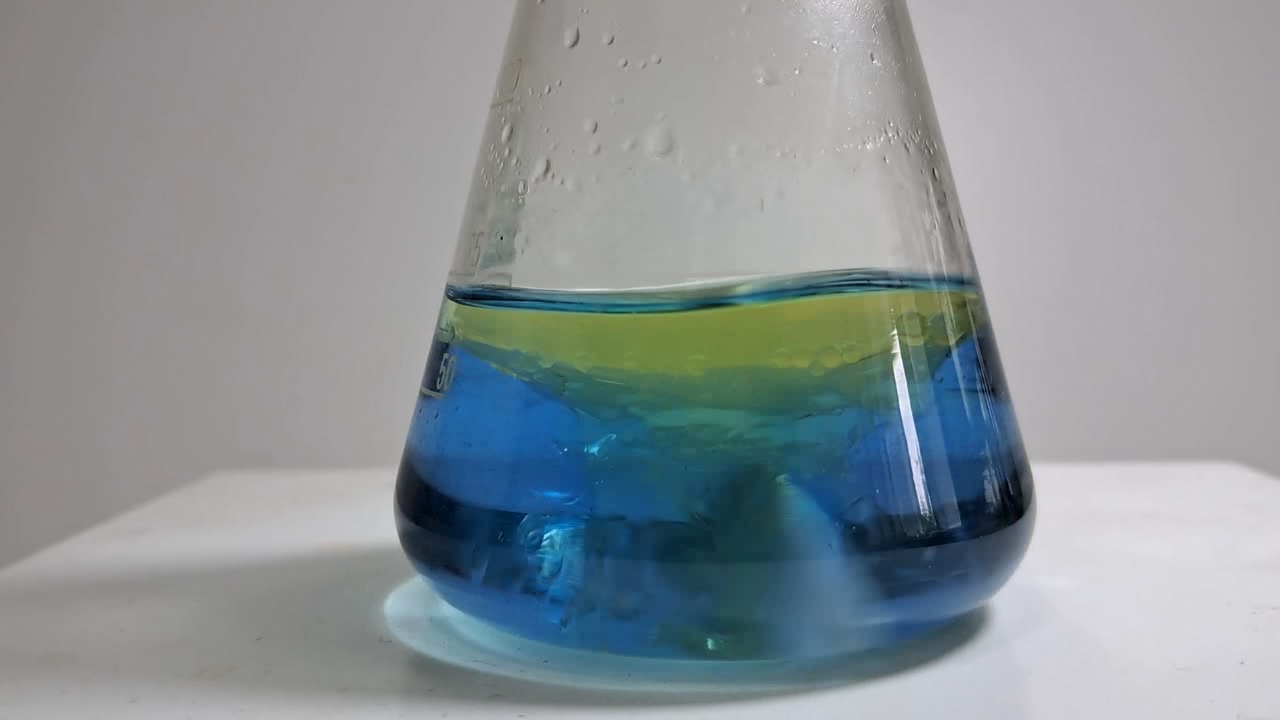
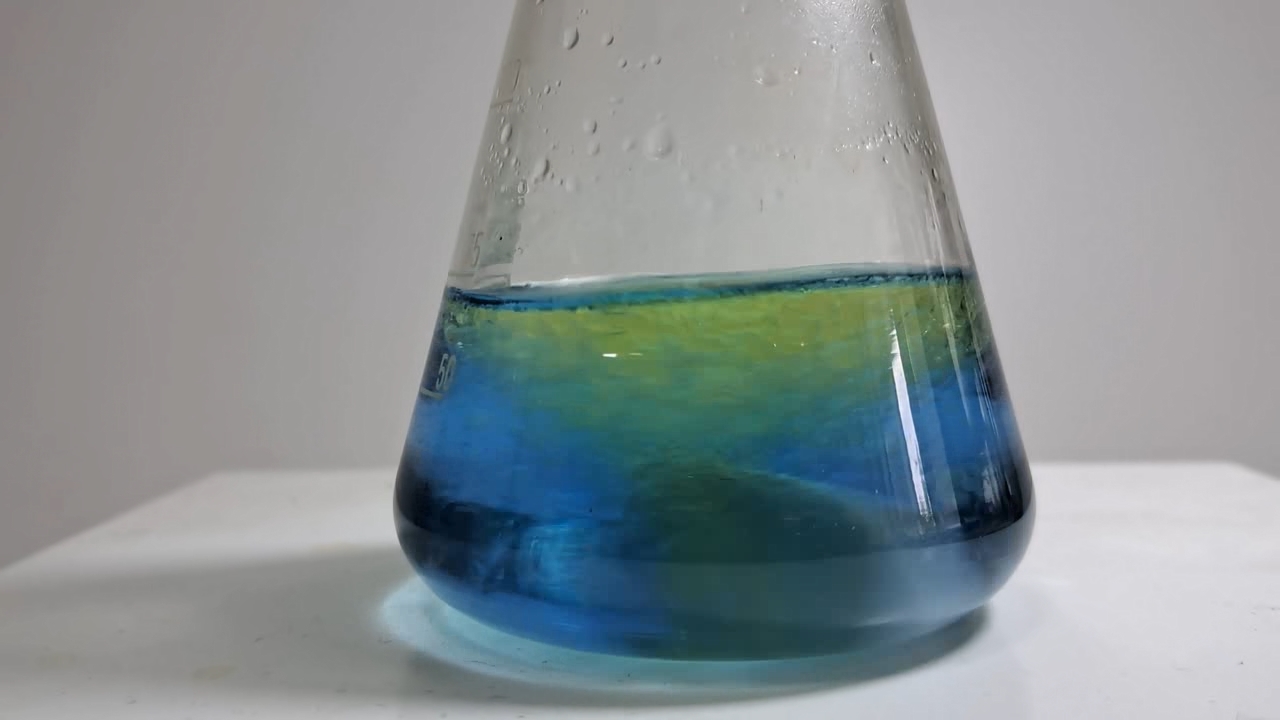
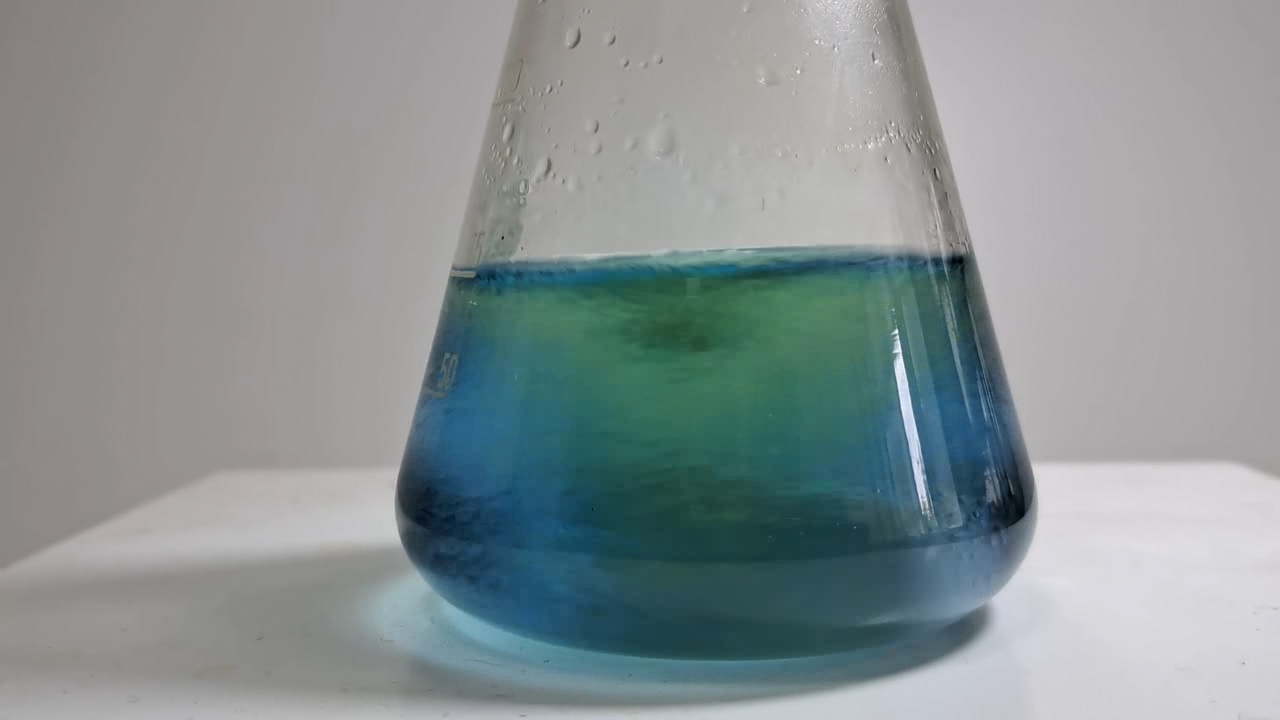
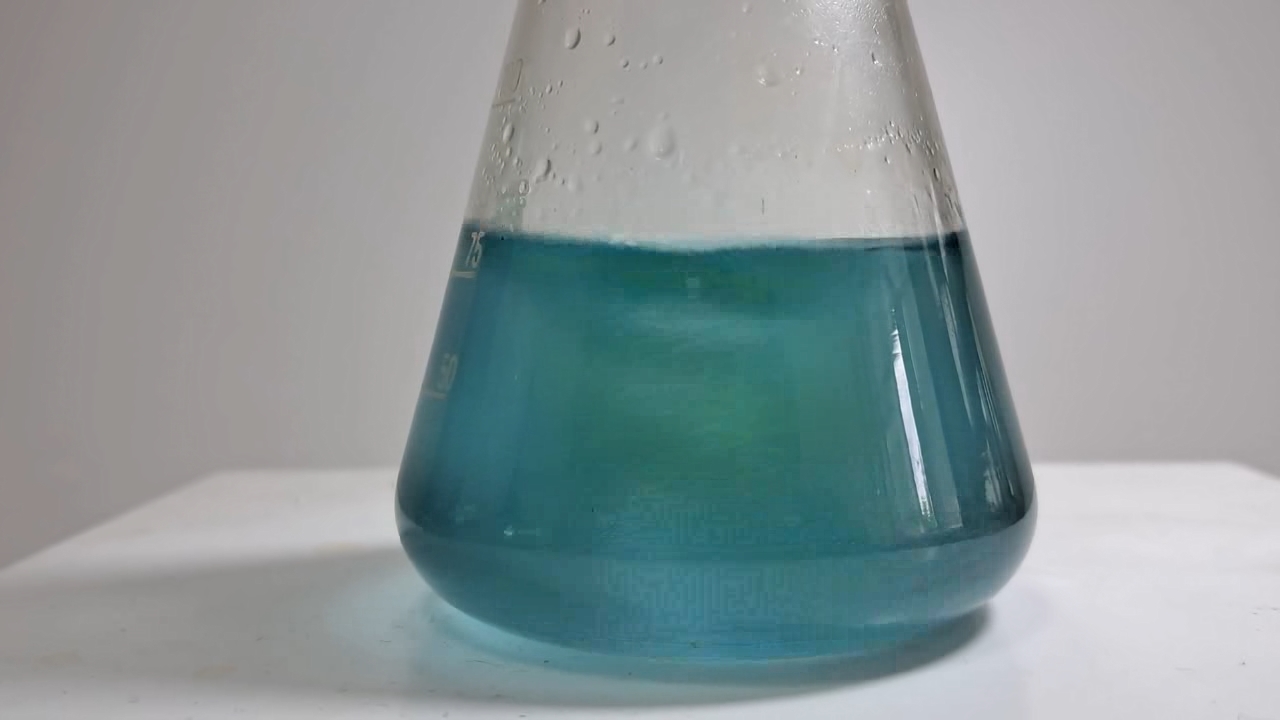
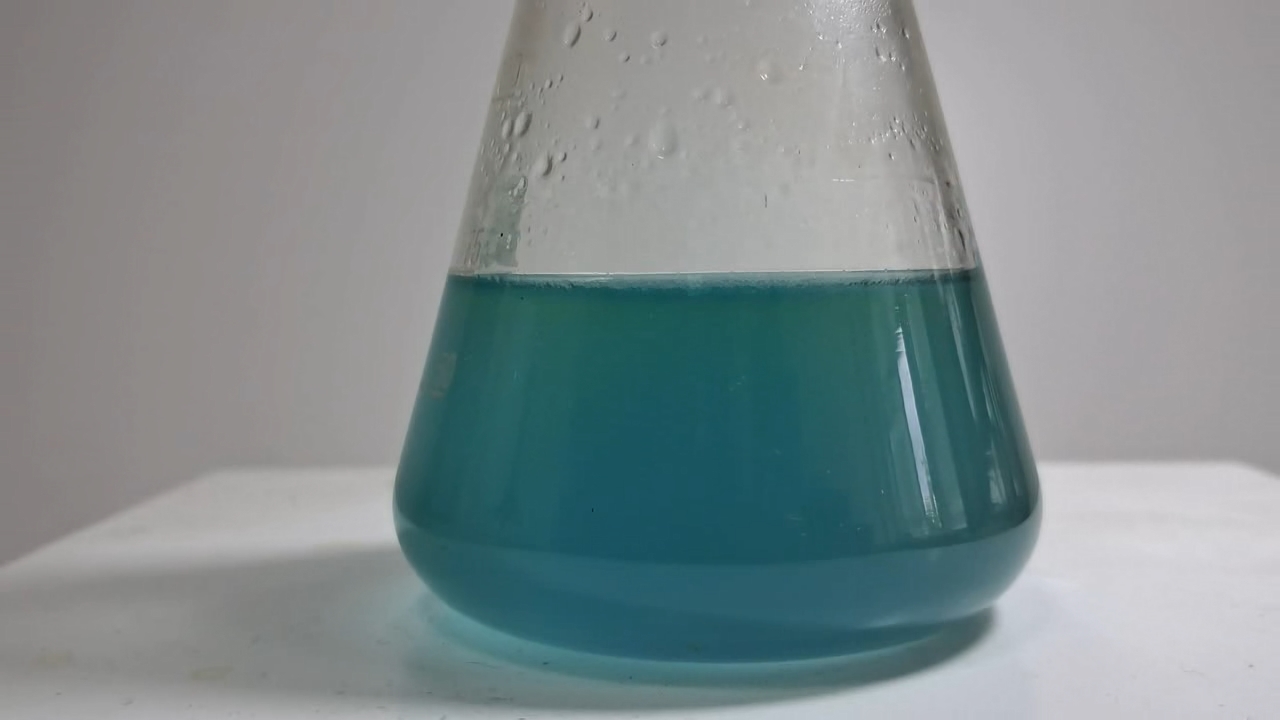
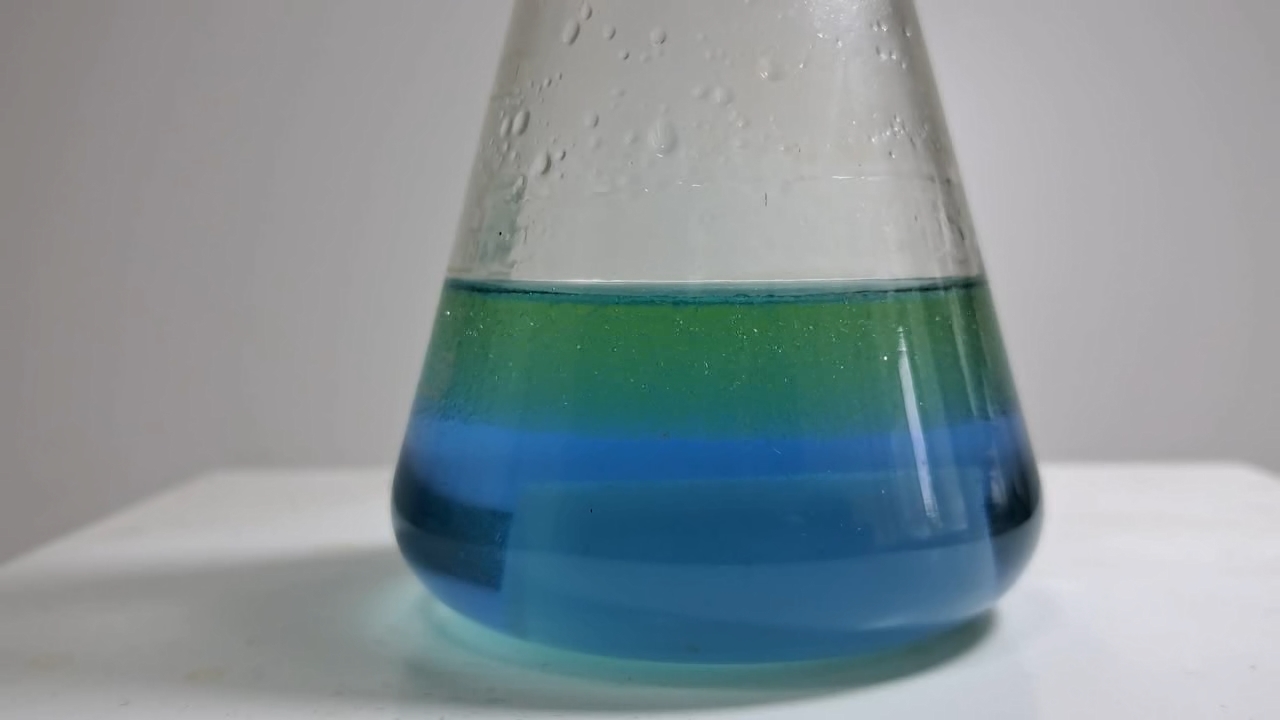
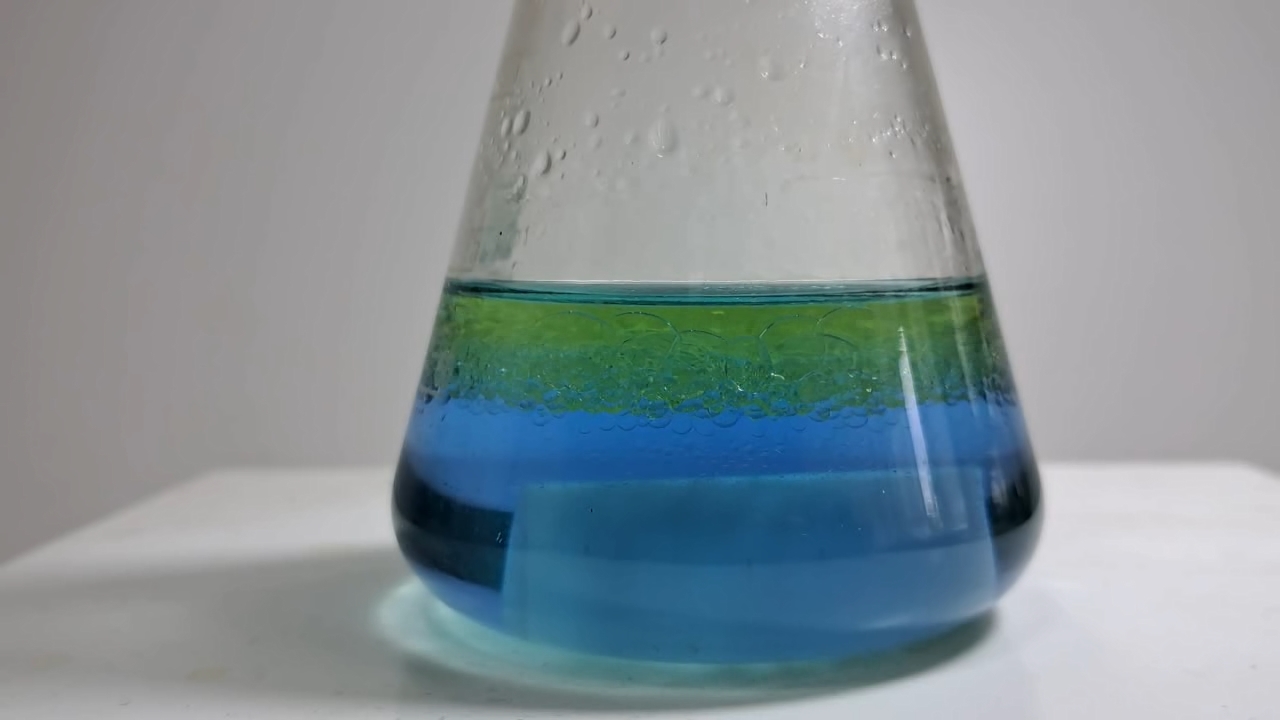
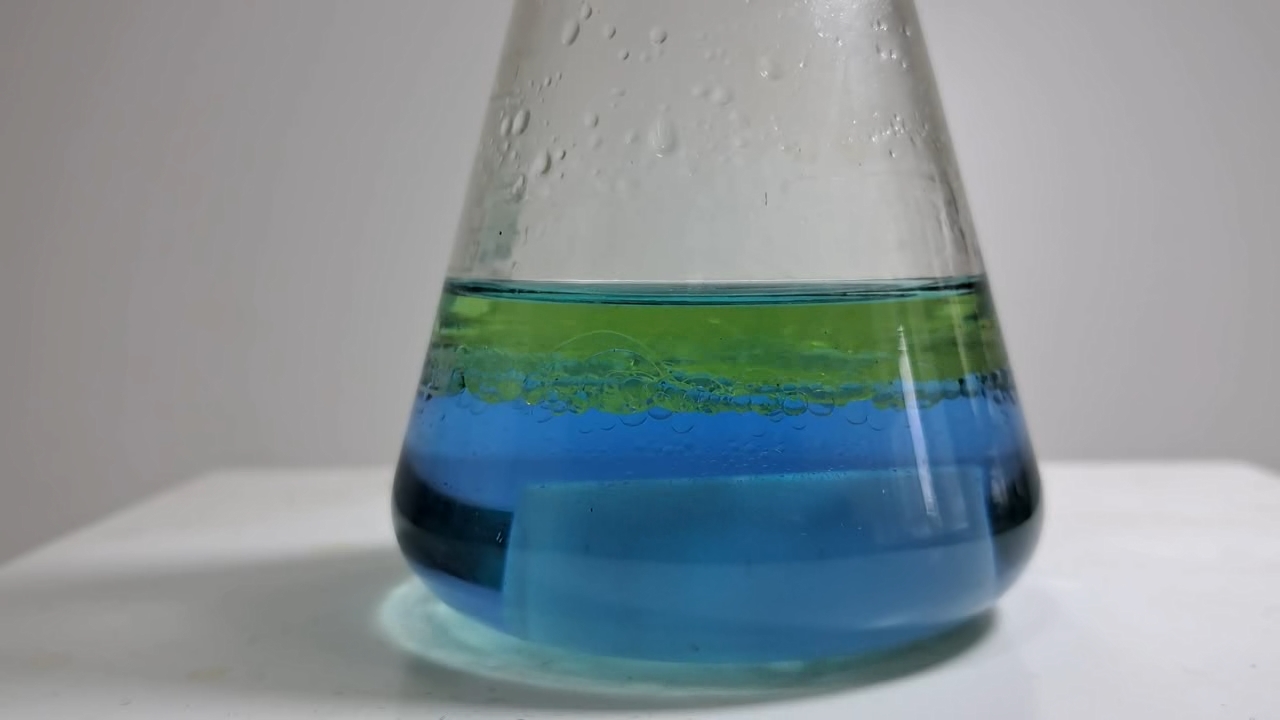
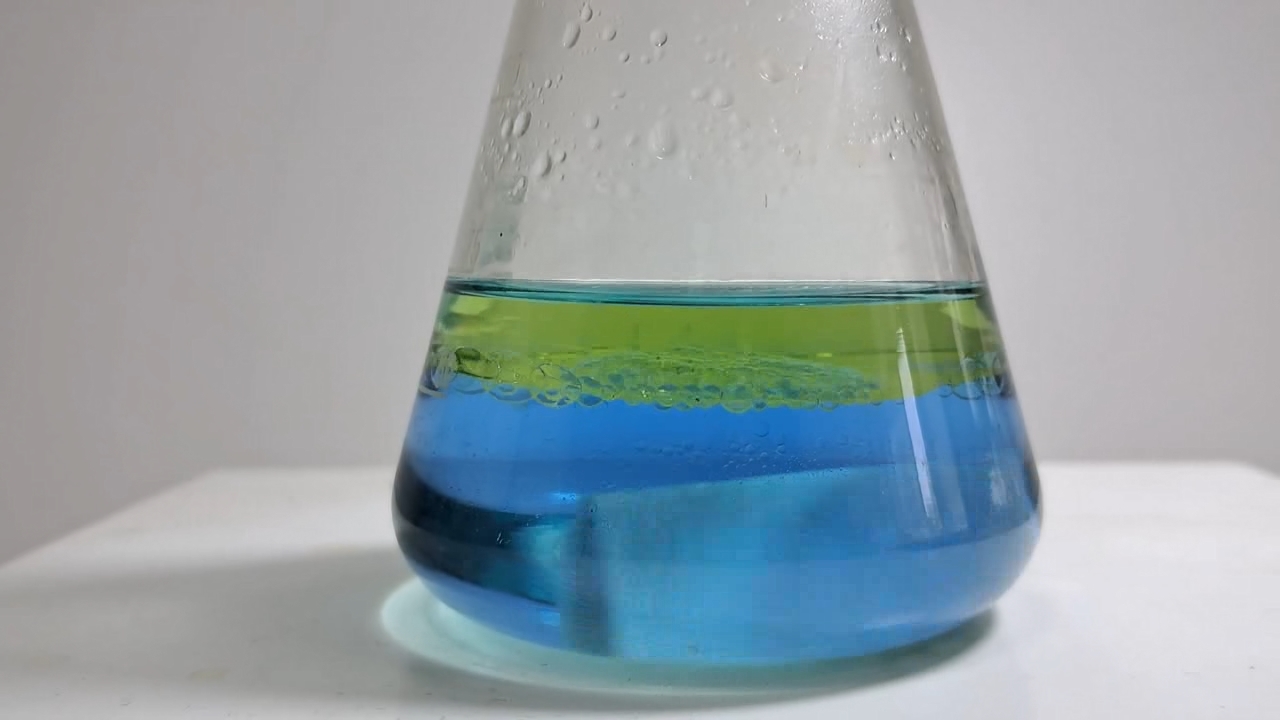
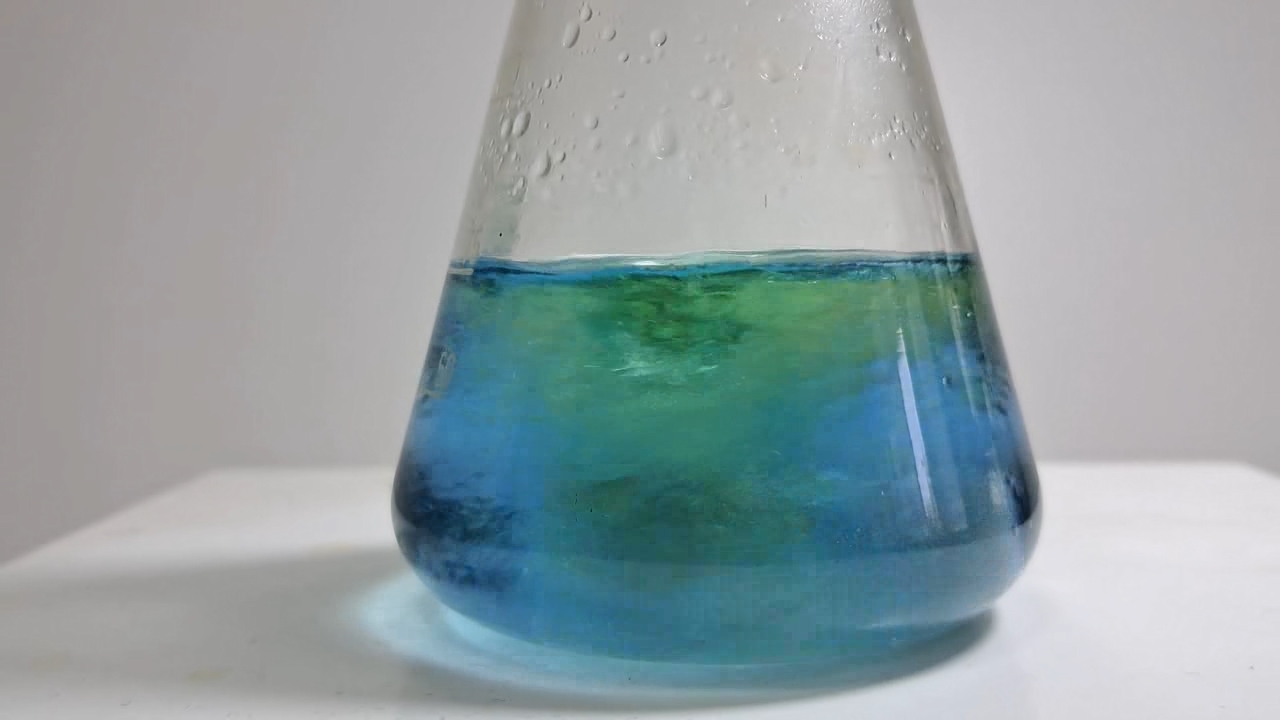
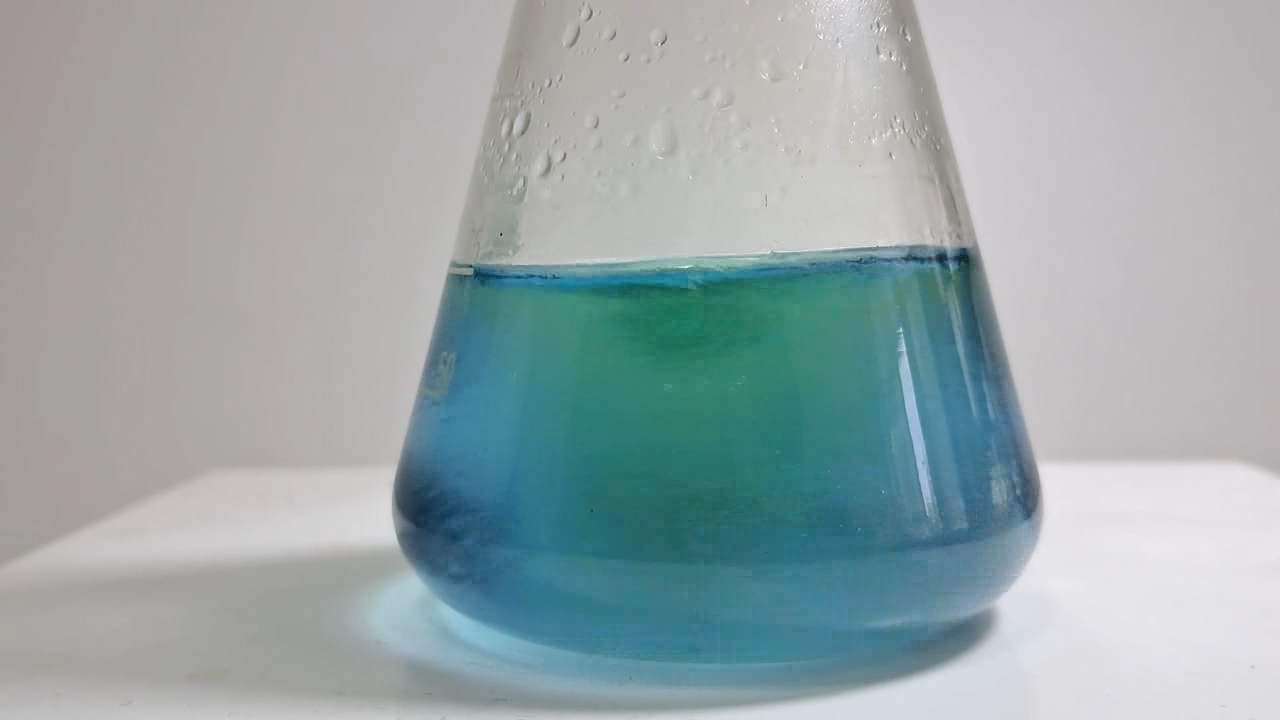
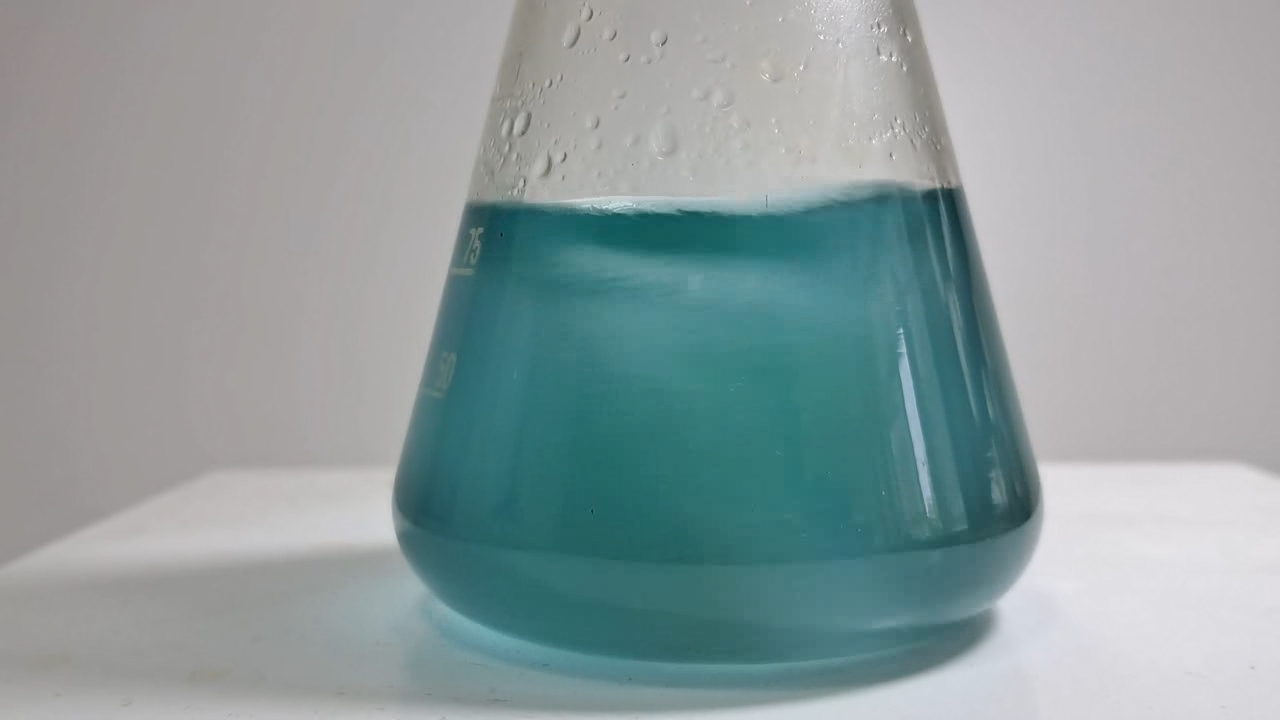
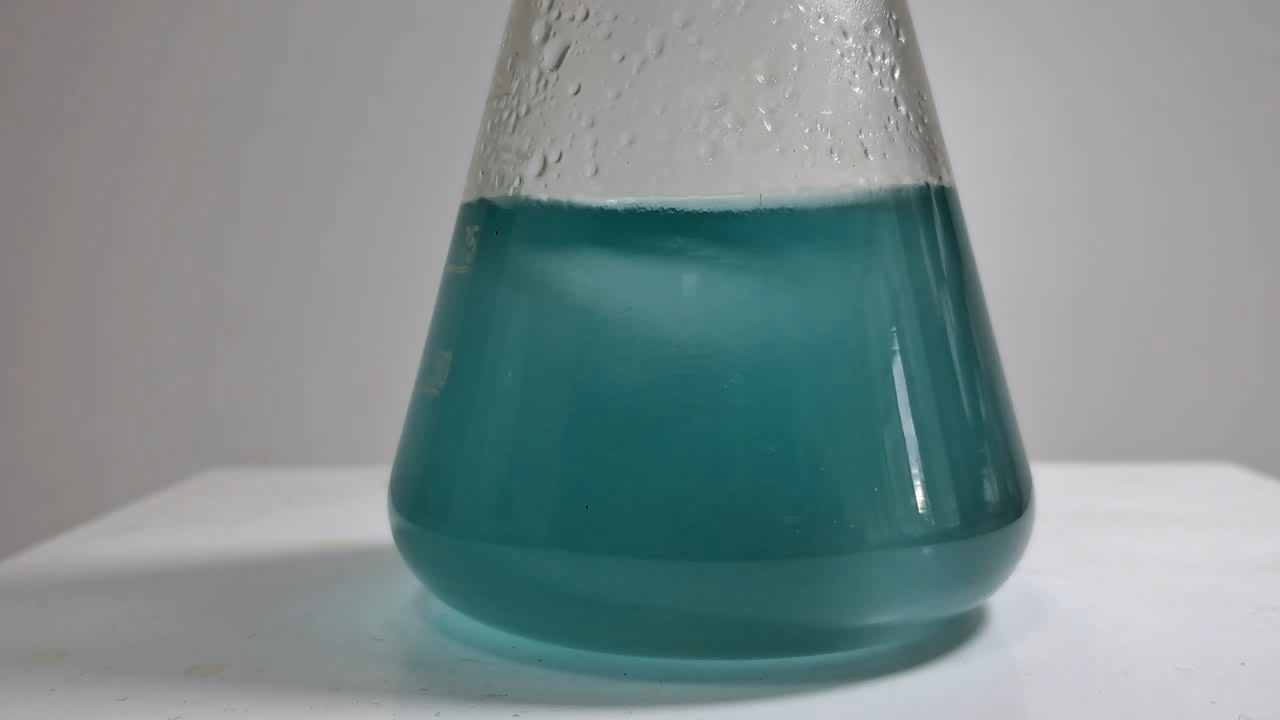
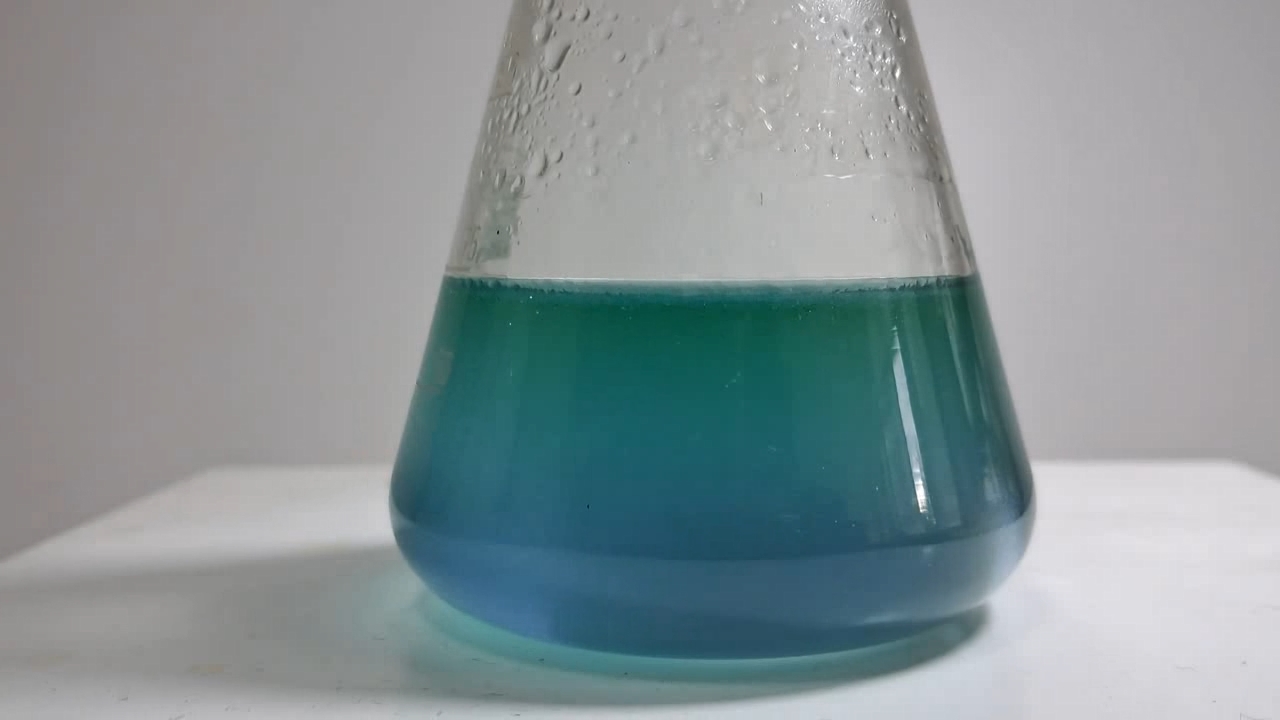
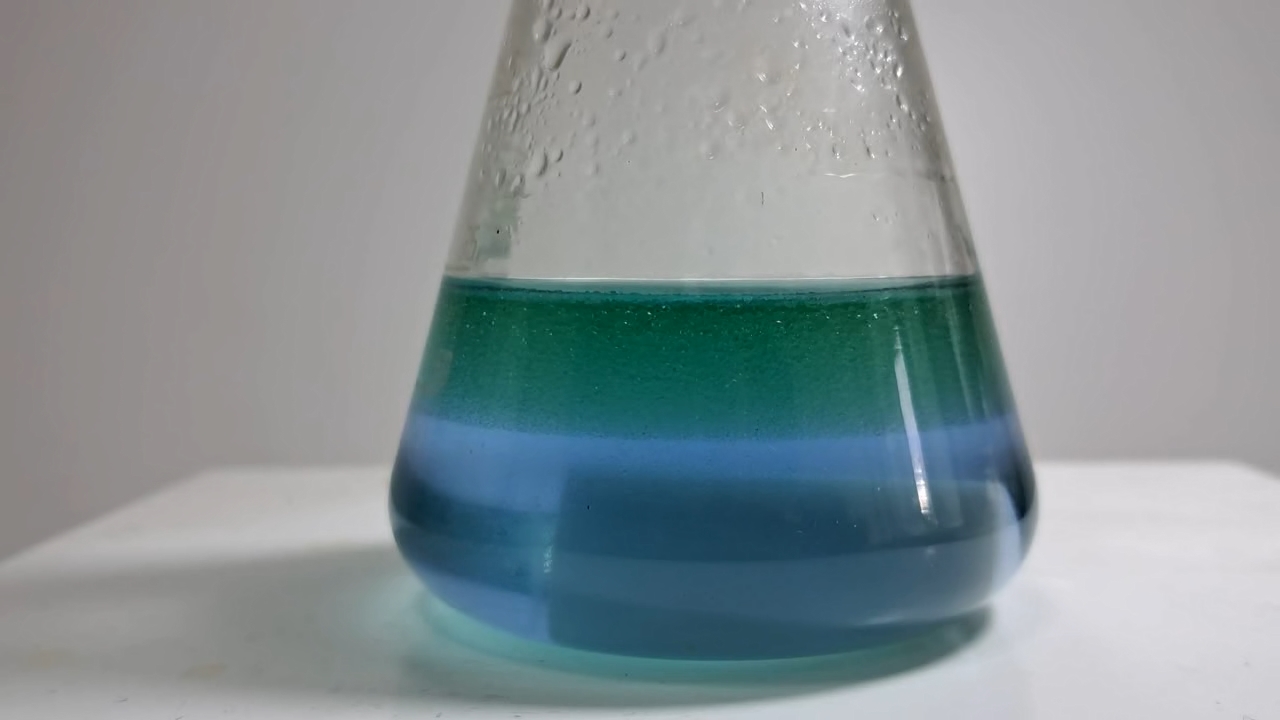
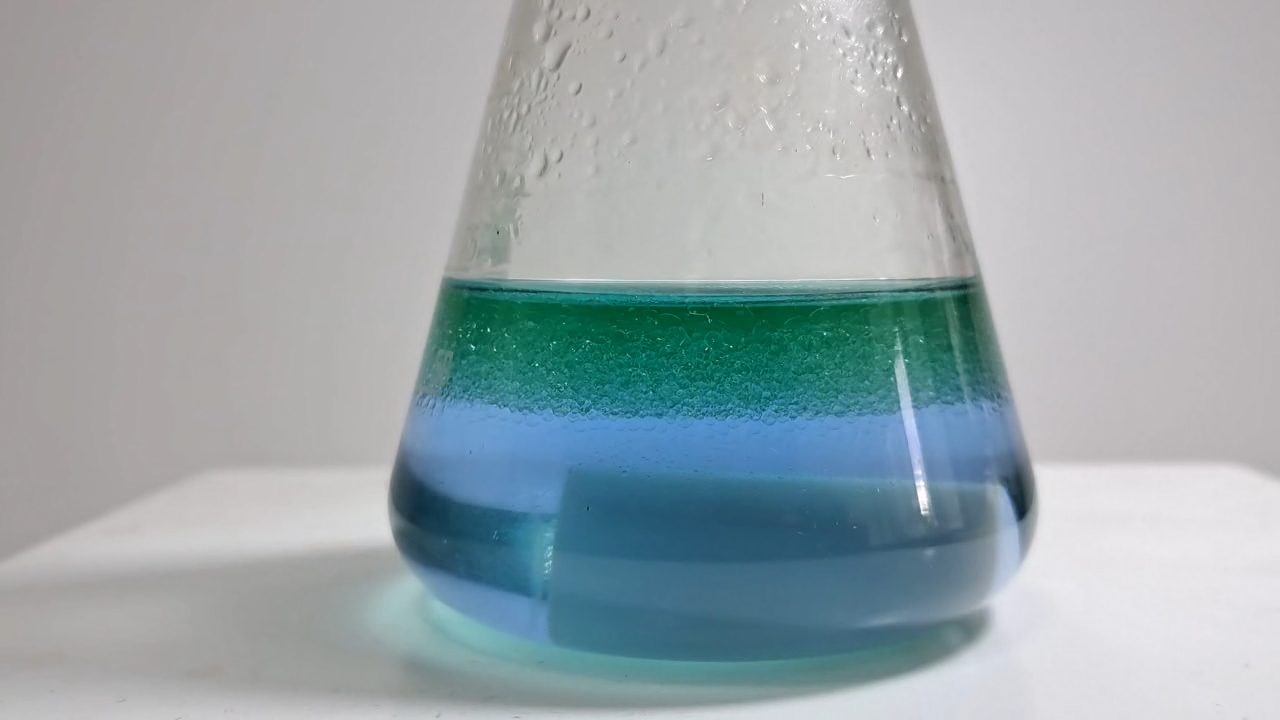
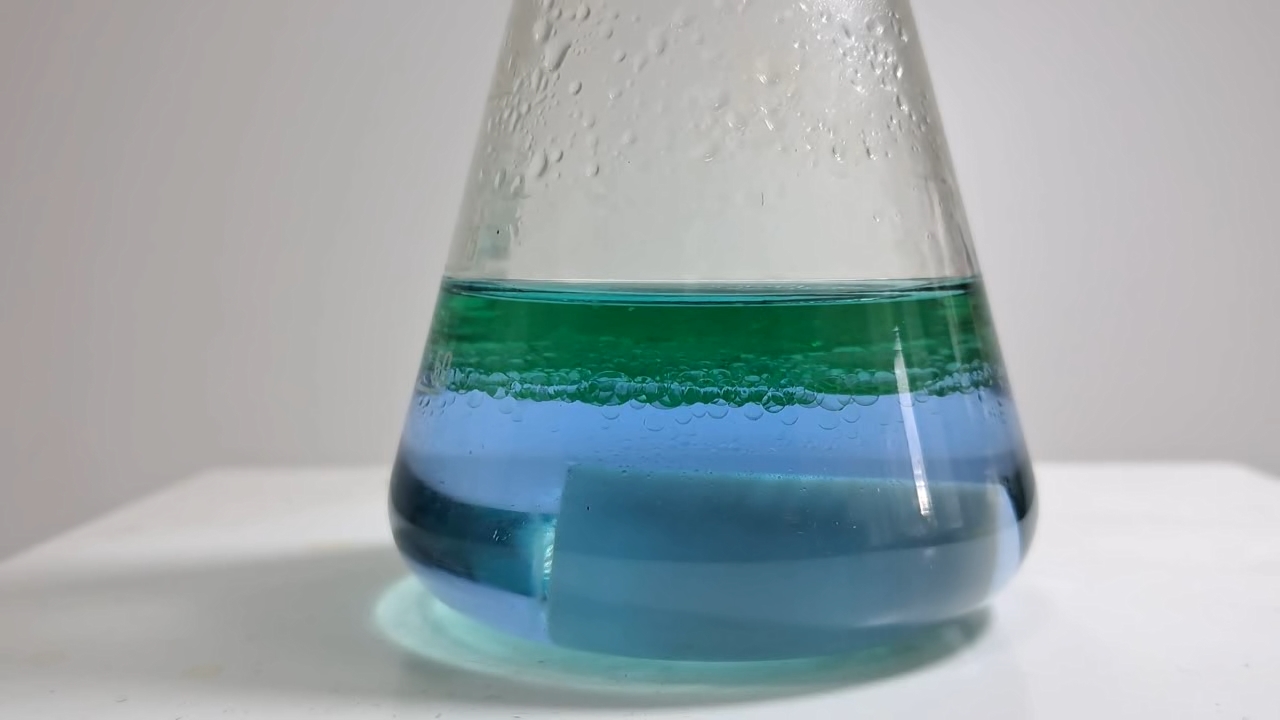
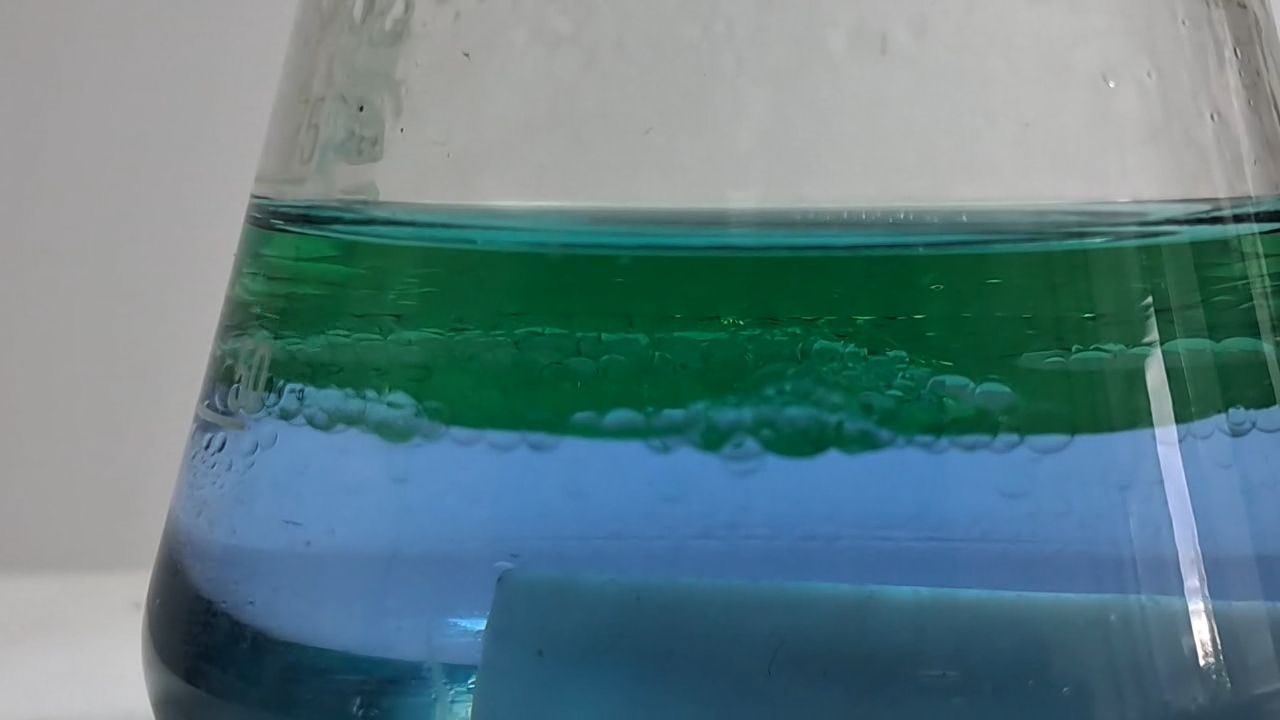
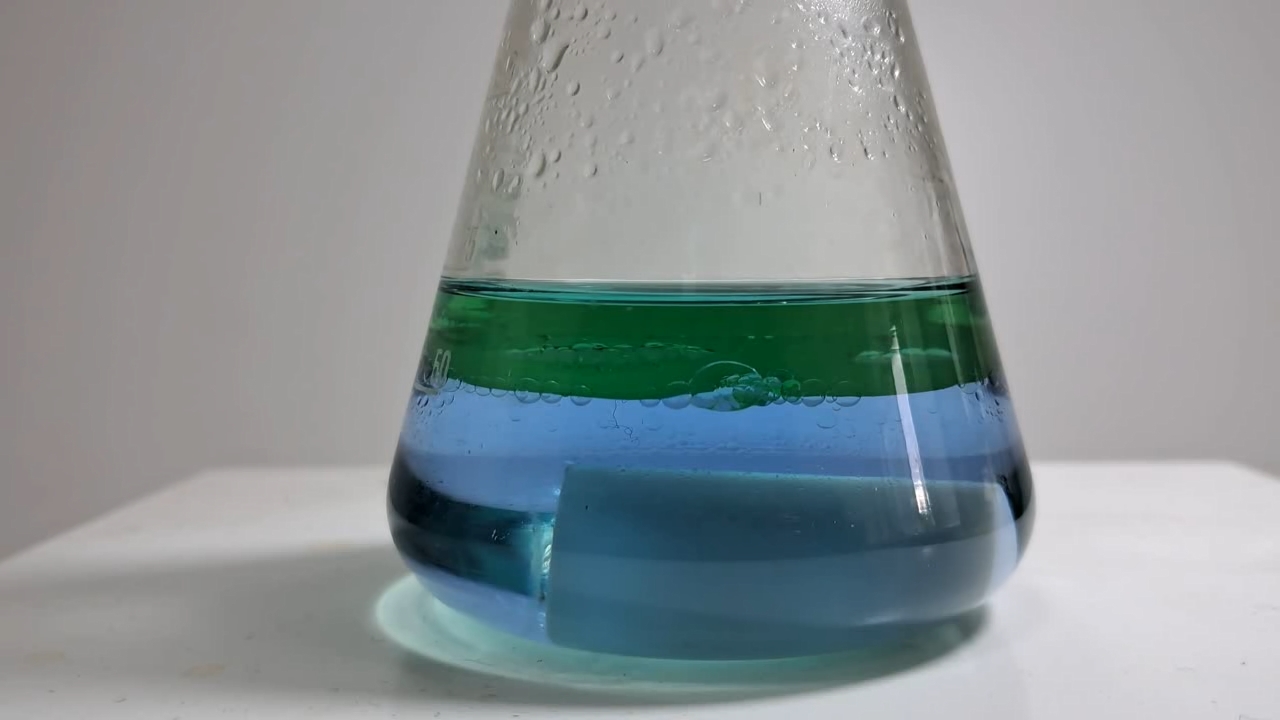
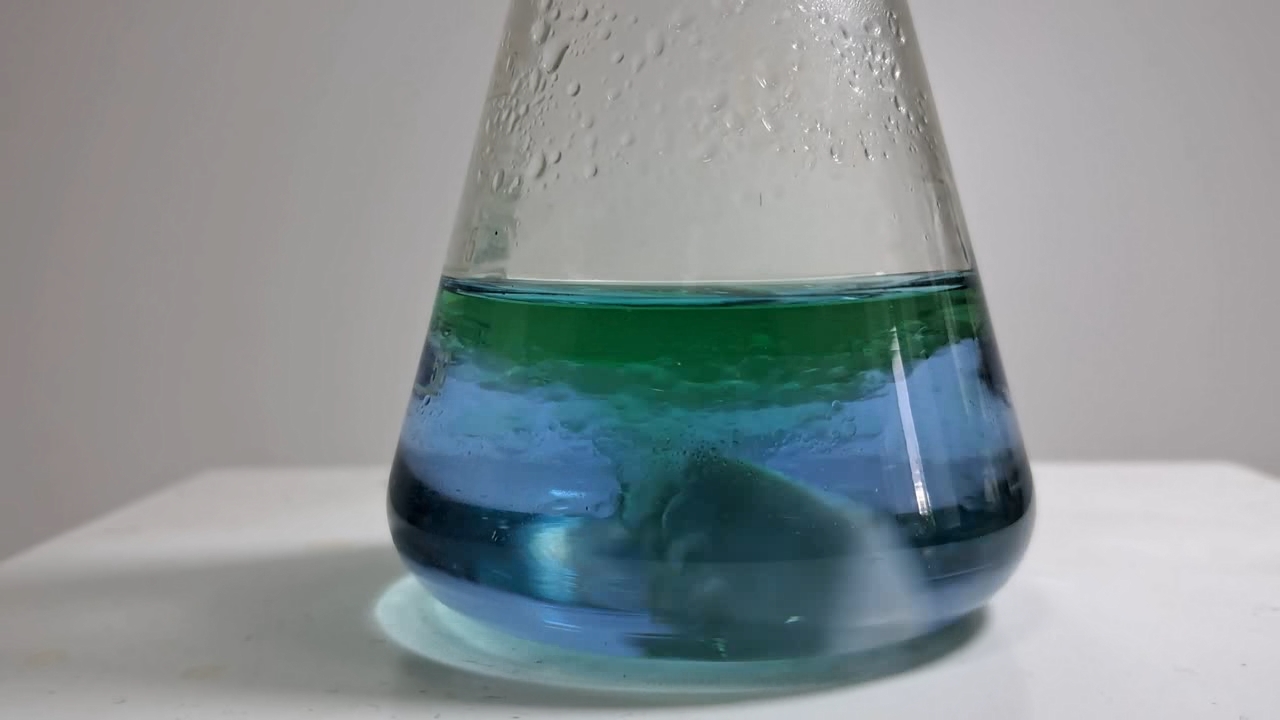
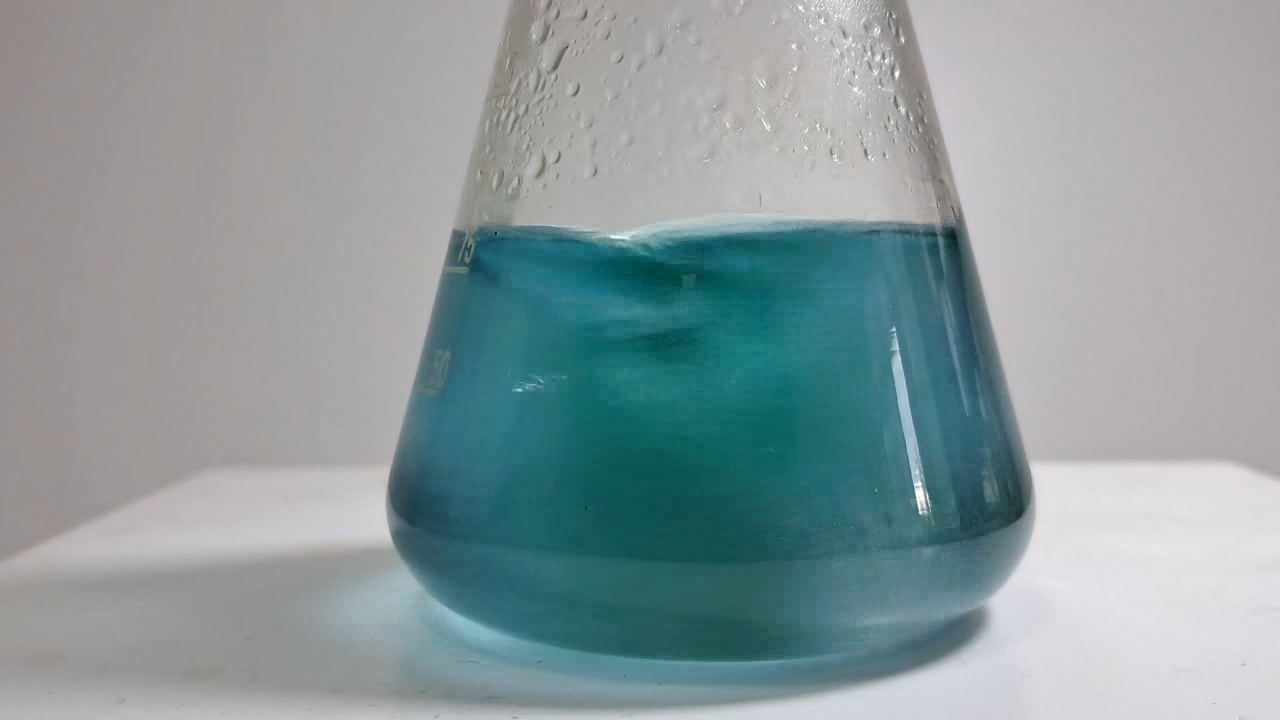
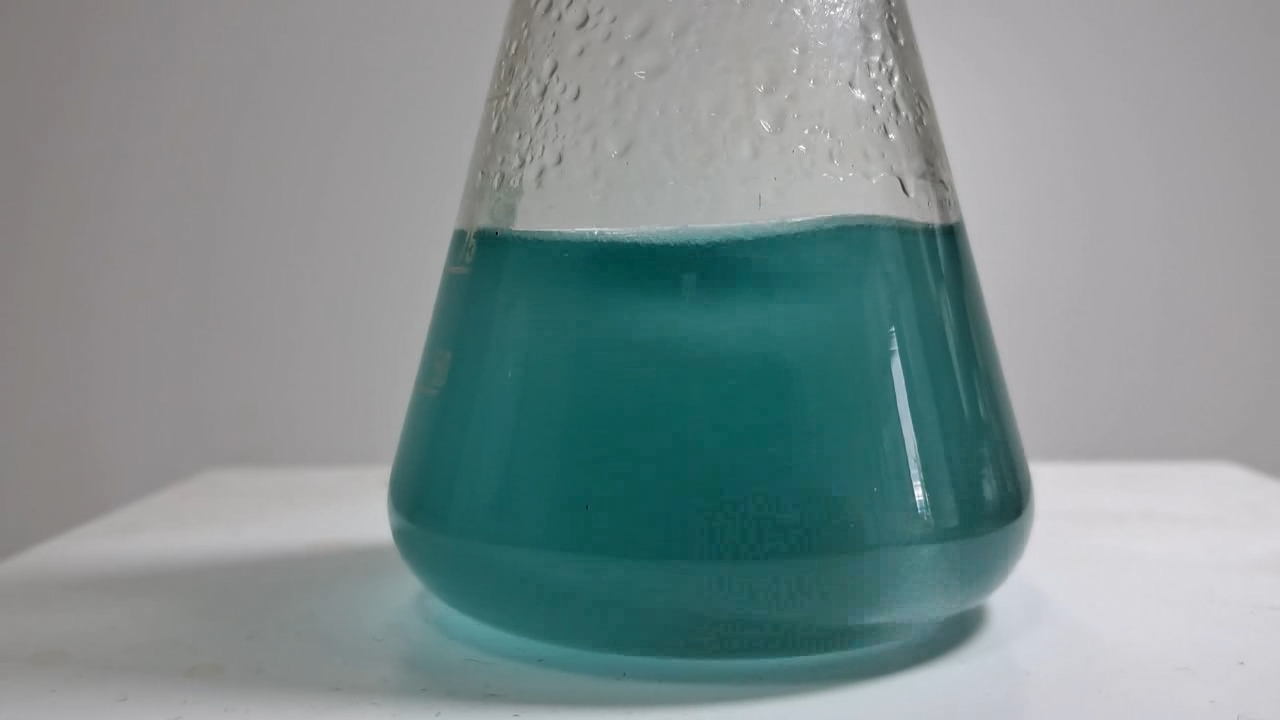
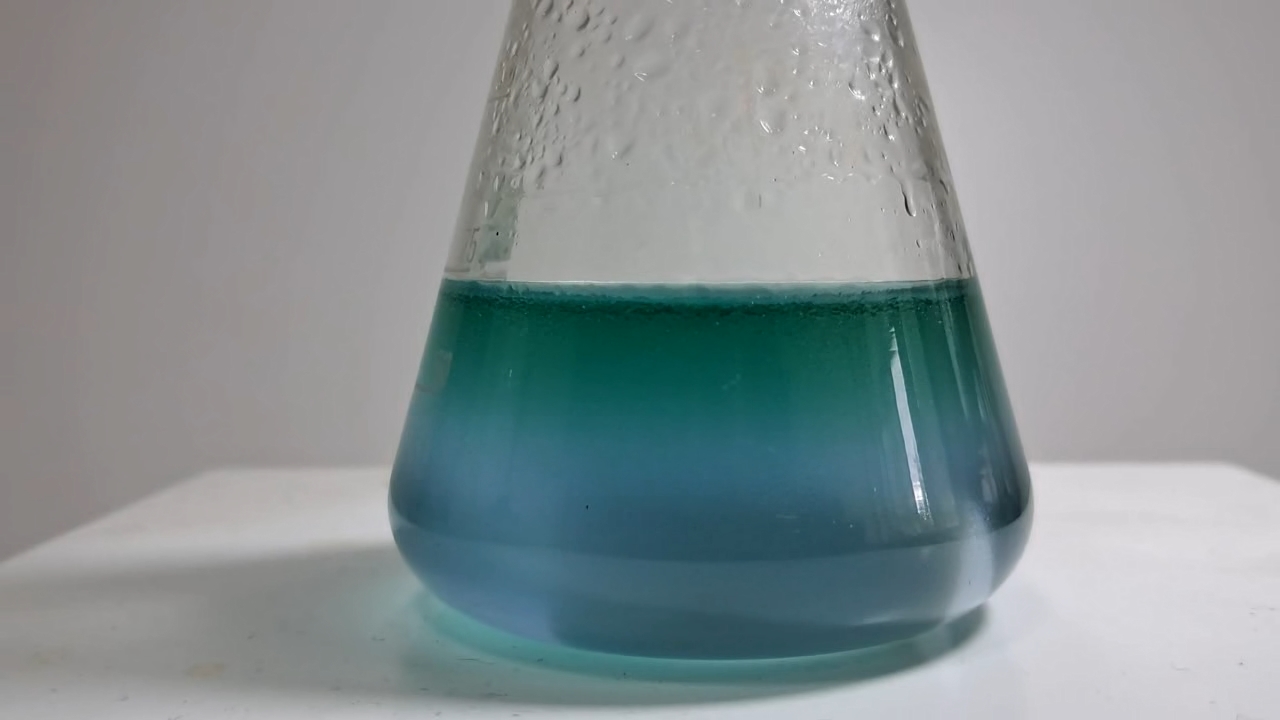
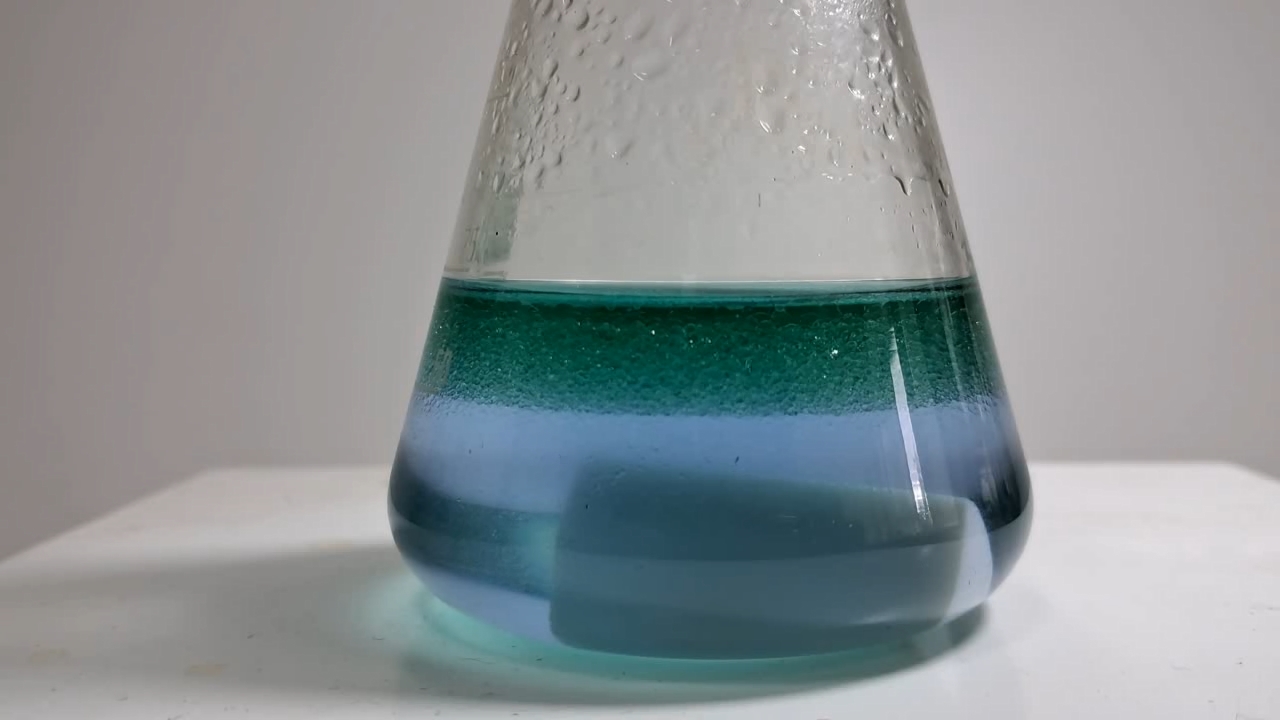
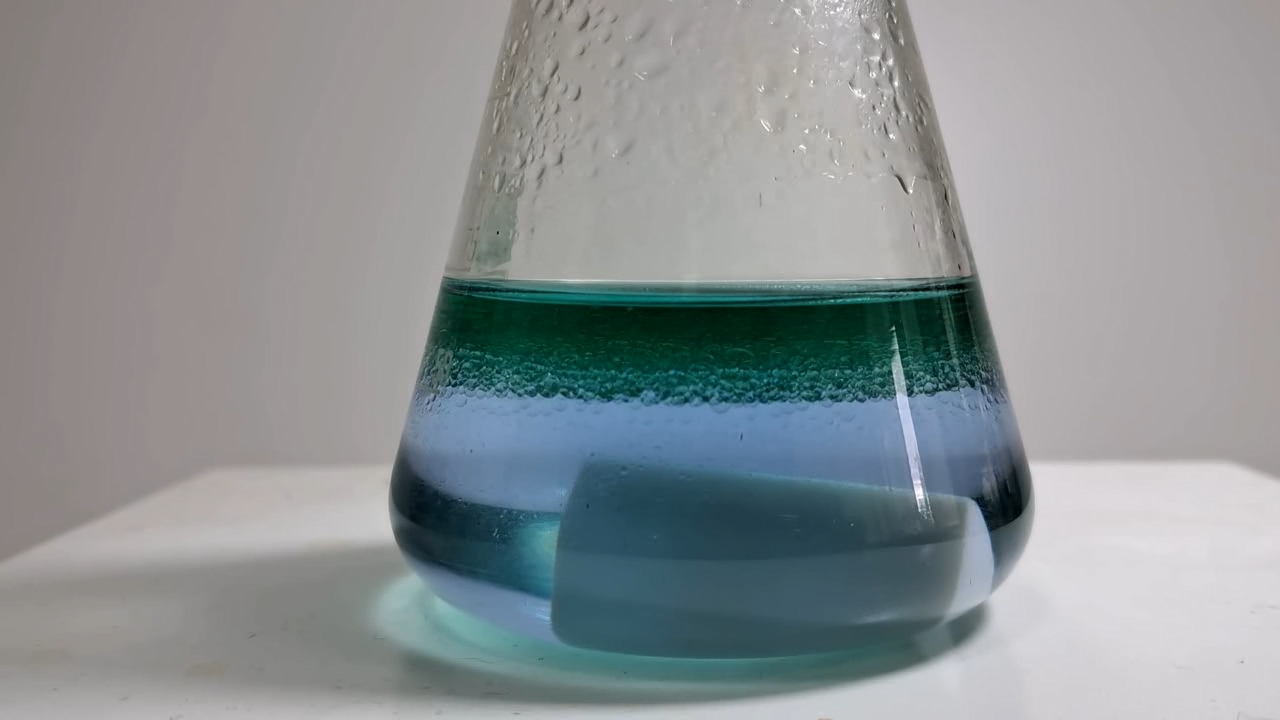
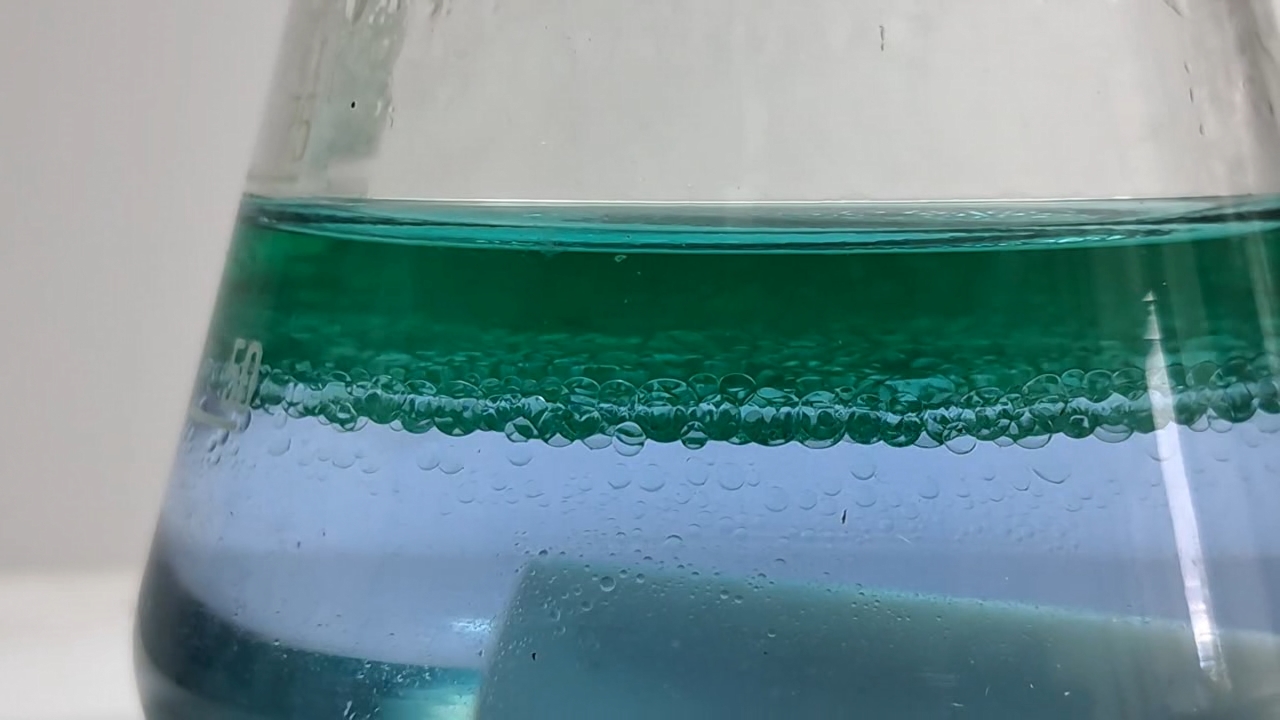
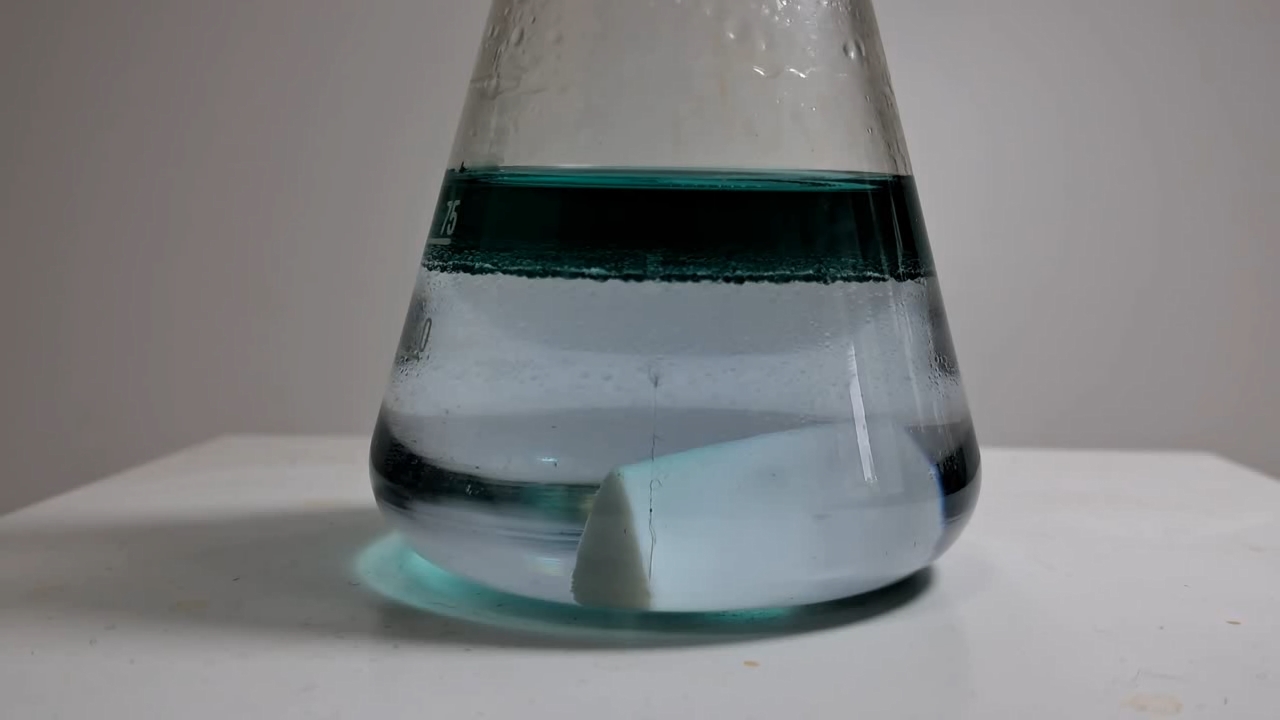
Бутилацетат, гидроксид натрия и универсальный индикатор - Часть 8 Let's get started. After the previous experiment, a blue-green aqueous solution remained in the flask, containing the products of butyl acetate hydrolysis and a universal indicator. Above it was a thick, colorless layer of butyl acetate. Since the hydrolysis proceeded slowly in the presence of ammonia, I decided to use a stronger base - sodium hydroxide. I added 5.2 g of sodium hydroxide to the same flask. A hissing sound was heard as gas bubbles evolved from the surface of the granules. Perhaps it was ammonia formed during the reaction of sodium hydroxide with ammonium acetate. Or perhaps they were steam bubbles, since dissolving sodium hydroxide in water releases a considerable amount of heat. The solution turned light blue. I turned on vigorous stirring. A green emulsion soon formed. At first glance, the green color of the emulsion suggested that the solution had become only slightly alkaline. Therefore, the added sodium hydroxide had been neutralized by the acetic acid formed during the hydrolysis of butyl acetate. The question arose: how could the alkali have been consumed so quickly, given that I had added such a large amount of sodium hydroxide? I turned off the stirrer. The butyl acetate emulsion separated into two layers. I was very surprised to see that the lower aqueous layer had turned deep blue, while the upper organic layer had turned yellow. It turned out that after adding sodium hydroxide, butyl acetate extracted the components of the universal indicator in a manner similar to ethyl acetate. As a reminder, in the previous experiment the butyl acetate layer had remained colorless after the addition of ammonia. Everything fell into place: the lower layer was blue, indicating a high pH in the aqueous solution. The green color of the emulsion was due to the superposition of the blue and yellow colors of the two different phases. I turned on the stirrer again, and a green emulsion formed once more. I stirred the mixture for a long time, occasionally turning off the stirrer to observe the colors of the aqueous and organic phases. While the stirrer was running, the mixture remained a green emulsion, but after it was turned off, two layers formed: blue and yellow. Over time, the yellow color of the organic layer became increasingly intense, while the blue color of the aqueous phase gradually faded. Unexpectedly, after another phase separation, I discovered that the aqueous solution had become light blue (cyan), while the butyl acetate had turned emerald green. After further stirring, the upper layer became dark green, and the lower layer turned light violet. As a result of hydrolysis, one of the reactants should eventually have been completely consumed: either butyl acetate or sodium hydroxide. Evidence that all the butyl acetate had reacted would be the disappearance of the organic layer. Evidence that all the sodium hydroxide had reacted would be a decrease in the pH of the aqueous layer, causing the indicator to change color from blue to green. However, neither occurred. The upper layer of butyl acetate did not disappear, and the aqueous layer remained strongly alkaline. Therefore, the hydrolysis of butyl acetate was proceeding too slowly. I added another 3.2 g of sodium hydroxide, but it did not help. Then I remembered that in my previous experiments, a dilute sodium hydroxide solution had led to relatively rapid hydrolysis of ethyl acetate. However, a saturated potassium hydroxide solution did not cause noticeable hydrolysis of that ester. Perhaps the alkali concentration should have been lowered rather than increased. Perhaps there was not enough water in the reaction mixture. After all, water also participates in the hydrolysis reaction, just like the ester. I added several portions of water (50 ml in total), poured the mixture into a larger flask, and resumed stirring. The butyl acetate layer remained dark green and persisted. The aqueous layer was faintly violet. I took a sample of the aqueous layer and dipped a strip of universal indicator paper into it. I compared its color with the standard pH scale. It turned out that the pH was 12 or higher. The results were unexpected, and I still cannot explain them. So I abandoned my attempts to complete the hydrolysis reaction and decided instead to test how the colors of the aqueous and organic layers would change upon the addition of acid. |
Butyl Acetate, Sodium Hydroxide, and Universal Indicator |
|
|
|
|
|
|
|
|
|
|
|
|
|
|
|
|
|
|
|
|
|
|
|
|
|
|
|
|
|
|
|
|
|
|
|
|
|
|
|
|
|
|
|
|
|
|
|
|
