Chemistry and Chemists № 2 2026
Journal of Chemists-Enthusiasts
| Content | Chemistry experiments - video | Physics experiments - video | Home Page - Chemistry and Chemists |
|
Chemistry and Chemists № 2 2026 Journal of Chemists-Enthusiasts |
Universal pH Indicator and Extraction - pt.1, 2, 3 Chemist |
|
Having noticed a mistake in the text, allocate it and press Ctrl-Enter
Inscrutable Are the Ways of Research (Introduction) - Part 1
It often happens that a scientist conducting research in one area obtains results that prove to be of interest in another, unexpected field - one completely different from the one for which the research was originally planned.
Универсальный pH индикатор и экстракция Неисповедимы пути познания (вступление) - Часть 1 For example, studying the frequency and co-occurrence of words in different languages was long considered not only useless but also rather boring. Later, this work became crucial for the development of machine translation and subsequently served as one of the foundations for the development of artificial intelligence. Research on inconspicuous molds gave humanity antibiotics, which have saved millions of lives. The curious question, "Can insects cross the ocean on their own?" ceased to seem merely curious many years later, when it was discovered that insect pests that have developed resistance to a particular pesticide are able to spread this resistance to other insect populations located on the other side of the ocean. It is much more common for unexpected experimental results to find no application in this or any other field and to fail to lead to new theories or directions of research. They remain little more than curiosities. However, it is all the more gratifying when a scientist subsequently manages to obtain something interesting and useful - something that was never part of the original plan. Furthermore, if the outcome of research is known in advance, it is no longer research. Many modern scientific papers no longer seem particularly scientific when this criterion is applied. Strictly speaking, the experiments described in our journal are not scientific research. They are primarily chemical demonstrations intended for educational purposes. Nevertheless, the effect described above also applies here: often, you set out to do one thing but end up with something completely different that is also useful. Recently, I performed the alkaline hydrolysis of the esters - methyl acetate, ethyl acetate, and butyl acetate. I added an indicator to the aqueous solution: either phenolphthalein or a universal pH indicator. In this case, the indicator played a supporting role - a change in the color of the organic dyes indicated a change in pH. In turn, a change in the pH of the solution is one of the criteria for monitoring ester hydrolysis. However, the indicator behaved as more than just a "pH meter substitute." The organic dyes were sometimes extracted from the aqueous solution into the ester layer, and the resulting color changes in the liquid layers were unexpected. The ester, in turn, acted not only as a participant in the hydrolysis reaction but also as an extracting agent. These results prompted me to conduct a new series of experiments in which the universal indicator served not as an auxiliary substance but as the main subject of investigation. In the experiments with esters, two processes occurred simultaneously: ester hydrolysis and the extraction of organic dyes from the aqueous solution. To facilitate interpretation of the results, one of these processes had to be eliminated. Therefore, it was necessary to replace the ester with a solvent that does not undergo hydrolysis (and does not otherwise react with the alkali). Hexane was the simplest choice. |

|
|
|
|
Having noticed a mistake in the text, allocate it and press Ctrl-Enter
Universal Indicator, Hexane, n-Butanol, and Sodium Hydroxide - Part 2
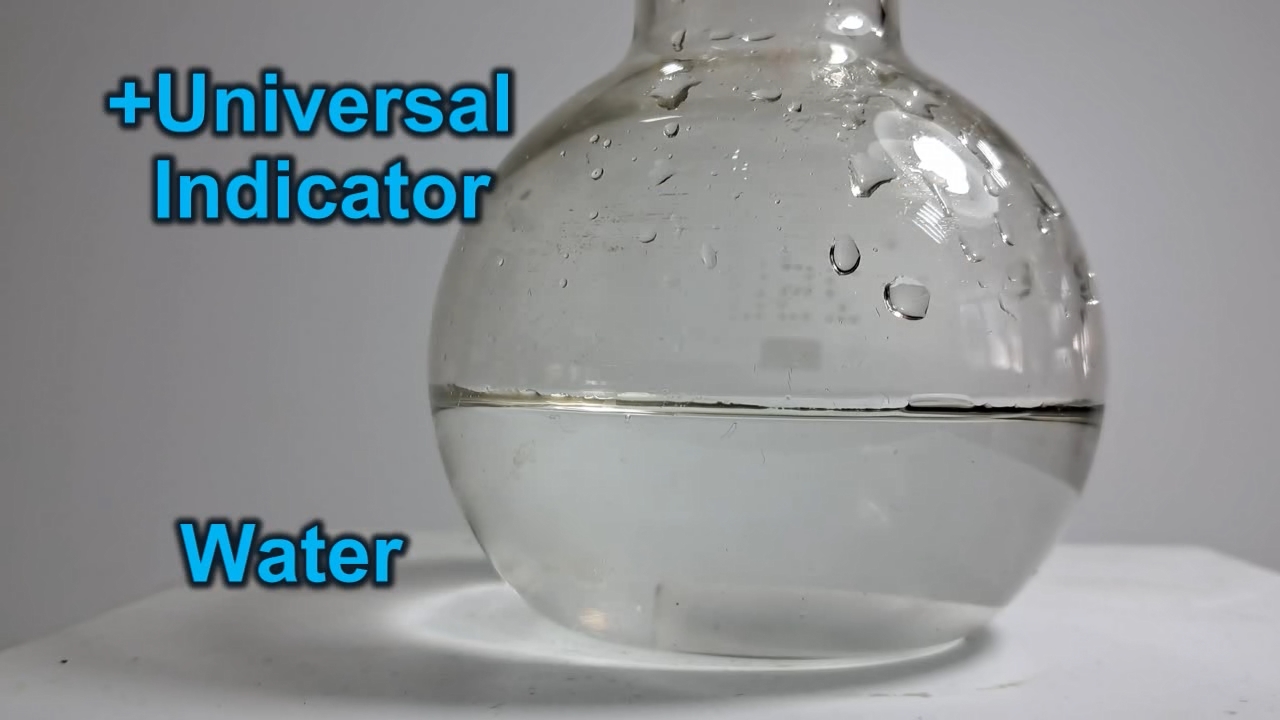
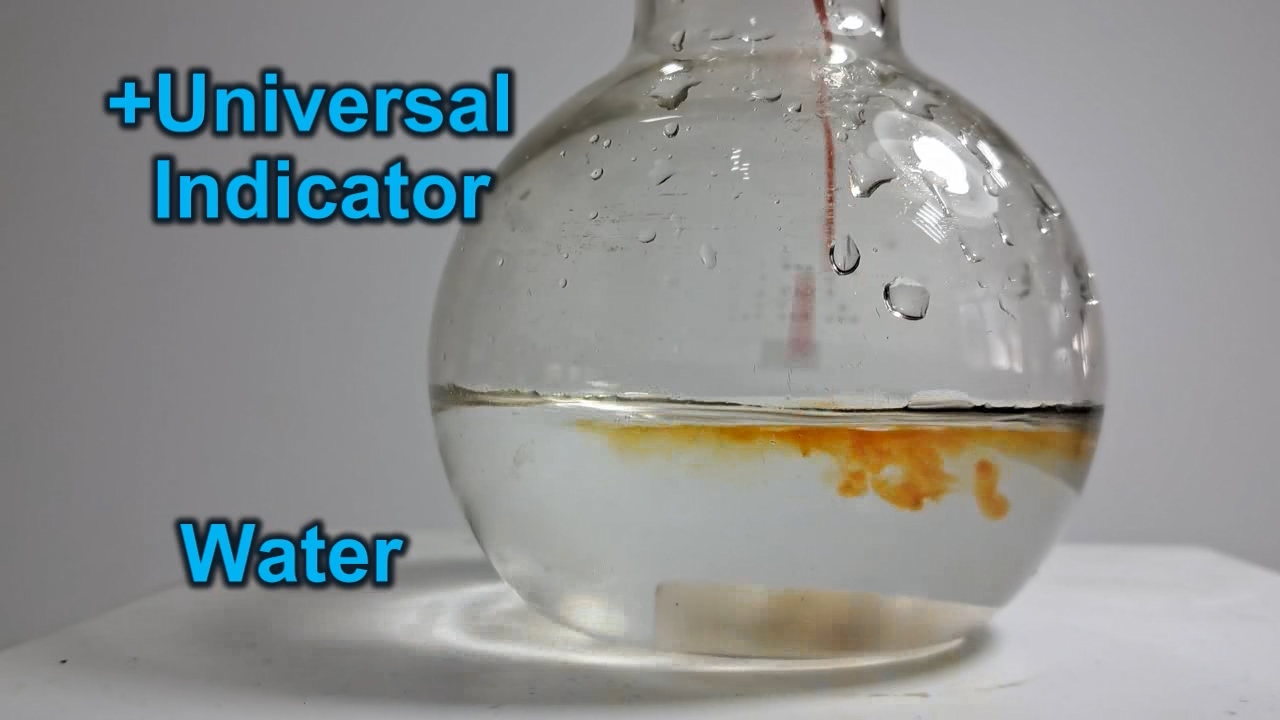
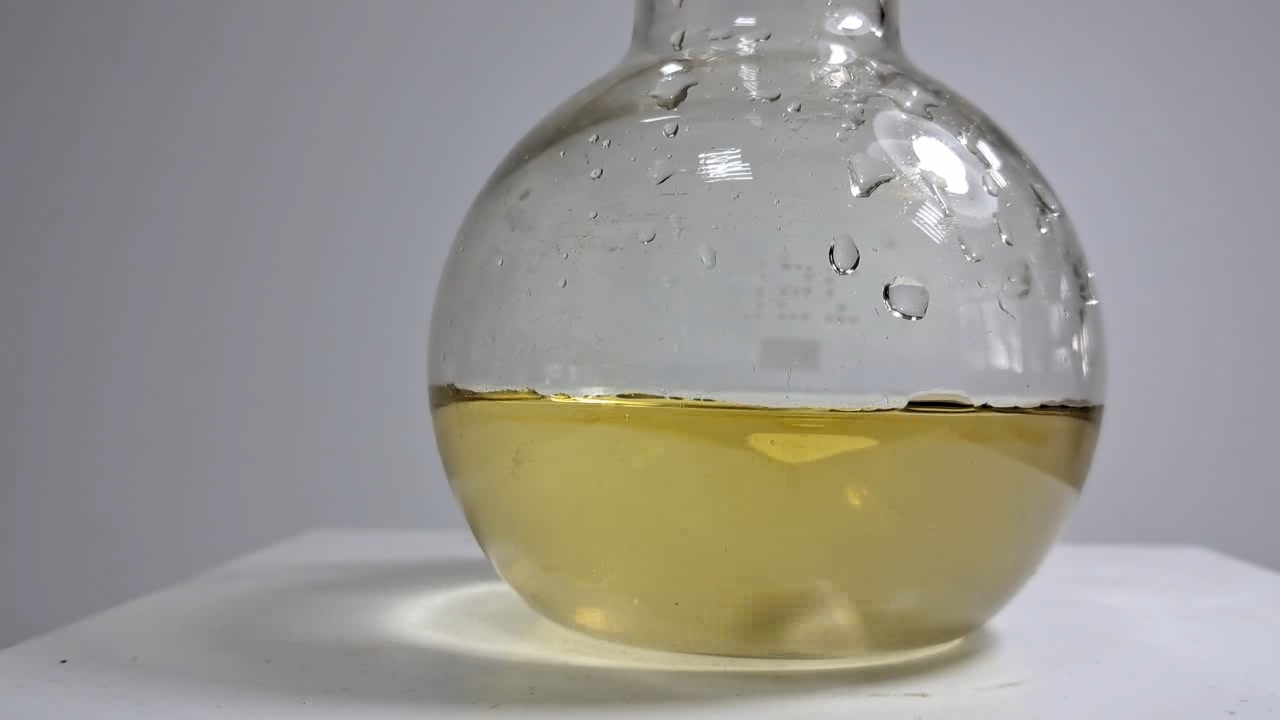
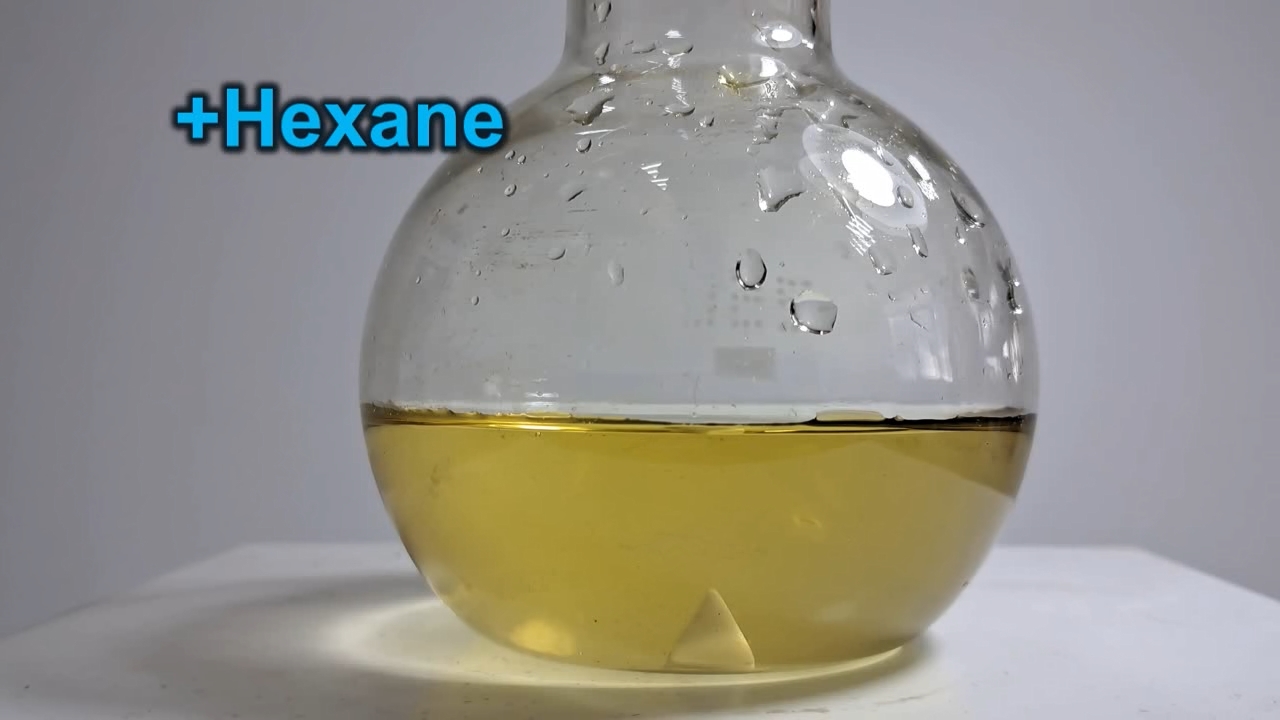
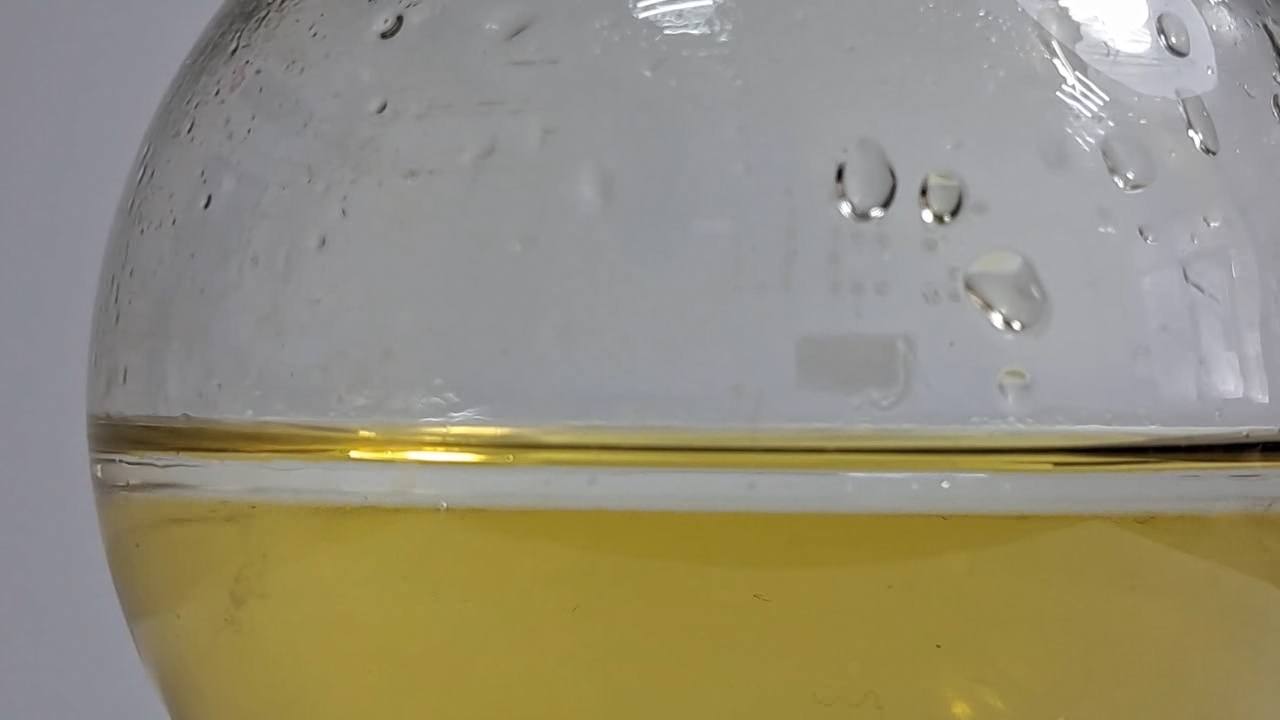
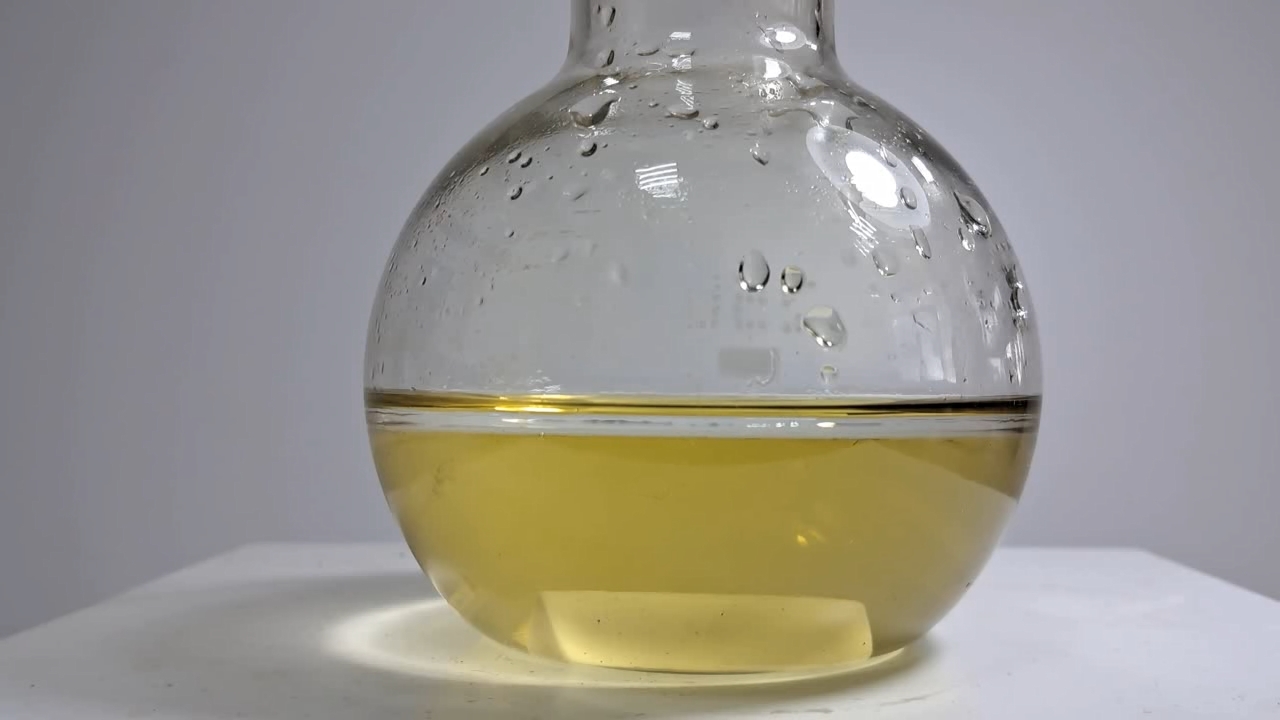
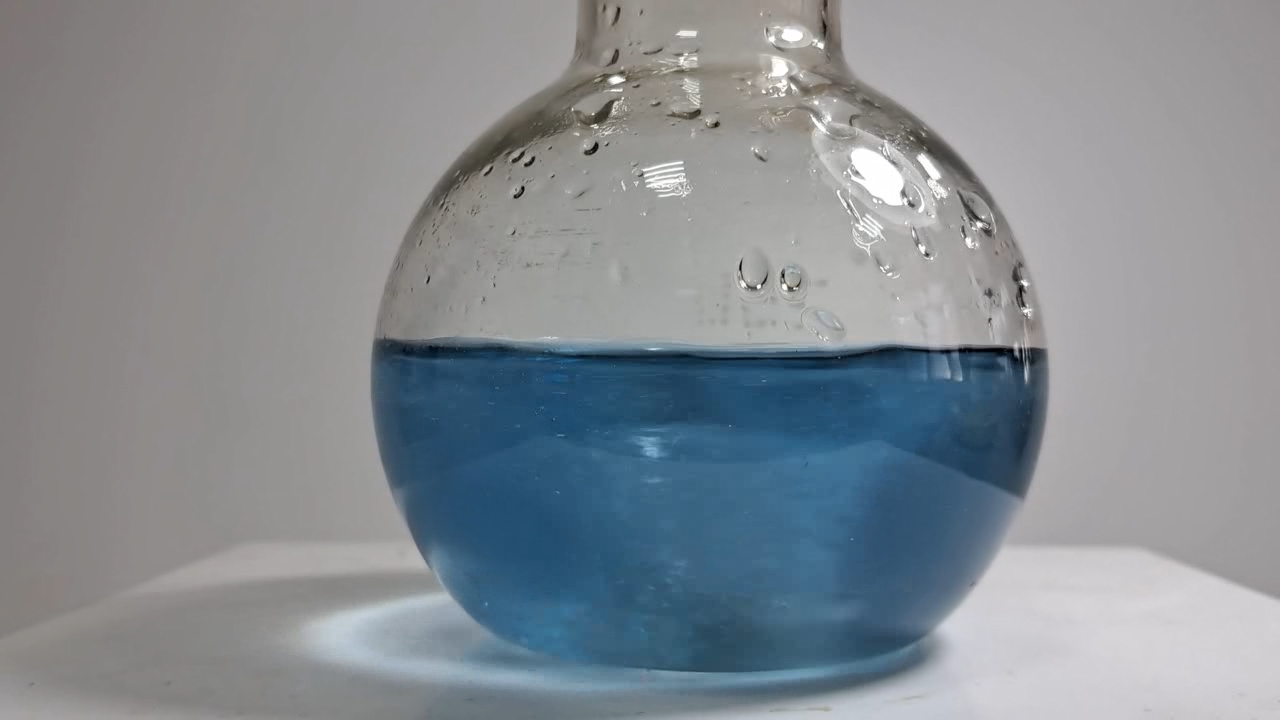
I poured 100 mL of distilled water into a flask, added a few drops of universal indicator solution, and turned on the magnetic stirrer. The solution turned yellow. I then added 10 mL of hexane; the solvent formed a clear, colorless upper layer. I turned on the magnetic stirrer for one minute. After stirring was stopped, the two liquid layers formed again, visually indistinguishable from the original ones.
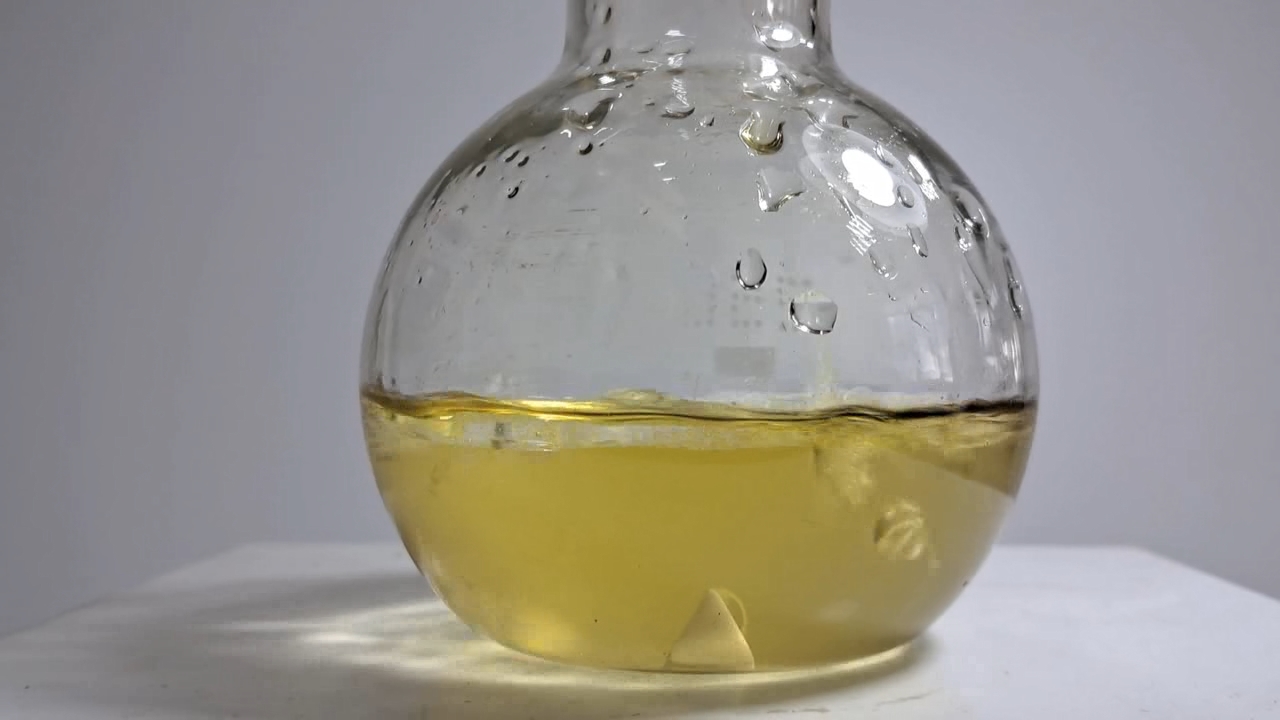
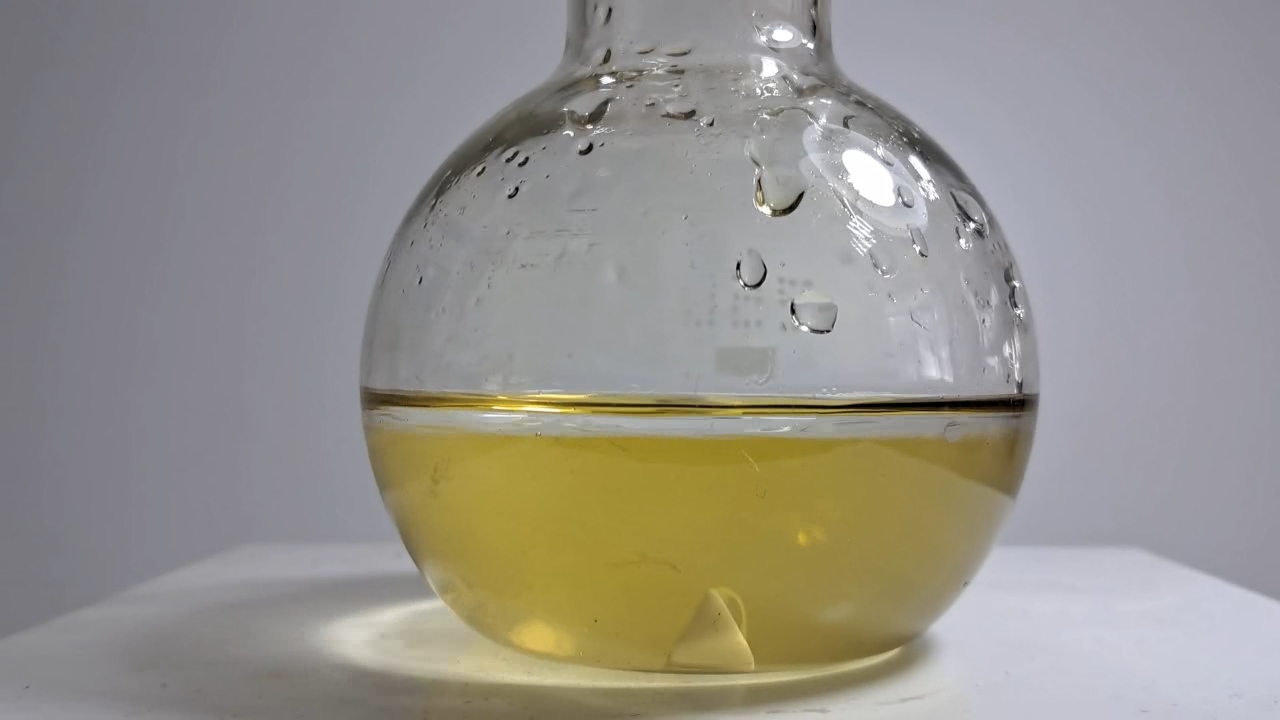
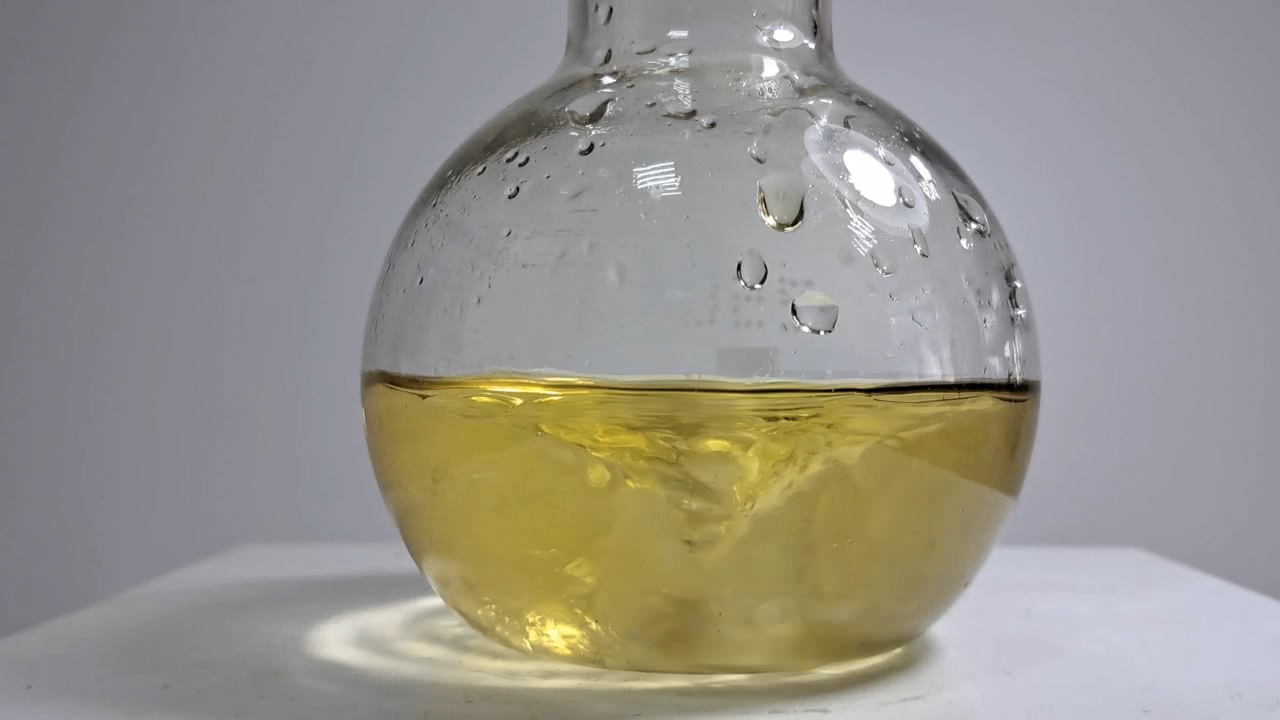
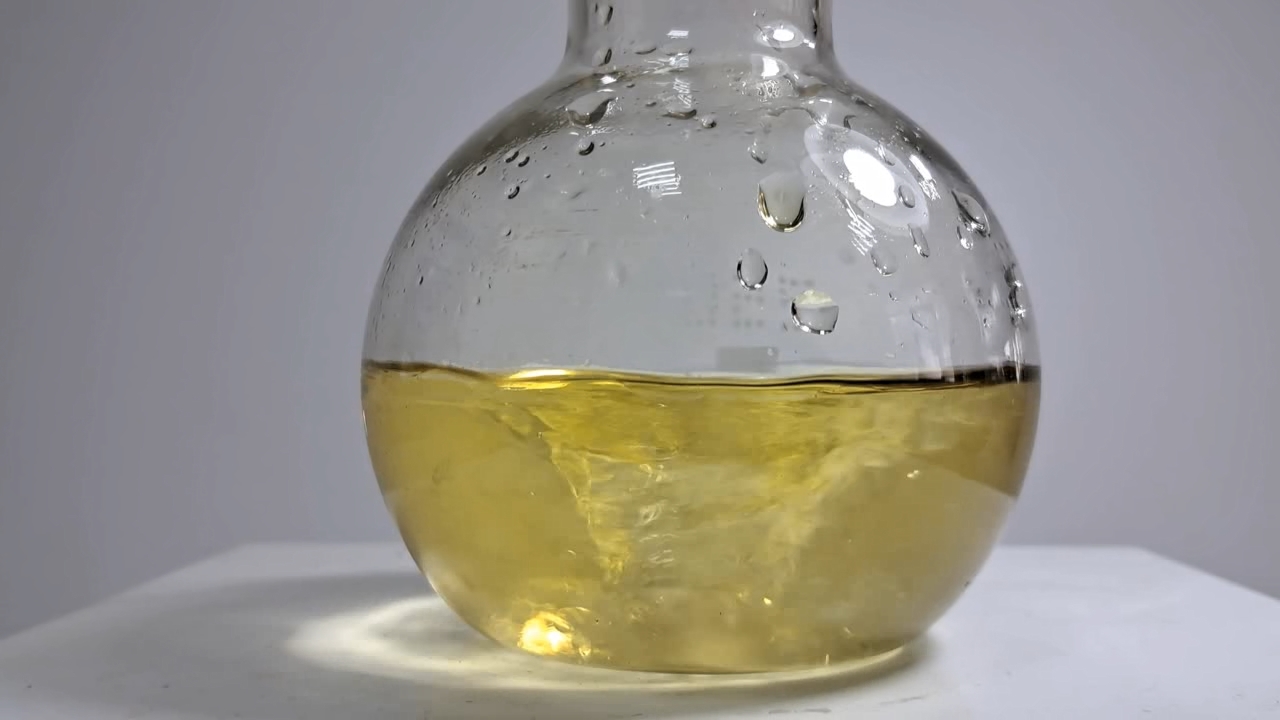
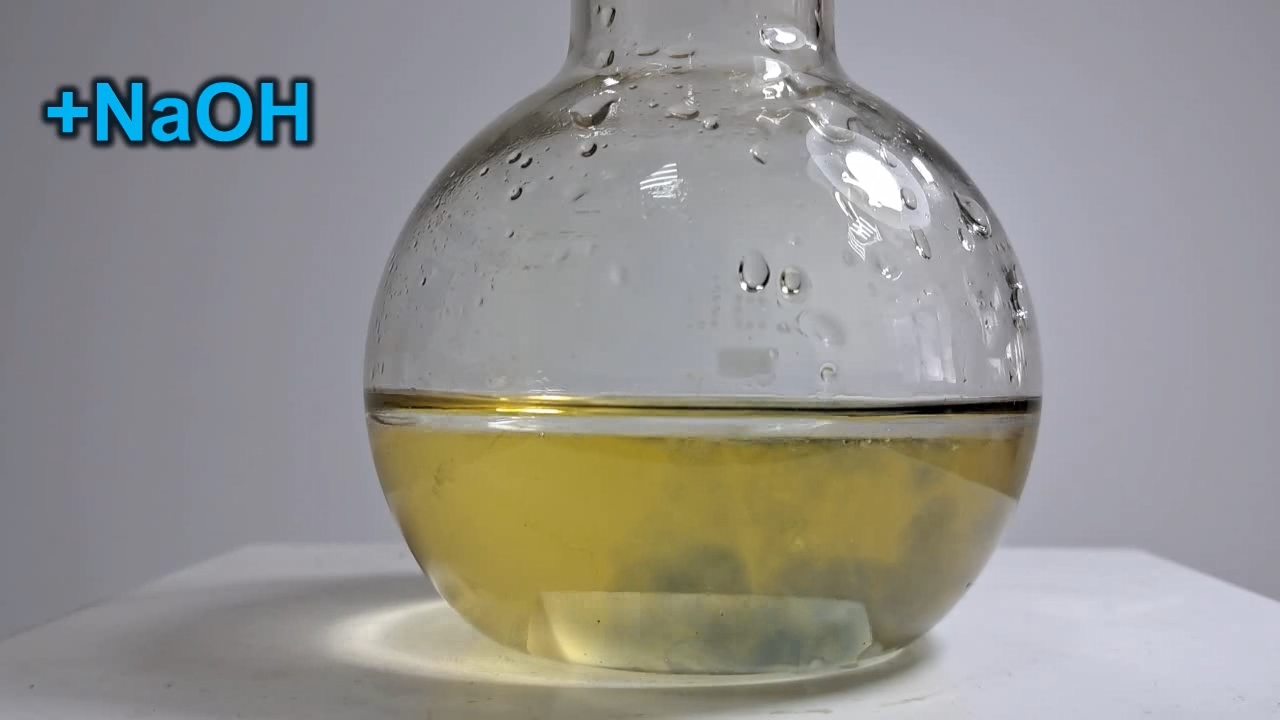
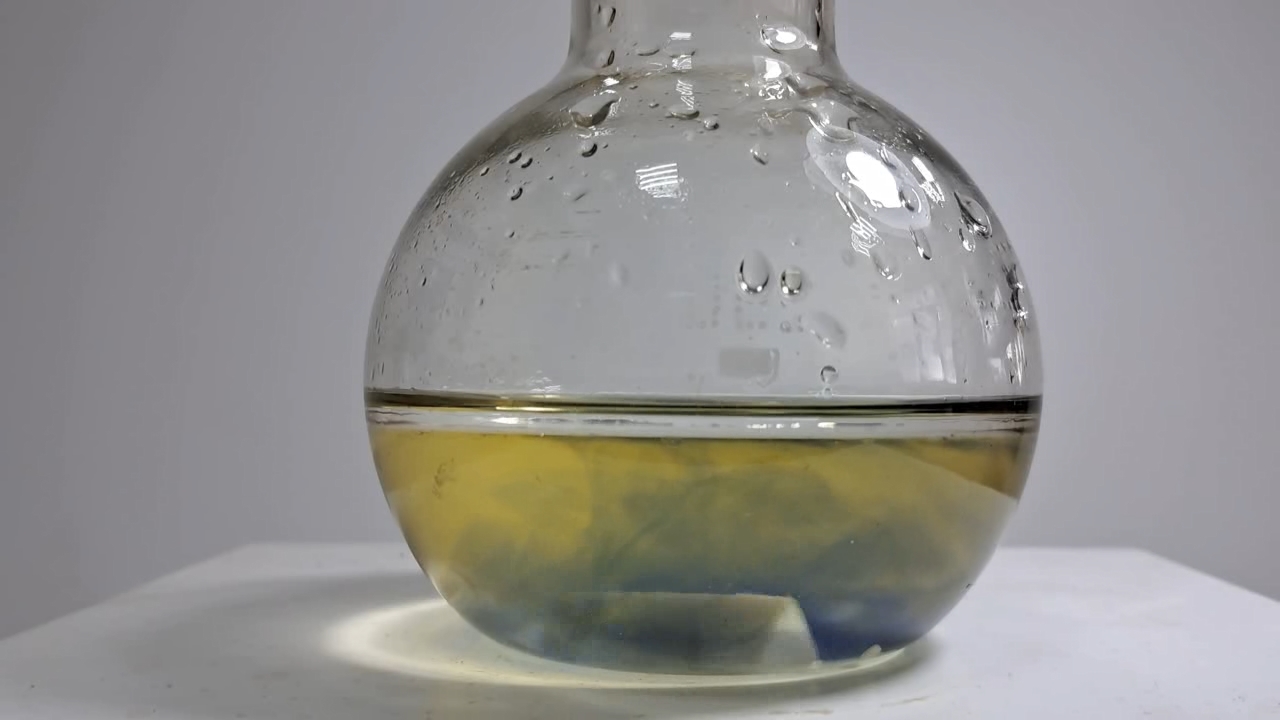
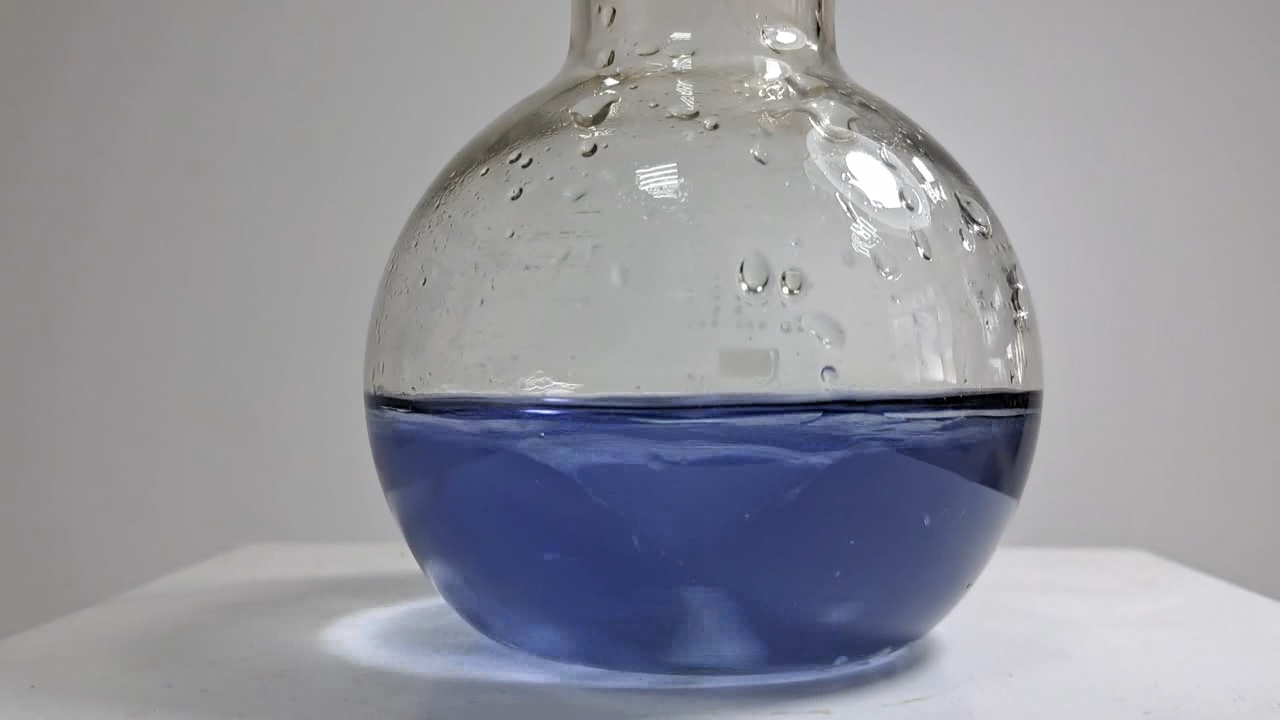
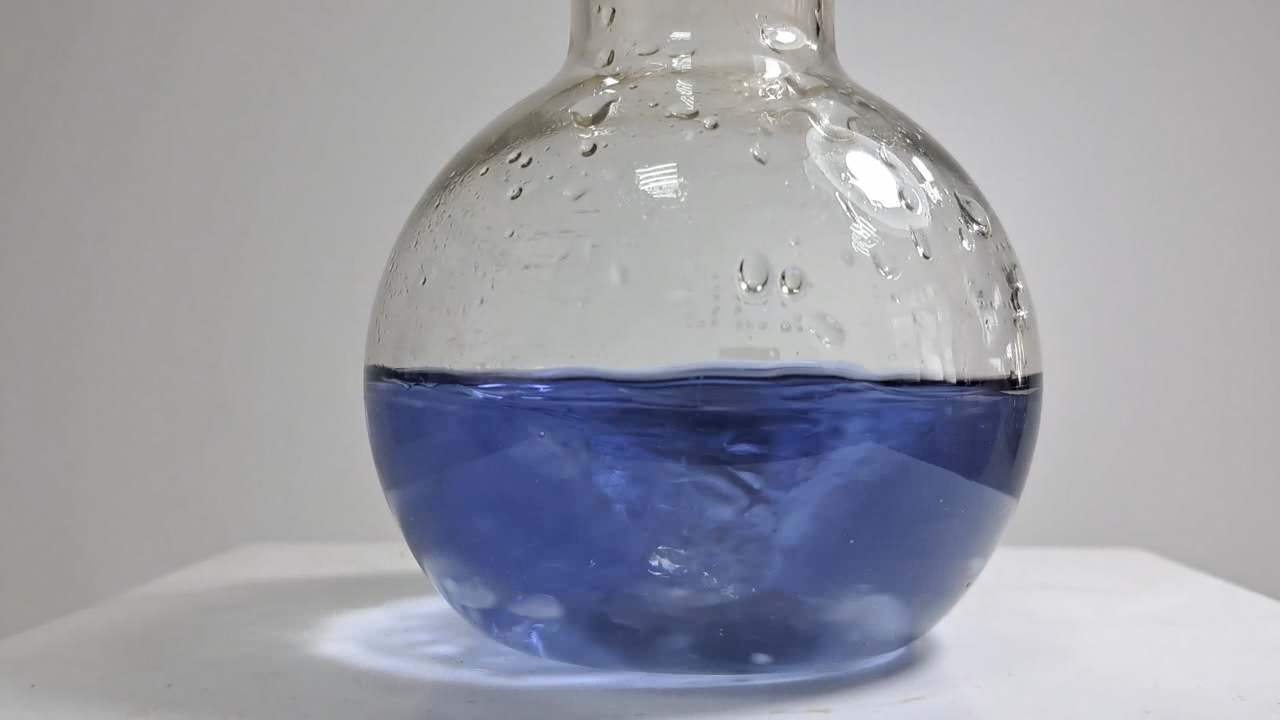
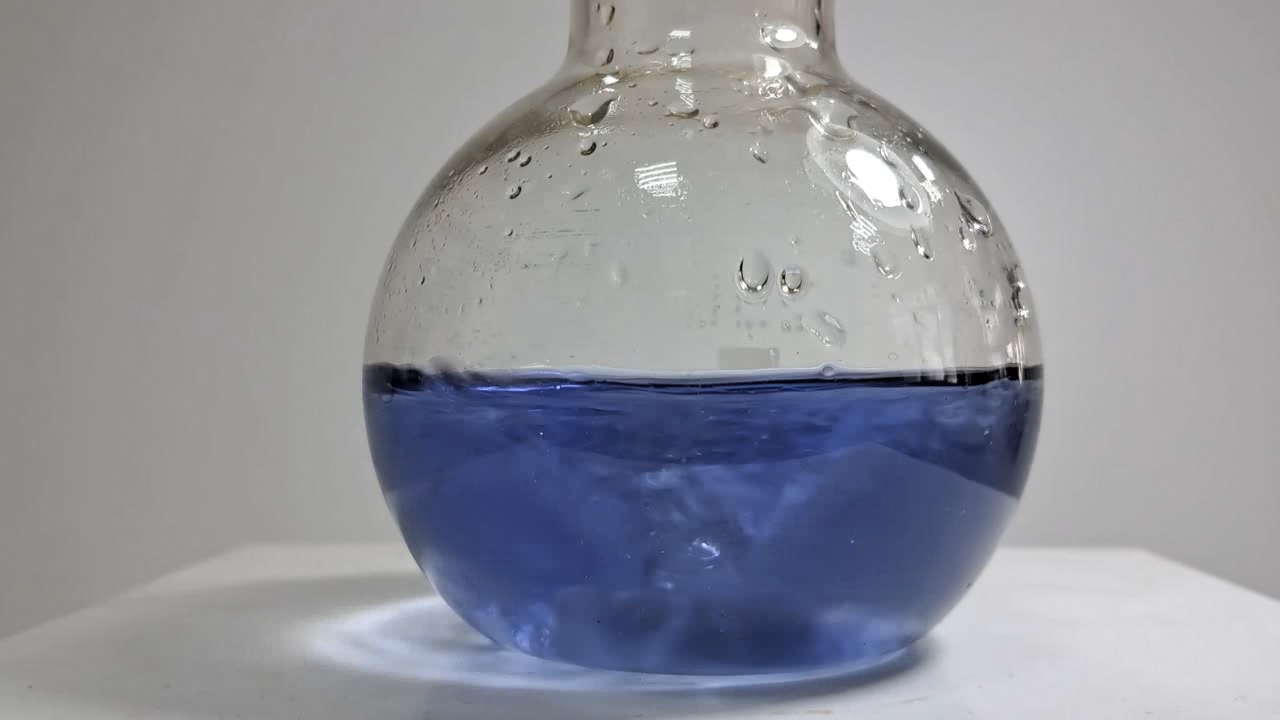
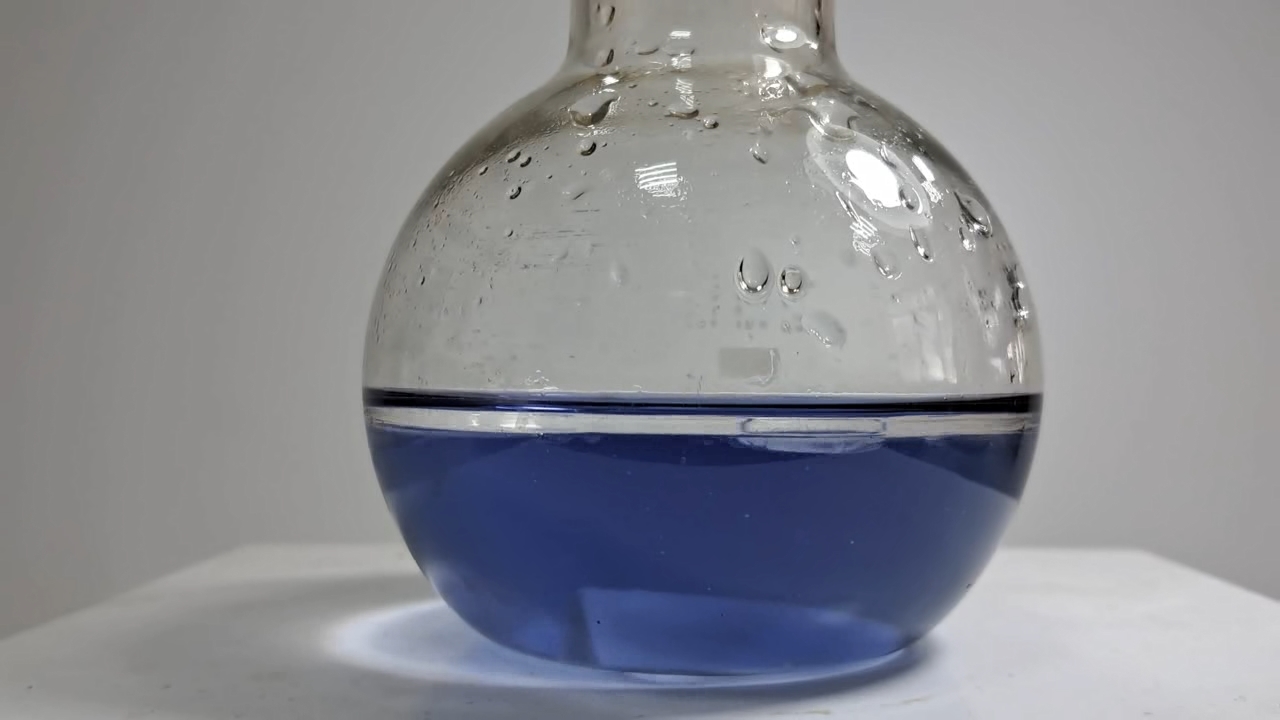
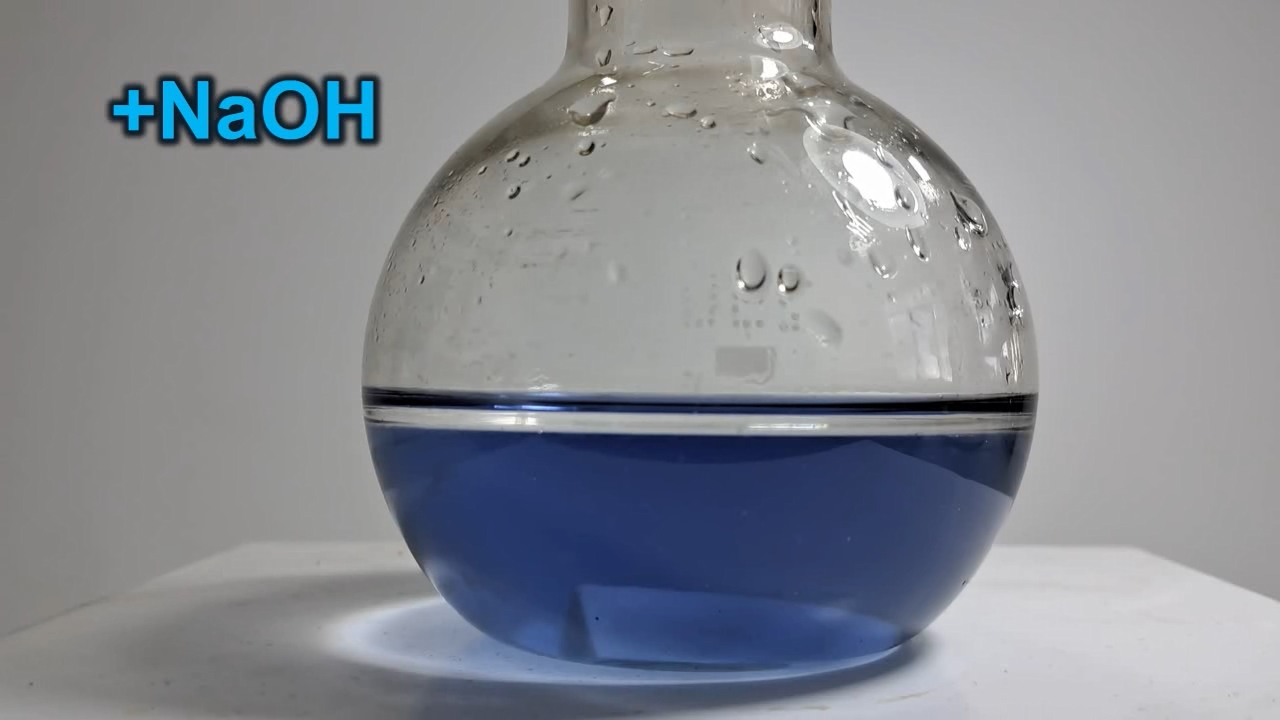
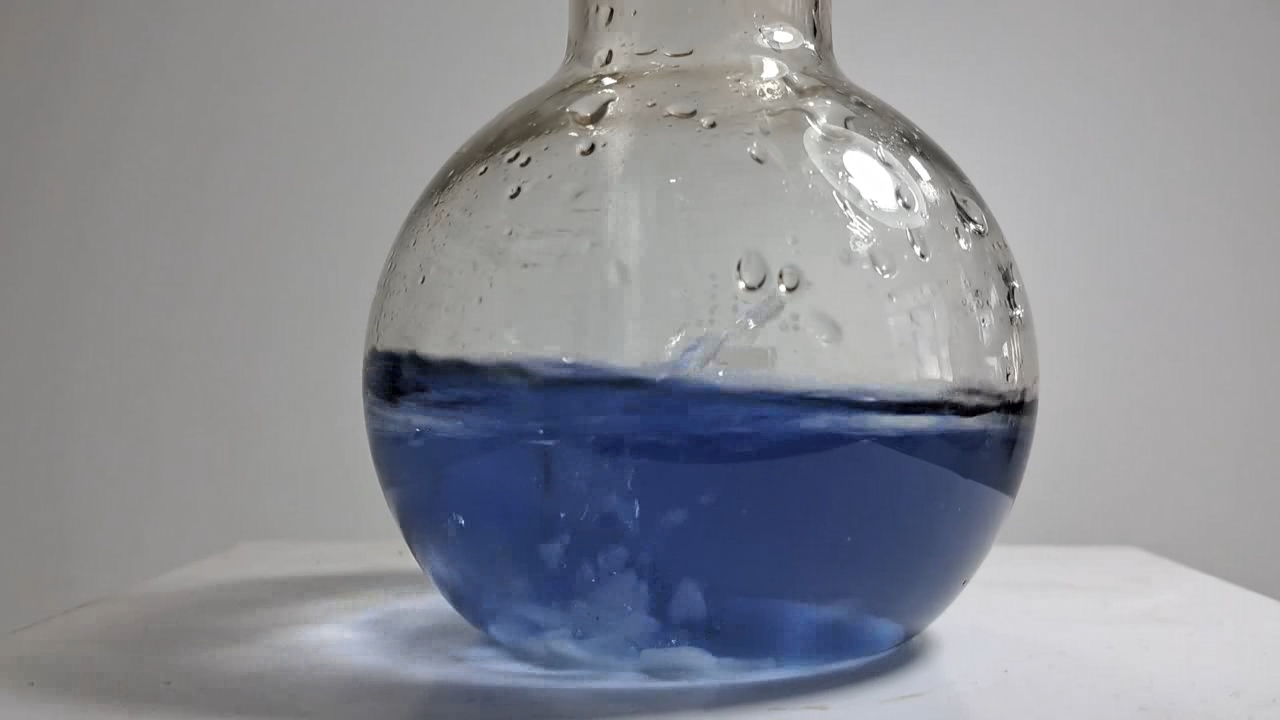
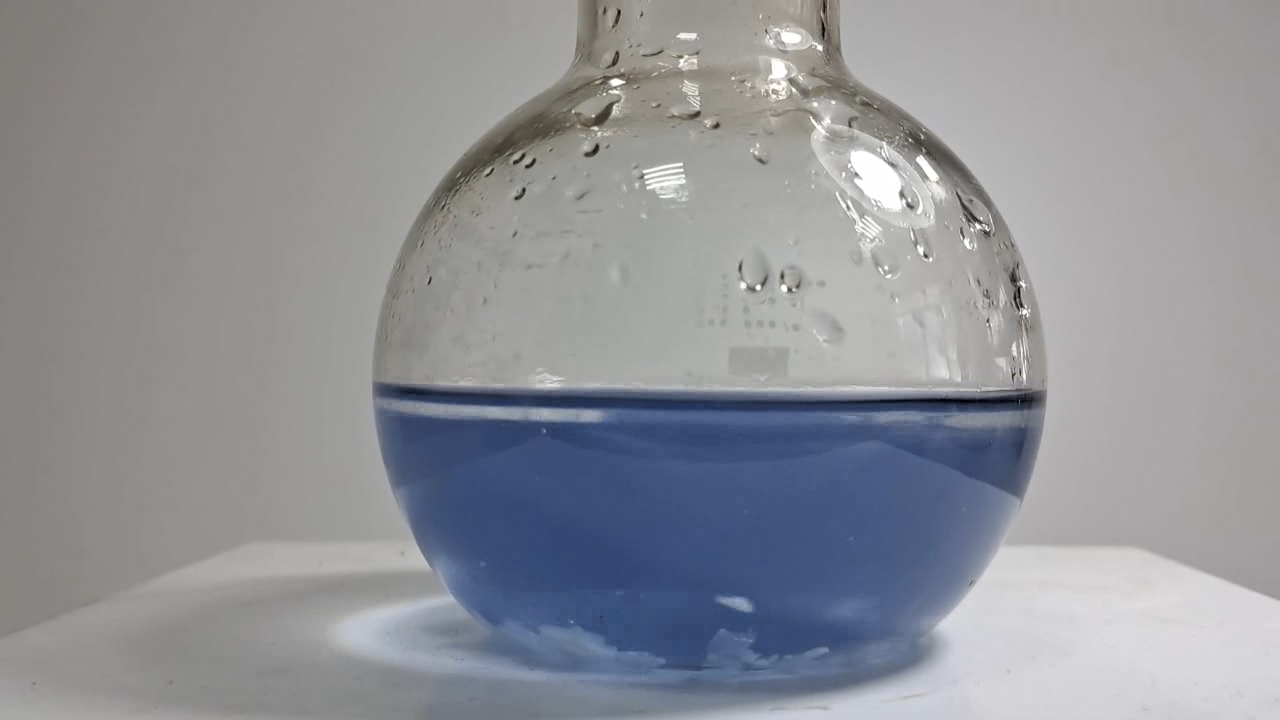
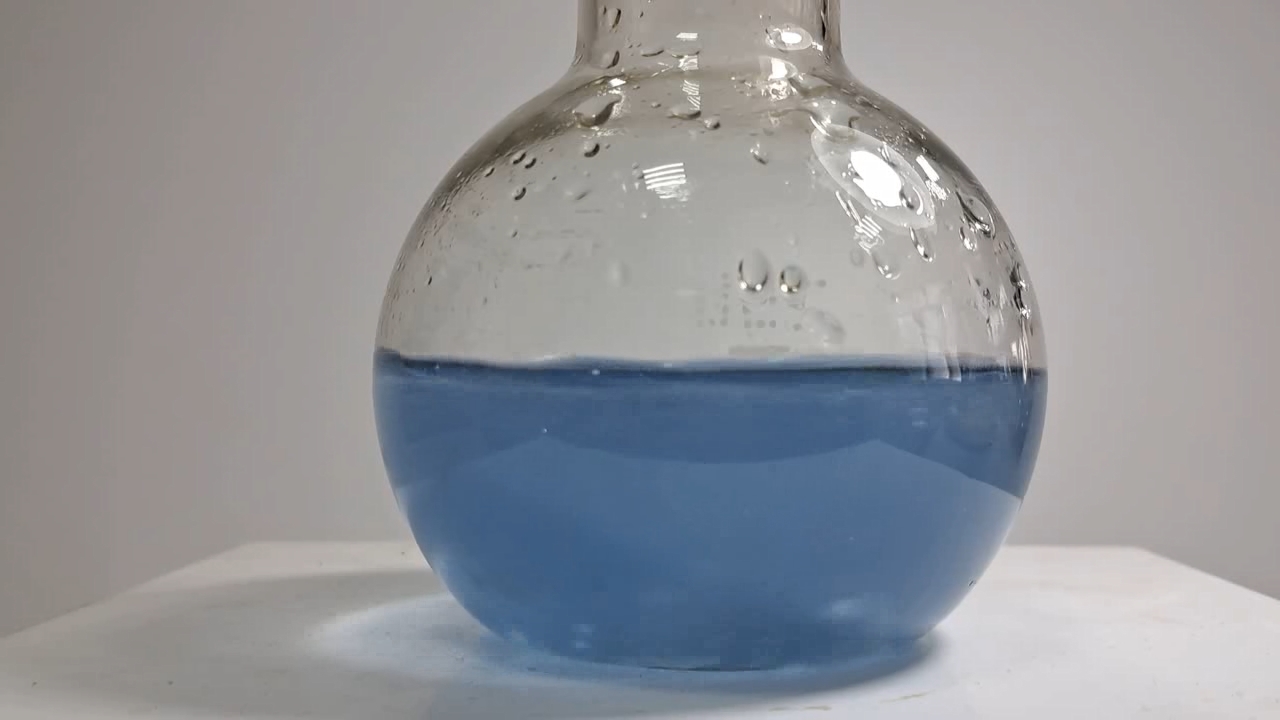
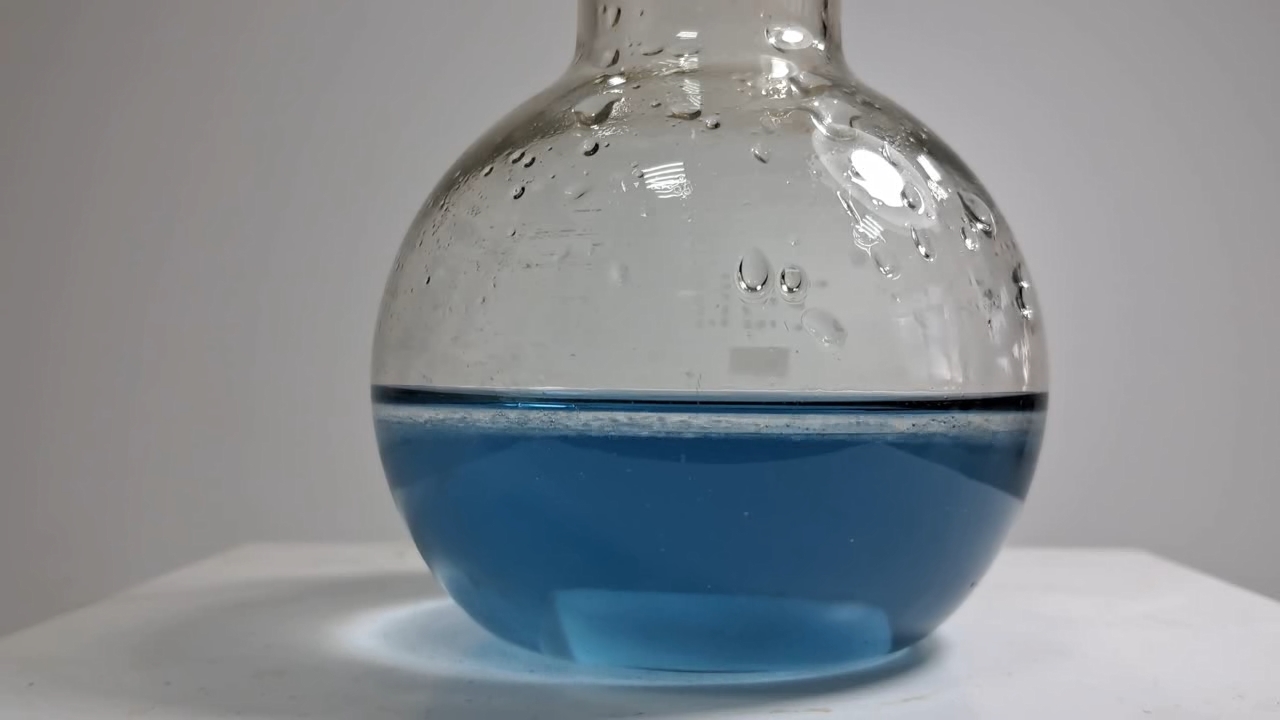
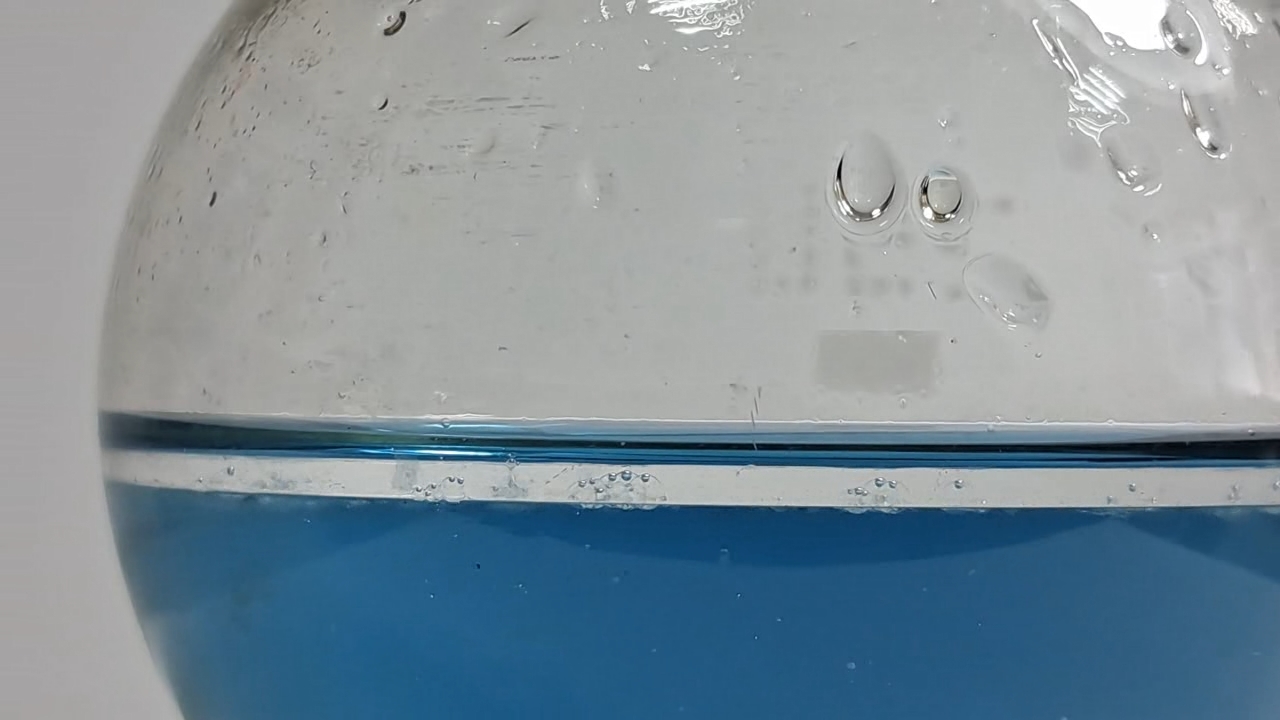
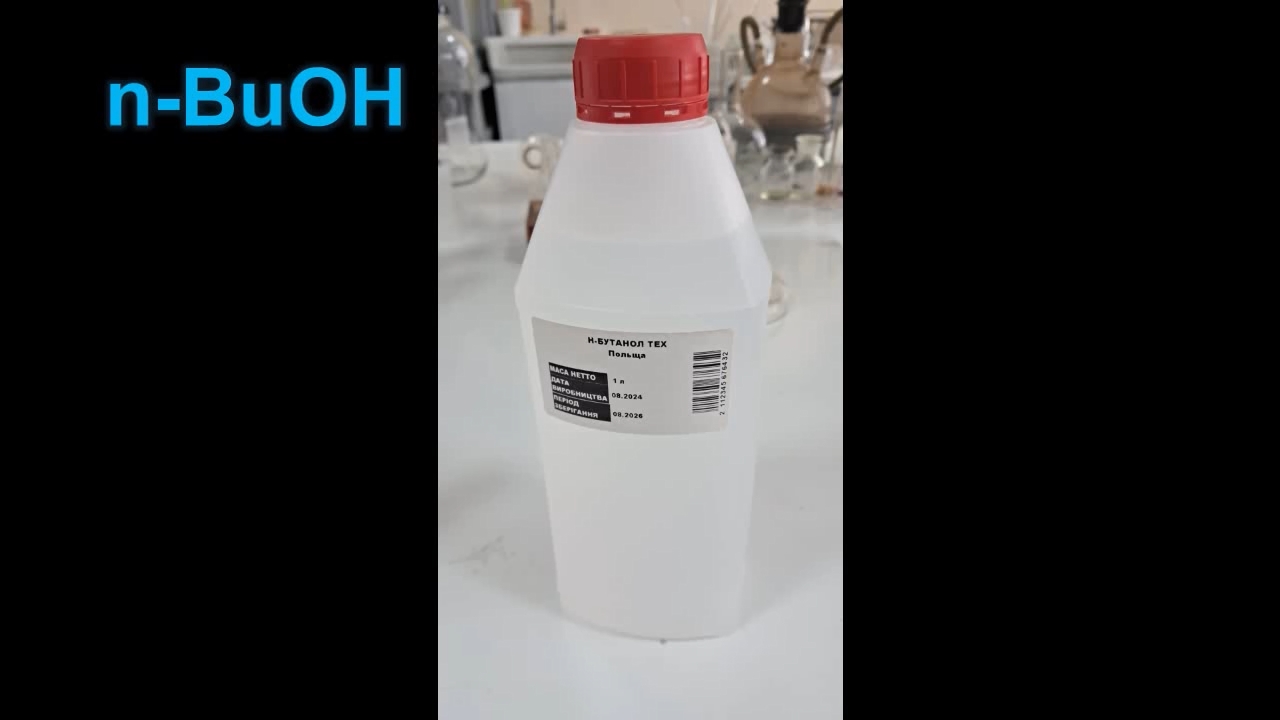
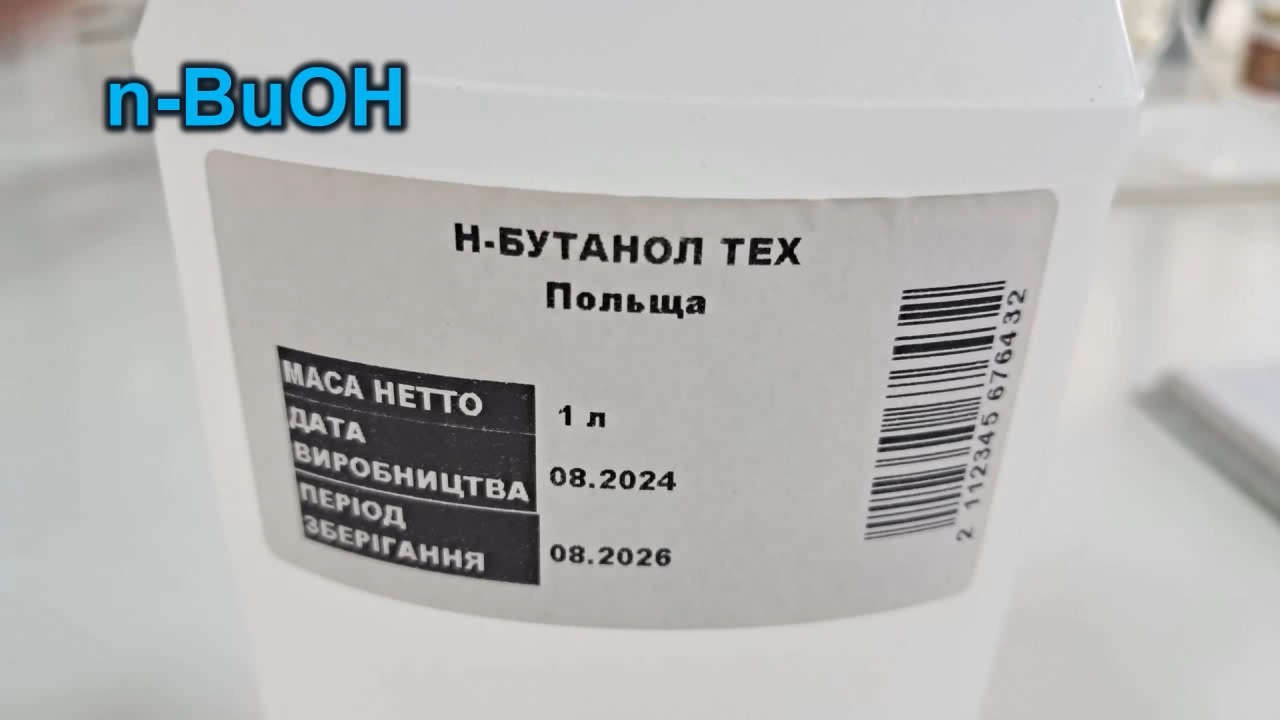
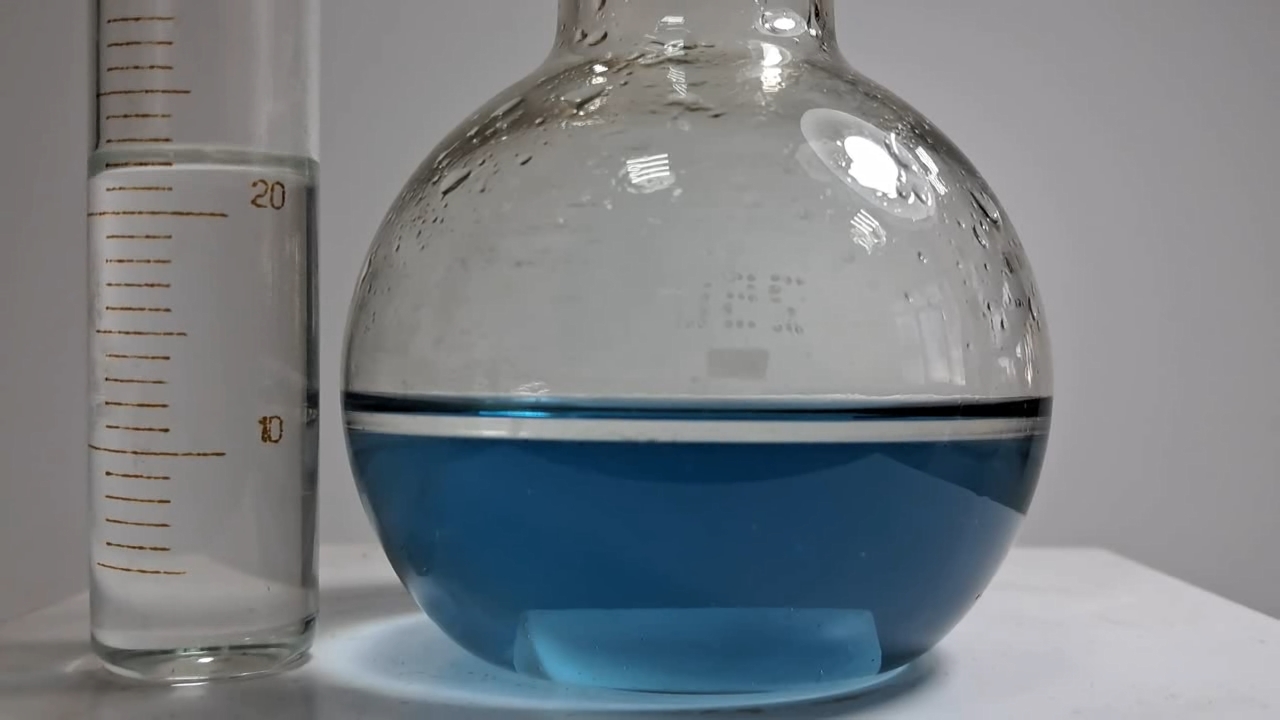
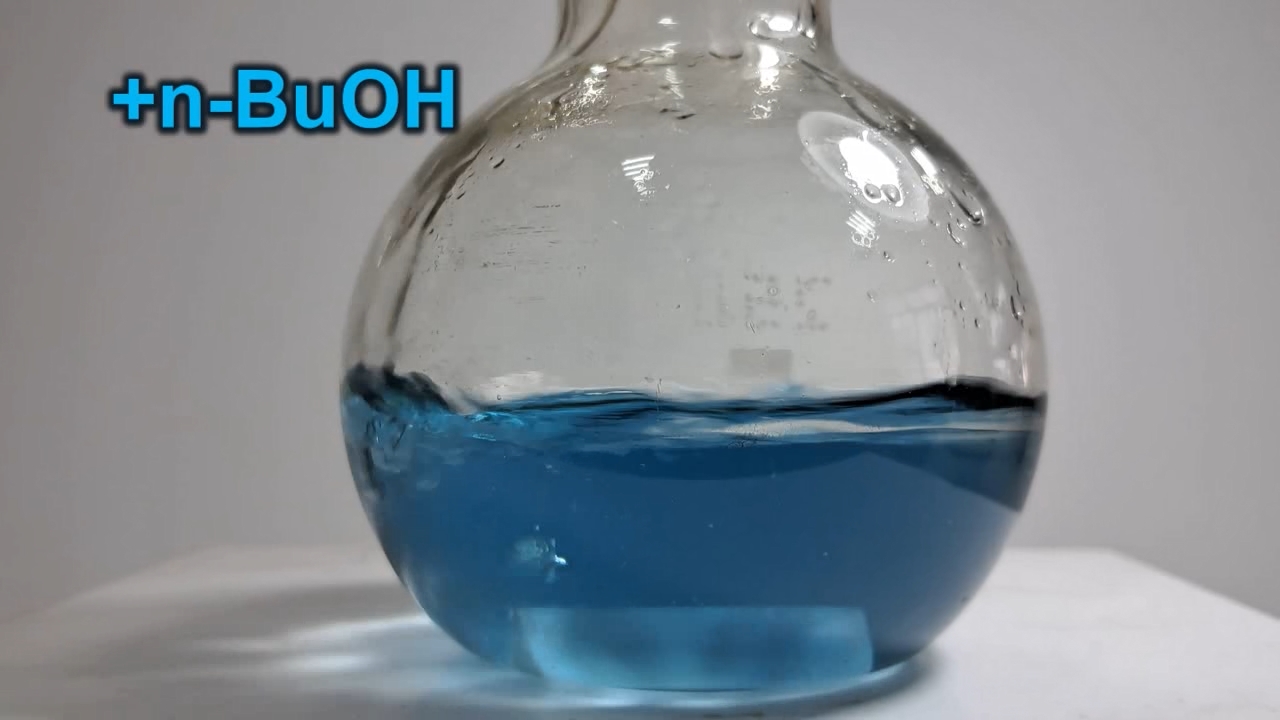
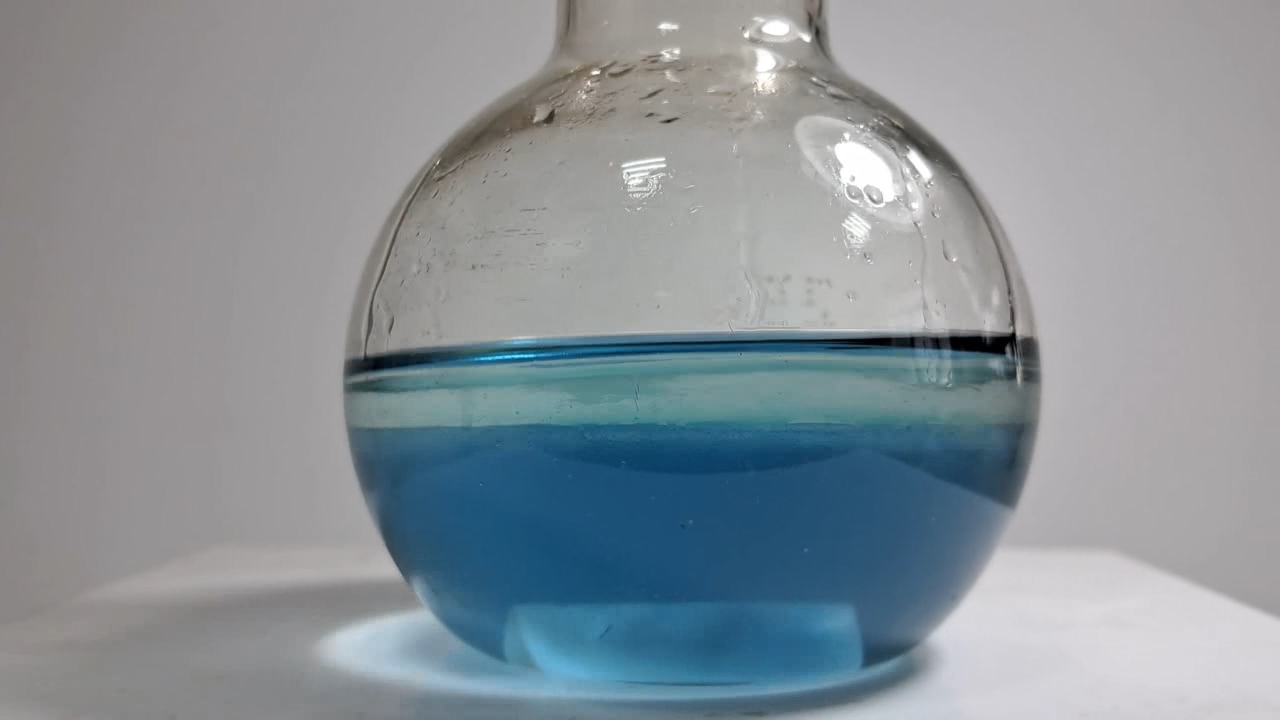
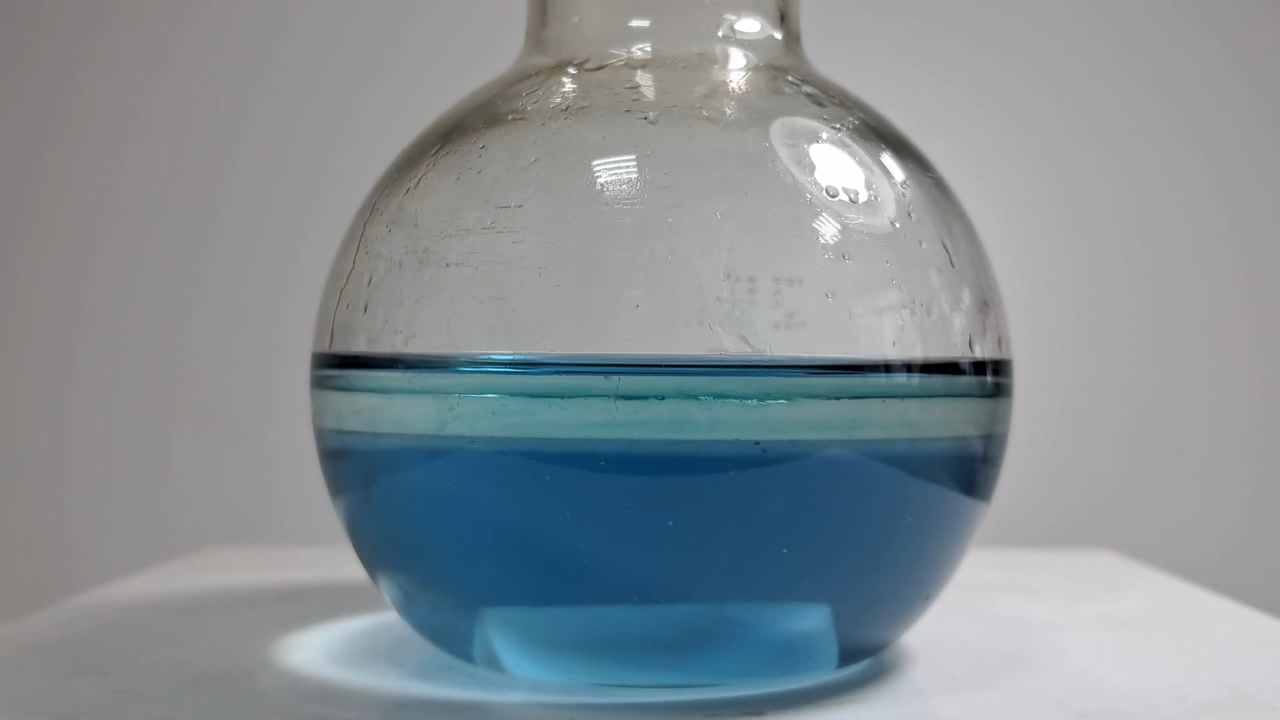
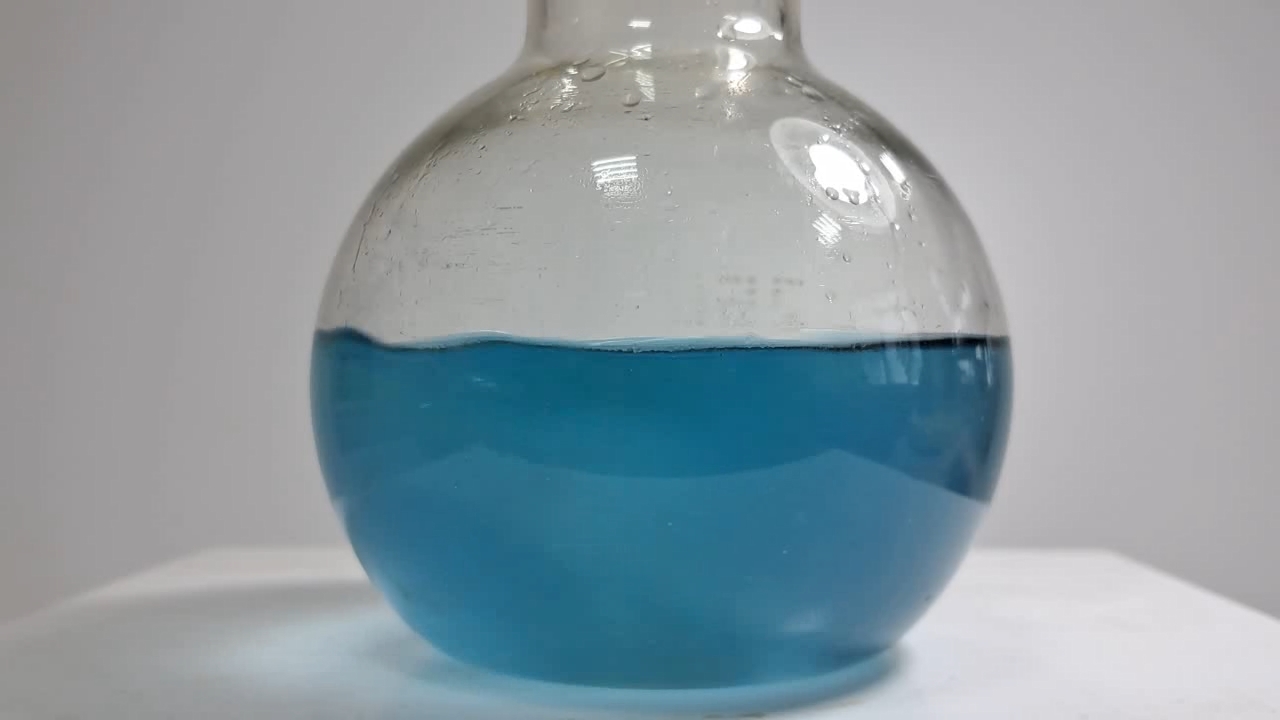
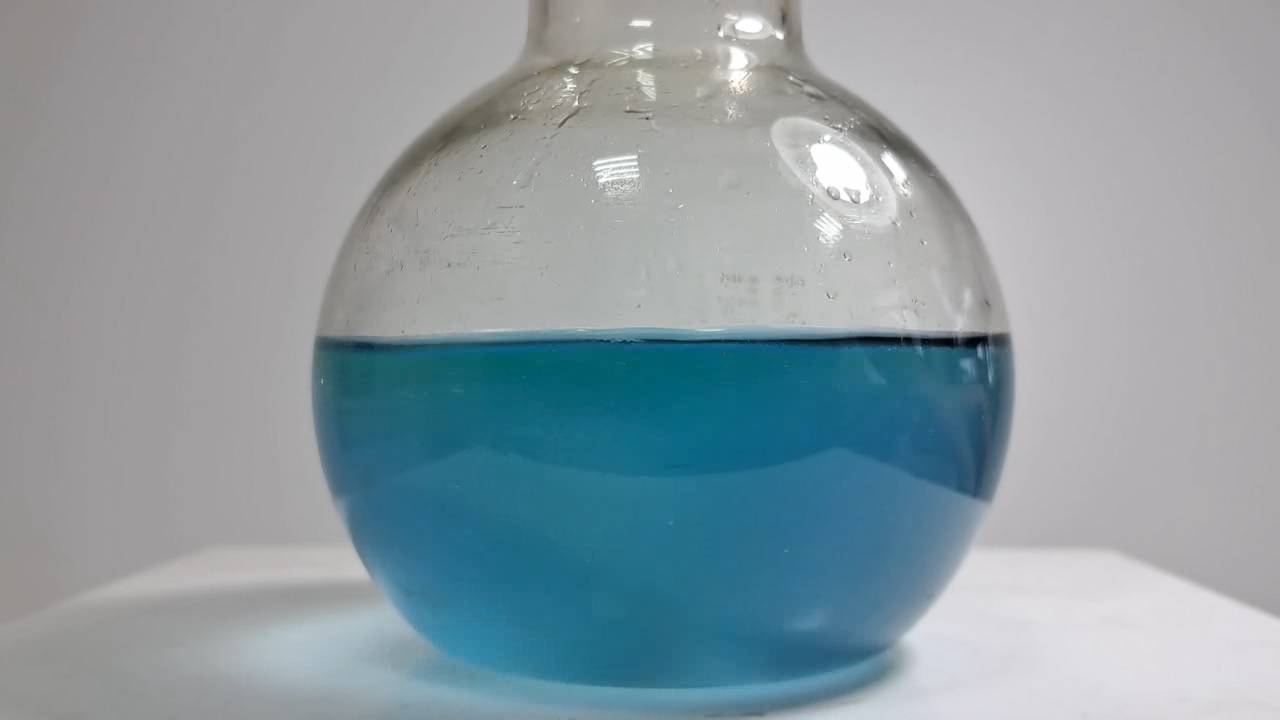
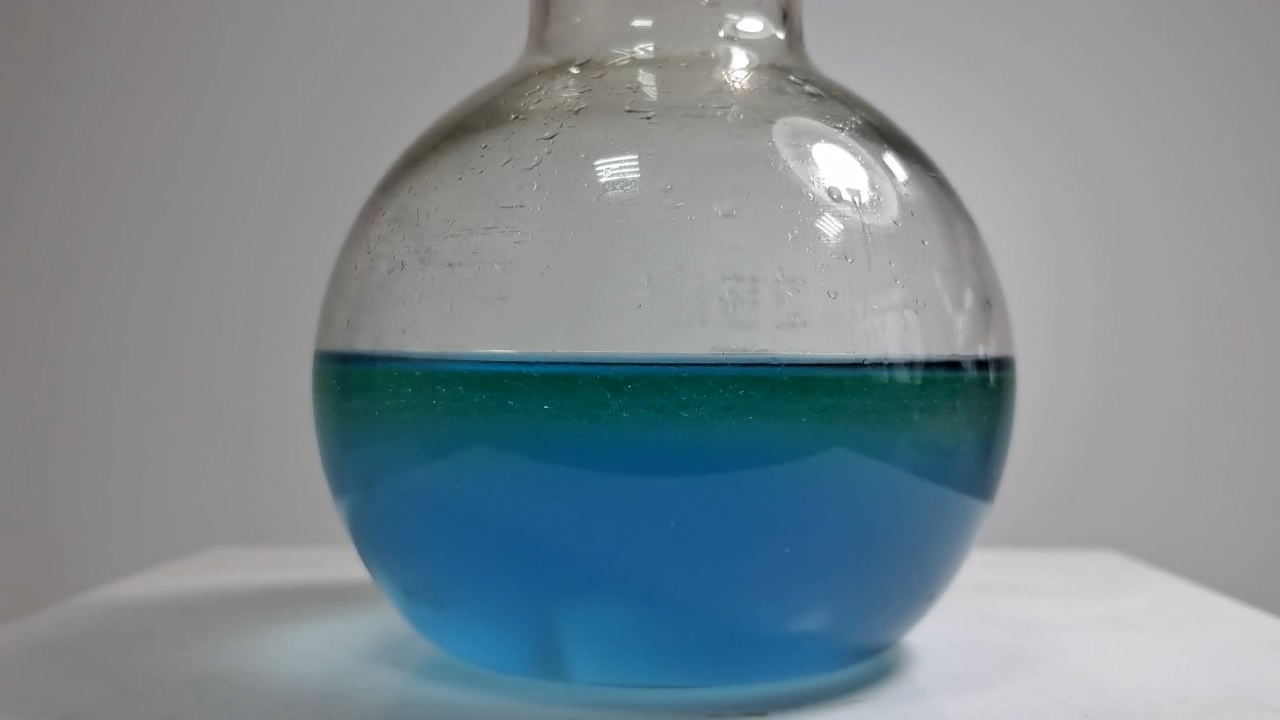
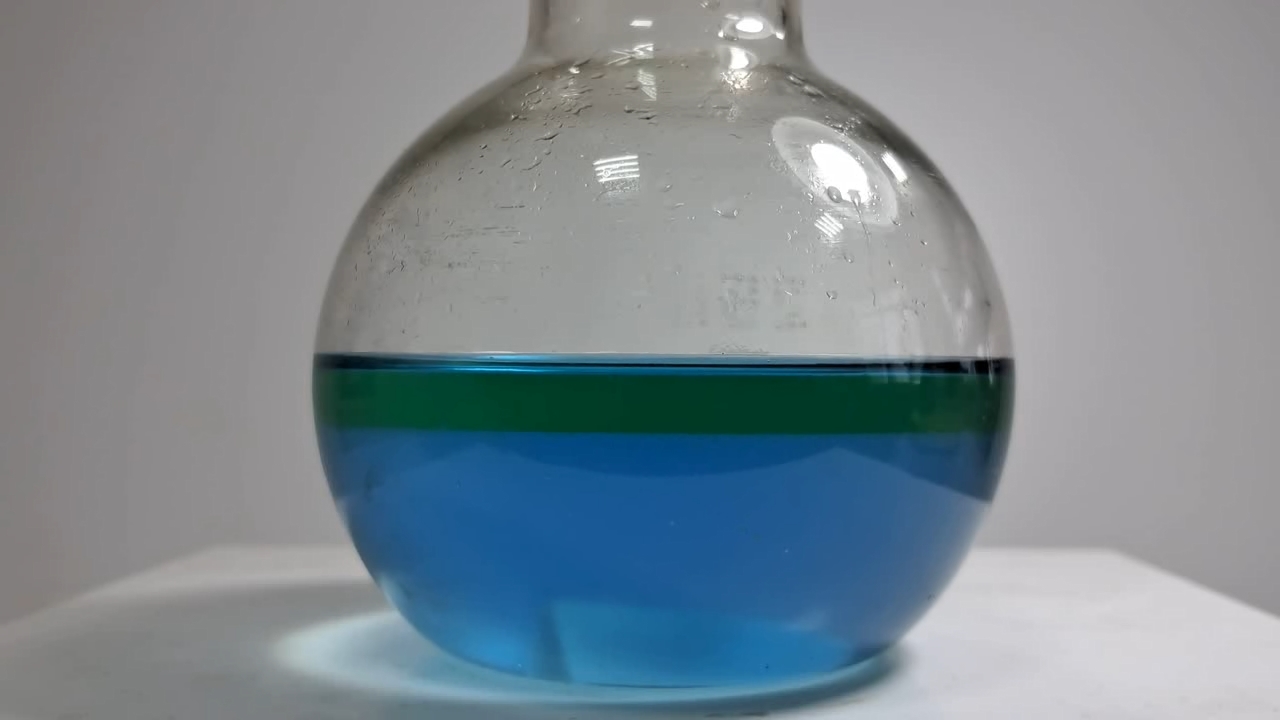
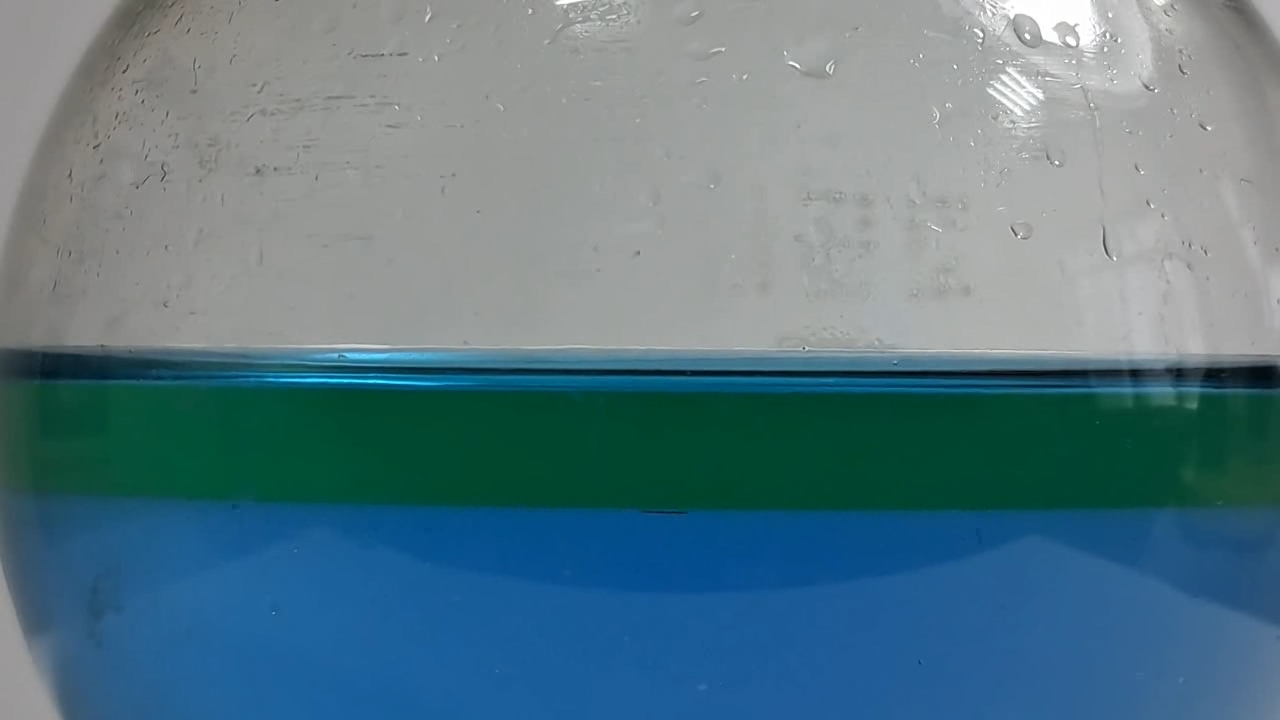
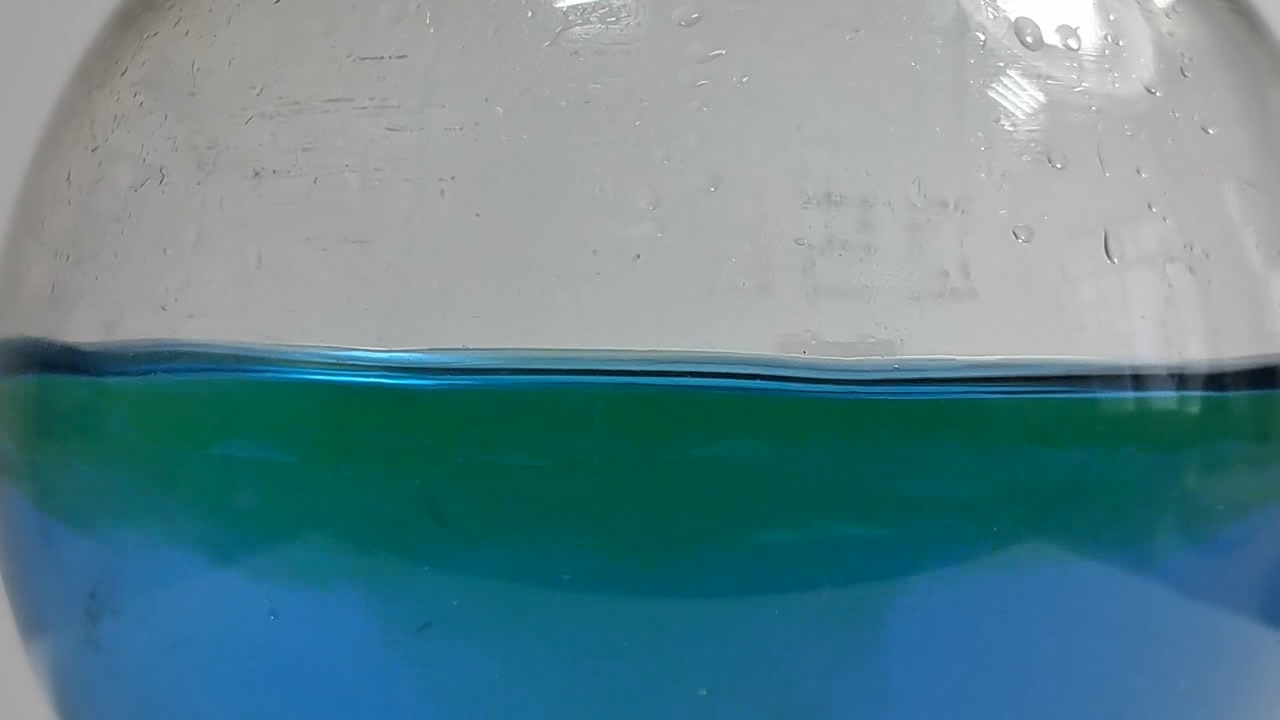
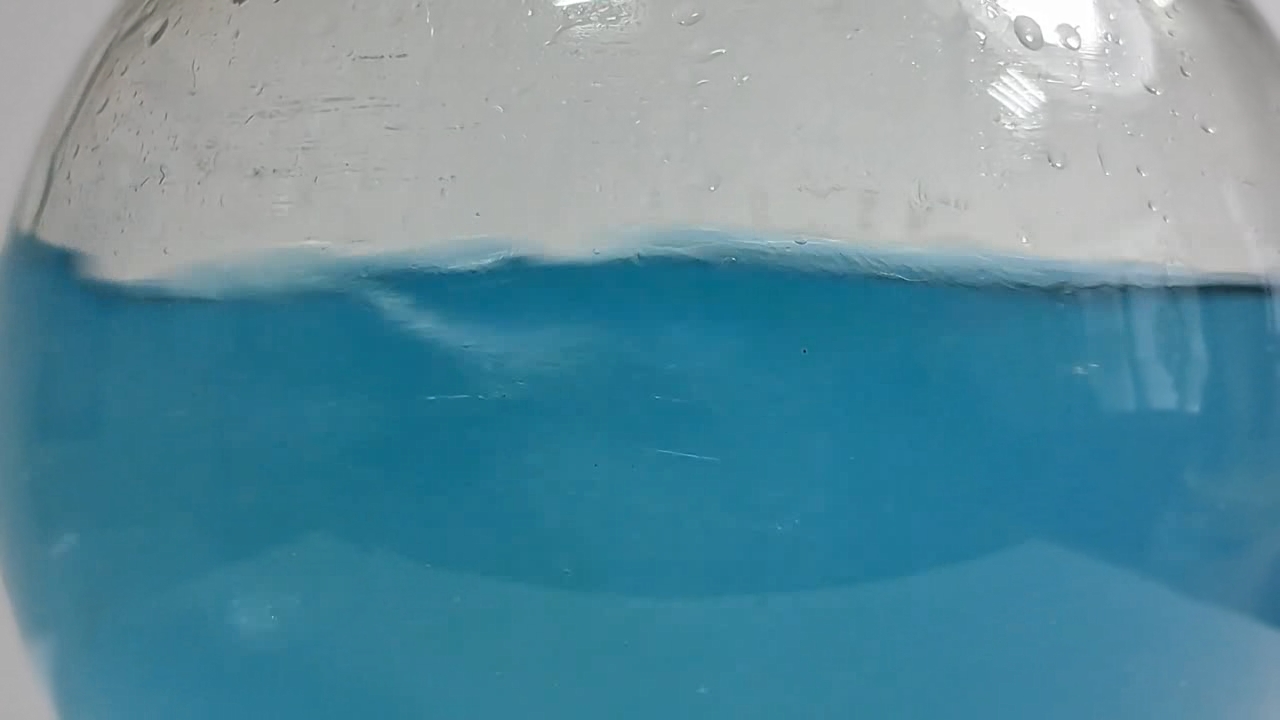
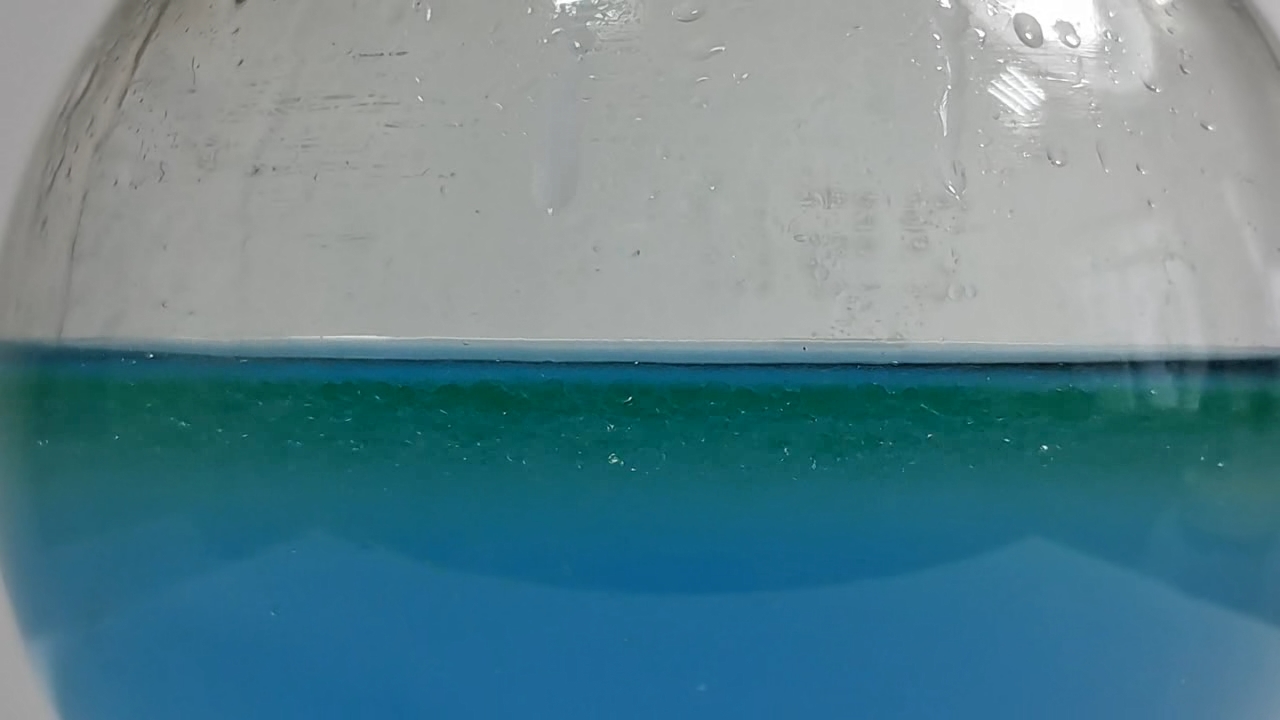
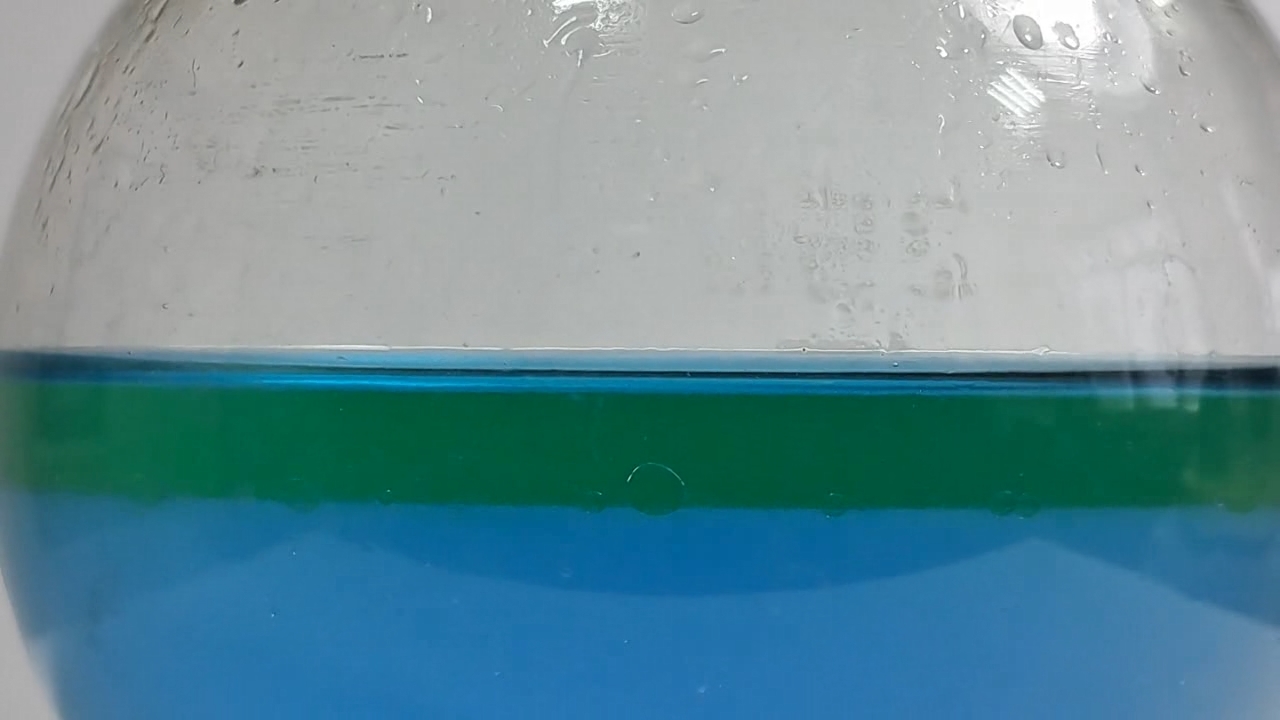
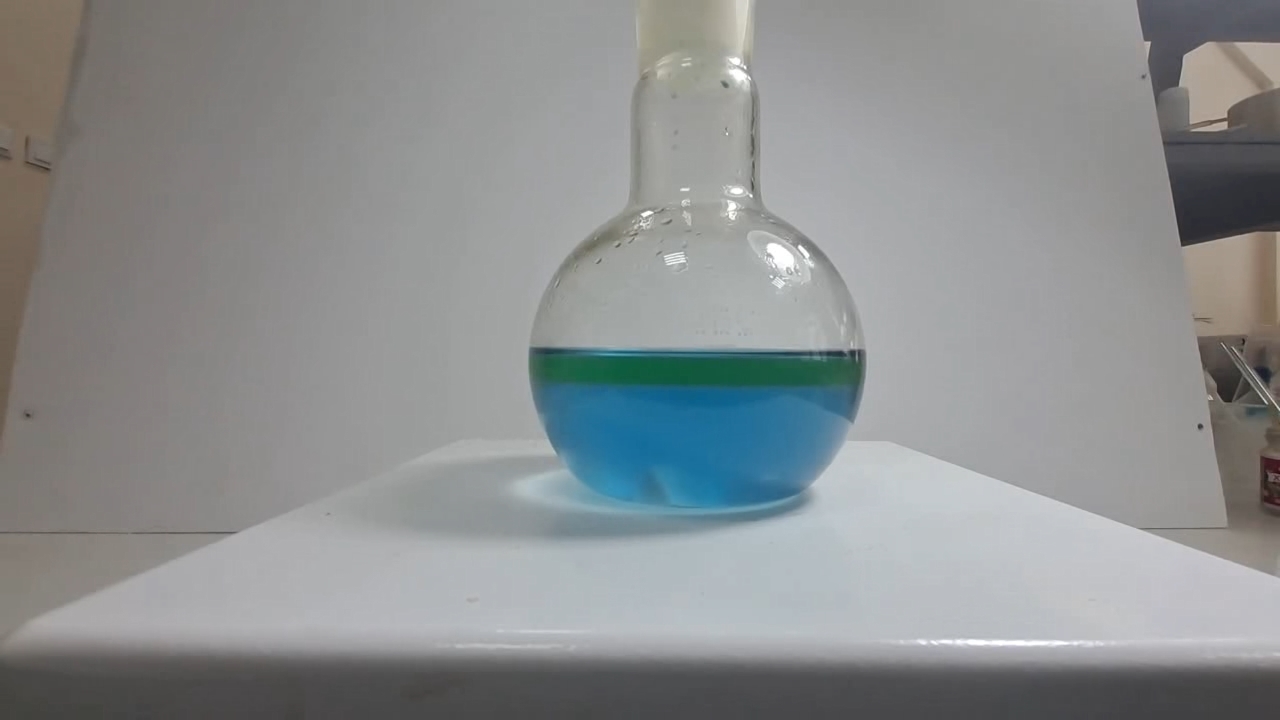
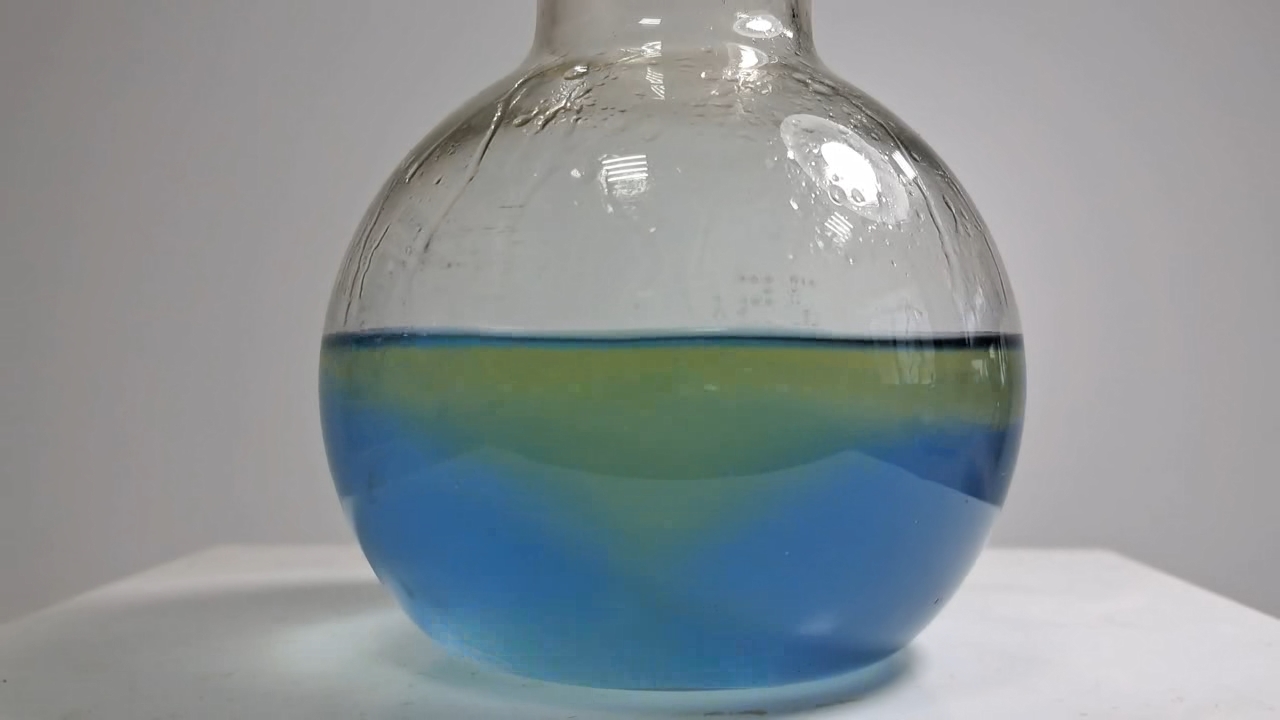
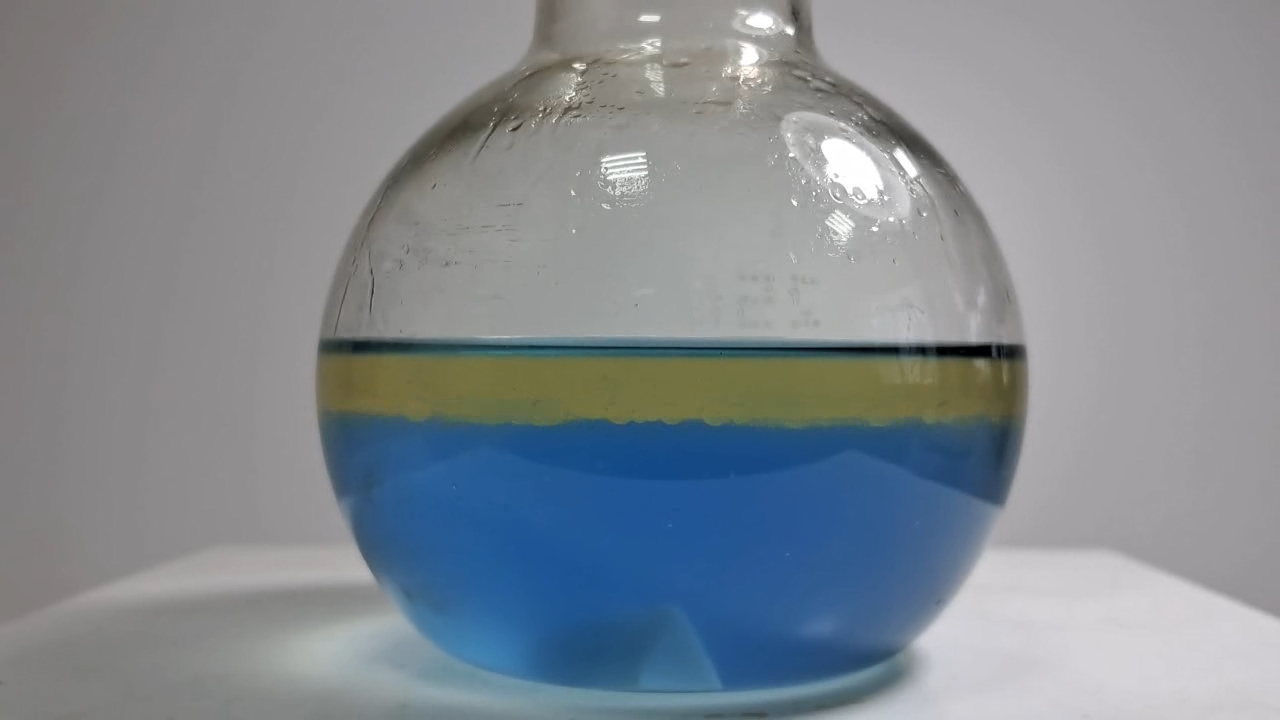
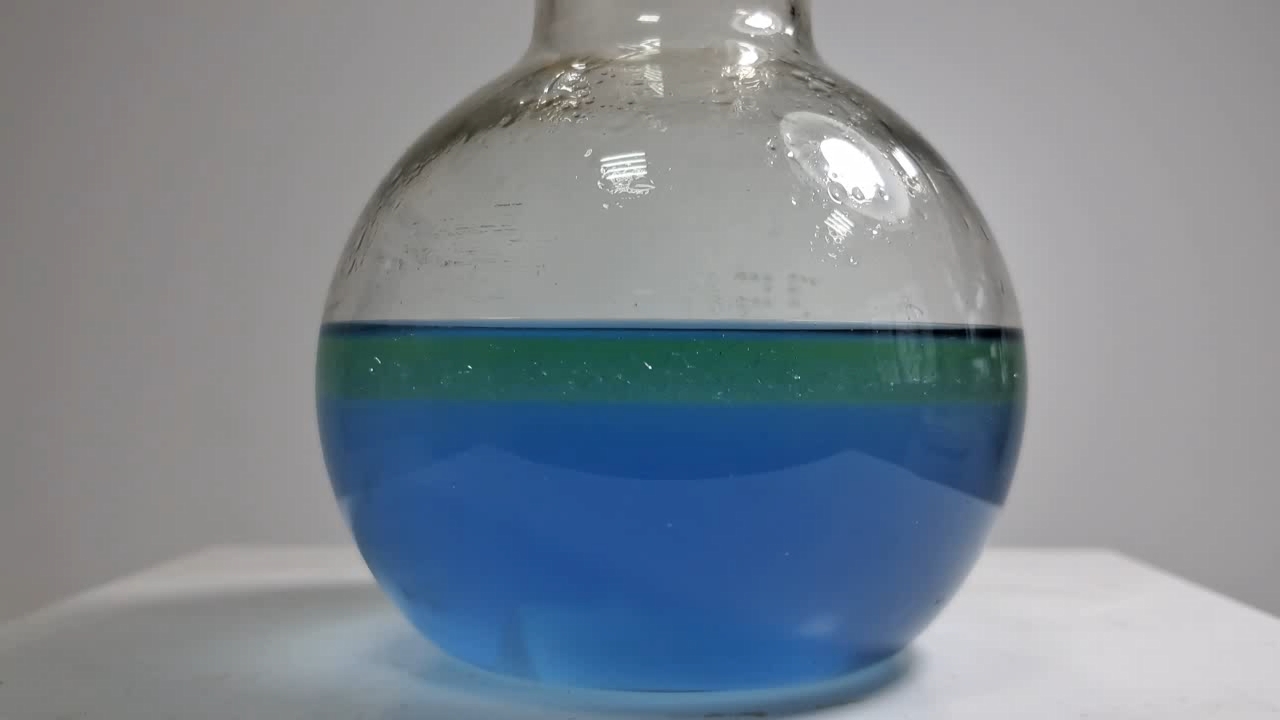
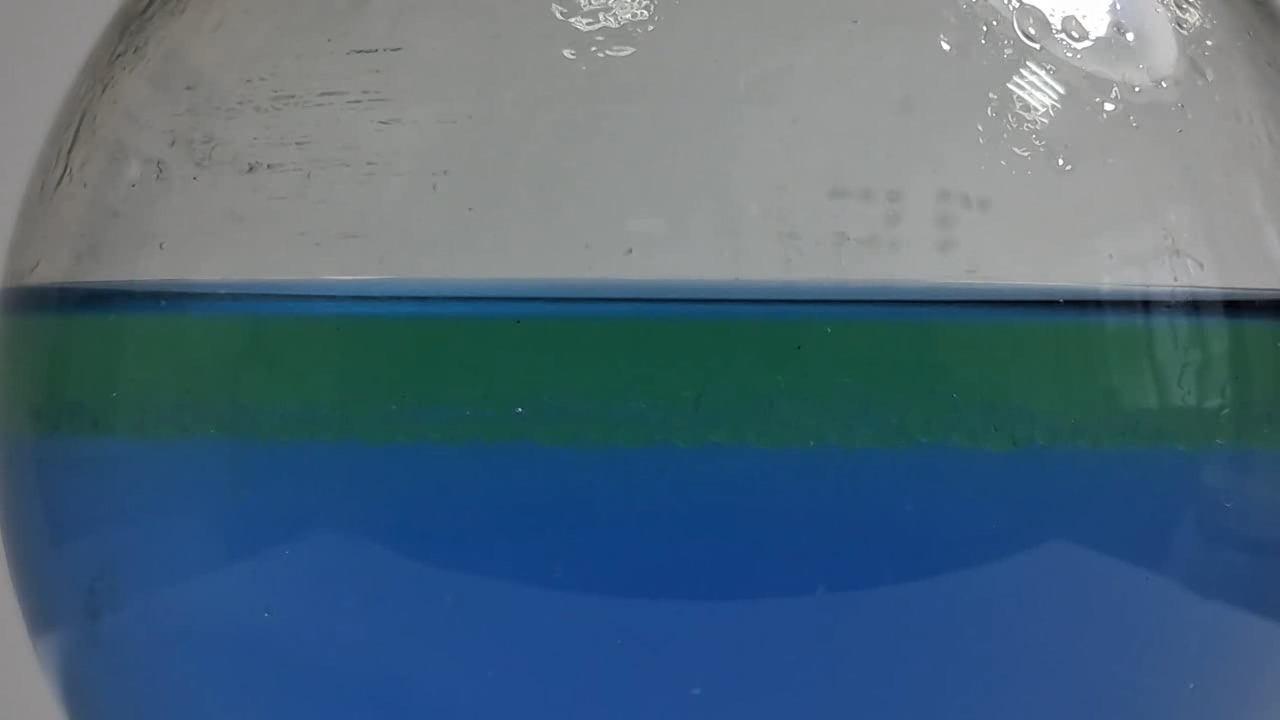
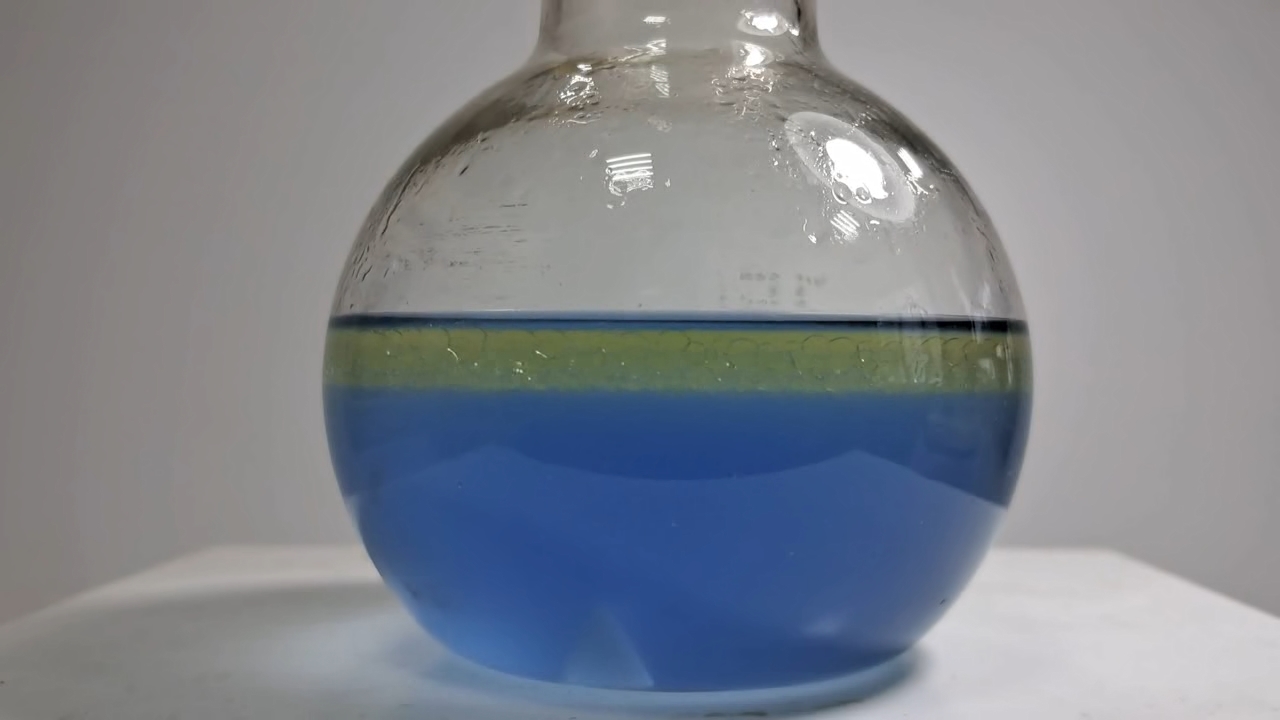
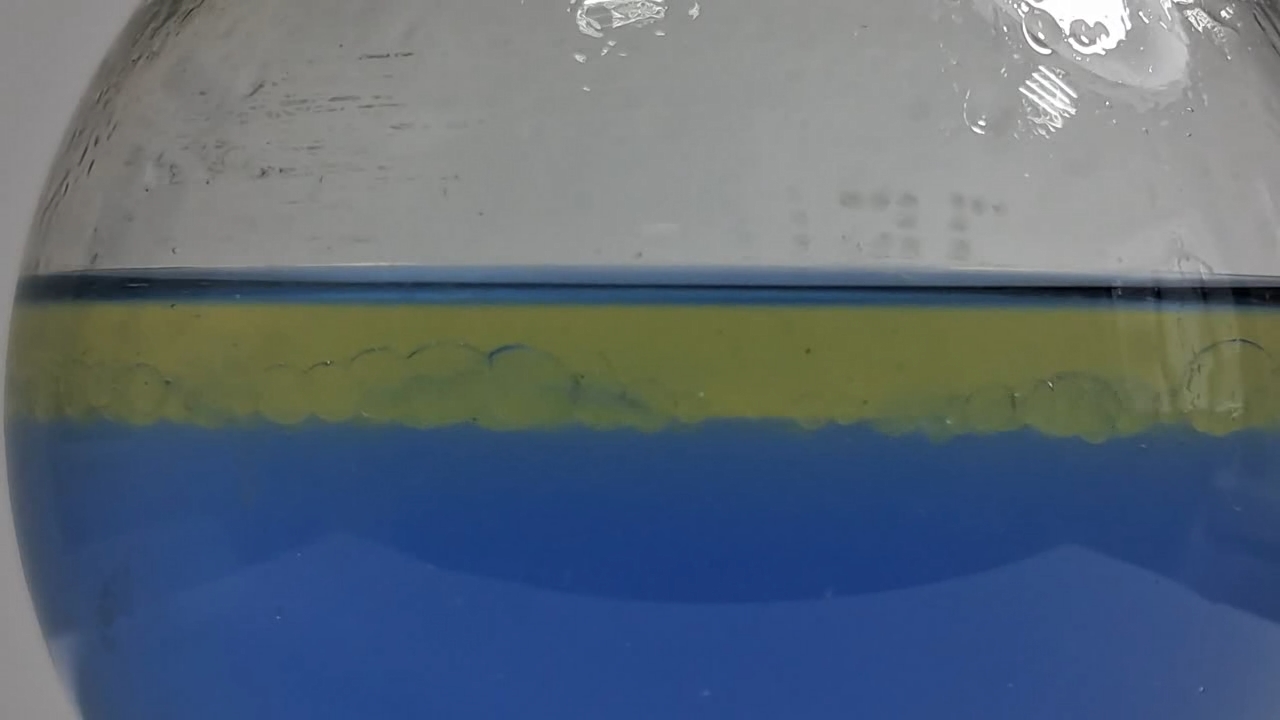
Универсальный индикатор, гексан, н-бутанол и гидроксид натрия - Часть 2 I added a few granules of sodium hydroxide and turned on the magnetic stirrer. The aqueous layer turned violet. After a while, I turned off the stirrer, and the two layers formed again. The aqueous solution was violet, while the hexane remained colorless. I added a few grams of solid alkali and turned on the stirrer. The granules gradually dissolved, and the emulsion turned blue (cornflower blue). After the stirrer was turned off, a colorless hexane layer and a blue aqueous layer formed. Thus, extraction of the colored substances by hexane was not observed from either a neutral or a highly alkaline solution. Hexane is a nonpolar aprotic solvent, water is a polar protic solvent, and the ethyl acetate and butyl acetate used in the previous experiments are moderately polar aprotic solvents. Both of these esters extracted the colored components of the universal indicator from a highly alkaline solution. Therefore, in order to extract the components of the universal indicator, a moderately polar solvent (either aprotic or protic) that is immiscible or only partially miscible with water had to be added to the system. This solvent also had to be miscible with hexane (since hexane had already been added to the flask). n-Butanol, which is only partially miscible with water but miscible with hexane in any proportion, meets these requirements. Neither butanol nor hexane undergoes hydrolysis (unlike ethyl acetate and butyl acetate). I added 22 mL of n-butanol. The organic layer began to acquire color. I turned on the stirrer, and a greenish-blue emulsion formed. After about a minute, I stopped stirring. The emulsion separated into two layers: an emerald-green organic layer on top and a blue aqueous solution underneath. A similar result was observed with butyl acetate: the solvent turned green when stirred with an alkaline solution of the universal indicator. Thus, the color change of the organic solvent in the experiments with the esters was due to the extraction of organic dyes rather than to any chemical transformations of the solvent itself. |
Universal Indicator, Hexane, n-Butanol, and Sodium Hydroxide |
|
|
|
|
|
|
|
|
|
|
|
|
|
|
|
|
|
|
|
|
|
|
|
|
|
|
|
|
|
|
|
|
|
|
|
|
|
|
|
Having noticed a mistake in the text, allocate it and press Ctrl-Enter
Universal Indicator, Hexane, n-Butanol, and Acid - Part 3
I'll say upfront that I had previously observed the result described below in an experiment with butyl acetate. Since butyl acetate undergoes hydrolysis in both alkaline and acidic solutions, interpreting the observations was complicated. Therefore, I chose not to report those results and instead repeated the experiment using an organic solvent that does not undergo hydrolysis - a mixture of hexane and n-butanol. The beginning of this experiment was described in the previous part of the article.
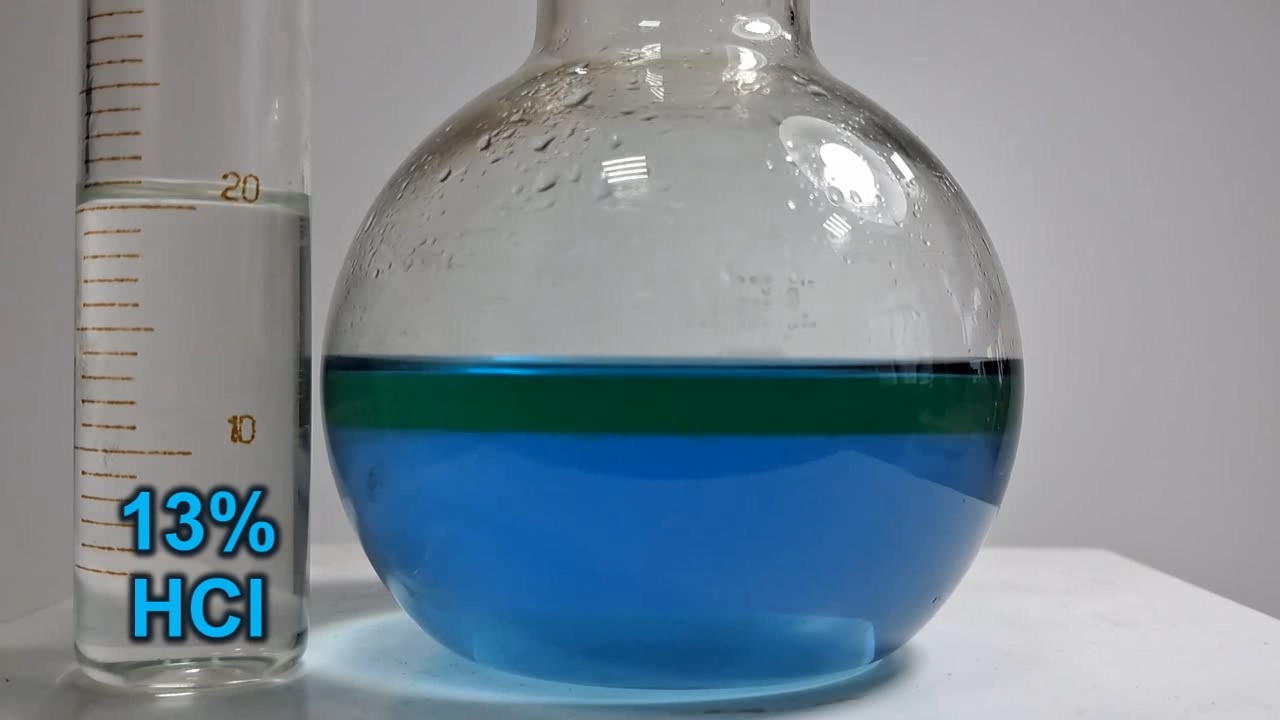
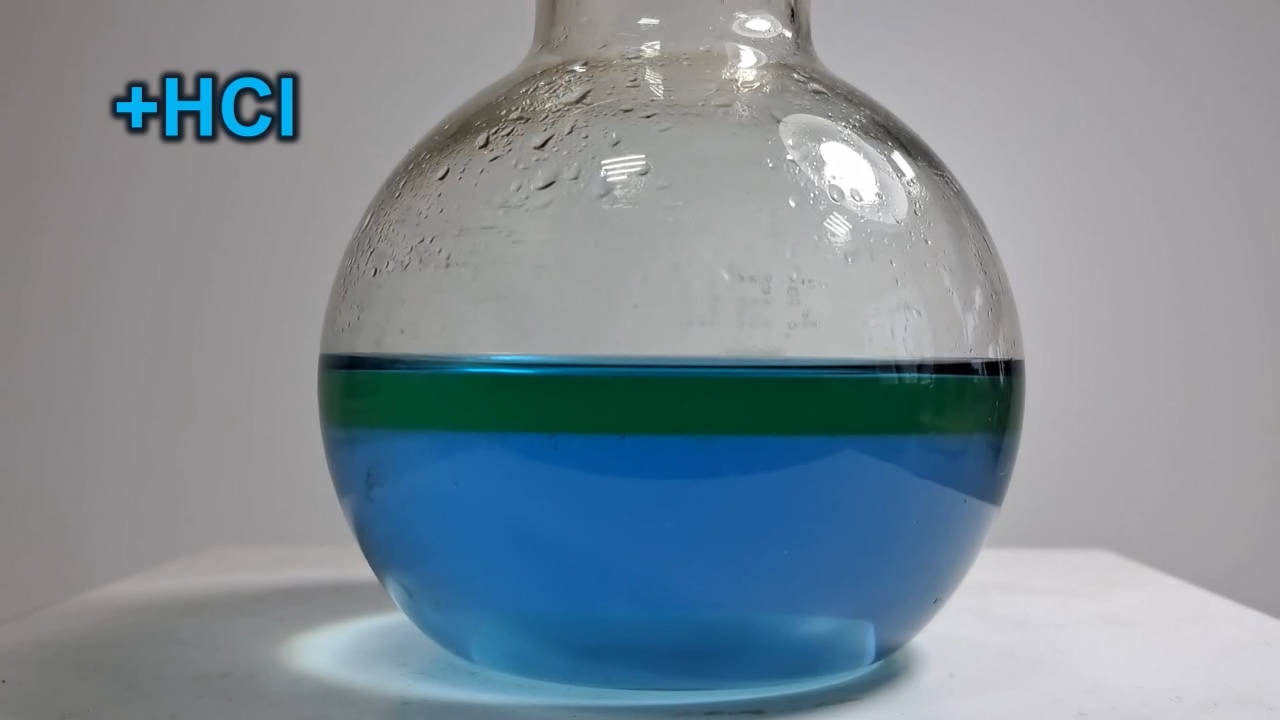
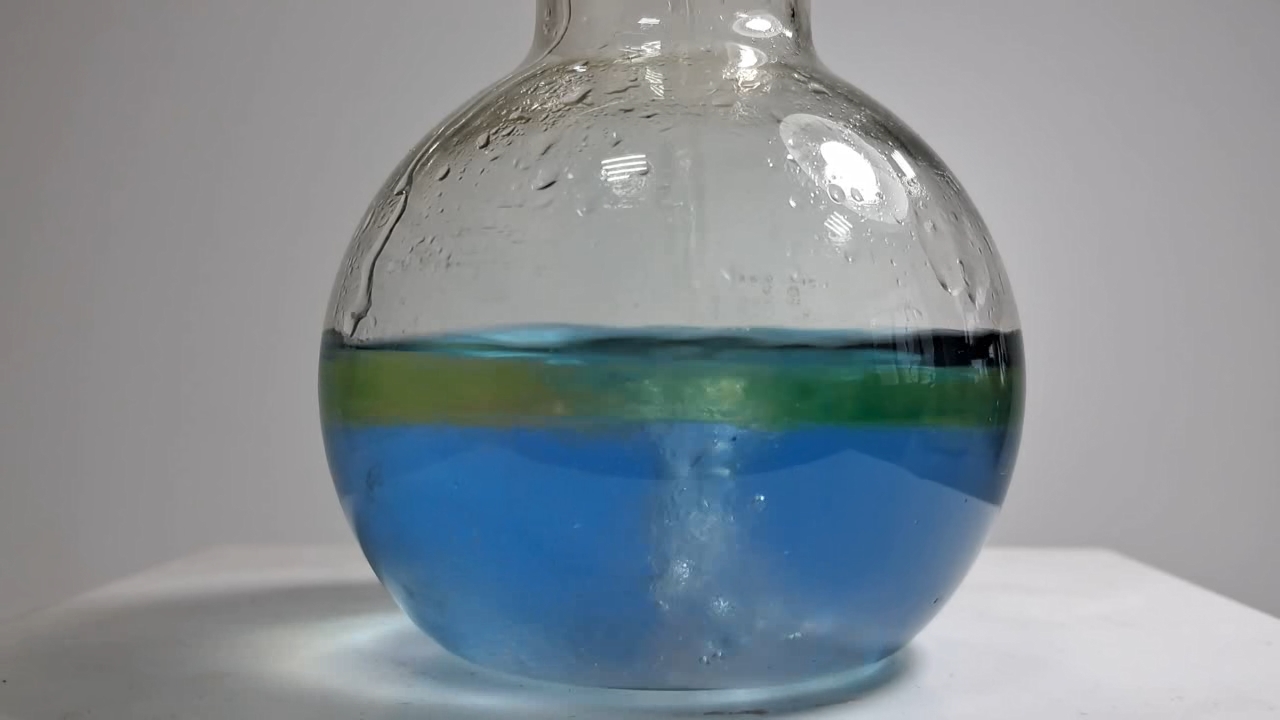
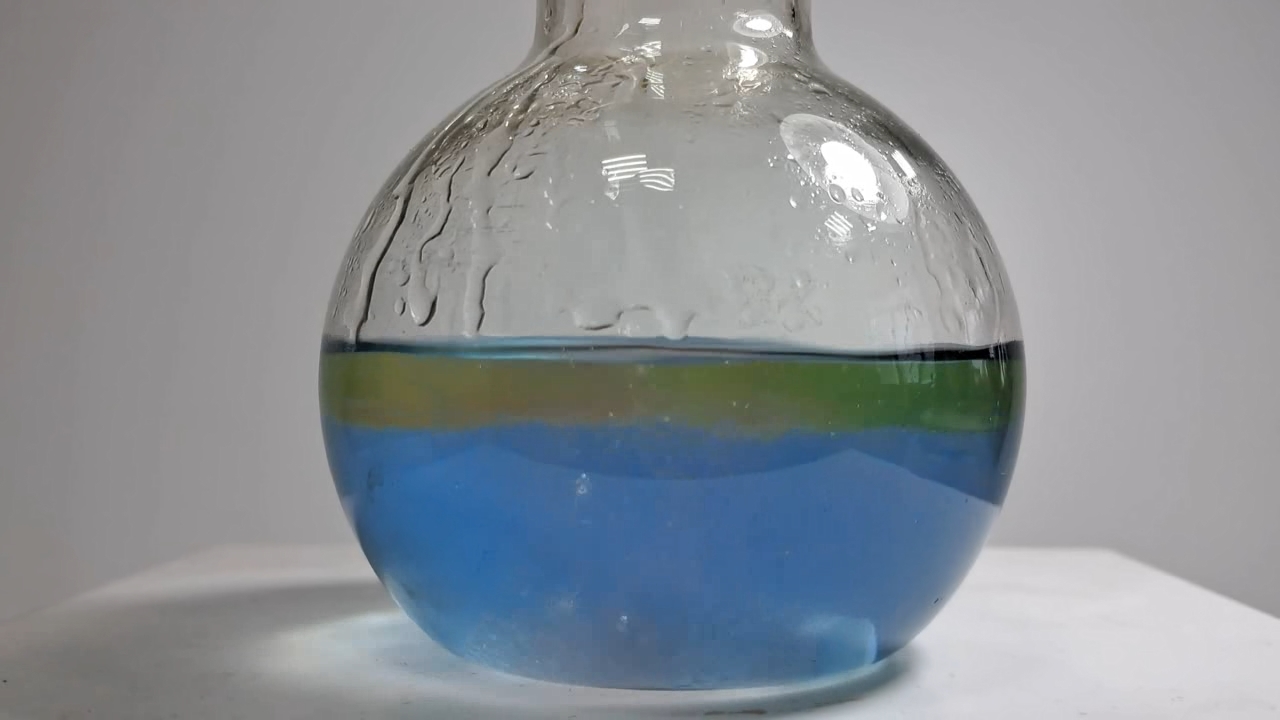
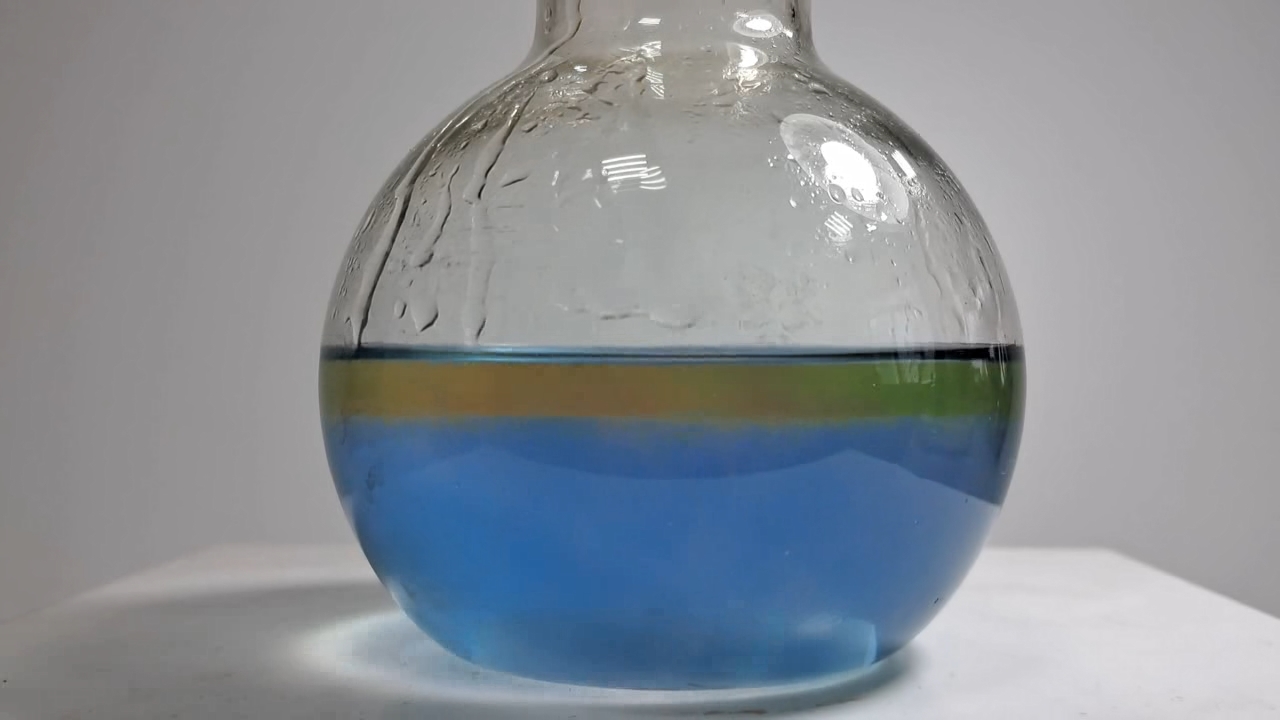
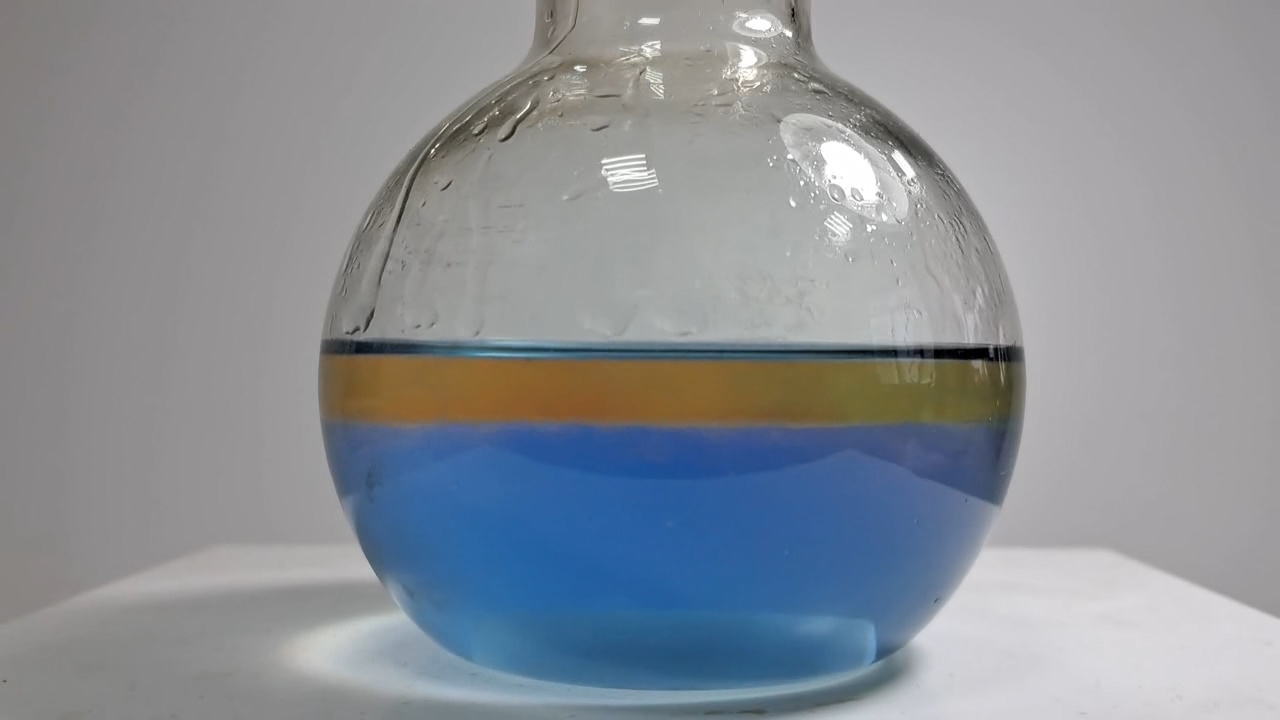
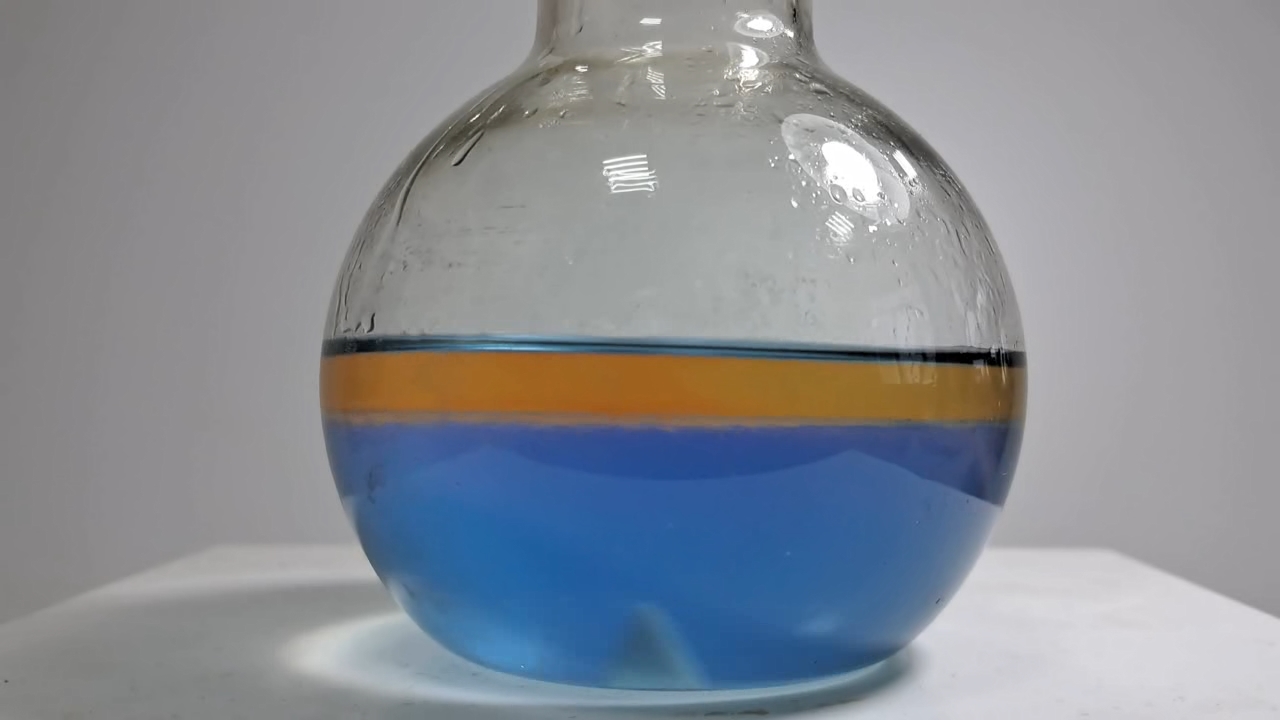
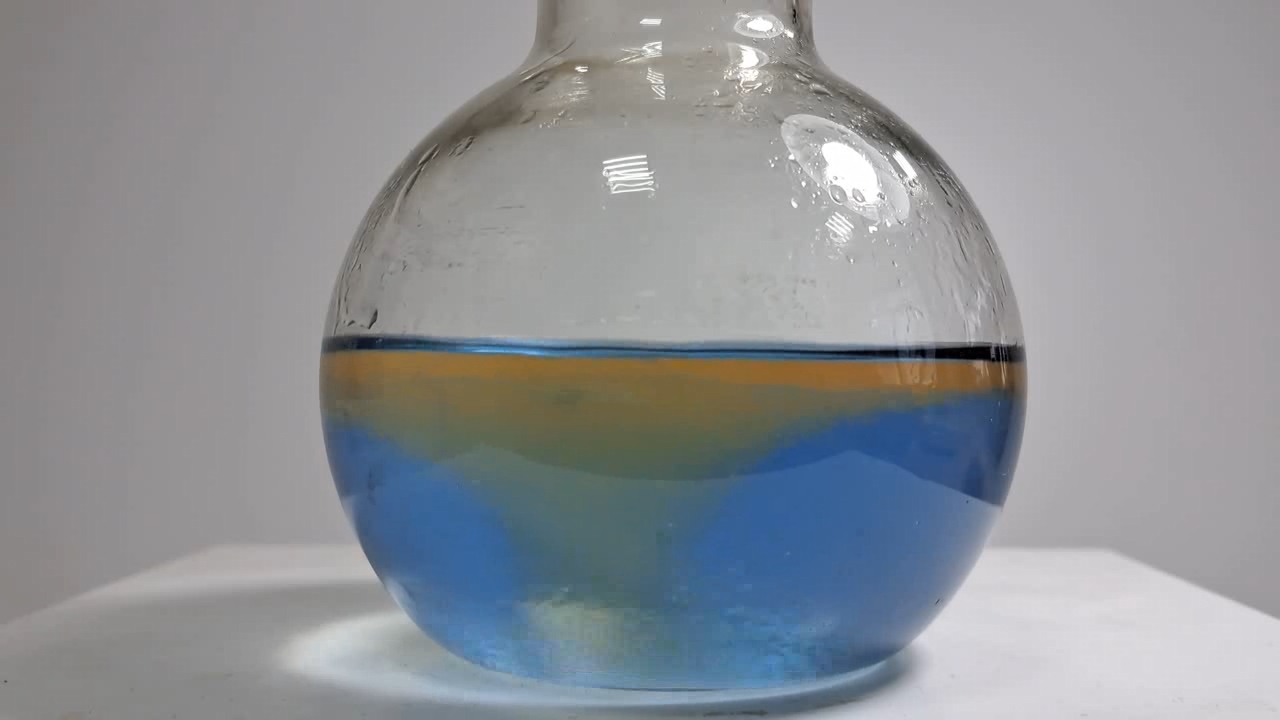
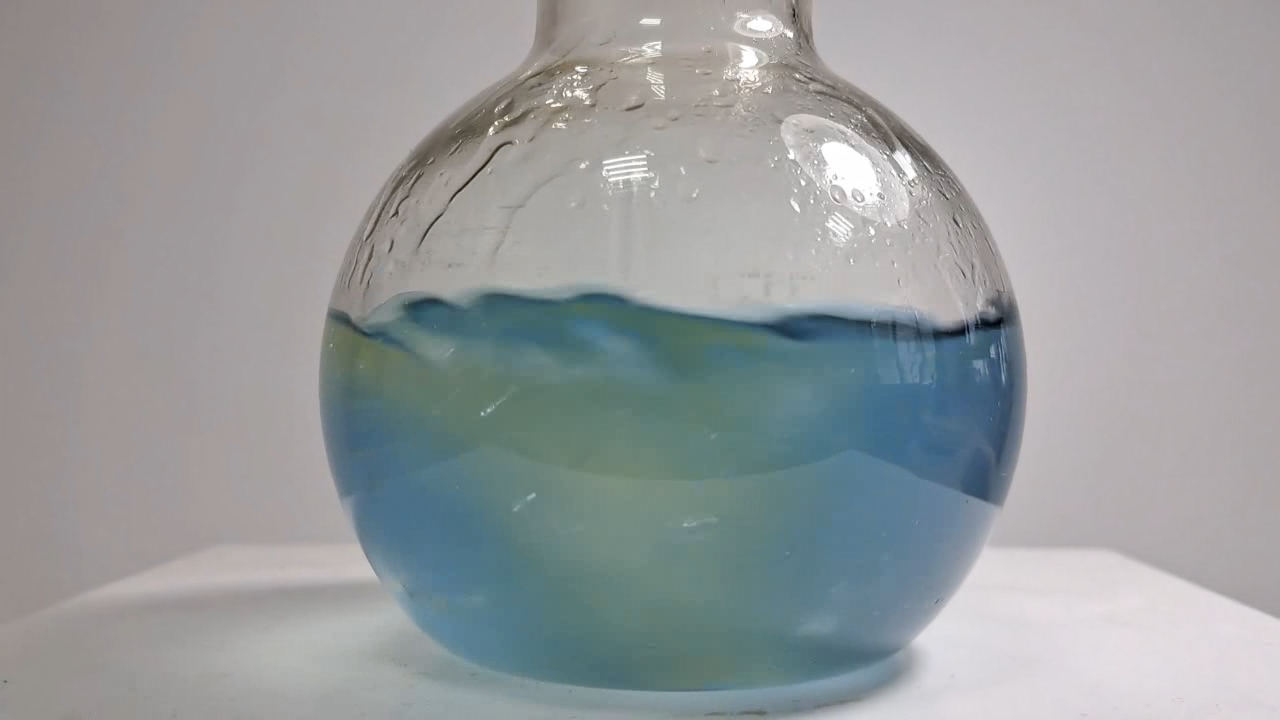
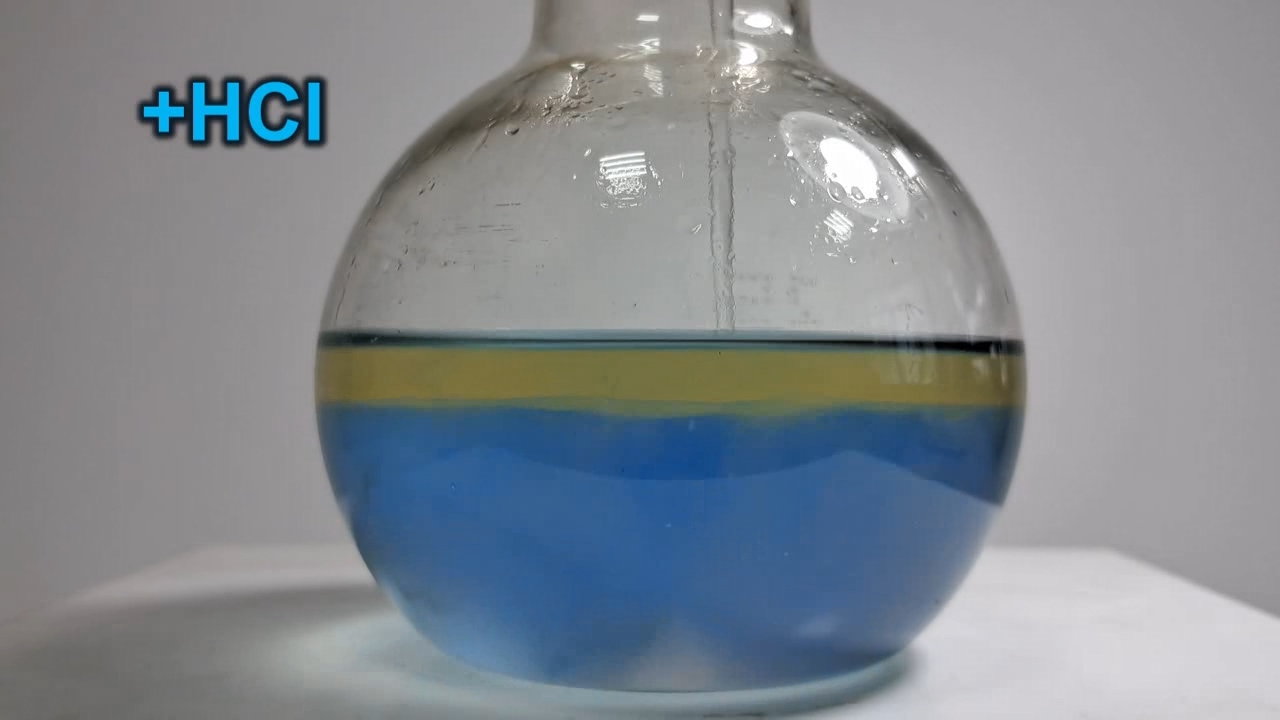
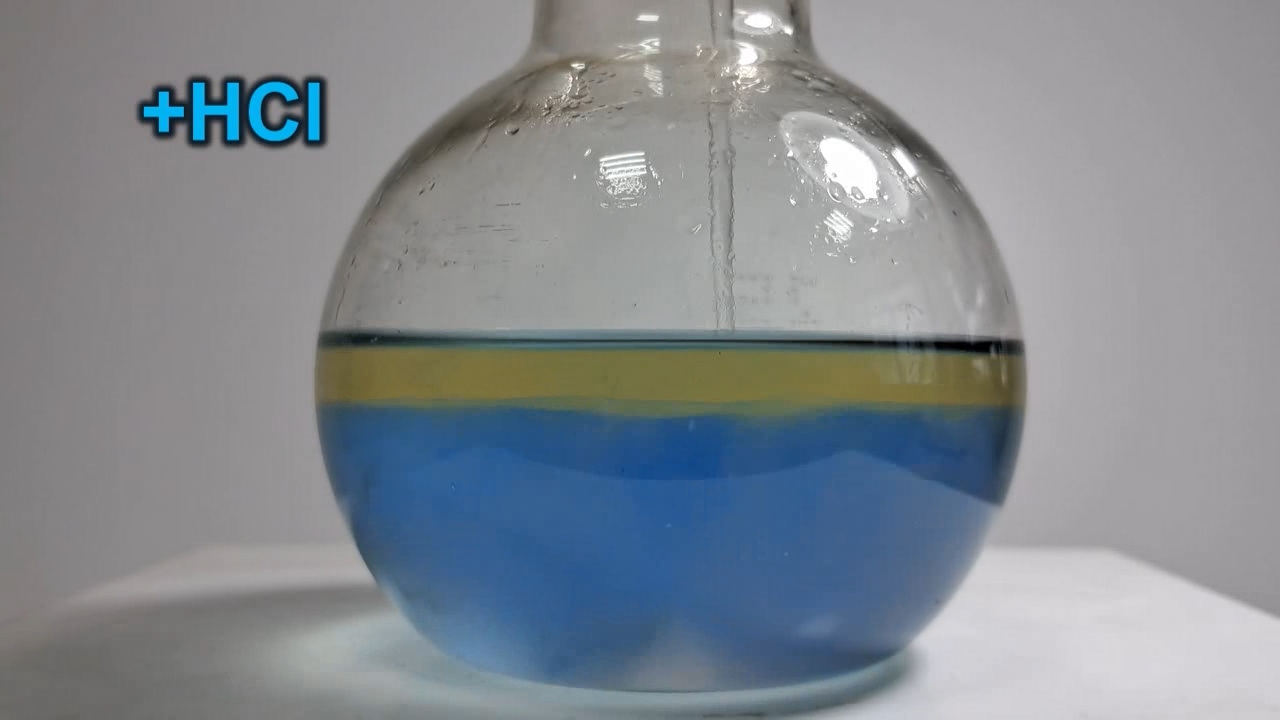
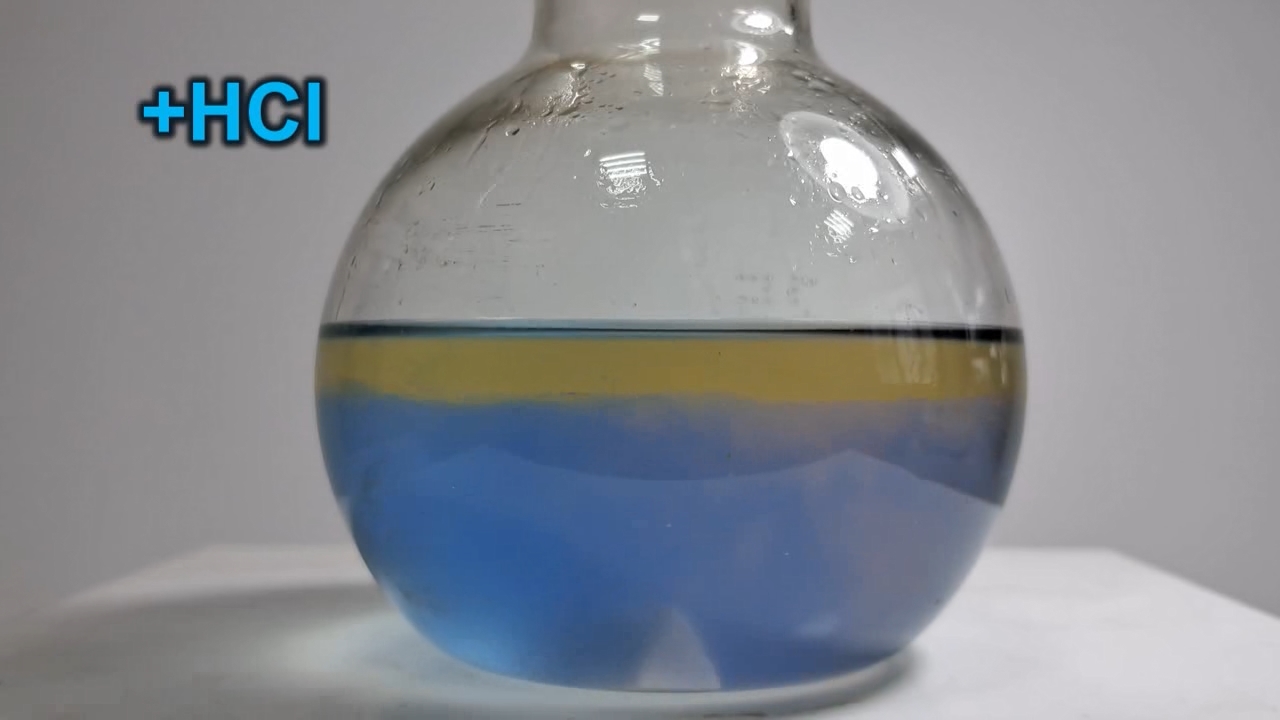
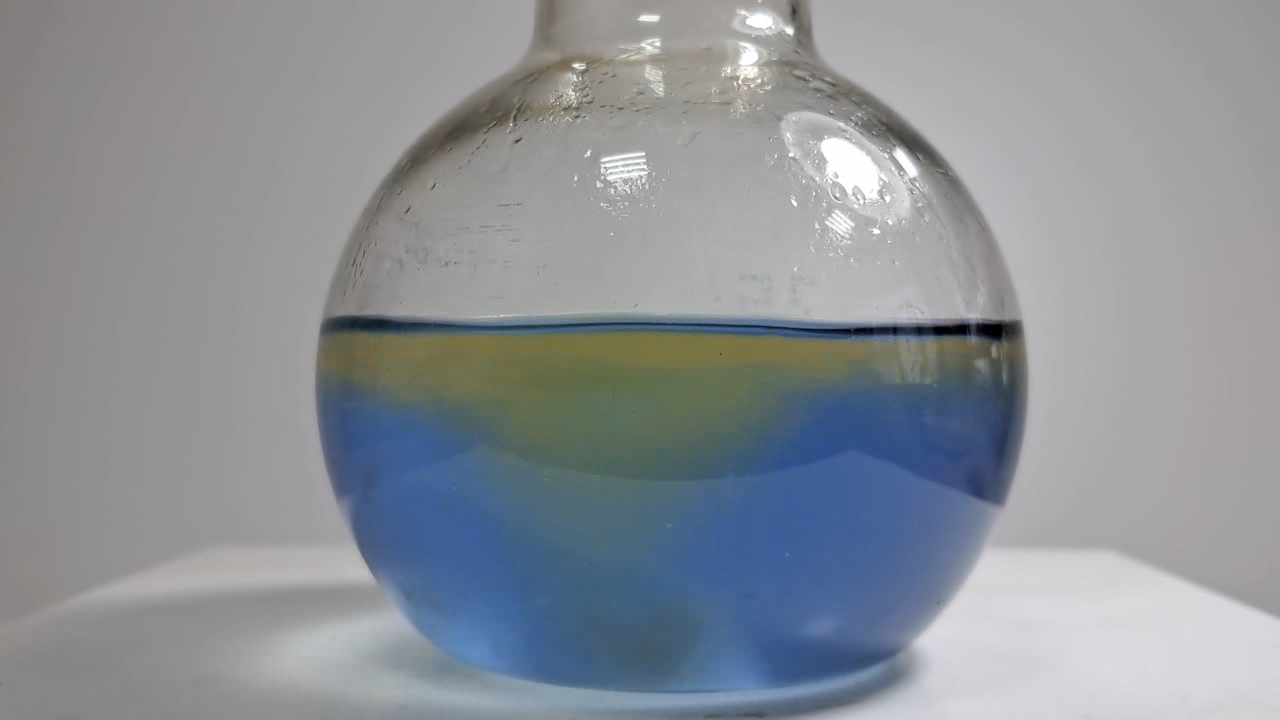
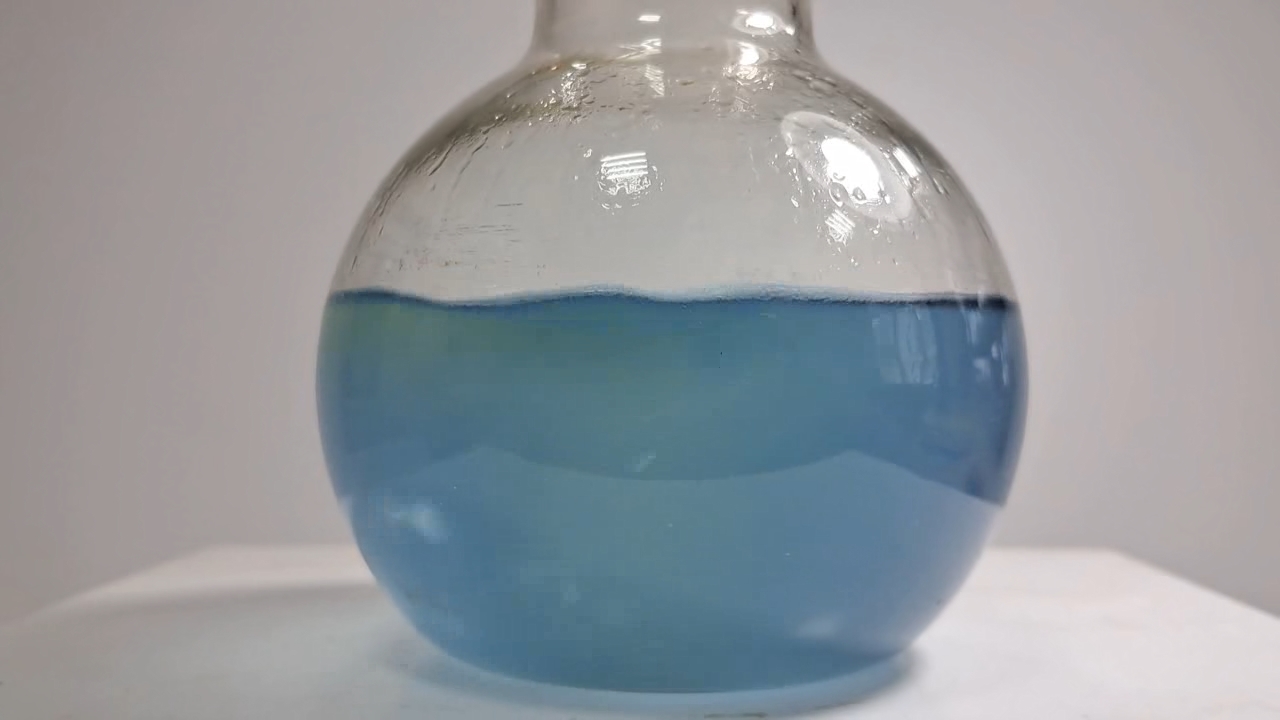
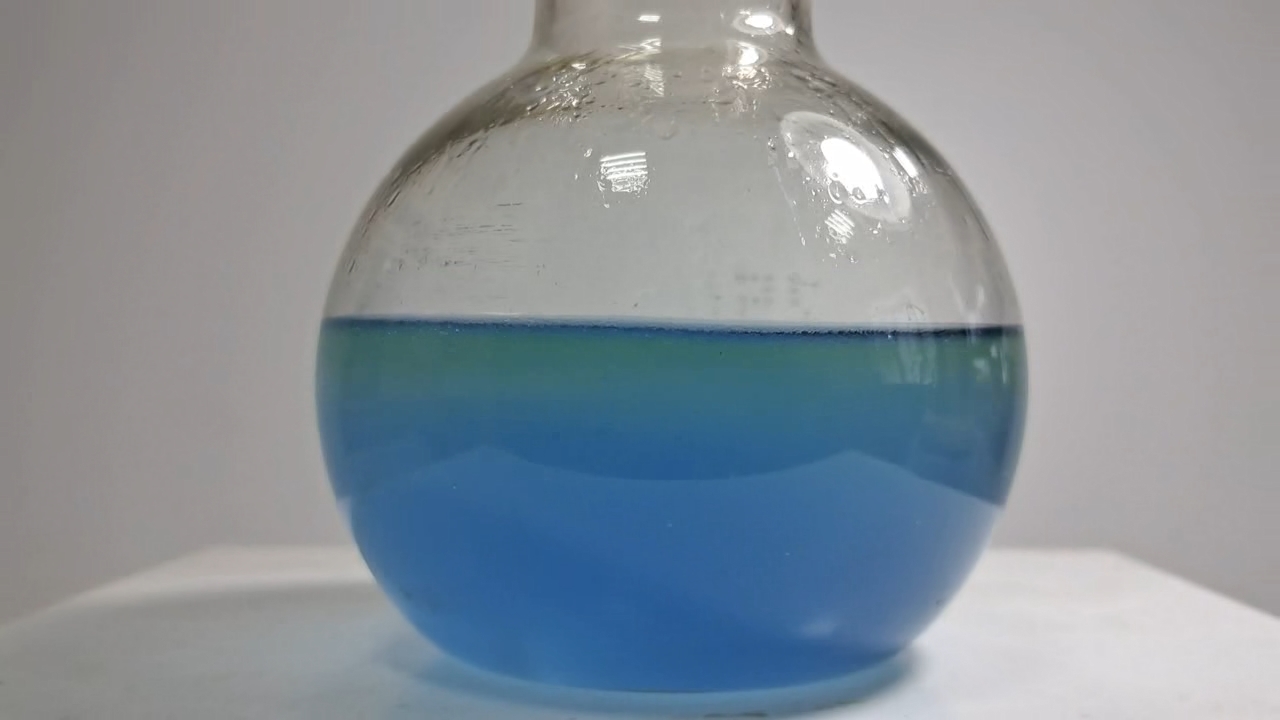
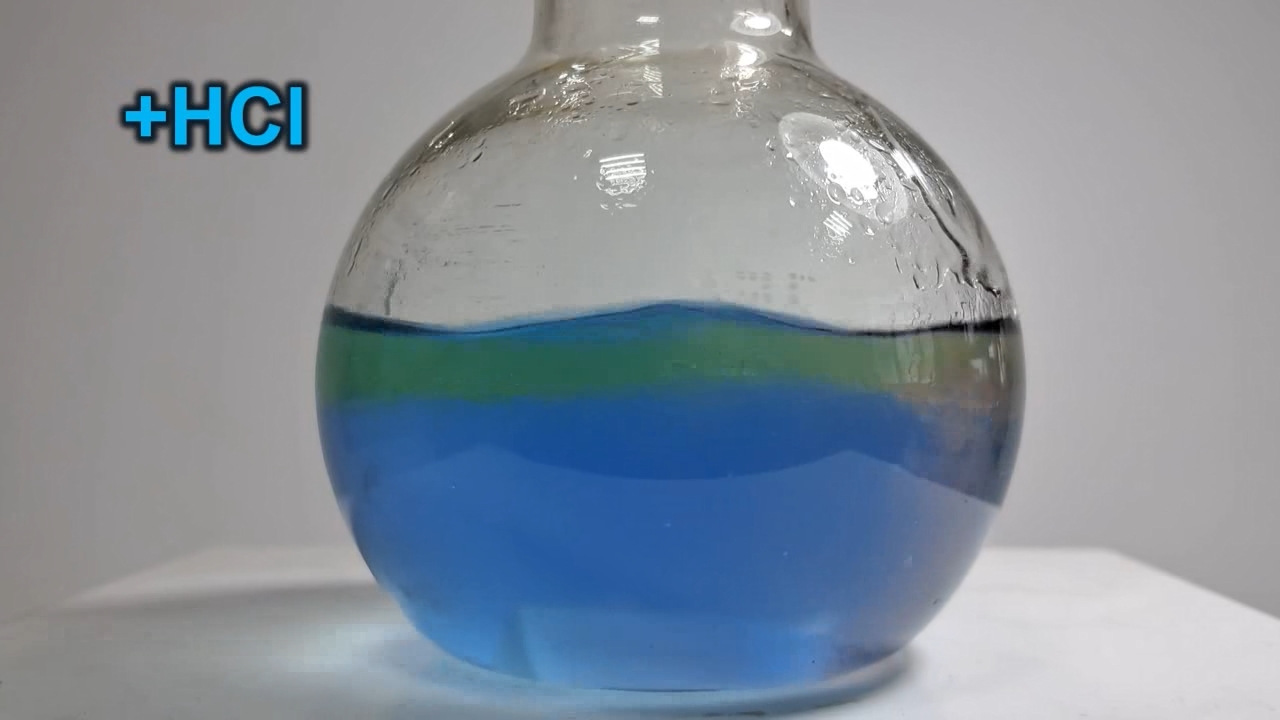
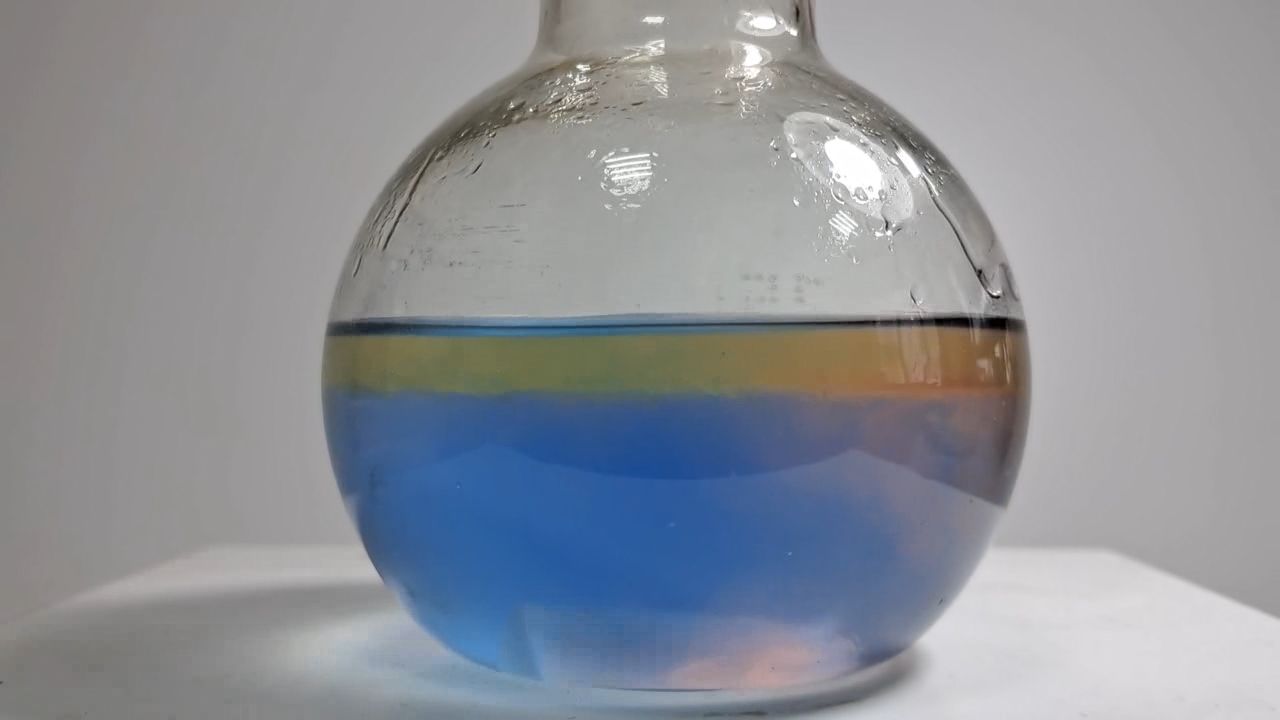
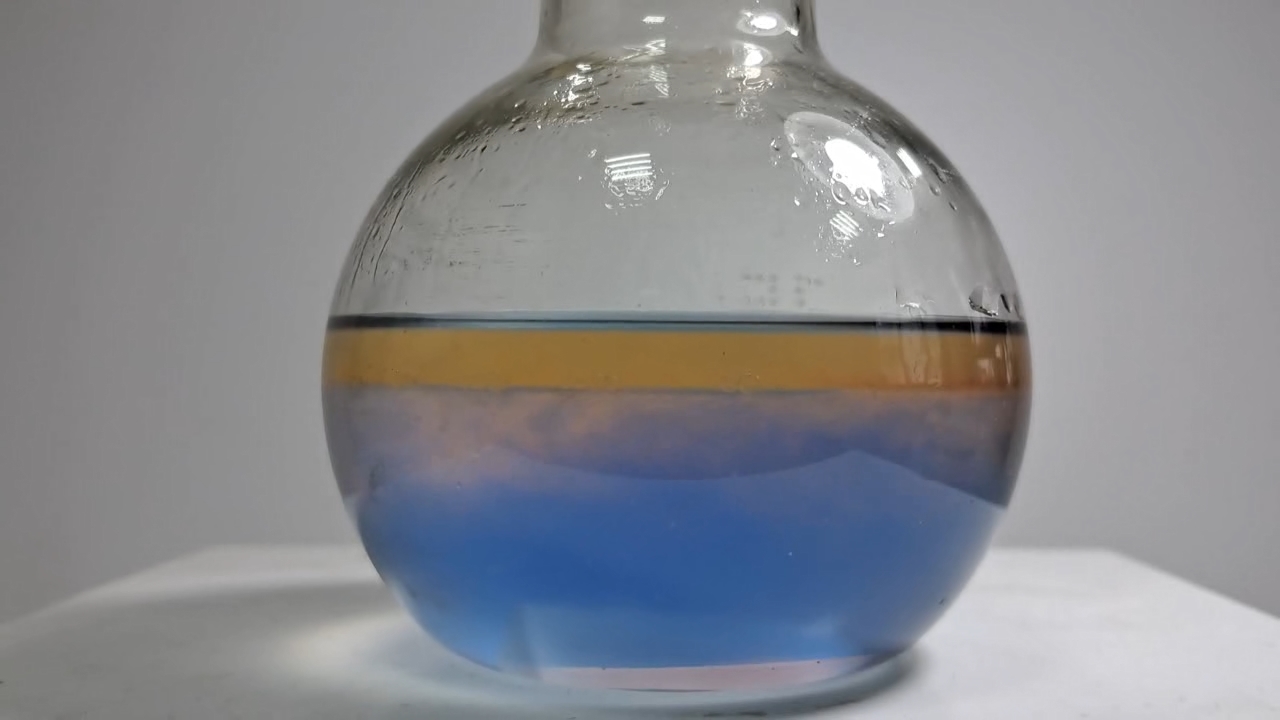
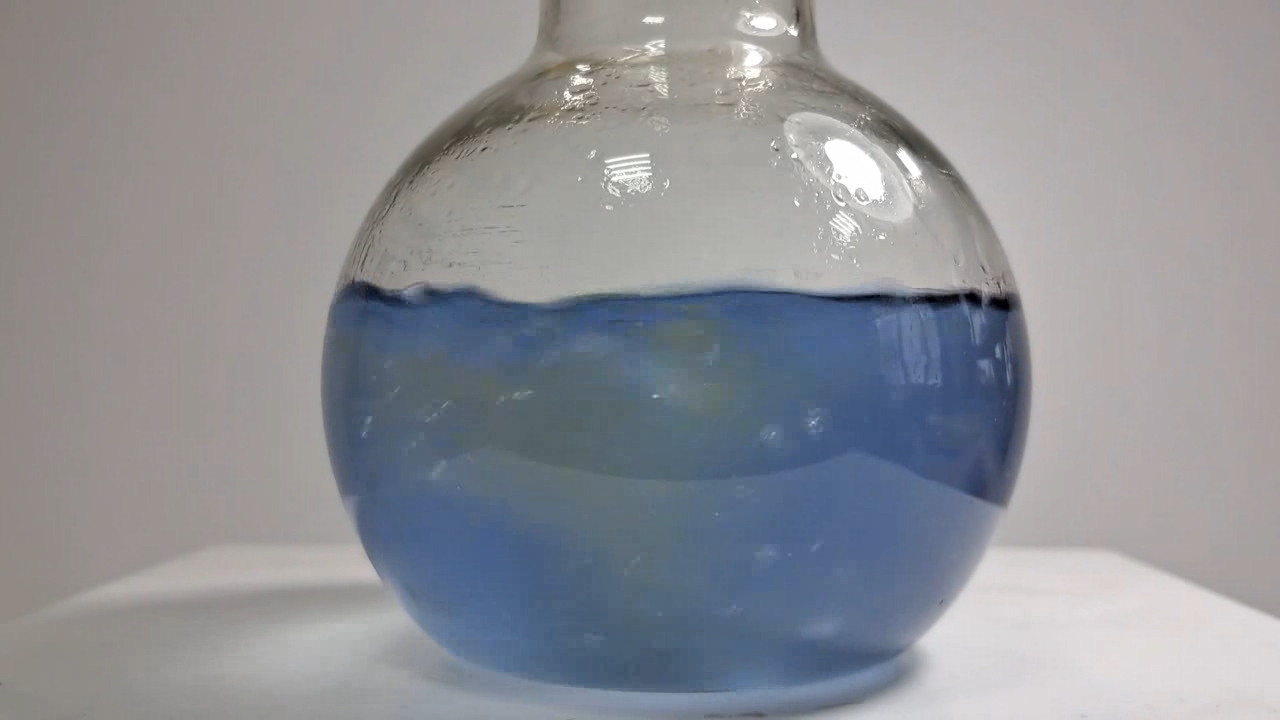
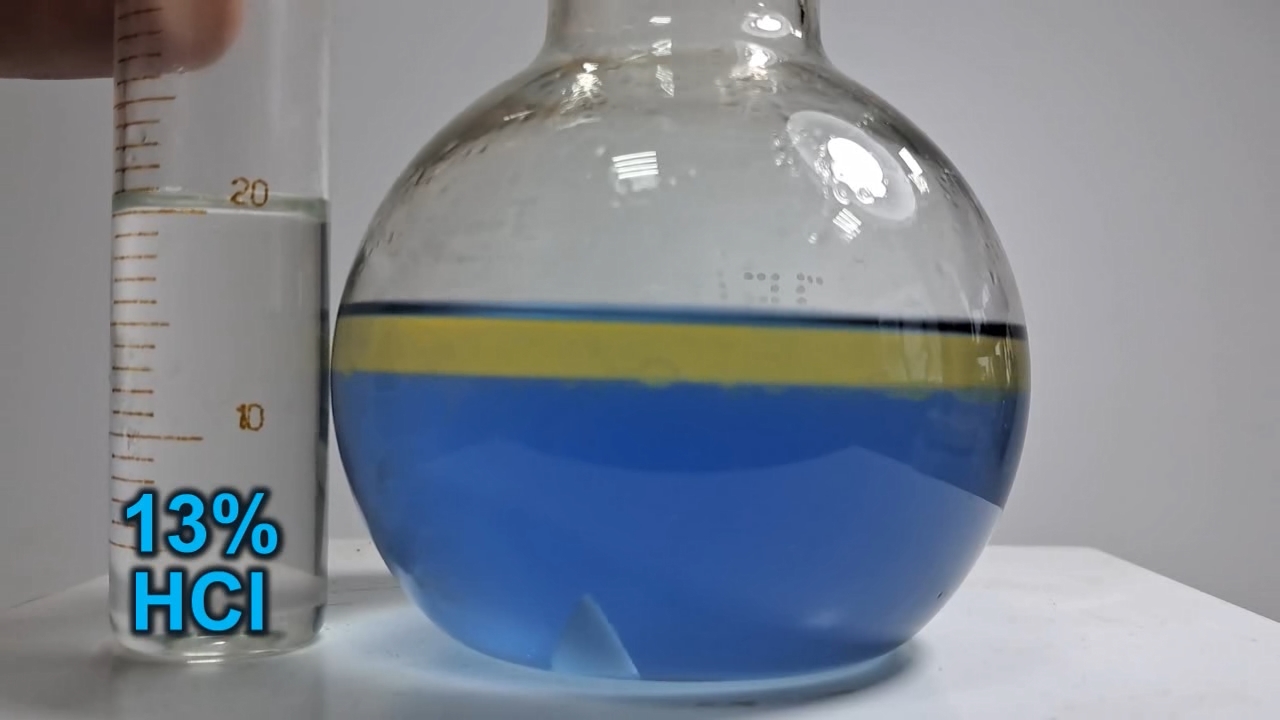
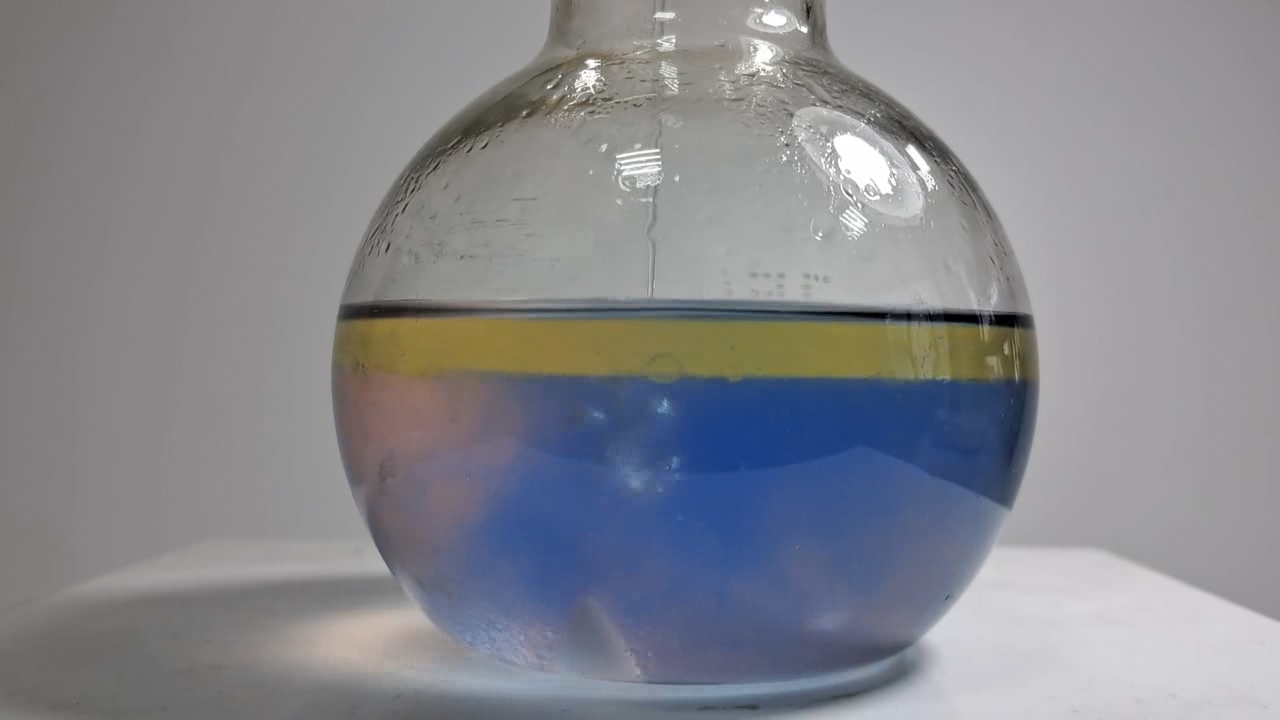
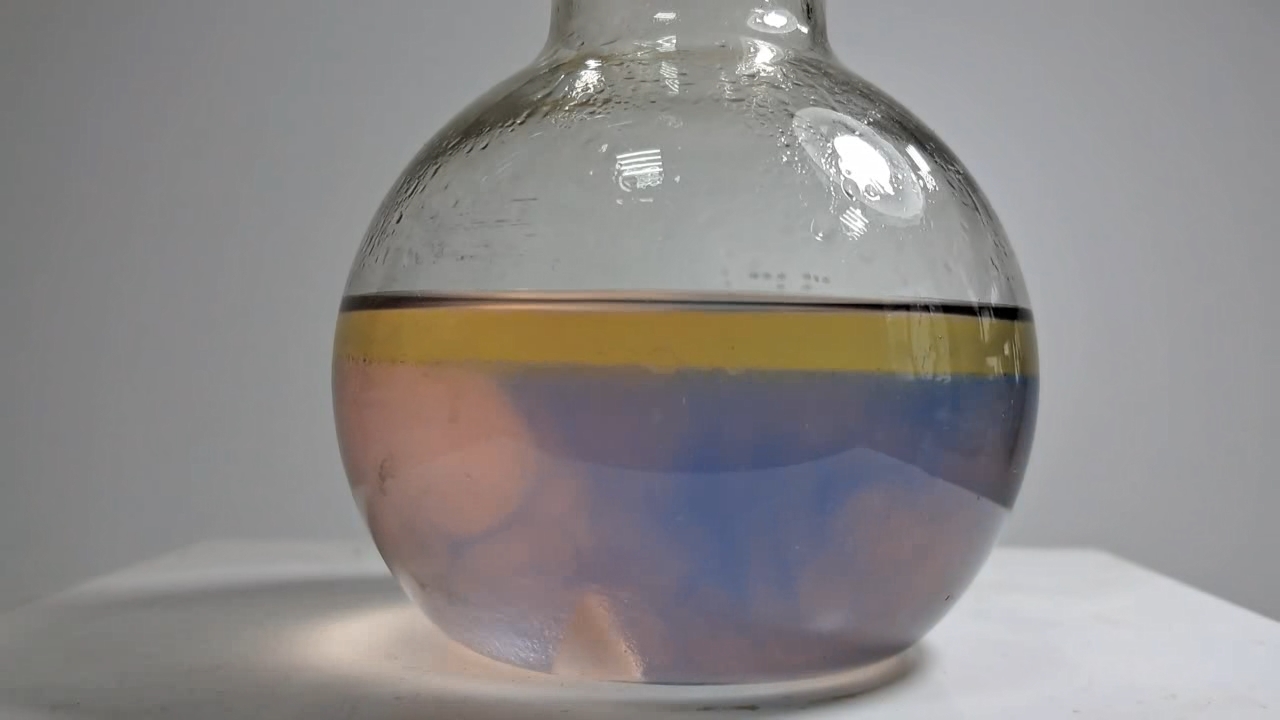
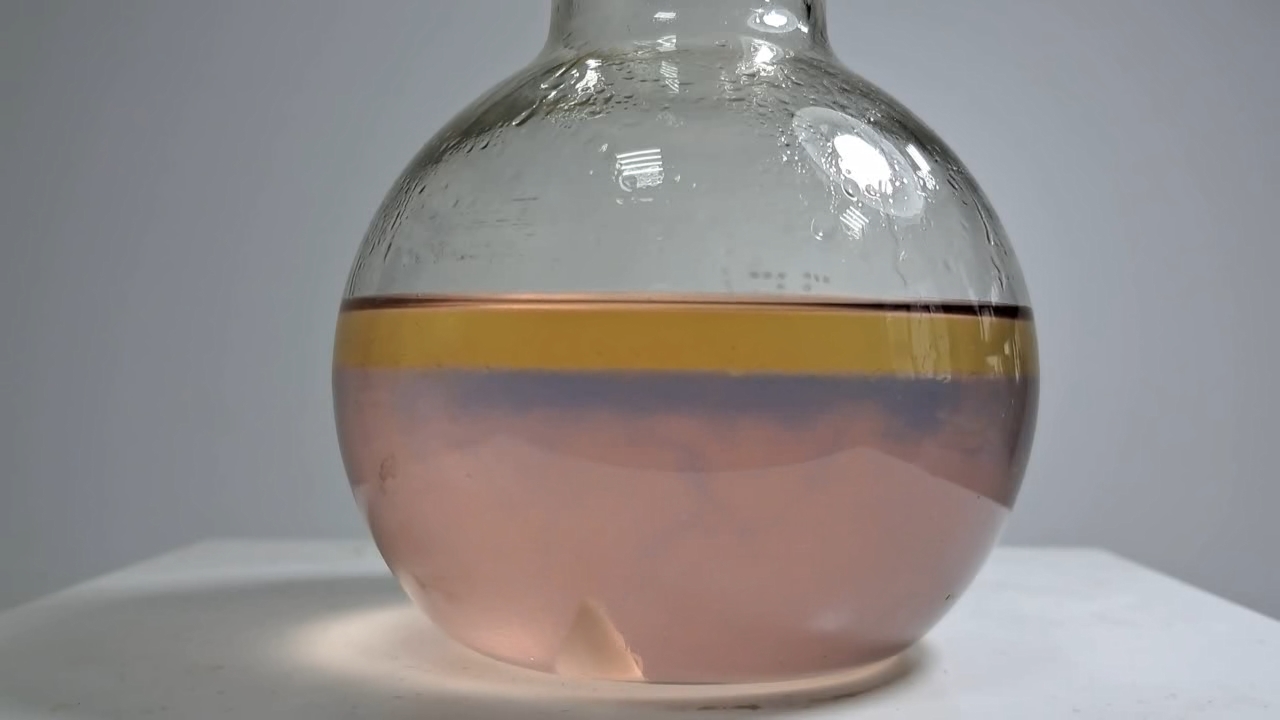
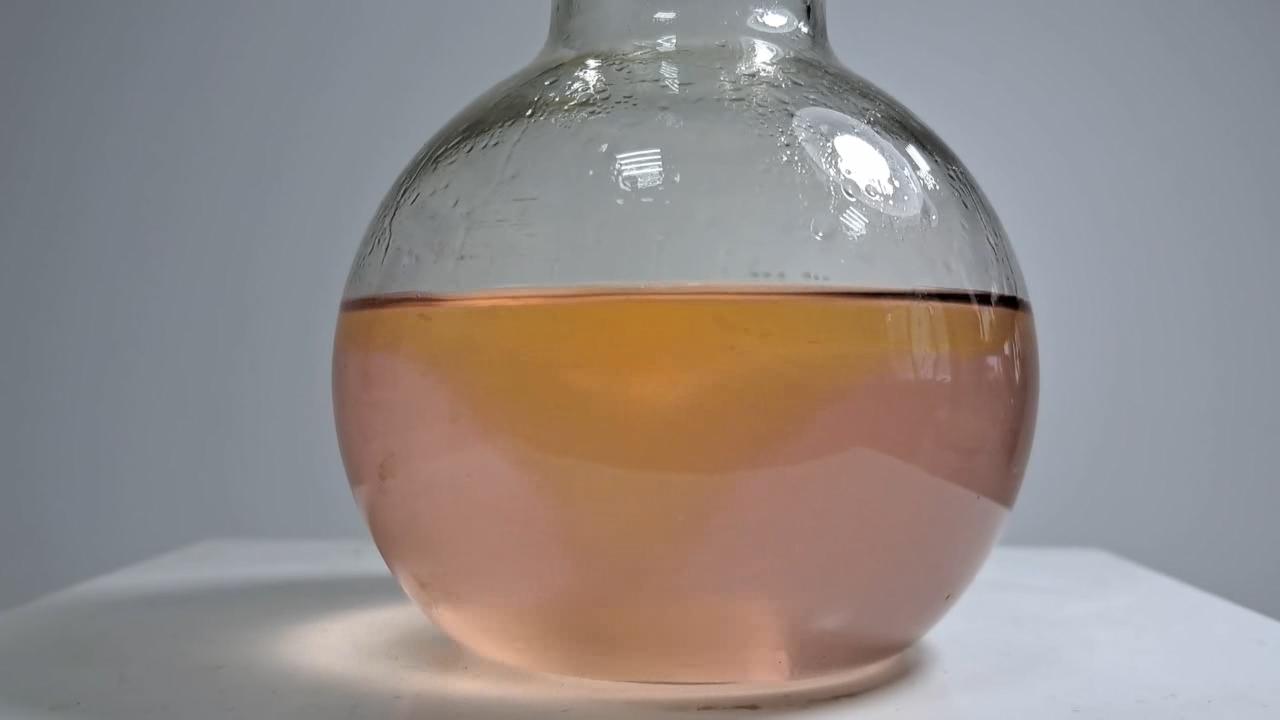
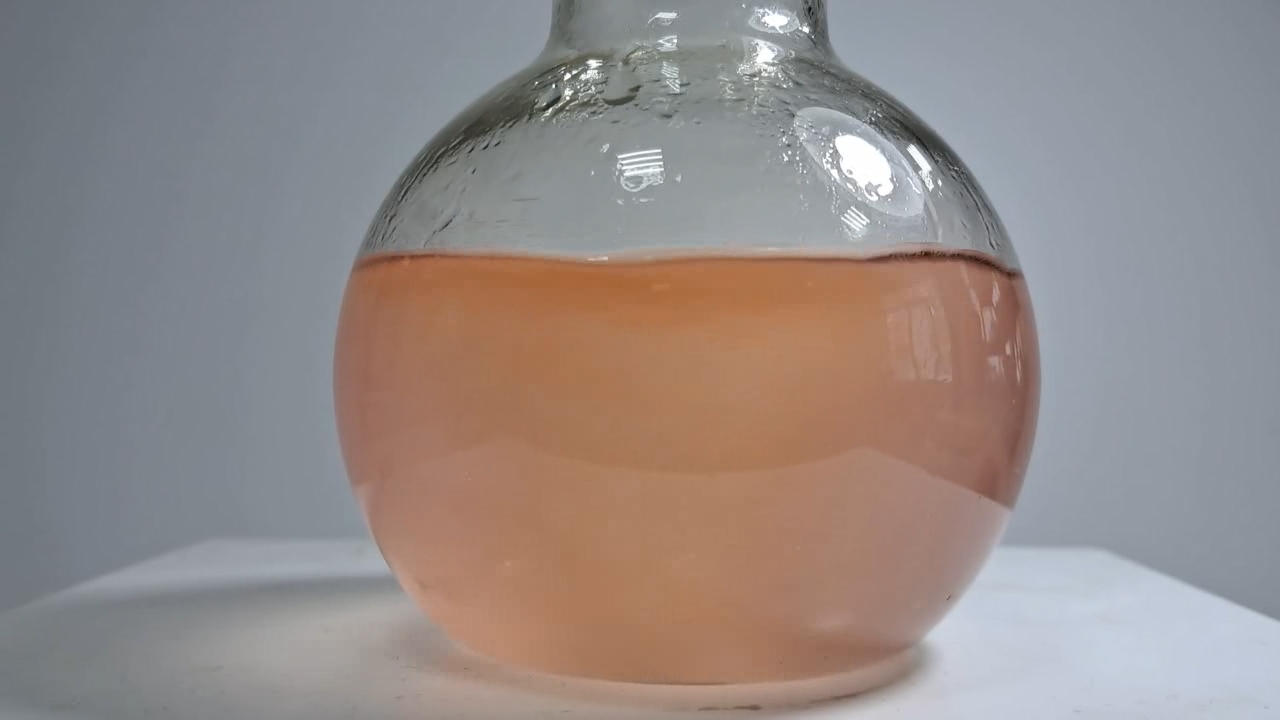
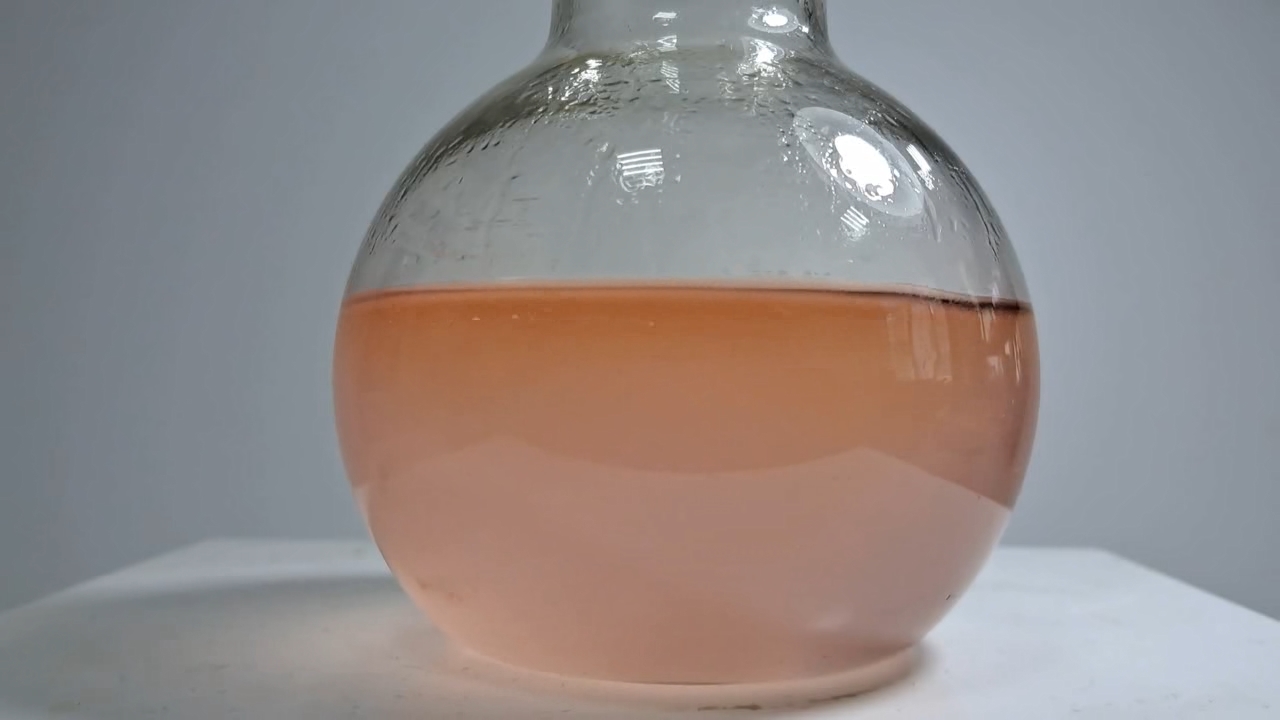
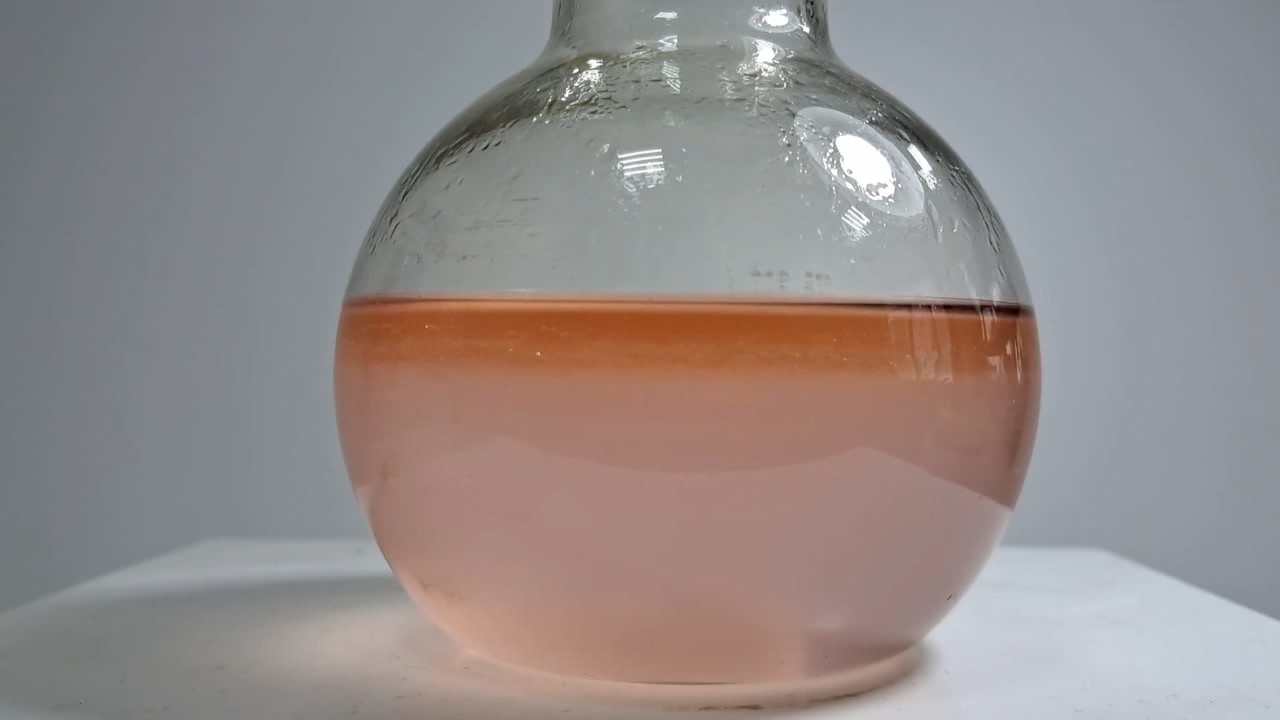
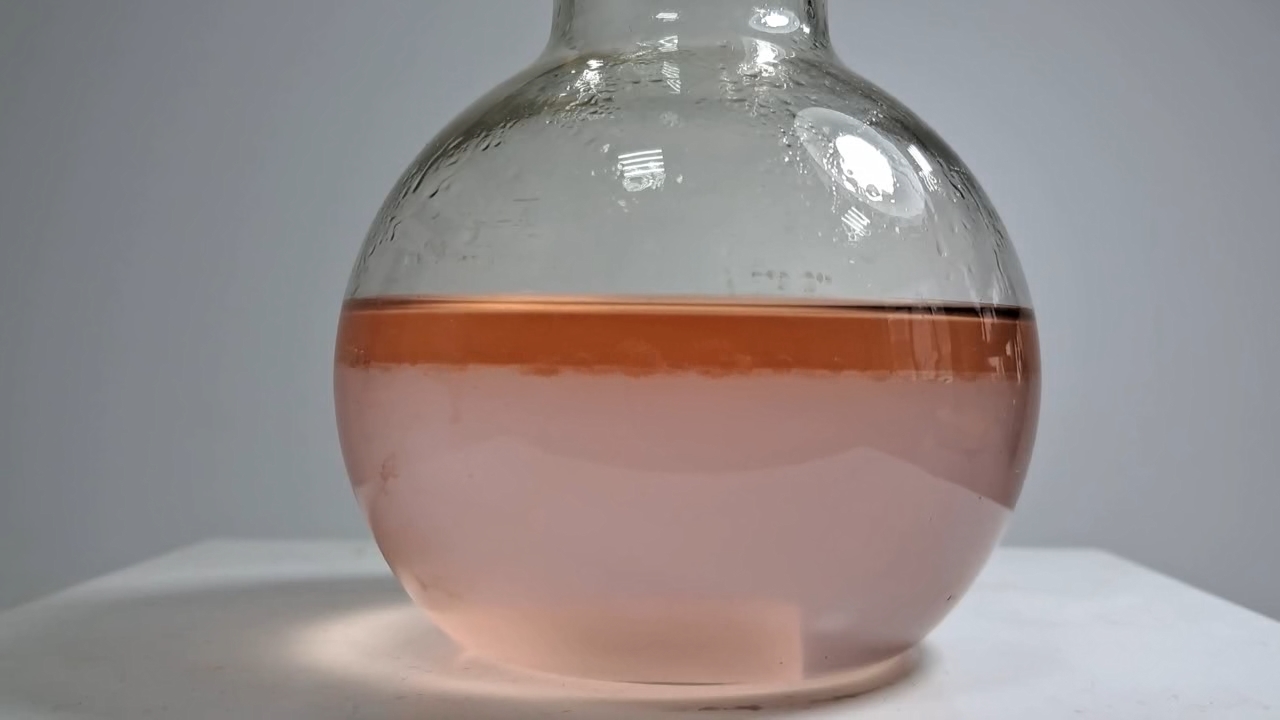
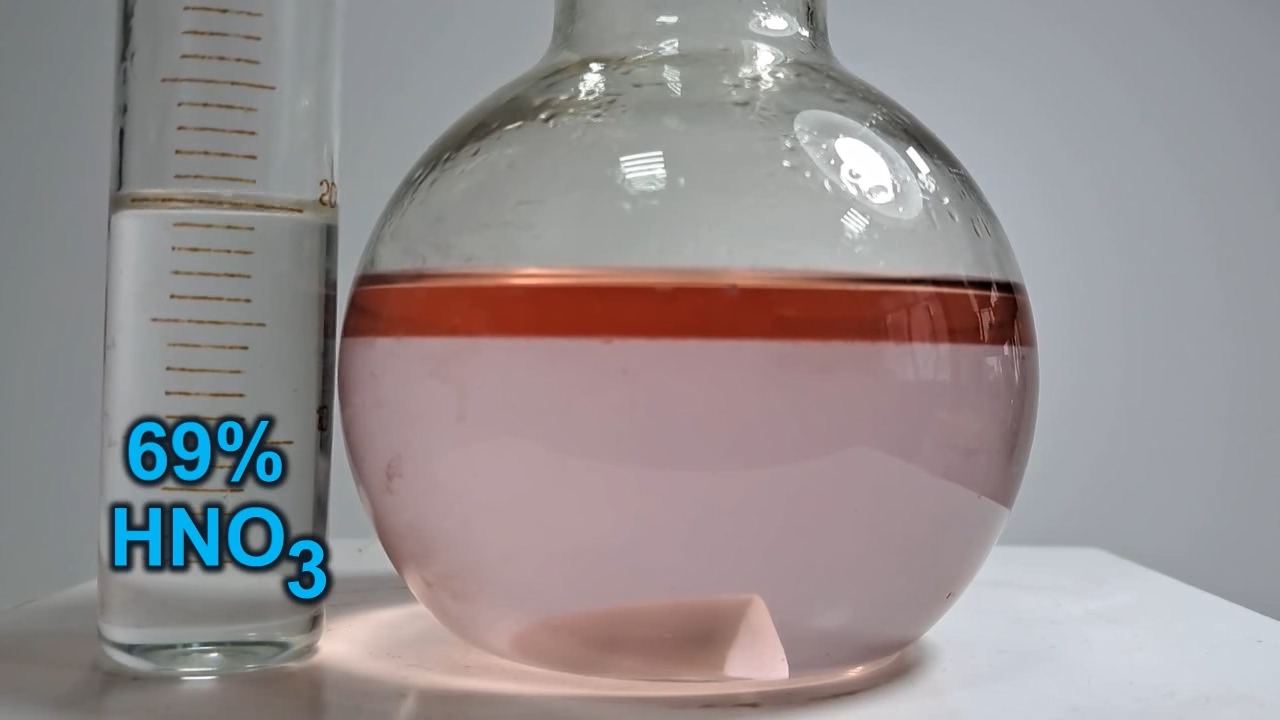
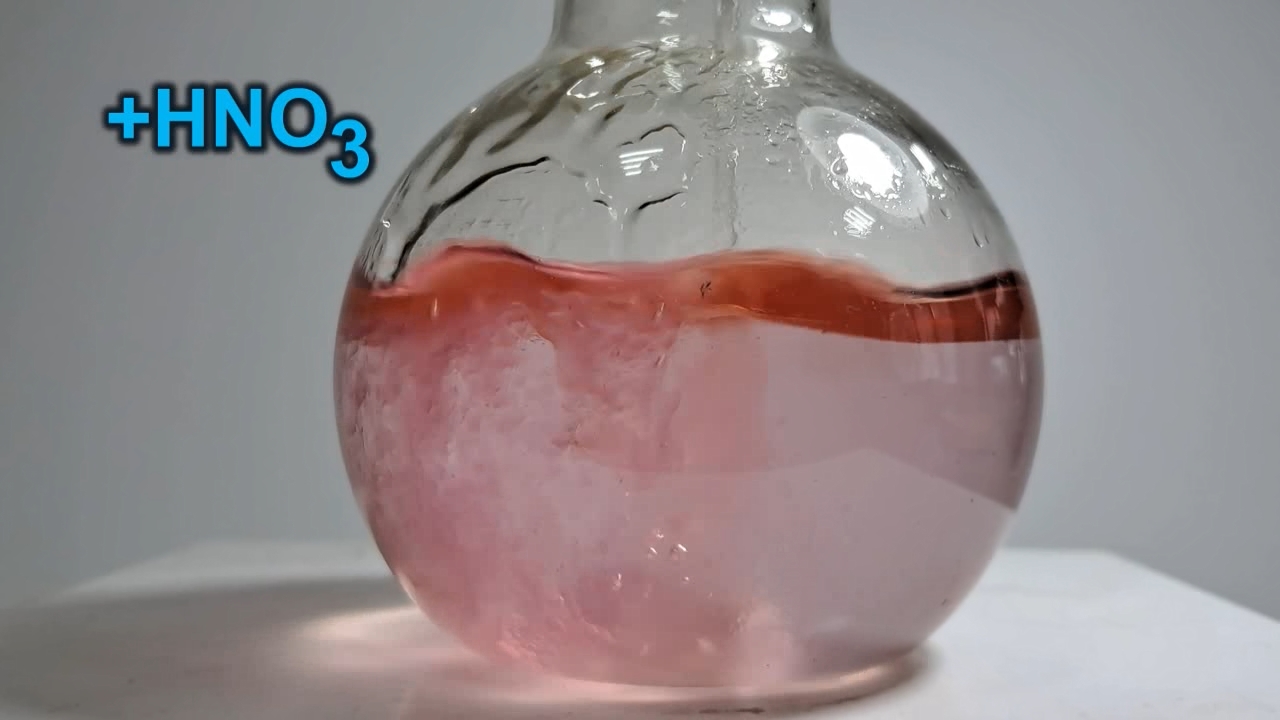
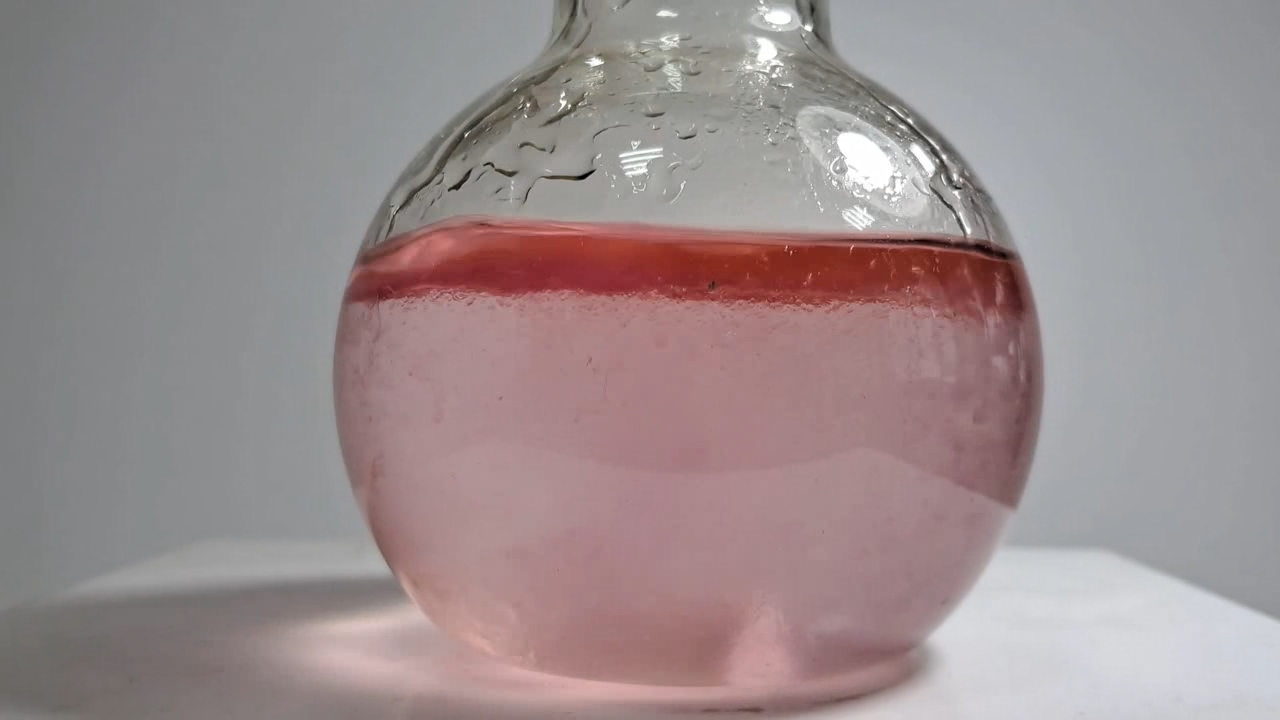
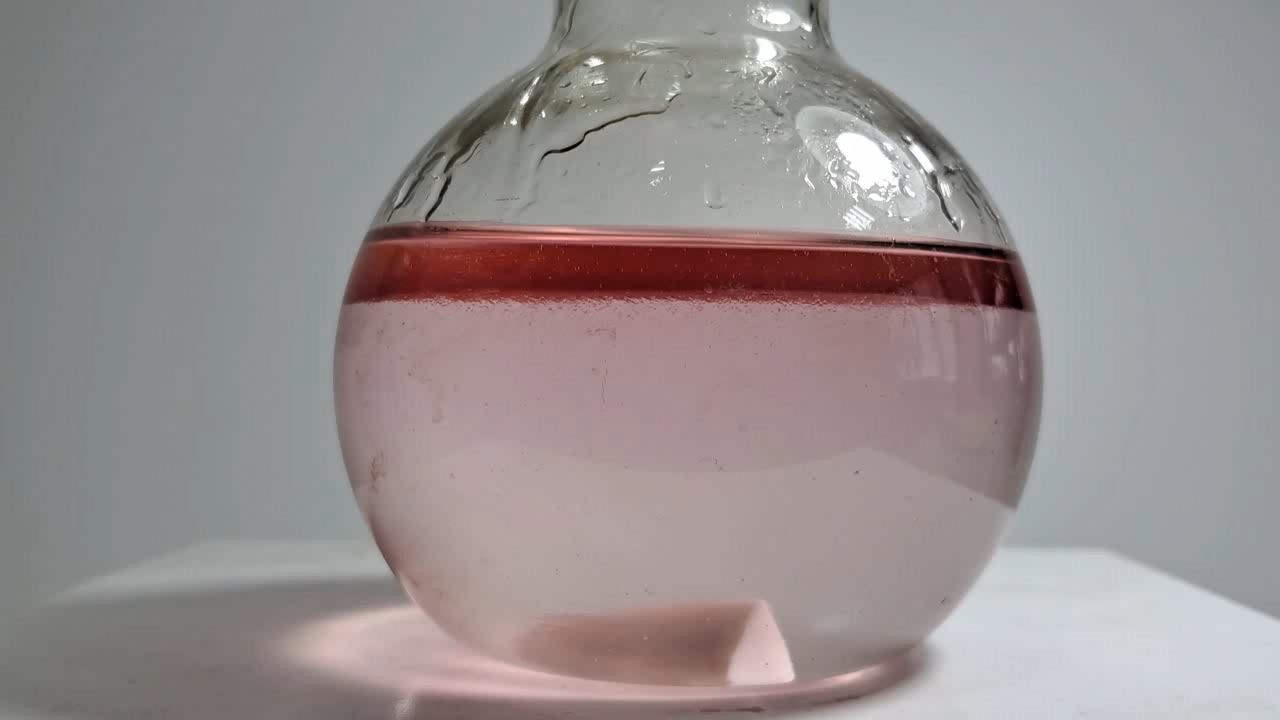
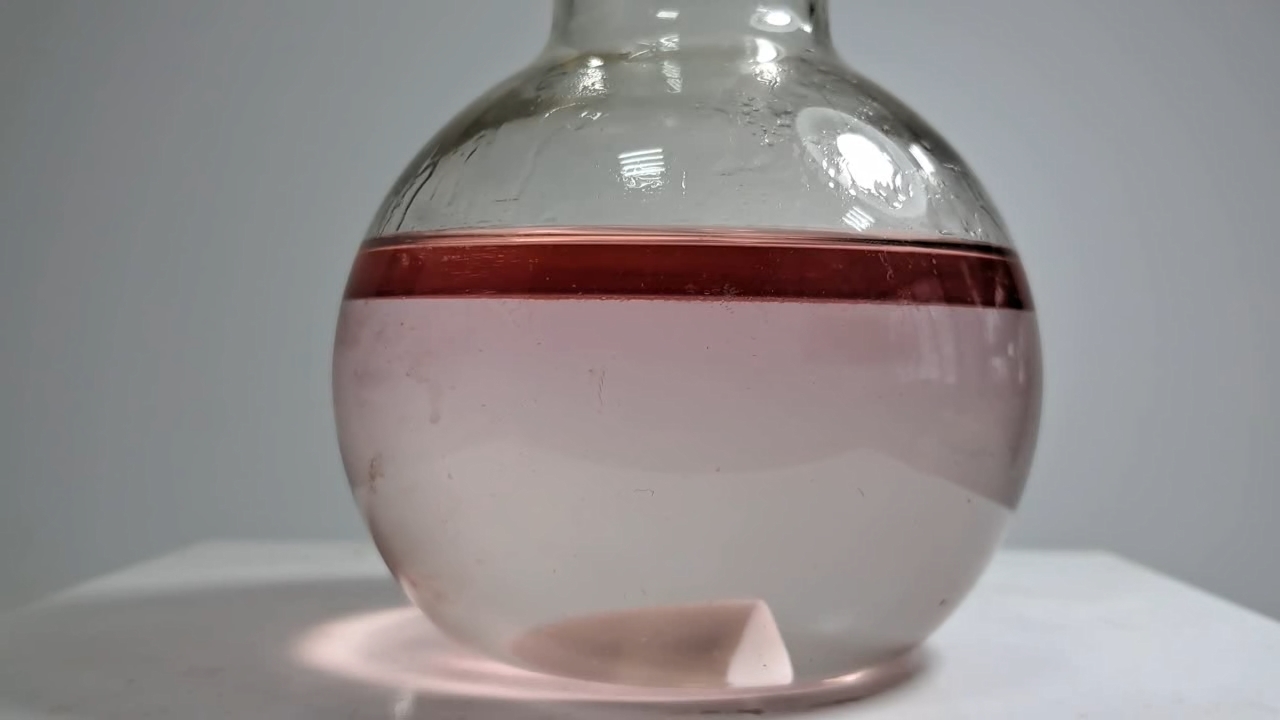
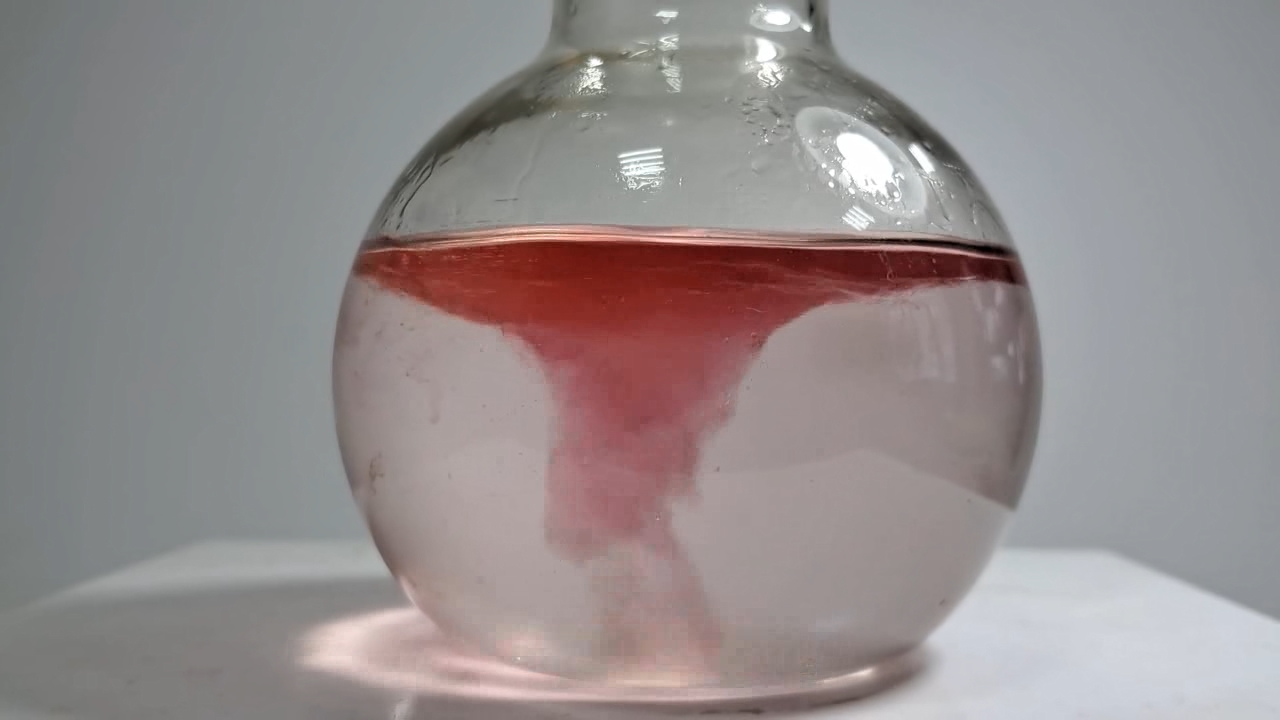
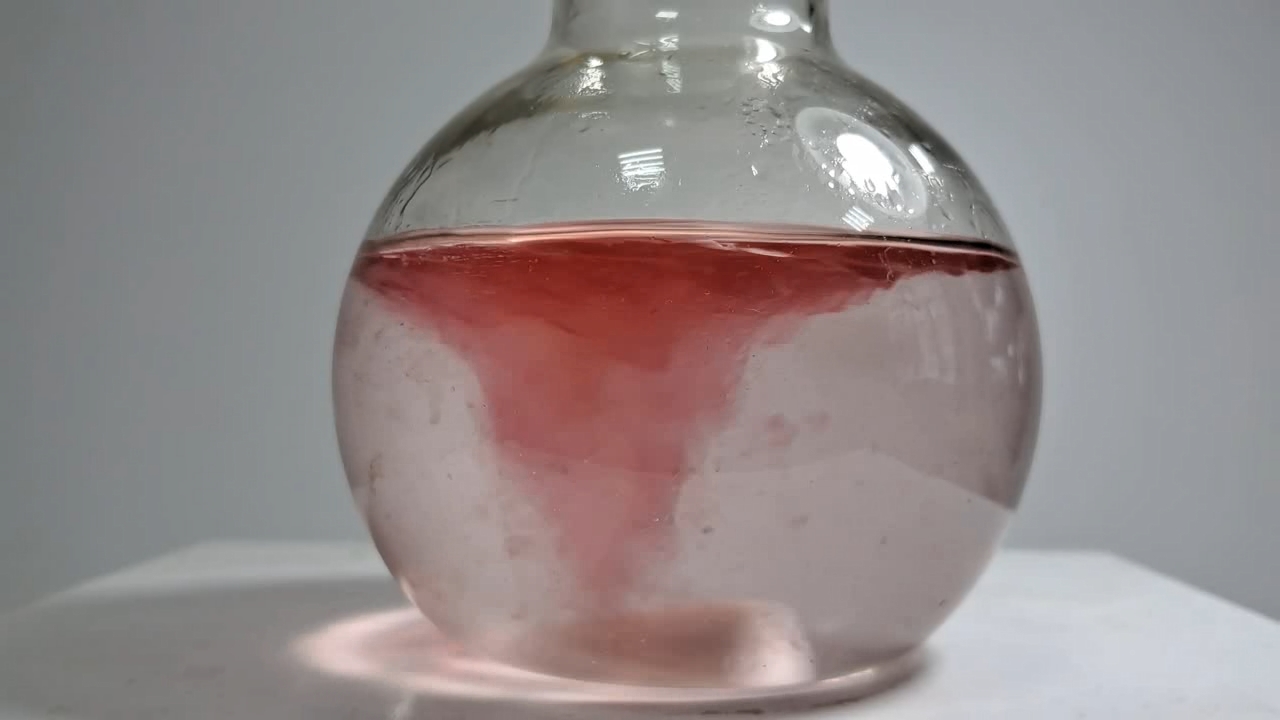
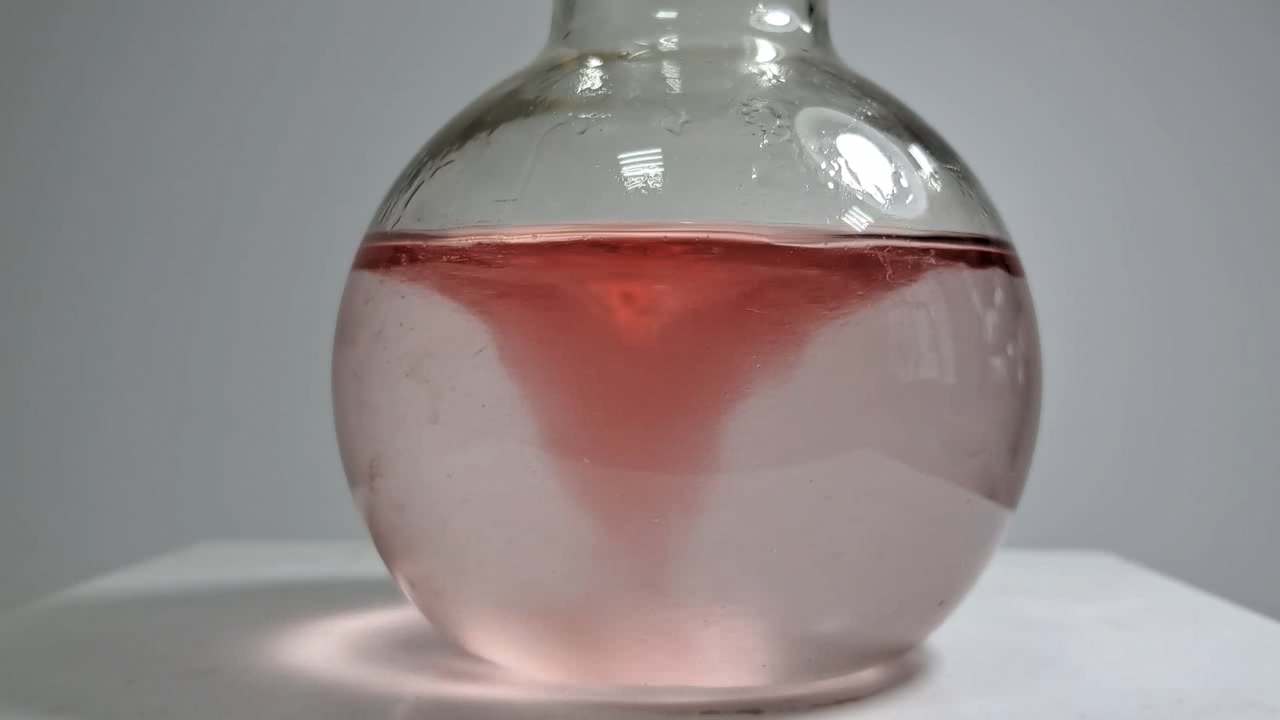
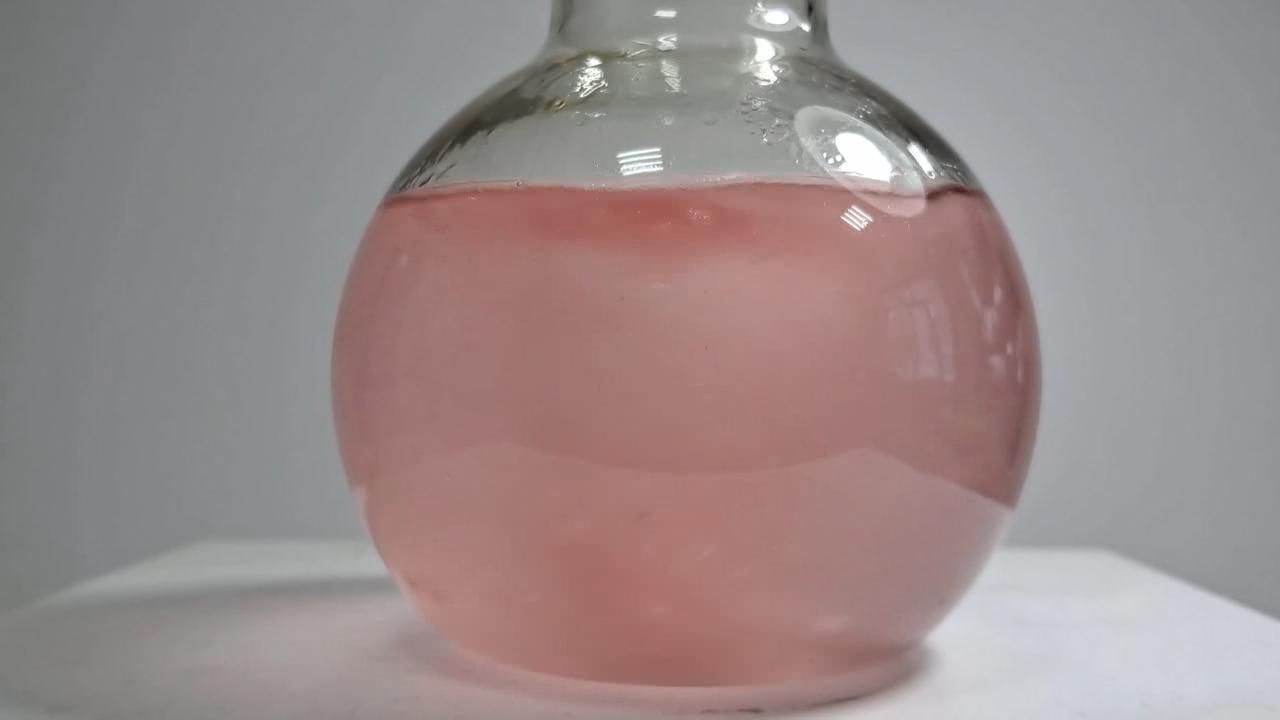
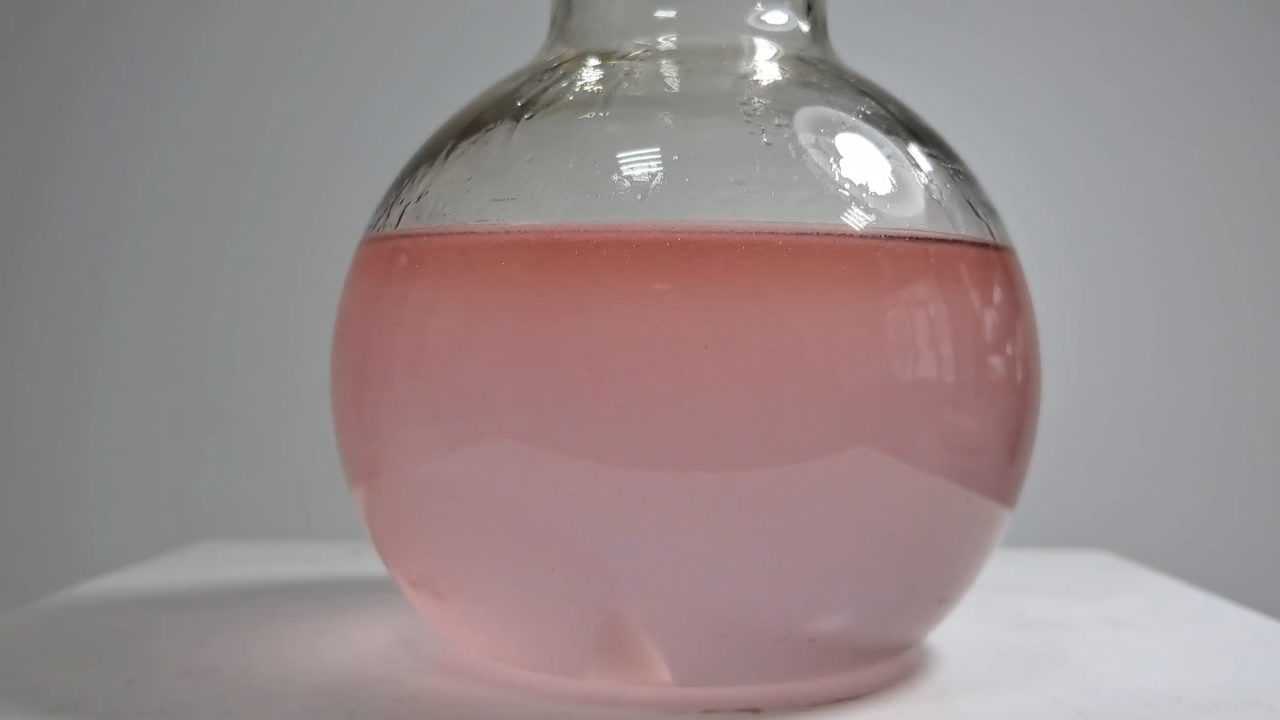
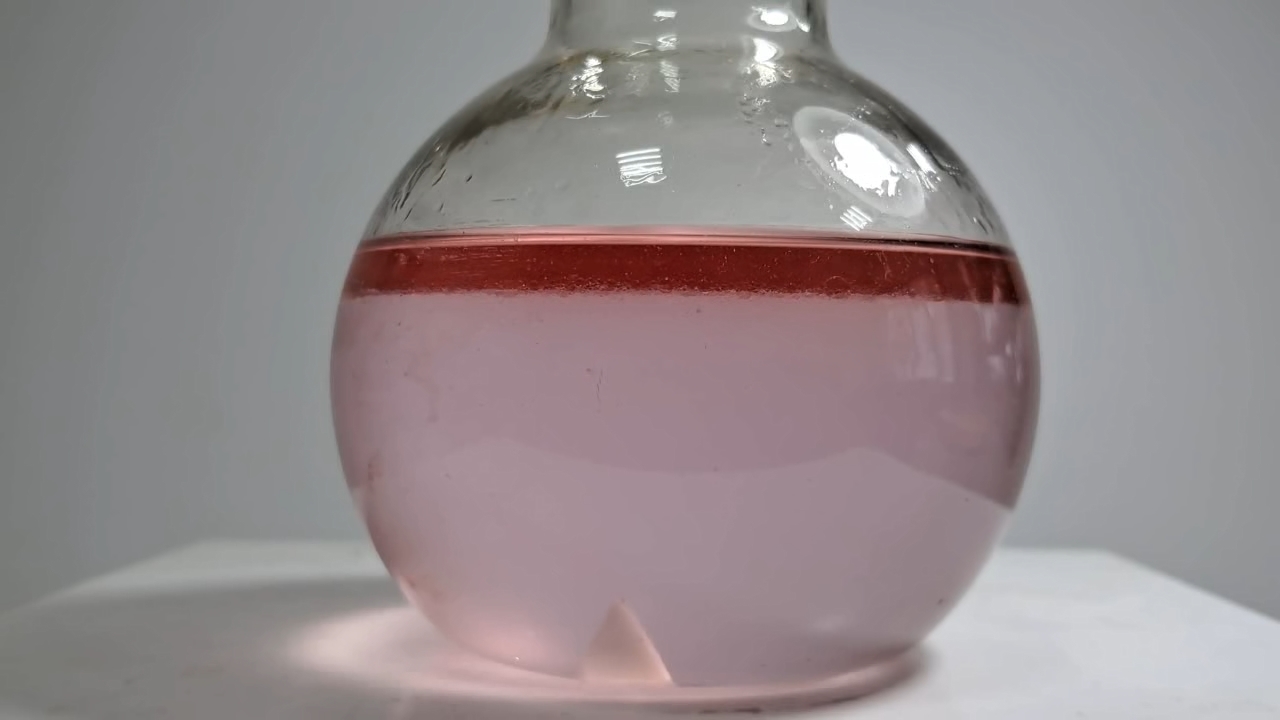
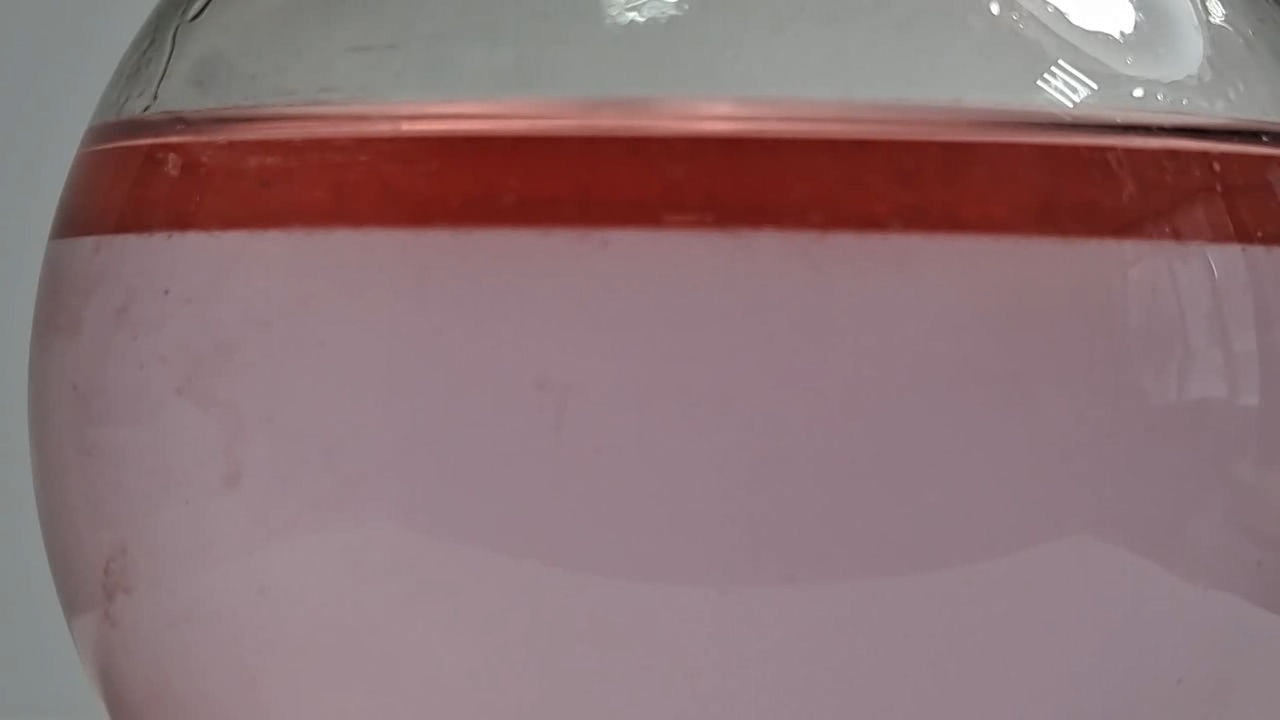
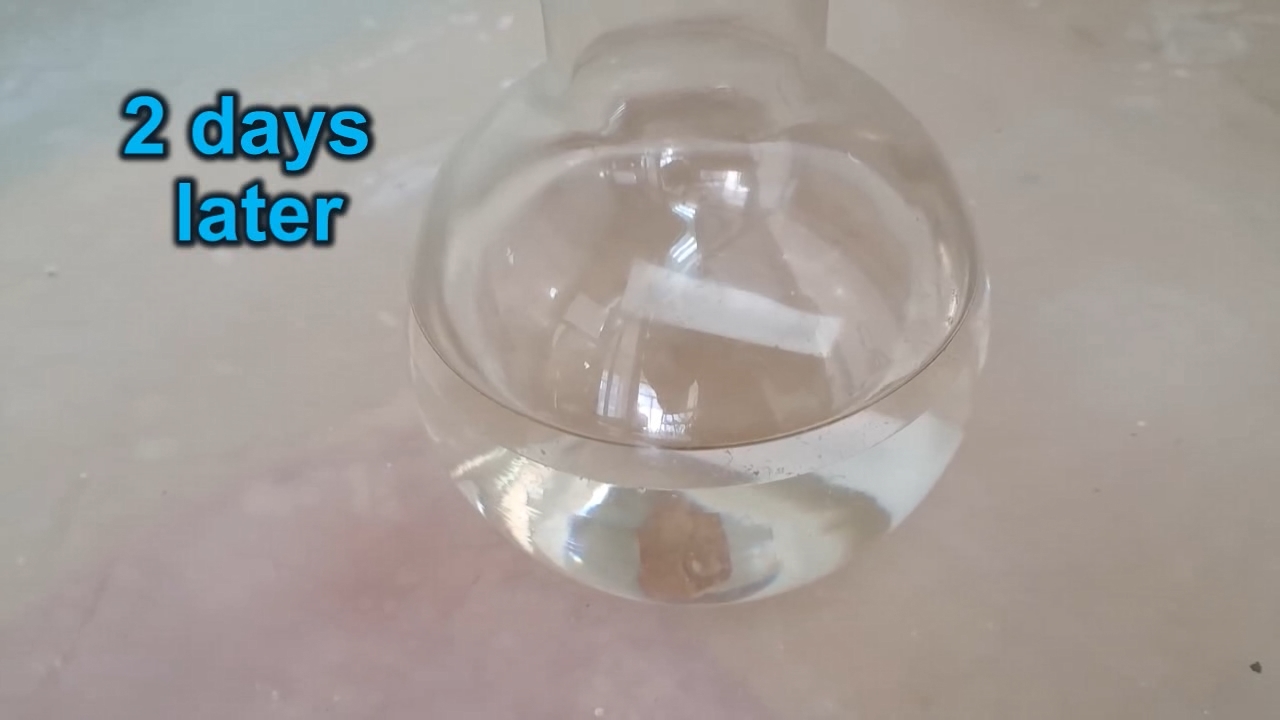
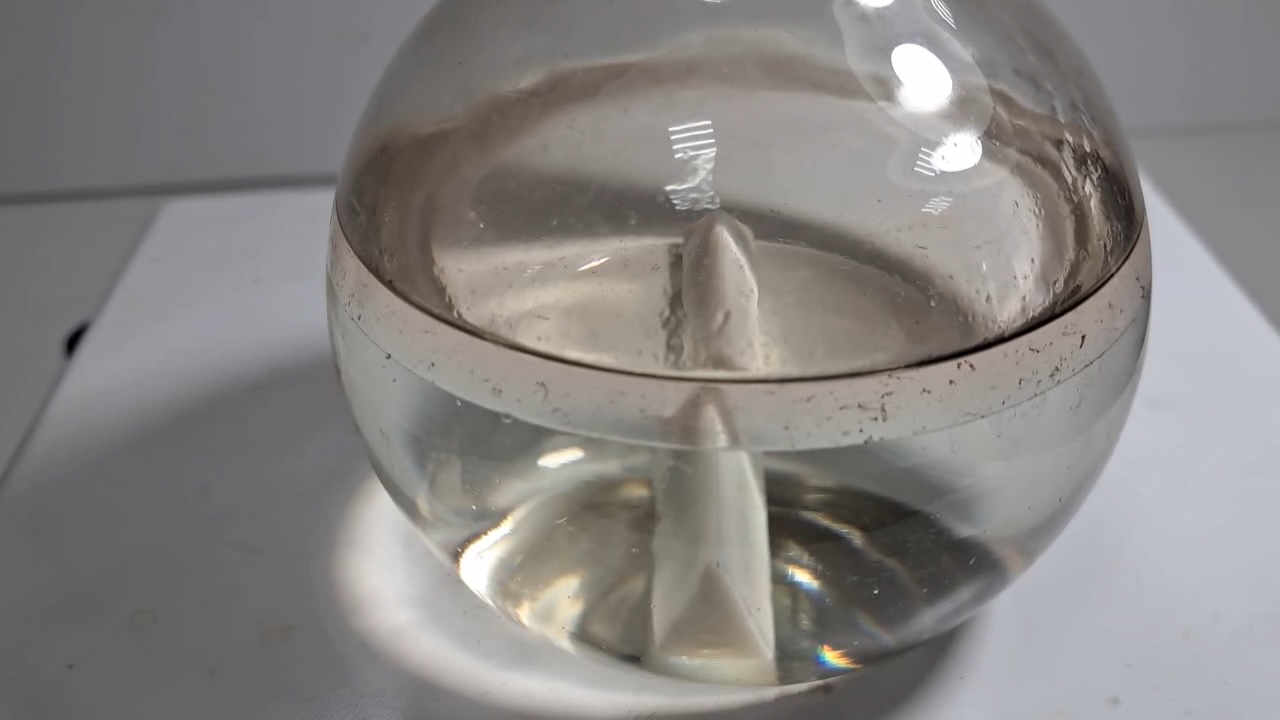
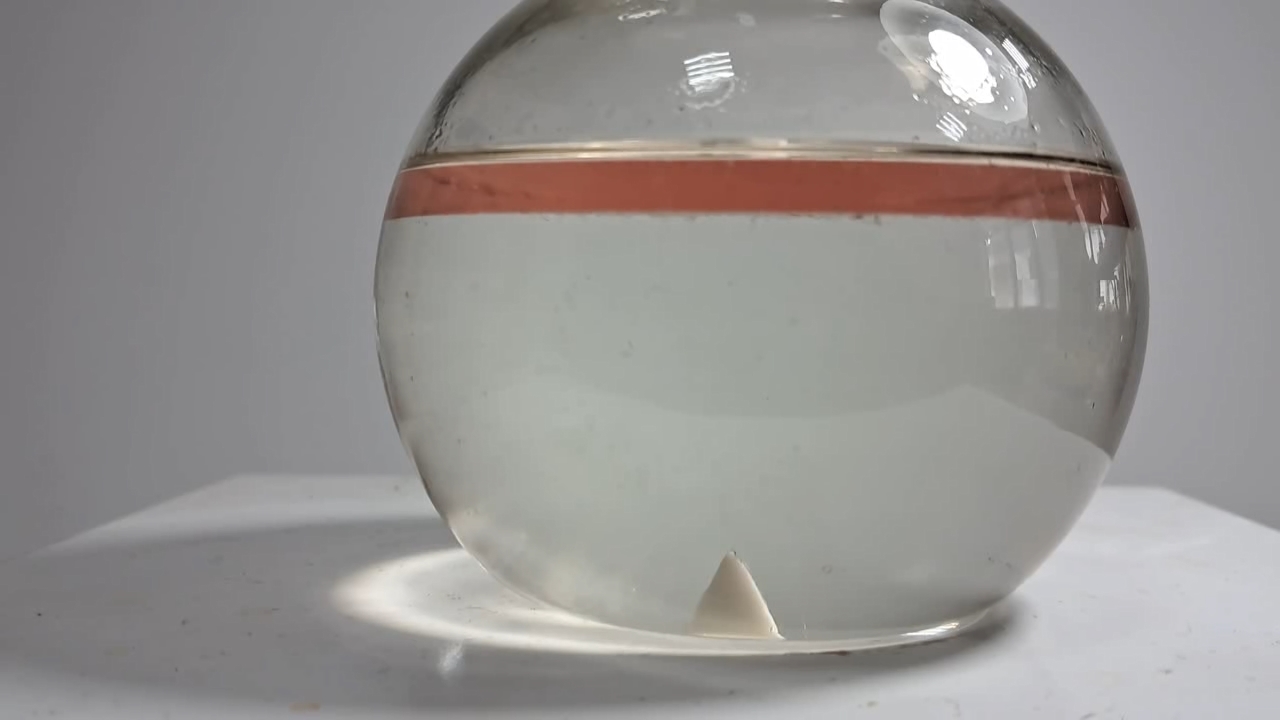
Универсальный индикатор, гексан, н-бутанол и кислота - Часть 3 Thus, two liquid phases formed in the flask: a blue aqueous solution and a green organic layer consisting of hexane and butanol. Both liquids contained the universal indicator in an alkaline medium. Naturally, I didn't stop there and added several portions of acid to the flask. I poured 20 mL of 13% hydrochloric acid into a graduated cylinder and added the first portion to the flask. The organic layer became unevenly colored - yellow and orange regions appeared, while part of the layer remained green. The aqueous phase remained blue. I turned on gentle stirring, and the entire organic layer turned orange. I increased the stirrer speed, and a yellow funnel formed against a blue background. After a short time, I turned off the stirrer. Two liquid layers formed again - one yellow and the other blue. I added another portion of acid. Pink regions appeared in the aqueous layer, but they quickly disappeared. I turned on the magnetic stirrer, and a light-blue emulsion formed. This time, I stirred for longer. After the emulsion separated, the organic layer turned green, identical to its original color. The indicator's color change had reversed. Initially, the organic layer had turned yellow and even orange because of a localized excess of acid, but after stirring, the original color returned. The lower layer remained blue. A similar phenomenon is often observed during titration. Examples include not only acid-base titrations but also, for instance, complexometric titrations. A localized excess of titrant causes a color change in the indicator, which reverses upon stirring. In our case, however, there are two liquid phases, which significantly slows the equalization of concentrations. Incidentally, two-phase (extractive) titrations also exist, and in such systems this effect is more pronounced than in an ordinary titration. I added another portion of hydrochloric acid. The upper liquid layer turned yellow and, in some places, red. The lower layer developed pink regions. After stirring and phase separation, the organic layer was yellow, while the aqueous layer remained blue. I poured another 20 mL of 13% hydrochloric acid into the graduated cylinder and added it to the flask. The aqueous layer turned pink, while the organic layer remained yellow. I started stirring. An orange emulsion formed, which subsequently separated into a pink aqueous phase and a red-orange organic layer. The alkali had been completely neutralized. To increase the acidity of the solution, I added 20 mL of 69% nitric acid to the flask. The organic layer turned an intense red-brown color, while the aqueous layer became pale pink. I turned on the stirrer, and a "bloody tornado" formed in the flask - a red funnel against a light-pink background. I increased the stirrer speed, and a red emulsion formed. After stirring was stopped, the upper layer was red-brown, while the lower layer remained pale pink. I sealed the flask tightly. I was able to return to the laboratory only two days later. By that time, the aqueous layer had become almost colorless. The organic layer remained red-brown, but its color intensity had decreased. A possible explanation is the partial destruction of the organic dyes by the mixture of hydrochloric and nitric acids. I noticed that the color of the organic layer was visible only when viewing the flask from the side (parallel to the liquid surfaces). When viewed from above, the color of the organic layer was almost unnoticeable. |
Universal Indicator, Hexane, n-Butanol, and Acid |
|
|
|
|
|
|
|
|
|
|
|
|
|
|
|
|
|
|
|
|
|
|
|
|
|
|
|
|
|
|
|
|
|
|
|
|
|
|
|
|
|
|
|
|
|
|
|
|
