Content Chemistry experiments - video Physics experiments - video Home Page - Chemistry and Chemists

Chemistry and Chemists № 2 2026

Journal of Chemists-Enthusiasts
Donate to the journal Chemistry and ChemistsDonate to the journal Chemistry and Chemists


Universal pH Indicator and Extraction - pt.6, 7


Chemist


Having noticed a mistake in the text, allocate it and press Ctrl-Enter


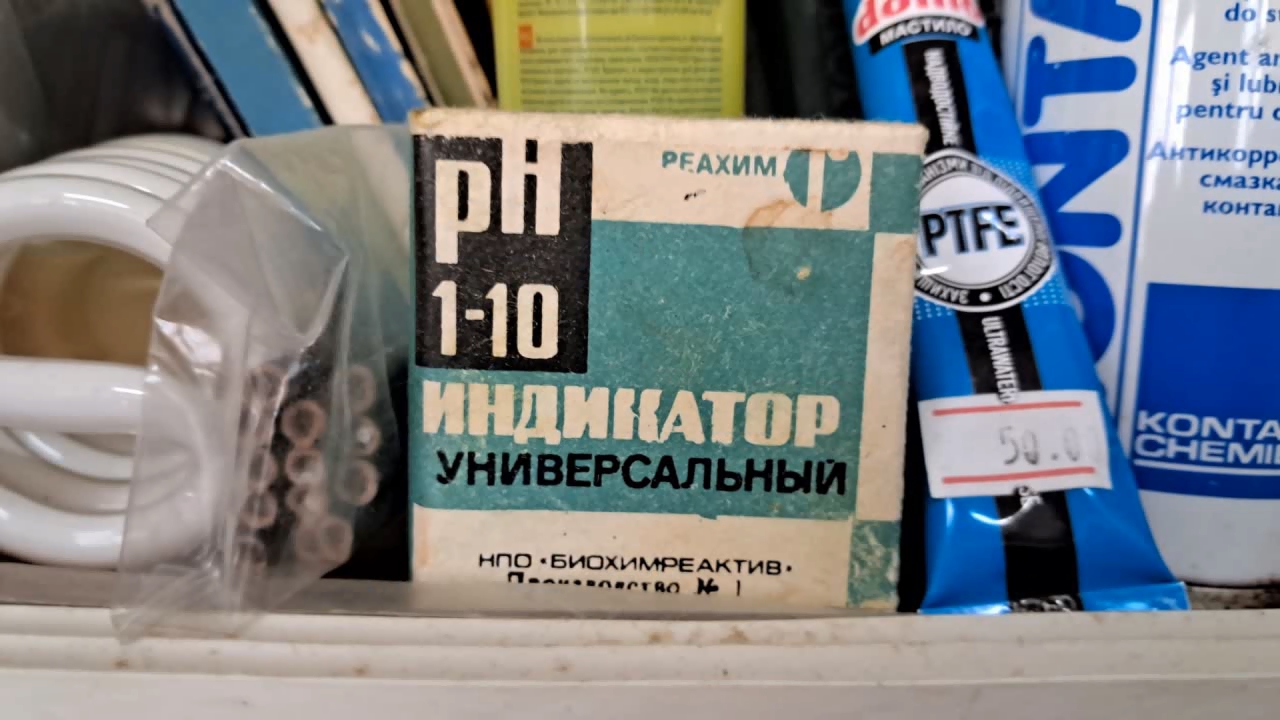
I began this series with simple experiments using aqueous solutions of the universal indicator. In the subsequent experiments, I added various organic solvents to the aqueous solutions. Some of these solvents extracted components of the universal indicator, resulting in the formation of two liquid layers of different colors.

A logical question arose: what would happen if I dissolved the universal indicator not in water, but in an anhydrous organic solvent, and then added a solid alkali to the solution? After the alkali, I could add an anhydrous acid, such as acetic acid. I had no doubt that the indicator would acquire different colors in butanol than it did in similar experiments carried out in an aqueous medium.

I managed to perform the experiment, but I didn't have time to describe it. I spent an entire week doing demanding organizational work for our laboratory. I'm ill-suited to this kind of work, as I'm a research chemist, not an administrator. I was so busy that I barely noticed the ballistic missile attacks, the fire at my neighbors' house after a Shahed drone struck, or other incidents. If the world had ended last week, I probably wouldn't have noticed.

Even though it was my day off, management asked me to come to work. I agreed, as it would help speed up the opening of the laboratory. Later, however, it turned out that another chemist had agreed to come in instead. I thanked him and used the opportunity to write the next part of the article.

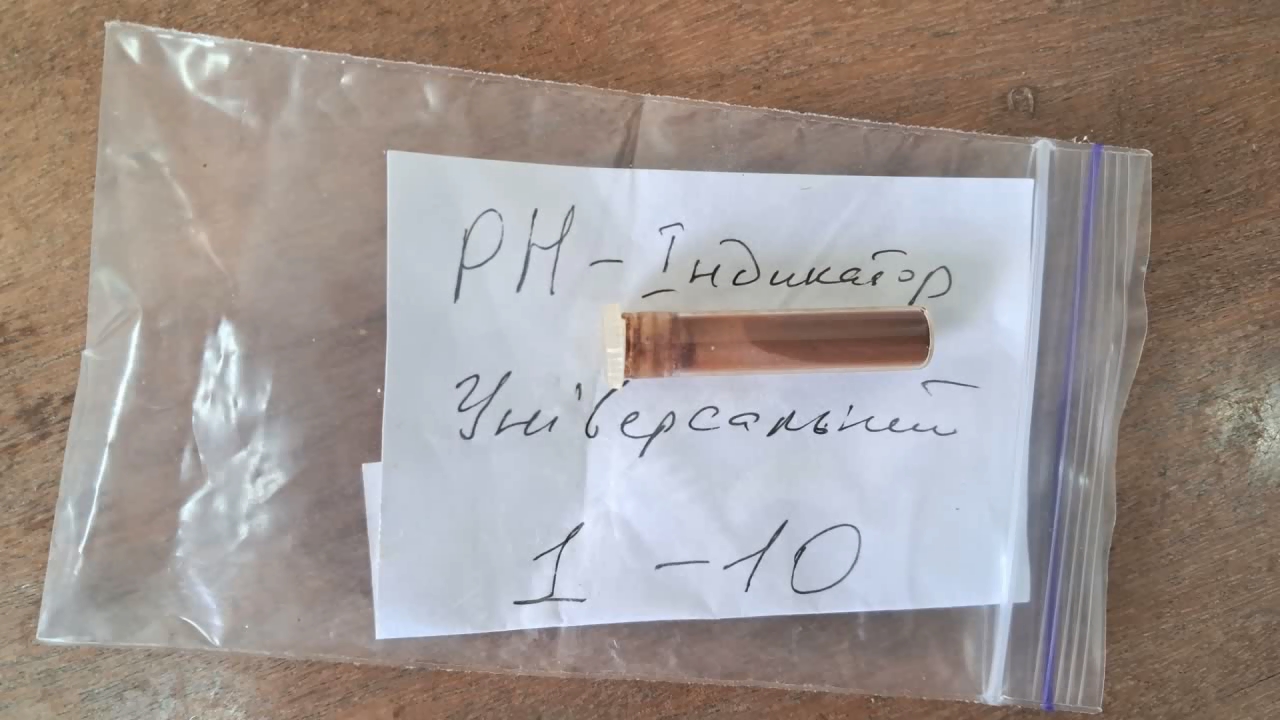
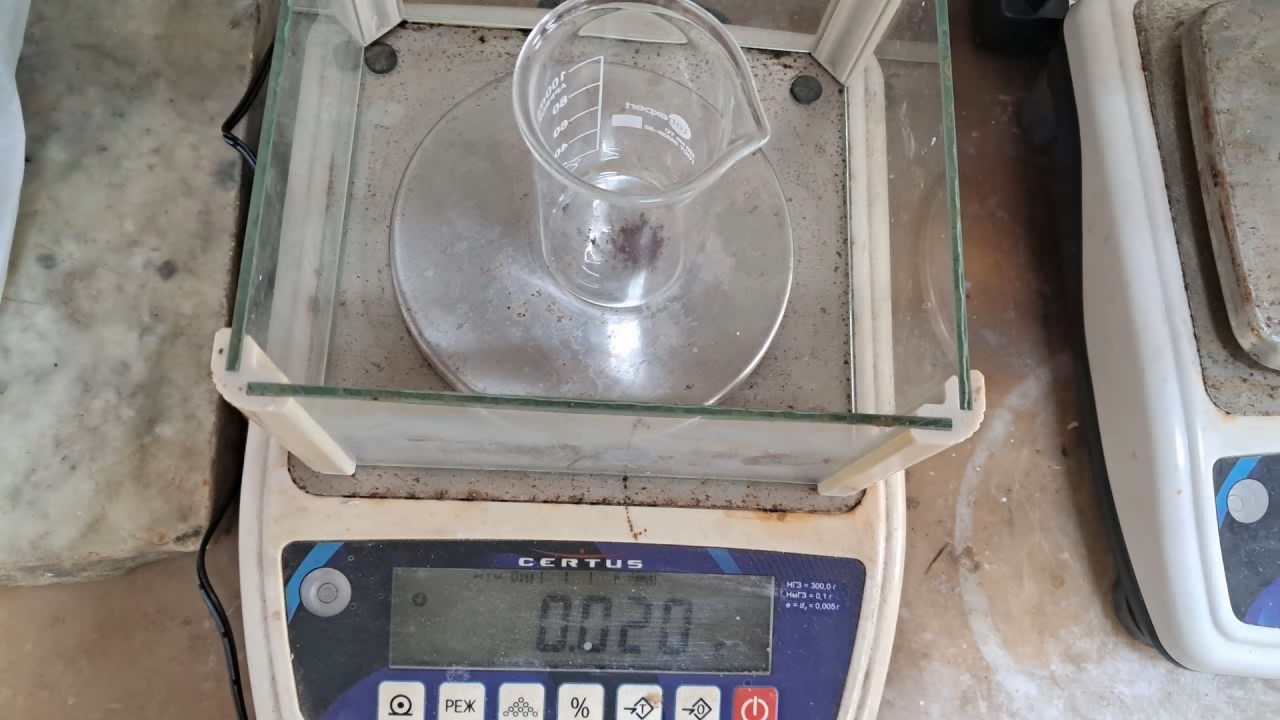
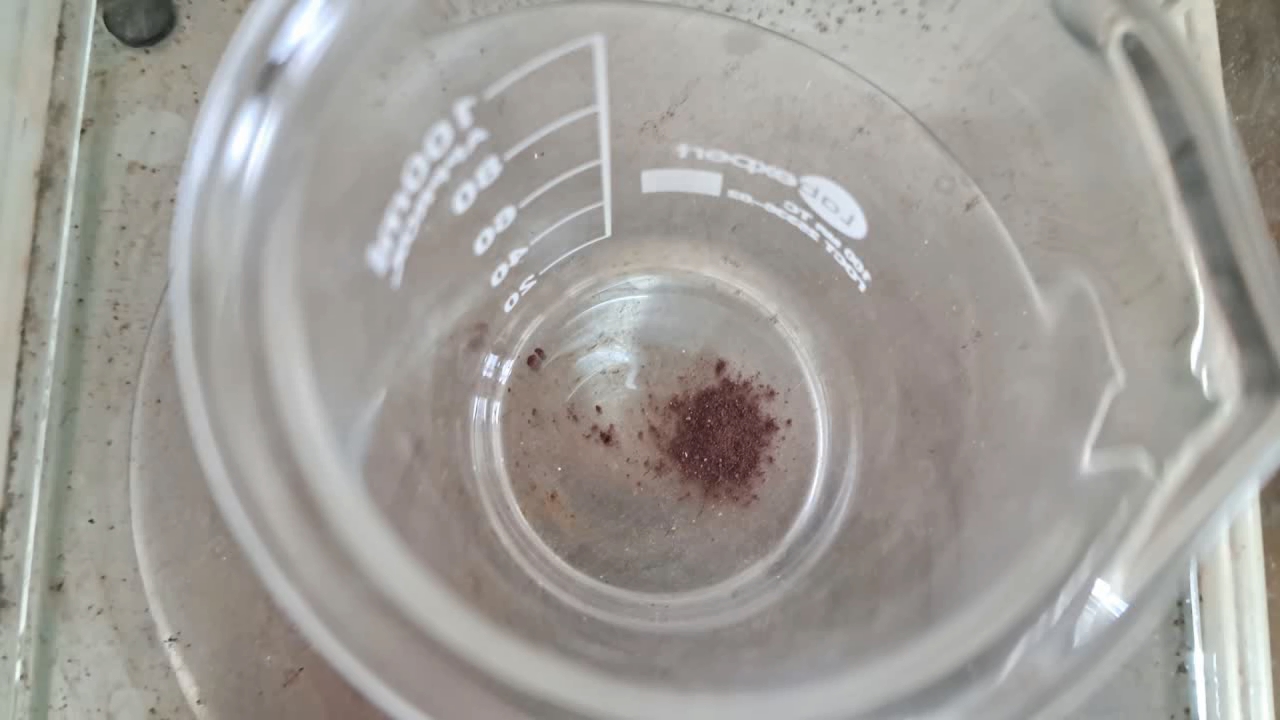
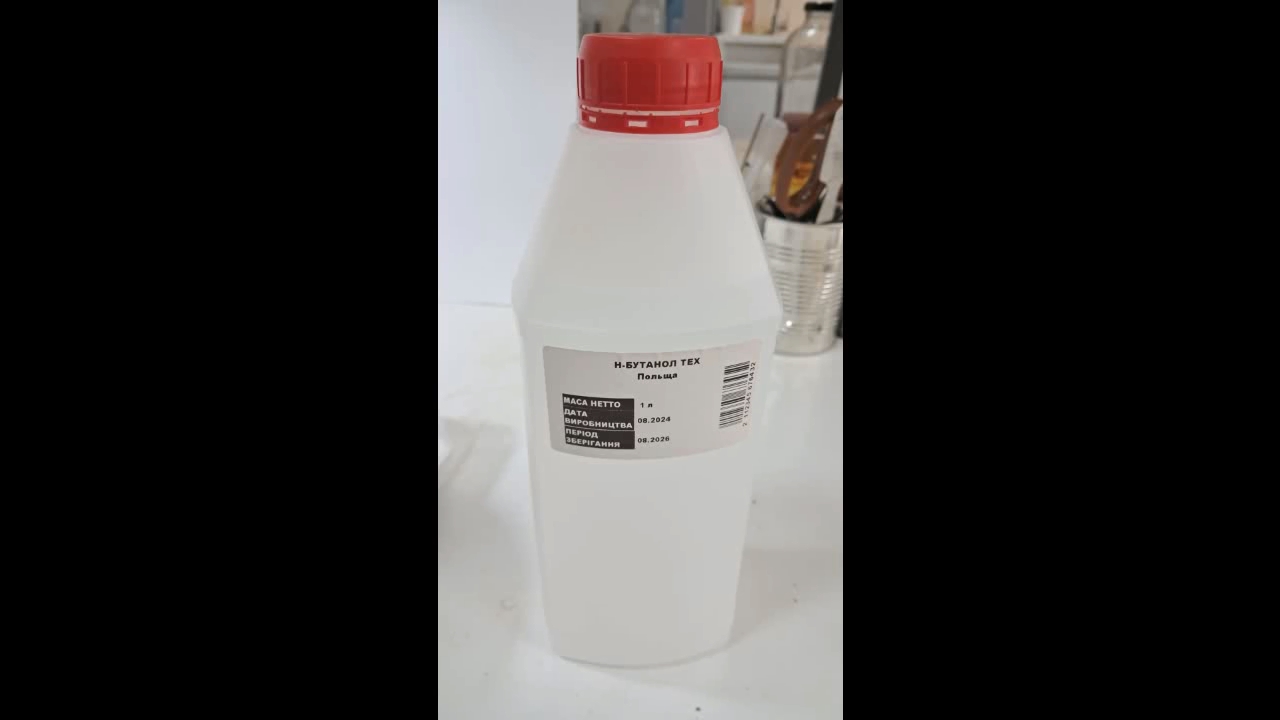
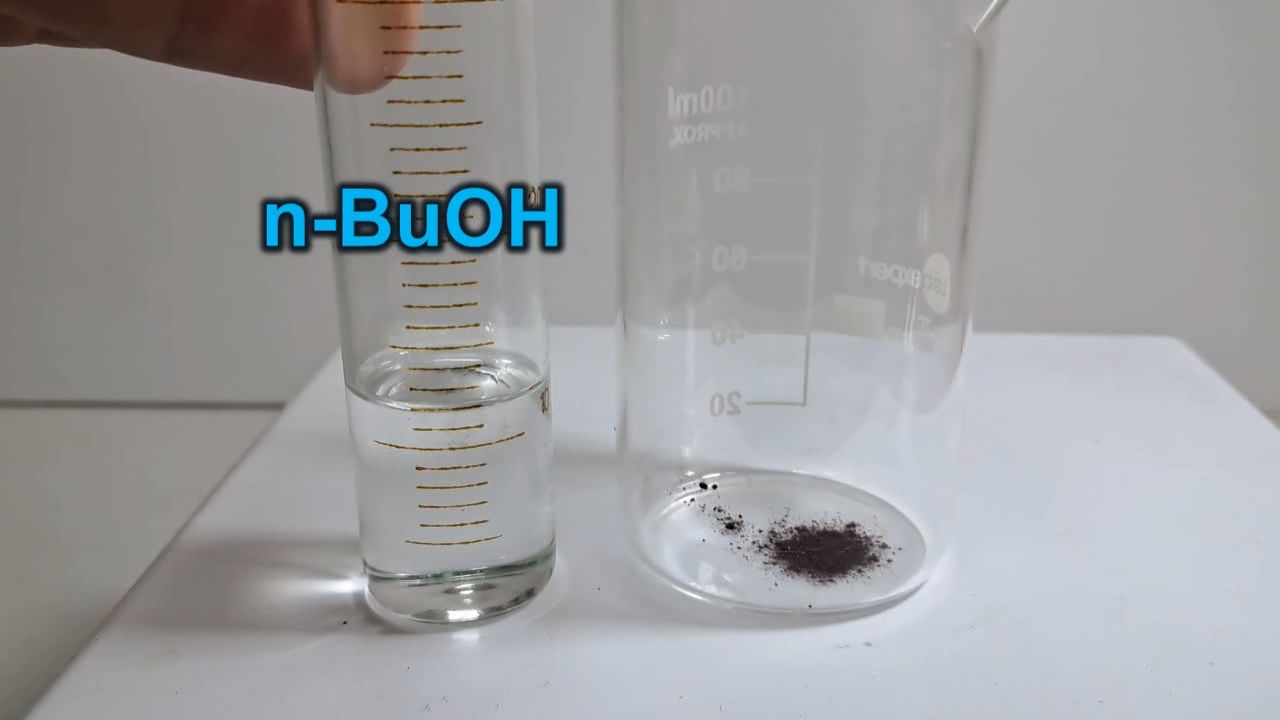
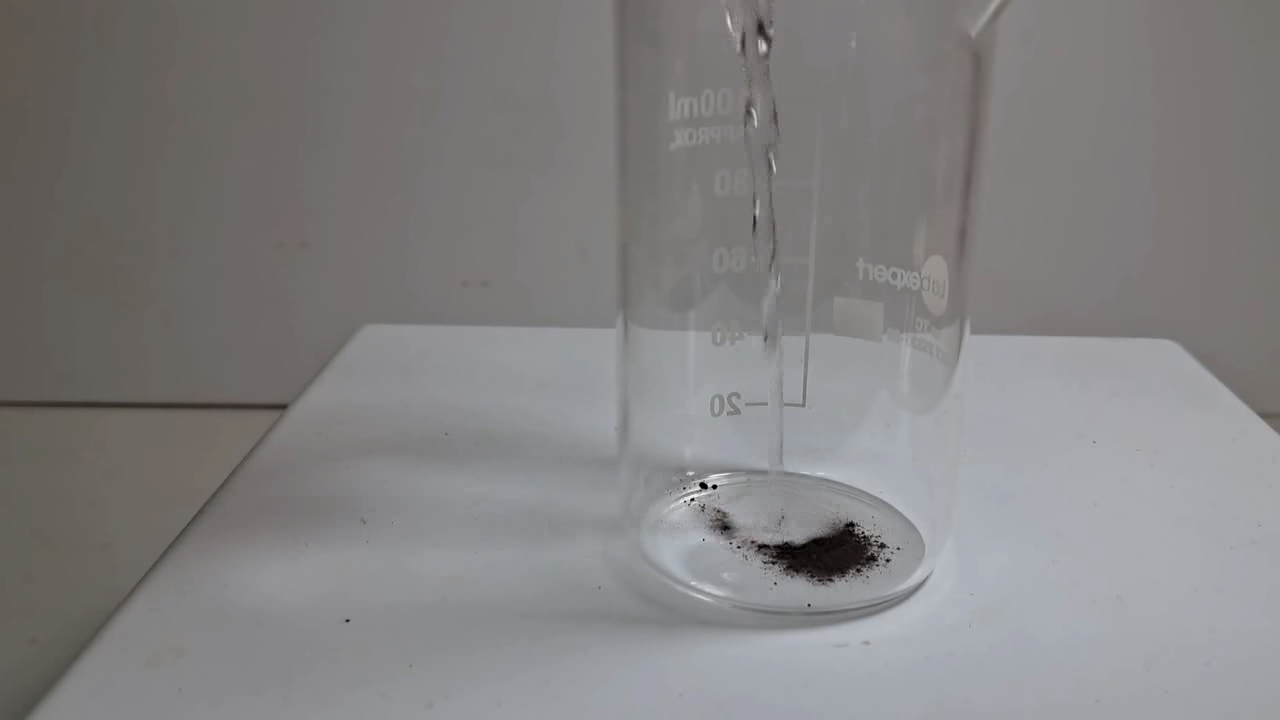
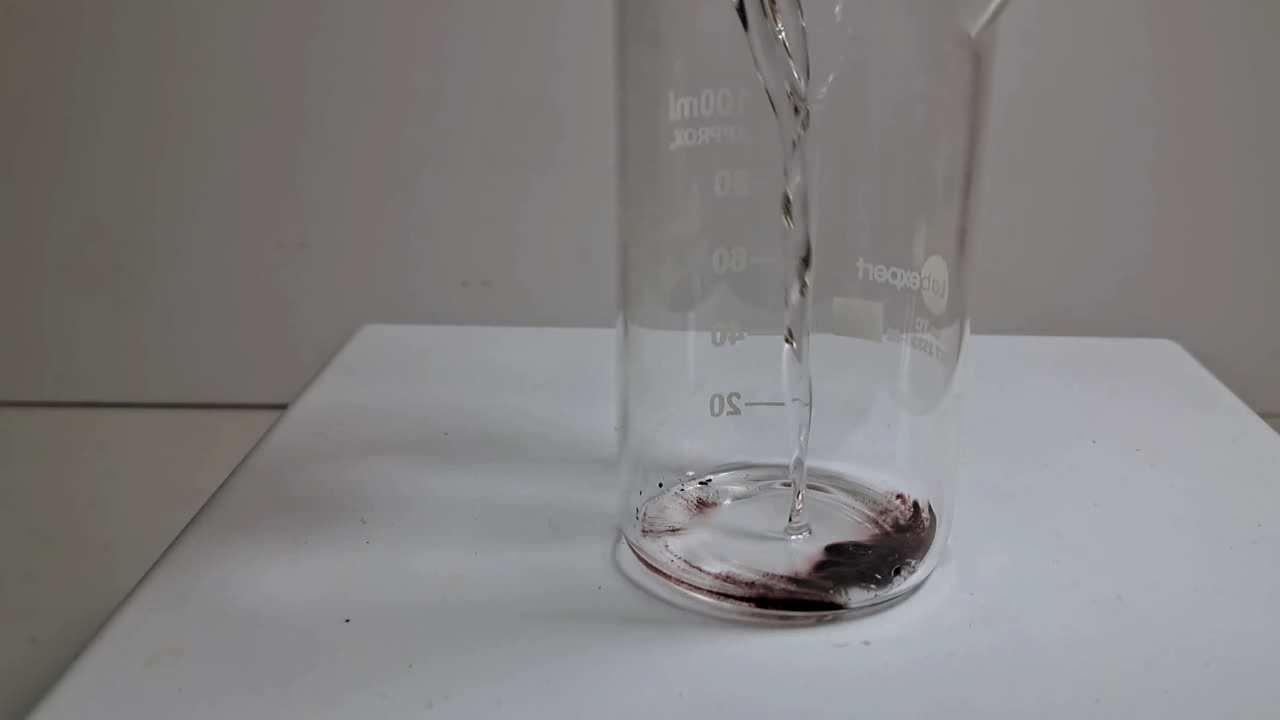
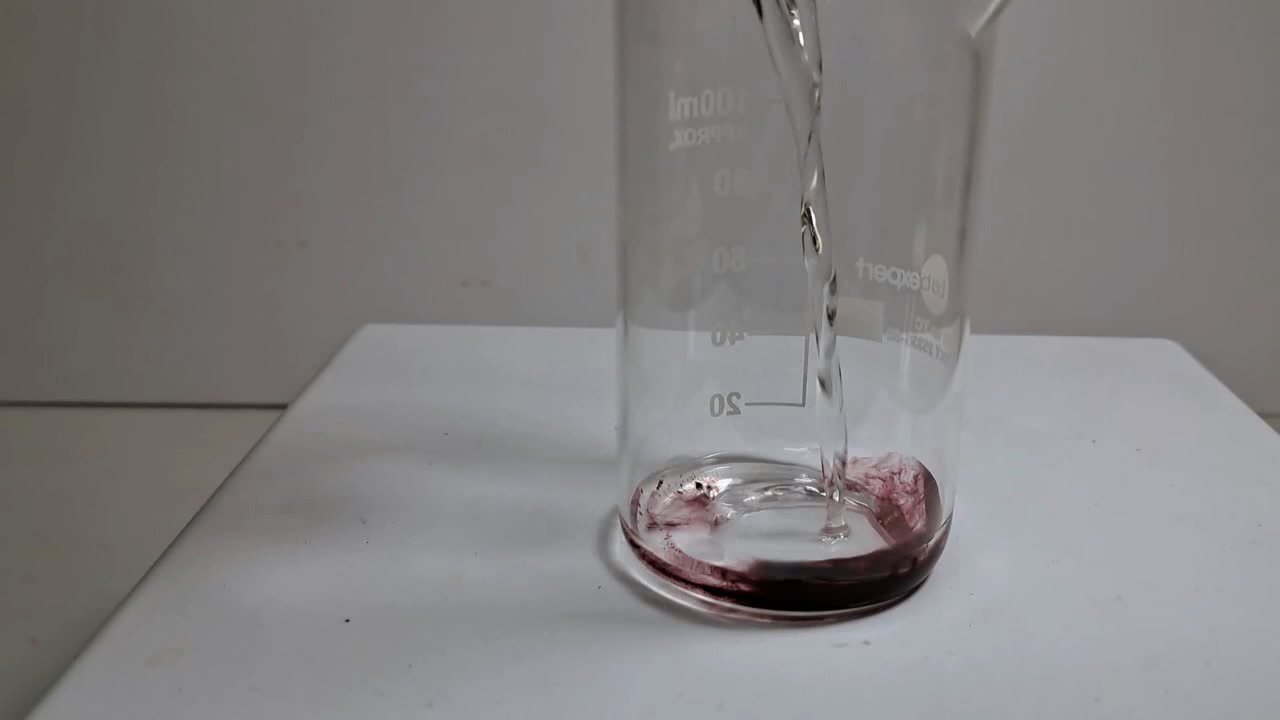
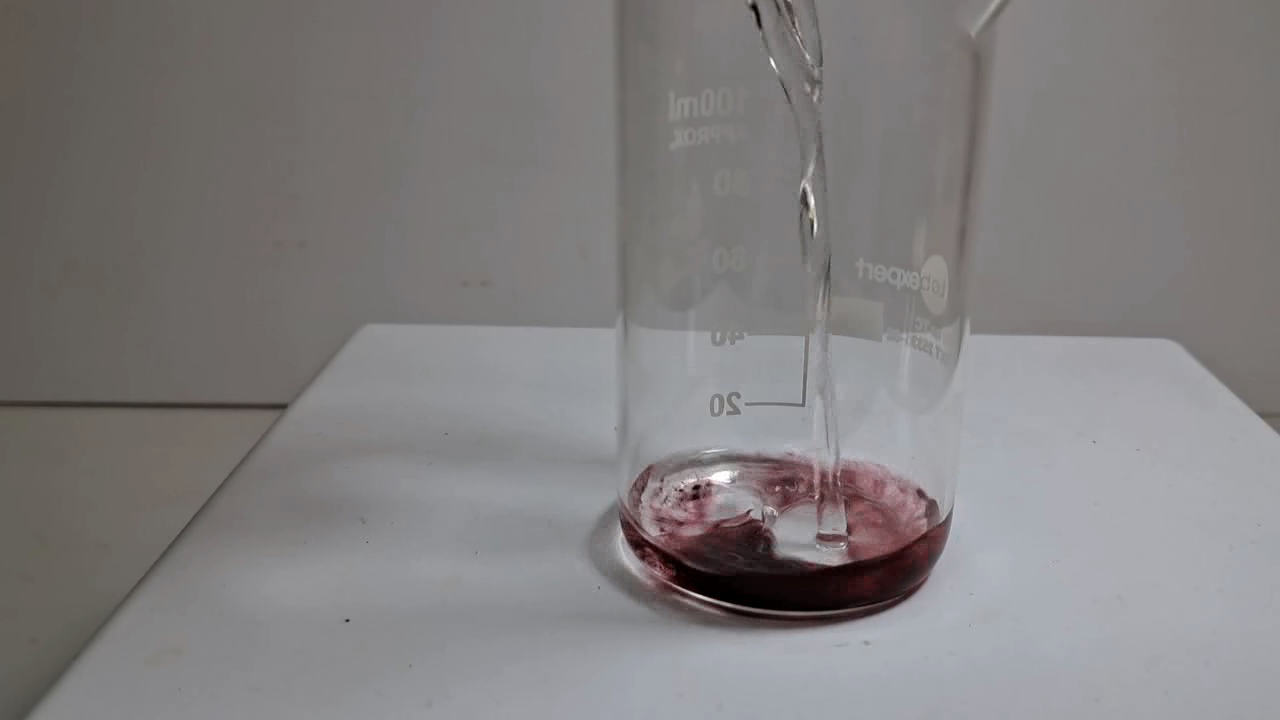
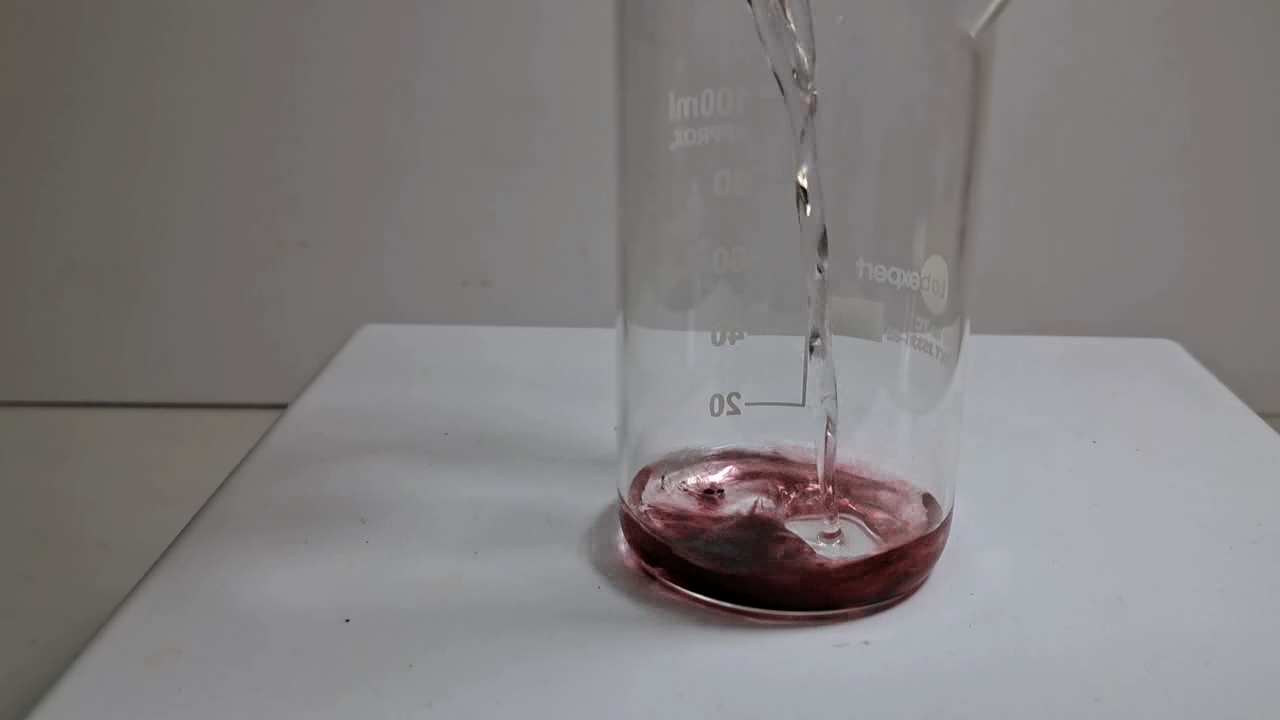
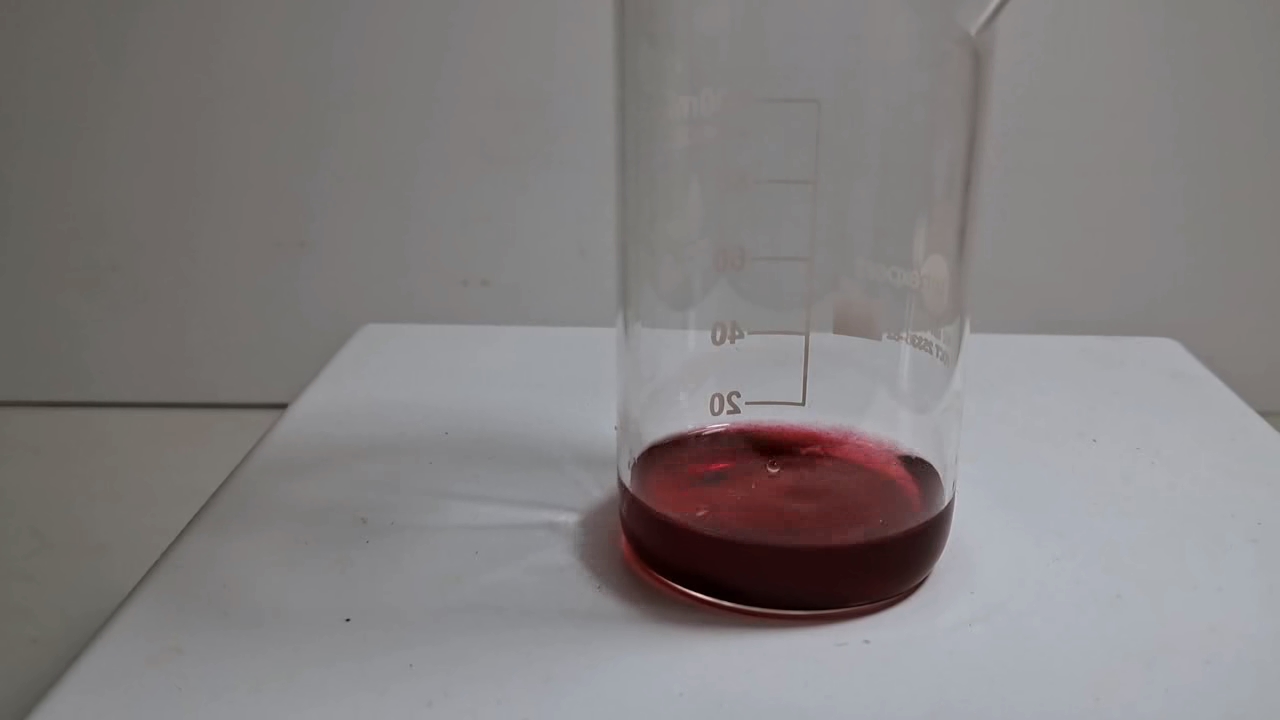
So, I weighed out 0.02 g of universal indicator into a beaker. Visually, the amount of indicator seemed excessive, but the sensitivity of the balance did not allow me to weigh out a smaller sample. I added 12 mL of n-butanol. A dark red solution formed. For comparison, a solution of the universal indicator in distilled water is yellow, while a solution of the same indicator in ethanol is brown.

As I had feared, the solution's color was too intense because I had used too much indicator.

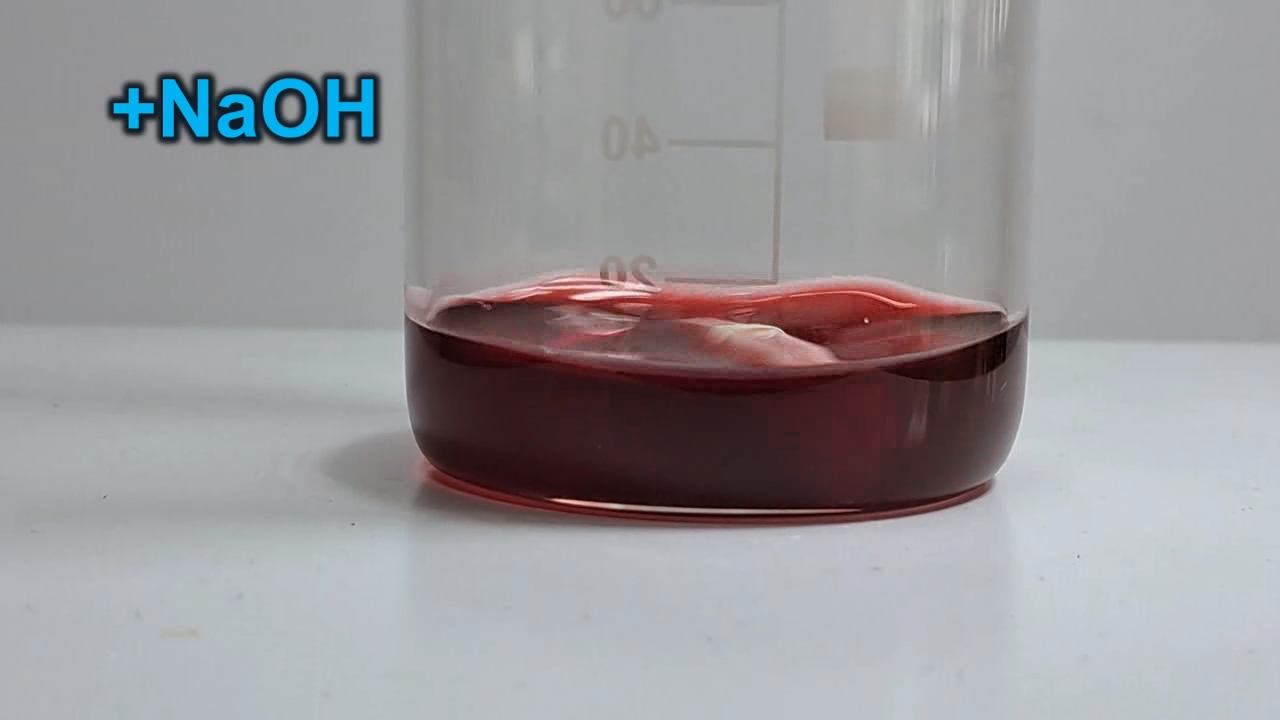
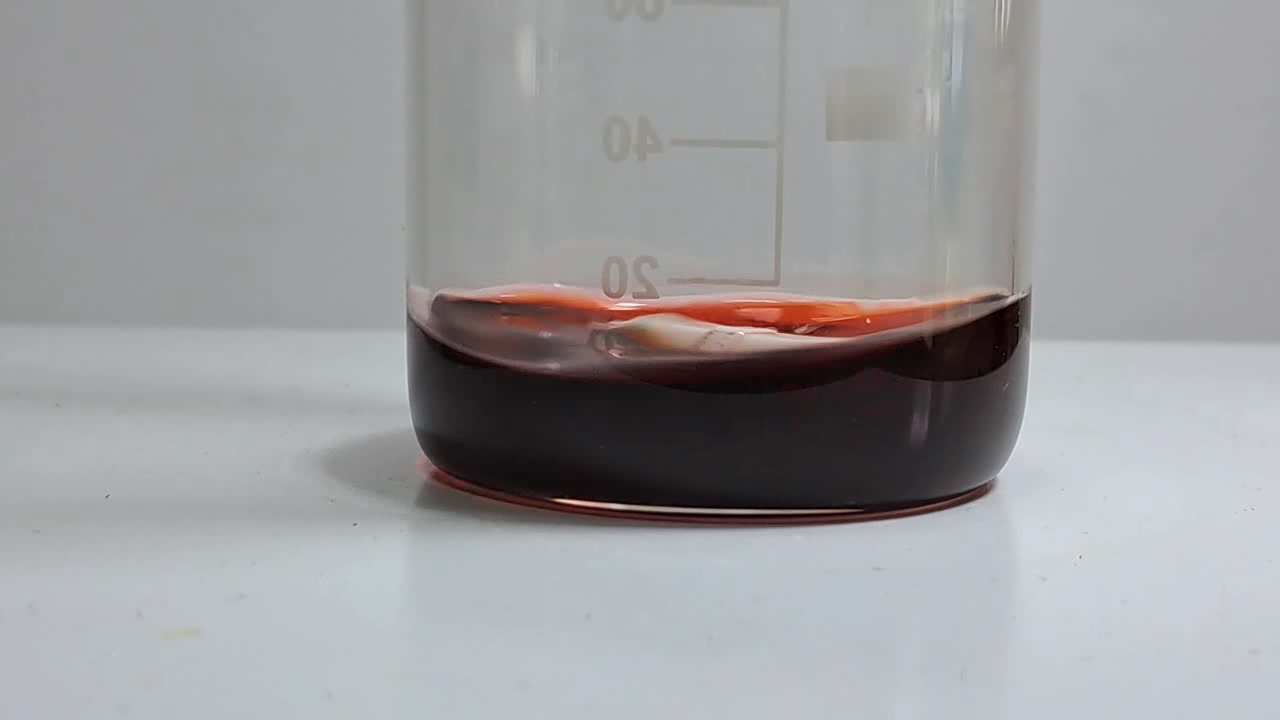
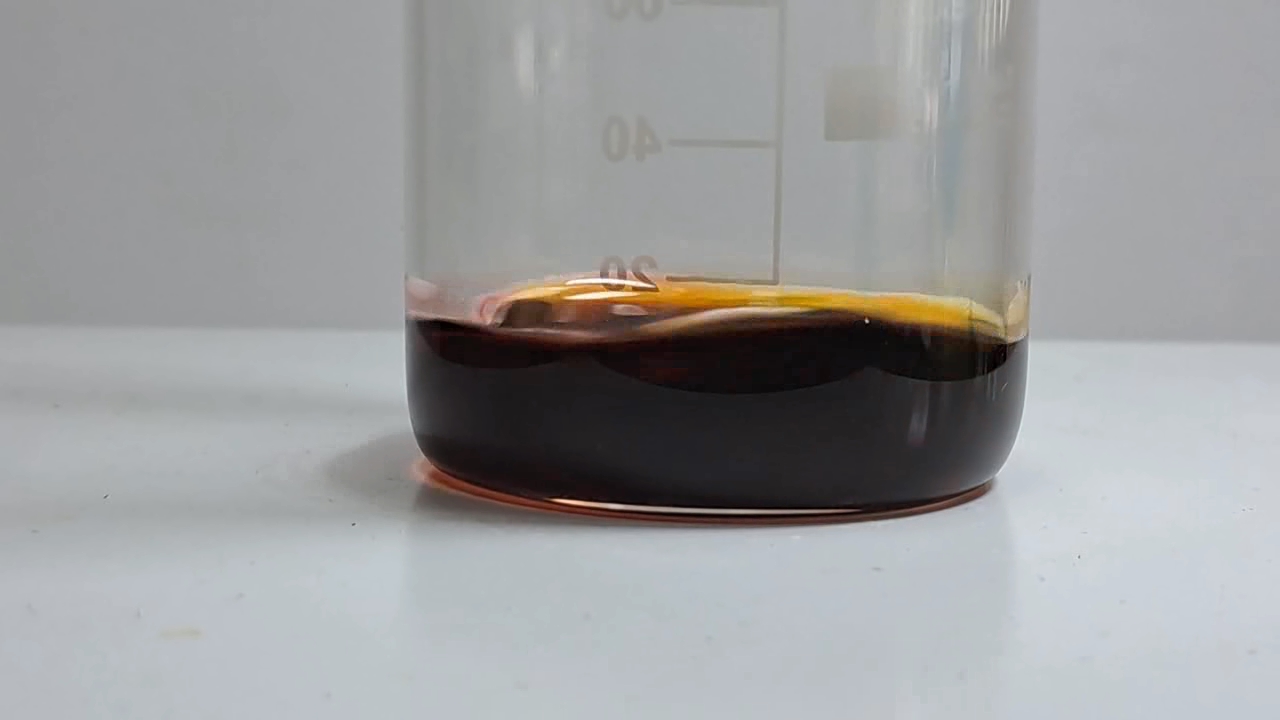
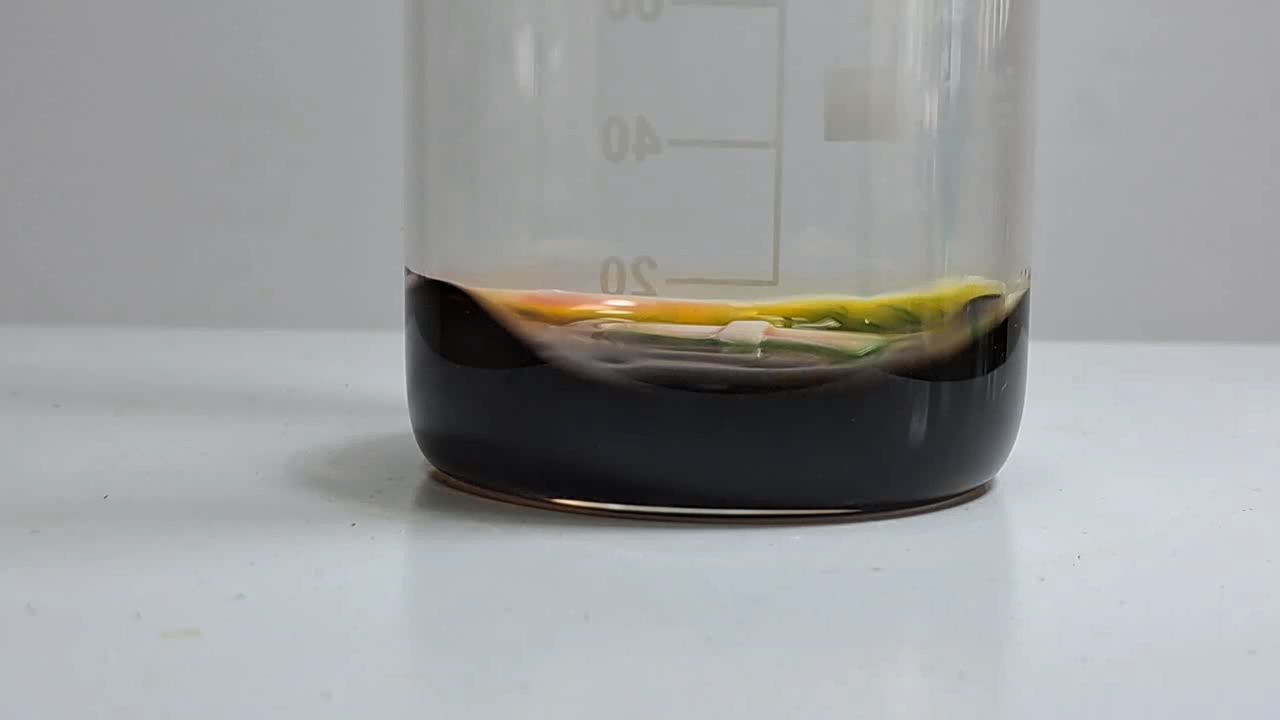
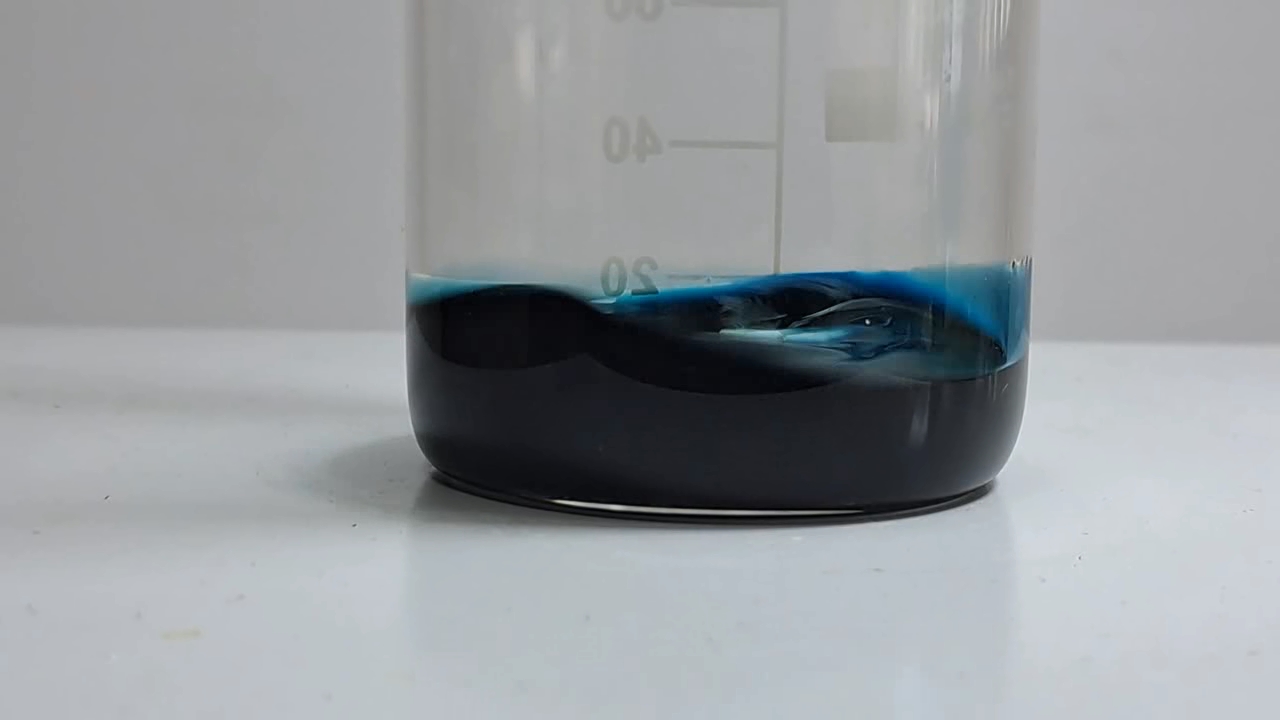
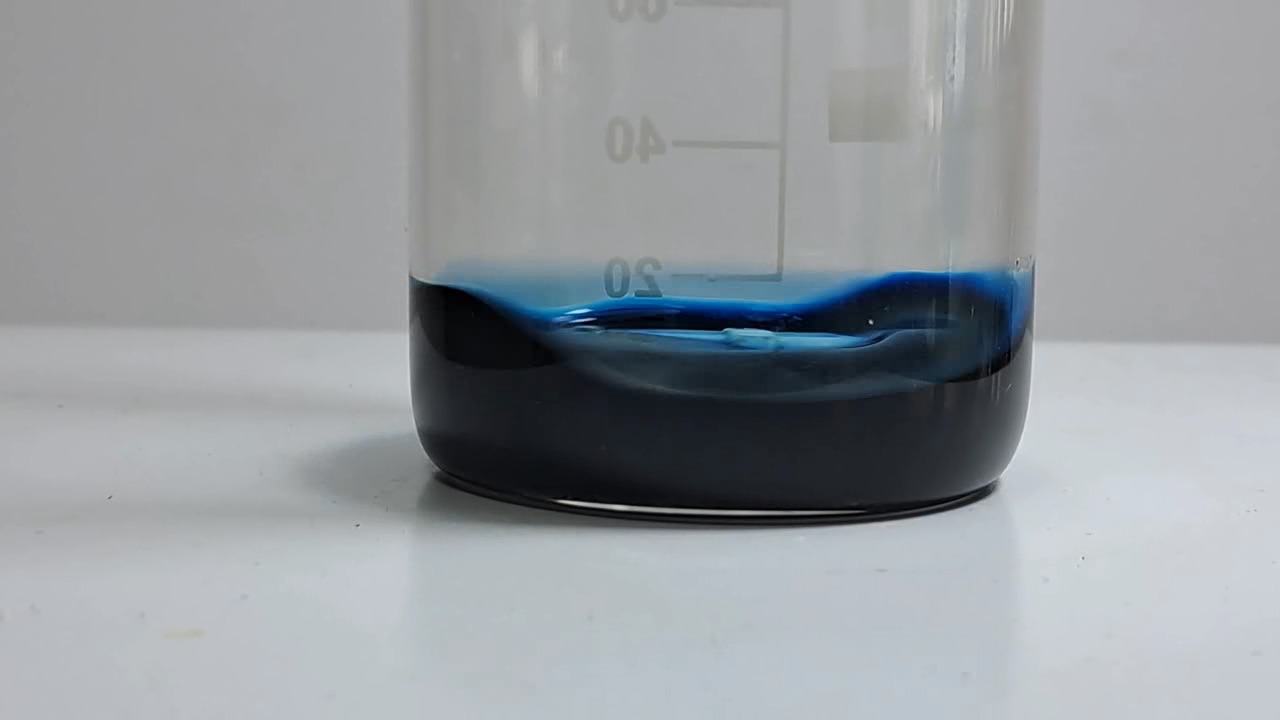
I placed the beaker on a magnetic stirrer and started stirring. I added a small amount of solid sodium hydroxide. For the first few seconds, the color of the solution remained unchanged. Then the red liquid turned yellow. After a few more seconds, the yellow solution turned green, and then the green turned blue. The color transition in the butanol solution occurred significantly more slowly than in the aqueous solution. Apparently, the dissolution rate of sodium hydroxide in butanol was much lower than in water.

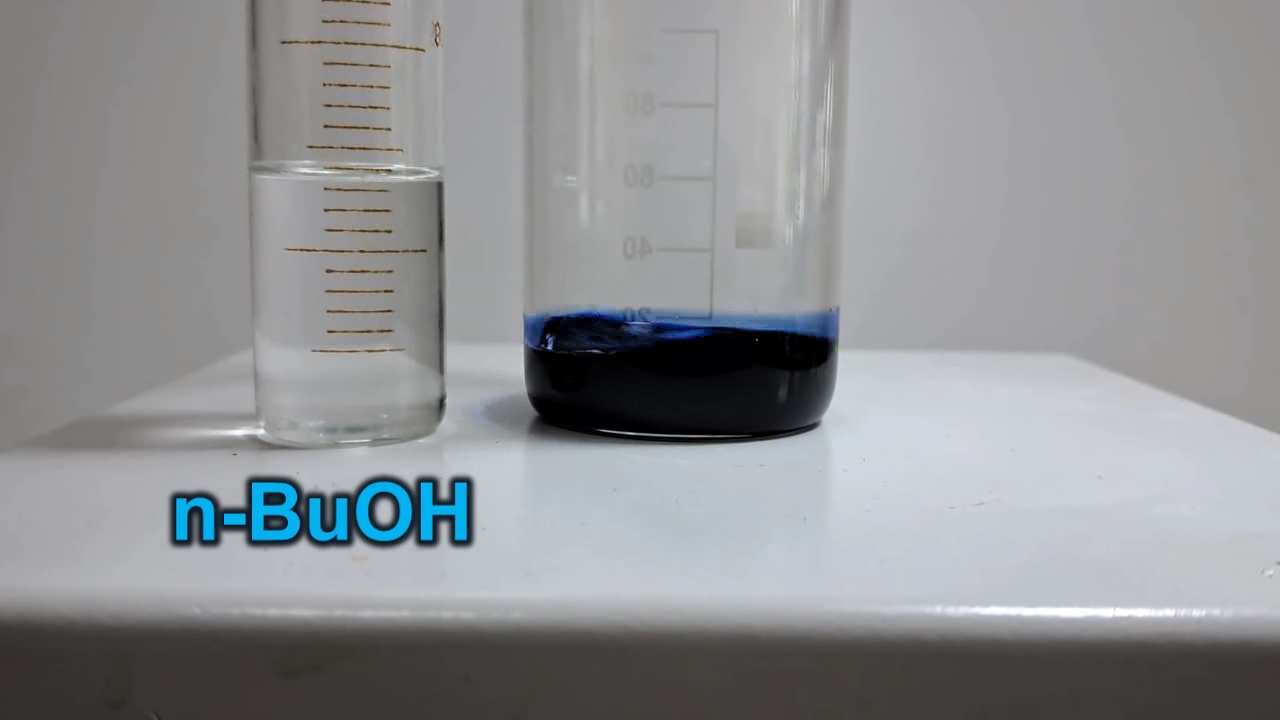
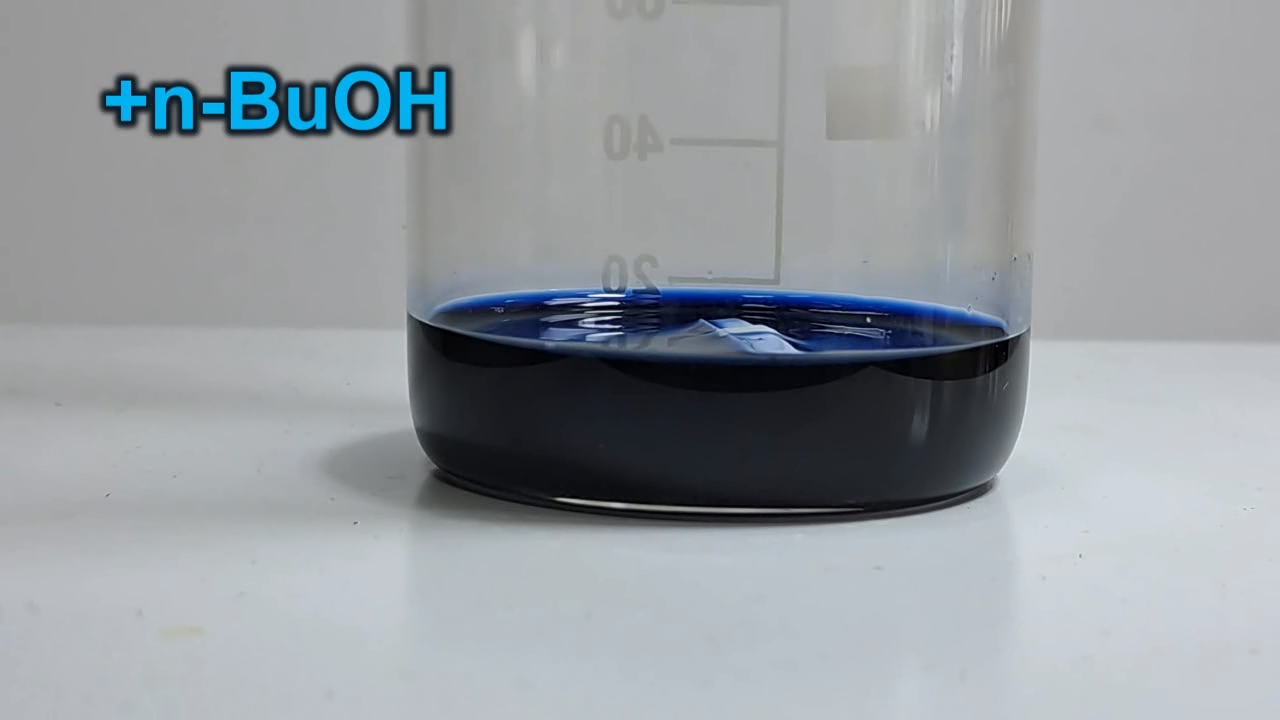
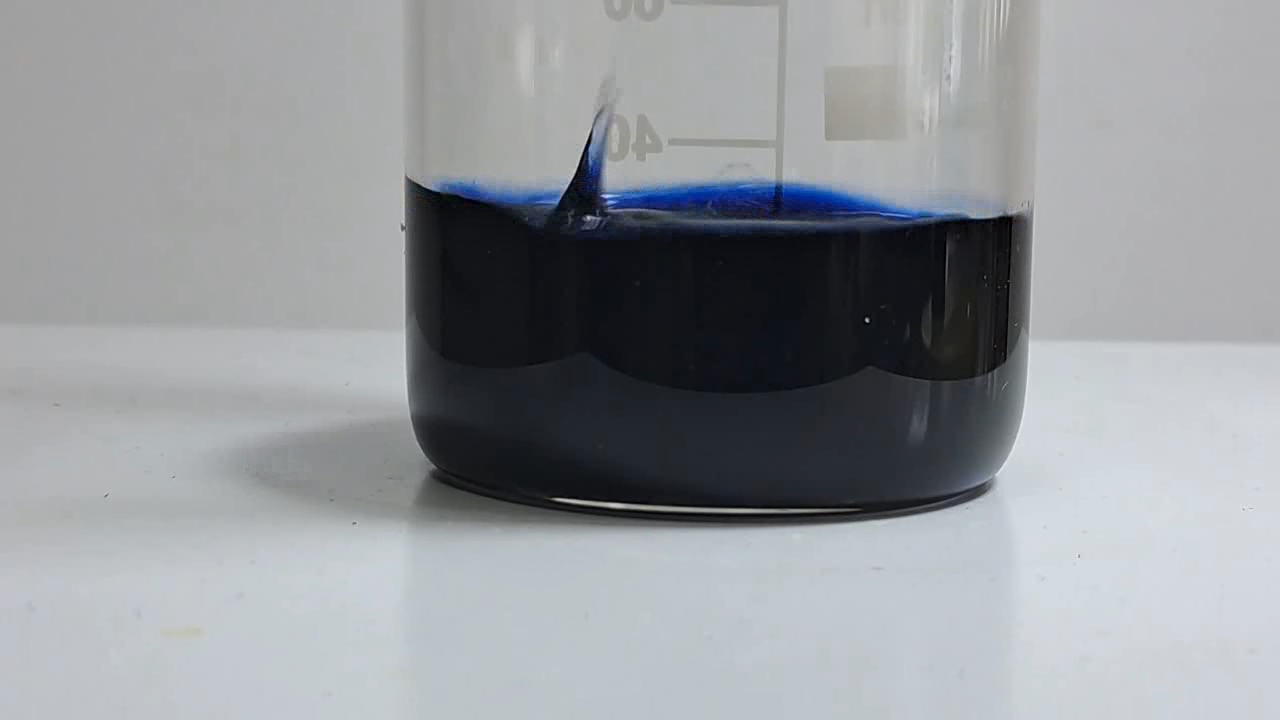
The solution was still too dark, so I added another 14 mL of butanol. However, it still did not become clear. The color of the liquid resembled that of a solution of the copper(II) ammonia complex, [Cu(NH3)4]2+.

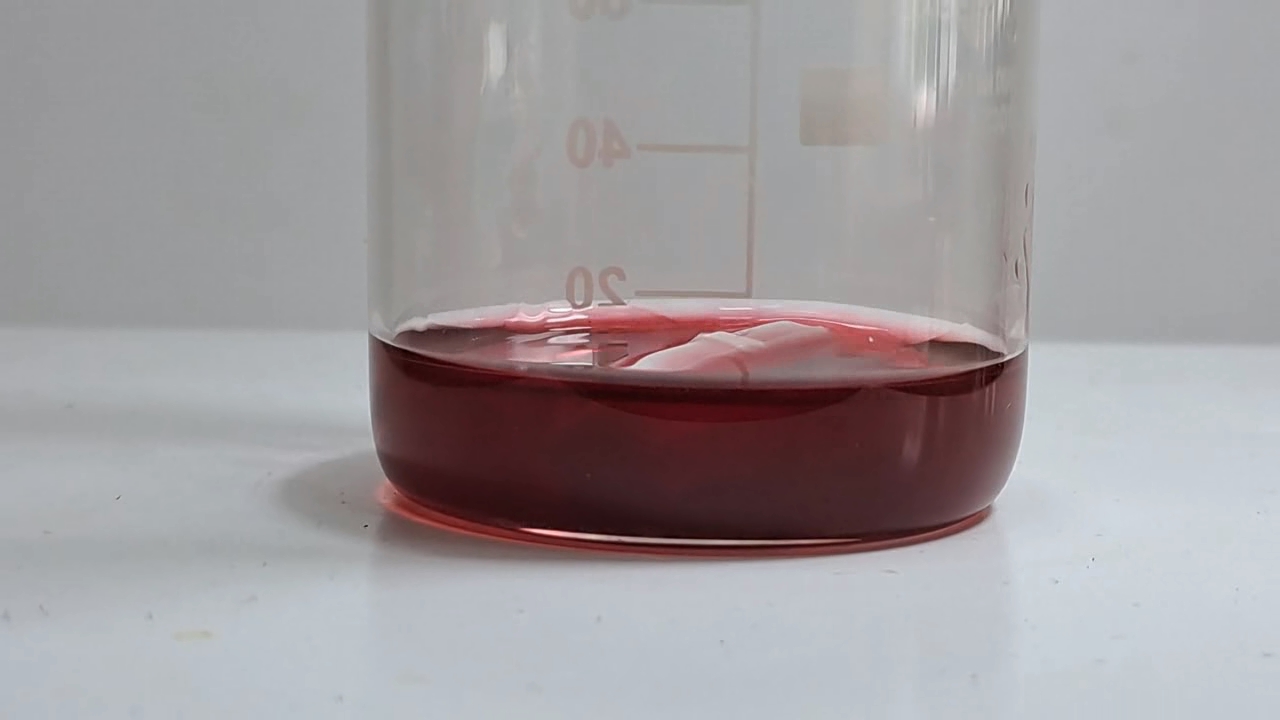
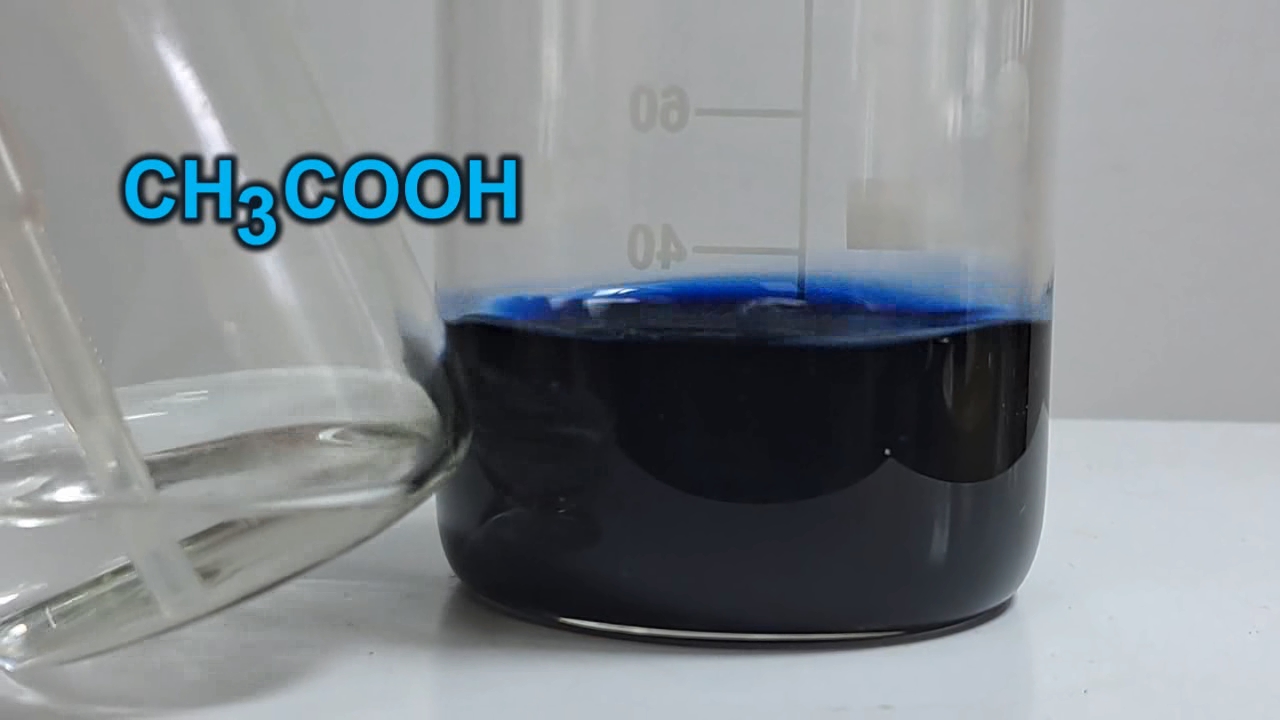
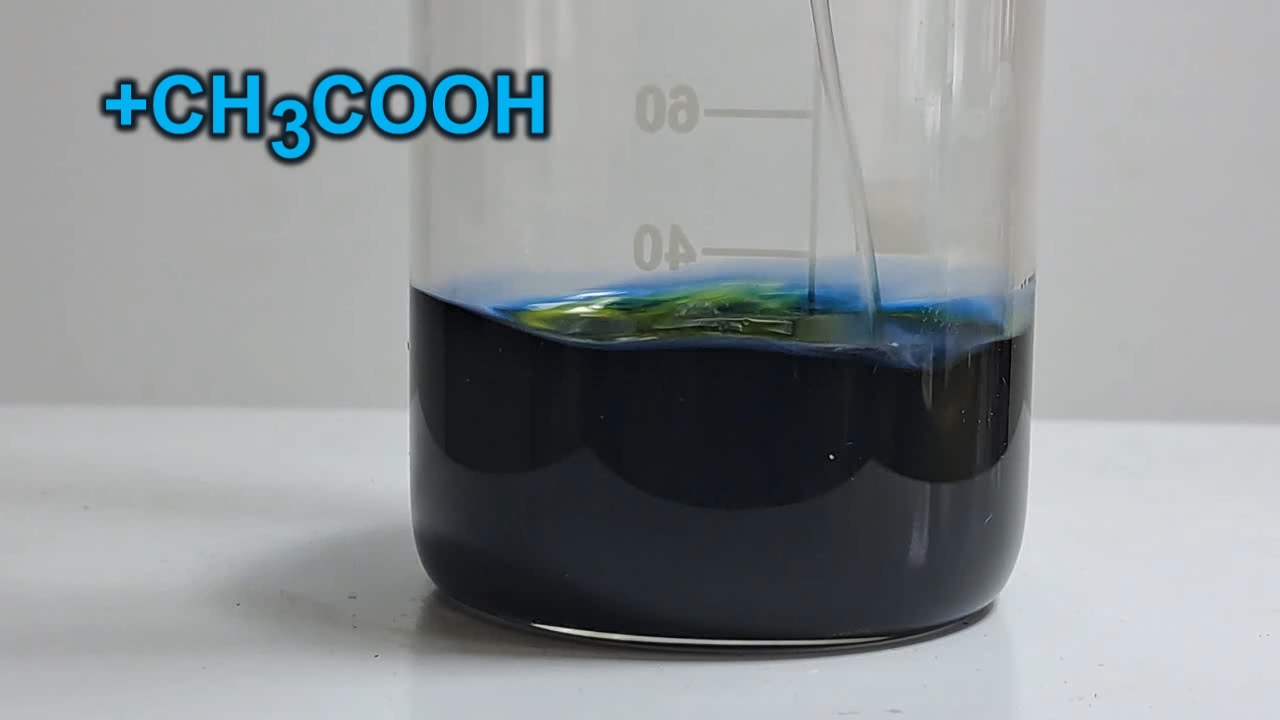
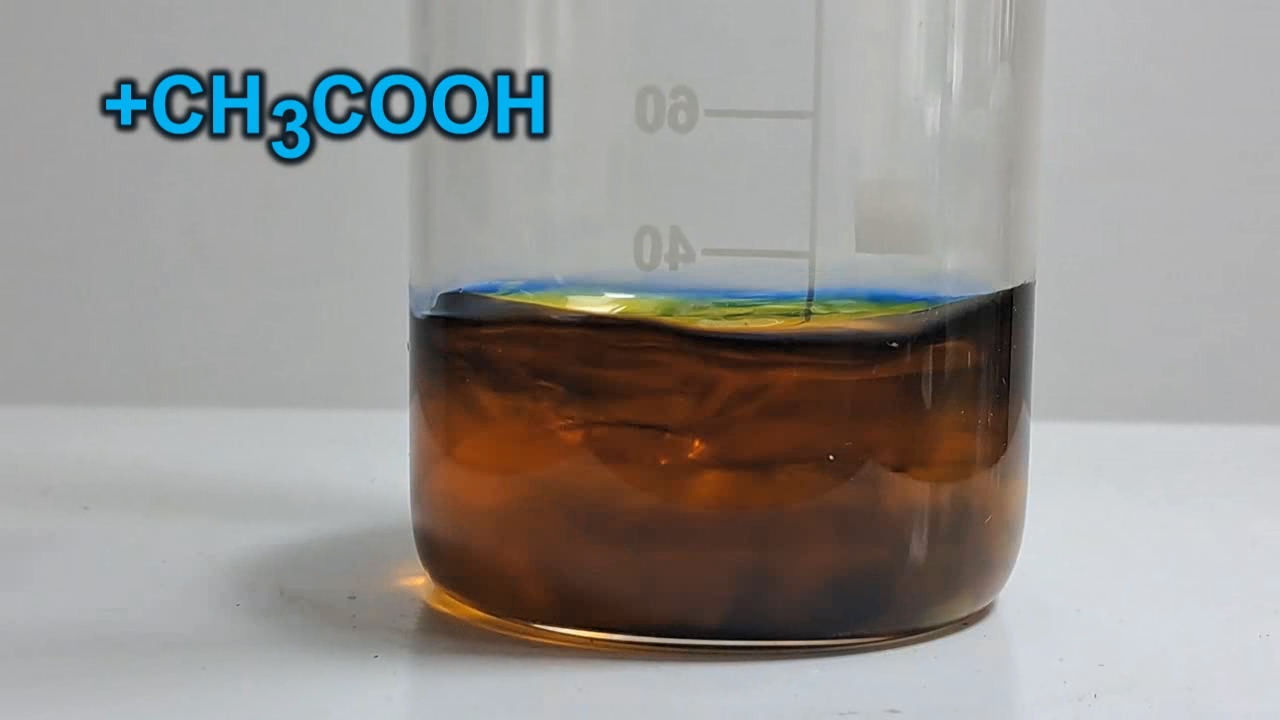
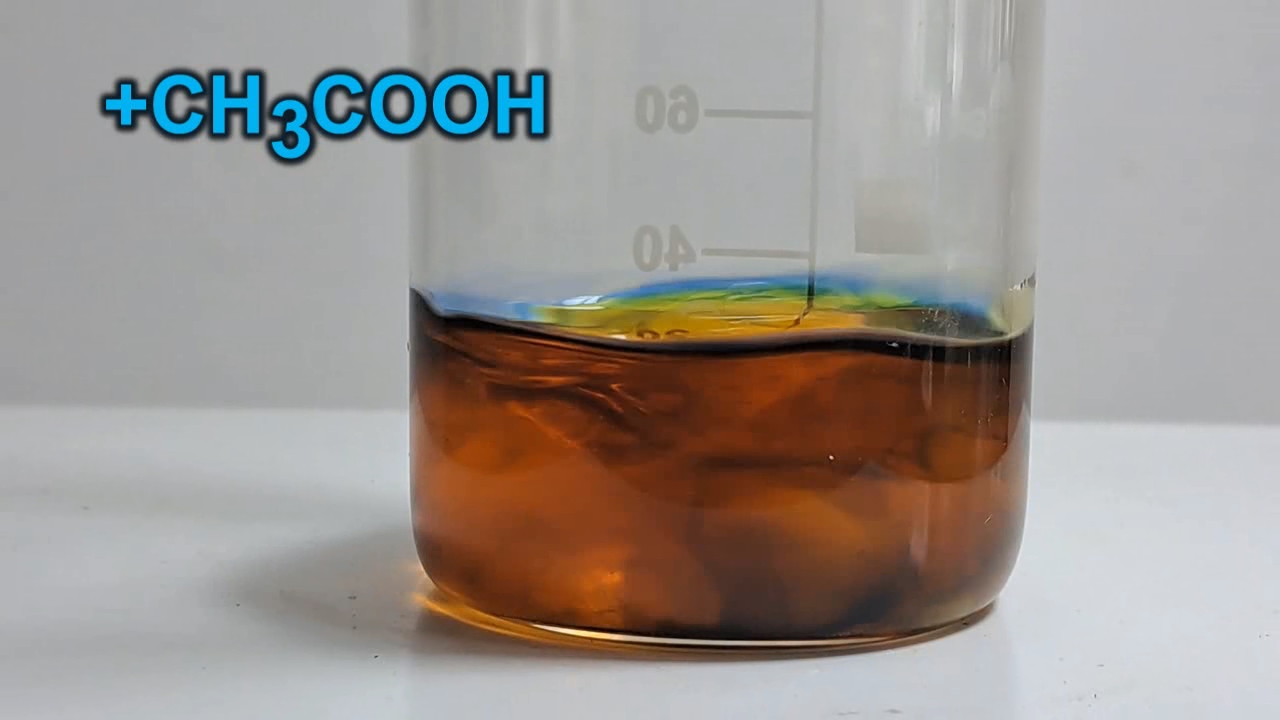
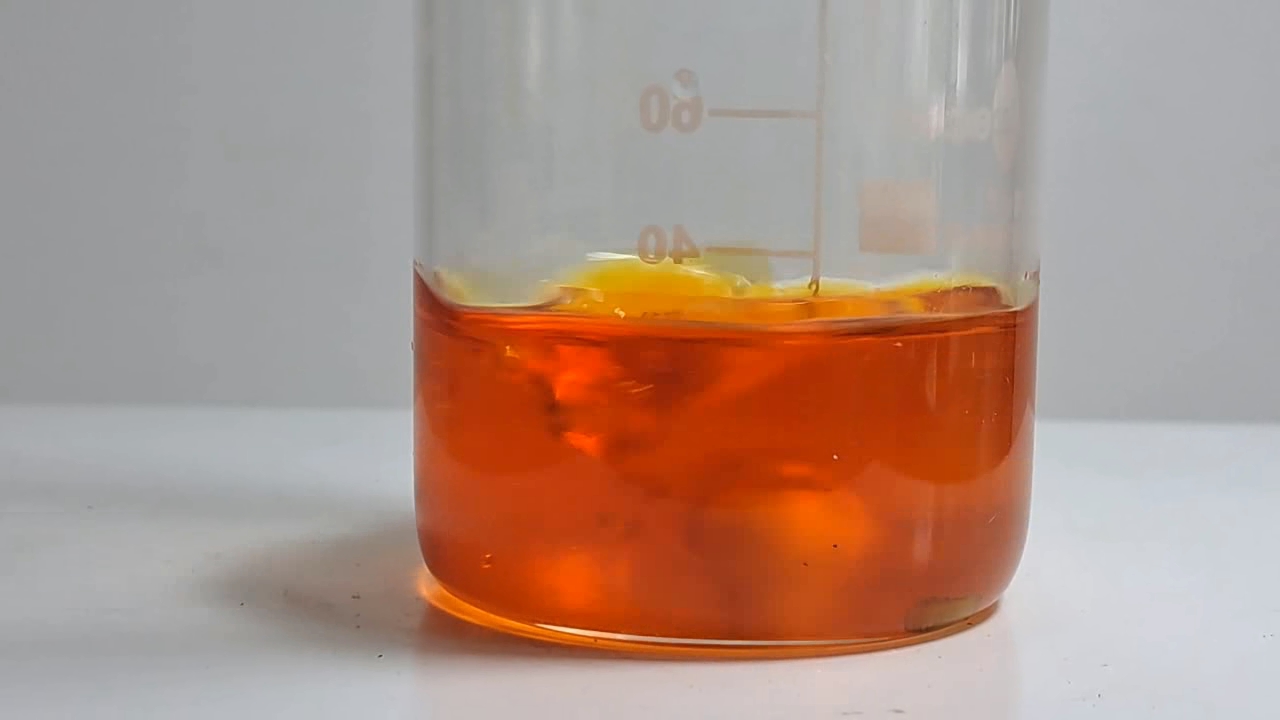
While stirring, I added 1 mL of glacial acetic acid. The blue solution immediately changed to a red-orange one. The dark solution became clear. I added a few more milliliters of the acid, and the red tint became more intense.

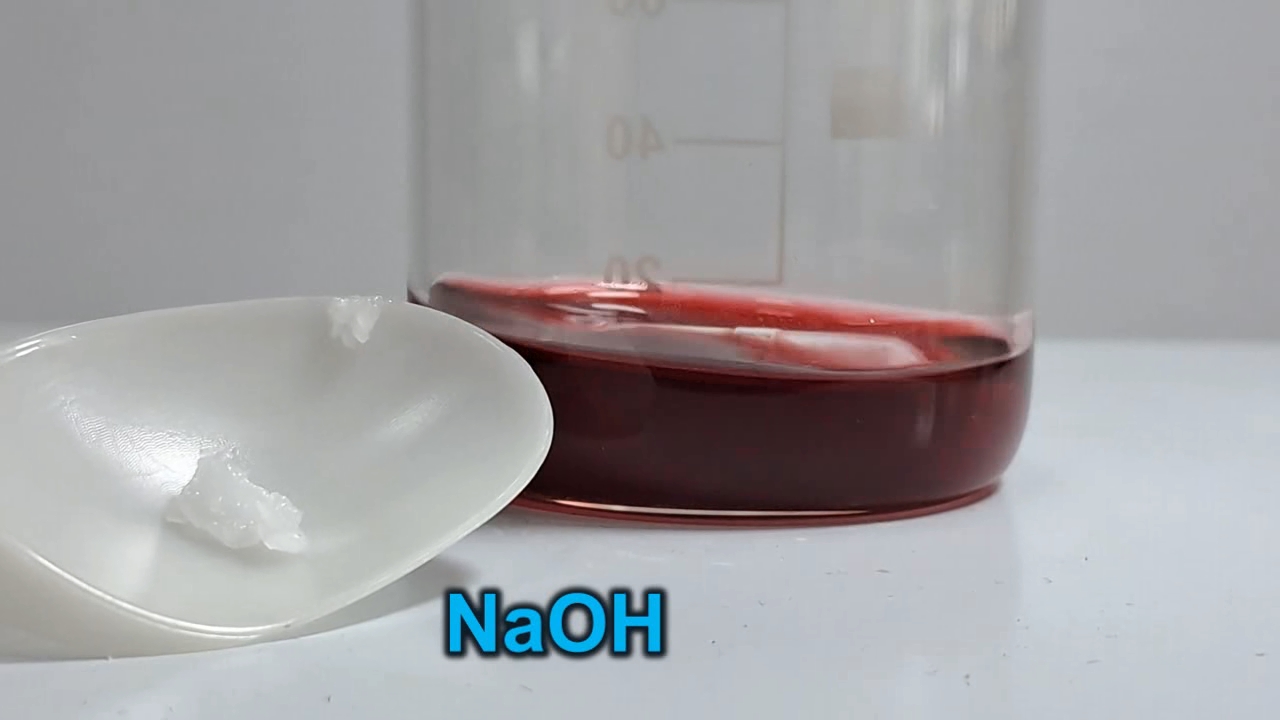
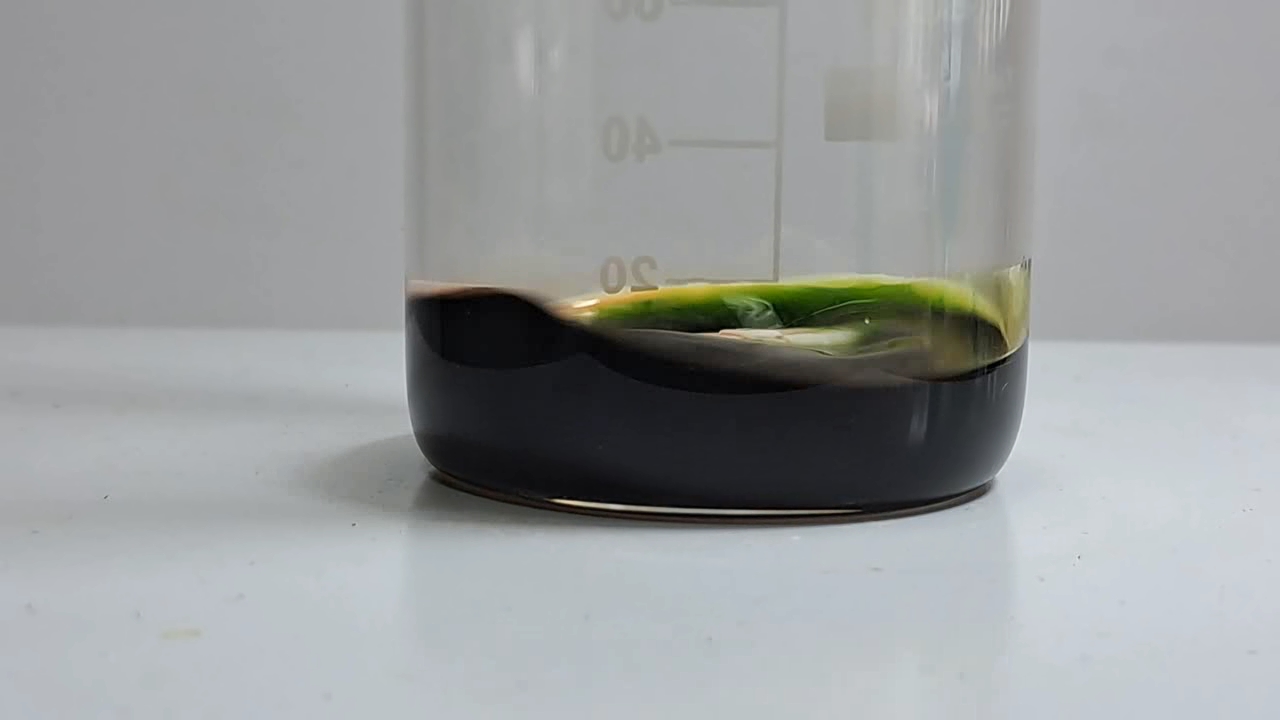
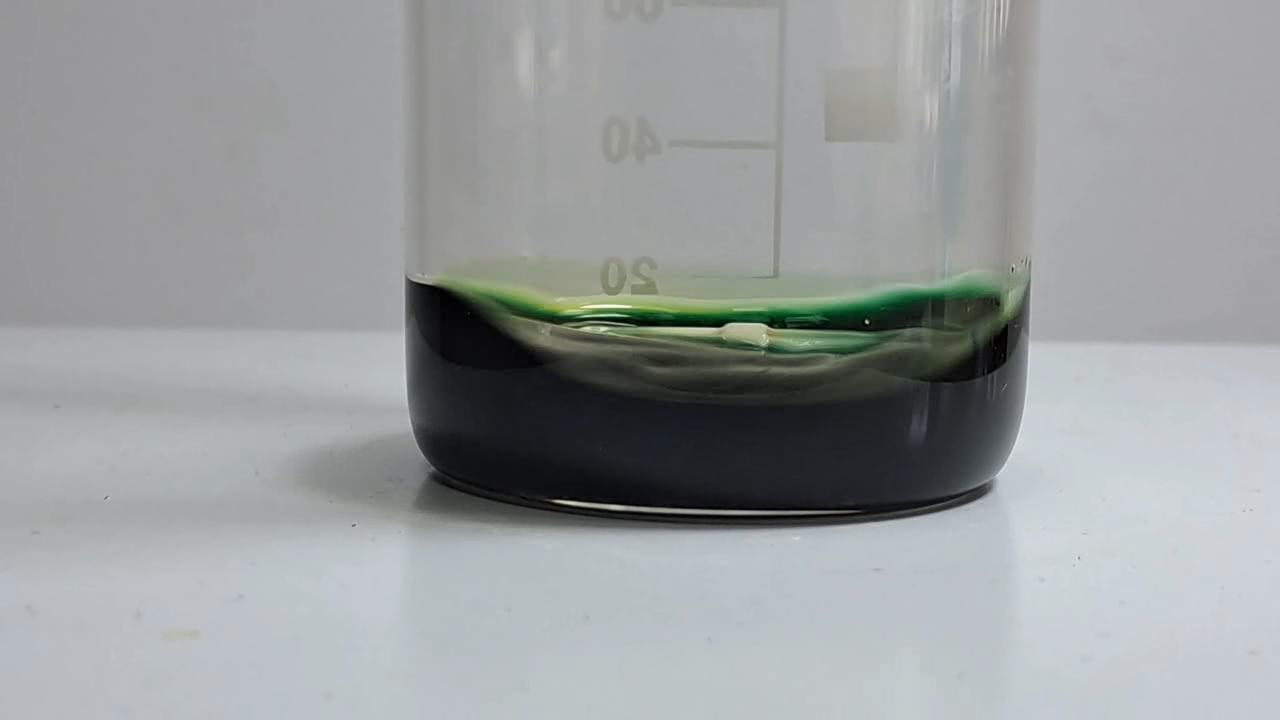
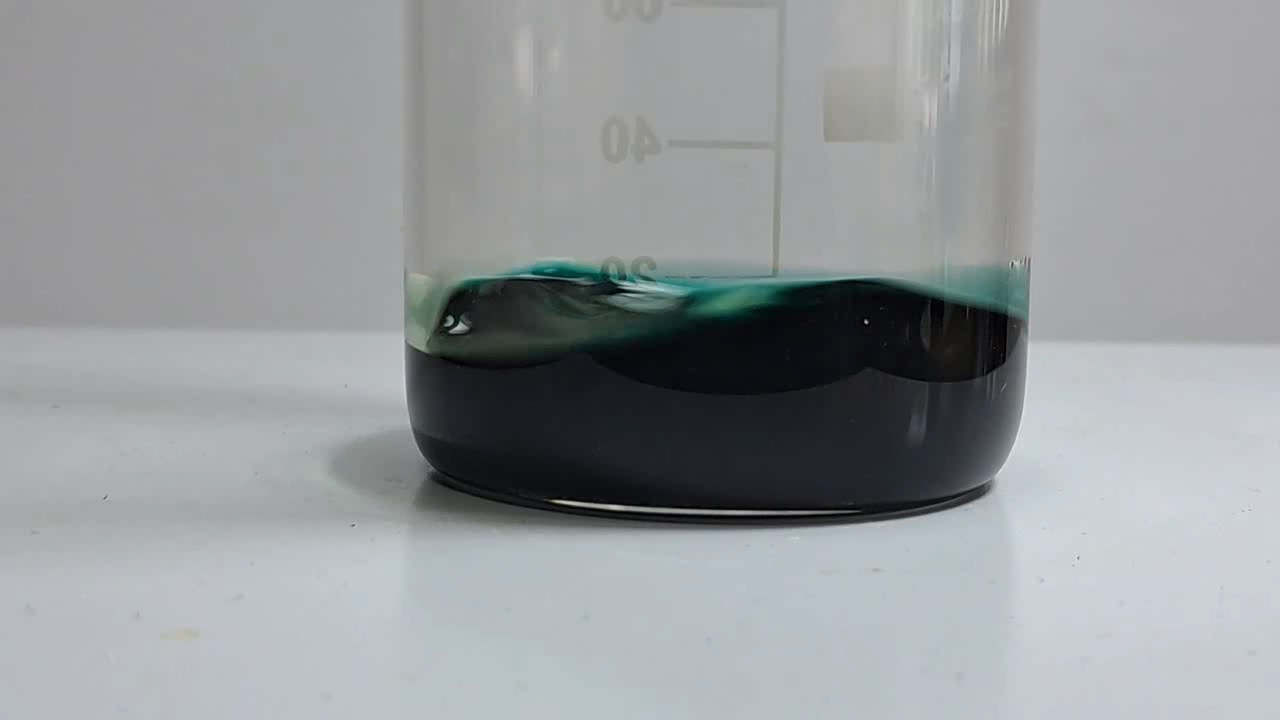
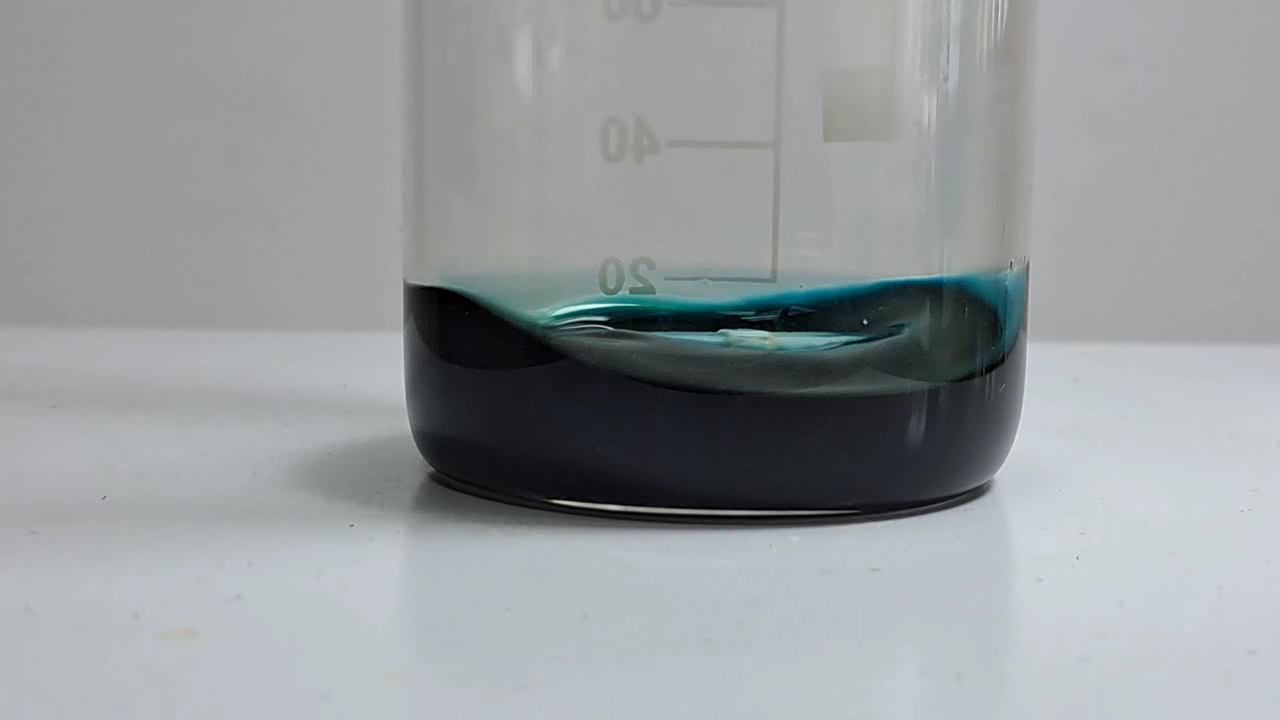
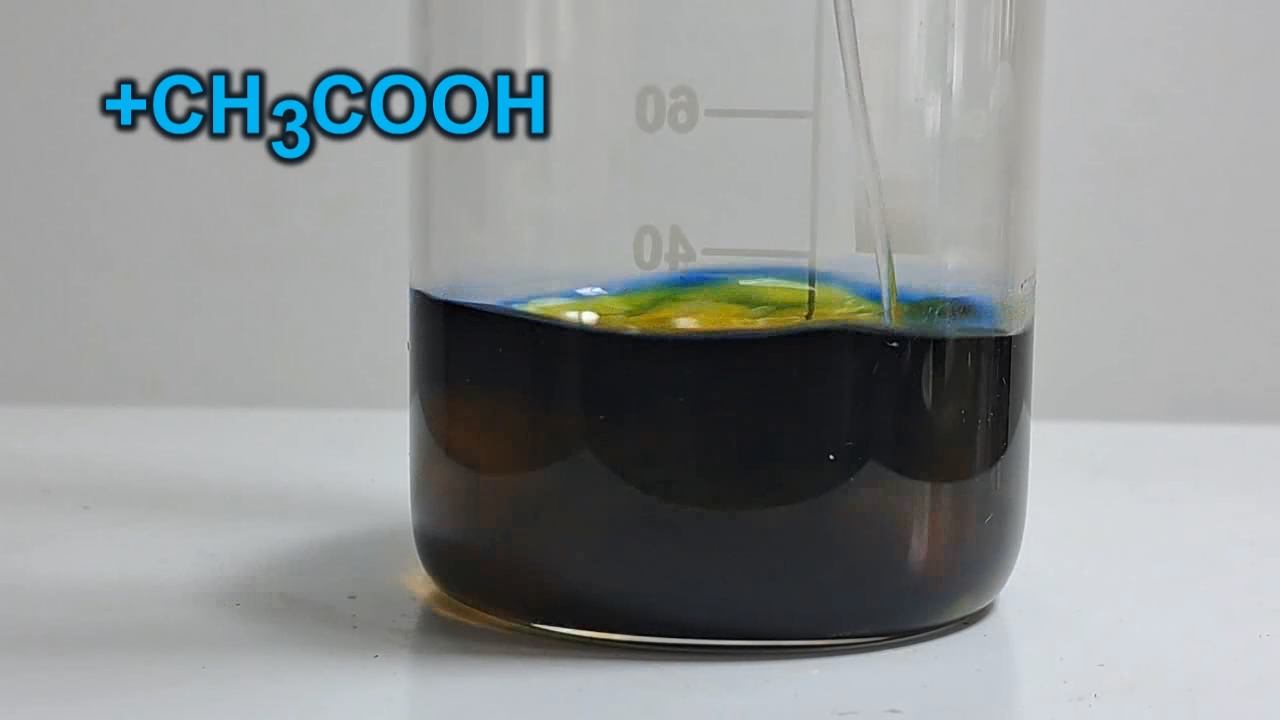
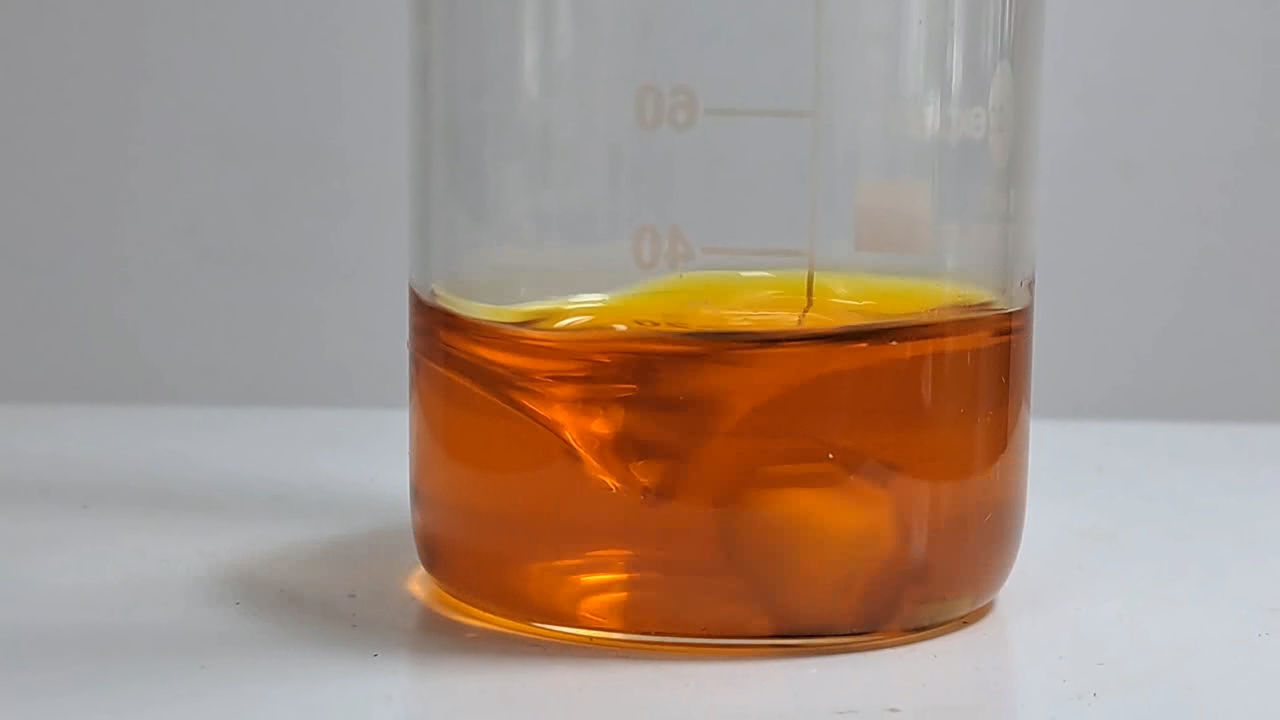
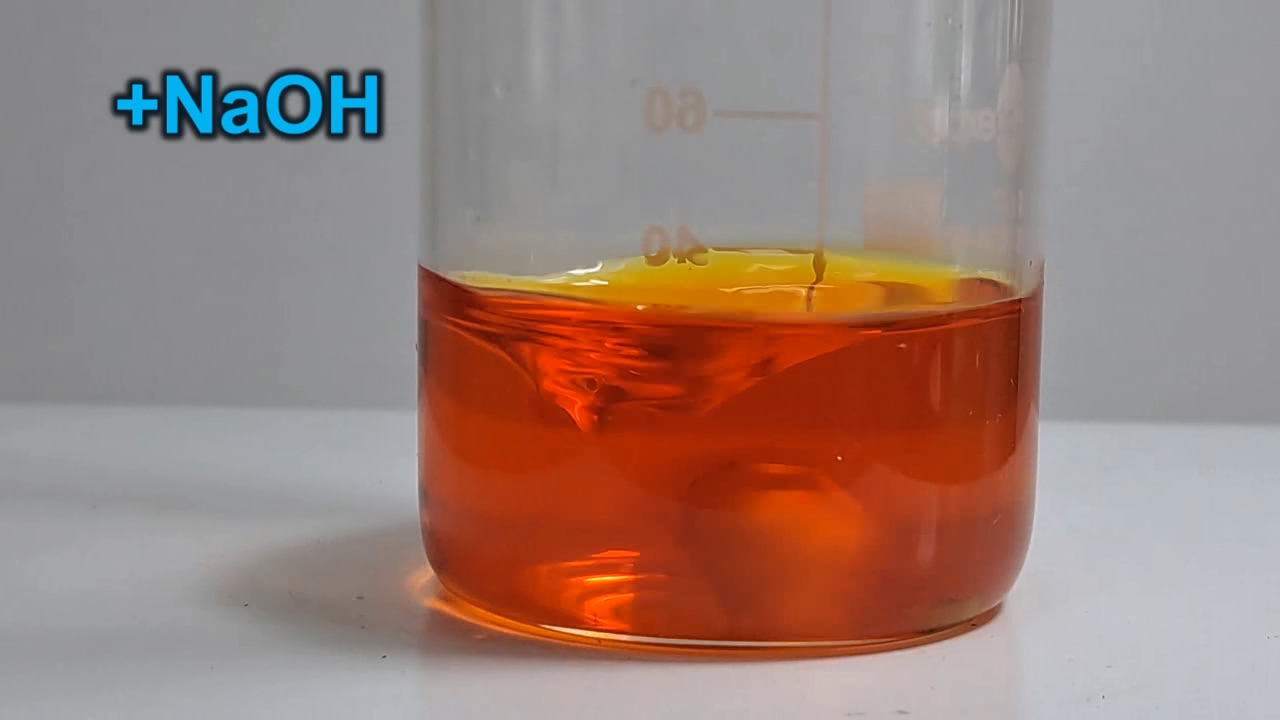
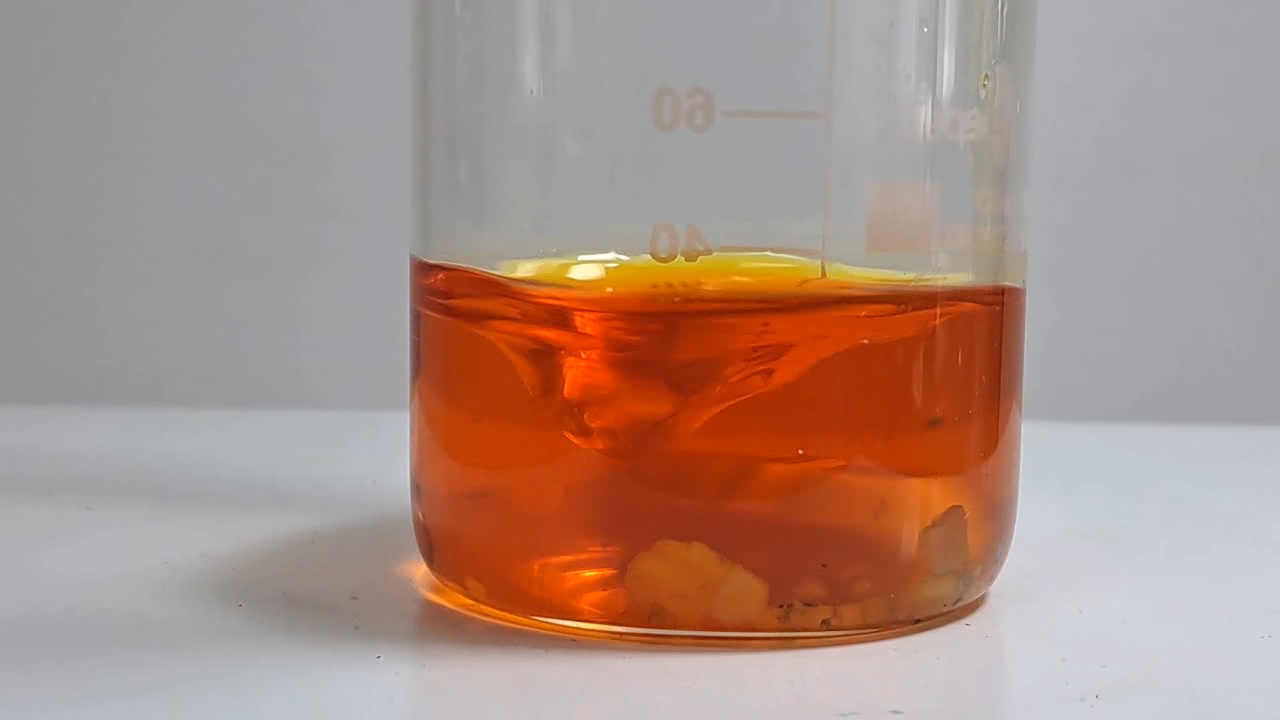
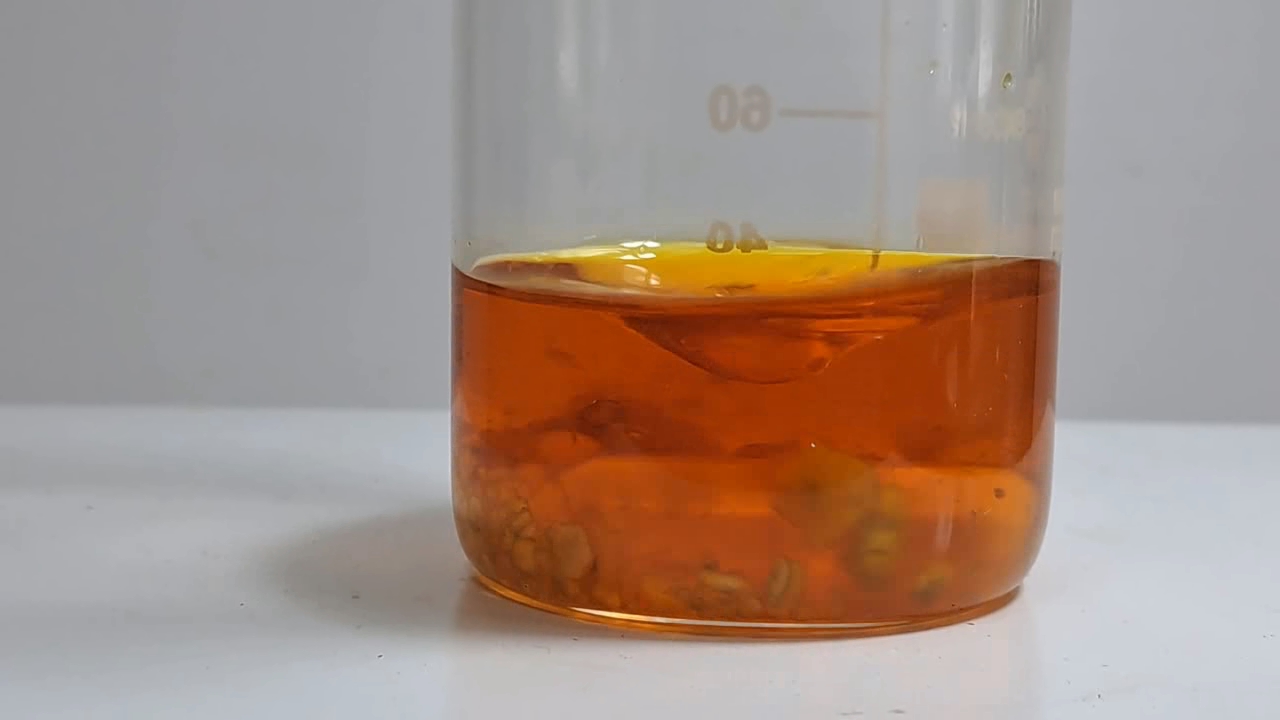
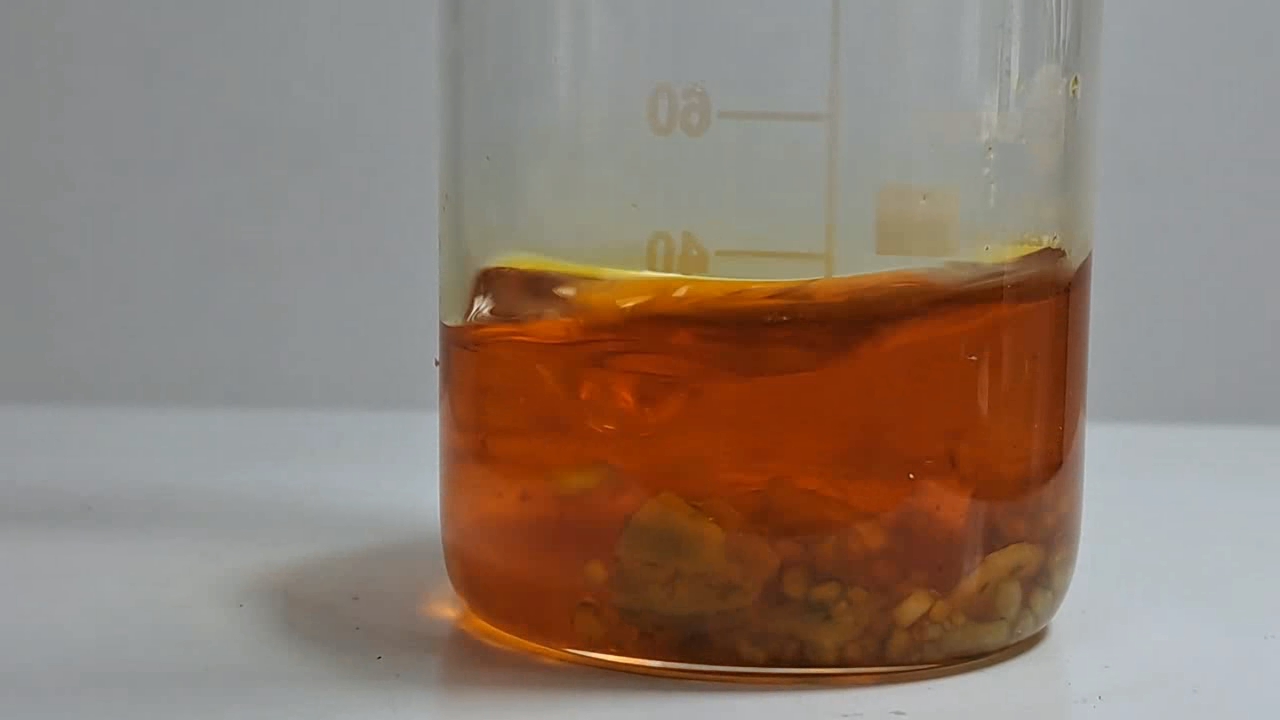
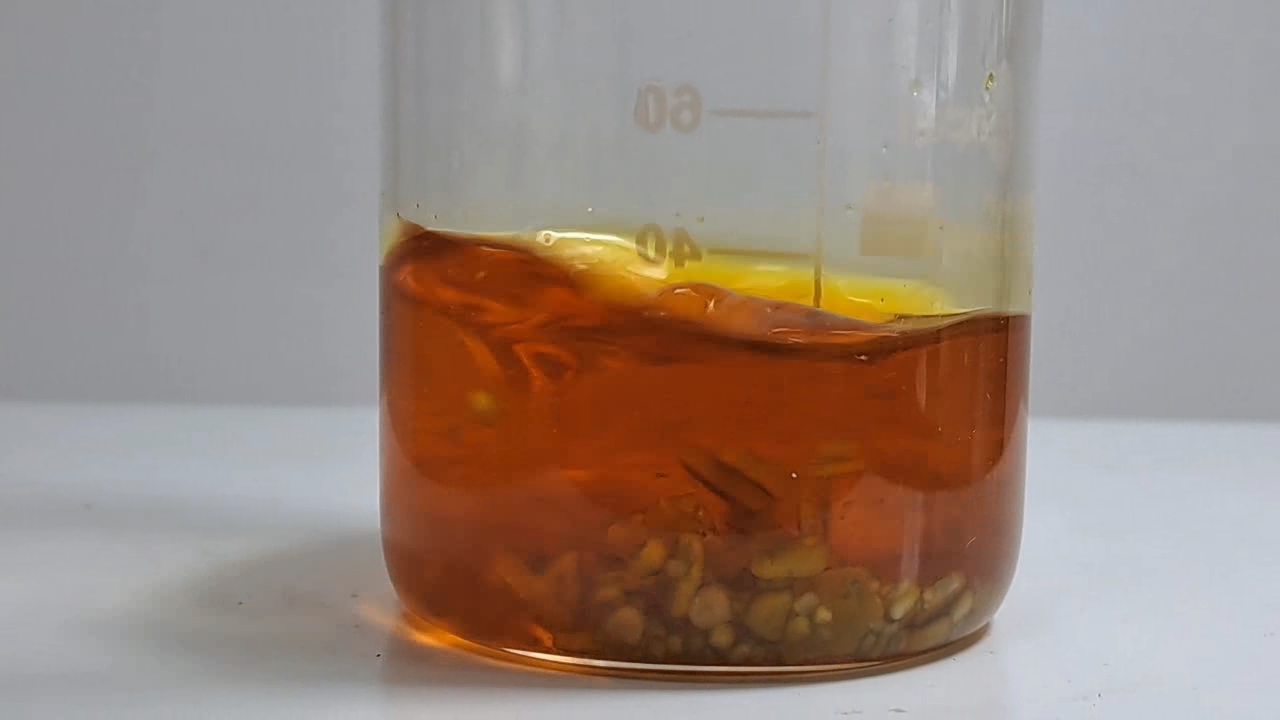
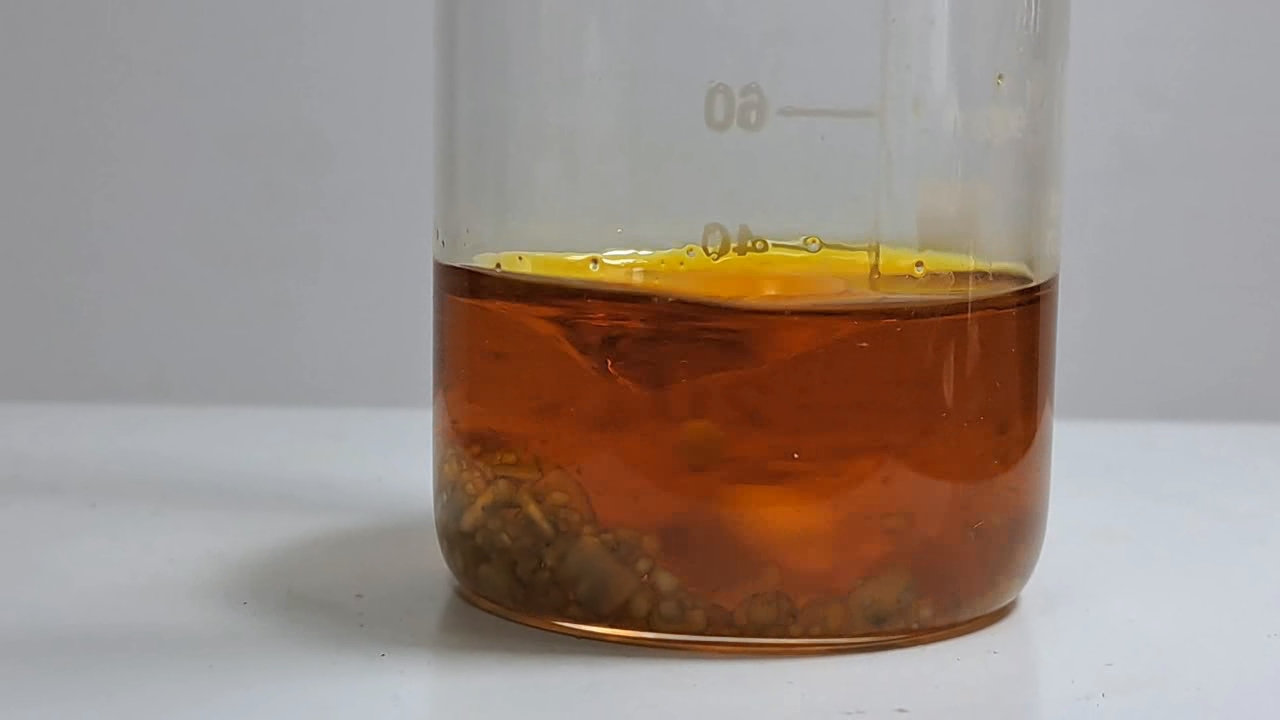
Then I added several granules of sodium hydroxide, expecting the solution to change immediately from orange to blue. However, there was almost no visible change. Despite vigorous stirring, the solution remained orange, while white sodium hydroxide granules remained at the bottom of the beaker. Only small areas on the surfaces of the granules turned green.

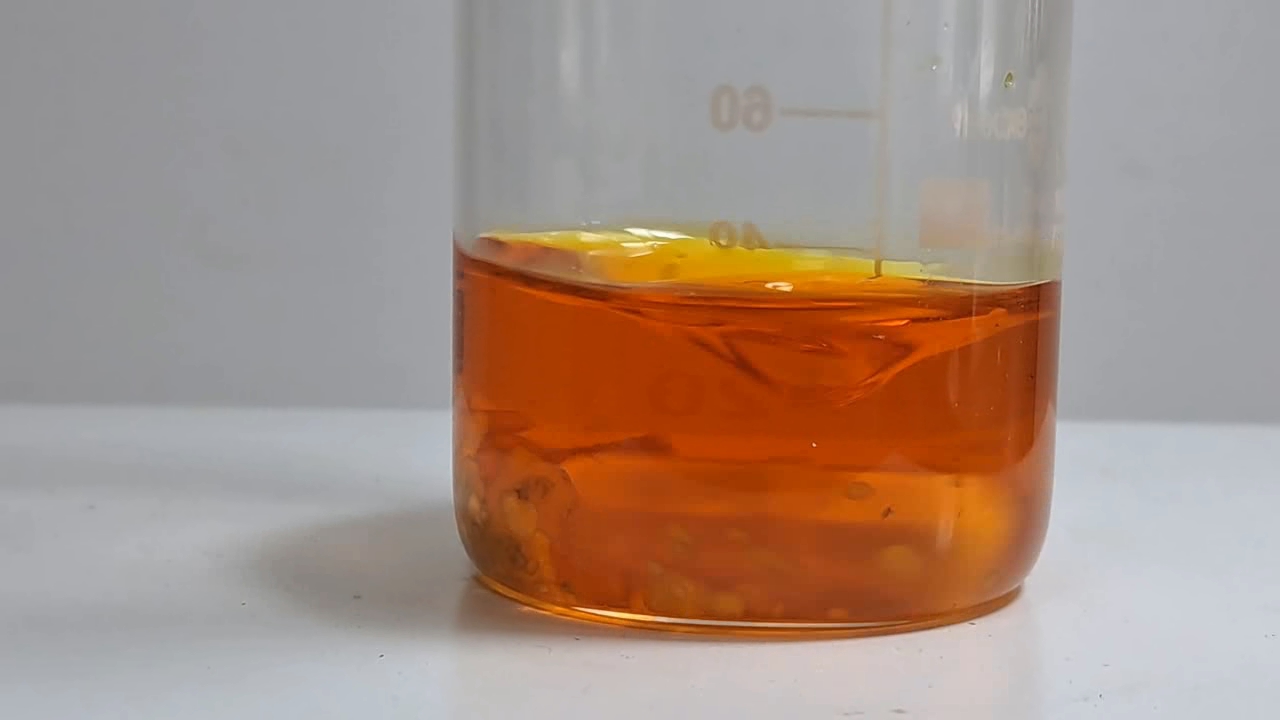
I continued adding more and more solid sodium hydroxide. The alkali was certainly present in excess, but the solution's color did not change, and the granules remained undissolved at the bottom.

In an aqueous solution, sodium hydroxide and acetic acid react almost instantly, but in an n-butanol solution, the situation was quite different. In this case, the absence of any visible change was far more surprising than even the most unexpected color transformations.

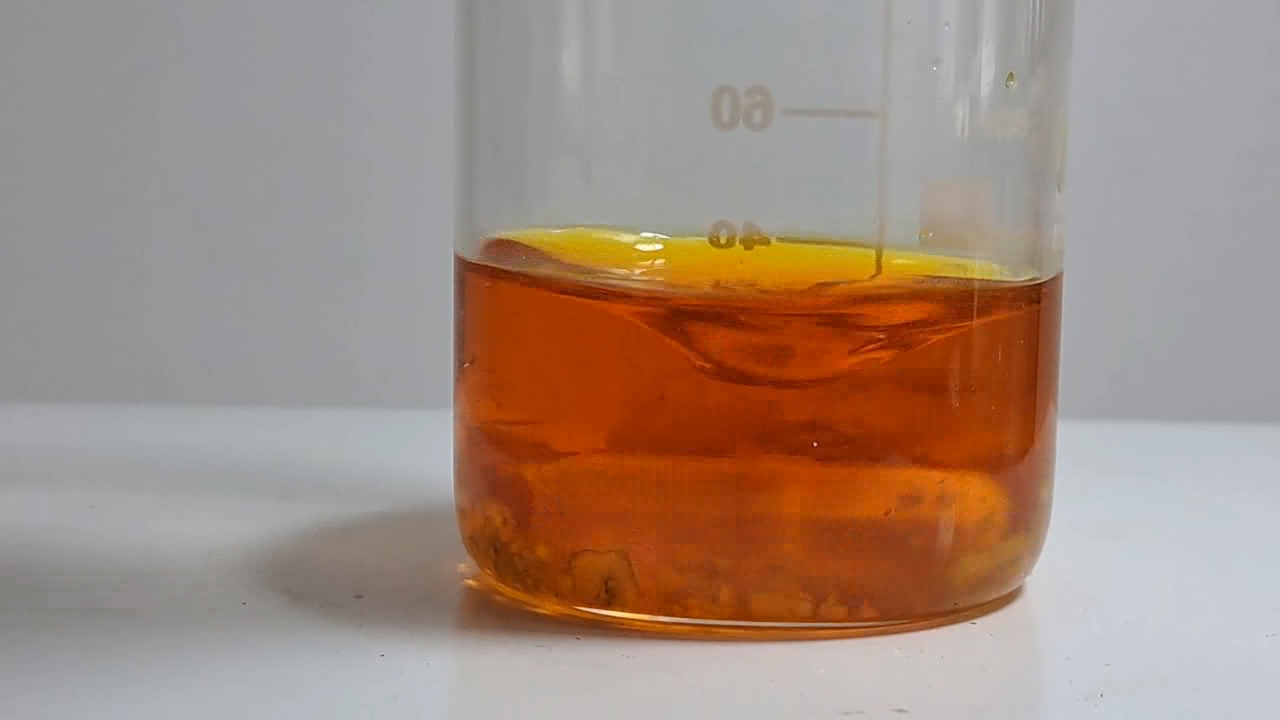
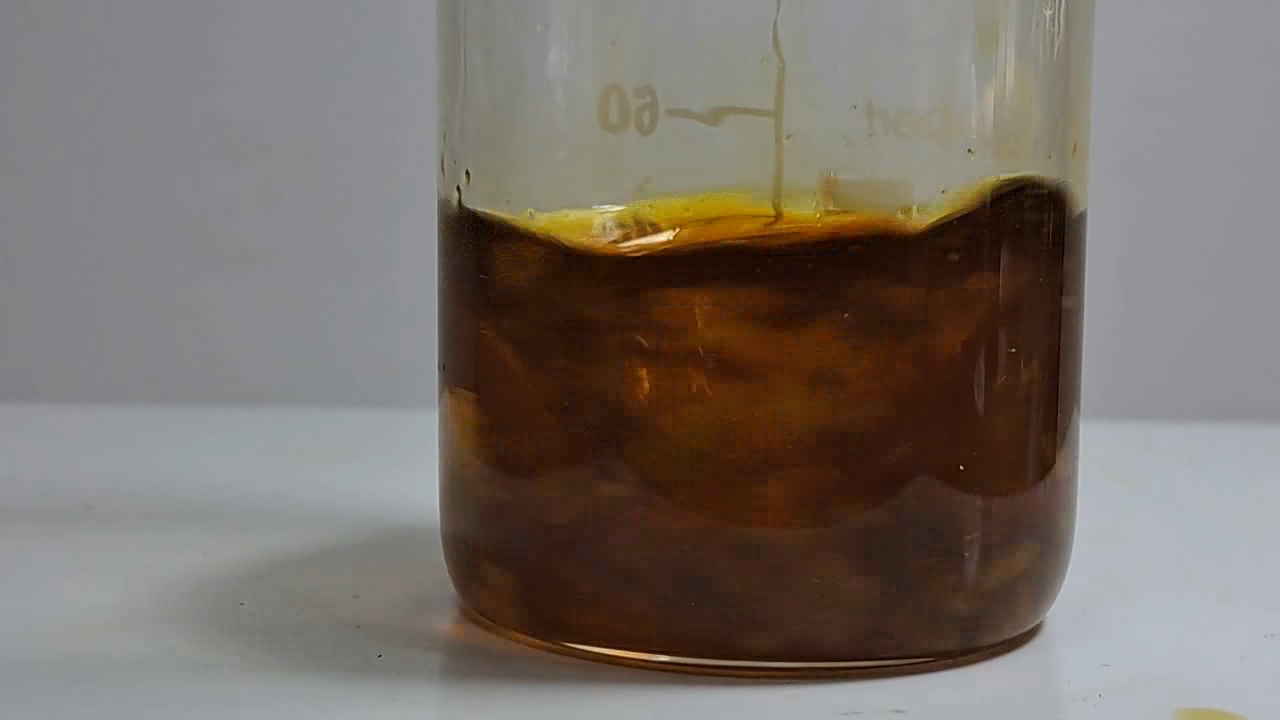
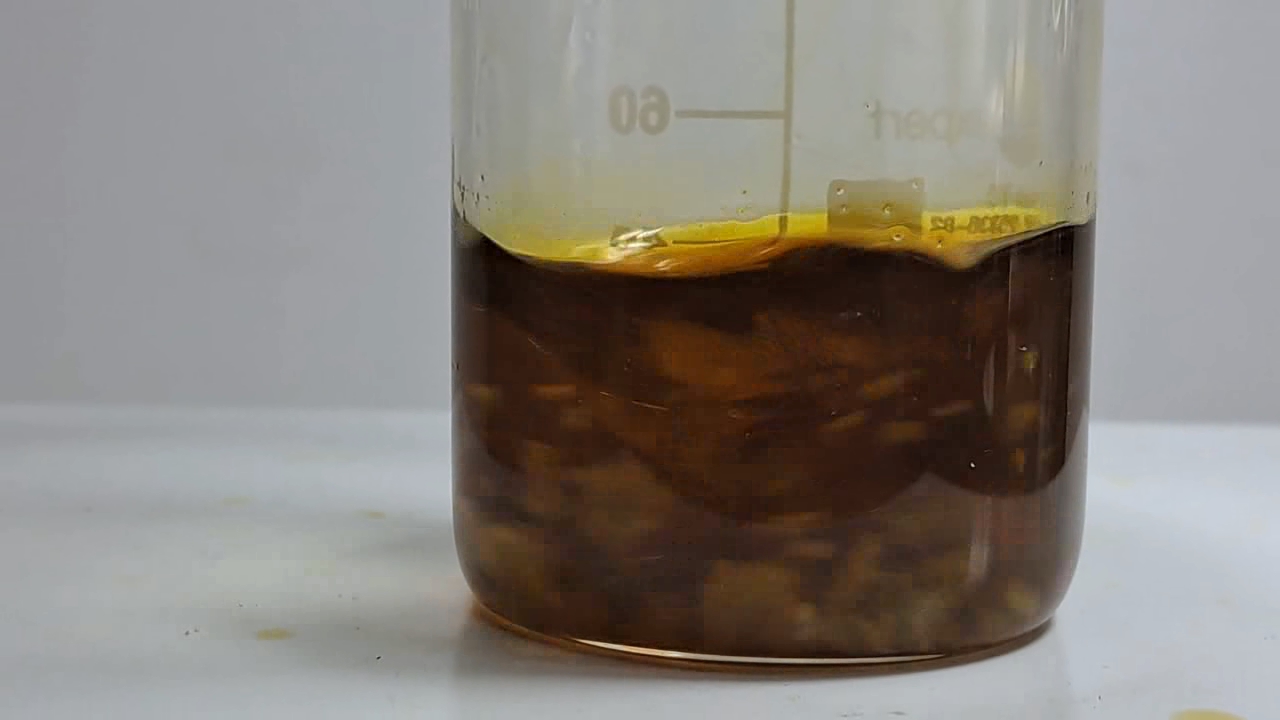
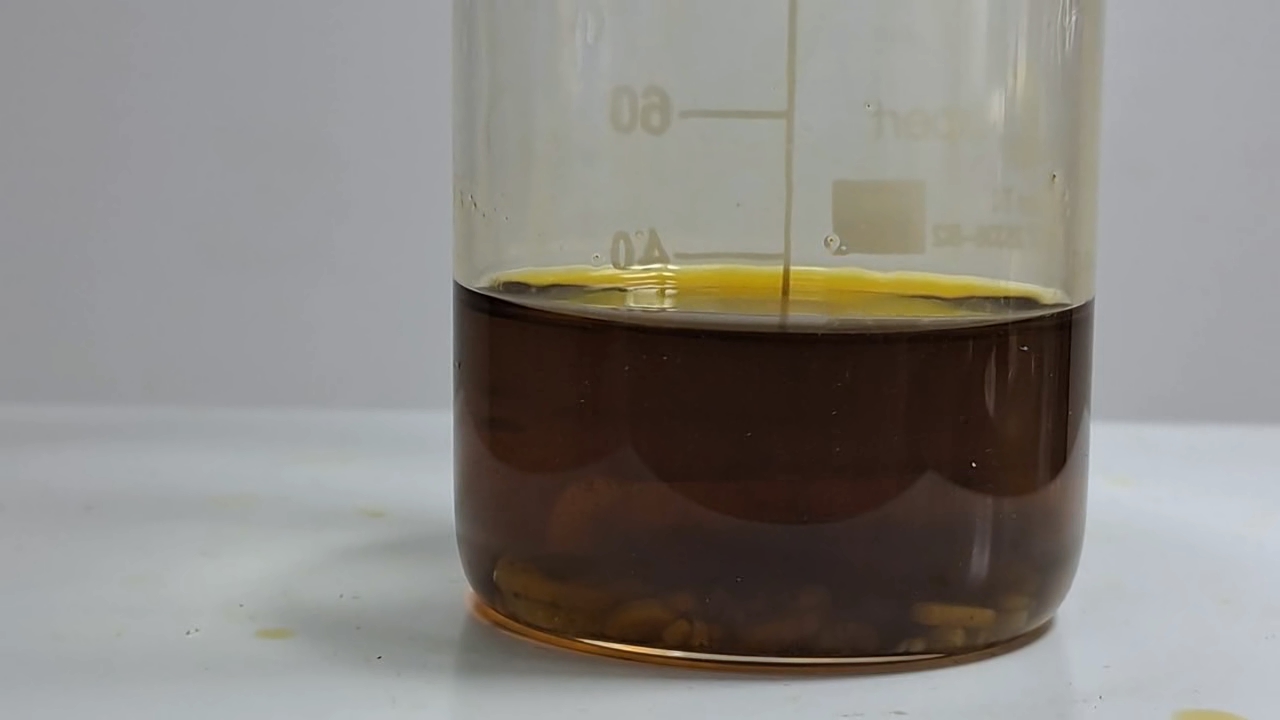
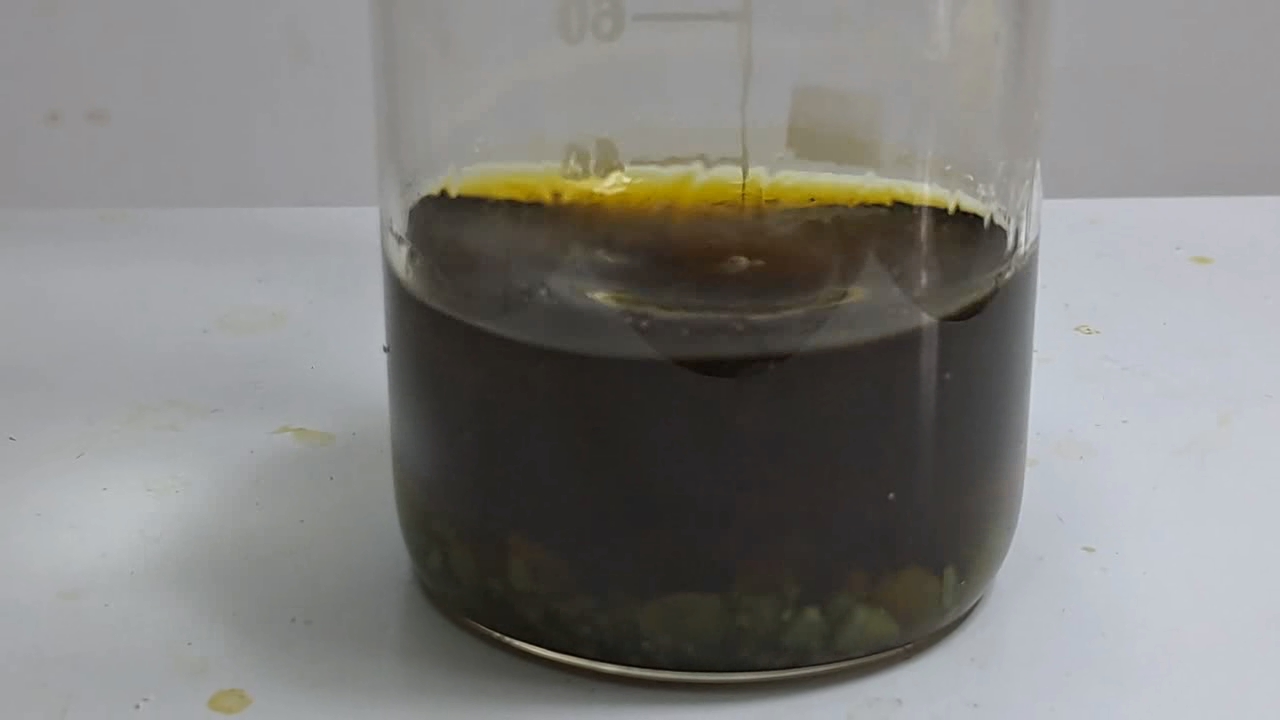
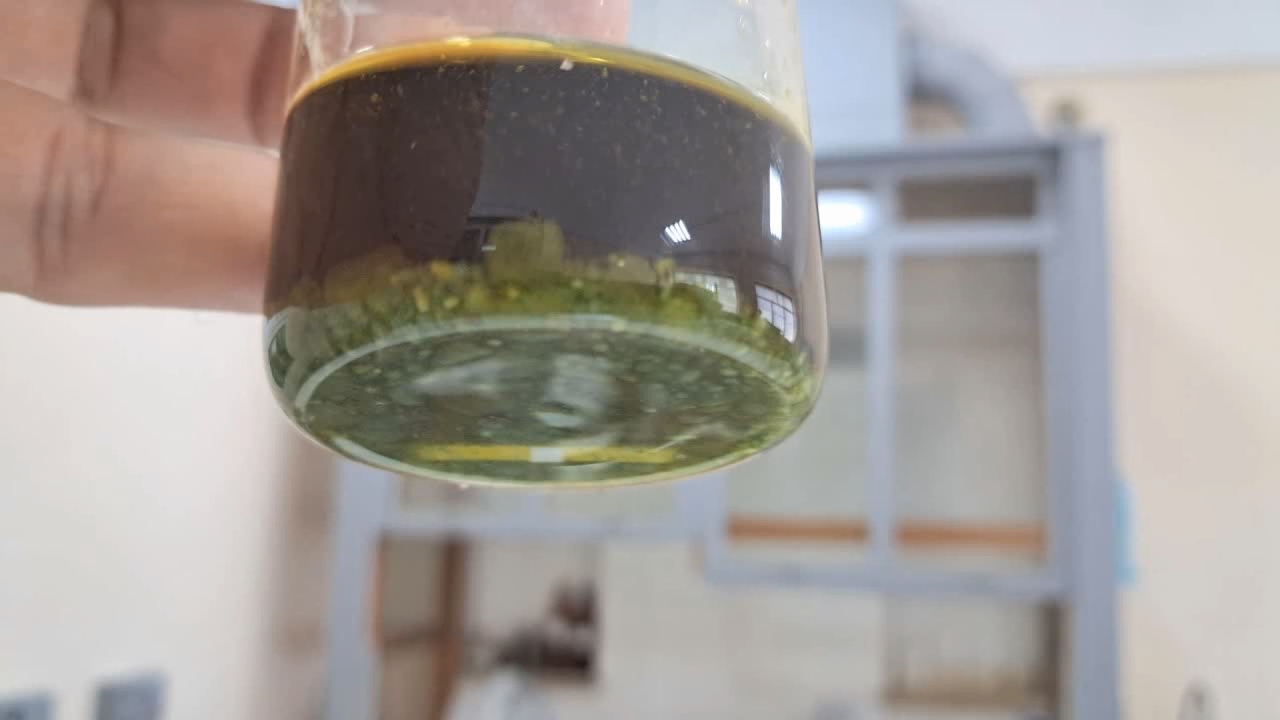
Only after I had added several teaspoons of sodium hydroxide did the solution change from orange to dark yellow. The liquid now resembled black tea. The color change took several minutes.

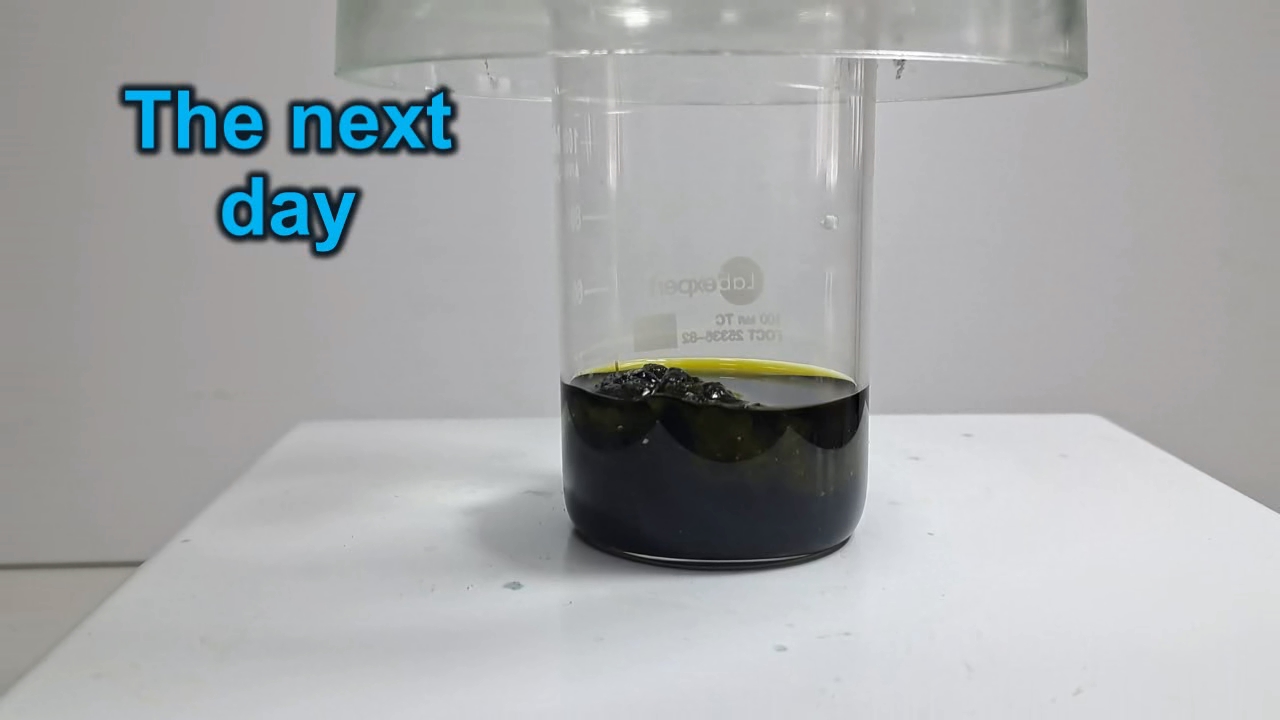
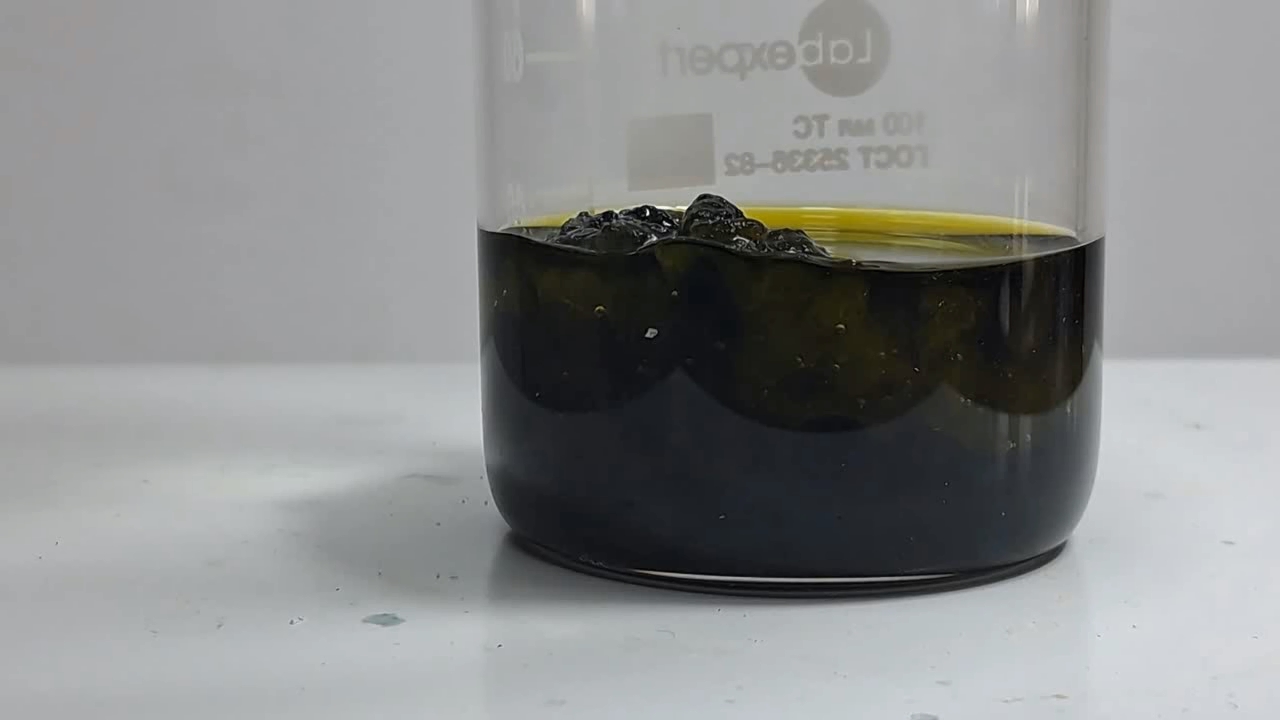
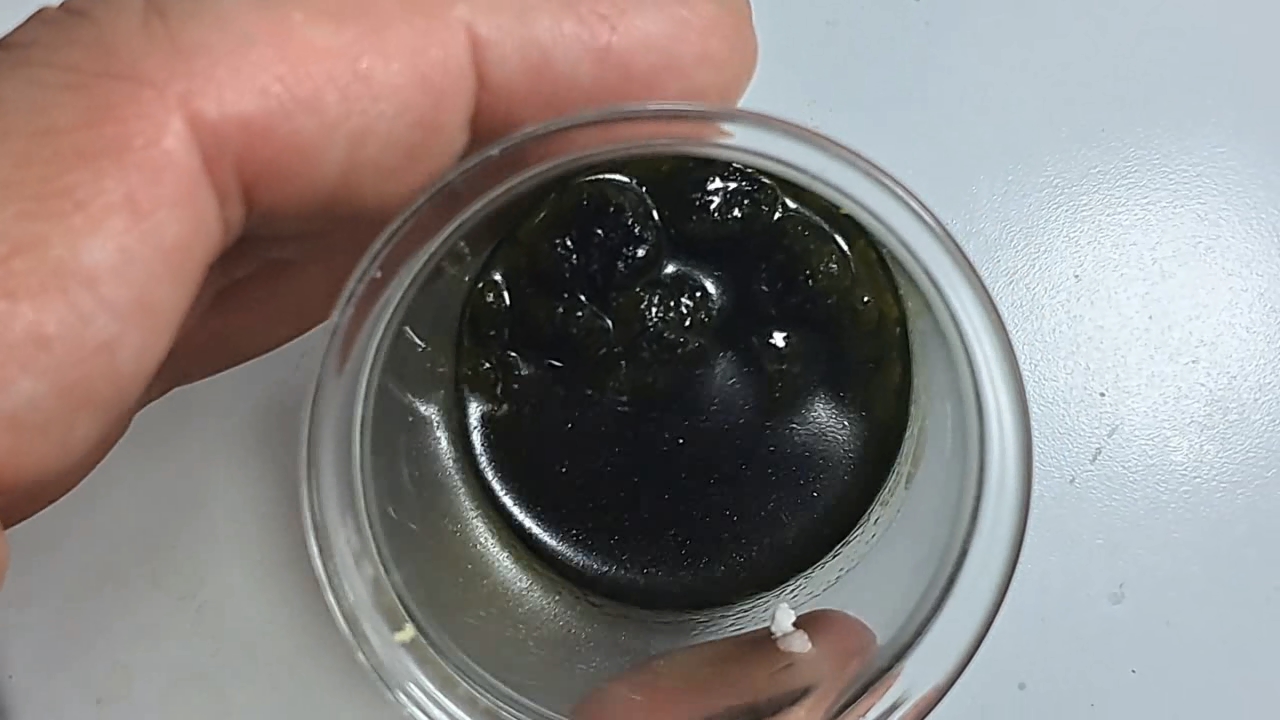
The next day, most of the beaker was filled with a solid consisting of a mixture of sodium acetate and unreacted sodium hydroxide.

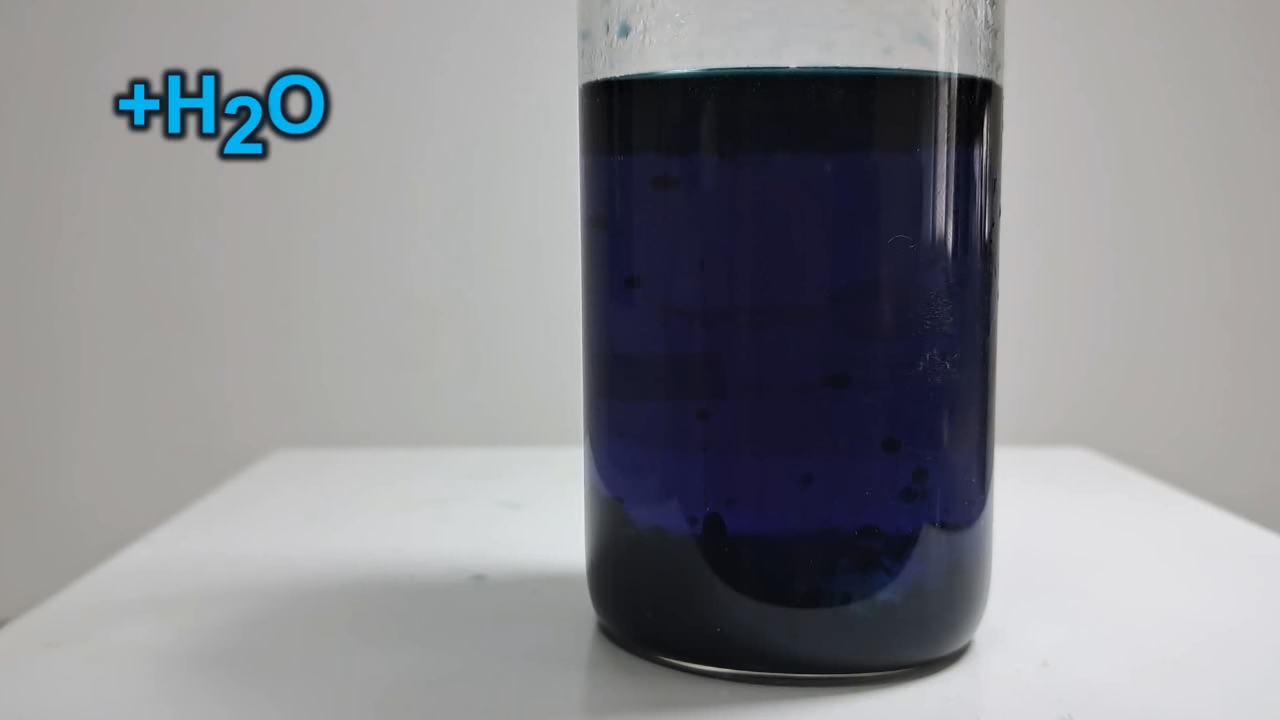
When I washed the beaker after the experiment, adding tap water produced a dark blue color characteristic of an alkaline solution of the universal indicator.

Despite their unexpected nature, the results can be explained quite easily. The reaction between acetic acid and sodium hydroxide produces sodium acetate. Sodium acetate is readily soluble in water and is also soluble in methanol and ethanol. Therefore, an aqueous solution of acetic acid reacts rapidly with solid sodium hydroxide granules.

However, as the hydrocarbon chain becomes longer, the solubility of inorganic salts in monohydric alcohols decreases sharply. Sodium acetate is only sparingly soluble in butyl alcohol; therefore, it forms a solid film on the surface of the sodium hydroxide granules, preventing further reaction between the caustic soda and the acetic acid.

A similar phenomenon is also often observed in aqueous solutions. For example, solid calcium carbonate dissolves readily in hydrochloric, nitric, and acetic acids, releasing carbon dioxide. The calcium salts of all three acids are highly soluble in water.

However, if you place a piece of chalk or marble into sulfuric acid, the evolution of carbon dioxide begins vigorously, quickly subsides, and then ceases. A film of sparingly soluble calcium sulfate forms on the surface of the calcium carbonate, preventing further reaction. As a result, the dissolution of calcium carbonate in sulfuric acid virtually stops.

Another example is lead. Although it dissolves slowly in dilute acetic acid, it is practically insoluble in dilute sulfuric acid. Lead acetate is highly soluble in water, whereas lead sulfate is sparingly soluble and forms a protective film on the surface of the metal. Note that sulfuric acid is much stronger than acetic acid.

P.S. While editing the video, I noticed that the very first granule of sodium hydroxide that I added to the beaker (before adding the acetic acid) had also failed to dissolve. It turns out that sodium hydroxide itself is only sparingly soluble in butanol, much like sodium acetate.


Раствор универсального индикатора в н-бутаноле, гидроксид натрия и уксусная кислота - Часть 6
Данную серию я начал с элементарных экспериментов с водными растворами универсального индикатора. В следующих экспериментах к водным растворам добавил различные органические растворители. Некоторые из этих растворителей экстрагировали компоненты универсального индикатора, что привело к появлению двух жидких слоев различной окраски.

Возник логичный вопрос: что произойдет, если растворить универсальный индикатор не в воде, а в безводном органическом растворителе и затем добавить в раствор твердую щелочь? Следом за щелочью, можно добавить в раствор безводную кислоту, например, уксусную. Я не сомневался, что цвета индикатора в бутаноле будут не такими, как в аналогичных экспериментах в водной среде.

Провести эксперимент я успел, но описать - нет. Целую неделю занимался тяжелой организационной работой для нашей лаборатории. К подобным работам я плохо приспособлен, поскольку я химик-исследователь, а не администратор. Был так занят, что не обращал внимания, ни на баллистические ракетные атаки, ни на пожар у соседей после прилета "шахеда", ни на другие происшествия. Если бы на прошлой неделе произошел конец света, я бы и его не заметил.

Хотя сегодня - выходной, руководство попросило меня выйти на работу. Я согласился, поскольку это ускорит запуск лаборатории. Потом оказалось, что вместо меня согласился прийти на работу другой химик. Я поблагодарил его и теперь воспользуюсь случаем, чтобы написать следующую часть статьи.

Итак, я взвесил в стаканчике 0.02 г универсального индикатора. Визуально количество индикатора выглядело избыточным, но чувствительность весов не позволяла взвесить меньшую навеску. Добавил 12 мл н-бутанола. Образовался темно-красный раствор. Для сравнения, раствор универсального индикатора в дистиллированной воде имеет желтый цвет, а раствор данного индикатора в этаноле коричневый.

Как я и опасался, окраска раствора получилась слишком интенсивной, поскольку я использовал много индикатора.

Поставил стакан на магнитную мешалку, включил перемешивание. Добавил небольшое количество твердого гидроксида натрия. В первые несколько секунд цвет раствора не изменился, затем красная жидкость стала желтой. Еще через несколько секунд желтый раствор перешел в зеленый, а потом зеленый цвет сменился синим. Переход окраски в среде бутанола происходил значительно медленнее, чем в водном растворе. Видимо, скорость растворения гидроксида натрия в бутаноле была значительно ниже, чем в воде.

Окраска раствора по прежнему была слишком интенсивной, поэтому я добавил еще 14 мл бутанола, однако раствор не стал прозрачным. Цвет жидкости напоминал окраску раствора аммиачного комплекса меди (II), [Cu(NH3)4]2+.

При перемешивании добавил 1 мл ледяной уксусной кислоты. Синяя окраска раствора моментально изменилась на красно-оранжевую. Темный раствор стал прозрачным. Добавил еще несколько миллилитров кислоты, красный оттенок усилился.

Затем добавил несколько гранил гидроксида натрия, ожидая моментального изменения цвета раствора с оранжевого на синий. Однако, видимых изменений почти не произошло. Несмотря на активное перемешивание, раствор остался оранжевым, а на дне находились белые гранулы гидроксида натрия. Только небольшие участки поверхности гранул окрасились в зеленый цвет.

Я добавлял все новые и новые порции твердого гидроксида натрия - щелочь была в явном избытке, однако цвет раствора не изменился, а гранулы не растворились, оставаясь на дне.

В водном растворе гидроксид натрия и уксусная кислота реагируют практически моментально, но в среде н-бутанола все оказалось по-другому! В данном случае отсутствие внешних изменений было намного удивительнее, чем самые непредвиденные изменения цвета.

Только после того, как я добавил несколько чайных ложек щелочи, цвет раствора изменился с оранжевого на темно-желтый. Теперь жидкость напоминала черный чай. Изменение цвета заняло несколько минут.

На следующий день большую часть стакана занимало твердое вещество - это была смесь ацетата натрия с не прореагировавшей щелочью.

Когда я мыл стакан после эксперимента, добавление водопроводной воды вызвало появление темно-синей окраски, характерной для щелочного раствора универсального индикатора.

Несмотря на всю неожиданность, полученные результаты легко объяснить. В результате реакции уксусной кислоты и гидроксида натрия образуется ацетат натрия. Ацетат натрия легко растворим в воде, также он растворим в метаноле и этаноле. Следовательно, водный раствор уксусной кислоты быстро реагирует с твердыми гранулами гидроксида натрия.

Однако, по мере увеличения углеводородного радикала, растворимость неорганических солей в одноатомных спиртах резко уменьшается. Ацетат натрия плохо растворим в бутиловом спирте, следовательно, данное вещество образует твердую пленку на поверхности гранул гидроксида натрия, препятствуя дальнейшей реакции едкого натра с уксусной кислотой.

Аналогичное явление также часто наблюдается и в водных растворах. Например, твердый карбонат кальция легко растворяется в соляной, азотной и уксусной кислотах. При этом выделяется углекислый газ. Кальциевые соли всех перечисленных кислот хорошо растворимы в воде.

Однако, если поместить кусок мела или мрамора в раствор серной кислоты, то сначала начнется бурное выделение углекислого газа, которое будет быстро ослабевать, а затем прекратится. На поверхности карбоната кальция образуется пленка малорастворимого сульфата кальция, которая препятствует дальнейшей реакции. В результате растворение карбоната кальция в серной кислоте практически прекращается.

Другой пример. Свинец, хоть и медленно, но растворяется в слабой уксусной кислоте, зато данный металл не растворяется в разбавленной серной кислоте. Ацетат свинца хорошо растворим в воде, а сульфат свинца является малорастворимым соединением - он образует пленку на поверхности металла. Обратите внимание, что серная кислота намного сильнее уксусной.

P.S. Уже во время монтажа видео обратил внимание, что самая первая гранула гидроксида натрия, которую я добавил в стакан (еще до прибавления уксусной кислоты), также не растворилась. Оказалось, что гидроксид натрия также плохо растворяется в бутаноле, аналогично ацетату натрия.


Download the Video (196 Mb, .avi )

Solution of Universal Indicator in n-Butanol, Sodium Hydroxide, and Acetic Acid

Solution of Universal Indicator in n-Butanol, Sodium Hydroxide, and Acetic Acid

Solution of Universal Indicator in n-Butanol, Sodium Hydroxide, and Acetic Acid

Solution of Universal Indicator in n-Butanol, Sodium Hydroxide, and Acetic Acid

Solution of Universal Indicator in n-Butanol, Sodium Hydroxide, and Acetic Acid

Solution of Universal Indicator in n-Butanol, Sodium Hydroxide, and Acetic Acid

Solution of Universal Indicator in n-Butanol, Sodium Hydroxide, and Acetic Acid

Solution of Universal Indicator in n-Butanol, Sodium Hydroxide, and Acetic Acid

Solution of Universal Indicator in n-Butanol, Sodium Hydroxide, and Acetic Acid

Solution of Universal Indicator in n-Butanol, Sodium Hydroxide, and Acetic Acid

Solution of Universal Indicator in n-Butanol, Sodium Hydroxide, and Acetic Acid

Solution of Universal Indicator in n-Butanol, Sodium Hydroxide, and Acetic Acid

Solution of Universal Indicator in n-Butanol, Sodium Hydroxide, and Acetic Acid

Solution of Universal Indicator in n-Butanol, Sodium Hydroxide, and Acetic Acid

Solution of Universal Indicator in n-Butanol, Sodium Hydroxide, and Acetic Acid

Solution of Universal Indicator in n-Butanol, Sodium Hydroxide, and Acetic Acid

Solution of Universal Indicator in n-Butanol, Sodium Hydroxide, and Acetic Acid

Solution of Universal Indicator in n-Butanol, Sodium Hydroxide, and Acetic Acid

Solution of Universal Indicator in n-Butanol, Sodium Hydroxide, and Acetic Acid

Solution of Universal Indicator in n-Butanol, Sodium Hydroxide, and Acetic Acid

Solution of Universal Indicator in n-Butanol, Sodium Hydroxide, and Acetic Acid

Solution of Universal Indicator in n-Butanol, Sodium Hydroxide, and Acetic Acid

Solution of Universal Indicator in n-Butanol, Sodium Hydroxide, and Acetic Acid

Solution of Universal Indicator in n-Butanol, Sodium Hydroxide, and Acetic Acid

Solution of Universal Indicator in n-Butanol, Sodium Hydroxide, and Acetic Acid

Solution of Universal Indicator in n-Butanol, Sodium Hydroxide, and Acetic Acid

Solution of Universal Indicator in n-Butanol, Sodium Hydroxide, and Acetic Acid

Solution of Universal Indicator in n-Butanol, Sodium Hydroxide, and Acetic Acid

Solution of Universal Indicator in n-Butanol, Sodium Hydroxide, and Acetic Acid

Solution of Universal Indicator in n-Butanol, Sodium Hydroxide, and Acetic Acid

Solution of Universal Indicator in n-Butanol, Sodium Hydroxide, and Acetic Acid

Solution of Universal Indicator in n-Butanol, Sodium Hydroxide, and Acetic Acid

Solution of Universal Indicator in n-Butanol, Sodium Hydroxide, and Acetic Acid

Solution of Universal Indicator in n-Butanol, Sodium Hydroxide, and Acetic Acid

Solution of Universal Indicator in n-Butanol, Sodium Hydroxide, and Acetic Acid

Solution of Universal Indicator in n-Butanol, Sodium Hydroxide, and Acetic Acid

Solution of Universal Indicator in n-Butanol, Sodium Hydroxide, and Acetic Acid

Solution of Universal Indicator in n-Butanol, Sodium Hydroxide, and Acetic Acid

Solution of Universal Indicator in n-Butanol, Sodium Hydroxide, and Acetic Acid

Solution of Universal Indicator in n-Butanol, Sodium Hydroxide, and Acetic Acid

Solution of Universal Indicator in n-Butanol, Sodium Hydroxide, and Acetic Acid

Solution of Universal Indicator in n-Butanol, Sodium Hydroxide, and Acetic Acid

Solution of Universal Indicator in n-Butanol, Sodium Hydroxide, and Acetic Acid

Solution of Universal Indicator in n-Butanol, Sodium Hydroxide, and Acetic Acid

Solution of Universal Indicator in n-Butanol, Sodium Hydroxide, and Acetic Acid

Solution of Universal Indicator in n-Butanol, Sodium Hydroxide, and Acetic Acid

Solution of Universal Indicator in n-Butanol, Sodium Hydroxide, and Acetic Acid

Solution of Universal Indicator in n-Butanol, Sodium Hydroxide, and Acetic Acid

Solution of Universal Indicator in n-Butanol, Sodium Hydroxide, and Acetic Acid

Solution of Universal Indicator in n-Butanol, Sodium Hydroxide, and Acetic Acid

Solution of Universal Indicator in n-Butanol, Sodium Hydroxide, and Acetic Acid

Solution of Universal Indicator in n-Butanol, Sodium Hydroxide, and Acetic Acid

Solution of Universal Indicator in n-Butanol, Sodium Hydroxide, and Acetic Acid


[ Indicators and Dyes (Fluorescein, Phenolphthalein, Rhodamine, etc.) ]

Indicators - Discussion on the forum
[Submit a Comment / Error Message - Отправить Комментарий / Сообщение об ошибке]