Content Chemistry experiments - video Physics experiments - video Home Page - Chemistry and Chemists

Chemistry and Chemists № 2 2026

Journal of Chemists-Enthusiasts
Donate to the journal Chemistry and ChemistsDonate to the journal Chemistry and Chemists


Insects in Vacuum - pt.3, 4


Chemist


Having noticed a mistake in the text, allocate it and press Ctrl-Enter


Wasp in Vacuum - Part 3
Оса в вакууме - Часть 3
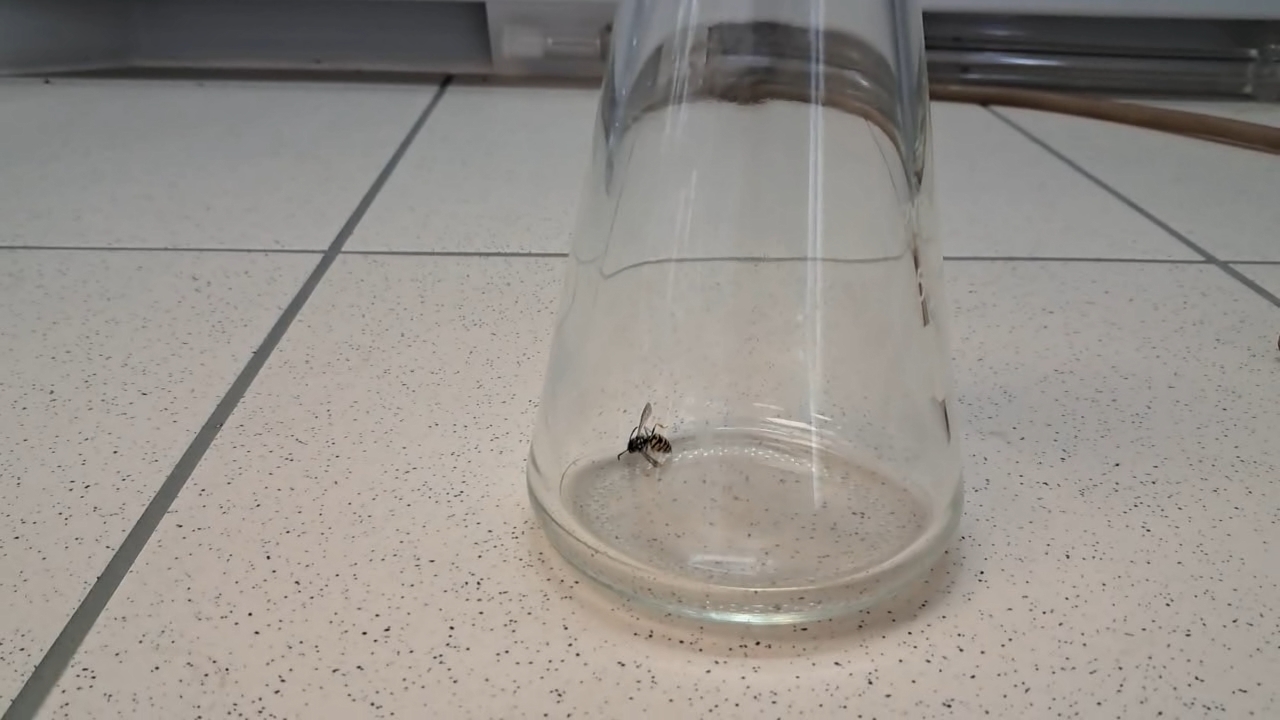
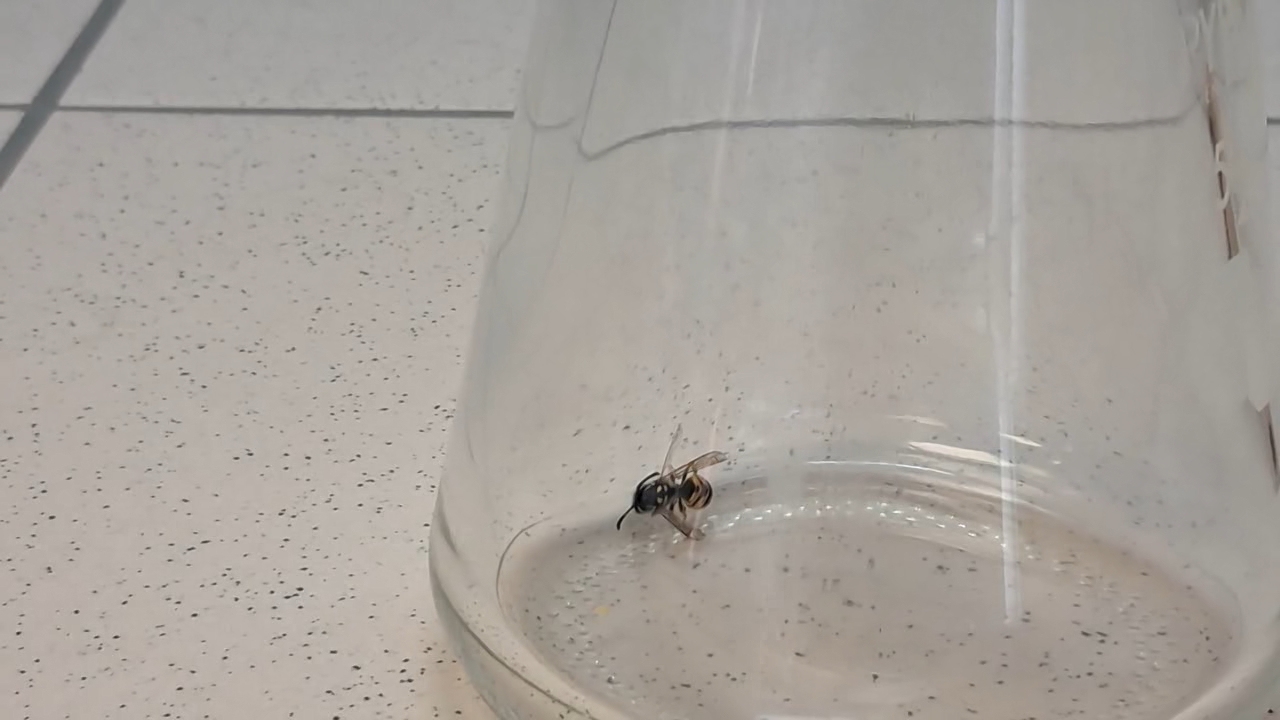
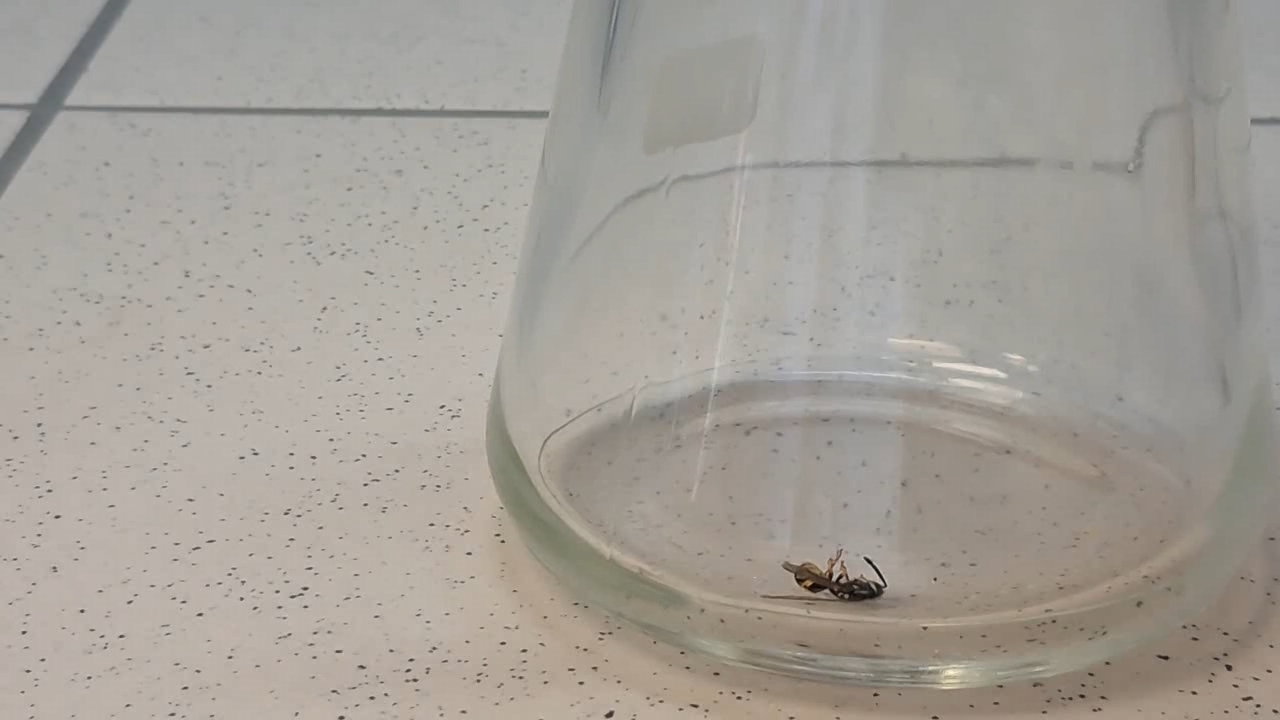
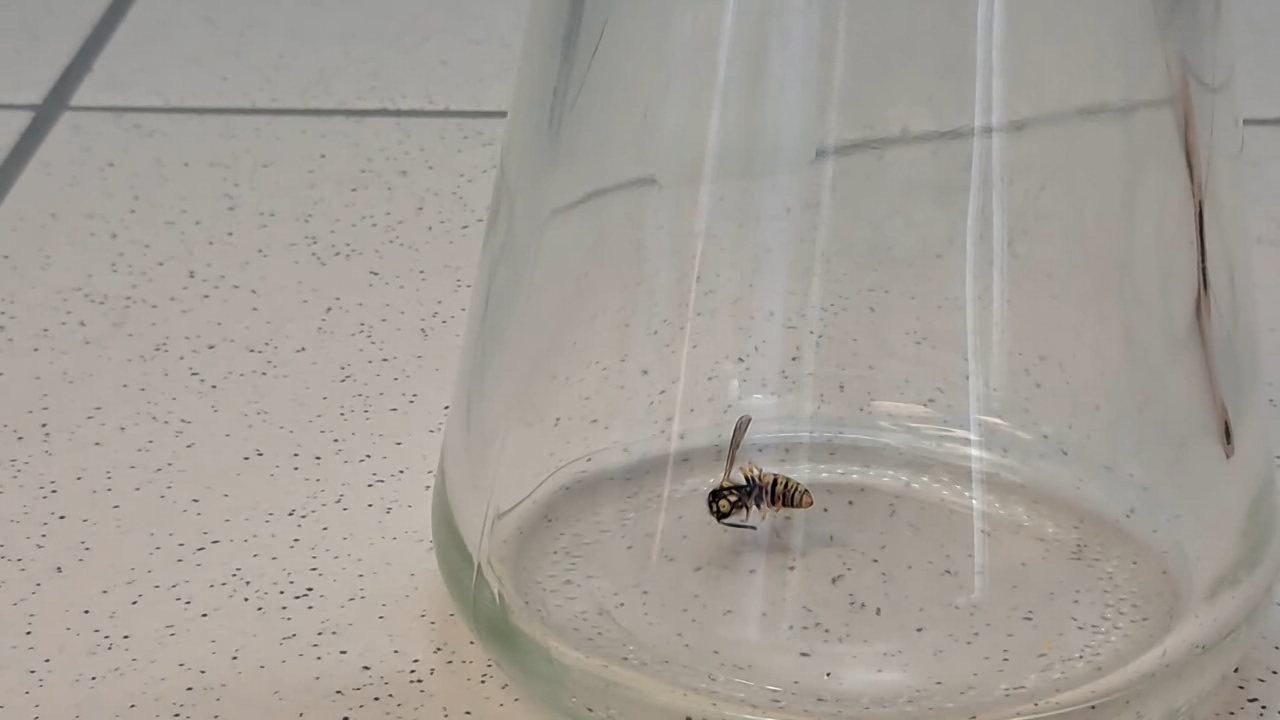
After the flies, a wasp flew into the laboratory. Or rather, it was the second wasp; I had already shooed the first one out the window when another arrived. My colleague spotted the wasp. He had had an unpleasant encounter with these insects a few months earlier while setting up traps filled with calcium chloride in the forest. The traps were designed to absorb tritiated water; while working, he was stung by a wasp and lost consciousness [1].

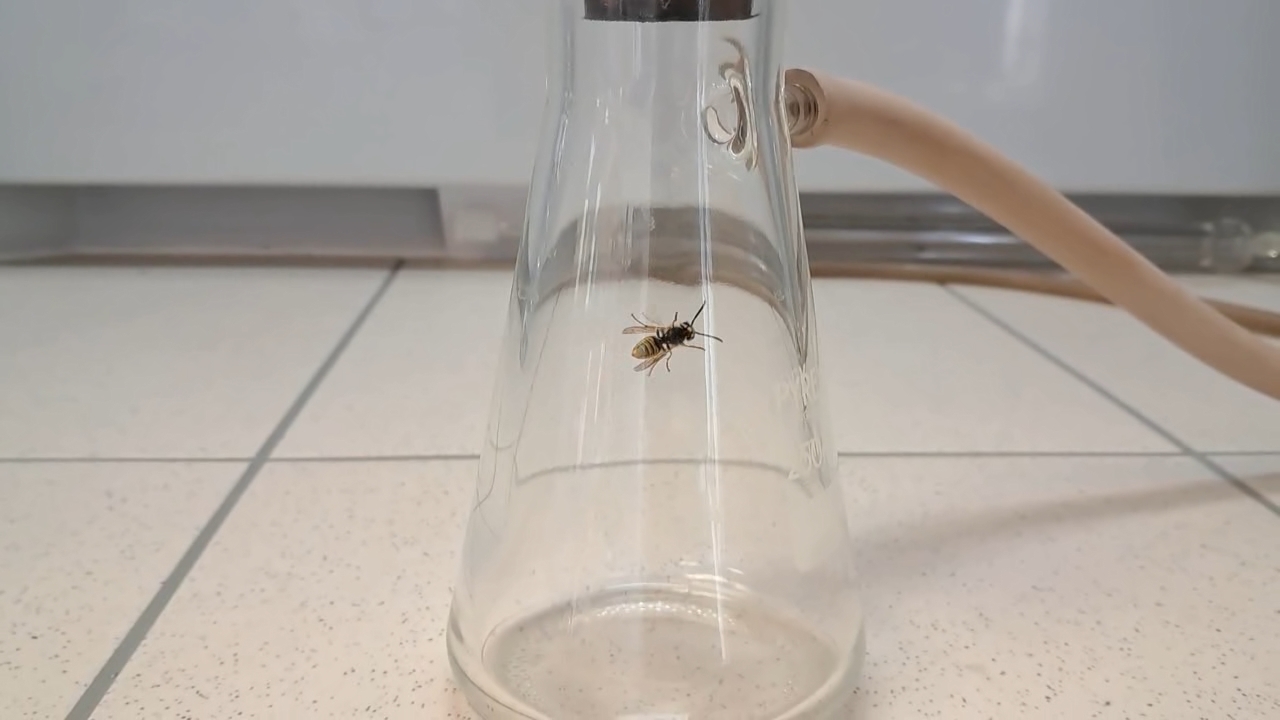
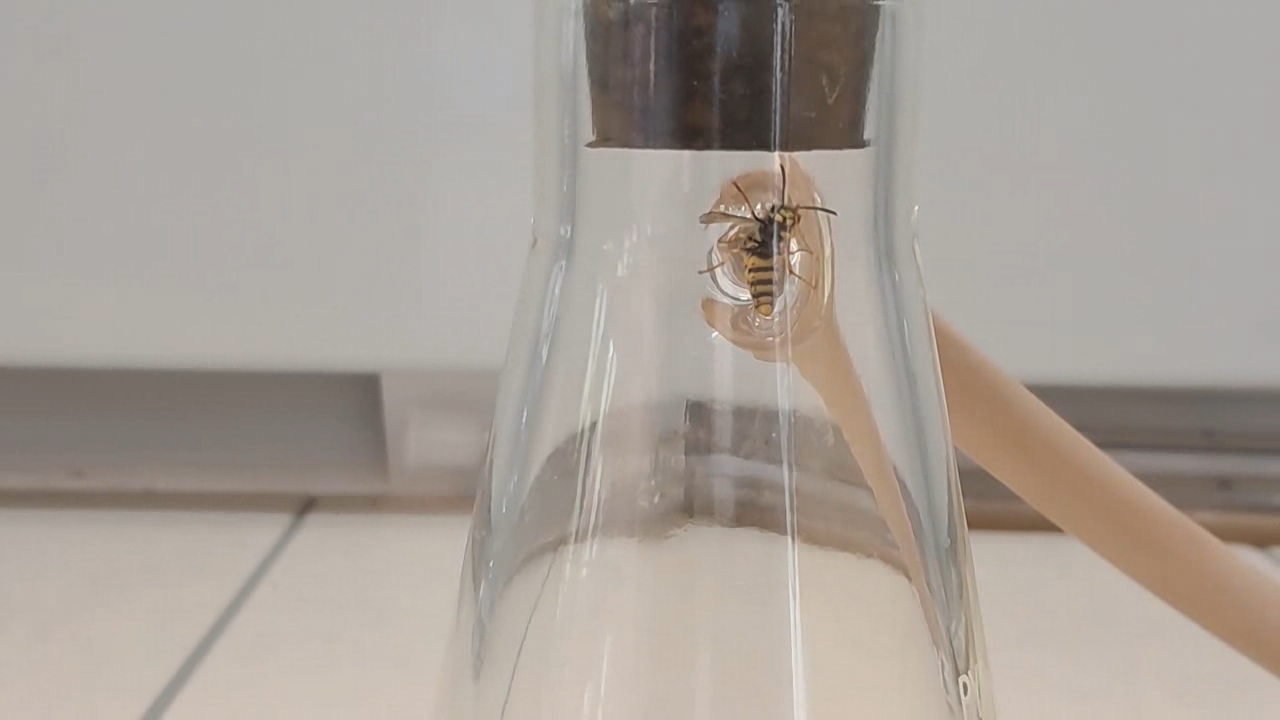
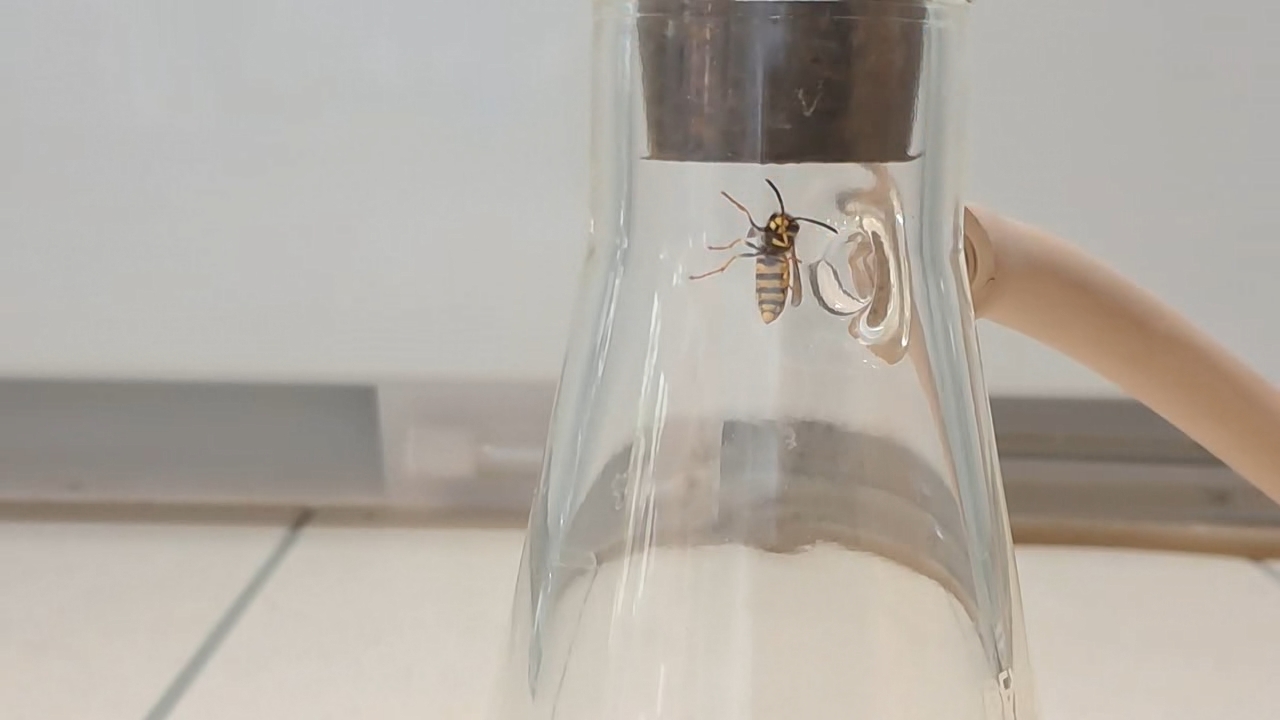
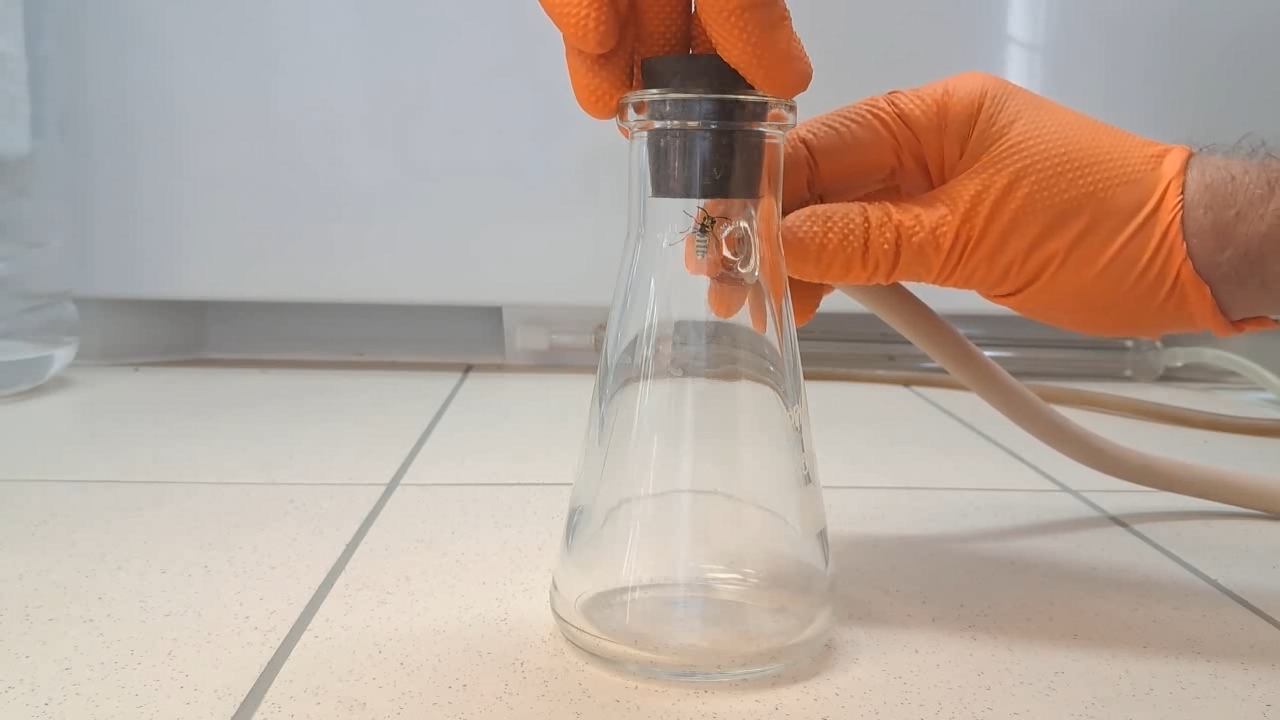
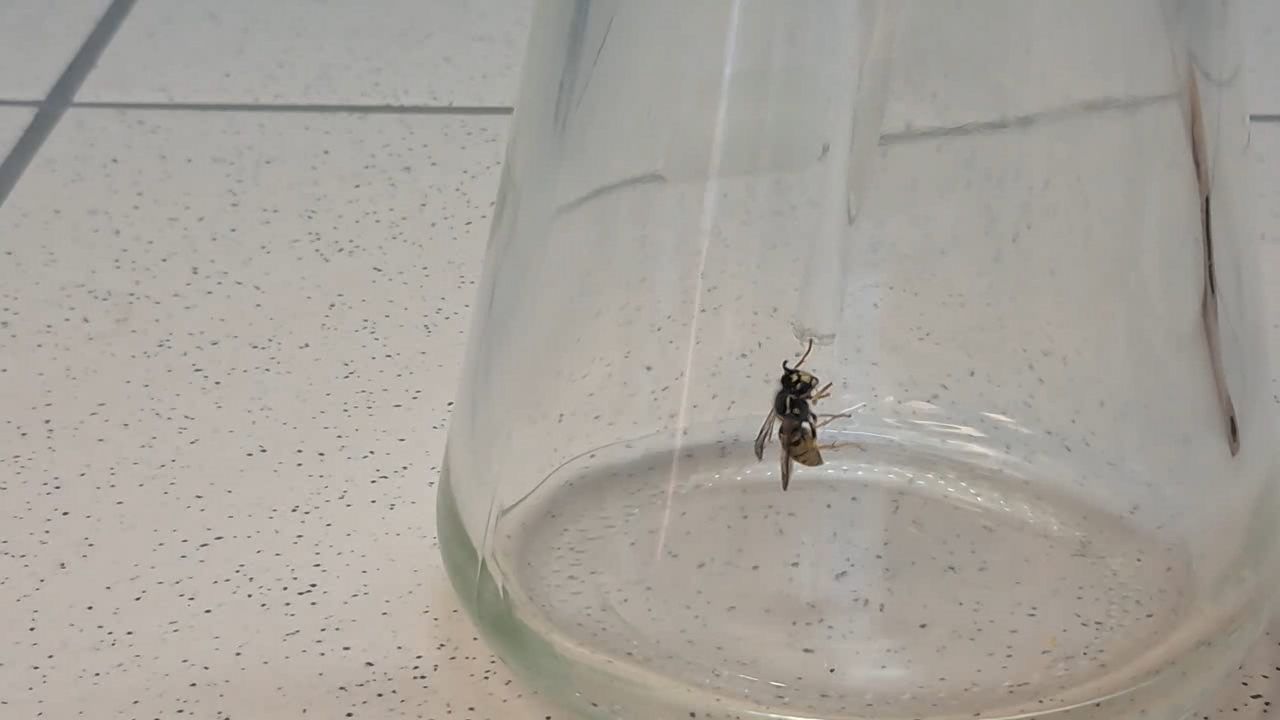
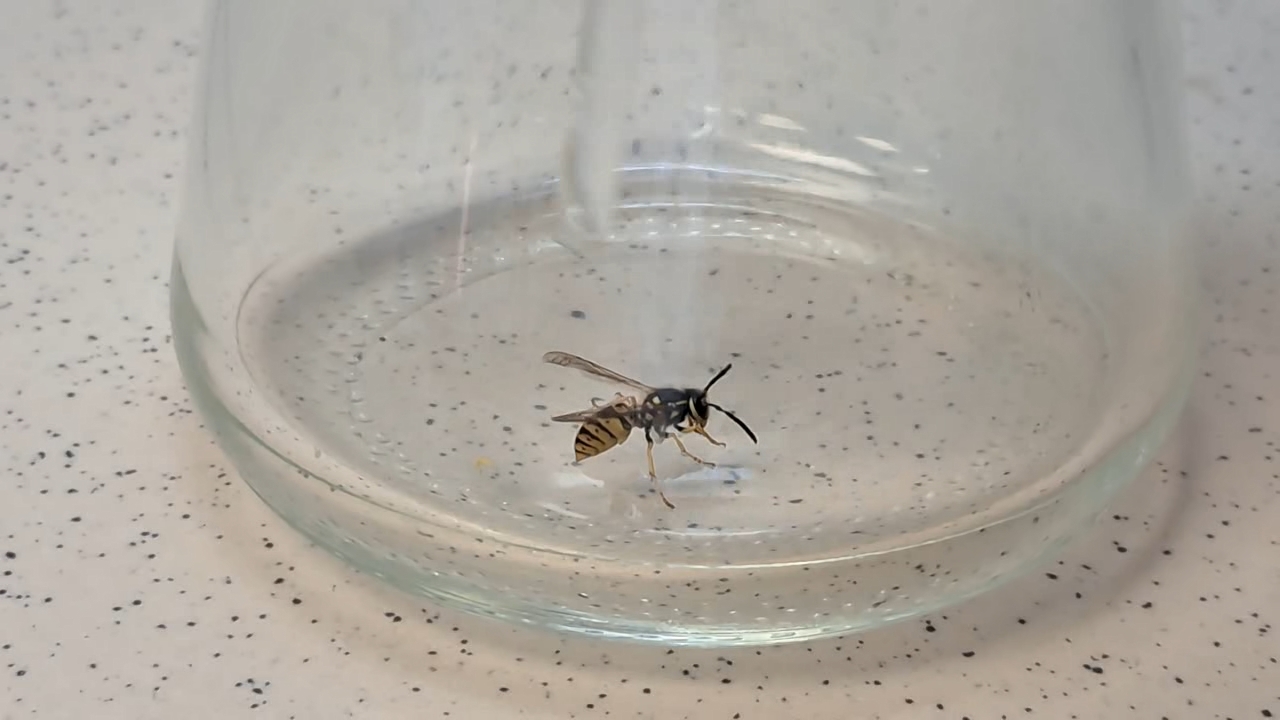
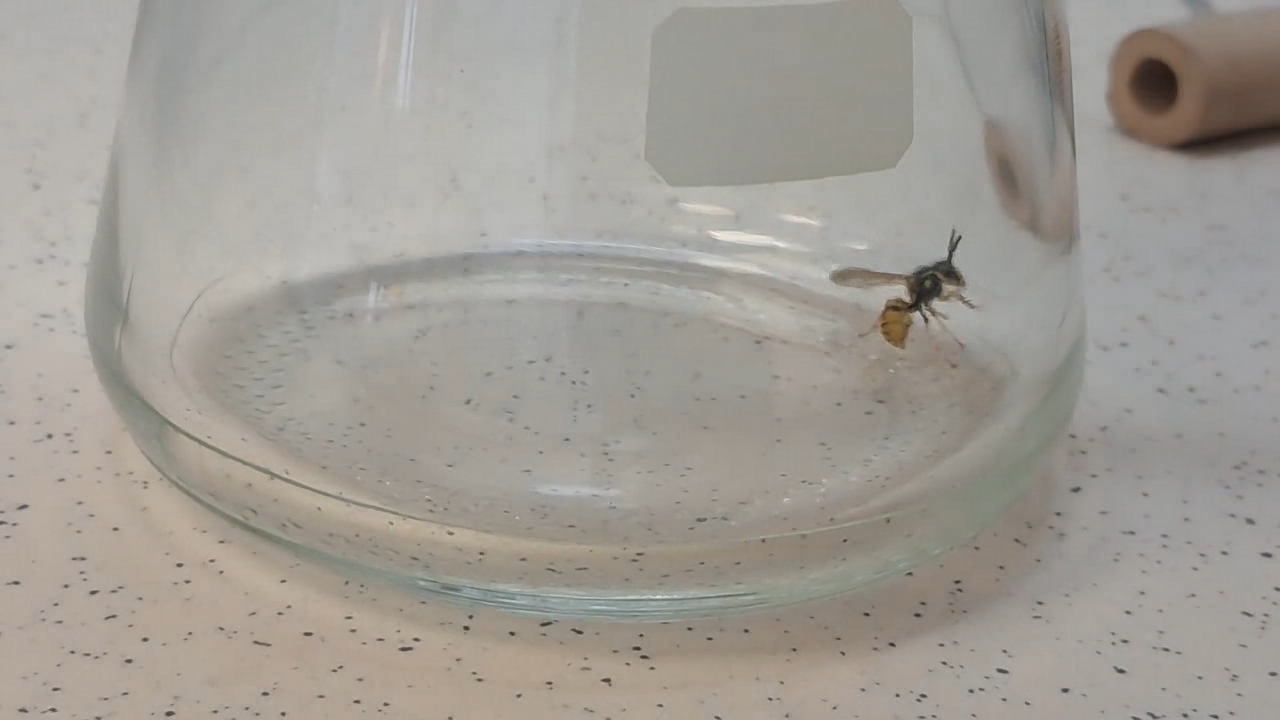
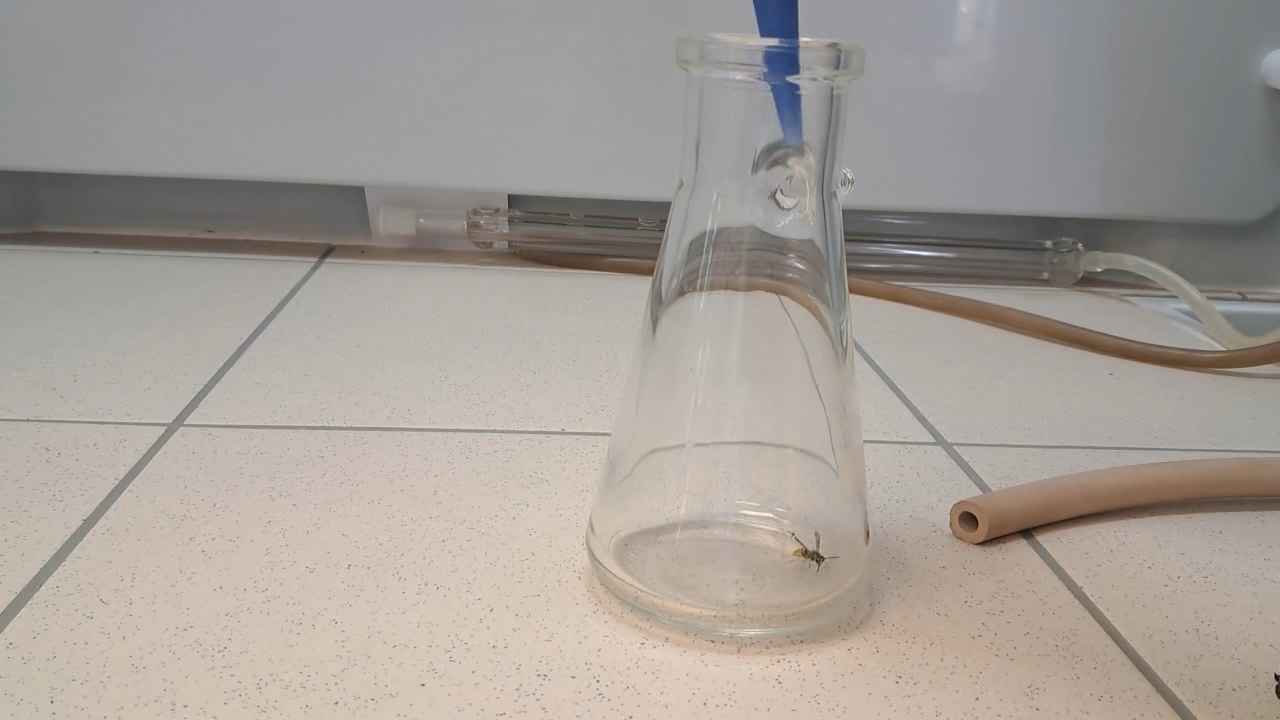
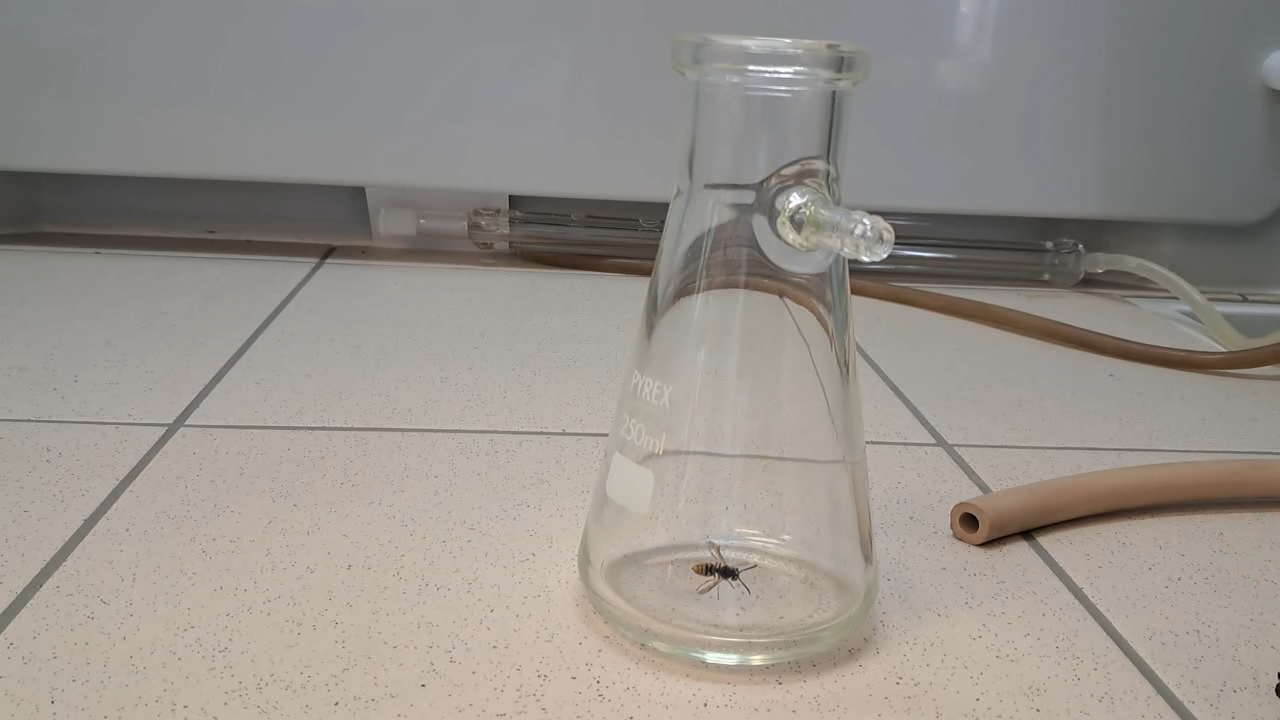
Although my colleague didn't say so explicitly, I understood that he wanted to see the insect inside an evacuated flask. I caught the wasp, placed it in a Büchner flask, stoppered the opening, and connected the vacuum hose.

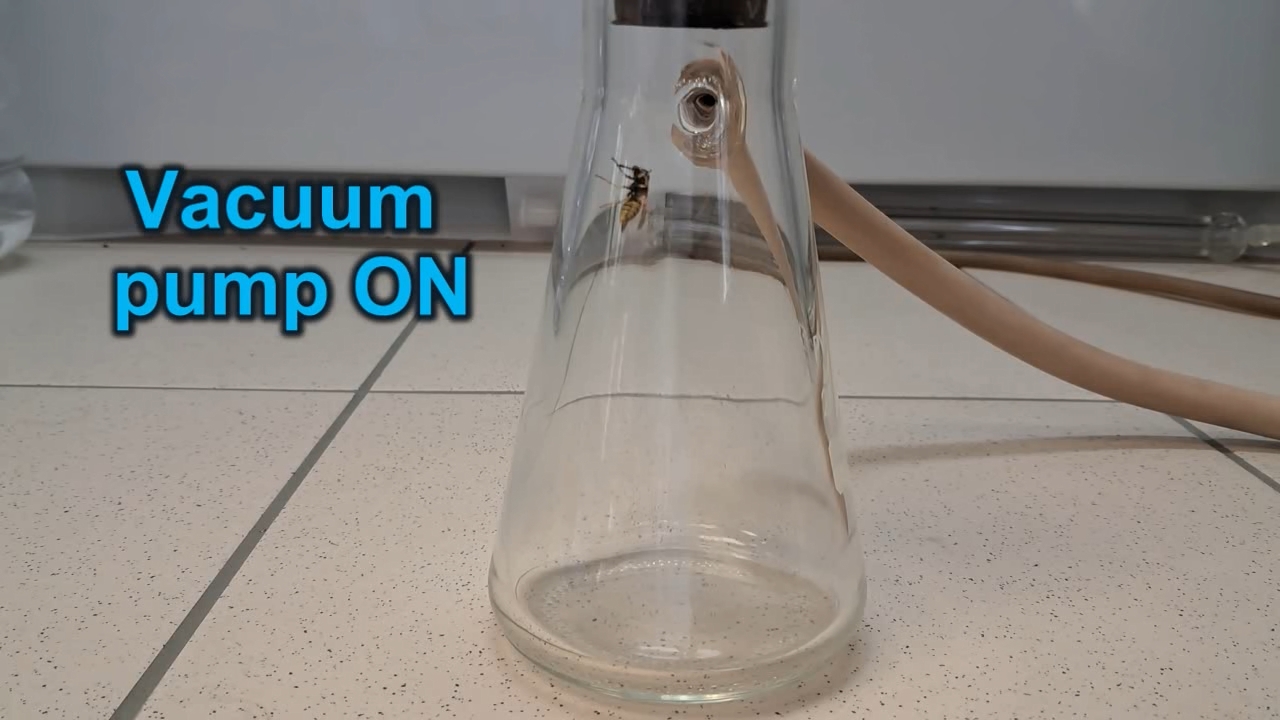
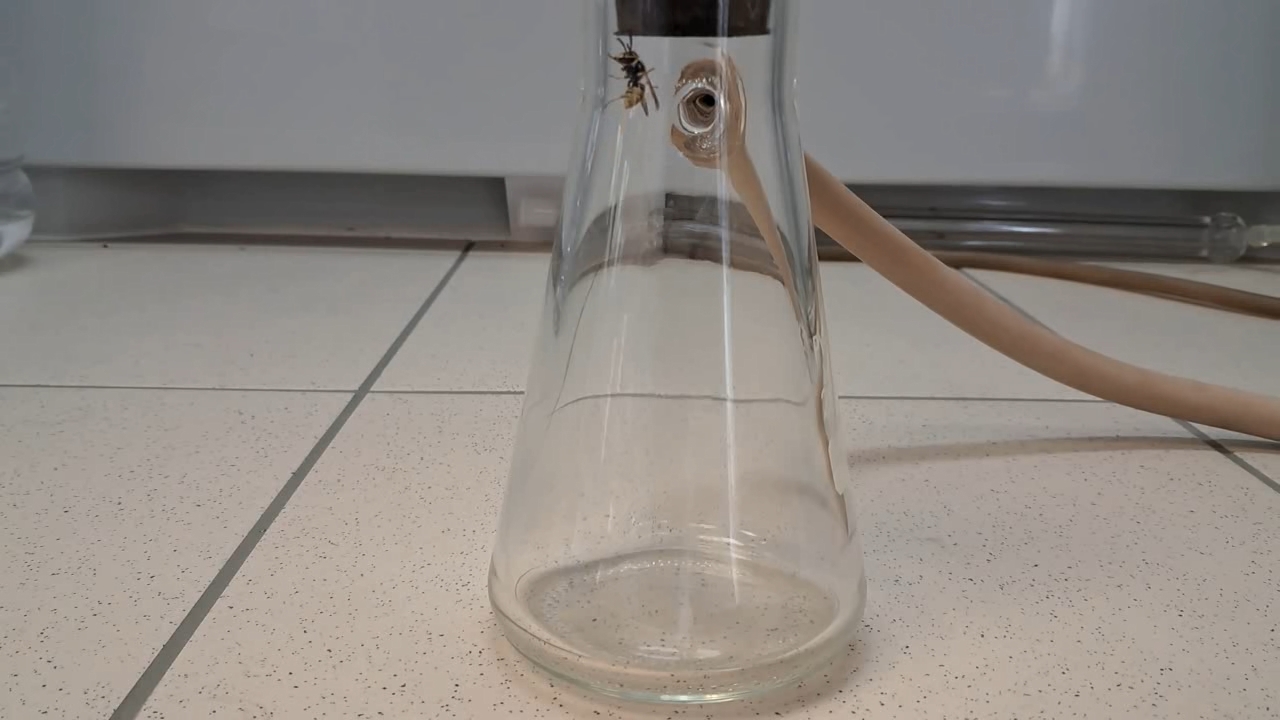
The wasp scurried briskly along the walls, then paused to clean its antennae. I turned on the vacuum pump. The wasp began crawling along the flask walls, then stopped after a few seconds, still clinging to the vertical surface. A few seconds later, it went motionless.

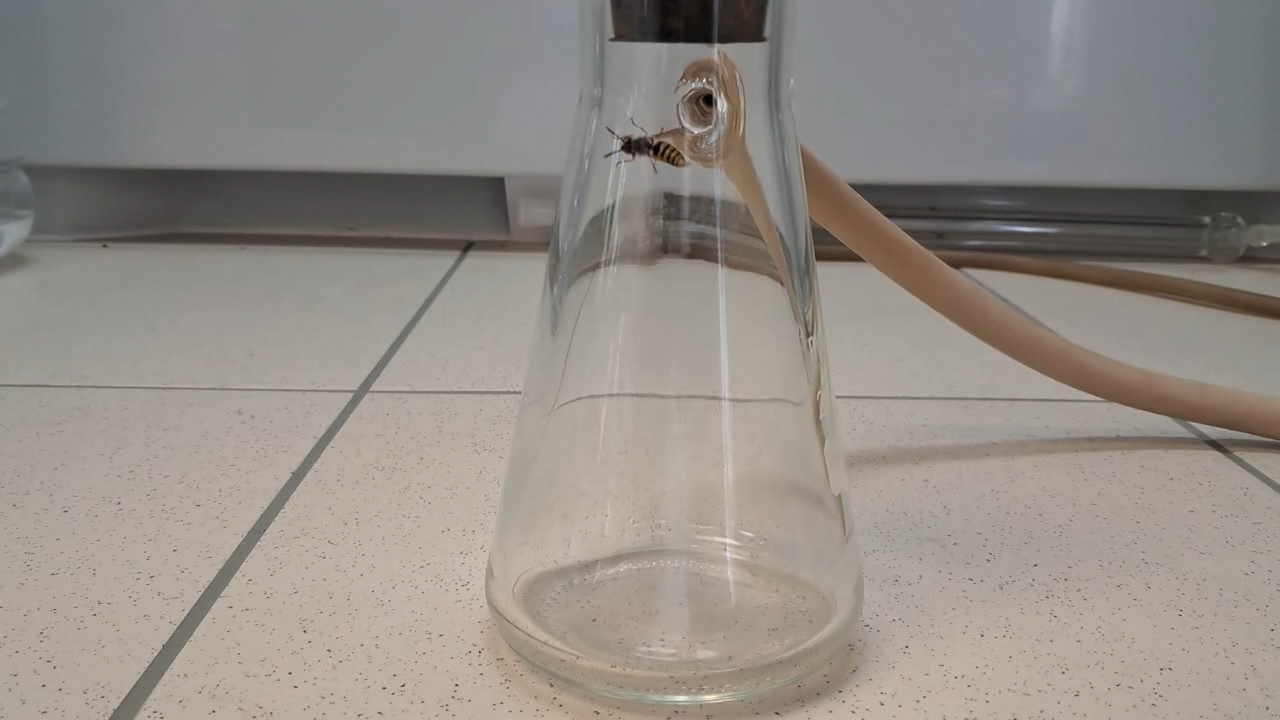
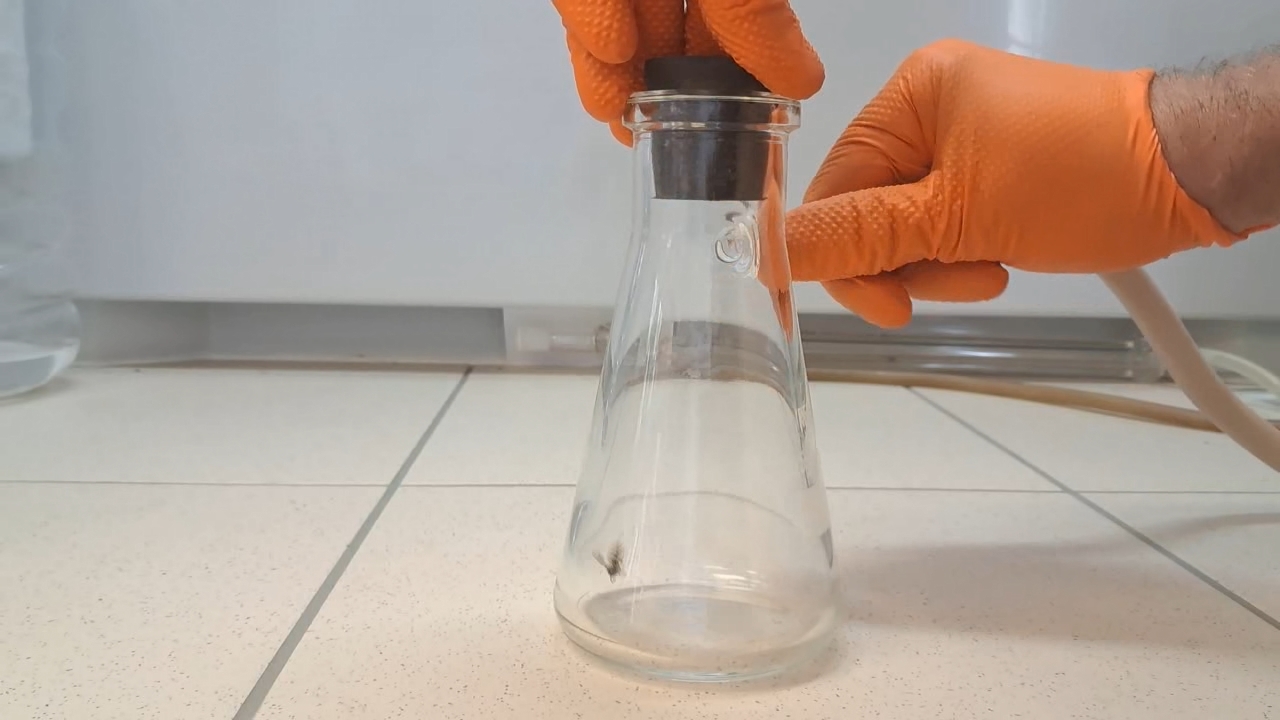
After about twenty seconds, I disconnected the vacuum hose. A rush of air surged into the flask, blowing the wasp down to the bottom. Almost immediately, the wasp's legs and antennae began to twitch erratically; later, its abdomen started to pulsate. I gently touched the wasp with a glass rod and then directed a stream of air at it from a rubber bulb. At first, the wasp's reaction was sluggish, but eventually it began crawling around the flask, just as it had before the experiment. I opened the flask and released the wasp onto the window ledge. Half a minute later, the wasp decided it had had enough adventure for one day and flew off.

__________________________________________________
1 Tritium, Calcium Chloride, and Wasp [link].


Оса в вакууме - Часть 3
После мух в лабораторию залетела оса. Вернее, это была уже вторая оса. Первую я выгнал сквозь окно - прилетела еще одна. Оса попалась на глаза моему коллеге. Несколько месяцев назад он имел неприятный опыт контакта с этими насекомыми, когда устанавливал в лесу ловушки, наполненные хлоридом кальция. Ловушки предназначались для поглощения тритиевой воды - в процессе работы его укусила оса - он потерял сознание [1].

Хотя коллега напрямую этого не сказал, я понял, что он хотел бы увидеть это насекомое в вакуумированной колбе. Я поймал осу, поместил ее в колбу Бунзена, закрыл колбу пробкой и подсоединил вакуумный шланг.

Оса бодро бегала по стенкам, затем остановилась, чтобы почистить усики. Включил вакуумный насос. Оса начал ползать по стенкам колбы, а через несколько секунд остановилась, продолжая держаться за вертикальную стенку. Еще через несколько секунд оса замерла.

Через секунд 20 отсоединил от колбы вакуумный шланг. Поток воздуха устремился в колбу и сдул осу на дно. Почти сразу лапки и усики осы начали совершать неупорядоченные движение, позже ее брюшко стало пульсировать. Аккуратно прикоснулся к осе стеклянной палочкой, направил на нее поток воздуха из резиновой груши. Первоначально реакция осы была вялой, но со временем насекомое стало ползать по колбе, как до эксперимента. Открыл колбу и выпустил осу на карниз окна. Через полминуты оса решила, что на сегодня с нее приключений достаточно, и улетела.


Download the Video (82 Mb, .avi )

Wasp in Vacuum

Wasp in Vacuum

Wasp in Vacuum

Wasp in Vacuum

Wasp in Vacuum

Wasp in Vacuum

Wasp in Vacuum

Wasp in Vacuum

Wasp in Vacuum

Wasp in Vacuum

Wasp in Vacuum

Wasp in Vacuum

Wasp in Vacuum

Wasp in Vacuum

Wasp in Vacuum

Wasp in Vacuum

Wasp in Vacuum


Having noticed a mistake in the text, allocate it and press Ctrl-Enter


German Cockroaches in Vacuum - Part 4
Рыжие тараканы в вакууме - Часть 4
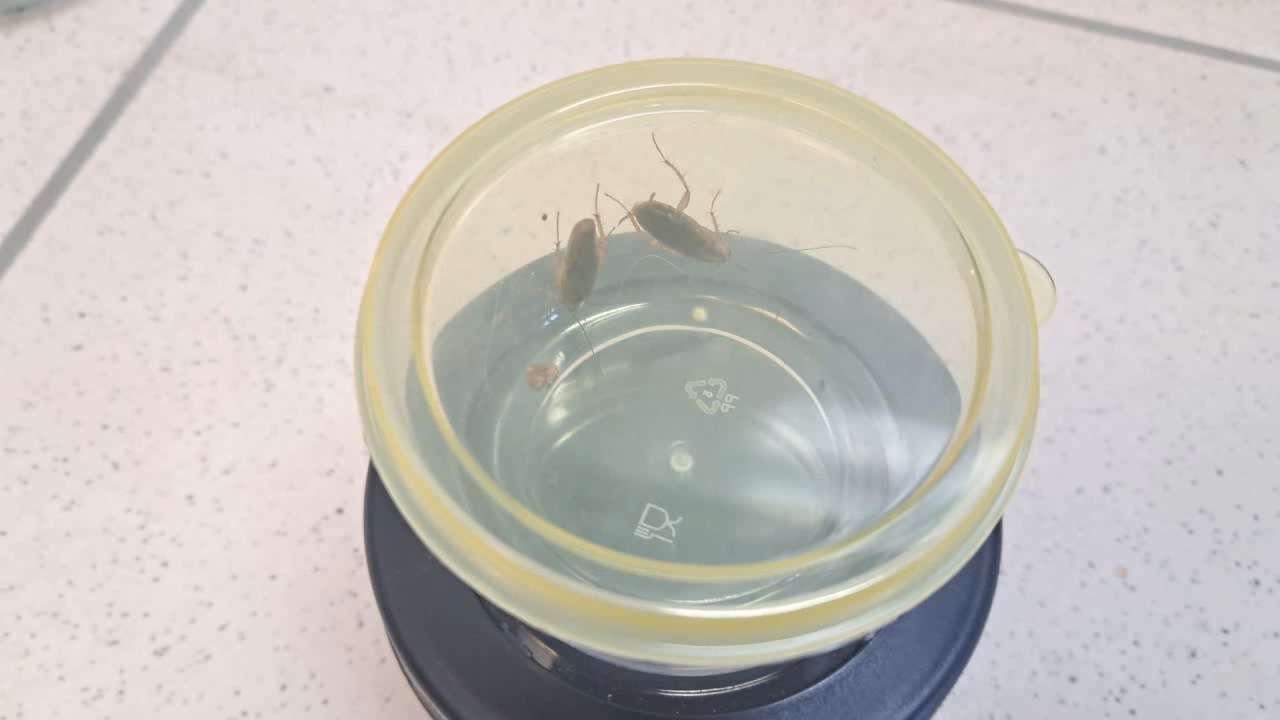
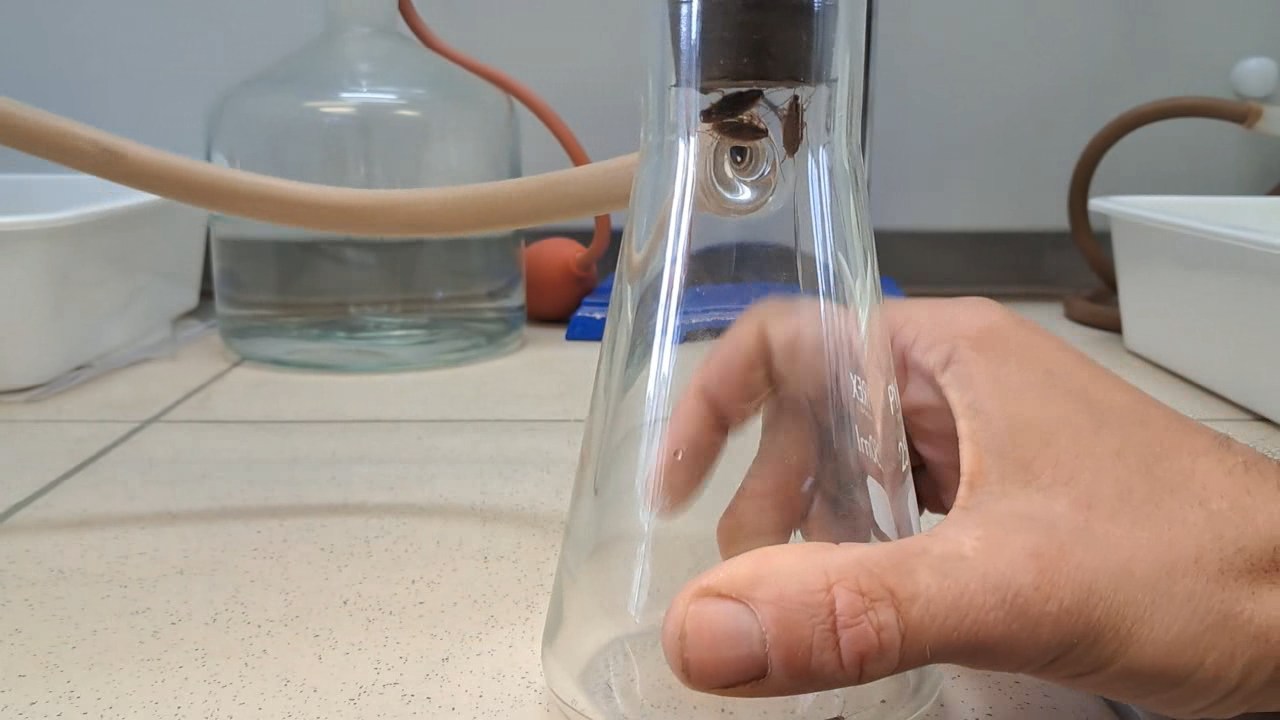
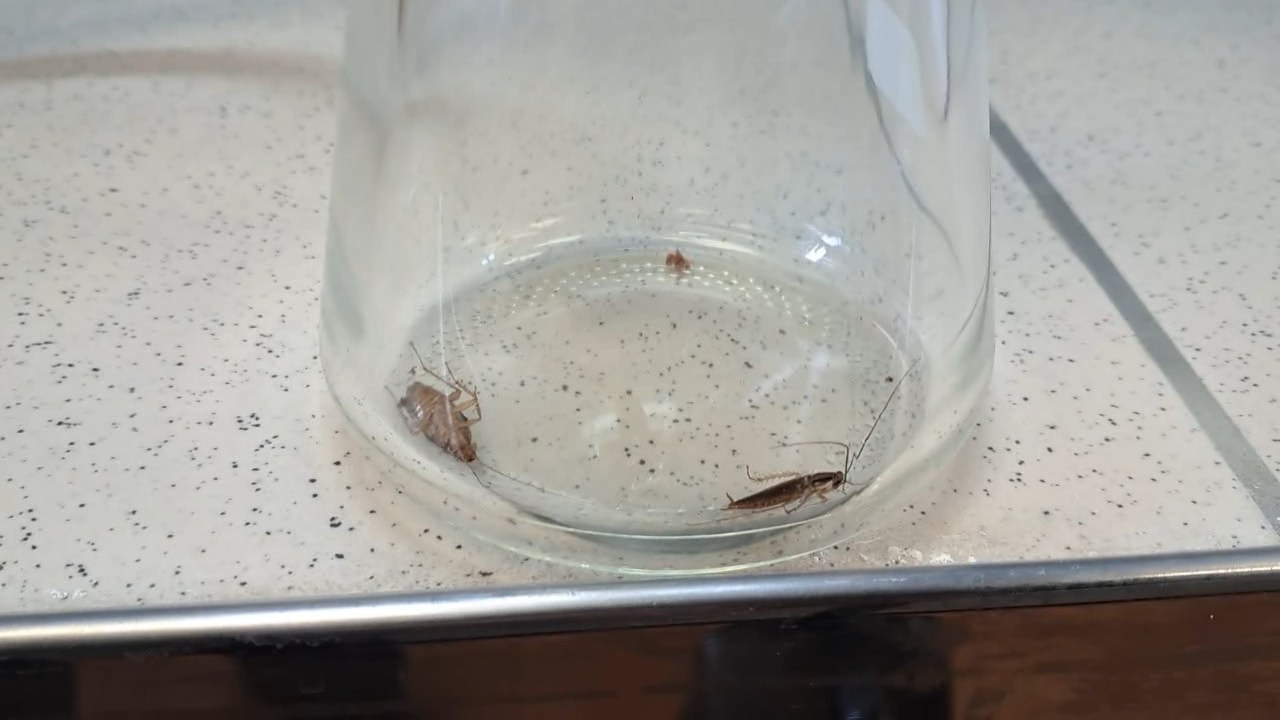
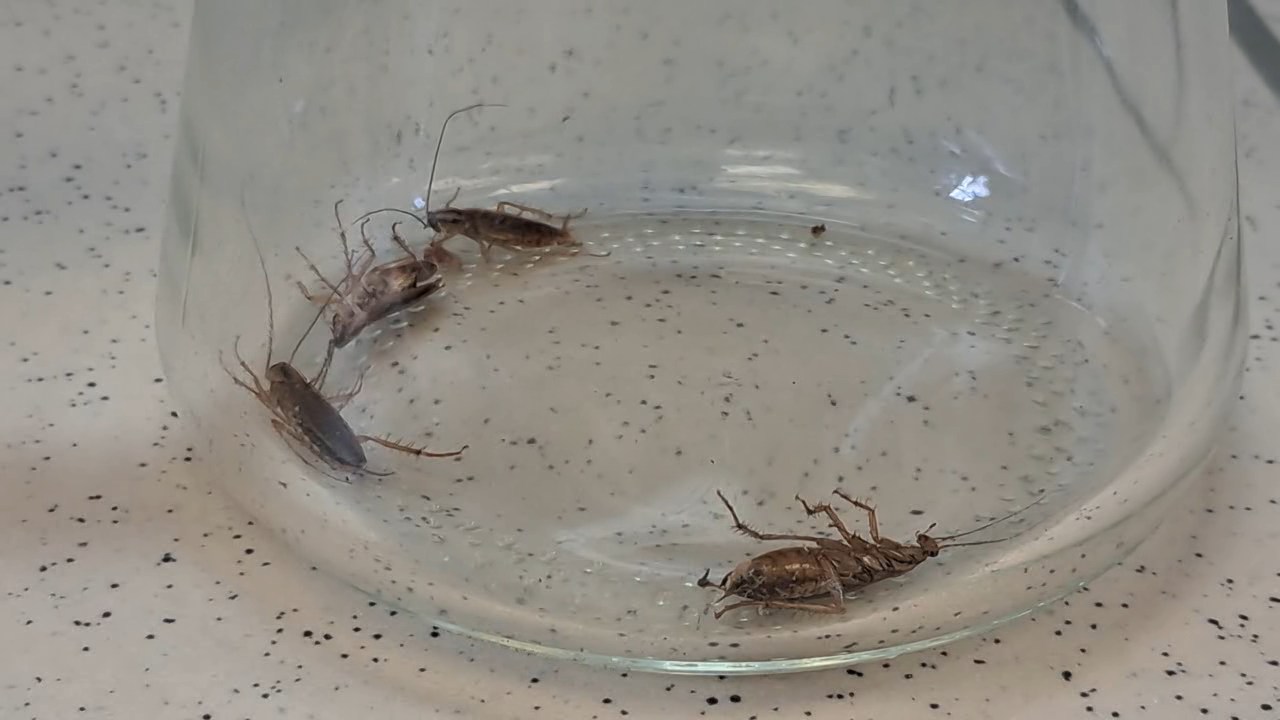
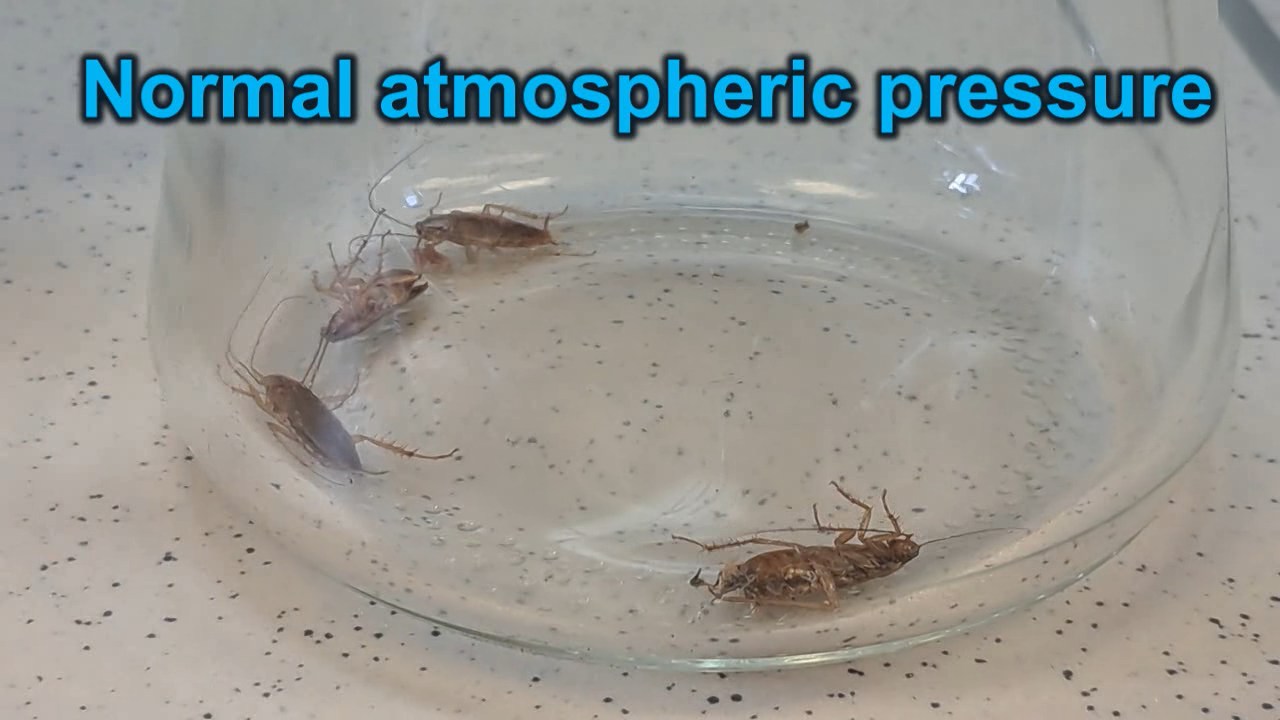
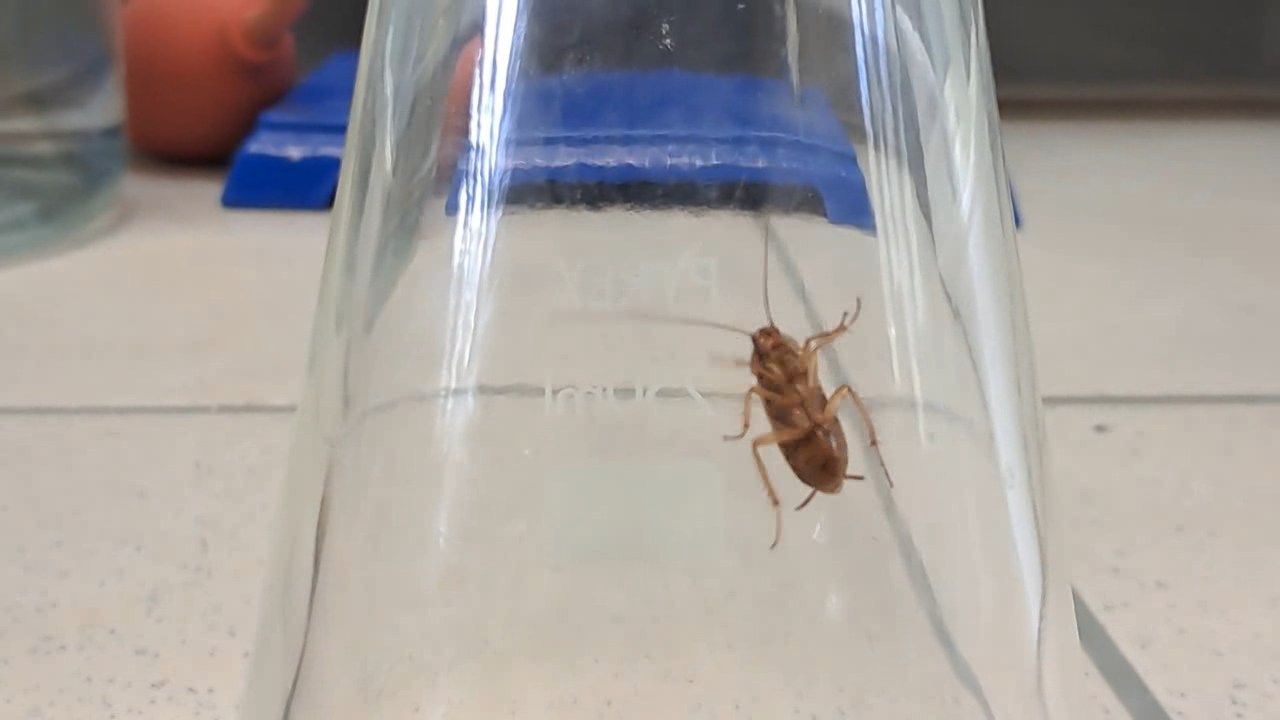
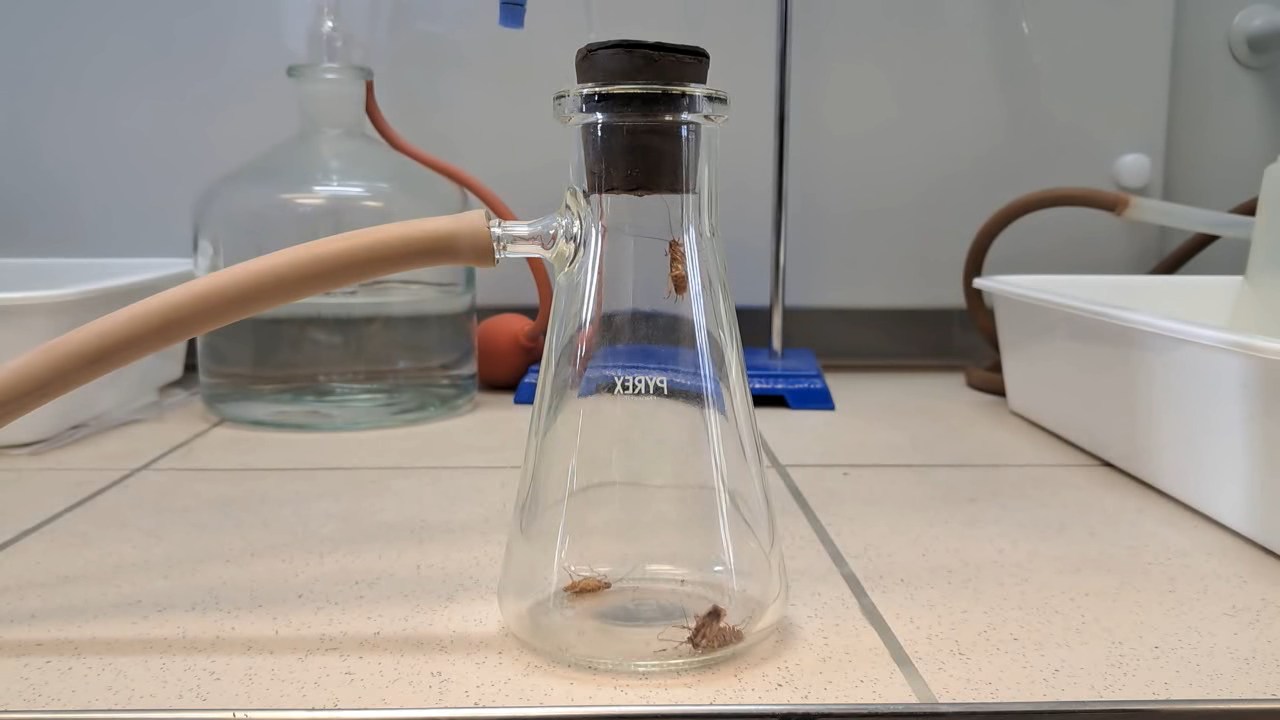
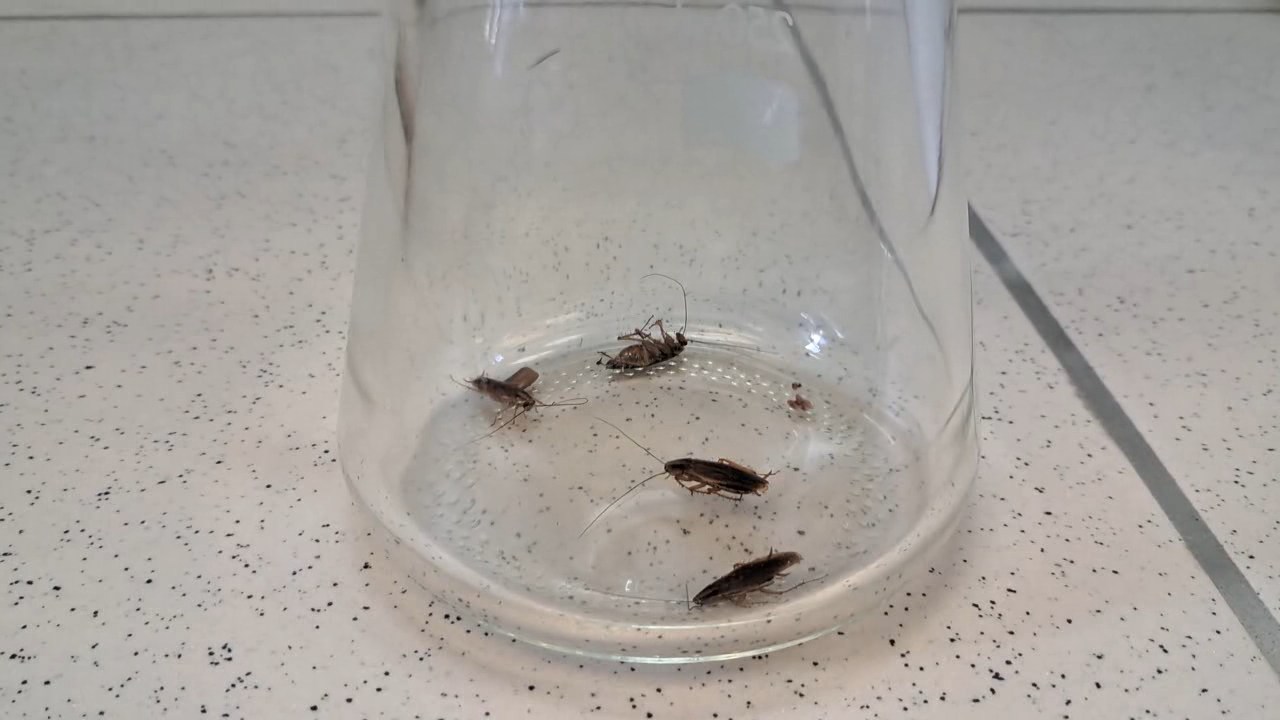
There is plenty of work to be done in our laboratory, but for the past month, we haven't been able to do anything because of ongoing renovations. This situation hardly fosters a productive working atmosphere. When a colleague asked what we needed for our work, I kept my composure and jokingly asked him to bring in some cockroaches for vacuum experiments. However, he took the request seriously and caught four of them.

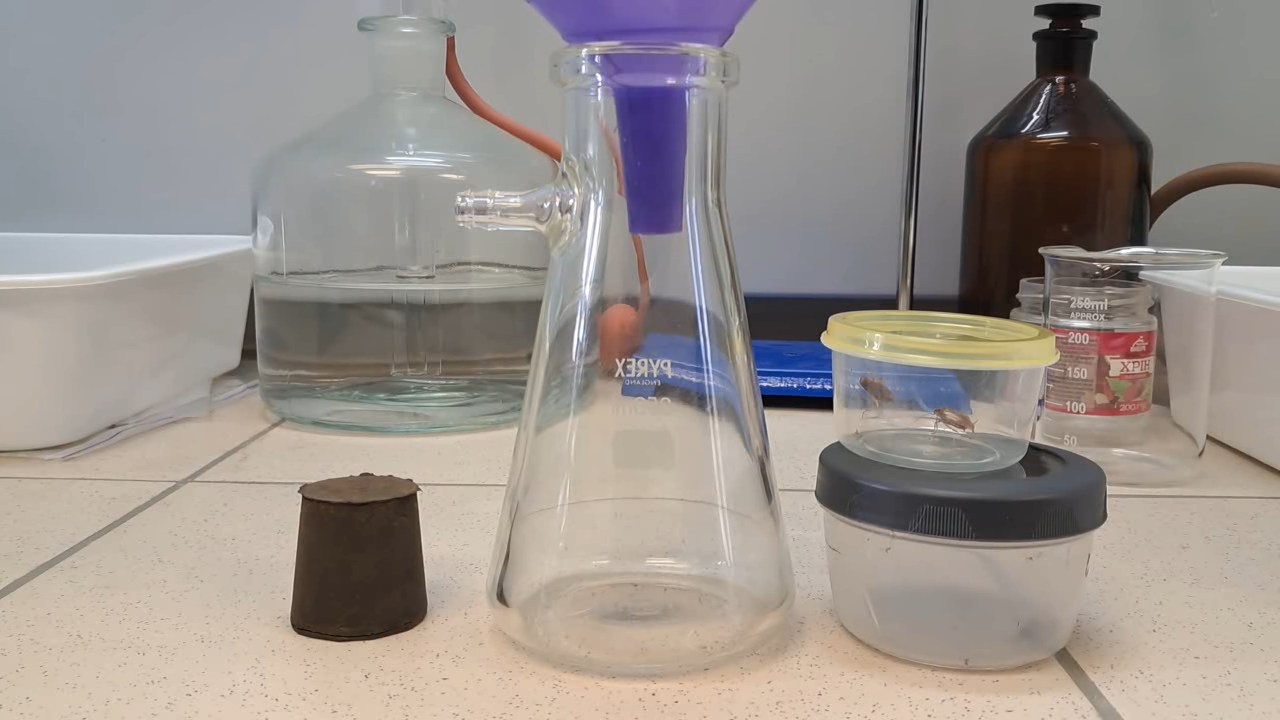
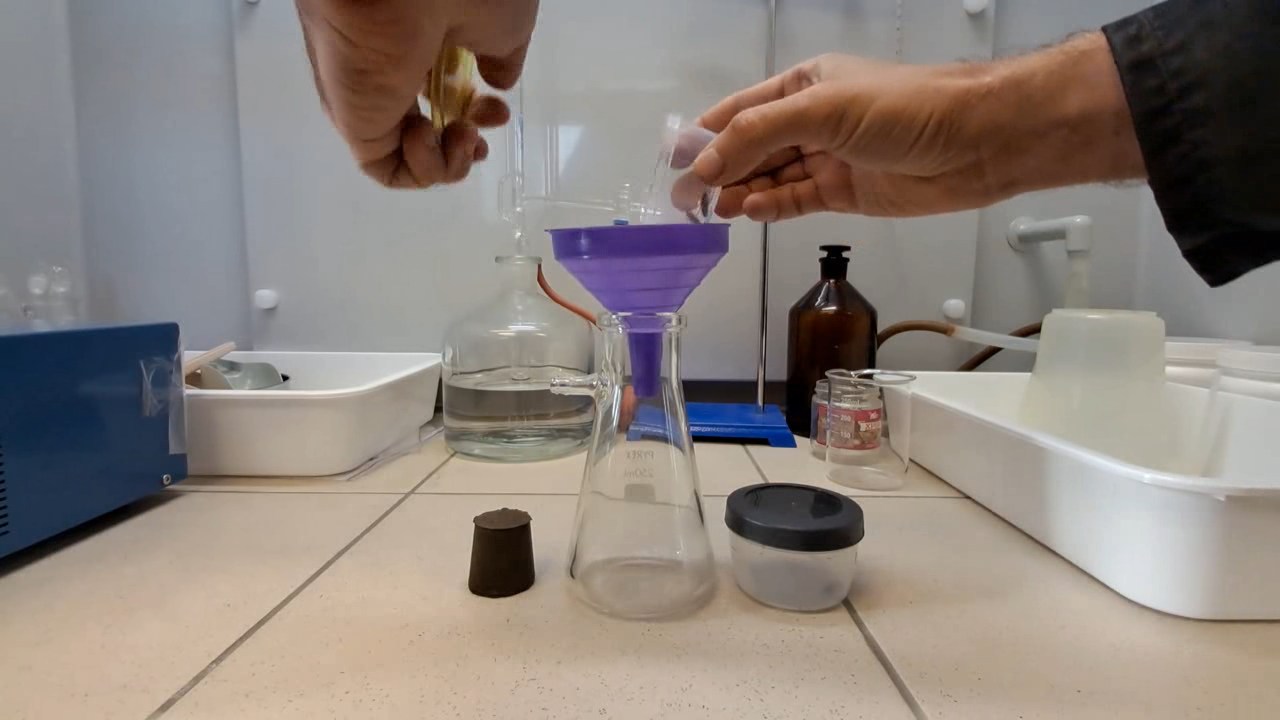
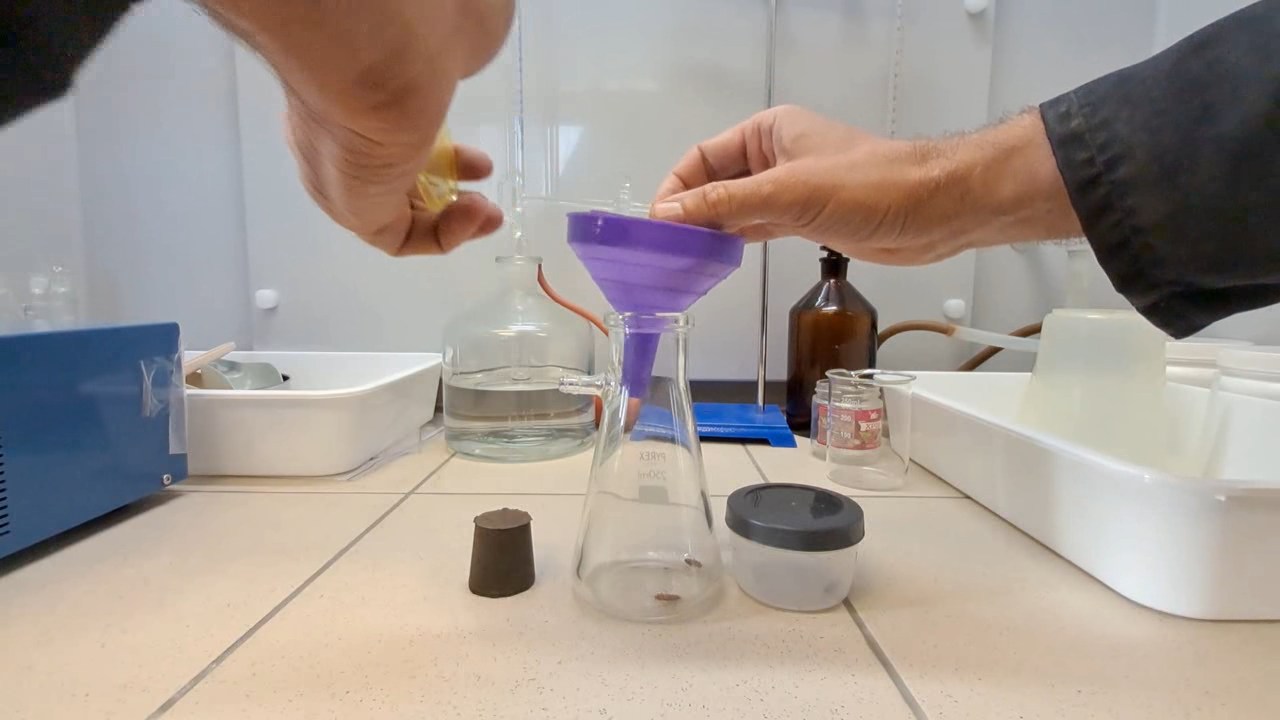
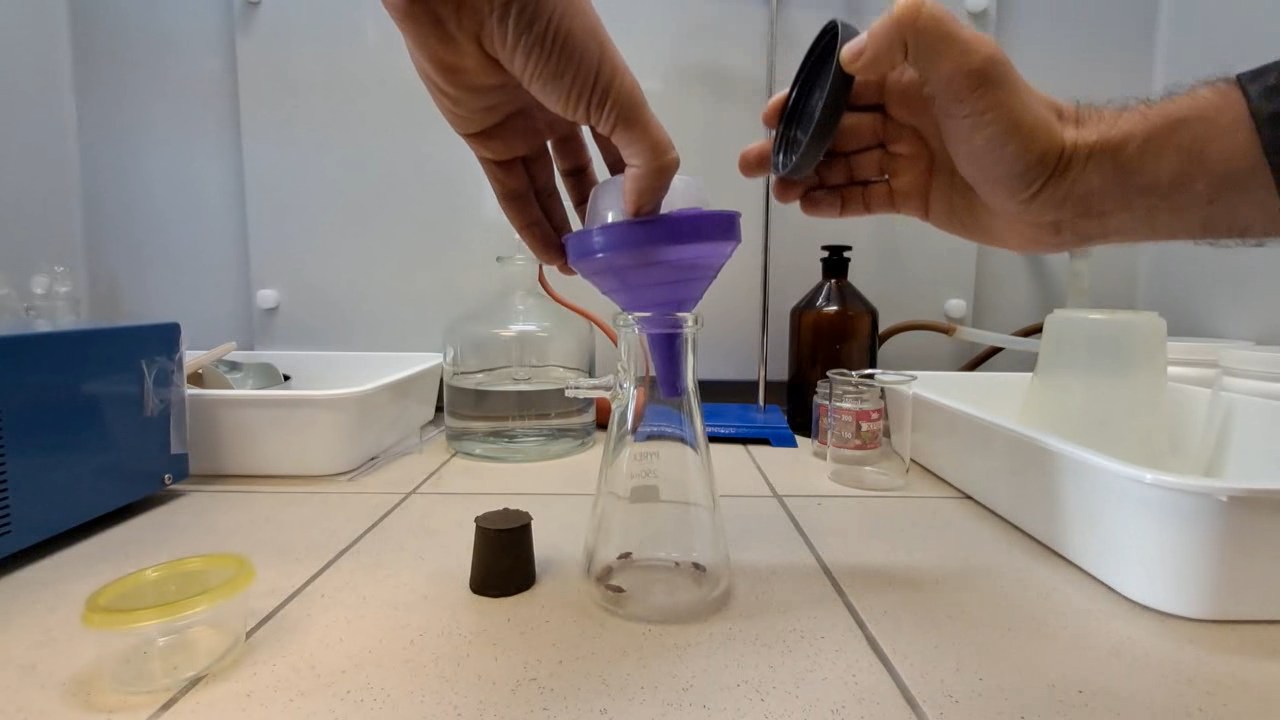
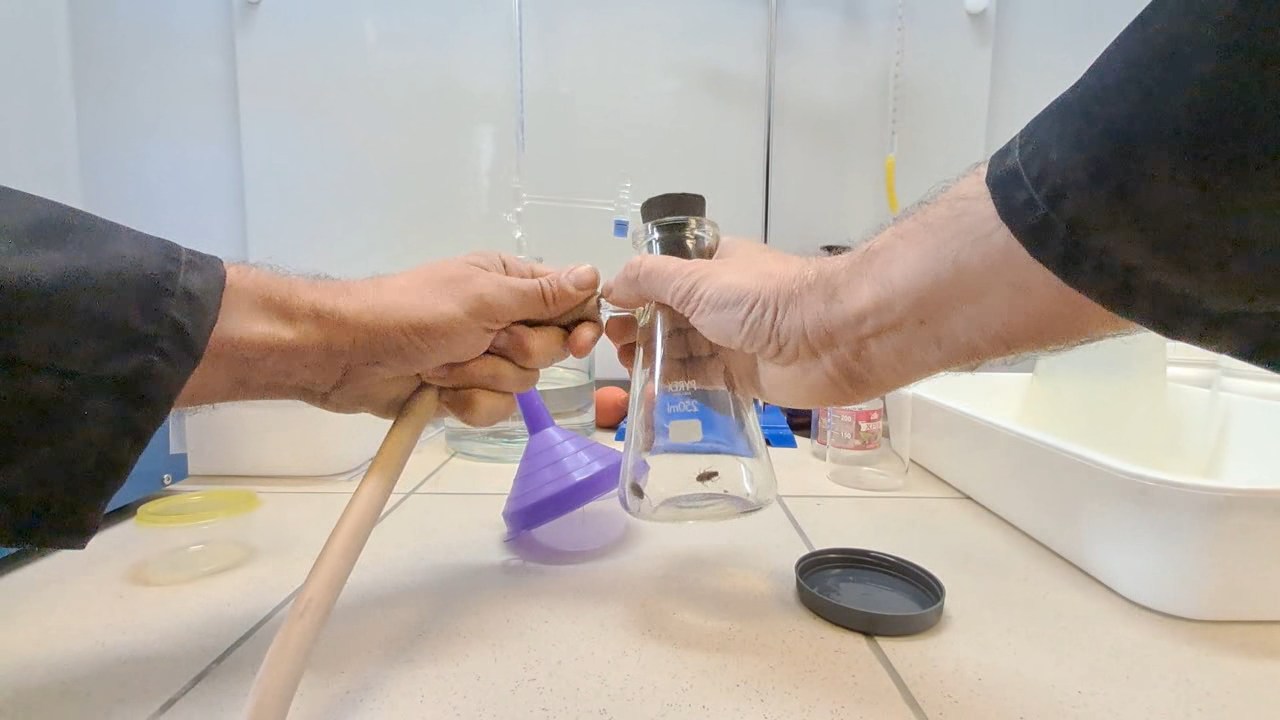
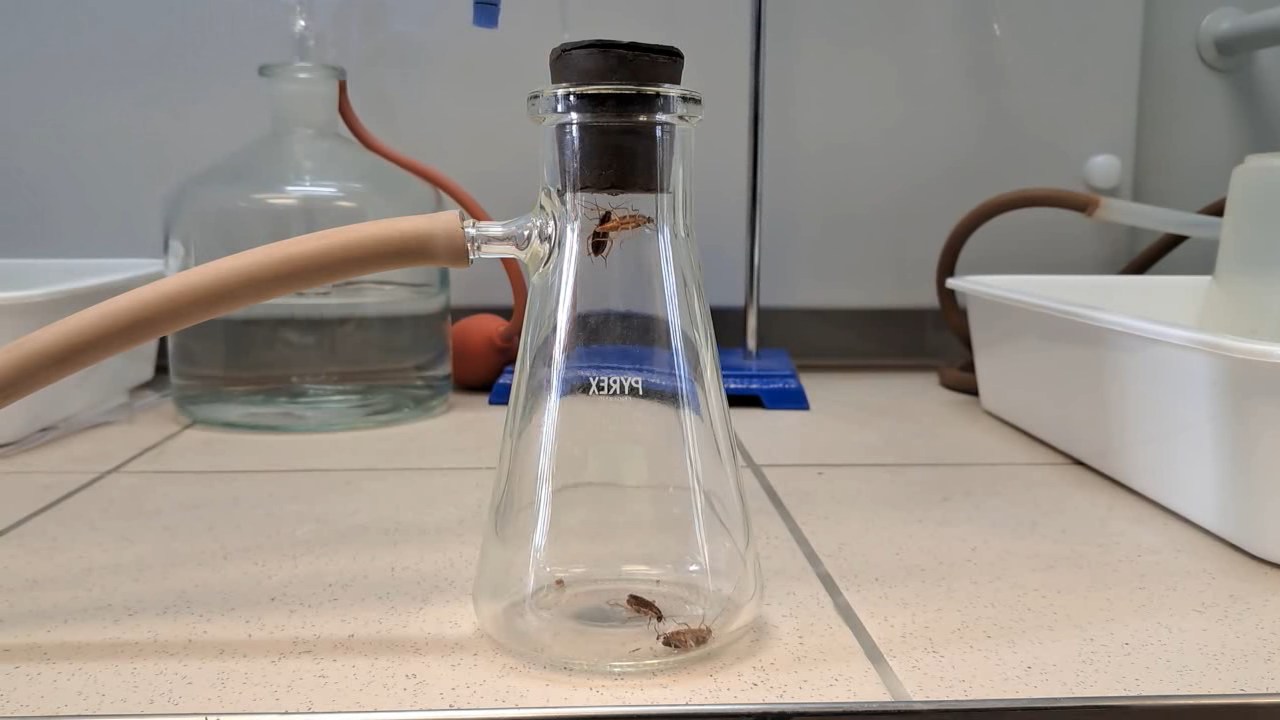
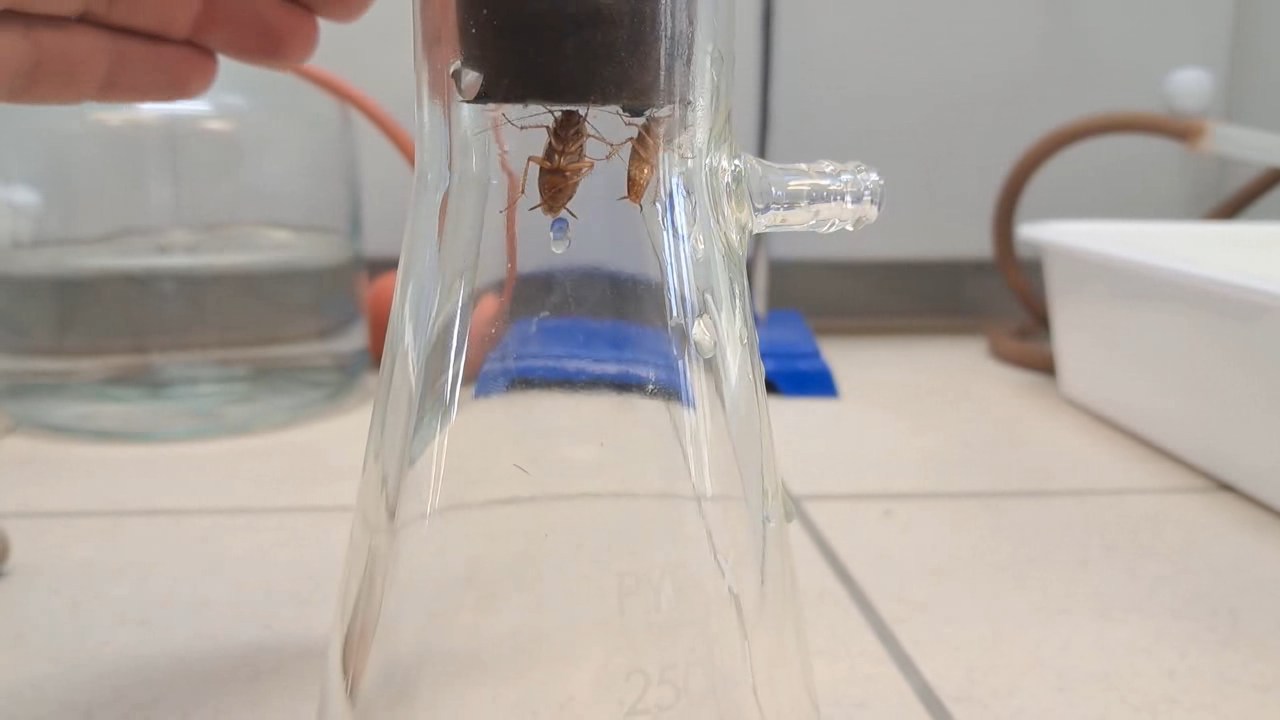
Cockroach experiments can be conducted even while the laboratory is under renovation. I carefully placed the cockroaches into a Büchner flask, taking care not to let the creatures escape. The prospect of a cockroach infestation in the laboratory appealed to me even less than the renovation work itself.

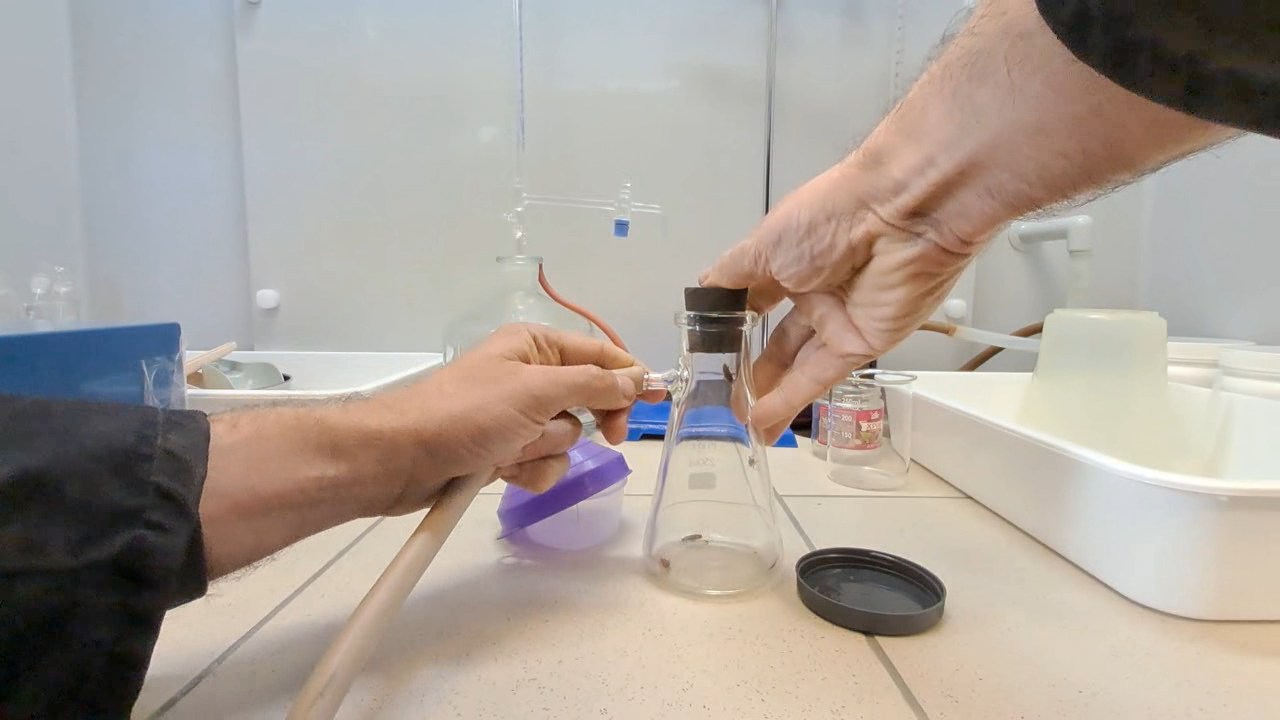
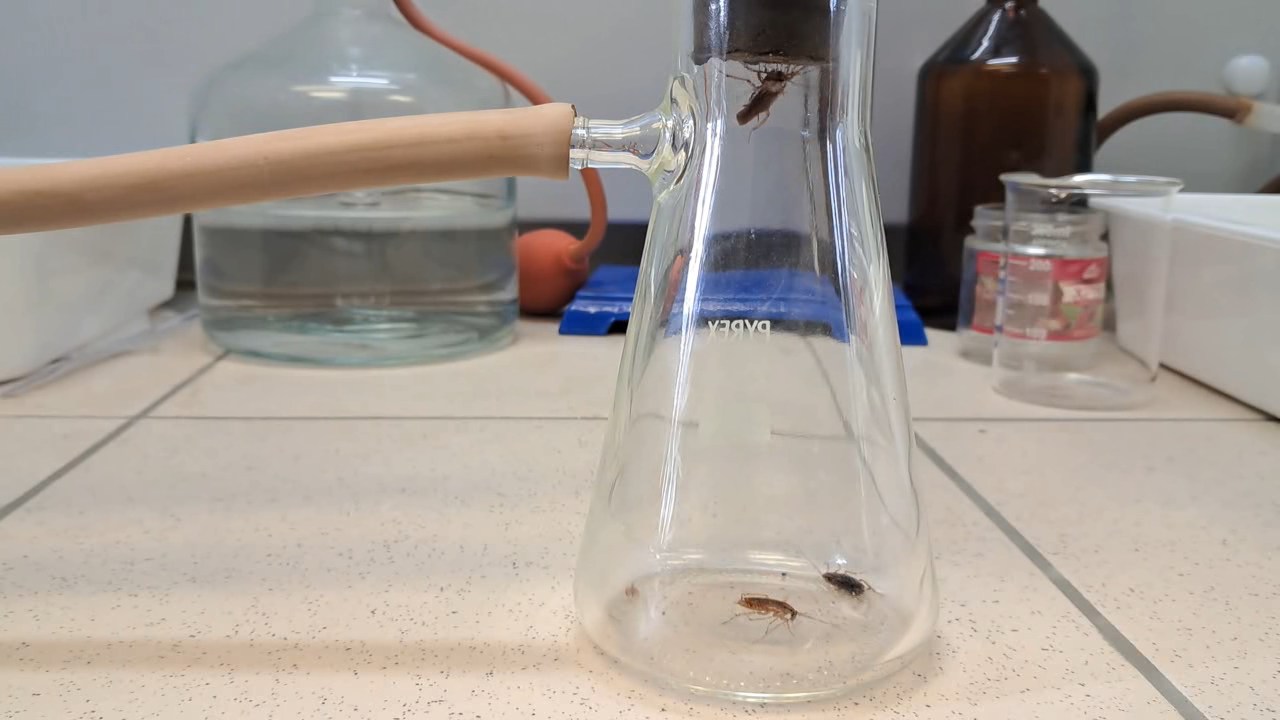
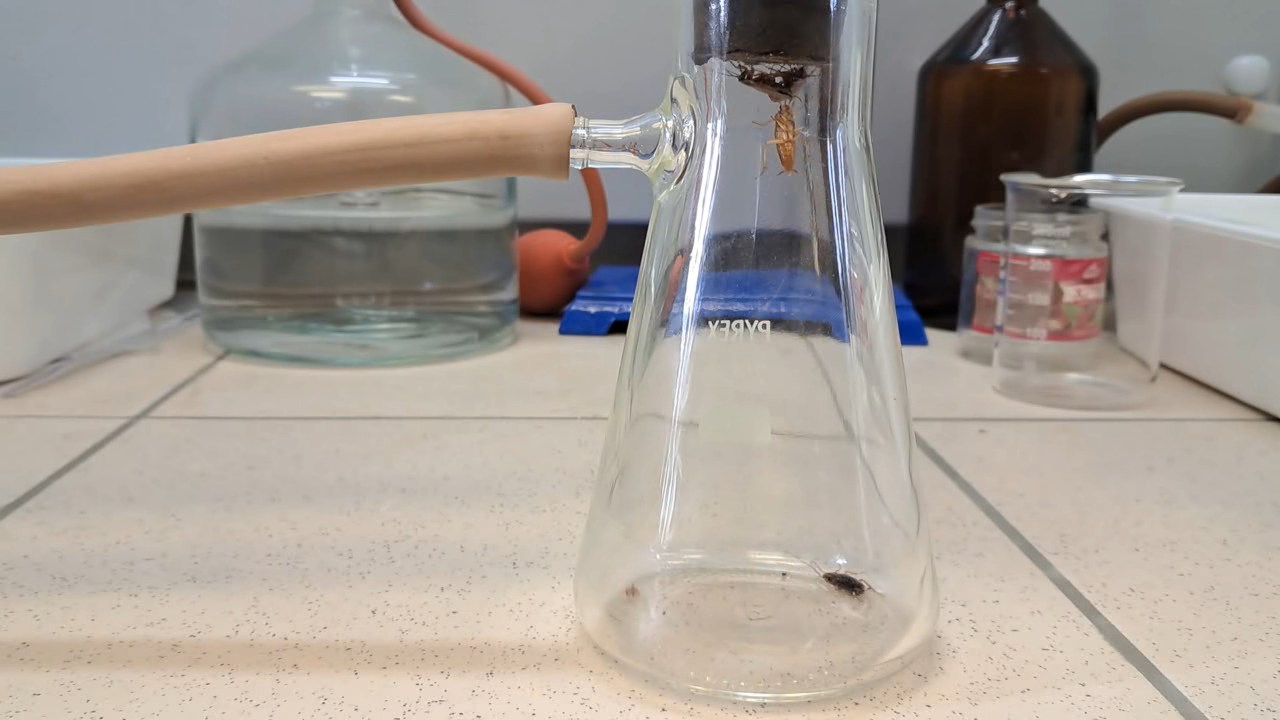
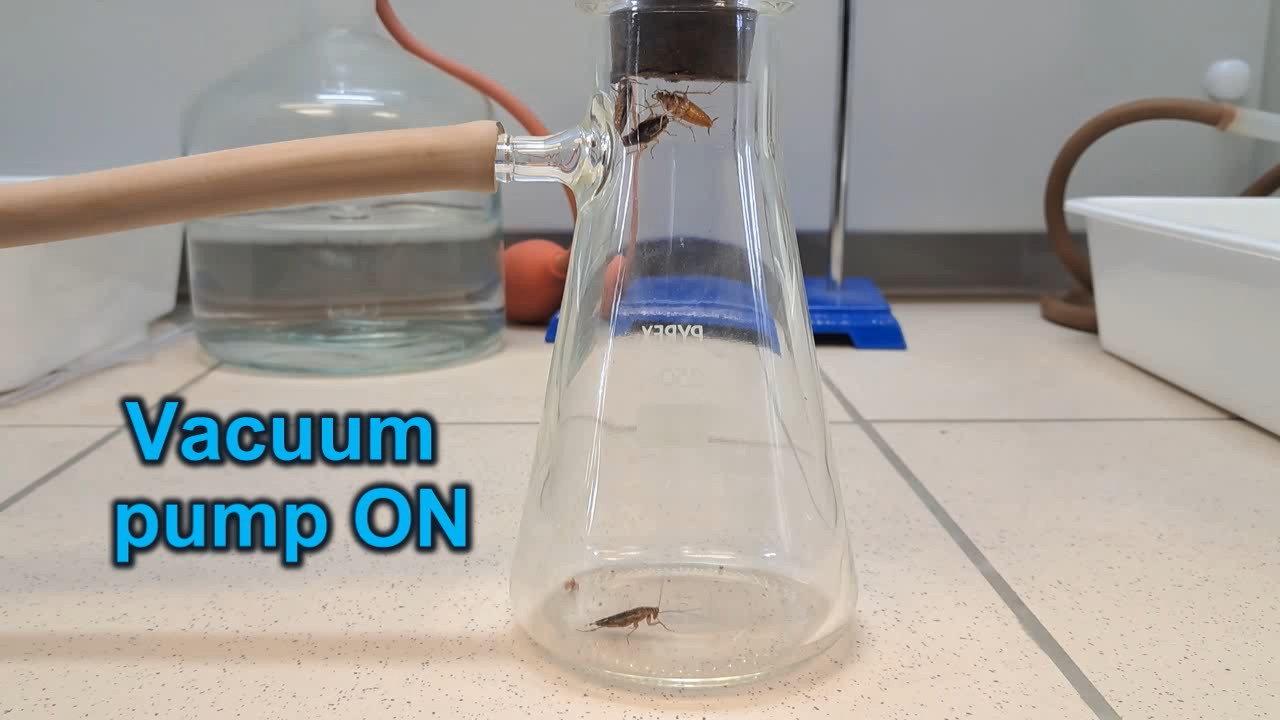
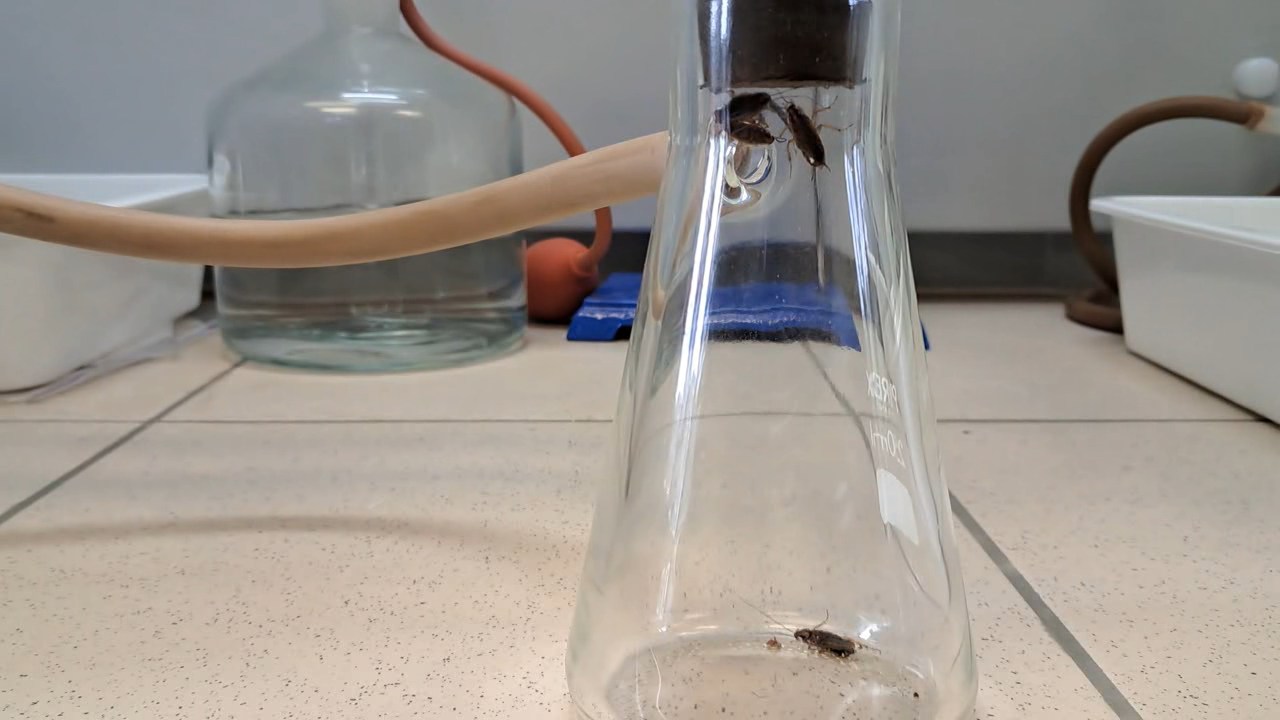
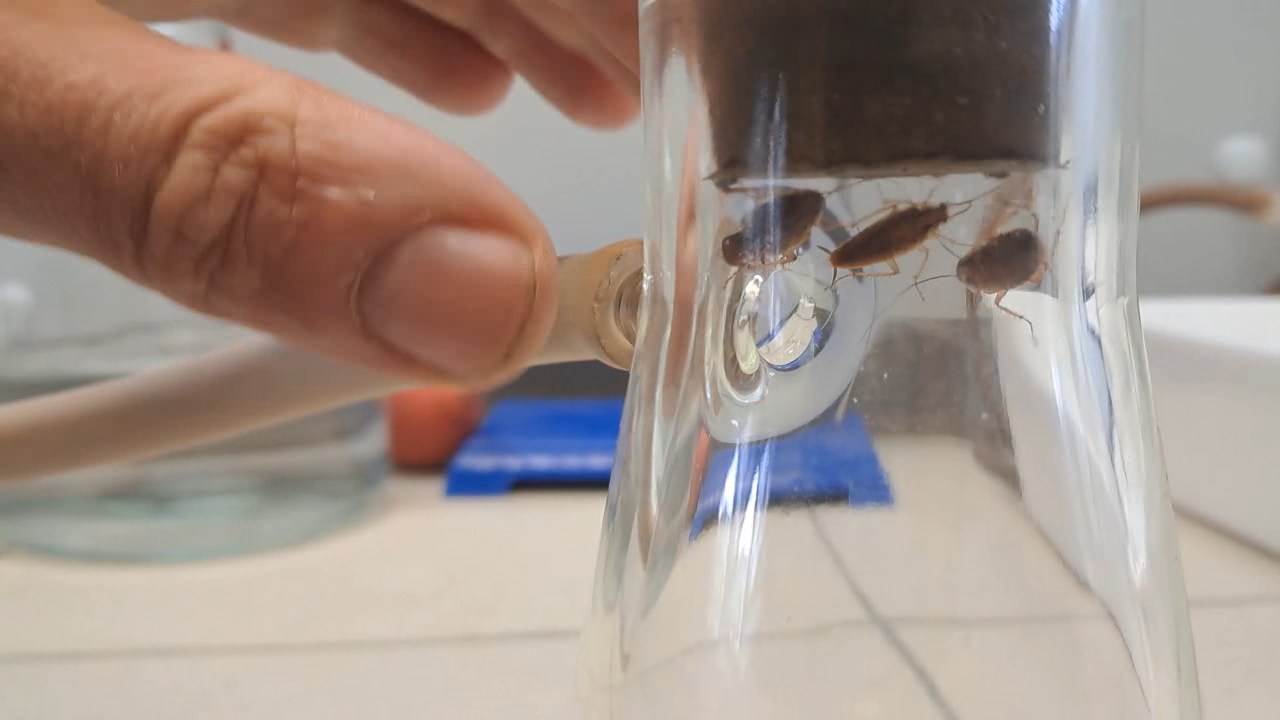
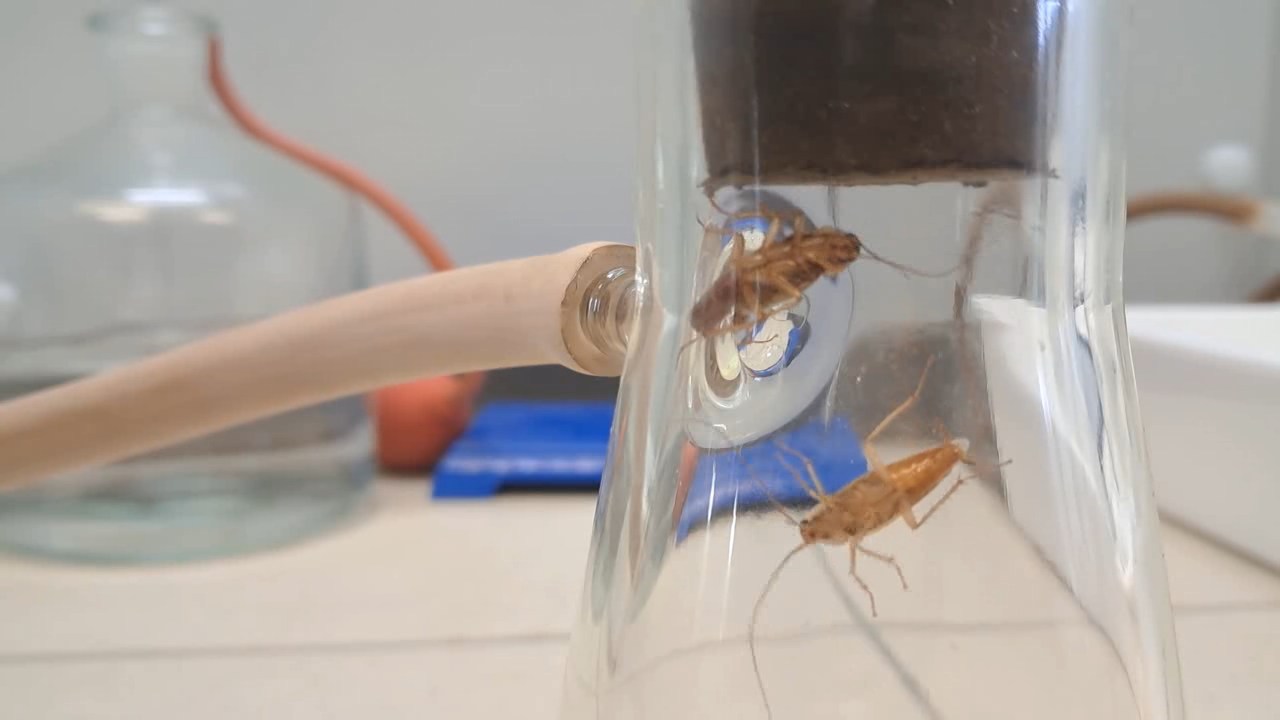
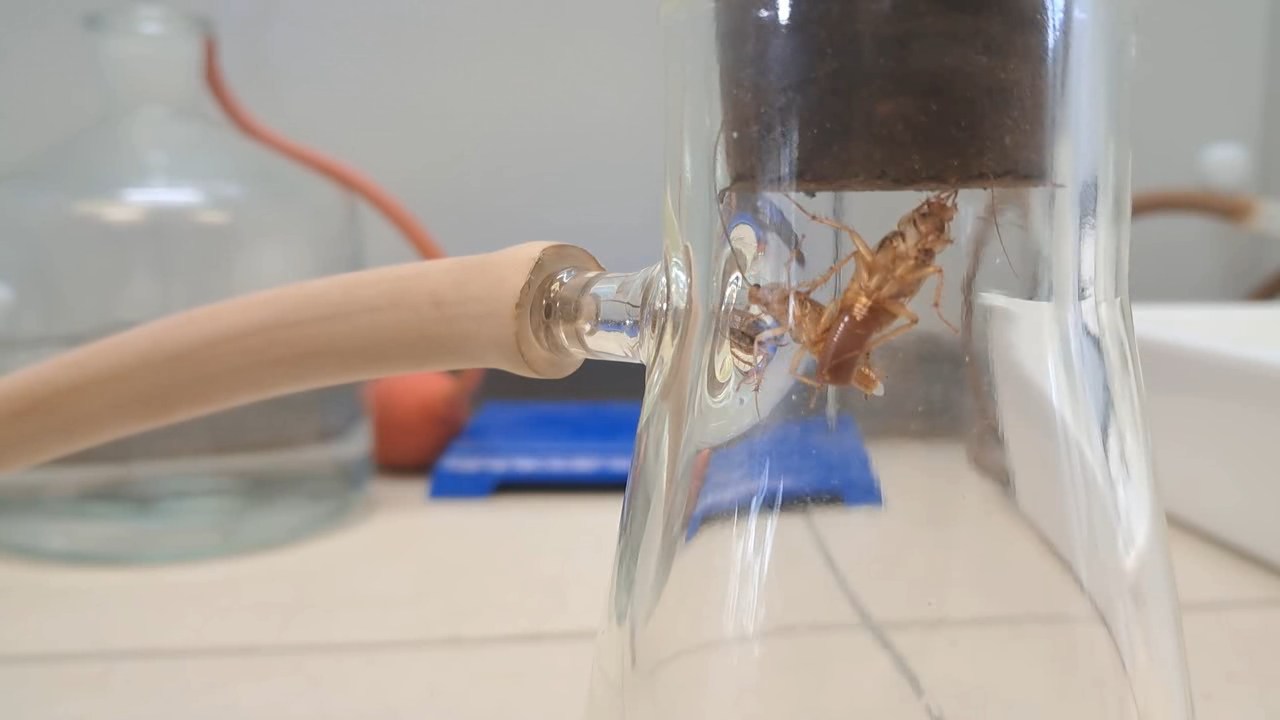
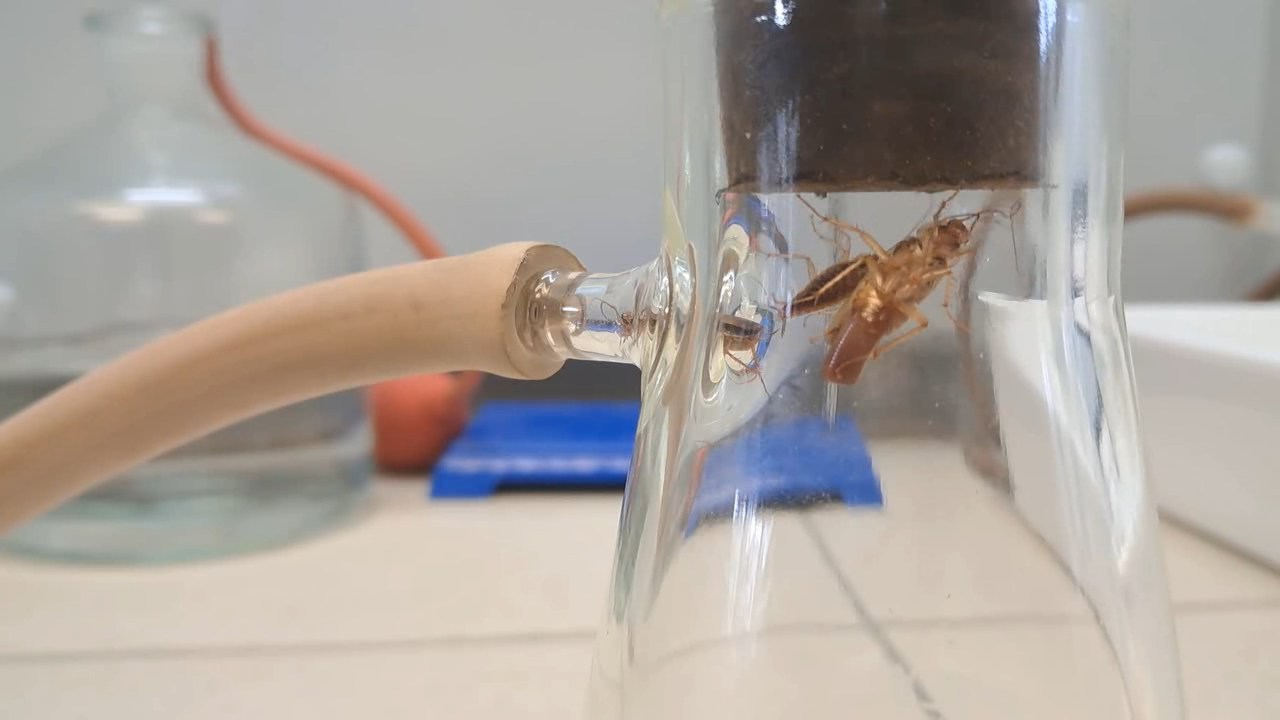
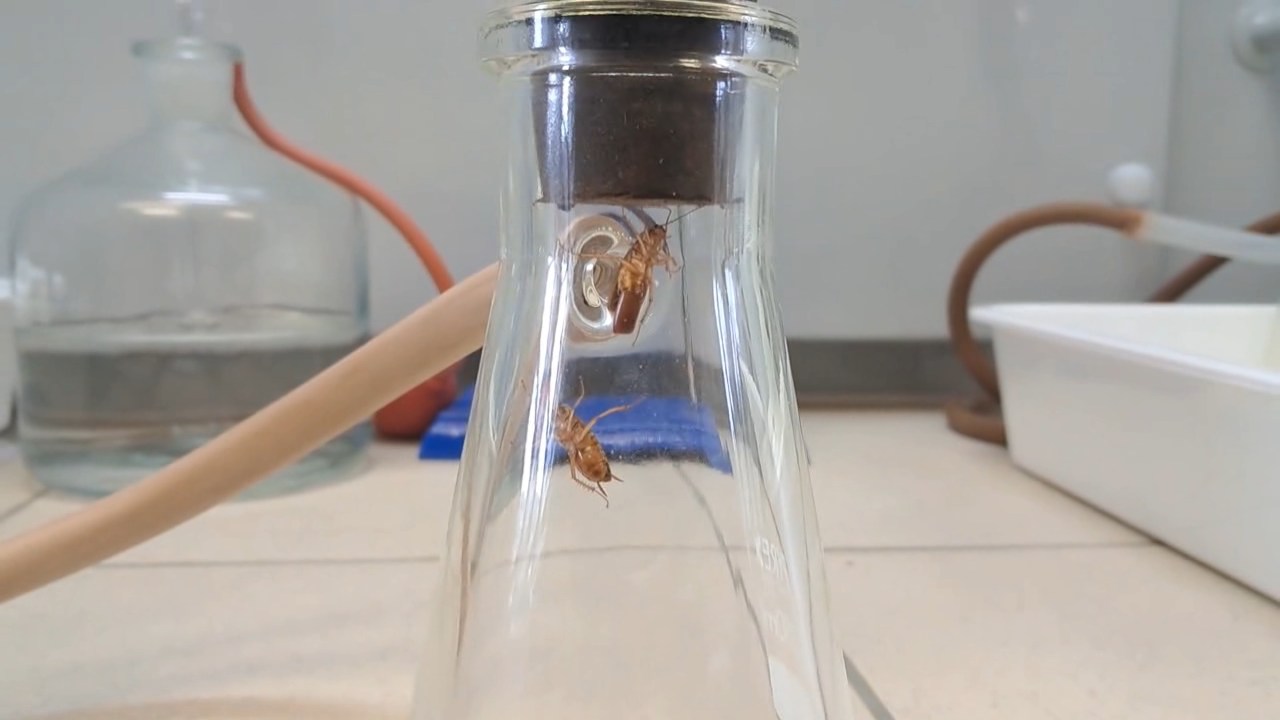
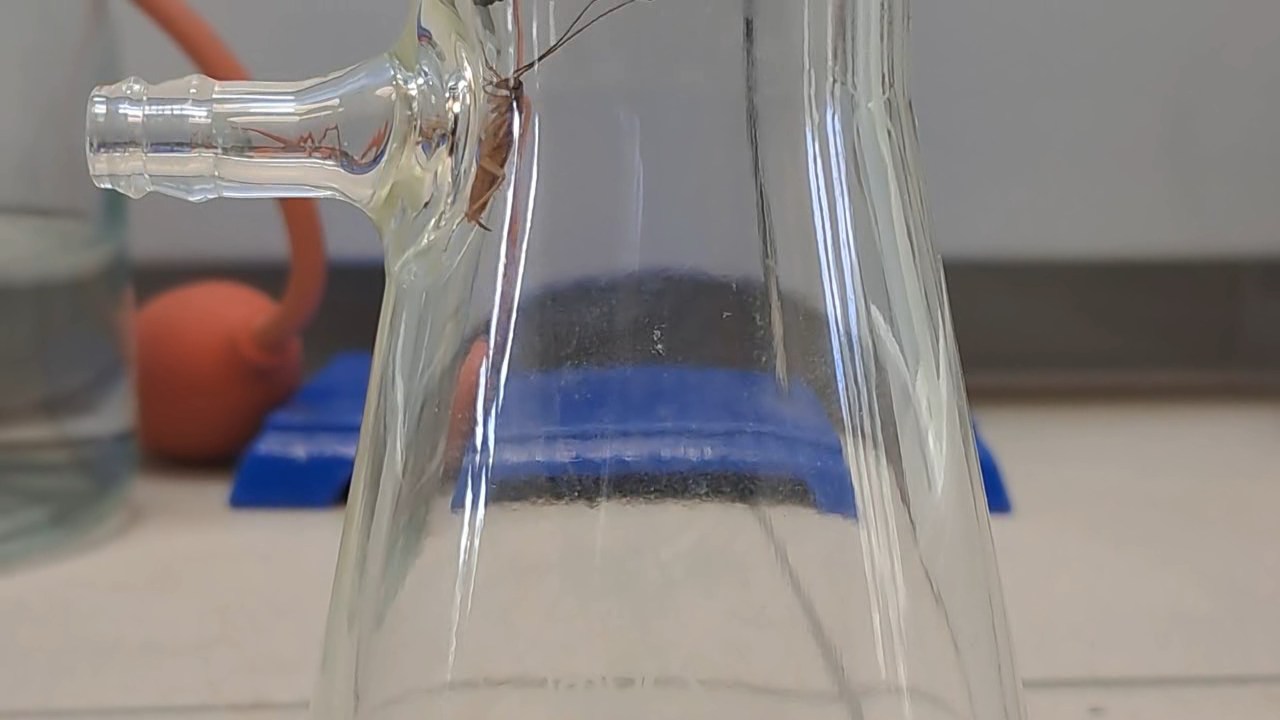
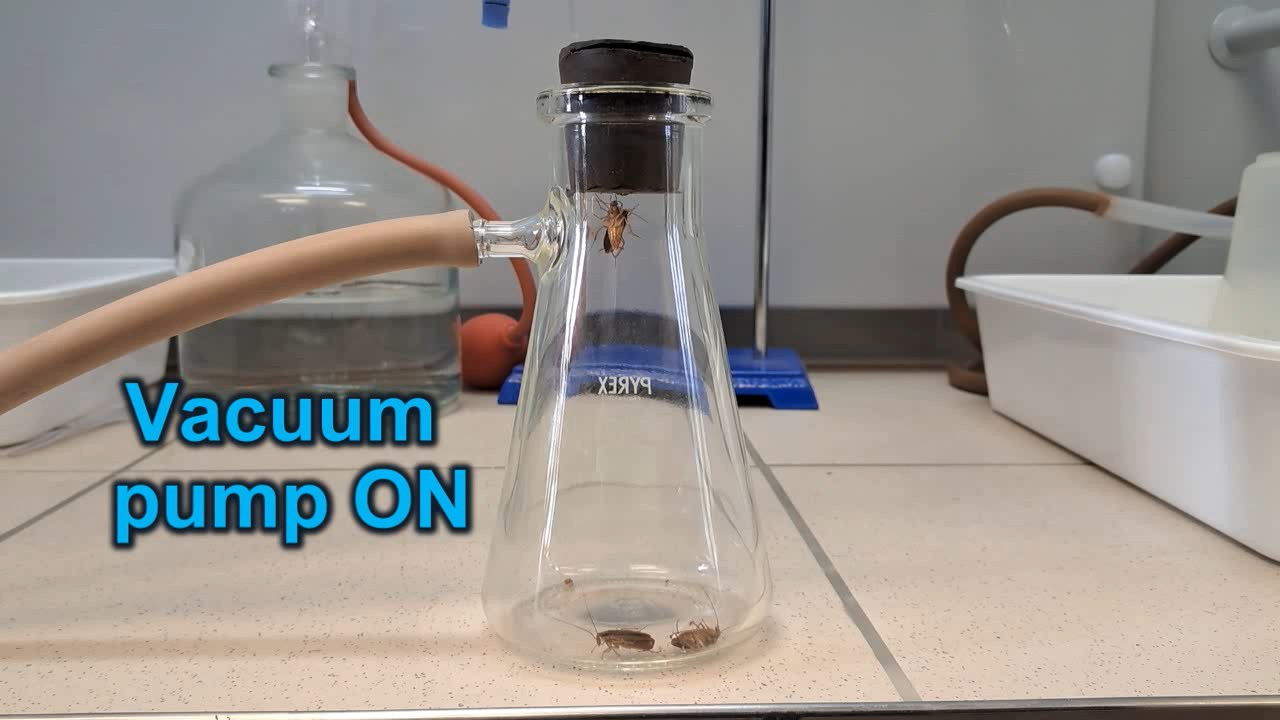
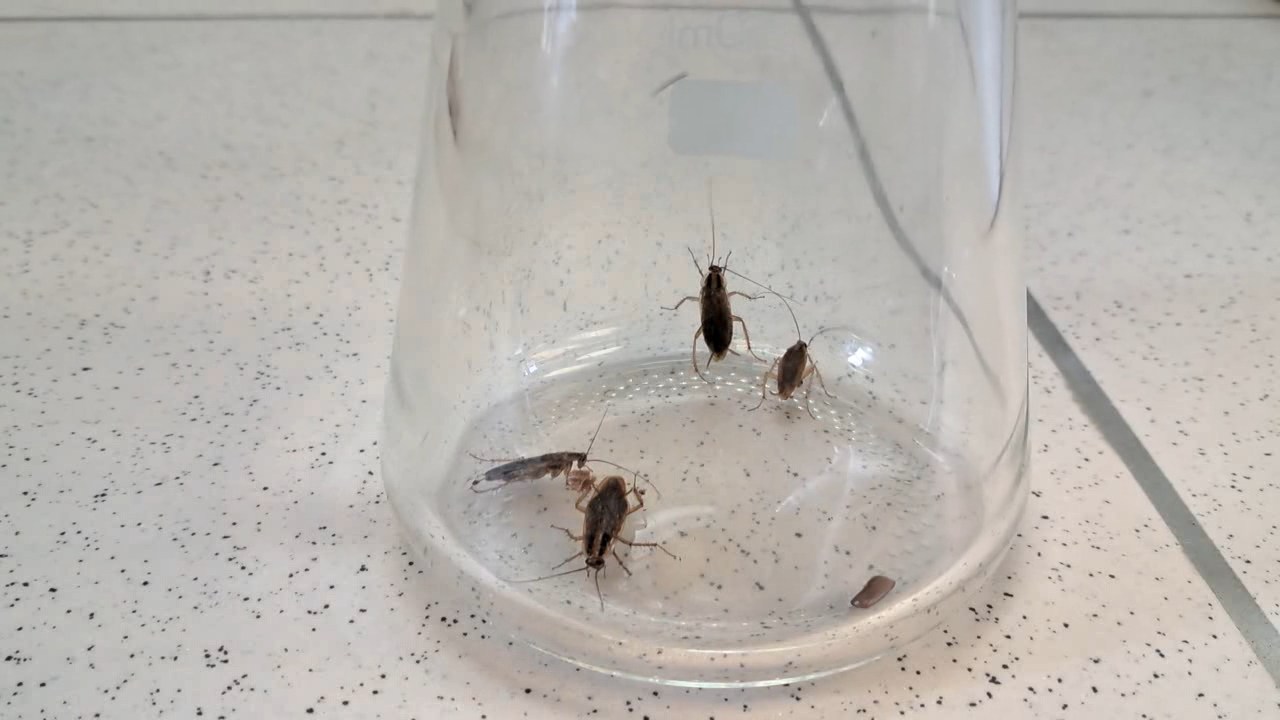
The cockroaches scurried actively inside the flask, clearly settling into their new quarters. They soon gathered near the stopper at the top of the flask. Recalling the incident with the flies, I quickly attached the vacuum hose to the flask's side arm - to prevent the insects from escaping - and switched on the diaphragm vacuum pump.

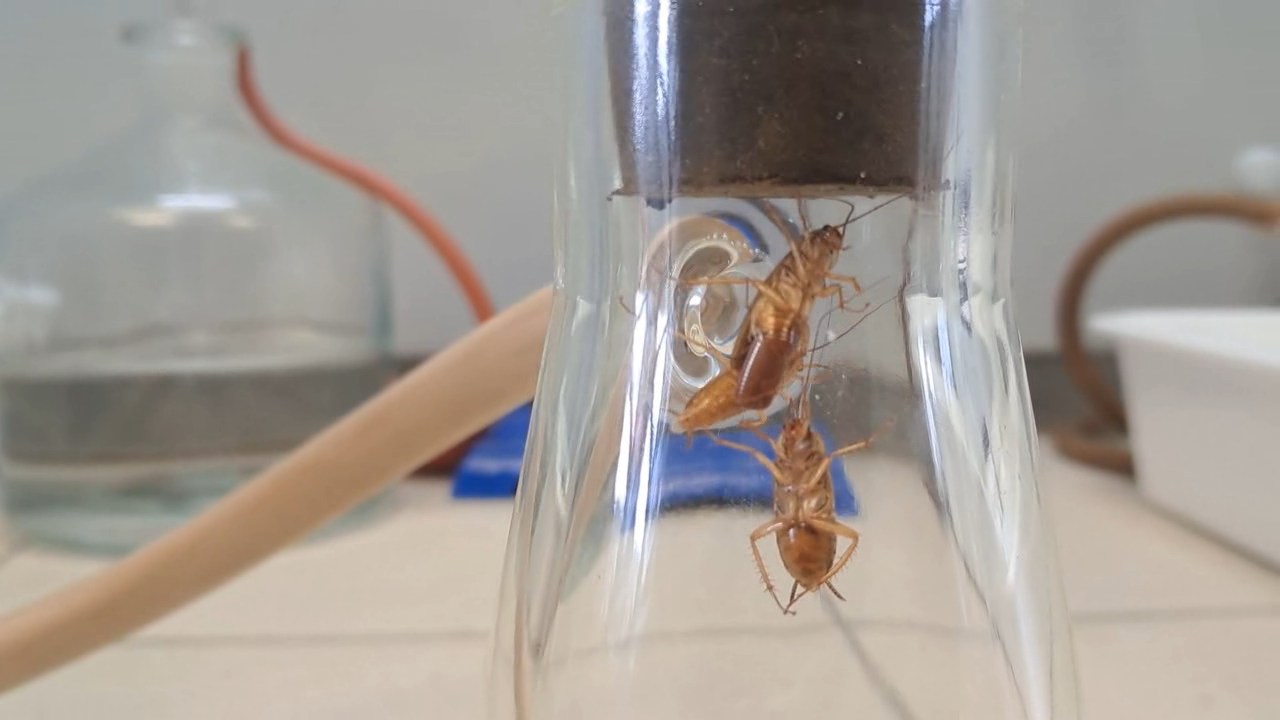
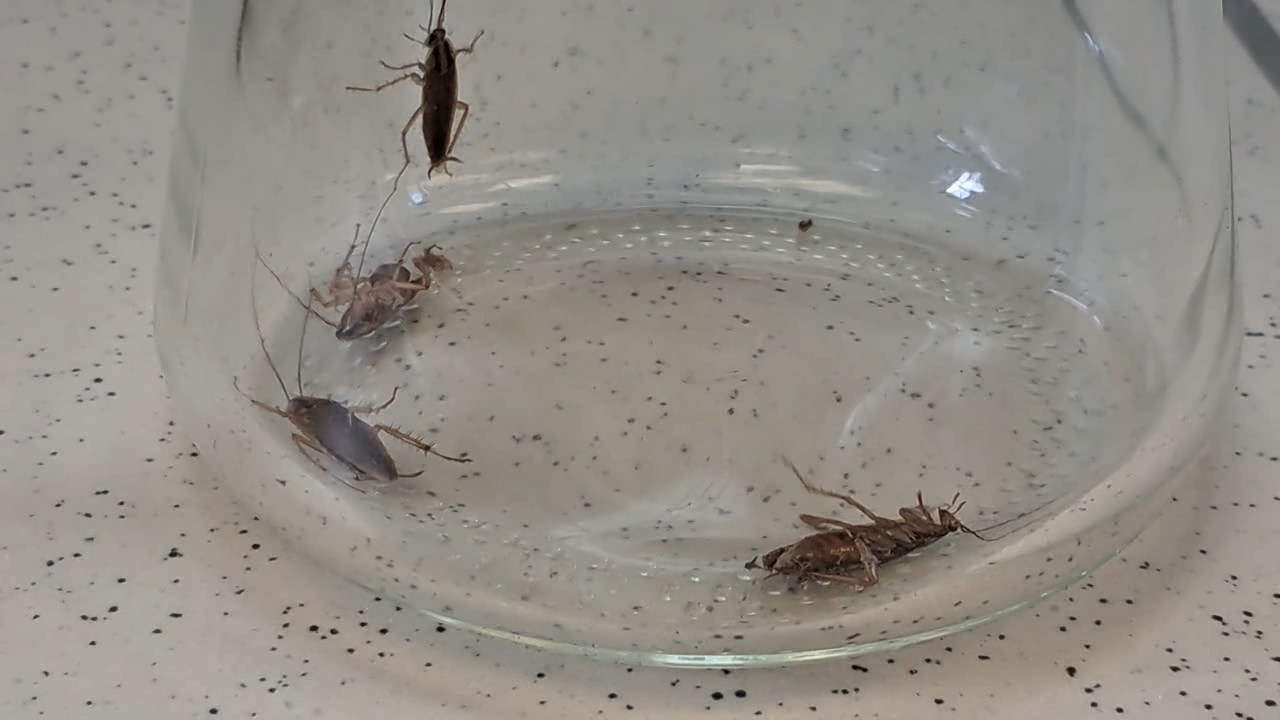
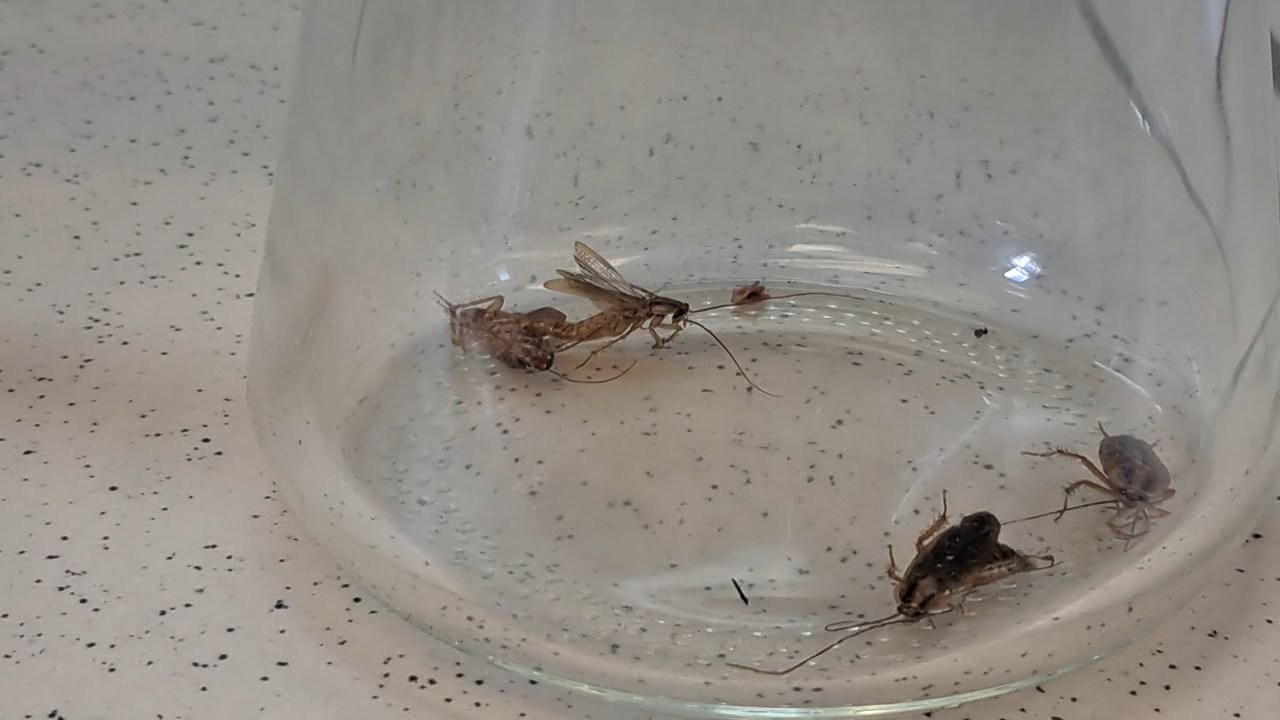
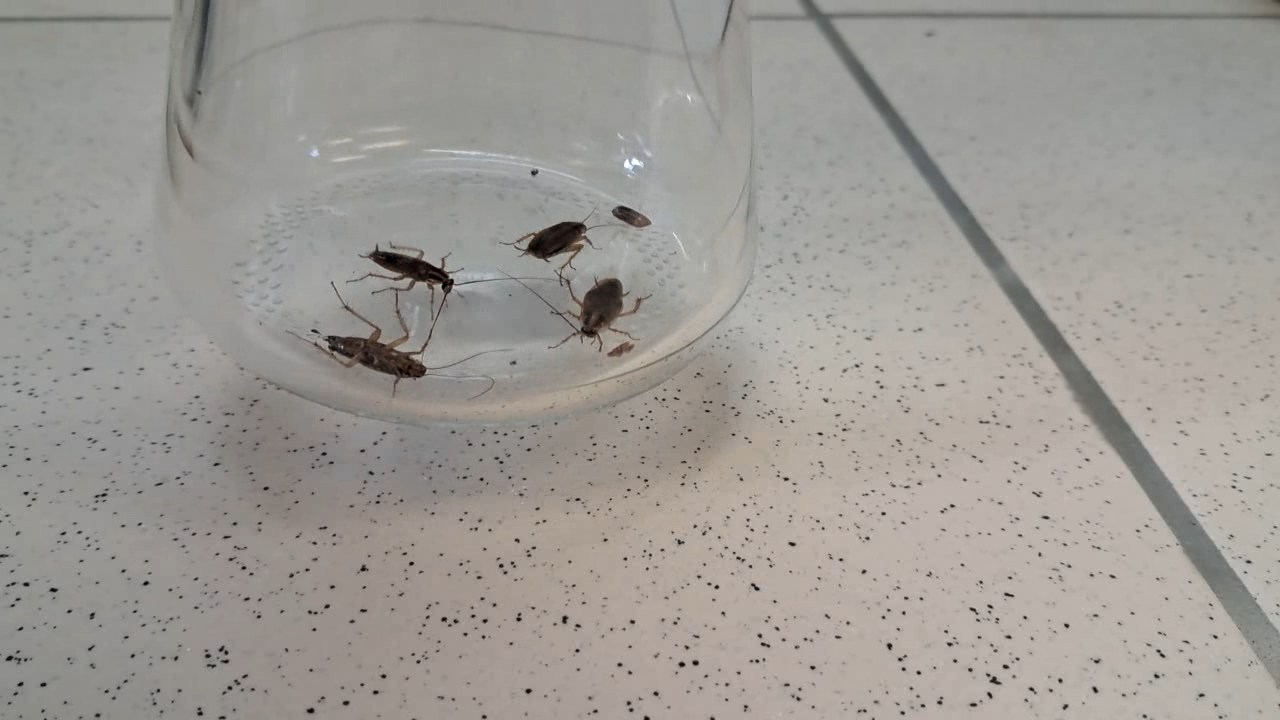
Unlike flies or wasps, the cockroaches were largely unimpressed by the operation of the vacuum pump. Even after a minute under vacuum, most of them continued to move sluggishly along the flask's walls and bottom or remained motionless on the vertical sides. Only one of the four fell to the bottom and flipped onto its back, yet even it continued to twitch its antennae and legs.

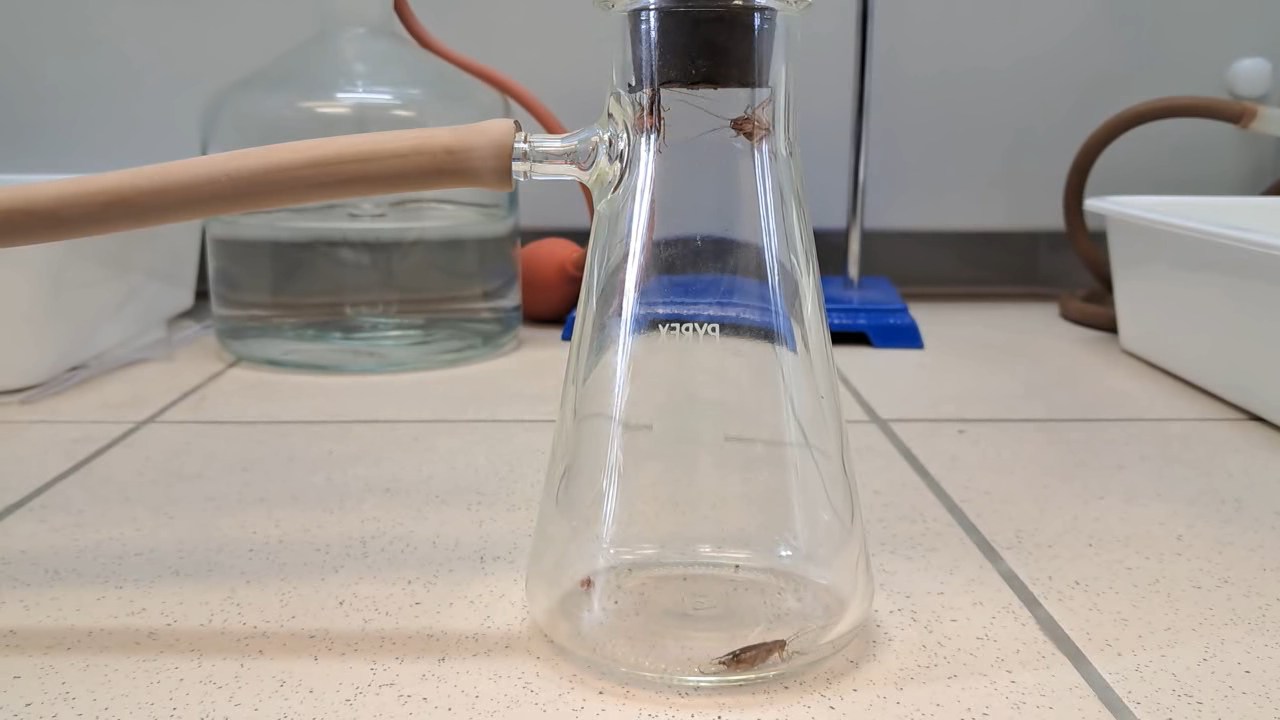
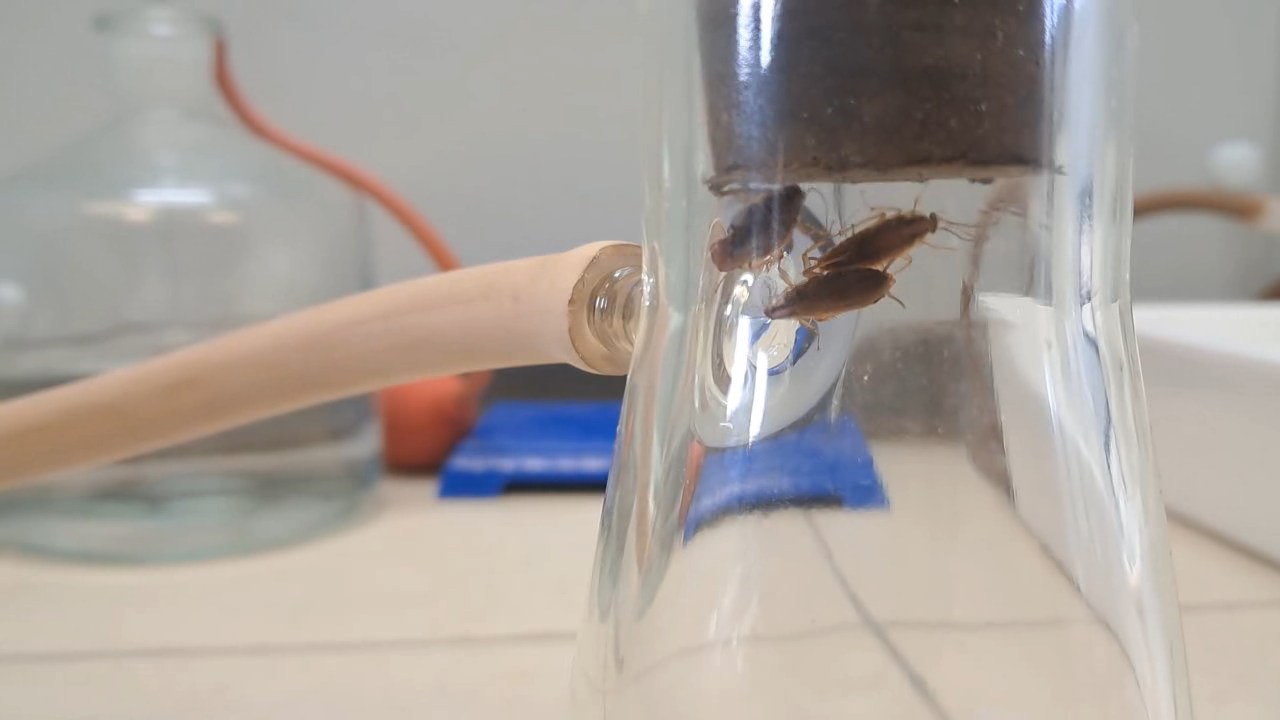
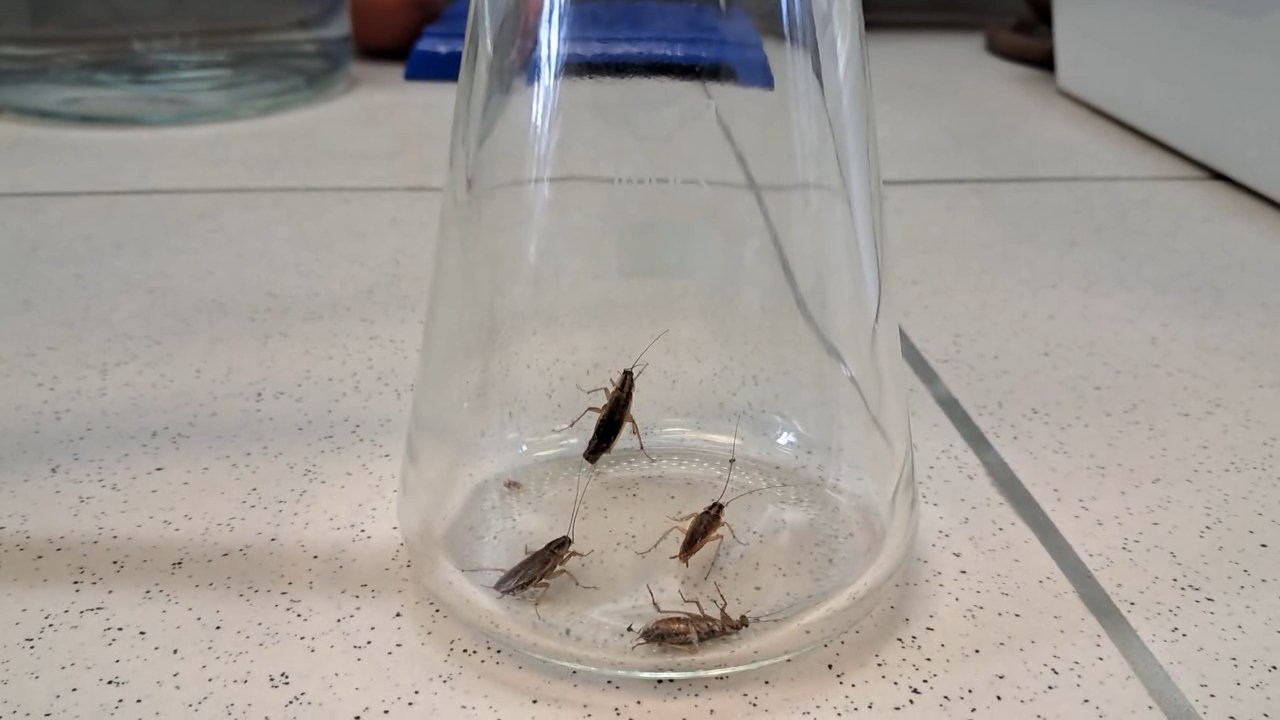
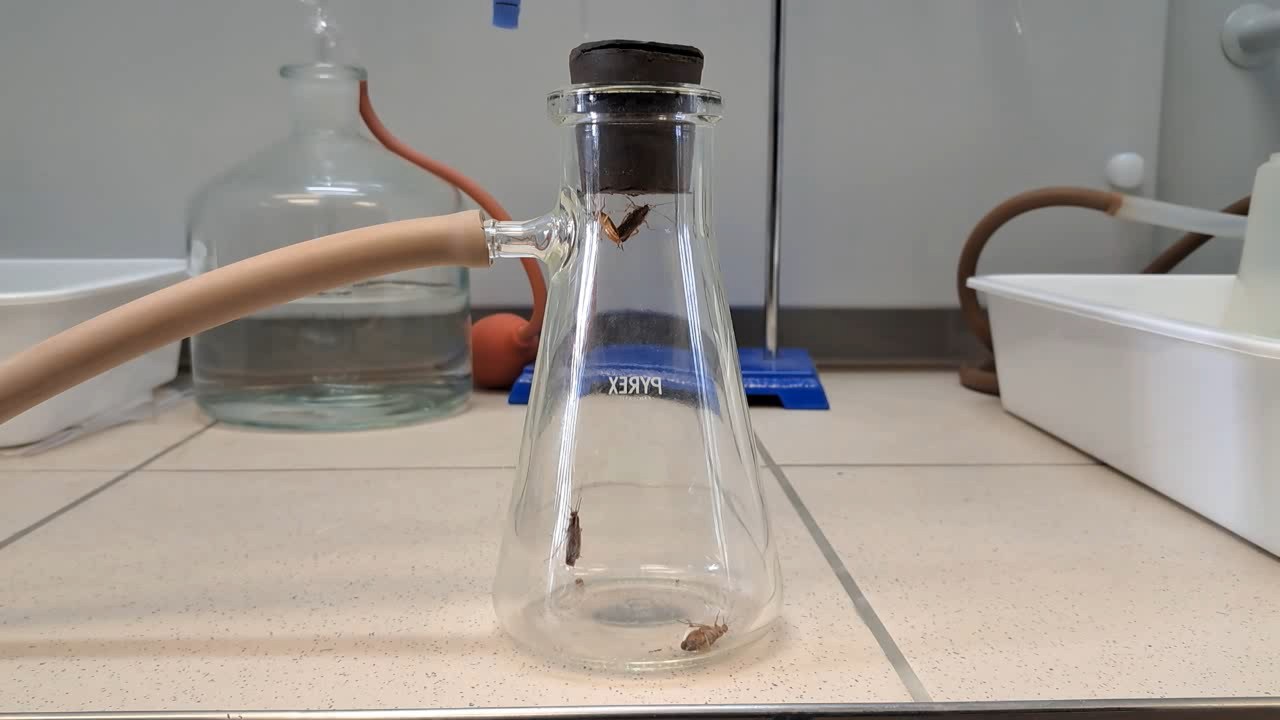
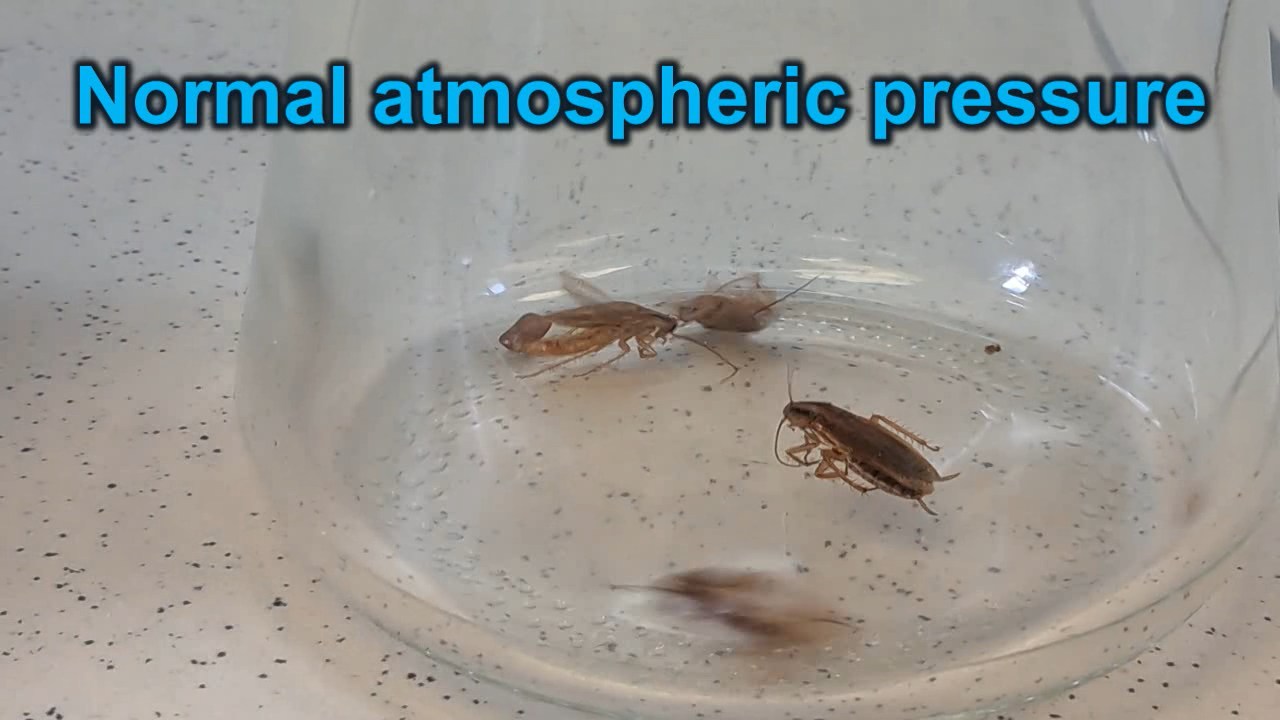
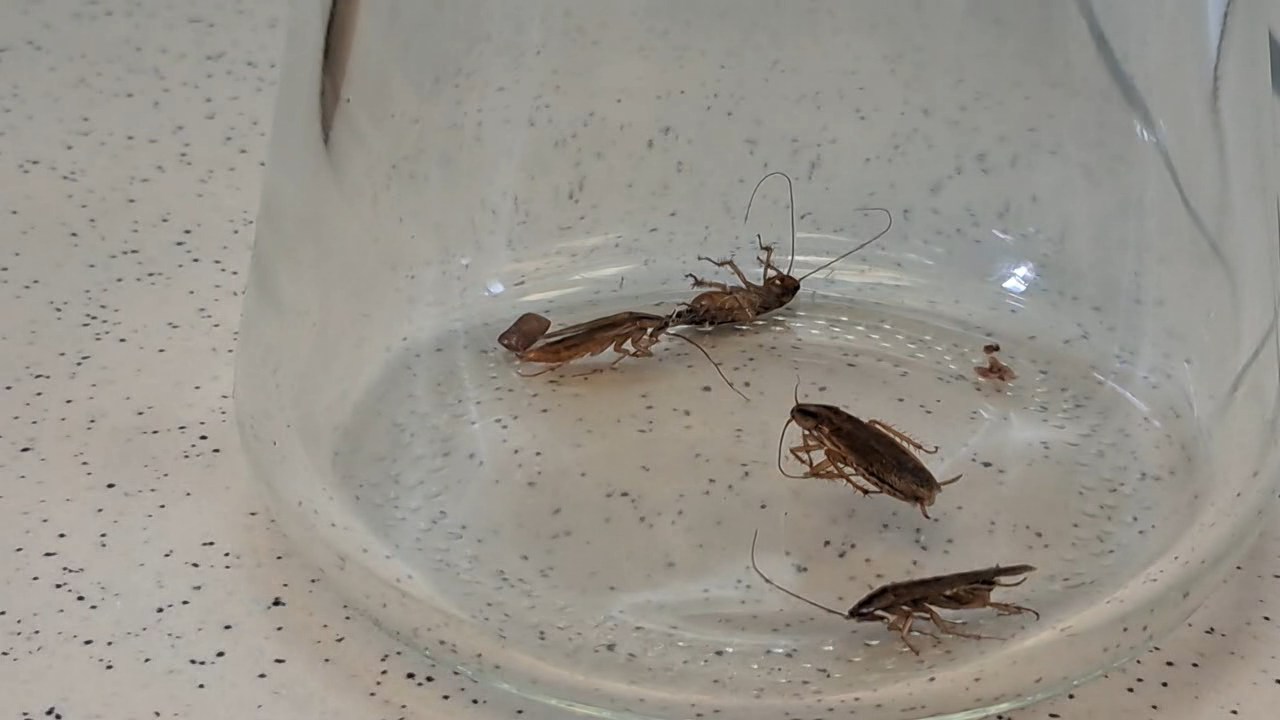
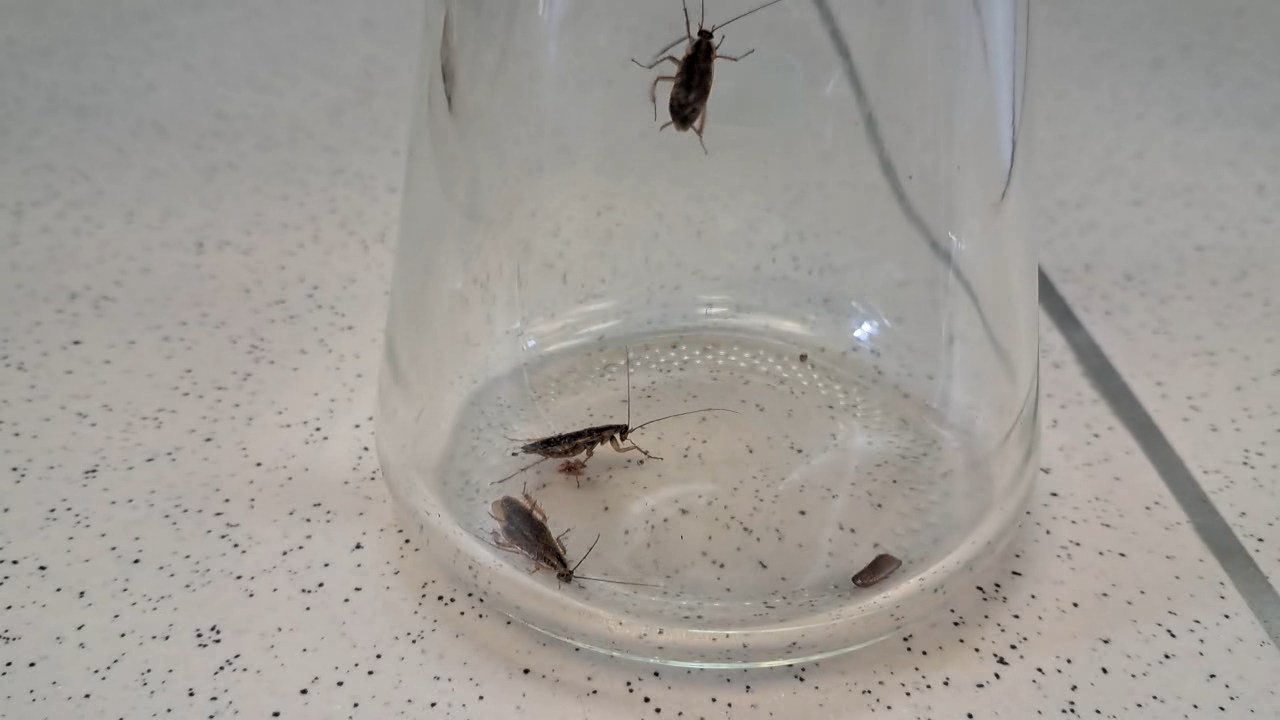
It took over five minutes for all the cockroaches to gather at the bottom and come to a halt, though their antennae and legs occasionally kept moving. Unlike flies and wasps, the cockroaches did not go completely still. I turned off the pump and disconnected the vacuum hose; air rushed in to fill the flask. Instantly, the cockroaches' legs began moving vigorously. One of them immediately started climbing up the side of the flask. Two others soon joined it. Only one of the four didn't crawl but instead lay on the bottom - though it was still actively twitching its limbs.

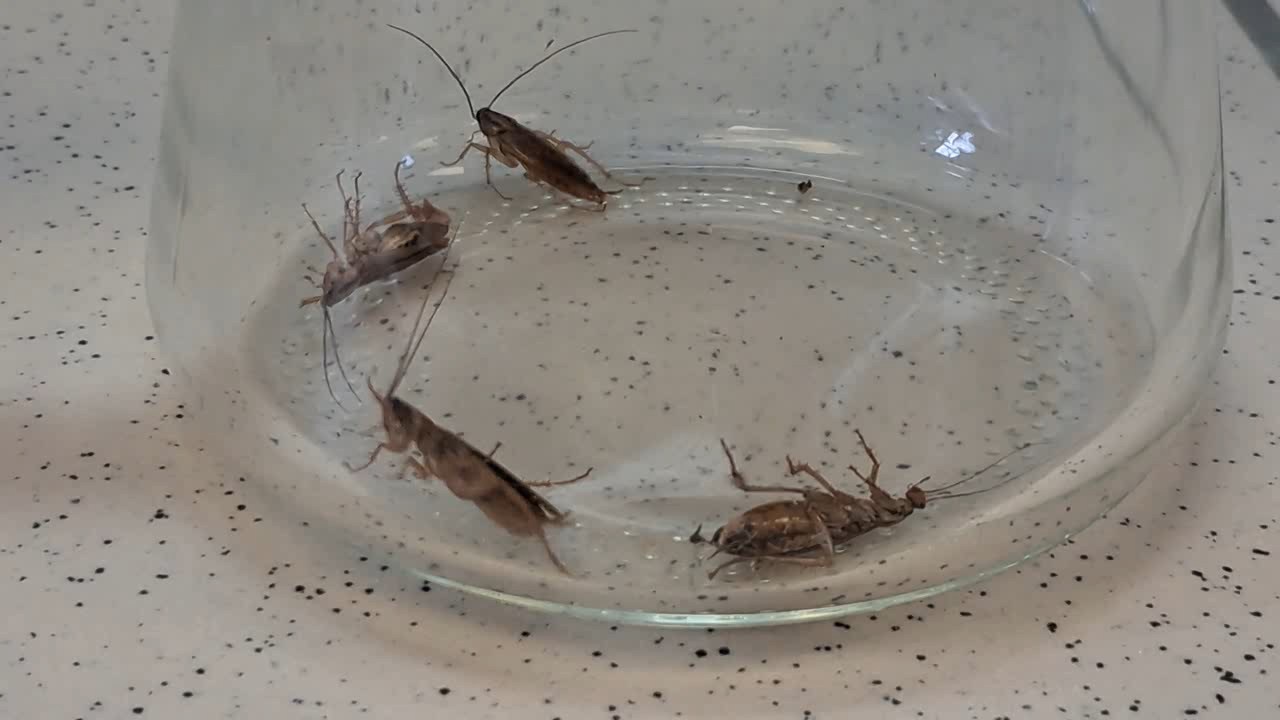
I reconnected the hose and turned the vacuum pump back on. Three of the cockroaches kept crawling actively. However, this time their stamina lasted only about a minute, after which all four gathered at the bottom of the flask. I turned off the pump and disconnected the hose. For about a minute, the cockroaches remained passive, barely moving. But that lasted only until I gave the flask a gentle shake; suddenly, all four began scurrying about energetically - including the one that had previously been sluggish.

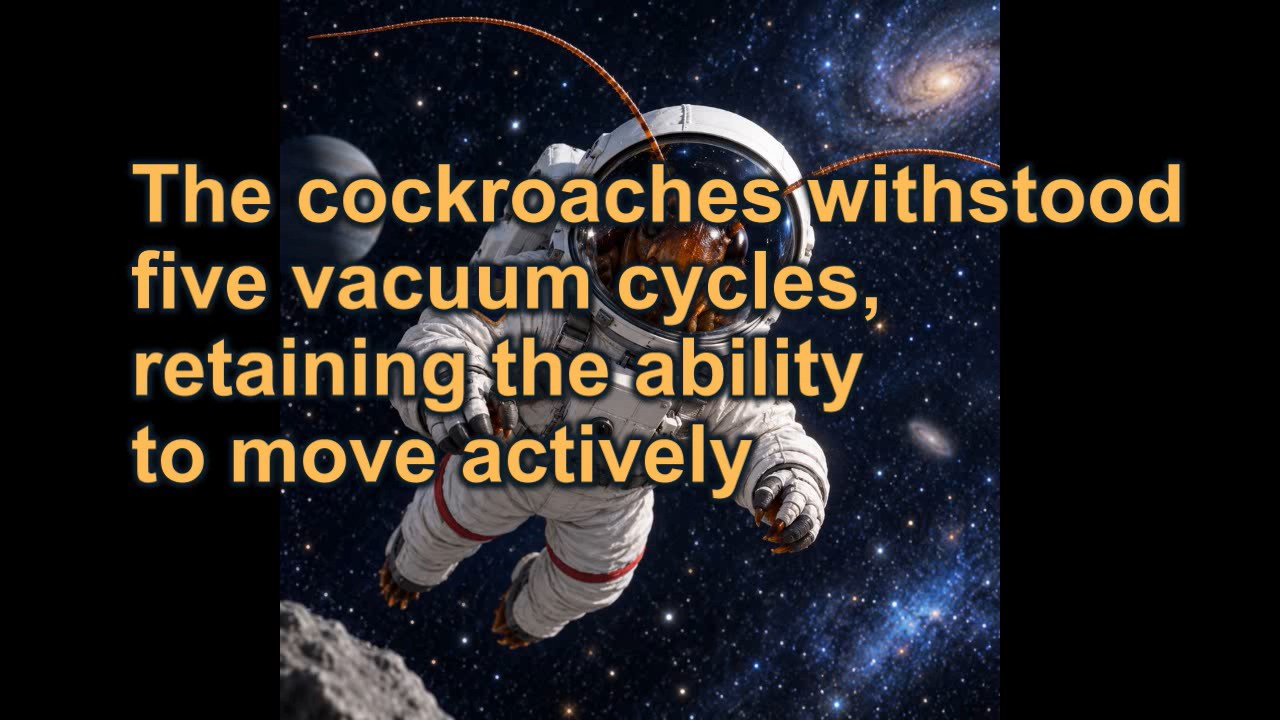
The cockroaches' resilience was truly astounding. In total, the insects withstood five vacuum cycles. Each time, once atmospheric pressure was restored, they gradually recovered and began moving actively again. I am certain they could have endured many more cycles, but I decided to stop the experiment.

These critters will survive the heat death of the Universe!

I took the flask a fair distance away and released the insects on the grounds of a neighboring institute - a rival of ours (I'm only joking).


Рыжие тараканы в вакууме - Часть 4
Работы в нашей лаборатории полно, но уже месяц мы делать ничего не можем из-за затянувшегося ремонта. Такое положение вещей совсем не благоприятствует рабочей атмосфере. Когда коллега спросил, что нам нужно для работы, я сдержал эмоции и попросил его принести рыжих тараканов для опытов с вакуумом. Я пошутил, а он принял мою просьбу всерьез и поймал четырех тараканов.

Эксперименты с тараканами можно проводить и в условиях ремонта в лаборатории. Аккуратно поместил тараканов в колбу Бунзена, стараясь не дать этим тварям сбежать. Перспектива, что в лаборатории заведутся тараканы, нравилась мне еще меньше ремонта.

Тараканы активно бегали внутри колбы. Они явно осваивались в своем новом жилище. Затем тараканы собрались в верхней части колбы возле пробки. Помня случай с мухами, я быстро присоединил вакуумный шланг к боковому отростку колбы, чтобы насекомые не сбежали наружу и включил мембранный вакуумный насос.

В отличие от мух и ос, факт работы вакуумного насоса не произвел на тараканов особого впечатления. Даже через минуту пребывания в вакууме, большинство тараканов продолжало вяло двигаться по стенкам и дну колбы или находиться в статическом положении на вертикальных стенках. Лишь один из четырех тараканов упал на дно колбы и перевернулся на спину, но и он продолжал шевелить усами и конечностями.

Понадобилось более пяти минут, чтобы все тараканы собрались на дне колбы и остановились, при этом их усы и лапы иногда продолжали совершать движения. Тараканы не замерли полностью - в отличии от мух и муравьев.

Выключил насос, отсоединил вакуумный шланг - колбу заполнил воздух. Моментально лапы тараканов стали активно двигаться. Один из тараканов сразу же полез вверх по стенке колбы. Позже к нему присоединились еще два таракана. Лишь один из четырех тараканов не ползал, а лежал на дне колбы, зато он активно шевелил конечностями.

Снова присоединил шланг и включил вакуумный насос. Три таракана продолжили активно ползать. Однако в этот раз их выносливости хватило примерно на минуту, после чего все четыре таракана собрались на дне колбы. Выключил насос, отсоединил от колбы вакуумный шланг. Около минуты тараканы вели себя пассивно, почти не двигаясь. Но это продолжалось только до тех пор, пока я осторожно не встряхнул колбу - в результате все четыре таракана начали активно бегать, - в том числе и тот экземпляр, который раньше вел себя пассивно.

Стойкость тараканов просто поражала воображение. Всего насекомые выдержали пять циклов вакуумирования. Каждый раз после восстановления атмосферного давления, они постепенно приходили в себя и начинали активно двигаться. Уверен, что тараканы могли выдержать гораздо больше циклов, но я прекратил эксперименты.

Эти твари переживут и тепловую сметь Вселенной!

Отнес колбу с тараканами подальше и выпустил насекомых на территории соседнего института - нашего конкурента (шутка).


Download the Video (220 Mb, .avi )

German Cockroaches in Vacuum

German Cockroaches in Vacuum

German Cockroaches in Vacuum

German Cockroaches in Vacuum

German Cockroaches in Vacuum

German Cockroaches in Vacuum

German Cockroaches in Vacuum

German Cockroaches in Vacuum

German Cockroaches in Vacuum

German Cockroaches in Vacuum

German Cockroaches in Vacuum

German Cockroaches in Vacuum

German Cockroaches in Vacuum

German Cockroaches in Vacuum

German Cockroaches in Vacuum

German Cockroaches in Vacuum

German Cockroaches in Vacuum

German Cockroaches in Vacuum

German Cockroaches in Vacuum

German Cockroaches in Vacuum

German Cockroaches in Vacuum

German Cockroaches in Vacuum

German Cockroaches in Vacuum

German Cockroaches in Vacuum

German Cockroaches in Vacuum

German Cockroaches in Vacuum

German Cockroaches in Vacuum

German Cockroaches in Vacuum

German Cockroaches in Vacuum

German Cockroaches in Vacuum

German Cockroaches in Vacuum

German Cockroaches in Vacuum

German Cockroaches in Vacuum

German Cockroaches in Vacuum

German Cockroaches in Vacuum

German Cockroaches in Vacuum

German Cockroaches in Vacuum

German Cockroaches in Vacuum

German Cockroaches in Vacuum

German Cockroaches in Vacuum

German Cockroaches in Vacuum


[ Vacuum (Experiments) ]

Vacuum, experiments with it - Discussion on the forum
[Submit a Comment / Error Message - Отправить Комментарий / Сообщение об ошибке]