Content Chemistry experiments - video Physics experiments - video Home Page - Chemistry and Chemists

Chemistry and Chemists № 2 2026

Journal of Chemists-Enthusiasts
Donate to the journal Chemistry and ChemistsDonate to the journal Chemistry and Chemists


Flowers and Ammonia - pt.1, 2, 3


Chemist


Having noticed a mistake in the text, allocate it and press Ctrl-Enter


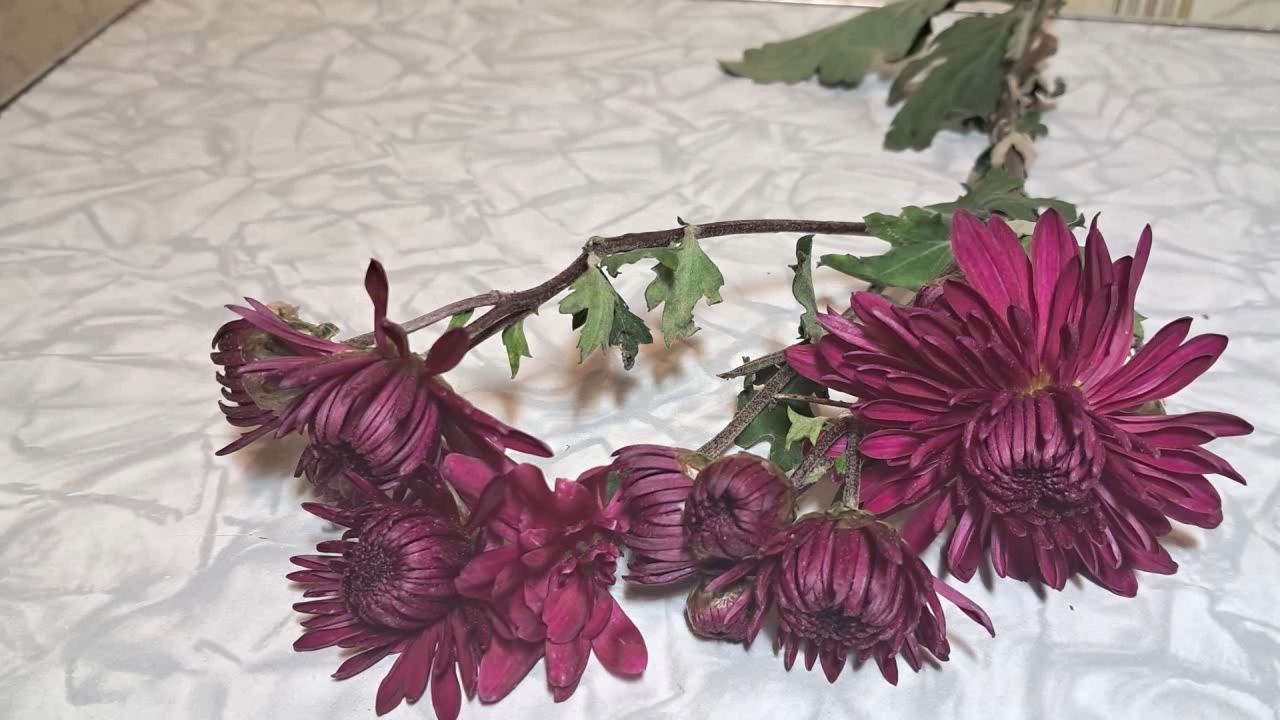
While walking down the street, I noticed a discarded bouquet of chrysanthemums lying on the pavement. The flowers, a mixture of white and deep garnet, were beautiful, but several stems had snapped, prompting someone to throw the entire bouquet onto the sidewalk. Just a week earlier, I would have walked right past it. Back then, I was completely consumed by my work in a chemistry laboratory.

I had invested a tremendous amount of effort and nervous energy in setting up a laboratory for energetic materials. This involved everything from securing suitable premises and procuring all the necessary supplies - laboratory furniture, equipment, reagents, and glassware - to recruiting chemists and developing and implementing analytical protocols. The laboratory was finally up and running, but it turned out to be impossible to work there. Or rather, working there was technically possible, but only at the cost of putting people's lives and health at risk - and exposing myself to criminal liability.

The company's management had created life-threatening risks for chemists and other workers through its reckless actions. I am not particularly concerned about my own life; otherwise, I would never have taken such a job in the first place. After all, energetic materials are designed to kill. But I certainly did not want - and still do not want - any chemists or workers to die because of me.

I had personally recruited some of these chemists from among my own acquaintances, while others had been selected by me from a pool of candidates provided by a recruiter. Consequently, I felt responsible for their fate. When management's actions crossed a critical line, I simply could not take it anymore. Two other qualified chemists left at the same time I did, leaving only a few students in the laboratory. I worry about what might happen to them, but the decision to stay was theirs.

Just a week earlier, that job had consumed all my time, energy, and even my thoughts. It had come at a high price: even on sweltering summer days, I would often find myself shivering with chills despite the heat. It was a clear sign of nervous exhaustion. And then, everything vanished in an instant. A vacuum, an emptiness, opened up inside me. There was nothing to fill it with.

That was precisely why the discarded bouquet of chrysanthemums caught my eye.

Both during my school years and later, as an adult chemist, I used to conduct simple experiments with flowers, as well as other pigmented parts of plants, by placing them in acidic or alkaline solutions. The natural dyes acted as acid-base indicators. The main advantage of these experiments is their simplicity and the easy availability of the reagents. And so, even now, without a job or a laboratory, I could carry out experiments with flowers right in my kitchen.

A five-liter jug of ammonia solution was sitting in my... refrigerator. Yes, an ordinary household refrigerator, the very one in which I kept my food. I had bought the ammonia several years earlier specifically for experiments of this kind. Back then, I had a job but no chemical laboratory, so I had to conduct my experiments with plants at home, in a cramped kitchen. Later, I found a position as head of a laboratory at a research institute, which meant there was no longer any need to experiment with flowers and ammonia in my kitchen. And now, that jug of ammonia in the refrigerator had come in handy once again...

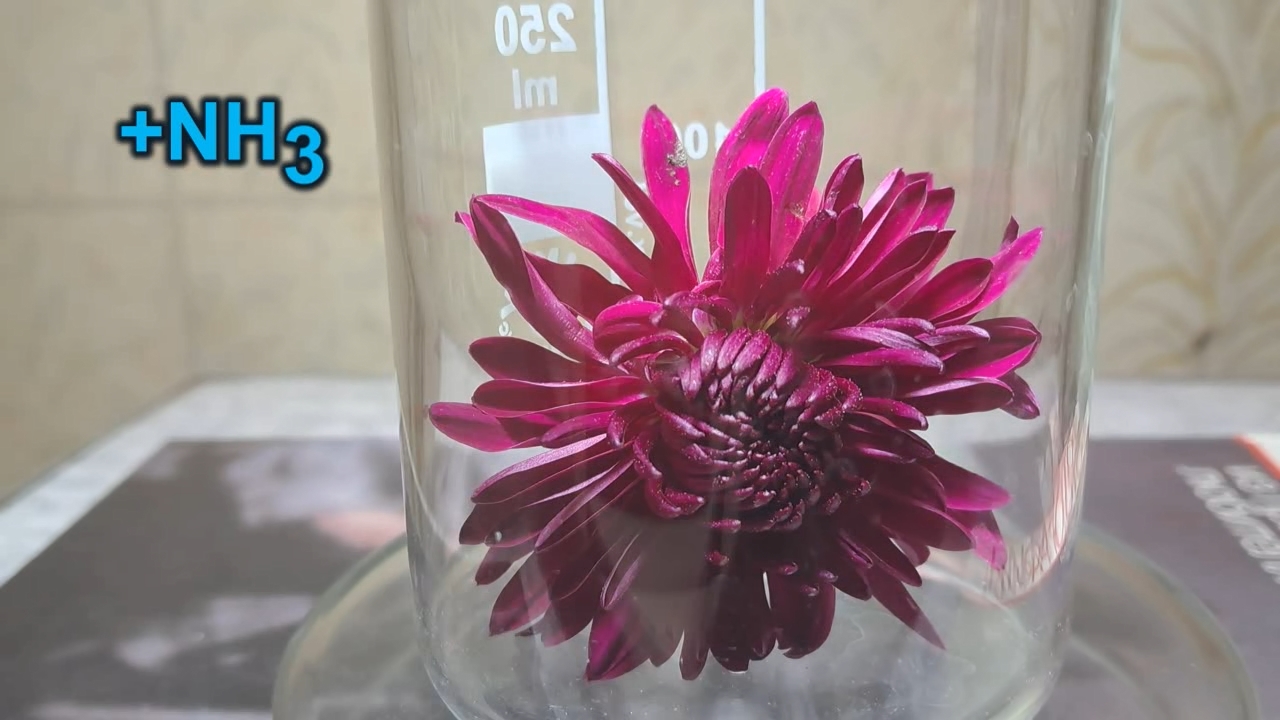
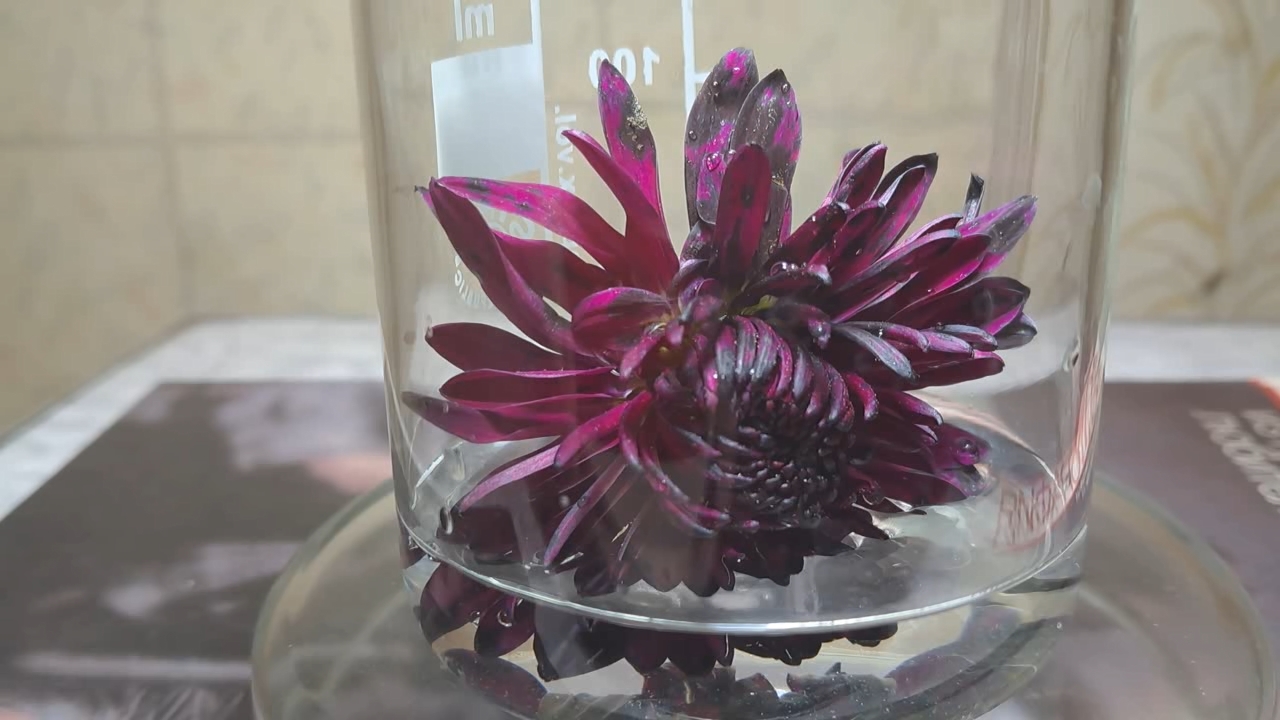
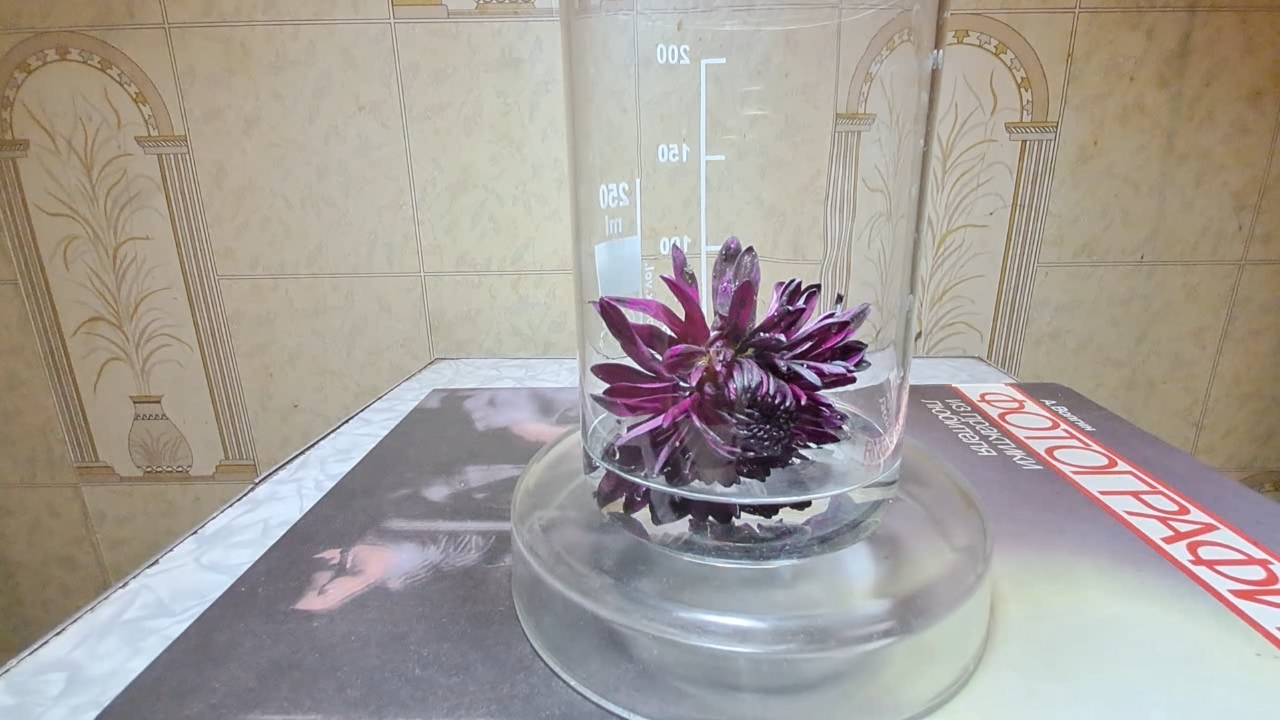
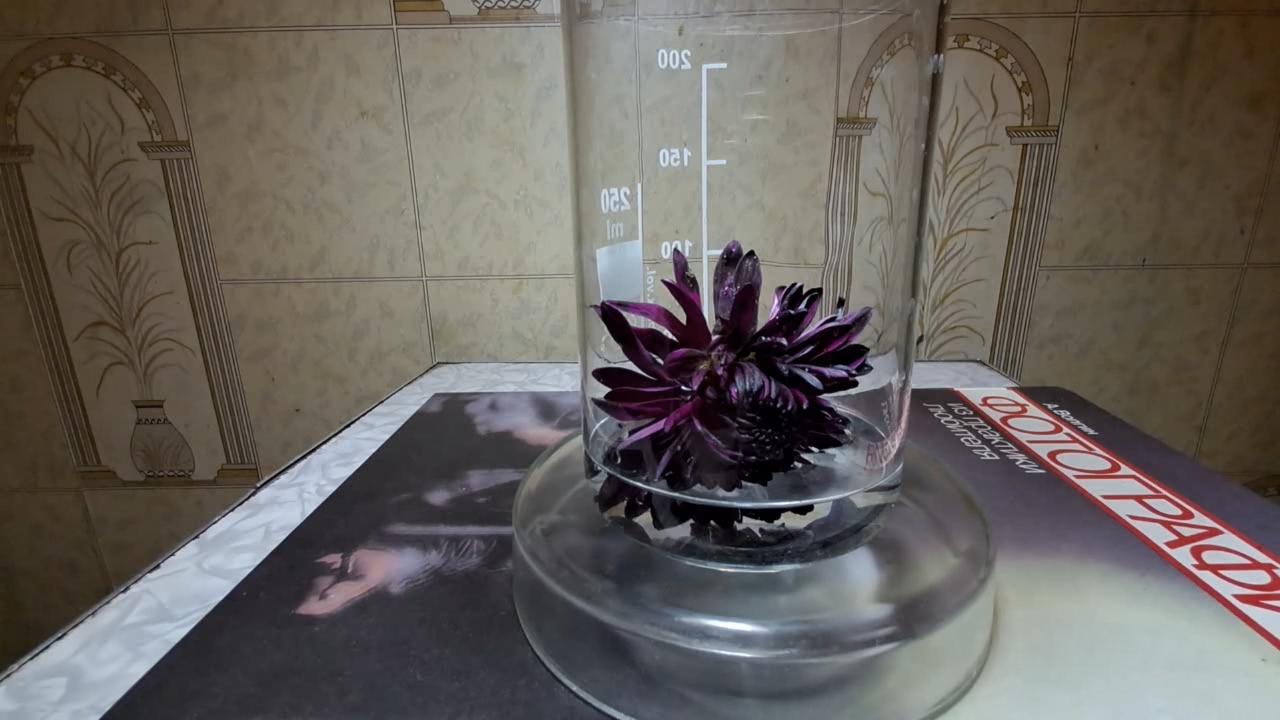
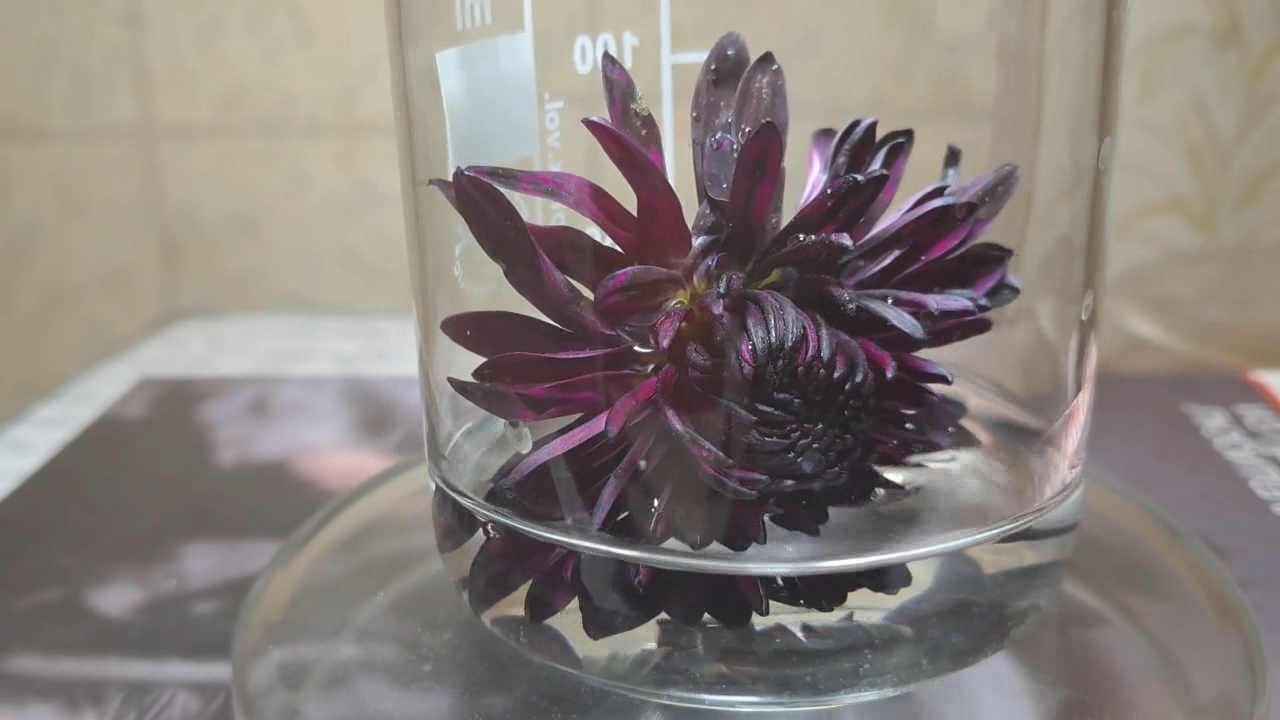
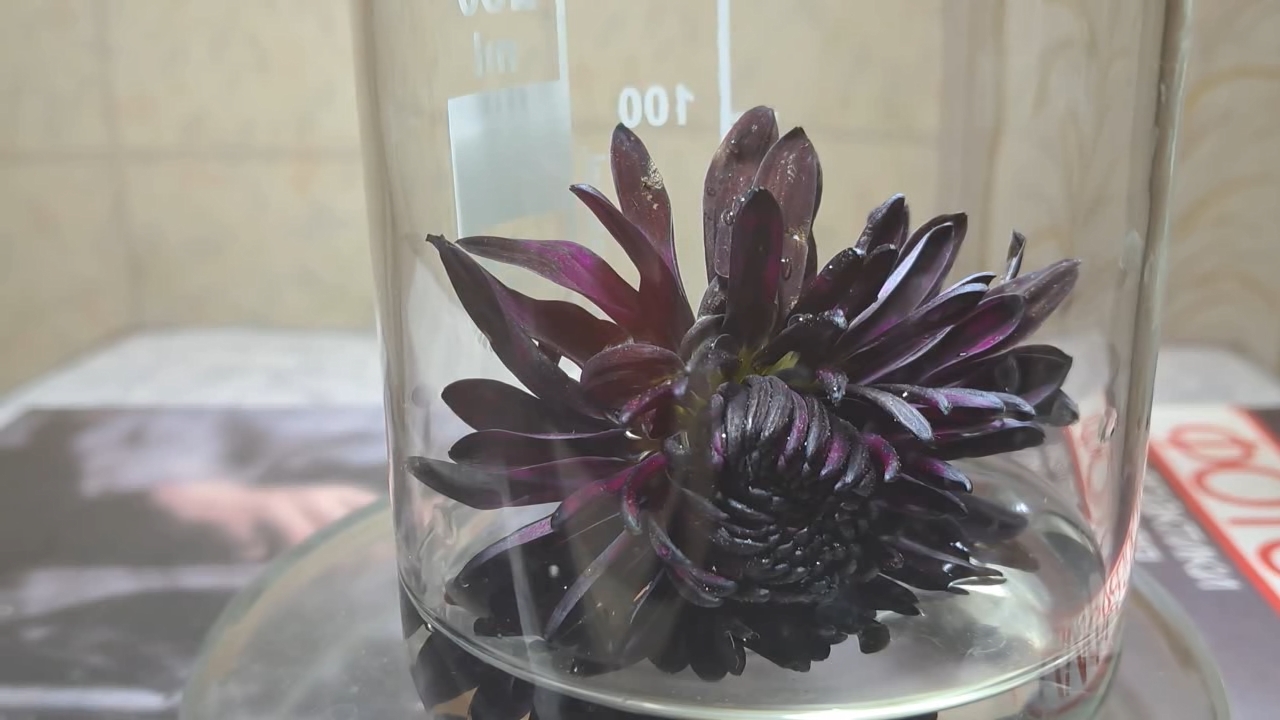
I placed a chrysanthemum flower in a glass, added a few milliliters of concentrated ammonia solution, and covered the glass with a Petri dish. I had experimented with various flowers many times before, and based on my previous observations, I expected the following sequence of color changes:

garnet - blue - green - yellow.

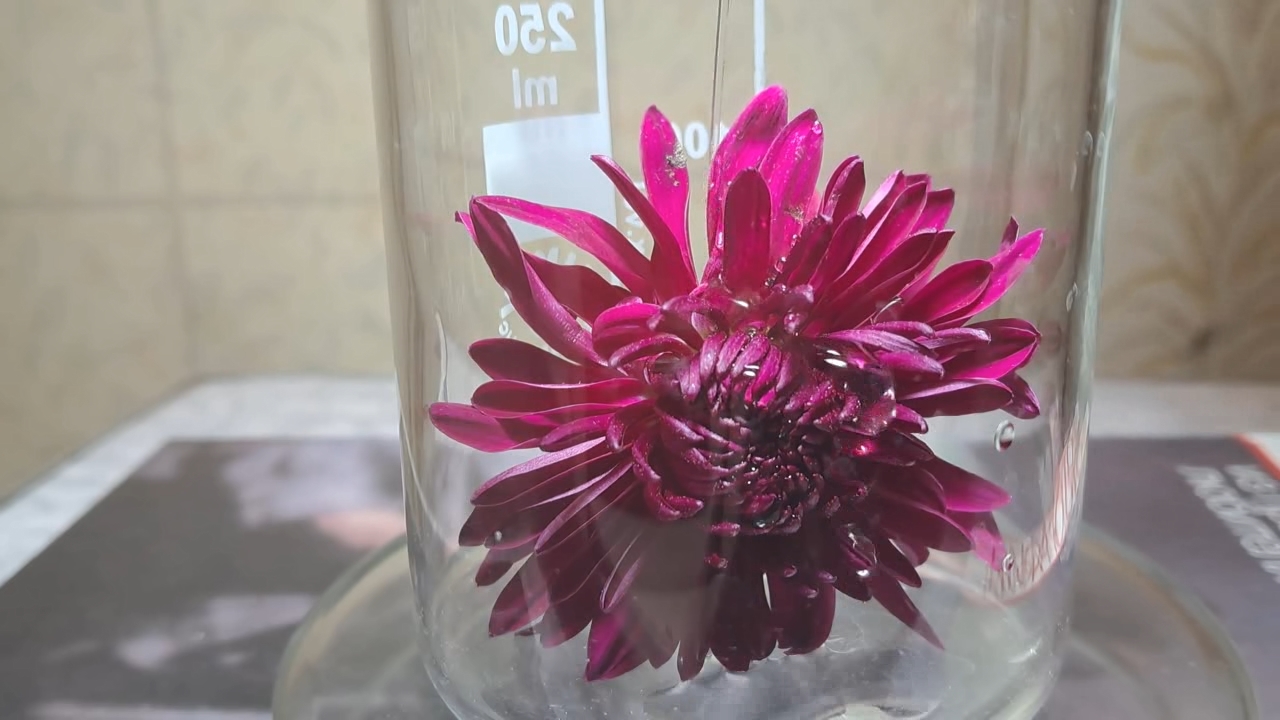
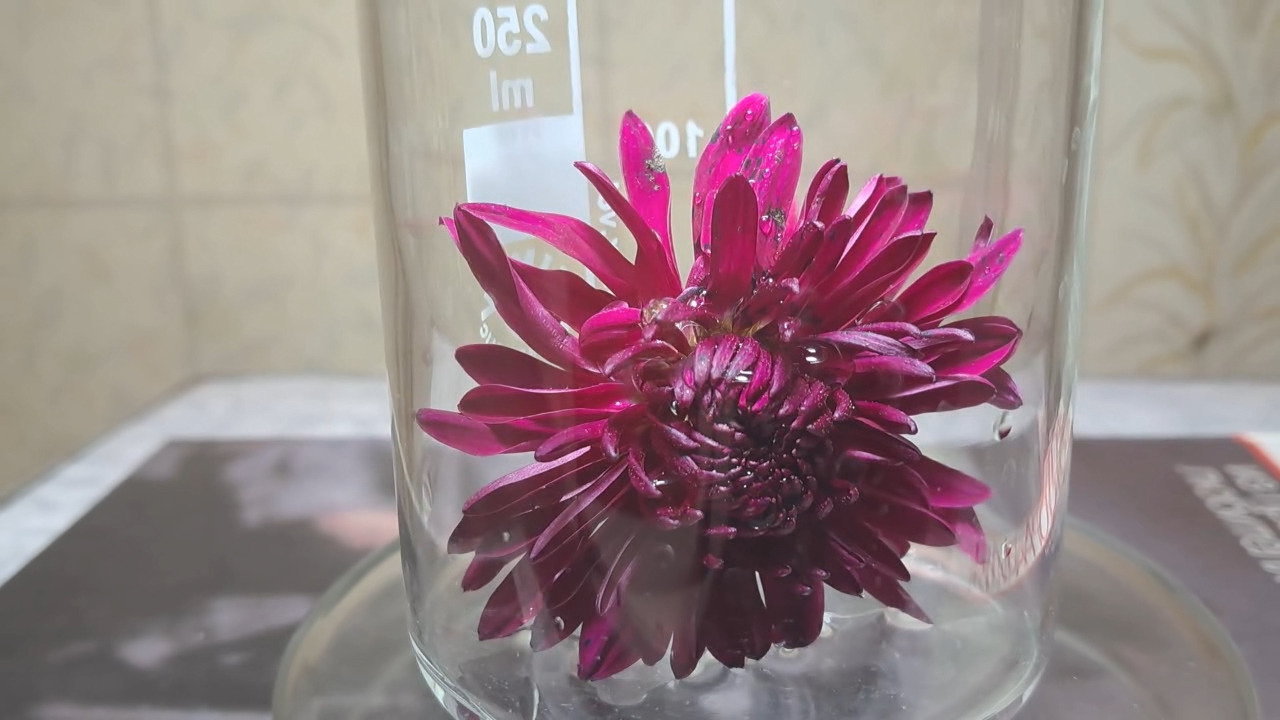
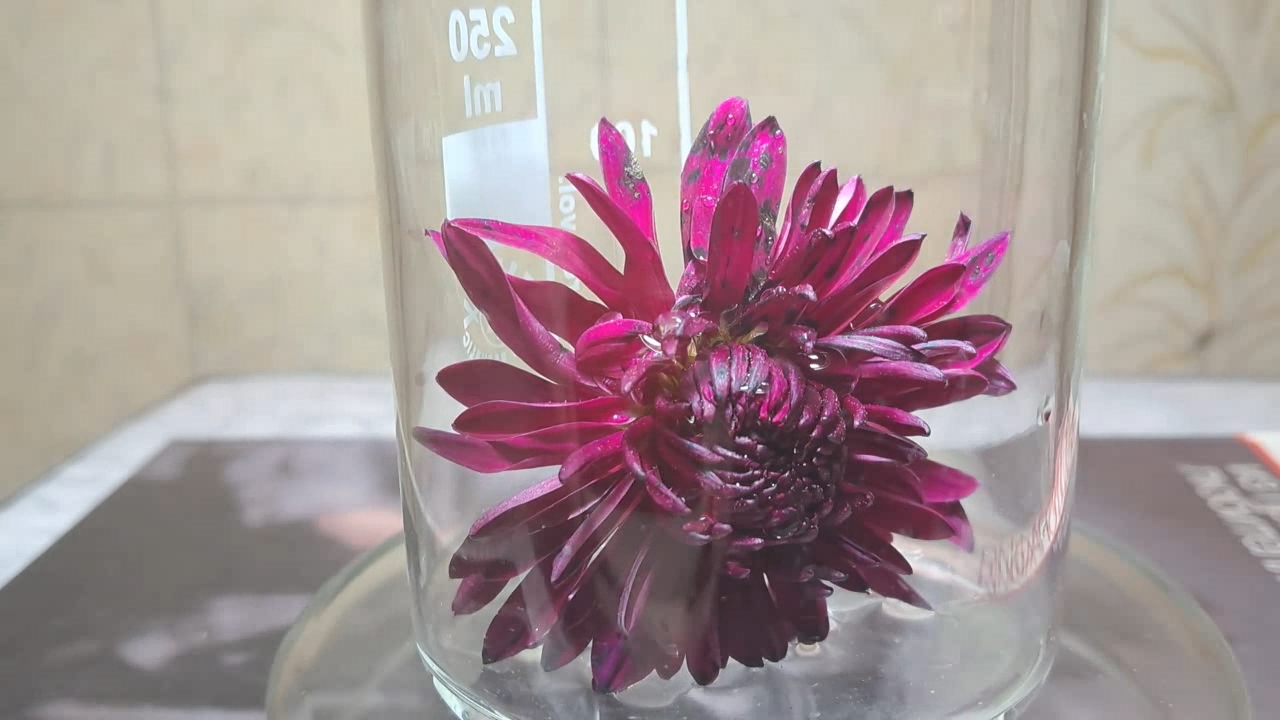
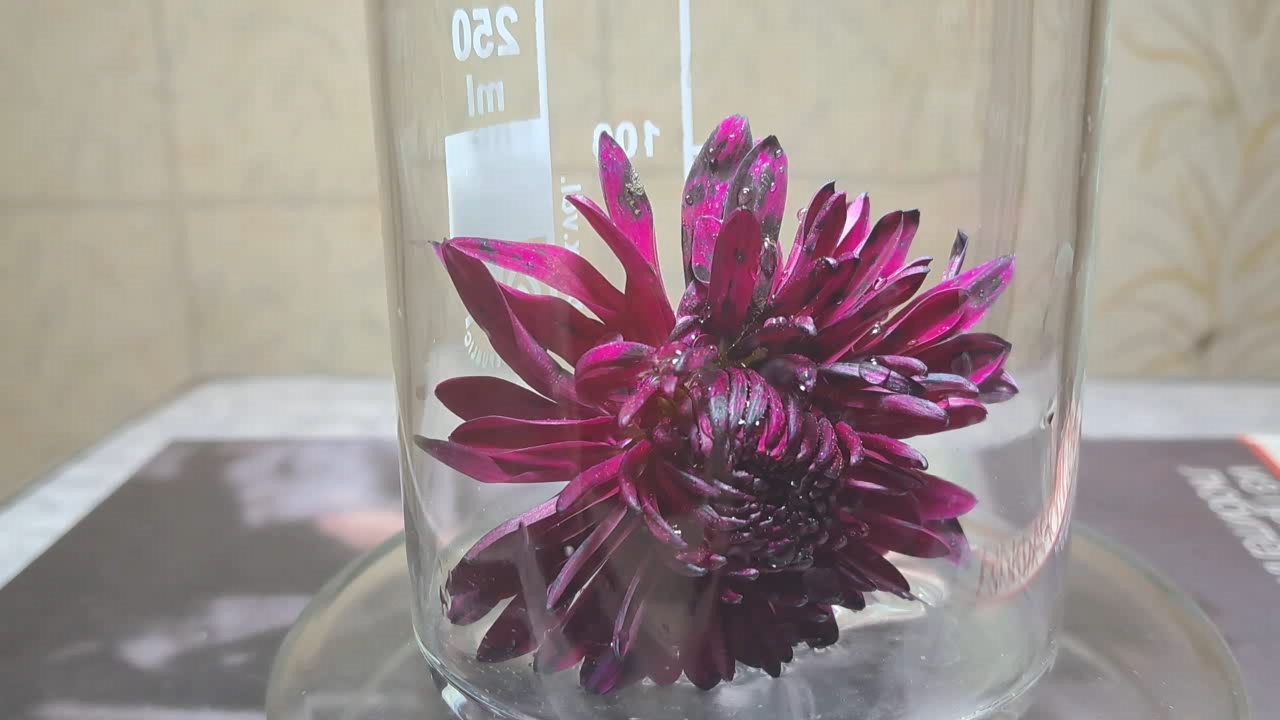
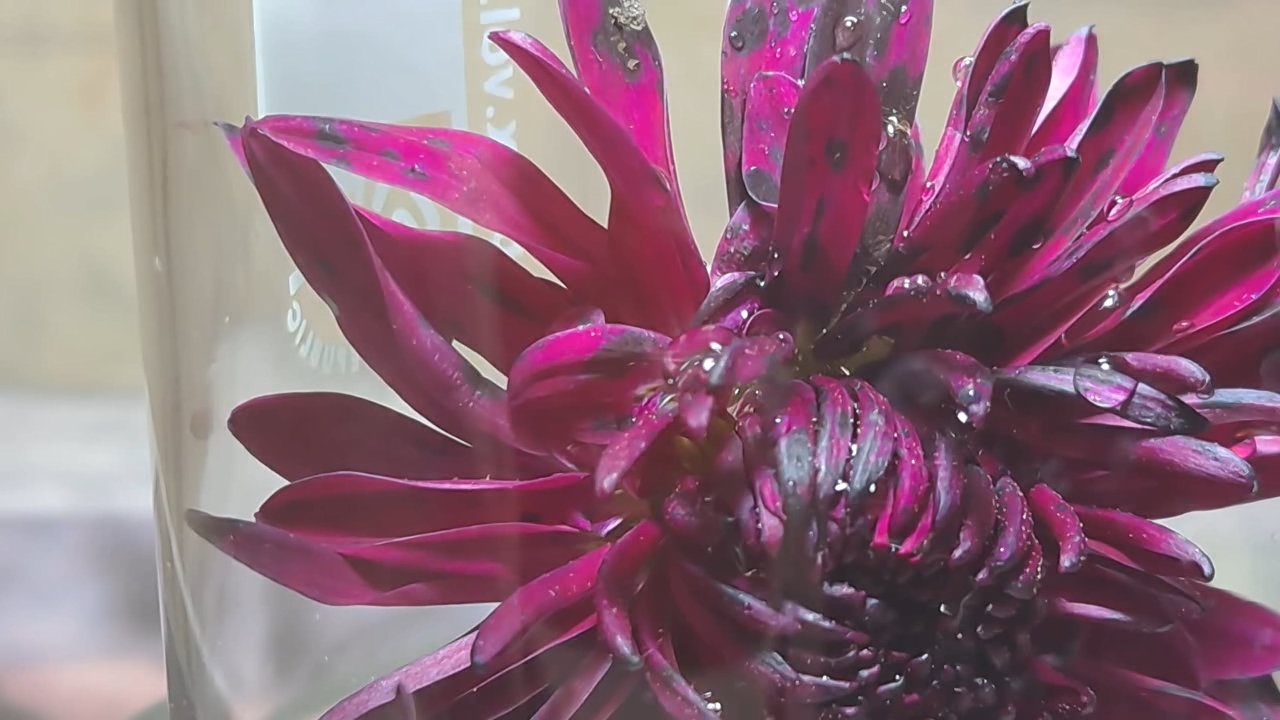
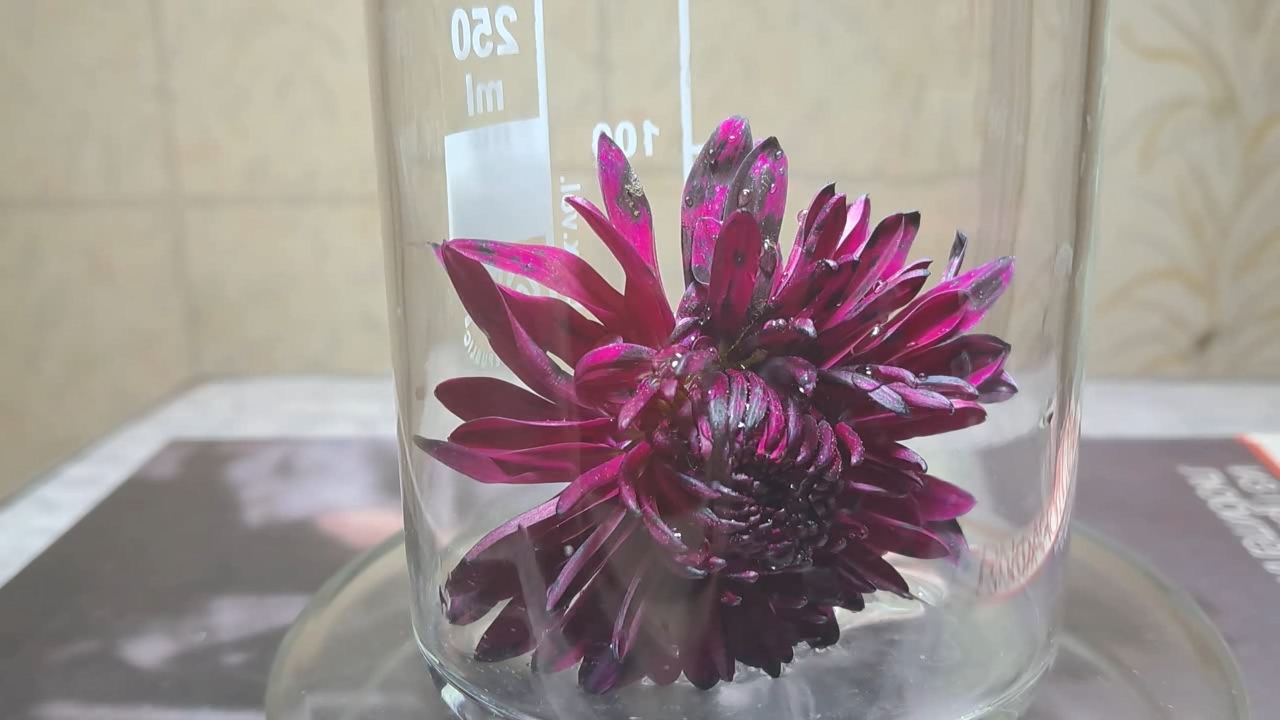
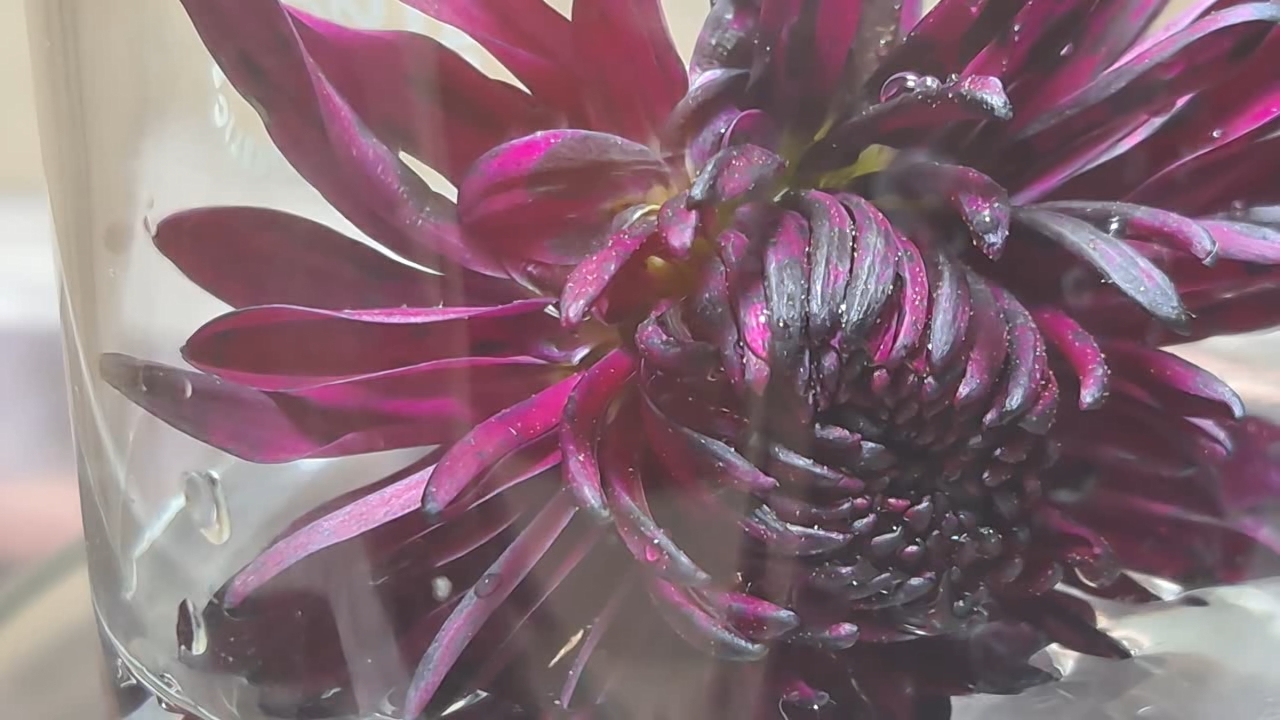
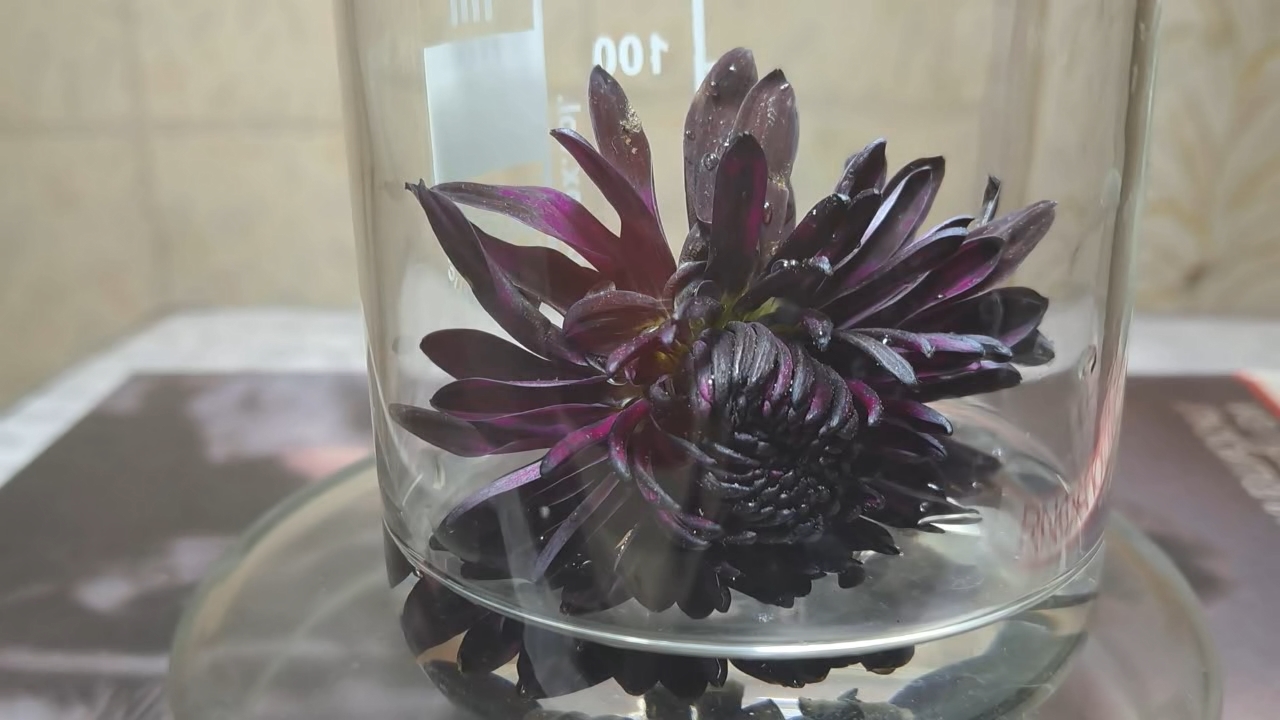
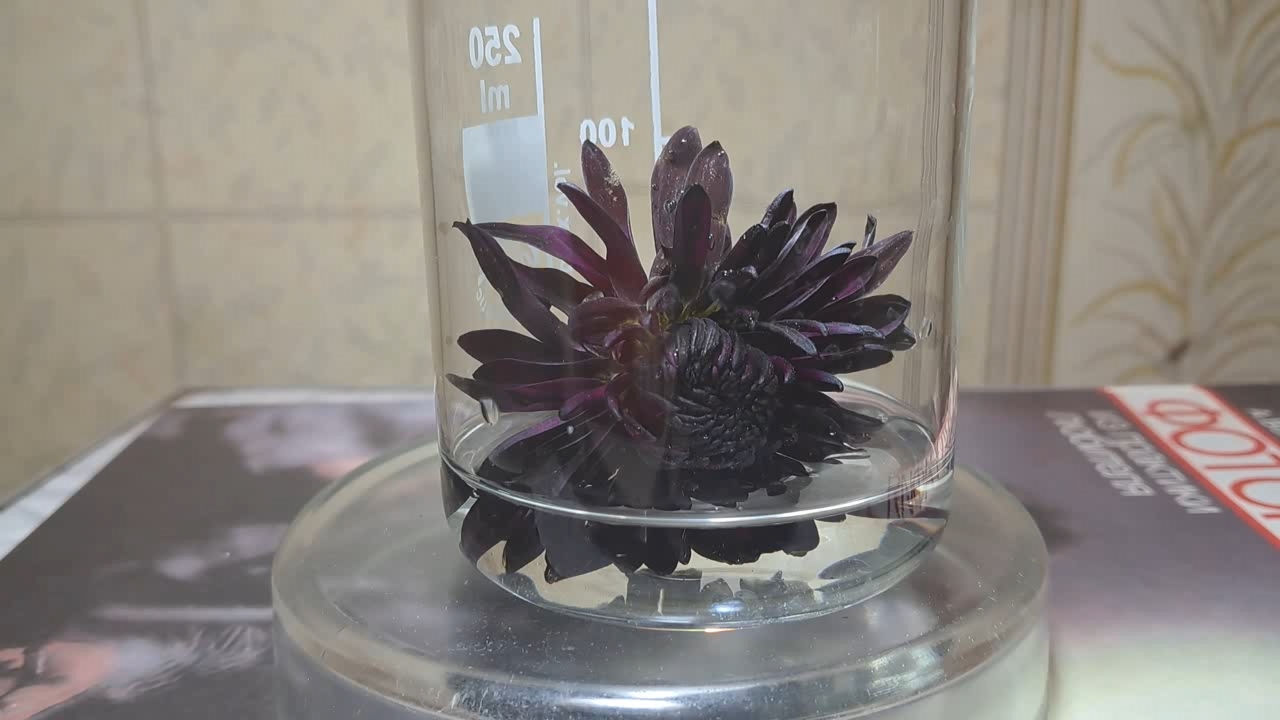
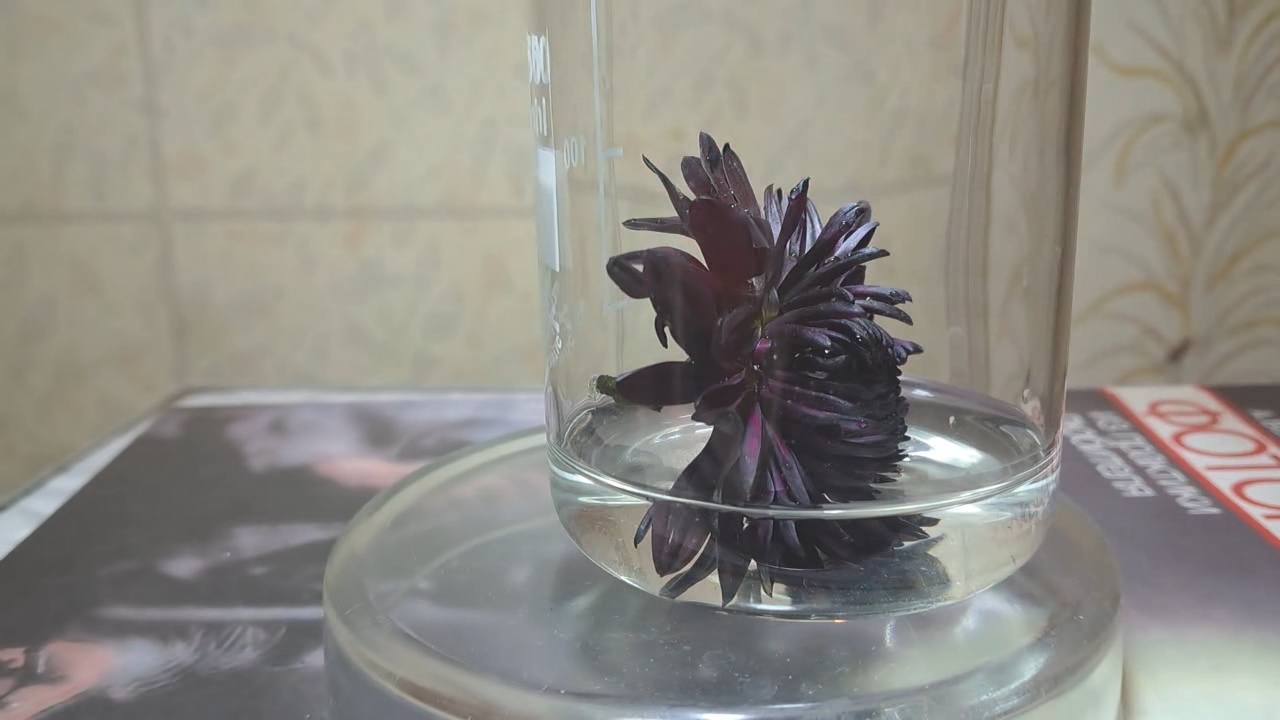
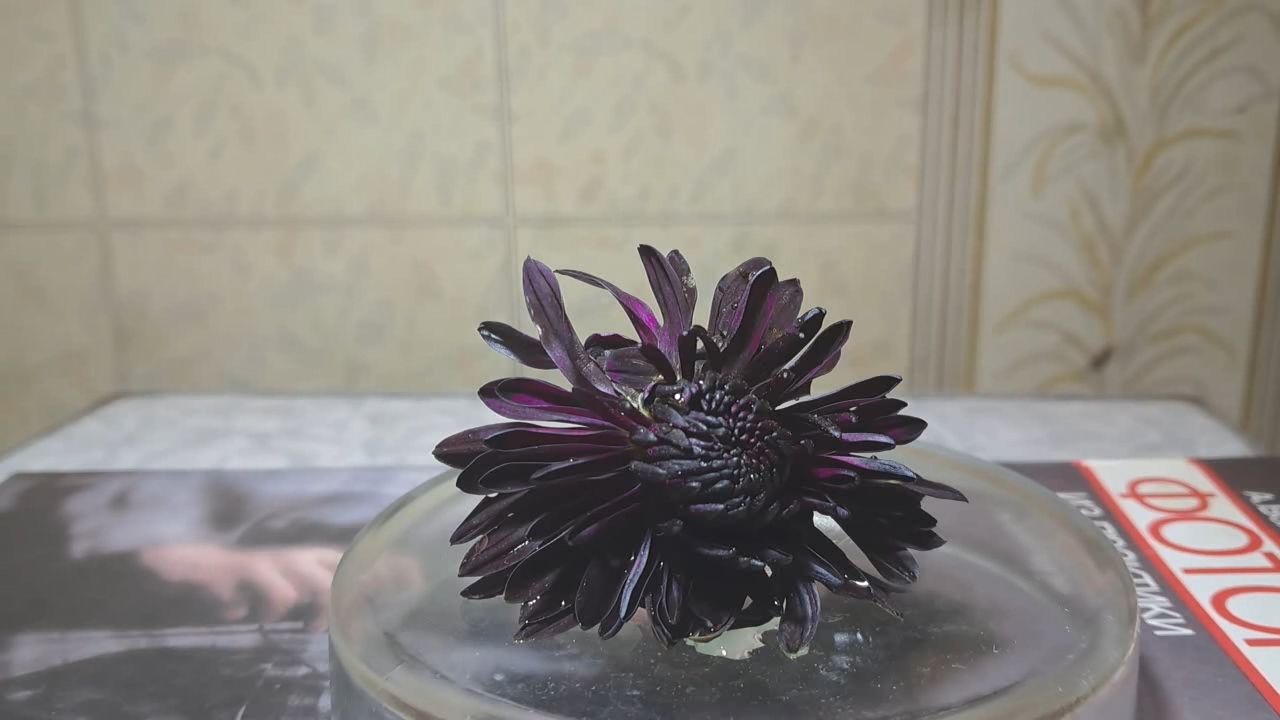
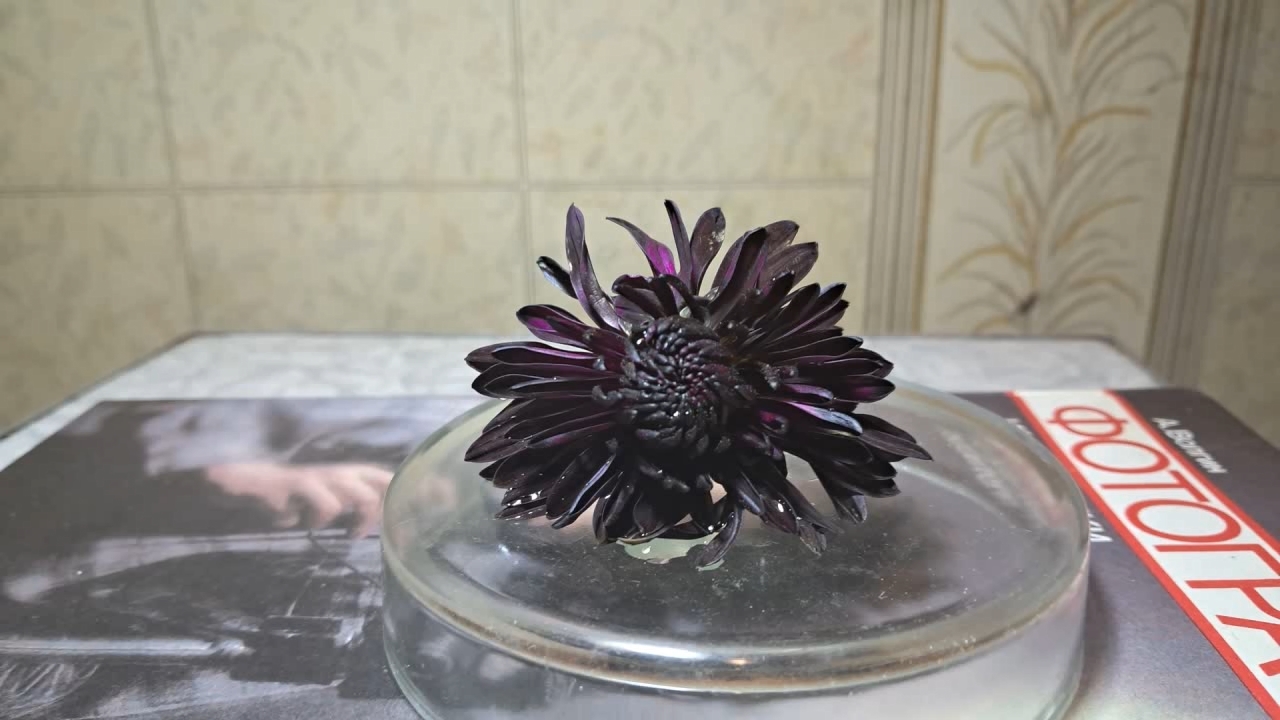
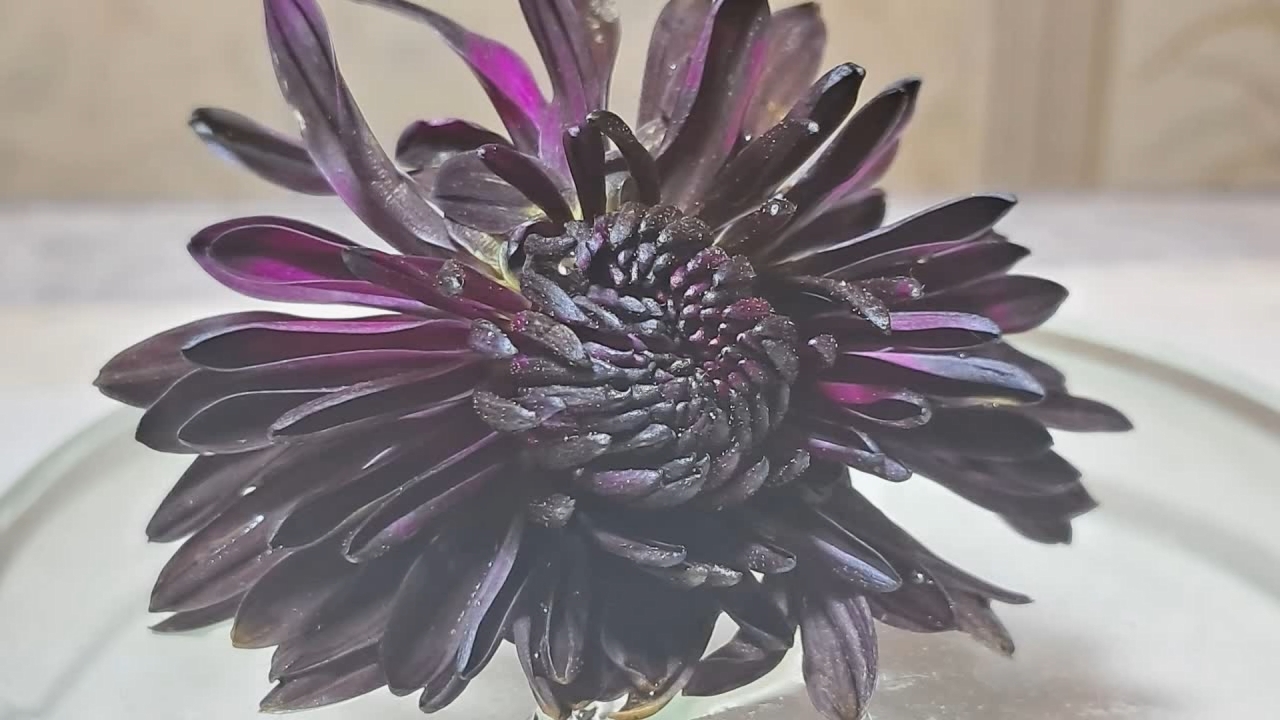
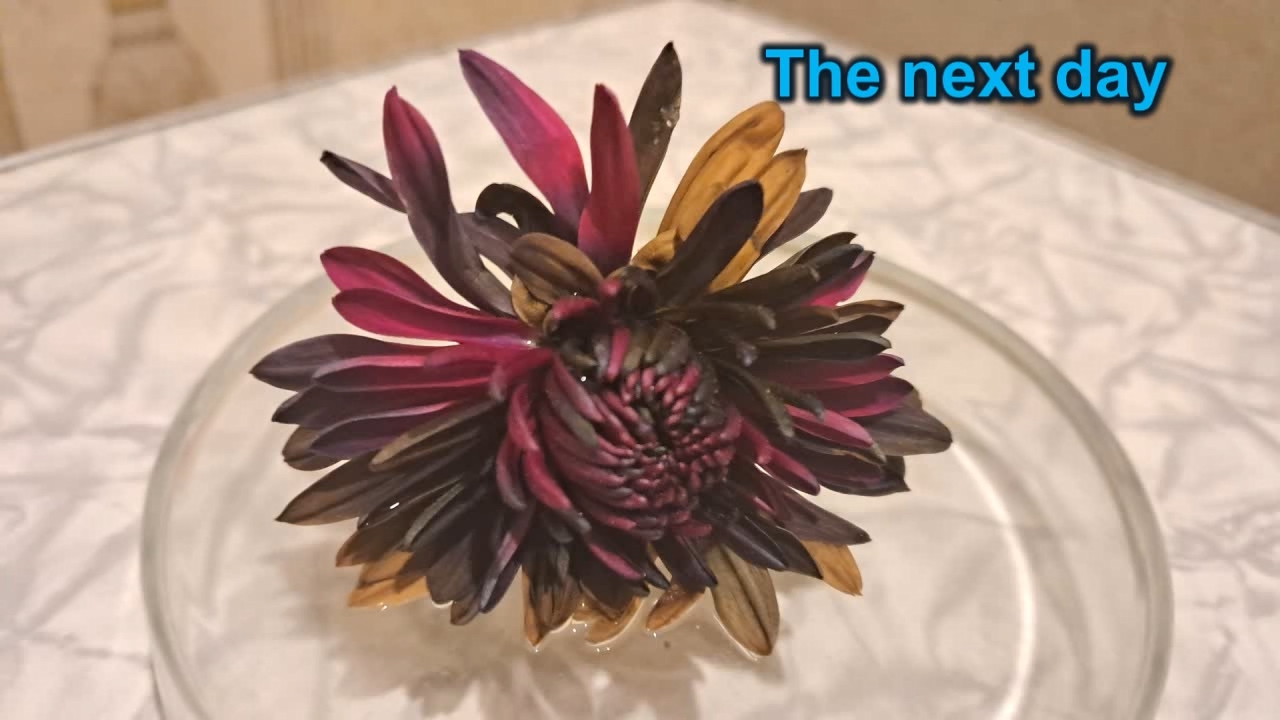
However, nothing of the sort happened. Instead, black spots appeared on the chrysanthemum petals and slowly began to spread. Rather than turning blue or yellow, the garnet-colored flower gradually turned black.

Compared with many other flowers I had experimented with, the color change in the chrysanthemum was quite slow. I even began to wonder whether the ammonia solution had lost some of its concentration during its long period of storage. However, the pungent smell suggested that the ammonia concentration was still more than sufficient. To make sure, I added another 20 mL of ammonia solution to the glass.

The flower turned almost entirely black, although traces of its original garnet color remained in some places.

I removed the flower from the glass and left it exposed to the air so that the ammonia could evaporate. By the following day, some of the petals had regained their original garnet color, while others had turned brown.

I could recall only one other instance in which I had observed a color change from red to black under the influence of ammonia: with 'Red Chief' apples. I had never witnessed such a change in the flowers of any plant.

On the one hand, the transformation of the chrysanthemum's color was not particularly spectacular. A beautiful garnet-colored flower had simply turned black. On the other hand, returning to chemical experiments, however simple, did wonders for my state of mind.


Цветы и аммиак
Цветок хризантемы гранатового цвета и аммиак - Часть 1
Идя по улице, заметил на асфальте брошенный букет хризантем. Красивые цветы были белого и темно-гранатового цветов, однако, несколько стеблей хризантем переломились, поэтому кто-то выбросил весь букет прямо на тротуар. Еще неделю назад я бы прошел мимо: тогда у меня было много работы в химической лаборатории.

Потратив много усилий и нервов, организовал лабораторию энергетических материалов: начиная от выбора помещения и закупок всего необходимого - лабораторной мебели, оборудования, реактивов, химической посуды - заканчивая поиском химиков, а также выбором и постановкой методик анализа. И вот лаборатория была создана, но оказалось, что работать в ней было нельзя. Точнее, технически работать было можно, но ценой риска жизнью и здоровья людей и ценой уголовной ответственности - неадекватные действия руководства компании создавали риск для жизни химиков и рабочих на ровном месте. За свою жизнь я сейчас не очень-то переживаю - иначе не согласился бы на такую работу. Энергетические материалы для того и предназначены, чтобы убивать. Однако, я не хотел и не хочу, чтобы по моей вине погибли другие химики или рабочие. Часть химиков я лично нашел среди знакомых и попросил там работать, часть выбрал из многих предложенных рекрутером кандидатов. Следовательно, я был ответственен за их судьбу. Когда действия руководства перешли критическую черту - я просто не выдержал. Одновременно со мной ушли два других квалифицированных химика, в лаборатории остались только несколько студентов. Мне тревожно за их судьбу, однако, решение там остаться было их собственным выбором.

Еще неделю назад работа занимала все мое время, силы и даже мысли. Давалось это дорогой ценой - часто в жаркий летний день меня морозило - чувствовал озноб в жару. Это был явный признак нервного истощения. И вот, это все моментально исчезло - в моей душе возник вакуум, пустота. Заполнить пустоту было нечем. Именно поэтому брошенный букет хризантем привлек мое внимание.

И в школьные годы, и уже будучи взрослым химиком, я проводил простые эксперименты со цветами - помещал цветы, а также другие окрашенные части растений, в кислоту или щелочь. Природные красители вели себя как кислотно-основные индикаторы. Главное преимущество таких экспериментов - их простота и доступность реактивов. Вот и сейчас, не имея работы и лаборатории, я мог проводить эксперименты с цветами на кухне. Пятилитровая канистра с аммиаком стояла у меня... в холодильнике - в обычном бытовом холодильнике, в котором хранились пищевые продукты. Несколько лет назад я купил аммиак именно для таких экспериментов. Тогда я имел работу, но химической лаборатории там не было, поэтому эксперименты с растениями приходилось проводить дома на тесной кухне. Позже я нашел работу - стал заведующим лаборатории в одном из исследовательских институтов, поэтому необходимость экспериментировать с цветами и аммиаком на кухне отпала. И вот сейчас канистра с аммиаком в холодильнике снова пригодилась...

Поместил цветок хризантемы в стакан, добавил несколько миллилитров концентрированного раствора аммиака, накрыл стакан чашкой Петри. До этого я много раз проводил эксперименты с различными цветками, и, на основе прошлых результатов, ожидал следующего перехода цвета:

гранатовый - голубой - зеленый - желтый.

Однако, ничего подобного не происходило. На лепестках хризантемы появились черные пятна, которые медленно расширялись. Цветок гранатового цвета, вместо того, чтобы стать голубым или желтым, постепенно становился черным.

По сравнению со многими другими цветками, с которыми я экспериментировал, переход окраски хризантемы происходил довольно медленно. Я даже засомневался: не испарился ли аммиак из раствора за время его длительного хранения? Но, судя по непереносимому запаху, концентрация аммиака была достаточной. Для уверенности, добавил в стакан еще 20 мл раствора аммиака.

Цветок стал преимущественно черным, хотя местами гранатовый цвет сохранился.

Вынул цветок из стакана, оставил на воздухе, чтобы аммиак испарился. На следующий день часть лепестков восстановила исходный гранатовый цвет, а часть стала коричневой.

Я смог вспомнить лишь один случай, когда наблюдал переход из красного цвета в черный под действием аммиака, это были яблоки сорта "Ред Чиф". Зато со цветками различных растений я такого перехода цвета ни разу не наблюдал.

С одной стороны, трансформация цвета хризантемы не выглядела особо эффектной - красивый гранатовый цветок стал черным. С другой стороны, сам факт возвращения к химическим экспериментам невероятно улучшило мое моральное состояние.


Download the Video (61 Mb, .avi )

Garnet-Colored Chrysanthemum Flower and Ammonia

Garnet-Colored Chrysanthemum Flower and Ammonia

Garnet-Colored Chrysanthemum Flower and Ammonia

Garnet-Colored Chrysanthemum Flower and Ammonia

Garnet-Colored Chrysanthemum Flower and Ammonia

Garnet-Colored Chrysanthemum Flower and Ammonia

Garnet-Colored Chrysanthemum Flower and Ammonia

Garnet-Colored Chrysanthemum Flower and Ammonia

Garnet-Colored Chrysanthemum Flower and Ammonia

Garnet-Colored Chrysanthemum Flower and Ammonia

Garnet-Colored Chrysanthemum Flower and Ammonia

Garnet-Colored Chrysanthemum Flower and Ammonia

Garnet-Colored Chrysanthemum Flower and Ammonia

Garnet-Colored Chrysanthemum Flower and Ammonia

Garnet-Colored Chrysanthemum Flower and Ammonia

Garnet-Colored Chrysanthemum Flower and Ammonia

Garnet-Colored Chrysanthemum Flower and Ammonia

Garnet-Colored Chrysanthemum Flower and Ammonia

Garnet-Colored Chrysanthemum Flower and Ammonia

Garnet-Colored Chrysanthemum Flower and Ammonia

Garnet-Colored Chrysanthemum Flower and Ammonia


Having noticed a mistake in the text, allocate it and press Ctrl-Enter


The idea of conducting an experiment with a chrysanthemum flower came about by chance: I stumbled upon a discarded bouquet lying on the sidewalk. In contrast, another plant-based experiment I had in mind had been planned years earlier. The only reason I had not carried it out until now was that I had been occupied with more interesting work - first involving radioactive waste and later, energetic materials. Now, finding myself without a laboratory, I recalled those bright red flowers.

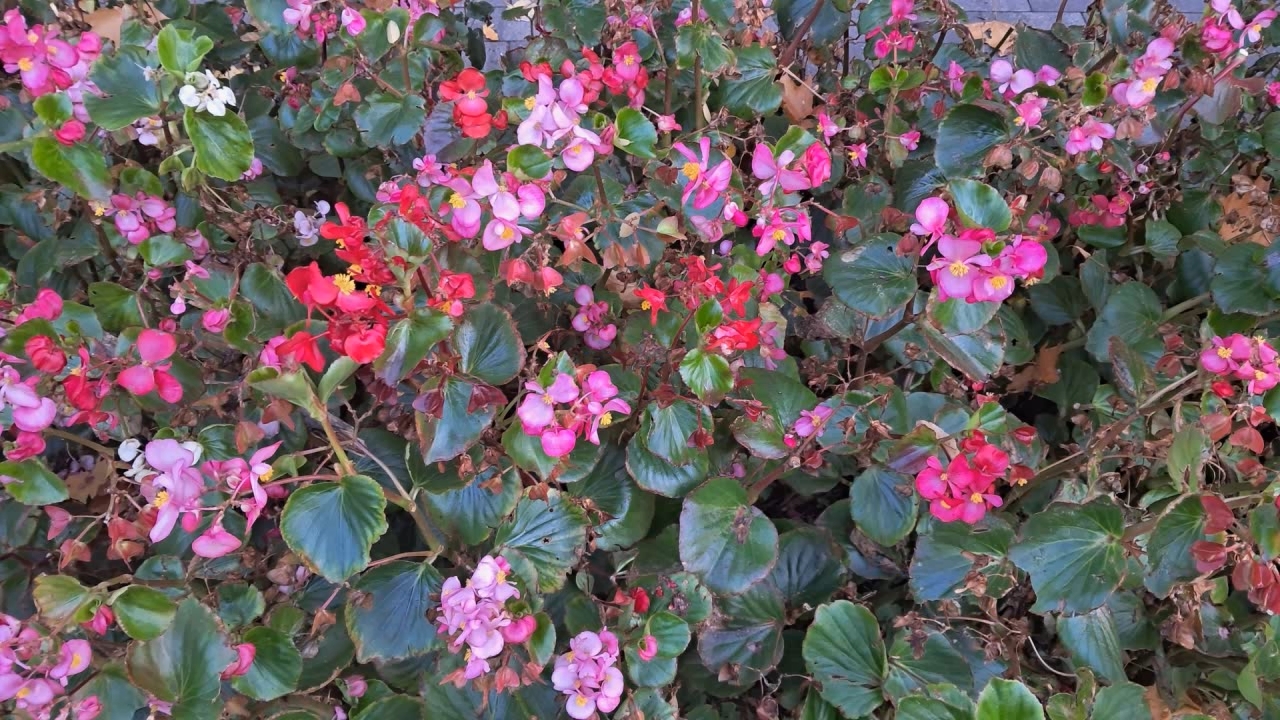
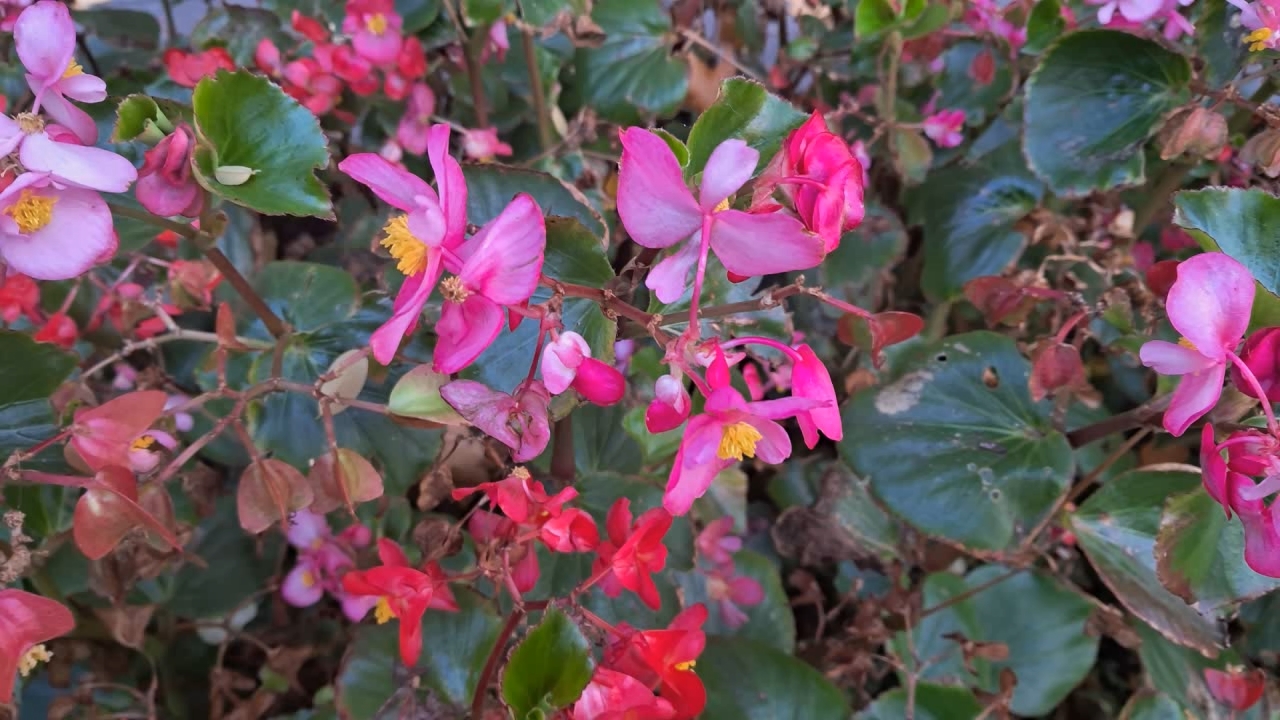
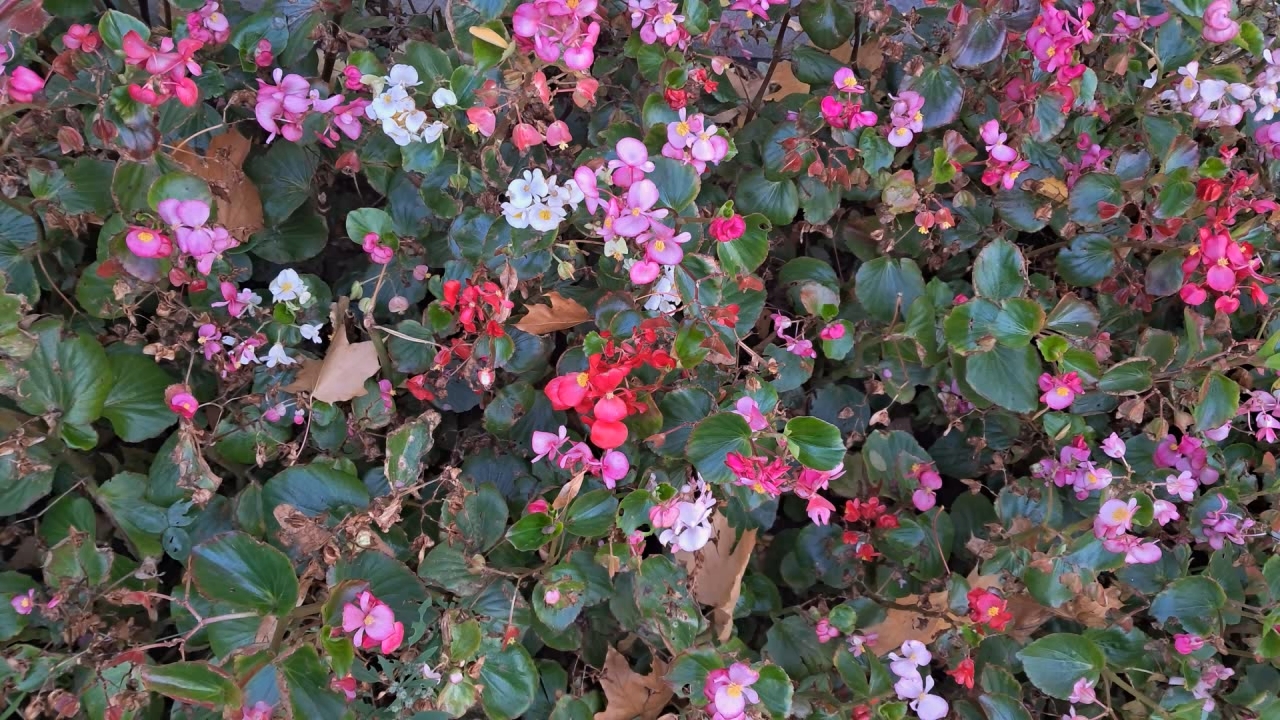
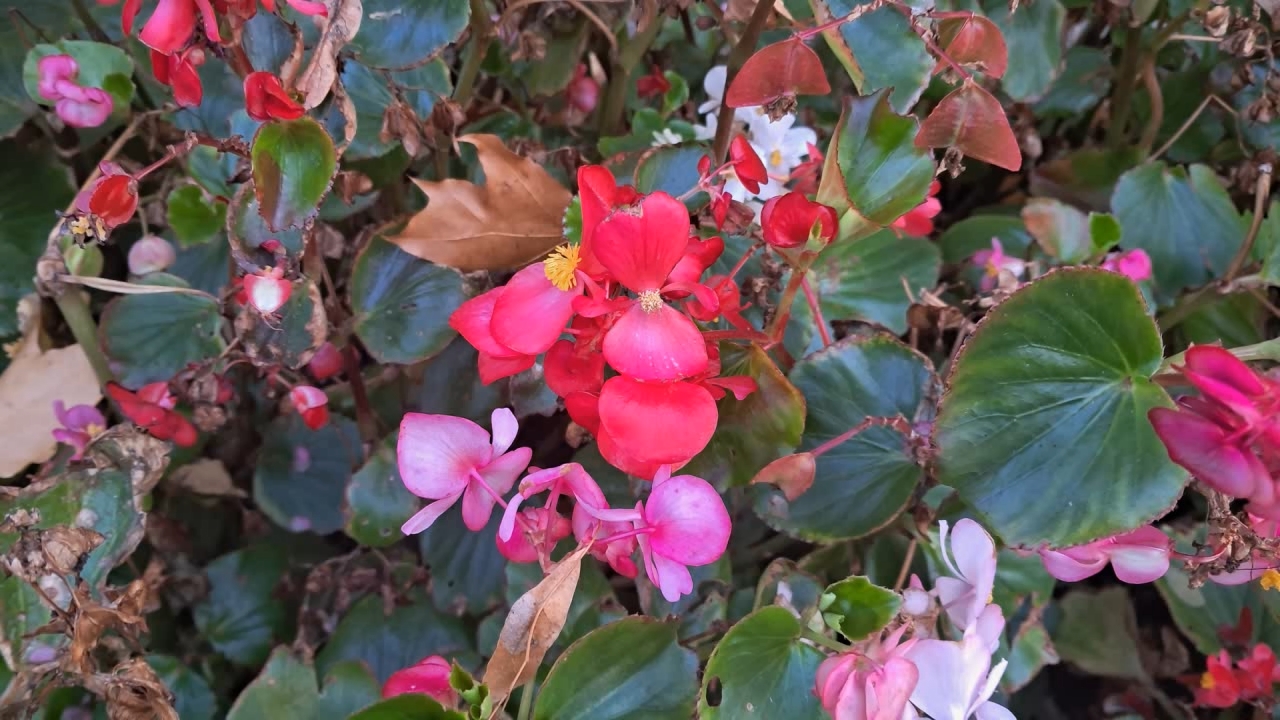
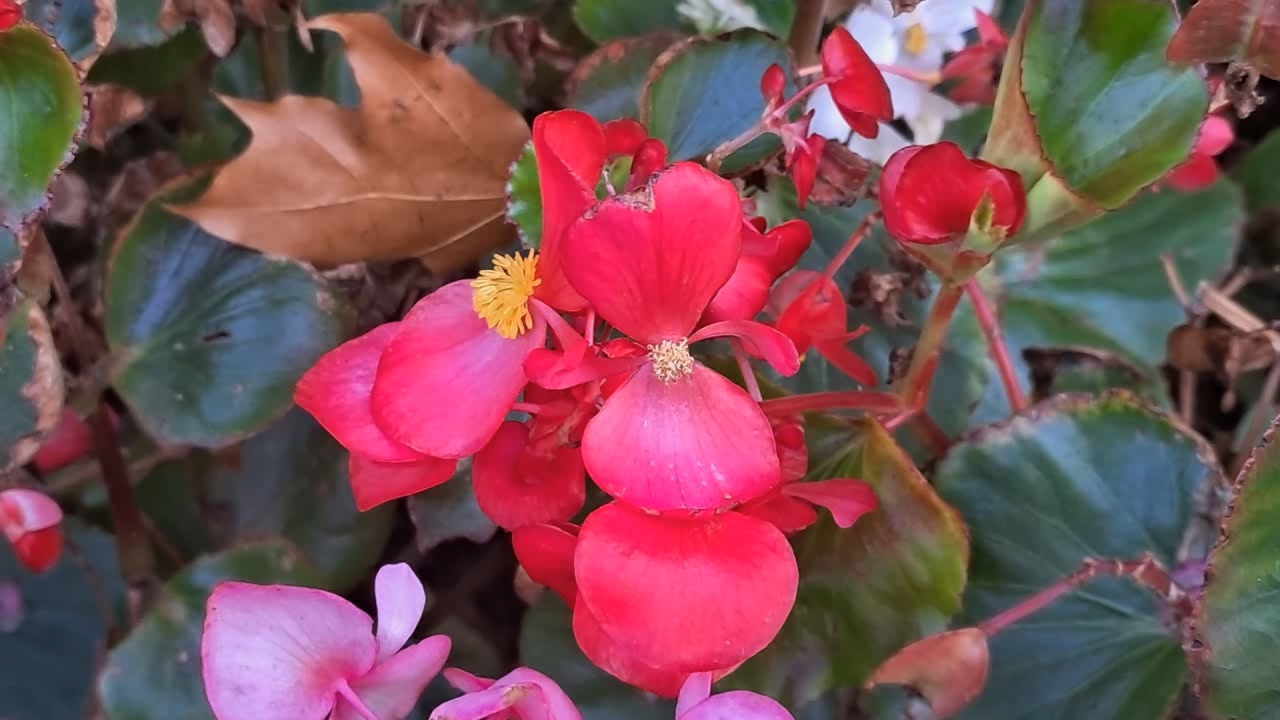
The flowerbed was full of blooming ornamental plants. Most of the flowers were red, although some were pink or white. I did not know their species, even though I had encountered these plants many times before. In the past, these and similar plants were grown mainly in pots, indoors or on balconies, but in recent years, they have increasingly been planted in outdoor flowerbeds.

For a long time, I had wanted to expose these red flowers to an atmosphere of gaseous ammonia. To begin with, I used an online plant identification tool and discovered that the plant was Begonia cucullata. I had often come across the name "begonia," but I had never really known what the plant looked like. Strictly speaking, Begonia is the name of an entire genus, and the plant growing in the flowerbed near my home is just one species within that genus. Well, now I know: it's a begonia. I'm quite fond of plants, although, to my shame, I'm not very good at remembering their names.

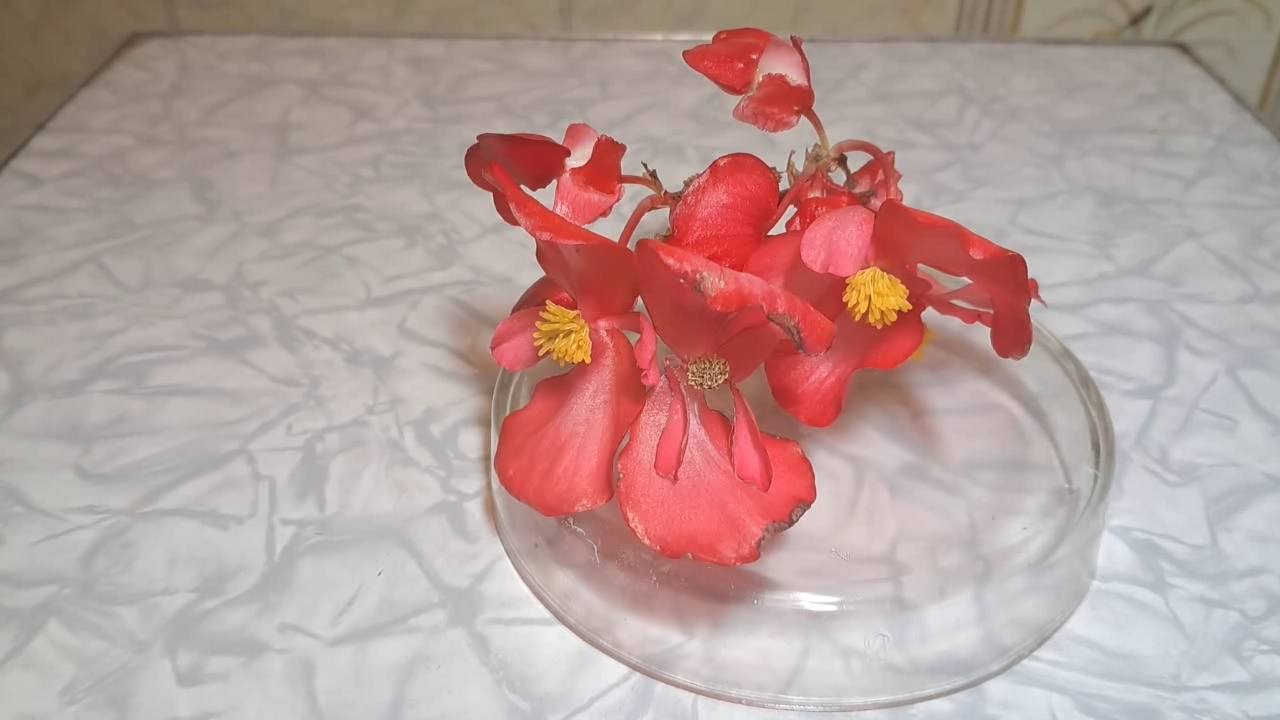
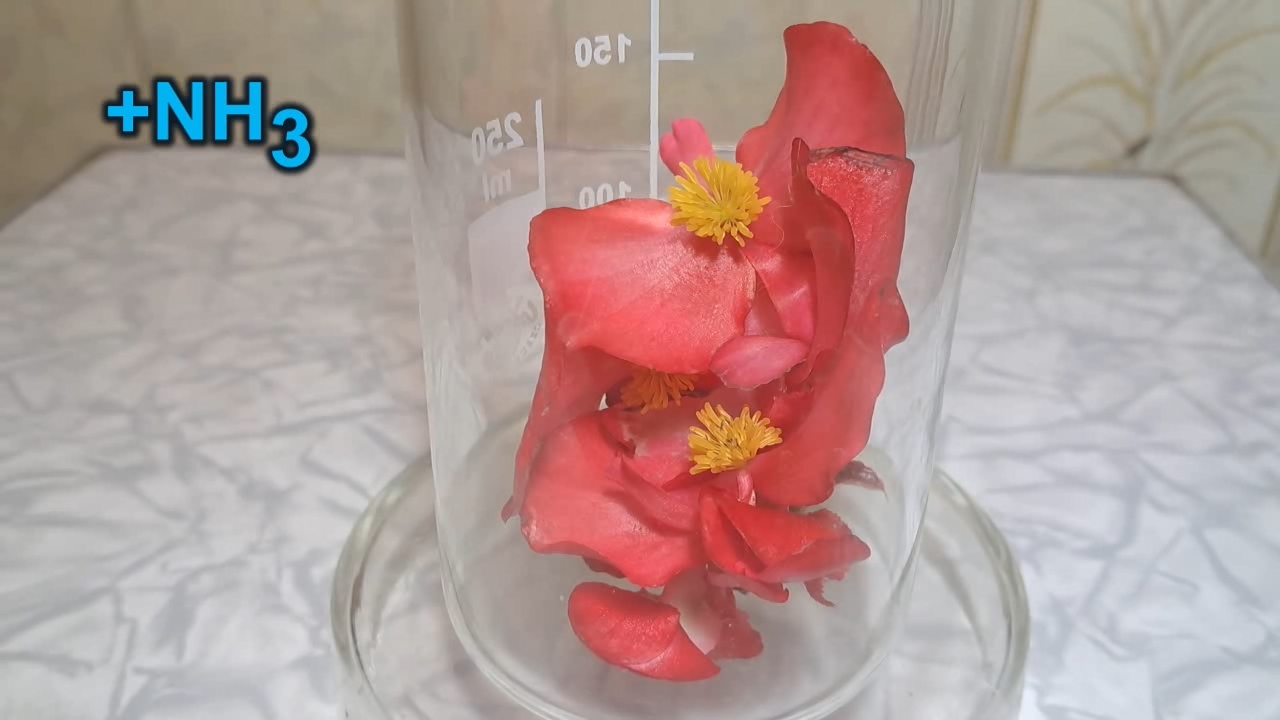
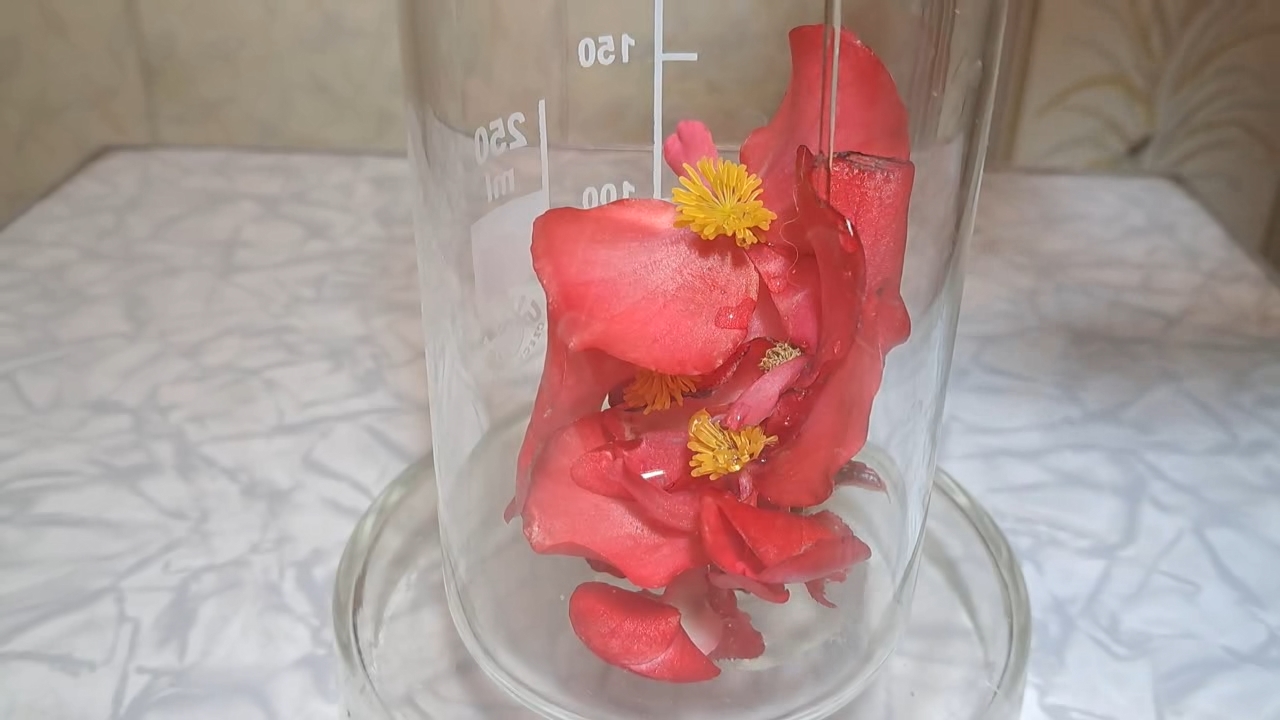
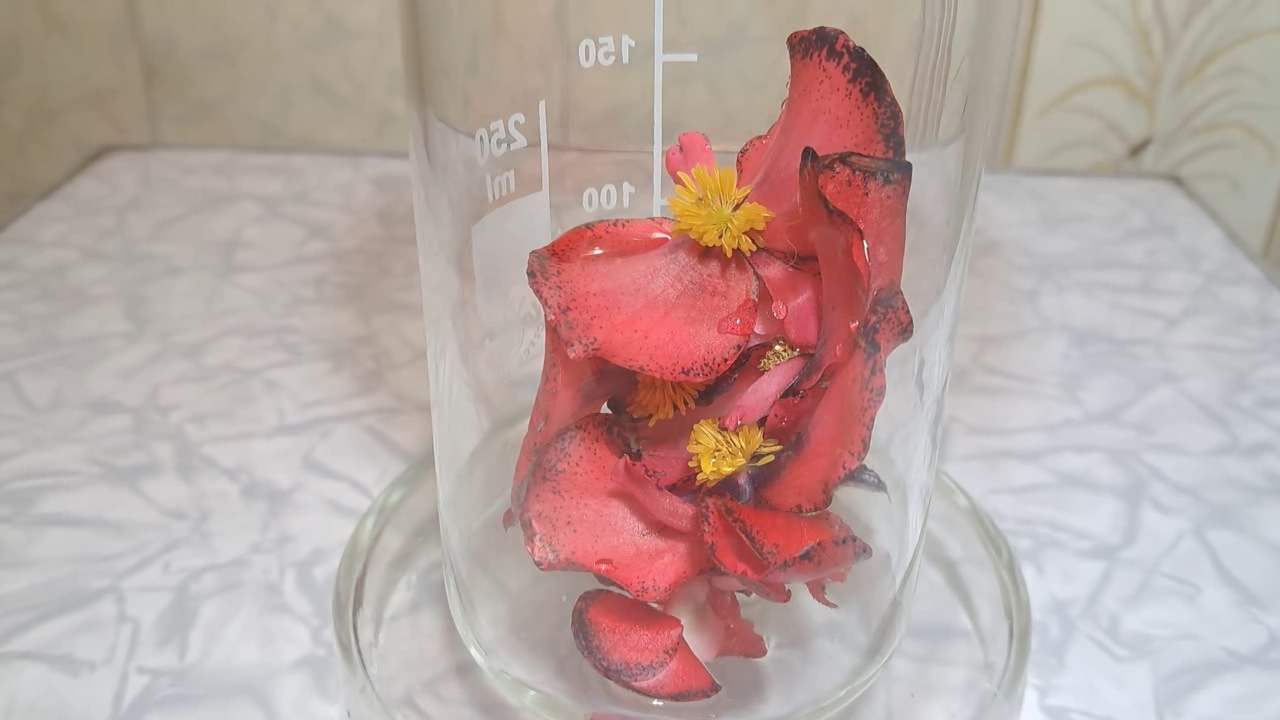
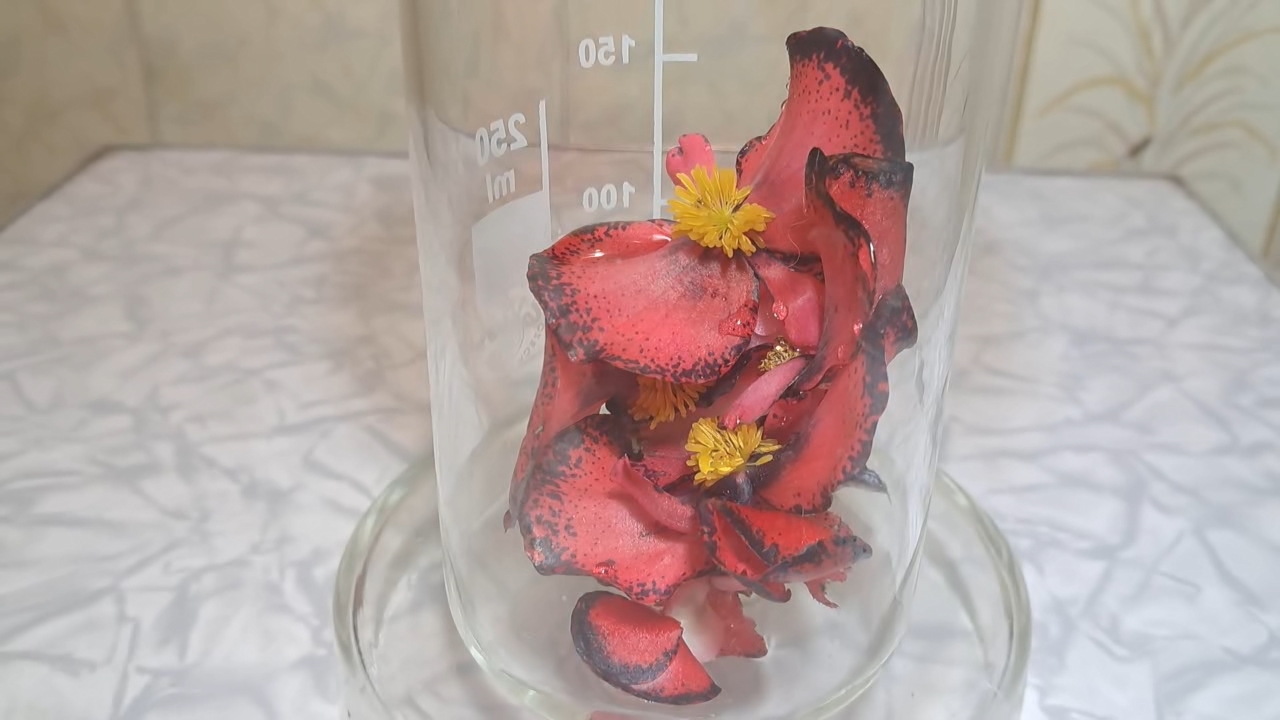
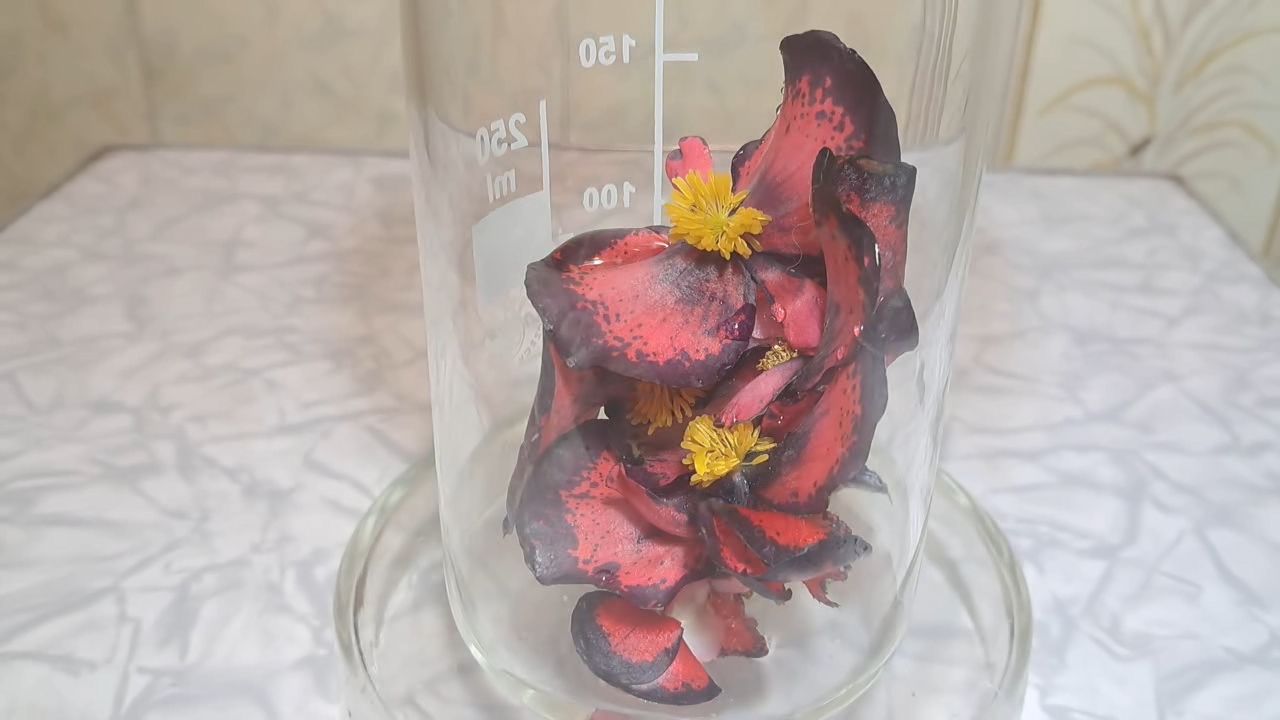
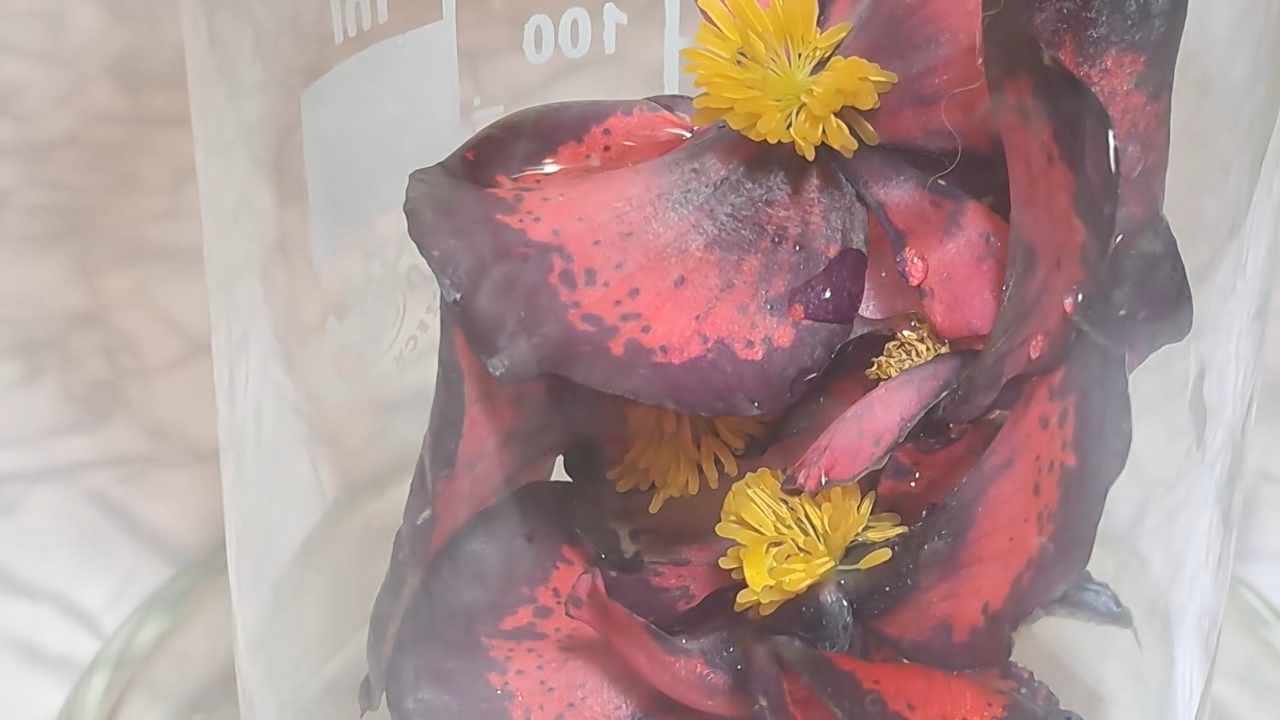
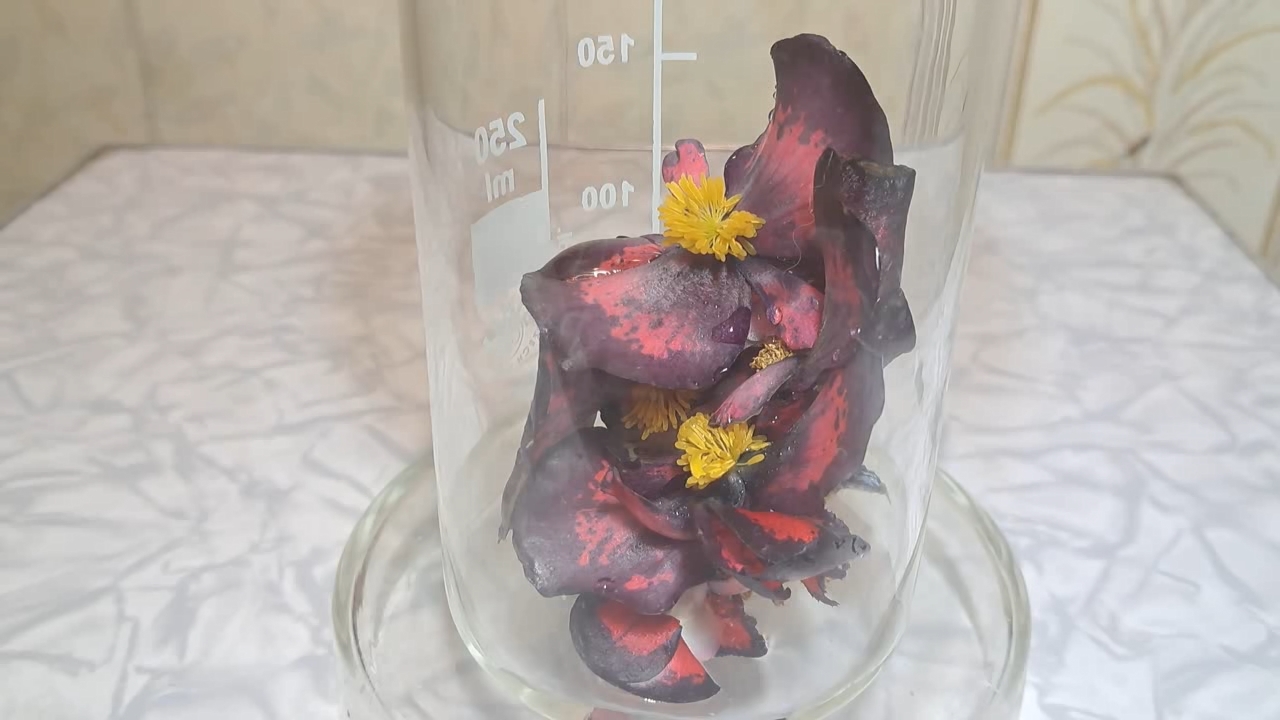
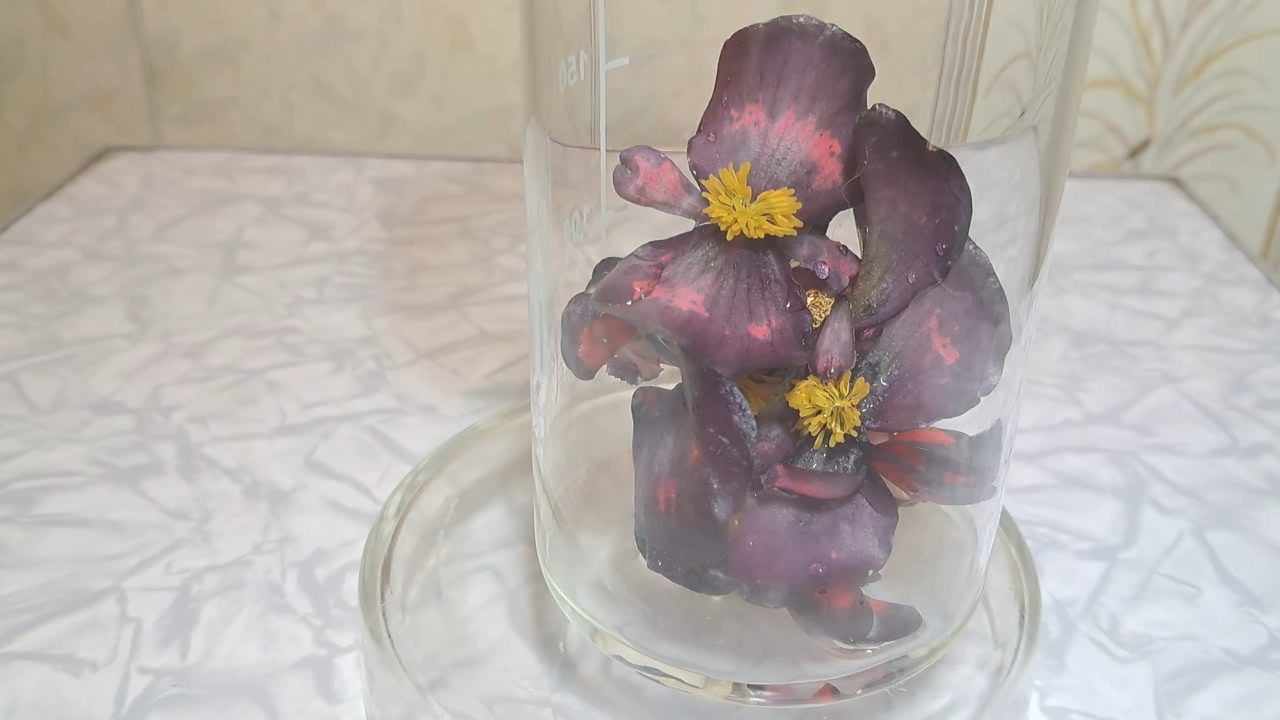
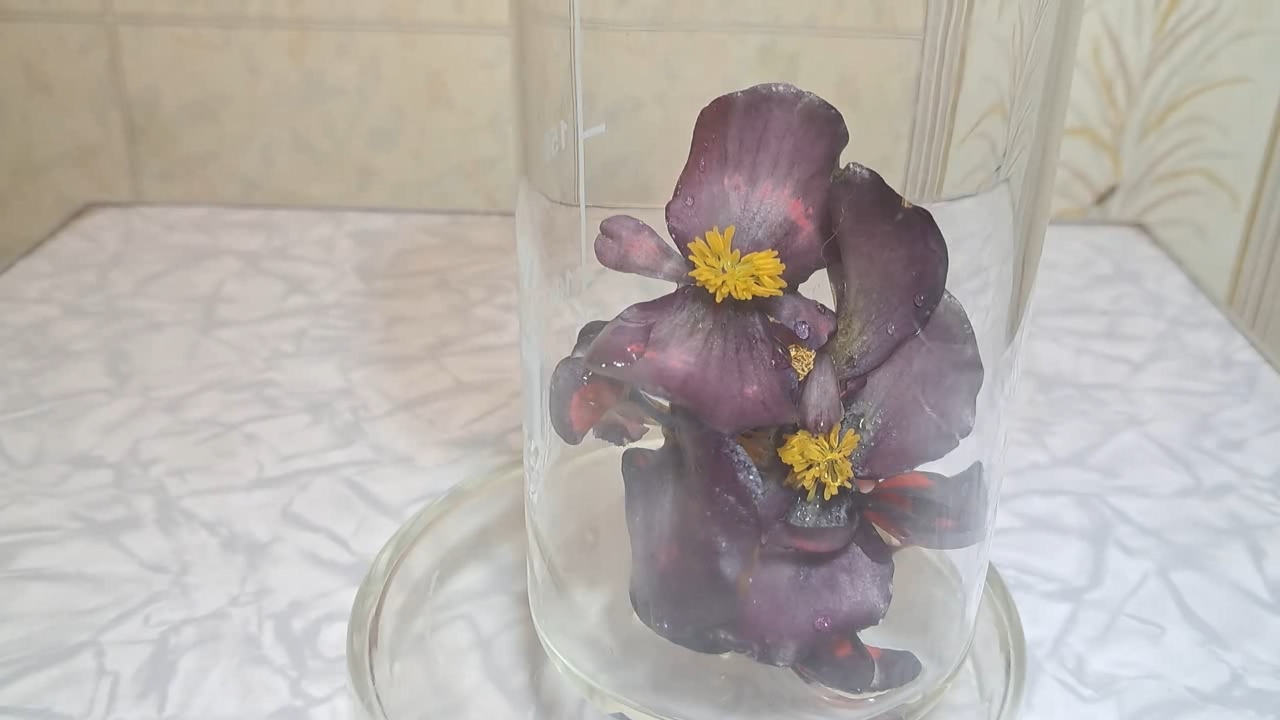
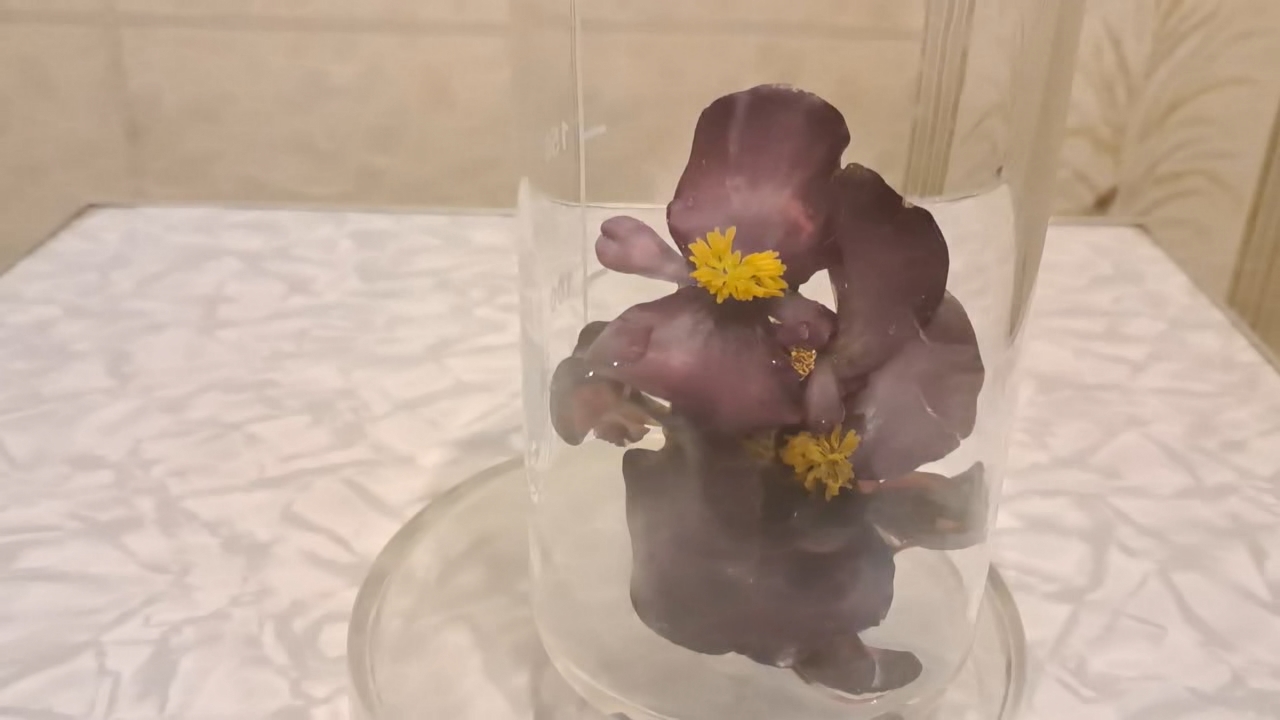
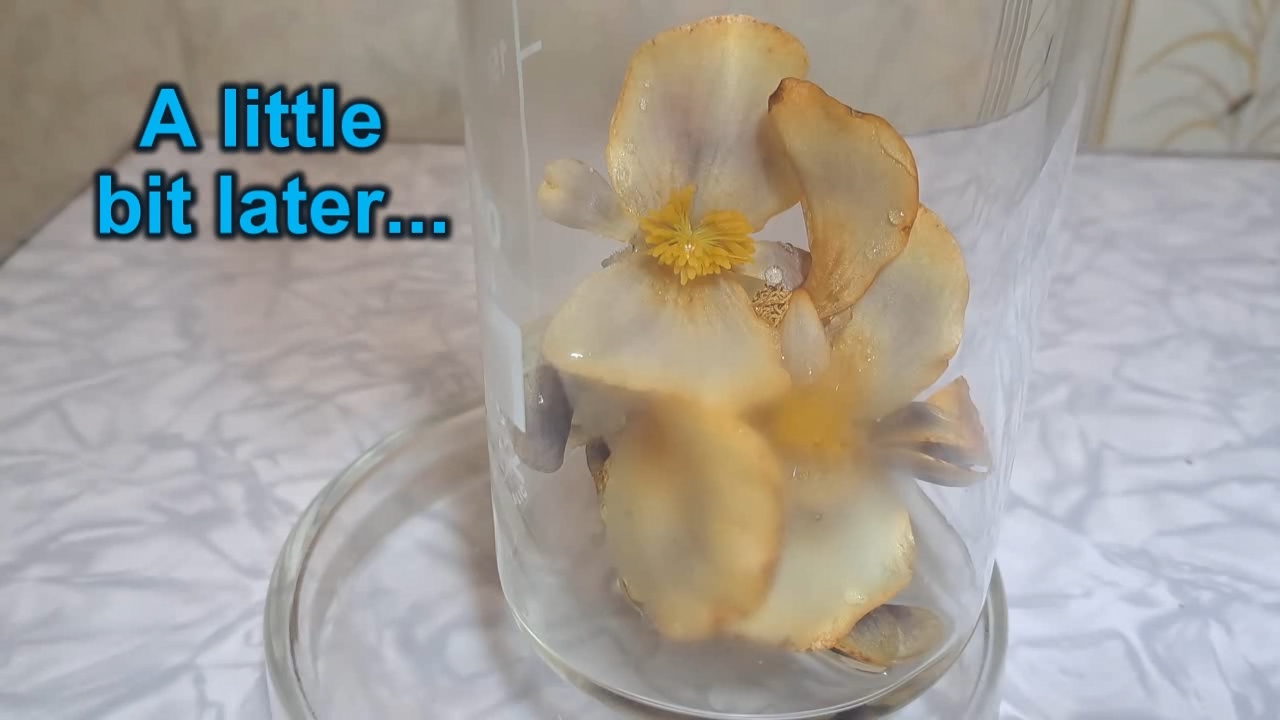
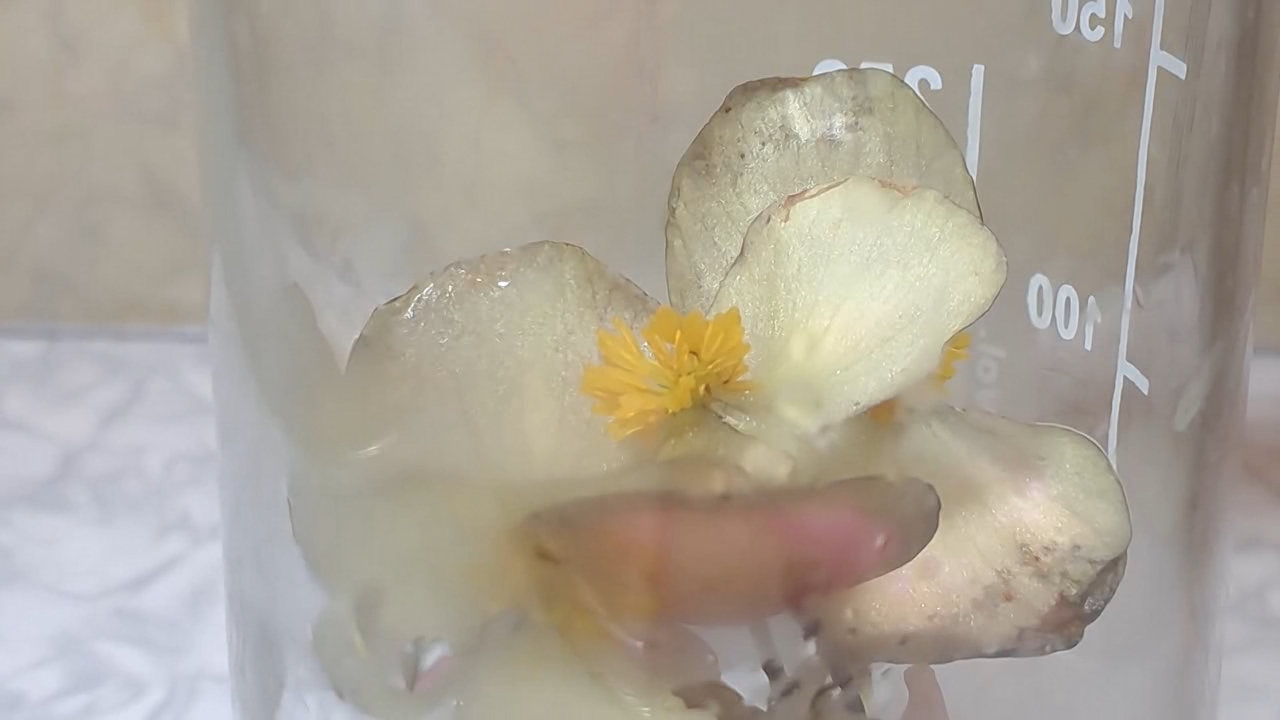
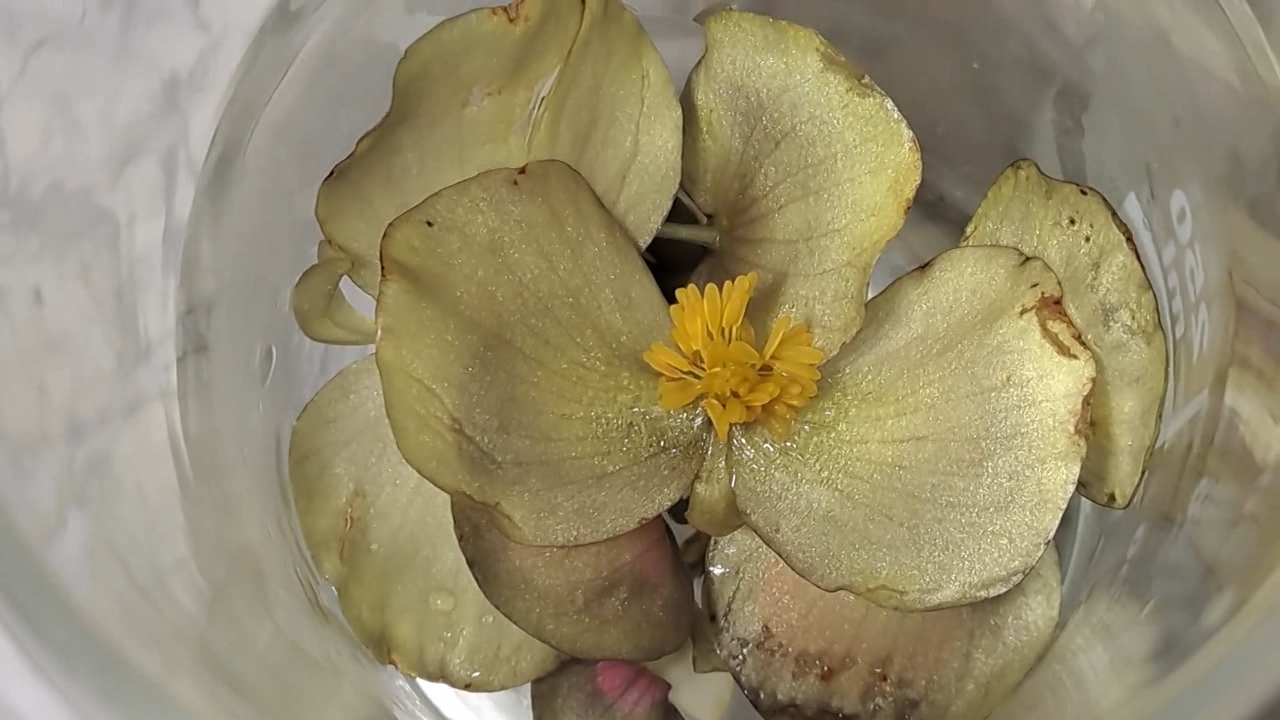
I picked a cluster of red blossoms, placed them in a beaker, added concentrated ammonia solution, and covered the beaker with a Petri dish. The bright red petals slowly turned dark brown. I had previously observed a similar color change in red tulip blossoms.

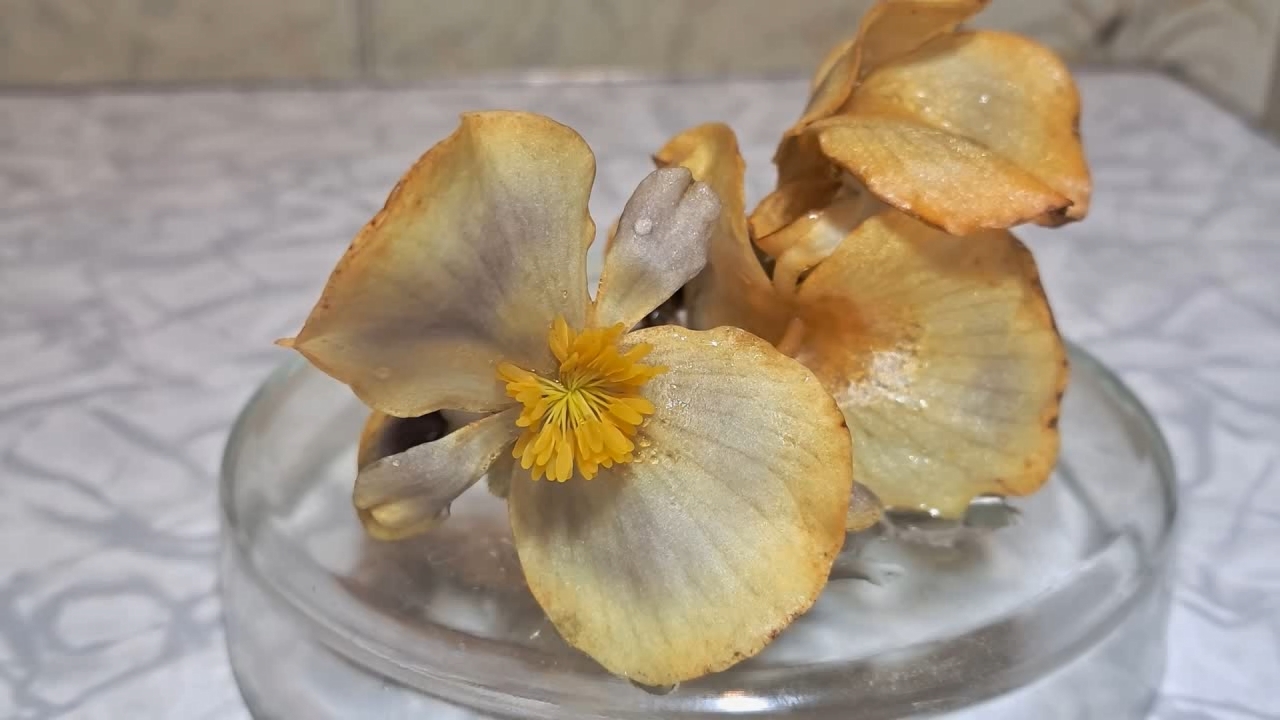
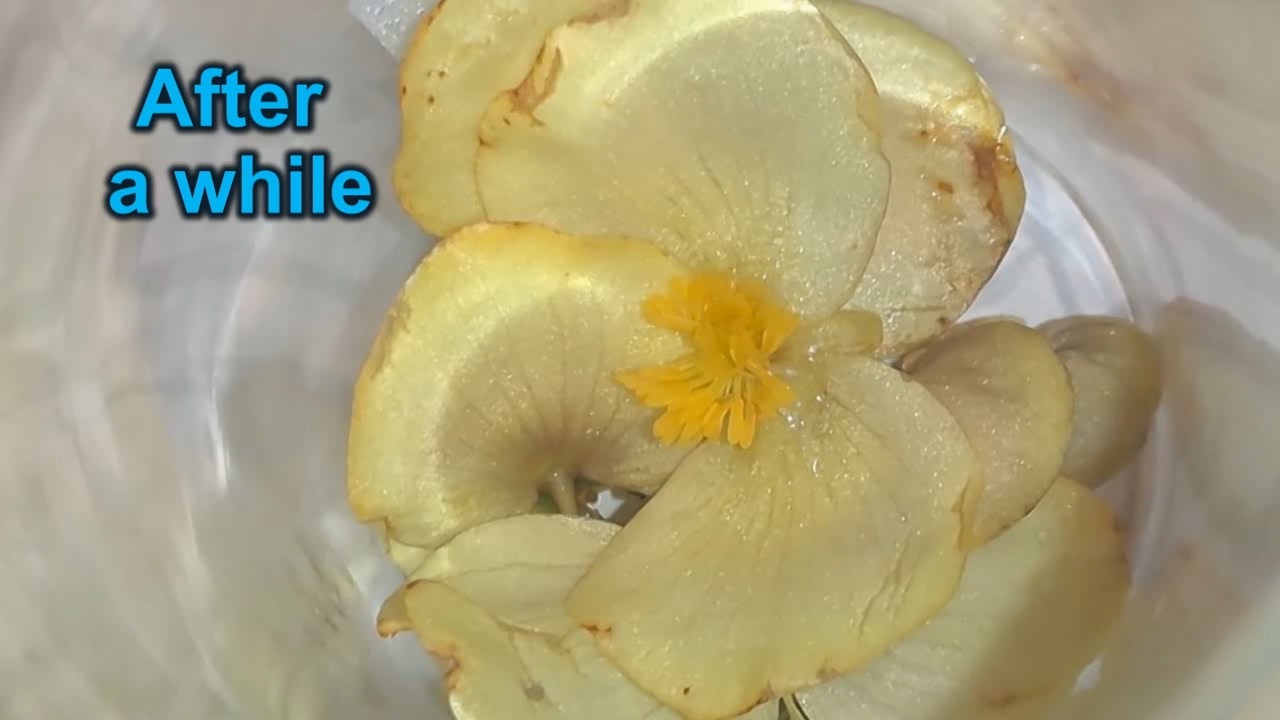
Once the flowers had turned dark brown, I stopped recording the video and making further observations, but left the flowers inside the covered beaker. Half an hour later, I discovered that the dark-colored flowers had become lighter. They had turned a pale brownish-yellow. No such color change had been observed in the red tulip blossoms.

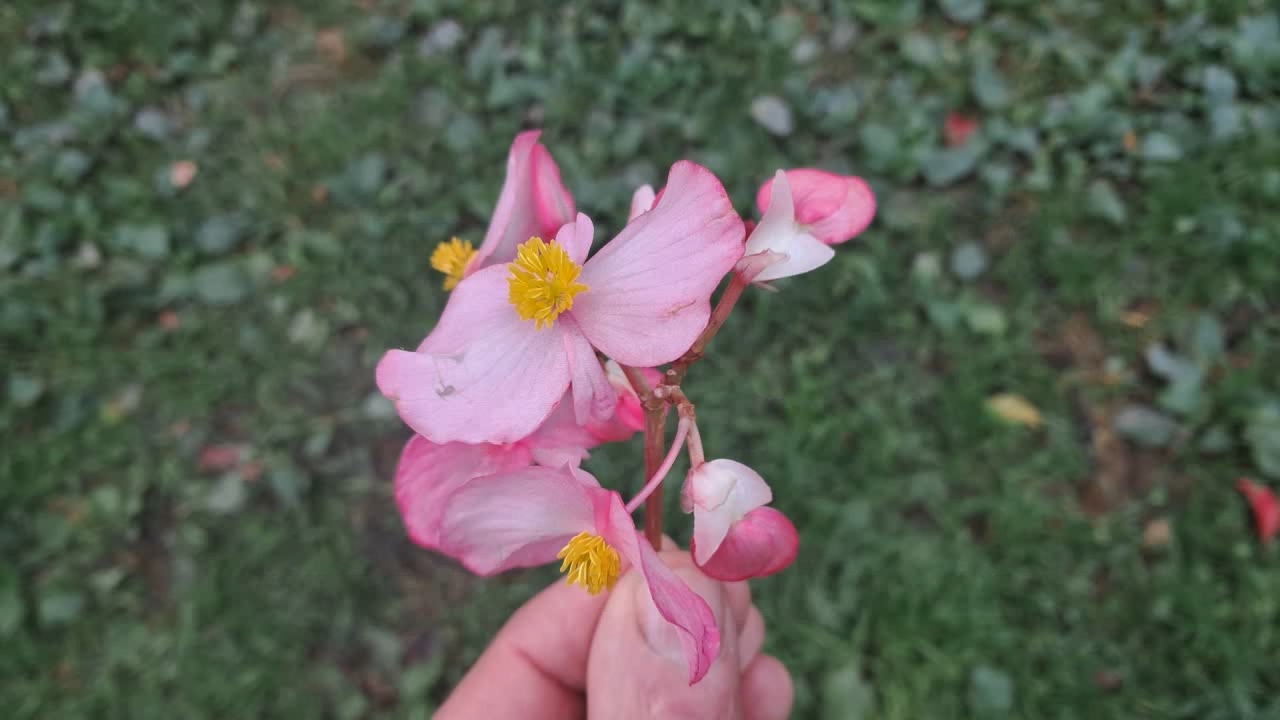
I then realized that, in addition to the red flowers, there were also pink and white begonias in the flowerbed. I began to wonder what colors they would turn when exposed to ammonia.


Бегония клобучковая (красные цветы) и аммиак - Часть 2
Идея провести эксперимент с цветком хризантемы появилась случайно - когда я наткнулся на выброшенный букет среди тротуара. Зато следующий эксперимент с растениями я планировал еще несколько лет назад. Я до сих пор его не осуществил только потому что была более интересная работа - тогда я имел дело с радиоактивными отходами, а позже - с энергетическими материалами. Зато сейчас, когда остался без лаборатории, вспомнил про ярко-красные цветы.

Клумба была заполнена цветущими декоративными растениями, большинство их цветков были красными, но некоторые имели розовую или белую окраску. Видовую принадлежность этих растений я не знал, хотя и встречал их много раз. Раньше такие же и родственные растения выращивали преимущественно в цветочных горшках в комнатах и на балконах, но в последние годы их стали также садить на клумбах.

Я уже давно хотел поместить эти красные цветы в атмосферу газообразного аммиака. Для начала воспользовавшись On-Line определителем, узнал, что растение называется Begonia Cucullata (Бегония клобучковая). Название "бегония" я встречал много раз, хотя не знал, как она выглядит. Точнее, данное название соответствует целому роду растений - на клумбе возле нашего дома растет только один из видов бегонии. Что ж, теперь буду знать, что это бегония - я очень люблю растения, однако, плохо знаю их названия - к своему стыду.

Сорвал соцветие красных цветов, поместил их в стакан и добавил насыщенный раствор аммиака, накрыл чашкой Петри. Ярко-красные лепестки медленно стали темно-коричневыми. Подобный переход цвета я уже наблюдал с красными цветками тюльпана.

Когда цветы стали темно-коричневыми, я прекратил сьемку видео и дальнейшее наблюдение, но оставил их в накрытом стакане. Через полчаса обнаружил, что темно-коричневые цветы стали бледными, коричневато-желтыми. В случае красных цветов тюльпана такого перехода окраски не наблюдалось.

Потом я осознал, что кроме красных цветов на клумбе также были розовые и белые цветы бегонии. Интересно, в какой цвет они окрасятся, будучи обработанными аммиаком?


Download the Video (38 Mb, .avi )

Begonia Cucullata (Red Flowers) and Ammonia
Begonia Cucullata (Red Flowers)

Begonia Cucullata (Red Flowers) and Ammonia

Begonia Cucullata (Red Flowers) and Ammonia

Begonia Cucullata (Red Flowers) and Ammonia

Begonia Cucullata (Red Flowers) and Ammonia

Begonia Cucullata (Red Flowers) and Ammonia

Begonia Cucullata (Red Flowers) and Ammonia

Begonia Cucullata (Red Flowers) and Ammonia

Begonia Cucullata (Red Flowers) and Ammonia

Begonia Cucullata (Red Flowers) and Ammonia

Begonia Cucullata (Red Flowers) and Ammonia

Begonia Cucullata (Red Flowers) and Ammonia

Begonia Cucullata (Red Flowers) and Ammonia

Begonia Cucullata (Red Flowers) and Ammonia

Begonia Cucullata (Red Flowers) and Ammonia

Begonia Cucullata (Red Flowers) and Ammonia

Begonia Cucullata (Red Flowers) and Ammonia

Begonia Cucullata (Red Flowers) and Ammonia


Having noticed a mistake in the text, allocate it and press Ctrl-Enter


Begonia Cucullata (Pink and White Flowers) and Ammonia - Part 3
Бегония клобучковая (розовые цветы) и аммиак - Часть 3
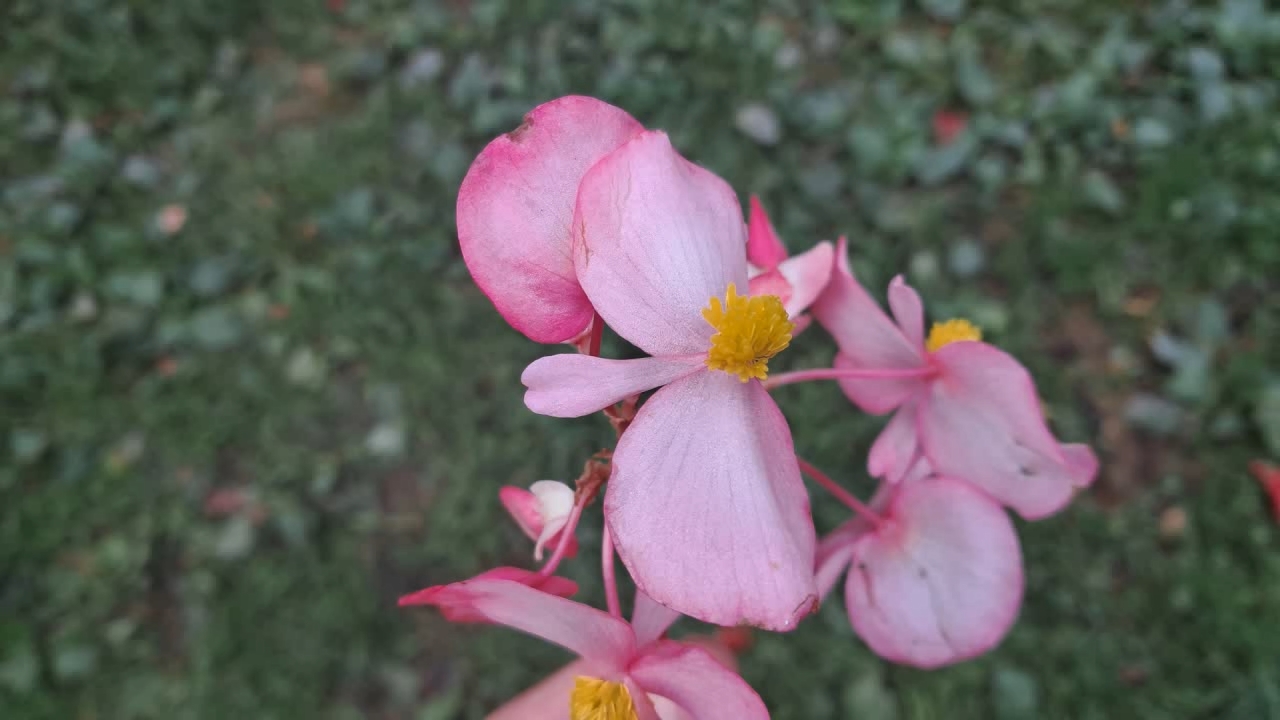
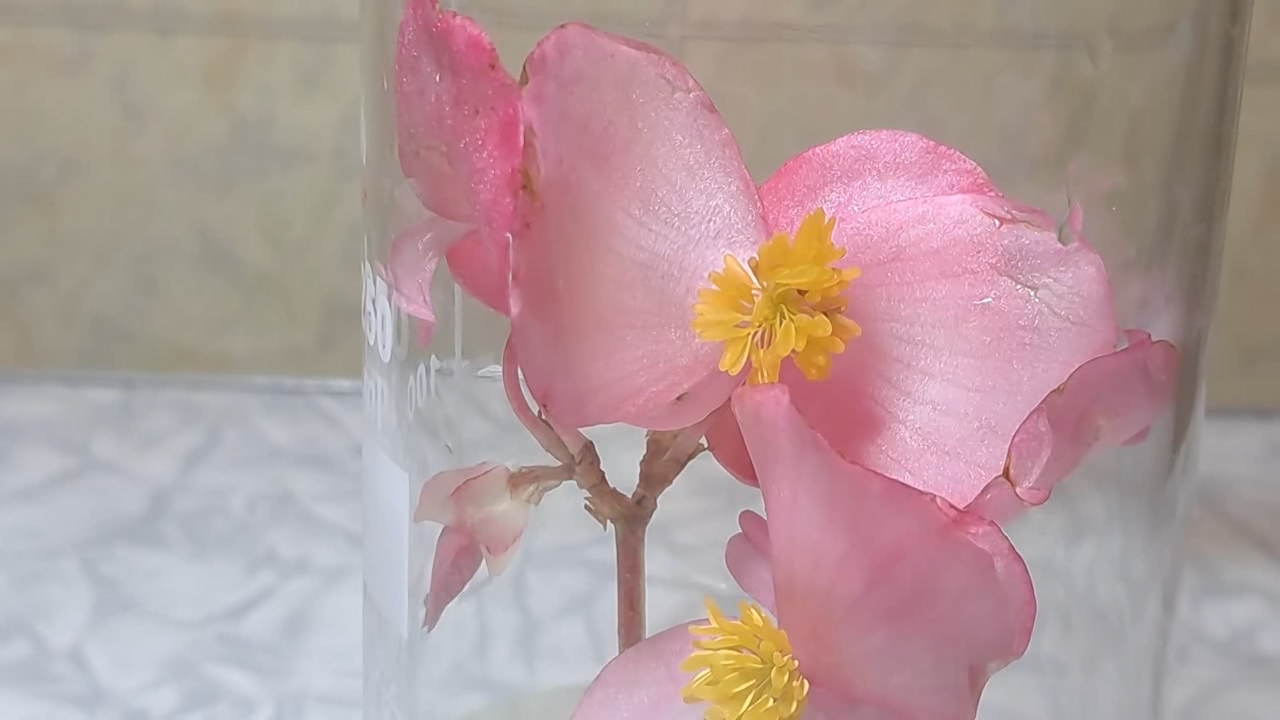
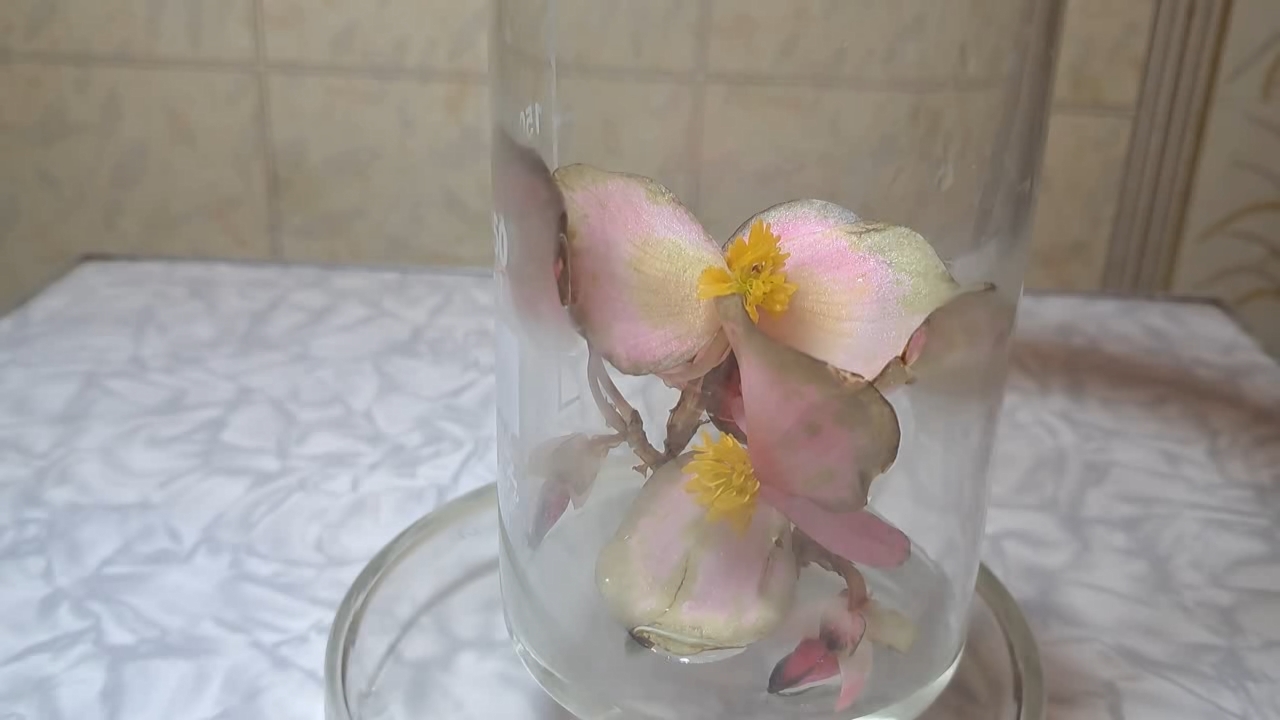
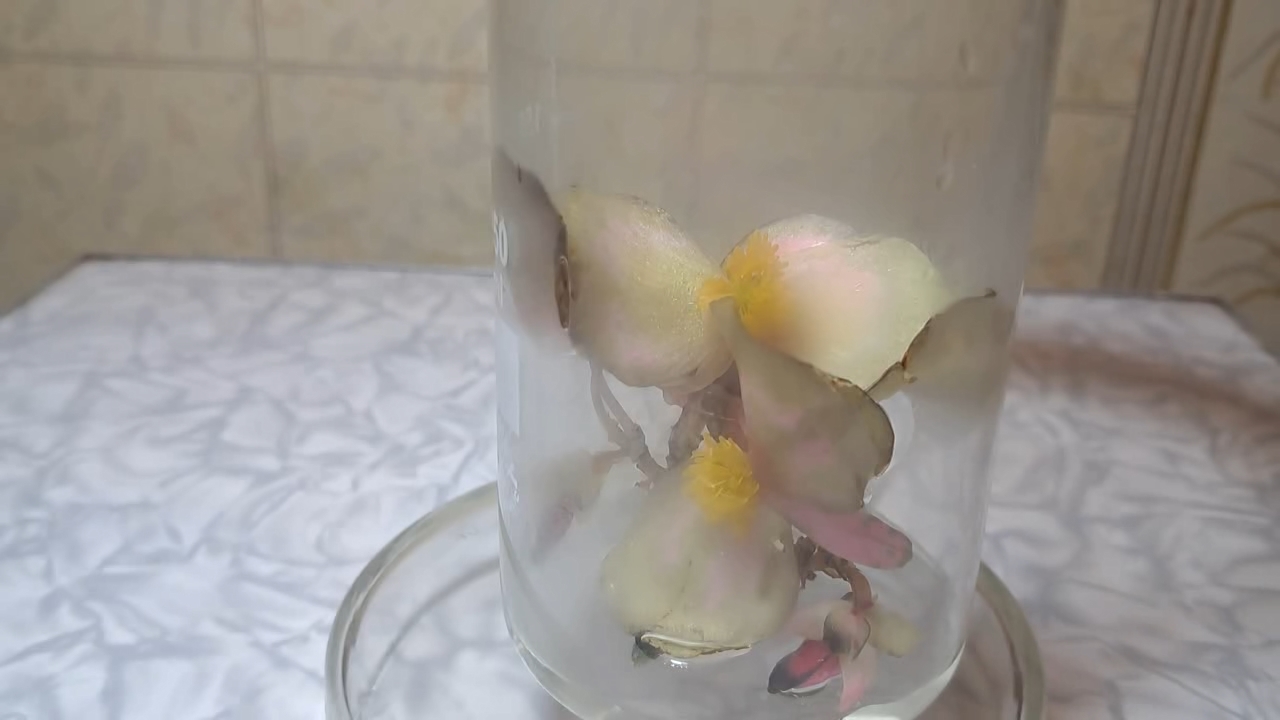
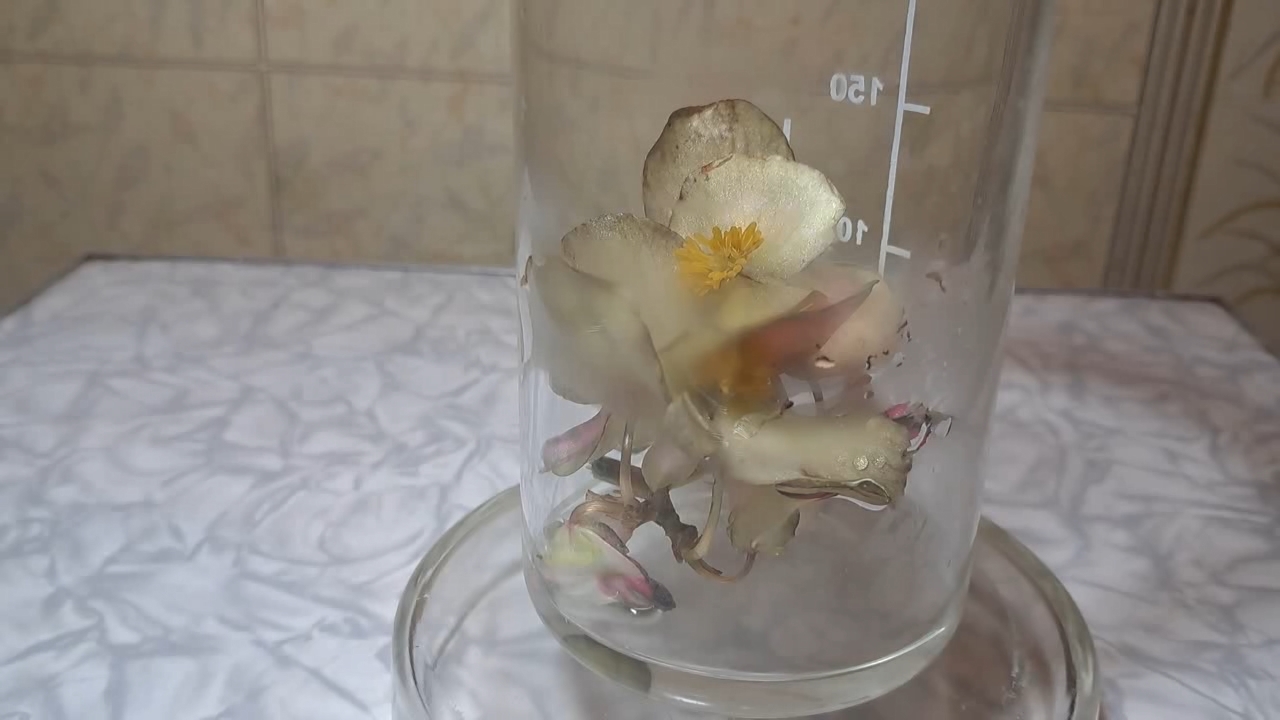
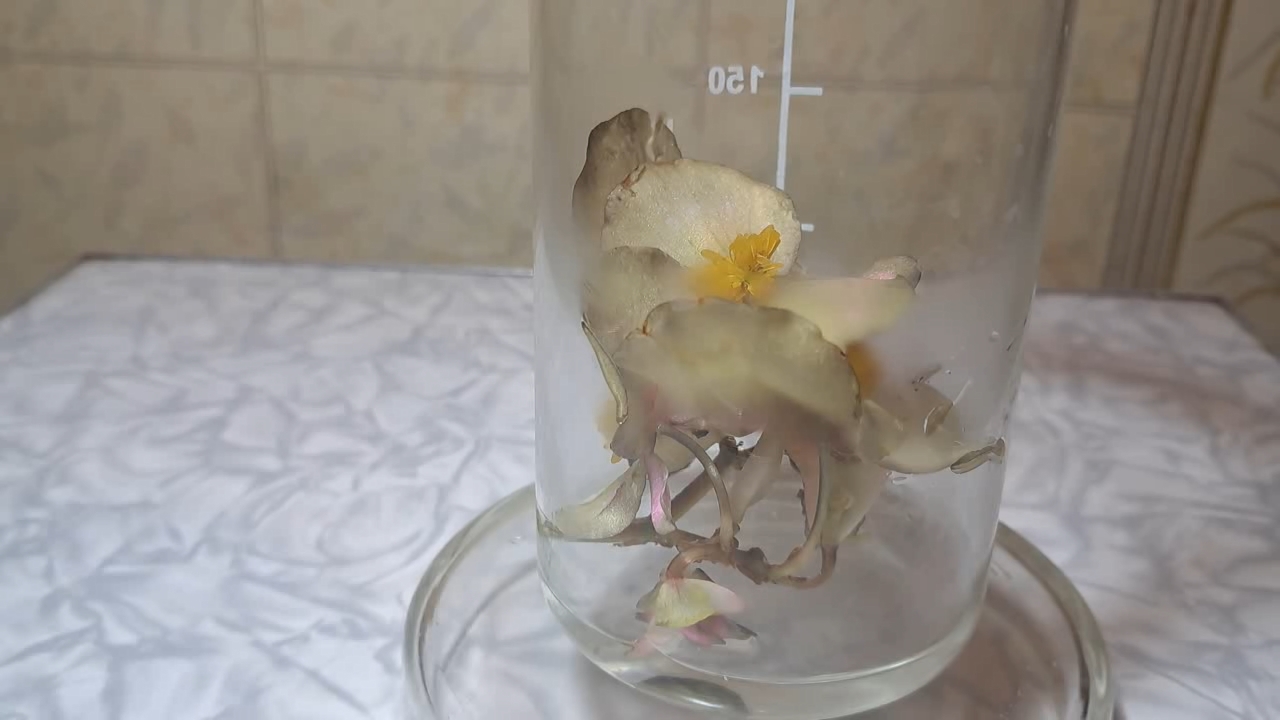
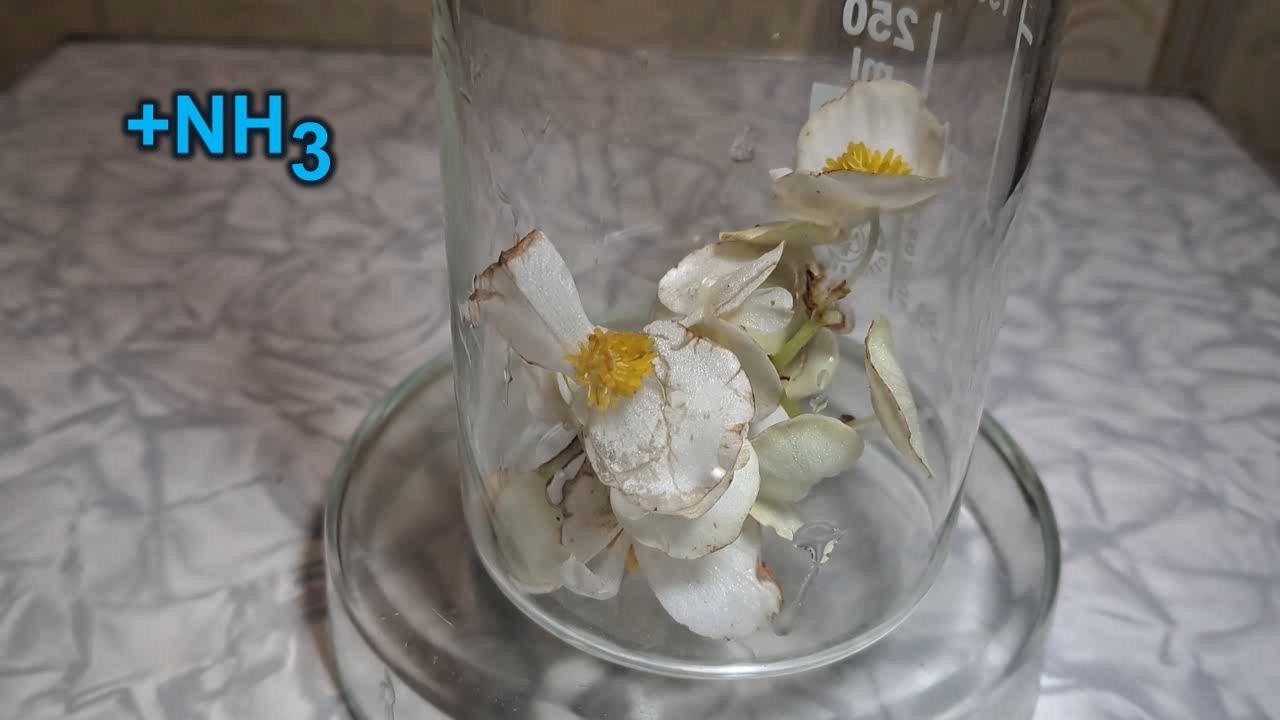
It turned out that I was mistaken: there were just as many pink begonia blossoms in the flowerbed as red ones, while white blossoms were quite rare. Naturally, this made no difference to our experiment, as only a few blossoms were needed. I picked one pink and one white begonia inflorescence and brought them home.

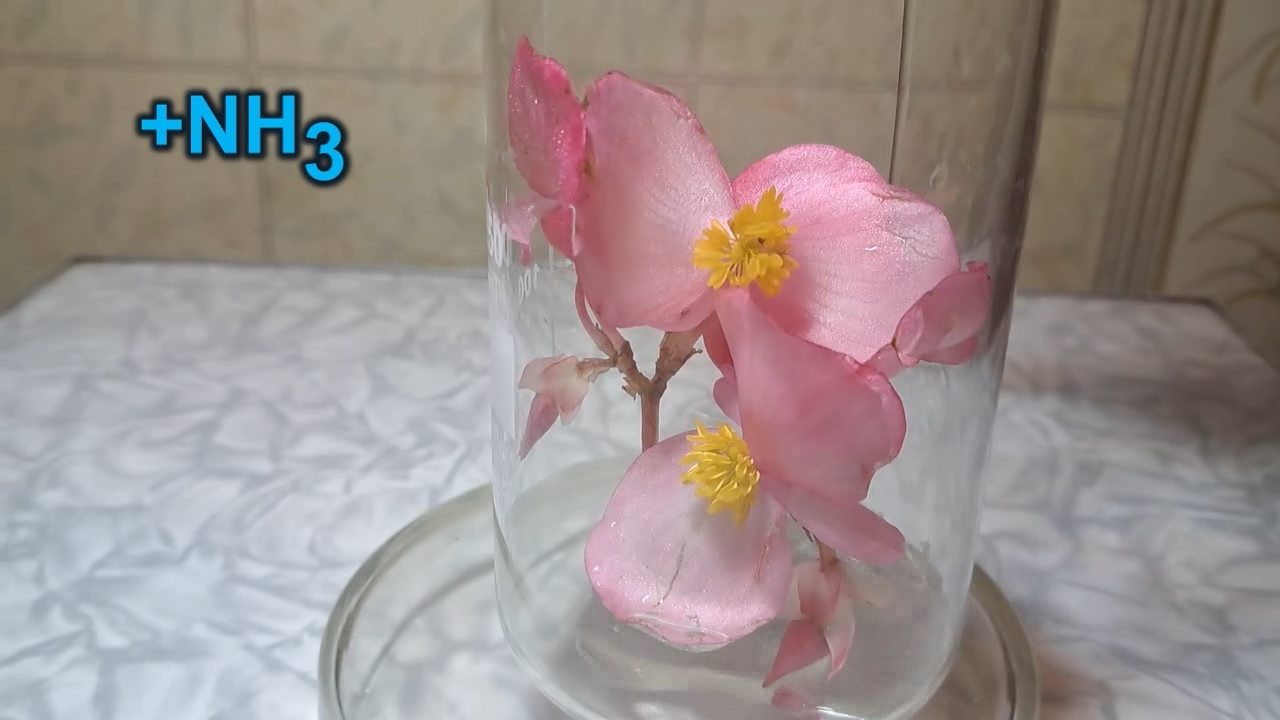
First, I placed the pink inflorescence in a glass, added about 10 mL of concentrated ammonia solution, and covered the glass with a Petri dish.

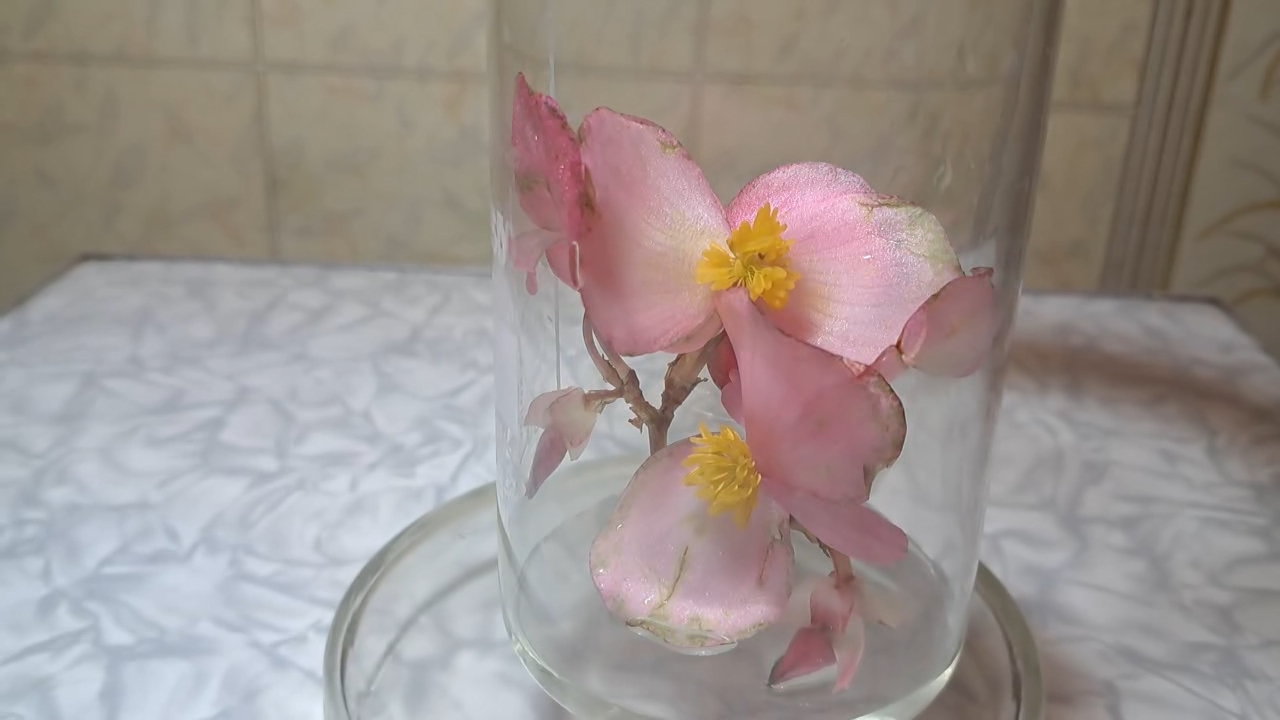
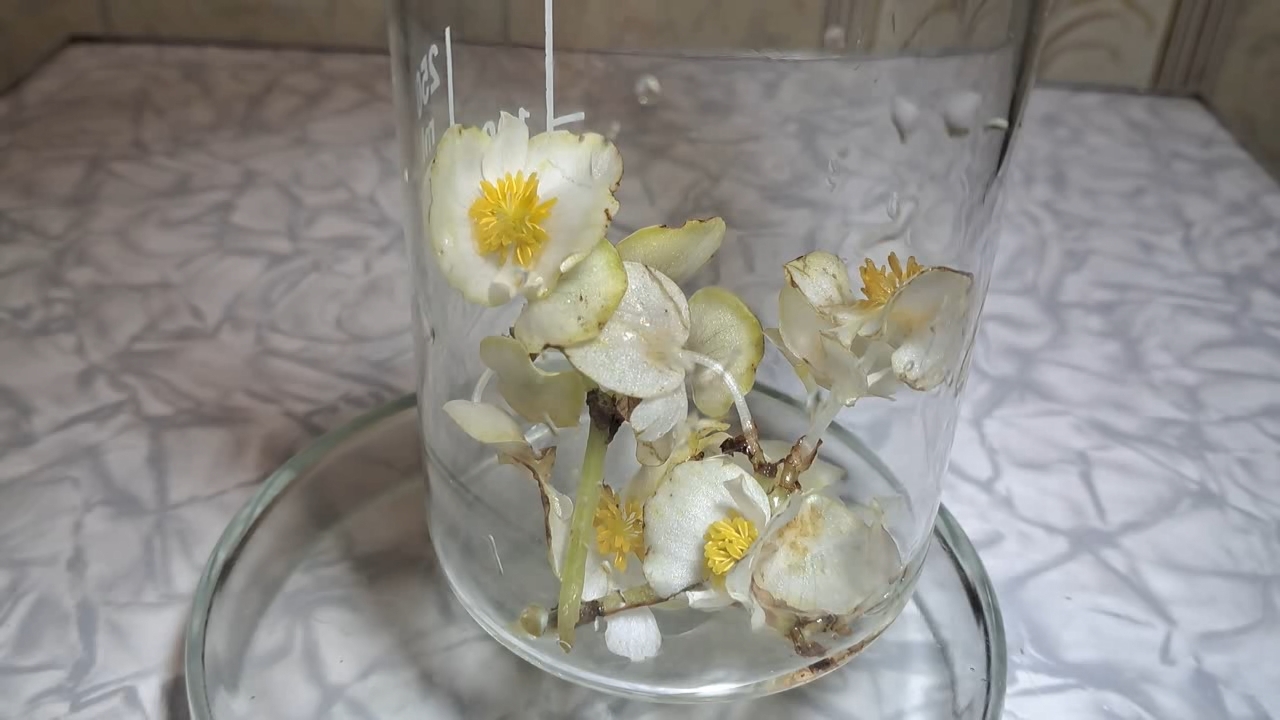
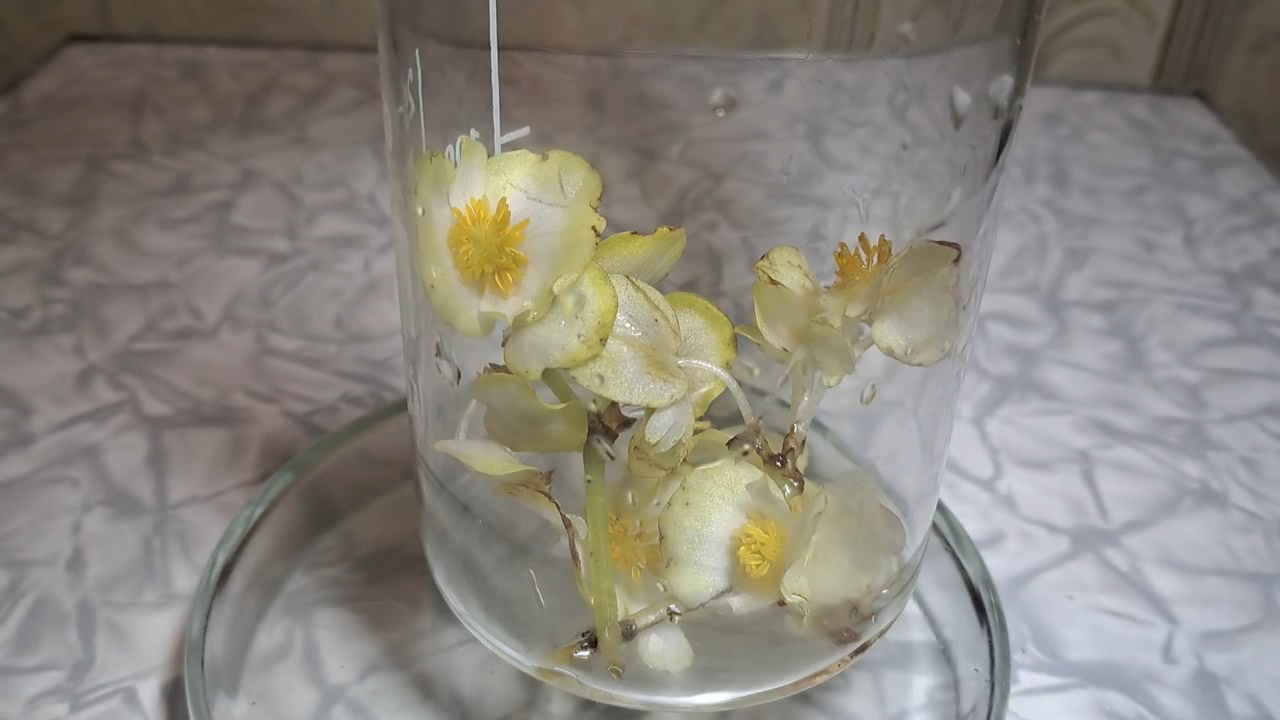
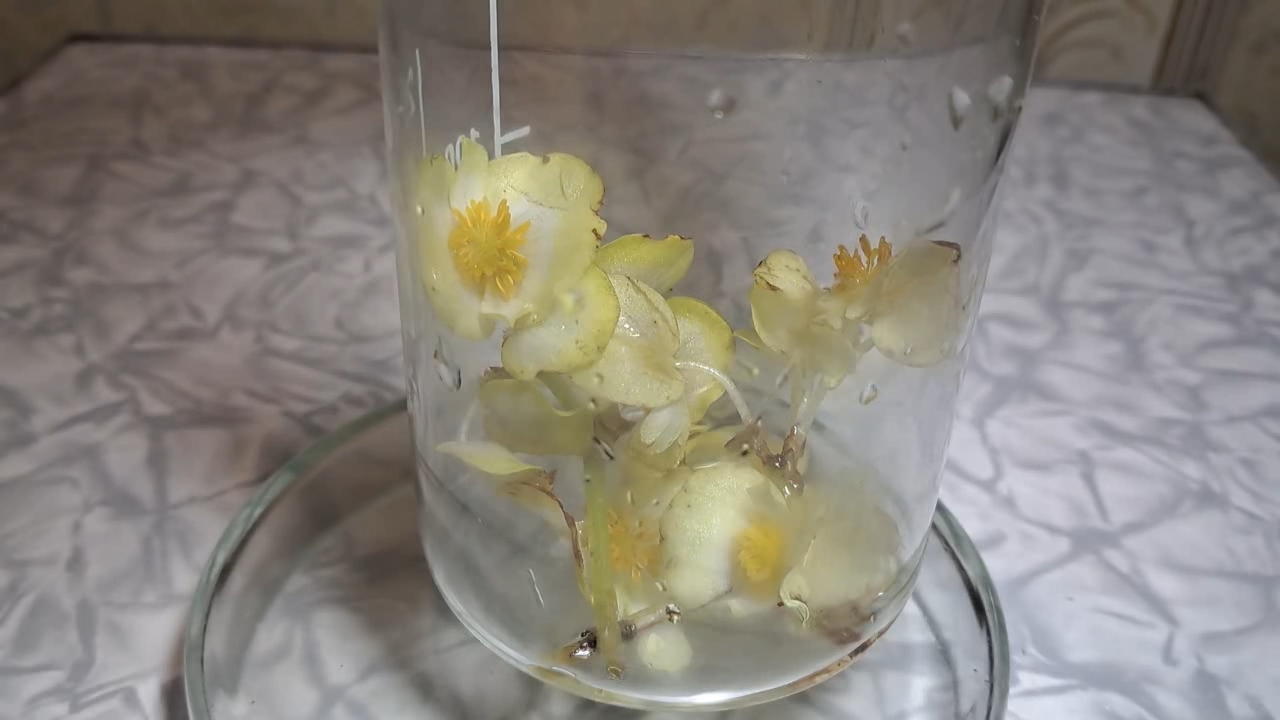
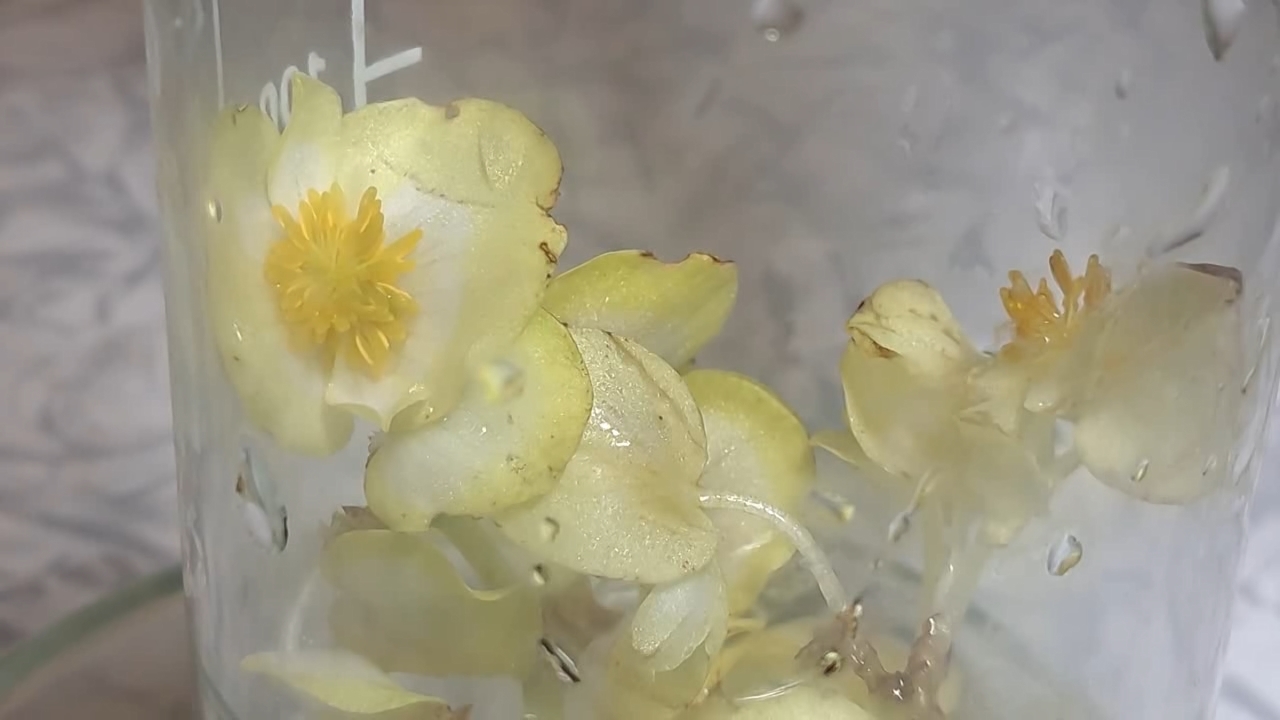
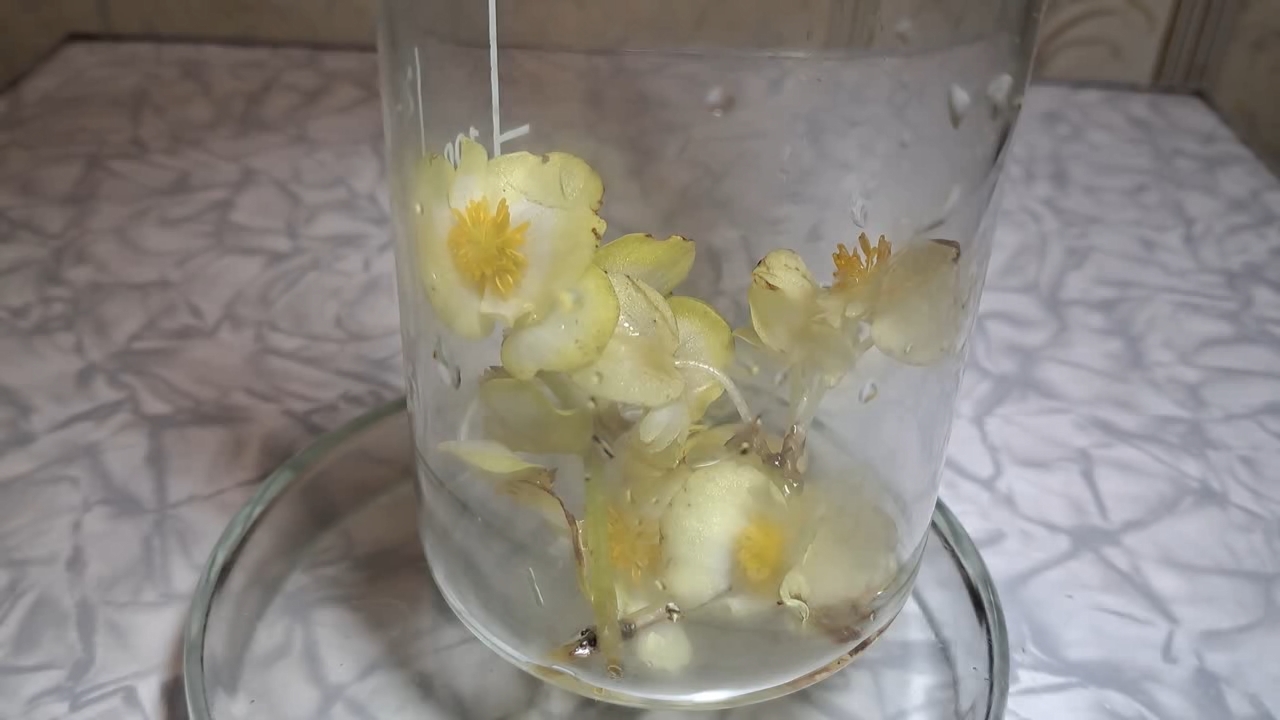
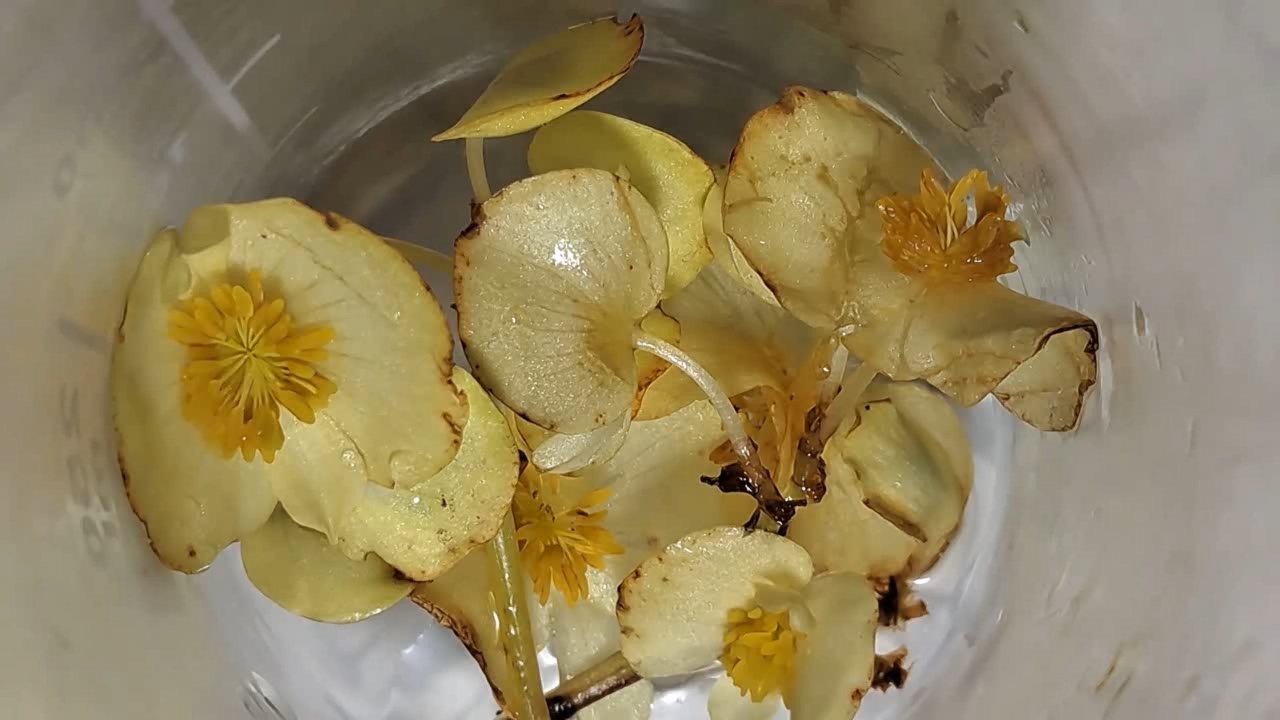
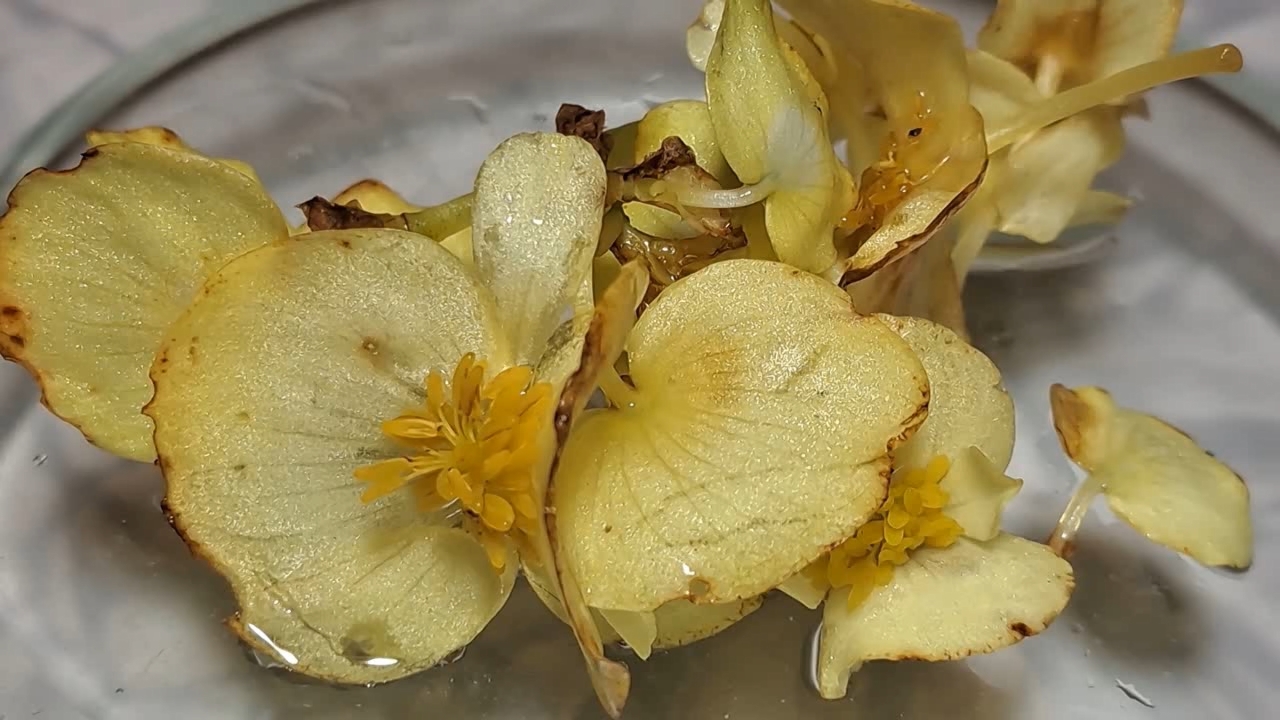
The pink petals gradually turned a pale yellowish-green. Over time, this color shifted to yellow.

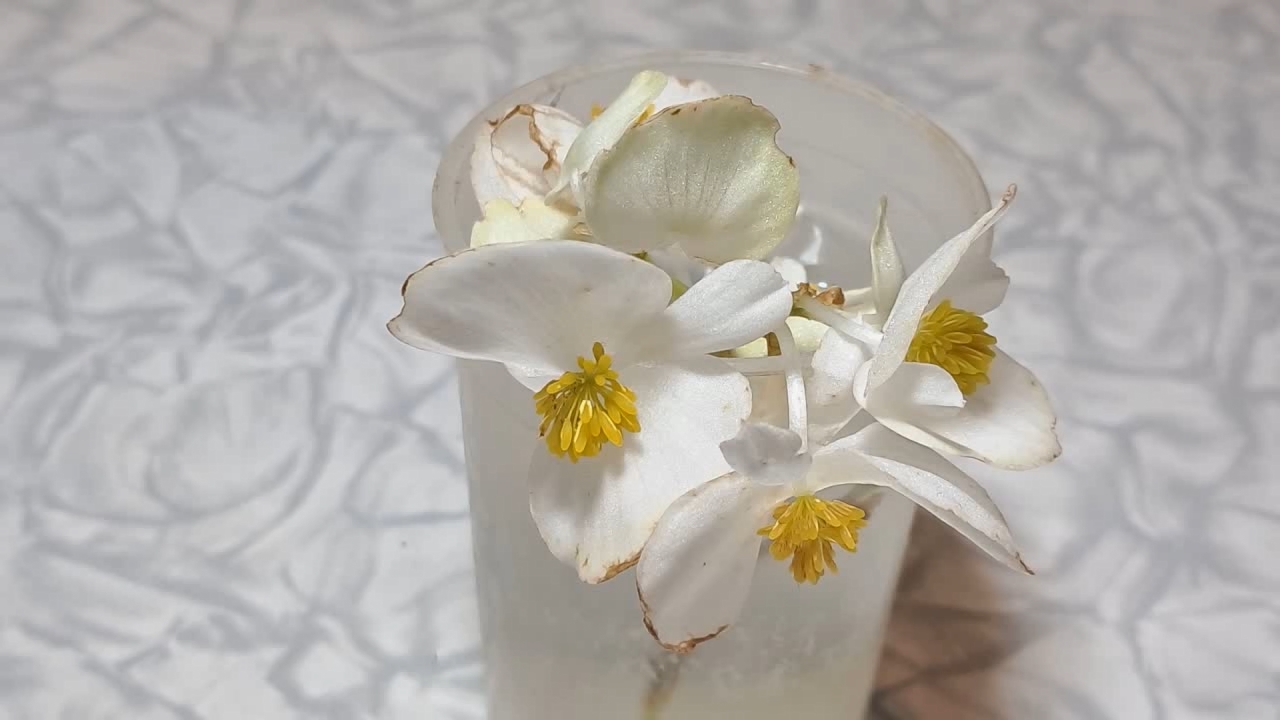
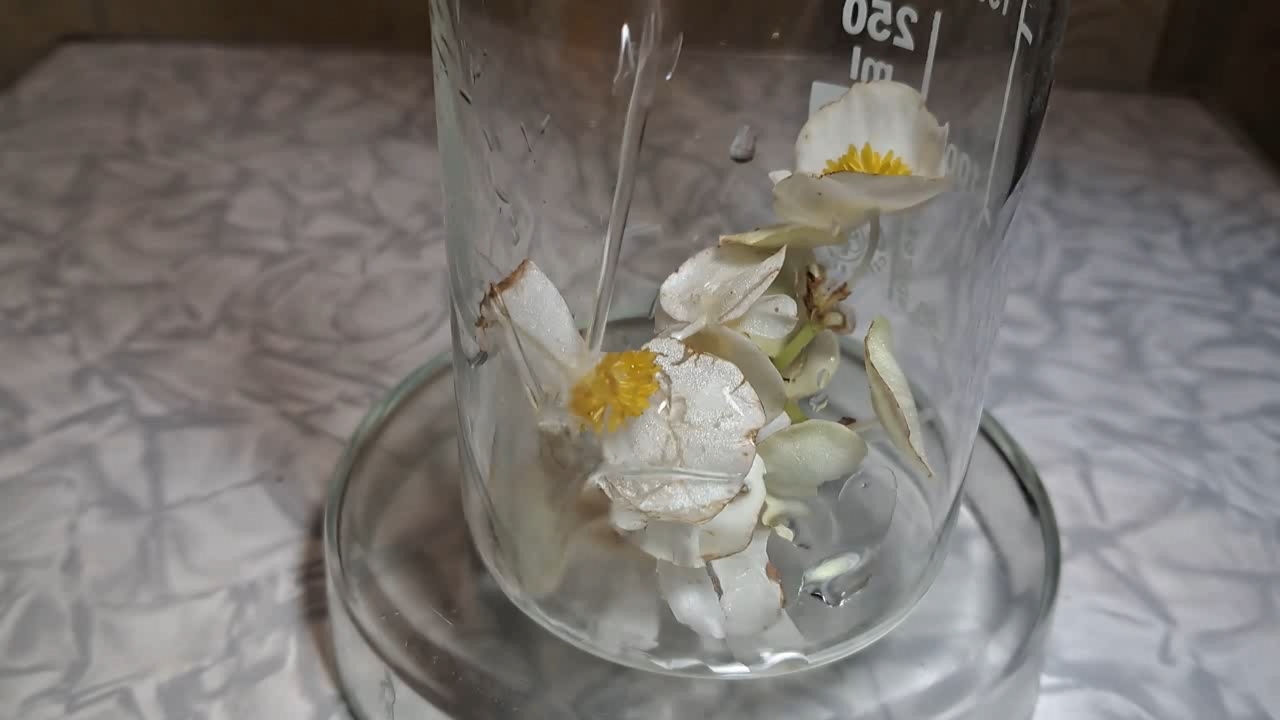
Next, I placed the white begonia inflorescence in another glass and added the ammonia solution. The white flowers behaved just like the pink ones: their petals first turned yellowish-green and then yellow.

Unlike the bright red begonia blossoms, the pink and white ones did not develop a dark brown intermediate color when exposed to ammonia. However, the final result was the same: after prolonged exposure to ammonia, the red, pink, and white begonia blossoms all turned yellow.


Бегония клобучковая (розовые цветы) и аммиак - Часть 3
Оказывается, я ошибся: розовых цветов бегонии на клумбе было не меньше, чем красных, зато белых было совсем мало. Разумеется, на наш эксперимент это никак не влияет - достаточно всего нескольких цветков. Сорвал одно розовое и одно белое соцветие бегонии, принес домой.

Сначала поместил в стакан розовое соцветие. Добавил в стакан около 10 мл концентрированного раствора аммиака, накрыл чашкой Петри.

Розовые лепестки постепенно стали бледными, желтовато-зелеными. Со временем желтовато-зеленый цвет сменился желтым.

После этого поместил в стакан белое соцветие бегонии, добавил раствор аммиак. Белые цветы повели себя аналогично розовым: сначала лепестки стали желтовато-зелеными, затем - желтыми.

В отличии от ярко-красных цветов бегонии, розовые и белые цветы не дали темно-коричневой промежуточной окраски при обработке аммиаком. Зато конечный результат был одинаковым: при длительном действии аммиака и красные, и розовые, и белые цветы бегонии приобрели желтый цвет.


Download the Video (31 Mb, .avi )

Begonia Cucullata (Pink and White Flowers) and Ammonia
Begonia Cucullata (Pink Flowers) and Ammonia

Begonia Cucullata (Pink and White Flowers) and Ammonia

Begonia Cucullata (Pink and White Flowers) and Ammonia

Begonia Cucullata (Pink and White Flowers) and Ammonia

Begonia Cucullata (Pink and White Flowers) and Ammonia

Begonia Cucullata (Pink and White Flowers) and Ammonia

Begonia Cucullata (Pink and White Flowers) and Ammonia

Begonia Cucullata (Pink and White Flowers) and Ammonia

Begonia Cucullata (Pink and White Flowers) and Ammonia

Begonia Cucullata (Pink and White Flowers) and Ammonia

Begonia Cucullata (Pink and White Flowers) and Ammonia

Begonia Cucullata (Pink and White Flowers) and Ammonia

Begonia Cucullata (Pink and White Flowers) and Ammonia
Begonia Cucullata (White Flowers) and Ammonia

Begonia Cucullata (Pink and White Flowers) and Ammonia

Begonia Cucullata (Pink and White Flowers) and Ammonia

Begonia Cucullata (Pink and White Flowers) and Ammonia

Begonia Cucullata (Pink and White Flowers) and Ammonia

Begonia Cucullata (Pink and White Flowers) and Ammonia

Begonia Cucullata (Pink and White Flowers) and Ammonia

Begonia Cucullata (Pink and White Flowers) and Ammonia

Begonia Cucullata (Pink and White Flowers) and Ammonia

Begonia Cucullata (Pink and White Flowers) and Ammonia


[ Experiments with Plants and Insects. Natural Products ]

Flowers and chemistry... (experiments with plants and insects) - Discussion on the forum
[Submit a Comment / Error Message - Отправить Комментарий / Сообщение об ошибке]