Chemistry and Chemists № 1 2026
Journal of Chemists-Enthusiasts
| Content | Chemistry experiments - video | Physics experiments - video | Home Page - Chemistry and Chemists |
|
Chemistry and Chemists № 1 2026 Journal of Chemists-Enthusiasts |
Experiments with Universal Indicator - pt.8, 9 Chemist |
|
Having noticed a mistake in the text, allocate it and press Ctrl-Enter
Universal Indicator Paper, Acetic Acid, and Ammonia - Part 8
In my next experiment with indicator paper, I decided to replace the strong acid with a weak one - using glacial acetic acid instead of hydrochloric acid.
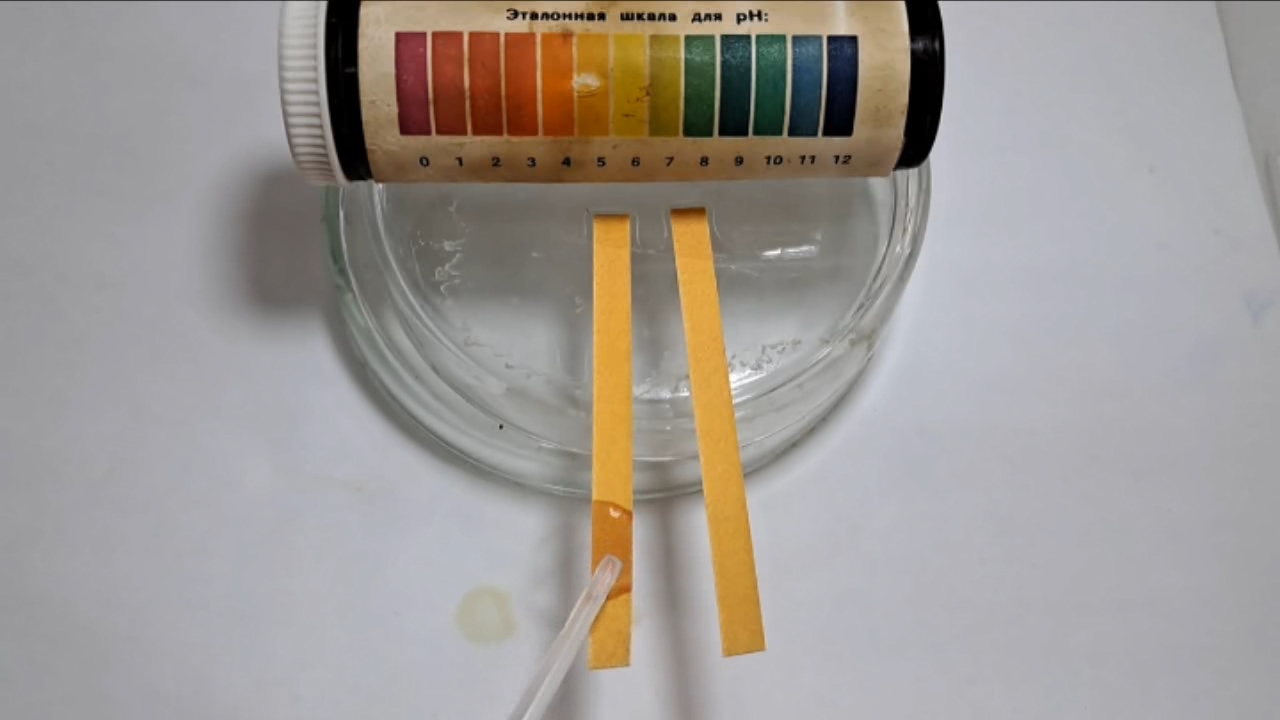
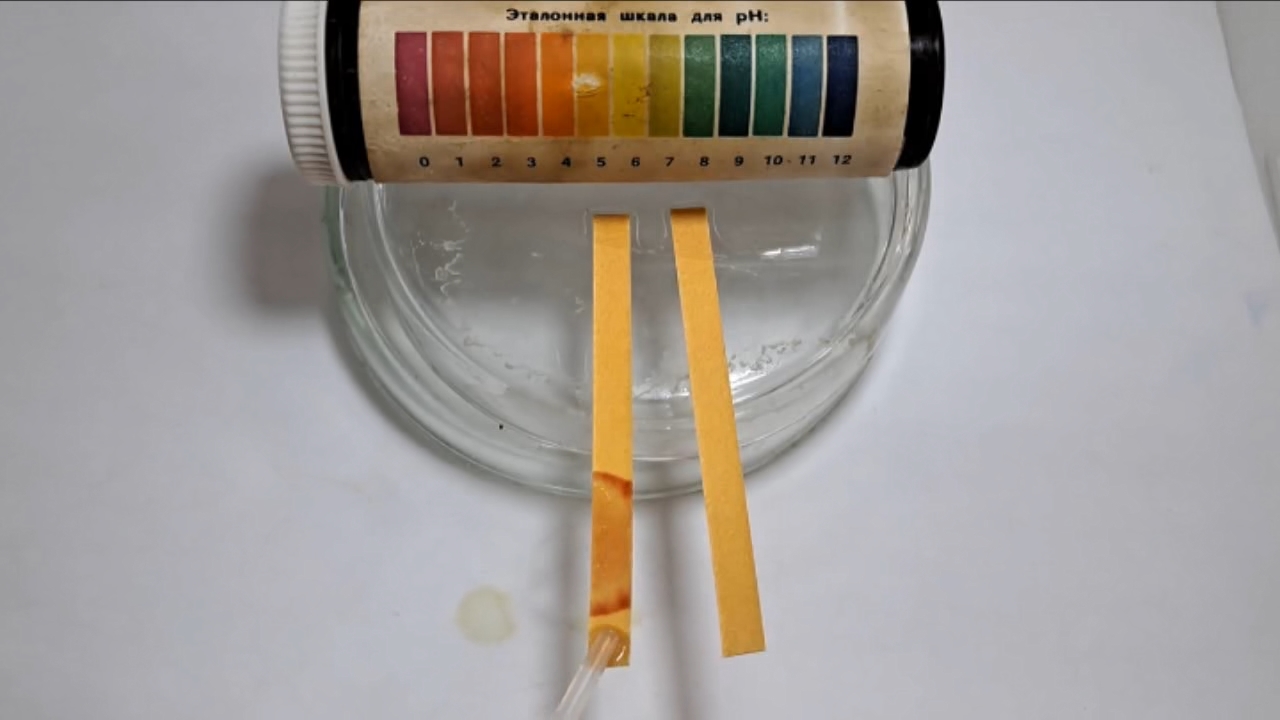
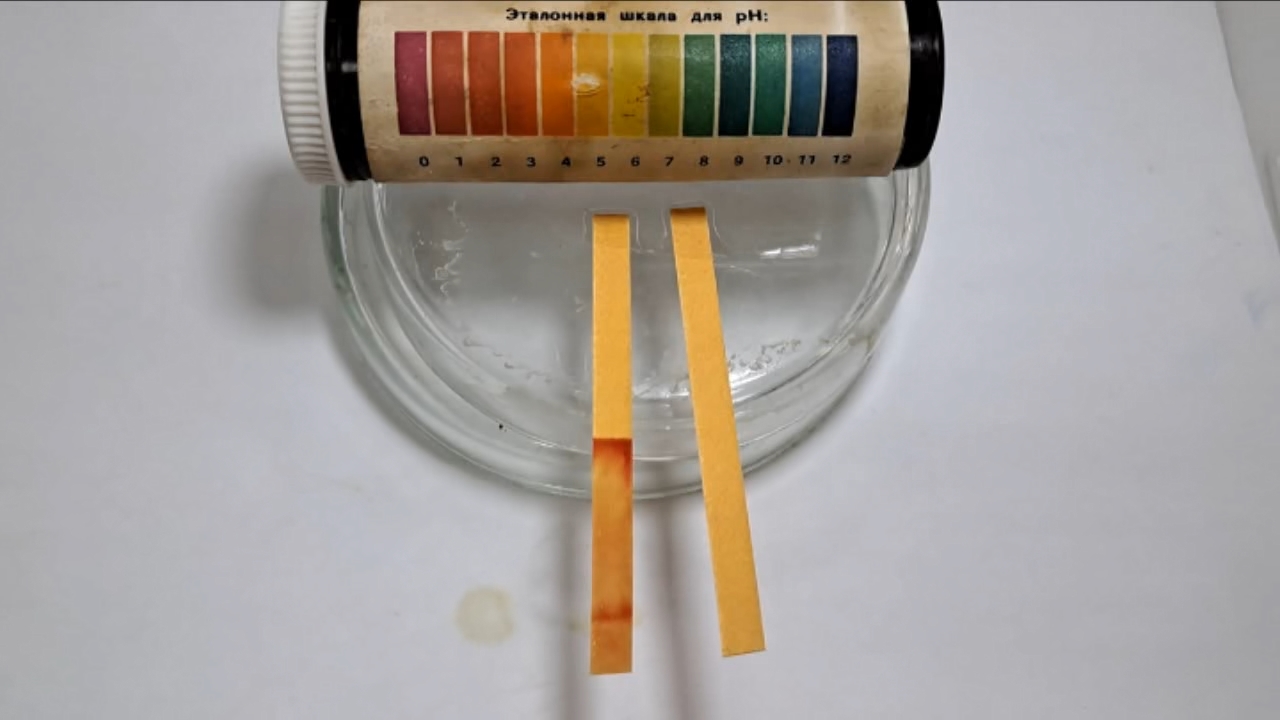
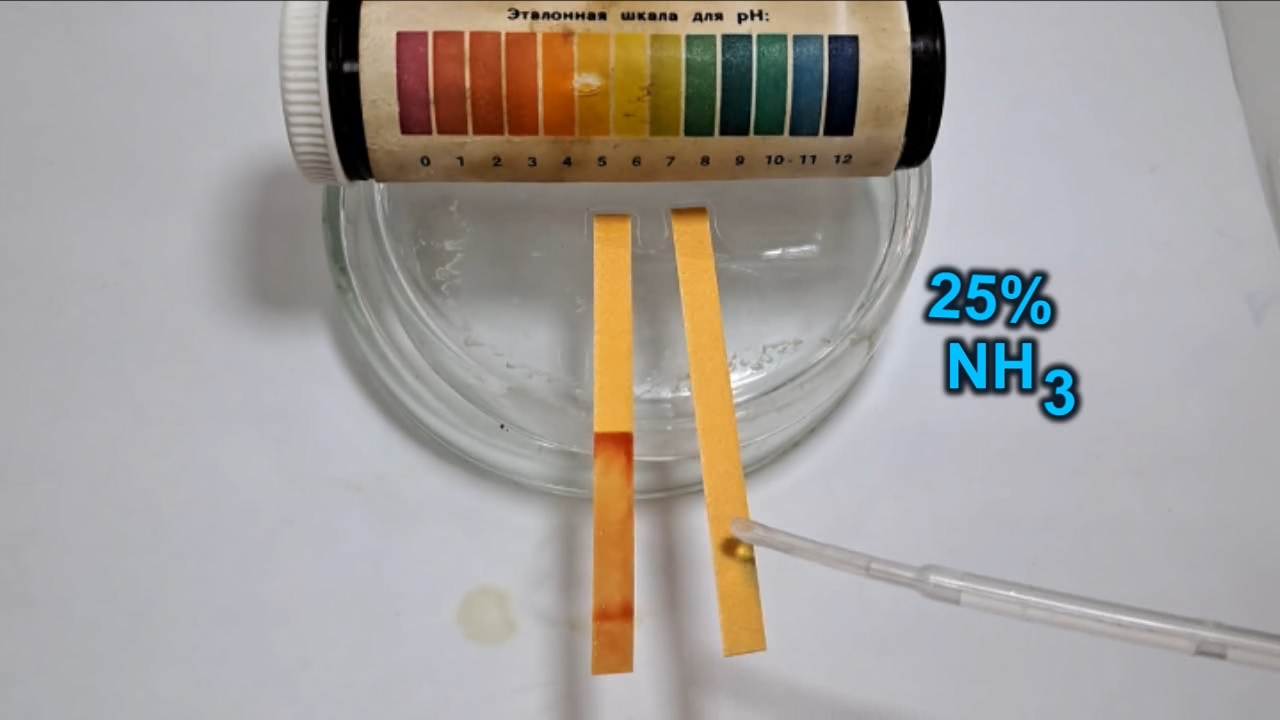
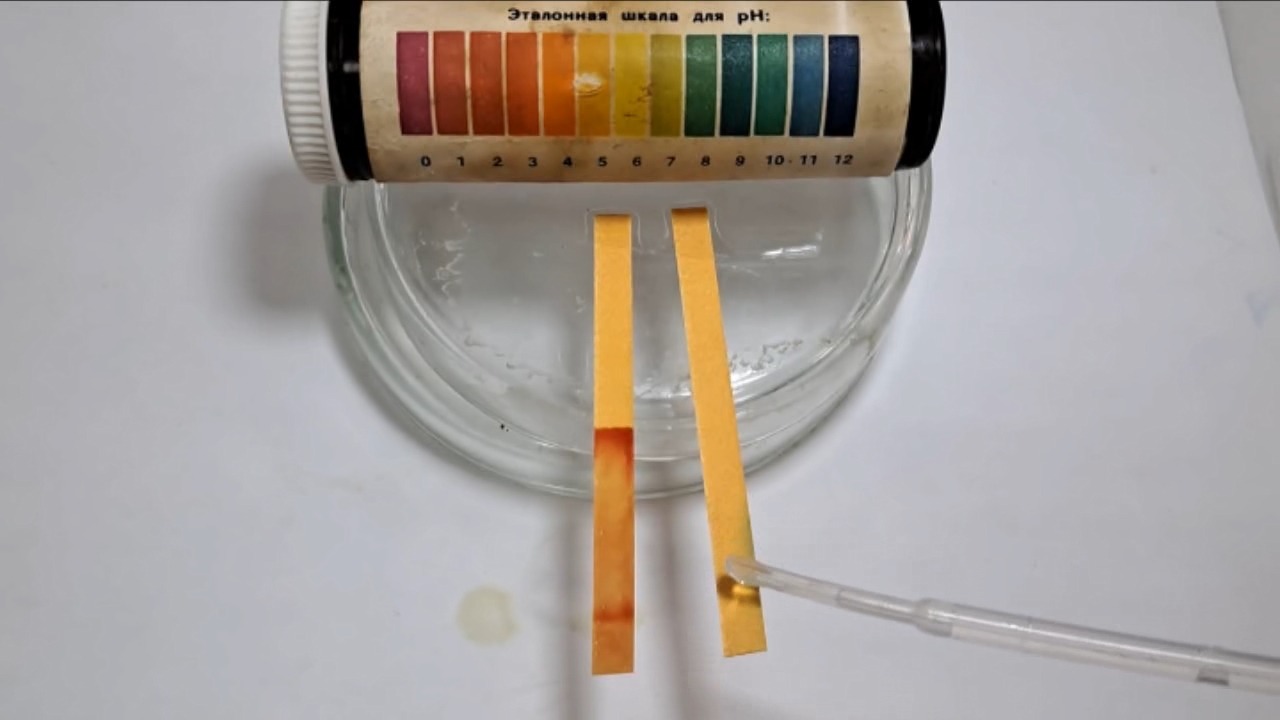
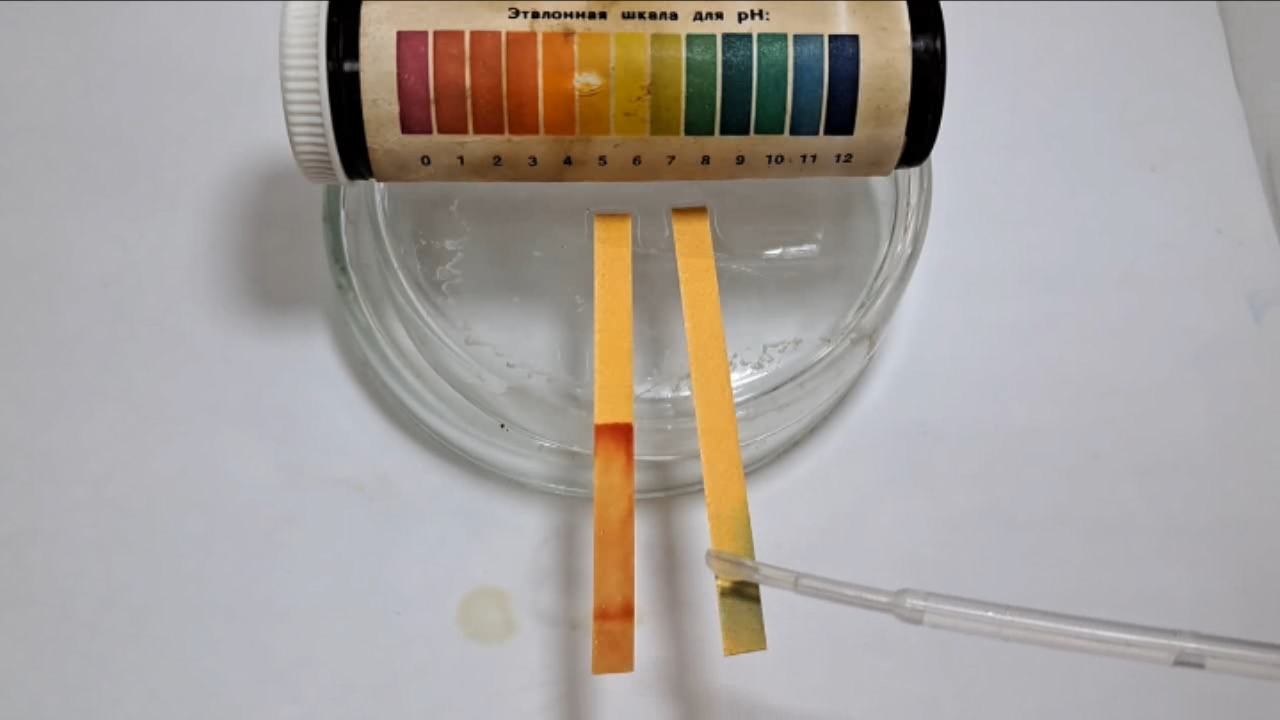
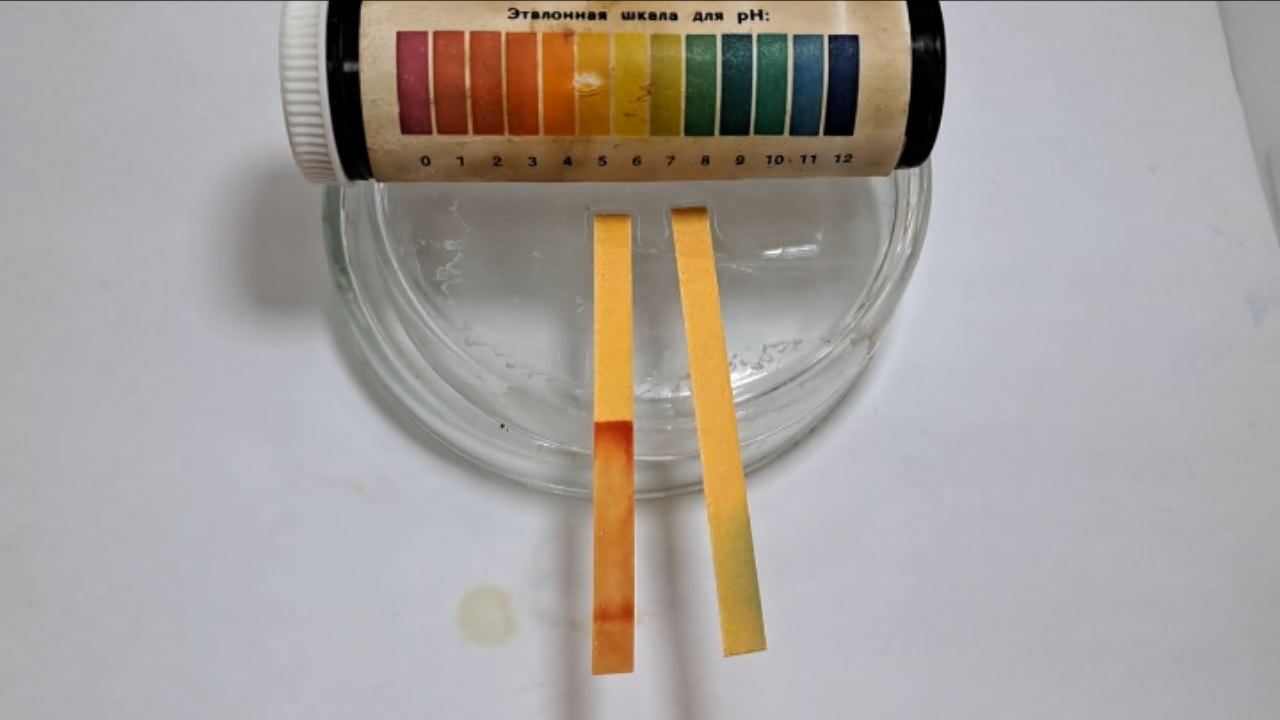
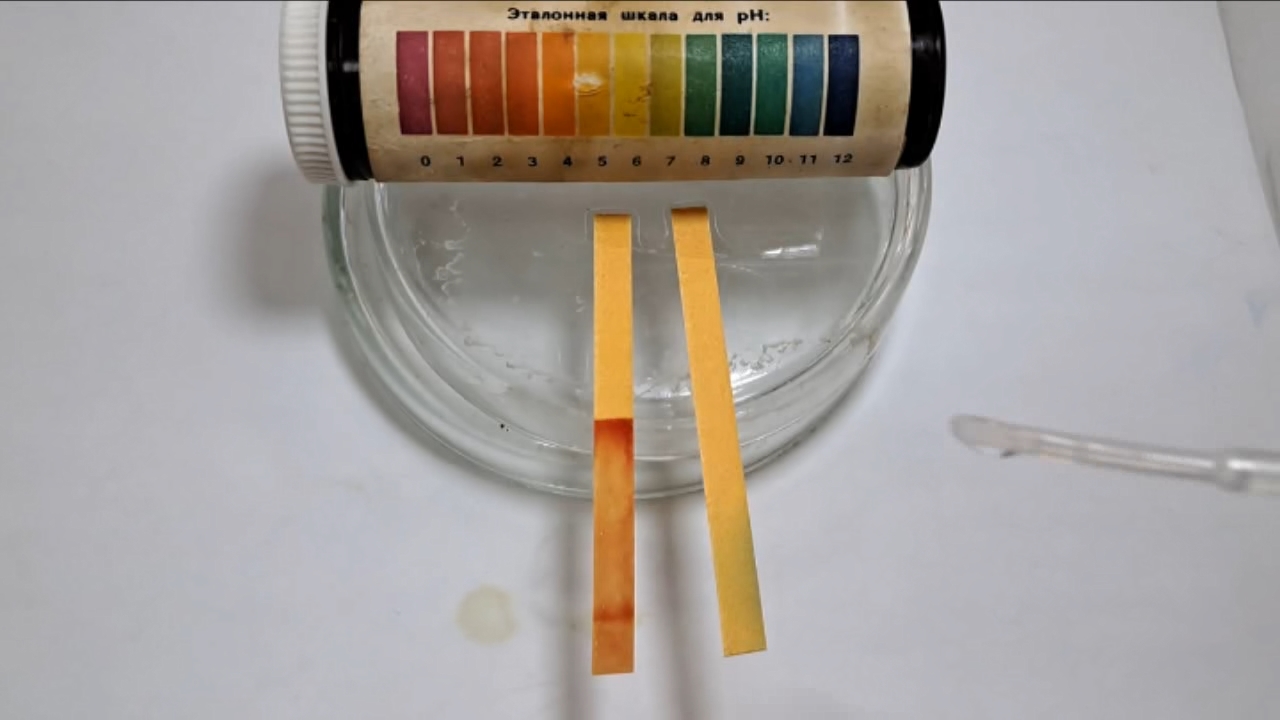
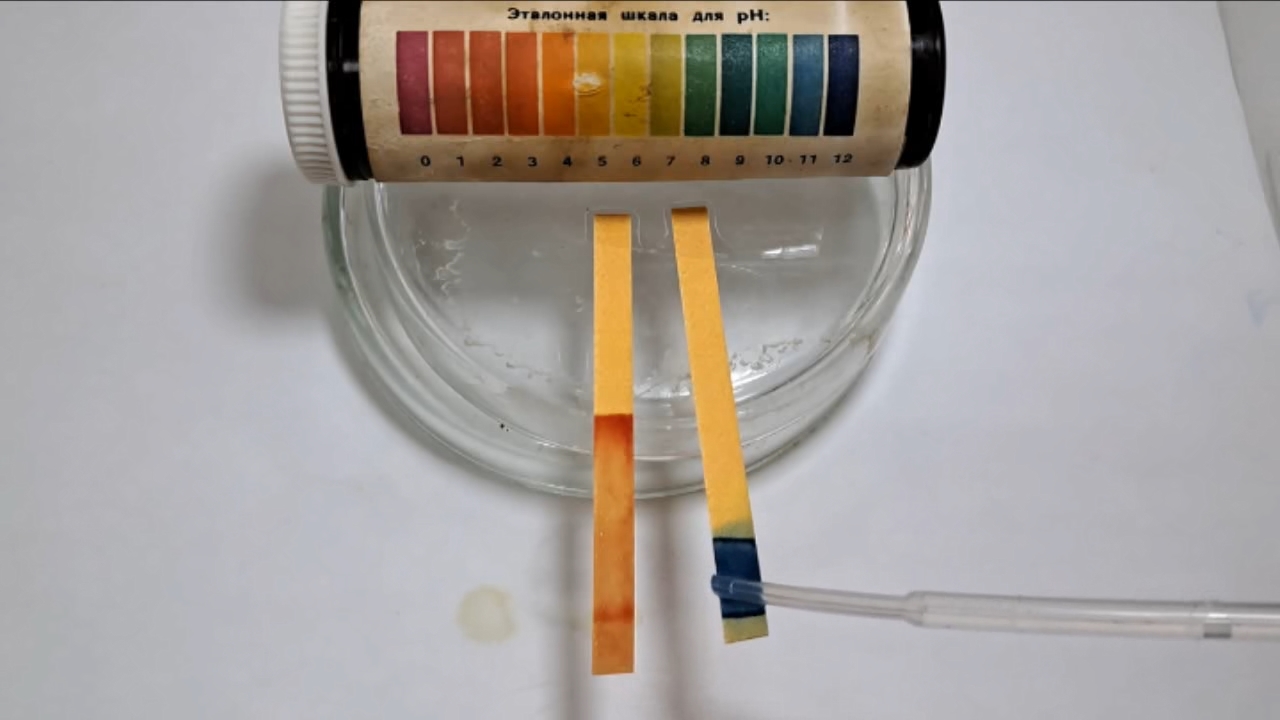
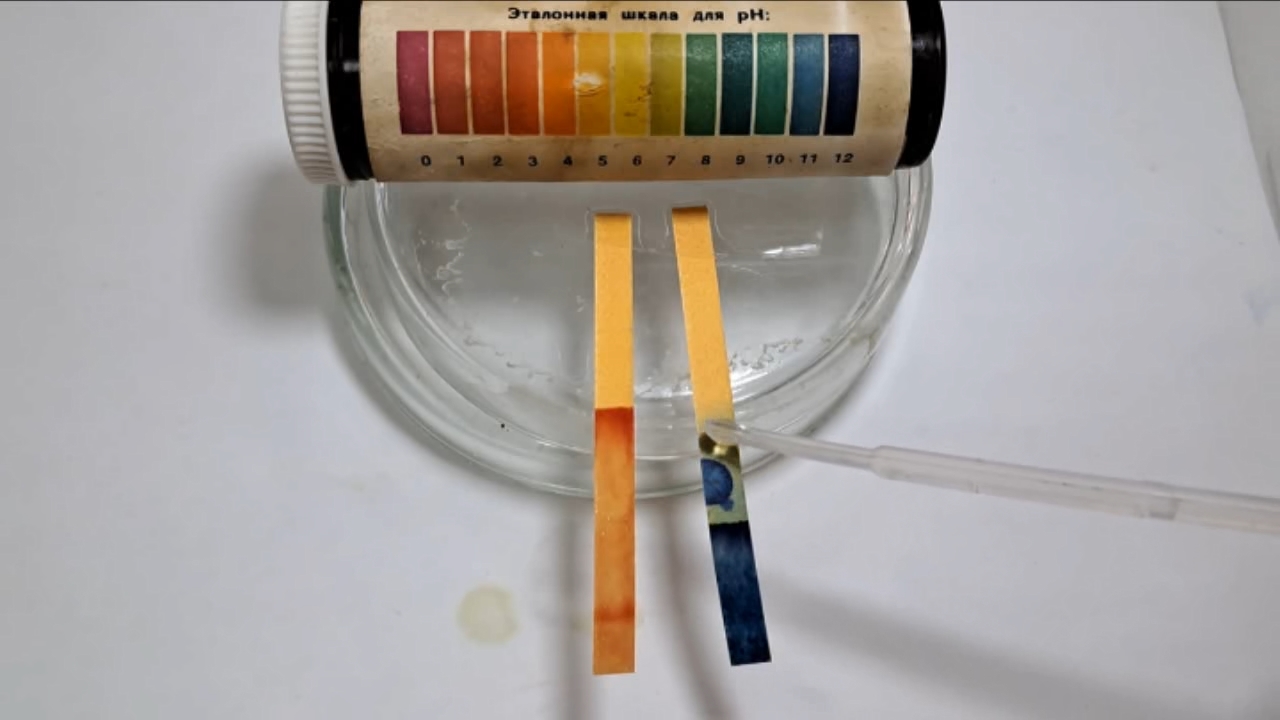
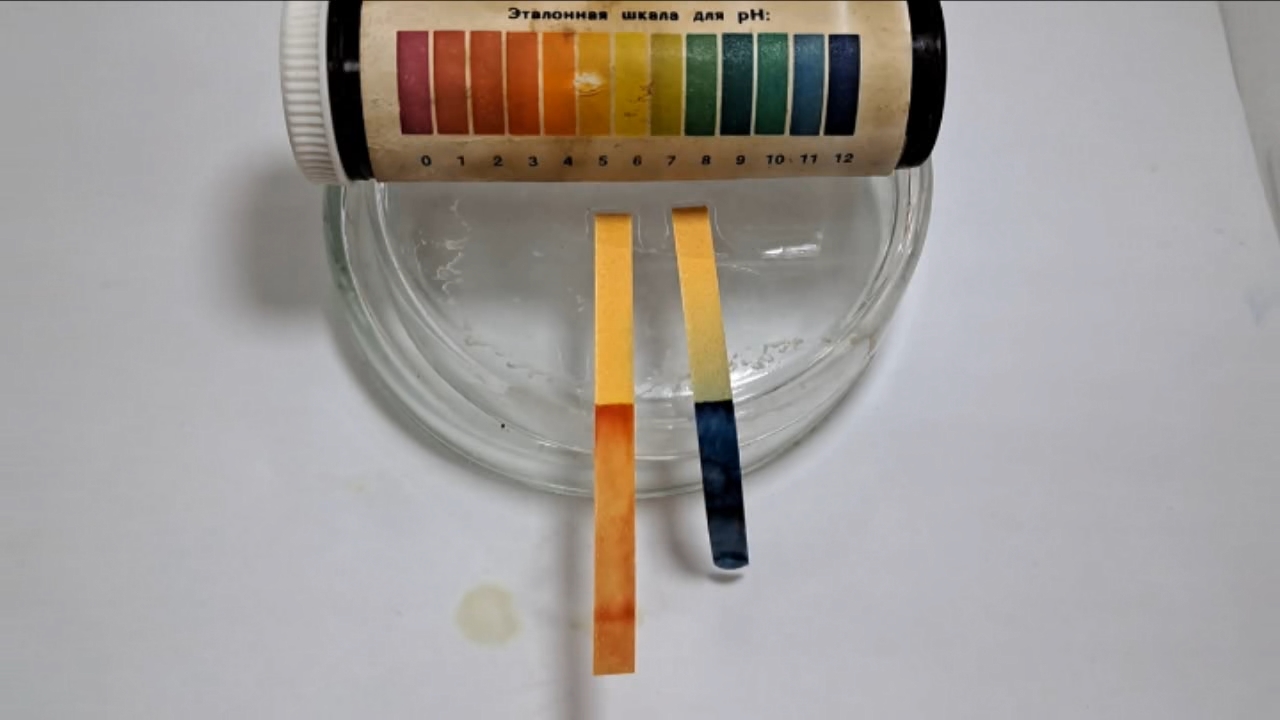
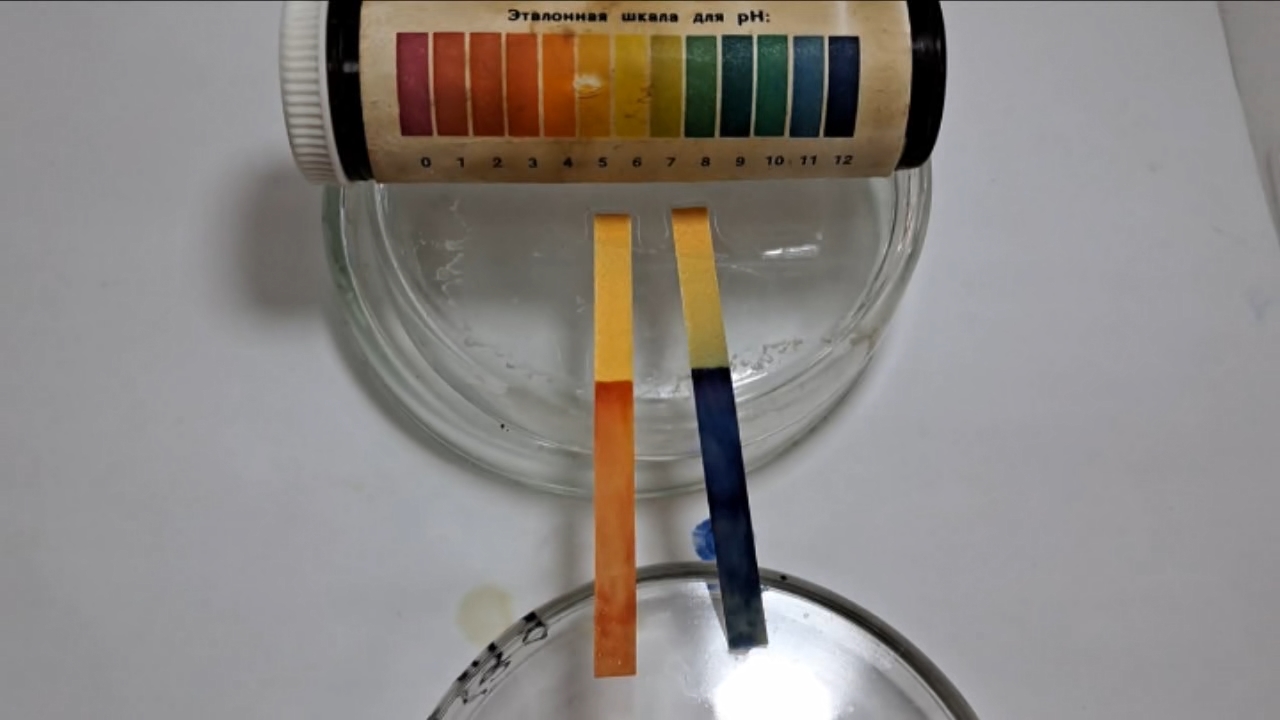
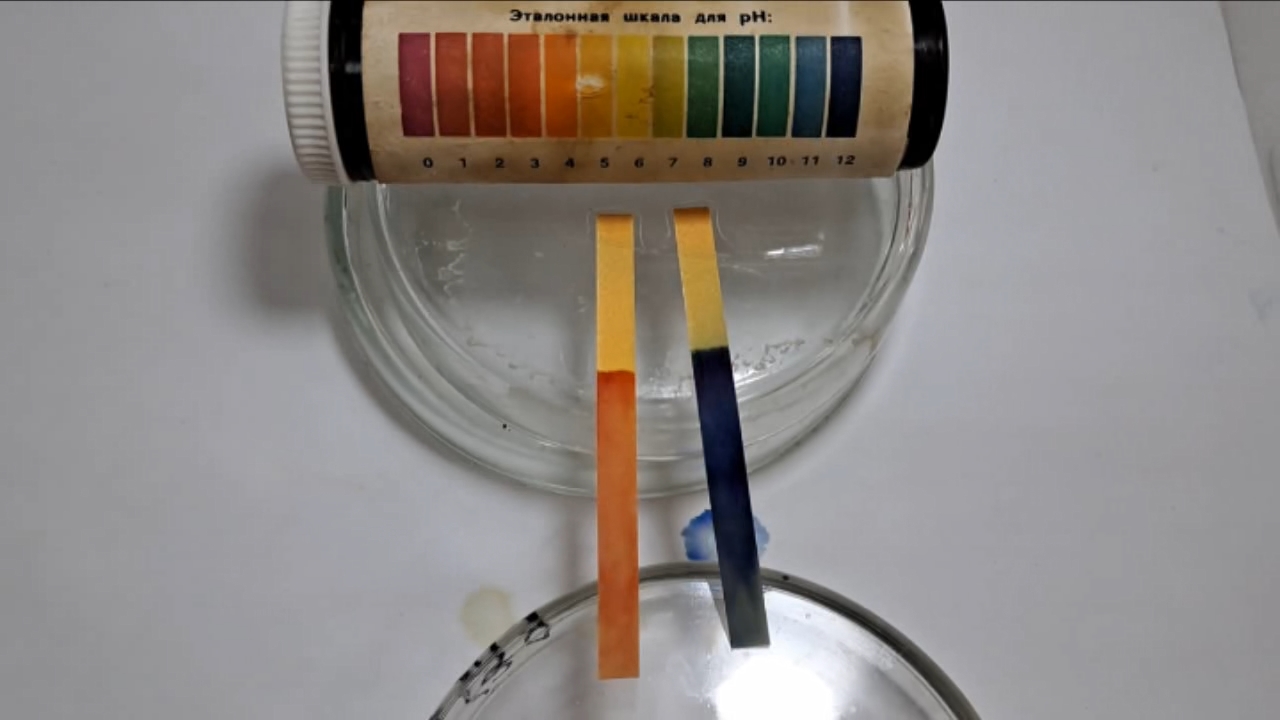
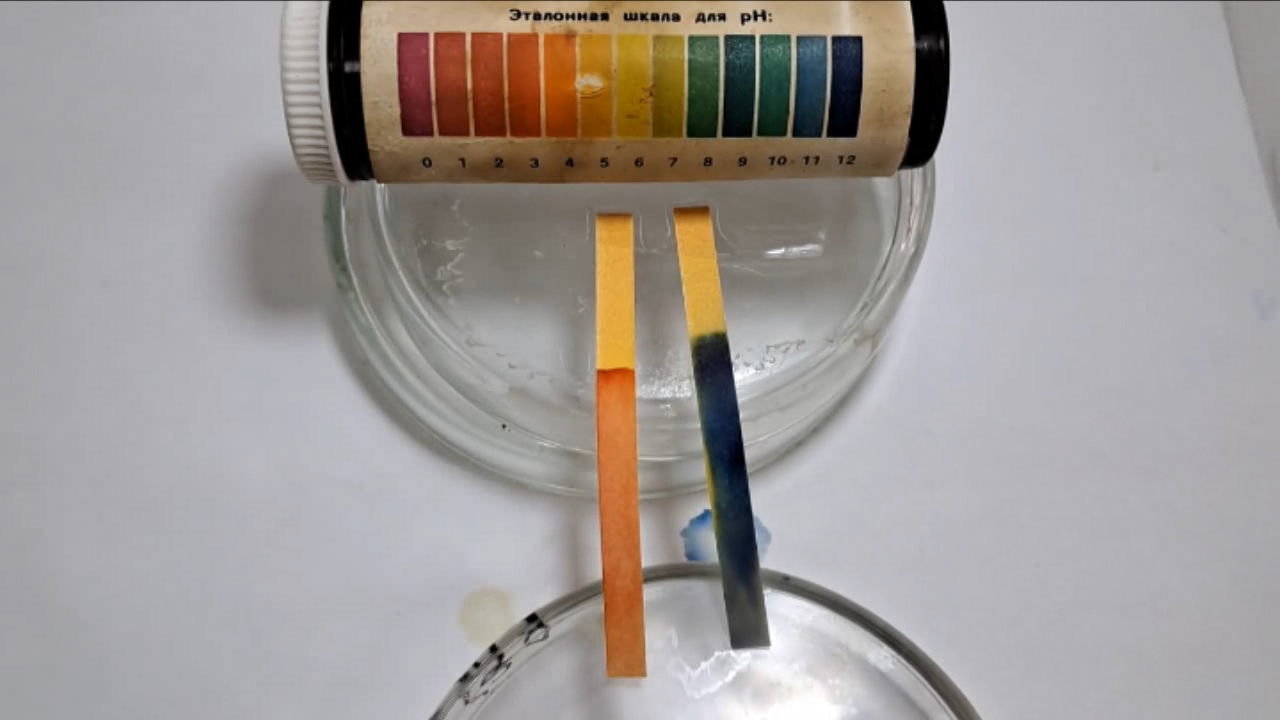
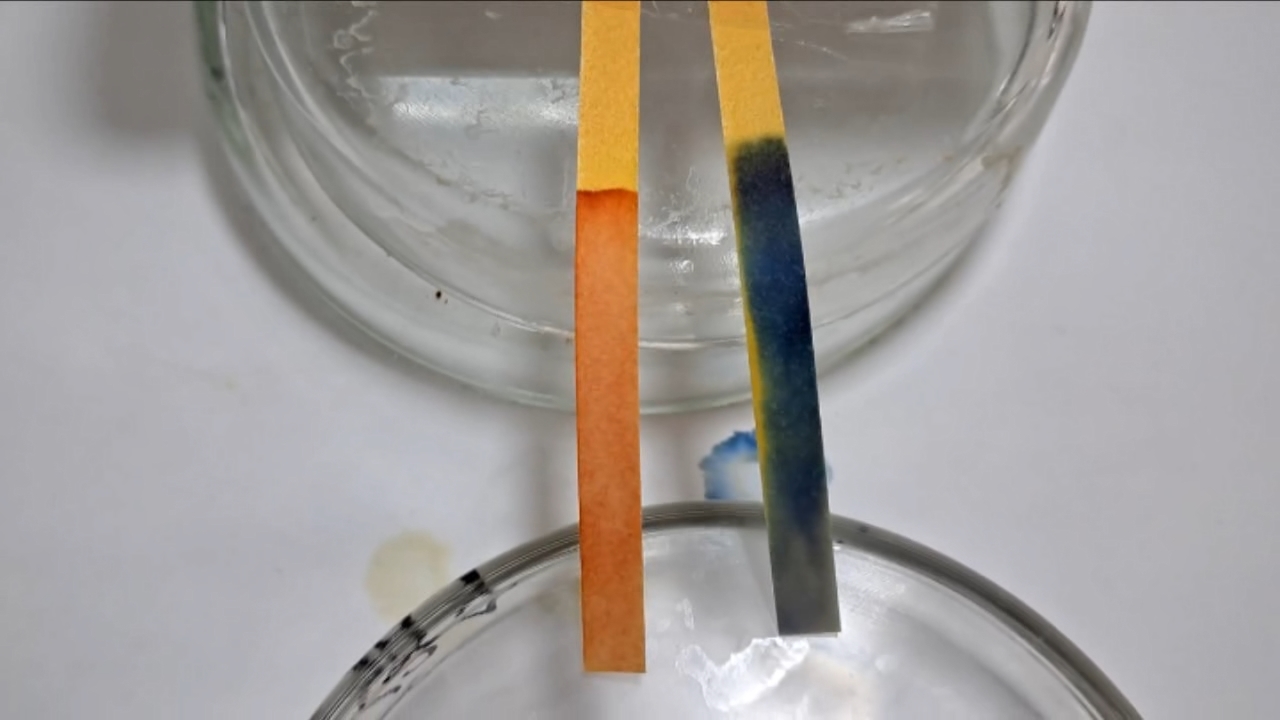
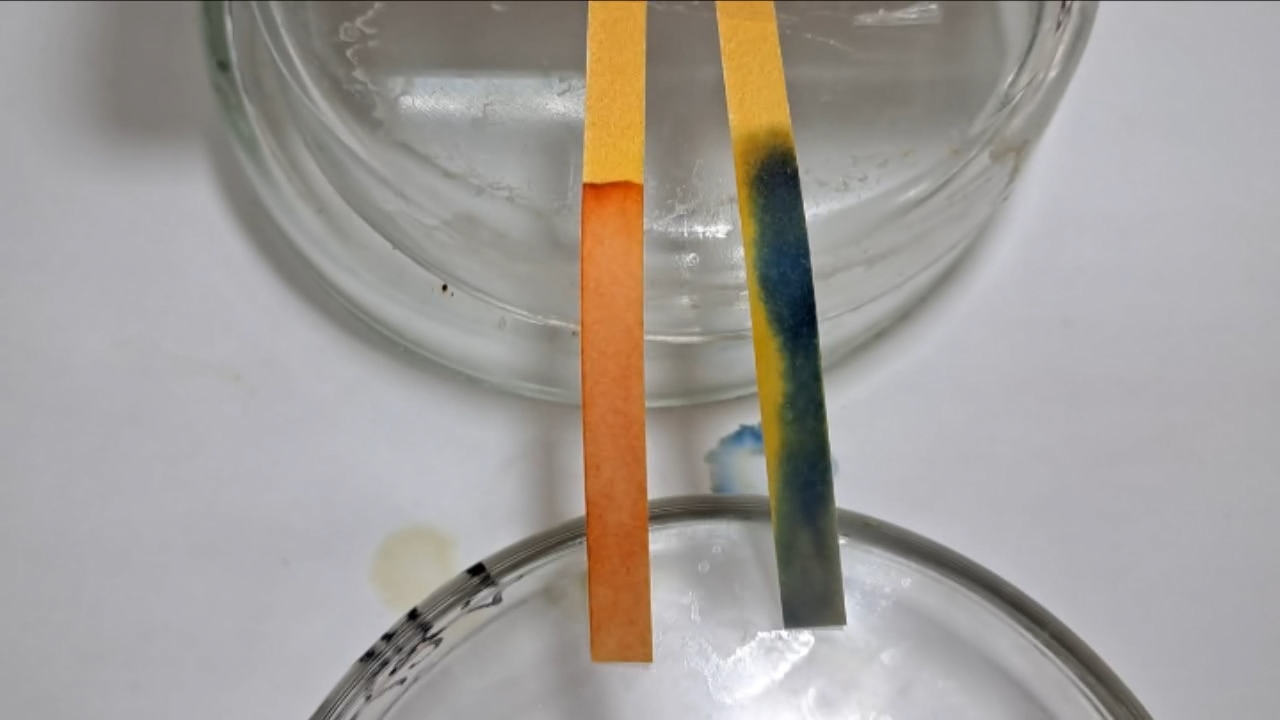
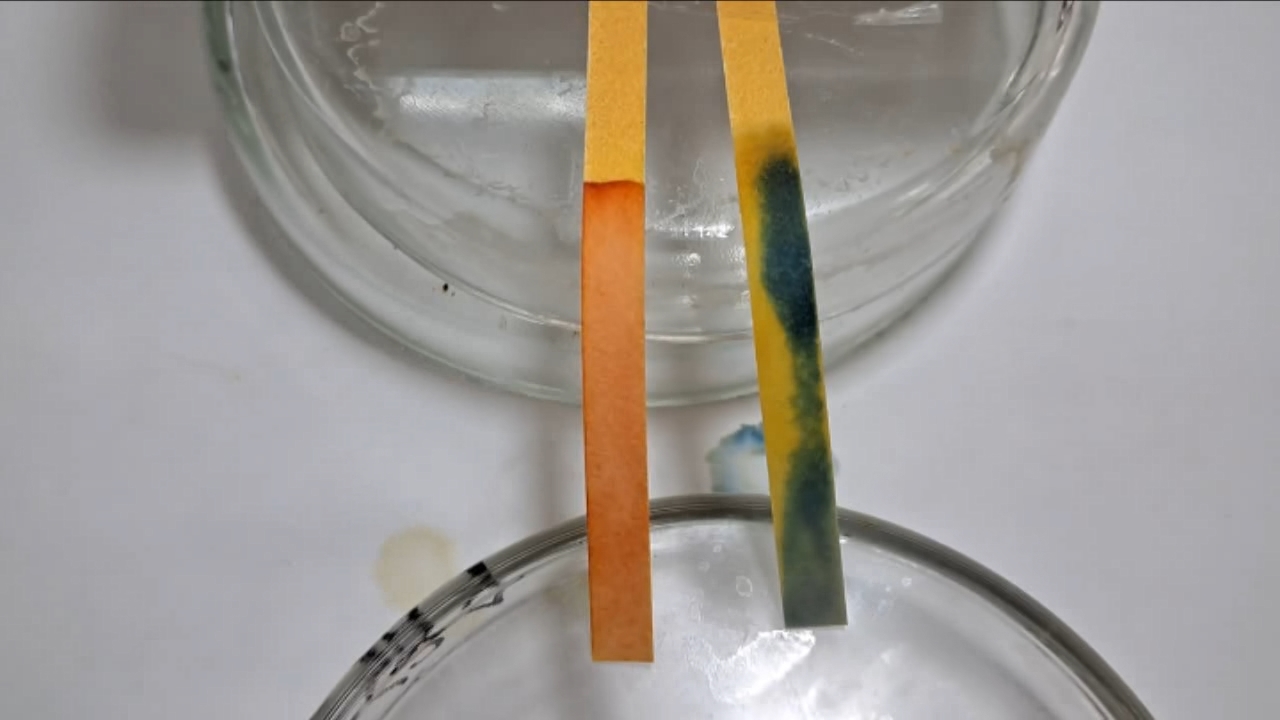
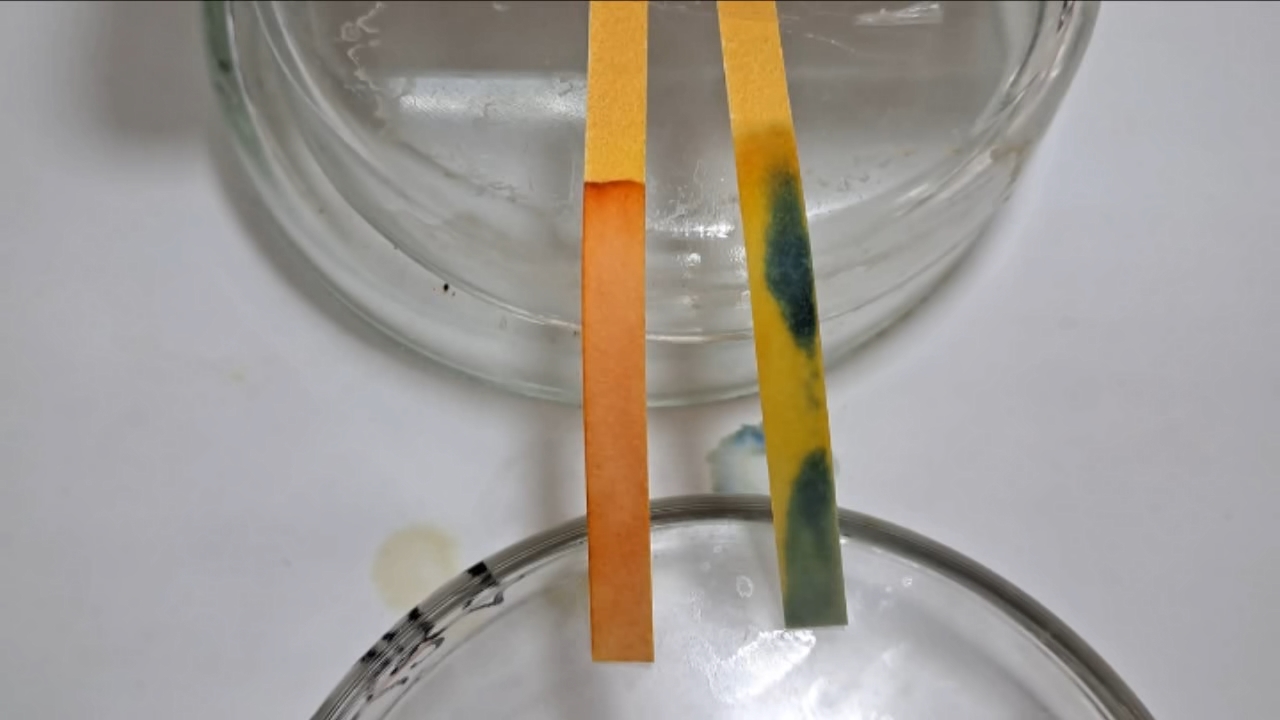
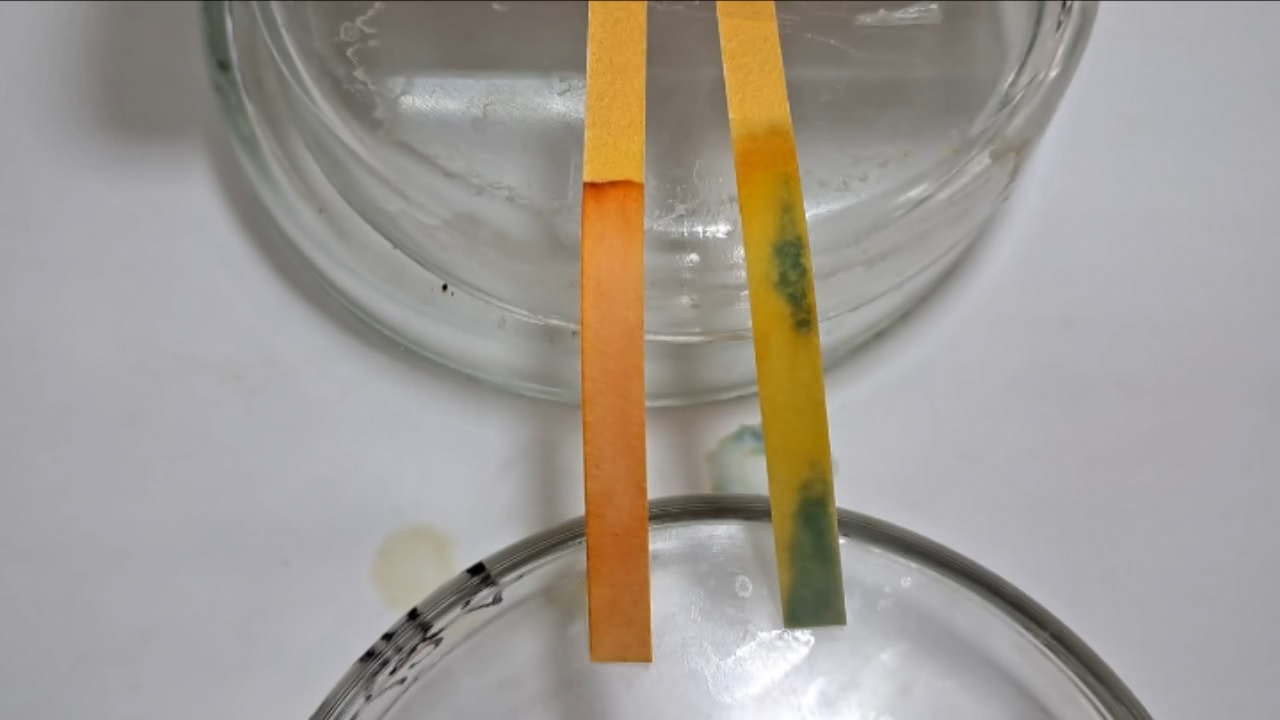
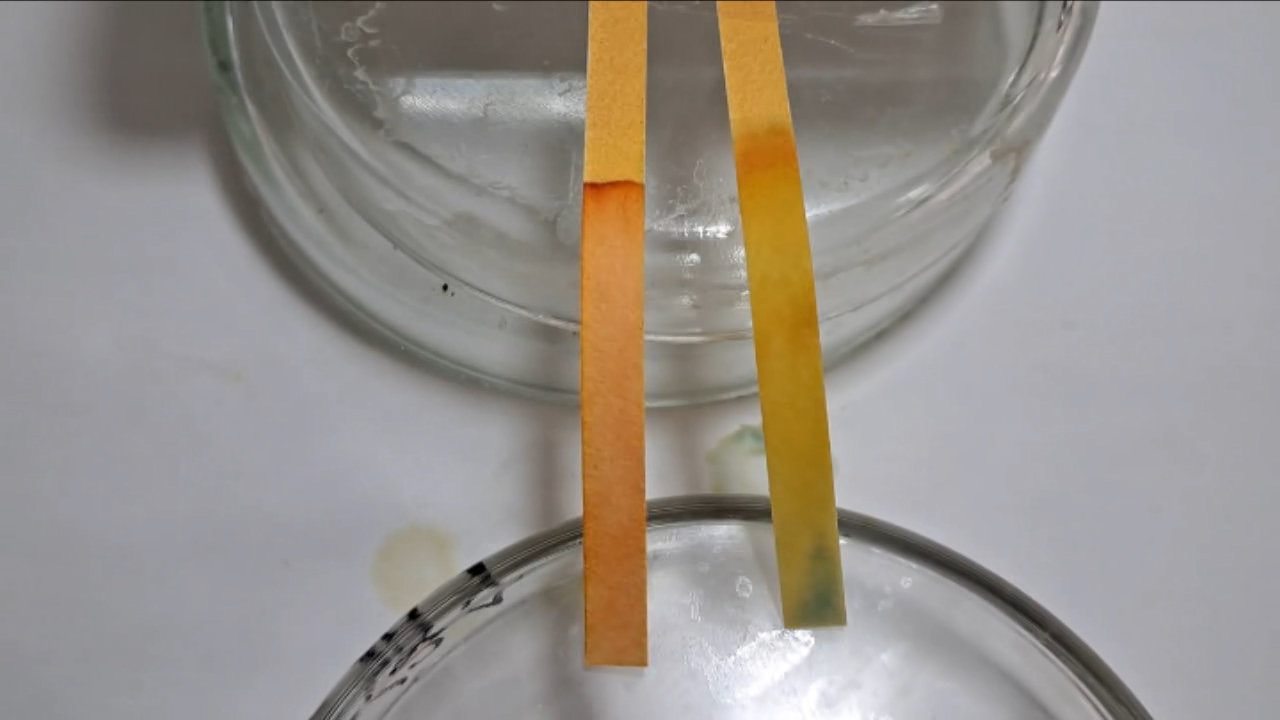
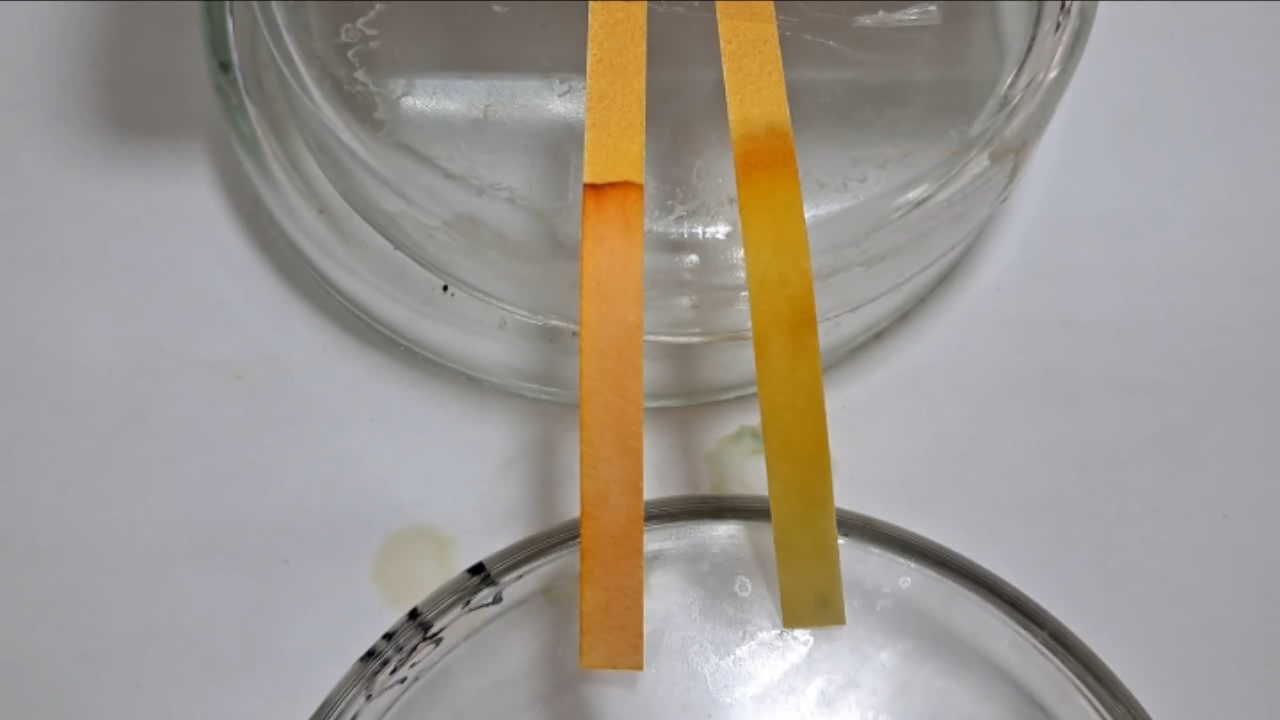
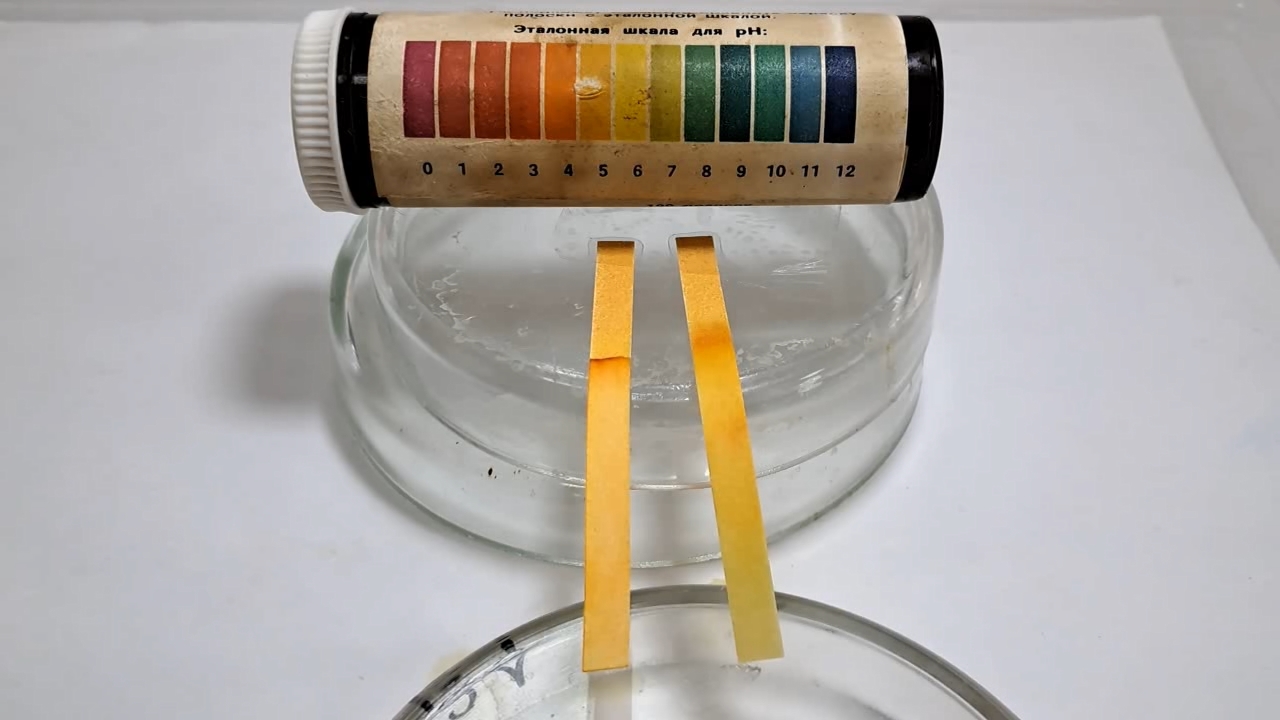
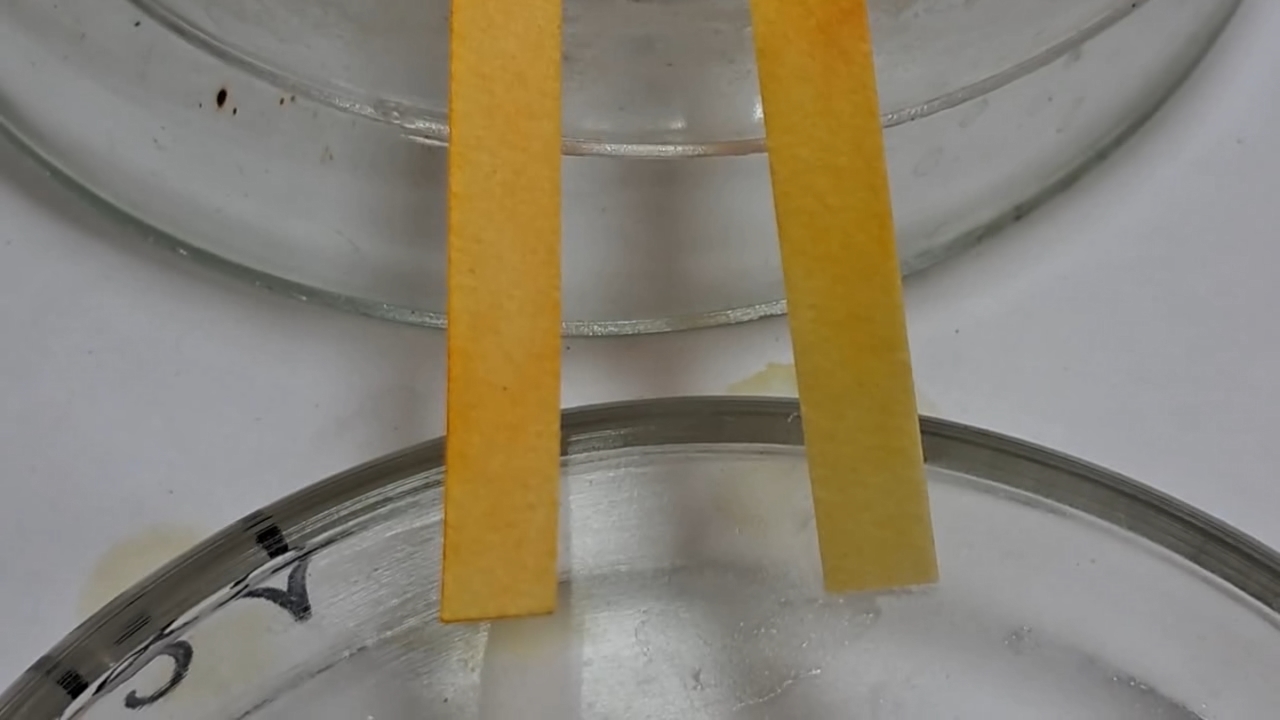
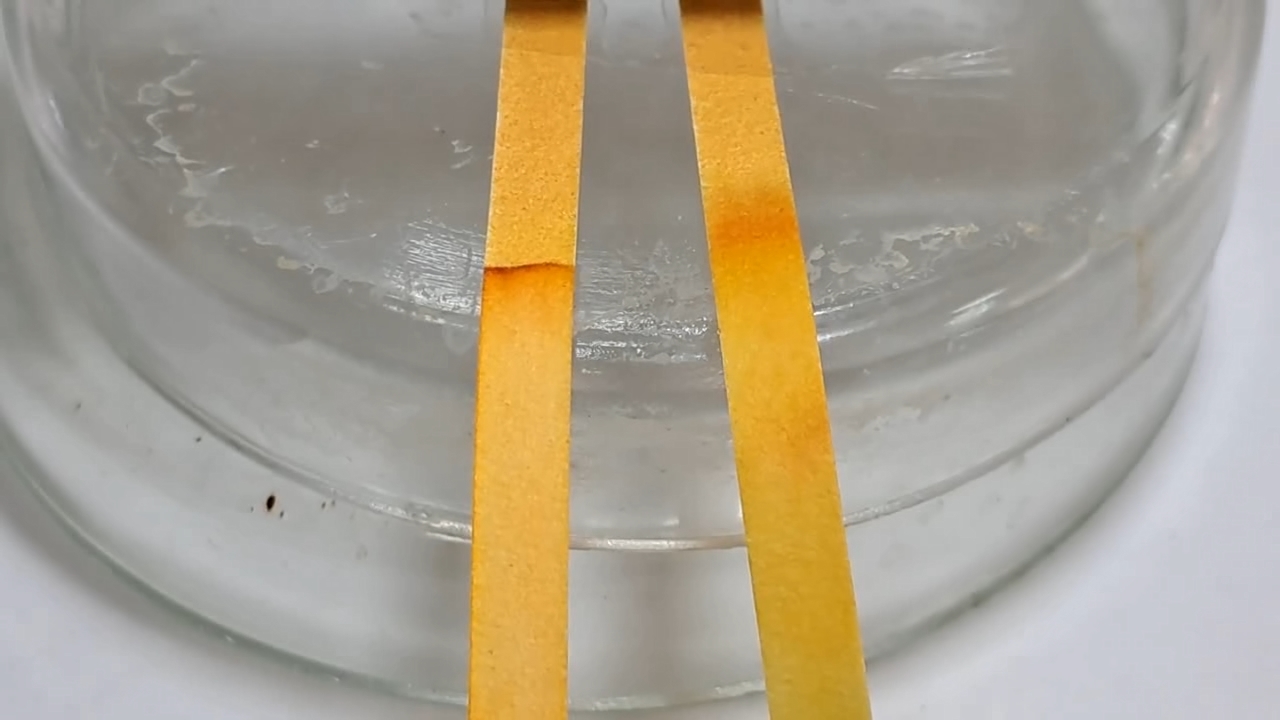
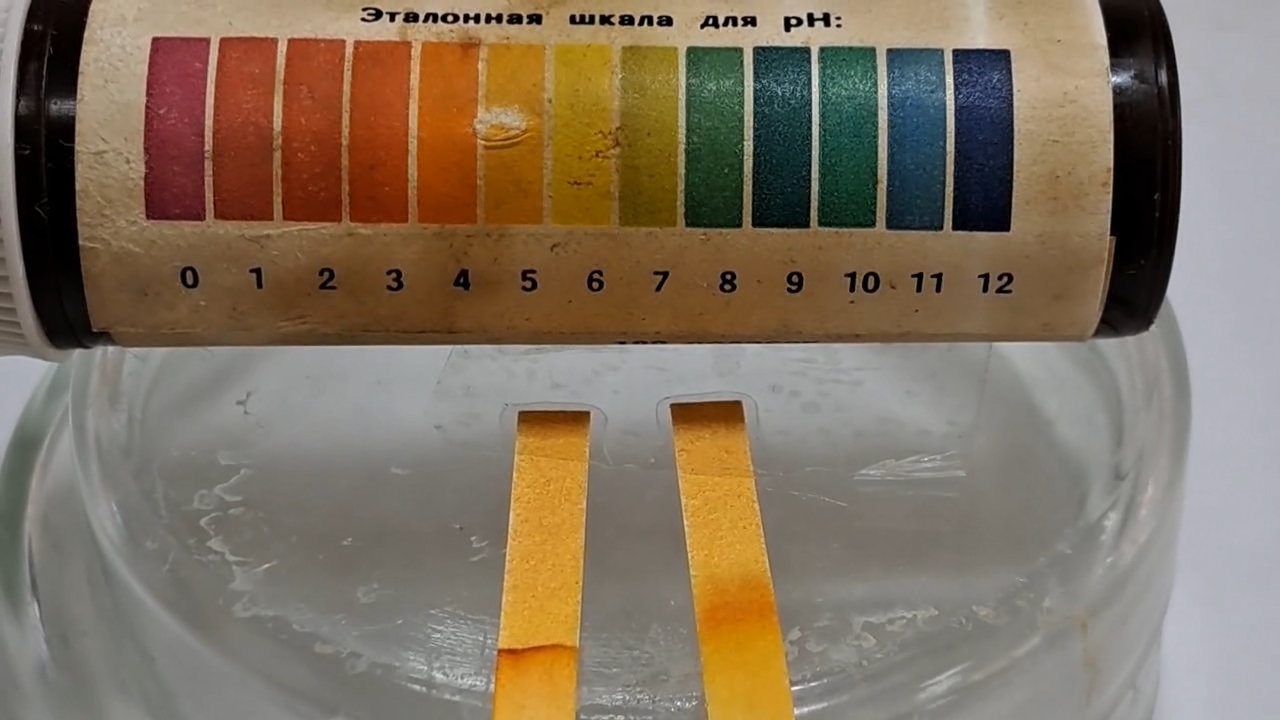
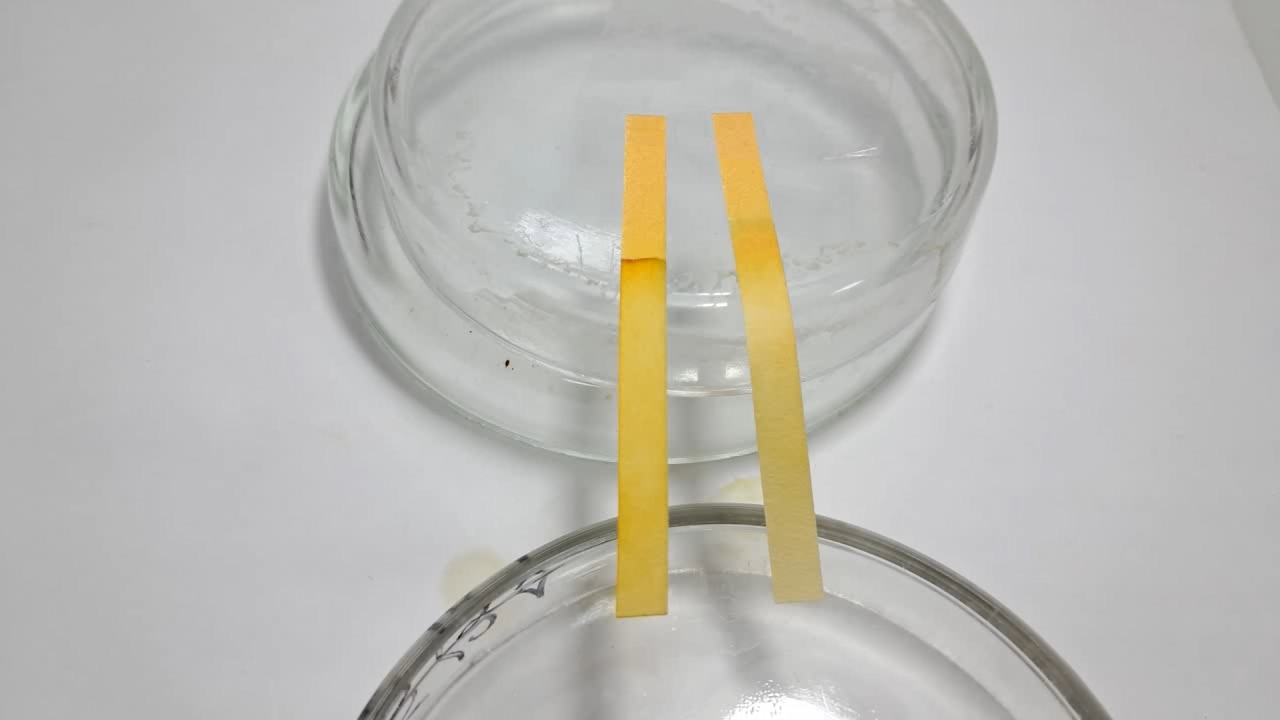
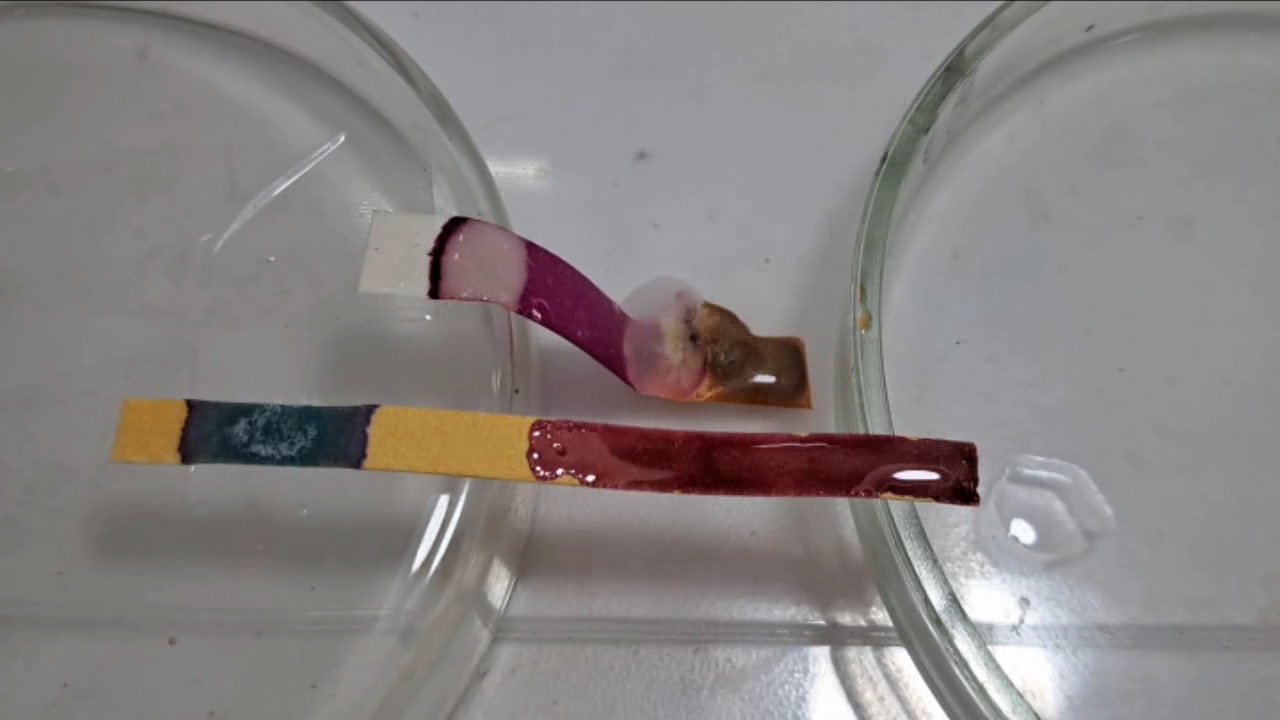
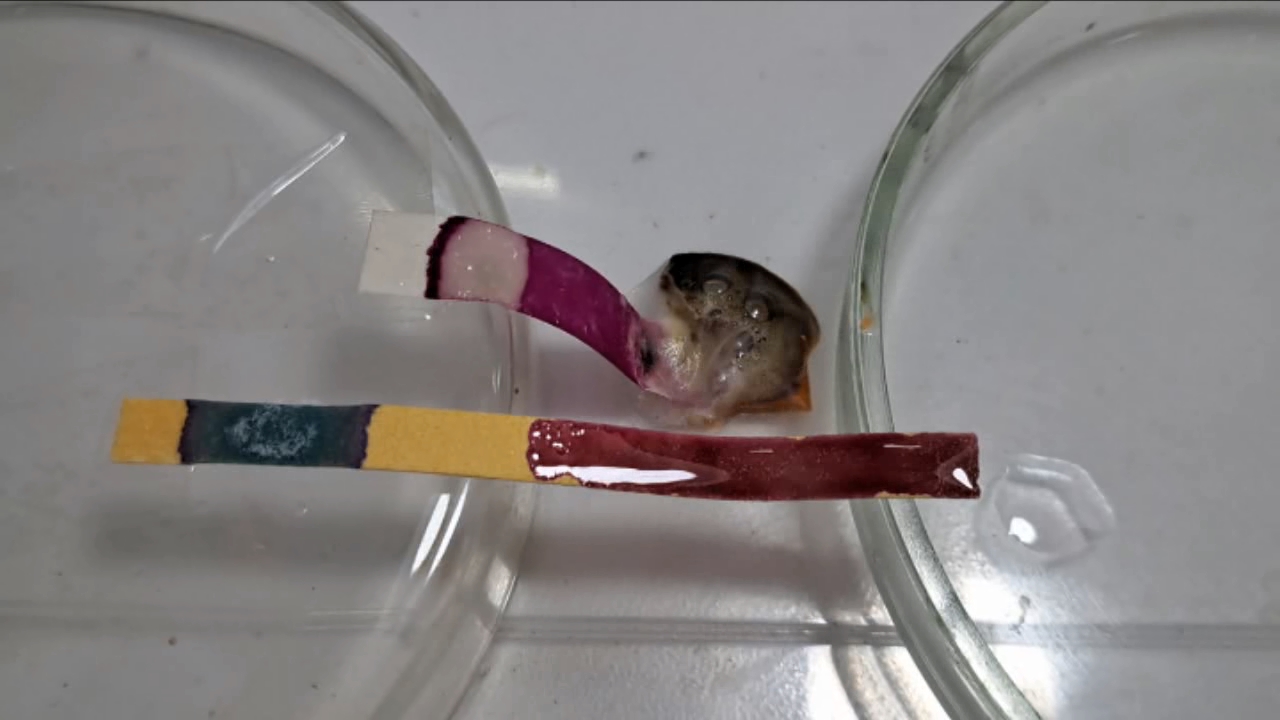
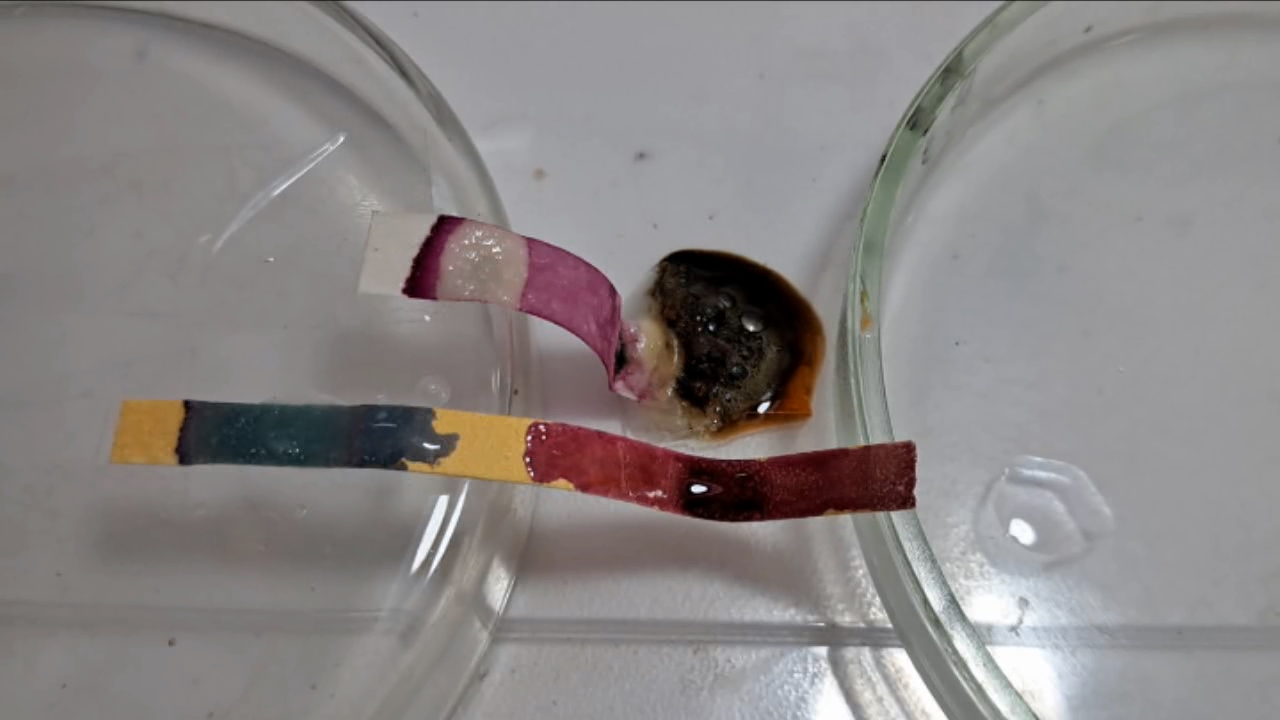
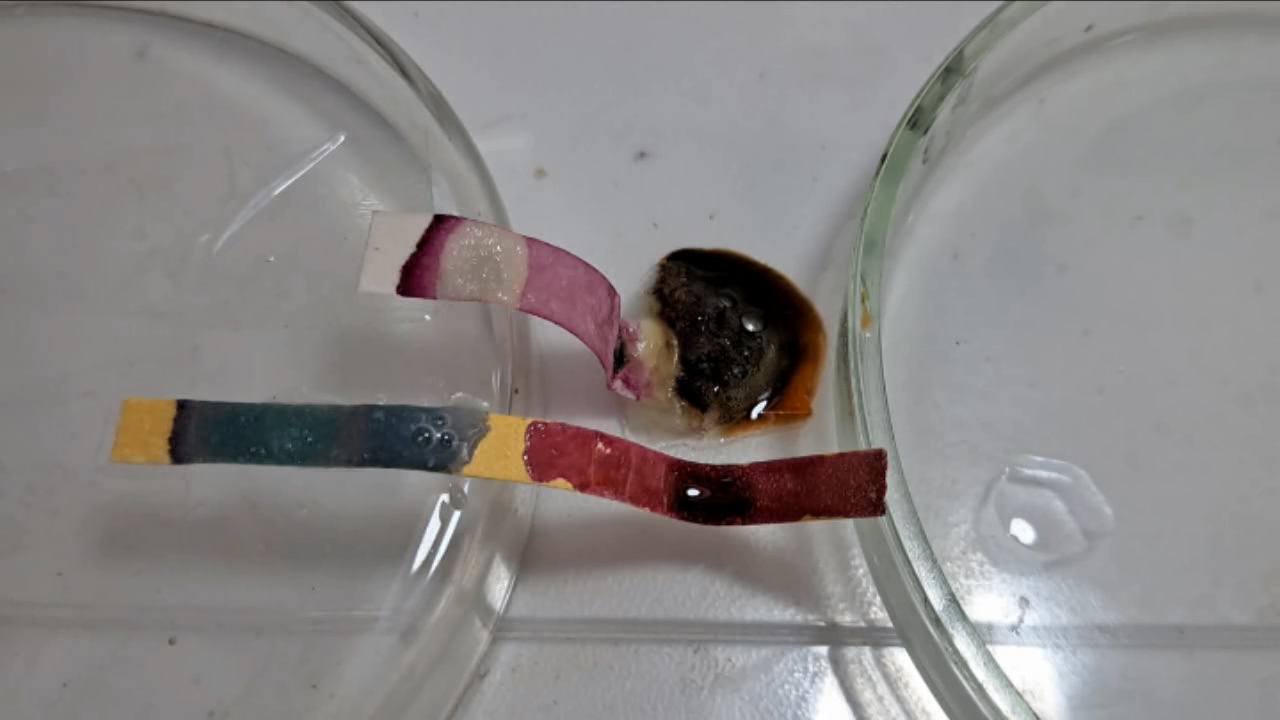
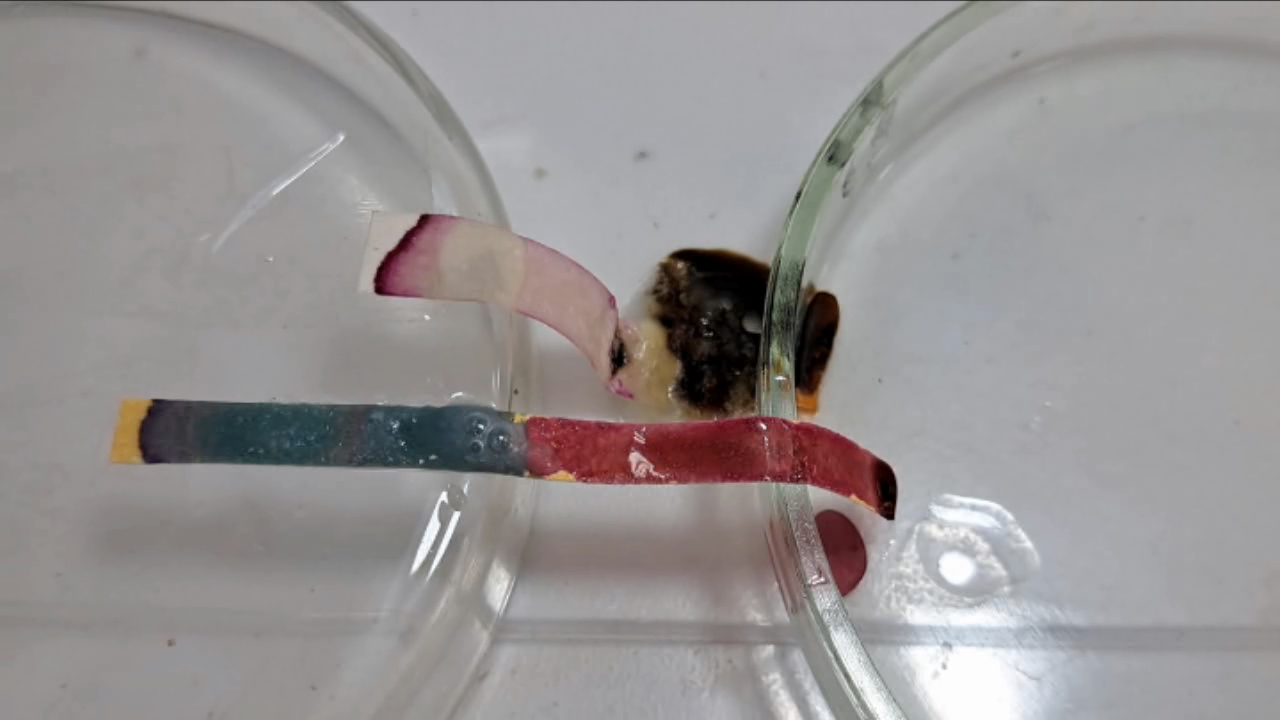
Универсальная индикаторная бумага, уксусная кислота и аммиак - Часть 8 When I intended to begin the experiment, I could not: I had a considerable amount of organizational work to do in another laboratory. I lacked both the time and the energy even for such a simple experiment. As a child, I had plenty of time and enthusiasm for conducting experiments, but I lacked many of the necessary reagents, glassware, and equipment. At that time, my "laboratory" was the bathroom. Now I have access to a proper chemistry laboratory; reagents and glassware are more or less readily available, and I have some equipment. However, I am now severely short on time. As for the desire to conduct experiments, it remains - but it is not as strong as it was in childhood, especially when the local bureaucracy becomes overwhelming. Such is the way of things: when one gains something, something else is lost. One may have youth without experience; later, one gains experience but loses youth. But I have strayed from the topic. I attached two strips of universal indicator paper to a Petri dish with adhesive tape. This time, I placed two additional Petri dishes beneath the strips to prevent them from touching the paper surface after the liquids were applied. However, this did not help. I picked up a bottle of glacial acetic acid - it was partially frozen. The lower portion had melted, while solid acid remained at the top, preventing the liquid from being poured out. I tried shaking the bottle and tapping its sides, but without success. I recalled an incident from my postgraduate studies. We had a 20-liter glass bottle of glacial acetic acid in the laboratory. About half of the acid had frozen; the solid phase, resembling ice, was located at the bottom. A colleague attempted to pour the liquid into a smaller bottle by inverting the large one. At first, everything proceeded normally. Then, suddenly, the frozen mass detached and moved toward the neck like a piston, forcing the liquid acid out. My colleague was heavily splashed with glacial acetic acid. His clothes acquired a strong, pungent odor. Fortunately, he did not suffer burns. I was now holding a 1-liter bottle rather than a 20-liter one, but caution was still necessary. To avoid a similar situation, I separated part of the solid acid with a metal spatula, placed it in a beaker, and melted it in a water bath. I applied glacial acetic acid to the first strip of indicator paper using a pipette. The result was unexpected. The acetic acid dissolved at least one component of the universal indicator. As a result, the bright red region moved with the advancing liquid front. The remaining part of the acid-wetted paper became predominantly pale pink, and the coloration was highly uneven; in some areas, the paper appeared more orange than pink. In effect, dye chromatography on paper was observed. The red dye proved highly soluble in glacial acetic acid and migrated with the liquid front along the strip. Over time, the pink coloration faded, gradually turning orange and then yellow. The strip became similar to its original appearance, although a slight difference in color remained. At the point where the acetic acid front had stopped, a thin dark red band persisted, which turned brown the following day. I moistened a glass rod with 25% ammonia solution and brought it close to the surface of the second strip without touching it. The yellow paper turned greenish, then light blue, due to the action of ammonia vapor on the indicator. When I touched the surface with the rod, a dark blue spot formed. Applying ammonia with a glass rod proved inconvenient, so I switched to a pipette. The paper wetted with ammonia turned blue. After a few minutes, the blue color began to fade. It then changed relatively quickly from blue to green and from green to yellow. Unexpectedly, the upper part of the strip turned pink. At first, I assumed that this was due to acetic acid vapor from the adjacent strip. However, the pink coloration was not uniform along the strip; it appeared primarily near the point where the ammonia front had stopped (and slightly below). This suggested that dye chromatography was also occurring in this case. After the ammonia evaporated, the dye appeared to regain its original red color. To confirm this hypothesis, a control experiment is required: the end of a strip should be wetted with ammonia in the absence of any acid vapors. Over time, the ammonia-treated strip became similar to the original, although a noticeable color difference remained. The pink region faded but was still visible after 24 hours. I repeated the experiment the following day, and the effects were even more pronounced. This time, when a pipette containing 25% ammonia solution was brought close to the paper, a pale green or blue coloration appeared, which disappeared within a few seconds when the pipette was withdrawn. |
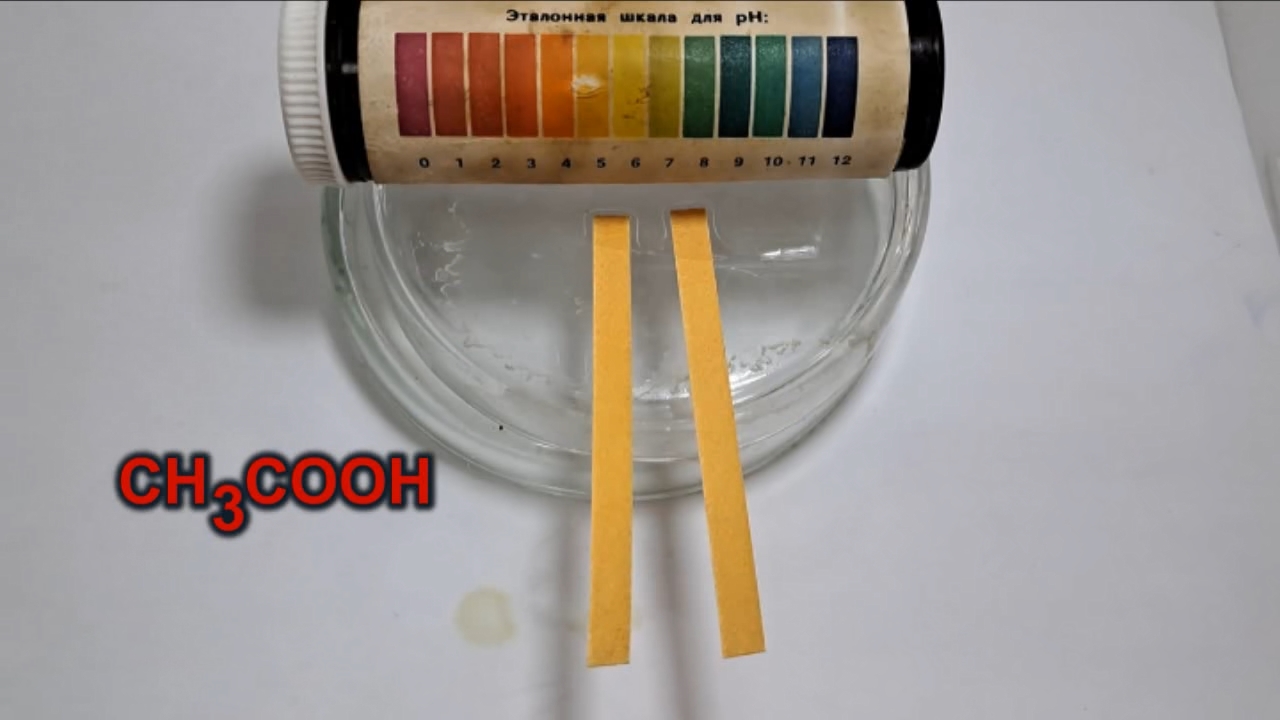
Universal Indicator Paper, Acetic Acid, and Ammonia |
|
|
|
|
|
|
|
|
|
|
|
|
|
|
|
|
|
|
|
|
|
|
|
|
|
|
|
Having noticed a mistake in the text, allocate it and press Ctrl-Enter
Universal Indicator, Phenolphthalein, Concentrated Sulfuric Acid, and Sodium Hydroxide - Part 9
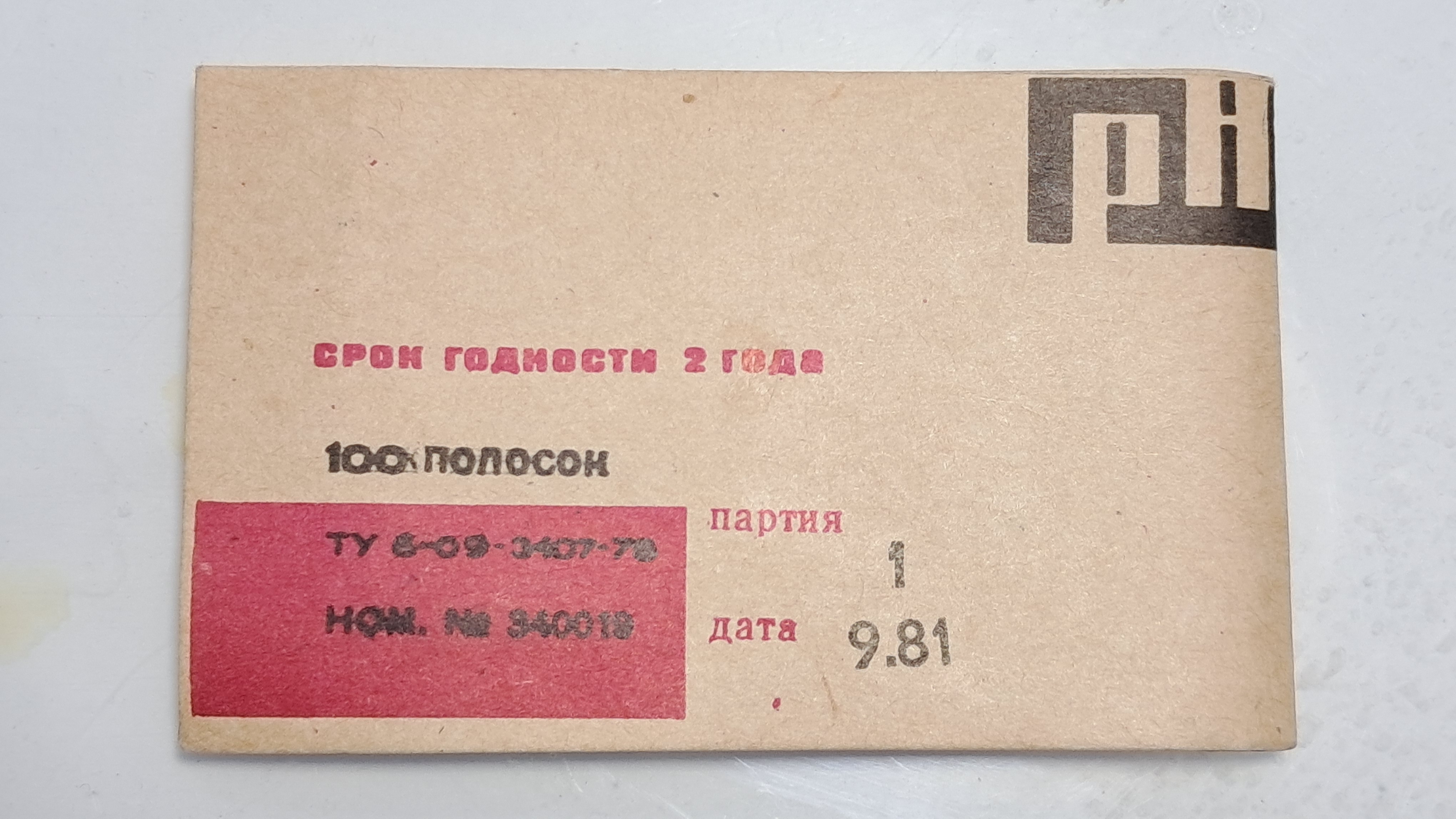
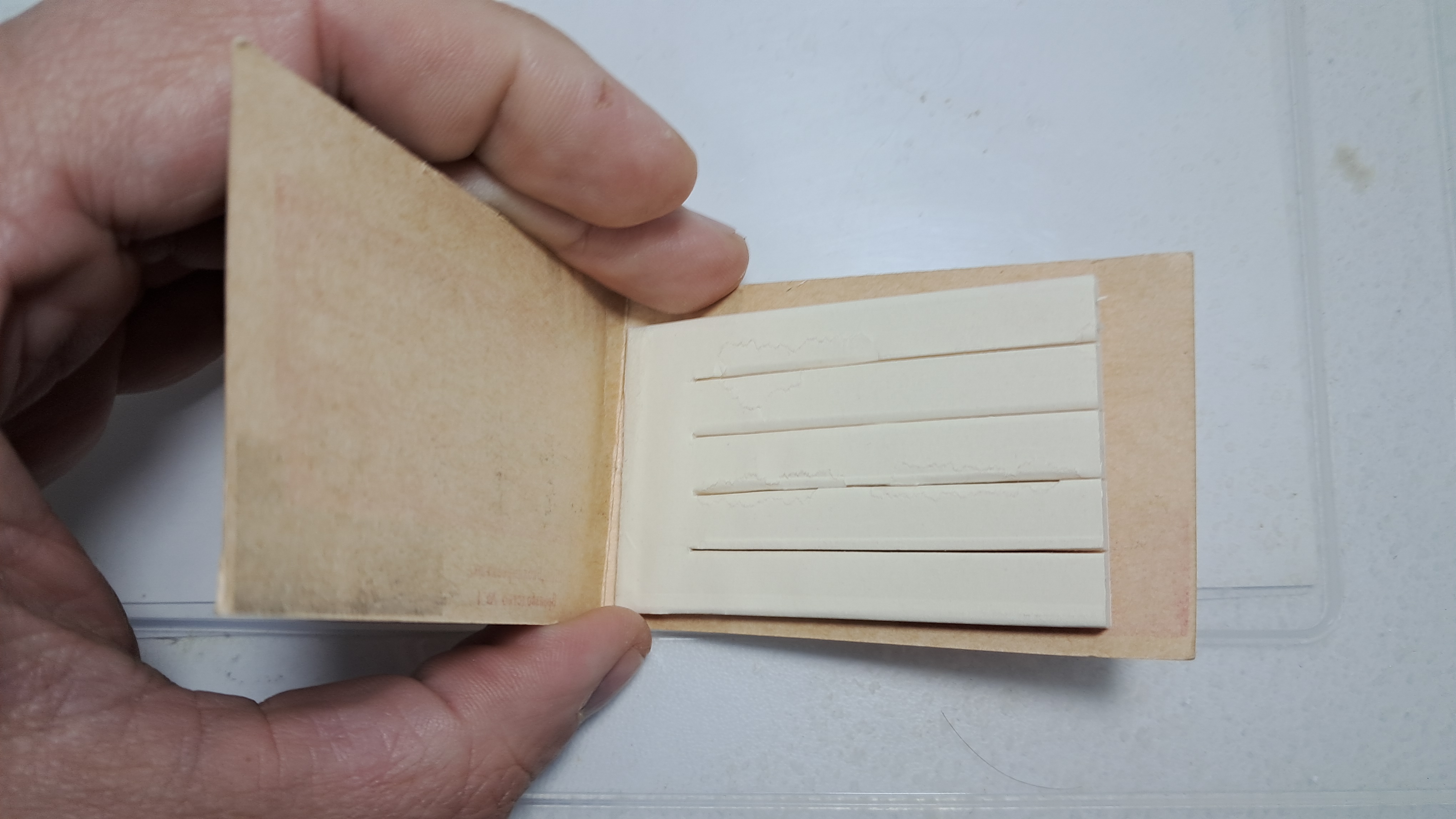
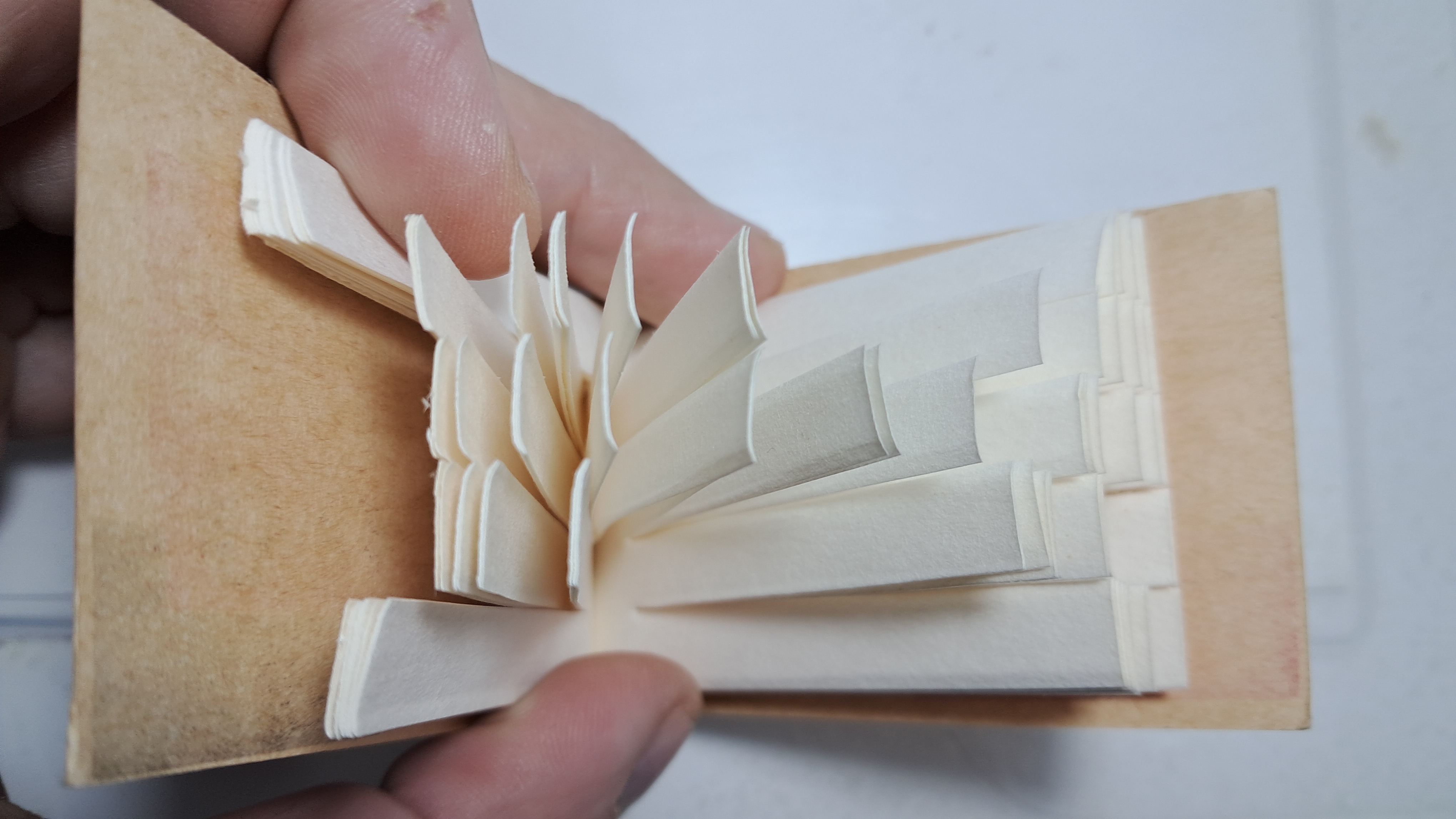
In addition to universal indicator paper, some 35-year-old phenolphthalein paper was also found in the laboratory. Its official shelf life is only two years, yet I was confident that even after 35 years the indicator had not lost its properties. It is gratifying that, after so many years of storage, someone finally had a use for it.
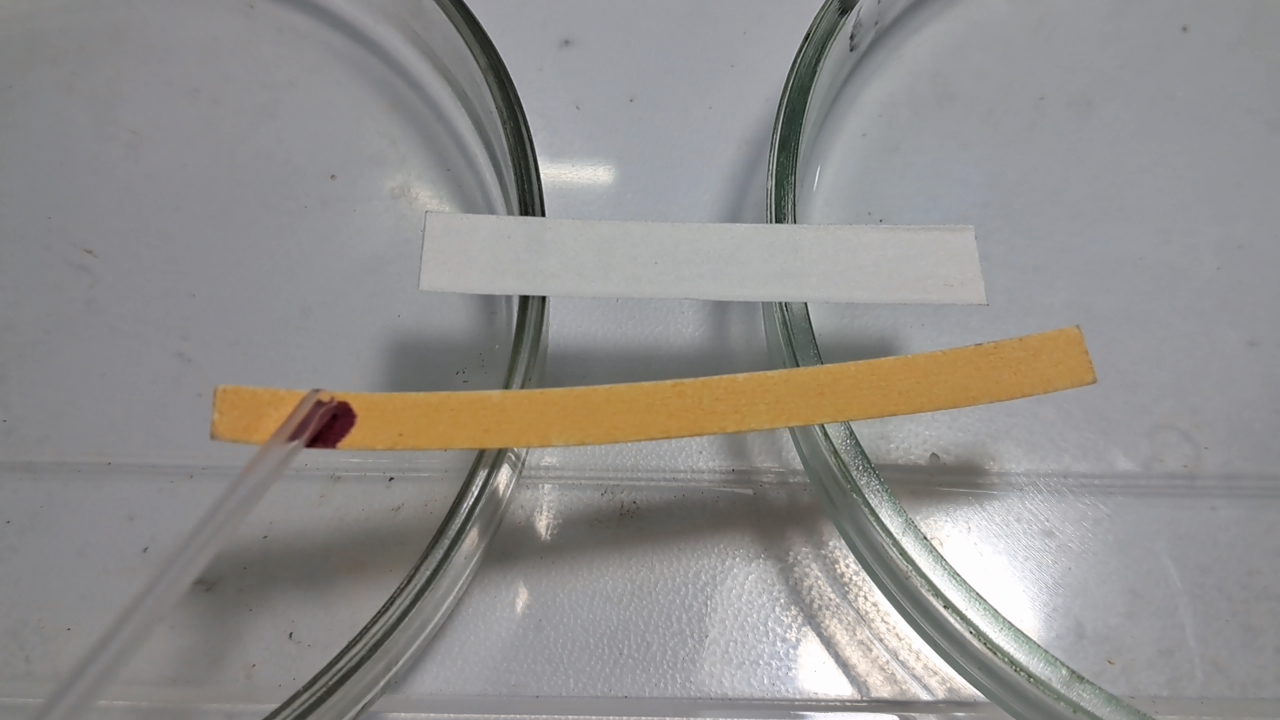
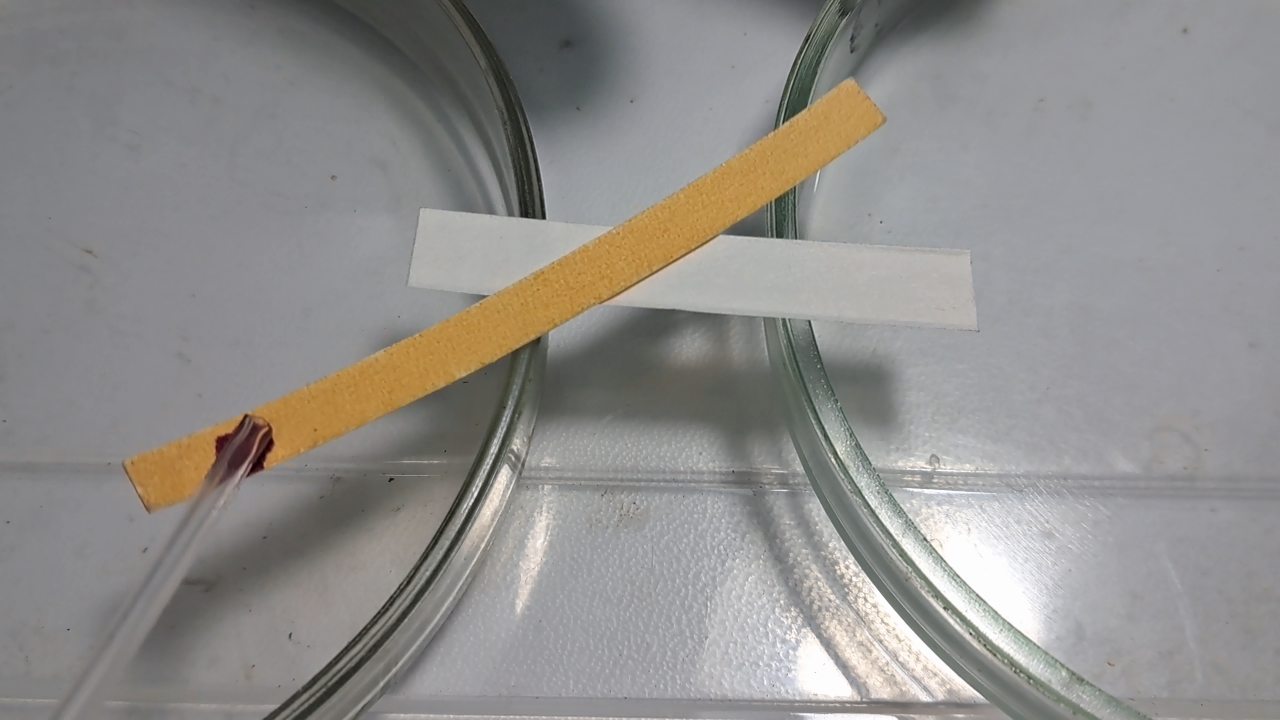
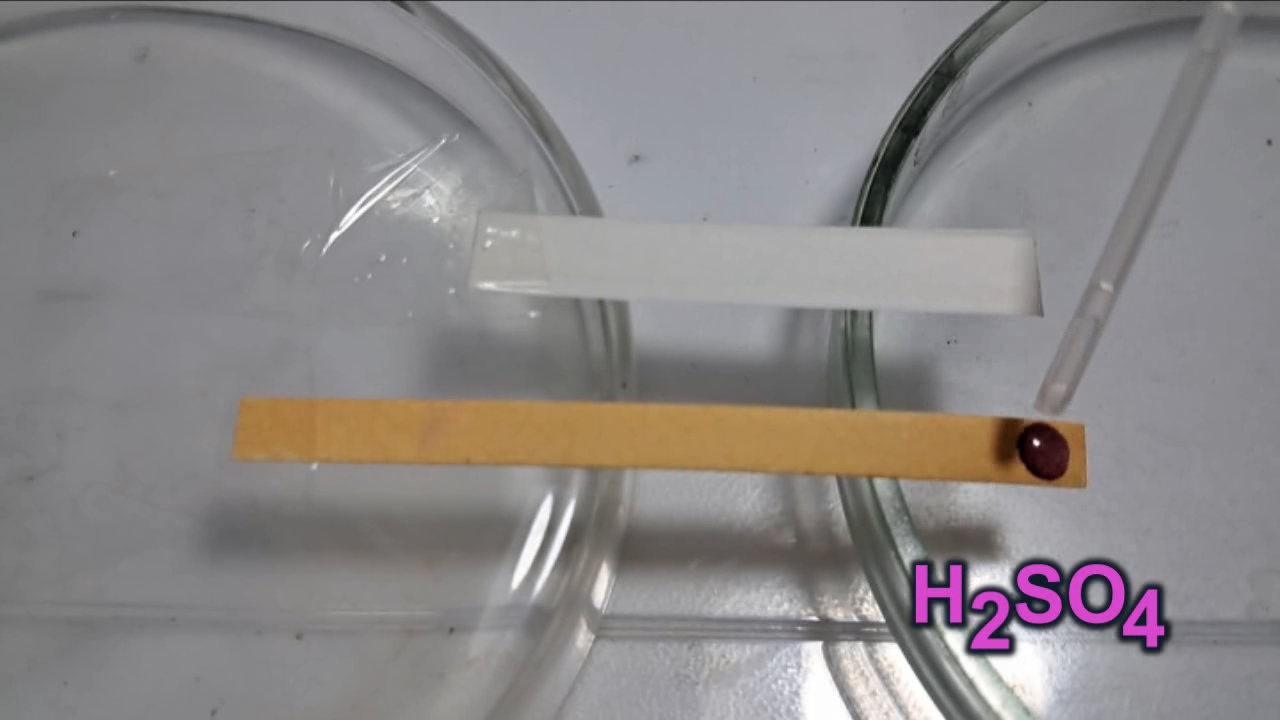
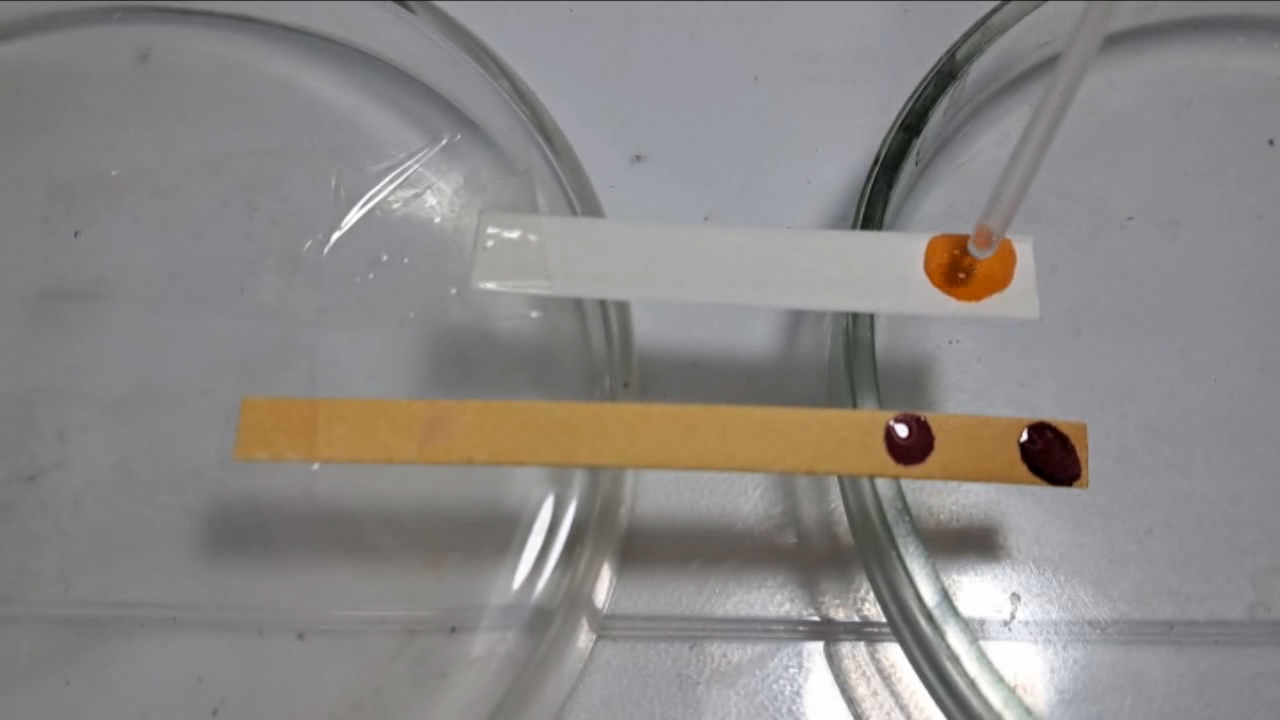
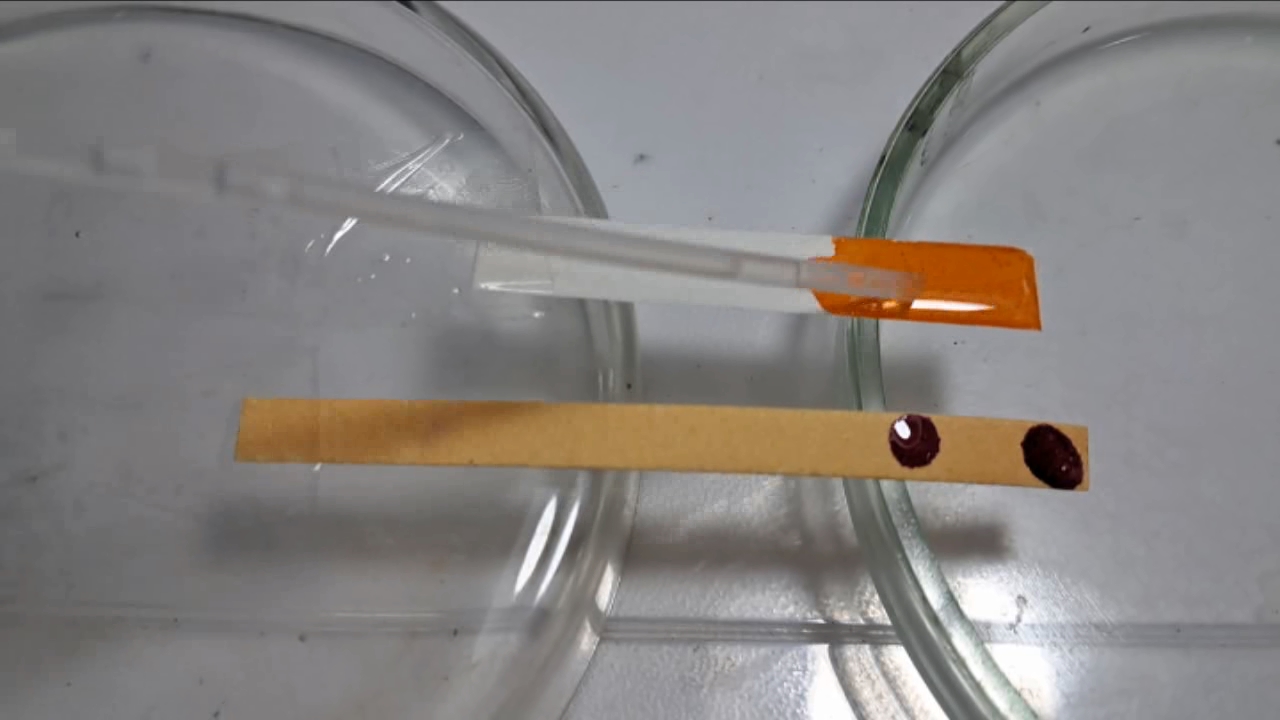
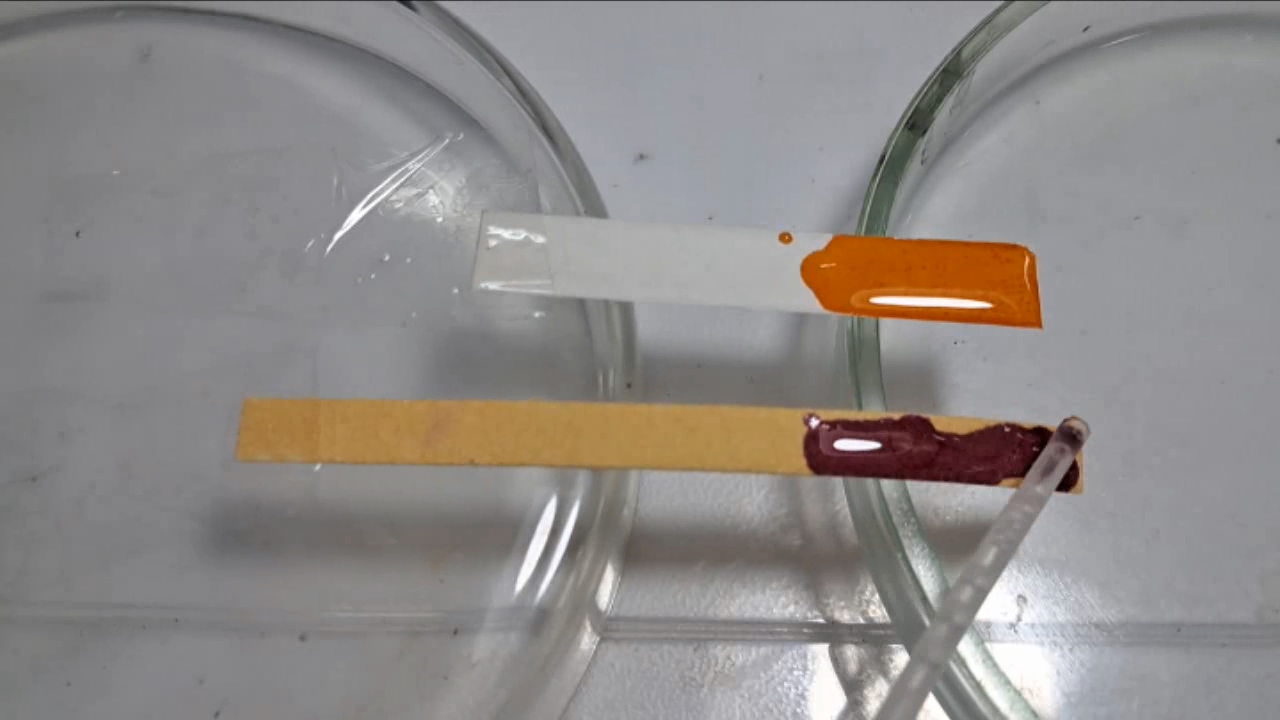
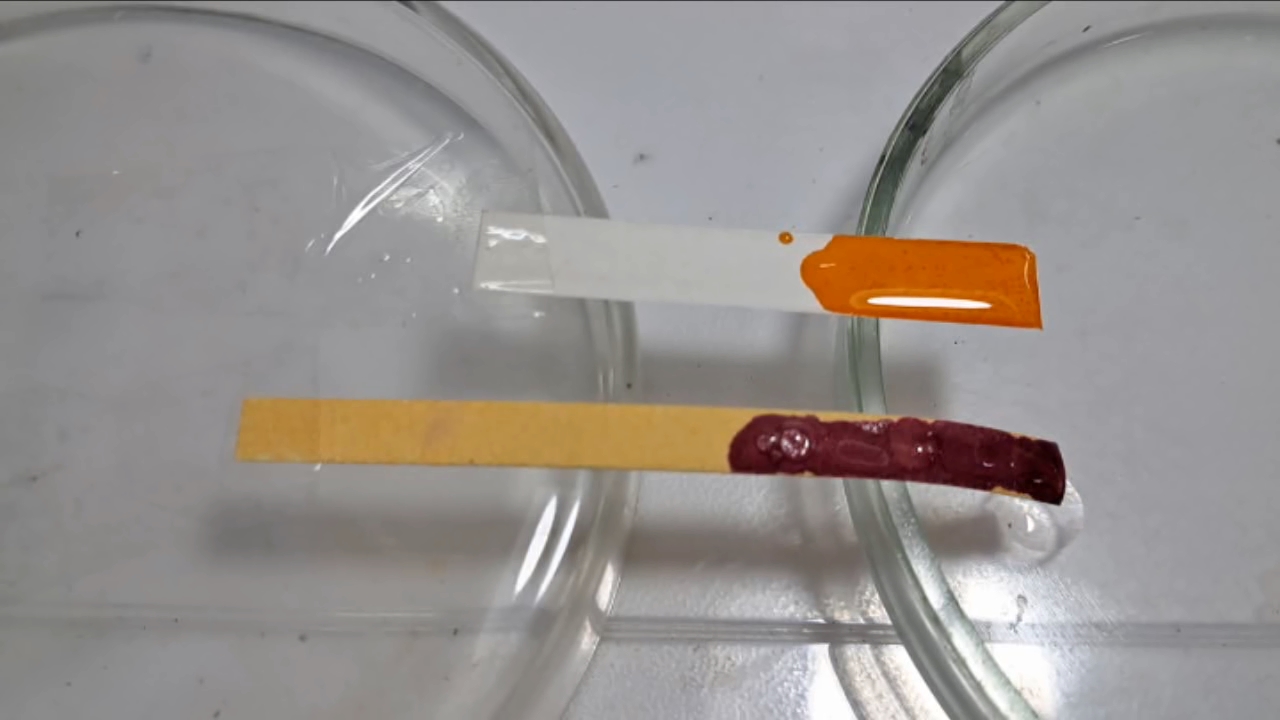
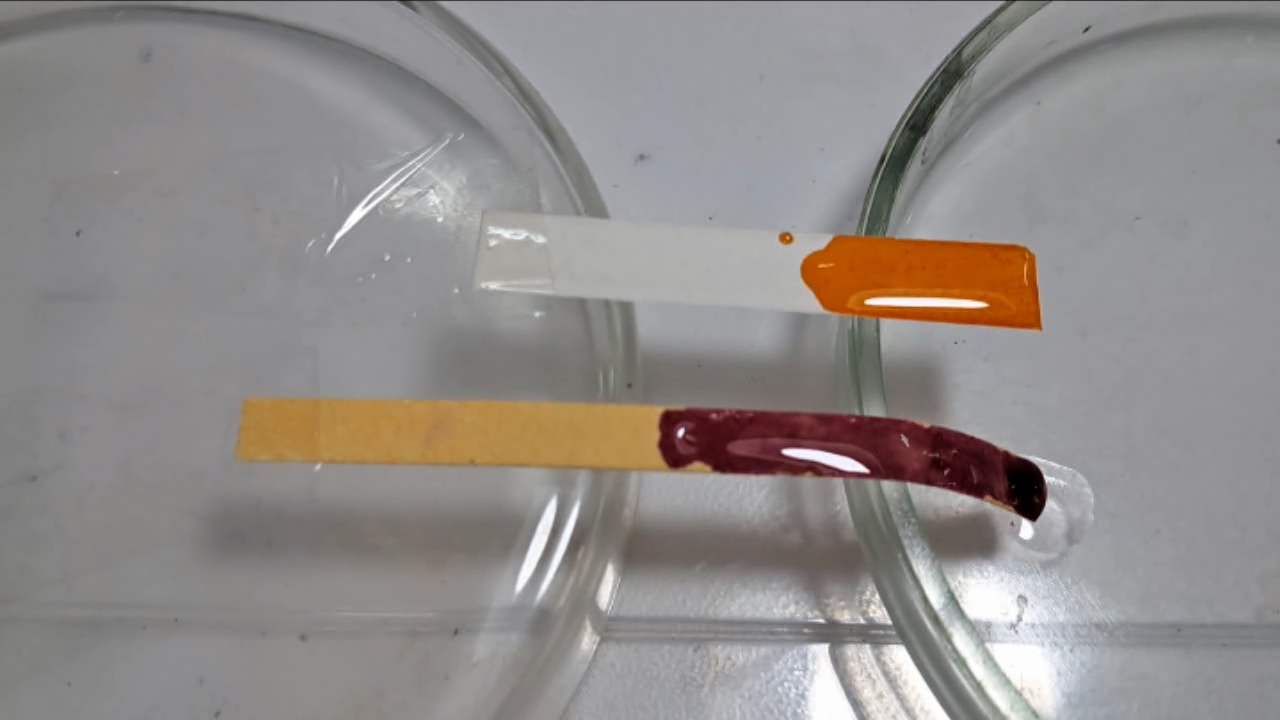
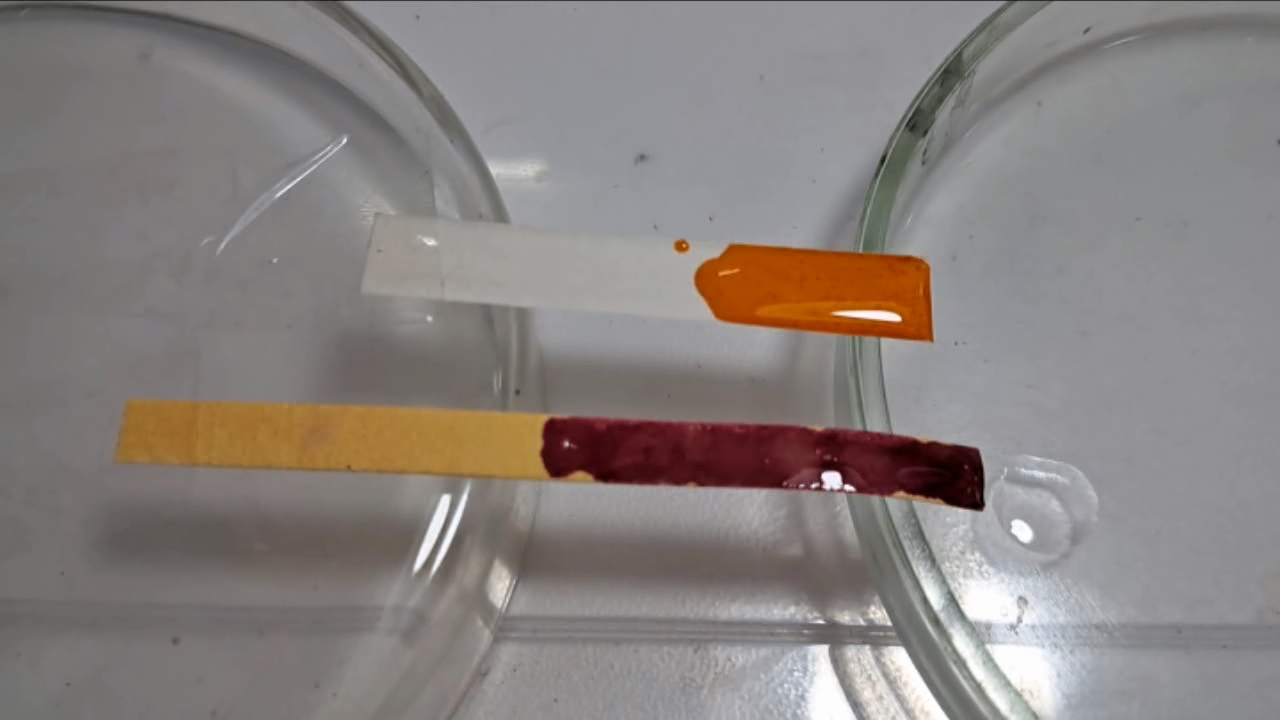
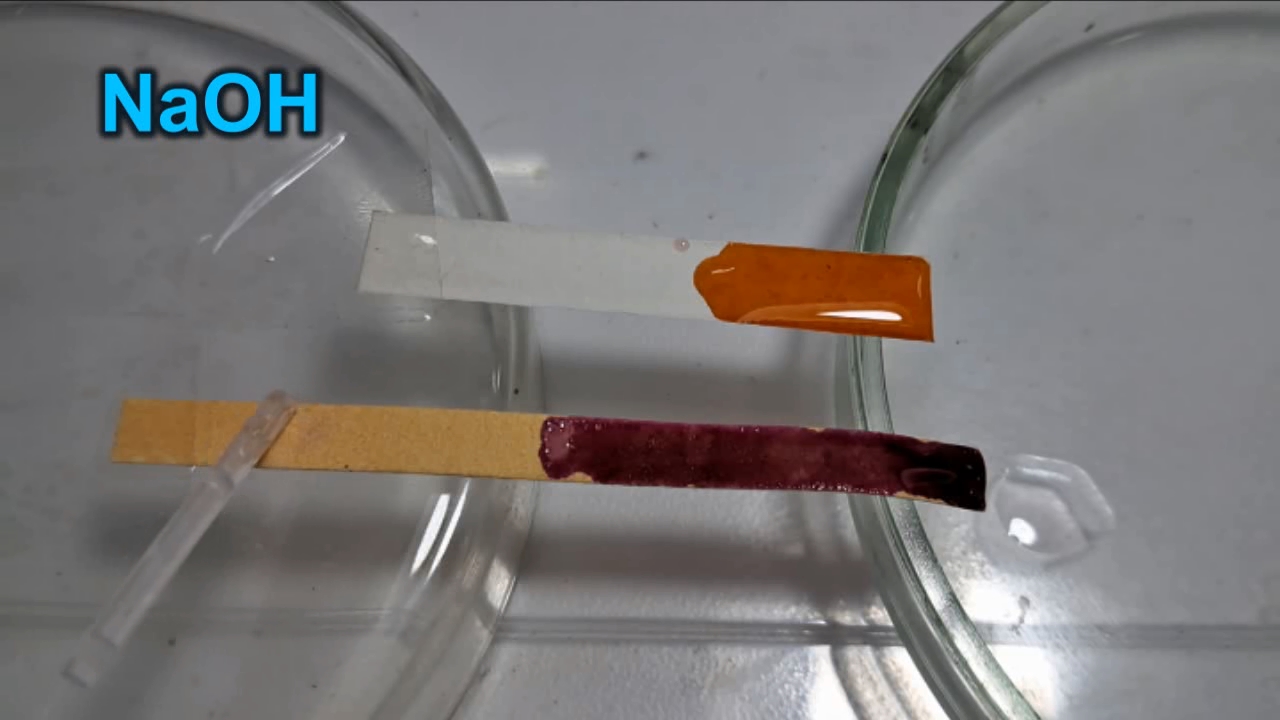
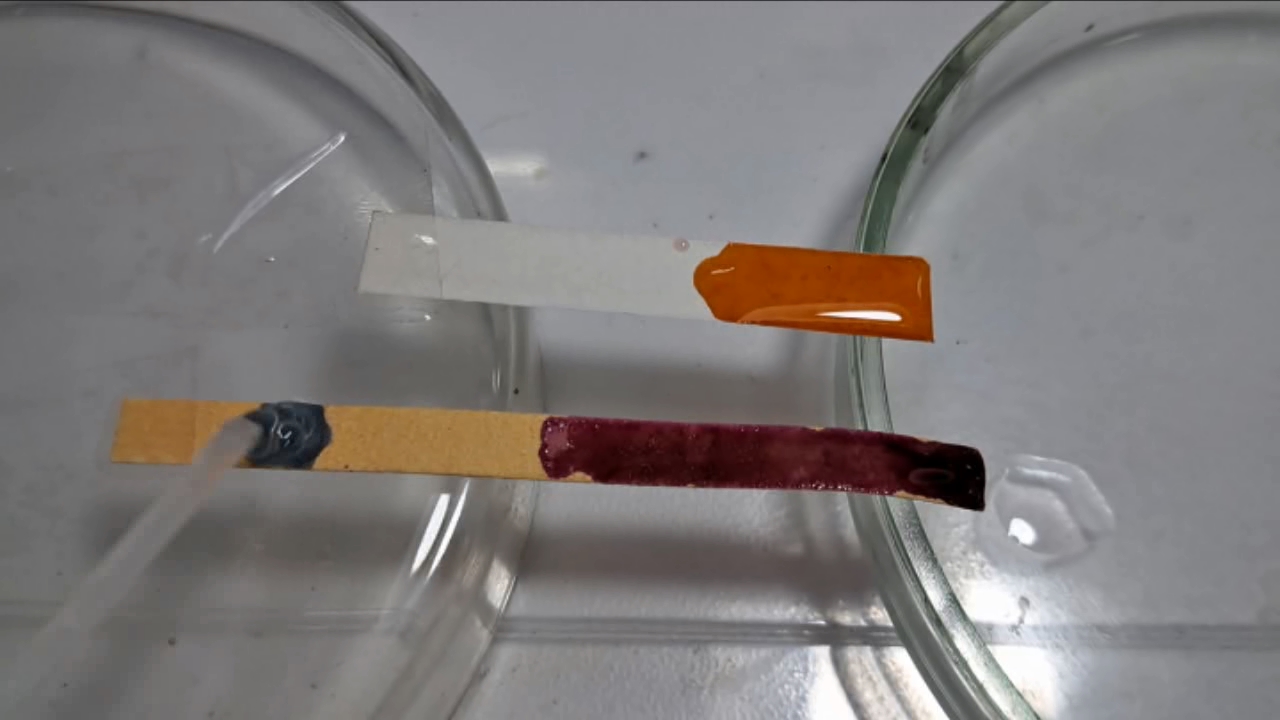
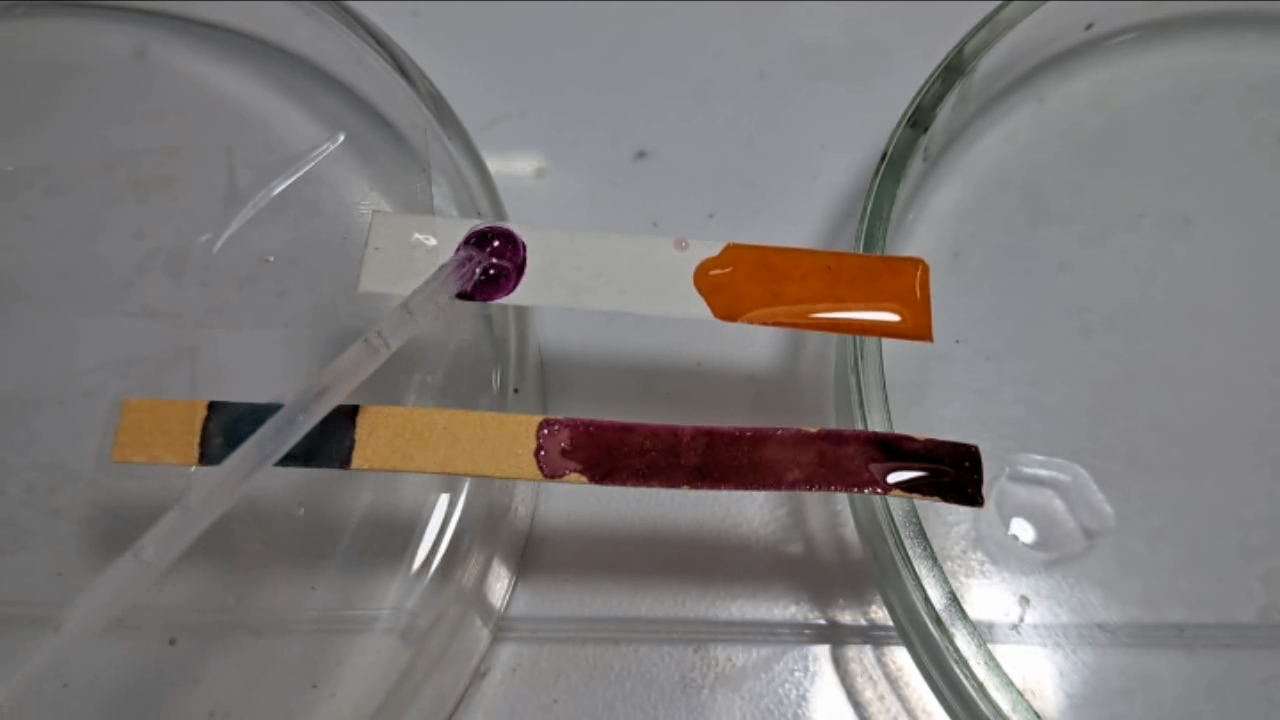
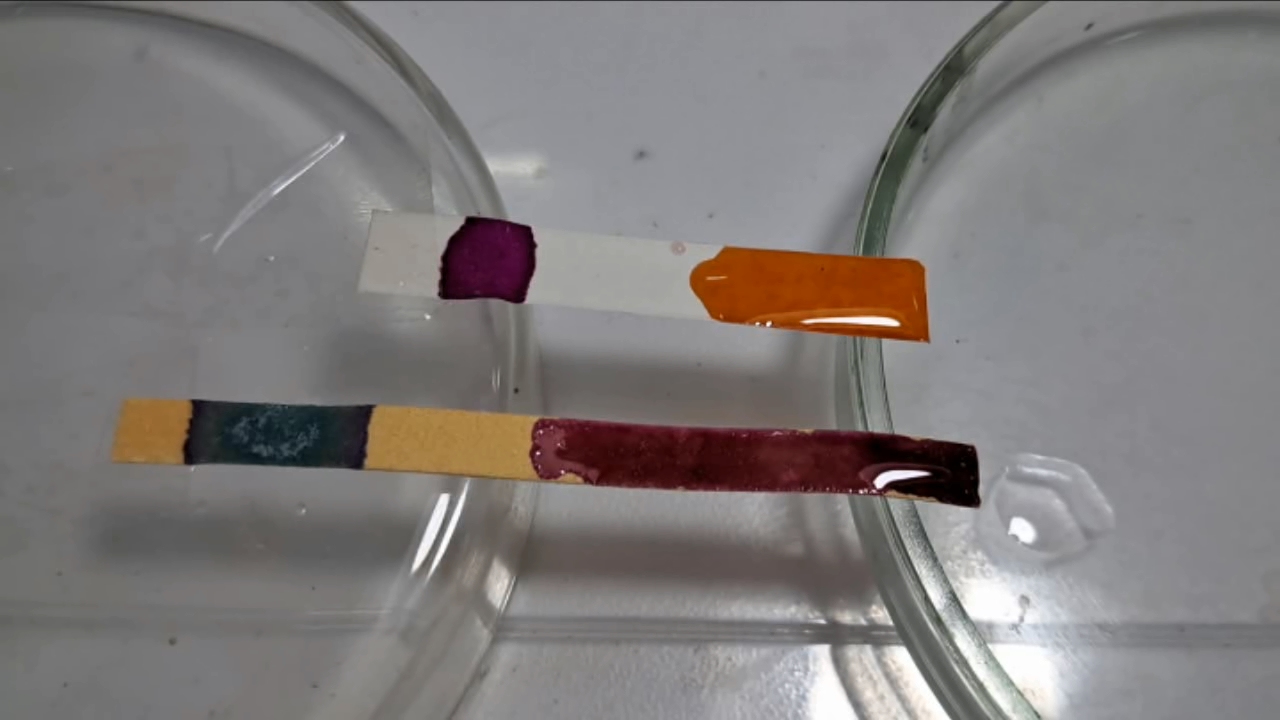
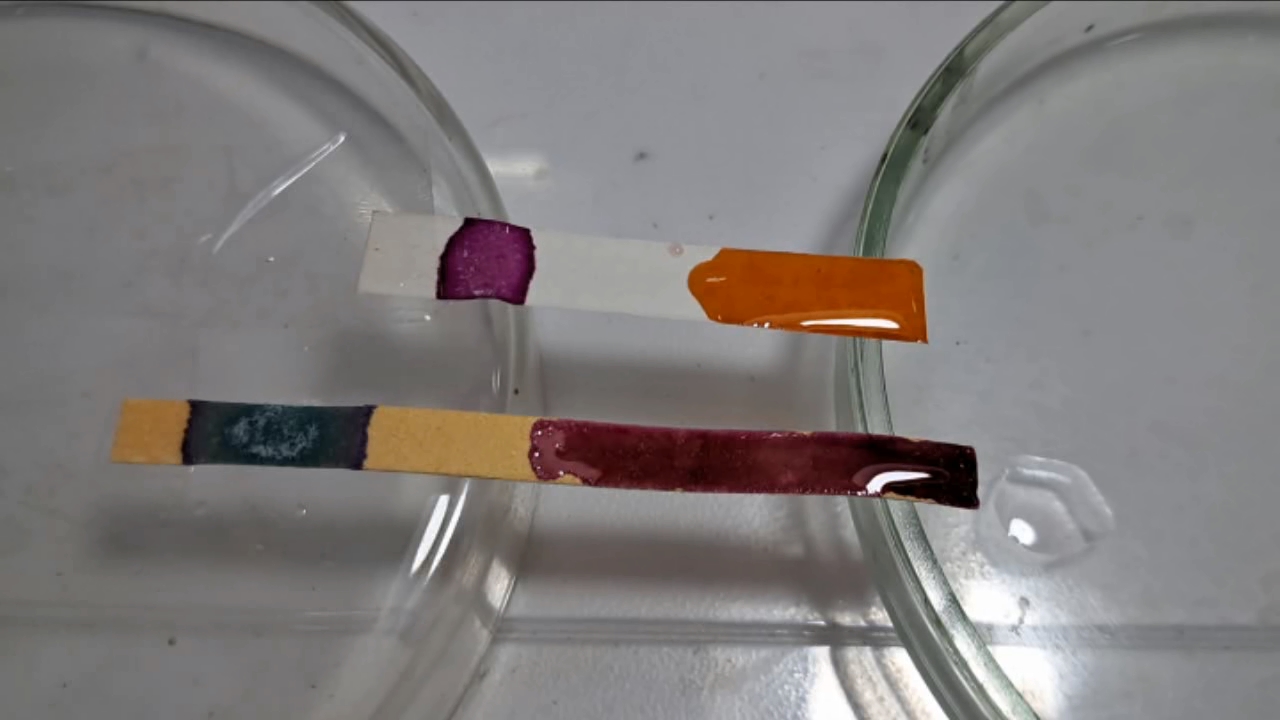
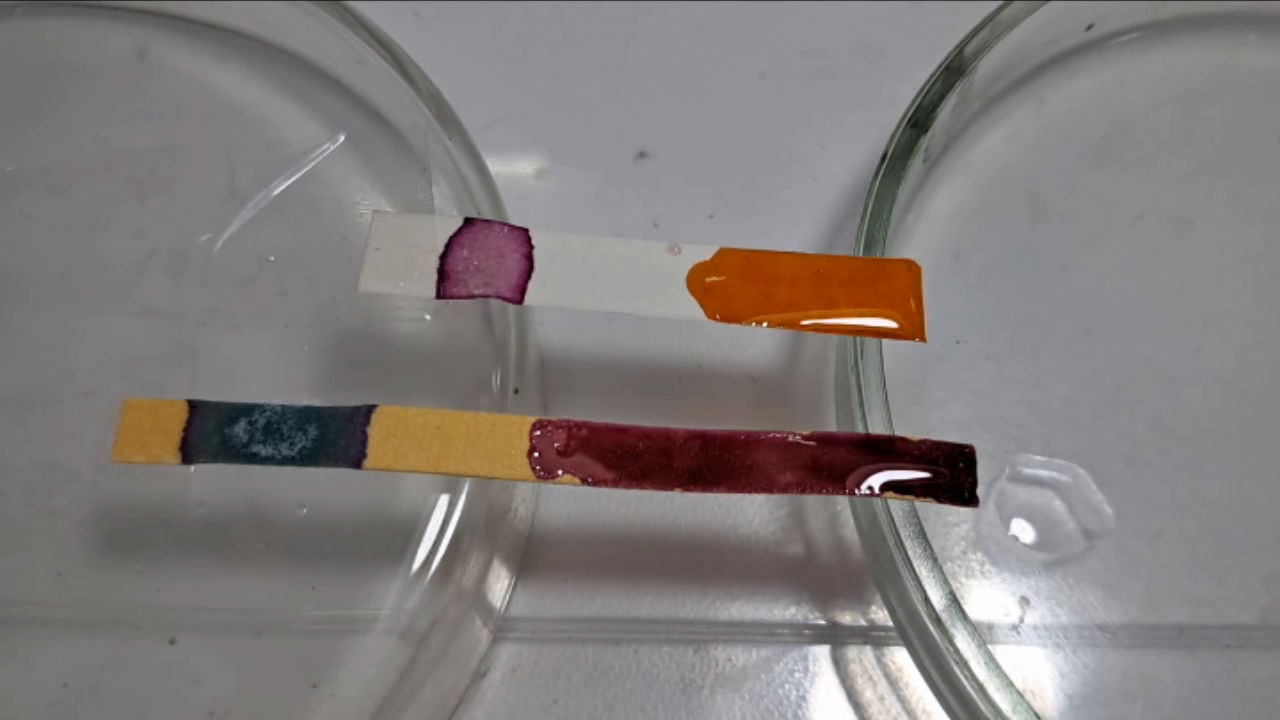
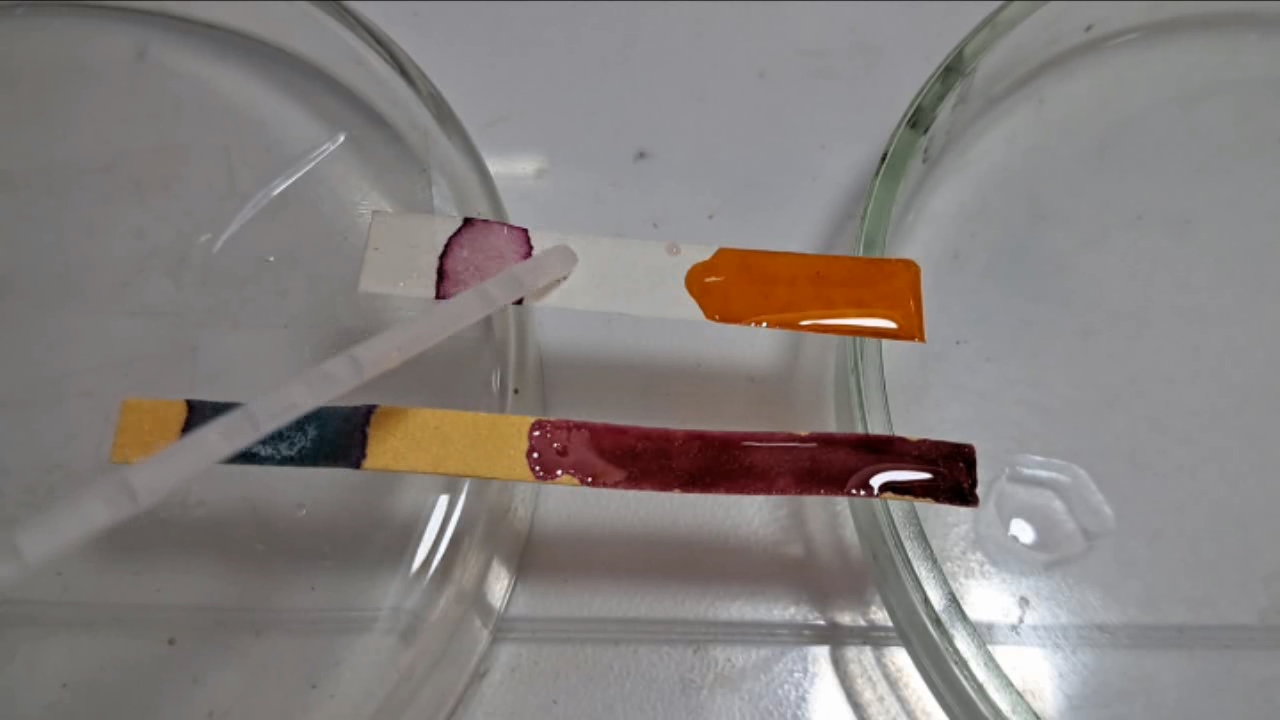
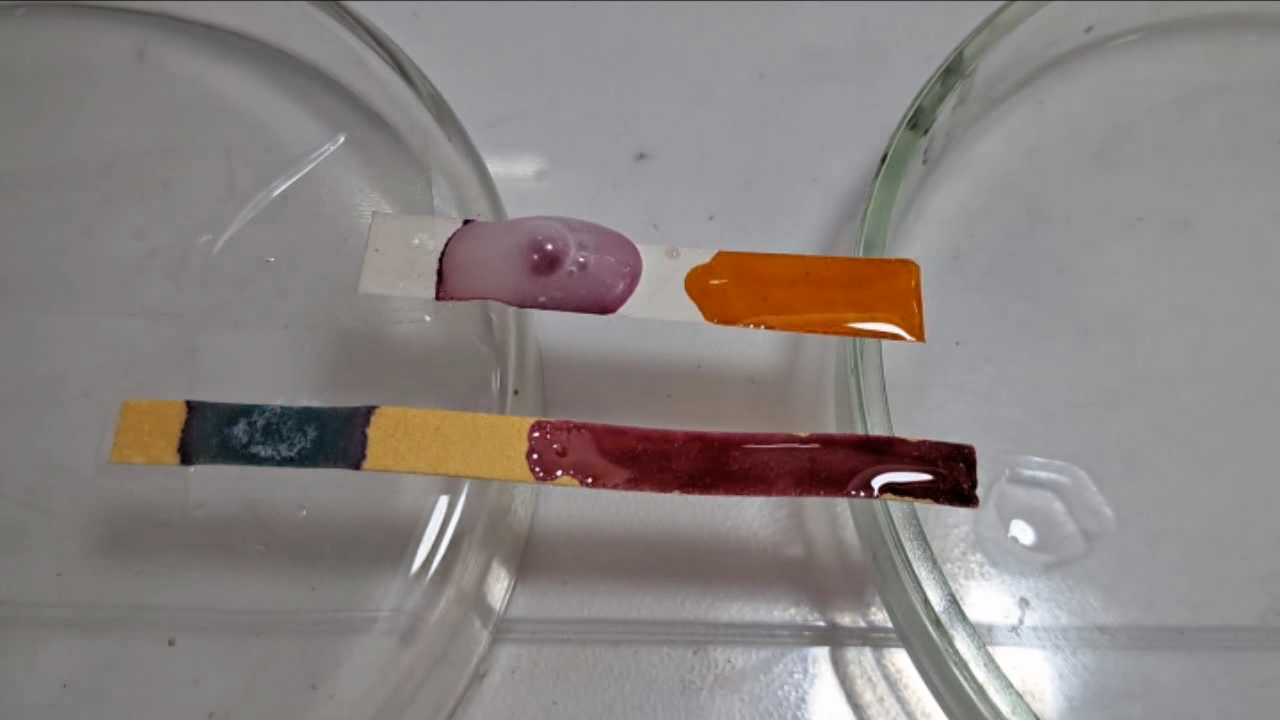
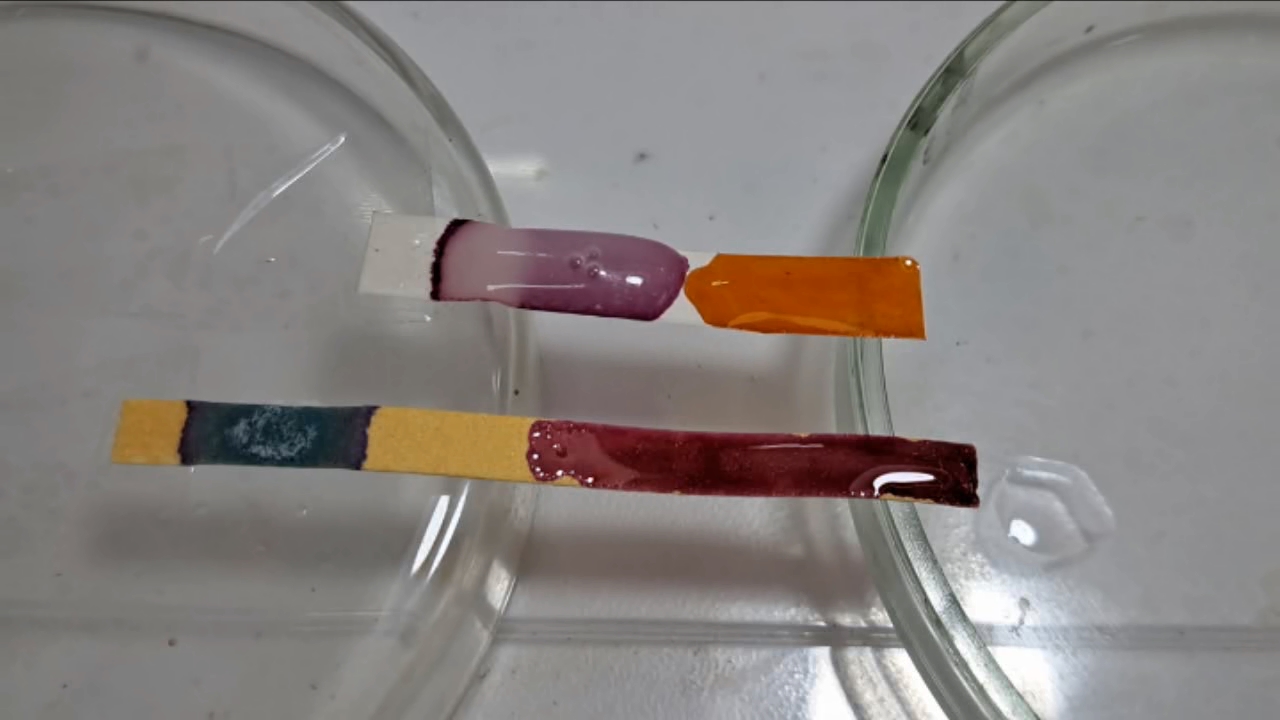
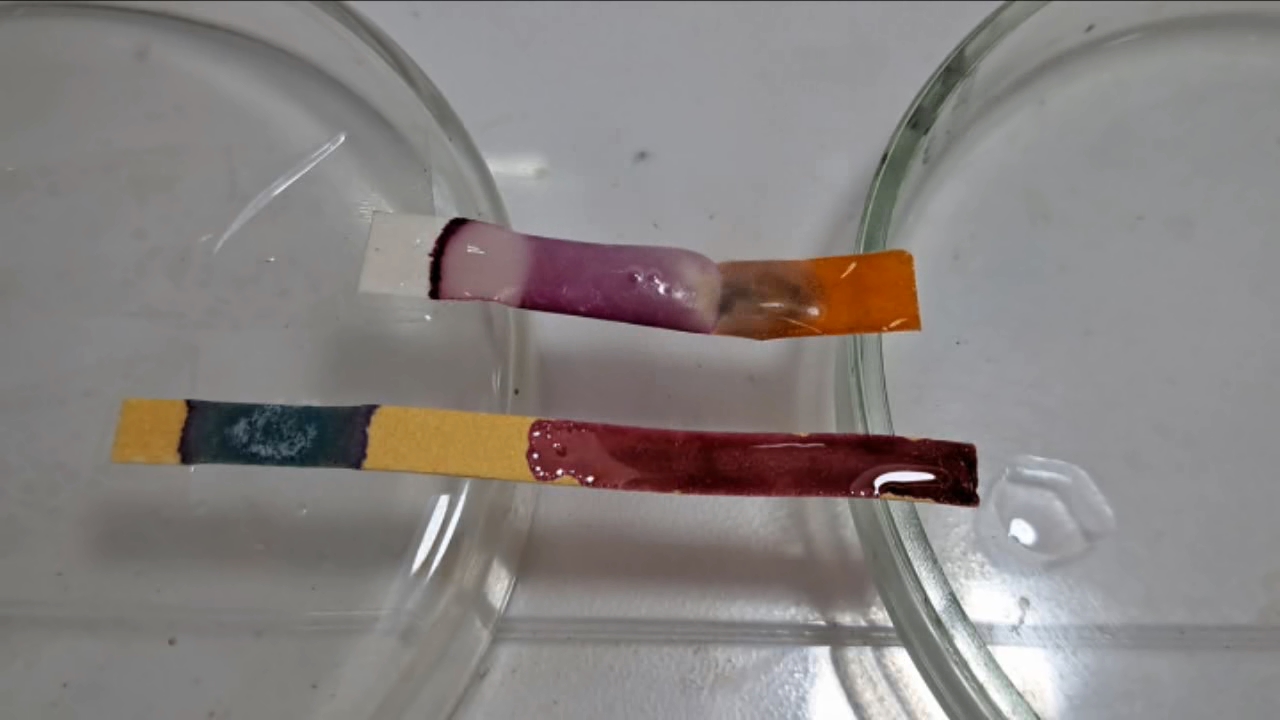
Универсальный индикатор, фенолфталеин, концентрированная серная кислота и гидроксид натрия - Часть 9 Let us conduct another experiment using a strip of phenolphthalein paper and a strip of universal indicator paper. Of course, I will not bore the reader with trivial experiments such as the color change of phenolphthalein paper in an alkaline solution: the strip was white and turned fuchsia. The original experimental plan was as follows. Two paper strips-one phenolphthalein, one universal indicator - were to be placed on Petri dishes, after which concentrated sulfuric acid would be applied to the tip of each strip. Prediction: the universal indicator paper would turn an intense crimson color, and some charring of the paper might occur. As for phenolphthalein paper and the concentrated acid… I will omit my prediction here; suffice it to say that it proved correct. Later, I realized that a saturated sodium hydroxide solution could be applied to the opposite ends of both strips, combining the two pH extremes on a single strip of indicator paper. Better still, a saturated potassium hydroxide solution could be used, as it is a stronger base than sodium hydroxide. Unfortunately, I could not find any potassium hydroxide, even though we had it in the laboratory. Prediction: the universal indicator paper would turn violet, whereas the phenolphthalein paper would remain colorless, since phenolphthalein is colorless in strongly alkaline media, where the Ind(OH)3- anion is formed. I touched a pipette containing concentrated sulfuric acid to the universal indicator paper. The paper turned a deep crimson, almost black, and adhered to the pipette. When I lifted the pipette, the strip rose with it. I had to secure a new strip of universal indicator paper with tape and repeat the attempt. Again, the universal indicator paper turned dark crimson, almost black, upon contact with the acid. It turned out that the concentrated acid was absorbed poorly by the paper, unlike the dilute solution. I had to spread the acid over the surface using the pipette tip. No charring of the paper was observed. The end of the first strip remained crimson the next day, with no signs of carbonization. The phenolphthalein paper turned orange when exposed to concentrated sulfuric acid. Fifteen years ago, I conducted a similar experiment using a phenolphthalein solution [1]; now it was the turn of phenolphthalein paper. The indicator turns orange in a highly acidic medium. Sulfuric acid was also absorbed poorly by the phenolphthalein paper, remaining largely on its surface. I applied a saturated sodium hydroxide solution to the opposite end of the universal indicator strip. The indicator turned dark green instead of the expected violet. Only the edge of the wetted region turned violet. Unlike concentrated sulfuric acid, the sodium hydroxide solution was absorbed much more readily into the paper. I then applied the same solution to the opposite end of the phenolphthalein paper. A dark fuchsia stain immediately formed. What a disappointment! I had expected the paper to remain white, but it turned fuchsia, as though it had contacted a dilute alkali. As the fuchsia stain expanded, the color at its center began to fade noticeably, but I dismissed this important observation, assuming that the indicator had dissolved in the alkali and was being washed from the center of the stain toward its edges. Greatly disappointed by the result, I added a significant amount of the sodium hydroxide solution to the surface of the phenolphthalein paper, hoping the fuchsia stain would disappear. The color did not disappear, but the saturated solution flowed toward the region where concentrated sulfuric acid had been applied. Upon contact, the liquids boiled and a hissing sound was heard. The hot acid charred the organic material, turning it black. I tried to reproduce the same effect on a strip of universal indicator paper, but the attempt failed because by then the excess acid had already dripped from the strip into the dish. Interestingly, the dark green color of the universal indicator corresponded on the comparison chart to an apparently unrealistic pH of 9-10. Let us estimate the pH of a saturated sodium hydroxide solution. Assuming a solubility of approximately 1000 g/L at 25°C and M(NaOH) = 40.0 g/mol, the molarity is: M = 1000 / 40.0 = 25 M pOH = -log(C(OH-)) = -log(25) = -1.40 pH = 14 - pOH = 14 - (-1.40) = 15.4 A pH of 15.4 lies well beyond the indicator paper scale (1-12). Therefore, the dark green color of the universal indicator evidently corresponds to a much more alkaline solution than the violet color (for the latter, pH = 12). In other words, the dark green color does not imply a pH of 9-10. Rather, at extremely high pH values, the mixed indicator acquires a green coloration again, which is coincidentally similar to that observed in mild alkaline solutions. It should be noted that electrochemical calculations use not actual ion concentrations but their activities ("effective concentrations"). pH calculations are no exception. In sufficiently dilute solutions, ion activities are approximately equal to their concentrations. However, at high electrolyte concentrations, ion-ion interactions become significant, and the activity of H+ (or OH-) may differ substantially from its concentration. Consequently, the theoretical pH calculated above may differ considerably from the actual pH. Nevertheless, it can be stated with certainty that the pH of the solution is far above 12, the upper limit of the universal indicator scale. Incidentally, attempting to measure the pH of a saturated sodium hydroxide solution with a conventional pH meter would not yield reliable results - the glass electrode (typically soda-lime-silica glass) produces significant errors under such conditions, and concentrated alkali may damage the electrode itself. __________________________________________________ 1 Phenolphthalein / Фенолфталеин [link]. |
|
Универсальный индикатор, фенолфталеин, концентрированная серная кислота и гидроксид натрия - Часть 9
Кроме универсальной индикаторной бумаги, в лаборатории также нашлась фенолфталеиновая бумага 35-летней давности. Официальный срок годности данной бумаги - всего два года, однако, уверен, что даже за 35 лет индикатор не потерял своих свойств. Хорошо, что данная индикаторная бумага после скольких лет хранения хоть кому-то понадобилась.
Проведем очередной эксперимент, использовав полоску фенолфталеиновой бумаги и полоску универсальной индикаторной бумаги. Разумеется, я не собираюсь утомлять читателя банальными опытами вроде изменения цвета фенолфталеиновой бумаги в растворе щелочи: полоска была белой, а стала малиновой. Первоначальный план эксперимента был такой. Две полоски бумаги - фенолфталеиновой и универсальной индикаторной - следует поместить на чашки Петри, затем на кончик каждой из полосок нанести концентрированную серную кислоту. Прогноз: универсальная индикаторная бумага приобретет интенсивный малиновый цвет, возможно, бумага частично обуглится. Фенолфталеиновая бумага при контакте с концентрированной кислотой... А здесь я опущу свой прогноз, отмечу только, что он оказался правильным. Позже я осознал, что на противоположные концы обоих полосок можно нанести насыщенный раствор гидроксида натрия, комбинируя два экстремума pH на одной полоске индикаторной бумаги. Еще лучше использовать насыщенный раствор гидроксида калия, последний является более сильным основанием, чем гидроксид натрия. К сожалению, гидроксида калия я не нашел, хотя он и был в наличии в нашей лаборатории. Прогноз: универсальная индикаторная бумага станет фиолетовой, а фенолфталеиновая бумага останется - бесцветной, поскольку фенолфталеин в сильнощелочной среде бесцветен - образуется анион Ind(OH)3-. Прикоснулся пипеткой с концентрированной серной кислотой к универсальной индикаторной бумаге. Бумага окрасилась в темно-малиновый, почти черный цвет и прилипла к пипетке. Когда я поднял пипетку, полоска поднялась вместе с ней. Пришлось закрепить новую полоску универсальной индикаторной бумаги скотчем и повторить попытку. Как и в прошлый раз, универсальная индикаторная бумага окрасилась от контакта с кислотой в темно-малиновый, почти черный цвет. Оказалось, что концентрированная кислота плохо впитывалась в бумагу, в отличие от разбавленного раствора. Пришлось распределять кислоту по поверхности кончиком пипетки. Обугливания бумаги не наблюдалось. Конец первой полоски так и остался на следующий день малиновым без признаков карбонизации бумаги. Фенолфталеиновая бумага под действием концентрированной серной кислоты стала оранжевой. 15 лет назад я провел аналогичный эксперимент с раствором фенолфталеина [1], теперь очередь дошла и до фенолфталеиновой бумаги. Индикатор приобретает в сильнокислой среде оранжевый цвет. Серная кислота также плохо впитывалась в полоску фенолфталеиновой бумаги, оставаясь над ее поверхностью. На противоположный конец полоски универсальной индикаторной бумаги нанес насыщенный раствор гидроксида натрия. Индикатор приобрел темно-зеленый цвет - вместо ожидаемого фиолетового. Только кромка пятна жидкости стала фиолетовой. В отличие от концентрированной серной кислоты, раствор гидроксида натрия впитывался в бумагу гораздо лучше. После этого нанес этот же раствор на противоположный конец фенолфталеиновой бумаги. Сразу же образовалось темно-малиновое пятно. Что за разочарование! Я ожидал, что бумага останется белой, но она приобрела малиновый цвет, словно от контакта с разбавленной щелочью. Когда малиновое пятно стало расширяться, окраска в его центре начала существенно бледнеть, но я не придал этому важному факту значения, предположив, что индикатор растворился в щелочи и смывается от центра пятна к его краям. Полученный результат меня сильно разочаровал, поэтому я добавил значительную порцию раствора гидроксида натрия на поверхность фенолфталеиновой бумаги, надеясь, что малиновая окраска исчезнет. Окраска не исчезла, зато насыщенный раствор потек в направлении зоны, где была нанесена концентрированная серная кислота. При контакте жидкости вскипели, послушалось шипение. Горячая кислота обуглила органику, став черной. Попробовал повторить тот же эффект с полоской универсальной индикаторной бумаги, но попытка не удалась, поскольку до этого момента лишняя кислота уже стекла с полоски в чашку. Любопытно: темно-зеленый цвет универсального индикатора соответствовал на цветной шкале сравнения нереалистическому значению pH= 9-10. Проведем расчет pH насыщенного раствора гидроксида натрия. Если принять, что растворимость данного вещества в воде равна примерно 1000 g/L (25°C), а M(NaOH)= 40.0, то молярность раствора составляет: M=1000/40.0=25 M pOH= -lg(C(OH-)) = -lg(25) = -1.40 pH = 14 - pOH = 14 - (-1.40) = 15.4 Значение pH=15.4 далеко выходит за пределы шкалы сравнения индикаторной бумаги (1-12). Следовательно, зеленый цвет универсального индикатора соответствует гораздо более щелочному раствору, чем фиолетовый цвет (для последнего pH=12). Другими словами, темно-зеленый цвет не означает pH 9-10. Напротив, при чрезвычайно высоких значениях pH смешанный индикатор снова приобретает зеленый цвет, который по совпадению похож окраску индикатора, что наблюдается в слабощелочных растворах. Следует уточнить, что для электрохимических расчетов используют не фактические значения концентраций ионов, а их активности ("эффективные концентрации"). Расчет значения pH не является исключением. Для достаточно разбавленных растворов активности ионов приблизительно равны их концентрациям. Зато при высоких концентрациях электролитов существенную роль играет взаимодействие между ионами в растворе, поэтому ионная активность H+ (или OH-) может сильно отличаться от фактической его концентрации. Следовательно, приведенное выше теоретическое значение pH может значительно отличаться от реального. Однако, можно сказать со всей определенностью, что pH раствора намного выше 12 (крайняя точка цветовой шкалы сравнения). Кстати, попытки измерения pH насыщенного раствора гидроксида натрия с помощью обычного pH-метра не приведут ни к чему хорошему - стеклянный электрод дает в таких условиях большую ошибку (он содержит натриевое стекло), а концентрированная щелочь может повредить сам электрод. |
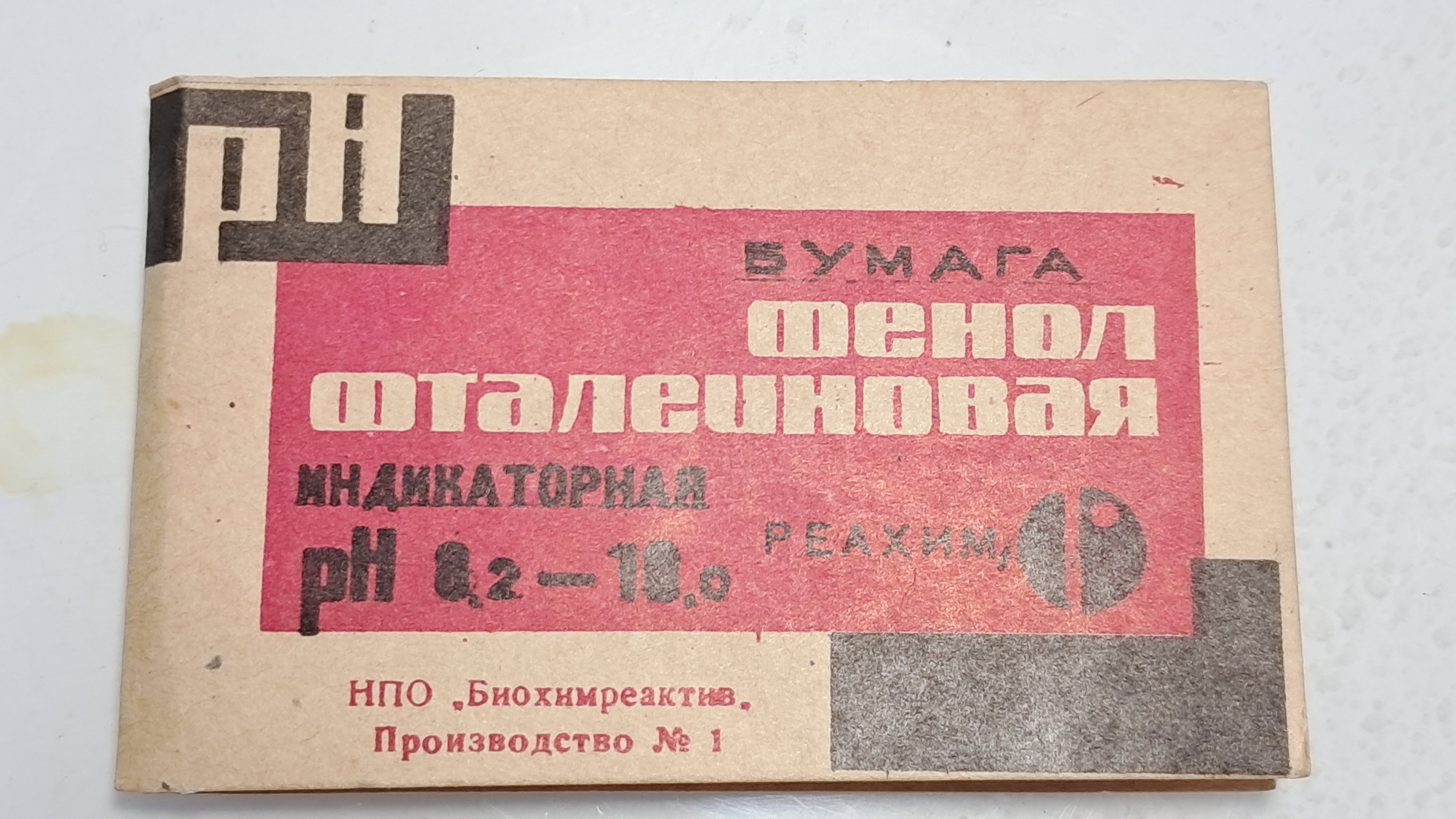
Phenolphthalein Indicator Paper |
|
|
|
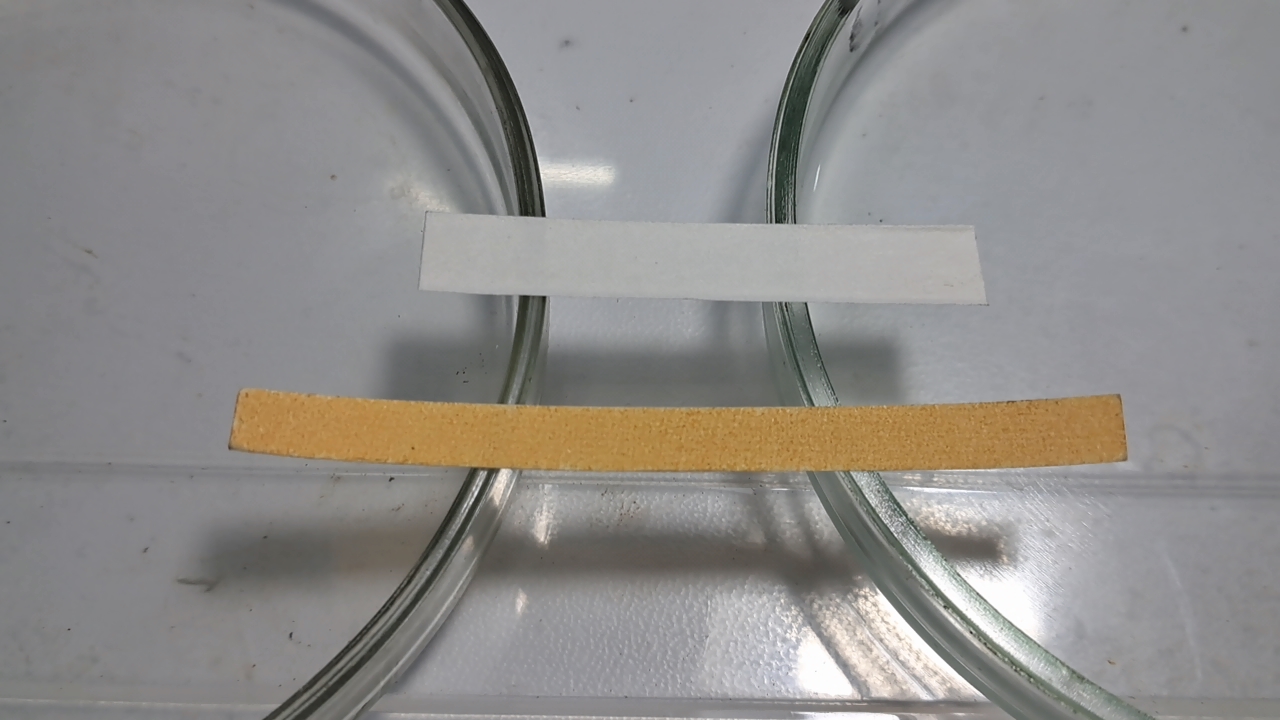
Universal Indicator, Phenolphthalein, Concentrated Sulfuric Acid, and Sodium Hydroxide (attempt #1) |
|
Oops! |
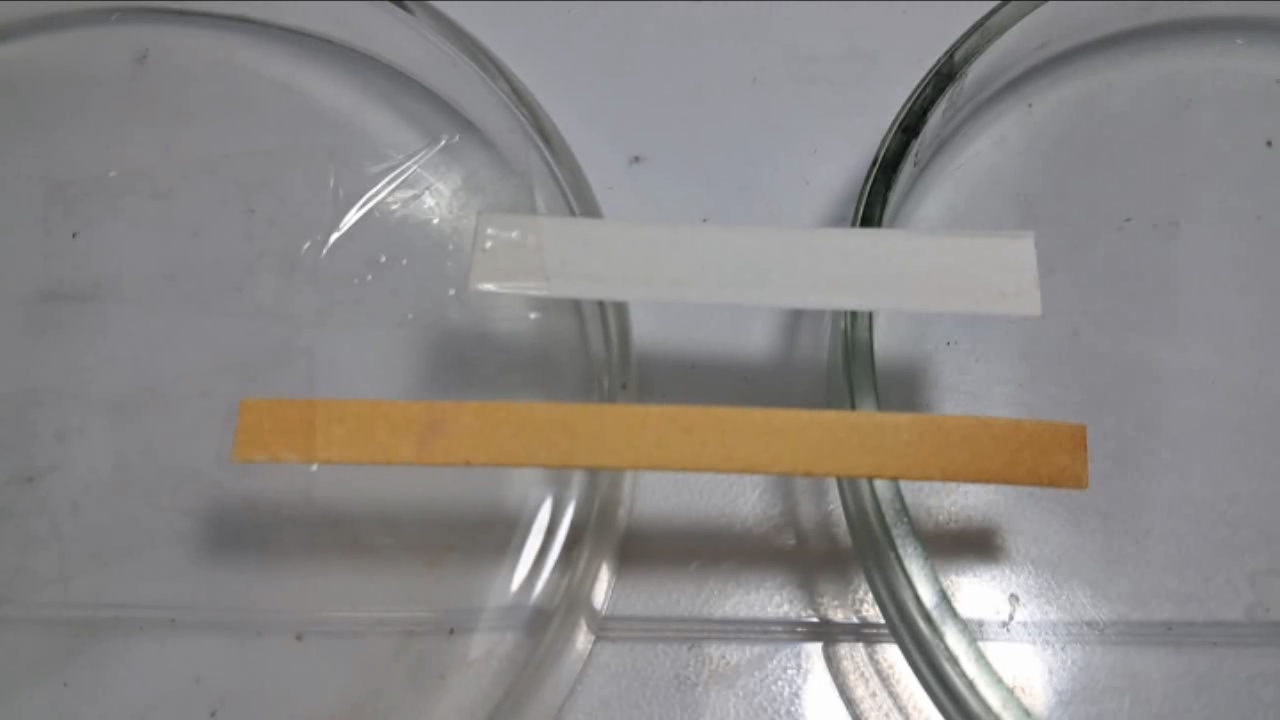
Universal Indicator, Phenolphthalein, Concentrated Sulfuric Acid, and Sodium Hydroxide (attempt #2) |
|
|
|
|
|
|
|
|
|
|
|
|
|
|
|
|
|
|
|
|
|
|
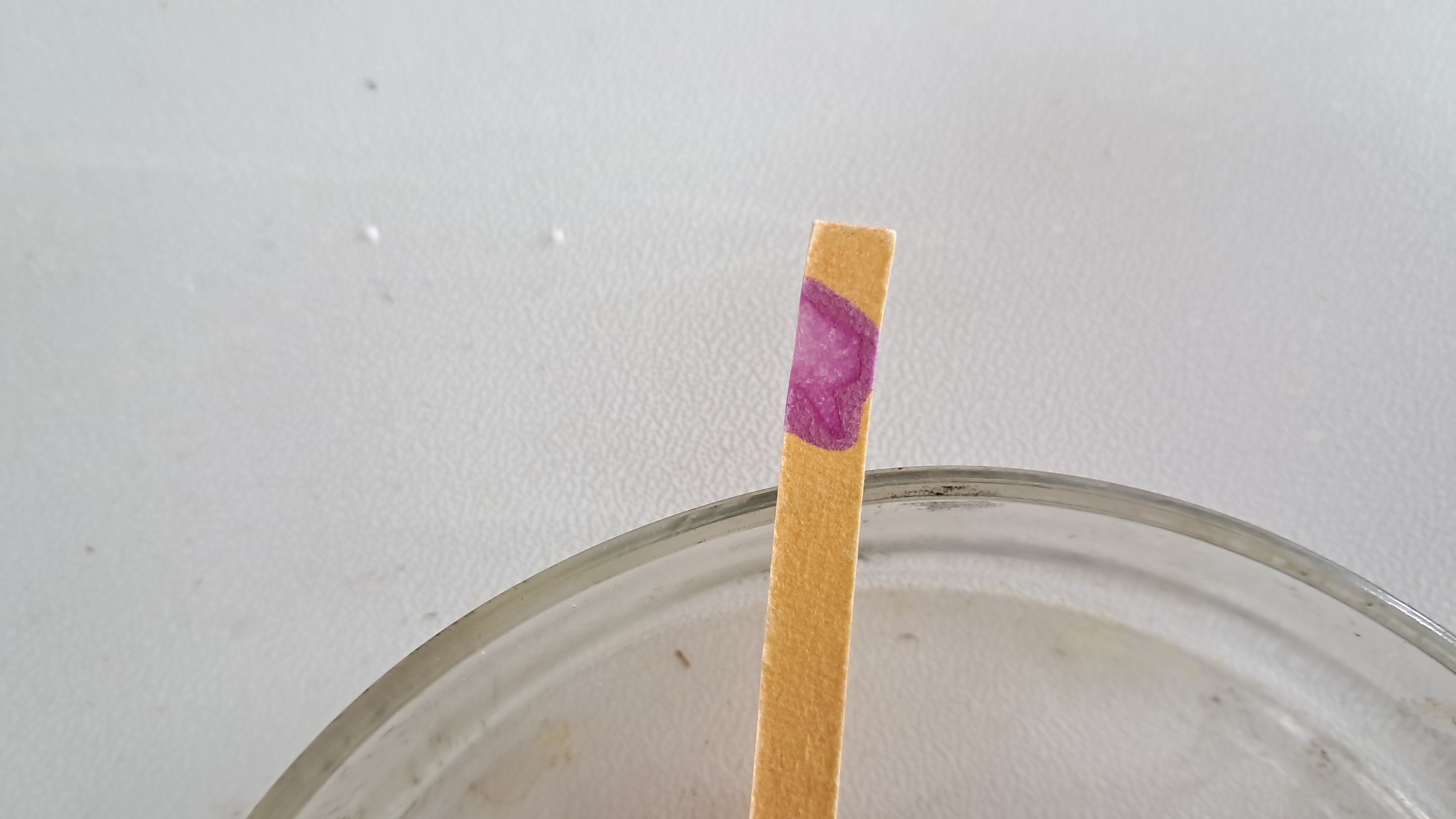
The next day (attempt #1) |
