Content Chemistry experiments - video Physics experiments - video Home Page - Chemistry and Chemists

Chemistry and Chemists № 1 2026

Journal of Chemists-Enthusiasts
Donate to the journal Chemistry and ChemistsDonate to the journal Chemistry and Chemists


Hydrolysis of Methyl Acetate, Ethyl Acetate, and Butyl Acetate - pt.1, 2


Chemist


Having noticed a mistake in the text, allocate it and press Ctrl-Enter


In the past, I conducted several experiments with an acetone "substitute." These experiments were necessary because genuine acetone was difficult to obtain. This solvent, which is incredibly important to chemists, is subject to strict restrictions in our country. Specifically, the question arose: what solvents were used to make the acetone "substitute"? One forum member suggested that it was methyl acetate. Similar to acetone, this substance is a good solvent and a highly volatile liquid, but it is not subject to restrictions. The acetone "substitute" could also contain ethyl acetate and similar esters.

Gas chromatography is an effective method for analyzing volatile solvents, but our institute does not have any operational chromatographs. More specifically, we have an entire laboratory with more than five chromatographs, but they have not been functional for many years. I would not be surprised if this equipment has never been turned on. The purpose of this laboratory is to give the appearance of productive work in case a commission or foreign delegation visits.

Since there was no working chromatograph, I had to conduct a qualitative chemical analysis of the acetone "substitute." If the solvent contains methyl acetate, ethyl acetate, or similar esters, it should partially or completely dissolve in an aqueous alkali solution. It turned out that the acetone "substitute" was partially soluble in water, but the addition of alkali did not significantly increase its solubility.

I also conducted a control experiment on the interaction of an ester with a sodium hydroxide solution. I did not have methyl acetate at the time, so I used ethyl acetate [1]. I poured ethyl acetate and a dilute sodium hydroxide solution into a graduated cylinder. Initially, two liquid layers formed, since ethyl acetate has very limited solubility in water (approximately 8 g of the substance per 100 g of water). However, the ester gradually hydrolyzed, forming ethanol and sodium acetate, both of which are highly soluble in water. As a result, the organic layer gradually disappeared, leaving only the aqueous phase. During the hydrolysis, the liquid heated up, and even boiling of the organic solvent occurred at the interface between the two phases.

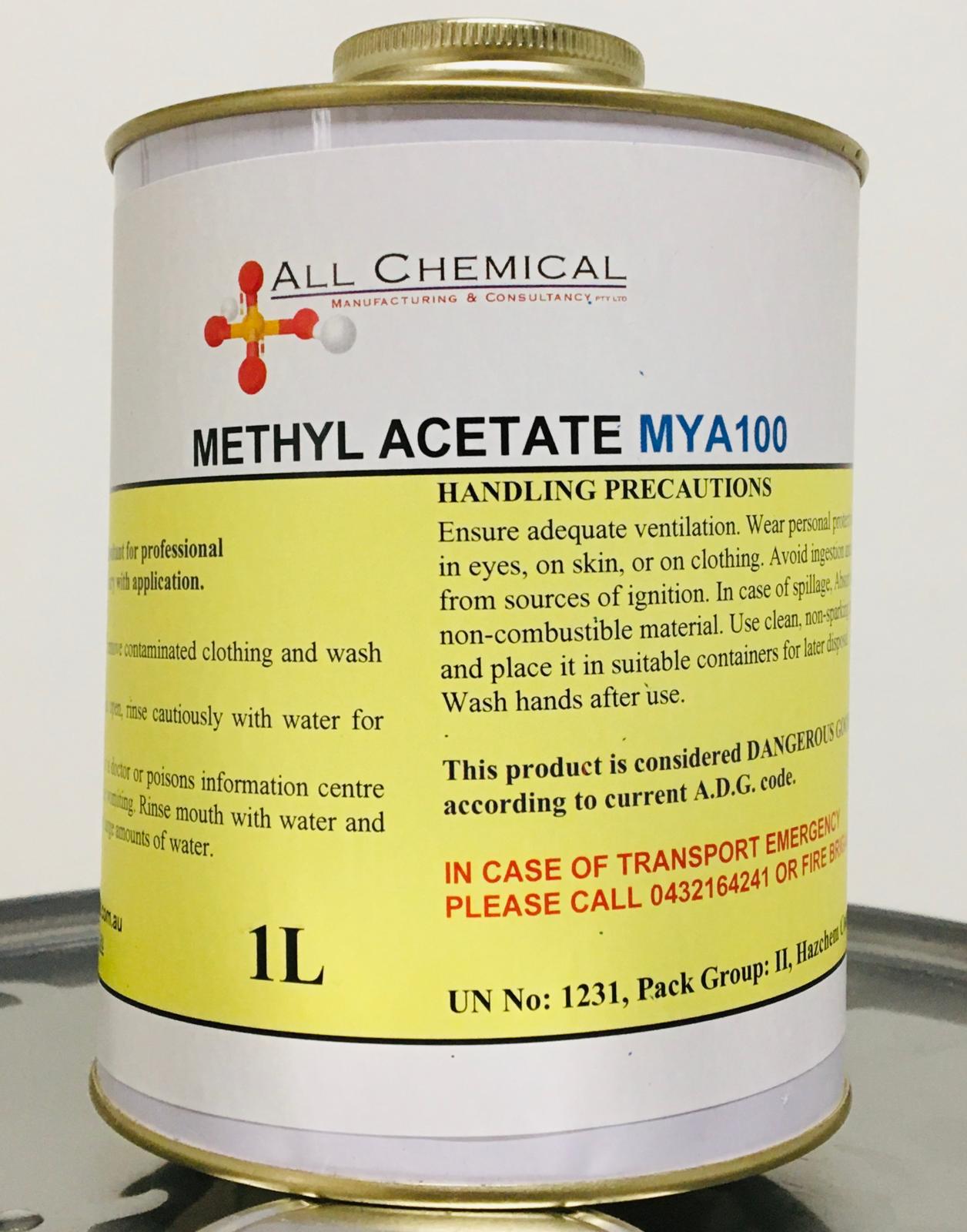
Much later, I acquired methyl acetate for use as a solvent for polymers in electrospinning experiments. The experiments with methyl acetate were unsuccessful, so bottles of this solvent sat unused in the laboratory for many months.

The idea arose to film the hydrolysis of methyl acetate in an aqueous alkali solution, similarly to the hydrolysis of ethyl acetate. Methyl acetate has a low boiling point - around 57°C - which is significantly lower than that of ethyl acetate (around 77°C). Consequently, vigorous boiling at the interface between methyl acetate and the aqueous alkali solution was expected, potentially even more intense than the boiling observed with ethyl acetate in a similar experiment.

I should also add that at the time, I did not think to look up the solubility values of ethyl acetate or methyl acetate in water, believing that these values were not important for the experiment. My reasoning was as follows: a small portion of the ester dissolves in the aqueous phase, where it gradually undergoes hydrolysis. Then a little more ester dissolves, and so on until the organic layer completely disappears. From this perspective, it does not matter much whether the exact solubility of these substances in water is 0.1% or 1%.

__________________________________________________
1 Ethyl Acetate and Sodium Hydroxide Solution - Part 2 [link].
Ethyl Acetate and Saturated Potassium Hydroxide Solution: Unusual Effect of Concentration on Rate of Chemical Reaction - Part 3 [link].


Methyl Acetate


Гидролиз метилацетата и этилацетата
Вступление - Часть 1
В прошлом я провел несколько экспериментов с "заменителем" ацетона. Эксперименты были вынужденные, поскольку настоящий ацетон был труднодоступен. Данный необходимый химикам растворитель находится под строгими ограничениями в нашей стране. В частности, возник вопрос, какие именно растворители были использованы для изготовления "заменителя" ацетона? Один из участников форума предположил, что это метилацетат. Данное вещество, аналогично ацетону, также является хорошим растворителем и обладает высокой летучестью, однако не подпадает под ограничения. Также "заменитель" ацетона мог содержать этилацетат и аналогичные сложные эфиры.

Эффективным методом анализа летучих растворителей является газовая хроматография, но у нас в институте отсутствуют работающие хроматографы. Точнее, есть целая лаборатория, в которой стоят более пяти хроматографов, однако, они не работают уже много лет. Не удивлюсь, если эти приборы вообще никогда не включались. Задача этой лаборатории - создавать видимость работы на случай, если к нам приедет комиссия или иностранная делегация.

Поскольку не было работающего прибора, пришлось провести качественный химический анализ "заменителя" ацетона. Если растворитель содержит метилацетат, этилацетат или аналогичные сложные эфиры, он должен частично или полностью растворяться в водном растворе щелочи. Оказалось, что "заменитель" ацетона частично растворялся в воде, однако, добавление щелочи существенно не увеличивало его растворимость.

Также я провел контрольный эксперимент по взаимодействию сложного эфира с раствором гидроксида натрия. Метилацетата у меня тогда не было, поэтому использовал этилацетат [1]. Налил в мерный цилиндр этилацетат и разбавленный раствор гидроксида натрия. Сначала образовалось два жидких слоя, поскольку этилацетат растворим в воде весьма ограничено (около 8 г вещества в 100 г воды). Однако, постепенно проходил гидролиз сложного эфира - образовывались этанол и ацетат натрия, которые хорошо растворимы в воде. В результате органический слой постепенно исчез - осталась только водная фаза. В процессе гидролиза наблюдался разогрев жидкости, и даже кипение органического растворителя на границе раздела фаз.

Значительно позже я приобрел метилацетат, чтобы использовать его в качестве растворителя для полимеров в экспериментах по электроспиннингу. Эксперименты с метилацетатом не увенчались успехом, поэтому бутылки с данным растворителем стояли в лаборатории много месяцев, будучи невостребованными.

Возникла идея заснять реакцию гидролиза метилацетата водным раствором щелочи, аналогично гидролизу этилацетата. Метилацетат имеет низкую температуру кипения - около 57°С, которая существенно меньше, чем температура кипения этилацетата (около 77°С). Следовательно, на границе раздела метилацетата и водного раствора щелочи может наблюдаться активное кипение, еще более интенсивное, чем кипение этилацетата аналогичном в эксперименте.

Добавлю также, что в то время я не догадался поинтересоваться значениями растворимости этилацетата или метилацетата в воде, считая, что эти величины не являются существенными для эксперимента. Ход мыслей был следующим: небольшая часть сложного эфира растворяется в водной фазе, где постепенно подвергается гидролизу. Потом растворяется еще немного сложного эфира и так далее до полного исчезновения органического слоя. С этой точки зрения, не имеет большого значения, каким является точное значение растворимости данных веществ в воде: 0.1% или 1%.


Methyl Acetate


Having noticed a mistake in the text, allocate it and press Ctrl-Enter


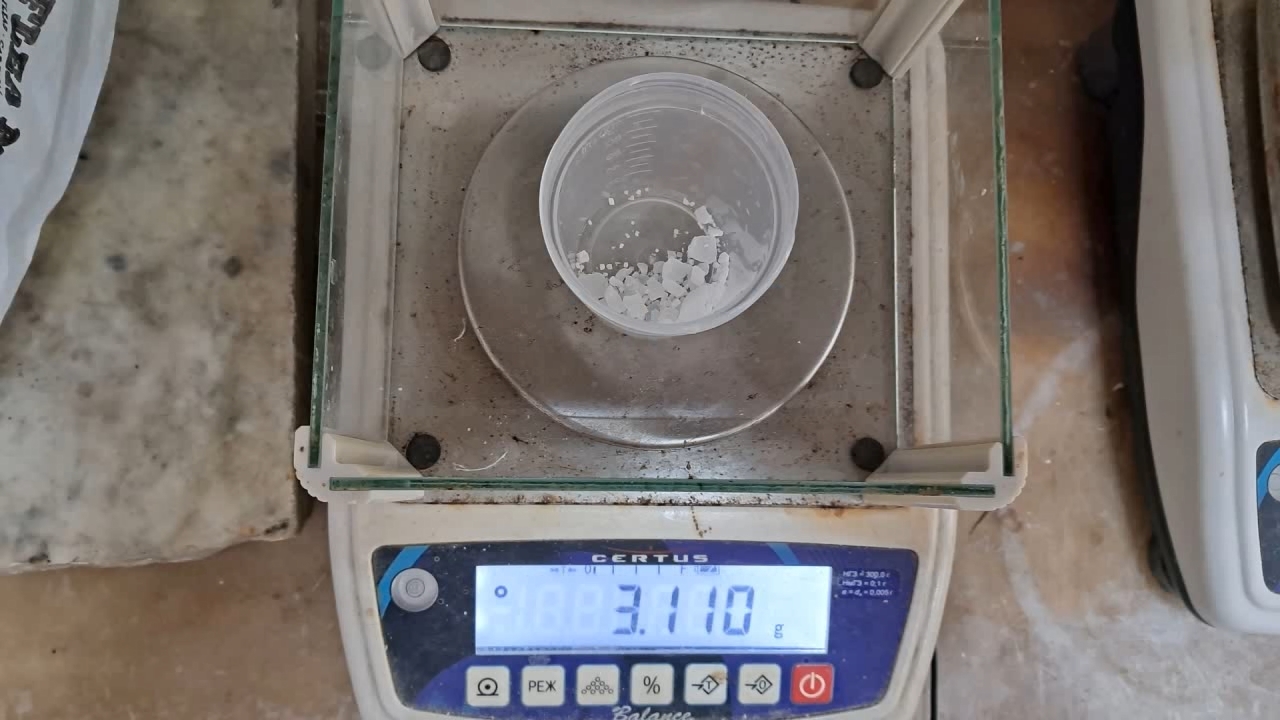
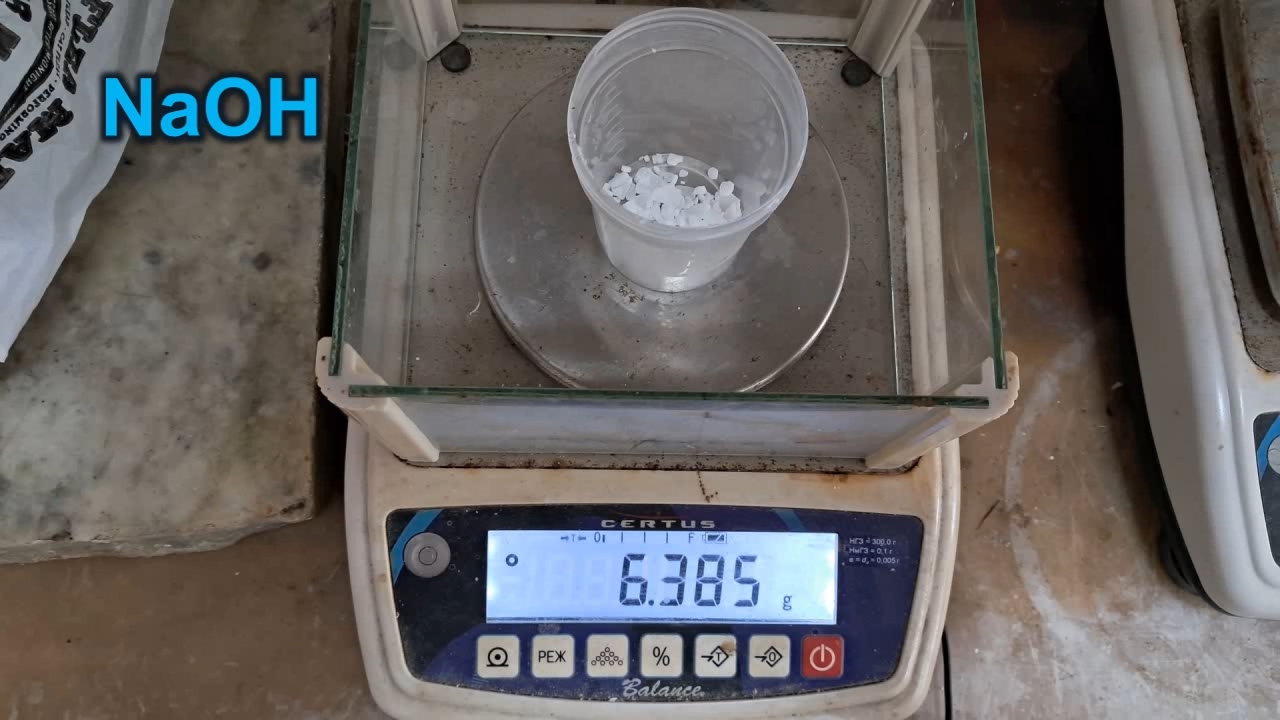
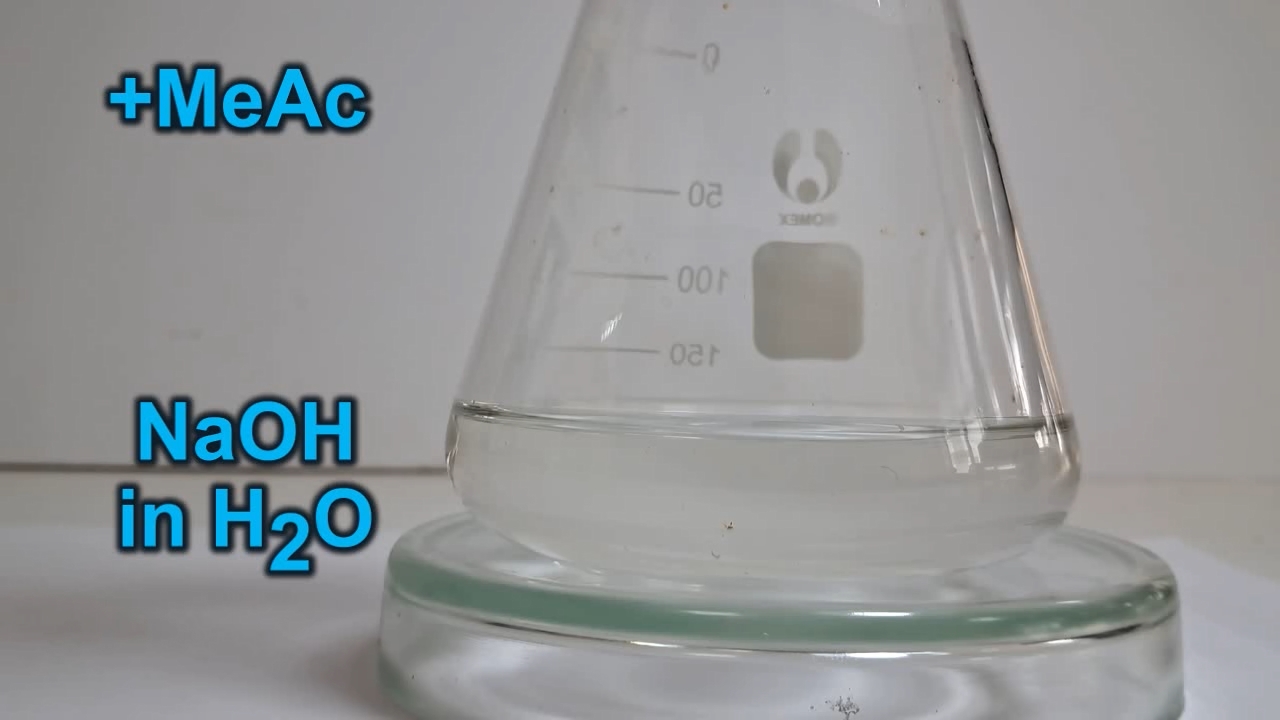
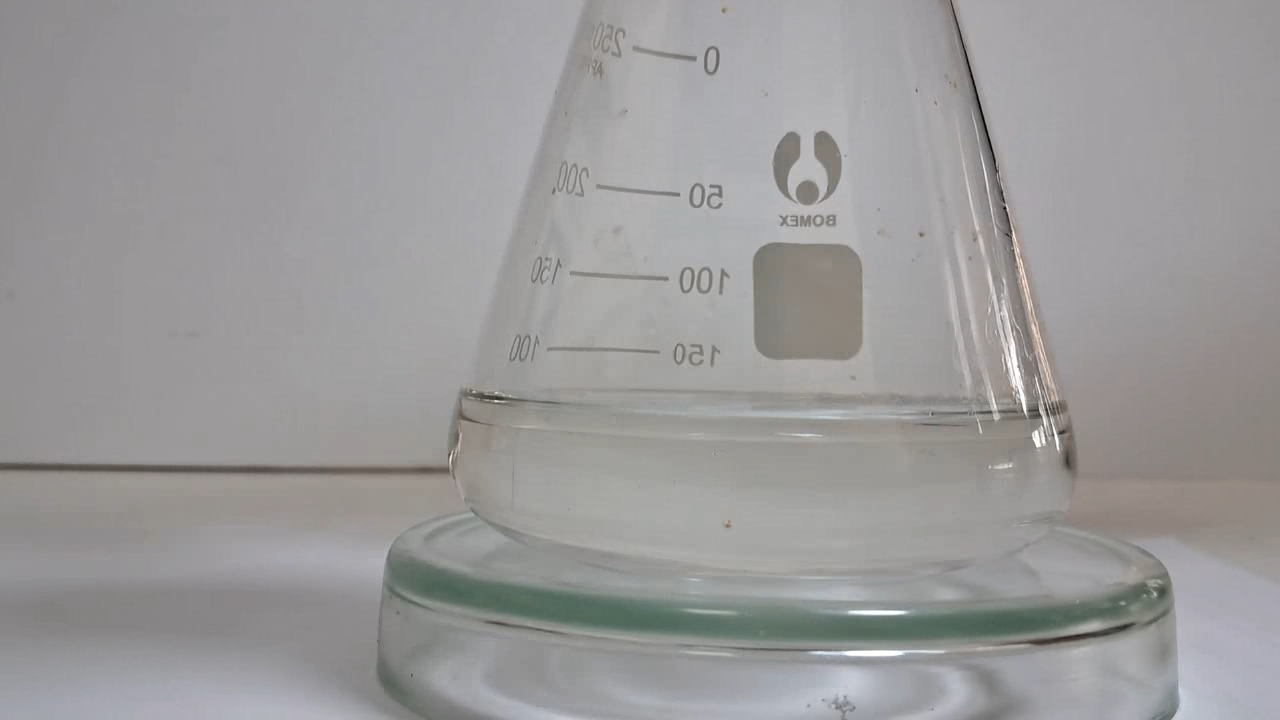
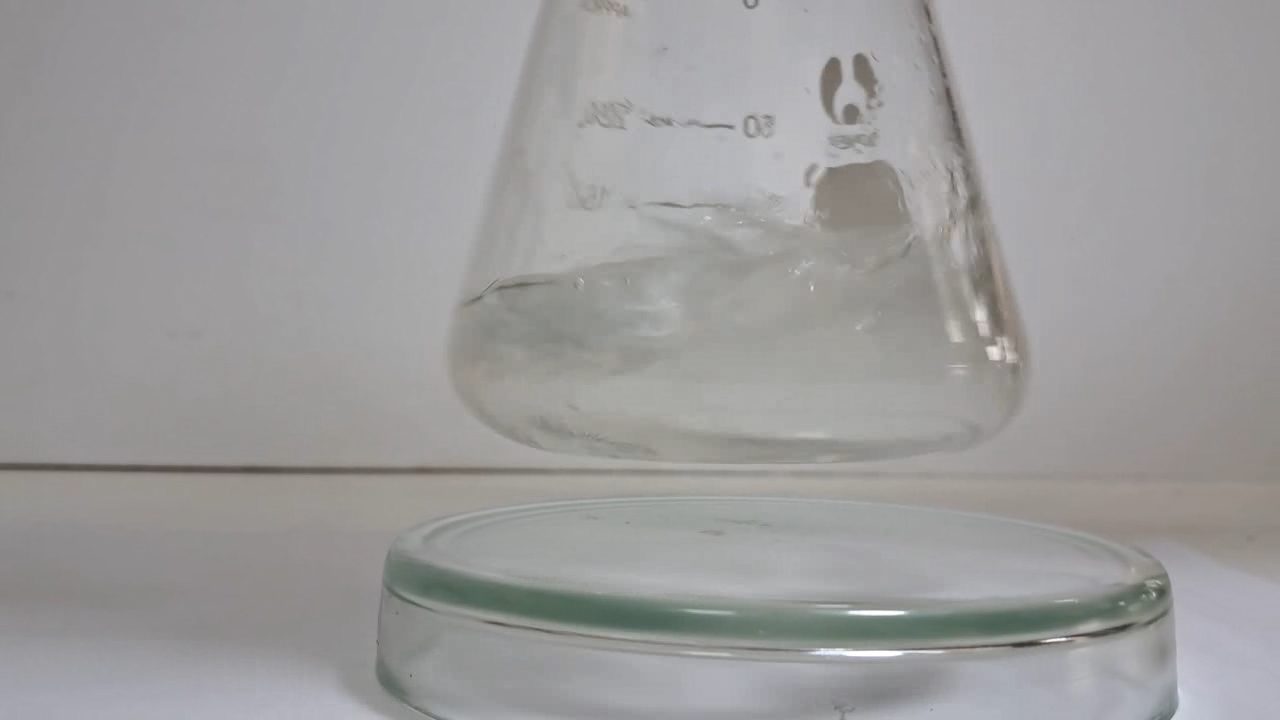
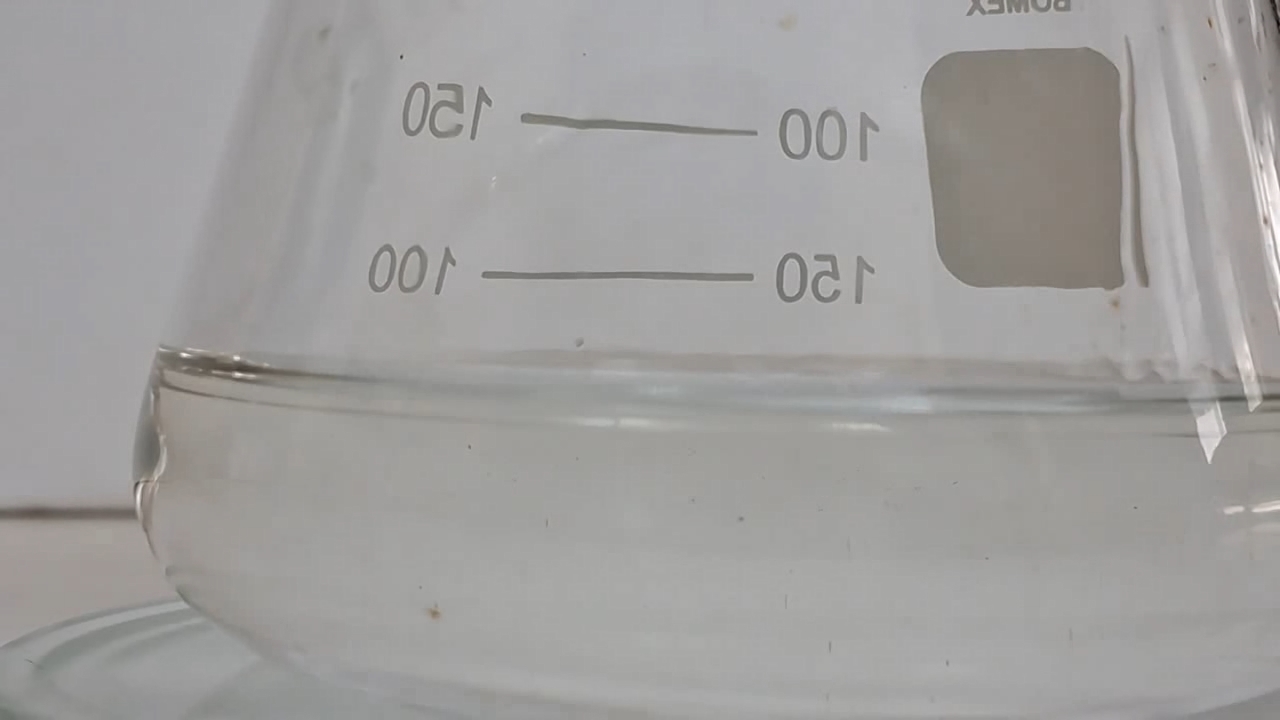
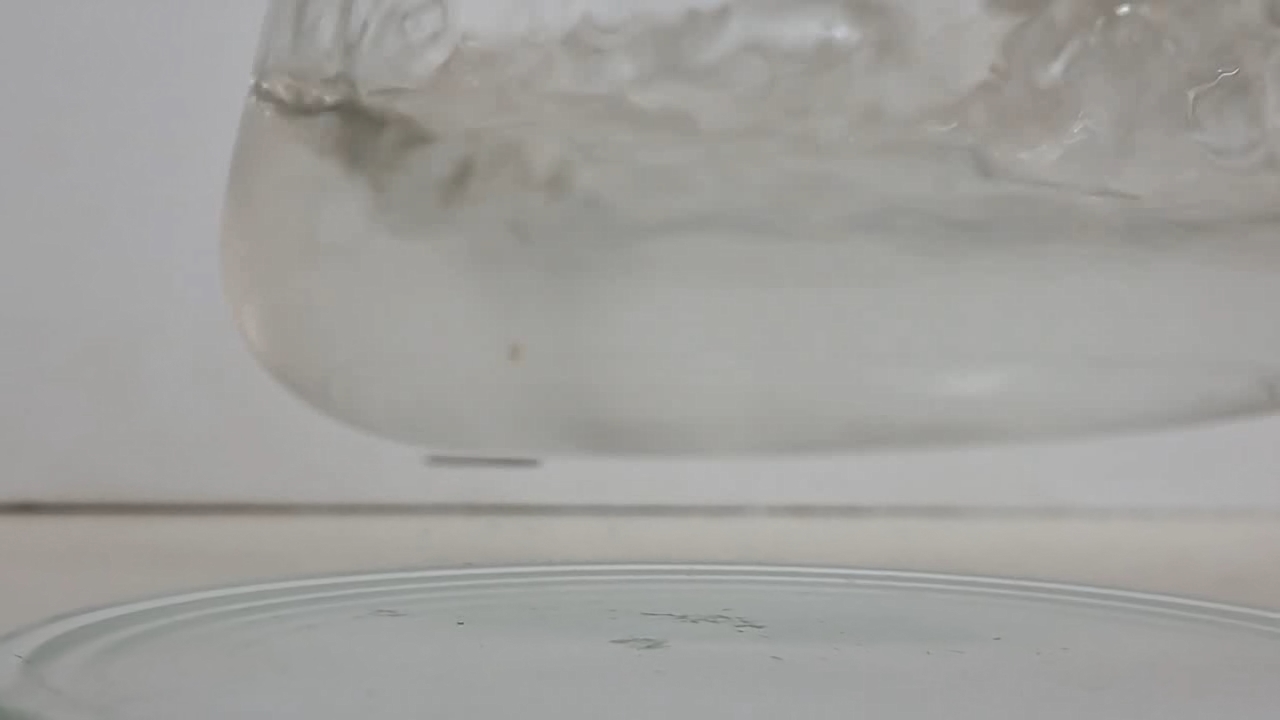
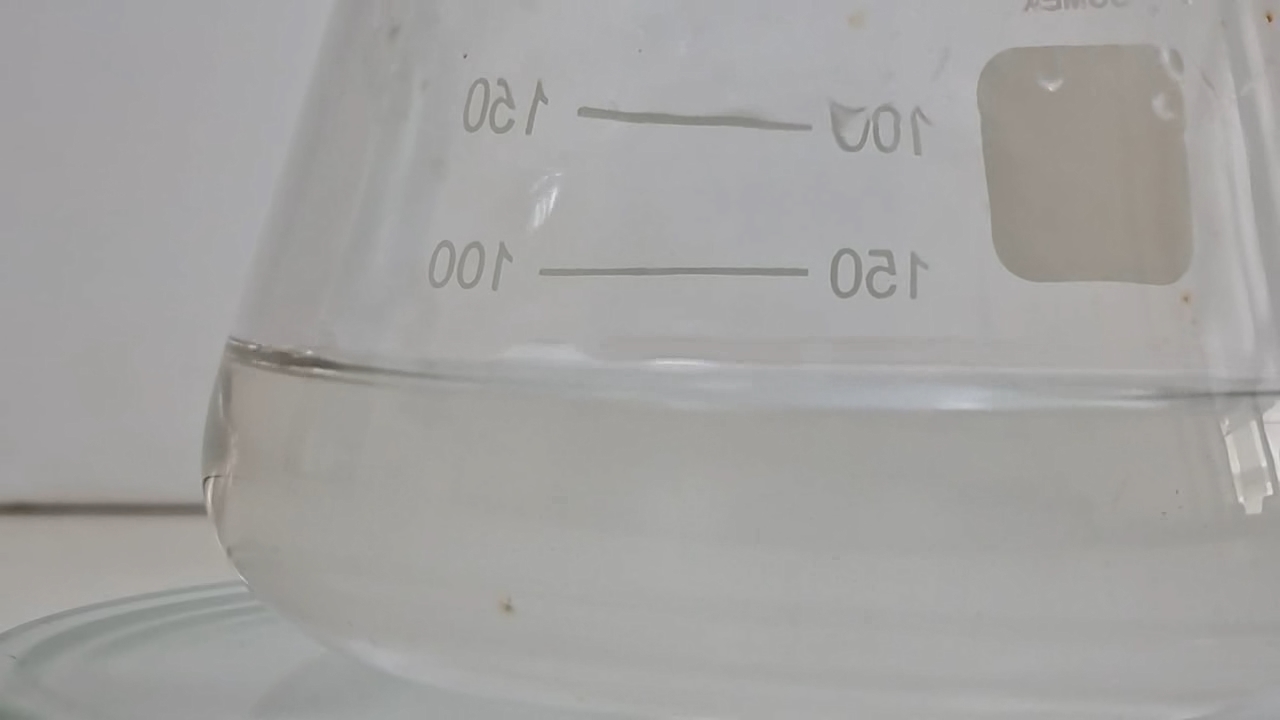
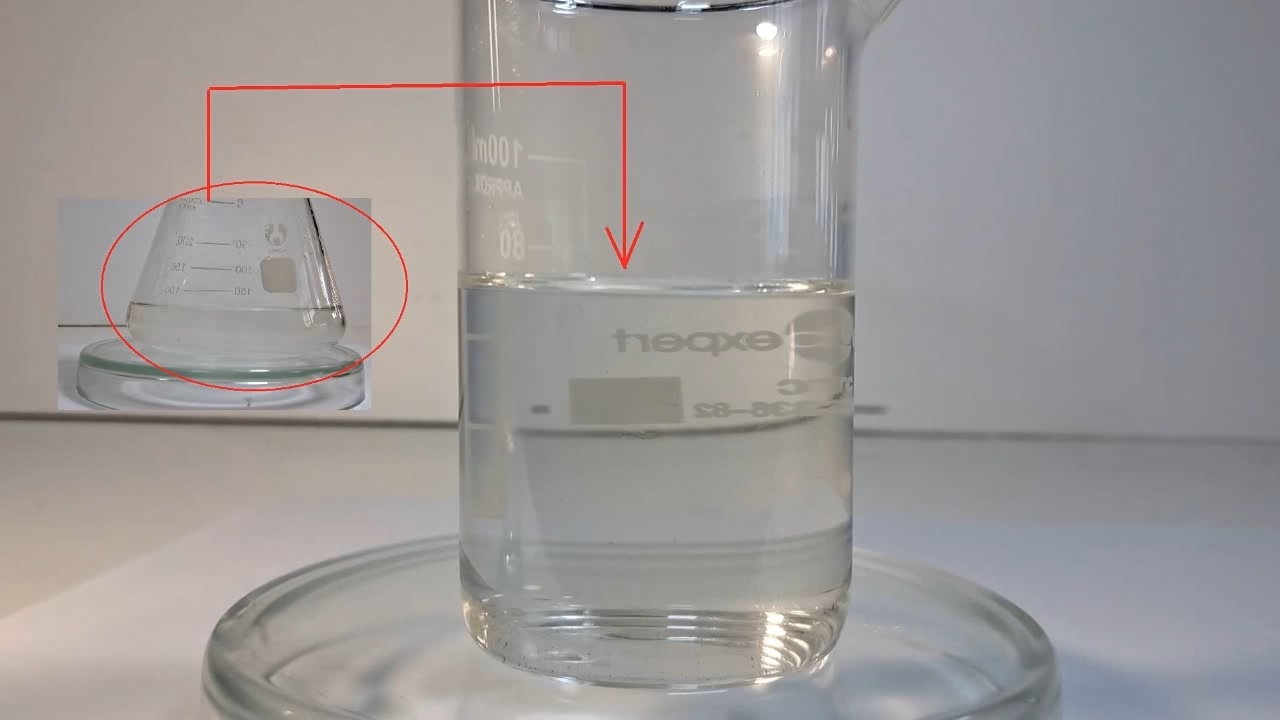
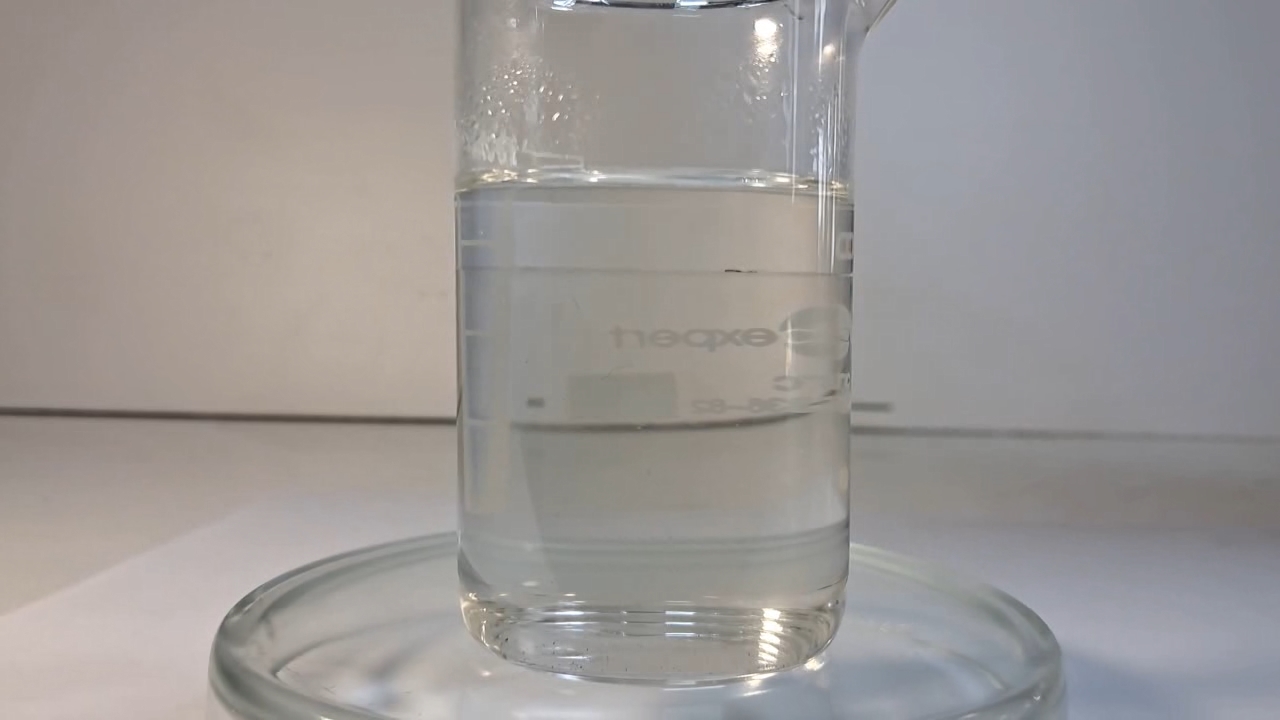
I weighed out 3.1 g of sodium hydroxide, poured it into a flask, and added 60 ml of distilled water. Then I decided that the amount of alkali was insufficient and added another 6.4 g of sodium hydroxide. After the solid had completely dissolved, I added 20 ml of methyl acetate to the flask. Two liquid layers formed. I shook the flask. After the methyl acetate and the aqueous solution separated again, I found that the upper layer had shrunk significantly. Further shaking resulted in the formation of a homogeneous liquid. The interface between the liquid phases disappeared - the methyl acetate had completely dissolved in the aqueous phase. Moreover, the dissolution occurred quite rapidly. I had no doubt that the disappearance of the upper layer was due to hydrolysis of the ester, since methyl acetate is poorly soluble in water, similar to ethyl acetate and other esters. A well-known analogy is sunflower oil, which is practically insoluble in water and is also an ester (a mixture of esters of glycerol and higher fatty acids).

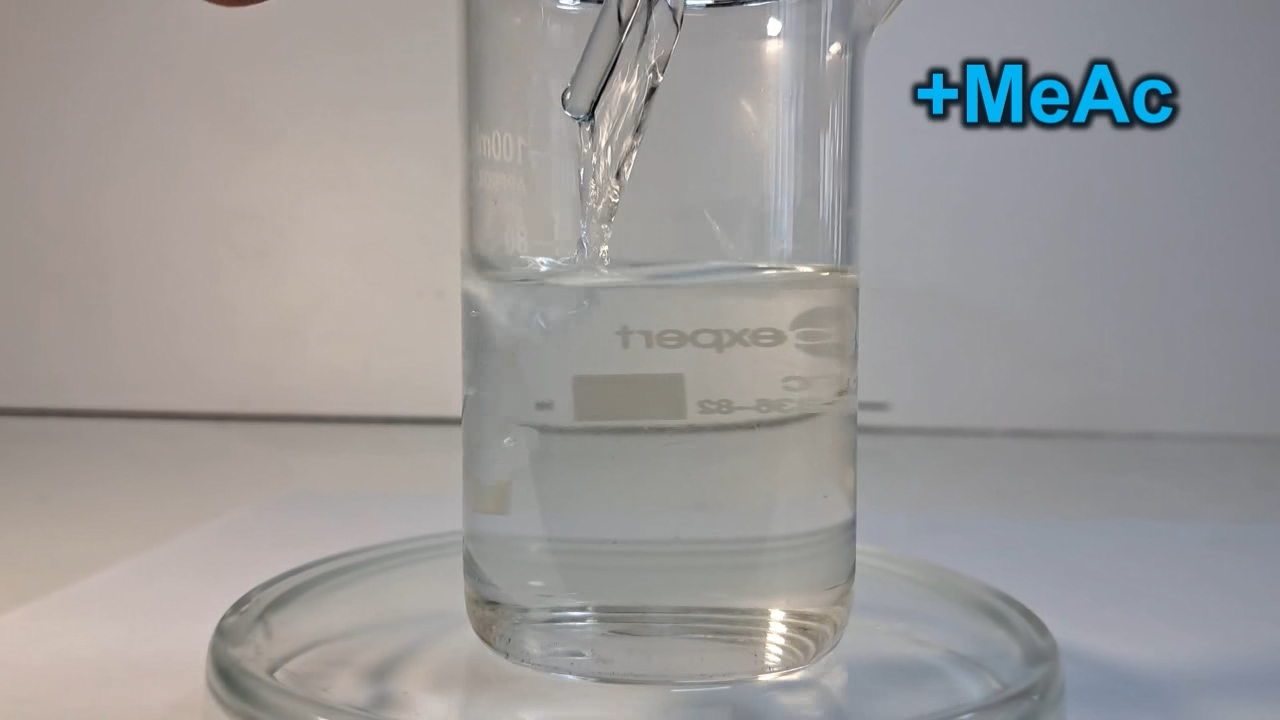
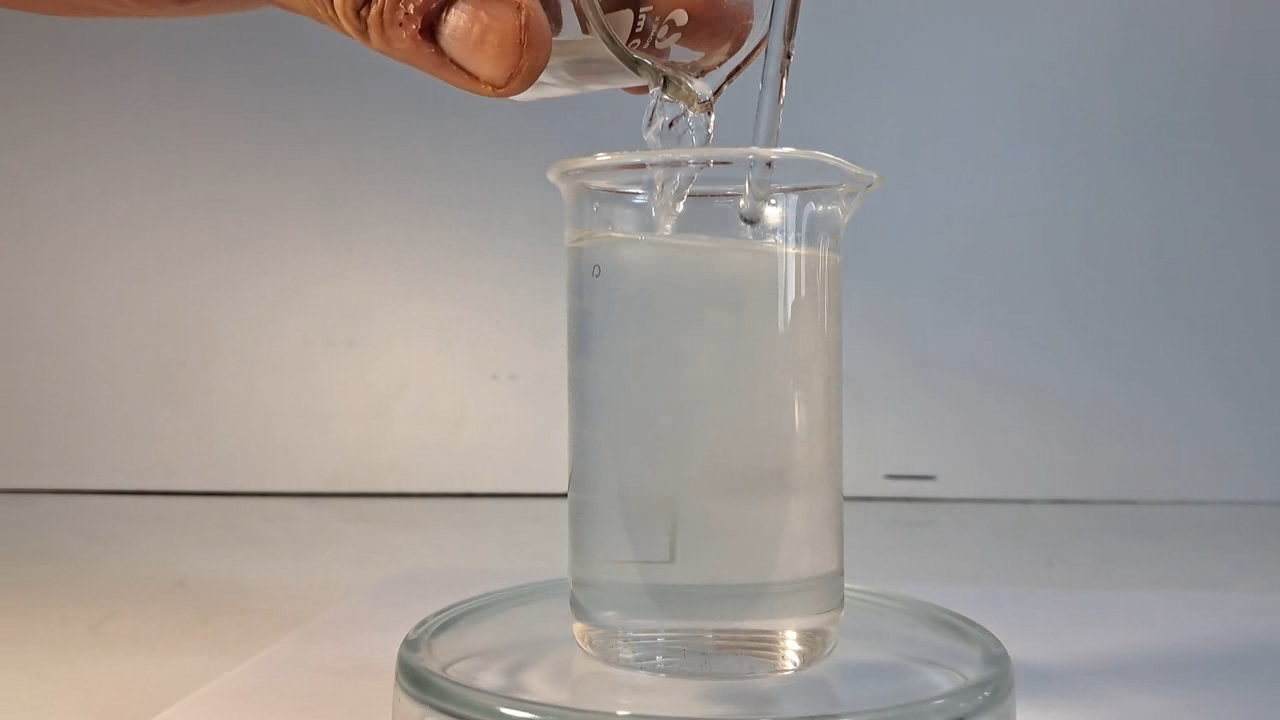
I poured the solution into a beaker to better visualize the phase boundary, then added another 20 ml of methyl acetate. Two liquid layers formed again. I stirred the liquids with a glass rod - the boundary between the liquids instantly disappeared.

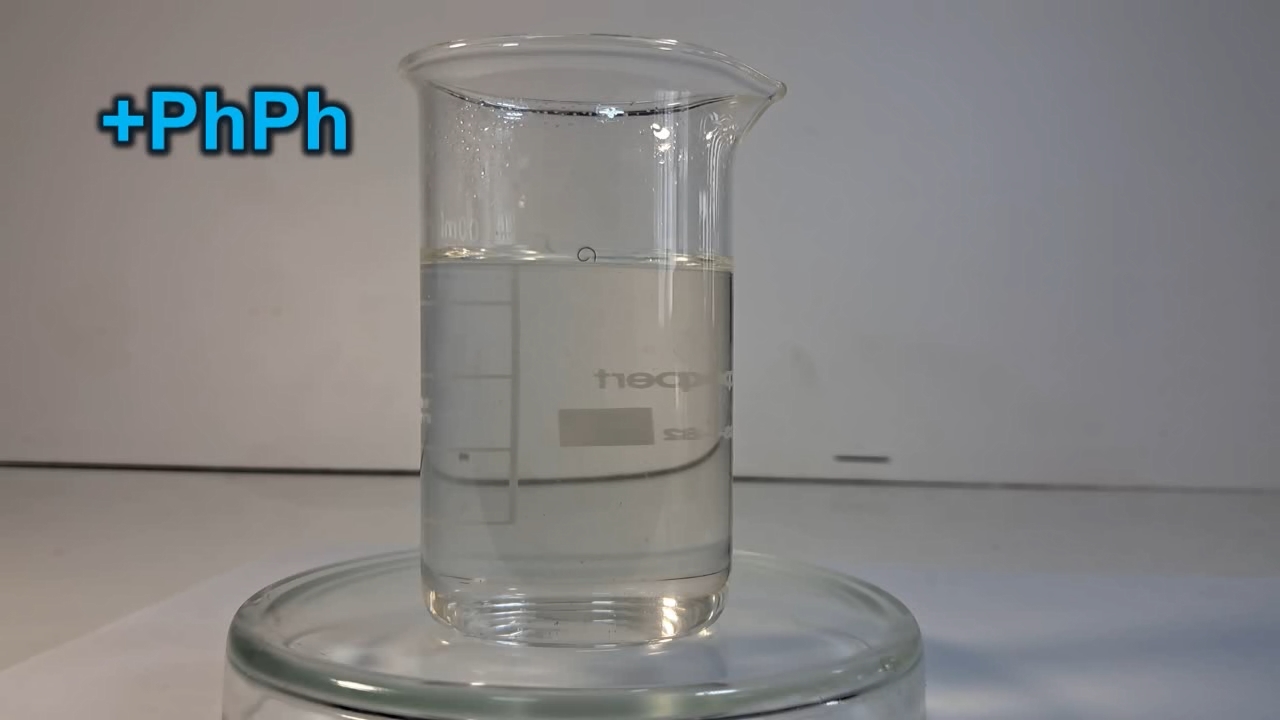
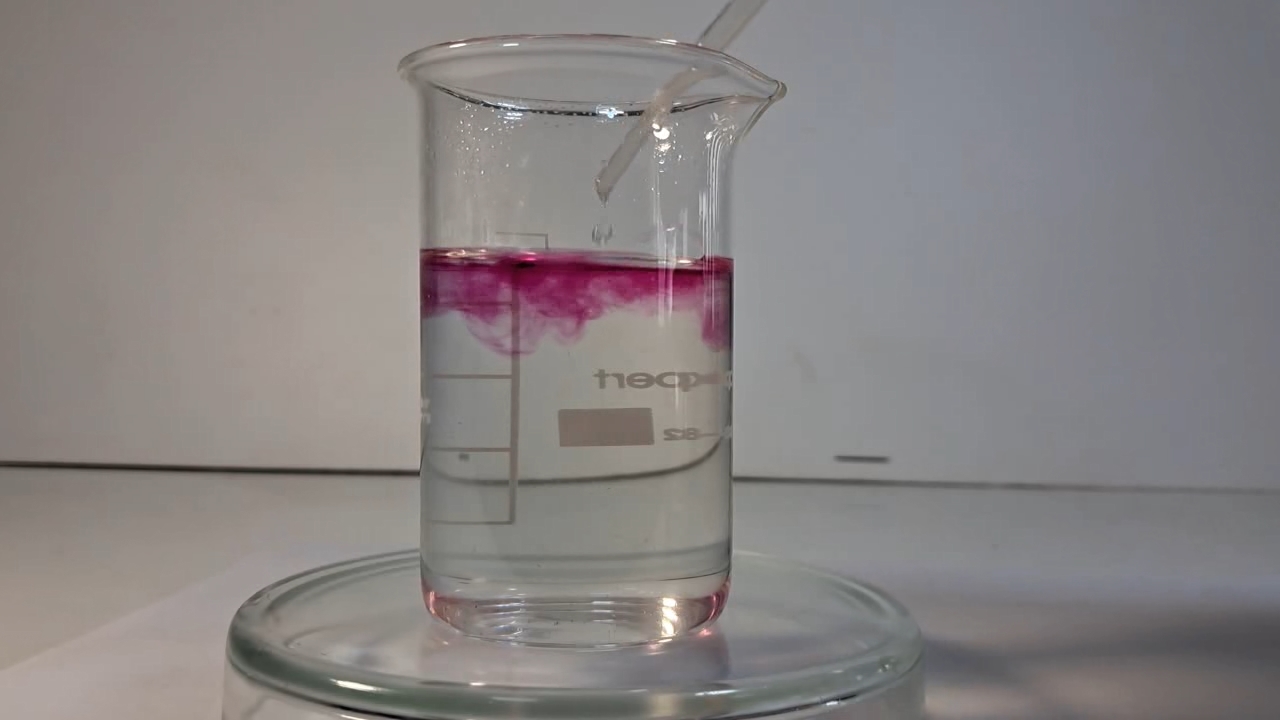
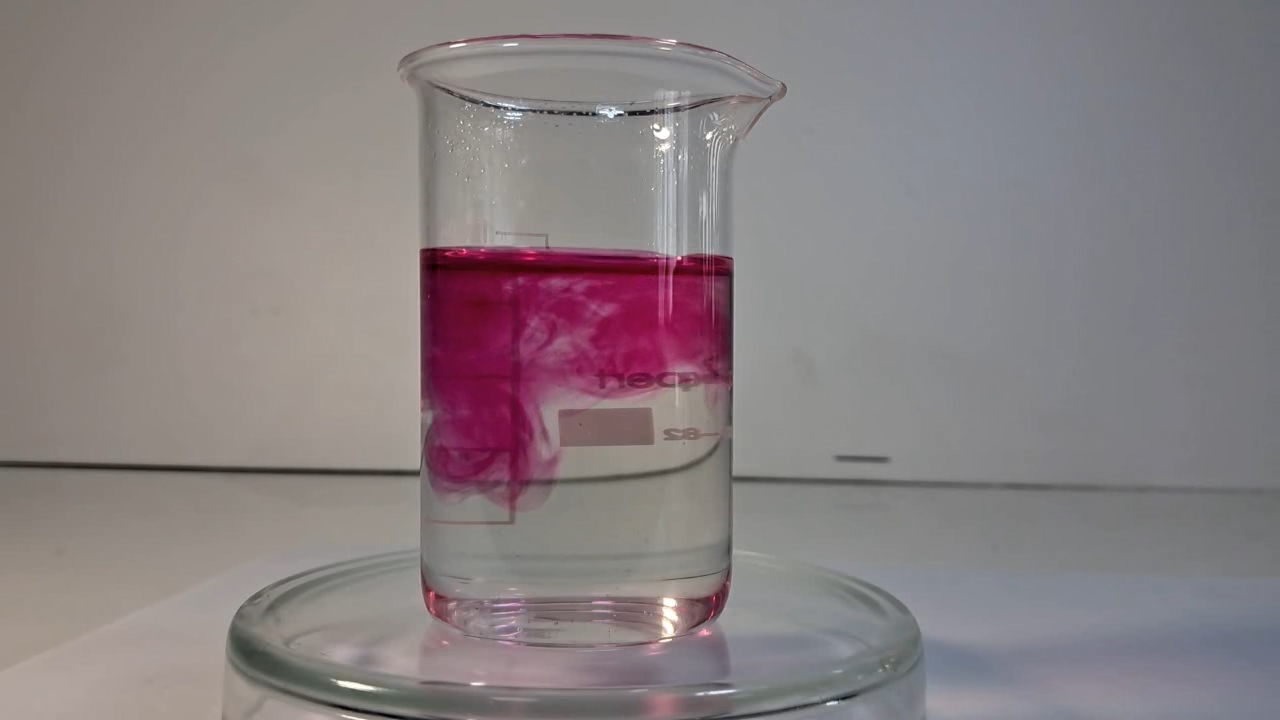
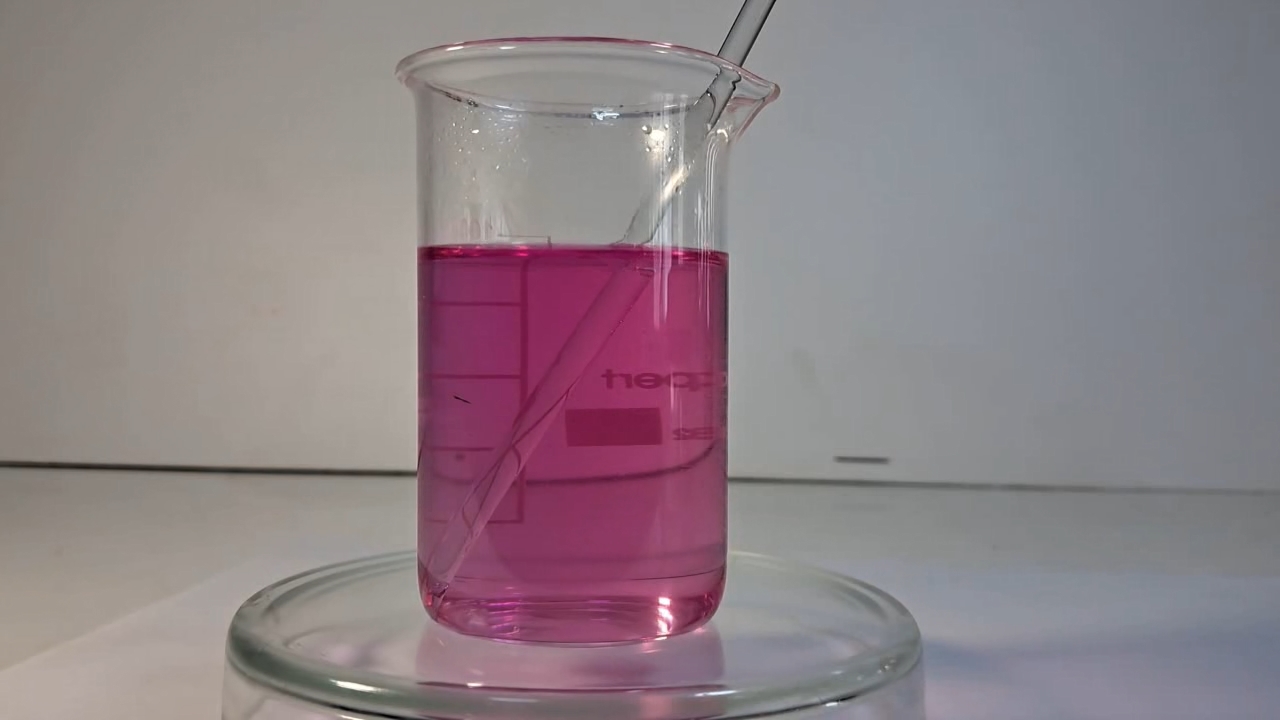
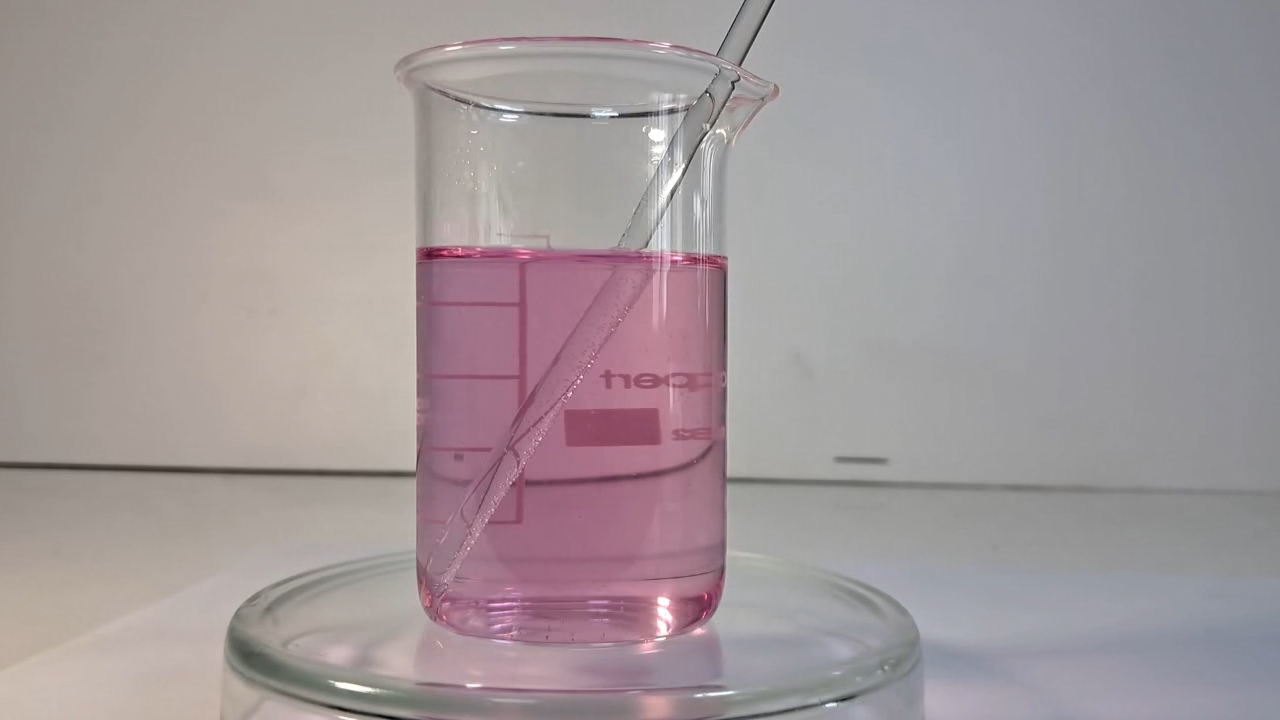
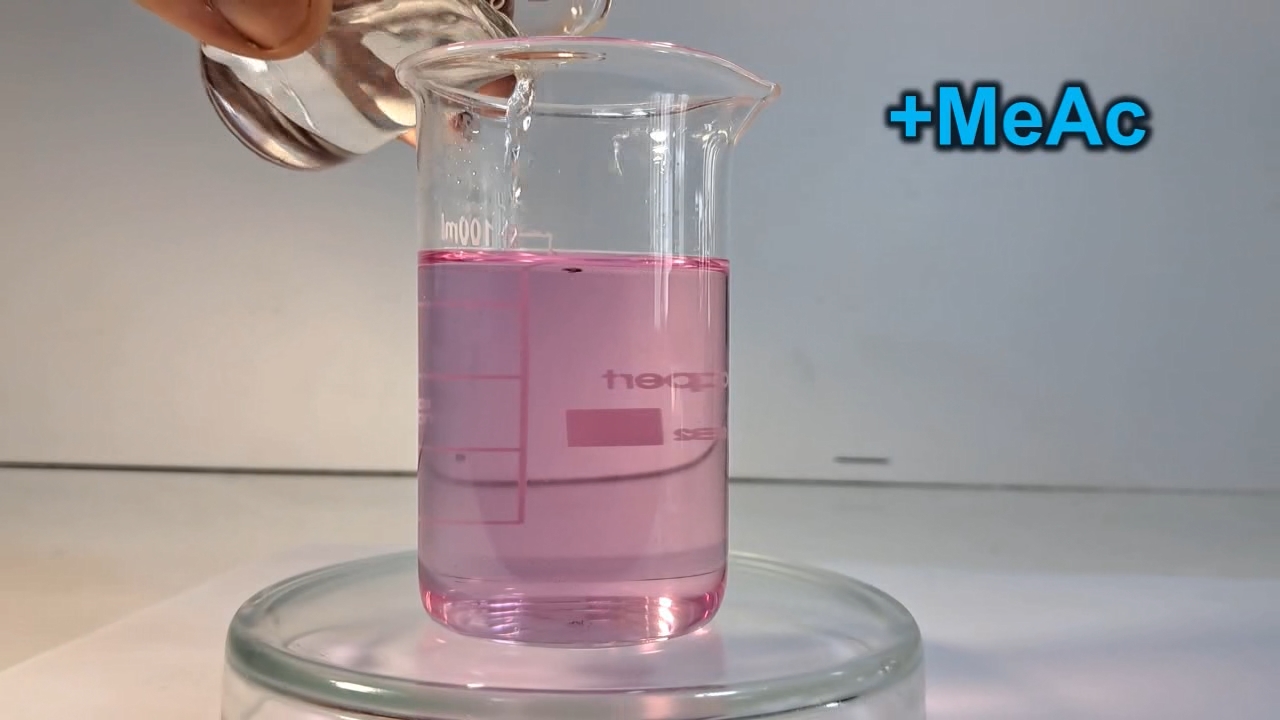
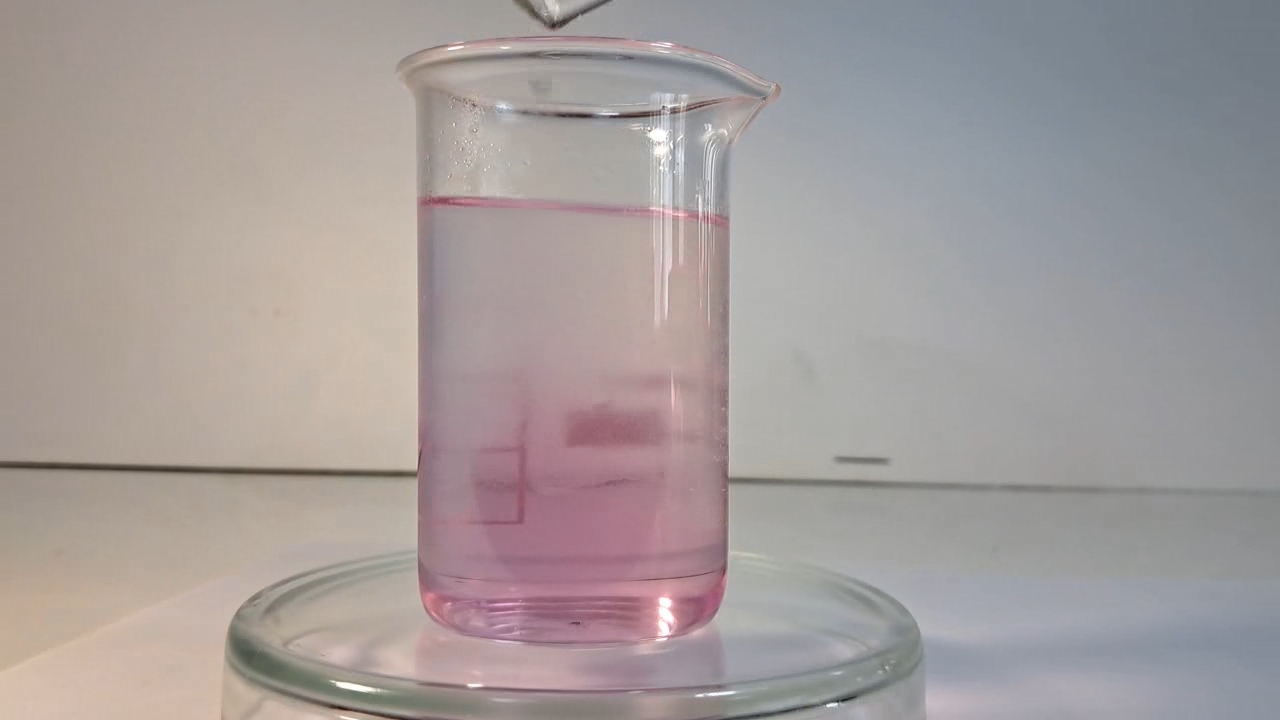
Only then did I think to add a few drops of phenolphthalein in alcohol and stir the solution. It turned a bright fuchsia color. While I was measuring out the next 20 ml portion of methyl acetate, the intensity of the indicator's color decreased significantly. I noticed this, but I could not immediately find an explanation.

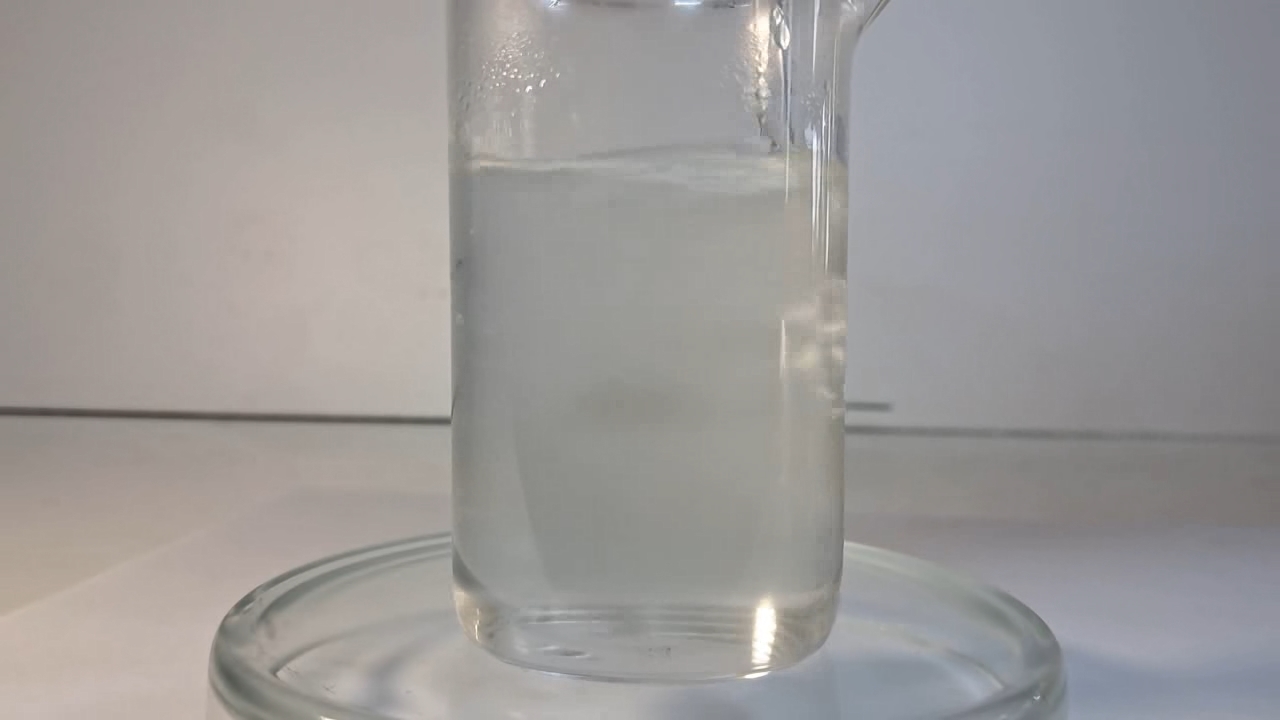
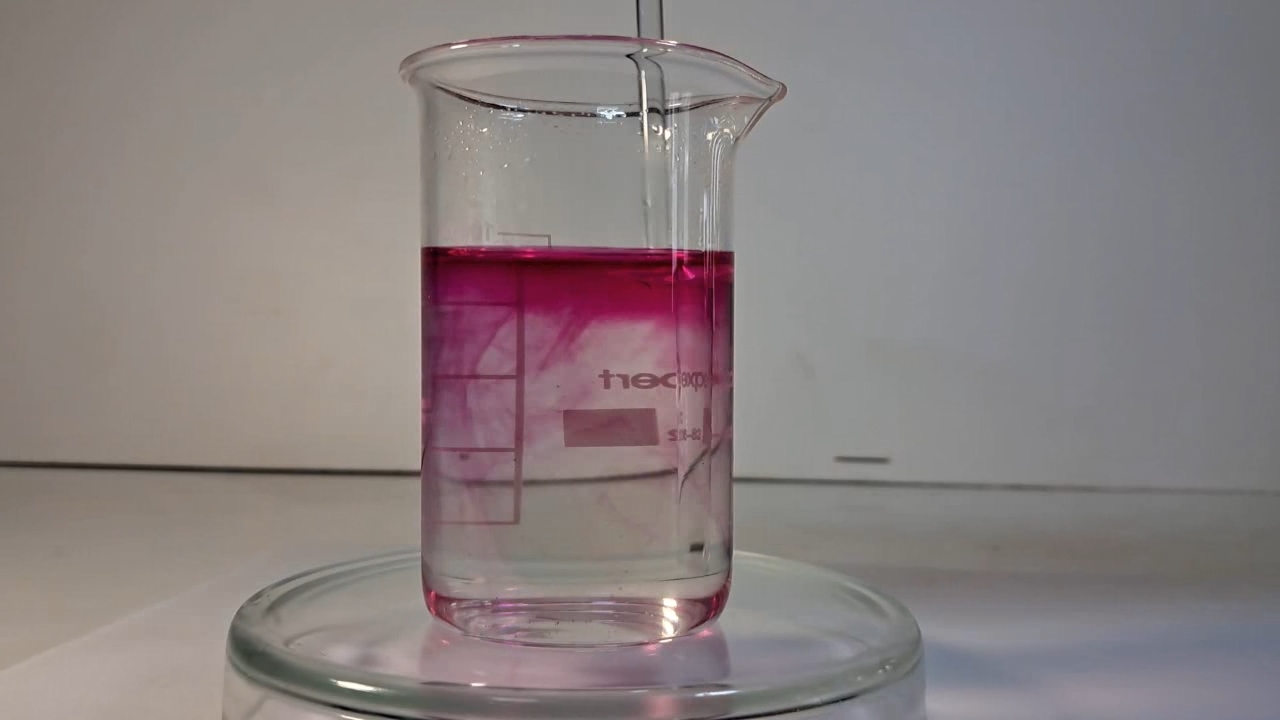
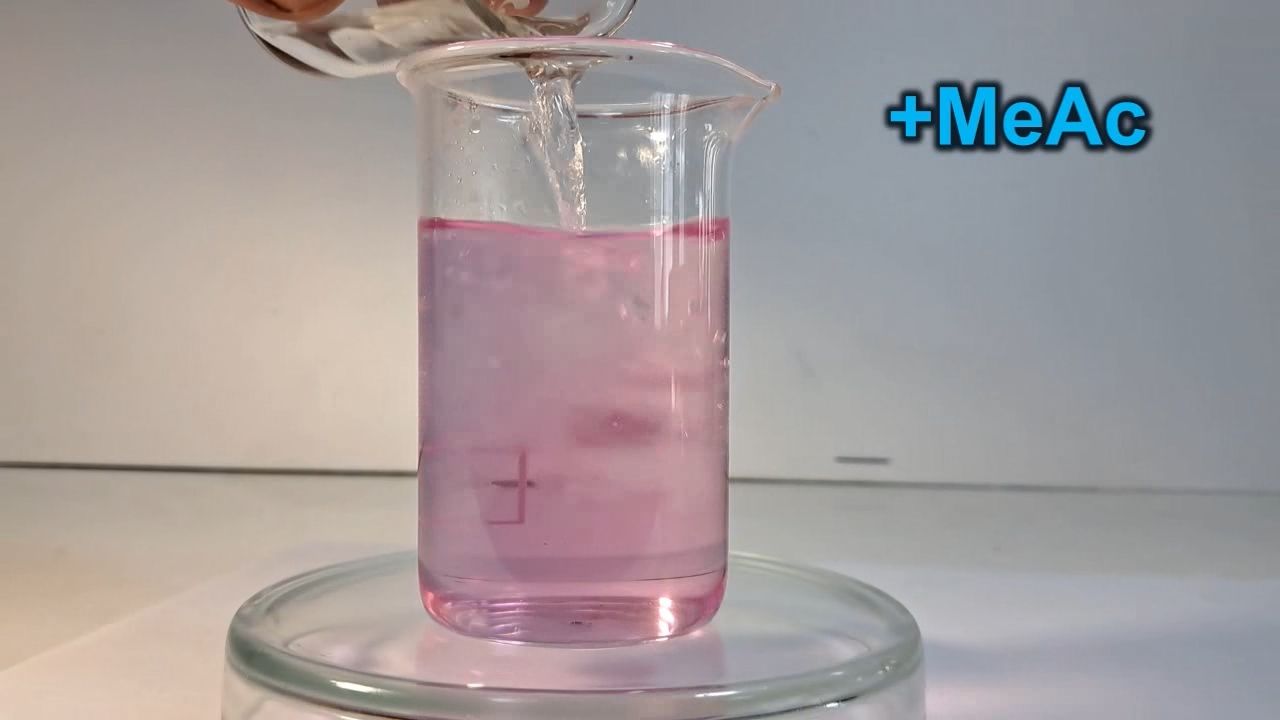
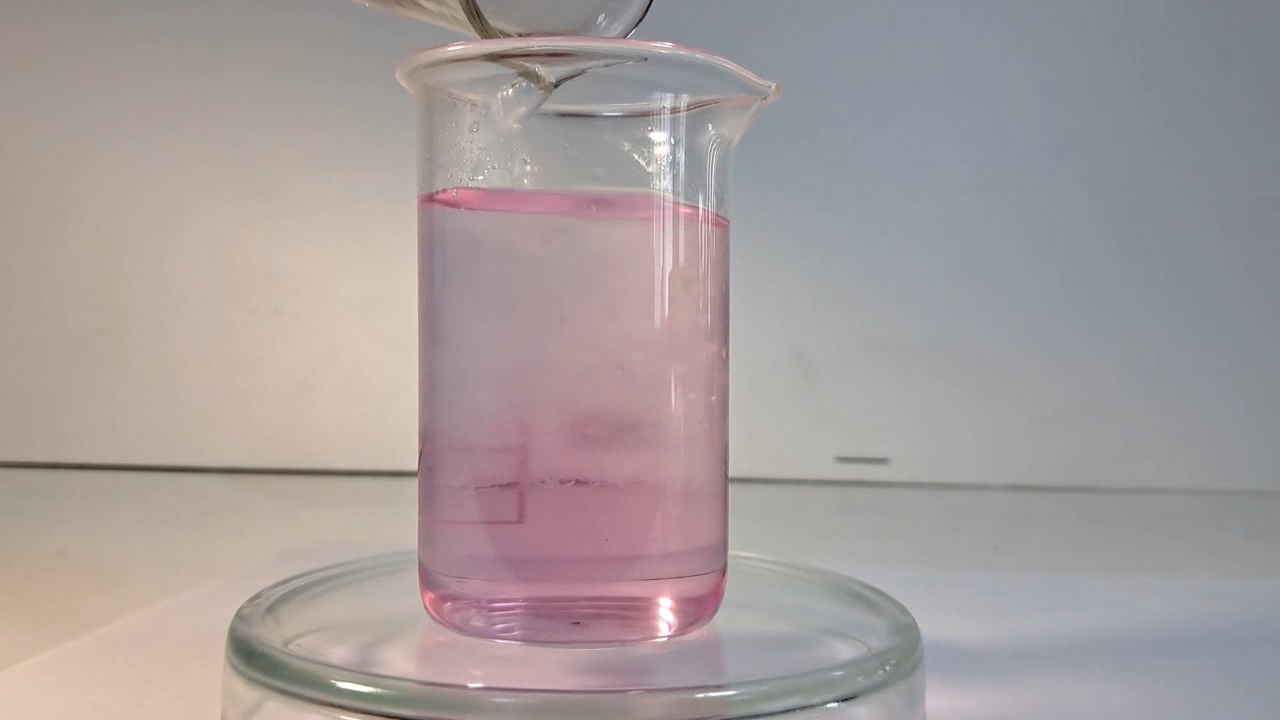
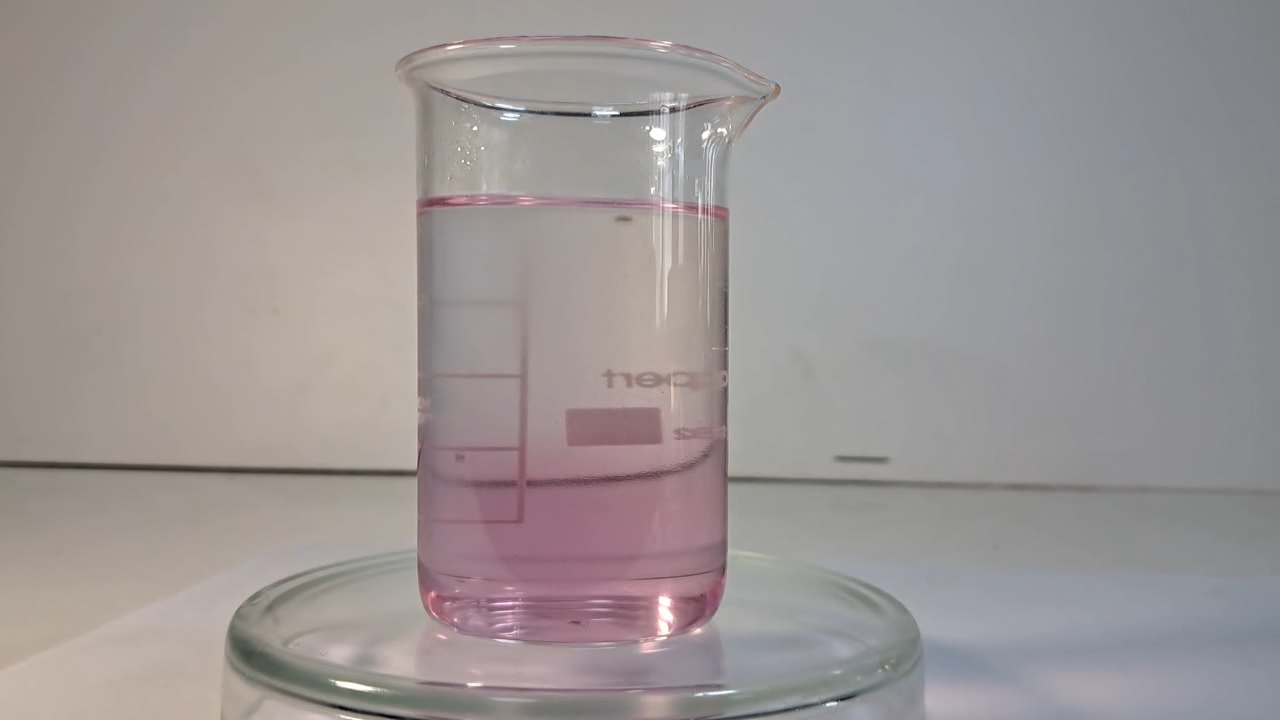
I added another 20 ml of methyl acetate. The result was unexpected: the upper portion of the liquid became colorless, while the lower portion faded and turned pink, with no clear boundary between the two layers. The transition from the colorless zone to the pink zone was gradual, and the interface between the liquid phases was not visible. The liquid also became slightly cloudy, which could indicate the formation of an emulsion.

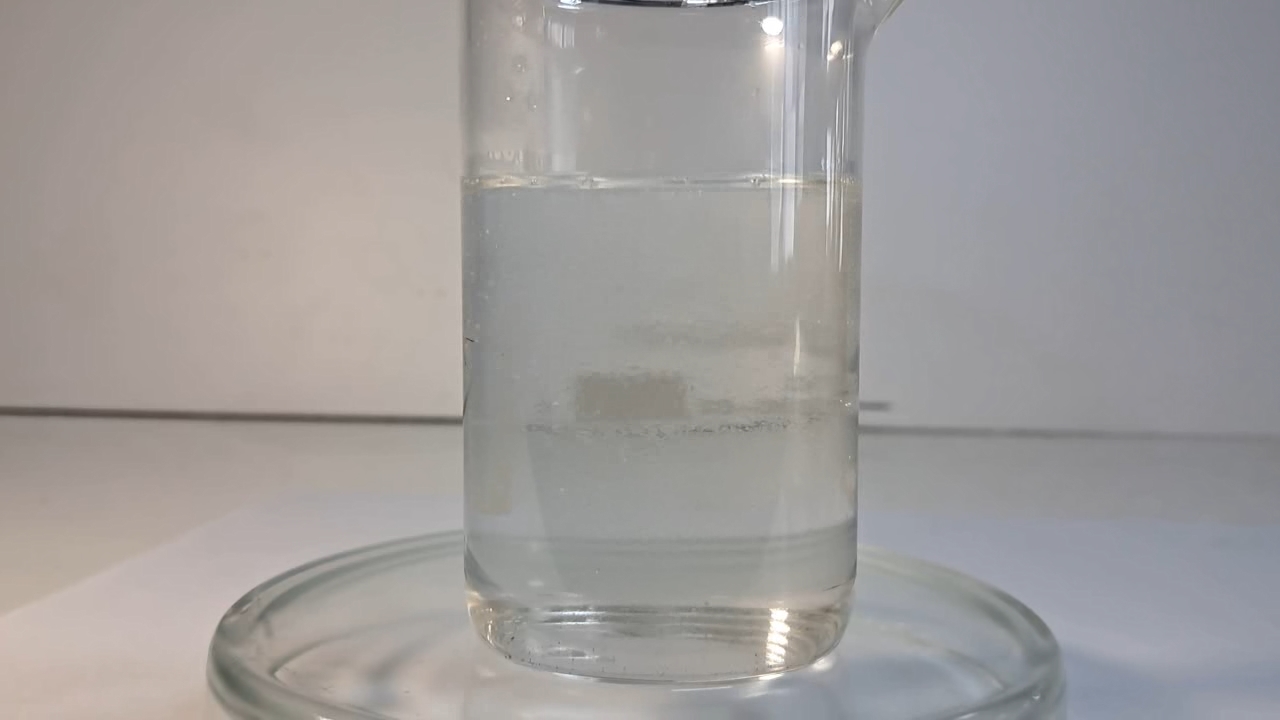
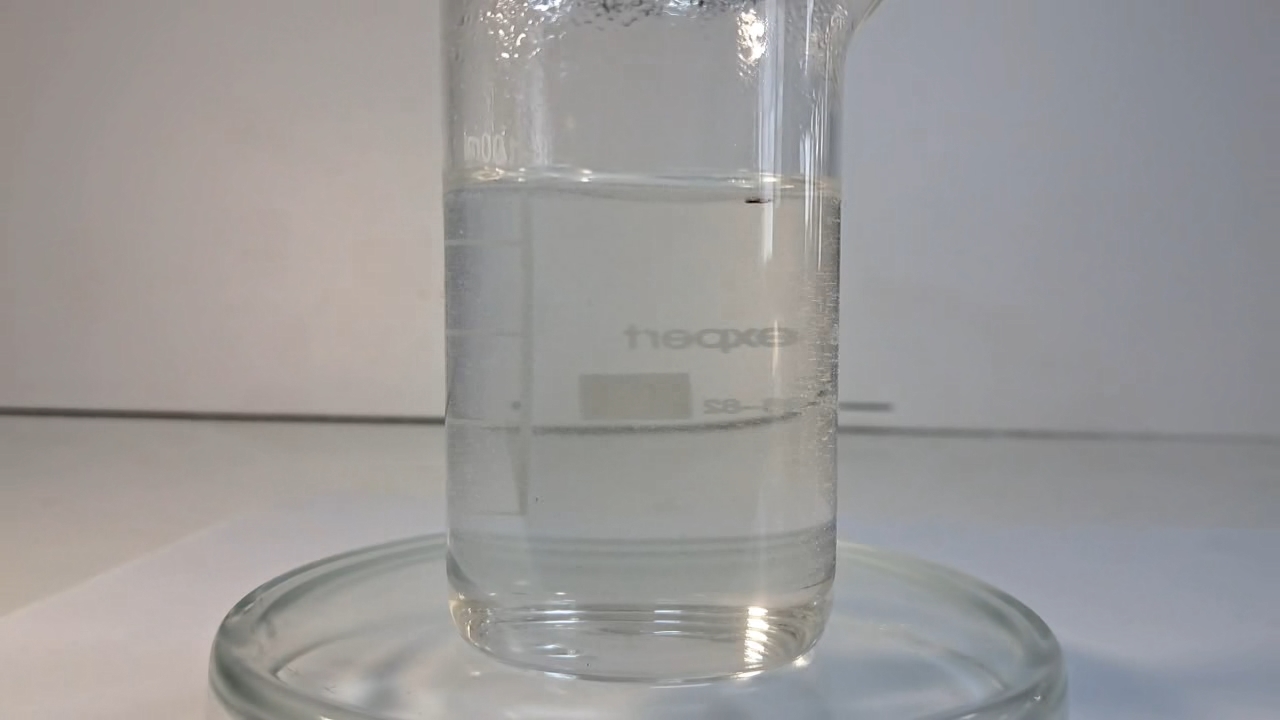
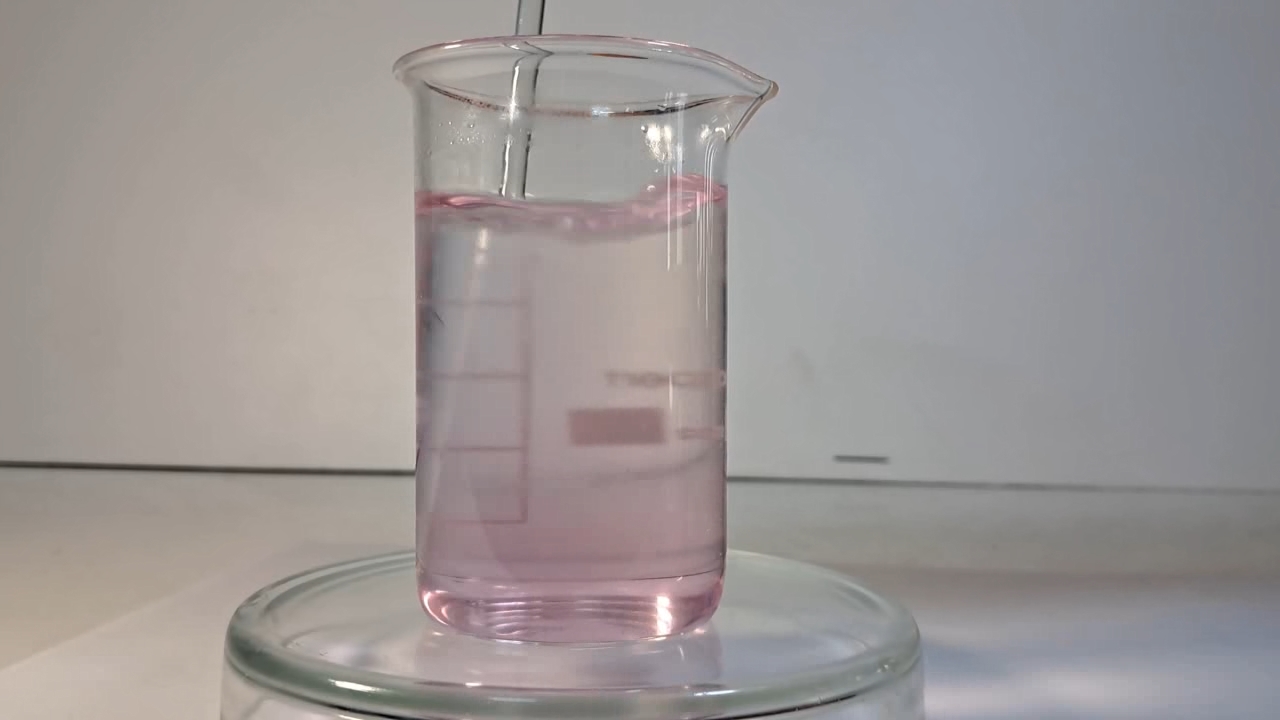
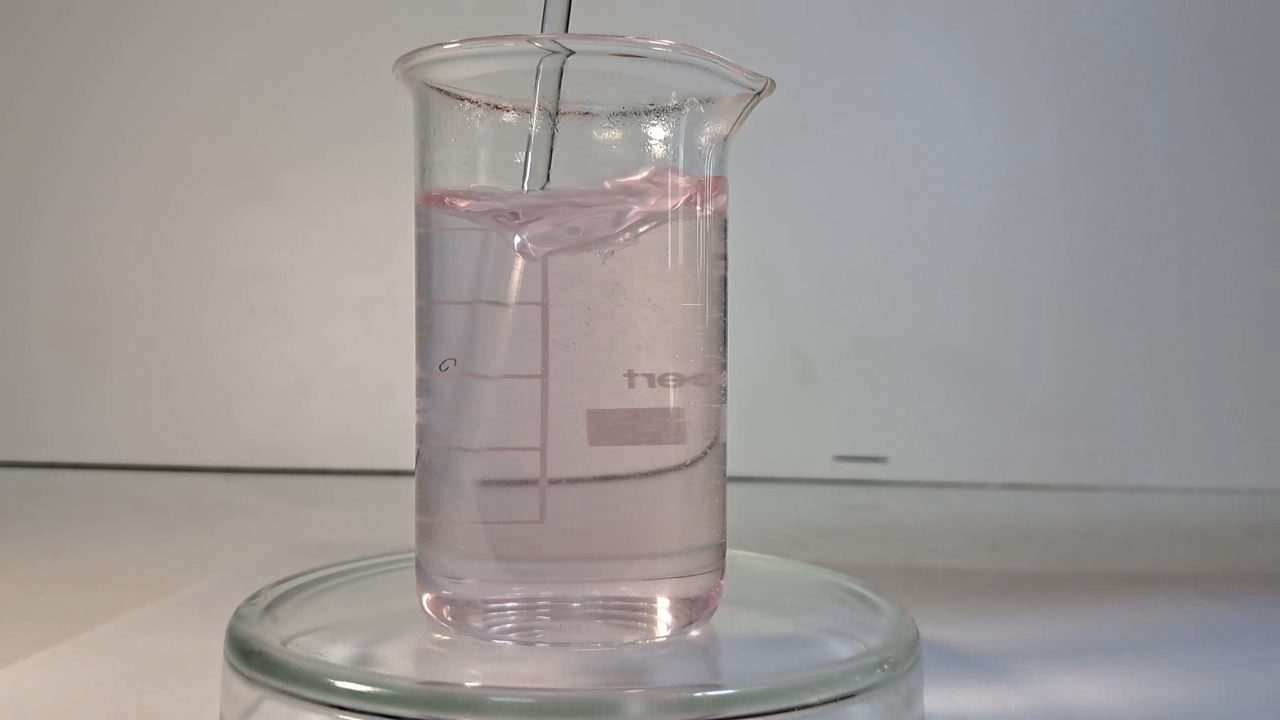
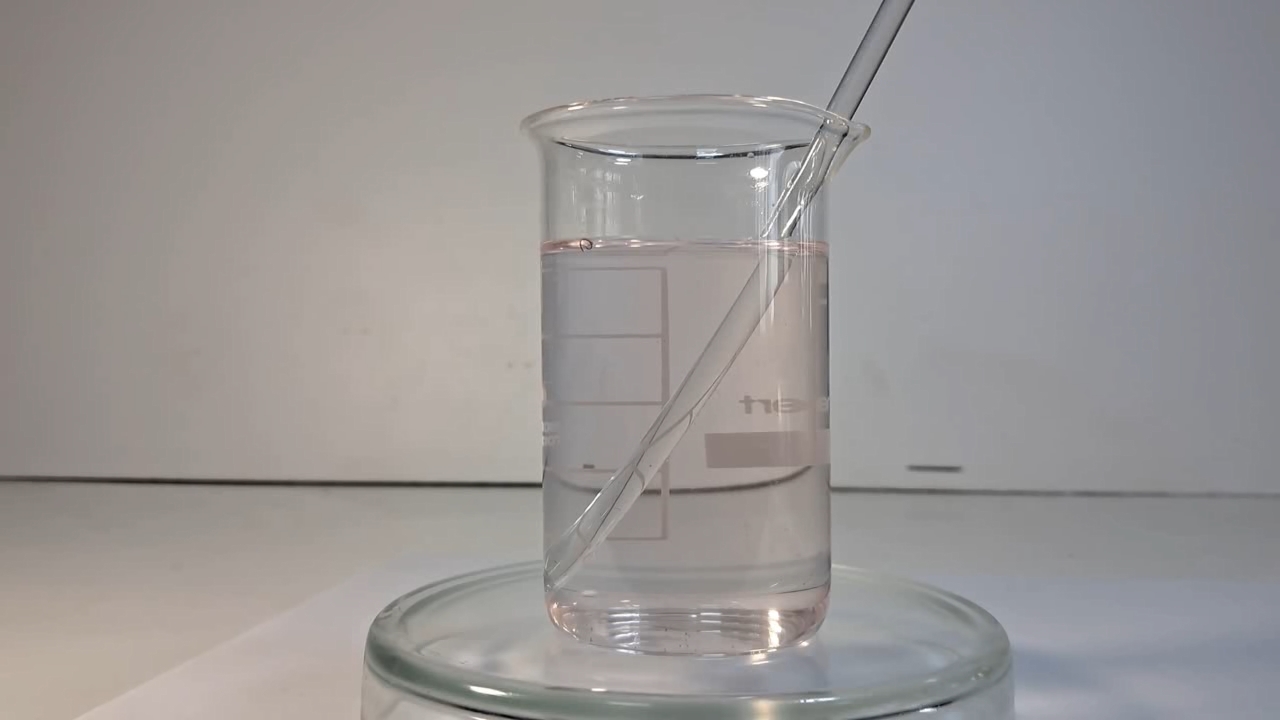
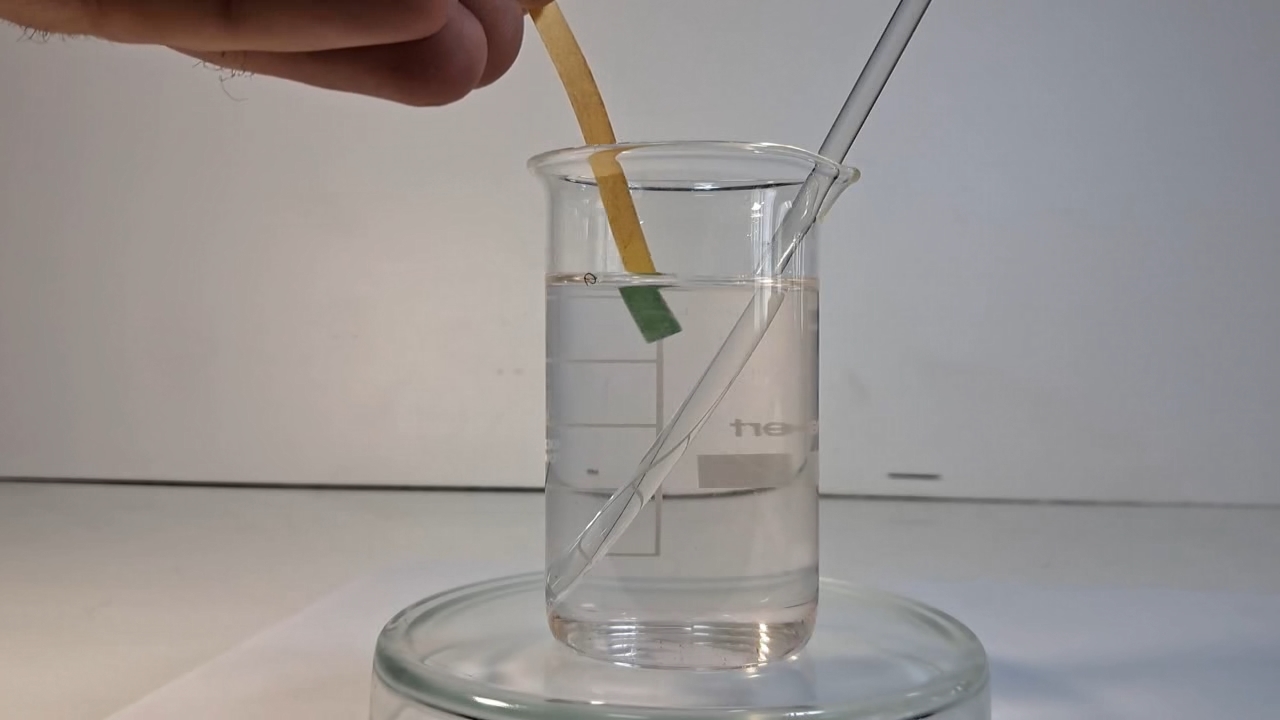
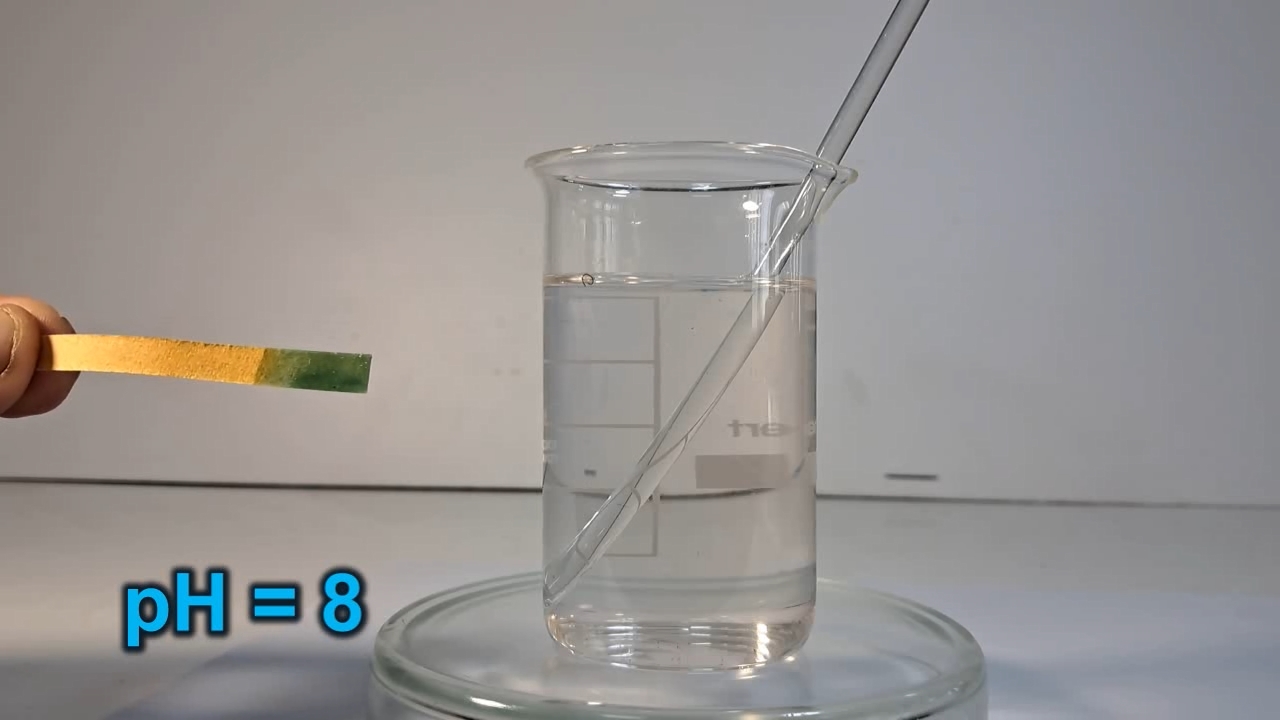
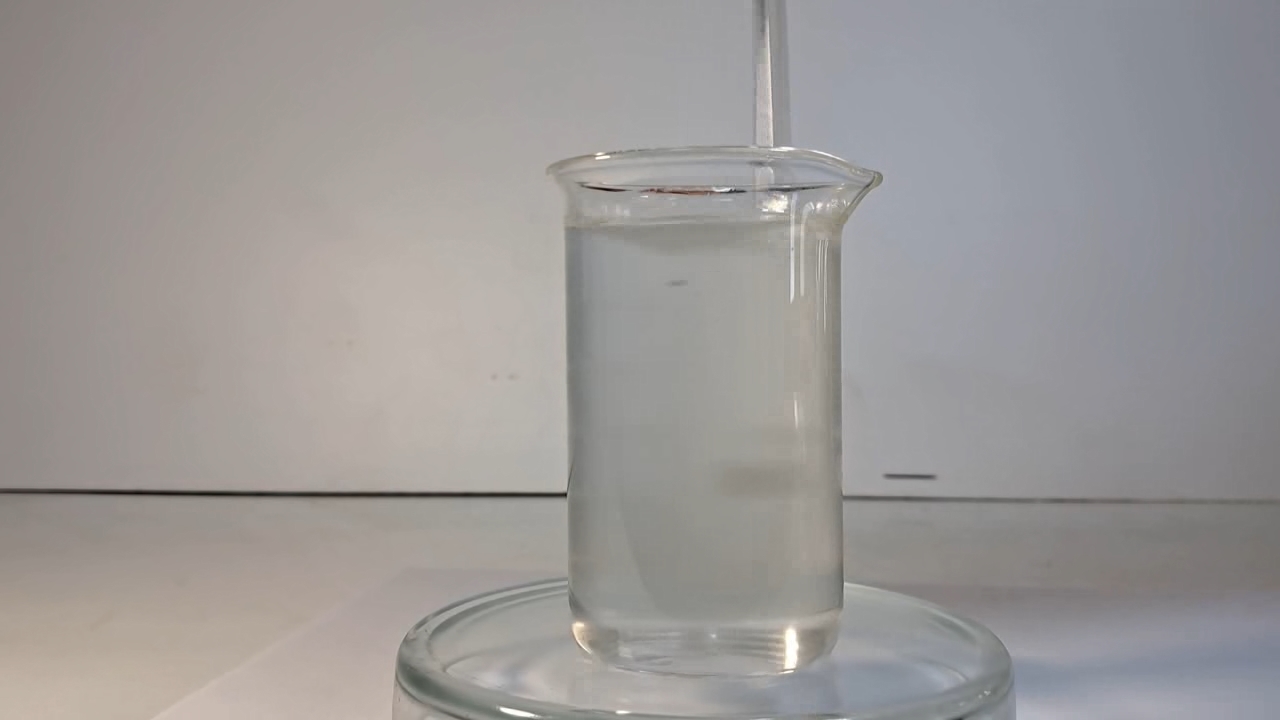
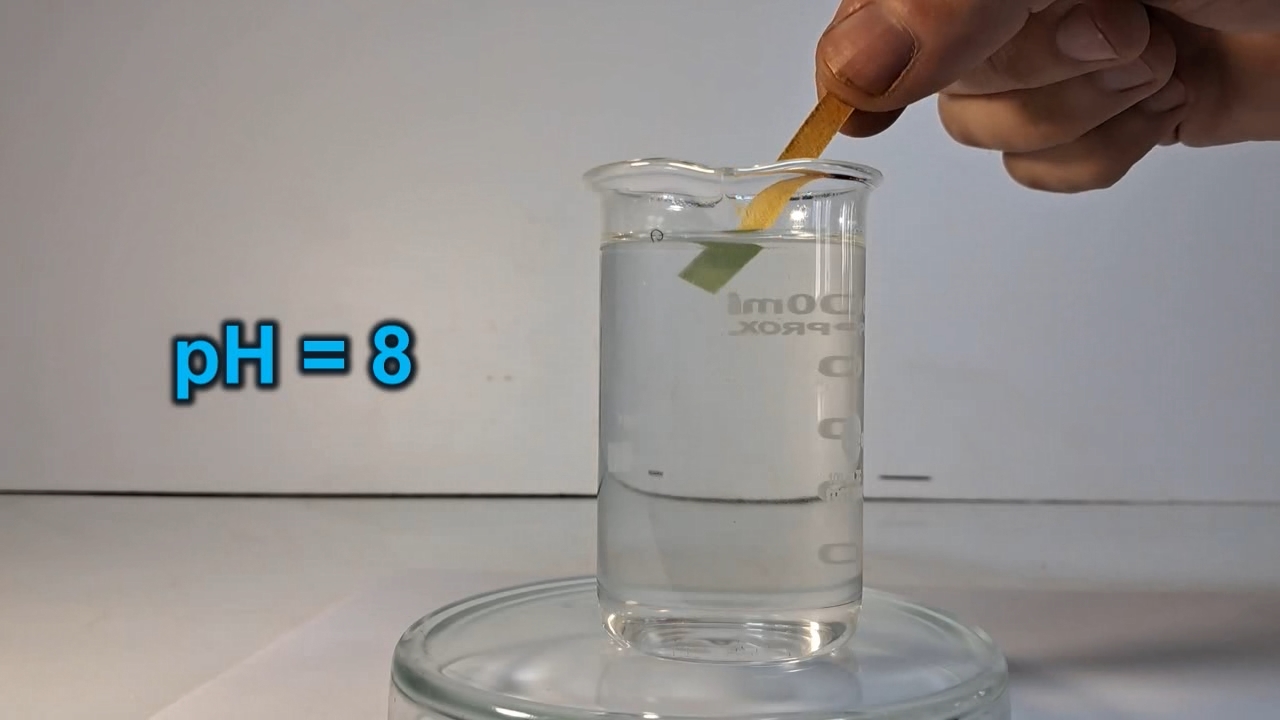
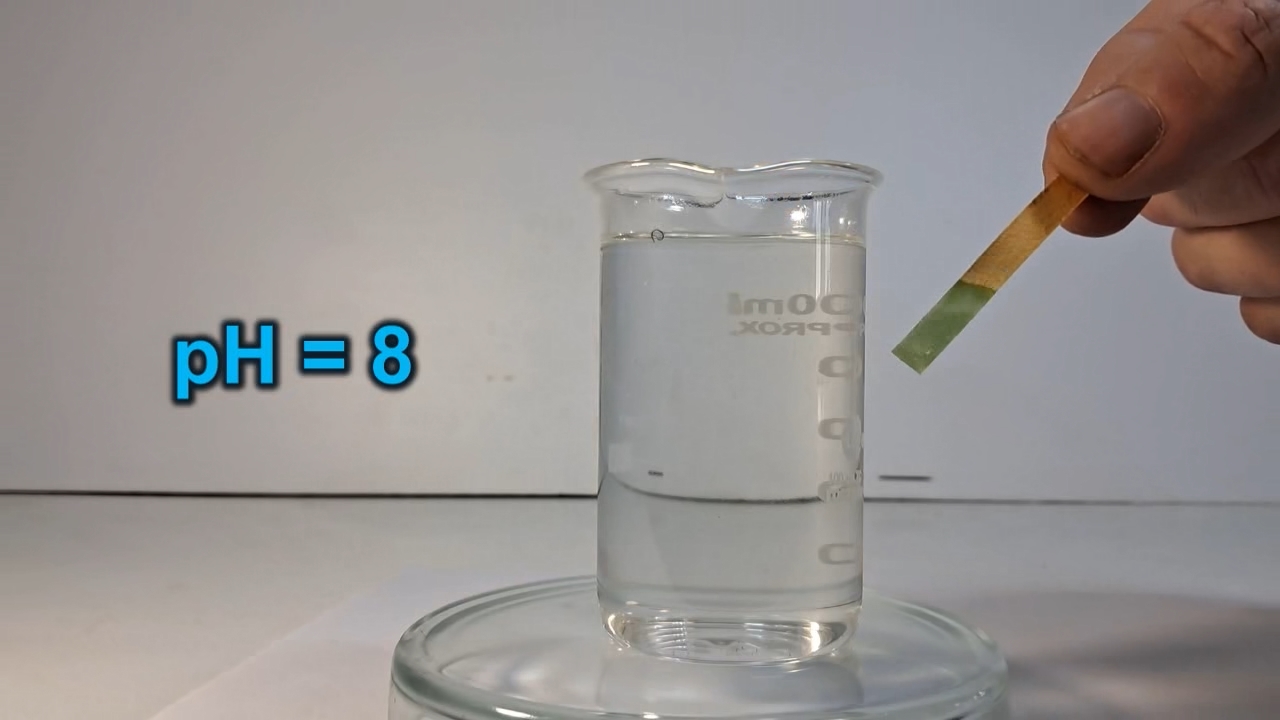
I stirred the contents of the beaker. The solution became homogeneous and acquired a faint pink tint. After stirring, the turbidity disappeared. Over time, the pink tint also vanished - the beaker contained a clear, colorless liquid resembling water. Using a strip of universal indicator paper, I determined that the pH of the solution was 8.

Therefore, all of the added alkali (9.5 g of sodium hydroxide) had been completely neutralized by the acetic acid formed during the hydrolysis of methyl acetate.

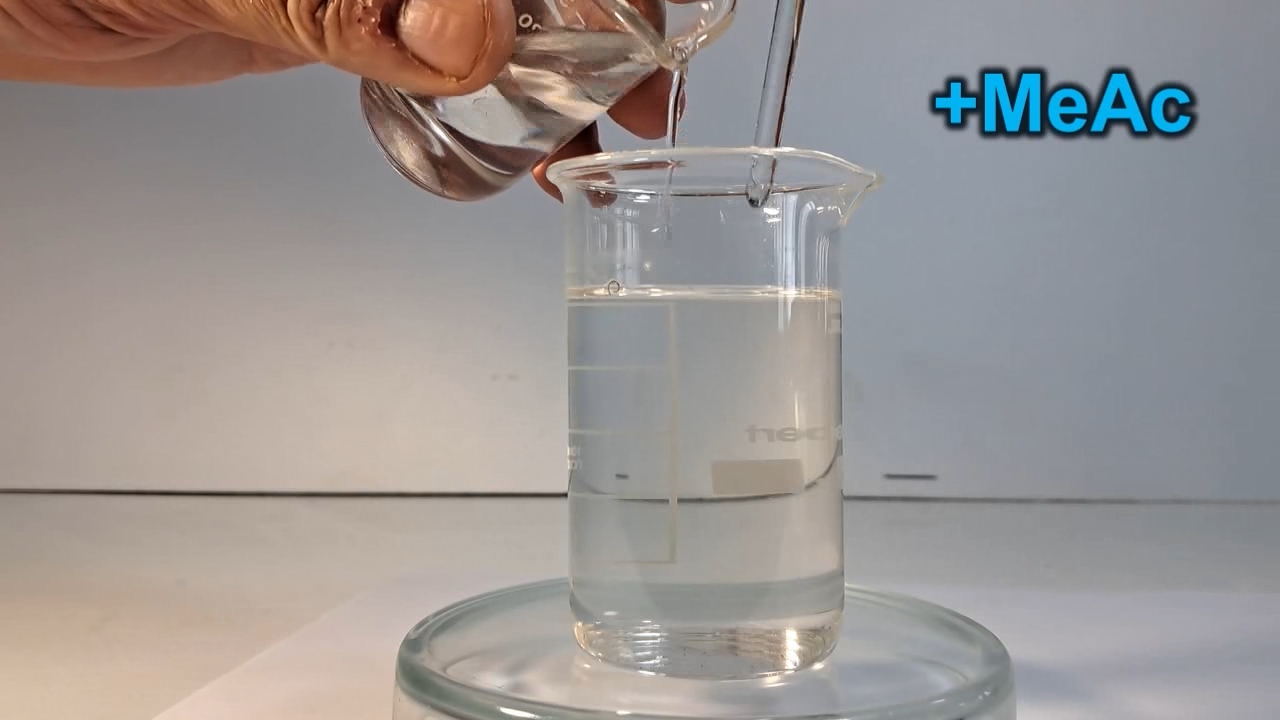
I added another 20 ml of methyl acetate, expecting two immiscible layers to form: an aqueous solution and the ester. Instead, the liquid in the beaker became cloudy, and after stirring, a clear, colorless solution formed, again resembling water. Its pH remained at 8. If the 20 ml of methyl acetate had rapidly hydrolyzed, it would have caused a sharp drop in the solution's pH due to the formation of acetic acid.

Perhaps methyl acetate is highly soluble in water?

I did some internet research. It turned out that the solubility of methyl acetate in water at room temperature is about 25% by weight. Moreover, if approximately 1% methanol is added, water and methyl acetate become miscible in all proportions, just like water and ethanol.

In other words, the disappearance of the methyl acetate layer is not a reliable criterion for its hydrolysis, since the ester has a fairly high solubility in water. One of the products of methyl acetate hydrolysis is methanol, which makes the mutual solubility of the components effectively unlimited.

I then found in the literature that ethyl acetate is also significantly soluble in water (8 g per 100 g of water).

On the other hand, a decrease in the solution's pH is a strong indication that ester hydrolysis is occurring, since this reaction produces an acid that reacts with sodium hydroxide or another added alkali.

Initially, I added phenolphthalein only as a dye - to color the aqueous layer and create contrast with the colorless organic layer. However, phenolphthalein ultimately proved useful primarily as an indicator.

As you can see, it is always helpful to consult reference data - in this case, the solubility of the substances involved - before conducting an experiment. This should be done even when you are confident that you already know what the data will show.


Метилацетат: пробный эксперимент - Часть 2
Взвесил 3.1 г гидроксида натрия, насыпал его в колбу, добавил 60 мл дистиллированной воды. Потому решил, что щелочи недостаточно, и добавил еще 6.4 г гидроксида натрия. После полного растворения твердой фазы добавил в колбу 20 мл метилацетата. Образовались два жидких слоя. Встряхнул колбу. После разделения метилацетата и водного раствора оказалось, что верхний слой существенно уменьшился. В результате дальнейшего встряхивания образовалась однородная жидкость. Поверхность раздела между жидкими фазами исчезла - метилацетат полностью растворился в водной фазе. Причем растворение произошло довольно быстро. Я не сомневался, что причиной исчезновения верхнего слоя был гидролиз сложного эфира, поскольку метилацетат плохо растворим в воде - по аналогии с этилацетатом и другими сложными эфирами. Общеизвестная аналогия - практически нерастворимое в воде подсолнечное масло, которое также является сложным эфиром (смесь эфиров глицерина и высших жирных кислот).

Перелил раствор в стакан, чтобы было лучше видно границу раздела фаз, затем добавил еще 20 мл метилацетата. Снова образовалось два жидких слоя. Перемешал жидкости стеклянной палочкой - граница раздела между жидкостями моментально исчезла!

Только теперь я догадался добавить несколько капель спиртового раствора фенолфталеина, перемешал. Раствор окрасился в ярко-фуксиновый цвет. Пока я отмерял следующие 20 мл метилацетата, интенсивность окраски индикатора существенно уменьшилась. Я этот факт заметил, однако, не смог сразу найти ему объяснение.

Добавил следующие 20 мл метилацетата. Результат оказался неожиданным: верхняя часть жидкости обесцветилась, нижняя часть побледнела и стала розовой, причем между этими двумя слоями не было четкой границы раздела. Переход от бесцветной зоны к розовой происходил постепенно, поверхность раздела между жидкими фазами не была заметна. Также жидкость стала слегка мутной, что могло свидетельствовать об образовании эмульсии.

Перемешал содержимое стакана. Раствор стал однородным, он имел легкий розовый оттенок. После перемешивания мутность исчезла. Со временем розовый оттенок также исчез - в стакане была прозрачная и бесцветная жидкость, похожая на воду. С помощью полоски универсальной индикаторной бумажки установил, что pH раствора был равен 8.

Таким образом, вся добавленная щелочь (9.5 г гидроксида натрия) была полностью нейтрализована уксусной кислотой, которая образовалась при гидролизе метилацетата.

Добавил еще 20 мл метилацетата, ожидая образование двух несмешивающихся слоев: водного раствора и сложного эфира. Вместо этого жидкость в стакане стала мутной, а после перемешивания образовался прозрачный и бесцветный раствор, который также напоминал воду. Его pH по прежнему был равен 8. Если бы произошел быстрый гидролиз 20 мл метилацетата, это вызвало бы резкое падение pH раствора за счет образования уксусной кислоты.

Возможно, метилацетат хорошо растворим в воде?

Провел поиск в интернете. Оказалось, что растворимость метилацетата в воде при комнатной температуре составляет около 25% по массе. Более того, если добавить около 1% метилового спирта, то вода и метилацетат будут смешиваться в любых пропорциях, также как вода и этанол.

Другими словами, исчезновение слоя метилацетата не является критерием его гидролиза, поскольку сложный эфир имеет весьма значительную растворимость в воде. Одним из продуктов гидролиза метилацетата является метанол, который делает эту растворимость неограниченной.

Именно тогда я обнаружил в литературе, что этилацетат также заметно растворим в воде (8 г в 100 г воды).

С другой стороны, падение значения pH раствора является строгим критерием гидролиза сложного эфира, поскольку в этой реакции образуется кислота, которая реагирует с гидроксидом натрия или другой добавленной щелочью.

Первоначально я добавил фенолфталеин только в качестве красителя - чтобы окрасить водный слой и создать контраст с бесцветным органическим слоем. Однако, фенолфталеин оказался полезным, прежде всего, в качестве индикатора.

Как видите, перед экспериментом всегда полезно посмотреть справочные данные (в нашем случае - по растворимости веществ). Это следует делать даже тогда, когда вы уверены, что знаете, какими они должны быть.


Download the Video (76 Mb, .avi )

Methyl Acetate: Preliminary Experiment
Methyl Acetate Hydrolysis: Preliminary Experiment

Methyl Acetate: Preliminary Experiment

Methyl Acetate: Preliminary Experiment

Methyl Acetate: Preliminary Experiment

Methyl Acetate: Preliminary Experiment

Methyl Acetate: Preliminary Experiment

Methyl Acetate: Preliminary Experiment

Methyl Acetate: Preliminary Experiment

Methyl Acetate: Preliminary Experiment

Methyl Acetate: Preliminary Experiment

Methyl Acetate: Preliminary Experiment

Methyl Acetate: Preliminary Experiment

Methyl Acetate: Preliminary Experiment

Methyl Acetate: Preliminary Experiment

Methyl Acetate: Preliminary Experiment

Methyl Acetate: Preliminary Experiment

Methyl Acetate: Preliminary Experiment

Methyl Acetate: Preliminary Experiment

Methyl Acetate: Preliminary Experiment

Methyl Acetate: Preliminary Experiment

Methyl Acetate: Preliminary Experiment

Methyl Acetate: Preliminary Experiment

Methyl Acetate: Preliminary Experiment

Methyl Acetate: Preliminary Experiment

Methyl Acetate: Preliminary Experiment

Methyl Acetate: Preliminary Experiment

Methyl Acetate: Preliminary Experiment

Methyl Acetate: Preliminary Experiment

Methyl Acetate: Preliminary Experiment

Methyl Acetate: Preliminary Experiment

Methyl Acetate: Preliminary Experiment

Methyl Acetate: Preliminary Experiment

Methyl Acetate: Preliminary Experiment

Methyl Acetate: Preliminary Experiment

Methyl Acetate: Preliminary Experiment


[ Solutions (physical chemistry) ]

Solutions (physical chemistry) - Discussion on the forum
[Submit a Comment / Error Message - Отправить Комментарий / Сообщение об ошибке]