Chemistry and Chemists № 3 2025
Journal of Chemists-Enthusiasts
| Content | Chemistry experiments - video | Physics experiments - video | Home Page - Chemistry and Chemists |
|
Chemistry and Chemists № 3 2025 Journal of Chemists-Enthusiasts |
Reaction of Sodium Thiosulfate with Iron(III) Salts - pt.5, 6 Chemist |
|
Having noticed a mistake in the text, allocate it and press Ctrl-Enter
Reaction of Thiosulfate with Iron(III): Copper(II) as Catalyst - Part 5
In previous experiments, we observed the formation of an intensely colored complex between thiosulfate and ferric iron. Thiosulfate gradually reduced ferric iron to ferrous iron, causing the complex to decompose and the dark purple color to disappear. Under our experimental conditions, this decomposition process took several tens of seconds.
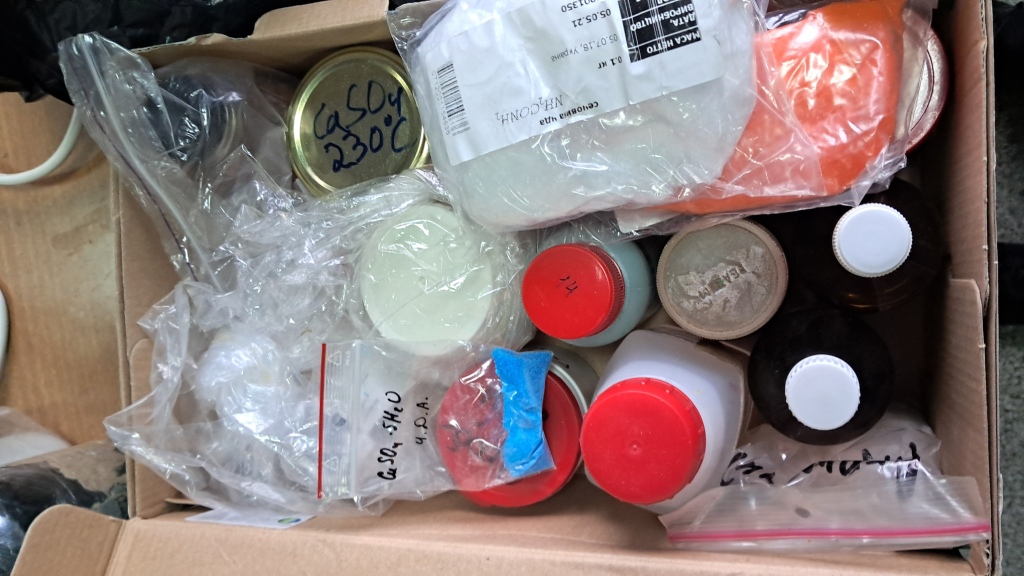
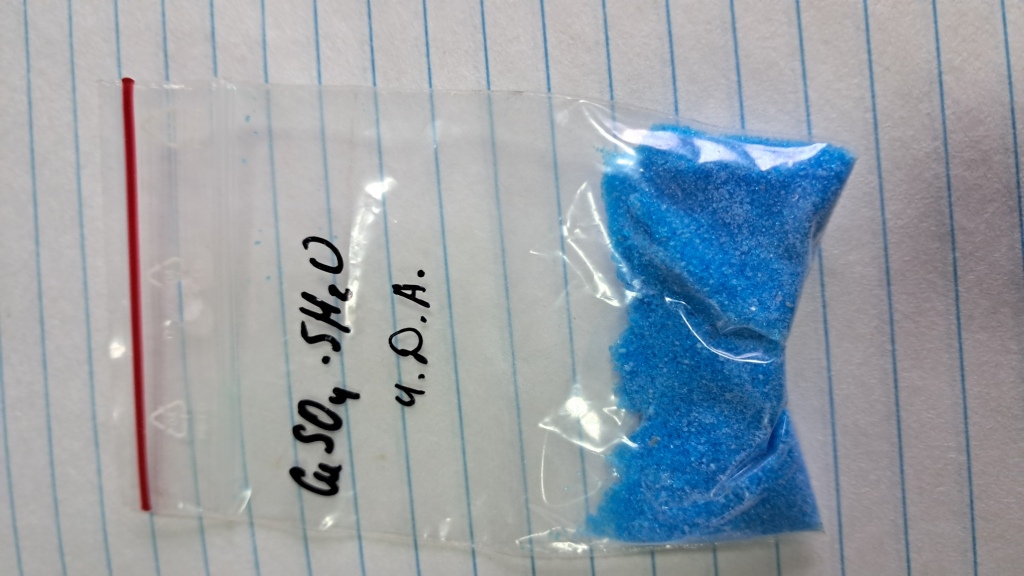
Реакция тиосульфата с железом (III): медь (II) как катализатор - Часть 5 Transition metal ions can catalyze the reduction of Fe(III), accelerating the fading of the complex's color. For instance, copper(II) ions can serve as a catalyst to facilitate the reduction of Fe(III) to Fe(II). It is important to add only a minimal amount of catalyst; otherwise, the color will vanish too quickly. For example, [1] recommends adding a single drop of a 0.1 M solution of copper sulfate or cobalt chloride. A digression. I encountered a problem finding copper(II) sulfate. According to the reagent list, it was supposed to be on a shelf inside the lab bench. I remembered that the copper sulfate was kept in a small, almost empty jar. Luckily, the small remaining amount would have been sufficient for the experiment. However, my search yielded nothing - I must have moved the jar somewhere without updating the list. According to another record, copper sulfate was also listed as being in a box on another shelf with reagents. I pulled out the box, opened it, and searched again - but still found no copper sulfate. Although the reagent is common, ordering new material would have taken several days. Then, by chance, I noticed a tiny packet near the side of the box - it contained copper sulfate. 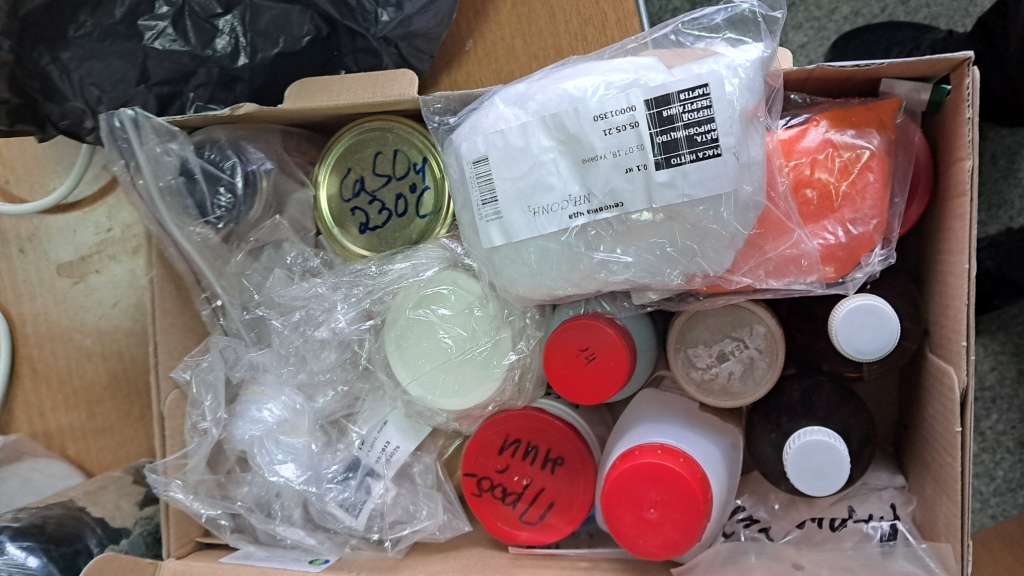
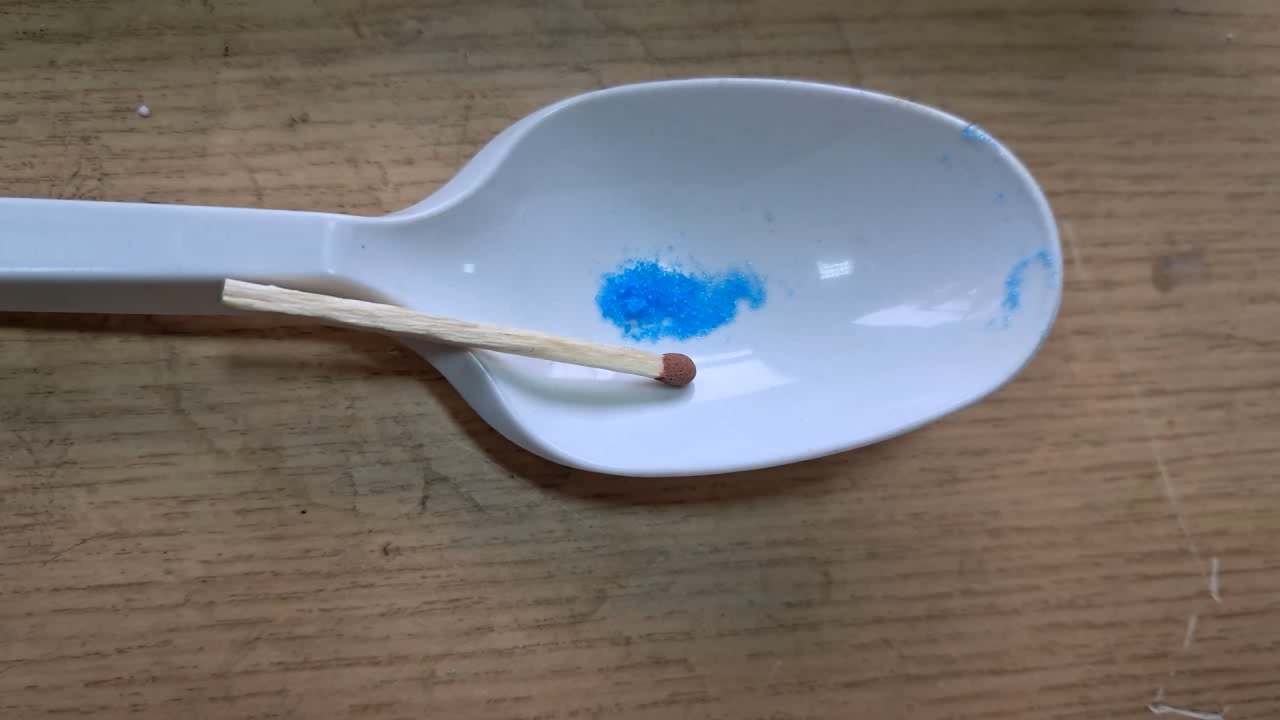
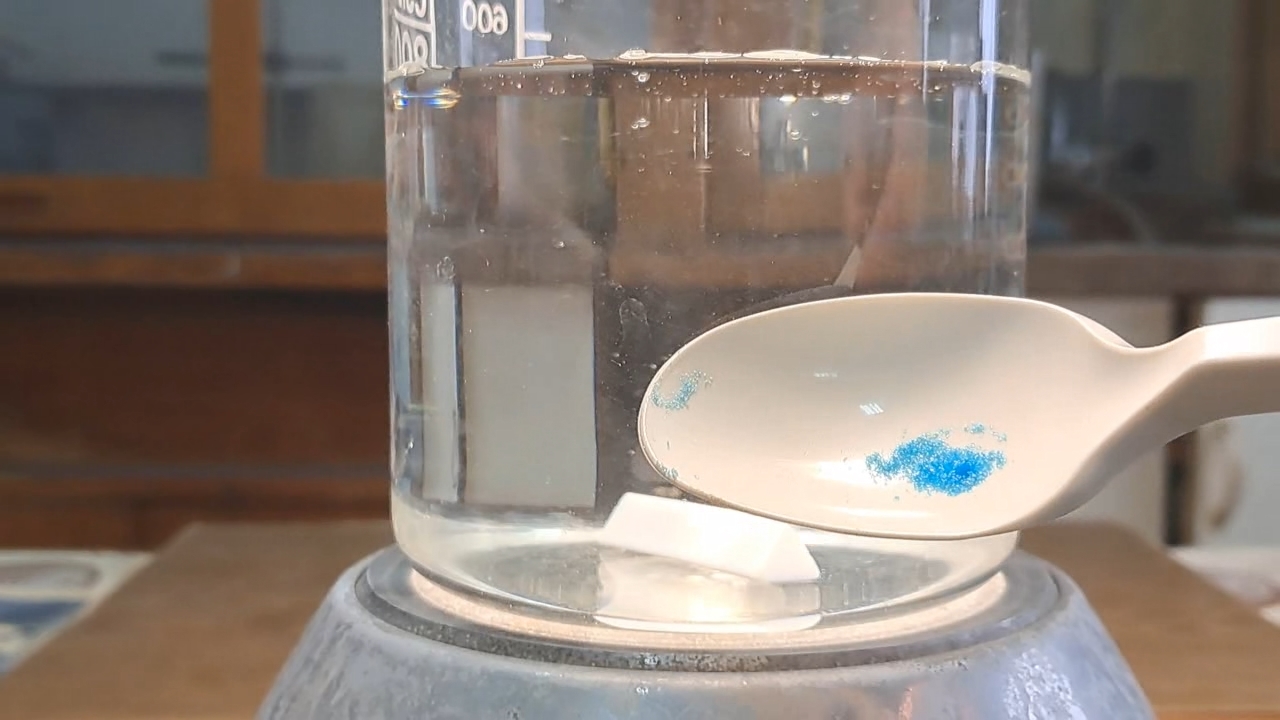
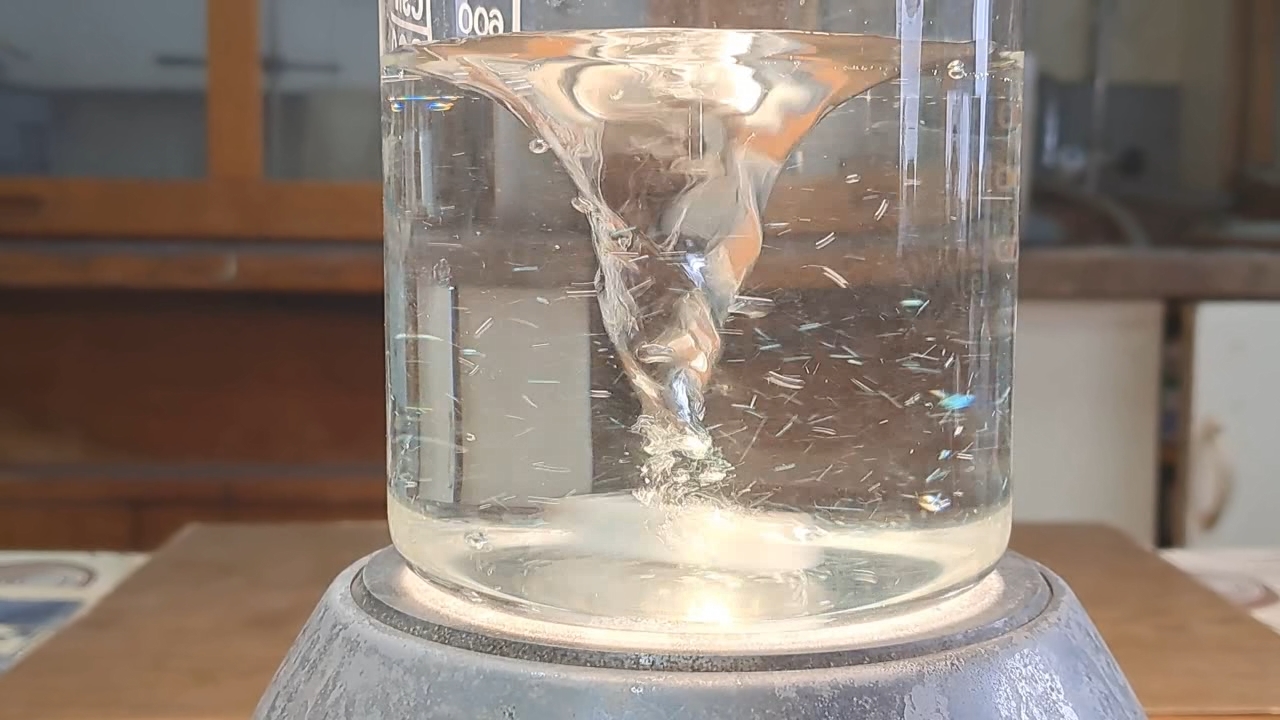
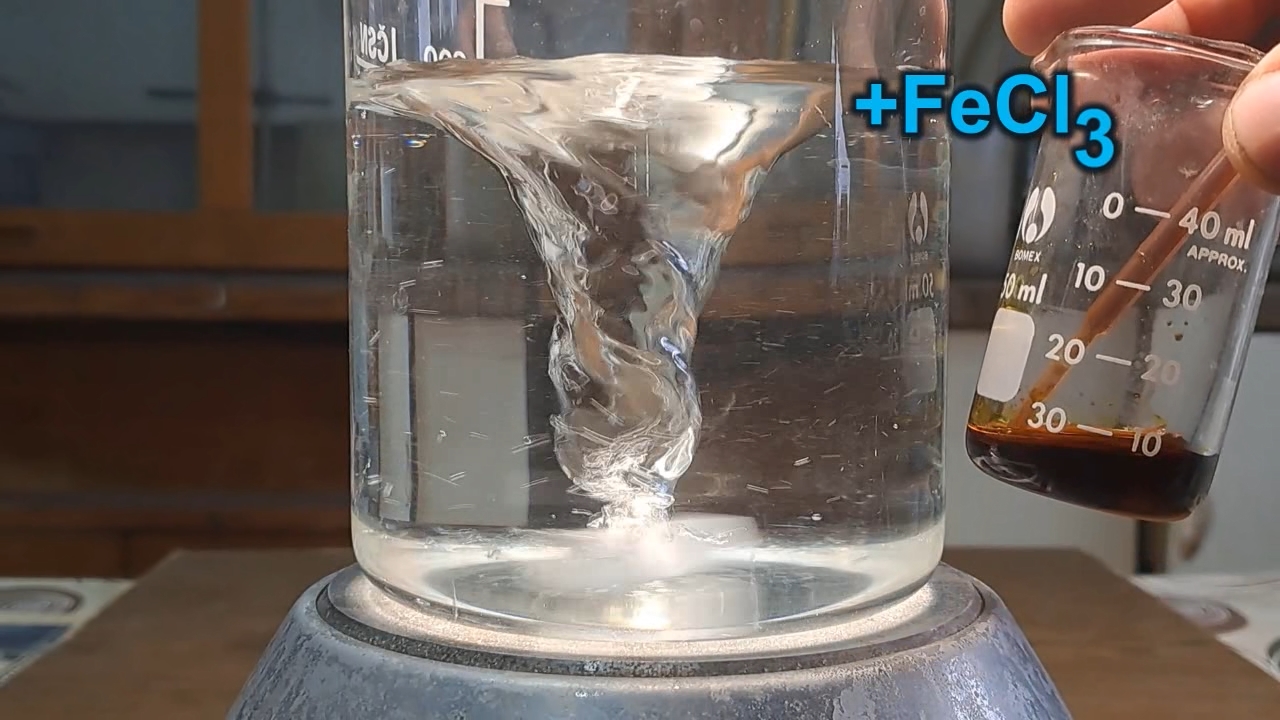
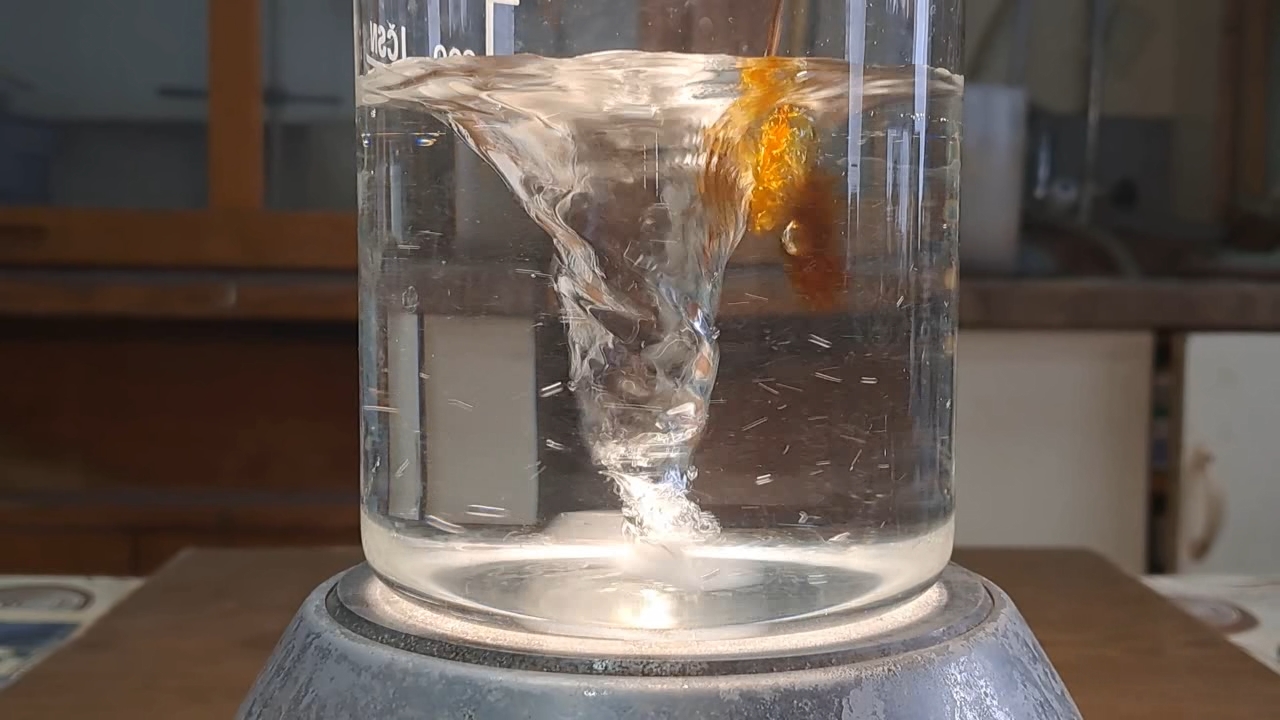
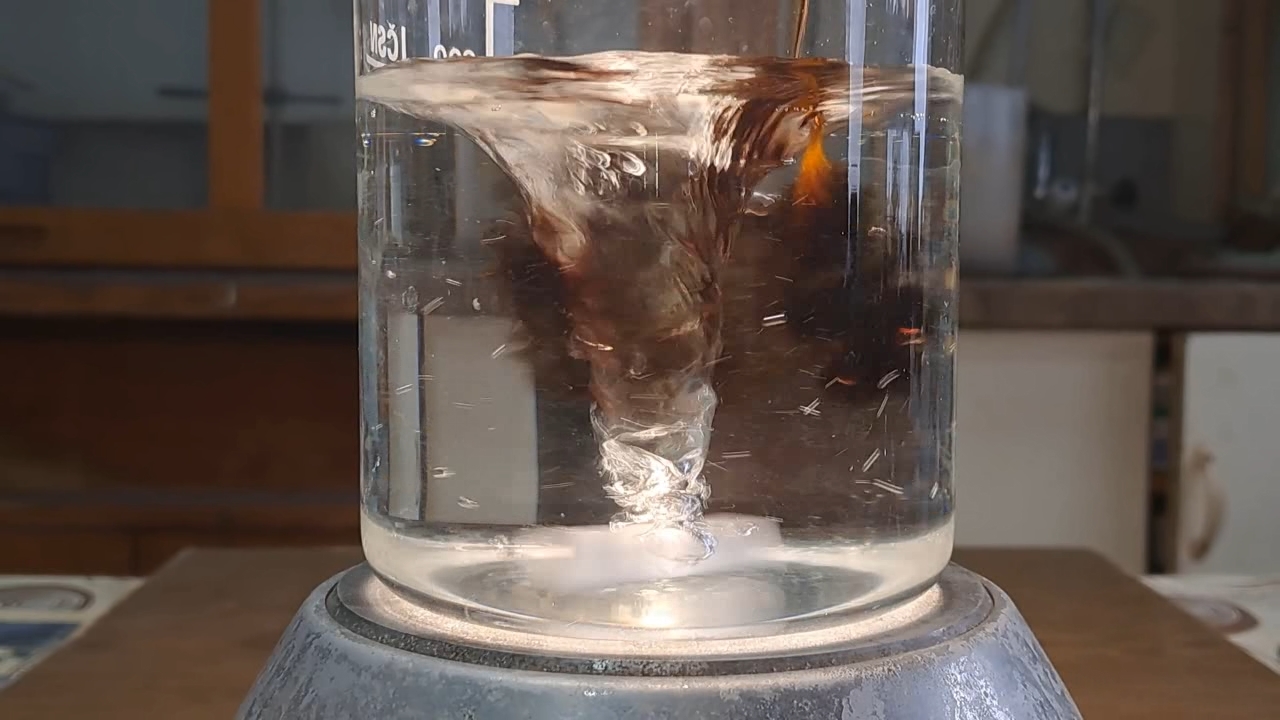
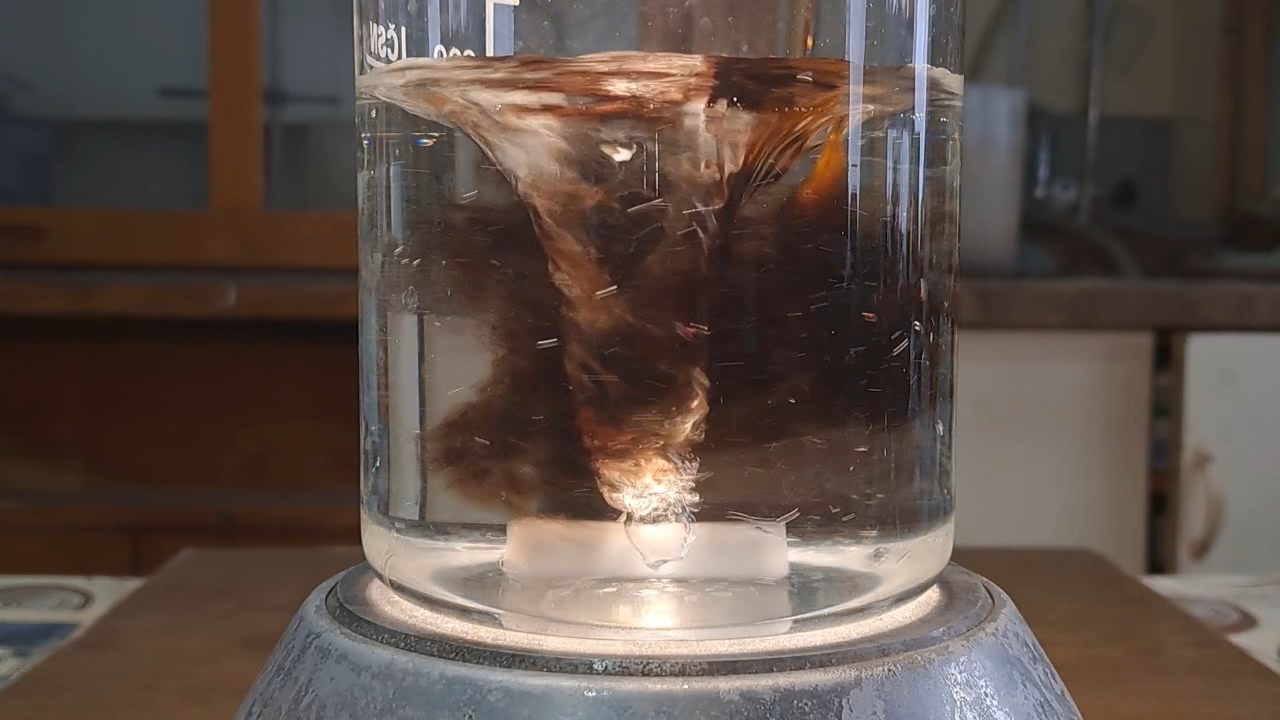
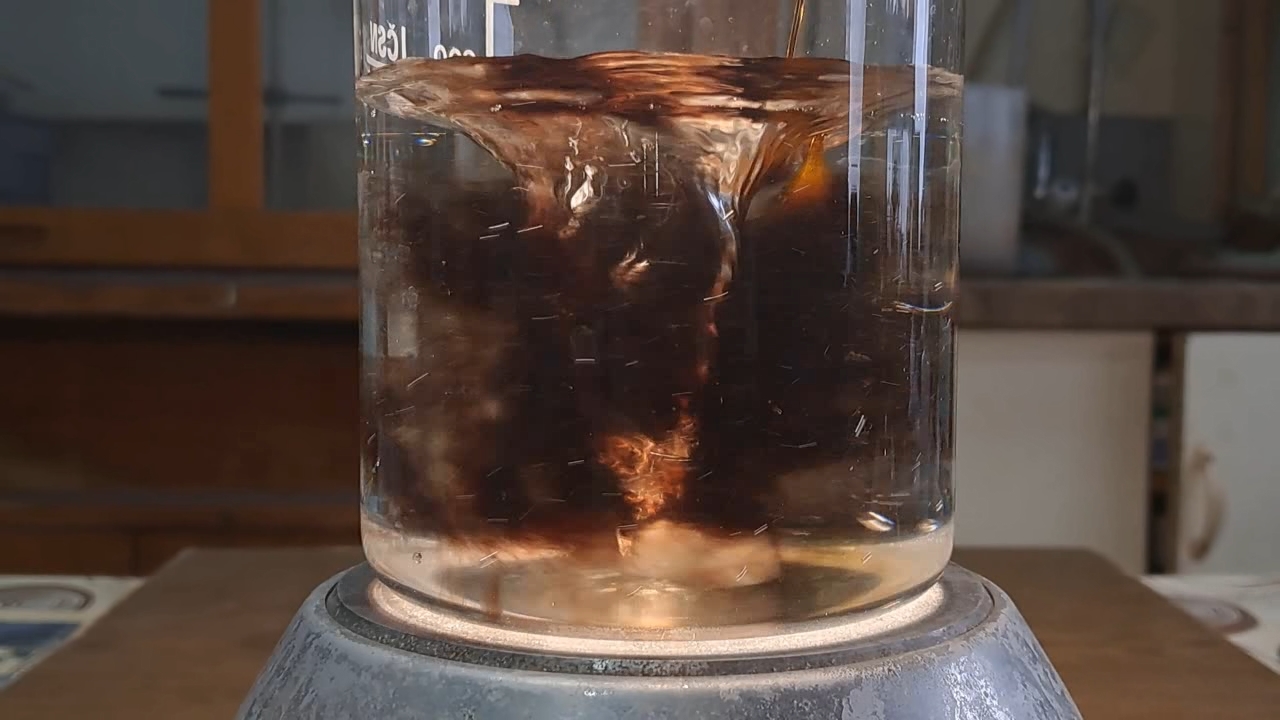
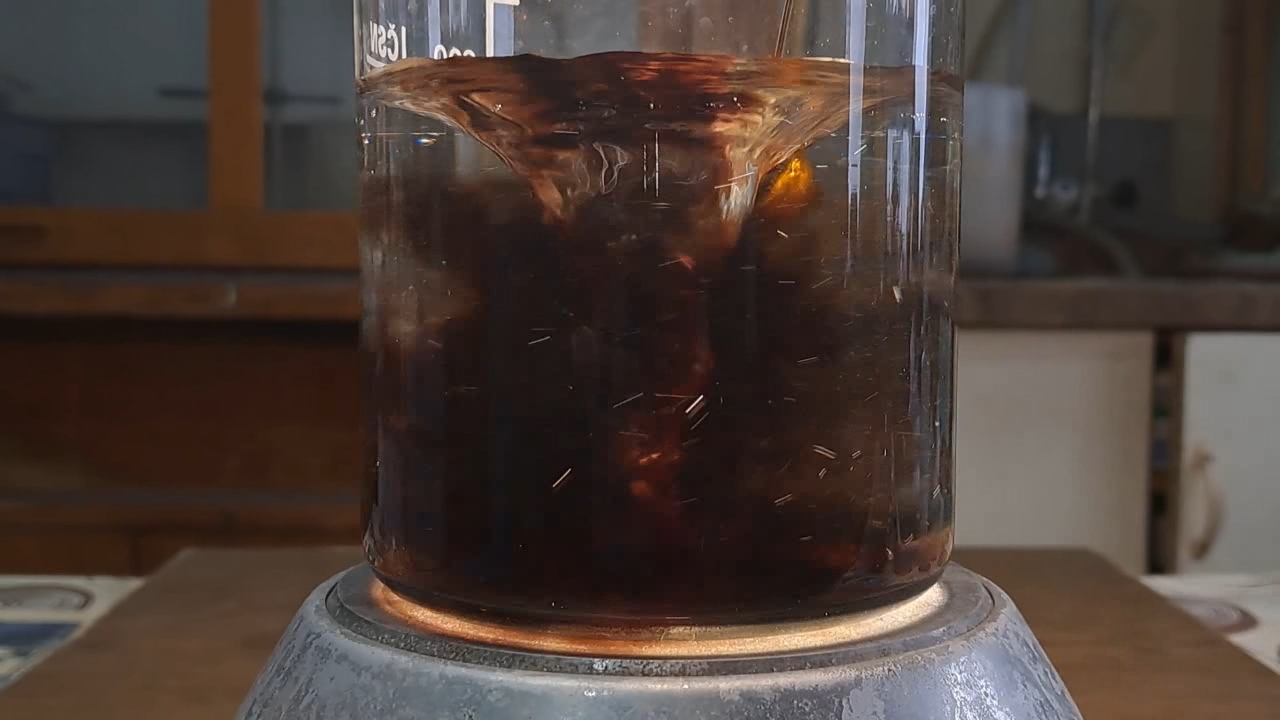
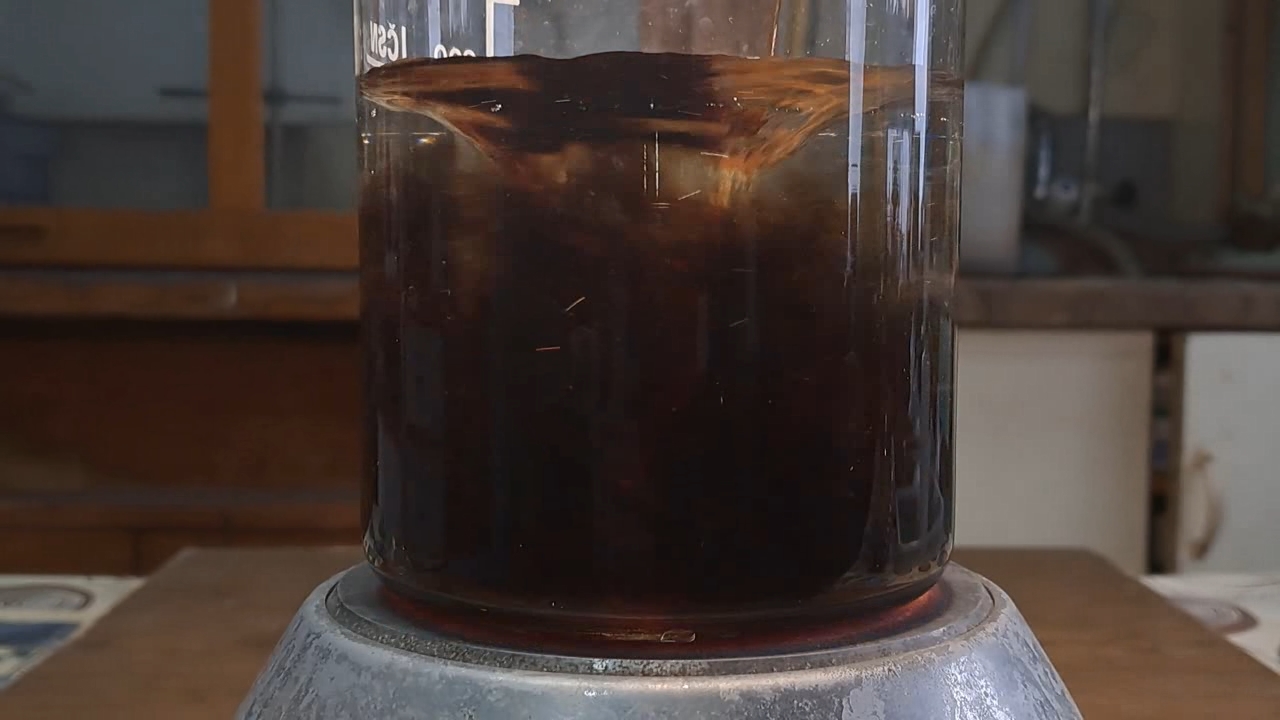
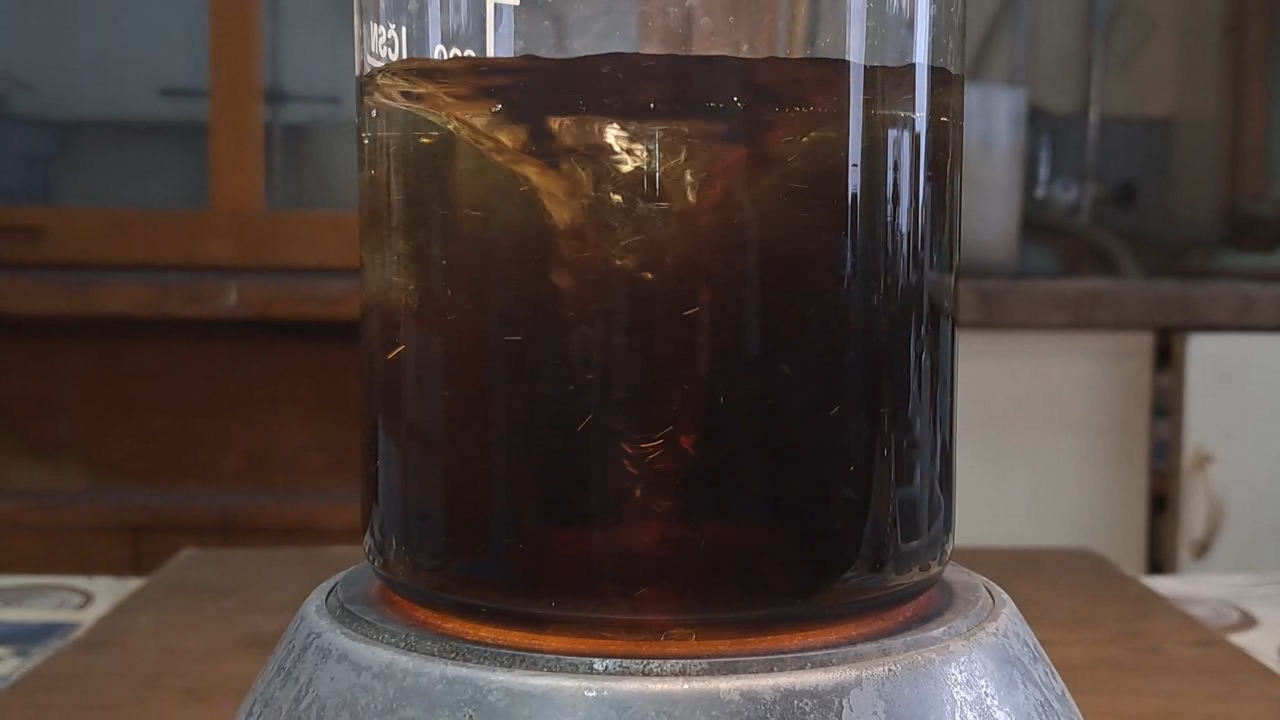
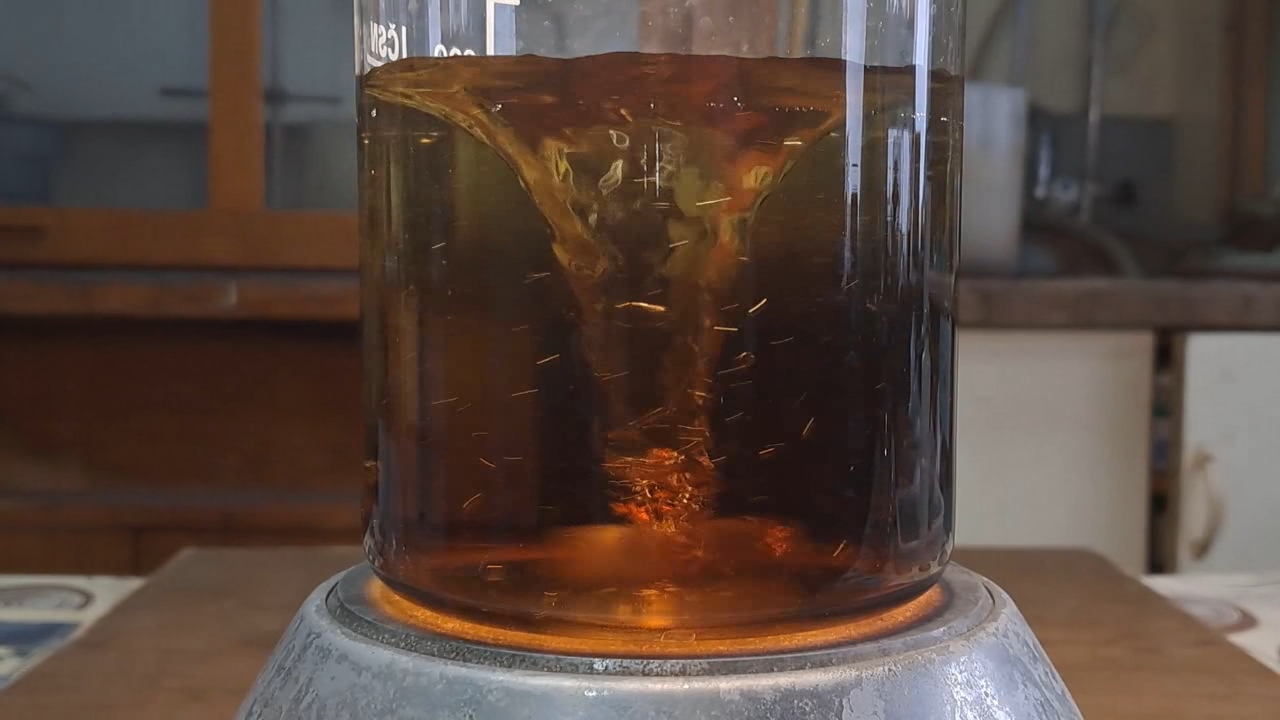
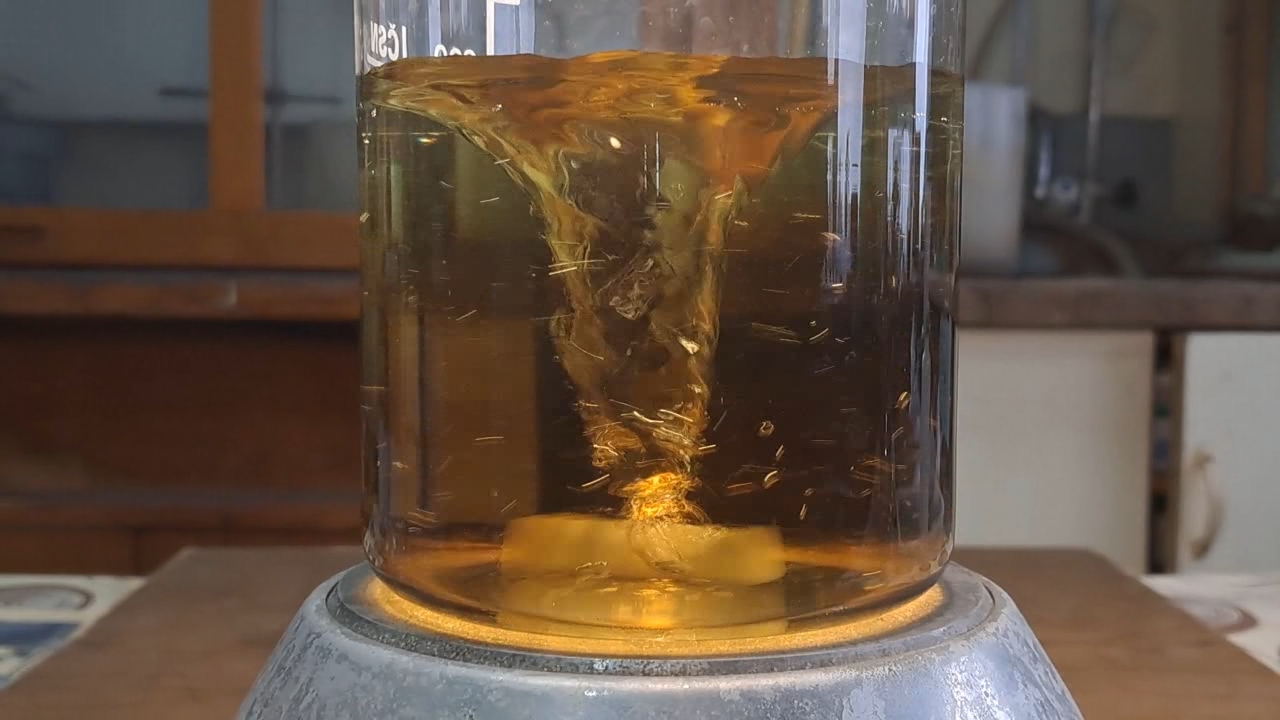
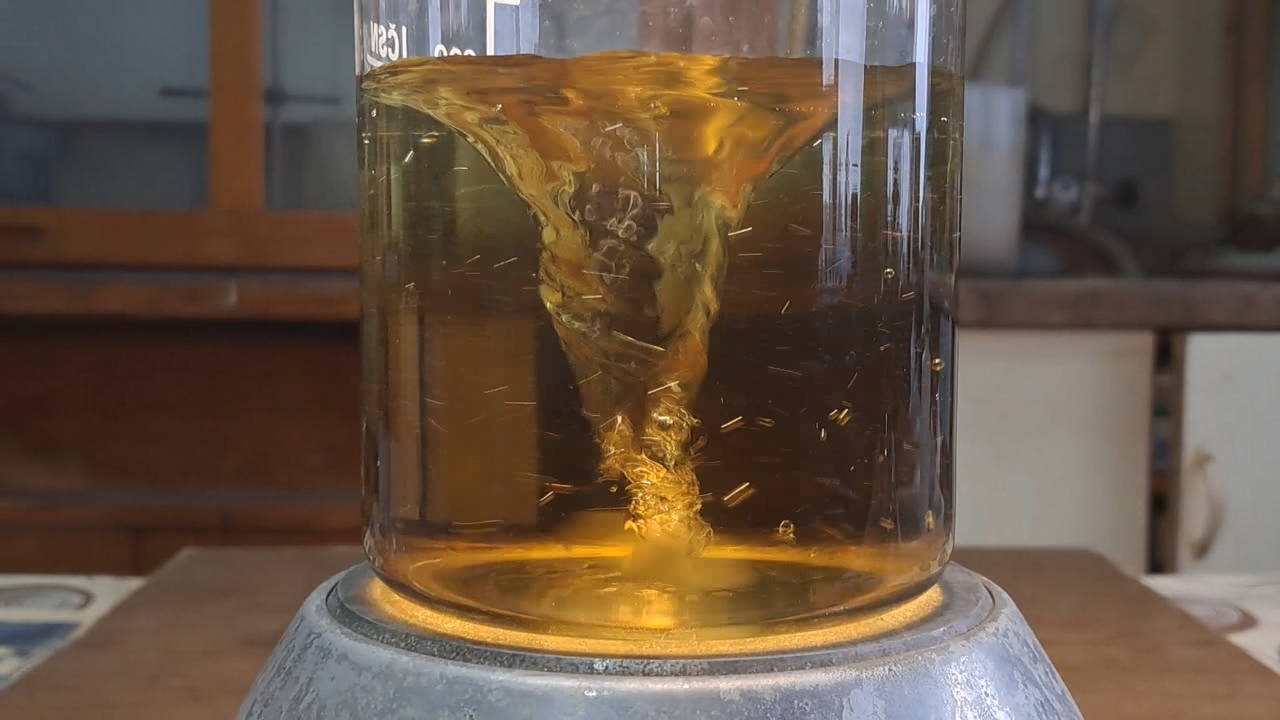
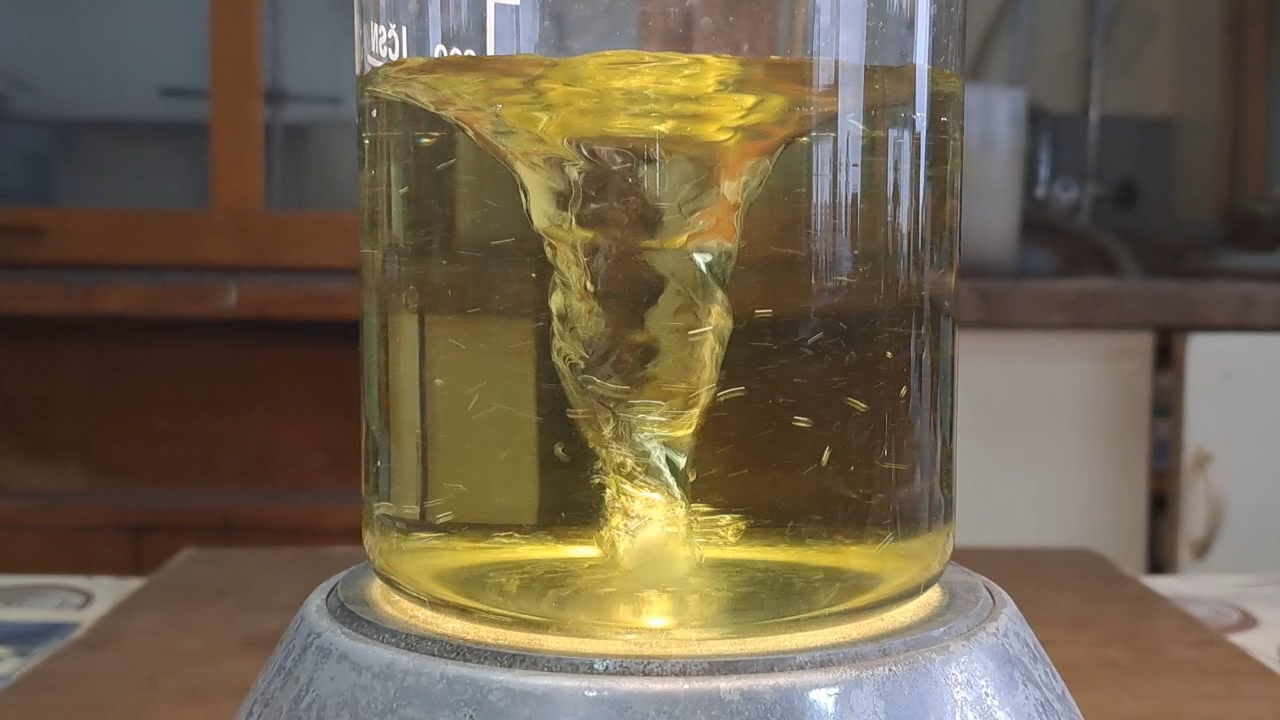
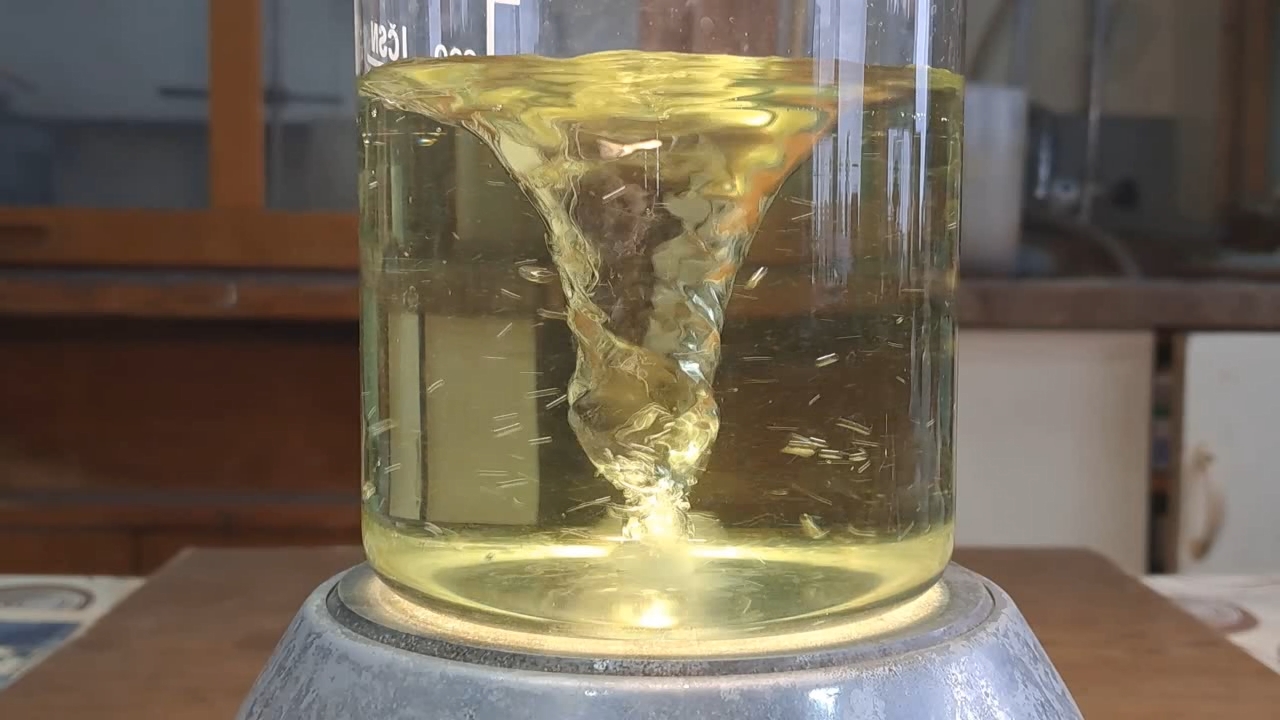
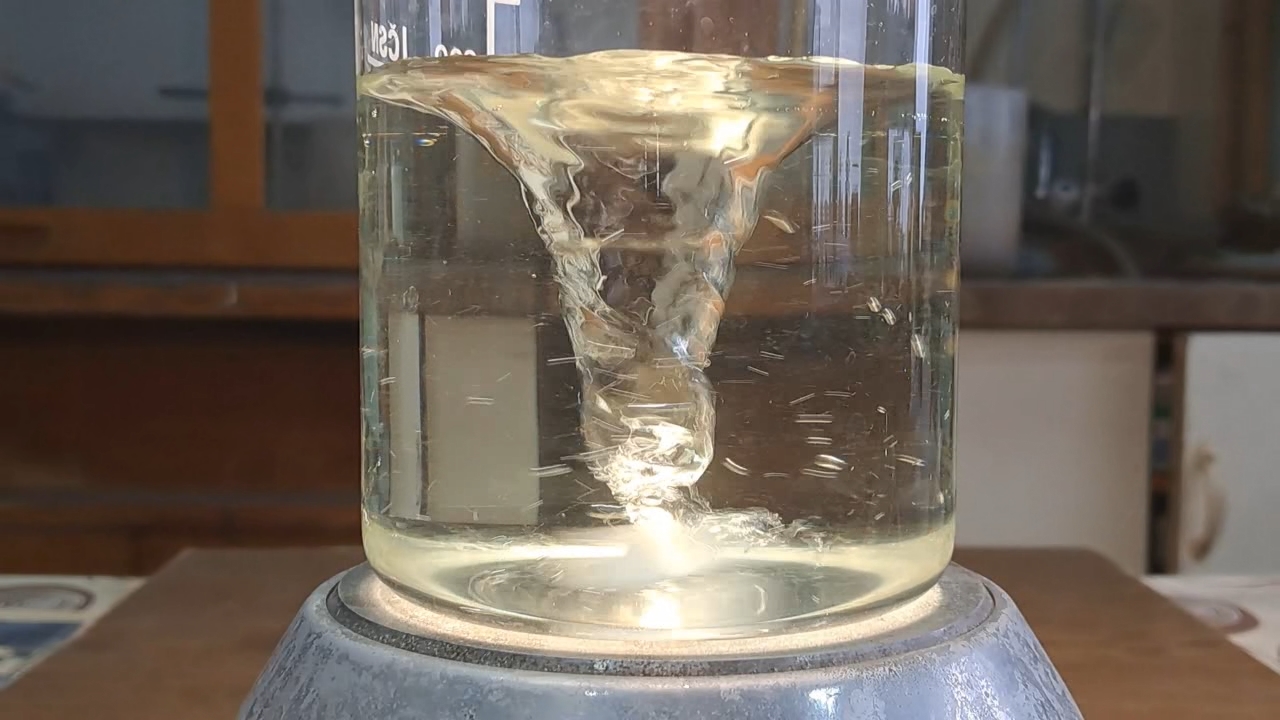
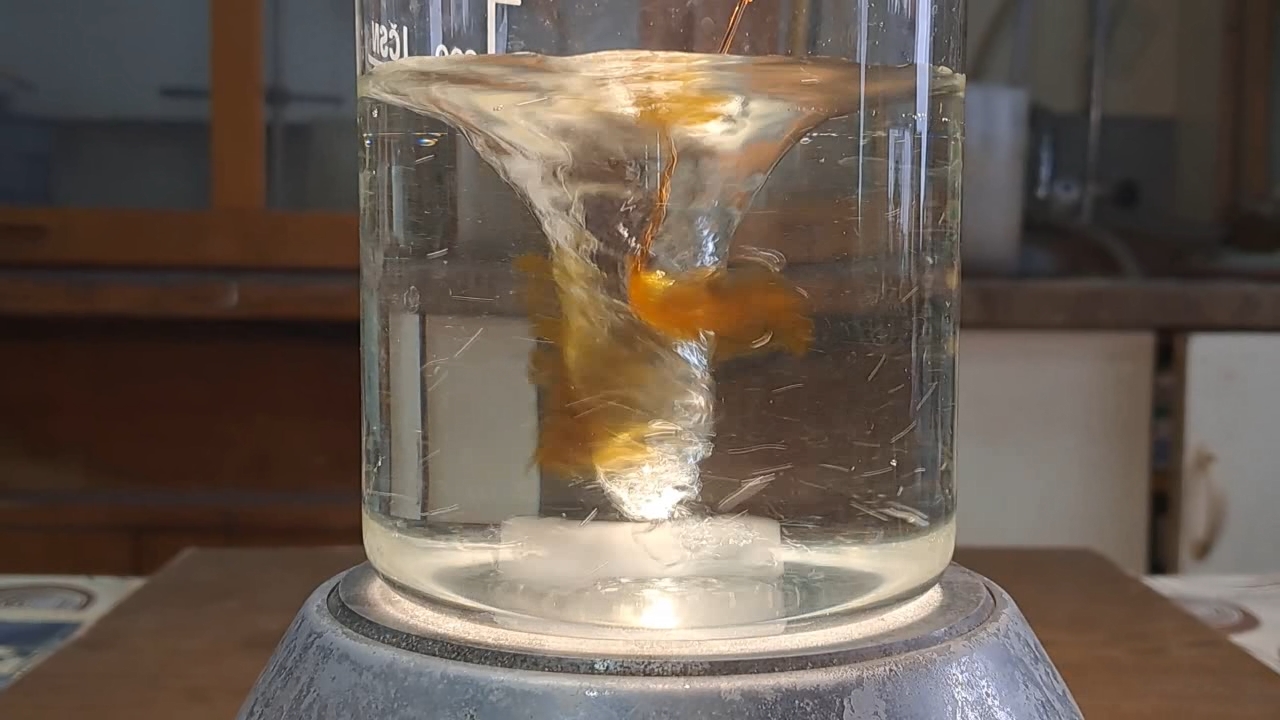
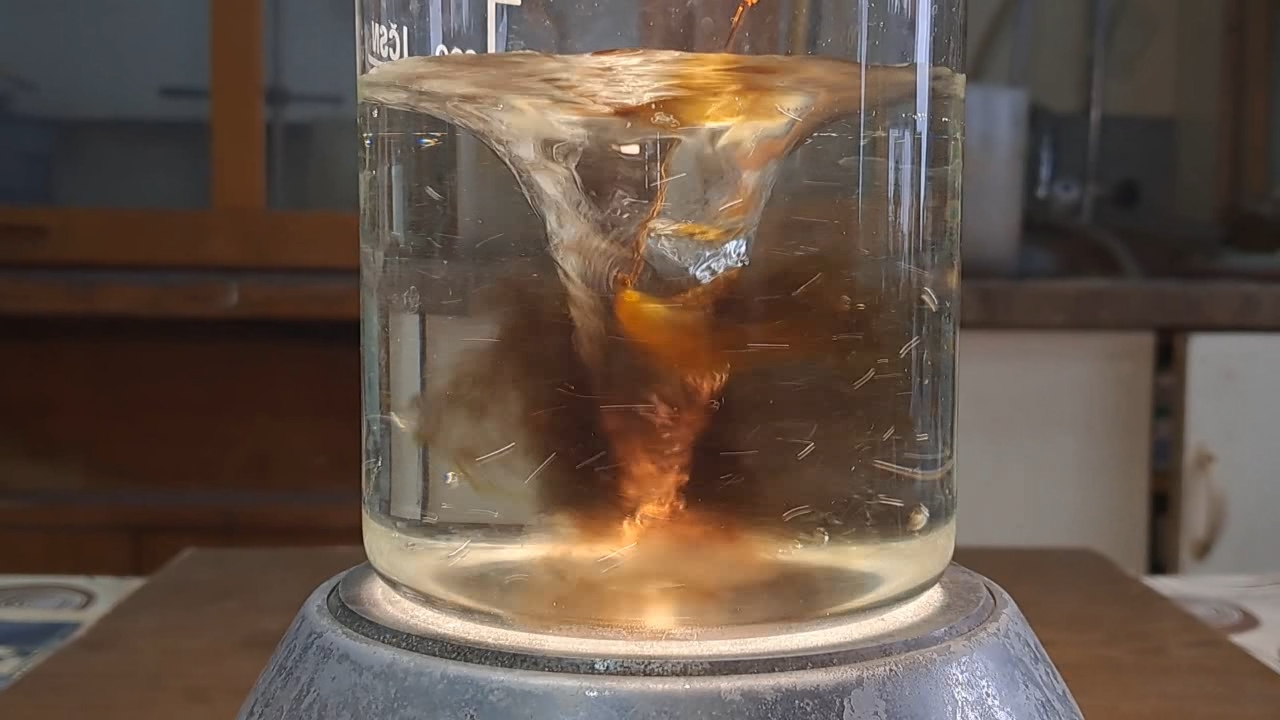
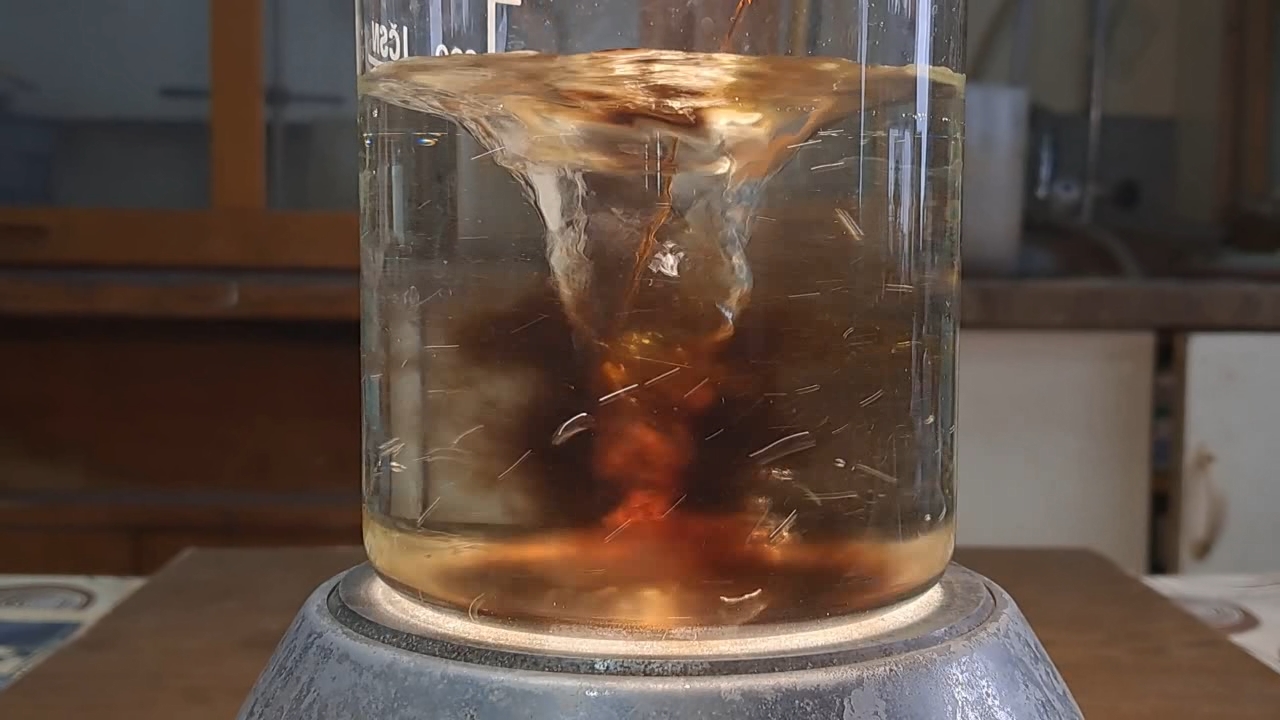
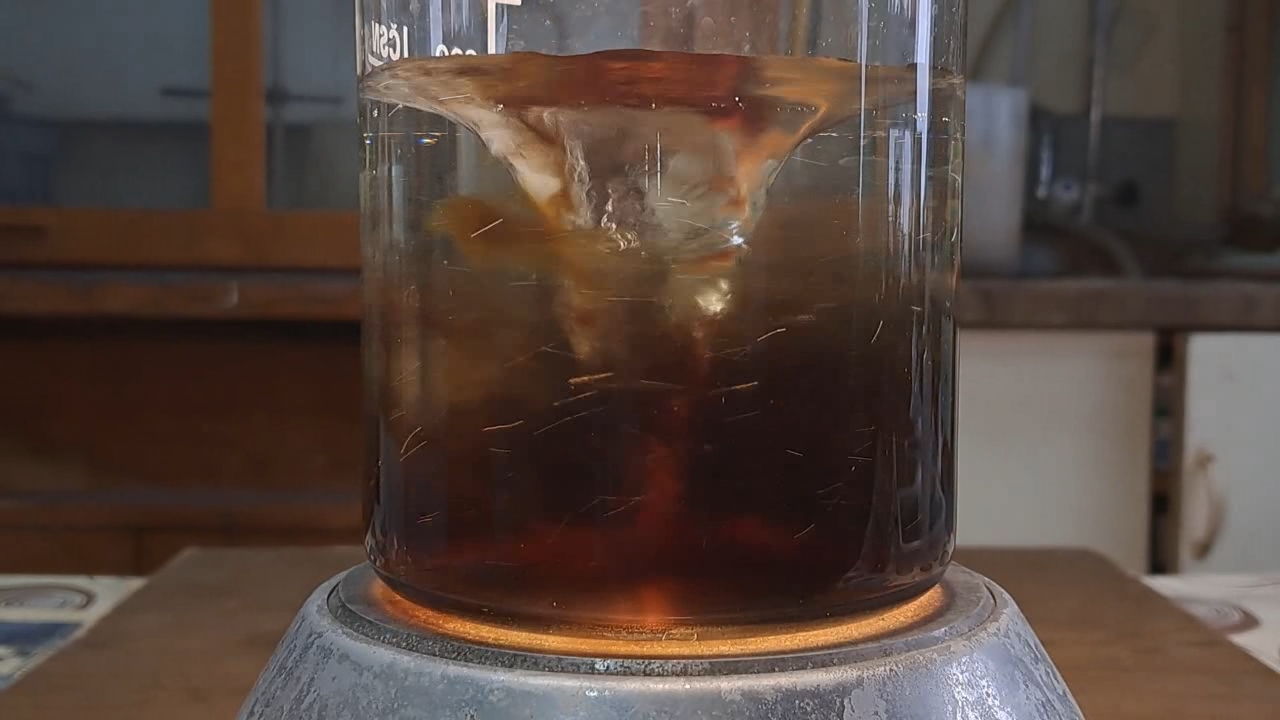
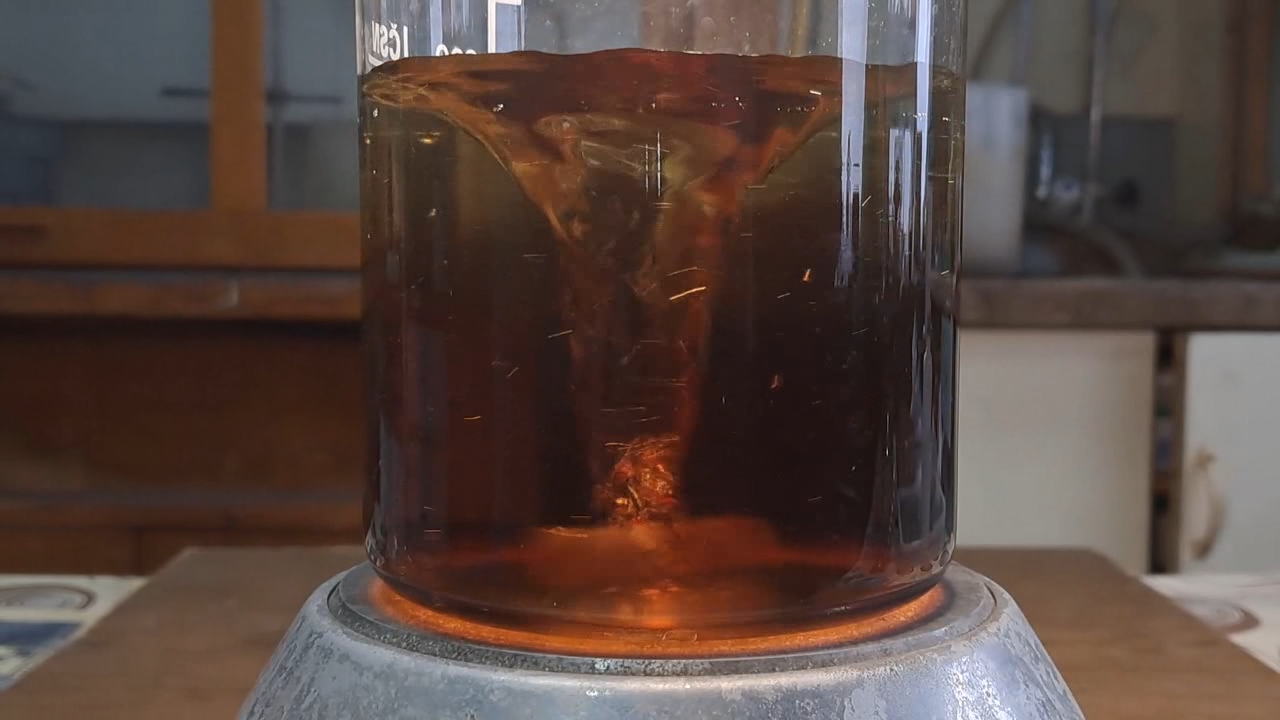
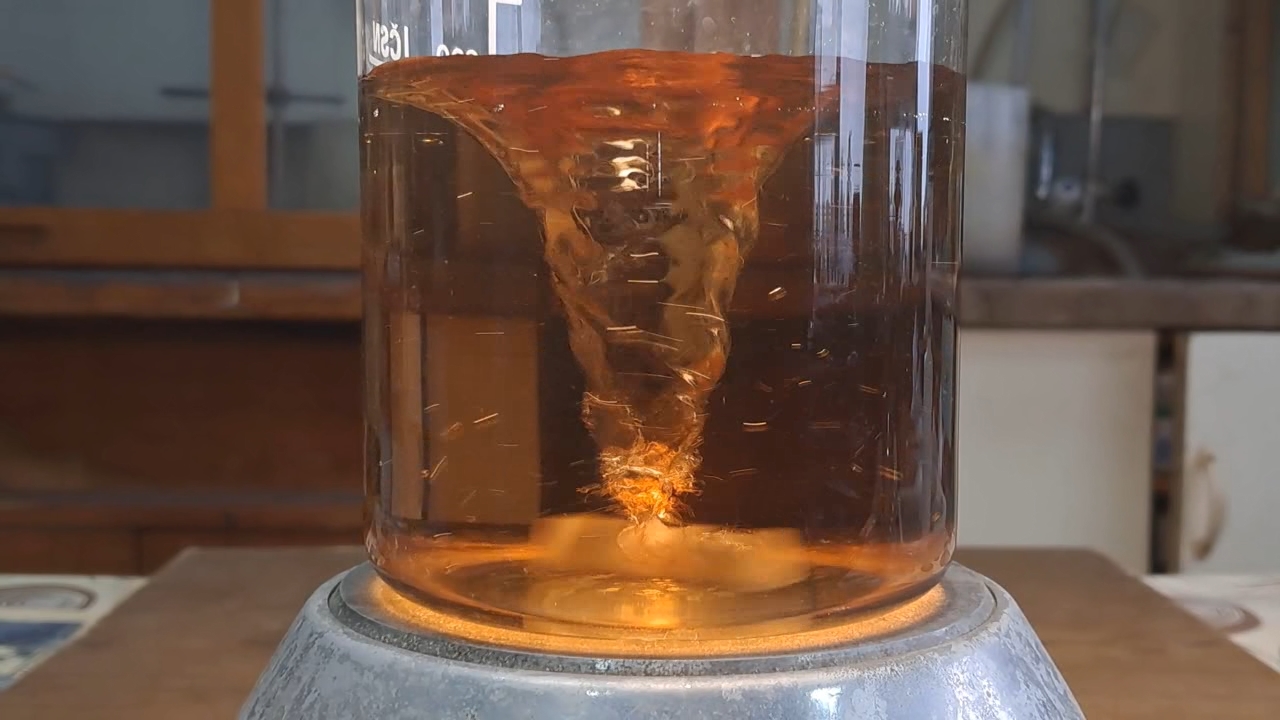
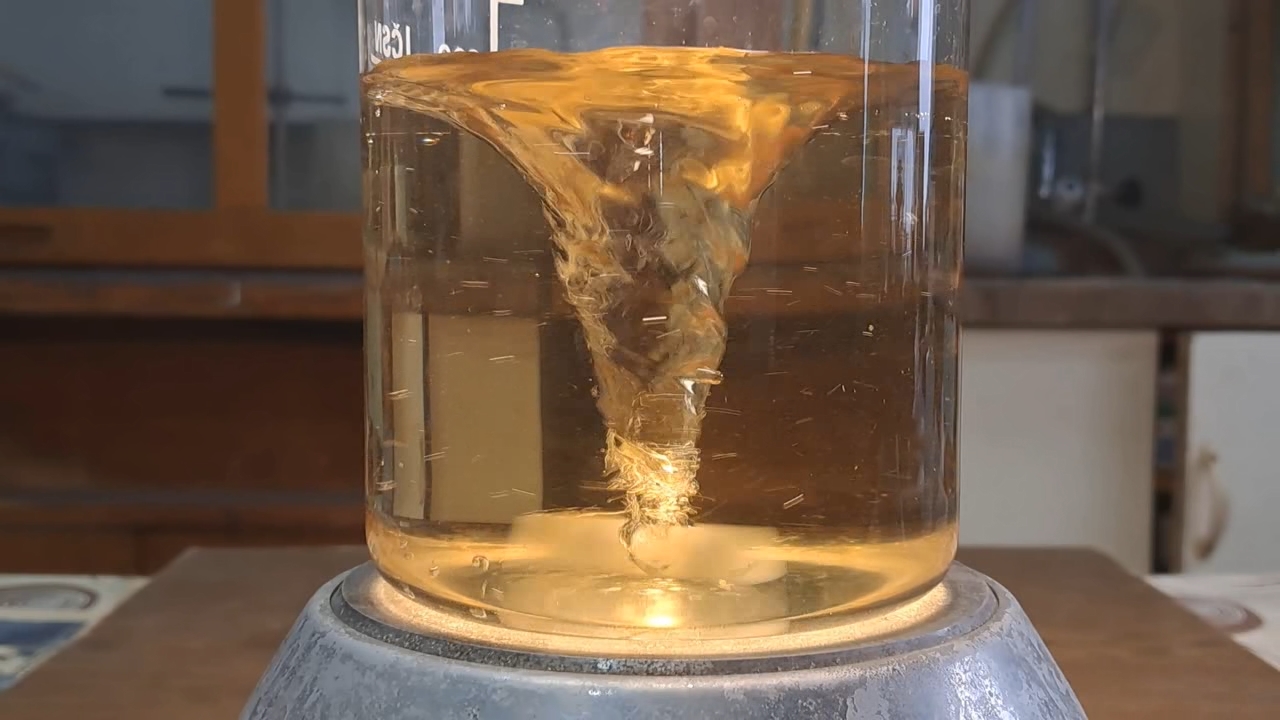
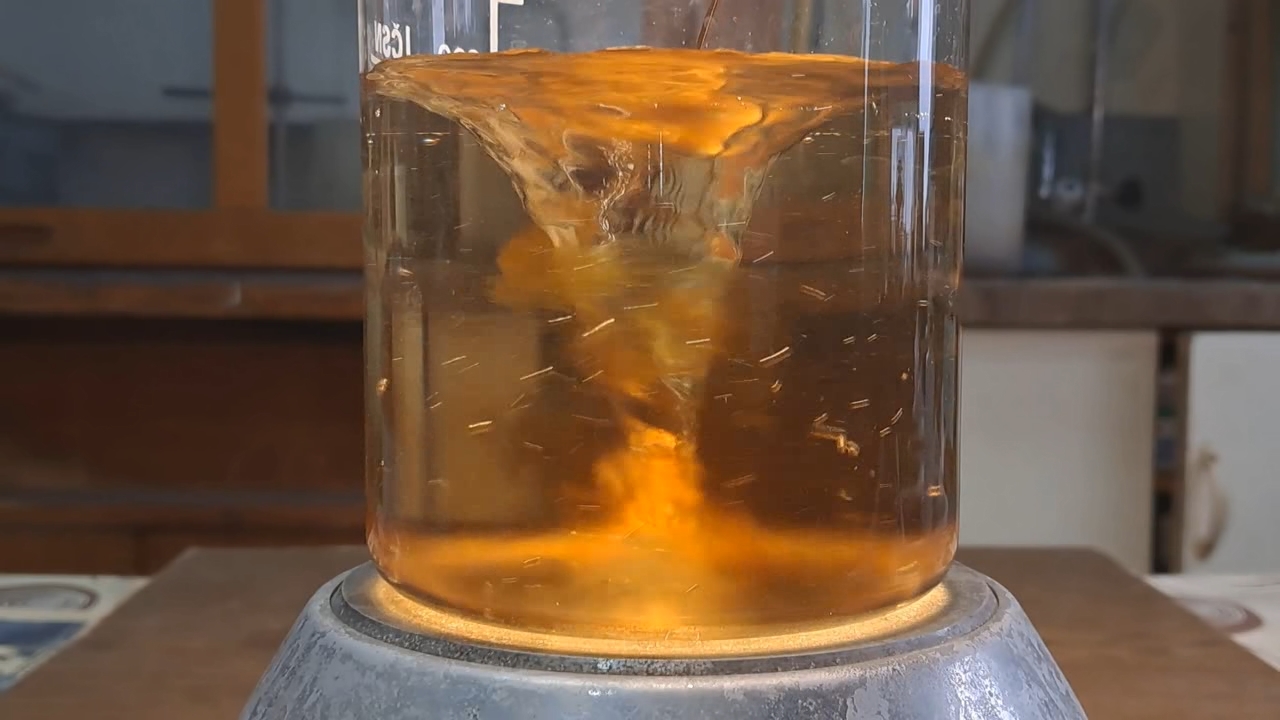
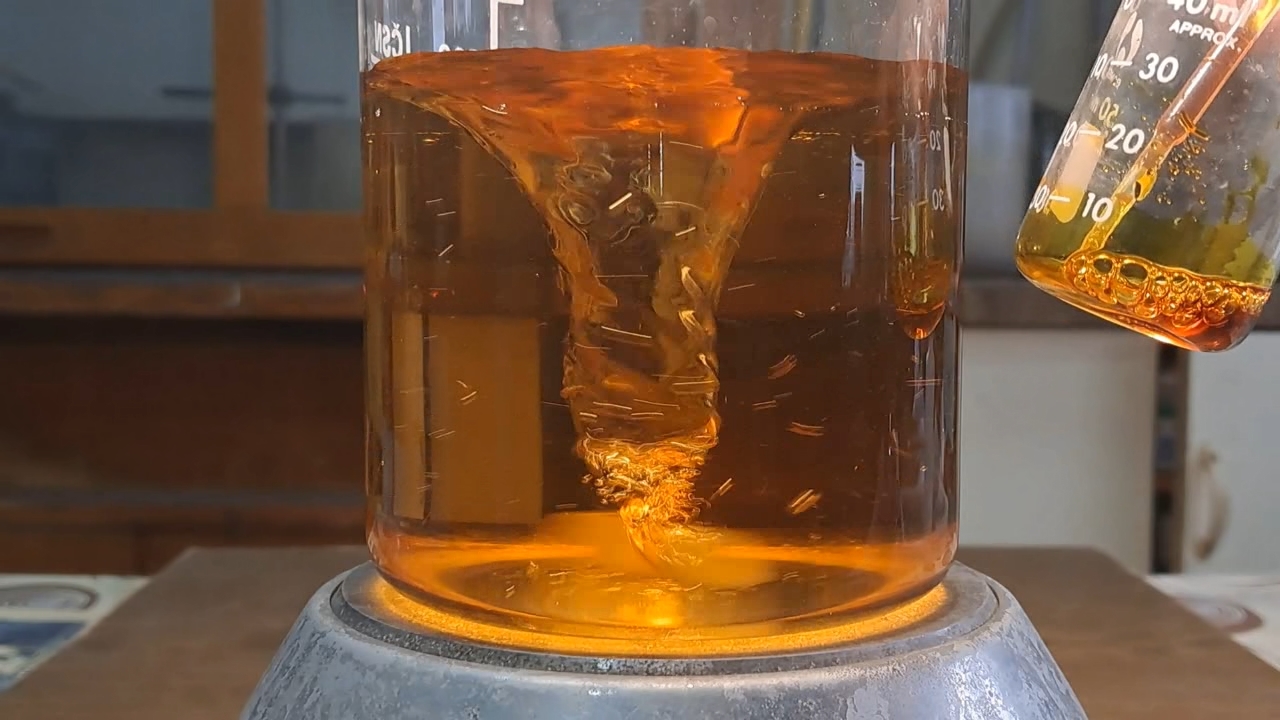
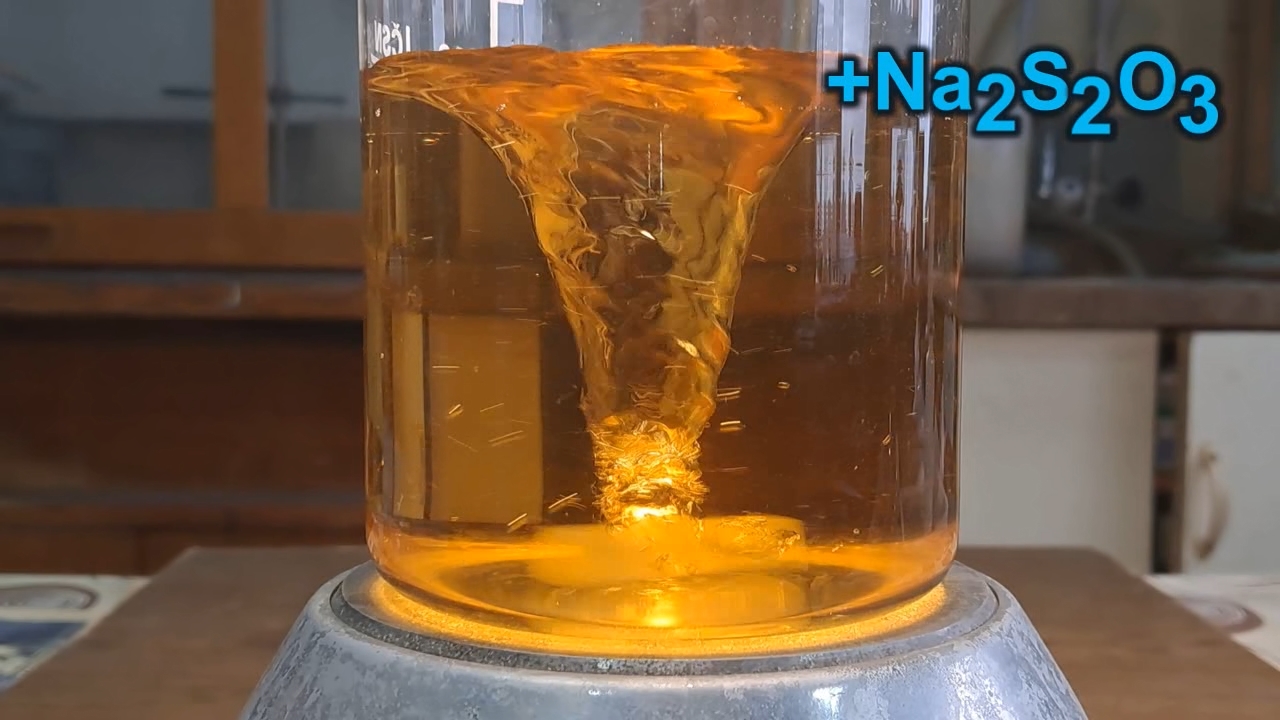
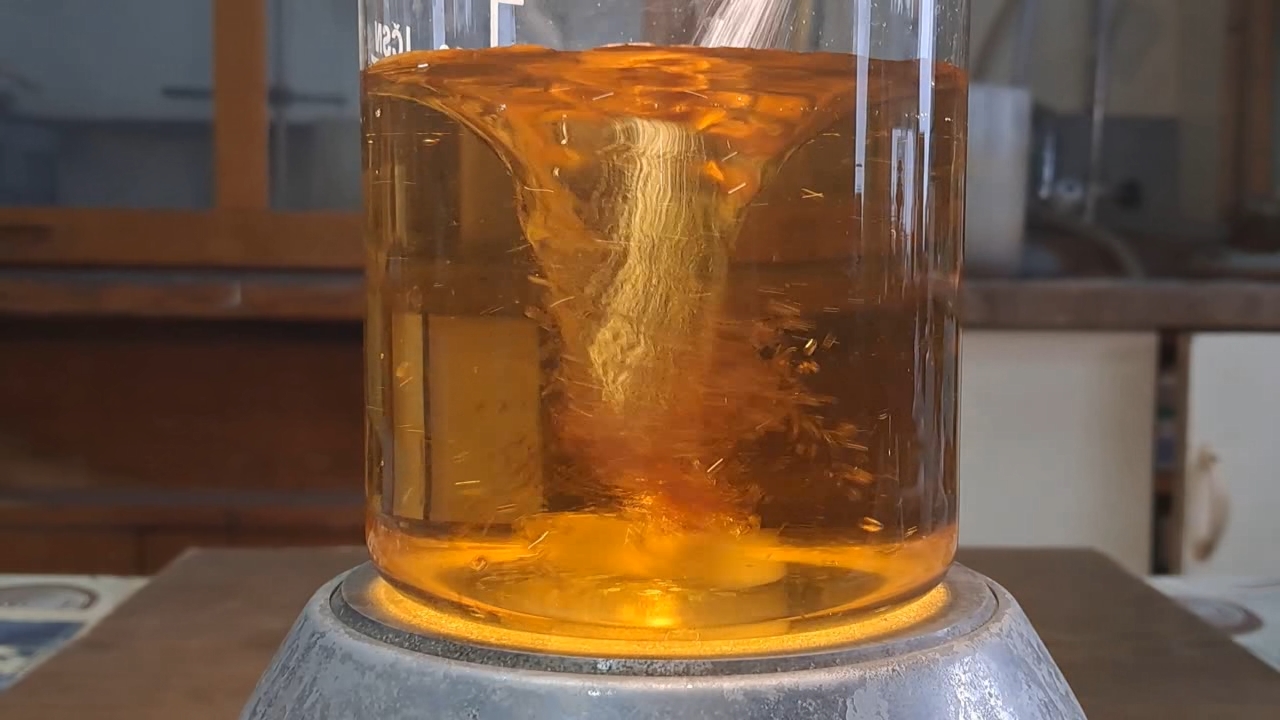
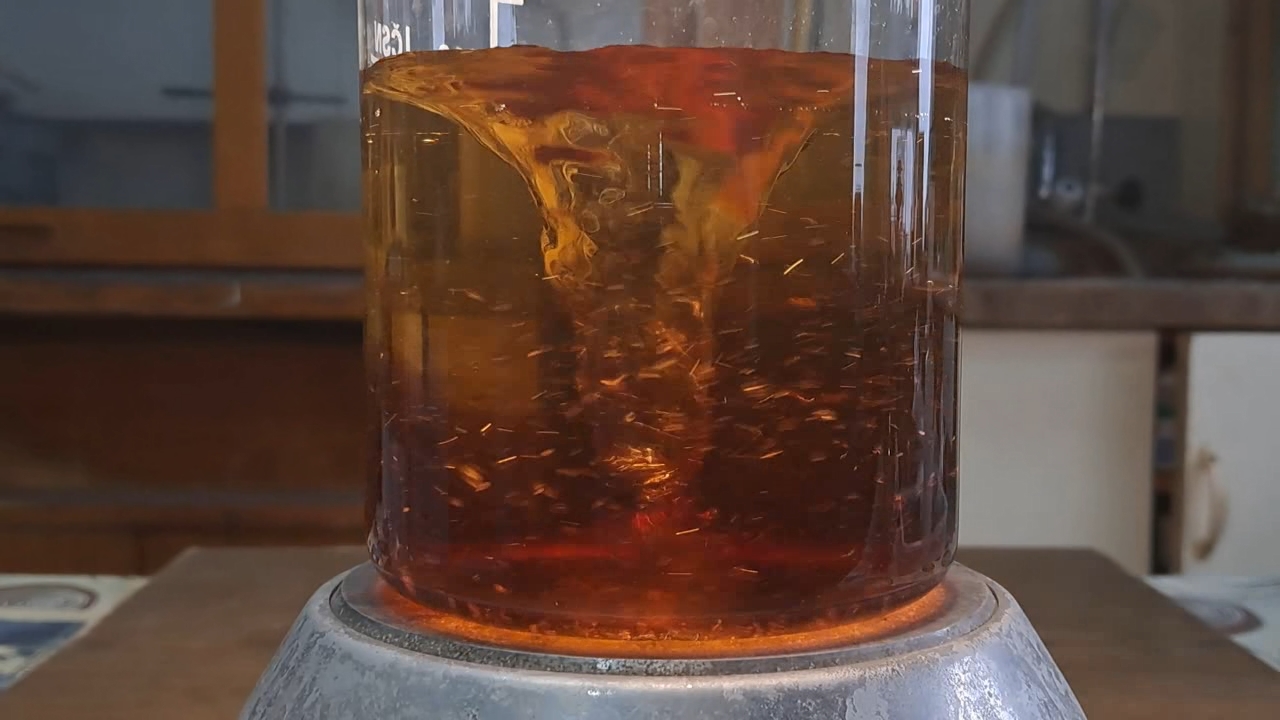
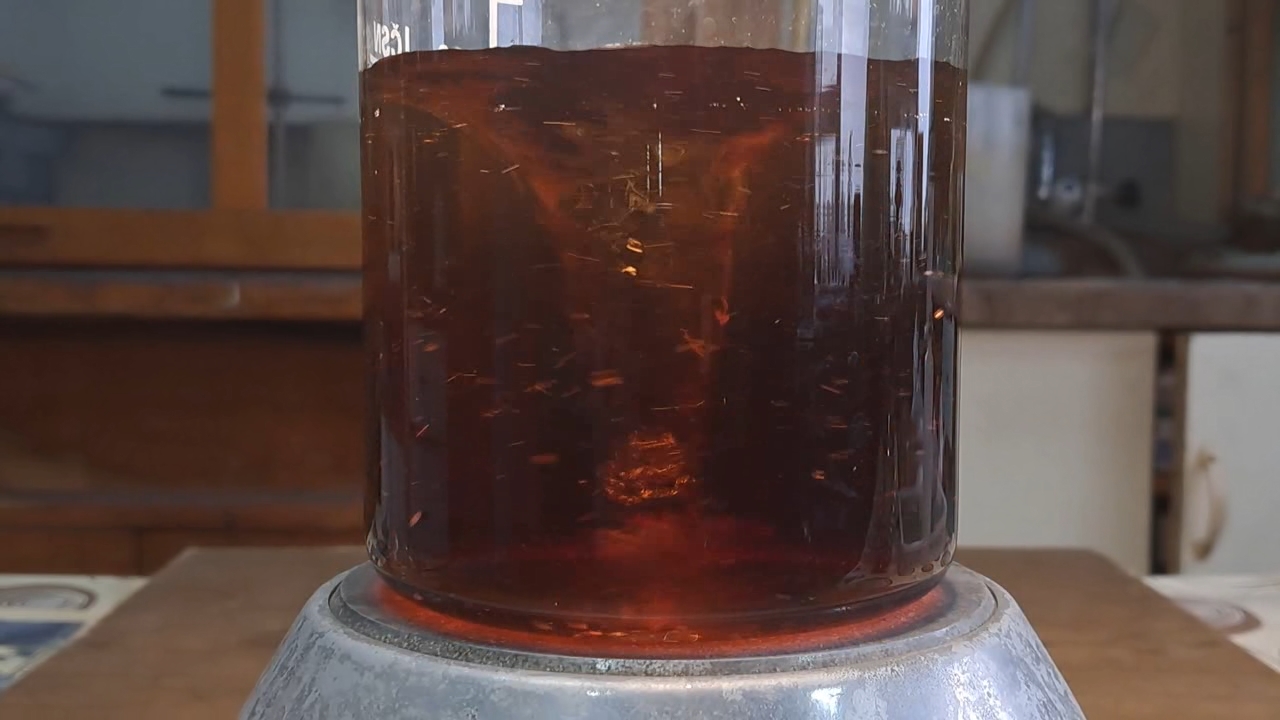
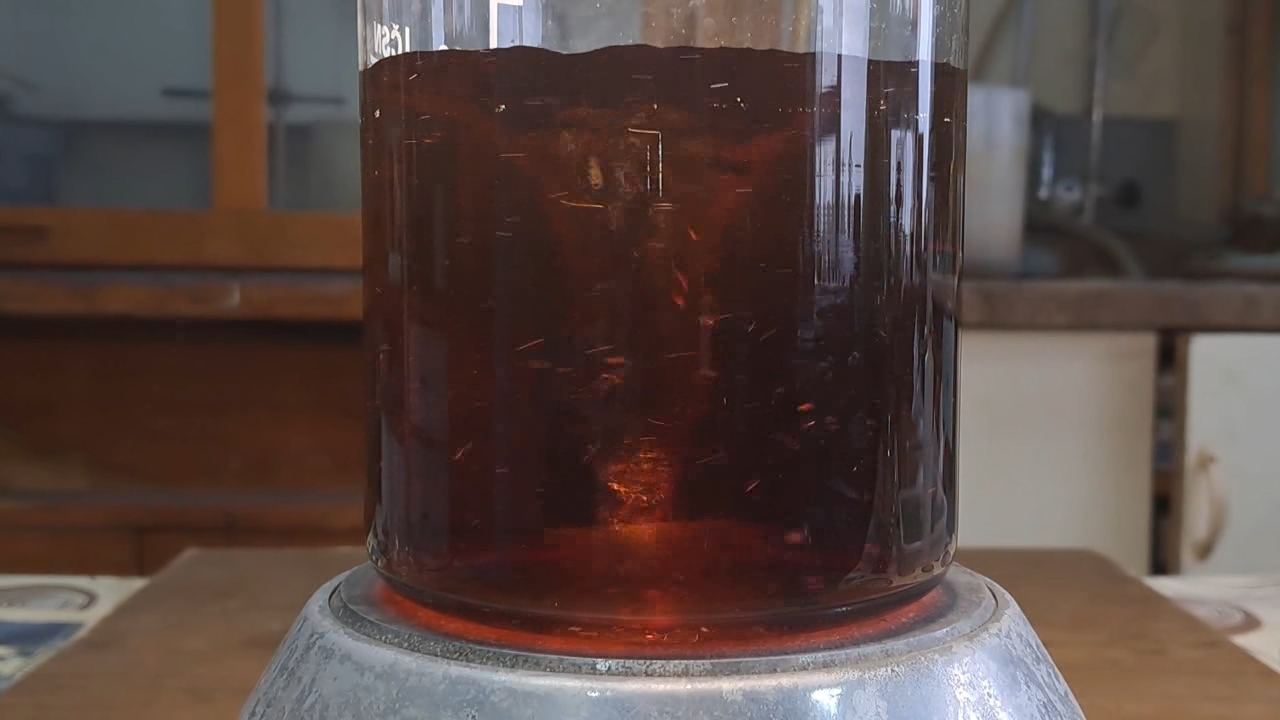
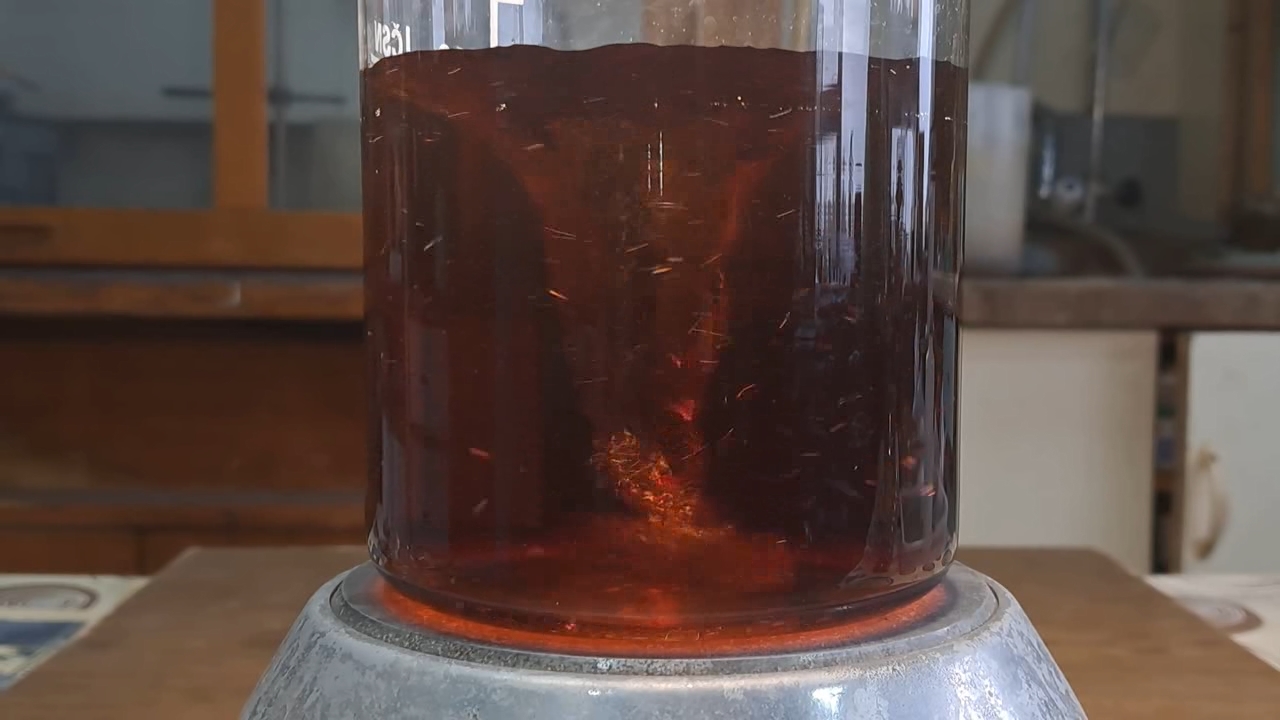
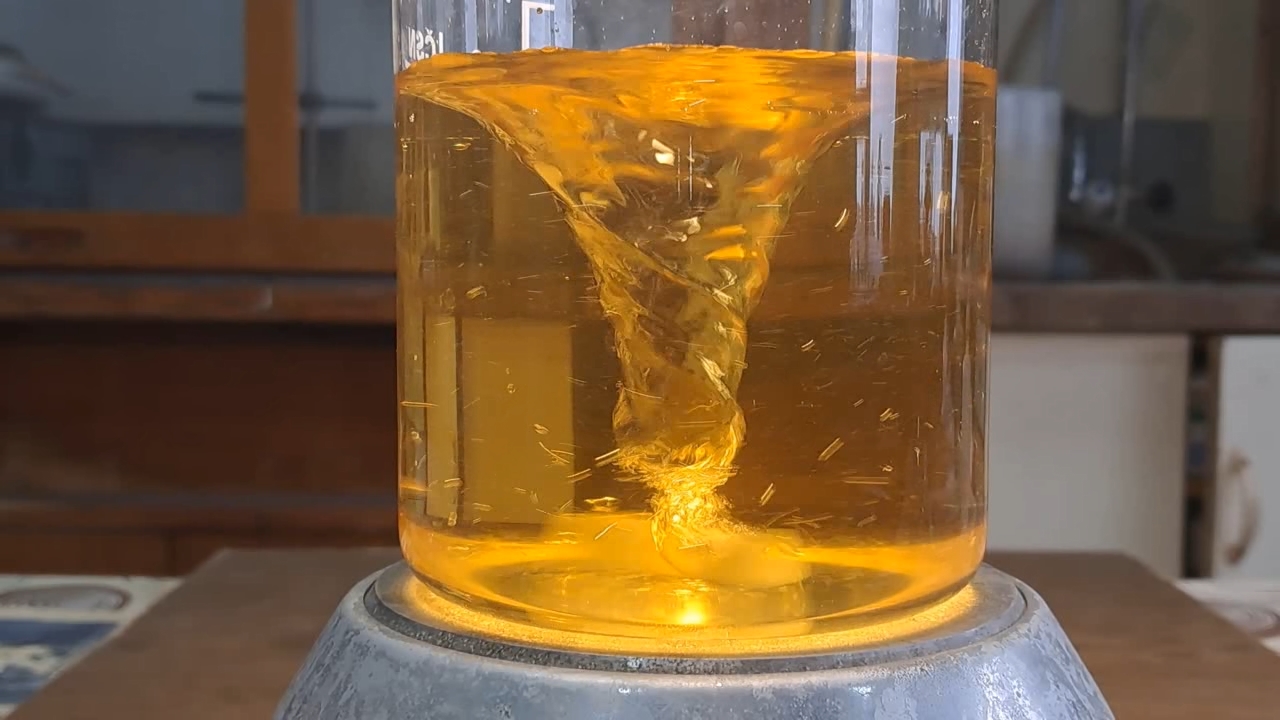
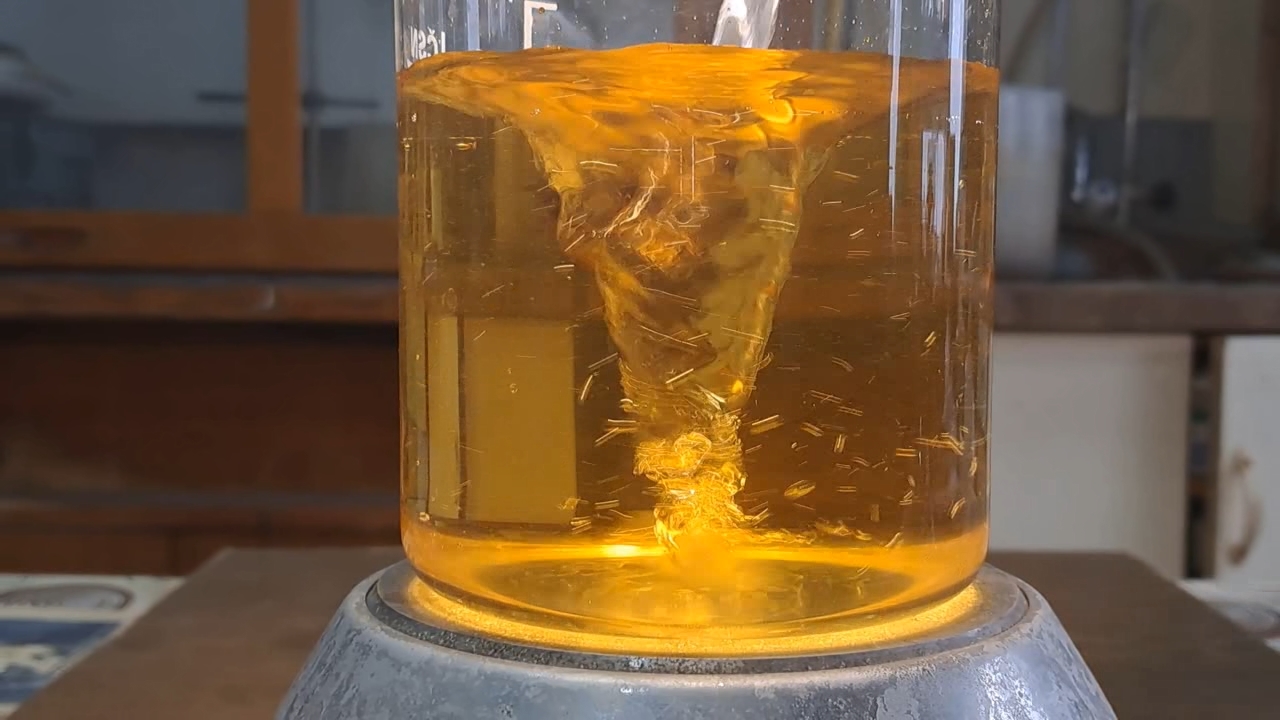
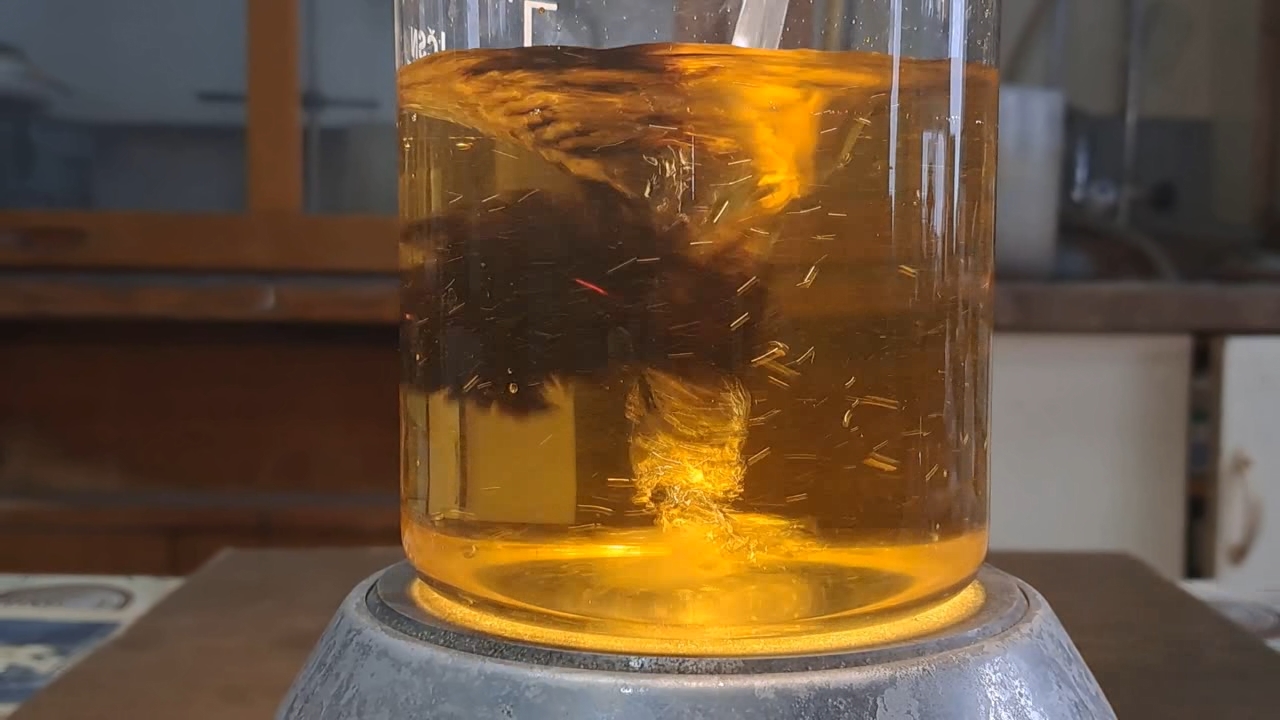
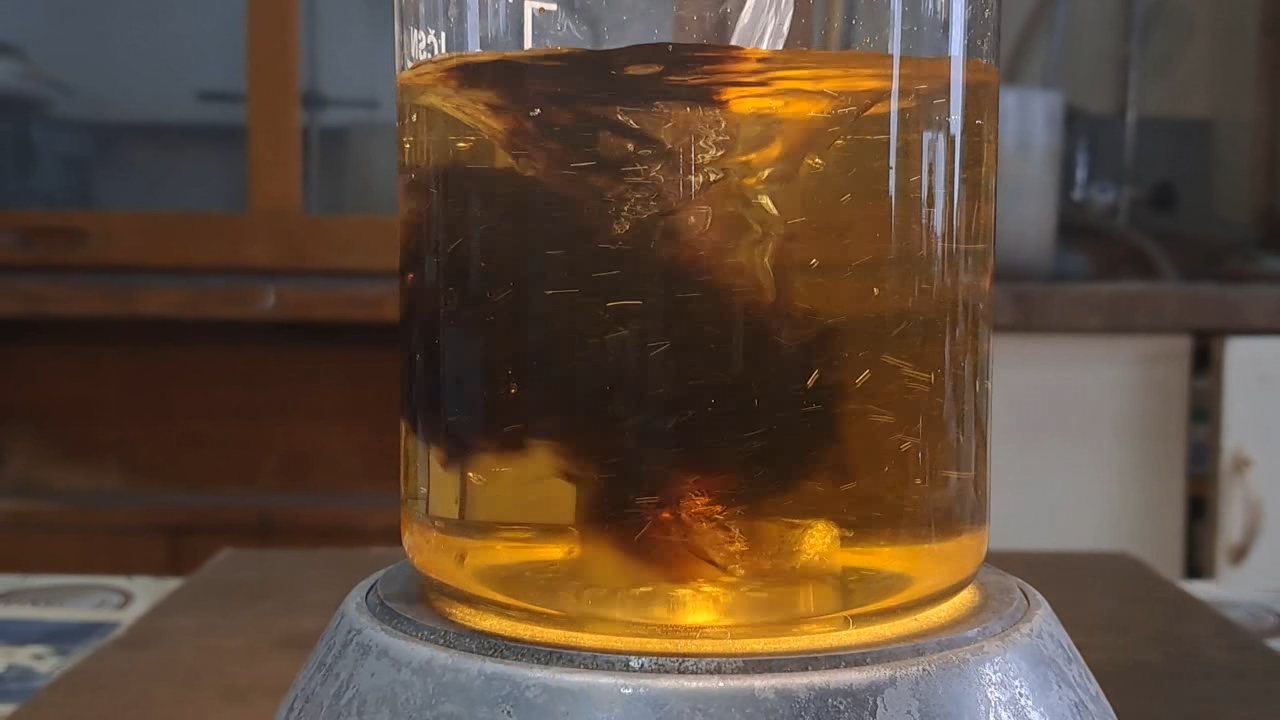
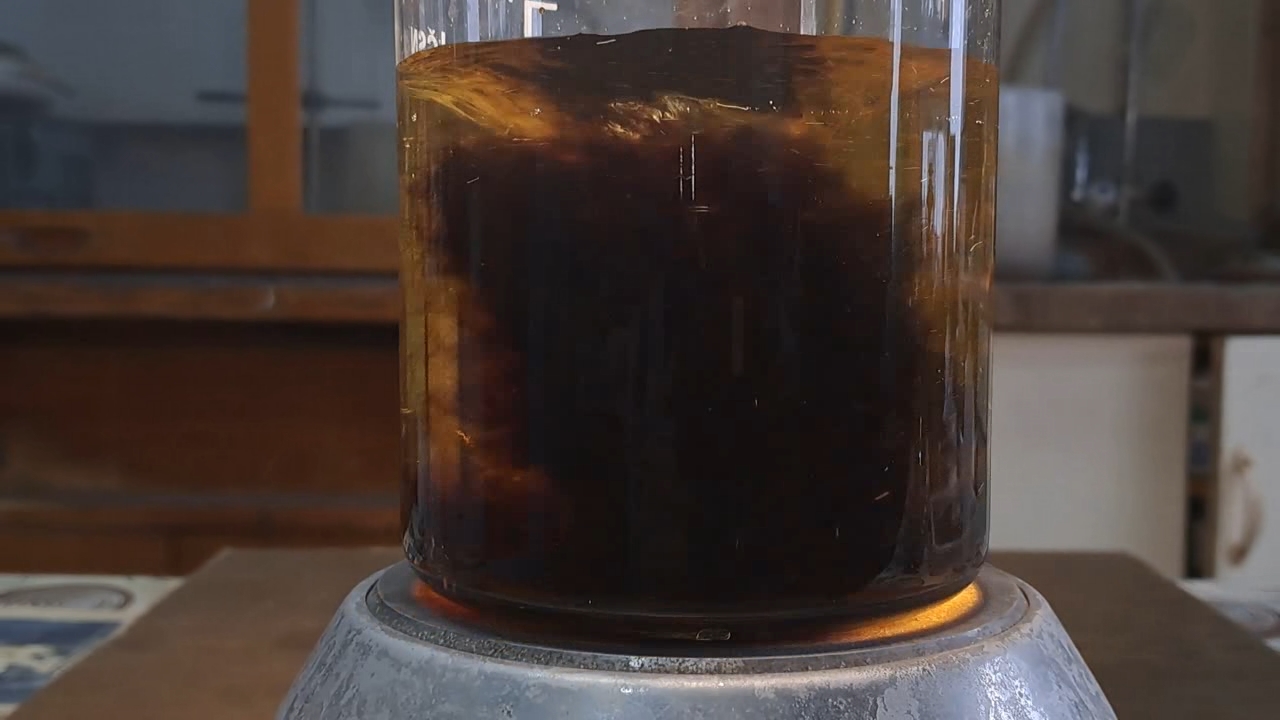
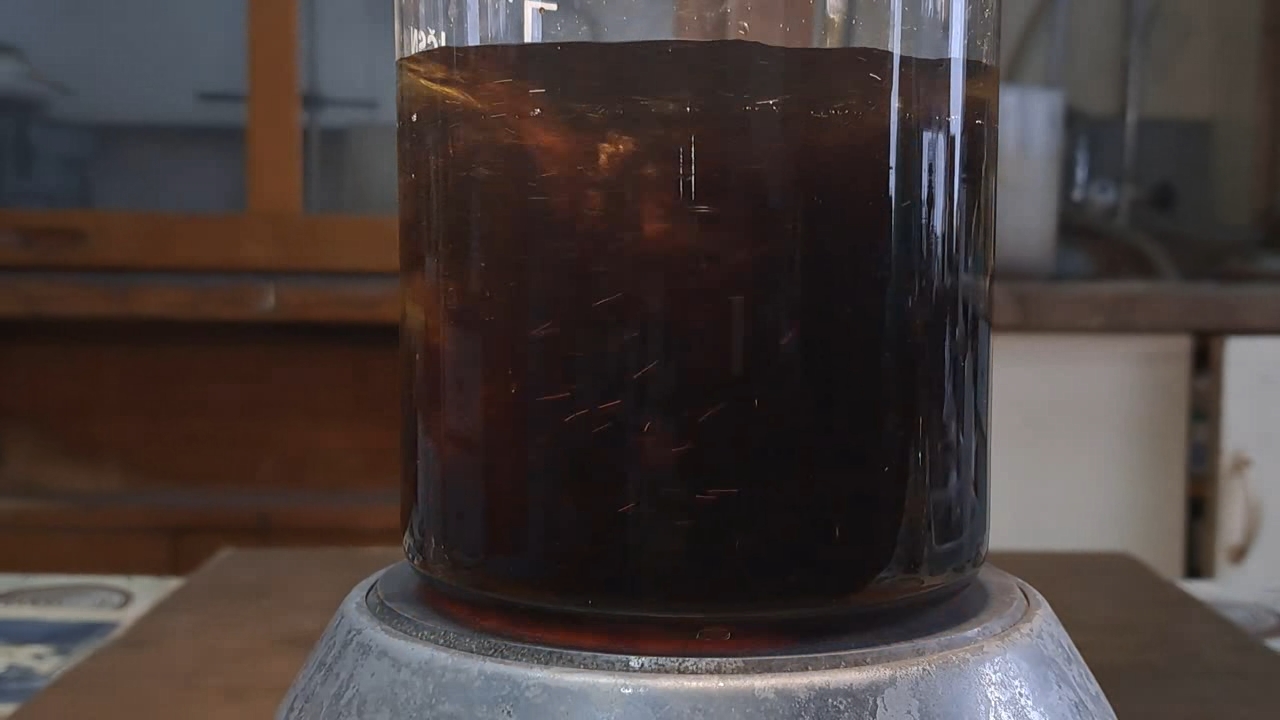
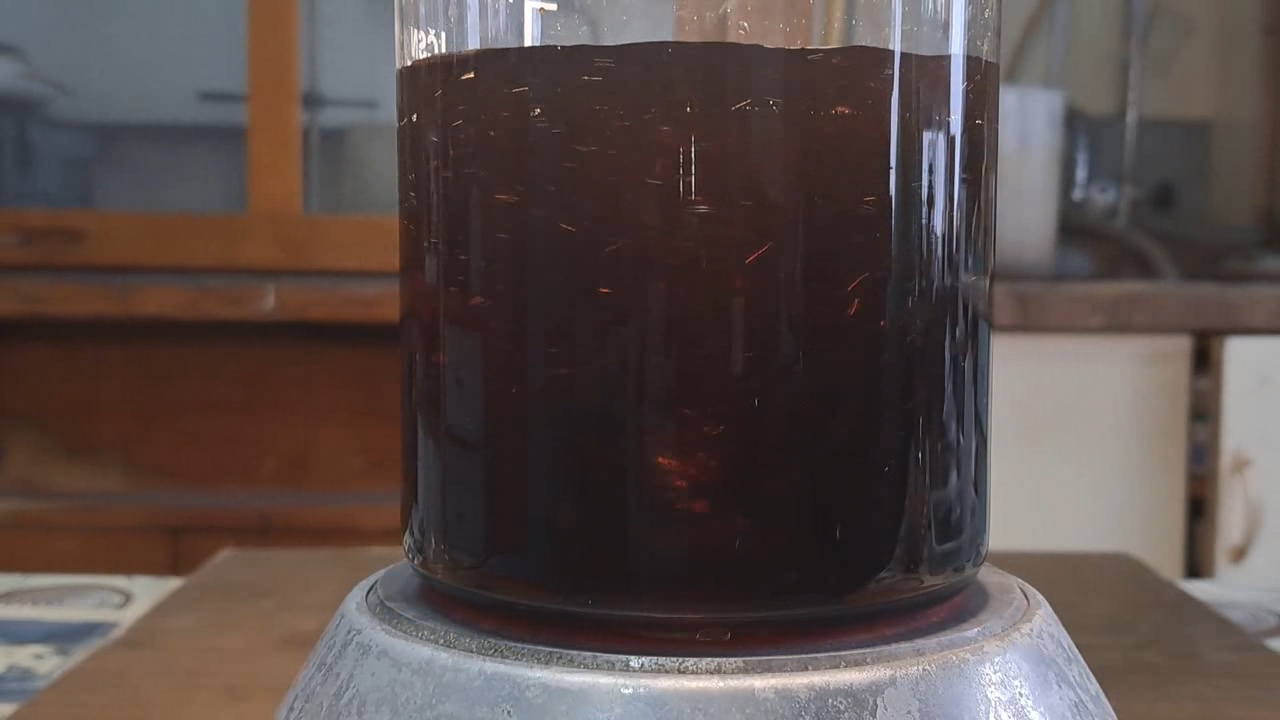
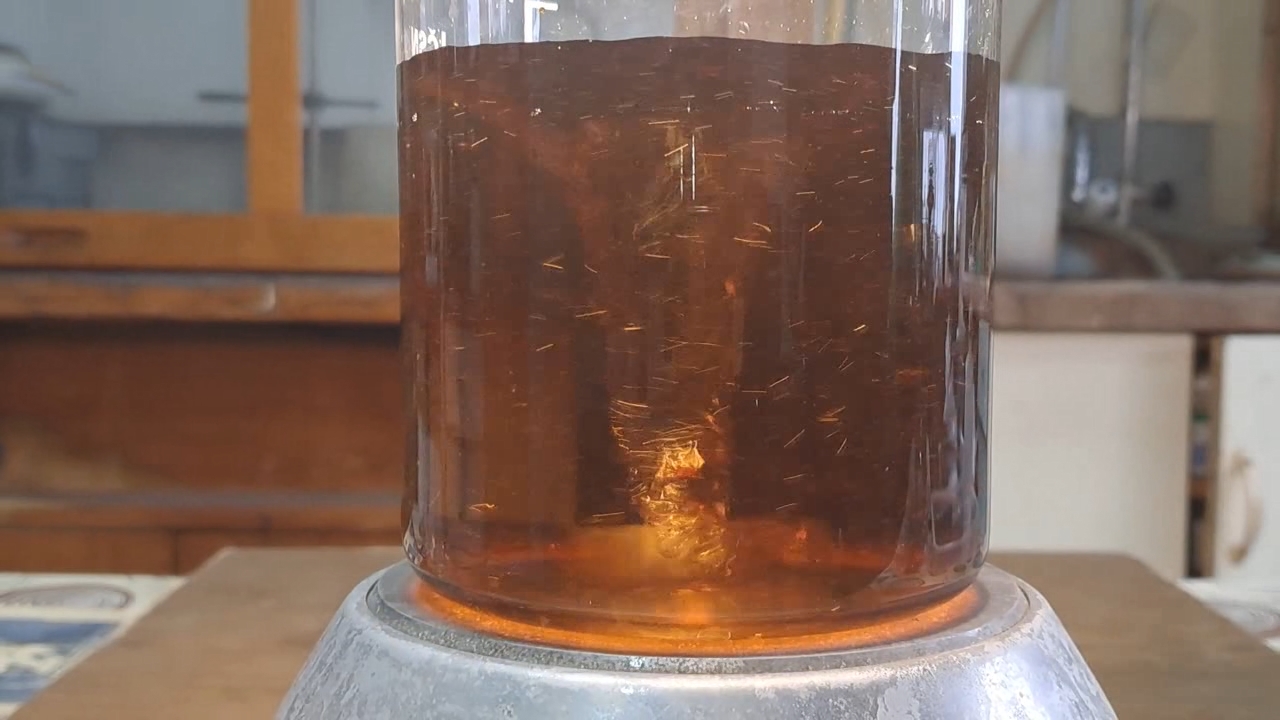
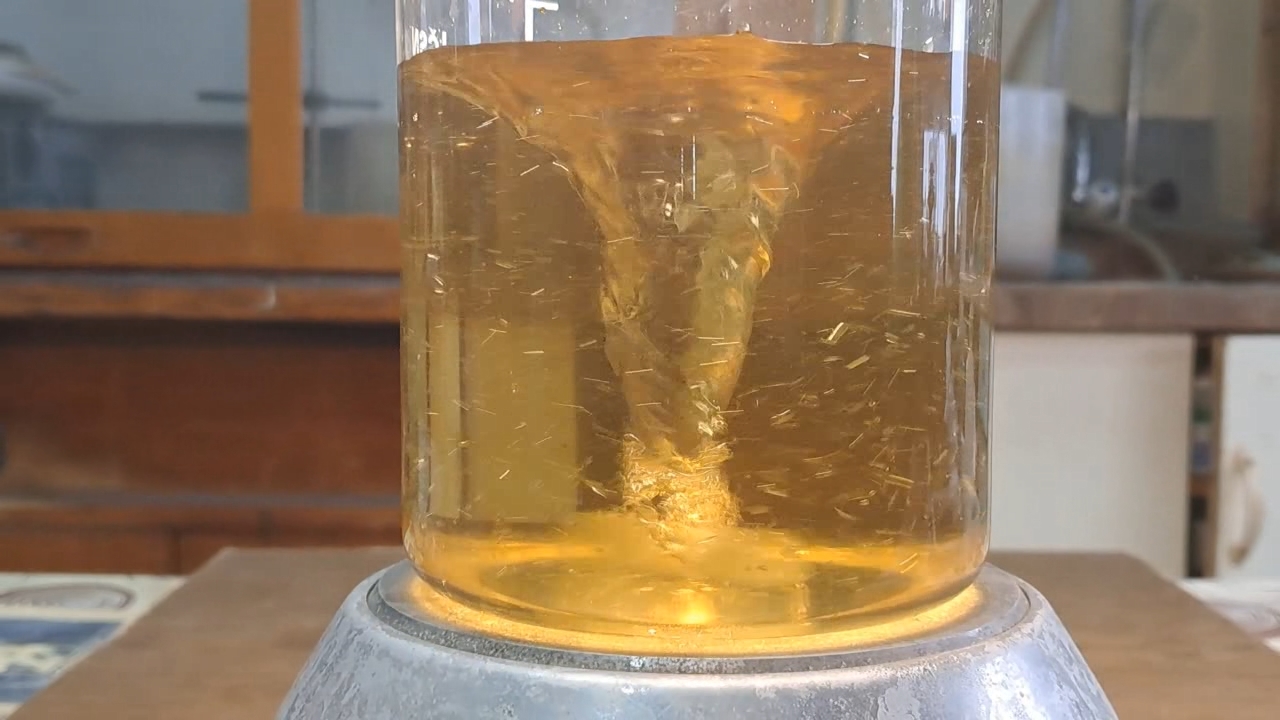
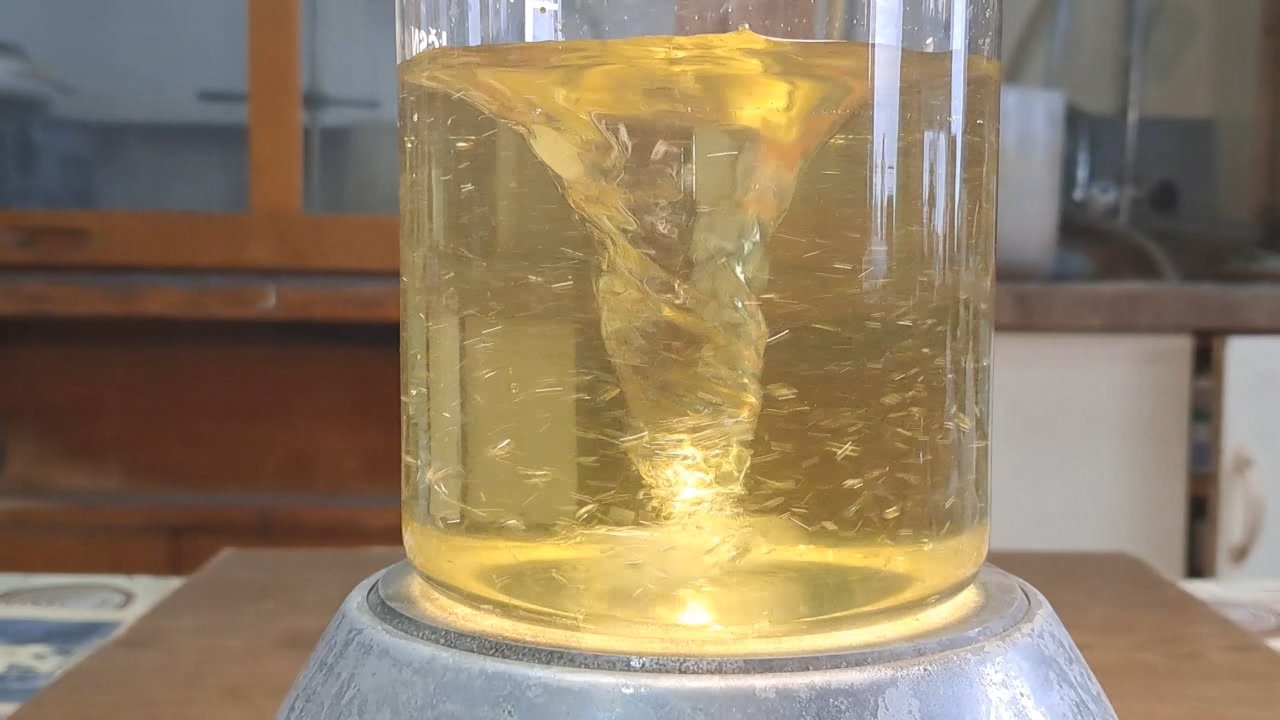
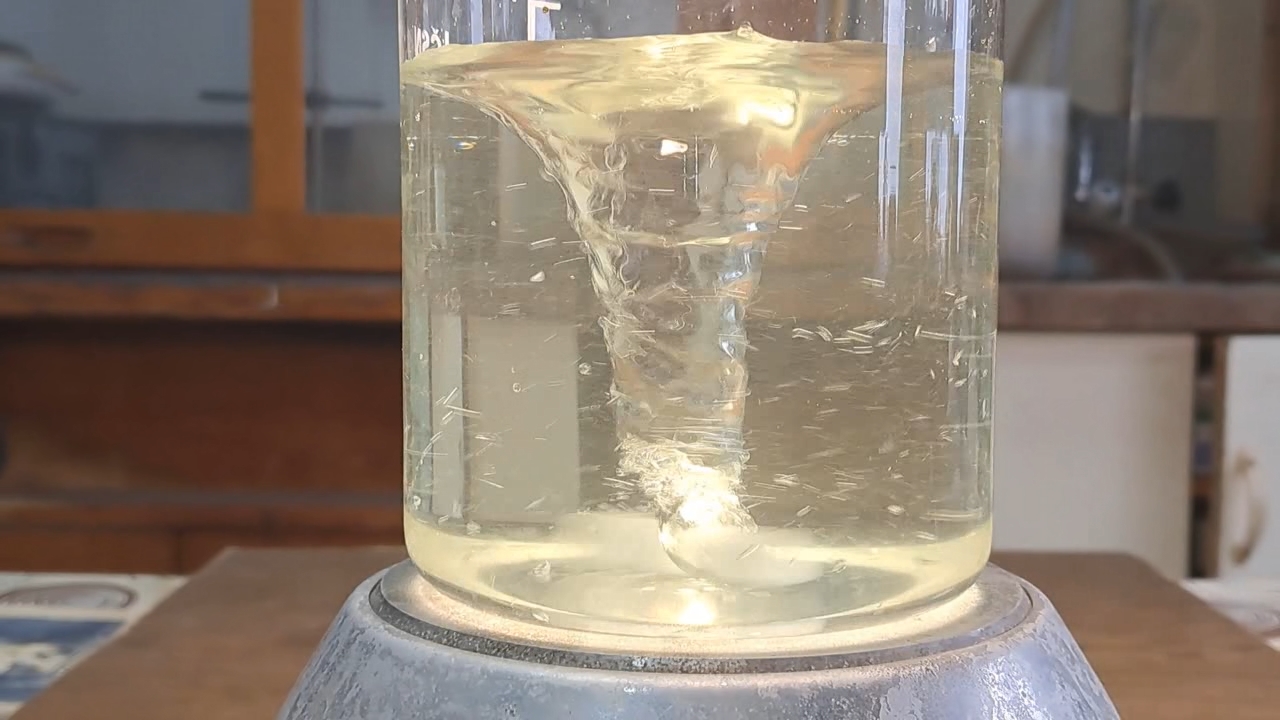
So, let's begin the experiment. I dissolved 2.07 g of sodium thiosulfate in 500 mL of water and turned on the magnetic stirrer. While stirring vigorously, I added several dozen crystals of copper(II) sulfate, followed by the solution of iron(III) chloride. An intense coloration of the complex appeared but disappeared after a few seconds, leaving the solution colorless. In the final moments before the color faded, a greenish tint was visible - the characteristic color of copper(II) compounds. I added another portion of iron(III) chloride. An intense color briefly appeared and then immediately vanished. This time, however, the solution did not become completely colorless but remained light brown. Additional portions of iron(III) no longer produced the intense purple color of the complex; instead, they merely deepened the brown hue caused by excess iron(III) chloride accumulating in the solution. Next, I added solid sodium thiosulfate. A dark purple color appeared, then gradually faded. Despite the presence of the catalyst, the dark coloration persisted for more than ten seconds, as the sodium thiosulfate crystals required time to dissolve. I then dissolved the next portion of thiosulfate in water before adding it to the reaction mixture. A dark color appeared which faded within a couple of seconds. After a few more seconds, the solution was almost colorless. Thus, the addition of Cu(II) ions significantly accelerates the decomposition of the intensely colored Fe(III)-thiosulfate complex. Different sources give different formulas for this complex. For instance, [1] claims its composition as [Fe(S2O3)2(H2O)2]- (aq). However, the book [2] notes that the formula [Fe(S2O3)2]- was proposed by analogy with the silver complex [Ag(S2O3)2]3-. This assumption was made when the composition of the iron(III)-thiosulfate complex could not be determined experimentally due to its rapid decomposition. Unlike iron(III), silver(I) forms a stable complex with thiosulfate. The formation of [Ag(S2O3)2]3- was once widely used in photography to fix film and photographic paper: undecomposed silver halides were dissolved by sodium thiosulfate, forming Na3[Ag(S2O3)2]. After such treatment, the photographic image was no longer destroyed by light exposure. Later, studies of the reaction between Fe3+ and S2O32- under flow conditions showed that the iron-thiosulfate complex actually has the composition: [Fe(S2O3)(H2O)2]+(aq), meaning that it is not a direct analogue of the silver-thiosulfate complex. __________________________________________________ 1 https://edu.rsc.org/experiments/catalysis-of-a-sodium-thiosulfate-and-ironiii-nitrate-reaction/442.article 2 Leenson, I.A. - Odd or Even? Entertaining Stories on Chemistry (1987)/ Леенсон И.А. - Чёт или нечет? Занимательные очерки по химии (1987) [link]. |
|
Реакция тиосульфата с железом (III): медь (II) как катализатор - Часть 5
В предыдущих экспериментах мы наблюдали образование интенсивно окрашенного комплекса тиосульфата с трехвалентным железом. Далее тиосульфат постепенно восстанавливал трехвалентное железо до двухвалентного, что вызывало разрушение комплекса, сопровождающееся исчезновением его темно-пурпурной окраски. В условиях наших экспериментов процесс разложения комплекса длился десятки секунд.
Ионы переходных металлов могут катализировать восстановление Fe(III), ускоряя исчезновение окраски комплекса. Например, в качестве катализатора можно использовать ионы меди (II), которые облегчают восстановление Fe(III) до Fe(II). Важно добавлять минимальное количество катализатора, иначе исчезновение окраски произойдет слишком быстро. Например, источник [1] рекомендует добавлять одну каплю 0.1 M раствора сульфата меди или хлорида кобальта. Лирическое отступление. Возникла проблема - найти сульфат меди (II). Согласно списку реактивов, он лежал на полке внутри лабораторного стола. Визуально я помнил, что сульфат меди находился в маленькой баночке, которая была почти пустой. К счастью, небольшого количества вещества, которое осталось, вполне хватало для эксперимента. Однако, поиски не дали результатов - я куда-то переставил баночку, не внеся коррективы в список. Согласно другому списку, сульфат меди был также в коробке, расположенной на другой полке с реактивами. Достал коробку, открыл, ищу - сульфата меди не обнаружил. Реактив свободно продавался, но покупка заняла бы несколько дней. И тут я случайно обратил внимание на крохотный пакетик возле стенок коробки - в нем и был сульфат меди.
Итак, начнем эксперимент. Растворил 2.07 г тиосульфата натрия в 500 мл воды. Включил магнитную мешалку. При интенсивном перемешивании добавил несколько десятков кристалликов сульфата меди (II). Добавил раствор хлорида железа (III). Появилась интенсивная окраска комплекса, которая через несколько секунд исчезла. Раствор обесцветился. В последние мгновения перед обесцвечиванием наблюдался зеленоватый оттенок (цвет, характерный для соединений меди (II)). Добавил следующую порцию хлорида железа (III). На короткое время появилась интенсивная окраска, которая сразу же исчезла. Однако, в этот раз раствор полностью не обесцветился, а остался светло-коричневым. Новые порции железа (III) уже не вызвали появления интенсивной фиолетовой окраски комплекса. Они только углубляли коричневый цвет, обусловленный хлоридом железа (III). Был достигнут избыток хлорида железа (III) - вещество накапливалось в растворе. Добавил твердый тиосульфат натрия. Появилась темно-пурпурная окраска раствора, которая постепенно исчезала. Несмотря на присутствие катализатора, темная окраска раствора держалась больше десяти секунд, поскольку для растворения кристаллов тиосульфата натрия требовалось время. Следующую порцию тиосульфата сначала растворил в воде, а потом уже добавил в реакционную смесь. Появилась темная окраска, которая за пару секунд исчезала. Еще через несколько секунд раствор почти обесцветился. Таким образом, добавление катиона Cu(II) значительно ускоряет разрушение интенсивно окрашенного комплекса Fe(III) с тиосульфатом. В разных источниках приводятся разные формулы данного комплекса. Например, согласно [1] состав комплекса: [Fe(S2O3)2(H2O)2]- (aq). Однако в книге [2] отмечается, что формула [Fe(S2O3)2]- была принята по аналогии с комплексом серебра [Ag(S2O3)2]3-. Это допущение было сделано во времена, когда состав комплекса железа (III) с тиосульфатом не удавалось установить из-за его быстрого разложения. В отличие от железа (III), серебро (I) образует стабильный комплекс с тиосульфатом. Образование комплекса [Ag(S2O3)2]3- раньше использовалось в фотографии для закрепления фотопленки и фотобумаги. Неразложившиеся галогениды серебра растворялись тиосульфатом натрия, образуя комплекс Na3[Ag(S2O3)2]. После такой обработки изображение, запечатленное на фотографической пленке или бумаге, уже не разрушалось под действием света. Позже исследования реакции Fe3+ с S2O32- в потоке позволили установить, что комплекс железа с тиосульфатом имеет формулу: [Fe(S2O3)(H2O)2]+(aq), другими словами, данный комплекс не является прямым аналогом комплекса серебра с тиосульфатом. |
Reaction of Thiosulfate with Iron(III): Copper(II) as Catalyst |
|
|
|
|
|
|
|
|
|
|
|
|
|
|
|
|
|
|
|
|
|
|
|
|
|
|
|
|
|
|
|
|
|
|
|
|
|
|
|
|
|
|
|
Having noticed a mistake in the text, allocate it and press Ctrl-Enter
Magnetic Stirrer Malfunction and Boiling Water (Lyrical Digression) - Part 6
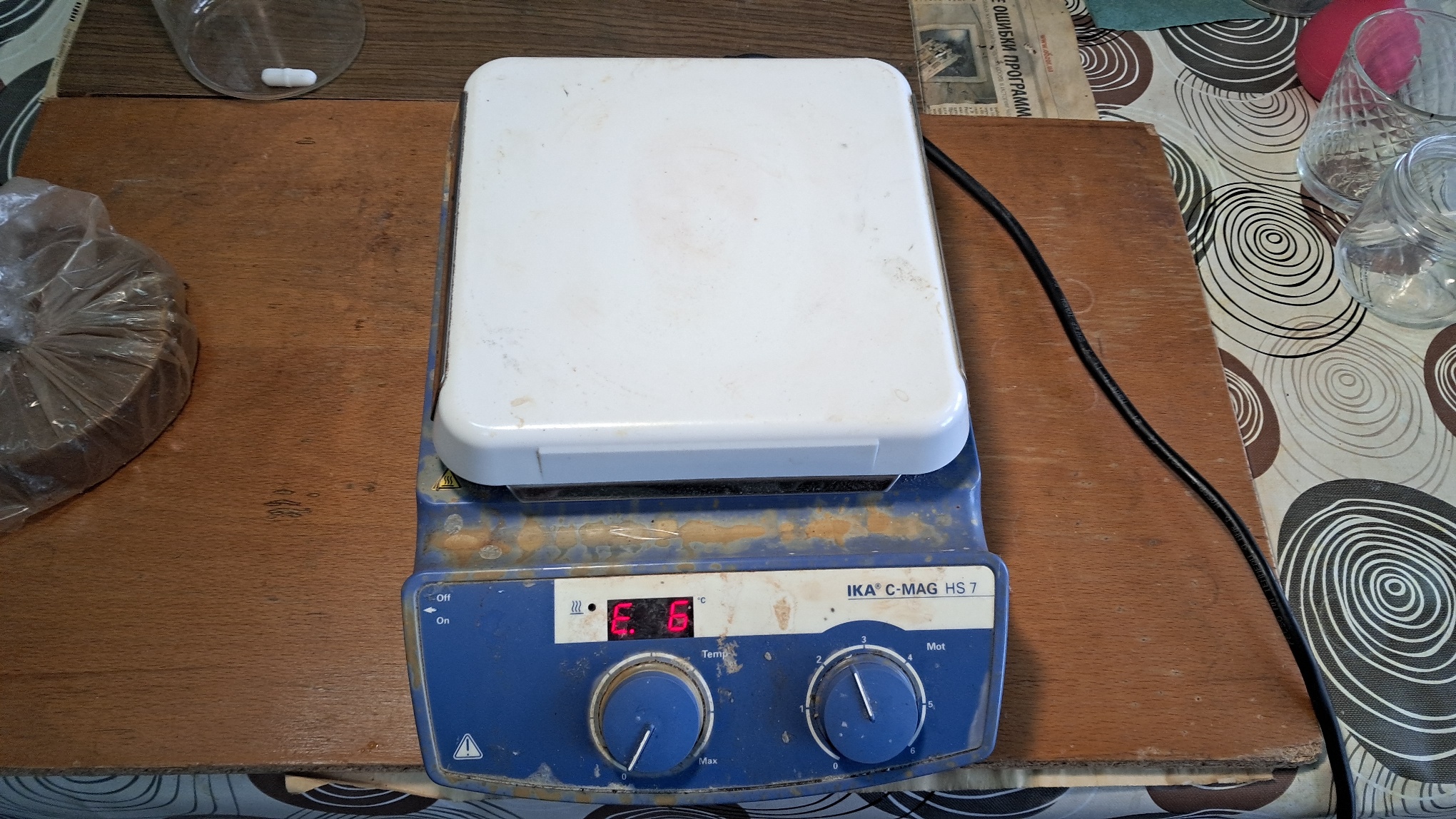
A magnetic stirrer with heating was needed for a chemistry project. A combination of an overhead stirrer and an electric hotplate was not suitable for this purpose. I had a magnetic stirrer with heating, but its design was unreliable: it stirred well, yet its heating function was undesirable. The stirrer's interior was completely unprotected from aggressive liquids, so the device could easily fail when the heating was turned on.
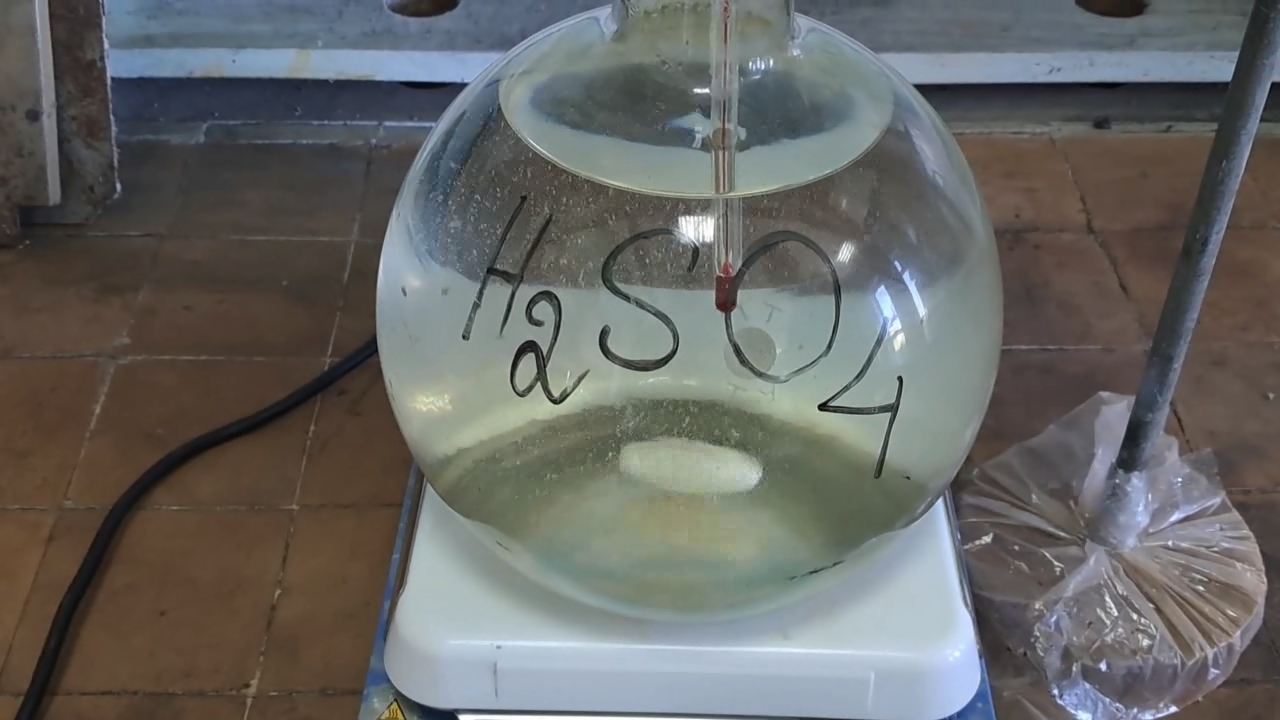
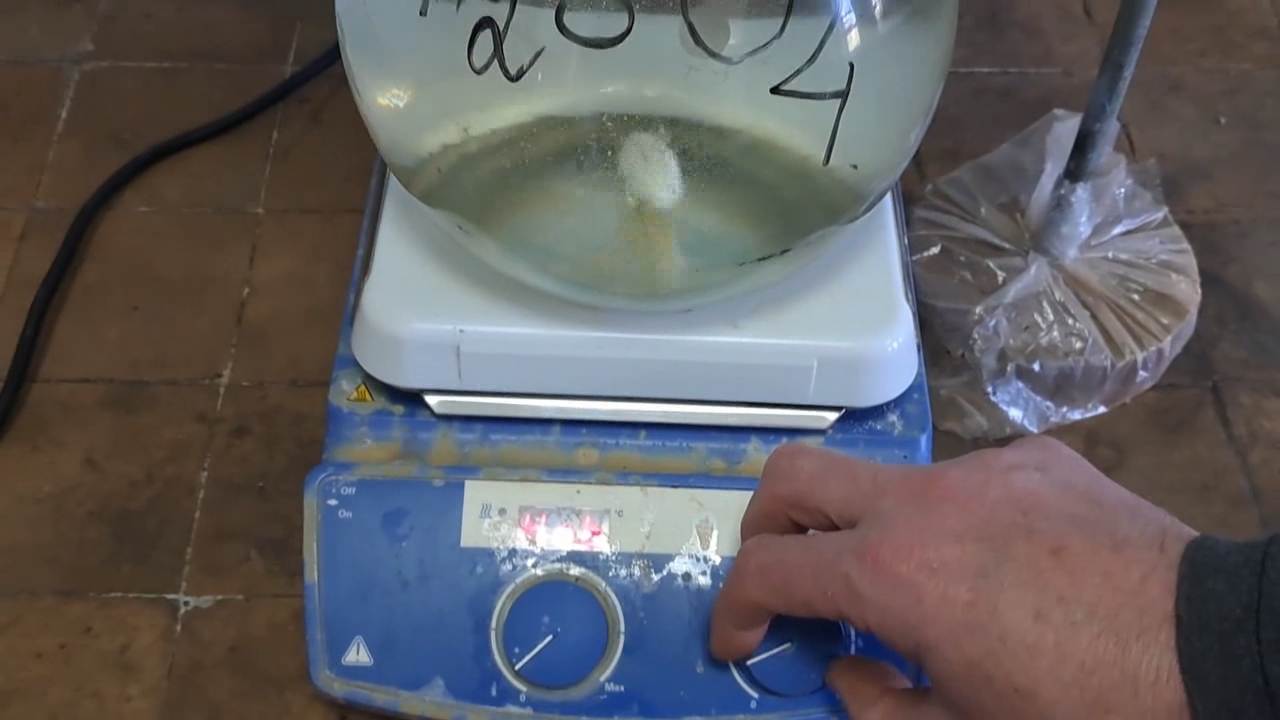
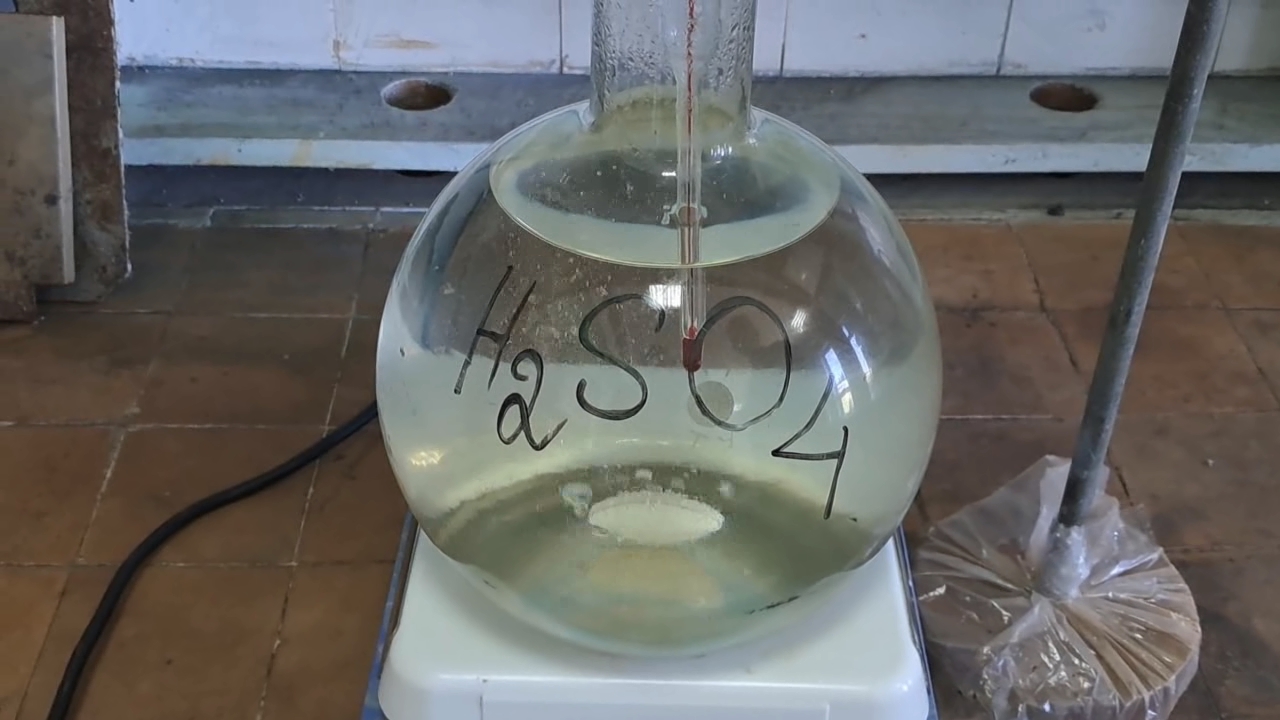
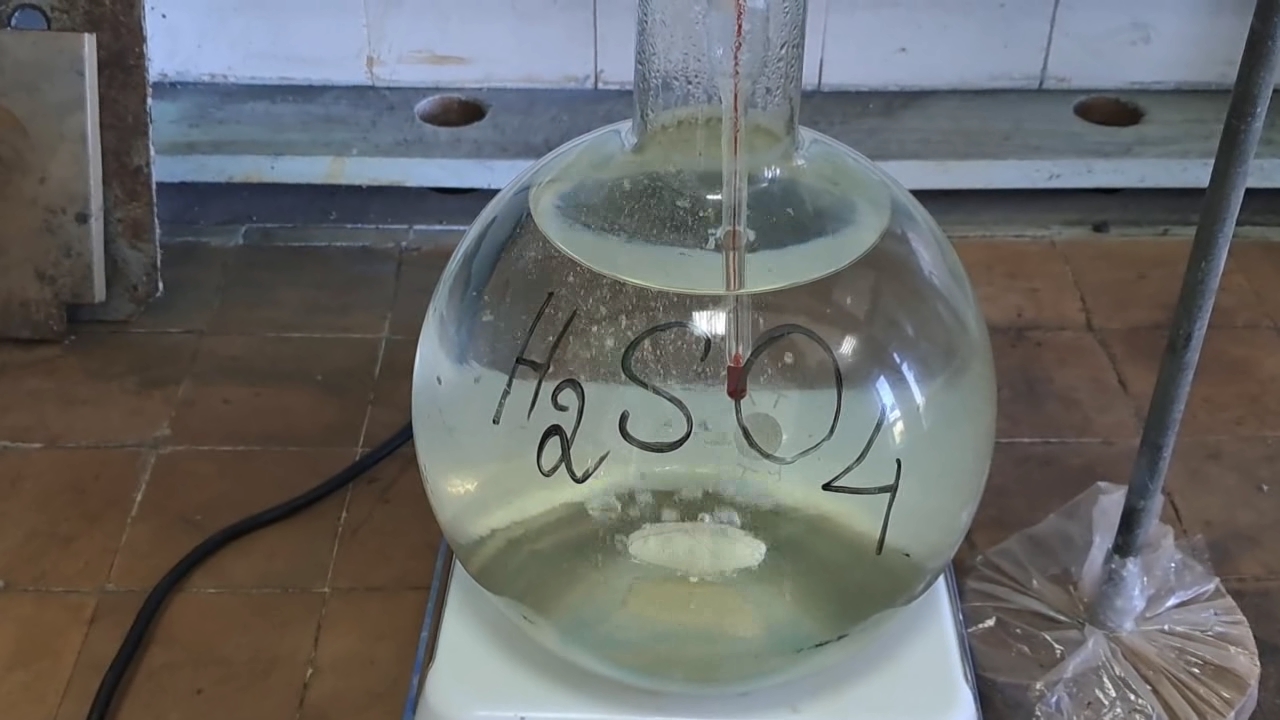
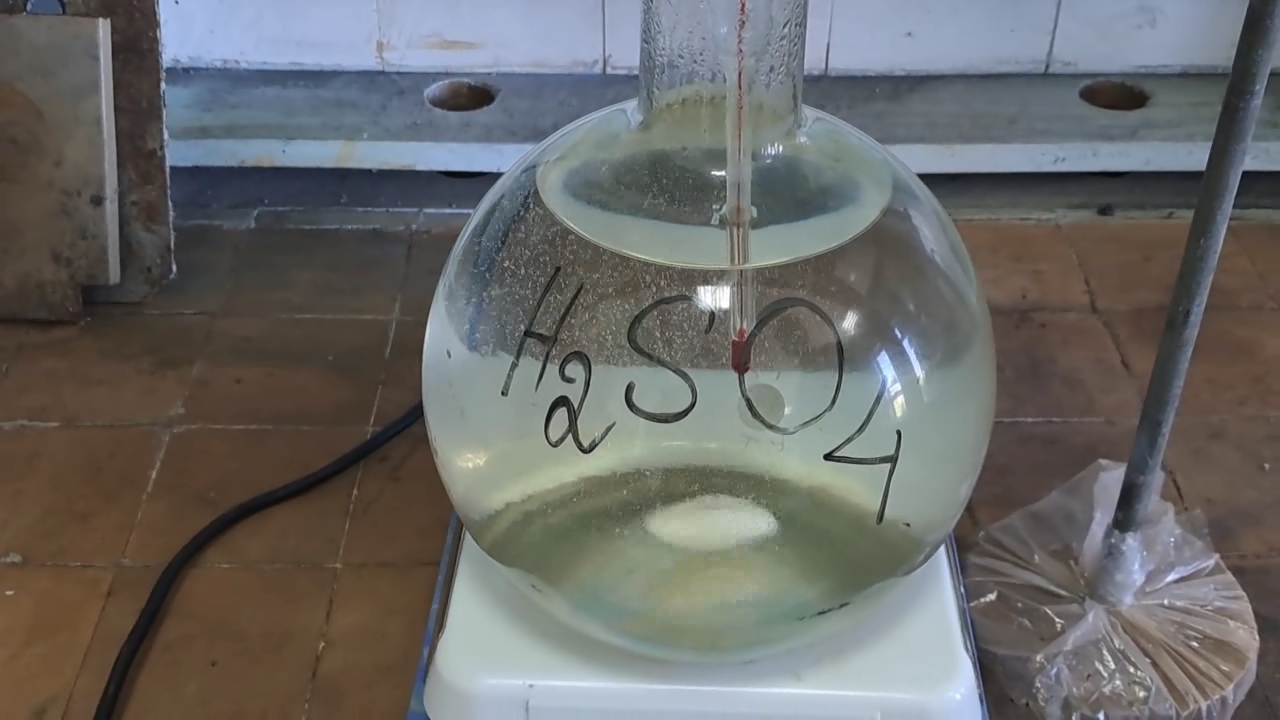
Проблемы с магнитной мешалкой и кипящая вода (лирическое отступление) - Часть 6 The customer provided his magnetic stirrer, which was far from new but, according to him, reliable. To test it, I heated a three-liter flask of water to boiling on the stirrer while maintaining moderate stirring. The test was successful. It was interesting to observe how, with stirring turned on, numerous small bubbles formed in the boiling water. Boiling occurred almost imperceptibly. However, as soon as I turned off the stirring, large steam bubbles formed on the surface of the Teflon magnetic bar, causing vigorous boiling. When I turned the stirring back on, the magnetic stirrer broke the large bubbles into numerous smaller ones, almost invisible in the liquid. Boiling then proceeded smoothly. I was delighted to have acquired a good magnetic stirrer. Unfortunately, my joy was premature. During my very first synthesis, the stirrer malfunctioned: when I tried to turn on the stirring, the motor stopped after a few seconds, and an error message appeared on the display. Restarting produced the same result - the motor started, stopped, and then the error appeared again. I checked the operating manual. It claimed that this error could be caused by an inappropriate magnetic bar or a blocked motor. However, the error also occurred even when starting the stirrer without a magnetic bar, and the motor was enclosed inside the housing, making a blockage unlikely - suggesting a different cause. I turned to a physicist friend familiar with electronics and asked him to repair the stirrer. He said that they had two identical magnetic stirrers that had broken: one with a damaged motor, the other with a faulty electronic unit. He managed to fix the latter, but his joy too was premature. During operation, the repaired stirrer would suddenly spin up to full speed. This was dangerous - the magnetic bar could easily shatter the beaker or flask containing the reaction mixture if it rotated too fast - so he stopped using it. The physicist advised me to return the stirrer to its owner. I tried to return the stirrer to the customer. He first attempted to tweak the fuse (a colleague had told him that this had once helped with the same stirrer), but it had no effect. The customer then refused to take it back, advising me instead to use it as an electric hotplate. Indeed, this stirrer provided better heating accuracy than the household hotplate I had previously used in the lab. However, a problem arose. During synthesis, I had to be careful not to touch the stirrer speed control and accidentally turn on the motor. The motor would start, but after a few seconds the stirrer would shut off - not only stopping the stirring but also cutting off the heating. To resume heating, the stirrer had to be restarted. No warnings appeared, apart from the small icons on the display, so it was easy to overlook the shutdown. As a result, a laborious and potentially dangerous synthesis could be ruined. One day, a colleague was helping me with a synthesis. I warned him not to turn that control knob, otherwise the motor would start, stop, and the heating would turn off. To demonstrate, I switched the motor on. But this time, the stirrer didn't shut off - the motor continued to run normally! It turned out that the problem disappeared when the stirrer was hot. I hoped it would also work after cooling, but when I later tried it for the experiments with thiosulfate and iron(III), the problem returned: when cold, the stirrer still shut off immediately after the motor started. After completing the project, I returned this stirrer to the customer. For the thiosulfate experiments, I used my own (unprotected) magnetic stirrer, since heating was not required for the reaction. |
Magnetic Stirrer and Boiling Water |
|
|
|
|
|
|
Комментарии
К1
Кстати, ионы меди катализируют окисление иодида до иода перекисью водорода и др. перекисными соединениями. Это можно использовать при их анализе иодометрическим титрованием.
|
